EP3617113A1 - Demande d'appel de hall de dernière minute à une cabine en partance à l'aide de geste - Google Patents
Demande d'appel de hall de dernière minute à une cabine en partance à l'aide de geste Download PDFInfo
- Publication number
- EP3617113A1 EP3617113A1 EP19191810.1A EP19191810A EP3617113A1 EP 3617113 A1 EP3617113 A1 EP 3617113A1 EP 19191810 A EP19191810 A EP 19191810A EP 3617113 A1 EP3617113 A1 EP 3617113A1
- Authority
- EP
- European Patent Office
- Prior art keywords
- elevator
- gesture
- call request
- elevator car
- potential passenger
- Prior art date
- Legal status (The legal status is an assumption and is not a legal conclusion. Google has not performed a legal analysis and makes no representation as to the accuracy of the status listed.)
- Withdrawn
Links
Images


Classifications
-
- B—PERFORMING OPERATIONS; TRANSPORTING
- B66—HOISTING; LIFTING; HAULING
- B66B—ELEVATORS; ESCALATORS OR MOVING WALKWAYS
- B66B1/00—Control systems of elevators in general
- B66B1/02—Control systems without regulation, i.e. without retroactive action
- B66B1/06—Control systems without regulation, i.e. without retroactive action electric
- B66B1/14—Control systems without regulation, i.e. without retroactive action electric with devices, e.g. push-buttons, for indirect control of movements
- B66B1/22—Control systems without regulation, i.e. without retroactive action electric with devices, e.g. push-buttons, for indirect control of movements with means for taking account of delayed calls
-
- B—PERFORMING OPERATIONS; TRANSPORTING
- B66—HOISTING; LIFTING; HAULING
- B66B—ELEVATORS; ESCALATORS OR MOVING WALKWAYS
- B66B1/00—Control systems of elevators in general
- B66B1/02—Control systems without regulation, i.e. without retroactive action
- B66B1/06—Control systems without regulation, i.e. without retroactive action electric
- B66B1/14—Control systems without regulation, i.e. without retroactive action electric with devices, e.g. push-buttons, for indirect control of movements
- B66B1/18—Control systems without regulation, i.e. without retroactive action electric with devices, e.g. push-buttons, for indirect control of movements with means for storing pulses controlling the movements of several cars or cages
-
- B—PERFORMING OPERATIONS; TRANSPORTING
- B66—HOISTING; LIFTING; HAULING
- B66B—ELEVATORS; ESCALATORS OR MOVING WALKWAYS
- B66B1/00—Control systems of elevators in general
- B66B1/34—Details, e.g. call counting devices, data transmission from car to control system, devices giving information to the control system
- B66B1/3415—Control system configuration and the data transmission or communication within the control system
-
- B—PERFORMING OPERATIONS; TRANSPORTING
- B66—HOISTING; LIFTING; HAULING
- B66B—ELEVATORS; ESCALATORS OR MOVING WALKWAYS
- B66B1/00—Control systems of elevators in general
- B66B1/34—Details, e.g. call counting devices, data transmission from car to control system, devices giving information to the control system
- B66B1/46—Adaptations of switches or switchgear
- B66B1/468—Call registering systems
-
- B—PERFORMING OPERATIONS; TRANSPORTING
- B66—HOISTING; LIFTING; HAULING
- B66B—ELEVATORS; ESCALATORS OR MOVING WALKWAYS
- B66B5/00—Applications of checking, fault-correcting, or safety devices in elevators
- B66B5/0006—Monitoring devices or performance analysers
- B66B5/0012—Devices monitoring the users of the elevator system
-
- G—PHYSICS
- G06—COMPUTING OR CALCULATING; COUNTING
- G06V—IMAGE OR VIDEO RECOGNITION OR UNDERSTANDING
- G06V40/00—Recognition of biometric, human-related or animal-related patterns in image or video data
- G06V40/20—Movements or behaviour, e.g. gesture recognition
- G06V40/28—Recognition of hand or arm movements, e.g. recognition of deaf sign language
-
- B—PERFORMING OPERATIONS; TRANSPORTING
- B66—HOISTING; LIFTING; HAULING
- B66B—ELEVATORS; ESCALATORS OR MOVING WALKWAYS
- B66B2201/00—Aspects of control systems of elevators
- B66B2201/20—Details of the evaluation method for the allocation of a call to an elevator car
- B66B2201/234—Taking into account uncertainty terms for predicted values, e.g. the predicted arrival time of an elevator car at the floor where a call is made
-
- B—PERFORMING OPERATIONS; TRANSPORTING
- B66—HOISTING; LIFTING; HAULING
- B66B—ELEVATORS; ESCALATORS OR MOVING WALKWAYS
- B66B2201/00—Aspects of control systems of elevators
- B66B2201/20—Details of the evaluation method for the allocation of a call to an elevator car
- B66B2201/235—Taking into account predicted future events, e.g. predicted future call inputs
-
- B—PERFORMING OPERATIONS; TRANSPORTING
- B66—HOISTING; LIFTING; HAULING
- B66B—ELEVATORS; ESCALATORS OR MOVING WALKWAYS
- B66B2201/00—Aspects of control systems of elevators
- B66B2201/40—Details of the change of control mode
- B66B2201/402—Details of the change of control mode by historical, statistical or predicted traffic data, e.g. by learning
-
- B—PERFORMING OPERATIONS; TRANSPORTING
- B66—HOISTING; LIFTING; HAULING
- B66B—ELEVATORS; ESCALATORS OR MOVING WALKWAYS
- B66B2201/00—Aspects of control systems of elevators
- B66B2201/40—Details of the change of control mode
- B66B2201/46—Switches or switchgear
- B66B2201/4607—Call registering systems
- B66B2201/4615—Wherein the destination is registered before boarding
-
- B—PERFORMING OPERATIONS; TRANSPORTING
- B66—HOISTING; LIFTING; HAULING
- B66B—ELEVATORS; ESCALATORS OR MOVING WALKWAYS
- B66B2201/00—Aspects of control systems of elevators
- B66B2201/40—Details of the change of control mode
- B66B2201/46—Switches or switchgear
- B66B2201/4607—Call registering systems
- B66B2201/4638—Wherein the call is registered without making physical contact with the elevator system
Definitions
- the subject matter disclosed herein relates generally to elevator systems, and more particularly, to last-minute hall call request to a departing cab using gestures.
- a system for performing a last-minute hall request to a departing cab using gesture includes a sensing device that is in communication with a processor, wherein the sensing device is configured to monitor and detect a gesture from a potential passenger, and a processor configured to process video data received from the sensing device.
- the system also includes a video analyzer configured to predict a hall call request based at least in part on the gesture, and a controller configured to control an operation of the system based at least in part on predicting the hall request.
- further embodiments include an elevator controller that is configured to control an operation of an elevator car.
- further embodiments include a multi-elevator system, wherein the camera provides an input to control a plurality of elevator cars.
- further embodiments include a plurality of elevator controllers that are coupled to a central controller (CPIB), the CPIB is in communication with the processor to transmit a hall call request command to the plurality of elevator controllers to delay the departure of an elevator car of the plurality of elevators.
- CPIB central controller
- further embodiments include a video analyzer that is configured to predict a hall call request based at least in part on the gesture data.
- further embodiments include a video analyzer that is configured to determine the gesture includes at least one of a direction of the potential passenger, a running speed of the potential passenger, or a hand motion of the potential passenger received from the processor using video content analytics to predict the hall request.
- further embodiments include a load sensor that is configured to detect a load of an elevator car prior to controlling the system based at least in part on predicting the hall request.
- control the system includes at least one of delaying the departure of an elevator car, opening closed elevator doors, or delaying a closing of elevator doors of the elevator car.
- further embodiments include a sensing device that is a video camera.
- a method for a system for performing a last-minute hall request to a departing cab using gesture is provided.
- the method also includes predicting a call request based at least in part on the analysis of the gesture, and controlling an operation of a system based at least in part on the predicted call request.
- further embodiments include detecting a load of the elevator car, and controlling the operation the system is based at least in part on the load of the elevator and the predicted gesture.
- further embodiments include determining at least one of a direction of the potential passenger, a running speed of the potential passenger, or a hand motion of the potential passenger received from the processor using video content analytics
- further embodiments include a video analyzer that is configured to predict a hall call request based at least in part on the gesture data.
- further embodiments include a multi-elevator system, wherein the one or more sensing devices receive an input to control a plurality of elevator cars.
- further embodiments include a plurality of elevator controllers that are coupled to a central controller (CPIB), the CPIB is in communication with a processor to transmit a hall call request command to the plurality of elevator controllers delay the departure of an elevator.
- CPIB central controller
- sensing devices that are cameras configured to capture video of the potential passenger.
- further embodiments include receiving load sensor data of an elevator car prior to controlling the system based at least in part on predicting the hall request.
- further embodiments include delaying the departure of an elevator car or delaying a closing of elevator doors of the elevator car.
- inventions of the present disclosure include providing an opportunity for a potential passenger to board a lightly loaded elevator car by delaying its departure.
- the hall request is predicted and received prior to the potential passenger reaching the hall call request button in the elevator lobby by using a camera, processor, and logic to interpret a gesture from the potential passenger.
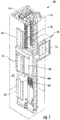
- FIG. 1 is a perspective view of an elevator system 101 including an elevator car 103, a counterweight 105, a tension member 107, a guide rail 109, a machine 111, a position reference system 113, and a controller 115.
- the elevator car 103 and counterweight 105 are connected to each other by the tension member 107.
- the tension member 107 may include or be configured as, for example, ropes, steel cables, and/or coated-steel belts.
- the counterweight 105 is configured to balance a load of the elevator car 103 and is configured to facilitate movement of the elevator car 103 concurrently and in an opposite direction with respect to the counterweight 105 within an elevator shaft 117 and along the guide rail 109.
- the tension member 107 engages the machine 111, which is part of an overhead structure of the elevator system 101.
- the machine 111 is configured to control movement between the elevator car 103 and the counterweight 105.
- the position reference system 113 may be mounted on a fixed part at the top of the elevator shaft 117, such as on a support or guide rail, and may be configured to provide position signals related to a position of the elevator car 103 within the elevator shaft 117. In other embodiments, the position reference system 113 may be directly mounted to a moving component of the machine 111, or may be located in other positions and/or configurations as known in the art.
- the position reference system 113 can be any device or mechanism for monitoring a position of an elevator car and/or counter weight, as known in the art.
- the position reference system 113 can be an encoder, sensor, or other system and can include velocity sensing, absolute position sensing, etc., as will be appreciated by those of skill in the art.
- the controller 115 is located, as shown, in a controller room 121 of the elevator shaft 117 and is configured to control the operation of the elevator system 101, and particularly the elevator car 103.
- the controller 115 may provide drive signals to the machine 111 to control the acceleration, deceleration, leveling, stopping, etc. of the elevator car 103.
- the controller 115 may also be configured to receive position signals from the position reference system 113 or any other desired position reference device.
- the elevator car 103 may stop at one or more landings 125 as controlled by the controller 115.
- the controller 115 can be located and/or configured in other locations or positions within the elevator system 101. In one embodiment, the controller may be located remotely or in the cloud.
- the machine 111 may include a motor or similar driving mechanism.
- the machine 111 is configured to include an electrically driven motor.
- the power supply for the motor may be any power source, including a power grid, which, in combination with other components, is supplied to the motor.
- the machine 111 may include a traction sheave that imparts force to tension member 107 to move the elevator car 103 within elevator shaft 117.
- FIG. 1 is merely a non-limiting example presented for illustrative and explanatory purposes.
- the system comprises a conveyance system that moves passengers between floors and/or along a single floor.
- conveyance systems may include escalators, people movers, etc. Accordingly, embodiments described herein are not limited to elevator systems, such as that shown in Figure 1 .
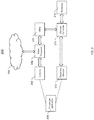
- the system 200 includes a sensing device 202 that is positioned in an elevator lobby or hallway to detect approaching potential passengers.
- the sensors 202 can include cameras (such as video camera, thermal camera, depth sensor, etc.).
- the camera can be positioned in the lobby to detect a potential passenger. In other embodiments, the camera can be located in a hallway to monitor the passengers that may be approaching the elevator car(s).
- the camera is configured to detect passenger gestures 204 that can be used to place a hall call request without being required to press the physical call buttons in the lobby.
- the video data received from the sensing device 202 is provided to the video processor 206.
- the video processor 206 is configured to process the video frame-by-frame and present the video data to the video analyzer 208 to perform artificial intelligence video content analytics to properly predict whether an approaching passenger's gesture(s) is indicating an intent to board an elevator car. This optimizes and reduces the chances of inadvertently delaying the departure of an elevator car 210 from a passenger that does not desire to use the elevator.
- the analytics can be optimized overtime to increase the probability of correctly predicting the gestures that are used place hall call requests.
- other gestures can be used to predict a hall request from an approaching passenger.
- the gestures indicating an intent can include a running potential passenger, the direction of the potential passenger, or a hand motion indicating a desire to board the elevator car.
- the video analyzer 208 analyzes the video content frame by frame to determine whether the gesture detecting by the approaching passenger intends to board the elevator by matching a signature of a passenger desiring to board the elevator. The video analyzer 208 determines whether the approaching passenger is running and also determines the direction in which the approaching passenger is running.
- the system 200 infers there is no urgency or need to delay the departure of an elevator.
- the video analyzer 208 also determines the direction of the elevator the passenger is approaching. If the approaching passenger is directed towards an elevator and the elevator has not departed, its departure can be delayed and the doors reopened to allow the passenger to board the elevator car. In a multi-elevator system including a plurality of elevator doors, if it is determined that a passenger is approaching a different elevator that has already departed or the passenger is not approaching a targeted elevator, the elevator will not be delayed.
- the elevator departure can be delayed.
- the elevator doors can be closed, the elevator doors can be reopened allowing the potential passenger to board.
- the amount of time the doors are opened can be extended by a configurable delay.
- a command is sent to the controller CPIB 216 to the elevator controller 214 to control take an action on the departing elevator 210.
- the capacity of the elevator car is detected by a sensor such as sensor 212 that is in configured to communicate with the elevator controller 214.
- a sensor such as sensor 212 that is in configured to communicate with the elevator controller 214.
- the capacity of the elevator car 210 can be determined using load sensors (such as pressure or pressure sensors, piezo electric sensors, etc. that are equipped on the elevator. It should be understood that other types of sensors such as cameras and/or counters can be coupled to the controller to provide information on the capacity of the elevator car 210.
- the departure of the elevator car can be delayed responsive to receiving a gesture 204 from an approaching passenger that indicates a desire to board the elevator car.
- the load sensors of the elevator can be configured to detect if a configurable load threshold has been reached to determine whether the elevator should be delayed.
- a multi-elevator system 300 for placing a last-minute hall call request to a departing cab using gestures in accordance with one or more embodiments is shown.
- the system 300 includes a plurality of elevator 302 having elevator call buttons 304 and sensing device 202 monitoring the lobby area of the multi-elevator system 300.
- a single elevator call button 304 may be used to place an elevator call request for one of the plurality of elevators 302.
- an indicator 306 can be displayed outside of the elevator 302 to indicate to a potential passenger the direction of travel of the elevator 302. A potential passenger may be running towards an elevator 302 heading in a particular direction indicated by the indicator 306.
- the video analyzer 208 of FIG. 2 can use this information to select the elevator 302 as a candidate for delaying the departure of the elevator 302. In the event, the other gesture criteria and load sensor thresholds are met, the selected elevator 302 can be delayed.
- a method 400 for placing a last-minute hall call request to a departing cab using gestures in accordance with one or more embodiments begins at block 402 and continues to block 404 which provides for detecting, using one or more sensing devices, a gesture of a potential passenger.
- a single camera is installed in a lobby or hallway and is configured to monitor passengers approaching the one or more elevators in the vicinity.
- the method 400 proceeds to block 406 and provides for analyzing the gesture of the potential passenger.
- the video data that is captured by the camera is processed by a video processor and is further processed by a video analyzer to analyze the presence and/or absence of gesture data of the video.
- the method 408 provides for predicting a call request based at least in part on the analysis of the gesture.
- an elevator call request is predicted based on the analyzed gesture data.
- the gesture data can include one or more of an approaching passenger that is running, making a hand motion, and is directed towards a particular elevator. It should be understood that different gestures, as well as combinations of gestures, can be used in predicting if the approaching passenger is intending to place a hall call request.
- the method 400 at block 410 provides for controlling an operation of a system based at least in part on the predicted call request.
- the system is an elevator system and the departure of the elevator car of the elevator system is delayed to allow the approaching passenger to board responsive to predicting a hall call request.
- the load of the elevator car can be detected using sensors to determine if the elevator car should be delayed from departing. It should be understood that other factors can be sensed by the system and used to control the elevator car based on predicting the hall call request.
- the method 400 ends at block 412.
- the technical effects and benefits include providing a flexible and easy way to request a departing cab. By detecting a gesture of an approaching passenger the hall call request can be placed prior to reaching the elevator call request buttons in the lobby or hallway.
- the technical effects and benefits include reducing the number of elevator trips, increased passenger experience, and time savings for the passenger.
- embodiments can be in the form of processor-implemented processes and devices for practicing those processes, such as a processor.
- Embodiments can also be in the form of computer program code containing instructions embodied in tangible media, such as network cloud storage, SD cards, flash drives, floppy diskettes, CD ROMs, hard drives, or any other computer-readable storage medium, wherein, when the computer program code is loaded into and executed by a computer, the computer becomes a device for practicing the embodiments.
- Embodiments can also be in the form of computer program code, for example, whether stored in a storage medium, loaded into and/or executed by a computer, or transmitted over some transmission medium, loaded into and/or executed by a computer, or transmitted over some transmission medium, such as over electrical wiring or cabling, through fiber optics, or via electromagnetic radiation, wherein, when the computer program code is loaded into an executed by a computer, the computer becomes a device for practicing the embodiments.
- the computer program code segments configure the microprocessor to create specific logic circuits.
Landscapes
- Engineering & Computer Science (AREA)
- Automation & Control Theory (AREA)
- Computer Networks & Wireless Communication (AREA)
- Health & Medical Sciences (AREA)
- Computer Vision & Pattern Recognition (AREA)
- General Health & Medical Sciences (AREA)
- Psychiatry (AREA)
- Social Psychology (AREA)
- Human Computer Interaction (AREA)
- Physics & Mathematics (AREA)
- General Physics & Mathematics (AREA)
- Multimedia (AREA)
- Theoretical Computer Science (AREA)
- Elevator Control (AREA)
- Indicating And Signalling Devices For Elevators (AREA)
Applications Claiming Priority (1)
| Application Number | Priority Date | Filing Date | Title |
|---|---|---|---|
| IN201811030565 | 2018-08-14 |
Publications (1)
| Publication Number | Publication Date |
|---|---|
| EP3617113A1 true EP3617113A1 (fr) | 2020-03-04 |
Family
ID=67658868
Family Applications (1)
| Application Number | Title | Priority Date | Filing Date |
|---|---|---|---|
| EP19191810.1A Withdrawn EP3617113A1 (fr) | 2018-08-14 | 2019-08-14 | Demande d'appel de hall de dernière minute à une cabine en partance à l'aide de geste |
Country Status (3)
| Country | Link |
|---|---|
| US (1) | US20200055691A1 (fr) |
| EP (1) | EP3617113A1 (fr) |
| CN (1) | CN110817619A (fr) |
Families Citing this family (2)
| Publication number | Priority date | Publication date | Assignee | Title |
|---|---|---|---|---|
| CN111747251A (zh) * | 2020-06-24 | 2020-10-09 | 日立楼宇技术(广州)有限公司 | 电梯外召盒及其处理方法、系统 |
| US12518415B2 (en) | 2021-09-01 | 2026-01-06 | Honeywell International Inc. | Systems and methods for facilitating interface with an access control system |
Citations (8)
| Publication number | Priority date | Publication date | Assignee | Title |
|---|---|---|---|---|
| JP2000026034A (ja) * | 1998-07-10 | 2000-01-25 | Hitachi Building Systems Co Ltd | エレベータの運転装置 |
| WO2007081345A1 (fr) * | 2006-01-12 | 2007-07-19 | Otis Elevator Company | Système par vidéo de commande d’ascenseur |
| JP2013159437A (ja) * | 2012-02-03 | 2013-08-19 | Mitsubishi Electric Corp | エレベーターの省エネ制御装置 |
| WO2015183256A1 (fr) * | 2014-05-28 | 2015-12-03 | Otis Elevator Company | Reconnaissance de gestes sans toucher pour service d'ascenseur |
| EP3055244A1 (fr) * | 2014-01-17 | 2016-08-17 | KONE Corporation | Système d'ascenseur comprenant un système de commande de destination |
| JP2017030918A (ja) * | 2015-07-31 | 2017-02-09 | 株式会社日立製作所 | エレベータ群管理システムおよびエレベータの群管理方法 |
| EP3287873A2 (fr) * | 2016-08-19 | 2018-02-28 | Otis Elevator Company | Système et procédé de commande distante à base de gestes faisant appel à un réseau de capteurs dans tout le bâtiment |
| US20180186595A1 (en) * | 2015-08-24 | 2018-07-05 | Otis Elevator Company | Elevator control system |
Family Cites Families (4)
| Publication number | Priority date | Publication date | Assignee | Title |
|---|---|---|---|---|
| US9323232B2 (en) * | 2012-03-13 | 2016-04-26 | Nokia Technologies Oy | Transportion remote call system based on passenger geo-routines |
| EP3234875B1 (fr) * | 2014-12-15 | 2019-10-16 | Otis Elevator Company | Système de bâtiment intelligent pour l'exécution d'actions basées sur la détection d'un dispositif d'utilisateur |
| US10095315B2 (en) * | 2016-08-19 | 2018-10-09 | Otis Elevator Company | System and method for distant gesture-based control using a network of sensors across the building |
| US11697571B2 (en) * | 2018-10-30 | 2023-07-11 | International Business Machines Corporation | End-to-end cognitive elevator dispatching system |
-
2019
- 2019-08-13 US US16/539,022 patent/US20200055691A1/en not_active Abandoned
- 2019-08-13 CN CN201910743826.XA patent/CN110817619A/zh active Pending
- 2019-08-14 EP EP19191810.1A patent/EP3617113A1/fr not_active Withdrawn
Patent Citations (8)
| Publication number | Priority date | Publication date | Assignee | Title |
|---|---|---|---|---|
| JP2000026034A (ja) * | 1998-07-10 | 2000-01-25 | Hitachi Building Systems Co Ltd | エレベータの運転装置 |
| WO2007081345A1 (fr) * | 2006-01-12 | 2007-07-19 | Otis Elevator Company | Système par vidéo de commande d’ascenseur |
| JP2013159437A (ja) * | 2012-02-03 | 2013-08-19 | Mitsubishi Electric Corp | エレベーターの省エネ制御装置 |
| EP3055244A1 (fr) * | 2014-01-17 | 2016-08-17 | KONE Corporation | Système d'ascenseur comprenant un système de commande de destination |
| WO2015183256A1 (fr) * | 2014-05-28 | 2015-12-03 | Otis Elevator Company | Reconnaissance de gestes sans toucher pour service d'ascenseur |
| JP2017030918A (ja) * | 2015-07-31 | 2017-02-09 | 株式会社日立製作所 | エレベータ群管理システムおよびエレベータの群管理方法 |
| US20180186595A1 (en) * | 2015-08-24 | 2018-07-05 | Otis Elevator Company | Elevator control system |
| EP3287873A2 (fr) * | 2016-08-19 | 2018-02-28 | Otis Elevator Company | Système et procédé de commande distante à base de gestes faisant appel à un réseau de capteurs dans tout le bâtiment |
Also Published As
| Publication number | Publication date |
|---|---|
| CN110817619A (zh) | 2020-02-21 |
| US20200055691A1 (en) | 2020-02-20 |
Similar Documents
| Publication | Publication Date | Title |
|---|---|---|
| CN110775752B (zh) | 检测视力受损、怀孕或残疾电梯乘客的自动方法 | |
| EP3351498A1 (fr) | Fonctionnement de mode stationnaire d'ascenseur utilisant une détection de changement de charge potentielle à base de capteur | |
| US12098057B2 (en) | Validation of elevator call passenger boarding | |
| US11174128B2 (en) | Elevator door control for deboarding passengers in multi-door elevators | |
| EP3808693A1 (fr) | Entretien basé sur l'état de l'ascenseur utilisant une caméra embarquée | |
| EP3599199A2 (fr) | Décalage de capacité entre des groupes d'ascenseurs se chevauchant partiellement | |
| US12054355B2 (en) | Automatic cognitive analysis of elevators to reduce passenger wait time | |
| EP3617113A1 (fr) | Demande d'appel de hall de dernière minute à une cabine en partance à l'aide de geste | |
| EP3736239B1 (fr) | Paramètres de synchronisation de porte à réglage automatique | |
| EP4019445B1 (fr) | Prise en charge automatique de la distanciation sociale pour les demandes d'appel et l'identification des passagers en attente | |
| CN112573314B (zh) | 处理输送系统中的服务请求 | |
| CN111170102B (zh) | 用于监测电梯系统的方法和装置 | |
| CN112079221A (zh) | 电梯的载荷检测装置 | |
| EP4477602A1 (fr) | Système d'ascenseur comprenant une interface de sécurité de fosse | |
| EP3878787B1 (fr) | Gestion d'attributions d'appel d'ascenseur en réponse à des inversions du sens de porte d'ascenseur | |
| CN110713099B (zh) | 考虑角运动和方位的用于电梯的姿势控制门打开 | |
| CN119117829A (zh) | 包括用于检测对象装载和卸载的传感器组件的电梯系统 |
Legal Events
| Date | Code | Title | Description |
|---|---|---|---|
| PUAI | Public reference made under article 153(3) epc to a published international application that has entered the european phase |
Free format text: ORIGINAL CODE: 0009012 |
|
| STAA | Information on the status of an ep patent application or granted ep patent |
Free format text: STATUS: THE APPLICATION HAS BEEN PUBLISHED |
|
| AK | Designated contracting states |
Kind code of ref document: A1 Designated state(s): AL AT BE BG CH CY CZ DE DK EE ES FI FR GB GR HR HU IE IS IT LI LT LU LV MC MK MT NL NO PL PT RO RS SE SI SK SM TR |
|
| AX | Request for extension of the european patent |
Extension state: BA ME |
|
| STAA | Information on the status of an ep patent application or granted ep patent |
Free format text: STATUS: REQUEST FOR EXAMINATION WAS MADE |
|
| 17P | Request for examination filed |
Effective date: 20200904 |
|
| RBV | Designated contracting states (corrected) |
Designated state(s): AL AT BE BG CH CY CZ DE DK EE ES FI FR GB GR HR HU IE IS IT LI LT LU LV MC MK MT NL NO PL PT RO RS SE SI SK SM TR |
|
| STAA | Information on the status of an ep patent application or granted ep patent |
Free format text: STATUS: EXAMINATION IS IN PROGRESS |
|
| 17Q | First examination report despatched |
Effective date: 20210915 |
|
| STAA | Information on the status of an ep patent application or granted ep patent |
Free format text: STATUS: THE APPLICATION IS DEEMED TO BE WITHDRAWN |
|
| 18D | Application deemed to be withdrawn |
Effective date: 20230120 |