EP3618059A1 - Dispositif de traitement de signal, procédé et programme - Google Patents
Dispositif de traitement de signal, procédé et programme Download PDFInfo
- Publication number
- EP3618059A1 EP3618059A1 EP18792060.8A EP18792060A EP3618059A1 EP 3618059 A1 EP3618059 A1 EP 3618059A1 EP 18792060 A EP18792060 A EP 18792060A EP 3618059 A1 EP3618059 A1 EP 3618059A1
- Authority
- EP
- European Patent Office
- Prior art keywords
- sound
- destination user
- notification
- detecting unit
- detected
- Prior art date
- Legal status (The legal status is an assumption and is not a legal conclusion. Google has not performed a legal analysis and makes no representation as to the accuracy of the status listed.)
- Withdrawn
Links
Images




Classifications
-
- G—PHYSICS
- G10—MUSICAL INSTRUMENTS; ACOUSTICS
- G10L—SPEECH ANALYSIS TECHNIQUES OR SPEECH SYNTHESIS; SPEECH RECOGNITION; SPEECH OR VOICE PROCESSING TECHNIQUES; SPEECH OR AUDIO CODING OR DECODING
- G10L25/00—Speech or voice analysis techniques not restricted to a single one of groups G10L15/00 - G10L21/00
- G10L25/78—Detection of presence or absence of voice signals
- G10L25/84—Detection of presence or absence of voice signals for discriminating voice from noise
-
- H—ELECTRICITY
- H04—ELECTRIC COMMUNICATION TECHNIQUE
- H04K—SECRET COMMUNICATION; JAMMING OF COMMUNICATION
- H04K3/00—Jamming of communication; Counter-measures
- H04K3/40—Jamming having variable characteristics
- H04K3/45—Jamming having variable characteristics characterized by including monitoring of the target or target signal, e.g. in reactive jammers or follower jammers for example by means of an alternation of jamming phases and monitoring phases, called "look-through mode"
-
- G—PHYSICS
- G10—MUSICAL INSTRUMENTS; ACOUSTICS
- G10K—SOUND-PRODUCING DEVICES; METHODS OR DEVICES FOR PROTECTING AGAINST, OR FOR DAMPING, NOISE OR OTHER ACOUSTIC WAVES IN GENERAL; ACOUSTICS NOT OTHERWISE PROVIDED FOR
- G10K11/00—Methods or devices for transmitting, conducting or directing sound in general; Methods or devices for protecting against, or for damping, noise or other acoustic waves in general
- G10K11/16—Methods or devices for protecting against, or for damping, noise or other acoustic waves in general
- G10K11/175—Methods or devices for protecting against, or for damping, noise or other acoustic waves in general using interference effects; Masking sound
- G10K11/178—Methods or devices for protecting against, or for damping, noise or other acoustic waves in general using interference effects; Masking sound by electro-acoustically regenerating the original acoustic waves in anti-phase
- G10K11/1781—Methods or devices for protecting against, or for damping, noise or other acoustic waves in general using interference effects; Masking sound by electro-acoustically regenerating the original acoustic waves in anti-phase characterised by the analysis of input or output signals, e.g. frequency range, modes, transfer functions
- G10K11/17821—Methods or devices for protecting against, or for damping, noise or other acoustic waves in general using interference effects; Masking sound by electro-acoustically regenerating the original acoustic waves in anti-phase characterised by the analysis of input or output signals, e.g. frequency range, modes, transfer functions characterised by the analysis of the input signals only
- G10K11/17823—Reference signals, e.g. ambient acoustic environment
-
- G—PHYSICS
- G10—MUSICAL INSTRUMENTS; ACOUSTICS
- G10K—SOUND-PRODUCING DEVICES; METHODS OR DEVICES FOR PROTECTING AGAINST, OR FOR DAMPING, NOISE OR OTHER ACOUSTIC WAVES IN GENERAL; ACOUSTICS NOT OTHERWISE PROVIDED FOR
- G10K11/00—Methods or devices for transmitting, conducting or directing sound in general; Methods or devices for protecting against, or for damping, noise or other acoustic waves in general
- G10K11/16—Methods or devices for protecting against, or for damping, noise or other acoustic waves in general
- G10K11/175—Methods or devices for protecting against, or for damping, noise or other acoustic waves in general using interference effects; Masking sound
- G10K11/178—Methods or devices for protecting against, or for damping, noise or other acoustic waves in general using interference effects; Masking sound by electro-acoustically regenerating the original acoustic waves in anti-phase
- G10K11/1781—Methods or devices for protecting against, or for damping, noise or other acoustic waves in general using interference effects; Masking sound by electro-acoustically regenerating the original acoustic waves in anti-phase characterised by the analysis of input or output signals, e.g. frequency range, modes, transfer functions
- G10K11/17821—Methods or devices for protecting against, or for damping, noise or other acoustic waves in general using interference effects; Masking sound by electro-acoustically regenerating the original acoustic waves in anti-phase characterised by the analysis of input or output signals, e.g. frequency range, modes, transfer functions characterised by the analysis of the input signals only
- G10K11/17827—Desired external signals, e.g. pass-through audio such as music or speech
-
- G—PHYSICS
- G10—MUSICAL INSTRUMENTS; ACOUSTICS
- G10K—SOUND-PRODUCING DEVICES; METHODS OR DEVICES FOR PROTECTING AGAINST, OR FOR DAMPING, NOISE OR OTHER ACOUSTIC WAVES IN GENERAL; ACOUSTICS NOT OTHERWISE PROVIDED FOR
- G10K11/00—Methods or devices for transmitting, conducting or directing sound in general; Methods or devices for protecting against, or for damping, noise or other acoustic waves in general
- G10K11/16—Methods or devices for protecting against, or for damping, noise or other acoustic waves in general
- G10K11/175—Methods or devices for protecting against, or for damping, noise or other acoustic waves in general using interference effects; Masking sound
- G10K11/178—Methods or devices for protecting against, or for damping, noise or other acoustic waves in general using interference effects; Masking sound by electro-acoustically regenerating the original acoustic waves in anti-phase
- G10K11/1785—Methods, e.g. algorithms; Devices
- G10K11/17857—Geometric disposition, e.g. placement of microphones
-
- G—PHYSICS
- G10—MUSICAL INSTRUMENTS; ACOUSTICS
- G10K—SOUND-PRODUCING DEVICES; METHODS OR DEVICES FOR PROTECTING AGAINST, OR FOR DAMPING, NOISE OR OTHER ACOUSTIC WAVES IN GENERAL; ACOUSTICS NOT OTHERWISE PROVIDED FOR
- G10K11/00—Methods or devices for transmitting, conducting or directing sound in general; Methods or devices for protecting against, or for damping, noise or other acoustic waves in general
- G10K11/16—Methods or devices for protecting against, or for damping, noise or other acoustic waves in general
- G10K11/175—Methods or devices for protecting against, or for damping, noise or other acoustic waves in general using interference effects; Masking sound
- G10K11/178—Methods or devices for protecting against, or for damping, noise or other acoustic waves in general using interference effects; Masking sound by electro-acoustically regenerating the original acoustic waves in anti-phase
- G10K11/1787—General system configurations
- G10K11/17873—General system configurations using a reference signal without an error signal, e.g. pure feedforward
-
- G—PHYSICS
- G10—MUSICAL INSTRUMENTS; ACOUSTICS
- G10L—SPEECH ANALYSIS TECHNIQUES OR SPEECH SYNTHESIS; SPEECH RECOGNITION; SPEECH OR VOICE PROCESSING TECHNIQUES; SPEECH OR AUDIO CODING OR DECODING
- G10L13/00—Speech synthesis; Text to speech systems
- G10L13/02—Methods for producing synthetic speech; Speech synthesisers
-
- G—PHYSICS
- G10—MUSICAL INSTRUMENTS; ACOUSTICS
- G10L—SPEECH ANALYSIS TECHNIQUES OR SPEECH SYNTHESIS; SPEECH RECOGNITION; SPEECH OR VOICE PROCESSING TECHNIQUES; SPEECH OR AUDIO CODING OR DECODING
- G10L25/00—Speech or voice analysis techniques not restricted to a single one of groups G10L15/00 - G10L21/00
- G10L25/48—Speech or voice analysis techniques not restricted to a single one of groups G10L15/00 - G10L21/00 specially adapted for particular use
- G10L25/51—Speech or voice analysis techniques not restricted to a single one of groups G10L15/00 - G10L21/00 specially adapted for particular use for comparison or discrimination
- G10L25/60—Speech or voice analysis techniques not restricted to a single one of groups G10L15/00 - G10L21/00 specially adapted for particular use for comparison or discrimination for measuring the quality of voice signals
-
- H—ELECTRICITY
- H04—ELECTRIC COMMUNICATION TECHNIQUE
- H04K—SECRET COMMUNICATION; JAMMING OF COMMUNICATION
- H04K3/00—Jamming of communication; Counter-measures
- H04K3/40—Jamming having variable characteristics
- H04K3/43—Jamming having variable characteristics characterized by the control of the jamming power, signal-to-noise ratio or geographic coverage area
-
- H—ELECTRICITY
- H04—ELECTRIC COMMUNICATION TECHNIQUE
- H04K—SECRET COMMUNICATION; JAMMING OF COMMUNICATION
- H04K3/00—Jamming of communication; Counter-measures
- H04K3/80—Jamming or countermeasure characterized by its function
- H04K3/82—Jamming or countermeasure characterized by its function related to preventing surveillance, interception or detection
- H04K3/825—Jamming or countermeasure characterized by its function related to preventing surveillance, interception or detection by jamming
-
- H—ELECTRICITY
- H04—ELECTRIC COMMUNICATION TECHNIQUE
- H04S—STEREOPHONIC SYSTEMS
- H04S7/00—Indicating arrangements; Control arrangements, e.g. balance control
- H04S7/30—Control circuits for electronic adaptation of the sound field
- H04S7/302—Electronic adaptation of stereophonic sound system to listener position or orientation
- H04S7/303—Tracking of listener position or orientation
-
- G—PHYSICS
- G10—MUSICAL INSTRUMENTS; ACOUSTICS
- G10K—SOUND-PRODUCING DEVICES; METHODS OR DEVICES FOR PROTECTING AGAINST, OR FOR DAMPING, NOISE OR OTHER ACOUSTIC WAVES IN GENERAL; ACOUSTICS NOT OTHERWISE PROVIDED FOR
- G10K2210/00—Details of active noise control [ANC] covered by G10K11/178 but not provided for in any of its subgroups
- G10K2210/10—Applications
- G10K2210/108—Communication systems, e.g. where useful sound is kept and noise is cancelled
-
- G—PHYSICS
- G10—MUSICAL INSTRUMENTS; ACOUSTICS
- G10K—SOUND-PRODUCING DEVICES; METHODS OR DEVICES FOR PROTECTING AGAINST, OR FOR DAMPING, NOISE OR OTHER ACOUSTIC WAVES IN GENERAL; ACOUSTICS NOT OTHERWISE PROVIDED FOR
- G10K2210/00—Details of active noise control [ANC] covered by G10K11/178 but not provided for in any of its subgroups
- G10K2210/10—Applications
- G10K2210/111—Directivity control or beam pattern
-
- G—PHYSICS
- G10—MUSICAL INSTRUMENTS; ACOUSTICS
- G10K—SOUND-PRODUCING DEVICES; METHODS OR DEVICES FOR PROTECTING AGAINST, OR FOR DAMPING, NOISE OR OTHER ACOUSTIC WAVES IN GENERAL; ACOUSTICS NOT OTHERWISE PROVIDED FOR
- G10K2210/00—Details of active noise control [ANC] covered by G10K11/178 but not provided for in any of its subgroups
- G10K2210/10—Applications
- G10K2210/12—Rooms, e.g. ANC inside a room, office, concert hall or automobile cabin
-
- G—PHYSICS
- G10—MUSICAL INSTRUMENTS; ACOUSTICS
- G10K—SOUND-PRODUCING DEVICES; METHODS OR DEVICES FOR PROTECTING AGAINST, OR FOR DAMPING, NOISE OR OTHER ACOUSTIC WAVES IN GENERAL; ACOUSTICS NOT OTHERWISE PROVIDED FOR
- G10K2210/00—Details of active noise control [ANC] covered by G10K11/178 but not provided for in any of its subgroups
- G10K2210/30—Means
- G10K2210/301—Computational
- G10K2210/3055—Transfer function of the acoustic system
-
- H—ELECTRICITY
- H04—ELECTRIC COMMUNICATION TECHNIQUE
- H04K—SECRET COMMUNICATION; JAMMING OF COMMUNICATION
- H04K2203/00—Jamming of communication; Countermeasures
- H04K2203/10—Jamming or countermeasure used for a particular application
- H04K2203/12—Jamming or countermeasure used for a particular application for acoustic communication
-
- H—ELECTRICITY
- H04—ELECTRIC COMMUNICATION TECHNIQUE
- H04K—SECRET COMMUNICATION; JAMMING OF COMMUNICATION
- H04K3/00—Jamming of communication; Counter-measures
- H04K3/40—Jamming having variable characteristics
- H04K3/41—Jamming having variable characteristics characterized by the control of the jamming activation or deactivation time
- H04K3/415—Jamming having variable characteristics characterized by the control of the jamming activation or deactivation time based on motion status or velocity, e.g. for disabling use of mobile phones in a vehicle
-
- H—ELECTRICITY
- H04—ELECTRIC COMMUNICATION TECHNIQUE
- H04K—SECRET COMMUNICATION; JAMMING OF COMMUNICATION
- H04K3/00—Jamming of communication; Counter-measures
- H04K3/80—Jamming or countermeasure characterized by its function
- H04K3/94—Jamming or countermeasure characterized by its function related to allowing or preventing testing or assessing
Definitions
- the present disclosure relates to a signal processing apparatus and method, and a program, and, more particularly, to a signal processing apparatus and method, and a program which are capable of naturally creating a state in which privacy is protected.
- Patent Document 1 makes a proposal of starting operation of a masking sound generating unit which generates masking sound to make it difficult for the others to listen to conversation speech of patients when patient information is recognized.
- Patent Document 1 Japanese Patent Application Laid-Open No. 2010-19935
- the present disclosure has been made in view of such circumstances and is directed to being able to naturally create a state in which privacy is protected.
- a signal processing apparatus includes: a sound detecting unit configured to detect surrounding sound at a timing at which a notification to a destination user occurs; a position detecting unit configured to detect a position of the destination user and positions of users other than the destination user at the timing at which the notification occurs; and an output control unit configured to control output of the notification to the destination user at a timing at which it is determined that the surrounding sound detected by the sound detecting unit is masking possible sound which can be used for masking in a case where the position of the destination user detected by the position detecting unit is within a predetermined area.
- a movement detecting unit configured to detect movement of the destination user and the users other than the destination user is further included, and in a case where movement is detected by the movement detecting unit, the position detecting unit also detects a position of the destination user and positions of the users other than the destination user to be estimated through movement detected by the movement detecting unit.
- a duration predicting unit configured to predict a duration while the masking possible sound continues is further included, and the output control unit may control output of information indicating that the duration while the masking possible sound continues, predicted by the duration predicting unit, ends.
- the surrounding sound is stationary sound emitted from equipment in a room, sound non-periodically emitted from equipment in the room, speech emitted from a person or an animal, or environmental sound entering from outside of the room.
- the output control unit controls output of the notification to the destination user along with sound in a frequency band which can be heard only by the users other than the destination user.
- the output control unit may control output of the notification to the destination user with sound quality which is similar to sound quality of the surrounding sound detected by the sound detecting unit.
- the output control unit may control output of the notification to the destination user in a case where the positions of the users other than the destination user detected by the position detecting unit are not within the predetermined area.
- the output control unit may control output of the notification to the destination user in a case where it is detected that the users other than the destination user detected by the position detecting unit are put into a sleep state.
- the output control unit may control output of the notification to the destination user in a case where the users other than the destination user detected by the position detecting unit focus on a predetermined thing.
- the predetermined area is an area where the destination user often exists.
- the output control unit may notify the destination user that there is a notification.
- a feedback unit configured to give feedback that the notification to the destination user has been made to an issuer of the notification to the destination user may further be included.
- a signal processing apparatus detects surrounding sound at a timing at which a notification to a destination user occurs; detects a position of the destination user and positions of users other than the destination user at the timing at which the notification occurs; and controls output of the notification to the destination user at a timing at which it is determined that the surrounding sound detected is masking possible sound which can be used for masking in a case where the position of the destination user detected is within a predetermined area.
- a program for causing a computer to function as: a sound detecting unit configured to detect surrounding sound at a timing at which a notification to a destination user occurs; a position detecting unit configured to detect a position of the destination user and positions of users other than the destination user at the timing at which the notification occurs; and an output control unit configured to control output of the notification to the destination user at a timing at which it is determined that the surrounding sound detected by the sound detecting unit is masking possible sound which can be used for masking in a case where the position of the destination user detected by the position detecting unit is within a predetermined area.
- surrounding sound is detected at a timing at which a notification to a destination user occurs, and a position of the destination user and positions of users other than the destination user is detected at the timing at which the notification occurs.
- Output of the notification to the destination user is controlled at a timing at which it is determined that the surrounding sound detected is masking possible sound which can be used for masking in a case where the position of the destination user detected is within a predetermined area.
- the individual notification system includes an agent 21 and a speaker 22, and is a system in which a timing at which speech can be only heard by a person to whom it is desired to make a notification (which will be referred to as a destination user) by utilizing surrounding sound (hereinafter, referred to as surrounding sound) is detected, and the agent 21 emits speech.
- utilizing the surrounding sound means, for example, estimation of a state where speech cannot be heard by using surrounding speech (such as conversation by a plurality of persons other than the destination user and romp of children), an air purifier, an air conditioner, piano sound, surrounding vehicle sound, or the like.
- surrounding speech such as conversation by a plurality of persons other than the destination user and romp of children
- an air purifier such as conversation by a plurality of persons other than the destination user and romp of children
- an air conditioner such as conversation by a plurality of persons other than the destination user and romp of children
- piano sound such as piano sound, surrounding vehicle sound, or the like.
- the agent 21, which is a signal processing apparatus to which the present technology is applied, is a physical agent like a robot or a software agent, or the like, installed in stationary equipment such as a smartphone and a personal computer or dedicated equipment.
- the speaker 22 is connected to the agent 21 through wireless communication, or the like, and outputs speech by an instruction from the agent 21.
- the agent 21 has, for example, a notification to be made to the user 11.
- the agent 21 in Fig. 1 recognizes that a user (for example, a user 12) other than the user 11 listens to a program of a television apparatus 31 located at a position distant from the speaker 22 (a position where a notification of speech cannot be made) by detecting sound from the television apparatus 31 and a location of the user 12. Then, at a timing at which sound is emitted from the television apparatus 31, the agent 21 outputs a notification 32 of "a proposal for a surprise present " from the speaker 22 when it is detected that the user 11 moves to an area where a notification of speech from the speaker 22 can be made as indicated with an arrow.
- Fig. 2 is a diagram explaining another operation of the individual notification system to which the present technology is applied.
- the agent 21 has a notification to be made to the user 11 in a similar manner to a case of Fig. 1 .
- the agent 21 in Fig. 2 recognizes that the user 12 is located at a position distant from the speaker 22 (a position where a notification of speech cannot be made) and noise is emitted from an electric fan 41 at a position of the user 12 and a position of the speaker 22 by detecting sound (noise) of Booon from the electric fan 41 and a position of a user (for example, the user 12) other than the user 11.
- the agent 21 outputs a notification 32 of "a proposal for a surprise present " from the speaker 22 when it is confirmed that the user 11 is located in an area where a notification of speech from the speaker 22 can be made.
- Fig. 3 is a block diagram illustrating a configuration example of the agent in Fig. 1 .
- a camera 51 and a microphone 52 are connected to the agent 21.
- the agent 21 includes an image input unit 61, an image processing unit 62, a speech input unit 63, a speech processing unit 64, a sound state estimating unit 65, a user state estimating unit 66, a sound source identification information DB 67, a user identification information DB 68, a state estimating unit 69, a notification managing unit 70, and an output control unit 71.
- the camera 51 inputs a captured image of a subject to the image input unit 61.
- the microphone 52 collects surrounding sound such as sound of the television apparatus 31, the electric fan 41, or the like, and speech of the users 11 and 12 and inputs the collected surrounding sound to the speech input unit 63.
- the image input unit 61 supplies the image from the camera 51 to the image processing unit 62.
- the image processing unit 62 performs predetermined image processing on the supplied image and supplies the image subjected to the image processing to the sound state estimating unit 65 and the user state estimating unit 66.
- the speech input unit 63 supplies the surrounding sound from the microphone 52 to the speech processing unit 64.
- the speech processing unit 64 performs predetermined speech processing on the supplied sound and supplies the sound subjected to the speech processing to the sound state estimating unit 65 and the user state estimating unit 66.
- the sound state estimating unit 65 detects masking material sound such as, for example, stationary sound emitted from equipment such as an air purifier and an air conditioner in the room, sound which is non-periodically emitted from equipment such as a television and a piano in the room, speech emitted from a person and an animal, and an environmental sound entering from outside of the room such as surrounding vehicle sound from the image from the image processing unit 62 and the sound from the speech processing unit 64 with reference to information in the sound source identification information DB 67 and supplies a detection result to the state estimating unit 69. Further, the sound state estimating unit 65 estimates whether the detected masking material sound continues and supplies an estimation result to the state estimating unit 69.
- masking material sound such as, for example, stationary sound emitted from equipment such as an air purifier and an air conditioner in the room, sound which is non-periodically emitted from equipment such as a television and a piano in the room, speech emitted from a person and an animal, and an environmental sound entering from outside of
- the user state estimating unit 66 detects positions of all the users such as a destination user and a user other than the destination user from the image from the image processing unit 62 and the sound from the speech processing unit 64 with reference to information in the user identification information DB 68 and supplies a detection result to the state estimating unit 69. Further, the user state estimating unit 66 detects movement of all the users and supplies a detection result to the state estimating unit 69. In this event, a position is predicted for each of the users while movement trajectory is taken into account.
- the sound source identification information DB 67 a frequency, a duration and volume characteristics for each sound source, and appearance frequency information for each time slot are stored.
- the user identification information DB 68 user preference, a user behavior pattern of one day (such as a location where speech can be easily conveyed to the user and a location to which the user frequently visits) are stored as user information.
- the user state estimating unit 66 can predict original behavior of the user with reference to this user identification information DB 68 and can present information so as not to inhibit the original behavior of the user. Setting of a notification possible area may be also performed with reference to the user identification information DB 68.
- the state estimating unit 69 determines whether or not the detected material sound can serve as masking with respect to users other than the destination user in accordance with the material sound and positions of the respective users on the basis of the detection result and the estimation result from the sound state estimating unit 65 and the detection result from the user state estimating unit 66, and, in a case where the material sound can serve as masking, causes the notification managing unit 70 to make a notification to the destination user.
- the notification managing unit 70 manages a notification, that is, a message, or the like, for which a notification is required to be made, and in a case where a notification has occurred, notifies the state estimating unit 69 that the notification has occurred and causes the state estimating unit 69 to estimate a state. Further, the notification managing unit 70 causes the output control unit 71 to output the message at a timing controlled by the state estimating unit 69.
- the output control unit 71 causes the speech output unit 72 to output the message under control by the notification managing unit 70.
- the output control unit 71 may cause the speech output unit 72 to make a notification, for example, with a volume similar to that of the masking material sound (quality of voice of a person who emits speech on television) or with sound quality and a volume which is less prominent than those of the masking material sound (persons who have a conversation around the user)
- a message with sound in a frequency band in which sound can be heard by only users other than the destination user by utilizing a frequency in which sound is difficult to hear.
- a frequency in which sound is difficult to hear it is possible to make a situation where a message cannot be heard by young people with mosquito sound by generating a message using mosquito sound as masking material sound.
- mosquito sound may be used. Note that, while a frequency in which sound is difficult to hear is used, it is also possible to utilize sound which is difficult to hear such as sound quality which is difficult to hear, other than the frequency.
- the speech output unit 72 outputs a message with predetermined sound under control by the output control unit 71.
- a configuration example is illustrated in an example in Fig. 3 where only sound is used to make a notification of a message
- a display unit is provided in the individual notification system, and a display control unit is provided at the agent so as to make a visual notification and make a visual and auditory notification.
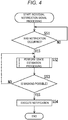
- step S51 the notification managing unit 70 stands by until it is determined that a notification to the destination has occurred.
- step S51 in the case where it is determined that a notification has occurred, the notification managing unit 70 supplies a signal indicating that the notification has occurred to the state estimating unit 69, and the processing proceeds to step S52.
- step S52 the sound state estimating unit 65 and the user state estimating unit 66 perform state estimation processing under control by the state estimating unit 69. While this state estimation processing will be described later with reference to Fig. 5 , a detection result of material sound and a detection result of a user state are supplied to the state estimating unit 69 through the state estimation processing in step S52. Note that detection of the material sound and detection of the user state may be performed at the same timing at which the notification has occurred, or may be performed at timings which are not completely the same and are somewhat different.
- step S53 the state estimating unit 69 determines whether or not masking is possible with the material sound on the basis of the detection result of the material sound and the detection result of the user state. That is, it is determined whether a notification can be made only to the destination user by masking being performed with the material sound.
- step S53 in the case where it is determined that masking is not possible, the processing returns to step S52, and the processing in step S52 and subsequent steps is repeated.
- step S53 in the case where it is determined that masking is possible, the processing proceeds to step S54.
- step S54 the notification managing unit 70 causes the output control unit 71 to execute a notification at a timing controlled by the state estimating unit 69 and output a message from the speaker 22.
- step S52 in Fig. 4 will be described next with reference to a flowchart in Fig. 5 .
- the camera 51 inputs a captured image of a subject to the image input unit 61.
- the microphone 52 collects surrounding sound such as sound of the television apparatus 31, the electric fan 41, or the like, and speech of the user 11 and the user 12 and inputs the collected surrounding sound to the speech input unit 63.
- the image input unit 61 supplies the image from the camera 51 to the image processing unit 62.
- the image processing unit 62 performs predetermined image processing on the supplied image and supplies the image subjected to the image processing to the sound state estimating unit 65 and the user state estimating unit 66.
- step S71 the user state estimating unit 66 detects a position of the user. That is, the user state estimating unit 66 detects positions of all users such as the destination user and users other than the destination user from the image from the image processing unit 62 and the sound from the speech processing unit 64 with reference to information in the user identification information DB 68, and supplies a detection result to the state estimating unit 69.
- step S72 the user state estimating unit 66 detects movement of all the users and supplies a detection result to the state estimating unit 69.
- step S73 the sound state estimating unit 65 detects masking material sound such as sound of an air purifier, an air conditioner, a television, or a piano, and surrounding vehicle sound from the image from the image processing unit 62 and the sound from the speech processing unit 64 with reference to information in the sound source identification information DB 67 and supplies a detection result to the state estimating unit 69.
- masking material sound such as sound of an air purifier, an air conditioner, a television, or a piano
- step S74 the sound state estimating unit 65 estimates whether the detected masking material sound continues and supplies an estimation result to the state estimating unit 69.
- step S53 it is determined whether or not masking is possible with the material sound on the basis of a detection result of the material sound and a detection result of the user state.
- the situation where "attention is not given” is, for example, a situation where users other than the destination user focus on something (such as a television program and work) and cannot hear sound, for example, a situation where users other than the destination user fall asleep (a state is detected, and a notification is executed in a case where persons to whom it is not desired to convey a message seem unlikely to hear the message).
- a method for confirmation after a message is output so as to be heard only by the destination user it is also possible to give feedback to a provider of the notification that information has been presented to the destination user located in public space. It is also possible to give feedback that the destination user has confirmed content of the information.
- a method for feedback may be gesture. This feedback is given by, for example, the notification managing unit 70, or the like.
- a multimodal may be used. That is, it is also possible to employ a configuration where sound, visual sense, tactile sense, or the like, are combined, and content cannot be conveyed with sound alone or visual sense alone, so that content of information is conveyed by combination of the both.
- the series of processes described above can be executed by hardware, and can also be executed in software.
- a program forming the software is installed on a computer.
- the term computer includes a computer built into special-purpose hardware, a computer able to execute various functions by installing various programs thereon, such as a general-purpose personal computer, for example, and the like.
- Fig. 6 is a block diagram illustrating an exemplary hardware configuration of a computer that executes the series of processes described above according to a program.
- a central processing unit (CPU) 301 read-only memory (ROM) 302, and random access memory (RAM) 303 are interconnected through a bus 304.
- CPU central processing unit
- ROM read-only memory
- RAM random access memory
- an input/output interface 305 is also connected to the bus 304.
- An input unit 306, an output unit 307, a storage unit 308, a communication unit 309, and a drive 310 are connected to the input/output interface 305.
- the input unit 306 includes a keyboard, a mouse, a microphone, a touch panel, an input terminal, and the like, for example.
- the output unit 307 includes a display, a speaker, an output terminal, and the like, for example.
- the storage unit 308 includes a hard disk, a RAM disk, non-volatile memory, and the like, for example.
- the communication unit 309 includes a network interface, for example.
- the drive 310 drives a removable medium 311 such as a magnetic disk, an optical disc, a magneto-optical disc, or semiconductor memory.
- the series of processes described above is performed by having the CPU 301 load a program stored in the storage unit 308 into the RAM 303 via the input/output interface 305 and the bus 304, and execute the program, for example. Additionally, data required for the CPU 301 to execute various processes and the like is also stored in the RAM 303 as appropriate.
- the program executed by the computer may be applied by being recorded onto the removable medium 311 as an instance of packaged media or the like, for example.
- the program may be installed in the storage unit 308 via the input/output interface 310 by inserting the removable medium 311 into the drive 310.
- the program may also be provided via a wired or wireless transmission medium such as a local area network, the Internet, or digital satellite broadcasting.
- the program may be received by the communication unit 309 and installed in the storage unit 308.
- the program may also be preinstalled in the ROM 302 or the storage unit 308.
- a system means a set of a plurality of constituent elements (e.g., devices or modules (parts)), regardless of whether or not all the constituent elements are in the same housing. Accordingly, a plurality of devices that is contained in different housings and connected via a network and one device in which a plurality of modules is contained in one housing are both systems.
- constituent elements e.g., devices or modules (parts)
- an element described as a single device may be divided and configured as a plurality of devices (or processing units).
- elements described as a plurality of devices (or processing units) above may be configured collectively as a single device (or processing unit).
- an element other than those described above may be added to the configuration of each device (or processing unit).
- a part of the configuration of a given device (or processing unit) may be included in the configuration of another device (or another processing unit) as long as the configuration or operation of the system as a whole is substantially the same.
- the present technology can adopt a configuration of cloud computing which performs processing by allocating and sharing one function by a plurality of devices through a network.
- the program described above can be executed in any device.
- the device has a necessary function (functional block or the like) and can obtain necessary information.
- each step described by the above-described flowcharts can be executed by one device or executed by being allocated to a plurality of devices.
- the plurality of processes included in this one step can be executed by one device or executed by being allocated to a plurality of devices.
- processing in steps describing the program may be executed chronologically along the order described in this specification, or may be executed concurrently, or individually at necessary timing such as when a call is made. Moreover, processing in steps describing the program may be executed concurrently with processing of another program, or may be executed in combination with processing of another program.
- any plurality of the present technologies described in this specification can be performed alone independently of each other, unless a contradiction arises.
- any plurality of the present technologies can be performed in combination.
- the present technology described in any of the embodiments can be performed in combination with the present technology described in another embodiment.
- any of the present technologies described above can be performed in combination with another technology that is not described above.
- present technology may also be configured as below.
Landscapes
- Engineering & Computer Science (AREA)
- Physics & Mathematics (AREA)
- Acoustics & Sound (AREA)
- Multimedia (AREA)
- Signal Processing (AREA)
- Audiology, Speech & Language Pathology (AREA)
- Health & Medical Sciences (AREA)
- Computational Linguistics (AREA)
- Human Computer Interaction (AREA)
- Computer Networks & Wireless Communication (AREA)
- Quality & Reliability (AREA)
- General Health & Medical Sciences (AREA)
- User Interface Of Digital Computer (AREA)
- Emergency Alarm Devices (AREA)
Applications Claiming Priority (2)
| Application Number | Priority Date | Filing Date | Title |
|---|---|---|---|
| JP2017086821 | 2017-04-26 | ||
| PCT/JP2018/015355 WO2018198792A1 (fr) | 2017-04-26 | 2018-04-12 | Dispositif de traitement de signal, procédé et programme |
Publications (2)
| Publication Number | Publication Date |
|---|---|
| EP3618059A1 true EP3618059A1 (fr) | 2020-03-04 |
| EP3618059A4 EP3618059A4 (fr) | 2020-04-22 |
Family
ID=63918217
Family Applications (1)
| Application Number | Title | Priority Date | Filing Date |
|---|---|---|---|
| EP18792060.8A Withdrawn EP3618059A4 (fr) | 2017-04-26 | 2018-04-12 | Dispositif de traitement de signal, procédé et programme |
Country Status (4)
| Country | Link |
|---|---|
| US (1) | US11081128B2 (fr) |
| EP (1) | EP3618059A4 (fr) |
| JP (1) | JP7078039B2 (fr) |
| WO (1) | WO2018198792A1 (fr) |
Families Citing this family (1)
| Publication number | Priority date | Publication date | Assignee | Title |
|---|---|---|---|---|
| JP7043158B1 (ja) * | 2022-01-31 | 2022-03-29 | 功憲 末次 | 音発生装置 |
Family Cites Families (20)
| Publication number | Priority date | Publication date | Assignee | Title |
|---|---|---|---|---|
| US6865259B1 (en) * | 1997-10-02 | 2005-03-08 | Siemens Communications, Inc. | Apparatus and method for forwarding a message waiting indicator |
| JP3822224B1 (ja) * | 2005-06-28 | 2006-09-13 | 株式会社フィールドシステム | 情報提供システム |
| JP2008209703A (ja) * | 2007-02-27 | 2008-09-11 | Yamaha Corp | カラオケ装置 |
| JP2010019935A (ja) | 2008-07-08 | 2010-01-28 | Toshiba Corp | スピーチプライバシー保護装置 |
| US20100254543A1 (en) * | 2009-02-03 | 2010-10-07 | Squarehead Technology As | Conference microphone system |
| JP5532729B2 (ja) * | 2009-08-04 | 2014-06-25 | ヤマハ株式会社 | 会話漏洩防止装置 |
| JP5732937B2 (ja) * | 2010-09-08 | 2015-06-10 | ヤマハ株式会社 | サウンドマスキング装置 |
| JP2012093705A (ja) * | 2010-09-28 | 2012-05-17 | Yamaha Corp | 音声出力装置 |
| JP5966326B2 (ja) * | 2010-12-07 | 2016-08-10 | ヤマハ株式会社 | マスカ音出力装置、マスカ音出力システム、およびプログラム |
| US8761737B2 (en) * | 2011-01-06 | 2014-06-24 | Blackberry Limited | Delivery and management of status notifications for group messaging |
| US20130259254A1 (en) * | 2012-03-28 | 2013-10-03 | Qualcomm Incorporated | Systems, methods, and apparatus for producing a directional sound field |
| JP6025037B2 (ja) * | 2012-10-25 | 2016-11-16 | パナソニックIpマネジメント株式会社 | 音声エージェント装置、及びその制御方法 |
| JP5958833B2 (ja) * | 2013-06-24 | 2016-08-02 | パナソニックIpマネジメント株式会社 | 指向性制御システム |
| US9469247B2 (en) * | 2013-11-21 | 2016-10-18 | Harman International Industries, Incorporated | Using external sounds to alert vehicle occupants of external events and mask in-car conversations |
| US9445190B2 (en) * | 2013-12-20 | 2016-09-13 | Plantronics, Inc. | Masking open space noise using sound and corresponding visual |
| WO2016185668A1 (fr) * | 2015-05-18 | 2016-11-24 | パナソニックIpマネジメント株式会社 | Système de commande de directivité et procédé de commande de sortie sonore |
| US9870762B2 (en) * | 2015-09-11 | 2018-01-16 | Plantronics, Inc. | Steerable loudspeaker system for individualized sound masking |
| US11120821B2 (en) * | 2016-08-08 | 2021-09-14 | Plantronics, Inc. | Vowel sensing voice activity detector |
| US10152959B2 (en) * | 2016-11-30 | 2018-12-11 | Plantronics, Inc. | Locality based noise masking |
| US10074356B1 (en) * | 2017-03-09 | 2018-09-11 | Plantronics, Inc. | Centralized control of multiple active noise cancellation devices |
-
2018
- 2018-04-12 WO PCT/JP2018/015355 patent/WO2018198792A1/fr not_active Ceased
- 2018-04-12 EP EP18792060.8A patent/EP3618059A4/fr not_active Withdrawn
- 2018-04-12 US US16/485,789 patent/US11081128B2/en not_active Expired - Fee Related
- 2018-04-12 JP JP2019514370A patent/JP7078039B2/ja not_active Expired - Fee Related
Also Published As
| Publication number | Publication date |
|---|---|
| JP7078039B2 (ja) | 2022-05-31 |
| WO2018198792A1 (fr) | 2018-11-01 |
| EP3618059A4 (fr) | 2020-04-22 |
| JPWO2018198792A1 (ja) | 2020-03-05 |
| US20200051586A1 (en) | 2020-02-13 |
| US11081128B2 (en) | 2021-08-03 |
Similar Documents
| Publication | Publication Date | Title |
|---|---|---|
| US12316292B2 (en) | Intelligent audio output devices | |
| JP6489563B2 (ja) | 音量調節方法、システム、デバイス及びプログラム | |
| US11626116B2 (en) | Contingent device actions during loss of network connectivity | |
| JP7652892B2 (ja) | 定位されたフィードバックによる聴力増強及びウェアラブルシステム | |
| JP2021197727A (ja) | 音声出力装置の設定を調整するためのプログラム、システム及びコンピュータ実装方法、 | |
| KR20170017381A (ko) | 단말기 및 단말기의 동작 방법 | |
| US11030879B2 (en) | Environment-aware monitoring systems, methods, and computer program products for immersive environments | |
| US11081128B2 (en) | Signal processing apparatus and method, and program | |
| WO2016052520A1 (fr) | Dispositif de conversation | |
| CN112291672A (zh) | 扬声器的控制方法、控制装置以及电子设备 | |
| US10810973B2 (en) | Information processing device and information processing method | |
| KR102606286B1 (ko) | 전자 장치 및 전자 장치를 이용한 소음 제어 방법 | |
| CN114089278B (zh) | 用于分析音频环境的装置、方法和计算机程序 | |
| CN112204937A (zh) | 使数字助理能够生成环境感知响应的方法和系统 | |
| US20210058775A1 (en) | Agent device and method for operating the same | |
| EP3640770A1 (fr) | Dispositif de traitement d'informations, procédé de traitement d'informations et programme | |
| EP2466468A9 (fr) | Procédé et appareil de génération d'une alerte subliminale |
Legal Events
| Date | Code | Title | Description |
|---|---|---|---|
| STAA | Information on the status of an ep patent application or granted ep patent |
Free format text: STATUS: THE INTERNATIONAL PUBLICATION HAS BEEN MADE |
|
| PUAI | Public reference made under article 153(3) epc to a published international application that has entered the european phase |
Free format text: ORIGINAL CODE: 0009012 |
|
| STAA | Information on the status of an ep patent application or granted ep patent |
Free format text: STATUS: REQUEST FOR EXAMINATION WAS MADE |
|
| 17P | Request for examination filed |
Effective date: 20191115 |
|
| AK | Designated contracting states |
Kind code of ref document: A1 Designated state(s): AL AT BE BG CH CY CZ DE DK EE ES FI FR GB GR HR HU IE IS IT LI LT LU LV MC MK MT NL NO PL PT RO RS SE SI SK SM TR |
|
| AX | Request for extension of the european patent |
Extension state: BA ME |
|
| A4 | Supplementary search report drawn up and despatched |
Effective date: 20200320 |
|
| RIC1 | Information provided on ipc code assigned before grant |
Ipc: G10K 11/178 20060101AFI20200316BHEP |
|
| DAV | Request for validation of the european patent (deleted) | ||
| DAX | Request for extension of the european patent (deleted) | ||
| RAP3 | Party data changed (applicant data changed or rights of an application transferred) |
Owner name: SONY GROUP CORPORATION |
|
| STAA | Information on the status of an ep patent application or granted ep patent |
Free format text: STATUS: EXAMINATION IS IN PROGRESS |
|
| 17Q | First examination report despatched |
Effective date: 20220414 |
|
| STAA | Information on the status of an ep patent application or granted ep patent |
Free format text: STATUS: THE APPLICATION HAS BEEN WITHDRAWN |
|
| 18W | Application withdrawn |
Effective date: 20220623 |