EP3618486A1 - Effektivitätsbewertung einer massnahme basierend auf benutzererfahrung und ausgeführten massnahmen - Google Patents
Effektivitätsbewertung einer massnahme basierend auf benutzererfahrung und ausgeführten massnahmen Download PDFInfo
- Publication number
- EP3618486A1 EP3618486A1 EP18191586.9A EP18191586A EP3618486A1 EP 3618486 A1 EP3618486 A1 EP 3618486A1 EP 18191586 A EP18191586 A EP 18191586A EP 3618486 A1 EP3618486 A1 EP 3618486A1
- Authority
- EP
- European Patent Office
- Prior art keywords
- action
- user
- kpis
- experiences
- actions
- Prior art date
- Legal status (The legal status is an assumption and is not a legal conclusion. Google has not performed a legal analysis and makes no representation as to the accuracy of the status listed.)
- Withdrawn
Links
- 230000009471 action Effects 0.000 title claims abstract description 141
- 238000004891 communication Methods 0.000 claims abstract description 28
- 208000018910 keratinopathic ichthyosis Diseases 0.000 claims description 62
- 230000002596 correlated effect Effects 0.000 claims description 17
- 238000010801 machine learning Methods 0.000 claims description 8
- 238000012706 support-vector machine Methods 0.000 claims description 4
- 238000007477 logistic regression Methods 0.000 claims description 3
- 238000000034 method Methods 0.000 claims description 3
- 238000004590 computer program Methods 0.000 claims description 2
- 230000000875 corresponding effect Effects 0.000 description 9
- 230000006872 improvement Effects 0.000 description 9
- 230000007246 mechanism Effects 0.000 description 4
- 238000004458 analytical method Methods 0.000 description 2
- 230000001419 dependent effect Effects 0.000 description 2
- 238000003745 diagnosis Methods 0.000 description 2
- 238000005516 engineering process Methods 0.000 description 2
- 230000006870 function Effects 0.000 description 2
- 230000003068 static effect Effects 0.000 description 2
- 230000001629 suppression Effects 0.000 description 2
- 238000013019 agitation Methods 0.000 description 1
- 238000013459 approach Methods 0.000 description 1
- 230000006399 behavior Effects 0.000 description 1
- 230000008901 benefit Effects 0.000 description 1
- 230000001413 cellular effect Effects 0.000 description 1
- 239000004020 conductor Substances 0.000 description 1
- 230000001186 cumulative effect Effects 0.000 description 1
- 230000002708 enhancing effect Effects 0.000 description 1
- 230000002452 interceptive effect Effects 0.000 description 1
- 238000002372 labelling Methods 0.000 description 1
- 238000012417 linear regression Methods 0.000 description 1
- 238000012986 modification Methods 0.000 description 1
- 230000004048 modification Effects 0.000 description 1
- 230000003287 optical effect Effects 0.000 description 1
- 238000012545 processing Methods 0.000 description 1
- 230000001932 seasonal effect Effects 0.000 description 1
- 238000000060 site-specific infrared dichroism spectroscopy Methods 0.000 description 1
- 239000007787 solid Substances 0.000 description 1
- 230000001960 triggered effect Effects 0.000 description 1
- 238000011144 upstream manufacturing Methods 0.000 description 1
Images


Classifications
-
- H—ELECTRICITY
- H04—ELECTRIC COMMUNICATION TECHNIQUE
- H04W—WIRELESS COMMUNICATION NETWORKS
- H04W24/00—Supervisory, monitoring or testing arrangements
- H04W24/02—Arrangements for optimising operational condition
-
- H—ELECTRICITY
- H04—ELECTRIC COMMUNICATION TECHNIQUE
- H04L—TRANSMISSION OF DIGITAL INFORMATION, e.g. TELEGRAPHIC COMMUNICATION
- H04L41/00—Arrangements for maintenance, administration or management of data switching networks, e.g. of packet switching networks
- H04L41/08—Configuration management of networks or network elements
- H04L41/0803—Configuration setting
- H04L41/0823—Configuration setting characterised by the purposes of a change of settings, e.g. optimising configuration for enhancing reliability
-
- H—ELECTRICITY
- H04—ELECTRIC COMMUNICATION TECHNIQUE
- H04L—TRANSMISSION OF DIGITAL INFORMATION, e.g. TELEGRAPHIC COMMUNICATION
- H04L41/00—Arrangements for maintenance, administration or management of data switching networks, e.g. of packet switching networks
- H04L41/16—Arrangements for maintenance, administration or management of data switching networks, e.g. of packet switching networks using machine learning or artificial intelligence
-
- H—ELECTRICITY
- H04—ELECTRIC COMMUNICATION TECHNIQUE
- H04L—TRANSMISSION OF DIGITAL INFORMATION, e.g. TELEGRAPHIC COMMUNICATION
- H04L41/00—Arrangements for maintenance, administration or management of data switching networks, e.g. of packet switching networks
- H04L41/50—Network service management, e.g. ensuring proper service fulfilment according to agreements
- H04L41/5003—Managing SLA; Interaction between SLA and QoS
- H04L41/5019—Ensuring fulfilment of SLA
- H04L41/5025—Ensuring fulfilment of SLA by proactively reacting to service quality change, e.g. by reconfiguration after service quality degradation or upgrade
-
- H—ELECTRICITY
- H04—ELECTRIC COMMUNICATION TECHNIQUE
- H04L—TRANSMISSION OF DIGITAL INFORMATION, e.g. TELEGRAPHIC COMMUNICATION
- H04L41/00—Arrangements for maintenance, administration or management of data switching networks, e.g. of packet switching networks
- H04L41/50—Network service management, e.g. ensuring proper service fulfilment according to agreements
- H04L41/5003—Managing SLA; Interaction between SLA and QoS
- H04L41/5009—Determining service level performance parameters or violations of service level contracts, e.g. violations of agreed response time or mean time between failures [MTBF]
Definitions
- Various example embodiments relate to executing recommended actions to improve a state of a communication network.
- Communication networks such as home networks, are becoming increasingly challenging to manage due to growing demands in terms of services, diversified end user devices, multiple coexisting technologies and segmented network topologies.
- network managers diagnose the network, identify a problem, propose therefrom a dedicated action workflow comprising specific actions to be undertaken, and subsequently execute the actions to remedy the identified problem.
- the action workflow is owned by a customer care and include recommendations, such as automated ones like rebooting an access point, enabling or disabling a radio or service set identifier, SSID, triggering a band steering algorithm, and/or triggering a channel selection algorithm or interactive ones like adding a repeater, and/or replacing a router or access point, whereby it is the aim of customer care that the recommendations lead to a problem resolution or suppression.
- recommendations such as automated ones like rebooting an access point, enabling or disabling a radio or service set identifier, SSID, triggering a band steering algorithm, and/or triggering a channel selection algorithm or interactive ones like adding a repeater, and/or replacing a router or access point, whereby it is the aim of customer care that the recommendations lead to a problem resolution or suppression.
- an apparatus comprising means for performing:
- the executed actions together with user's experiences are stored as diagnostic data.
- User's experiences may, for example, be based on feedback from a user surveyed by customer care, or by assessing a behaviour of the communication network after the executing of one or more actions.
- User's experiences may also be based on the absence of a user's complain after the executing of an action or based on assessing subsequent executed actions after an initial one.
- the diagnostic data thus comprises executed actions and user's experiences which may be collected through a variety of ways.
- an effectiveness rating is derived for the executed actions stored therein.
- the effectiveness in terms of a resolution and/or suppression of a problem through the execution of an action is determined and expressed as an effectiveness rating.
- an accurate indication of the effectiveness of an executed action is obtained by the effectiveness rating. For example, when an action is executed, silent agitation may arise which will be stored as a user's experience when the user continuous using a poor-working network, thus when the action is non-effective. A user may also decide to make no further use of the network, which will be identified through a user's inactivity.
- An executed action may also resolve or suppress a problem in an unexpected manner, for example when it resolves or suppresses a problem to which it was not initially related to. Alike, a problem may be resolved or suppressed by a sequence of taken actions, from which only a limited number are effective.
- an effectiveness rating for the executed actions there is an overview on how effective the actions are after their executions.
- the diagnostic data further comprises key performance indicators, KPIs, wherein an action is triggerable by one or more KPIs; and wherein the means are further configured to perform:
- KPIs may be defined, wherein a KPI is indicative for a condition of the network.
- the KPIs may be defined taking into account the type of network, such as, for example, a Wi-Fi network, a powerline network, or an ethernet network, or may be defined for multiple types of communication networks. Since a KPI is indicative for a condition of a network, it may trigger an action when, for example, a predefined threshold of the KPI is exceeded through measuring parameters.
- KPIs are correlated to the actions, such that an accurate overview is obtained which KPI is correlated to which action.
- a set of correlated KPIs is obtained for the actions in the diagnostic data.
- the means are further configured to perform:
- a pattern of the set of correlated KPIs of an action may be modelled into an effective pattern and a non-effective pattern based on the effectiveness rating of the action.
- a pattern is modelled and learned from the diagnostic data on the effectiveness of actions whereby the KPIs reflect specific conditions of the communication network.
- the output of modelling the diagnostic data may then come in different levels of granularity. For example, in a binary manner reflecting the effectiveness of an action through the rating, and a soft value that quantifies potential improvement through the KPIs. It thus proactively gives an assessment on whether and to what extent a problem was solved by an executed action. Secondly, it relies on previous user's experiences yielding genuine impact.
- the means are further configured to perform:
- an effectiveness rating and a set of correlated KPIs in the diagnostic data is selected by linking the proposed action with the stored executed actions. For the proposed action it can thus prior to an execution be assessed if the proposed action will be effective or not.
- a proposed action would be inefficient, it is avoided to execute such a time- and cost-wise inefficient approach. If such an inefficient action would be executed, costs associated with it are irreversibly list with no guarantee that it will yield any results.
- the assessment and the prediction of the effectiveness of an action may be performed in an automated manner.
- a threshold may be defined, and likewise for the effective KPIs pattern as well.
- an action may be performed when at the KPI pattern results in an effective recommendation and/or when the effectiveness rating exceeds a threshold.
- the means are further configured to perform:
- the diagnostic data remains updated by updating it when a proposed action is assessed as effective and subsequently executed. This way, it may also be verified if the assessment was indeed accurate.
- the modelling is performed by a machine learning method.
- the modelling of a pattern the set of correlated KPIs into effective and non-effective KPIs pattern may be performed by a machine learning method.
- the diagnostic data comprises a vast amount of data
- the data may be examined in a fast and efficient way.
- other diagnostic data related to another communication network may be exchanged, thereby enhancing the overall quality of the diagnostic data.
- the machine learning method is a support vector machine.
- Support vector machine is a binary linear classifier such that the KPIs may be classified in two classes in a vector space. This way, a clear distinction between the effective and non-effective KPIs patterns is obtained.
- the machine learning method is a logistic regression algorithm.
- a logistic regression algorithm allows to correlate two possible dependent outcomes to one or more variables, wherein the two outcomes are the effective KPIs pattern respectively the non-effective KPI pattern.
- the communication network is one of the group of a wireless network, a power line network, and an ethernet network.
- the apparatus may be deployed in a variety of communication networks.
- a method comprising the step of:
- a computer program product comprising computer-executable instructions for performing the following step when the program is run on a computer:
- a computer readable storage medium comprising commuter-executable instructions for performing the following step when the program is run on a computer:
- FIG. 1 an example embodiment of a sequence of steps to assess a proposed action is illustrated and Fig. 3 illustrates an apparatus comprising means configured to analyse diagnostic data.
- Enriched data 103 is obtained 110 from customer care 100 and comprises, for example, user's feedback.
- a model is learned from the enriched data 103 which is collected and processed by customer care 100, and from executed actions 101.
- the model may, for example, be learned from underlying key performance indicators, KPIs, from historical data.
- every new proposed recommendation or action 102 is assessed 105 by a developed model through corresponding KPIs 104.
- each action 101 is interpreted by customer care 100.
- the proposed action 102 may then be executed 305, 106, or altered, updated or stored.
- the apparatus 300 comprises means to derive 301 from diagnostic data comprising executed actions 101 and user's feedback as enriched data 103 an effectiveness rating for a corresponding action, wherein an action changes a state of a communication network, such as, for example, a Wi-Fi network.
- diagnostic data comprising executed actions 101 and user's feedback as enriched data 103 an effectiveness rating for a corresponding action, wherein an action changes a state of a communication network, such as, for example, a Wi-Fi network.
- the apparatus 300 comprises further means to correlate 302 KPIs 104 to the actions 101, such that for the actions 101 a respective set of correlated KPIs is obtained.
- the means of the apparatus 300 are further configured to model 303 a pattern the set of KPIs into effective and non-effective KPIs patterns based on the derived 301 effectiveness rating.
- the means select 304 for a proposed action 102 an effectiveness rating and a set of correlated KPIs based on the executed actions 101. Differently formulated, the proposed action 102 is assessed 105 on its efficiency. Finally, the proposed action 102 is executed 305, 106 when the assessment indicates that the proposed action 102 will be efficient. Finally, when the proposed action 102 is executed 305, 106, the actions 101 and subsequently the enriched data 103 may be updated 306.
- Fig. 2 shows another example embodiment of a sequence of steps to classify modelling actions 101 based on key performance indicators.
- a first step data is processed to enrich the executed actions 101. It involves labelling the actions 101 that have previously been proposed by customer care 100 and executed with respect to their efficiency.
- customer care 100 collects a user's satisfaction feedback after that an action 101 has been executed to infer whether the action 101 was effective in solving a problem or not resulting in ground truth data 200.
- ground truth data 200 may take the form of binary data, that is if the action 101 was effective or not. The collected data is thus genuine user experience.
- enriched data entails executed actions 101 with corresponding identifiers, such as, for example, date, type of action, account id, and effectiveness rating.
- a correlation between underlying KPIs 201 and corresponding action effectiveness ratings is made.
- the resulting set of KPIs are dependent on action type and comprises parameters such as downstream, upstream, signal strength, error rate, retransmission rate, dropped packet rate, failed packet rate, reconnection time, number of steering events, channel utilization, neighbouring interference, channel used etc. These parameters may be collected in time series corresponding to, for example, the last twenty-four hours, or collected as a vector of aggregated KPI values, such as cumulative, average, max, min, etc.
- underlying KPIs define a KPI hyper space 205.
- the set of KPIs may originate from multiple communication networks, such as a Wi-Fi network, a powerline network and/or an ethernet network.
- a model is learned that splits the underlying KPI hyperspace 205 according to a corresponding action effectiveness rating.
- the outcome of the learned model is a discriminative hyperplane that splits the KPI hyperspace 205 into two subspaces 206 and 207.
- the model may be learned and the KPI hyperspace 205 may be learned respectively classified by a classifier 202 using machine learning methods, such as a support vector machine and/or a linear regression algorithm.
- the steps of learning the model and splitting the hyperspace 205 may be done periodically, meaning that the model itself is updated based on a new batch of ground truth data 200. This way, variations are captured and seasonal changes in customer experience. Furthermore, the model may be learned per action type, and consequently multiple models may be learned.
- a prospective improvement reflected through the effectiveness rating is determined.
- a prospective set of underlying KPIs that triggers the proposed action 102 is selected 304 and forwarded to a corresponding learned model.
- the model output results in two levels of granularity, namely on the one hand a recommendation outcome indicative on which side of the discriminative hyperplane the new point resides 203, and on the other hand an indication of a relative improvement expected by the proposed action 204.
- a recommendation outcome thus represents a recommendation effectiveness, that is whether the proposed action 102 will be effective or not and may take a binary form.
- a relative improvement is given which measures to which extent the proposed action will improve a customer's experience. Differently formulated, it indicates how effective a proposed action 102 will be.
- a proposed action 102 will be interpreted based on the outcome of the previous step.
- the proposed action 105 is assessed 105 on whether to proceed and execute 305, 106 the proposed action 102 or not.
- a decision is made as which one to be executed.
- customer care 100 may proceed and execute 305, 106 the proposed action 102.
- the proposed action 102 is not executed but the diagnosis algorithm is further updated 306.
- the proposed action 102 is tagged as false positive. All false positive proposed actions are further analysed to improve the diagnosis algorithm that proposed these proposed actions.
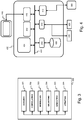
- Fig. 4 shows a suitable computing system 400 enabling to implement embodiments of the method for assessing an efficiency of a proposed action according to the invention.
- Computing system 400 may in general be formed as a suitable general-purpose computer and comprise a bus 410, a processor 402, a local memory 404, one or more optional input interfaces 414, one or more optional output interfaces 416, a communication interface 412, a storage element interface 406, and one or more storage elements 408.
- Bus 410 may comprise one or more conductors that permit communication among the components of the computing system 400.
- Processor 402 may include any type of conventional processor or microprocessor that interprets and executes programming instructions.
- Local memory 404 may include a random-access memory (RAM) or another type of dynamic storage device that stores information and instructions for execution by processor 402 and/or a read only memory (ROM) or another type of static storage device that stores static information and instructions for use by processor 402.
- RAM random-access memory
- ROM read only memory
- Input interface 414 may comprise one or more conventional mechanisms that permit an operator or user to input information to the computing device 400, such as a keyboard 420, a mouse 430, a pen, voice recognition and/or biometric mechanisms, a camera, etc.
- Output interface 416 may comprise one or more conventional mechanisms that output information to the operator or user, such as a display 440, etc.
- Communication interface 412 may comprise any transceiver-like mechanism such as for example one or more Ethernet interfaces that enables computing system 500 to communicate with other devices and/or systems, for example with apparatus 300.
- the communication interface 412 of computing system 400 may be connected to such another computing system by means of a local area network (LAN) or a wide area network (WAN) such as for example the internet.
- Storage element interface 406 may comprise a storage interface such as for example a Serial Advanced Technology Attachment (SATA) interface or a Small Computer System Interface (SCSI) for connecting bus 410 to one or more storage elements 408, such as one or more local disks, for example SATA disk drives, and control the reading and writing of data to and/or from these storage elements 408.
- SATA Serial Advanced Technology Attachment
- SCSI Small Computer System Interface
- storage element(s) 408 above is/are described as a local disk, in general any other suitable computer-readable media such as a removable magnetic disk, optical storage media such as a CD or DVD, -ROM disk, solid state drives, flash memory cards, ... could be used.
- Computing system 400 could thus correspond to the apparatus 300 in the embodiment illustrated by Fig. 3 .
- circuitry may refer to one or more or all of the following:
- circuitry also covers an implementation of merely a hardware circuit or processor (or multiple processors) or portion of a hardware circuit or processor and its (or their) accompanying software and/or firmware.
- circuitry also covers, for example and if applicable to the particular claim element, a baseband integrated circuit or processor integrated circuit for a mobile device or a similar integrated circuit in a server, a cellular network device, or other computing or network device.
- top, bottom, over, under, and the like are introduced for descriptive purposes and not necessarily to denote relative positions. It is to be understood that the terms so used are interchangeable under appropriate circumstances and embodiments of the invention are capable of operating according to the present invention in other sequences, or in orientations different from the one(s) described or illustrated above.
Landscapes
- Engineering & Computer Science (AREA)
- Computer Networks & Wireless Communication (AREA)
- Signal Processing (AREA)
- Artificial Intelligence (AREA)
- Computer Vision & Pattern Recognition (AREA)
- Databases & Information Systems (AREA)
- Evolutionary Computation (AREA)
- Medical Informatics (AREA)
- Software Systems (AREA)
- Quality & Reliability (AREA)
- Management, Administration, Business Operations System, And Electronic Commerce (AREA)
Priority Applications (1)
| Application Number | Priority Date | Filing Date | Title |
|---|---|---|---|
| EP18191586.9A EP3618486A1 (de) | 2018-08-30 | 2018-08-30 | Effektivitätsbewertung einer massnahme basierend auf benutzererfahrung und ausgeführten massnahmen |
Applications Claiming Priority (1)
| Application Number | Priority Date | Filing Date | Title |
|---|---|---|---|
| EP18191586.9A EP3618486A1 (de) | 2018-08-30 | 2018-08-30 | Effektivitätsbewertung einer massnahme basierend auf benutzererfahrung und ausgeführten massnahmen |
Publications (1)
| Publication Number | Publication Date |
|---|---|
| EP3618486A1 true EP3618486A1 (de) | 2020-03-04 |
Family
ID=63490221
Family Applications (1)
| Application Number | Title | Priority Date | Filing Date |
|---|---|---|---|
| EP18191586.9A Withdrawn EP3618486A1 (de) | 2018-08-30 | 2018-08-30 | Effektivitätsbewertung einer massnahme basierend auf benutzererfahrung und ausgeführten massnahmen |
Country Status (1)
| Country | Link |
|---|---|
| EP (1) | EP3618486A1 (de) |
Citations (3)
| Publication number | Priority date | Publication date | Assignee | Title |
|---|---|---|---|---|
| WO2013149870A1 (en) * | 2012-04-05 | 2013-10-10 | Telefonaktiebolaget L M Ericsson (Publ) | Method and system for managing actions implemented on a network element within a telecommunications network |
| US20160241429A1 (en) * | 2015-02-12 | 2016-08-18 | Tektronix, Inc. | Knowledge base radio and core network prescriptive root cause analysis |
| US20180132174A1 (en) * | 2016-11-07 | 2018-05-10 | Eero Inc. | Systems and methods for enhanced mesh networking |
-
2018
- 2018-08-30 EP EP18191586.9A patent/EP3618486A1/de not_active Withdrawn
Patent Citations (3)
| Publication number | Priority date | Publication date | Assignee | Title |
|---|---|---|---|---|
| WO2013149870A1 (en) * | 2012-04-05 | 2013-10-10 | Telefonaktiebolaget L M Ericsson (Publ) | Method and system for managing actions implemented on a network element within a telecommunications network |
| US20160241429A1 (en) * | 2015-02-12 | 2016-08-18 | Tektronix, Inc. | Knowledge base radio and core network prescriptive root cause analysis |
| US20180132174A1 (en) * | 2016-11-07 | 2018-05-10 | Eero Inc. | Systems and methods for enhanced mesh networking |
Similar Documents
| Publication | Publication Date | Title |
|---|---|---|
| US20230385034A1 (en) | Automated decision making using staged machine learning | |
| US11902114B2 (en) | System and method for predicting and reducing subscriber churn | |
| US20150294246A1 (en) | Selecting optimal training data set for service contract prediction | |
| DE102021109767A1 (de) | Systeme und methoden zur vorausschauenden sicherheit | |
| Casimiro et al. | Self-Adaptation for Machine Learning Based Systems. | |
| US9727447B1 (en) | System, method, and computer program for automated exploratory testing | |
| JP7590593B2 (ja) | パフォーマンスベースのプロジェクト管理のためのデータ駆動手法 | |
| EP4199449A1 (de) | Automatische klassifizierung von korrelierten anomalien aus einem netzwerk durch interpretierbare clusterung | |
| EP3383088A1 (de) | Computerimplementiertes verfahren, system und computerprogramme zur quantifizierung der leistung eines netzwerks | |
| US11823008B2 (en) | Algorithm consolidation | |
| Raeiszadeh et al. | Real-time anomaly detection using distributed tracing in microservice cloud applications | |
| Mulongo | Key performance indicators of artificial intelligence for IT operations (AIOPS) | |
| CN118446671A (zh) | 一种一体化智慧运维控制方法及系统 | |
| EP3618486A1 (de) | Effektivitätsbewertung einer massnahme basierend auf benutzererfahrung und ausgeführten massnahmen | |
| EP3391635B1 (de) | Autonome verfahren zur modifizierung eines entscheidungsbaumalgorithmus im betrieb auf einem multi-terminal telekommunikationssystem | |
| US20250032882A1 (en) | Artificial intelligence assisted live sports data quality assurance | |
| CN121666560A (zh) | 用于改进整体装备效率的切换分析的方法和系统 | |
| Tariq et al. | Proactive business process mining for end-state prediction using trace features | |
| EP3772834A1 (de) | Verfahren zur vorhersage des zeitverlaufs einer vielzahl von daten in bezug auf eine fernsprechinfrastruktur zur virtualisierung der netzwerkfunktion | |
| WO2017102602A1 (en) | Autonomic method for managing a computing system | |
| EP3391295B1 (de) | Verfahren zur feststellung einer änderung im betrieb eines autonomen algorithmus | |
| CN106874201A (zh) | 测试方法和装置 | |
| Cid-Fuentes et al. | Online behavior identification in distributed systems | |
| US20250350970A1 (en) | Method and system for network fault management by predicting average rate at faulty base station | |
| EP3389303B1 (de) | Auslösung empfohlener einstellungen in einem kommunikationsnetz |
Legal Events
| Date | Code | Title | Description |
|---|---|---|---|
| PUAI | Public reference made under article 153(3) epc to a published international application that has entered the european phase |
Free format text: ORIGINAL CODE: 0009012 |
|
| STAA | Information on the status of an ep patent application or granted ep patent |
Free format text: STATUS: THE APPLICATION HAS BEEN PUBLISHED |
|
| AK | Designated contracting states |
Kind code of ref document: A1 Designated state(s): AL AT BE BG CH CY CZ DE DK EE ES FI FR GB GR HR HU IE IS IT LI LT LU LV MC MK MT NL NO PL PT RO RS SE SI SK SM TR |
|
| AX | Request for extension of the european patent |
Extension state: BA ME |
|
| STAA | Information on the status of an ep patent application or granted ep patent |
Free format text: STATUS: THE APPLICATION IS DEEMED TO BE WITHDRAWN |
|
| 18D | Application deemed to be withdrawn |
Effective date: 20200905 |