EP3618563B1 - Système, procédé et dispositif pour exposer un support de données de module sans fil - Google Patents
Système, procédé et dispositif pour exposer un support de données de module sans fil Download PDFInfo
- Publication number
- EP3618563B1 EP3618563B1 EP19200895.1A EP19200895A EP3618563B1 EP 3618563 B1 EP3618563 B1 EP 3618563B1 EP 19200895 A EP19200895 A EP 19200895A EP 3618563 B1 EP3618563 B1 EP 3618563B1
- Authority
- EP
- European Patent Office
- Prior art keywords
- data
- module
- user
- store
- wireless
- Prior art date
- Legal status (The legal status is an assumption and is not a legal conclusion. Google has not performed a legal analysis and makes no representation as to the accuracy of the status listed.)
- Not-in-force
Links
Images




Classifications
-
- H—ELECTRICITY
- H04—ELECTRIC COMMUNICATION TECHNIQUE
- H04L—TRANSMISSION OF DIGITAL INFORMATION, e.g. TELEGRAPHIC COMMUNICATION
- H04L67/00—Network arrangements or protocols for supporting network services or applications
- H04L67/01—Protocols
- H04L67/10—Protocols in which an application is distributed across nodes in the network
-
- H—ELECTRICITY
- H04—ELECTRIC COMMUNICATION TECHNIQUE
- H04W—WIRELESS COMMUNICATION NETWORKS
- H04W88/00—Devices specially adapted for wireless communication networks, e.g. terminals, base stations or access point devices
- H04W88/02—Terminal devices
Definitions
- This disclosure relates generally to wireless modules and host computing devices. More particularly, but not by way of limitation, the disclosure is related to wireless modules having integrated data storage.
- Wireless modules such as 2G, 3G, 4G, and WiFi wireless modules are often integrated into wide variety of computing devices. Additionally, these wireless modules typically include integrated storage media (e.g., memory), which is used to store instructions for controlling the wireless module, as well as wireless module application generated data.
- Devices that incorporate such wireless modules include any computing device configured for communication over a network, including, but not limited to, machine-to-machine (M2M) devices.
- M2M devices may include many different types of devices that are configured to communicate over wireless and wired networks using a wireless module.
- M2M devices operate over networks such as the Internet and may comprise what is referred to as the Internet of Things (IOT).
- IOT Internet of Things
- the IOT includes various autonomous and/or interconnected, computing devices that serve a wide variety of purposes.
- M2M devices range in size from very large to very small.
- a large-scale M2M device includes a vehicle or a large household appliance
- a small M2M device may include a watch or sensor.
- each device provides one or more functionalities, typically by execution of a host device application.
- a watch device may be configured to provide time keeping functionalities and other ancillary services by way of a host watch application.
- the host device applications may generate host device application data (e.g., user data). In some instances, it may be advantageous to store this user data in a data store.
- portable storage interface may accept, for example, an SD card or other similar storage media that is used for storing host device application data. Removing integrated storage for the host device application reduces the overall size and cost of the M2M device.
- US 2012/238206 discloses a communications device including a near field communication (NFC) device, at least one memory configured to store secure application data to be communicated via the NFC device and a secure element (SE) application programming interface (API) associated with the secure application data, and a processor coupled with the NFC device and the at least one memory.
- the processor may be configured to disable the SE API to prevent access to the secure application data based upon a security condition and enable the SE API to allow access to the secure application data based upon a security restore event.
- US 6289464 discloses a system and method for receiving wireless information on a portable computing device includes powering a wireless receiver only from a battery of the portable computing device. Receiving wireless information and storing the wireless information in memory of the wireless receiver. The wireless receiver wakes up a processor of the portable computing device when the wireless information fills a threshold of the memory available in the wireless receiver. The wireless information is then transferred from the memory of the wireless receiver to the memory of the portable computing device.
- One aspect of the present invention provides a wireless communication module in accordance with claim 1.
- a further aspect of the present invention provides a method for utilizing a wireless module data store of a wireless communication module in accordance with claim 7.
- a host computing device may comprise a watch, a pager, a sensor, a cellular telephone, an appliance, a vehicle, or other similar machine-to-machine devices that would be known to one of ordinary skill in the art with the present disclosure before them.
- An exemplary host application comprises any one, or combination, of executable instructions that provide one or more functionalities.
- functionalities for a watch host application may include a clock display functionality, where the watch host application may obtain time information from a central server and display the time information on the display of the watch.
- the watch host application may also provide other ancillary functionalities such as a message display function, where email, Short Message Service (SMS), or other messages are presented on the display of the watch.
- An exemplary functionality may include Global Positioning System (GPS) tracking, where a location of the watch is tracked over time. This user data generated by the GPS tracking functionality may be stored in a reserved space of a wireless module of the host computing device, as will be described in greater detail below.
- GPS Global Positioning System
- a wireless module may comprise 2G, 3G, 4G, and/or WiFi wireless modules, as well as other similar wireless modules.
- a wireless module data store of a wireless module is exposed through an API.
- wireless module manufacturers may expose the API information to host computing device manufacturers to allow the host computing device manufacturers to program their host device applications to utilize the API of the wireless communication module to take advantage of the wireless module data store of the wireless communication module.
- host computing device manufacturers may reduce the need to include dedicated storage for their host application, thereby reducing the host computing device manufacturing, costs.
- the API may couple a host application with a data storage load module of the wireless module to access, evaluate, and manage available and reserved user space in the wireless module data store. Also, the API may allow a host application to store, retrieve, and delete user data in the wireless module data store.
- the data storage load module may also query the wireless module to determine available storage space and reserve a portion of the available storage for the host application.
- a system may include the host computing device and a network data store which are communicatively coupled together via any one or combination of private or public networks, such as the Internet. User data generated by the host application may be stored on or forwarded to the network data store in a synchronous or asynchronous manner.
- the API may also determine excess GPU capacity of a processor of the wireless module.
- the API may be configured to allow the host application to utilize at least a portion of the excess CPU capacity of the wireless module.
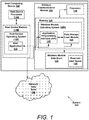
- FIG. 1 illustrates an exemplary system 100 that includes a host computing device 105 and a network data store 140.
- User data generated on the host computing device 105 may be transmitted and received by the host computing device 105 over a network, such as the Internet.
- User data may also be stored on, and retrieved from, the network data store 140, as will be discussed in greater detail below.
- the host computing device 105 comprises a host device processor 110A and a host device memory 110B, which stores executable instructions that define the functions and operations of a host application 110.
- the host application 110 may be executed within a host device operating system 110C.
- the host device memory 110B may include read only instructions, or the host device memory 110B may include only enough space to accommodate the host application 110.
- any user data that is generated by the host application 110 may exceed the storage capacity of the host device memory, if any.
- the host application 110 may store its user data in a wireless module data store 130 of a wireless module, such as wireless communication Module 115.
- the wireless communications module 115 may comprise a processor 120 and a memory 125.
- the memory 125 includes a wireless module operating system 125A, as well as an API 135 that is exposed to the host application 110.
- an API may be broadly described as a communication protocol for software components, which are each created with a different programming language. Due to differences in the programming languages used to create the software components, and the protocols employed by both software components, the software components may be unable to interoperate.
- the API is used as a generic interface by these software components to communicate with each one another. Stated otherwise, an API acts as a translator for the software components.
- the API 135 mediates the exchange of requests and transmission of user data between the host application 110 and a data storage load module 145.
- the data storage load module 145 may be configured to receive through the API 135, requests or user data from the host application 110.
- the data storage load module 145 may control the wireless module data store 130 to respond to the requests or store the user data received from the host application 110.
- the data storage load module may return responses or requested user data to the API 135 for forwarding to the host application 110.
- the API 135 acts as an intermediary between the host application and the data storage load module 145.
- module may also refer to any of an application-specific integrated circuit ("ASIC"), an electronic circuit, a processor (shared, dedicated, or group) that executes one or more software or firmware programs, a combinational logic circuit, and/or other suitable components that provide the described functionalities.
- ASIC application-specific integrated circuit
- processor shared, dedicated, or group
- combinational logic circuit and/or other suitable components that provide the described functionalities.
- the data storage load module 145 also controls the management of the wireless module data store 130.
- the data storage load module 145 may be configured to determine available user space in the wireless module data store 130 and reserve a portion of the available user space.
- a reserved portion of available user space may include blocks, sectors, or other reservable portions of the wireless module data store 130 that are reserved for use by the host application 110.
- a reserved user space may be utilized to store user data generated by the host application 110.
- a watch host application may store GPS tracking information for a watch host computing device in the reserved user space of the wireless module data store 130.
- controlling the wireless module data store 130 by the data storage load module 145 may include setting read/write/delete or other similar permissions for a reserved user space 150, where the reserved user space includes at least a portion of the available user space on the wireless module data store 130 that has been reserved for use by the host application 110.
- the data storage load module 145 is configured to allow the host application 110 to save, retrieve, and/or delete user data from the reserved user space 150.
- the API 135 may be configured to enable the host application 110 to interface with the data storage load module 145 to determine available computing capacity of the processor 120 of the wireless communication module 115.
- the API 135 may also allow access to the available computing capacity of the processor 120 of the wireless communication module 115.
- the API 135 may allow the host application 110 to utilize excess processing capacity of the wireless communication module 115.
- the processor 120 may dedicate processing cycles, threads, and/or one or more CPU cores (when the processor 120 is a multicore processor).
- FIG. 2A is a signal flow diagram of a method of controlling a wireless module data store, the diagram illustrating a request to reserve space and a response indicative of a failure to reserve space.
- the host application 110 transmits a reserve space request to the API 135, which forwards the request to the data storage load module 145 of the wireless communication module 115.
- the request may specify an amount of space that is required by the host application 110.
- the amount of space requested may he defined by a size or volume of the user data that is generated by the host application 110.
- the amount of space requested may include a predetermined space size that is defined by the host application 110 developer.
- the data storage load module 145 determines any available user space in the wireless module data store 130. If there is no available user space in the wireless module data store 130, the wireless module data store 130 informs the data storage load module 145 of the lack of available storage space. The data storage load module 145 then transmits a reserve failure message to the API 135, which forwards the same to the host application 110. A failure message may also be returned if the wireless module data store 130 is unable to process the request received from the data storage load module 145.
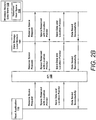
- FIG. 2B is a signal flow diagram of a method of accessing a wireless module data store 130, where space is successfully reserved and user data is successfully saved in the wireless module data store.
- the host application 110 sends a reserve request message to the data storage load module 145.
- the data storage load module 145 reserves a portion of the available user space in the wireless module data store 130. More specifically, a reserved user space 150 (also see FIG. 1 ) is created and a location pointer is defined for the reserved user space 150. It will he understood that the location pointer for the reserved user space 150 may specify blocks, sectors, or other locations of the wireless module data store 130 that are reserved for use by the host application 110. That is, the location pointer uniquely identifies the reserved user space 150 within the wireless module data store 130. In some instances, the location pointer may include an offset and a length for the reserved user space 150. The location pointer is returned back to the host application 110 for future user data access/save/retrieve/delete operations.
- FIG. 2B also illustrates an operation of saving of data to the wireless module data store 130 by the host application 110.
- the host application 110 transmits a save data request to the API 135.
- the save data request comprises not only the user data generated by the host application 110, but also the location pointer received from the data storage load module 145.
- the data storage load module 145 then stores the user data in the reserved user space 150 that is defined by the location pointer.
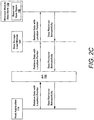
- FIG. 2C is a signal flow diagram of a method of accessing a wireless module data store 130, where user data is retrieved from the wireless module data store 130.
- the host application 110 transmits a retrieve data request, along with the location pointer to the data storage load module 145 via the API 135.
- the data storage load module 145 obtains the requested user data from the reserved user space 150 using the location pointer. Once the data storage load module 145 obtains the requested data, the data storage load module 145 transmits the retrieved user data back to the host application 110 via the API 135.
- FIG. 2D is a signal flow diagram of a method of accessing a wireless module data store 130. where user data is successfully deleted from the wireless module data store 130. To delete previously stored user data from a reserved user space 150, the host application 110 transmits a delete data request, along with the location pointer to the data storage load module 145 via the API 135.
- the data storage load module 145 deletes the requested user data from the reserved user space 150, referenced by the location pointer. Once the data storage load module 145 deletes the requested data, the data storage load module 145 transmits a successful deletion message back to the host application 110 via the API 135.
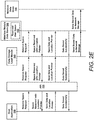
- FIG. 2E is a signal flow diagram of a method of storing user data on a network data store 140.
- the method of FIG, 2E is similar to the method illustrated in FIG. 2B , where data is successfully saved in the reserved user space 150 of the wireless module data store 130. Additionally, the method illustrated in FIG. 2E illustrates the data storage load module 145 transmitting saved stored data to a network data store 140.
- the data storage load module 145 and the network data store 140 may engage in similar user space establishment and control procedures as those utilized by the data storage load module 145 to establish a reserved user space 150 on the wireless module data store 130, as well as data retrieval, deletion, and other similar operations.
- the network storage process illustrated in FIG. 2E may occur synchronously, where the data storage load module 145 transmits user data to the network data store 140 when the user data is generated by the host application 110, or in parallel with storing the user data in the reserved user space 150.
- the network storage process may occur asynchronously, where the data storage load module 145 batches user data in the reserved user space 150 and transmits the batched user data to the network data store 140 at a later point in time.
- user data may be transmitted by the data storage load module 145 to the network data store 140 according to a schedule.
- the data storage load module 145 may be configured to transmit stored user data to the network data store during off peak periods.
- the schedule may specify that the data storage load module 145 is to transmit the stored user data to the network data store 140 at a time at which the host application 110 is experiencing reduced usage.
- the transmission times may be related to current or expected network bandwidth.
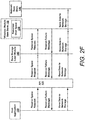
- FIG. 2F is a signal flow diagram of a method of storing user data on a network data store when user data cannot be stored on the wireless module data store.
- the method illustrated in FIG. 2F is similar to the method illustrated in FIG. 2A , with the exception that user data generated by the host application 110 is forwarded to the network data store 140. More specifically, upon the host application 110 receiving notification that a request to reserve user space has been denied, the host application 110 may transmit a message to the API 135 that informs the data storage load module 145 that user data should be stored on the network data store 140.
- FIG. 3 is a flowchart of an exemplary method for utilizing a wireless module data store 130 of a wireless communication module 115 that resides on a host computing device 105.
- the wireless communication module 115 is controlled by a processor 120.
- the wireless communication module 115 includes a memory 125 coupled to the processor 120 for storing computer program instructions. Exemplary instructions include the wireless module operating system 125A and the data storage load module 145.
- the method is shown as including receiving 305 by a data storage load module 145, requests or user data from a host application 110 through an application programming interface (API) 135 of the wireless communication module 115 residing on the host computing device 105. Additionally, the method includes controlling 310 by the data storage load module 145, the wireless module data store 130 to respond to the requests or store the user data. In some embodiments, the method also includes returning 315 by the data storage load module 145, responses or requested user data to the API 135 for forwarding to the host application 110.
- API application programming interface
- FIG. 4 illustrates a variety of control sub-methods that may be executed in conjunction with the method described in FIG. 3 . More specifically, the various control sub-methods of FIG. 4 are associated with the controlling 310 operation of FIG. 3 .
- controlling may comprise determining 405 by the data storage load module 145 available user space in the wireless module data store 130, as well as reserving 410 by the data storage load module 145 a portion of the available user space in the wireless module data store 130. Again, this portion of the available user space is referred to as the reserved user space 150.
- FIG. 4 also illustrates several alternative control sub-methods 415-425 that may be executed subsequent to establishing the reserved user space 150 by the data storage load module 145.
- Step 405 includes determining, by the data storage load module 145, available user space in the wireless module data store 130. After determining available user space in the wireless module data store 130, the method includes reserving 410, by the data storage load module 145, a portion of the available user space in the wireless module data store 130. In relation to FIG. 3 , it will be understood that the steps of determining and reserving (405 and 410) of FIG. 4 may be executed prior to the step 305 of receiving by a data storage load module 145, requests or user data from a host application 110 through an application programming interface (API) 135 of the wireless communication module 115.
- API application programming interface
- the alternative control sub-methods 415-425 may comprise specific methods of the controlling 310 step of FIG. 3 . That is, each of the alternative control sub-methods 415-425 may be independently executed by the data storage load module 145.
- a control sub-method for the data storage load module 145 may include setting 415, by the data storage load module 145, read/write/delete permissions for the reserved user space 150 in the wireless module data store 130. Also, the method may include saving 425 by the data storage load module 145, user data a reserved user space 150 of the wireless module data store 130.
- a control sub-method for the data storage load module 145 may include accessing 420, by the data storage load module 145, a reserved user space 150 in the wireless module data store 130. In some instances, subsequent to accessing 420 the reserved user space 150, the control sub-method may include retrieving 430 by the data storage load module 145, user data stored in the reserved user space 150 of the wireless module data store 130.
- a control sub-method for the data storage load module 145 may include saving 425 user data a reserved user space 150 of the wireless module data store 130 may occur before deleting 435 by the data storage load module 145, user data saved in the reserved user space 150 of the wireless module data store 130.
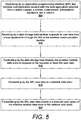
- FIG. 5 is a flowchart of a method for storing or forwarding user data generated by the host application 110 to a network data store 140.
- the method includes interfacing 500 by an API 135, the wireless communication module 115 with a host application 110.
- the host application 110 may include an application for a watch, pager, or sensor, or other host application required for use with the host computing device 105.
- the method includes receiving 505 by a data storage load module 145, requests or user data from the host application 10 through the API 135, as well as controlling 510 by the data storage load module 145, the wireless module data store 130 to respond to requests or store the user data.
- the method optionally includes forwarding 515 by the API 135, user data to a network data store 140.
- the method optionally includes transmitting 520, user data stored in a reserved user space 150 to the network data store 140.
- Computer-readable storage media refer to jury medium or media that participate in providing instructions to a central processing unit (CPU), a processor, a microcontroller, or the like. Such media may take forms including, but not limited to, non-volatile and volatile media such as optical or magnetic disks and dynamic memory, respectively.
- Computer program code for carrying out operations for aspects of the present technology may be written in any combination of one or more programming languages, including an object oriented programming language, conventional procedural programming languages, or similar programming languages.
- the program code may execute entirely on the user's computer, partly on the user's computer, as a stand-alone software package, partly on the user's computer and partly on a remote computer or entirely on the remote computer or server.
- the remote computer may be coupled with the user's computer through any type of network, including a local area network (LAN) or a wide area network (WAN), or the connection may he made to an external computer (for example, through the Internet using an Internet Service Provider).
- LAN local area network
- WAN wide area network
- Internet Service Provider for example, AT&T, MCI, Sprint, EarthLink, MSN, GTE, etc.
- Embodiments of the present technology are described above with reference to flowchart illustrations and/or block diagrams of methods, apparatus (systems) and computer program products according to embodiments of the present technology. It will he understood that each block of the flowchart illustrations and/or block diagrams, and combinations of blocks in the flowchart illustrations and/or block diagrams, can be implemented by computer program instructions. These computer program instructions may be provided to a processor of a general purpose computer, special purpose computer, or other programmable data processing apparatus to produce a machine, such that the instructions, which execute via the processor of the computer or other programmable data processing apparatus, create means for implementing the functions/acts specified in the flowchart and/or block diagram block or blocks.
- These computer program instructions may also be stored in a computer readable medium that can direct a computer, other programmable data processing apparatus, or other devices to function in a particular manner, such that the instructions stored in the computer readable medium produce an article of manufacture including instructions which implement the function/act specified in the flowchart and/or block diagram block or blocks.
- the computer program instructions may also be loaded onto a computer, other programmable data processing apparatus, or other devices to cause a series of operational steps to he performed on the computer, other programmable apparatus or other devices to produce a computer implemented process such that the instructions which execute on the computer or other programmable apparatus provide processes for implementing the functions/acts specified in the flowchart and/or block diagram block or blocks.
- each block in the flowchart or block diagrams may represent a module, segment, or portion of code, which comprises one or more executable instructions for implementing the specified logical function(s).
- the functions noted in the block may occur out of the order noted in the figures. For example, two blocks shown in succession may, m fact, be executed substantially concurrently, or the blocks may sometimes be executed in the reverse order, depending upon the functionality involved.
Landscapes
- Engineering & Computer Science (AREA)
- Computer Networks & Wireless Communication (AREA)
- Signal Processing (AREA)
- Mobile Radio Communication Systems (AREA)
Claims (10)
- Un module de communication sans fil (115) agencé pour être compris dans un dispositif informatique hôte (105), le module de communication sans fil (115) comprenant :un processeur (120) configuré pour contrôler le module de communication sans fil (115) ;une mémoire (125) couplée au processeur (120) pour le stockage d'instructions de programme informatique ;une mémoire de données de module sans fil (130) configurée pour stocker des données utilisateur générées par l'application hôte (110) si les données utilisateur dépassent une capacité de stockage de la mémoire d'un dispositif hôte (110B) ; etune interface de programmation d'application, API, (135) configurée pour interfacer le module de communication sans fil (115) avec une application hôte (110) résidant sur le dispositif informatique hôte (105), dans lequel l'API (135) est configurée pour permettre à l'application hôte (110) d'accéder à la mémoire de données de module sans fil (130) dans le module de communication sans fil (115),dans lequel l'API (135) est configurée pour permettre à l'application hôte (110) de s'interfacer avec un module de chargement de stockage de données (145) pour :demander de réserver de l'espace utilisateur dans le mémoire de données de module sans fil (130) ; etrecevoir, en réponse, un message d'échec de réservation en cas de manque d'espace utilisateur disponible ou réserver une partie de l'espace utilisateur disponible dans la mémoire de données de module sans fil (130) pour être utilisée par l'application hôte (110) pour stocker les données utilisateur s'il y a de l'espace utilisateur disponible,et dans lequel le module de chargement de stockage de données (145) est configuré pour :recevoir, par l'intermédiaire de l'API (135), des requêtes ou des données utilisateur de l'application hôte (110) ;contrôler la mémoire de données de module sans fil (130) pour répondre aux requêtes ou stocker les données de l'utilisateur ;renvoyer les réponses ou les données utilisateur demandées à l'API (135) pour qu'elles soient transmises à l'application hôte (110) ;et dans lequel l'API (135) est en outre configurée pour :à réception d'un message d'échec de réservation en provenance du module de stockage des données (145), notifier à l'application hôte (110) qu'une demande de réservation d'espace utilisateur a été refusée,et est configurée pour, en réponse à la réception d'un message de l'application hôte (110) indiquant que les données de l'utilisateur doivent être stockées dans une mémoire du réseau (140), informer le module de stockage des données (145) que les données utilisateur doivent être stockées dans la mémoire de données du réseau (140) et transmettre les données utilisateur à la mémoire de données du réseau (140).
- Module de communication sans fil (115) selon la revendication 1, dans lequel l'API (135) est configurée pour donner à l'application hôte (110) l'accès au module de chargement de stockage de données (145) pour sauvegarder les données utilisateur dans l'espace utilisateur réservé (150) de la mémoire de données de module sans fil (130) ou pour supprimer les données utilisateur sauvegardées dans l'espace utilisateur réservé (150) de la mémoire de données de module sans fil (130).
- Module de communication sans fil (115) selon la revendication 1, dans lequel l'API (135) est configurée pour permettre à l'application hôte (110) d'accéder au module de chargement de stockage de données (145) pour :déterminer la capacité de calcul disponible du processeur (120) du module de communication sans fil (115) ; etaccéder par l'application hôte (110) à la capacité de calcul disponible du module de communication sans fil (115).
- Module de communication sans fil (115) selon la revendication 1, dans lequel l'API (135) est en outre configurée pour transmettre des données utilisateur stockées dans l'espace utilisateur réservé (150) de la mémoire de données de module sans fil (130) à la mémoire de données du réseau (140).
- Le module de communication sans fil (115) selon la revendication 4, dans lequel l'API (135) est configurée pour regrouper les données utilisateur dans l'espace utilisateur réservé (150) et transmettre les données utilisateur regroupées à la mémoire de données du réseau (140).
- Un dispositif informatique hôte (105), comprenant : un processeur de dispositif hôte (110A); une application hôte (110) s'exécutant sur le processeur de dispositif hôte (110A) ; et un module de communication sans fil (115) selon l'une quelconque des revendications 1 à 5.
- Procédé pour utiliser une mémoire de données de module sans fil (130) d'un module de communication sans fil (115) compris dans un dispositif informatique hôte (105), le module de communication sans fil (115) étant contrôlé par un processeur (120), le module de communication sans fil (115) ayant une mémoire (125) couplée au processeur (120) pour stocker des instructions de programme informatique, le procédé comprenant :la réception (305) par un module de chargement de stockage de données (145), de demandes ou de données utilisateur provenant d'une application hôte (110) résidant sur le dispositif informatique hôte (105), par l'intermédiaire d'une interface de programmation d'application, API, (135) du module de communication sans fil (115), dans lequel les données utilisateur générées par l'application hôte (110) sont stockées dans la mémoire de données de module sans fil (130), si les données utilisateur dépassent une capacité de stockage de la mémoire d'un dispositif hôte (110B) ;le contrôle (310) par le module de chargement de stockage de données (145), de la mémoire de données de module sans fil (130) pour répondre aux requêtes ou stocker les données utilisateur ; etle renvoi (315) par le module de chargement de stockage de données (145), des réponses ou des données utilisateur demandées, à l'API (135), pour les transmettre à l'application hôte (110),le contrôle (310) comprenant :la réception, par le module de stockage des données (145), d'une demande de réservation d'espace utilisateur ;la détermination (405), par le module de chargement de stockage de données (145), de l'espace utilisateur disponible dans la mémoire de données de module sans fil (130) ;la réservation (410) par le module de chargement de stockage de données (145), d'une partie de l'espace utilisateur dans la mémoire de données de module sans fil (130) pour utilisation par l'application hôte (110) pour stocker des données utilisateur s'il y a de l'espace utilisateur disponible, ou le renvoi d'un message d'échec de réservation en cas de manque d'espace utilisateur disponible ;la réception, par l'application hôte (110), d'une notification de l'API (135) indiquant qu'une demande de réservation d'espace utilisateur a été refusée, à la réception par l'API (135) d'un message d'échec de réservation provenant du module de stockage de données (145), et, dans ce cas,la transmission d'un message de l'application hôte (110) à l'API (135) informant le module de chargement des données (145) que les données utilisateur doivent être stockées dans la mémoire de données du réseau (410) ; etl'information, par l'API (135), au module de stockage des données (145) que les données utilisateur doivent être stockées sur dans la mémoire de données du réseau (140), et la transmission (515) par l'API (135), des données utilisateur à la mémoire de données du réseau (140).
- Procédé selon la revendication 7, dans lequel le contrôle (310) comprend :l'accès (420) par le module de chargement de stockage de données (145) à l'espace utilisateur réservé (150) dans la mémoire de données de module sans fil (130) ; etle réglage (415) par le module de chargement de stockage de données (145) d'autorisations de lecture/écriture/suppression pour l'espace utilisateur réservé (150) dans la mémoire de données de module sans fil (130).
- Procédé selon la revendication 7, dans laquelle le contrôle (310) comprend la sauvegarde (425) par le module de chargement de stockage de données (145), de données utilisateur dans l'espace utilisateur réservé (150) de la mémoire de données de module sans fil (130) ou la suppression (435) par le module de chargement de stockage de données (145), de données utilisateur sauvegardées dans l'espace utilisateur réservé (150) de la mémoire de données de module sans fil (130).
- Procédé selon la revendication 7, dans laquelle le contrôle (310) comprend la récupération (430) par le module de chargement de stockage de données (145), de données utilisateur stockées dans l'espace utilisateur réservé (150) de la mémoire de données de module sans fil (130).
Applications Claiming Priority (3)
| Application Number | Priority Date | Filing Date | Title |
|---|---|---|---|
| US13/864,914 US20140317168A1 (en) | 2013-04-17 | 2013-04-17 | System, method, and device for exposing wireless module data storage |
| PCT/IB2014/060191 WO2014170775A1 (fr) | 2013-04-17 | 2014-03-26 | Système, procédé et dispositif pour exposer un support de données de module sans fil |
| EP14719362.7A EP2987387B1 (fr) | 2013-04-17 | 2014-03-26 | Système, procédé et dispositif pour exposer un support de données de module sans fil |
Related Parent Applications (2)
| Application Number | Title | Priority Date | Filing Date |
|---|---|---|---|
| EP14719362.7A Division EP2987387B1 (fr) | 2013-04-17 | 2014-03-26 | Système, procédé et dispositif pour exposer un support de données de module sans fil |
| EP14719362.7A Division-Into EP2987387B1 (fr) | 2013-04-17 | 2014-03-26 | Système, procédé et dispositif pour exposer un support de données de module sans fil |
Publications (2)
| Publication Number | Publication Date |
|---|---|
| EP3618563A1 EP3618563A1 (fr) | 2020-03-04 |
| EP3618563B1 true EP3618563B1 (fr) | 2021-01-06 |
Family
ID=50549367
Family Applications (3)
| Application Number | Title | Priority Date | Filing Date |
|---|---|---|---|
| EP19200895.1A Not-in-force EP3618563B1 (fr) | 2013-04-17 | 2014-03-26 | Système, procédé et dispositif pour exposer un support de données de module sans fil |
| EP14719362.7A Not-in-force EP2987387B1 (fr) | 2013-04-17 | 2014-03-26 | Système, procédé et dispositif pour exposer un support de données de module sans fil |
| EP19200911.6A Withdrawn EP3651545A1 (fr) | 2013-04-17 | 2014-03-26 | Système, procédé et dispositif pour exposer un support de données de module sans fil |
Family Applications After (2)
| Application Number | Title | Priority Date | Filing Date |
|---|---|---|---|
| EP14719362.7A Not-in-force EP2987387B1 (fr) | 2013-04-17 | 2014-03-26 | Système, procédé et dispositif pour exposer un support de données de module sans fil |
| EP19200911.6A Withdrawn EP3651545A1 (fr) | 2013-04-17 | 2014-03-26 | Système, procédé et dispositif pour exposer un support de données de module sans fil |
Country Status (8)
| Country | Link |
|---|---|
| US (1) | US20140317168A1 (fr) |
| EP (3) | EP3618563B1 (fr) |
| DK (1) | DK2987387T3 (fr) |
| ES (1) | ES2780777T3 (fr) |
| HU (1) | HUE048453T2 (fr) |
| PL (1) | PL2987387T3 (fr) |
| PT (1) | PT2987387T (fr) |
| WO (1) | WO2014170775A1 (fr) |
Families Citing this family (16)
| Publication number | Priority date | Publication date | Assignee | Title |
|---|---|---|---|---|
| US10078856B2 (en) | 2016-05-09 | 2018-09-18 | Shadecraft, Inc. | Mobile computing device control of shading object, intelligent umbrella and intelligent shading charging system |
| US10327521B2 (en) | 2015-05-22 | 2019-06-25 | Armen Sevada Gharabegian | Intelligent shading objects |
| US10356223B1 (en) * | 2016-03-17 | 2019-07-16 | Amazon Technologies, Inc. | Connection migration for Internet of Things (IoT) devices |
| US9949540B2 (en) | 2016-05-09 | 2018-04-24 | Shadecraft, Inc. | Automated intelligent shading objects and computer-readable instructions for interfacing with, communicating with and controlling a shading object |
| US10912357B2 (en) | 2016-05-09 | 2021-02-09 | Shadecraft, LLC | Remote control of shading object and/or intelligent umbrella |
| US10250817B2 (en) | 2016-05-09 | 2019-04-02 | Armen Sevada Gharabegian | Shading object, intelligent umbrella and intelligent shading charging system integrated camera and method of operation |
| US10455395B2 (en) | 2016-05-09 | 2019-10-22 | Armen Sevada Gharabegian | Shading object, intelligent umbrella and intelligent shading charging security system and method of operation |
| US10542799B2 (en) | 2016-05-20 | 2020-01-28 | Shadecraft, LLC | Intelligent shading system with movable base assembly |
| US10094138B2 (en) | 2016-12-29 | 2018-10-09 | Shadecraft, Inc. | Control of multiple intelligent umbrellas and/or robotic shading systems |
| US9839267B1 (en) | 2016-12-29 | 2017-12-12 | Shadecraft, Inc. | Shading system with artificial intelligence application programming interface |
| US10118671B2 (en) | 2016-12-29 | 2018-11-06 | Shadecraft, Inc. | Marine vessel with intelligent shading system |
| US10488834B2 (en) | 2017-05-13 | 2019-11-26 | Shadecraft, Inc. | Intelligent umbrella or robotic shading system having telephonic communication capabilities |
| US10349493B2 (en) | 2017-07-07 | 2019-07-09 | Shadecraft, Inc. | Artificial intelligence (AI) computing device with one or more lighting elements |
| US10554436B2 (en) | 2017-11-19 | 2020-02-04 | Shadecraft, Inc. | Intelligent umbrella and/or robotic shading system with ultra-low energy transceivers |
| CN108510715A (zh) * | 2018-01-04 | 2018-09-07 | 北鉅有限公司 | 物品携带的提醒系统 |
| US10519688B2 (en) | 2018-01-06 | 2019-12-31 | Shadecraft, Inc. | Apparatus and method for identifying operational status of umbrella, parasol or shading system utilizing lighting elements |
Family Cites Families (14)
| Publication number | Priority date | Publication date | Assignee | Title |
|---|---|---|---|---|
| DE19733530C2 (de) * | 1997-08-02 | 2003-10-09 | Philips Intellectual Property | Mobilfunkgerät |
| US6289464B1 (en) * | 1998-01-07 | 2001-09-11 | Microsoft Corporation | Receiving wireless information on a mobile device with reduced power consumption |
| SE9802359L (sv) * | 1998-07-01 | 2000-01-02 | Telia Ab | Modul för mobilterminaler |
| US7460853B2 (en) * | 2000-10-12 | 2008-12-02 | Sony Corporation | Wireless module security system and method |
| TWM243761U (en) * | 2003-04-30 | 2004-09-11 | Behavior Tech Computer Corp | Memory disk with wireless data transmitting and rceiving function |
| FI20030943A7 (fi) * | 2003-06-25 | 2004-12-26 | Nokia Corp | Menetelmä machine-to-machine-yksikön parametrien konfiguroimiseksi ja machine-to-machine-yksikkö |
| US8000735B1 (en) * | 2004-12-01 | 2011-08-16 | Globalfoundries Inc. | Wireless modem architecture for reducing memory components |
| EP1775911B1 (fr) * | 2005-10-13 | 2018-02-28 | BlackBerry Limited | Système et méthode pour fournir des notifications asynchrones en utilisant des données synchrones |
| US20070147425A1 (en) * | 2005-12-28 | 2007-06-28 | Wavesat | Wireless modem |
| US8176230B2 (en) * | 2006-04-07 | 2012-05-08 | Kingston Technology Corporation | Wireless flash memory card expansion system |
| GB0615840D0 (en) * | 2006-08-09 | 2006-09-20 | Intuwave Ltd | Mobile Telephone Programmed With Message Logging Capability |
| US8590037B2 (en) * | 2008-12-23 | 2013-11-19 | Sandisk Technologies Inc. | Managing host application privileges |
| US8869155B2 (en) * | 2010-11-12 | 2014-10-21 | International Business Machines Corporation | Increasing parallel program performance for irregular memory access problems with virtual data partitioning and hierarchical collectives |
| US20120238206A1 (en) * | 2011-03-14 | 2012-09-20 | Research In Motion Limited | Communications device providing near field communication (nfc) secure element disabling features related methods |
-
2013
- 2013-04-17 US US13/864,914 patent/US20140317168A1/en not_active Abandoned
-
2014
- 2014-03-26 DK DK14719362.7T patent/DK2987387T3/da active
- 2014-03-26 EP EP19200895.1A patent/EP3618563B1/fr not_active Not-in-force
- 2014-03-26 PT PT147193627T patent/PT2987387T/pt unknown
- 2014-03-26 HU HUE14719362A patent/HUE048453T2/hu unknown
- 2014-03-26 EP EP14719362.7A patent/EP2987387B1/fr not_active Not-in-force
- 2014-03-26 EP EP19200911.6A patent/EP3651545A1/fr not_active Withdrawn
- 2014-03-26 PL PL14719362T patent/PL2987387T3/pl unknown
- 2014-03-26 ES ES14719362T patent/ES2780777T3/es active Active
- 2014-03-26 WO PCT/IB2014/060191 patent/WO2014170775A1/fr not_active Ceased
Non-Patent Citations (1)
| Title |
|---|
| None * |
Also Published As
| Publication number | Publication date |
|---|---|
| US20140317168A1 (en) | 2014-10-23 |
| DK2987387T3 (da) | 2020-04-06 |
| EP3618563A1 (fr) | 2020-03-04 |
| ES2780777T3 (es) | 2020-08-26 |
| PL2987387T3 (pl) | 2020-07-13 |
| EP3651545A1 (fr) | 2020-05-13 |
| PT2987387T (pt) | 2020-03-31 |
| WO2014170775A1 (fr) | 2014-10-23 |
| EP2987387B1 (fr) | 2020-03-18 |
| EP2987387A1 (fr) | 2016-02-24 |
| HUE048453T2 (hu) | 2020-07-28 |
Similar Documents
| Publication | Publication Date | Title |
|---|---|---|
| EP3618563B1 (fr) | Système, procédé et dispositif pour exposer un support de données de module sans fil | |
| EP4170995B1 (fr) | Traitement de requête dans la couche de service | |
| US9510136B2 (en) | Access control in bluetooth® low energy devices | |
| EP3660679B1 (fr) | Procédé, dispositif et système de sauvegarde de sécurité de données | |
| CN116546428B (zh) | 背包式基站的寻呼方法、装置、设备和存储介质 | |
| WO2017092594A1 (fr) | Procédé et dispositif de traitement d'informations | |
| KR20170098289A (ko) | 에너지 효율적인 무선 데이터 전송 | |
| TWI578120B (zh) | 穿戴式裝置、控制方法及非暫態電腦 可讀取媒體 | |
| US11832349B2 (en) | Nomination of a primary cell phone from a pool of cell phones | |
| US20150016321A1 (en) | Performance in a direct communication link environment | |
| HK40018763B (en) | System, method, and device for exposing wireless module data storage | |
| HK40018763A (en) | System, method, and device for exposing wireless module data storage | |
| JP2016534606A (ja) | パワーサイクルを超えるsuplセッションの持続 | |
| CN115065966B (zh) | 终端和通信方法 | |
| US20200073762A1 (en) | Back-up of information stored in mobile computing devices | |
| US9681328B2 (en) | Multiple modem device including notification modem | |
| US20180206111A1 (en) | Secure data link for subscriber identification module (sim)-based processor | |
| US10334414B2 (en) | Managing multiple mobile devices on different operator networks | |
| CN105094902A (zh) | 控制应用程序登录状态的系统和方法 | |
| US20190097764A1 (en) | Wireless communication system and method | |
| CN112291601A (zh) | 一种数据传输方法、电子设备及存储介质 | |
| CN111352660A (zh) | 持有唤醒锁应用的识别方法与装置 | |
| CN109981660B (zh) | 一种信息处理方法、电子设备 | |
| WO2025026592A1 (fr) | Attribution de ressources de signal de réveil de groupe (gwus) | |
| CN103546650A (zh) | 一种北斗移动终端的节电控制方法和设备 |
Legal Events
| Date | Code | Title | Description |
|---|---|---|---|
| PUAI | Public reference made under article 153(3) epc to a published international application that has entered the european phase |
Free format text: ORIGINAL CODE: 0009012 |
|
| STAA | Information on the status of an ep patent application or granted ep patent |
Free format text: STATUS: THE APPLICATION HAS BEEN PUBLISHED |
|
| AC | Divisional application: reference to earlier application |
Ref document number: 2987387 Country of ref document: EP Kind code of ref document: P |
|
| AK | Designated contracting states |
Kind code of ref document: A1 Designated state(s): AL AT BE BG CH CY CZ DE DK EE ES FI FR GB GR HR HU IE IS IT LI LT LU LV MC MK MT NL NO PL PT RO RS SE SI SK SM TR |
|
| STAA | Information on the status of an ep patent application or granted ep patent |
Free format text: STATUS: REQUEST FOR EXAMINATION WAS MADE |
|
| 17P | Request for examination filed |
Effective date: 20200324 |
|
| RBV | Designated contracting states (corrected) |
Designated state(s): AL AT BE BG CH CY CZ DE DK EE ES FI FR GB GR HR HU IE IS IT LI LT LU LV MC MK MT NL NO PL PT RO RS SE SI SK SM TR |
|
| REG | Reference to a national code |
Ref country code: HK Ref legal event code: DE Ref document number: 40018763 Country of ref document: HK |
|
| GRAP | Despatch of communication of intention to grant a patent |
Free format text: ORIGINAL CODE: EPIDOSNIGR1 |
|
| STAA | Information on the status of an ep patent application or granted ep patent |
Free format text: STATUS: GRANT OF PATENT IS INTENDED |
|
| INTG | Intention to grant announced |
Effective date: 20201015 |
|
| GRAS | Grant fee paid |
Free format text: ORIGINAL CODE: EPIDOSNIGR3 |
|
| GRAA | (expected) grant |
Free format text: ORIGINAL CODE: 0009210 |
|
| STAA | Information on the status of an ep patent application or granted ep patent |
Free format text: STATUS: THE PATENT HAS BEEN GRANTED |
|
| AC | Divisional application: reference to earlier application |
Ref document number: 2987387 Country of ref document: EP Kind code of ref document: P |
|
| AK | Designated contracting states |
Kind code of ref document: B1 Designated state(s): AL AT BE BG CH CY CZ DE DK EE ES FI FR GB GR HR HU IE IS IT LI LT LU LV MC MK MT NL NO PL PT RO RS SE SI SK SM TR |
|
| REG | Reference to a national code |
Ref country code: GB Ref legal event code: FG4D |
|
| REG | Reference to a national code |
Ref country code: AT Ref legal event code: REF Ref document number: 1353760 Country of ref document: AT Kind code of ref document: T Effective date: 20210115 Ref country code: CH Ref legal event code: EP |
|
| REG | Reference to a national code |
Ref country code: DE Ref legal event code: R096 Ref document number: 602014074156 Country of ref document: DE |
|
| REG | Reference to a national code |
Ref country code: IE Ref legal event code: FG4D |
|
| PGFP | Annual fee paid to national office [announced via postgrant information from national office to epo] |
Ref country code: FR Payment date: 20210224 Year of fee payment: 8 |
|
| PGFP | Annual fee paid to national office [announced via postgrant information from national office to epo] |
Ref country code: GB Payment date: 20210224 Year of fee payment: 8 Ref country code: DE Payment date: 20210224 Year of fee payment: 8 |
|
| REG | Reference to a national code |
Ref country code: NL Ref legal event code: MP Effective date: 20210106 |
|
| REG | Reference to a national code |
Ref country code: AT Ref legal event code: MK05 Ref document number: 1353760 Country of ref document: AT Kind code of ref document: T Effective date: 20210106 |
|
| REG | Reference to a national code |
Ref country code: LT Ref legal event code: MG9D |
|
| PG25 | Lapsed in a contracting state [announced via postgrant information from national office to epo] |
Ref country code: HR Free format text: LAPSE BECAUSE OF FAILURE TO SUBMIT A TRANSLATION OF THE DESCRIPTION OR TO PAY THE FEE WITHIN THE PRESCRIBED TIME-LIMIT Effective date: 20210106 Ref country code: BG Free format text: LAPSE BECAUSE OF FAILURE TO SUBMIT A TRANSLATION OF THE DESCRIPTION OR TO PAY THE FEE WITHIN THE PRESCRIBED TIME-LIMIT Effective date: 20210406 Ref country code: GR Free format text: LAPSE BECAUSE OF FAILURE TO SUBMIT A TRANSLATION OF THE DESCRIPTION OR TO PAY THE FEE WITHIN THE PRESCRIBED TIME-LIMIT Effective date: 20210407 Ref country code: FI Free format text: LAPSE BECAUSE OF FAILURE TO SUBMIT A TRANSLATION OF THE DESCRIPTION OR TO PAY THE FEE WITHIN THE PRESCRIBED TIME-LIMIT Effective date: 20210106 Ref country code: PT Free format text: LAPSE BECAUSE OF FAILURE TO SUBMIT A TRANSLATION OF THE DESCRIPTION OR TO PAY THE FEE WITHIN THE PRESCRIBED TIME-LIMIT Effective date: 20210506 Ref country code: NO Free format text: LAPSE BECAUSE OF FAILURE TO SUBMIT A TRANSLATION OF THE DESCRIPTION OR TO PAY THE FEE WITHIN THE PRESCRIBED TIME-LIMIT Effective date: 20210406 Ref country code: LT Free format text: LAPSE BECAUSE OF FAILURE TO SUBMIT A TRANSLATION OF THE DESCRIPTION OR TO PAY THE FEE WITHIN THE PRESCRIBED TIME-LIMIT Effective date: 20210106 |
|
| PG25 | Lapsed in a contracting state [announced via postgrant information from national office to epo] |
Ref country code: PL Free format text: LAPSE BECAUSE OF FAILURE TO SUBMIT A TRANSLATION OF THE DESCRIPTION OR TO PAY THE FEE WITHIN THE PRESCRIBED TIME-LIMIT Effective date: 20210106 Ref country code: LV Free format text: LAPSE BECAUSE OF FAILURE TO SUBMIT A TRANSLATION OF THE DESCRIPTION OR TO PAY THE FEE WITHIN THE PRESCRIBED TIME-LIMIT Effective date: 20210106 Ref country code: AT Free format text: LAPSE BECAUSE OF FAILURE TO SUBMIT A TRANSLATION OF THE DESCRIPTION OR TO PAY THE FEE WITHIN THE PRESCRIBED TIME-LIMIT Effective date: 20210106 Ref country code: SE Free format text: LAPSE BECAUSE OF FAILURE TO SUBMIT A TRANSLATION OF THE DESCRIPTION OR TO PAY THE FEE WITHIN THE PRESCRIBED TIME-LIMIT Effective date: 20210106 Ref country code: RS Free format text: LAPSE BECAUSE OF FAILURE TO SUBMIT A TRANSLATION OF THE DESCRIPTION OR TO PAY THE FEE WITHIN THE PRESCRIBED TIME-LIMIT Effective date: 20210106 |
|
| PG25 | Lapsed in a contracting state [announced via postgrant information from national office to epo] |
Ref country code: IS Free format text: LAPSE BECAUSE OF FAILURE TO SUBMIT A TRANSLATION OF THE DESCRIPTION OR TO PAY THE FEE WITHIN THE PRESCRIBED TIME-LIMIT Effective date: 20210506 |
|
| REG | Reference to a national code |
Ref country code: DE Ref legal event code: R097 Ref document number: 602014074156 Country of ref document: DE |
|
| PG25 | Lapsed in a contracting state [announced via postgrant information from national office to epo] |
Ref country code: MC Free format text: LAPSE BECAUSE OF FAILURE TO SUBMIT A TRANSLATION OF THE DESCRIPTION OR TO PAY THE FEE WITHIN THE PRESCRIBED TIME-LIMIT Effective date: 20210106 Ref country code: EE Free format text: LAPSE BECAUSE OF FAILURE TO SUBMIT A TRANSLATION OF THE DESCRIPTION OR TO PAY THE FEE WITHIN THE PRESCRIBED TIME-LIMIT Effective date: 20210106 Ref country code: CZ Free format text: LAPSE BECAUSE OF FAILURE TO SUBMIT A TRANSLATION OF THE DESCRIPTION OR TO PAY THE FEE WITHIN THE PRESCRIBED TIME-LIMIT Effective date: 20210106 Ref country code: SM Free format text: LAPSE BECAUSE OF FAILURE TO SUBMIT A TRANSLATION OF THE DESCRIPTION OR TO PAY THE FEE WITHIN THE PRESCRIBED TIME-LIMIT Effective date: 20210106 |
|
| REG | Reference to a national code |
Ref country code: CH Ref legal event code: PL |
|
| PLBE | No opposition filed within time limit |
Free format text: ORIGINAL CODE: 0009261 |
|
| STAA | Information on the status of an ep patent application or granted ep patent |
Free format text: STATUS: NO OPPOSITION FILED WITHIN TIME LIMIT |
|
| PG25 | Lapsed in a contracting state [announced via postgrant information from national office to epo] |
Ref country code: RO Free format text: LAPSE BECAUSE OF FAILURE TO SUBMIT A TRANSLATION OF THE DESCRIPTION OR TO PAY THE FEE WITHIN THE PRESCRIBED TIME-LIMIT Effective date: 20210106 Ref country code: SK Free format text: LAPSE BECAUSE OF FAILURE TO SUBMIT A TRANSLATION OF THE DESCRIPTION OR TO PAY THE FEE WITHIN THE PRESCRIBED TIME-LIMIT Effective date: 20210106 Ref country code: DK Free format text: LAPSE BECAUSE OF FAILURE TO SUBMIT A TRANSLATION OF THE DESCRIPTION OR TO PAY THE FEE WITHIN THE PRESCRIBED TIME-LIMIT Effective date: 20210106 |
|
| 26N | No opposition filed |
Effective date: 20211007 |
|
| REG | Reference to a national code |
Ref country code: BE Ref legal event code: MM Effective date: 20210331 |
|
| PG25 | Lapsed in a contracting state [announced via postgrant information from national office to epo] |
Ref country code: ES Free format text: LAPSE BECAUSE OF FAILURE TO SUBMIT A TRANSLATION OF THE DESCRIPTION OR TO PAY THE FEE WITHIN THE PRESCRIBED TIME-LIMIT Effective date: 20210106 Ref country code: IE Free format text: LAPSE BECAUSE OF NON-PAYMENT OF DUE FEES Effective date: 20210326 Ref country code: LI Free format text: LAPSE BECAUSE OF NON-PAYMENT OF DUE FEES Effective date: 20210331 Ref country code: LU Free format text: LAPSE BECAUSE OF NON-PAYMENT OF DUE FEES Effective date: 20210326 Ref country code: CH Free format text: LAPSE BECAUSE OF NON-PAYMENT OF DUE FEES Effective date: 20210331 Ref country code: AL Free format text: LAPSE BECAUSE OF FAILURE TO SUBMIT A TRANSLATION OF THE DESCRIPTION OR TO PAY THE FEE WITHIN THE PRESCRIBED TIME-LIMIT Effective date: 20210106 |
|
| PG25 | Lapsed in a contracting state [announced via postgrant information from national office to epo] |
Ref country code: SI Free format text: LAPSE BECAUSE OF FAILURE TO SUBMIT A TRANSLATION OF THE DESCRIPTION OR TO PAY THE FEE WITHIN THE PRESCRIBED TIME-LIMIT Effective date: 20210106 |
|
| PG25 | Lapsed in a contracting state [announced via postgrant information from national office to epo] |
Ref country code: IT Free format text: LAPSE BECAUSE OF FAILURE TO SUBMIT A TRANSLATION OF THE DESCRIPTION OR TO PAY THE FEE WITHIN THE PRESCRIBED TIME-LIMIT Effective date: 20210106 |
|
| PG25 | Lapsed in a contracting state [announced via postgrant information from national office to epo] |
Ref country code: IS Free format text: LAPSE BECAUSE OF FAILURE TO SUBMIT A TRANSLATION OF THE DESCRIPTION OR TO PAY THE FEE WITHIN THE PRESCRIBED TIME-LIMIT Effective date: 20210506 |
|
| PG25 | Lapsed in a contracting state [announced via postgrant information from national office to epo] |
Ref country code: BE Free format text: LAPSE BECAUSE OF NON-PAYMENT OF DUE FEES Effective date: 20210331 |
|
| REG | Reference to a national code |
Ref country code: DE Ref legal event code: R119 Ref document number: 602014074156 Country of ref document: DE |
|
| GBPC | Gb: european patent ceased through non-payment of renewal fee |
Effective date: 20220326 |
|
| PG25 | Lapsed in a contracting state [announced via postgrant information from national office to epo] |
Ref country code: GB Free format text: LAPSE BECAUSE OF NON-PAYMENT OF DUE FEES Effective date: 20220326 Ref country code: FR Free format text: LAPSE BECAUSE OF NON-PAYMENT OF DUE FEES Effective date: 20220331 Ref country code: DE Free format text: LAPSE BECAUSE OF NON-PAYMENT OF DUE FEES Effective date: 20221001 |
|
| P01 | Opt-out of the competence of the unified patent court (upc) registered |
Effective date: 20230412 |
|
| PG25 | Lapsed in a contracting state [announced via postgrant information from national office to epo] |
Ref country code: NL Free format text: LAPSE BECAUSE OF NON-PAYMENT OF DUE FEES Effective date: 20210206 Ref country code: CY Free format text: LAPSE BECAUSE OF FAILURE TO SUBMIT A TRANSLATION OF THE DESCRIPTION OR TO PAY THE FEE WITHIN THE PRESCRIBED TIME-LIMIT Effective date: 20210106 |
|
| PG25 | Lapsed in a contracting state [announced via postgrant information from national office to epo] |
Ref country code: HU Free format text: LAPSE BECAUSE OF FAILURE TO SUBMIT A TRANSLATION OF THE DESCRIPTION OR TO PAY THE FEE WITHIN THE PRESCRIBED TIME-LIMIT; INVALID AB INITIO Effective date: 20140326 |
|
| PG25 | Lapsed in a contracting state [announced via postgrant information from national office to epo] |
Ref country code: MK Free format text: LAPSE BECAUSE OF FAILURE TO SUBMIT A TRANSLATION OF THE DESCRIPTION OR TO PAY THE FEE WITHIN THE PRESCRIBED TIME-LIMIT Effective date: 20210106 |
|
| PG25 | Lapsed in a contracting state [announced via postgrant information from national office to epo] |
Ref country code: TR Free format text: LAPSE BECAUSE OF FAILURE TO SUBMIT A TRANSLATION OF THE DESCRIPTION OR TO PAY THE FEE WITHIN THE PRESCRIBED TIME-LIMIT Effective date: 20210106 |
|
| PG25 | Lapsed in a contracting state [announced via postgrant information from national office to epo] |
Ref country code: MT Free format text: LAPSE BECAUSE OF FAILURE TO SUBMIT A TRANSLATION OF THE DESCRIPTION OR TO PAY THE FEE WITHIN THE PRESCRIBED TIME-LIMIT Effective date: 20210106 |