EP3618698B1 - Medizinische beurteilung basierend auf sprache - Google Patents
Medizinische beurteilung basierend auf sprache Download PDFInfo
- Publication number
- EP3618698B1 EP3618698B1 EP18794955.7A EP18794955A EP3618698B1 EP 3618698 B1 EP3618698 B1 EP 3618698B1 EP 18794955 A EP18794955 A EP 18794955A EP 3618698 B1 EP3618698 B1 EP 3618698B1
- Authority
- EP
- European Patent Office
- Prior art keywords
- user
- medical
- prompts
- module
- features
- Prior art date
- Legal status (The legal status is an assumption and is not a legal conclusion. Google has not performed a legal analysis and makes no representation as to the accuracy of the status listed.)
- Active
Links
Images




Classifications
-
- G—PHYSICS
- G16—INFORMATION AND COMMUNICATION TECHNOLOGY [ICT] SPECIALLY ADAPTED FOR SPECIFIC APPLICATION FIELDS
- G16H—HEALTHCARE INFORMATICS, i.e. INFORMATION AND COMMUNICATION TECHNOLOGY [ICT] SPECIALLY ADAPTED FOR THE HANDLING OR PROCESSING OF MEDICAL OR HEALTHCARE DATA
- G16H80/00—ICT specially adapted for facilitating communication between medical practitioners or patients, e.g. for collaborative diagnosis, therapy or health monitoring
-
- A—HUMAN NECESSITIES
- A61—MEDICAL OR VETERINARY SCIENCE; HYGIENE
- A61B—DIAGNOSIS; SURGERY; IDENTIFICATION
- A61B5/00—Measuring for diagnostic purposes; Identification of persons
- A61B5/103—Measuring devices for testing the shape, pattern, colour, size or movement of the body or parts thereof, for diagnostic purposes
- A61B5/11—Measuring movement of the entire body or parts thereof, e.g. head or hand tremor or mobility of a limb
- A61B5/1123—Discriminating type of movement, e.g. walking or running
-
- A—HUMAN NECESSITIES
- A61—MEDICAL OR VETERINARY SCIENCE; HYGIENE
- A61B—DIAGNOSIS; SURGERY; IDENTIFICATION
- A61B5/00—Measuring for diagnostic purposes; Identification of persons
- A61B5/40—Detecting, measuring or recording for evaluating the nervous system
- A61B5/4076—Diagnosing or monitoring particular conditions of the nervous system
- A61B5/4088—Diagnosing of monitoring cognitive diseases, e.g. Alzheimer, prion diseases or dementia
-
- A—HUMAN NECESSITIES
- A61—MEDICAL OR VETERINARY SCIENCE; HYGIENE
- A61B—DIAGNOSIS; SURGERY; IDENTIFICATION
- A61B5/00—Measuring for diagnostic purposes; Identification of persons
- A61B5/48—Other medical applications
- A61B5/4803—Speech analysis specially adapted for diagnostic purposes
-
- A—HUMAN NECESSITIES
- A61—MEDICAL OR VETERINARY SCIENCE; HYGIENE
- A61B—DIAGNOSIS; SURGERY; IDENTIFICATION
- A61B5/00—Measuring for diagnostic purposes; Identification of persons
- A61B5/72—Signal processing specially adapted for physiological signals or for diagnostic purposes
- A61B5/7235—Details of waveform analysis
- A61B5/7264—Classification of physiological signals or data, e.g. using neural networks, statistical classifiers, expert systems or fuzzy systems
- A61B5/7267—Classification of physiological signals or data, e.g. using neural networks, statistical classifiers, expert systems or fuzzy systems involving training the classification device
-
- G—PHYSICS
- G06—COMPUTING OR CALCULATING; COUNTING
- G06N—COMPUTING ARRANGEMENTS BASED ON SPECIFIC COMPUTATIONAL MODELS
- G06N20/00—Machine learning
- G06N20/10—Machine learning using kernel methods, e.g. support vector machines [SVM]
-
- G—PHYSICS
- G06—COMPUTING OR CALCULATING; COUNTING
- G06N—COMPUTING ARRANGEMENTS BASED ON SPECIFIC COMPUTATIONAL MODELS
- G06N3/00—Computing arrangements based on biological models
- G06N3/02—Neural networks
- G06N3/04—Architecture, e.g. interconnection topology
- G06N3/0499—Feedforward networks
-
- G—PHYSICS
- G06—COMPUTING OR CALCULATING; COUNTING
- G06N—COMPUTING ARRANGEMENTS BASED ON SPECIFIC COMPUTATIONAL MODELS
- G06N3/00—Computing arrangements based on biological models
- G06N3/02—Neural networks
- G06N3/08—Learning methods
-
- G—PHYSICS
- G06—COMPUTING OR CALCULATING; COUNTING
- G06N—COMPUTING ARRANGEMENTS BASED ON SPECIFIC COMPUTATIONAL MODELS
- G06N3/00—Computing arrangements based on biological models
- G06N3/02—Neural networks
- G06N3/08—Learning methods
- G06N3/09—Supervised learning
-
- G—PHYSICS
- G06—COMPUTING OR CALCULATING; COUNTING
- G06N—COMPUTING ARRANGEMENTS BASED ON SPECIFIC COMPUTATIONAL MODELS
- G06N7/00—Computing arrangements based on specific mathematical models
- G06N7/01—Probabilistic graphical models, e.g. probabilistic networks
-
- G—PHYSICS
- G10—MUSICAL INSTRUMENTS; ACOUSTICS
- G10L—SPEECH ANALYSIS TECHNIQUES OR SPEECH SYNTHESIS; SPEECH RECOGNITION; SPEECH OR VOICE PROCESSING TECHNIQUES; SPEECH OR AUDIO CODING OR DECODING
- G10L25/00—Speech or voice analysis techniques not restricted to a single one of groups G10L15/00 - G10L21/00
- G10L25/48—Speech or voice analysis techniques not restricted to a single one of groups G10L15/00 - G10L21/00 specially adapted for particular use
- G10L25/51—Speech or voice analysis techniques not restricted to a single one of groups G10L15/00 - G10L21/00 specially adapted for particular use for comparison or discrimination
- G10L25/66—Speech or voice analysis techniques not restricted to a single one of groups G10L15/00 - G10L21/00 specially adapted for particular use for comparison or discrimination for extracting parameters related to health condition
-
- G—PHYSICS
- G16—INFORMATION AND COMMUNICATION TECHNOLOGY [ICT] SPECIALLY ADAPTED FOR SPECIFIC APPLICATION FIELDS
- G16H—HEALTHCARE INFORMATICS, i.e. INFORMATION AND COMMUNICATION TECHNOLOGY [ICT] SPECIALLY ADAPTED FOR THE HANDLING OR PROCESSING OF MEDICAL OR HEALTHCARE DATA
- G16H10/00—ICT specially adapted for the handling or processing of patient-related medical or healthcare data
- G16H10/20—ICT specially adapted for the handling or processing of patient-related medical or healthcare data for electronic clinical trials or questionnaires
-
- G—PHYSICS
- G16—INFORMATION AND COMMUNICATION TECHNOLOGY [ICT] SPECIALLY ADAPTED FOR SPECIFIC APPLICATION FIELDS
- G16H—HEALTHCARE INFORMATICS, i.e. INFORMATION AND COMMUNICATION TECHNOLOGY [ICT] SPECIALLY ADAPTED FOR THE HANDLING OR PROCESSING OF MEDICAL OR HEALTHCARE DATA
- G16H40/00—ICT specially adapted for the management or administration of healthcare resources or facilities; ICT specially adapted for the management or operation of medical equipment or devices
- G16H40/60—ICT specially adapted for the management or administration of healthcare resources or facilities; ICT specially adapted for the management or operation of medical equipment or devices for the operation of medical equipment or devices
- G16H40/67—ICT specially adapted for the management or administration of healthcare resources or facilities; ICT specially adapted for the management or operation of medical equipment or devices for the operation of medical equipment or devices for remote operation
-
- G—PHYSICS
- G16—INFORMATION AND COMMUNICATION TECHNOLOGY [ICT] SPECIALLY ADAPTED FOR SPECIFIC APPLICATION FIELDS
- G16H—HEALTHCARE INFORMATICS, i.e. INFORMATION AND COMMUNICATION TECHNOLOGY [ICT] SPECIALLY ADAPTED FOR THE HANDLING OR PROCESSING OF MEDICAL OR HEALTHCARE DATA
- G16H50/00—ICT specially adapted for medical diagnosis, medical simulation or medical data mining; ICT specially adapted for detecting, monitoring or modelling epidemics or pandemics
- G16H50/20—ICT specially adapted for medical diagnosis, medical simulation or medical data mining; ICT specially adapted for detecting, monitoring or modelling epidemics or pandemics for computer-aided diagnosis, e.g. based on medical expert systems
-
- G—PHYSICS
- G16—INFORMATION AND COMMUNICATION TECHNOLOGY [ICT] SPECIALLY ADAPTED FOR SPECIFIC APPLICATION FIELDS
- G16H—HEALTHCARE INFORMATICS, i.e. INFORMATION AND COMMUNICATION TECHNOLOGY [ICT] SPECIALLY ADAPTED FOR THE HANDLING OR PROCESSING OF MEDICAL OR HEALTHCARE DATA
- G16H50/00—ICT specially adapted for medical diagnosis, medical simulation or medical data mining; ICT specially adapted for detecting, monitoring or modelling epidemics or pandemics
- G16H50/50—ICT specially adapted for medical diagnosis, medical simulation or medical data mining; ICT specially adapted for detecting, monitoring or modelling epidemics or pandemics for simulation or modelling of medical disorders
-
- G—PHYSICS
- G06—COMPUTING OR CALCULATING; COUNTING
- G06F—ELECTRIC DIGITAL DATA PROCESSING
- G06F2111/00—Details relating to CAD techniques
- G06F2111/10—Numerical modelling
-
- G—PHYSICS
- G10—MUSICAL INSTRUMENTS; ACOUSTICS
- G10L—SPEECH ANALYSIS TECHNIQUES OR SPEECH SYNTHESIS; SPEECH RECOGNITION; SPEECH OR VOICE PROCESSING TECHNIQUES; SPEECH OR AUDIO CODING OR DECODING
- G10L15/00—Speech recognition
- G10L15/02—Feature extraction for speech recognition; Selection of recognition unit
-
- G—PHYSICS
- G10—MUSICAL INSTRUMENTS; ACOUSTICS
- G10L—SPEECH ANALYSIS TECHNIQUES OR SPEECH SYNTHESIS; SPEECH RECOGNITION; SPEECH OR VOICE PROCESSING TECHNIQUES; SPEECH OR AUDIO CODING OR DECODING
- G10L15/00—Speech recognition
- G10L15/06—Creation of reference templates; Training of speech recognition systems, e.g. adaptation to the characteristics of the speaker's voice
- G10L15/063—Training
-
- G—PHYSICS
- G10—MUSICAL INSTRUMENTS; ACOUSTICS
- G10L—SPEECH ANALYSIS TECHNIQUES OR SPEECH SYNTHESIS; SPEECH RECOGNITION; SPEECH OR VOICE PROCESSING TECHNIQUES; SPEECH OR AUDIO CODING OR DECODING
- G10L15/00—Speech recognition
- G10L15/22—Procedures used during a speech recognition process, e.g. man-machine dialogue
Definitions
- This invention relates to voice analysis and more particularly relates to the automated assessment and diagnosis of one or more medical conditions based on collected voice samples.
- US2016/022193 A1 discloses real time biometric recording, information analytics and monitoring systems for behavioral health management.
- US2014/073993 A1 discloses systems and methods for using isolated vowel sounds for the assessment of mild traumatic brain injury. None of these documents disclose an automated selection of prompts for questioning the user.
- Apparatuses are presented for medical assessment based on voice. According to a first aspect of the present invention, there is provided an apparatus as claimed in claim 1.
- a computer readable storage medium stores computer usable program code executable to perform operations for medical assessment based on voice.
- one or more of the operations may be substantially similar to one or more steps described above with regard to the disclosed apparatuses, systems, and/or methods.
- aspects of the present invention may be embodied as a system, method, and/or computer program product. Accordingly, aspects of the present invention may take the form of an entirely hardware embodiment, an entirely software embodiment (including firmware, resident software, micro-code, etc.) or an embodiment combining software and hardware aspects that may all generally be referred to herein as a "circuit,” "module,” or “system.” Furthermore, aspects of the present invention may take the form of a computer program product embodied in one or more computer readable medium(s) having program code embodied thereon.
- modules may be implemented as a hardware circuit comprising custom VLSI circuits or gate arrays, off-the-shelf semiconductors such as logic chips, transistors, or other discrete components.
- a module may also be implemented in programmable hardware devices such as field programmable gate arrays, programmable array logic, programmable logic devices or the like.
- Modules may also be implemented in software for execution by various types of processors.
- An identified module of program code may, for instance, comprise one or more physical or logical blocks of computer instructions which may, for instance, be organized as an object, procedure, or function. Nevertheless, the executables of an identified module need not be physically located together, but may comprise disparate instructions stored in different locations which, when joined logically together, comprise the module and achieve the stated purpose for the module.
- a module of program code may be a single instruction, or many instructions, and may even be distributed over several different code segments, among different programs, and across several memory devices.
- operational data may be identified and illustrated herein within modules, and may be embodied in any suitable form and organized within any suitable type of data structure. The operational data may be collected as a single data set, or may be distributed over different locations including over different storage devices, and may exist, at least partially, merely as electronic signals on a system or network.
- the program code may be stored and/or propagated on in one or more computer readable medium(s).
- the computer program product may include a computer readable storage medium (or media) having computer readable program instructions thereon for causing a processor to carry out aspects of the present invention.
- the computer readable storage medium can be a tangible device that can retain and store instructions for use by an instruction execution device.
- the computer readable storage medium may be, for example, but is not limited to, an electronic storage device, a magnetic storage device, an optical storage device, an electromagnetic storage device, a semiconductor storage device, or any suitable combination of the foregoing.
- a non-exhaustive list of more specific examples of the computer readable storage medium includes the following: a portable computer diskette, a hard disk, a random access memory (“RAM”), a read-only memory (“ROM”), an erasable programmable read-only memory (“EPROM” or Flash memory), a static random access memory (“SRAM”), a portable compact disc read-only memory (“CD-ROM”), a digital versatile disk (“DVD”), a memory stick, a floppy disk, a mechanically encoded device such as punch-cards or raised structures in a groove having instructions recorded thereon, and any suitable combination of the foregoing.
- RAM random access memory
- ROM read-only memory
- EPROM erasable programmable read-only memory
- SRAM static random access memory
- CD-ROM compact disc read-only memory
- DVD digital versatile disk
- memory stick a floppy disk
- mechanically encoded device such as punch-cards or raised structures in a groove having instructions recorded thereon
- a computer readable storage medium is not to be construed as being transitory signals per se, such as radio waves or other freely propagating electromagnetic waves, electromagnetic waves propagating through a waveguide or other transmission media (e.g., light pulses passing through a fiber-optic cable), or electrical signals transmitted through a wire.
- Computer readable program instructions described herein can be downloaded to respective computing/processing devices from a computer readable storage medium or to an external computer or external storage device via a network, for example, the Internet, a local area network, a wide area network and/or a wireless network.
- the network may comprise copper transmission cables, optical transmission fibers, wireless transmission, routers, firewalls, switches, gateway computers and/or edge servers.
- a network adapter card or network interface in each computing/processing device receives computer readable program instructions from the network and forwards the computer readable program instructions for storage in a computer readable storage medium within the respective computing/processing device.
- Computer readable program instructions for carrying out operations of the present invention may be assembler instructions, instruction-set-architecture (ISA) instructions, machine instructions, machine dependent instructions, microcode, firmware instructions, state-setting data, or either source code or object code written in any combination of one or more programming languages, including an object oriented programming language such as Smalltalk, C++ or the like, and conventional procedural programming languages, such as the "C" programming language or similar programming languages.
- the computer readable program instructions may execute entirely on the user's computer, partly on the user's computer, as a stand-alone software package, partly on the user's computer and partly on a remote computer or entirely on the remote computer or server.
- the remote computer may be connected to the user's computer through any type of network, including a local area network (LAN) or a wide area network (WAN), or the connection may be made to an external computer (for example, through the Internet using an Internet Service Provider).
- electronic circuitry including, for example, programmable logic circuitry, field-programmable gate arrays (FPGA), or programmable logic arrays (PLA) may execute the computer readable program instructions by utilizing state information of the computer readable program instructions to personalize the electronic circuitry, in order to perform aspects of the present invention.
- These computer readable program instructions may be provided to a processor of a general purpose computer, special purpose computer, or other programmable data processing apparatus to produce a machine, such that the instructions, which execute via the processor of the computer or other programmable data processing apparatus, create means for implementing the functions/acts specified in the flowchart and/or block diagram block or blocks.
- These computer readable program instructions may also be stored in a computer readable storage medium that can direct a computer, a programmable data processing apparatus, and/or other devices to function in a particular manner, such that the computer readable storage medium having instructions stored therein comprises an article of manufacture including instructions which implement aspects of the function/act specified in the flowchart and/or block diagram block or blocks.
- the computer readable program instructions may also be loaded onto a computer, other programmable data processing apparatus, or other device to cause a series of operational steps to be performed on the computer, other programmable apparatus or other device to produce a computer implemented process, such that the instructions which execute on the computer, other programmable apparatus, or other device implement the functions/acts specified in the flowchart and/or block diagram block or blocks.
- each block in the schematic flowchart diagrams and/or schematic block diagrams may represent a module, segment, or portion of code, which comprises one or more executable instructions of the program code for implementing the specified logical function(s).
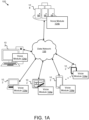
- Figure 1A depicts one embodiment of a system 100 for voice collection and/or medical assessment based on voice.
- the system 100 includes one or more hardware devices 102, one or more voice modules 104 (e.g., one or more voice modules 104a disposed on the one or more hardware devices 102, one or more backend voice modules 104b, or the like), one or more data networks 106 or other communication channels, and/or one or more backend servers 108.
- a voice module 104 in various embodiments, is configured to receive and/or record voice audio data from a user (e.g., a patient, an athlete, another user, or the like) and/or to assess and/or diagnose the presence and/or severity of one or more medical conditions (e.g., injuries, illnesses, diseases, or the like) based on collected voice audio data.
- a voice module 104 may question or query a user (e.g., audibly through a speaker, headphones, or the like; visually with written text on a hardware display device; and/or otherwise using one or more user interface elements of a hardware device 102) to prompt a verbal answer from the user, which the voice module 104 receives and/or records.
- a voice module 104 may provide an assessment to a user, may provide an assessment and/or voice audio data to a backend voice module 104b, or the like.
- a voice module 104 may interact with a user, asking questions verbally, recording the user's vocal responses, determining whether a response is accurate, or the like. For certain protocols, a voice module 104 may ask one or more questions multiple times (e.g., two times, three times, or the like) before moving on to a subsequent question, or the like. Based on the voice audio data, a voice module 104 may assess and/or diagnose one or more diseases or other medical conditions (e.g., concussion, depression, stress, stroke, cognitive well-being, mood, honesty, Alzheimer's disease, Parkinson's disease, cancer, or the like).
- diseases or other medical conditions e.g., concussion, depression, stress, stroke, cognitive well-being, mood, honesty, Alzheimer's disease, Parkinson's disease, cancer, or the like.
- a voice module 104 may score responses (e.g., by a device voice module 104a on a hardware device 102) and provide the initial one or more scores to a user, and the audio may be further analyzed (e.g., by a backend voice module 104b on a server device 108) and a secondary score may be provided to a user with respect to concussion and/or another specific disease or medical condition.
- a voice module 104 may extract one or more verbal queues and/or features and pass the extracted verbal queues and/or features to one or more machine learning models trained for a certain disease and/or other medical condition.
- a voice module 104 may compare a user's answers to previous answers from when the user was healthy (e.g., to baseline answers). A voice module 104 may normalize results based on a user's demographic (e.g., age, gender, or the like). A voice module 104 may determine normalization data as part of training process, determining a range of expected scores for each demographic, or the like.
- a voice module 104 may assess an efficacy and/or success of a medical trial, a medical drug approval process, or the like. For example, instead of or in addition to a questionnaire for trial participants, which may be subjective, a voice module 104 may objectively assess and/or model changes in a trial participant's voice over the course of the medical trial. For example, a voice module 104 may collect audio from medical trial and/or study participants (e.g., at a doctor's visit, at home, or the like) and may create one or more models for a placebo group and/or for a test group.
- a voice module 104 may compare results of a voice assessment and/or model for medical trial and/or study participants with results of a questionnaire or other test, may provide a score similar to and/or on the same scale as a questionnaire or other test, or the like.
- a voice module 104 may provide a voice-based medical assessment to validate a treatment protocol (e.g., a medication and/or another therapeutic treatment) for which there is no known chemical test, to verify and/or validate a chemical test, or the like.
- a treatment protocol e.g., a medication and/or another therapeutic treatment
- the voice module 104 may provide front-end screening of participants in a clinical trial and/or medical study.
- a voice module 104 may qualify an individual who demonstrates biomarkers in their speech consistent with a depressed individual for a depression study, or the like. Screening participants of a clinical trial and/or medical study using a voice module 104 that identifies biomarkers in their speech may be more objective and/or accurate than using a written questionnaire or similar tool to identify medical trial participants in a subjective manner.
- Other methods that may achieve objectivity and/or accuracy, such as blood tests, magnetic resonance imaging (MRI) scans, or the like, in certain embodiments, may be more expensive and invasive than a speech analysis by a voice module 104.
- MRI magnetic resonance imaging
- a voice module 104 may provide similar objectivity and/or accuracy as other tests, while being noninvasive, having a lower cost, or the like. Identification of medical trial participants using a voice module 104, in one embodiment, is a biomarker data driven, objective tool.
- a voice module 104 may differentiate and/or qualify one or more new drugs (e.g., medications) using behavioral parameters (e.g., behavioral parameters that have been objectively measured and determined to contribute to quality of life, rather than simply approving drugs by their effective morbidity prevention or the like).
- a voice module 104 uses vocal biomarkers to identify human conditions (e.g., physical fatigue, tiredness, mental fatigue, stress, anxiety, depression, cognitive impairment, or the like) to measure quality of life and/or one or more other behavioral parameters. Specific conditions and/or behavioral parameters indicating a quality of life may vary based on the medical treatment, the associated medical condition, or the like.
- an oncology patient may experience "chemo brain” as a side effect of a cancer treatment, and a voice module 104 may detect the patient's impaired cognitive thinking based on an analysis of the patient's voice, indicating the presence of "chemo brain,” reducing the patient's quality of life.
- a cancer drug therapy may be effective, however, it may be detrimental to the quality of life of the individual using the cancer drug therapy.
- a patient of a cancer drug therapy may survive, for example, for 5-years after an initial diagnosis, but that 5-years during which the patient is receiving treatment may be uncomfortable due to quality of life changes due to the cancer drug therapy, which may not have not been identified or treated as a result of the drug therapy not having been qualified by a voice module 104, or the like.
- a new drug therapy being tested may have similar, or even slightly lower effectiveness, but a much higher quality of life, but would not get approved or otherwise selected for use unless quality of life is also measured by a voice module 104 and considered as a factor in the drug trial and/or medical study.
- a voice module 104 may identify one or more quality of life changes in a patient objectively using biomarkers or other indicators in voice data from the patient. Identification of quality of life and/or other behavioral parameters related to drug or cancer treatment using a voice module 104, in one embodiment, is a biomarker data driven, objective tool. As described in greater detail below, a voice module 104 may assess a quality of life, a medical condition, or the like based on an analysis of a user's responses to one or more prompts.
- a voice module 104 may provide a user with a series of prompts selected to assess a current state of one or more symptoms associated with "chemo brain", such as memory loss.
- a voice module 104 may audibly list words and/or numbers to a user and ask the user to repeat them back, may display a series of pictures to the user and ask the user to repeat back a description of the series of pictures, or the like, and monitor changes in an accuracy of the user's responses over time, indicating memory loss and a decreased quality of life.
- the system 100 includes one or more hardware devices 102.
- the hardware devices 102 and/or the one or more backend servers 108 may include one or more of a desktop computer, a laptop computer, a mobile device, a tablet computer, a smart phone, a set-top box, a gaming console, a smart TV, a smart watch, a fitness band, an optical head-mounted display (e.g., a virtual reality headset, smart glasses, or the like), an HDMI or other electronic display dongle, a personal digital assistant, and/or another computing device comprising a processor (e.g., a central processing unit (CPU), a processor core, a field programmable gate array (FPGA) or other programmable logic, an application specific integrated circuit (ASIC), a controller, a microcontroller, and/or another semiconductor integrated circuit device), a volatile memory, and/or a non-volatile storage medium.
- a processor e.g., a central processing unit (CPU), a processor core, a field
- the hardware devices 102 are in communication with one or more backend servers 108 via a data network 106, described below.
- the hardware devices 102 in a further embodiment, are capable of executing various programs, program code, applications, instructions, functions, or the like.
- a voice module 104 may be embodied as hardware, software, or some combination of hardware and software.
- a voice module 104 may comprise executable program code stored on a non-transitory computer readable storage medium for execution on a processor of a hardware device 102; a backend server 108; or the like.
- a voice module 104 may be embodied as executable program code executing on one or more of a hardware device 102; a backend server 108; a combination of one or more of the foregoing; or the like.
- the various modules that perform the operations of a voice module 104, as described below, may be located on a hardware device 102; a backend server 108; a combination of the two; and/or the like.
- a voice module 104 may be embodied as a hardware appliance that can be installed or deployed on a backend server 108, on a user's hardware device 102 (e.g., a dongle, a protective case for a phone 102 or tablet 102 that includes one or more semiconductor integrated circuit devices within the case in communication with the phone 102 or tablet 102 wirelessly and/or over a data port such as USB or a proprietary communications port, or another peripheral device), or elsewhere on the data network 106 and/or collocated with a user's hardware device 102.
- a user's hardware device 102 e.g., a dongle, a protective case for a phone 102 or tablet 102 that includes one or more semiconductor integrated circuit devices within the case in communication with the phone 102 or tablet 102 wirelessly and/or over a data port such as USB or a proprietary communications port, or another peripheral device
- a data port such as USB or a proprietary communications port, or another peripheral device
- a voice module 104 may comprise a hardware device such as a secure hardware dongle or other hardware appliance device (e.g., a set-top box, a network appliance, or the like) that attaches to another hardware device 102, such as a laptop computer, a server, a tablet computer, a smart phone, or the like, either by a wired connection (e.g., a USB connection) or a wireless connection (e.g., Bluetooth ® , Wi-Fi ® , near-field communication (NFC), or the like); that attaches to an electronic display device (e.g., a television or monitor using an HDMI port, a DisplayPort port, a Mini DisplayPort port, VGA port, DVI port, or the like); that operates substantially independently on a data network 106; or the like.
- a hardware device such as a secure hardware dongle or other hardware appliance device (e.g., a set-top box, a network appliance, or the like) that attaches to another hardware device 102,
- a hardware appliance of a voice module 104 may comprise a power interface, a wired and/or wireless network interface, a graphical interface (e.g., a graphics card and/or GPU with one or more display ports) that outputs to a display device, and/or a semiconductor integrated circuit device as described below, configured to perform the functions described herein with regard to a voice module 104.
- a graphical interface e.g., a graphics card and/or GPU with one or more display ports
- a semiconductor integrated circuit device as described below, configured to perform the functions described herein with regard to a voice module 104.
- a voice module 104 may comprise a semiconductor integrated circuit device (e.g., one or more chips, die, or other discrete logic hardware), or the like, such as a field-programmable gate array (FPGA) or other programmable logic, firmware for an FPGA or other programmable logic, microcode for execution on a microcontroller, an application-specific integrated circuit (ASIC), a processor, a processor core, or the like.
- a voice module 104 may be mounted on a printed circuit board with one or more electrical lines or connections (e.g., to volatile memory, a non-volatile storage medium, a network interface, a peripheral device, a graphical/display interface.
- the hardware appliance may include one or more pins, pads, or other electrical connections configured to send and receive data (e.g., in communication with one or more electrical lines of a printed circuit board or the like), and one or more hardware circuits and/or other electrical circuits configured to perform various functions of a voice module 104.
- the semiconductor integrated circuit device or other hardware appliance of a voice module 104 comprises and/or is communicatively coupled to one or more volatile memory media, which may include but is not limited to: random access memory (RAM), dynamic RAM (DRAM), cache, or the like.
- volatile memory media may include but is not limited to: random access memory (RAM), dynamic RAM (DRAM), cache, or the like.
- the semiconductor integrated circuit device or other hardware appliance of a voice module 104 comprises and/or is communicatively coupled to one or more non-volatile memory media, which may include but is not limited to: NAND flash memory, NOR flash memory, nano random access memory (nano RAM or NRAM), nanocrystal wire-based memory, silicon-oxide based sub-10 nanometer process memory, graphene memory, Silicon-Oxide-Nitride-Oxide-Silicon (SONOS), resistive RAM (RRAM), programmable metallization cell (PMC), conductive-bridging RAM (CBRAM), magneto-resistive RAM (MRAM), dynamic RAM (DRAM), phase change RAM (PRAM or PCM), magnetic storage media (e.g., hard disk, tape), optical storage media, or the like.
- non-volatile memory media which may include but is not limited to: NAND flash memory, NOR flash memory, nano random access memory (nano RAM or NRAM), nanocrystal wire-based memory, silicon-oxide
- the data network 106 includes a digital communication network that transmits digital communications.
- the data network 106 may include a wireless network, such as a wireless cellular network, a local wireless network, such as a Wi-Fi network, a Bluetooth ® network, a near-field communication (NFC) network, an ad hoc network, and/or the like.
- the data network 106 may include a wide area network (WAN), a storage area network (SAN), a local area network (LAN), an optical fiber network, the internet, or other digital communication network.
- the data network 106 may include two or more networks.
- the data network 106 may include one or more servers, routers, switches, and/or other networking equipment.
- the data network 106 may also include one or more computer readable storage media, such as a hard disk drive, an optical drive, non-volatile memory, RAM, or the like.
- the one or more backend servers 108 may include one or more network accessible computing systems such as one or more web servers hosting one or more web sites, an enterprise intranet system, an application server, an application programming interface (API) server, an authentication server, or the like.
- a backend server 108 may include one or more servers located remotely from the hardware devices 102.
- a backend server 108 may include at least a portion of the voice modules 104, may comprise hardware of a voice module 104, may store executable program code of a voice module 104 in one or more non-transitory computer readable storage media, and/or may otherwise perform one or more of the various operations of a voice module 104 described herein for shared content tracking and attribution.
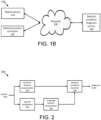
- Figure 1B is an example system 109 for diagnosing a medical condition using a person's speech.
- Figure 1B includes a medical condition diagnosis service 140 that may receive speech data of a person and process the speech data to determine if a person has a medical condition.
- medical condition diagnosis service 140 may process the speech data to compute a yes or no determination as to whether the person has the medical condition or to compute a score that indicates a probability or a likelihood that the person has the medical condition and/or a severity of the condition.
- a diagnosis relates to any determination as to whether a person may have a medical condition or any determination as to a possible severity of the medical condition.
- a diagnosis may include any form of an assessment, conclusion, opinion, or determination relating to a medical condition. In some instances, a diagnosis may be incorrect, and a person diagnosed with a medical condition may not actually have the medical condition.
- Medical condition diagnosis service 140 may receive the speech data of a person using any appropriate techniques. For example, a person may speak to a mobile device 110 and mobile device 110 may record the speech and transmit the recorded speech data to medical condition diagnosis service 140 over network 130. Any appropriate techniques and any appropriate network may be used for mobile device 110 to transmit the recorded speech data to medical condition diagnosis service 140.
- an application or "app" may be installed on mobile device 110 that uses a REST (representational state transfer) API (application programming interface) call to transmit the speech data over the Internet or a mobile telephone network.
- a medical provider may have a medical provider computer 120 that is used to record speech of a person and transmit speech data to medical condition diagnosis service 140.
- medical condition diagnosis service 140 may be installed on mobile device 110 or medical provider computer 120 such that it is not necessary to transmit the speech data over a network.
- the example of Figure 1B is not limiting, and any appropriate techniques may be used to transmit speech data for processing by a mathematical model.
- the output of medical condition diagnosis service 140 may then be used for any appropriate purpose. For example, information may be presented to the person who provided the speech data or to a medical professional who is treating the person.
- Figure 2 is an example system 200 for processing speech data with a mathematical model to perform a medical diagnosis.
- features may be computed from the speech data, and then the features may be processed by the mathematical model. Any appropriate type of features may be used.
- the features may include acoustic features, where acoustic features are any features computed from the speech data that do not involve or depend on performing speech recognition on the speech data (e.g., the acoustic features do not use information about the words spoken in the speech data).
- acoustic features may include mel-frequency cepstral coefficients, perceptual linear prediction features, jitter, or shimmer.
- the features may include language features where language features are computed using the results of a speech recognition.
- language features may include a speaking rate (e.g., the number of vowels or syllables per second), a number of pause fillers (e.g., "urns" and "ahs”), the difficulty of words (e.g., less common words), or the parts of speech of words following pause fillers.
- the speech data is processed by acoustic feature computation component 210 and speech recognition component 220.
- Acoustic feature computation component 210 may compute acoustic features from the speech data, such as any of the acoustic features described herein.
- Speech recognition component 220 may perform automatic speech recognition on the speech data using any appropriate techniques (e.g., Gaussian mixture models, acoustic modelling, language modelling, and neural networks).
- speech recognition component 220 may use acoustic features in performing speech recognition, some processing of these two components may overlap and thus other configurations are possible. For example, acoustic feature component 210 may compute the acoustic features needed by speech recognition component 220, and speech recognition component 220 may thus not need to compute any acoustic features.
- Language feature computation component 230 may receive speech recognition results from speech recognition component 220, and process the speech recognition results to determine language features, such as any of the language features described herein.
- the speech recognition results may be in any appropriate format and include any appropriate information.
- the speech recognition results may include a word lattice that includes multiple possible sequences of words, information about pause fillers, and the timings of words, syllables, vowels, pause fillers, or any other unit of speech.
- Medical condition classifier 240 may process the acoustic features and the language features with a mathematical model to output one or more diagnosis scores that indicate whether the person has the medical condition, such as a score indicating a probability or likelihood that the person has the medical condition and/or a score indicating a severity of the medical condition. Medical condition classifier 240 may use any appropriate techniques, such as a classifier implemented with a support vector machine or a neural network, such as a multi-layer perceptron.
- the performance of medical condition classifier 240 may depend on the features computed by acoustic feature computation component 210 and language feature computation component 230. Further, a set of features that performs well for one medical condition may not perform well for another medical condition. For example, word difficulty may be an important feature for diagnosing Alzheimer's disease but may not be useful for determining if a person has a concussion. For another example, features relating to the pronunciation of vowels, syllables, or words may be important for Parkinson's disease but may be less important for other medical conditions. Accordingly, techniques are needed for determining a first set of features that performs well for a first medical condition, and this process may need to be repeated for determining a second set of features that performs well for a second medical condition.
- medical condition classifier 240 may use other features, which may be referred to as non-speech features, in addition to acoustic features and language features.
- features may be obtained or computed from demographic information of a person (e.g., gender, age, or place of residence), information from a medical history (e.g., weight, recent blood pressure readings, or previous diagnoses), or any other appropriate information.
- the selection of features for diagnosing a medical condition may be more important in situations where an amount of training data for training the mathematical model is relatively small.
- the needed training data may include speech data of a number of individuals shortly after they experience a concussion. Such data may exist in small quantities and obtaining further examples of such data may take a significant period of time.
- Training mathematical models with a smaller amount of training data may result in overfitting where the mathematical model is adapted to the specific training data but because of the small amount of training data, the model may not perform well on new data.
- the model may be able to detect all of the concussions in the training data, but may have a high error rate when processing production data of people who may have concussions.
- One technique for preventing overfitting when training a mathematical model is to reduce the number of features used to train the mathematical model.
- the amount of training data needed to train a model without overfitting increases as the number of features increases. Accordingly, using a smaller number of features allows models to be built with a smaller amount of training data.
- Acoustic features may be computed using short-time segment features.
- the duration of the speech data may vary. For example, some speech may be a second or two and other speech may be several minutes or more.
- it may be processed in short-time segments (sometimes referred to as frames). For example, each short-time segment may be 25 milliseconds, and segments may advance in increments of 10 milliseconds so that there is a 15 millisecond overlap over two successive segments.
- short-time segment features include spectral features (such as mel-frequency cepstral coefficients or perceptual linear predictives); prosodic features (such as pitch, energy, or probability of voicing); voice quality features (such as jitter, jitter of jitter, shimmer, or harmonics-to-noise ratio); entropy (e.g., to capture how precisely an utterance is pronounced where entropy may be computed from the posteriors of an acoustic model that is trained on natural speech data).
- spectral features such as mel-frequency cepstral coefficients or perceptual linear predictives
- prosodic features such as pitch, energy, or probability of voicing
- voice quality features such as jitter, jitter of jitter, shimmer, or harmonics-to-noise ratio
- entropy e.g., to capture how precisely an utterance is pronounced where entropy may be computed from the posteriors of an acoustic model that is trained on natural speech data
- the short-time segment features may be combined to compute acoustic features for the speech.
- a two-second speech sample may produce 200 short-time segment features for pitch that may be combined to compute one or more acoustic features for pitch.
- the short-time segment features may be combined to compute an acoustic feature for a speech sample using any appropriate techniques.
- an acoustic feature may be computed using statistics of the short-time segment features (e.g., arithmetic mean, standard deviation, skewness, kurtosis, first quartile, second quartile, third quartile, the second quartile minus the first quartile, the third quartile minus the first quartile, the third quartile minus the second quartile, 0.01 percentile, 0.99 percentile, the 0.99 percentile minus the 0.01 percentile, the percentage of short-time segments whose values are above a threshold (e.g., where the threshold is 75% of the range plus the minimum), the percentage of segments whose values are above a threshold (e.g., where the threshold is 90% of the range plus the minimum), the slope of a linear approximation of the values, the offset of a linear approximation of the values, the linear error computed as
- an acoustic feature may be computed as an i-vector or identity vector of the short-time segment features.
- An identity vector may be computed using any appropriate techniques, such as performing a matrix-to-vector conversion using a factor analysis technique and a Gaussian mixture model.
- a speaking rate such as by computing the duration of all spoken words divided by the number of vowels or any other appropriate measure of speaking rate.
- a number of pause fillers that may indicate hesitation in speech such as (1) a number of pause fillers divided by the duration of spoken words or (2) a number of pause fillers divided by the number of spoken words.
- the parts of speech of words following pause fillers such as (1) the counts of each part-of-speech class divided by the number of spoken words or (2) the counts of each part-of-speech class divided by the sum of all part-of-speech counts.
- language features may include a determination of whether a person answered a question correctly. For example, a person may be asked what the current year is or who the President of the United States is. The person's speech may be processed to determine what the person said in response to the question and to determine if the person answered the question correctly.
- a corpus of training data may be collected.
- the training corpus may include examples of speech where the diagnosis of the person is known. For example, it may be known that the person had no concussion, or a mild, moderate, or severe concussion.
- Figure 3 illustrates an example of a training corpus that includes speech data for training a model for diagnosing concussions.
- the rows of the table of Figure 3 may correspond to database entries.
- each entry includes an identifier of a person, the known diagnosis of the person (e.g., no concussion or a mild, medium, or severe concussion), an identifier of a prompt or question that was presented to a person (e.g., "How are you today?"), and a filename of a file that contains the speech data.
- the training data may be stored in any appropriate format using any appropriate storage technology.
- the training corpus may store a representation of a person's speech using any appropriate format.
- a speech data item of the training corpus may include digital samples of an audio signal received at a microphone or may include a processed version of the audio signal, such as mel-frequency cepstral coefficients.
- a single training corpus may contain speech data relating to multiple medical conditions, or a separate training corpus may be used for each medical condition (e.g., a first training corpus for concussions and a second training corpus for Alzheimer's disease).
- a separate training corpus may be used for storing speech data for people with no known or diagnosed medical condition, as this training corpus may be used for training models for multiple medical conditions.
- Figure 4 illustrates an example of stored prompts that may be used to diagnose medical conditions.
- Each prompt may be presented to a person, either by a person (e.g., a medical professional) or a computer, to obtain speech of the person in response to the prompt.
- Each prompt may have a prompt identifier so that it may be cross referenced with the prompt identifier of the training corpus.
- the prompts of Figure 4 may be stored using any appropriate storage technology, such as a database.
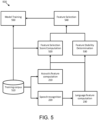
- Figure 5 is an exemplary system 500 that may be used to select features for training a mathematical model for diagnosing a medical condition, and then using the selected features to train the mathematical model.
- System 500 may be used multiple times to select features for different medical conditions. For example, a first use of system 500 may select features for diagnosing concussions and a second use of system 500 may select features for diagnosing Alzheimer's disease.
- Figure 5 includes a training corpus 510 of speech data items for training a mathematical model for diagnosing a medical condition.
- Training corpus 510 may include any appropriate information, such as speech data of multiple people with and without the medical condition, a label indicating whether or not person has the medical condition, and any other information described herein.
- Acoustic feature computation component 210, speech recognition component 220, and language feature computation component 230 may be implemented as described above to compute acoustic and language features for the speech data in the training corpus. Acoustic feature computation component 210 and language feature computation component 230 may compute a large number of features so that the best performing features may be determined. This may be in contrast to Figure 2 where these components are used in a production system and thus these components may compute only the features that were previously selected.
- Feature selection score computation component 520 may compute a selection score for each feature (which may be an acoustic feature, a language feature, or any other feature described herein).
- a pair of numbers may be created for each speech data item in the training corpus, where the first number of the pair is the value of the feature and the second number of the pair is an indicator of the medical condition diagnosis.
- the value for the indicator of the medical condition diagnosis may have two values (e.g., 0 if the person does not have the medical condition and 1 if the person has the medical condition) or may have a larger number of values (e.g., a real number between 0 and 1 or multiple integers indicating a likelihood or severity of the medical condition).
- a pair of numbers may be obtained for each speech data item of the training corpus.
- Figs. 6A and 6B illustrate two conceptual plots of the pairs of numbers for a first feature and a second feature.
- Figure 6A there does not appear to be a pattern or correlation between the values of the first feature and the corresponding diagnosis values, but for Figure 6B , there does appear to be a pattern or correlation between the values of the second feature and the diagnosis values. Accordingly, one may conclude that the second feature is likely a useful feature for determining whether a person has the medical condition and that the first feature is not.
- Feature selection score computation component 520 may compute a selection score for a feature using the pairs of feature values and diagnosis values. Feature selection score computation component 520 may compute any appropriate score that indicates a pattern or correlation between the feature values and the diagnosis values. For example, feature selection score computation component 520 may compute a Rand index, an adjusted Rand index, mutual information, adjusted mutual information, a Pearson correlation, an absolute Pearson correlation, a Spearman correlation, or an absolute Spearman correlation.
- the selection score may indicate the usefulness of the feature in detecting a medical condition. For example, a high selection score may indicate that a feature should be used in training the mathematical model, and a low selection score may indicate that the feature should not be used in training the mathematical model.
- Feature stability determination component 530 may determine if a feature (which may be an acoustic feature, a language feature, or any other feature described herein) is stable or unstable. To make a stability determination, the speech data items may be divided into multiple groups, which may be referred to as folds. For example, the speech data items may be divided into five folds. In some implementations, the speech data items may be divided into folds such that each fold has an approximately equal number of speech data items for different genders and age groups.
- the statistics of each fold may be compared to statistics of the other folds. For example, for a first fold, the median (or mean or any other statistic relating to the center or middle of a distribution) feature value (denoted as M 1 ) may be determined. Statistics may also be computed for the combination of the other folds. For example, for the combination of the other folds, the median of the feature values (denoted as M o ) and a statistic measuring of variability of the feature values (denoted as V o ), such as interquartile range, variance, or standard deviation, may be computed. The feature may be determined to be unstable if the median of the first fold differs too greatly from the median of the second fold.
- the feature may be determined to be unstable if M 1 ⁇ M o ⁇ C V o 2 or M 1 > M o + C V o 2 where C is a scaling factor.
- the process may then be repeated for each of the other folds.
- the median of a second fold may be compared with median and variability of the other folds as described above.
- the feature may be determined to be stable. Conversely, if the median of any fold is too far from the median of the other folds, then the feature may be determined to be unstable.
- feature stability determination component 530 may output a Boolean value for each feature to indicate whether the feature is stable or not.
- stability determination component 530 may output a stability score for each feature. For example, a stability score may be computed as largest distance between the median of a fold and the other folds (e.g., a Mahalanobis distance).
- Feature selection component 540 may receive the selection scores from feature selection score computation component 520 and the stability determinations from feature stability determination component 530 and select a subset of features to be used to train the mathematical model. Feature selection component 540 may select a number of features having the highest selection scores that are also sufficiently stable.
- the number of features to be selected may be set ahead of time. For example, a number N may be determined based on the amount of training data, and N features may be selected. The selected features may be determined by removing unstable features (e.g., features determined to be unstable or features with a stability score below a threshold) and then selecting the N features with the highest selection scores.
- unstable features e.g., features determined to be unstable or features with a stability score below a threshold
- the number of features to be selected may be based on the selection scores and stability determinations. For example, the selected features may be determined by removing unstable features, and then selecting all features with a selection score above a threshold.
- the selection scores and stability scores may be combined when selecting features. For example, for each feature a combined score may be computed (such as by adding or multiplying the selection score and the stability score for the feature) and features may be selected using the combined score.
- Model training component 550 may then train a mathematical model using the selected features. For example, model training component 550 may iterate over the speech data items of the training corpus, obtain the selected features for the speech data items, and then train the mathematical model using the selected features. In some implementations, dimension reduction techniques, such as principal components analysis or linear discriminant analysis, may be applied to the selected features as part of the model training. Any appropriate mathematical model may be trained, such as any of the mathematical models described herein.
- wrapper methods may be used for feature selection or may be used in combination with the feature selection techniques presented above. Wrapper methods may select a set of features, train a mathematical model using the selected set of features, and then evaluate the performance of the set of features using the trained model. Where the number of possible features is relatively small and/or training time is relatively short, all possible sets of features may be evaluated and the best performing set may be selected. Where the number of possible features is relatively large and/or the training time is a significant factor, optimization techniques may be used to iteratively find a set of features that performs well. In some implementations, a set of features may be selected using system 500, and then a subset of these features may be selected using wrapper methods as the final set of features.
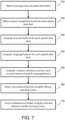
- Figure 7 is a flowchart of an example implementation of selecting features for training a mathematical model for diagnosing a medical condition.
- the ordering of the steps is exemplary and other orders are possible, not all steps are required, steps may be combined (in whole or part) or subdivided and, in some implementations, some steps may be omitted or other steps may be added.
- the methods described by any flowcharts described herein may be implemented, for example, by any of the computers or systems described herein.
- a training corpus of speech data items is obtained.
- the training corpus may include a representation of an audio signal of a person's speech, an indication of a medical diagnosis of the person from whom the speech was obtained, and any other appropriate information, such as any of the information described herein.
- speech recognition results are obtained for each speech data item of the training corpus.
- the speech recognition results may have been computed in advance and stored with the training corpus or stored in another location.
- the speech recognition results may include any appropriate information, such as a transcript, a list of highest scoring transcripts (e.g., an N-best list), a lattice of possible transcriptions, and timing information, such as the start and end time of words, pause fillers, or other speech units.
- acoustic features are computed for each speech data item of the training corpus.
- Acoustic features may include any features that are computed without using speech recognition results of a speech data item, such as any of the acoustic features described herein.
- Acoustic features may include or be computed from data used in the speech recognition process (e.g., mel-frequency cepstral coefficients or perceptual linear predictors), but acoustic features do not use speech recognition results, such as information about the words or pause fillers present in a speech data item.
- language features are computed for each speech data item of the training corpus.
- Language features may include any features that are computed using speech recognition results, such as any of the language features described herein.
- a feature selection score is computed for each acoustic feature and each language feature.
- the value of the feature for each speech data item in the training corpus may be used along with other information, such as a known diagnosis value corresponding to the speech data item.
- the feature selection score may be computed using any of the techniques described herein, such as by computing an absolute Pearson correlation.
- feature selection scores may be computed for other features as well, such as features relating to demographic information of a person.
- a plurality of features is selected using the feature selection scores. For example, a number of features having the highest selection scores may be selected.
- a stability determination may be computed for each feature and the plurality of features may be selected using both the feature selection scores and the stability determinations, such as by using any of the techniques described herein.
- a mathematical model is trained using the selected features. Any appropriate mathematical model may be trained, such as a neural network or a support vector machine. After the mathematical model has been trained, it may be deployed in a production system, such as a voice module 104, a system 109 of Figure 1B , or the like to perform diagnosis of medical conditions.
- a production system such as a voice module 104, a system 109 of Figure 1B , or the like to perform diagnosis of medical conditions.
- steps 730, and 740 may be performed in a loop that loops over each of the speech data items in the training corpus.
- steps 730, and 740 may be performed in a loop that loops over each of the speech data items in the training corpus.
- acoustic and language features may be computed for a first speech data item
- acoustic and language features may be computed for a second speech data item, and so forth.
- the person being diagnosed may be presented with a sequence of prompts or questions to obtain speech from the person. Any appropriate prompts may be used, such as any of the prompts of Figure 4 . After the features have been selected, as described above, prompts may be selected so that the selected prompts provide useful information about the selected features.
- a selected feature is pitch. While pitch has been determined to be a useful feature for diagnosing a medical condition, some prompts may be better than others in obtaining a useful pitch feature. Very short utterances (e.g., yes/no answers) may not provide sufficient data to accurately compute pitch and thus prompts that generate longer responses may be more useful in obtaining information about pitch.
- a selected feature is word difficulty. While word difficulty has been determined to be a useful feature for diagnosing a medical condition, some prompts may be better than others in obtaining a useful word difficulty feature. Prompts that ask a user to read a presented passage will generally result in speech of the words in the passage, and thus the word difficulty feature would have the same value each time this prompt is presented, and thus this prompt would not be useful in obtaining information about word difficulty. By contrast, open ended questions, such as "Tell me about your day?", may result in greater variability of vocabulary in responses and thus may provide more useful information about word difficulty.
- Selecting a set of prompts may also improve the performance of a system for diagnosing medical conditions and provide a better experience for the person being evaluated.
- the system for diagnosing medical conditions may provide more accurate results, since the data collected from multiple people may be more comparable than if different prompts were used with each person.
- using a defined set of prompts allows the evaluation of a person to be more predictable and of a desired duration that is appropriate for the evaluation of the medical condition.
- Prompts are selected by computing prompt selection scores.
- a training corpus may have multiple or even many speech data items for a single prompt.
- the training corpus may include examples of the prompt used with different people or the same prompt may be used with the same person multiple times.
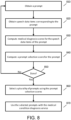
- Figure 8 is a flowchart of an example implementation of selecting prompts for use with a deployed model for diagnosing a medical condition.
- Steps 810 to 840 may be performed for each prompt (or a subset of the prompts) in the training corpus to compute a prompt selection score for each prompt.
- a prompt is obtained, and at step 820 speech data items corresponding to the prompt are obtained from the training corpus.
- a medical diagnosis score is computed for each speech data item corresponding to the prompt.
- a medical diagnosis score for a speech data item may be a number output by a mathematical model (e.g., the mathematical model trained in Figure 7 ) indicating a likelihood that a person has the medical condition and/or a severity of the medical condition.
- a prompt selection score is computed for the prompt using the computed medical diagnosis scores.
- the computation of a prompt selection score may be similar to the computation of a feature selection score, as described above.
- a pair of numbers may be obtained.
- the first number of the pair may be the computed medical diagnosis score computed from the speech data item, and the second number of the pair may be a known medical condition diagnosis of the person (e.g., the person is known to have the medical condition or a severity of the medical condition). Plotting these pairs of numbers may result in a plot similar to Figure 6A or Figure 6B , and depending on the prompt there may or may not be a pattern or correlation in the pairs of numbers.
- a prompt selection score for a prompt may include any score that indicates a pattern or correlation between the computed medical diagnosis scores and the known medical condition diagnoses.
- a prompt selection score may include a Rand index, an adjusted Rand index, mutual information, adjusted mutual information, a Pearson correlation, an absolute Pearson correlation, a Spearman correlation, or an absolute Spearman correlation.
- step 850 it is determined if other prompts remain to be processed. If prompts remain to be processed, then processing may proceed to step 810 to process additional prompts. If all prompts have been processed, then processing may proceed to step 860.
- a plurality of prompts are selected using the prompt selection scores. For example, a number of prompts having the highest prompt selection scores may be selected.
- a stability determination may be computed for each prompt and the plurality of prompts may be selected using both the prompt selection scores and the prompt stability determinations, such as by using any of the techniques described herein.
- the selected prompts are used with a deployed medical condition diagnosis service.
- the selected prompts may be presented to a person to obtain speech of the person in response to each of the prompts.
- wrapper methods may be used for prompt selection or may be used in combination with the prompt selection techniques presented above.
- a set of prompts may be selected using the process of Figure 8 , and then a subset of these prompts may be selected using wrapper methods as the final set of features.
- a person involved with creating the medical condition diagnosis service may assist in the selection of prompts.
- the person may use his knowledge or experience to select prompts based on the selected features. For example, where a selected feature is word difficulty, the person may review the prompts and select prompts that are more likely to provide useful information relating to word difficulty. The person may select one or more prompts that are likely to provide useful information for each of the selected features.
- the person may review the prompts selected by the process of Figure 8 , and add or remove prompts to improve the performance of a medical condition diagnosis system.
- two prompts may each provide useful information about word difficulty, but the information provided by the two prompts may be largely redundant, and using both prompts may not provide significant benefit over using just one of them.
- a second mathematical model may be trained after prompt selection that is adapted to the selected prompts.
- the mathematical model trained in Figure 7 may process a single utterance (in response to a prompt) to generate a medical diagnosis score.
- the process of performing a diagnosis comprises processing multiple utterances corresponding to multiple prompts, then each of the utterances may be processed by the mathematical model of Figure 7 to generate multiple medical diagnosis scores.
- the multiple medical diagnosis scores may need to be combined in some way. Accordingly, the mathematical model trained in Figure 7 may not be adapted to a selected set of prompts.
- each of the prompts may be presented to the person to obtain an utterance corresponding to each of the prompts.
- the utterances may be processed simultaneously by the model to generate a medical diagnosis score. Accordingly, a model may be adapted to the selected prompts because it is trained to simultaneously process utterances corresponding to each of the selected prompts.
- Figure 9 is a flowchart of an example implementation training a mathematical model that is adapted to a set of selected prompts.
- a first mathematical model is obtained, such as by using the process of Figure 7 .
- a plurality of prompts are selected using the first mathematical model, such as by the process of Figure 8 .
- a second mathematical model is trained that simultaneously processes multiple speech data items corresponding to the plurality of selected prompts to generate a medical diagnosis score.
- a training corpus may be used that includes sessions with speech data items corresponding to each of the plurality of selected prompts.
- the input to the mathematical model may be fixed to the speech data items from the session and corresponding to each of the selected prompts.
- the output of the mathematical model may be fixed to a known medical diagnosis.
- the parameters of the model may then be trained to optimally process the speech data item simultaneously to generate a medical diagnosis score. Any appropriate training techniques may be used, such as stochastic gradient descent.
- the second mathematical model may then be deployed as part of a medical condition diagnosis service, such as a voice module 104, the service of Figure 1 , or the like.
- the second mathematical model may provide better performance than the first mathematical model because it has been trained to process the utterances simultaneously rather than individual and thus the training may be better able to combine the information from all the of utterances to generate the medical condition diagnosis score.
- Figure 10 illustrates components of one implementation of a computing device 1000 for implementing any of the techniques described above.
- the components are shown as being on a single computing device, but the components may be distributed among multiple computing devices, such as a system of computing devices, including, for example, an end-user computing device (e.g., a smart phone or a tablet) and/or a server computing device (e.g., cloud computing).
- an end-user computing device e.g., a smart phone or a tablet
- server computing device e.g., cloud computing
- Computing device 1000 may include any components typical of a computing device, such as volatile or nonvolatile memory 1010, one or more processors 1011, and one or more network interfaces 1012. Computing device 1000 may also include any input and output components, such as displays, keyboards, and touch screens. Computing device 1000 may also include a variety of components or modules providing specific functionality, and these components or modules may be implemented in software, hardware, or a combination thereof. Below, several examples of components are described for one example implementation, and other implementations may include additional components or exclude some of the components described below.
- Computing device 1000 may have an acoustic feature computation component 1021 that may compute acoustic features for a speech data item as described above.
- Computing device 1000 may have a language feature computation component 1022 that may compute language features for a speech data item as described above.
- Computing device 1000 may have a speech recognition component 1023 that may generate speech recognition results for a speech data item as described above.
- Computing device 1000 may have a feature selection score computation component 1031 that may compute selection scores for features as described above.
- Computing device 1000 may have a feature stability score computation component 1032 that may make stability determinations or compute stability scores as described above.
- Computing device 1000 may have a feature selection component 1033 that may select features using selection scores and/or stability determinations as described above.
- Computing device 1000 may have a prompt selection score computation component 1041 that may compute selection scores for prompts as described above.
- Computing device 1000 may have a prompt stability score computation component 1042 that may make stability determinations or compute stability scores as described above.
- Computing device 1000 may have a prompt selection component 1043 that may select prompts using selection scores and/or stability determinations as described above.
- Computing device 1000 may have a model training component 1050 that may train mathematical models as described above.
- Computing device 1000 may have a medical condition diagnosis component 1060 that may process speech data items to determine a medical diagnosis score as described above.
- Computing device 1000 may include or have access to various data stores, such as training corpus data store 1070.
- Data stores may use any known storage technology such as files, relational or non-relational databases, or any non-transitory computer-readable media.
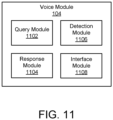
- Figure 11 depicts one embodiment of a voice module 104.
- the voice module 104 in certain embodiments, may be substantially similar to one or more of a device voice module 104a and/or a backend voice module 104b, as described above with regard to Figure 1A .
- the voice module 104 in the depicted embodiment, includes a query module 1102, a response module 1104, a detection module 1106, and an interface module 1108.
- the query module 1102 questions and/or queries a user with one or more questions, prompts, requests, or the like.
- the query module 1102 audibly and/or verbally questions a user (e.g., using a speaker of a computing device 102 such as an integrated speaker, headphones, a Bluetooth ® speaker or headphones, or the like).
- a speaker of a computing device 102 such as an integrated speaker, headphones, a Bluetooth ® speaker or headphones, or the like.
- the query module 1102 may display one or more questions and/or other prompts to a user (e.g., on an electronic display screen of a computing device 102, or the like), another user (e.g., a coach, a parent, a medical professional, an administrator, or the like) may read one or more questions and/or other prompts to a user, or the like.
- the one or more questions or prompts are selected as described above with regard to the prompt selection component 1043, or the like, in order to facilitate a diagnosis of one or more medical conditions.
- a plurality of query modules 1102 disposed on a plurality of different computing devices 102 may query and/or question a plurality of different users.
- a plurality of distributed query modules 1102 may collect voice samples for a medical trial, to train a machine learning model for diagnosing a medical condition, to collect test data to facilitate prompt selection, or the like.
- the query module 1102 in one embodiment, questions and/or otherwise queries a user at a predefined health state, such as a known healthy state, a predefined stage of a medical condition, or the like, to collect one or more baseline voice recordings, training data, or other data.
- the query module 1102 questions and/or otherwise queries a user in response to a potential medical event or other trigger.
- the query module 1102 may question a user in order to collect test case voice recordings or other test case data in response to a user requesting a medical assessment, based on data from a sensor of a computing device 102 such as a wearable or mobile device, and/or based on receiving another trigger indicating that an injury may have occurred, that one or more symptoms of a disease have been detected, or the like.
- a user in response to a hit, a fall, an accident, and/or another potential concussion event (e.g., at a sporting event or other activity), may request a medical assessment (e.g., using a graphical user interface of the interface module 1108 to trigger one or more questions from the query module 1102, collection of voice data and/or other data from the response module 1104, and/or a medical assessment from the detection module 1106, or the like).
- a concussion in certain embodiments, may comprise a disturbance in brain function causes by a direct or indirect force to the head of a user.
- a concussion may cause a headache, unsteadiness, confusion or other impaired brain function, abnormal behavior and/or personality, or the like.
- the query module 1102 may audibly question a user and/or collect sensor data associated with the user to detect whether the user's eyes are opening, whether the user's eyes are opening in response to pain, whether the user's eyes are opening in response to speech, whether the user's eyes are opening spontaneously, whether the user can provide a verbal response, whether the user is making incomprehensible sounds, whether the user is responding to questions or other prompts with inappropriate words, whether the user is confused, whether the user is disoriented, whether the user provides little or no motor response, whether the user exhibits extension to pain (e.g., arm abduction, supination of forearm, or the like), whether the user exhibits abnormal flexion to pain (e.g., pronation of forearm, flexor posturing, or the like), whether the user withdraws from pain, whether the user localizes pain (e.g., purposeful movement toward pain), whether the user obeys verbal/audible commands from the query
- the query module 1102 may direct some questions to a user being assessed and/or diagnosed, and others to an administrator (e.g., a medical professional, a coach, a parent, a trainer, or the like).
- the query module 1102 may question an administrator about one or more signs the administrator may have observed in the user being assessed and/or diagnosed, such as a lack of balance, motor incoordination, disorientation, confusion, loss of memory, a blank or vacant look, a visible facial injury or other injury, observed results of a physical examination (e.g., range of motion, tenderness, sensation, strength, a balance examination, a coordination examination, or the like), and/or another observation.
- a physical examination e.g., range of motion, tenderness, sensation, strength, a balance examination, a coordination examination, or the like
- the query module 1102 may question and/or prompt a user about the sporting event in which the user was participating when the potential medical event occurred, the user's team, the date and/or time, memory test questions, or the like.
- the query module 1102 may audibly and/or textually question the user "what venue are we at today?", “which half is it now?”, “who scored last in this match?”, “what team did you play last week/game?”, “did your team win the last game?”, “what month is it?”, “what is the date today?", “what is the day of the week?”, “what year is it?", “what time is it right now?”, may audibly list words and/or numbers for the user and ask the user to repeat them back, may display a series of pictures to the user and ask the user to repeat back a description of the series of pictures, or the like.
- One or more questions and/or prompts of the query module 1102 may allow the detection module 1106 to determine a Standardized Concussion Assessment Tool (SCAT) score, a SCAT2 score, a SCAT3 score, a SCATS score, a Glasgow Coma Score (GCS), a Maddocks Score, a Concussion Recognition Tool (CRT) score, and/or another concussion score.
- SCAT Standardized Concussion Assessment Tool
- GCS Glasgow Coma Score
- CTR Concussion Recognition Tool
- the response module 1104 is configured to receive response data (e.g., voice data of a verbal response, text data of a typed response, sensor data, image and/or video data from a camera or other image sensor, touch input from a touchscreen and/or touchpad, movement information from an accelerometer and/or gyroscope, or the like), in response to one or more questions and/or other queries from the query module 1102.
- response data e.g., voice data of a verbal response, text data of a typed response, sensor data, image and/or video data from a camera or other image sensor, touch input from a touchscreen and/or touchpad, movement information from an accelerometer and/or gyroscope, or the like
- the response module 1104 uses a microphone of a computing device 102 (e.g., a mobile computing device 102 which may be transported to a football field, another sporting event, or the like) to record verbal responses (e.g., answers) of a user to one or more questions or other prompts from the query module 1102.
- a computing device 102 e.g., a mobile computing device 102 which may be transported to a football field, another sporting event, or the like
- verbal responses e.g., answers
- the response module 110 may store received response data such as voice recordings, sensor data, or the like on a computer readable storage medium of a computing device 102, 110, so that the detection module 1106 may access and/or process the received response data to diagnose and/or assess a medical condition, train a model for diagnosing and/or assessing a medical condition, or the like; so that the interface module 1108 may provide the received response data to one or more authorized users; and/or so that the received response data is otherwise accessible for use.
- the response module 1104 may provide received response data directly to the detection module 1106 for diagnosing and/or assessing a medical condition (e.g., without otherwise storing the data, temporarily storing and/or caching the data, or the like).
- the response module 1104 may separately receive and/or store baseline response data (e.g., in response to one or more baseline questions or prompts from the query module 1102) and test case response data (e.g., in response to one or more test case questions or prompts from the query module based on a potential medical event, or the like).
- the response module 1104 may only receive test case response data, and the detection module 1106 may base an assessment or other diagnosis of a medical condition on the test case data and an analysis of data from different users (e.g., different users known to have the medical condition, or the like).
- the response module 1104 may store and/or organize received response data in a database and/or other predefined data structure accessible by the detection module 1106, the interface module 1108, or the like.
- the response module 1104 may enable the detection module 1106 to dynamically assess a medical condition for the user in response to a medical event.
- the response module 1104 may store response data for a user on a mobile computing device 102, on a backend server 108 in communication with a mobile computing device 102 over a data network 106, 130, or the like, enabling the detection module 1106 to determine an assessment of a medical condition on location in response to a potential medical event (e.g., on the sideline or field at a football game or other sporting event in response to a potential concussion event, in response to a motor vehicle accident, or the like).
- a potential medical event e.g., on the sideline or field at a football game or other sporting event in response to a potential concussion event, in response to a motor vehicle accident, or the like.
- the detection module 1106 is configured to provide an assessment and/or other diagnosis for a user of a medical condition based on an analysis of one or more received responses of a user from the response module 1104.
- the detection module 1106, in various embodiments, may comprise, be in communication with, and/or be substantially similar to the acoustic feature computation component 210, the speech recognition component 220, the language feature computation component 230, and/or the medical condition classifier 240 described above.
- the detection module 1106 may determine an assessment or other diagnosis of a medical condition for a user (e.g., indicating whether or not the user has the medical condition, a likelihood that the user has the medical condition, an estimated severity of the medical condition, or the like) based on both test case response data for the user and previously received baseline response data for the same user (e.g., in order to determine changes in the user's voice, changes in the user's responses, or the like). In other embodiments, the detection module 1106 may determine an assessment or other diagnosis of a medical condition for a user based on test case response data for the user and based on response data for different users (e.g., different users previously diagnosed with the medical condition, or the like). In a further embodiment, the detection module 1106 may determine an assessment or other diagnosis of a medical condition for a user based on test case response data for the user, baseline response data for the same user, and response data for different users, or the like.
- a medical condition for a user e.g., indicating whether or
- the detection module 1106 may extract one or more voice features (e.g., acoustic features and/or language features) from a voice recording (e.g., baseline response data and/or test case response data) and may input the one or more extracted voice features into a model associated with a medical condition (e.g., a machine learning model such as a Gaussian mixture model, an acoustic model, a language model, a neural network, a deep neural network, a classifier, a support vector machine, a multi-layer perceptron, or the like), which may output an assessment or other diagnosis for the medical condition based on the one or more extracted voice features.
- a voice features e.g., acoustic features and/or language features
- a voice recording e.g., baseline response data and/or test case response data
- a model associated with a medical condition e.g., a machine learning model such as a Gaussian mixture model, an acoustic model, a language model
- the detection module 1106 may input other supplemental data associated with the user into the model, and may diagnose the medical condition based on the result.
- the detection module 1106 may input sensor data from a computing device 102 of a user into a model (e.g., together with extracted voice features or other voice data) to determine an assessment or other diagnoses of a medical condition for a user.
- the detection module 1106 may extract one or more image features from image data (e.g., one or more images, video, or the like of the user, of the user's face, of another body part of the user associated with a medical condition, or the like) from an image sensor such as a camera of a computing device 102, and may input the one or more image features into a model (e.g., with extracted voice features or the like).
- the detection module 1106 may base an assessment or other diagnosis at least partially on touch inputs received from a user on a touchscreen, touchpad, or the like of a computing device 102.
- the query module 1102 may provide an interactive video game or the like on an electronic display of a computing device 102, and the interactive video game may be configured to test a user for one or more symptoms of a medical condition (e.g., testing reflexes, dexterity, reaction time, or the like) and the detection module 1106 may extract one or more features from touch inputs received from the user during the interactive video game (e.g., a score in the video game, reaction times of the user, touch accuracy metrics for the user, or the like) and may input the one or more extracted features into a model for diagnosing a medical condition (e.g., with one or more extracted voice features, or the like).
- a medical condition e.g., testing reflexes, dexterity, reaction time, or the like
- the detection module 1106 may extract one or more features from touch inputs received from the user during the interactive video game (e.g., a score in the video game, reaction times of the user, touch accuracy metrics for the user, or the like) and may input
- the detection module 1106 may extract one or more features from movement information measured by an accelerometer, a gyroscope, and/or another movement sensor of a mobile computing device 102 for a user, and may input the one or more extracted features into a model for diagnosing a medical condition (e.g., with one or more extracted voice features, or the like).
- the detection module 1106 determines an assessment or other diagnosis for a medical condition comprising a neurological condition such as a concussion, or one or more of depression, stress, stroke, cognitive well-being, mood, honesty, Alzheimer's disease, Parkinson's disease, and optionally cancer, or the like.
- a neurological condition such as a concussion, or one or more of depression, stress, stroke, cognitive well-being, mood, honesty, Alzheimer's disease, Parkinson's disease, and optionally cancer, or the like.
- the detection module 1106 may be configured to determine an assessment or other diagnosis of a medical condition based on one or more acoustic features of received verbal response data, without regard to one or more language features of the received verbal response data (e.g., without any language features, with only one or more predefined language features, without any automatic speech recognition, or the like).
- the assessment and/or diagnosis of the detection module may be independent of a language and/or a dialect of the received verbal response, so the detection module 1106 may provide assessments and/or diagnoses for users in different languages using acoustic features of the received verbal response data.
- the detection module 1106 may base an assessment and/or diagnosis of a medical condition on both acoustic features and language features of received verbal response data.
- the detection module 1106 may determine an assessment and/or diagnosis of a medical condition exclusively on a mobile computing device 102 of a user. For example, in an emergency situation, or the like, a diagnosis may be needed as soon as possible, and there may not be time to upload recorded verbal responses to a backend server 108 for processing, or a mobile computing device 102 may not have a connection to a data network 106, 130, or may not have a fast enough connection.
- the detection module 1106, in one embodiment, may use one or more models configured to execute using processing power, volatile memory capacity, and/or non-volatile storage capacity available on a mobile computing device 102.
- a model used by a detection module 1106 on a mobile computing device may minimize the size of classifiers (e.g., the required volatile and/or non-volatile storage capacity) by limiting matrix multiplication in the model (e.g., no matrix multiplication, only a predefined number of matrix multiplications, or the like), even if using additional matrix multiplication may improve the accuracy of the assessment and/or diagnosis.
- classifiers e.g., the required volatile and/or non-volatile storage capacity
- matrix multiplication in the model e.g., no matrix multiplication, only a predefined number of matrix multiplications, or the like
- the detection module 1106 determines the sole and/or exclusive assessment and/or diagnosis on a mobile computing device 102. In a further embodiment, a detection module 1106 may determine a first assessment and/or diagnosis (e.g., a first score) on a mobile computing device 102, and another detection module 1106 may determine a second assessment and/or diagnosis (e.g., a second score, a more accurate and/or more detailed assessment, or the like). In another embodiment, the detection module 1106 may determine the sole and/or exclusive assessment and/or diagnosis on a backend server device 108.
- a detection module 1106 may determine a first assessment and/or diagnosis (e.g., a first score) on a mobile computing device 102, and another detection module 1106 may determine a second assessment and/or diagnosis (e.g., a second score, a more accurate and/or more detailed assessment, or the like). In another embodiment, the detection module 1106 may determine the sole and/or exclusive assessment and/or diagnosis on a backend server device 108
- a plurality of voice modules 104 may be configured to perform one or more medical trials with users comprising medical trial participants (e.g., determining the efficacy of a medical treatment based on an analysis of voice data from participants).
- the detection module 1106 may determine an assessment of an efficacy of a medical treatment for the medical condition associated with the medical trial. For example, users, as medical trial participants, may be divided into at least a placebo group that doesn't receive the medical treatment and a different group that receives the medical treatment, or into multiple groups that receive different medical treatments, or the like.
- a plurality of distributed detection modules 1106 may be configured to provide blind assessments of a medical condition for both a placebo group and one or more groups receiving a medical treatment, allowing one or more administrators of the medical trial to determine an efficacy of the medical treatment.
- the detection module 1106 may determine a severity of a medical condition, a severity of one or more symptoms of a medical condition, or the like for the placebo group and for the group receiving the medical treatment and compare the two.
- a "blind" assessment is an assessment that is not based on whether or not a participant is in a placebo group or in a group receiving a medical treatment.
- a detection module 1106 may use the same model, the same analysis, or the like for both medical trial participants in a placebo group and medical trial participants in a group receiving a medical treatment.
- the detection module 1106 is configured to base an assessment at least partially on one or more biomarkers of received response data (e.g., verbal response data, sensor data, or the like) indicating a quality of life for the user.
- biomarkers of received response data e.g., verbal response data, sensor data, or the like
- the detection module 1106 may assess one or more quality of life biomarkers indicating physical fatigue, tiredness, mental fatigue, stress, anxiety, depression, and/or other parameters associated with a quality of life of the user.
- a biomarker comprises a measurable indicator from a user of some biological state and/or condition of the user (e.g., presence of a disease and/or injury, presence of one or more symptoms, a current quality of life of a user, or the like).
- a biomarker in certain embodiments, may comprise a characteristic objectively identifiable by the detection module 1106 in response data from a user, such as an acoustic feature, a language feature, a characteristic identifiable in sensor data, or the like.
- a cancer drug therapy may be effective, however, it may be detrimental to the quality of life of the individual using the cancer drug therapy.
- the detection module 1106 may identify one or more quality of life changes in a user (e.g., a medical trial participant) objectively using biomarkers or other indicators in verbal response data from the user.
- the interface module 1108 cooperates with the query module 1102 to display one or more questions and/or prompts to a user (e.g., instead of audibly questioning the user, in addition to audibly questioning the user, or the like).
- the response module 1104 may display one or more user interface elements (e.g., a play button, a replay button, a next question button, a previous question button, or the like) allowing a user to navigate through one or more questions of the query module 1102.
- the determination module 1106 may determine whether an answer from a user to a question from the query module 1102 is correct or incorrect (e.g., based on a voice analysis using a machine learning model, or the like) and the interface module 1108 may graphically mark the answer correct or incorrect (e.g., dynamically, during the query module 1102's administration of an assessment, or the like).
- the determination module 1106 may use automatic speech recognition to translate recorded voice responses of a user from the response module 1104 to text, which the interface module 1108 may display to the user (e.g., dynamically, in real time, or the like).
- the interface module 1108 may prompt a user to recite a passage (e.g., a passage including sentences, sets of words, letters, numbers, monosyllables, or the like).
- the interface module 1108 may prompt the user to recite the same passage and/or set of passages each time data is collected (e.g., baseline response data collection, test case response data collection, medical trial screening data collection, medical trial data collection, or the like).
- the interface module 1108, may prompt an administrator of an assessment (e.g., a coach, a parent, a medical professional, or the like) with instructions to perform one or more physical examinations of a user being assessed.
- the interface module 1108 may provide instructions for a balance examination, a motor coordination examination, a range of motion examination, a tenderness examination, a touch sensation examination, a strength examination, or the like, and may provide an interface for the administrator to record the results (e.g., the administrator's observations) for the response module 1104.
- the interface module 1108 provides one or more users with access to received response data from the response module 1104 (e.g., voice recordings, baseline response data, test case response data, sensor data, or the like), to assessments and/or other diagnoses from the detection module 1106, or the like.
- the interface module 1108 may allow a user to access received response data, assessments and/or other diagnoses, or the like from multiple locations (e.g., from a mobile app on a mobile computing device 102, from a web browser of a different computing device 102 accessing a web server of a backend server 108, or the like).
- the interface module 1108 may provide a user with a baseline assessment and/or score based on baseline response data, a test case assessment and/or score based on test case response data, a follow-up assessment and/or score based on subsequent responses (e.g., an at home follow-up assessment during recovery from a previously assessed/diagnosed medical condition), or the like, each through the same graphical user interface on one or more computing devices 102, along with the associated response data for each assessment and/or score, or the like.
- the interface module 1108 may display a baseline assessment and/or score next to a current (e.g., text case) assessment and/or score for comparison (e.g., side by side), may display a difference between a baseline assessment and/or score and a current (e.g., text case) assessment and/or score, or the like.
- the interface module 1108 may display a breakdown of an assessment and/or score, with sub-scores in different categories, or the like.
- the interface module 1108, may aggregate response data, scores or other assessments, or the like for a user from multiple sports, teams, schools, or the like, and display them in a single graphical user interface. In this manner, the interface module 1108 may provide medical professionals, coaches, administrators, or the like, a more complete history and/or status of the user's health, injury history, or the like, for more informed medical decisions.
- the interface module 1108 may enforce access control permissions (e.g., for privacy, for security, for HIPAA compliance, or the like) by authenticating users (e.g., with a username and password or other authentication credentials) and providing the users access to voice recordings or other response data, assessments or other diagnoses, or the like based on access control permissions associated with the user.
- the interface module 1108 enforces hierarchical access control permissions for different users, with users at each level in the hierarchy having access to data associated with any levels below their level in the hierarchy.
- the voice module 104 is configured to diagnose concussions and/or another medical condition for athletes, athletes, parents, and/or guardians may have access permissions for the athletes' own personal response data (e.g., voice recordings), assessments and/or other diagnoses; a coach may have access to similar data for each team member (e.g., multiple athletes or other users); a school or league administrator may have access to similar data for team members of multiple teams (e.g., each team at the school, each team in the league, or the like); a district or region administrator may have access to similar data for team members of multiple schools or leagues; or the like.
- a coach may have access to similar data for each team member (e.g., multiple athletes or other users)
- a school or league administrator may have access to similar data for team members of multiple teams (e.g., each team at the school, each team in the league, or the like)
- a district or region administrator may have access to similar data for team members of multiple schools or leagues; or the like.
- the interface module 1108 may anonymize data (e.g., response data such as voice recordings and/or sensor data, assessments and/or other diagnoses, or the like) for certain users, such as providing personalized information for an individual and their coach, but averaged or otherwise anonymized data (e.g., by team, by school, by position, by league, or the like) for other levels in a hierarchy.
- data e.g., response data such as voice recordings and/or sensor data, assessments and/or other diagnoses, or the like
- anonymized data e.g., by team, by school, by position, by league, or the like
- the interface module 1108 may block individual users (e.g., medical study participants) from accessing at least a portion of their own data (e.g., response data, assessments or other diagnoses, both response data and assessments, or the like), while the interface module 1108 may provide one or more administrators of the medical trial with hierarchical access control permissions with access the stored data for the users (e.g., stored baseline recorded verbal responses, test case recorded verbal responses, assessments or other diagnoses, or the like).
- their own data e.g., response data, assessments or other diagnoses, both response data and assessments, or the like
- the interface module 1108 may provide one or more administrators of the medical trial with hierarchical access control permissions with access the stored data for the users (e.g., stored baseline recorded verbal responses, test case recorded verbal responses, assessments or other diagnoses, or the like).
- Figure 12 depicts one embodiment of a method 1200 for medical assessment based on voice.
- the method 1200 begins, and a query module 1102 questions 1202 a user (e.g., audibly from a speaker of a computing device 102, textually on an electronic screen of a computing device 102, or the like).
- questions 1202 e.g., audibly from a speaker of a computing device 102, textually on an electronic screen of a computing device 102, or the like).
- a response module 1104 receives 1204 a response of the user (e.g., a verbal response from a microphone of a computing device 102, a touch response from a touchscreen and/or touchpad of a computing device 102, sensor input from one or more sensors of a computing device 102, a selection or click from a mouse or other input device of a computing device 102, a text response input by the user on a keyboard and/or touchscreen of a computing device 102, or the like).
- a detection module 1106 assesses 1206 the user for a medical condition based on an analysis of the received 1204 response of the user and the method 1200 ends.
- Figure 13 depicts one embodiment of a method 1300 for medical assessment based on voice.
- a query module 1102 queries 1302 a user with one or more questions using a user interface of a computing device 102 (e.g., a microphone, an electronic display screen, a touchscreen, and/or one or more other sensors).
- a response module 1104 records 1304 one or more baseline responses (e.g., verbal responses as audio recordings, text responses and/or sensor data as a data file or other data structure, or the like) of the user to the queried 1302 one or more questions on a computing device 102, 108.
- baseline responses e.g., verbal responses as audio recordings, text responses and/or sensor data as a data file or other data structure, or the like
- a detection module 1106 detects 1306 a potential medical event (e.g., based on a user requesting a medical assessment, based on data from a sensor, and/or based on receiving another trigger). If the detection module 1106 does not detect 1306 a potential medical event, the method 1300 continues until the detection module 1106 detects 1306 a potential medical event.
- a potential medical event e.g., based on a user requesting a medical assessment, based on data from a sensor, and/or based on receiving another trigger. If the detection module 1106 does not detect 1306 a potential medical event, the method 1300 continues until the detection module 1106 detects 1306 a potential medical event.
- the query module 1102 re-queries 1308 the user with one or more questions using a user interface of a computing device 102.
- a potential medical event e.g., an impact or other event that may have caused a concussion; an indicator of a potential medical condition such as depression, stress, stroke, cognitive well-being, mood, honesty, Alzheimer's disease, Parkinson's disease, or the like; a request from a user; and/or another trigger
- the query module 1102 re-queries 1308 the user with one or more questions using a user interface of a computing device 102.
- a response module 1104 records 1310, on a computing device 102, 108, one or more test case responses of the user to the re-queried 1308 one or more questions.
- a detection module 1106 assesses 1312, on a computing device 102, 108, a likelihood that the user has a medical condition (e.g., concussion, depression, stress, stroke, cognitive well-being, mood, honesty, Alzheimer's disease, Parkinson's disease, or the like) based on a voice analysis of the recorded 1304 one or more baseline responses and the recorded 1310 one or more test case responses.
- the method 1300 continues until the detection module 1106 detects 1306 a subsequent potential medical event.
- a means for questioning a user may comprise a voice module 104, a device voice module 104a, a backend voice module 104b, a query module 1102, a mobile computing device 102, a backend server computing device 108, an electronic speaker of a computing device 102, 108, headphones, an electronic display screen of a computing device 102, 108, a user interface device, a network interface, a mobile application, a processor, an application specific integrated circuit (ASIC), a field programmable gate array (FPGA), programmable logic, other logic hardware, and/or other executable program code stored on a non-transitory computer readable storage medium.
- Other embodiments may comprise substantially similar or equivalent means for questioning a user.
- a means for receiving a response may comprise a voice module 104, a device voice module 104a, a backend voice module 104b, a response module 1104, a mobile computing device 102, a backend server computing device 108, a microphone, a user input device, a touch screen, a touchpad, a keyboard, a mouse, an accelerometer, a gyroscope, an image sensor, a mobile application, a processor, an application specific integrated circuit (ASIC), a field programmable gate array (FPGA), programmable logic, other logic hardware, and/or other executable program code stored on a non-transitory computer readable storage medium.
- Other embodiments may comprise substantially similar or equivalent means for receiving a response.
- a means for assessing a user for a medical condition based on a received response of the user may comprise a voice module 104, a device voice module 104a, a backend voice module 104b, a detection module 1106, a mobile computing device 102, a backend server computing device 108, a mobile application, machine learning, artificial intelligence, an acoustic feature computation component 210, a speech recognition component 220, a Gaussian mixture model, an acoustic model, a language model, a neural network, a deep neural network, a medical condition classifier 240, a classifier, a support vector machine, a multi-layer perceptron, a processor, an application specific integrated circuit (ASIC), a field programmable gate array (FPGA), programmable logic, other logic hardware, and/or other executable program code stored on a non-transitory computer readable storage medium.
- Other embodiments may comprise substantially similar or equivalent means for assessing a user for a medical condition.
- a means for authenticating different users in a hierarchy of users may comprise a voice module 104, a device voice module 104a, a backend voice module 104b, an interface module 1108, a mobile computing device 102, a backend server computing device 108, a mobile application, a processor, an application specific integrated circuit (ASIC), a field programmable gate array (FPGA), programmable logic, other logic hardware, and/or other executable program code stored on a non-transitory computer readable storage medium.
- Other embodiments may comprise substantially similar or equivalent means for authenticating different users.
- a means for providing access to different recordings and/or different assessments to different users may comprise a voice module 104, a device voice module 104a, a backend voice module 104b, an interface module 1108, a mobile computing device 102, a backend server computing device 108, a mobile application, a processor, an application specific integrated circuit (ASIC), a field programmable gate array (FPGA), programmable logic, other logic hardware, and/or other executable program code stored on a non-transitory computer readable storage medium.
- Other embodiments may comprise substantially similar or equivalent means for providing access to different recordings and/or different assessments to different users.
- processor as used herein is meant to include at least one processor and unless context clearly indicates otherwise, the plural and the singular should be understood to be interchangeable. Any aspects of the present disclosure may be implemented as a method on the machine, as a system or apparatus as part of or in relation to the machine, or as a computer program product embodied in a computer readable medium executing on one or more of the machines.
- the processor may be part of a server, client, network infrastructure, mobile computing platform, stationary computing platform, or other computing platform.
- a processor may be any kind of computational or processing device capable of executing program instructions, codes, binary instructions and the like.
- the processor may be or include a signal processor, digital processor, embedded processor, microprocessor or any variant such as a co-processor (math co-processor, graphic co-processor, communication co-processor and the like) and the like that may directly or indirectly facilitate execution of program code or program instructions stored thereon.
- the processor may enable execution of multiple programs, threads, and codes. The threads may be executed simultaneously to enhance the performance of the processor and to facilitate simultaneous operations of the application.
- methods, program codes, program instructions and the like described herein may be implemented in one or more thread.
- the thread may spawn other threads that may have assigned priorities associated with them; the processor may execute these threads based on priority or any other order based on instructions provided in the program code.
- the processor may include memory that stores methods, codes, instructions and programs as described herein and elsewhere.
- the processor may access a storage medium through an interface that may store methods, codes, and instructions as described herein and elsewhere.
- the storage medium associated with the processor for storing methods, programs, codes, program instructions or other type of instructions capable of being executed by the computing or processing device may include but may not be limited to one or more of a CD-ROM, DVD, memory, hard disk, flash drive, RAM, ROM, cache and the like.
- a processor may include one or more cores that may enhance speed and performance of a multiprocessor.
- the process may be a dual core processor, quad core processors, other chip-level multiprocessor and the like that combine two or more independent cores (called a die).
- the methods and systems described herein may be deployed in part or in whole through a machine that executes computer software on a server, client, firewall, gateway, hub, router, or other such computer and/or networking hardware.
- the software program may be associated with a server that may include a file server, print server, domain server, internet server, intranet server and other variants such as secondary server, host server, distributed server and the like.
- the server may include one or more of memories, processors, computer readable media, storage media, ports (physical and virtual), communication devices, and interfaces capable of accessing other servers, clients, machines, and devices through a wired or a wireless medium, and the like.
- the methods, programs, or codes as described herein and elsewhere may be executed by the server.
- other devices required for execution of methods as described in this application may be considered as a part of the infrastructure associated with the server.
- the server may provide an interface to other devices including, without limitation, clients, other servers, printers, database servers, print servers, file servers, communication servers, distributed servers and the like. Additionally, this coupling and/or connection may facilitate remote execution of program across the network. The networking of some or all of these devices may facilitate parallel processing of a program or method at one or more locations without deviating from the scope of the disclosure.
- any of the devices attached to the server through an interface may include at least one storage medium capable of storing methods, programs, code and/or instructions.
- a central repository may provide program instructions to be executed on different devices.
- the remote repository may act as a storage medium for program code, instructions, and programs.
- the software program may be associated with a client that may include a file client, print client, domain client, internet client, intranet client and other variants such as secondary client, host client, distributed client and the like.
- the client may include one or more of memories, processors, computer readable media, storage media, ports (physical and virtual), communication devices, and interfaces capable of accessing other clients, servers, machines, and devices through a wired or a wireless medium, and the like.
- the methods, programs, or codes as described herein and elsewhere may be executed by the client.
- other devices required for execution of methods as described in this application may be considered as a part of the infrastructure associated with the client.
- the client may provide an interface to other devices including, without limitation, servers, other clients, printers, database servers, print servers, file servers, communication servers, distributed servers and the like. Additionally, this coupling and/or connection may facilitate remote execution of program across the network. The networking of some or all of these devices may facilitate parallel processing of a program or method at one or more locations without deviating from the scope of the disclosure.
- any of the devices attached to the client through an interface may include at least one storage medium capable of storing methods, programs, applications, code and/or instructions.
- a central repository may provide program instructions to be executed on different devices.
- the remote repository may act as a storage medium for program code, instructions, and programs.
- the methods and systems described herein may be deployed in part or in whole through network infrastructures.
- the network infrastructure may include elements such as computing devices, servers, routers, hubs, firewalls, clients, personal computers, communication devices, routing devices and other active and passive devices, modules and/or components as known in the art.
- the computing and/or non-computing device(s) associated with the network infrastructure may include, apart from other components, a storage medium such as flash memory, buffer, stack, RAM, ROM and the like.
- the processes, methods, program codes, instructions described herein and elsewhere may be executed by one or more of the network infrastructural elements.
- the methods, program codes, and instructions described herein and elsewhere may be implemented on a cellular network having multiple cells.
- the cellular network may either be frequency division multiple access (FDMA) network or code division multiple access (CDMA) network.
- FDMA frequency division multiple access
- CDMA code division multiple access
- the cellular network may include mobile devices, cell sites, base stations, repeaters, antennas, towers, and the like.
- the cell network may be a GSM, GPRS, 3G, EVDO, mesh, or other networks types.
- the mobile devices may include navigation devices, cell phones, mobile phones, mobile personal digital assistants, laptops, palmtops, netbooks, pagers, electronic books readers, music players and the like. These devices may include, apart from other components, a storage medium such as a flash memory, buffer, RAM, ROM and one or more computing devices.
- the computing devices associated with mobile devices may be enabled to execute program codes, methods, and instructions stored thereon. Alternatively, the mobile devices may be configured to execute instructions in collaboration with other devices.
- the mobile devices may communicate with base stations interfaced with servers and configured to execute program codes.
- the mobile devices may communicate on a peer-to-peer network, mesh network, or other communications network.
- the program code may be stored on the storage medium associated with the server and executed by a computing device embedded within the server.
- the base station may include a computing device and a storage medium.
- the storage device may store program codes and instructions executed by the computing devices associated with the base station.
- the computer software, program codes, and/or instructions may be stored and/or accessed on machine readable media that may include: computer components, devices, and recording media that retain digital data used for computing for some interval of time; semiconductor storage known as random access memory (RAM); mass storage typically for more permanent storage, such as optical discs, forms of magnetic storage like hard disks, tapes, drums, cards and other types; processor registers, cache memory, volatile memory, non-volatile memory; optical storage such as CD, DVD; removable media such as flash memory (e.g.
- RAM random access memory
- mass storage typically for more permanent storage, such as optical discs, forms of magnetic storage like hard disks, tapes, drums, cards and other types
- processor registers cache memory, volatile memory, non-volatile memory
- optical storage such as CD, DVD
- removable media such as flash memory (e.g.
- USB sticks or keys floppy disks, magnetic tape, paper tape, punch cards, standalone RAM disks, Zip drives, removable mass storage, off-line, and the like; other computer memory such as dynamic memory, static memory, read/write storage, mutable storage, read only, random access, sequential access, location addressable, file addressable, content addressable, network attached storage, storage area network, bar codes, magnetic ink, and the like.
- the methods and systems described herein may transform physical and/or or intangible items from one state to another.
- the methods and systems described herein may also transform data representing physical and/or intangible items from one state to another.
Landscapes
- Health & Medical Sciences (AREA)
- Engineering & Computer Science (AREA)
- Life Sciences & Earth Sciences (AREA)
- Medical Informatics (AREA)
- Physics & Mathematics (AREA)
- Public Health (AREA)
- General Health & Medical Sciences (AREA)
- Biomedical Technology (AREA)
- Pathology (AREA)
- Theoretical Computer Science (AREA)
- Artificial Intelligence (AREA)
- Epidemiology (AREA)
- Molecular Biology (AREA)
- Biophysics (AREA)
- Data Mining & Analysis (AREA)
- Primary Health Care (AREA)
- Evolutionary Computation (AREA)
- Mathematical Physics (AREA)
- Software Systems (AREA)
- General Physics & Mathematics (AREA)
- Animal Behavior & Ethology (AREA)
- Heart & Thoracic Surgery (AREA)
- Surgery (AREA)
- Veterinary Medicine (AREA)
- Computing Systems (AREA)
- General Engineering & Computer Science (AREA)
- Neurology (AREA)
- Physiology (AREA)
- Computational Linguistics (AREA)
- Audiology, Speech & Language Pathology (AREA)
- Signal Processing (AREA)
- Psychiatry (AREA)
- Databases & Information Systems (AREA)
- Computer Vision & Pattern Recognition (AREA)
- Multimedia (AREA)
- Acoustics & Sound (AREA)
- Human Computer Interaction (AREA)
- Hospice & Palliative Care (AREA)
- Developmental Disabilities (AREA)
- Psychology (AREA)
Claims (13)
- Einrichtung, umfassend:
ein Abfragemodul (1102), das konfiguriert ist, um einen Benutzer aus einem Lautsprecher einer mobilen Rechenvorrichtung (110) hörbar mit einer Teilmenge von Aufforderungen zu befragen, die vorab ausgewählt werden durch:Berechnen einer medizinischen Diagnosepunktezahl für jedes Sprachdatenelement eines Trainingskorpus (510) durch Verarbeiten der Sprachdatenelemente mit einem maschinellen Lernmodell, wobei jedes Sprachdatenelement des Trainingskorpus (510) einer Aufforderung aus einer Vielzahl von Aufforderungen entspricht,Berechnen einer Aufforderungsauswahlpunktezahl für jede Aufforderung aus der Vielzahl von Aufforderungen unter Verwendung der medizinischen Diagnosepunktezahlen, undAuswählen der Teilmenge von Aufforderungen aus der Vielzahl von Aufforderungen unter Verwendung der Aufforderungsauswahlpunktezahlen;ein Antwortmodul (1104), das konfiguriert ist, um eine verbale Antwort des Benutzers aus einem Mikrofon der mobilen Rechenvorrichtung als Reaktion auf die Teilmenge von Aufforderungen zu empfangen; undein Erfassungsmodul (1106), das konfiguriert ist, um dem Benutzer basierend auf einer Analyse der empfangenen verbalen Antwort des Benutzers eine Beurteilung eines medizinischen Zustands bereitzustellen, wobei der medizinische Zustand einen neurologischen Zustand oder eines oder mehr aus Depression, Stress, Schlaganfall, kognitivem Wohlbefinden, Stimmung, Ehrlichkeit, Alzheimer-Krankheit oder Parkinson-Krankheit umfasst. - Einrichtung nach Anspruch 1, wobei das Erfassungsmodul konfiguriert ist, um die Beurteilung basierend auf einem oder mehreren akustischen Merkmalen der empfangenen verbalen Antwort ohne Berücksichtigung sprachlicher Merkmale der empfangenen verbalen Antwort zu bestimmen, sodass die Beurteilung von einem oder mehr von einer Sprache und einem Dialekt der empfangenen verbalen Antwort unabhängig ist.
- Einrichtung nach Anspruch 1, wobei der Benutzer einen Teilnehmer an einer medizinischen Studie umfasst und die Beurteilung eine Beurteilung der Wirksamkeit einer medizinischen Behandlung des medizinischen Zustands umfasst.
- Einrichtung nach Anspruch 3, wobei das Erfassungsmodul eines einer Vielzahl verteilter Erfassungsmodule umfasst, die auf mobilen Rechenvorrichtungen für eine Vielzahl von Teilnehmern einer medizinischen Studie angeordnet sind, die mindestens eine Placebogruppe, welche die medizinische Behandlung nicht erhält, und eine Gruppe, welche die medizinische Behandlung erhält, umfasst, wobei die Vielzahl verteilter Erfassungsmodule konfiguriert sind, um Blindbeurteilungen des medizinischen Zustands für beide, die Placebogruppe und die Gruppe, welche die medizinische Behandlung erhält, bereitzustellen.
- Einrichtung nach Anspruch 3, wobei die Beurteilung der Wirksamkeit der medizinischen Behandlung mindestens teilweise auf einem oder mehreren Biomarkern der empfangenen verbalen Antwort basiert, die eine Lebensqualität für den Benutzer angeben.
- Einrichtung nach Anspruch 5, wobei der eine oder mehrere Biomarker eines oder mehr von körperlicher Erschöpfung, Müdigkeit, geistige Erschöpfung, Stress, Angst und Depression angeben.
- Einrichtung nach Anspruch 1, wobei der Benutzer einen potenziellen Teilnehmer an einer medizinischen Studie umfasst und die Beurteilung eine Eignung des Benutzers für eine medizinische Studie hinsichtlich des medizinischen Zustands umfasst.
- Einrichtung nach Anspruch 1, wobei die Beurteilung eine erste Punktezahl umfasst, die für den Benutzer auf der mobilen Rechenvorrichtung bestimmt wird.
- Einrichtung nach Anspruch 8, wobei die Beurteilung weiter eine zweite Punktezahl umfasst, die für den Benutzer auf einem Backend-Server (108) bestimmt wird, der über ein Netzwerk (106) mit der mobilen Rechenvorrichtung in Kommunikation steht.
- Einrichtung nach Anspruch 1, wobei der medizinische Zustand eine Gehirnerschütterung umfasst.
- Einrichtung nach Anspruch 1, die weiter ein Schnittstellenmodul (1108) umfasst, das konfiguriert ist, um einem anderen Benutzer eine Aufzeichnung der empfangenen verbalen Antwort des Benutzers und Aufzeichnungen empfangener verbaler Antworten einer Vielzahl anderer Benutzer basierend auf hierarchischen Zugriffskontrollberechtigungen für den anderen Benutzer vorzuspielen.
- Einrichtung nach Anspruch 1, wobei das Antwortmodul weiter konfiguriert ist, um Daten von einem oder mehreren Sensoren der mobilen Rechenvorrichtung zu empfangen, und das Erfassungsmodul weiter konfiguriert ist, um die Analyse mindestens teilweise auf den empfangenen Daten zu basieren.
- System (100), umfassend:eine Vielzahl verteilter Sprachmodule (104), die auf Rechenvorrichtungen (102) für eine Vielzahl von Benutzern angeordnet sind, wobei die Vielzahl verteilter Sprachmodule konfiguriert ist, um die Vielzahl von Benutzern aus Lautsprechern der Rechenvorrichtung hörbar mit einer Teilmenge von Aufforderungen zu befragen und verbale Antworten der Vielzahl von Benutzern auf den Rechenvorrichtungen aufzuzeichnen; undeine Backend-Servervorrichtung (108), die konfiguriert ist, um mindestens grundlegende aufgezeichnete verbale Antworten der Vielzahl von Benutzern, aufgezeichnete verbale Testfallantworten der Vielzahl von Benutzern und Beurteilungen eines medizinischen Zustands für mindestens die aufgezeichneten verbalen Testfallantworten zu speichern, und die gespeicherten grundlegenden aufgezeichneten verbalen Antworten, aufgezeichneten Testfallantworten und Beurteilungen über die Vielzahl von verteilten Sprachmodulen mindestens einer Teilmenge der Vielzahl von Benutzern auf den Rechenvorrichtungen bereitzustellen, wobei der medizinische Zustand einen neurologischen Zustand oder eines oder mehr von Depression, Stress, Schlaganfall, kognitivem Wohlbefinden, Stimmung, Ehrlichkeit, Alzheimer-Krankheit oder Parkinson-Krankheit umfasst, wobei die Backend-Computerservervorrichtung weiter konfiguriert ist, um die Teilmenge von Aufforderungen auszuwählen durch:Berechnen einer medizinischen Diagnosepunktezahl für jedes Sprachdatenelement eines Trainingskorpus (510) durch Verarbeiten der Sprachdatenelemente mit einem maschinellen Lernmodell, wobei jedes Sprachdatenelement des Trainingskorpus einer Aufforderung aus einer Vielzahl von Aufforderungen entspricht,Berechnen einer Aufforderungsauswahlpunktezahl für jede Aufforderung aus der Vielzahl von Aufforderungen unter Verwendung der medizinischen Diagnosepunktezahlen, undAuswählen der Teilmenge von Aufforderungen aus der Vielzahl von Aufforderungen unter Verwendung der Aufforderungsauswahlpunktezahlen.
Priority Applications (1)
| Application Number | Priority Date | Filing Date | Title |
|---|---|---|---|
| EP24202331.5A EP4468206A3 (de) | 2017-05-05 | 2018-05-07 | Medizinische beurteilung auf basis von sprache |
Applications Claiming Priority (3)
| Application Number | Priority Date | Filing Date | Title |
|---|---|---|---|
| US201762502584P | 2017-05-05 | 2017-05-05 | |
| US201862614192P | 2018-01-05 | 2018-01-05 | |
| PCT/US2018/031461 WO2018204935A1 (en) | 2017-05-05 | 2018-05-07 | Medical assessment based on voice |
Related Child Applications (1)
| Application Number | Title | Priority Date | Filing Date |
|---|---|---|---|
| EP24202331.5A Division EP4468206A3 (de) | 2017-05-05 | 2018-05-07 | Medizinische beurteilung auf basis von sprache |
Publications (4)
| Publication Number | Publication Date |
|---|---|
| EP3618698A1 EP3618698A1 (de) | 2020-03-11 |
| EP3618698A4 EP3618698A4 (de) | 2021-01-06 |
| EP3618698C0 EP3618698C0 (de) | 2024-09-25 |
| EP3618698B1 true EP3618698B1 (de) | 2024-09-25 |
Family
ID=64014871
Family Applications (4)
| Application Number | Title | Priority Date | Filing Date |
|---|---|---|---|
| EP24206768.4A Pending EP4471801A3 (de) | 2017-05-05 | 2018-05-07 | Auswahl von sprachmerkmalen zur konstruktion von modellen zur erkennung medizinischer leiden |
| EP24202331.5A Pending EP4468206A3 (de) | 2017-05-05 | 2018-05-07 | Medizinische beurteilung auf basis von sprache |
| EP18794955.7A Active EP3618698B1 (de) | 2017-05-05 | 2018-05-07 | Medizinische beurteilung basierend auf sprache |
| EP18794118.2A Active EP3619657B1 (de) | 2017-05-05 | 2018-05-07 | Auswahl von sprachmerkmalen zur konstruktion von modellen für den nachweis von erkrankungen |
Family Applications Before (2)
| Application Number | Title | Priority Date | Filing Date |
|---|---|---|---|
| EP24206768.4A Pending EP4471801A3 (de) | 2017-05-05 | 2018-05-07 | Auswahl von sprachmerkmalen zur konstruktion von modellen zur erkennung medizinischer leiden |
| EP24202331.5A Pending EP4468206A3 (de) | 2017-05-05 | 2018-05-07 | Medizinische beurteilung auf basis von sprache |
Family Applications After (1)
| Application Number | Title | Priority Date | Filing Date |
|---|---|---|---|
| EP18794118.2A Active EP3619657B1 (de) | 2017-05-05 | 2018-05-07 | Auswahl von sprachmerkmalen zur konstruktion von modellen für den nachweis von erkrankungen |
Country Status (5)
| Country | Link |
|---|---|
| US (8) | US10152988B2 (de) |
| EP (4) | EP4471801A3 (de) |
| JP (8) | JP7208977B2 (de) |
| ES (2) | ES2988668T3 (de) |
| WO (2) | WO2018204934A1 (de) |
Families Citing this family (98)
| Publication number | Priority date | Publication date | Assignee | Title |
|---|---|---|---|---|
| US10939821B2 (en) * | 2017-03-20 | 2021-03-09 | Applications Technology (Apptek), Llc | Systems and methods for diagnosing and analyzing concussions |
| WO2018204934A1 (en) | 2017-05-05 | 2018-11-08 | Canary Speech, LLC | Selecting speech features for building models for detecting medical conditions |
| US10910105B2 (en) * | 2017-05-31 | 2021-02-02 | International Business Machines Corporation | Monitoring the use of language of a patient for identifying potential speech and related neurological disorders |
| JPWO2018230562A1 (ja) * | 2017-06-14 | 2020-04-23 | 日本電気株式会社 | 通知システム |
| US20190043623A1 (en) * | 2017-08-04 | 2019-02-07 | Thomas W. WATLINGTON, IV | System and method for physiological and psychological support in home healthcare |
| US11436549B1 (en) | 2017-08-14 | 2022-09-06 | ClearCare, Inc. | Machine learning system and method for predicting caregiver attrition |
| US11508479B2 (en) * | 2017-10-16 | 2022-11-22 | Optum, Inc. | Automated question generation and response tracking |
| US20190385711A1 (en) | 2018-06-19 | 2019-12-19 | Ellipsis Health, Inc. | Systems and methods for mental health assessment |
| WO2019246239A1 (en) | 2018-06-19 | 2019-12-26 | Ellipsis Health, Inc. | Systems and methods for mental health assessment |
| US20210290149A1 (en) * | 2018-07-05 | 2021-09-23 | Highmark Innovations Inc. | System for generating indications of neurological impairment |
| US12205348B2 (en) * | 2018-08-02 | 2025-01-21 | Veritone, Inc. | Neural network orchestration |
| US11120226B1 (en) | 2018-09-04 | 2021-09-14 | ClearCare, Inc. | Conversation facilitation system for mitigating loneliness |
| US11633103B1 (en) | 2018-08-10 | 2023-04-25 | ClearCare, Inc. | Automatic in-home senior care system augmented with internet of things technologies |
| US20210219893A1 (en) * | 2018-08-26 | 2021-07-22 | Vocalis Health Ltd. | System and method for measurement of vocal biomarkers of vitality and biological aging |
| US11631401B1 (en) * | 2018-09-04 | 2023-04-18 | ClearCare, Inc. | Conversation system for detecting a dangerous mental or physical condition |
| US11380351B2 (en) * | 2018-09-20 | 2022-07-05 | Samsung Electronics Co., Ltd. | System and method for pulmonary condition monitoring and analysis |
| US10847177B2 (en) | 2018-10-11 | 2020-11-24 | Cordio Medical Ltd. | Estimating lung volume by speech analysis |
| US11176230B2 (en) | 2018-12-05 | 2021-11-16 | Bank Of America Corporation | Processing authentication requests to secured information systems based on user behavior profiles |
| US11048793B2 (en) | 2018-12-05 | 2021-06-29 | Bank Of America Corporation | Dynamically generating activity prompts to build and refine machine learning authentication models |
| US11120109B2 (en) | 2018-12-05 | 2021-09-14 | Bank Of America Corporation | Processing authentication requests to secured information systems based on machine-learned event profiles |
| US11159510B2 (en) | 2018-12-05 | 2021-10-26 | Bank Of America Corporation | Utilizing federated user identifiers to enable secure information sharing |
| US11113370B2 (en) | 2018-12-05 | 2021-09-07 | Bank Of America Corporation | Processing authentication requests to secured information systems using machine-learned user-account behavior profiles |
| US11036838B2 (en) | 2018-12-05 | 2021-06-15 | Bank Of America Corporation | Processing authentication requests to secured information systems using machine-learned user-account behavior profiles |
| US12161481B2 (en) * | 2018-12-18 | 2024-12-10 | Szededi Tudomanyegyetem | Automatic detection of neurocognitive impairment based on a speech sample |
| US10943588B2 (en) * | 2019-01-03 | 2021-03-09 | International Business Machines Corporation | Methods and systems for managing voice response systems based on references to previous responses |
| US11133026B2 (en) * | 2019-01-04 | 2021-09-28 | International Business Machines Corporation | Natural language processor for using speech to cognitively detect and analyze deviations from a baseline |
| US11350885B2 (en) * | 2019-02-08 | 2022-06-07 | Samsung Electronics Co., Ltd. | System and method for continuous privacy-preserved audio collection |
| WO2020176476A1 (en) * | 2019-02-26 | 2020-09-03 | Flatiron Health, Inc. | Prognostic score based on health information |
| US11024327B2 (en) | 2019-03-12 | 2021-06-01 | Cordio Medical Ltd. | Diagnostic techniques based on speech models |
| US11011188B2 (en) * | 2019-03-12 | 2021-05-18 | Cordio Medical Ltd. | Diagnostic techniques based on speech-sample alignment |
| US12494224B2 (en) | 2019-03-12 | 2025-12-09 | Cordio Medical Ltd. | Analyzing speech using speech-sample alignment and segmentation based on acoustic features |
| CN113544776B (zh) * | 2019-03-12 | 2024-08-27 | 科蒂奥医疗公司 | 基于语音样本对准的诊断技术 |
| US12488805B2 (en) | 2019-03-12 | 2025-12-02 | Cordio Medical Ltd. | Using optimal articulatory event-types for computer analysis of speech |
| US12512114B2 (en) | 2019-03-12 | 2025-12-30 | Cordio Medical Ltd. | Analyzing speech using speech models and segmentation based on acoustic features |
| US20210373596A1 (en) * | 2019-04-02 | 2021-12-02 | Talkgo, Inc. | Voice-enabled external smart processing system with display |
| JP7843138B2 (ja) * | 2019-04-15 | 2026-04-09 | ヤンセン ファーマシューティカ エヌ.ベー. | スピーチ分析を使用して認知低下を検出するためのシステム及び方法 |
| JP7327987B2 (ja) * | 2019-04-25 | 2023-08-16 | キヤノン株式会社 | 医療診断支援システム、医療診断支援装置、医療診断支援方法及びプログラム |
| US11547345B2 (en) * | 2019-05-04 | 2023-01-10 | Intraneuron | Dynamic neuropsychological assessment tool |
| CN110263641B (zh) * | 2019-05-17 | 2026-03-10 | 原力图新(重庆)科技有限公司 | 疲劳检测方法、装置及可读存储介质 |
| EP3745412A1 (de) * | 2019-05-28 | 2020-12-02 | Corti ApS | Intelligentes computergestütztes entscheidungsunterstützungssystem |
| US12147223B2 (en) | 2019-05-30 | 2024-11-19 | Abb Schweiz Ag | Method and system for monitoring condition of drives |
| MX2021014721A (es) * | 2019-05-30 | 2022-04-06 | Insurance Services Office Inc | Sistemas y metodos para aprendizaje de maquina de atributos de voz. |
| JP7495029B2 (ja) * | 2019-09-04 | 2024-06-04 | オンタクト ヘルス カンパニー リミテッド | 最適な移送病院決定方法及びサーバ |
| US11114113B2 (en) | 2019-10-18 | 2021-09-07 | LangAware, Inc. | Multilingual system for early detection of neurodegenerative and psychiatric disorders |
| EP3809411B1 (de) * | 2019-10-18 | 2025-03-26 | LangAware, Inc. | Mehrsprachiges system zur früherkennung von morbus alzheimer |
| JP2022553749A (ja) * | 2019-10-25 | 2022-12-26 | エリプシス・ヘルス・インコーポレイテッド | 速度ベースのスクリーニング及び挙動の健康状態の監視のための音響及び自然言語処理モデル |
| CN112908317B (zh) * | 2019-12-04 | 2023-04-07 | 中国科学院深圳先进技术研究院 | 一种针对认知障碍的语音识别系统 |
| JPWO2021111964A1 (de) * | 2019-12-04 | 2021-06-10 | ||
| US20210182696A1 (en) * | 2019-12-11 | 2021-06-17 | International Business Machines Corporation | Prediction of objective variable using models based on relevance of each model |
| WO2021127348A1 (en) * | 2019-12-18 | 2021-06-24 | Darroh Steven | Voice training therapy app system and method |
| US11232570B2 (en) | 2020-02-13 | 2022-01-25 | Olympus Corporation | System and method for diagnosing severity of gastritis |
| US11484211B2 (en) | 2020-03-03 | 2022-11-01 | Cordio Medical Ltd. | Diagnosis of medical conditions using voice recordings and auscultation |
| JP7539105B2 (ja) * | 2020-03-24 | 2024-08-23 | パナソニックIpマネジメント株式会社 | 認知機能判定システム、及びプログラム |
| JP7450216B2 (ja) * | 2020-03-24 | 2024-03-15 | パナソニックIpマネジメント株式会社 | 認知機能判定システム、及びプログラム |
| US20210298711A1 (en) * | 2020-03-25 | 2021-09-30 | Applications Technology (Apptek), Llc | Audio biomarker for virtual lung function assessment and auscultation |
| US20210315500A1 (en) * | 2020-04-10 | 2021-10-14 | döTERRA International LLC | Systems and methods for determining wellness using a mobile application |
| CN112133284B (zh) * | 2020-04-23 | 2023-07-07 | 中国医学科学院北京协和医院 | 一种医疗语音对话方法及装置 |
| CA3179063A1 (en) * | 2020-05-16 | 2021-11-25 | Erik Edwards | Machine learning systems and methods for multiscale alzheimer's dementia recognition through spontaneous speech |
| JP7410516B2 (ja) * | 2020-06-19 | 2024-01-10 | 国立大学法人北海道大学 | 親子健康管理システム、親子健康分析装置、及び親子健康管理方法 |
| US11417342B2 (en) | 2020-06-29 | 2022-08-16 | Cordio Medical Ltd. | Synthesizing patient-specific speech models |
| KR102659616B1 (ko) * | 2020-07-10 | 2024-04-23 | 주식회사 이모코그 | 음성 특성 기반 알츠하이머병 예측 방법 및 장치 |
| EP4179961A4 (de) * | 2020-07-10 | 2023-06-07 | Emocog Co., Ltd. | Auf spracheigenschaften basierendes verfahren und vorrichtung zur vorhersage von morbus alzheimer |
| US11526796B2 (en) * | 2020-07-15 | 2022-12-13 | International Business Machines Corporation | Qubit pulse calibration via canary parameter monitoring |
| US12444502B2 (en) | 2020-08-03 | 2025-10-14 | The COVID Detection Foundation | Ensemble machine-learning models to detect respiratory syndromes |
| EP3965116A1 (de) * | 2020-09-02 | 2022-03-09 | Koninklijke Philips N.V. | Beantworten von notrufen |
| WO2022055798A1 (en) * | 2020-09-08 | 2022-03-17 | Lifeline Systems Company | Cognitive impairment detected through audio recordings |
| WO2022054687A1 (ja) * | 2020-09-08 | 2022-03-17 | テルモ株式会社 | プログラム、情報処理装置及び情報処理方法 |
| US12205582B2 (en) | 2020-10-08 | 2025-01-21 | Mastercard International Incorporated | System and method for implementing a virtual caregiver |
| US11495211B2 (en) | 2020-10-29 | 2022-11-08 | International Business Machines Corporation | Memory deterioration detection and amelioration |
| US12334105B2 (en) | 2020-11-23 | 2025-06-17 | Cordio Medical Ltd. | Detecting impaired physiological function by speech analysis |
| GB202019000D0 (en) | 2020-12-02 | 2021-01-13 | Accexible Impacto S L | Detection of cognitive impairment |
| EP4312768A4 (de) * | 2021-03-31 | 2024-12-25 | Aural Analytics, Inc. | Systeme und verfahren zur digitalen sprachbasierten bewertung der kognitiven funktion |
| US11887583B1 (en) * | 2021-06-09 | 2024-01-30 | Amazon Technologies, Inc. | Updating models with trained model update objects |
| KR102640314B1 (ko) * | 2021-07-12 | 2024-02-23 | (주)휴톰 | 인공지능 수술 시스템 및 그것의 제어방법 |
| US20230018524A1 (en) * | 2021-07-19 | 2023-01-19 | Modality.Ai, Inc. | Multimodal conversational platform for remote patient diagnosis and monitoring |
| CN113838450B (zh) * | 2021-08-11 | 2022-11-25 | 北京百度网讯科技有限公司 | 音频合成及相应的模型训练方法、装置、设备及存储介质 |
| US12125497B2 (en) | 2021-09-07 | 2024-10-22 | Canary Speech, LLC | Paired neural networks for diagnosing health conditions via speech |
| WO2023095136A1 (en) * | 2021-11-24 | 2023-06-01 | B.G. Negev Technologies And Applications Ltd., At Ben-Gurion University | Subject diagnosis using speech analysis |
| US20250046335A1 (en) * | 2021-11-29 | 2025-02-06 | Corti Aps | Spoken language understanding by means of representations learned unsupervised |
| EP4220648A4 (de) | 2021-12-08 | 2024-07-10 | Sevenpointone Inc. | Verfahren und server für demenztest auf der basis von fragen und antworten unter verwendung eines anrufs mit künstlicher intelligenz |
| KR102380376B1 (ko) * | 2021-12-08 | 2022-04-01 | 주식회사 세븐포인트원 | 인공지능 콜을 이용한 음성 질의응답 기반의 치매 검사 방법 및 서버 |
| KR102755040B1 (ko) * | 2021-12-29 | 2025-01-21 | 서울대학교병원 | 기계학습을 기반으로 하는 문진 텍스트를 이용한 우울증 예측 장치 및 그 방법 |
| WO2023168281A1 (en) * | 2022-03-02 | 2023-09-07 | Arizona Board Of Regents On Behalf Of Arizona State University | System for diagnosing, tracking, and predicting recovery patterns in patients with traumatic brain injury |
| CN119212611A (zh) * | 2022-03-13 | 2024-12-27 | 索纳菲有限责任公司 | 通过使用人的声音提供健康信息的系统和方法 |
| US12008921B2 (en) * | 2022-04-22 | 2024-06-11 | 617 Education Inc. | Systems and methods for grapheme-phoneme correspondence learning |
| US12190062B2 (en) | 2022-04-28 | 2025-01-07 | Optum, Inc. | Natural language processing techniques using hybrid reason code prediction machine learning frameworks |
| US12537018B2 (en) * | 2022-08-31 | 2026-01-27 | Eleos Mental Systems Ltd. | Method and system for predicting a mental condition of a speaker |
| JP2024065641A (ja) * | 2022-10-31 | 2024-05-15 | キヤノンメディカルシステムズ株式会社 | 医用情報処理装置、医用情報処理システム及びプログラム |
| KR20240062495A (ko) * | 2022-11-01 | 2024-05-10 | 삼성전자주식회사 | 전자 장치 및 그 제어 방법 |
| CN115736830A (zh) * | 2022-11-16 | 2023-03-07 | 平安银行股份有限公司 | 短期记忆测试方法、装置、设备及计算机可读存储介质 |
| US12518774B2 (en) | 2023-02-05 | 2026-01-06 | Cordio Medical Ltd. | Identifying optimal articulatory event-types for computer analysis of speech |
| AU2024213722A1 (en) | 2023-02-05 | 2025-08-28 | Cordio Medical Ltd. | Identifying optimal articulatory event-types for computer analysis of speech |
| US12597512B2 (en) | 2023-05-15 | 2026-04-07 | HealthGPT, Inc. | Real-time use of multiple parallel automatic speech recognition (ASR) modules in a conversational artificial intelligence (AI) architecture |
| US12555595B2 (en) | 2023-05-18 | 2026-02-17 | Cordio Medical Ltd. | Converting a sequence of speech records of a human subject into a sequence of indicators of a physiological state of the subject |
| US20250140402A1 (en) | 2023-10-26 | 2025-05-01 | Canary Speech, Inc. | Techniques for speech language model training and application |
| WO2025221739A1 (en) * | 2024-04-15 | 2025-10-23 | Linus Health, Inc. | Estimating memory impairment from a mobile multimodal digital screening |
| US20250364134A1 (en) * | 2024-05-22 | 2025-11-27 | Sorenson Ip Holdings, Llc | Health assessment |
| WO2026080579A1 (en) * | 2024-10-08 | 2026-04-16 | Sonovoice, Inc. | Systems and methods for voice evaluation |
Family Cites Families (67)
| Publication number | Priority date | Publication date | Assignee | Title |
|---|---|---|---|---|
| US6067516A (en) | 1997-05-09 | 2000-05-23 | Siemens Information | Speech and text messaging system with distributed speech recognition and speaker database transfers |
| JPH11197116A (ja) | 1998-01-08 | 1999-07-27 | Mitsubishi Electric Corp | 健康管理装置 |
| US6507790B1 (en) * | 1998-07-15 | 2003-01-14 | Horton, Inc. | Acoustic monitor |
| US7725307B2 (en) * | 1999-11-12 | 2010-05-25 | Phoenix Solutions, Inc. | Query engine for processing voice based queries including semantic decoding |
| US7062443B2 (en) | 2000-08-22 | 2006-06-13 | Silverman Stephen E | Methods and apparatus for evaluating near-term suicidal risk using vocal parameters |
| US20030105638A1 (en) | 2001-11-27 | 2003-06-05 | Taira Rick K. | Method and system for creating computer-understandable structured medical data from natural language reports |
| US20030115214A1 (en) | 2001-12-17 | 2003-06-19 | Nir Essar | Medical reporting system and method |
| US7315821B2 (en) | 2002-01-31 | 2008-01-01 | Sanyo Electric Co., Ltd. | System and method for health care information processing based on acoustic features |
| US6804654B2 (en) | 2002-02-11 | 2004-10-12 | Telemanager Technologies, Inc. | System and method for providing prescription services using voice recognition |
| US7483868B2 (en) * | 2002-04-19 | 2009-01-27 | Computer Associates Think, Inc. | Automatic neural-net model generation and maintenance |
| US7825488B2 (en) * | 2006-05-31 | 2010-11-02 | Advanced Analogic Technologies, Inc. | Isolation structures for integrated circuits and modular methods of forming the same |
| US6696339B1 (en) * | 2002-08-21 | 2004-02-24 | Micron Technology, Inc. | Dual-damascene bit line structures for microelectronic devices and methods of fabricating microelectronic devices |
| US20040210159A1 (en) | 2003-04-15 | 2004-10-21 | Osman Kibar | Determining a psychological state of a subject |
| US9240188B2 (en) * | 2004-09-16 | 2016-01-19 | Lena Foundation | System and method for expressive language, developmental disorder, and emotion assessment |
| US20120277594A1 (en) | 2009-01-23 | 2012-11-01 | Pryor Timothy R | Mental health and well-being |
| TW200735878A (en) | 2005-11-18 | 2007-10-01 | Astrazeneca Ab | Pharmaceutical compositions |
| US8478596B2 (en) * | 2005-11-28 | 2013-07-02 | Verizon Business Global Llc | Impairment detection using speech |
| WO2007070661A2 (en) * | 2005-12-13 | 2007-06-21 | Naryx Pharma, Inc. | Methods of measuring symptoms of chronic rhinosinusitis |
| WO2007121570A1 (en) * | 2006-04-20 | 2007-11-01 | Iq Life, Inc. | Interactive patient monitoring system using speech recognition |
| US8750971B2 (en) * | 2007-05-24 | 2014-06-10 | Bao Tran | Wireless stroke monitoring |
| EP2356814B1 (de) | 2008-11-07 | 2016-02-10 | Koninklijke Philips N.V. | Krankenhaus-tv-/monitor-anzeigesteuerung mit hierarchischer zugangskontrolle |
| US9390167B2 (en) | 2010-07-29 | 2016-07-12 | Soundhound, Inc. | System and methods for continuous audio matching |
| US8494857B2 (en) | 2009-01-06 | 2013-07-23 | Regents Of The University Of Minnesota | Automatic measurement of speech fluency |
| WO2010132541A2 (en) | 2009-05-14 | 2010-11-18 | University Of Delaware | Electromagnetic detection apparatus and methods |
| US20120116186A1 (en) * | 2009-07-20 | 2012-05-10 | University Of Florida Research Foundation, Inc. | Method and apparatus for evaluation of a subject's emotional, physiological and/or physical state with the subject's physiological and/or acoustic data |
| US9087320B2 (en) * | 2009-09-15 | 2015-07-21 | Korrio, Inc. | Sports collaboration and communication platform |
| JP4876207B2 (ja) | 2010-06-11 | 2012-02-15 | 国立大学法人 名古屋工業大学 | 認知機能障害危険度算出装置、認知機能障害危険度算出システム、及びプログラム |
| WO2012003523A1 (en) | 2010-07-06 | 2012-01-12 | Rmit University | Emotional and/or psychiatric state detection |
| US8784311B2 (en) | 2010-10-05 | 2014-07-22 | University Of Florida Research Foundation, Incorporated | Systems and methods of screening for medical states using speech and other vocal behaviors |
| US20120310670A1 (en) | 2011-06-01 | 2012-12-06 | nPruv, Inc. | Systems and methods for automated informed consent |
| US9055861B2 (en) | 2011-02-28 | 2015-06-16 | Samsung Electronics Co., Ltd. | Apparatus and method of diagnosing health by using voice |
| US9514281B2 (en) | 2011-05-03 | 2016-12-06 | Graeme John HIRST | Method and system of longitudinal detection of dementia through lexical and syntactic changes in writing |
| US9763617B2 (en) | 2011-08-02 | 2017-09-19 | Massachusetts Institute Of Technology | Phonologically-based biomarkers for major depressive disorder |
| JP2013073509A (ja) * | 2011-09-28 | 2013-04-22 | Sapporo City Univ | 通信システム、通信方法、プログラムおよび通信装置 |
| US20130158434A1 (en) * | 2011-12-20 | 2013-06-20 | Delta Electronics, Inc. | Apparatus for voice assisted medical diagnosis |
| CN110353685B (zh) * | 2012-03-29 | 2022-03-04 | 昆士兰大学 | 用于处理患者声音的方法与装置 |
| US9517373B2 (en) * | 2012-07-06 | 2016-12-13 | Danny Rendon | Sprinkler head removal system and method |
| US20140073993A1 (en) * | 2012-08-02 | 2014-03-13 | University Of Notre Dame Du Lac | Systems and methods for using isolated vowel sounds for assessment of mild traumatic brain injury |
| WO2014062441A1 (en) | 2012-10-16 | 2014-04-24 | University Of Florida Research Foundation, Inc. | Screening for neurologial disease using speech articulation characteristics |
| US20140113263A1 (en) * | 2012-10-20 | 2014-04-24 | The University Of Maryland, Baltimore County | Clinical Training and Advice Based on Cognitive Agent with Psychological Profile |
| US9135571B2 (en) | 2013-03-12 | 2015-09-15 | Nuance Communications, Inc. | Methods and apparatus for entity detection |
| US9295423B2 (en) | 2013-04-03 | 2016-03-29 | Toshiba America Electronic Components, Inc. | System and method for audio kymographic diagnostics |
| US9495646B2 (en) * | 2013-06-05 | 2016-11-15 | The Trustees Of Columbia University In The City Of New York | Monitoring health of dynamic system using speaker recognition techniques |
| WO2015107681A1 (ja) | 2014-01-17 | 2015-07-23 | 任天堂株式会社 | 情報処理システム、情報処理サーバ、情報処理プログラム、および情報提供方法 |
| WO2015168606A1 (en) | 2014-05-02 | 2015-11-05 | The Regents Of The University Of Michigan | Mood monitoring of bipolar disorder using speech analysis |
| US12191030B2 (en) | 2014-07-07 | 2025-01-07 | Zoll Medical Corporation | Medical device with natural language processor |
| US9952685B2 (en) * | 2014-07-22 | 2018-04-24 | Logitech Europe S.A. | Input device with means for altering the operating mode of the input device |
| US10874340B2 (en) * | 2014-07-24 | 2020-12-29 | Sackett Solutions & Innovations, LLC | Real time biometric recording, information analytics and monitoring systems for behavioral health management |
| JP2017532082A (ja) * | 2014-08-22 | 2017-11-02 | エスアールアイ インターナショナルSRI International | 患者の精神状態のスピーチベース評価のためのシステム |
| WO2016077786A1 (en) | 2014-11-14 | 2016-05-19 | Zoll Medical Corporation | Medical premonitory event estimation |
| US20160135737A1 (en) | 2014-11-17 | 2016-05-19 | Elwha Llc | Determining treatment compliance using speech patterns captured during use of a communication system |
| US20160140986A1 (en) | 2014-11-17 | 2016-05-19 | Elwha Llc | Monitoring treatment compliance using combined performance indicators |
| CA2979390A1 (en) * | 2015-03-12 | 2016-09-15 | Akili Interactive Labs, Inc. | Processor implemented systems and methods for measuring cognitive abilities |
| US20160335399A1 (en) | 2015-03-16 | 2016-11-17 | Outside The Leather, Llc | System and method for a patient initiated medical interview using a voice-based medical history questionnaire |
| US20160278633A1 (en) | 2015-03-23 | 2016-09-29 | International Business Machines Corporation | Monitoring a person for indications of a brain injury |
| US11638550B2 (en) | 2015-07-07 | 2023-05-02 | Stryker Corporation | Systems and methods for stroke detection |
| EP3332322A4 (de) * | 2015-08-06 | 2018-08-22 | Avishai Abrahami | System zur änderung eines kognitiven zustands mit mehreren rückmeldungstechnologien |
| US10127929B2 (en) | 2015-08-19 | 2018-11-13 | Massachusetts Institute Of Technology | Assessing disorders through speech and a computational model |
| WO2017048730A1 (en) * | 2015-09-14 | 2017-03-23 | Cogito Corporation | Systems and methods for identifying human emotions and/or mental health states based on analyses of audio inputs and/or behavioral data collected from computing devices |
| US9899035B2 (en) * | 2015-11-04 | 2018-02-20 | Ioannis Kakadiaris | Systems for and methods of intelligent acoustic monitoring |
| RU2018114958A (ru) | 2015-11-12 | 2019-12-13 | Авент, Инк. | Платформа для отслеживания результата лечения пациента |
| US11164596B2 (en) | 2016-02-25 | 2021-11-02 | Samsung Electronics Co., Ltd. | Sensor assisted evaluation of health and rehabilitation |
| US11404170B2 (en) | 2016-04-18 | 2022-08-02 | Soap, Inc. | Method and system for patients data collection and analysis |
| US10796715B1 (en) * | 2016-09-01 | 2020-10-06 | Arizona Board Of Regents On Behalf Of Arizona State University | Speech analysis algorithmic system and method for objective evaluation and/or disease detection |
| US10939821B2 (en) * | 2017-03-20 | 2021-03-09 | Applications Technology (Apptek), Llc | Systems and methods for diagnosing and analyzing concussions |
| WO2018204934A1 (en) | 2017-05-05 | 2018-11-08 | Canary Speech, LLC | Selecting speech features for building models for detecting medical conditions |
| US10614689B2 (en) | 2017-09-07 | 2020-04-07 | Ridgewood Technology Partners, LLC | Methods and systems for using pattern recognition to identify potential security threats |
-
2018
- 2018-05-07 WO PCT/US2018/031460 patent/WO2018204934A1/en not_active Ceased
- 2018-05-07 EP EP24206768.4A patent/EP4471801A3/de active Pending
- 2018-05-07 JP JP2020511875A patent/JP7208977B2/ja active Active
- 2018-05-07 ES ES18794955T patent/ES2988668T3/es active Active
- 2018-05-07 JP JP2020511874A patent/JP7208224B2/ja active Active
- 2018-05-07 EP EP24202331.5A patent/EP4468206A3/de active Pending
- 2018-05-07 EP EP18794955.7A patent/EP3618698B1/de active Active
- 2018-05-07 ES ES18794118T patent/ES2992090T3/es active Active
- 2018-05-07 US US15/973,498 patent/US10152988B2/en active Active
- 2018-05-07 US US15/973,504 patent/US10311980B2/en active Active
- 2018-05-07 WO PCT/US2018/031461 patent/WO2018204935A1/en not_active Ceased
- 2018-05-07 EP EP18794118.2A patent/EP3619657B1/de active Active
- 2018-11-13 US US16/189,997 patent/US10896765B2/en active Active
-
2019
- 2019-05-24 US US16/422,718 patent/US11348694B2/en active Active
-
2021
- 2021-01-18 US US17/151,632 patent/US11749414B2/en active Active
-
2022
- 2022-05-30 US US17/827,970 patent/US11756693B2/en active Active
- 2022-09-21 JP JP2022149805A patent/JP7812763B2/ja active Active
-
2023
- 2023-01-05 JP JP2023000544A patent/JP7566939B2/ja active Active
- 2023-07-05 US US18/347,382 patent/US12051513B2/en active Active
-
2024
- 2024-06-13 US US18/742,032 patent/US12444510B2/en active Active
- 2024-10-02 JP JP2024173193A patent/JP7804736B2/ja active Active
-
2025
- 2025-11-10 JP JP2025189216A patent/JP2026021546A/ja active Pending
- 2025-12-01 JP JP2025210605A patent/JP2026048727A/ja active Pending
-
2026
- 2026-01-09 JP JP2026002712A patent/JP2026050462A/ja active Pending
Also Published As
Similar Documents
| Publication | Publication Date | Title |
|---|---|---|
| US12444510B2 (en) | Medical assessment based on voice | |
| Stipancic et al. | Minimally detectable change and minimal clinically important difference of a decline in sentence intelligibility and speaking rate for individuals with amyotrophic lateral sclerosis | |
| Arif et al. | Classification of anxiety disorders using machine learning methods: a literature review | |
| US20200118458A1 (en) | Systems and methods for mental health assessment | |
| McKechnie et al. | Automated speech analysis tools for children’s speech production: A systematic literature review | |
| EP3811245A1 (de) | Systeme und verfahren zur beurteilung des mentalen gesundheitszustands | |
| Vick et al. | Data-driven subclassification of speech sound disorders in preschool children | |
| CN103251386A (zh) | 用于语音辅助医疗诊断的装置与方法 | |
| EP4312768A2 (de) | Systeme und verfahren zur digitalen sprachbasierten bewertung der kognitiven funktion | |
| Kargarandehkordi et al. | Computer vision estimation of stress and anxiety using a gamified mobile-based ecological momentary assessment and deep learning: Research protocol | |
| TWI869780B (zh) | 用於篩檢人類個體之呼吸疾病、監測人類個體之呼吸病況以及提供決策支援之方法及電腦化系統 | |
| US12537018B2 (en) | Method and system for predicting a mental condition of a speaker | |
| HK40120187A (en) | Medical assessment based on voice | |
| AU2017263303A1 (en) | Diagnosing system for consciousness level measurement and method thereof | |
| Davidow et al. | Stuttering frequency, speech rate, speech naturalness, and speech effort during the production of voluntary stuttering | |
| WO2023062512A1 (en) | Real time evaluating a mechanical movement associated with a pronunciation of a phenome by a patient | |
| US20250140402A1 (en) | Techniques for speech language model training and application | |
| HK40126980A (en) | Techniques for speech language model training and application | |
| Wroge et al. | An analysis of automated Parkinson’s diagnosis using voice: methodology and future directions | |
| Karolus | Proficiency-aware systems: designing for user skill and expertise | |
| Teferra | Correlates and Prediction of Generalized Anxiety Disorder from Acoustic and Linguistic Features of Impromptu Speech | |
| Proctor et al. | Automated Neuropsychological Assessment Metrics version 4 (ANAM4): select psychometric properties and administration procedures | |
| Daudet et al. | Experiences in Designing a Mobile Speech-Based Assessment Tool for Neurological Diseases |
Legal Events
| Date | Code | Title | Description |
|---|---|---|---|
| STAA | Information on the status of an ep patent application or granted ep patent |
Free format text: STATUS: THE INTERNATIONAL PUBLICATION HAS BEEN MADE |
|
| PUAI | Public reference made under article 153(3) epc to a published international application that has entered the european phase |
Free format text: ORIGINAL CODE: 0009012 |
|
| STAA | Information on the status of an ep patent application or granted ep patent |
Free format text: STATUS: REQUEST FOR EXAMINATION WAS MADE |
|
| 17P | Request for examination filed |
Effective date: 20191107 |
|
| AK | Designated contracting states |
Kind code of ref document: A1 Designated state(s): AL AT BE BG CH CY CZ DE DK EE ES FI FR GB GR HR HU IE IS IT LI LT LU LV MC MK MT NL NO PL PT RO RS SE SI SK SM TR |
|
| AX | Request for extension of the european patent |
Extension state: BA ME |
|
| DAV | Request for validation of the european patent (deleted) | ||
| DAX | Request for extension of the european patent (deleted) | ||
| A4 | Supplementary search report drawn up and despatched |
Effective date: 20201208 |
|
| RIC1 | Information provided on ipc code assigned before grant |
Ipc: G16H 40/67 20180101ALI20201202BHEP Ipc: G10L 15/22 20060101ALI20201202BHEP Ipc: G16H 10/20 20180101ALI20201202BHEP Ipc: G10L 15/06 20130101ALI20201202BHEP Ipc: G06N 20/10 20190101ALI20201202BHEP Ipc: G06N 3/08 20060101ALI20201202BHEP Ipc: A61B 5/00 20060101AFI20201202BHEP Ipc: A61B 5/11 20060101ALI20201202BHEP Ipc: G06N 7/00 20060101ALI20201202BHEP Ipc: G16H 80/00 20180101ALI20201202BHEP Ipc: G16H 50/20 20180101ALI20201202BHEP Ipc: G10L 25/66 20130101ALI20201202BHEP Ipc: G10L 15/02 20060101ALI20201202BHEP |
|
| STAA | Information on the status of an ep patent application or granted ep patent |
Free format text: STATUS: EXAMINATION IS IN PROGRESS |
|
| 17Q | First examination report despatched |
Effective date: 20240405 |
|
| REG | Reference to a national code |
Ref country code: DE Ref legal event code: R079 Free format text: PREVIOUS MAIN CLASS: A61B0005000000 Ipc: G16H0050500000 Ref document number: 602018074748 Country of ref document: DE |
|
| GRAP | Despatch of communication of intention to grant a patent |
Free format text: ORIGINAL CODE: EPIDOSNIGR1 |
|
| STAA | Information on the status of an ep patent application or granted ep patent |
Free format text: STATUS: GRANT OF PATENT IS INTENDED |
|
| RIC1 | Information provided on ipc code assigned before grant |
Ipc: G06N 3/08 20060101ALI20240611BHEP Ipc: G10L 25/66 20130101ALI20240611BHEP Ipc: G16H 40/67 20180101ALI20240611BHEP Ipc: G16H 10/20 20180101ALI20240611BHEP Ipc: G10L 15/22 20060101ALI20240611BHEP Ipc: G10L 15/06 20130101ALI20240611BHEP Ipc: G10L 15/02 20060101ALI20240611BHEP Ipc: G06N 20/10 20190101ALI20240611BHEP Ipc: G16H 50/20 20180101ALI20240611BHEP Ipc: G16H 80/00 20180101ALI20240611BHEP Ipc: A61B 5/11 20060101ALI20240611BHEP Ipc: A61B 5/00 20060101ALI20240611BHEP Ipc: G06N 7/01 20230101ALI20240611BHEP Ipc: G16H 50/50 20180101AFI20240611BHEP |
|
| INTG | Intention to grant announced |
Effective date: 20240702 |
|
| GRAS | Grant fee paid |
Free format text: ORIGINAL CODE: EPIDOSNIGR3 |
|
| GRAA | (expected) grant |
Free format text: ORIGINAL CODE: 0009210 |
|
| STAA | Information on the status of an ep patent application or granted ep patent |
Free format text: STATUS: THE PATENT HAS BEEN GRANTED |
|
| AK | Designated contracting states |
Kind code of ref document: B1 Designated state(s): AL AT BE BG CH CY CZ DE DK EE ES FI FR GB GR HR HU IE IS IT LI LT LU LV MC MK MT NL NO PL PT RO RS SE SI SK SM TR |
|
| REG | Reference to a national code |
Ref country code: GB Ref legal event code: FG4D |
|
| REG | Reference to a national code |
Ref country code: CH Ref legal event code: EP |
|
| REG | Reference to a national code |
Ref country code: DE Ref legal event code: R096 Ref document number: 602018074748 Country of ref document: DE |
|
| REG | Reference to a national code |
Ref country code: IE Ref legal event code: FG4D |
|
| U01 | Request for unitary effect filed |
Effective date: 20240925 |
|
| U07 | Unitary effect registered |
Designated state(s): AT BE BG DE DK EE FI FR IT LT LU LV MT NL PT RO SE SI Effective date: 20241009 |
|
| REG | Reference to a national code |
Ref country code: ES Ref legal event code: FG2A Ref document number: 2988668 Country of ref document: ES Kind code of ref document: T3 Effective date: 20241121 |
|
| PG25 | Lapsed in a contracting state [announced via postgrant information from national office to epo] |
Ref country code: NO Free format text: LAPSE BECAUSE OF FAILURE TO SUBMIT A TRANSLATION OF THE DESCRIPTION OR TO PAY THE FEE WITHIN THE PRESCRIBED TIME-LIMIT Effective date: 20241225 |
|
| PG25 | Lapsed in a contracting state [announced via postgrant information from national office to epo] |
Ref country code: GR Free format text: LAPSE BECAUSE OF FAILURE TO SUBMIT A TRANSLATION OF THE DESCRIPTION OR TO PAY THE FEE WITHIN THE PRESCRIBED TIME-LIMIT Effective date: 20241226 |
|
| PG25 | Lapsed in a contracting state [announced via postgrant information from national office to epo] |
Ref country code: RS Free format text: LAPSE BECAUSE OF FAILURE TO SUBMIT A TRANSLATION OF THE DESCRIPTION OR TO PAY THE FEE WITHIN THE PRESCRIBED TIME-LIMIT Effective date: 20241225 |
|
| PG25 | Lapsed in a contracting state [announced via postgrant information from national office to epo] |
Ref country code: RS Free format text: LAPSE BECAUSE OF FAILURE TO SUBMIT A TRANSLATION OF THE DESCRIPTION OR TO PAY THE FEE WITHIN THE PRESCRIBED TIME-LIMIT Effective date: 20241225 Ref country code: NO Free format text: LAPSE BECAUSE OF FAILURE TO SUBMIT A TRANSLATION OF THE DESCRIPTION OR TO PAY THE FEE WITHIN THE PRESCRIBED TIME-LIMIT Effective date: 20241225 Ref country code: GR Free format text: LAPSE BECAUSE OF FAILURE TO SUBMIT A TRANSLATION OF THE DESCRIPTION OR TO PAY THE FEE WITHIN THE PRESCRIBED TIME-LIMIT Effective date: 20241226 |
|
| PG25 | Lapsed in a contracting state [announced via postgrant information from national office to epo] |
Ref country code: IS Free format text: LAPSE BECAUSE OF FAILURE TO SUBMIT A TRANSLATION OF THE DESCRIPTION OR TO PAY THE FEE WITHIN THE PRESCRIBED TIME-LIMIT Effective date: 20250125 |
|
| PG25 | Lapsed in a contracting state [announced via postgrant information from national office to epo] |
Ref country code: SM Free format text: LAPSE BECAUSE OF FAILURE TO SUBMIT A TRANSLATION OF THE DESCRIPTION OR TO PAY THE FEE WITHIN THE PRESCRIBED TIME-LIMIT Effective date: 20240925 |
|
| PG25 | Lapsed in a contracting state [announced via postgrant information from national office to epo] |
Ref country code: PL Free format text: LAPSE BECAUSE OF FAILURE TO SUBMIT A TRANSLATION OF THE DESCRIPTION OR TO PAY THE FEE WITHIN THE PRESCRIBED TIME-LIMIT Effective date: 20240925 Ref country code: CZ Free format text: LAPSE BECAUSE OF FAILURE TO SUBMIT A TRANSLATION OF THE DESCRIPTION OR TO PAY THE FEE WITHIN THE PRESCRIBED TIME-LIMIT Effective date: 20240925 |
|
| PG25 | Lapsed in a contracting state [announced via postgrant information from national office to epo] |
Ref country code: SK Free format text: LAPSE BECAUSE OF FAILURE TO SUBMIT A TRANSLATION OF THE DESCRIPTION OR TO PAY THE FEE WITHIN THE PRESCRIBED TIME-LIMIT Effective date: 20240925 |
|
| U1O | Appointed representative for the unitary patent procedure deleted after the registration of the unitary effect | ||
| U1N | Appointed representative for the unitary patent procedure changed after the registration of the unitary effect |
Representative=s name: PAGE WHITE FARRER; GB |
|
| U20 | Renewal fee for the european patent with unitary effect paid |
Year of fee payment: 8 Effective date: 20250528 |
|
| PGFP | Annual fee paid to national office [announced via postgrant information from national office to epo] |
Ref country code: ES Payment date: 20250602 Year of fee payment: 8 |
|
| PGFP | Annual fee paid to national office [announced via postgrant information from national office to epo] |
Ref country code: CH Payment date: 20250611 Year of fee payment: 8 |
|
| PGFP | Annual fee paid to national office [announced via postgrant information from national office to epo] |
Ref country code: IE Payment date: 20250529 Year of fee payment: 8 |
|
| PLBE | No opposition filed within time limit |
Free format text: ORIGINAL CODE: 0009261 |
|
| STAA | Information on the status of an ep patent application or granted ep patent |
Free format text: STATUS: NO OPPOSITION FILED WITHIN TIME LIMIT |
|
| 26N | No opposition filed |
Effective date: 20250626 |
|
| U1H | Name or address of the proprietor changed after the registration of the unitary effect |
Owner name: CANARY SPEECH, INC.; US |
|
| REG | Reference to a national code |
Ref country code: CH Ref legal event code: R18 Free format text: ST27 STATUS EVENT CODE: U-0-0-R10-R18 (AS PROVIDED BY THE NATIONAL OFFICE) Effective date: 20251211 |
|
| PG25 | Lapsed in a contracting state [announced via postgrant information from national office to epo] |
Ref country code: HR Free format text: LAPSE BECAUSE OF FAILURE TO SUBMIT A TRANSLATION OF THE DESCRIPTION OR TO PAY THE FEE WITHIN THE PRESCRIBED TIME-LIMIT Effective date: 20240925 |
|
| PG25 | Lapsed in a contracting state [announced via postgrant information from national office to epo] |
Ref country code: MC Free format text: LAPSE BECAUSE OF FAILURE TO SUBMIT A TRANSLATION OF THE DESCRIPTION OR TO PAY THE FEE WITHIN THE PRESCRIBED TIME-LIMIT Effective date: 20240925 |
|
| PGFP | Annual fee paid to national office [announced via postgrant information from national office to epo] |
Ref country code: GB Payment date: 20260317 Year of fee payment: 9 |