EP3619331B1 - Réduction carbothermique directe de chromite au moyen d'un catalyseur pour la production d'alliage de ferrochrome - Google Patents
Réduction carbothermique directe de chromite au moyen d'un catalyseur pour la production d'alliage de ferrochrome Download PDFInfo
- Publication number
- EP3619331B1 EP3619331B1 EP17908730.9A EP17908730A EP3619331B1 EP 3619331 B1 EP3619331 B1 EP 3619331B1 EP 17908730 A EP17908730 A EP 17908730A EP 3619331 B1 EP3619331 B1 EP 3619331B1
- Authority
- EP
- European Patent Office
- Prior art keywords
- chromite
- ferrochrome
- process according
- concentrate
- reduction
- Prior art date
- Legal status (The legal status is an assumption and is not a legal conclusion. Google has not performed a legal analysis and makes no representation as to the accuracy of the status listed.)
- Active
Links
Images




Classifications
-
- C—CHEMISTRY; METALLURGY
- C22—METALLURGY; FERROUS OR NON-FERROUS ALLOYS; TREATMENT OF ALLOYS OR NON-FERROUS METALS
- C22C—ALLOYS
- C22C27/00—Alloys based on rhenium or a refractory metal not mentioned in groups C22C14/00 or C22C16/00
- C22C27/06—Alloys based on chromium
-
- C—CHEMISTRY; METALLURGY
- C22—METALLURGY; FERROUS OR NON-FERROUS ALLOYS; TREATMENT OF ALLOYS OR NON-FERROUS METALS
- C22B—PRODUCTION AND REFINING OF METALS; PRETREATMENT OF RAW MATERIALS
- C22B1/00—Preliminary treatment of ores or scrap
- C22B1/14—Agglomerating; Briquetting; Binding; Granulating
- C22B1/24—Binding; Briquetting ; Granulating
- C22B1/2406—Binding; Briquetting ; Granulating pelletizing
-
- C—CHEMISTRY; METALLURGY
- C22—METALLURGY; FERROUS OR NON-FERROUS ALLOYS; TREATMENT OF ALLOYS OR NON-FERROUS METALS
- C22B—PRODUCTION AND REFINING OF METALS; PRETREATMENT OF RAW MATERIALS
- C22B1/00—Preliminary treatment of ores or scrap
- C22B1/14—Agglomerating; Briquetting; Binding; Granulating
- C22B1/24—Binding; Briquetting ; Granulating
- C22B1/242—Binding; Briquetting ; Granulating with binders
- C22B1/243—Binding; Briquetting ; Granulating with binders inorganic
-
- C—CHEMISTRY; METALLURGY
- C22—METALLURGY; FERROUS OR NON-FERROUS ALLOYS; TREATMENT OF ALLOYS OR NON-FERROUS METALS
- C22B—PRODUCTION AND REFINING OF METALS; PRETREATMENT OF RAW MATERIALS
- C22B1/00—Preliminary treatment of ores or scrap
- C22B1/14—Agglomerating; Briquetting; Binding; Granulating
- C22B1/24—Binding; Briquetting ; Granulating
- C22B1/242—Binding; Briquetting ; Granulating with binders
- C22B1/244—Binding; Briquetting ; Granulating with binders organic
- C22B1/245—Binding; Briquetting ; Granulating with binders organic with carbonaceous material for the production of coked agglomerates
-
- C—CHEMISTRY; METALLURGY
- C22—METALLURGY; FERROUS OR NON-FERROUS ALLOYS; TREATMENT OF ALLOYS OR NON-FERROUS METALS
- C22B—PRODUCTION AND REFINING OF METALS; PRETREATMENT OF RAW MATERIALS
- C22B3/00—Extraction of metal compounds from ores or concentrates by wet processes
- C22B3/04—Extraction of metal compounds from ores or concentrates by wet processes by leaching
-
- C—CHEMISTRY; METALLURGY
- C22—METALLURGY; FERROUS OR NON-FERROUS ALLOYS; TREATMENT OF ALLOYS OR NON-FERROUS METALS
- C22B—PRODUCTION AND REFINING OF METALS; PRETREATMENT OF RAW MATERIALS
- C22B34/00—Obtaining refractory metals
- C22B34/30—Obtaining chromium, molybdenum or tungsten
- C22B34/32—Obtaining chromium
-
- C—CHEMISTRY; METALLURGY
- C22—METALLURGY; FERROUS OR NON-FERROUS ALLOYS; TREATMENT OF ALLOYS OR NON-FERROUS METALS
- C22B—PRODUCTION AND REFINING OF METALS; PRETREATMENT OF RAW MATERIALS
- C22B5/00—General methods of reducing to metals
- C22B5/02—Dry methods smelting of sulfides or formation of mattes
- C22B5/10—Dry methods smelting of sulfides or formation of mattes by solid carbonaceous reducing agents
-
- C—CHEMISTRY; METALLURGY
- C22—METALLURGY; FERROUS OR NON-FERROUS ALLOYS; TREATMENT OF ALLOYS OR NON-FERROUS METALS
- C22B—PRODUCTION AND REFINING OF METALS; PRETREATMENT OF RAW MATERIALS
- C22B9/00—General processes of refining or remelting of metals; Apparatus for electroslag or arc remelting of metals
- C22B9/02—Refining by liquating, filtering, centrifuging, distilling, or supersonic wave action including acoustic waves
- C22B9/023—By filtering
-
- C—CHEMISTRY; METALLURGY
- C22—METALLURGY; FERROUS OR NON-FERROUS ALLOYS; TREATMENT OF ALLOYS OR NON-FERROUS METALS
- C22C—ALLOYS
- C22C35/00—Master alloys for iron or steel
- C22C35/005—Master alloys for iron or steel based on iron, e.g. ferro-alloys
-
- Y—GENERAL TAGGING OF NEW TECHNOLOGICAL DEVELOPMENTS; GENERAL TAGGING OF CROSS-SECTIONAL TECHNOLOGIES SPANNING OVER SEVERAL SECTIONS OF THE IPC; TECHNICAL SUBJECTS COVERED BY FORMER USPC CROSS-REFERENCE ART COLLECTIONS [XRACs] AND DIGESTS
- Y02—TECHNOLOGIES OR APPLICATIONS FOR MITIGATION OR ADAPTATION AGAINST CLIMATE CHANGE
- Y02P—CLIMATE CHANGE MITIGATION TECHNOLOGIES IN THE PRODUCTION OR PROCESSING OF GOODS
- Y02P10/00—Technologies related to metal processing
- Y02P10/20—Recycling
Definitions
- the invention relates to the pyrometallurgical treatment of chromite ores or concentrates for the production of ferrochrome alloy.
- Ferrochrome is an essential alloy for stainless steel production.
- Canada the discovery of large chromite deposits in the Ring of Fire area in Northern Ontario has resulted in increased interests in the exploration of the deposits and its subsequent exploitation and processing to produce ferrochrome alloys.
- High-carbon ferrochrome contains typically 60-70 wt% of chromium, and 4-6 wt% of carbon, whereas charge chrome typically has chromium content of 50-55 wt% and carbon content of 6-8 wt%.
- Molten alloy and molten slag phases in the electric arc furnace form two separate layers due to their immiscibility and substantial density difference. Separation of the molten alloy from the molten slag is then achieved by tapping them separately. Molten ferrochrome is tapped and casted in moulds, followed by crushing of the ingots to form a saleable ferrochrome product of different size fractions. An alternative product in the form of granulates is produced by water granulation of the molten ferrochrome.
- patent application WO 2015/060951 discloses a process wherein the chromite ore is reduced by reformed natural gas for reduction at sufficiently high temperatures.
- fines of chromite are agglomerated with carbon and an accelerant (i.e. an alkaline compound in the form of an oxide, hydroxide or carbonate).
- the agglomerates preferably in the form of pellets, are then reduced by reformed natural gas in a temperature range of 750 to 1150 °C.
- Patent application WO 2012/149635 discusses high temperature carbonaceous reduction of chromite ore with the usage of boron oxide (B 2 O 3 ) or borate as a fluxing agent for the production of medium carbon ferrochrome.
- This application describes first making pellets from a mixture of chromite ore, coal and the above-mentioned catalyst; the pellets are then subjected to high temperatures of 1500°C or lower, resulting in partial melting of the refractory oxides initiated by the flux followed by the reduction.
- the iron/chromium/residual carbon mixture is then further separated from the slag.
- Medium carbon ferrochrome alloy is produced by further melting the mixture in a melter.
- Patent application WO 2008/142704 A1 discloses a process whereby chromite ore/concentrates are oxidized at a temperature of 900°C to increase the reactivity of chromite, which, according to this application, is due to the formation of vacancies during the oxidation of FeO to Fe 2 O 3 .
- the oxidized ore/concentrates are further mixed with excess carbonaceous reductant and catalyst in the form of quartz (SiO 2 ) and lime (CaO) before pelletization. Reduction is carried out at 1400-1550°C, which supposedly would result in the formation of high-carbon ferrochrome nuggets with diameters measuring from 0.5 to 2.5 cm.
- Patent application WO/2013/011521 discloses a method for direct reduction of oxidized chromite ore fines composite agglomerates in a tunnel kiln to produce a reduced product that can be used in ferrochrome or charge chrome production.
- the ground run of mine chromite ore fines are first heat-treated in a tunnel kiln or a rotary kiln at temperatures up to 1100 °C for a period of 30-300 minutes in the presence of air to allow the oxidation of FeO present in chromite spinel to form sequioxide lamellae on the surface of chromite particles.
- the oxidized chromite ore fines are then agglomerated with carbonaceous reductant, quartz or quartzite and lime as the slag formers and bentonite as the binder.
- the agglomerates are placed on the carbonaceous layer on the surface of tunnel kiln cars or trolleys, and subjected to reduction in the tunnel kiln, achieving metallization degrees of 15.0-75.0 wt% for Cr and 40.0-90.0 wt% for Fe.
- the reduced product or agglomerate can be used in ferrochrome or charge chrome production.
- Patent GB1 040443 describes a process for increasing the chromium-iron ratio of the chromite ore.
- the ore fines produced from grinding chromite ores or concentrates are mixed with ground carbonaceous reducing agent of up to 10 wt%, water, and a binding agent (e.g. sodium chloride, calcium chloride, sodium carbonate, or starch) before forming pellets.
- the proportion of the reducing agent is important so as to allow only reduction of the iron content while avoiding reduction of the chrome content. Partial reduction takes place by subjecting the pellets to a temperature of 1000-1450 °C for about 10 minutes.
- the reduced iron can subsequently be removed by leaching the roasted pellets with acid, producing the leached pellets having higher chromium to iron ratio than the original chromite ore or concentrate.
- US 3,941,583 discloses a pyrometallurgical reductive process characterised in that firstly pellets comprising a mixture of ore and coke precursor are heated in the absence of air so that the coke precursor is converted to coke and secondly the so formed pellets are treated in a subsequent reductive step to obtain as product discrete pellets comprising reduced ore set in a matrix of coke.
- the matrix of coke is in the form of an external coating to the pellet.
- the present invention discloses a novel process for the production of ferrochrome.
- the reduction of chromite takes place at much lower temperatures (e.g. 1200 to 1400 °C) than the current state of art, wherein the ferrochrome and unwanted residue produced are in their solid forms.
- Calcium chloride (CaCl 2 ) is added as a catalyst to accelerate the solid reduction and enhance particle growth of the metallic phase (i.e. ferrochrome) during reduction.
- the present invention addresses direct reduction of chromite using calcium chloride as catalyst for the production of ferrochrome alloy.
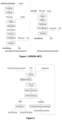
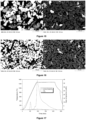
- Figure 1 includes flowcharts of two commercial smelting processes for ferrochrome production (i.e. Outotec and Premus ferrochrome processes), whereas Figure 2 is a flowchart showing a direct reduction process for the production of ferrochrome from chromite ore/concentrate as disclosed according to the present invention.
- CaCl 2 calcium chloride
- ferrochrome metallic phase
- the reduction of chromite takes place at much lower temperatures (e.g. 1200 to 1400 °C) compared to the conventional smelting technologies, and the ferrochrome and unwanted residue produced are in their solid forms.
- the direct reduction process disclosed herein comprises the following steps:
- chromite ores or concentrates in their powder form are first mixed with no less than the stoichiometric amount of carbonaceous reductant (e.g. graphite, coke, coal, or char, etc.), and CaCl 2 .
- Stoichiometric amount of reductant is defined as the amount of carbon in the reductant required to reach complete reduction of chromium and iron oxides from the chromite ore/concentrate, forming carbon monoxide as the gaseous product, with the extra carbon required to form alloy in its carbide form, particularly (Cr,Fe) 7 C 3 .
- Calcium chloride is in the form of anhydrous, hydrated, aqueous solution, or any combination thereof, with the total mass of the catalyst (i.e. anhydrous CaCl 2 ) in the range of 10-35 wt% (dry weight) of the chromite ore/concentrate.
- calcium chloride is in solid form, it is preferable that calcium chloride is in fine ground powder form to ensure homogeneity during mixing with chromite and the carbonaceous reductant.
- Control of particle sizes for both the chromite ore or concentrate and the reductant affects the kinetics of reduction and the particle sizes of the final ferrochrome alloy product.
- the particle size of the chromite ore or concentrate is less than 48 mesh (Tyler) as larger particle sizes will require longer retention times for reduction.
- Reductant with particle size fraction passing 100 mesh is used.
- the mixture of chromite, reductant, and CaCl 2 is preferably agglomerated by pelletizing (e.g. disc or drum pelletizer) or briquetting to form pellets or briquettes for reduction.
- the catalyst calcium chloride in the mixture tends to absorb moisture during mixing and pelletizing/briquetting, which acts as a binder and facilitates the pelletizing/briquetting process.
- the agglomeration step is optional and does not exclude the feasibility of directly processing the mixture of chromite, carbonaceous reductant, and CaCl 2 without the agglomeration step, as indicated by the dashed line in Figure 2 .
- the feed material to the drying process may be the green pellets/briquettes produced from the agglomeration step, or the mixtures produced from the mixing step in the case where agglomeration is not used.
- the feed material is dried at temperatures high enough 150 - 300° C to remove moisture before direct reduction.
- the direct reduction of the feed is performed in a shaft furnace, a multi hearth furnace, a tunnel kiln, a rotary kiln, or the alike, heated by burning fuels (e.g. coal, natural gas, etc.), thus eliminating the need for electric energy.
- fuels e.g. coal, natural gas, etc.
- temperature of the feed is controlled, in the 1200 °C to 1400 °C range.
- temperatures higher than 1400 °C will result in a faster reduction rate, and shorter retention time for complete reduction, but at the cost of consuming more energy.
- Higher temperature could also potentially cause substantial evaporation of CaCl 2 , which could be entrained in the off-gas, or deposited onto the cooler region of the furnace chamber.
- the time required for near-complete reduction is generally less than 2 hours, but depends upon factors such as temperature, and the particle sizes of chromite and reductant.
- the off-gas from the direct reduction process is rich in CO, which is then processed by scrubbers and subsequently stored or combusted for heat recovery.
- the heat generated from CO combustion is further used for drying and preheating the feed before direct reduction, thereby further reducing the energy consumption.
- the CO-rich off-gas could also be used for generating electricity.
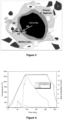
- FIG 3 further illustrates schematically the role of CaCl 2 in the reduction process where steps (a) to (g) represent the following:
- catalyst CaCl 2 in the feed melts when the temperature is above approximately 800°C, and creates a liquid media to enable incongruent dissolution of chromite and transport of reducible ions (e.g. Fe 2+ , Fe 3+ , Cr 3+ ) from chromite to carbonaceous reductant particles where metallization takes place. Transport of the Cr and Fe species can also occur in the gas phase as ionic species.
- Metallization starts with the nucleation and growth of the metallic phase on the carbonaceous reductant particles.
- the gaseous product from the direct reduction (i.e. CO) escapes or is released through pores of the feed. Due to the closely packed nature of the particles in the feed, adjacent ferrochrome particles coalesce. This facilitates the growth of ferrochrome particles and the subsequent separation of ferrochrome particles from the unwanted gangue and spinel materials.
- the solid product from direct reduction is processed, for example, it is quenched in water, and leached for the recovery of CaCl 2 by taking advantage of the highly water-soluble nature of CaCl 2 .
- the product disintegrates during leaching due to the thermal shock occurred during quenching, and during the removal and dissolution of CaCl 2 by leaching.
- CaCl 2 recovered from the leaching process will be re-used. Because CaCl 2 does not participate in the reduction reactions in the high temperature direct reduction process, it will be mostly recovered and recycled, thus minimizing the material costs.
- the recovery of CaCl 2 by water leaching is around 95 by wt%.
- the CaCl 2 catalyst is re-generated through precipitation from the leachate, and subsequently recycled for mixing with chromite ore/concentrate and reductant. This is performed by heating/boiling to supersaturate the solution with respect to CaCl 2 through evaporation.
- the heat required may be produced by burning fuels or the CO-rich off-gas produced from the direct reduction process.
- the amount of heat generated from burning the CO-rich off-gas is sufficient for the complete precipitation of CaCl 2 from leachate based on thermal balance calculations.
- An alternative to precipitation is to produce concentrated CaCl 2 solution by boiling off excess water from the leachate.
- the concentrated CaCl 2 solution is then recycled and sprayed and mixed with the chromite ore/concentrate and reductant.
- This re-generation of CaCl 2 substantially minimizes the overall consumption of CaCl 2 per tonne of ferrochrome produced.
- a nested combination of these techniques may be utilized to make the physical separation more efficient.
- Products from the furnace reduction tests were subjected to characterization, such as optical microscopy, scanning electron microscopy with energy dispersive spectrometry (SEM/EDS), and X-ray powder diffraction (XRD).
- characterization such as optical microscopy, scanning electron microscopy with energy dispersive spectrometry (SEM/EDS), and X-ray powder diffraction (XRD).
- Chromite concentrate having the size range of 150 ⁇ 200 mesh was firstly mixed thoroughly with 30 wt% graphite powders (400 ⁇ 500 mesh) before pelletization. Pelletized samples were heated in an inert argon atmosphere at 1300 °C for two hours as shown in Figure 4 . Reduction of the chromite by graphite took place resulting in the formation of CO and CO 2 as the gaseous product.
- Example 2 Compared to the control test of Example 1, much higher evolution of CO took place in Example 2. As shown in Figure 5 , the CO peak reached as high as 47 vol%, evidence that much accelerated reduction reactions took place due to the presence of CaCl 2 .
- the reduced pellets were subjected to further characterization. Based on the examination of the reduced product, metallization degrees of 98.29 wt% Cr and 99.97 wt% Fe were achieved during direct reduction.
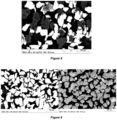
- Figure 6 is a photomicrograph of the cross section of the reduced pellets taken by SEM, showing the particle size and morphologies of the ferrochrome alloy (white) and the residual refractory spinel (grey) particles formed during reduction. SEM observations indicate partial sintering of adjacent alloy particles. This sintering and growth of alloy particles facilitate physical separation of ferrochrome from the unwanted materials.
- the porous grey particles were composed mainly of spinel (MgAl 2 O 4 ) and forsterite (Mg 2 SiO 4 ) that are devoid of alloy particles as micro inclusions. This feature ensures maximum separation of ferrochrome alloy from unwanted materials without the need of further grinding.
- Figure 7 shows the morphologies of the magnetic (left) and non-magnetic (right) fractions of the product following magnetic separation. As illustrated, a significant proportion of the gangue particles reported to the non-magnetic fraction, evidence of the feasibility and the effectiveness of the magnetic separation. Recovery of the ferrochrome is increased by multi-stage magnetic separation or by combining with other separation methods.
- Charcoal having particle sizes in the range of 150-200 mesh was used as the carbonaceous reductant in this example.
- Chromite concentrate of 150-200 mesh was mixed with 22 wt% charcoal and 30 wt% CaCl 2 before pelletization.
- the green pellets were subjected to drying at 300 °C for one hour followed by heating at 1300 °C for two hours in the furnace before cooling to room temperature.
- the reduced pellets were leached with water for the recovery of CaCl 2 .
- the pellets collapsed to powders partially due to the removal of CaCl 2 by dissolution, and by crushing them gently.
- Figure 8 shows the surface morphology of the dried powders after water leaching. Relatively clean ferrochrome alloy particles are observed, evidence that a near-complete liberation of the ferrochrome alloy particles from the reduced chromite and other unwanted particles. Because the charcoal used in this example was porous, the ferrochrome alloy particles formed were also porous resulting from the distinct reduction mechanism as discussed previously and shown in Figure 3 , step d.
- Figure 9 shows the magnetic and non-magnetic products from one magnetic separation test.
- the magnetic portion (left) is composed of ferrochrome alloy particles with very few slag and/or residual chromite/spinel inclusions. Residual spinel particles with very low contents of Cr and Fe along with other unwanted components form the non-magnetic portion (right).
- Chromite concentrate having particle sizes in the 200 to about 400 mesh range was first mixed with 22 wt% flake-shaped graphite (100-150 mesh) and 30 wt% ground CaCl 2 powder. The mixture was subjected to pelletization to form green pellets. The green pellets were heated at 300 °C to reduce its water content before heating at 1300 °C for two hours in an inert atmosphere for direct reduction.
- Figure 10 shows the cross section of the reduced pellet.
- the white particles are ferrochrome alloy particles, and the grey particles are the residual chromite/spinel particles with CaCl 2 .
- the residual chromite/spinel particles have an average Cr concentration of about 1 wt%, evidence of a high degree of reduction.
- Most of the ferrochrome particles are not physically associated with the residual chromite/spinel and slag particles, evidence of a high degree of liberation.
- the reduced pellets were leached with water to recover CaCl 2 .
- the pellets disintegrated during leaching and by mild crushing in water. Grinding was not necessary and should be avoided to minimize the formation of extra fine particles.
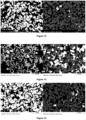
- Figure 11 illustrates the oversize and the undersize products from the wet-sieving process using 170 mesh sieve.
- the undersize particles are mainly unwanted materials, evidence of the effectiveness of the wet-sieving technique to reject the unwanted materials.
- the unwanted material in the oversize fraction formed during direct reduction when local sintering took place among adjacent chromite particles, resulting in an increase of the residual chromite particle size.
- the presence of siliceous gangue in the chromite ore/concentrate was likely the cause of local sintering.
- separation by wet-sieving would be more effective when dealing with chromite ores/concentrates having lower contents of the siliceous gangue in the feed.
- Figure 12 shows the magnetic fraction which is the ferrochrome product and the non-magnetic fraction from magnetic separation, evidence of the feasibility to achieve a high degree of separation of the ferrochrome product from the unwanted materials.
- Chromite concentrate (150 ⁇ 200 mesh) was mixed with 22 wt% flake-shaped graphite powders (150 ⁇ 200 mesh) and 30 wt% CaCl 2 powders.
- a briquette measuring a thickness of about 3 cm was made by mixing the powder mixture with water followed by drying in an oven at 150 °C. The briquette was subjected to heating at 1300 °C for two hours in an inert atmosphere before cooling down to room temperature.
- Figure 13 shows the cross section of the reduced briquette (left) and the surface morphology of the powders produced from water leaching of the reduced briquette (right).
- the residual chromite/spinel particles grey
- the residual chromite/spinel particles have an average Cr concentration of less than 1 wt%, evidence of high degree of reduction has taken place during the direct reduction.
- Very few ferrochrome alloy particles are physically associated with the residual gangue and spinel particles, which means that grinding would not be needed before the separation process.
- Figure 14 shows the magnetic and non-magnetic fractions from one magnetic separation test.
- the magnetic fraction (left) is composed of ferrochrome alloy particles with a few residual gangue and spinel inclusions.
- the residual chromite particles with low content of Cr and Fe along with other unwanted materials form the non-magnetic fraction (right).
- Chromite concentrate (200 ⁇ 400 mesh) was mixed with 22 wt% graphite (100-150 mesh) and 30 wt% CaCl 2 powders. Without agglomeration, the powder mixture was directly charged into the furnace for drying and reduction. Drying took place at 300 °C for one hour. Subsequently, the mixture was further heated at 1300 °C for two hours before cooling down to room temperature.
- Figure 15 illustrates the oversize (left) and the undersize (right) fractions, evidence of the effectiveness of wet-sieving for rejecting the unwanted particles as the undersize portion. Further physical separation is performed on the oversize fraction using other separation techniques (e.g. magnetic separation). SEM analysis shows that there is, on average, 1.8 wt% Cr in the residual chromite particles, evidence of a high degree of reduction.
- Figure 16 shows the magnetic ferrochrome product (left) and the unwanted particles in the non-magnetic fraction (right) produced from magnetic separation, evidence of the feasibility of achieving a high degree of separation of the ferrochrome product from the unwanted materials.
- Chromite concentrate of 200 ⁇ 400 mesh was mixed with 30 wt% graphite powder (400-500 mesh), and 20 wt% CaCl 2 without pelletization. Sample powder mixture was heated at 1300 °C for two hours ( Figure 17 ).
- Chromite concentrate of passing 400 mesh ( ⁇ 38 pm) was mixed with 30 wt% graphite powders (200 ⁇ 325 mesh) and 20 wt% CaCl 2 without making pellets.
- Sample mixture was subjected to 1300 °C for two hours. As can be seen from Figure 18 , the reduction rate was relatively high.
- the concentration of CO in the off-gas decreased to about 1 vol% before cooling down, evidence of a near complete reduction.
- Metallization degrees of 92.0 wt% Cr and 94.1 wt% Fe were achieved.
- 84.3 wt% CaCl 2 was recovered based on water leaching test.
- Sample product was analyzed by SEM which suggests that the particle size of the ferrochrome alloy particles can be greatly influenced by the starting graphite particle size.
- Chromite concentrate of 200 ⁇ 400 mesh was mixed thoroughly with 30 wt% graphite powder (400-500 mesh) and 20 wt% CaCl 2 before pelletization. Sample pellets were heated at 1300 °C for two hours.
- Example 9 Concentrations of CO and CO 2 in the off-gas were plotted in Figure 19 along with the temperature profile, as a function of time. The results for the off gas analysis after 100 min was not shown here due to abnormalities that took place in the off gas measurement. In terms of the experimental conditions, the only difference between Example 9 and Example 7 is that sample mixture was pelletized in Example 9.
- Chromite concentrate of 150 ⁇ 200 mesh was mixed with 30 wt% graphite powder (400 ⁇ 500 mesh) and 20 wt% CaCl 2 before pelletization. Sample pellets were heated at 1300 °C for two hours.
Landscapes
- Chemical & Material Sciences (AREA)
- Engineering & Computer Science (AREA)
- Materials Engineering (AREA)
- Mechanical Engineering (AREA)
- Metallurgy (AREA)
- Organic Chemistry (AREA)
- Manufacturing & Machinery (AREA)
- Geochemistry & Mineralogy (AREA)
- Life Sciences & Earth Sciences (AREA)
- Environmental & Geological Engineering (AREA)
- General Life Sciences & Earth Sciences (AREA)
- Geology (AREA)
- Acoustics & Sound (AREA)
- Physics & Mathematics (AREA)
- Inorganic Chemistry (AREA)
- Manufacture And Refinement Of Metals (AREA)
Claims (12)
- Procédé de production d'un alliage ferrochrome à partir de minerai de chromite ou d'un concentré de chromite, consistant à :a) mélanger le minerai de chromite ou le concentré de chromite avec un réducteur carboné et du chlorure de calcium pour obtenir un matériau d'alimentation,* le réducteur carboné ayant une fraction de tailles de particules traversant une maille Tyler 100,* le minerai de chromite ou le concentré de chromite étant à l'état de poudre,* le chlorure de calcium étant à l'état anhydre, hydraté ou combinaison de ces états comme poudre finement broyée,* la taille des particules de minerai de chromite ou de concentré de chromite étant inférieure à une maille Tyler 48,* le minerai de chromite ou le concentré de chromite étant mélangé à au moins une quantité stoechiométrique de réducteur carboné,* la masse totale de chlorure de calcium étant de l'ordre de 10-35% pondéraux de minerai de chromite ou de concentré de chromite,b) sécher le matériau d'alimentation à une température de 150-300°C pour éliminer l'humidité,c) introduire le matériau d'alimentation séché dans un réacteur à des températures élevées de l'ordre de 1200°C-1400°C pour la réduction directe du minerai de chromite ou du concentré de chromite du matériau d'alimentation sec pour produire un produit mélangé comprenant un dégazage de monoxyde de carbone et un produit solide, etd) traiter le produit mélangé pour séparer l'alliage ferrochrome de la gangue résiduelle et du spinelle,
* la quantité stoechiométrique de réducteur carboné étant la quantité de carbone du réducteur carboné nécessaire à la réduction totale des oxydes de chrome et de fer du minerai de chromite ou du concentré de chromite pour obtenir du monoxyde de carbone avec le carbone nécessaire pour obtenir l'alliage dans sa forme de carbure. - Procédé selon la revendication 1,
selon lequel
le réducteur carboné est du graphite, du coke ou du charbon. - Procédé selon l'une quelconque des revendications 1 et 2,
selon lequel
après l'étape (a) et avant l'étape (b), on agglomère le matériau d'alimentation par granulations ou briquétisation pour obtenir des pastilles ou des briquettes. - Procédé selon l'une quelconque des revendications 1 à 3,
selon lequel
on effectue l'étape (c) dans un four à cuve, un four à plusieurs foyers, un four tunnel, un four rotatif ou analogue, chauffé par combustion. - Procédé selon l'une quelconque des revendications 1 à 4,
selon lequel
le temps de réaction de la réduction directe dans l'étape (c) est de 2 heures ou moins. - Procédé selon l'une quelconque des revendications 1 à 5,
selon lequel
dans l'étape (c), le produit mélangé comprend l'alliage ferrochrome et la gangue résiduelle et du spinelle, l'alliage ferrochrome étant séparé de la gangue résiduelle et du spinnel. - Procédé selon la revendication 1,
selon lequel
on traite le monoxyde de carbone par lavage puis on le stocke ou on le brûle pour récupérer de la chaleur. - Procédé selon l'une quelconque des revendications 1 à 7,
selon lequel
le produit solide obtenu à l'étape (c) est en outre traité par lixiviation avec de l'eau pour récupérer le chlorure de calcium. - Procédé selon la revendication 8,
consistant en outre à
une étape de rupture du produit solide de l'étape (c) par un écrasement doux. - Procédé selon la revendication 9,
selon lequel
on régénère le chlorure de calcium par un autre traitement du lixiviat et recyclage consécutif sous forme solide. - Procédé selon la revendication 10,
consistant en outre à chauffer le lixyviat pour précipiter/concentrer le chlorure de calcium par évaporation, la chaleur nécessaire étant fournie par la combustion de combustible ou du gaz de dégagement riche en CO provenant de l'étape (c). - Procédé selon la revendication 1,
selon lequel
l'étape (d) de séparation physique de l'alliage ferrochrome à partir des matières non souhaitées se fait par gravité, tamisage, séparation magnétique ou une combinaison de ces opérations.
Applications Claiming Priority (2)
| Application Number | Priority Date | Filing Date | Title |
|---|---|---|---|
| US201762500147P | 2017-05-02 | 2017-05-02 | |
| PCT/CA2017/050923 WO2018201218A1 (fr) | 2017-05-02 | 2017-08-02 | Réduction carbothermique directe de chromite au moyen d'un catalyseur pour la production d'alliage de ferrochrome |
Publications (3)
| Publication Number | Publication Date |
|---|---|
| EP3619331A1 EP3619331A1 (fr) | 2020-03-11 |
| EP3619331A4 EP3619331A4 (fr) | 2020-12-23 |
| EP3619331B1 true EP3619331B1 (fr) | 2024-10-02 |
Family
ID=64015939
Family Applications (1)
| Application Number | Title | Priority Date | Filing Date |
|---|---|---|---|
| EP17908730.9A Active EP3619331B1 (fr) | 2017-05-02 | 2017-08-02 | Réduction carbothermique directe de chromite au moyen d'un catalyseur pour la production d'alliage de ferrochrome |
Country Status (7)
| Country | Link |
|---|---|
| US (1) | US10982300B2 (fr) |
| EP (1) | EP3619331B1 (fr) |
| CN (1) | CN110651054B (fr) |
| CA (1) | CA3056280C (fr) |
| FI (1) | FI3619331T3 (fr) |
| WO (1) | WO2018201218A1 (fr) |
| ZA (1) | ZA201906466B (fr) |
Families Citing this family (7)
| Publication number | Priority date | Publication date | Assignee | Title |
|---|---|---|---|---|
| CN113025812B (zh) * | 2021-02-26 | 2023-05-12 | 安徽工业大学 | 一种球团及其制备方法及一种铁水 |
| CN113293282B (zh) * | 2021-04-21 | 2022-11-22 | 北京首钢国际工程技术有限公司 | 一种链篦机回转窑制备铬精矿氧化球团及热装冶炼方法 |
| CN115557820A (zh) * | 2021-07-20 | 2023-01-03 | 北京理工大学 | 含合金还原剂的低成本环保开爆药 |
| CN115786739B (zh) * | 2022-11-23 | 2024-01-23 | 北京科技大学 | 一种提高铬矿合金化率的方法 |
| EP4658826A1 (fr) * | 2023-02-03 | 2025-12-10 | Sylvania South Africa (Pty) Ltd | Procédé de production de pastilles agglomérées |
| CN116219162B (zh) * | 2023-03-14 | 2025-08-22 | 山西太钢不锈钢股份有限公司 | 用车式隧道直行窑生产不锈钢母液原料的方法 |
| CN116987880B (zh) * | 2023-08-10 | 2025-10-31 | 北京科技大学 | 一种在含ch4的还原气氛条件下铬铁矿球团进行低温还原焙烧预处理方法 |
Family Cites Families (17)
| Publication number | Priority date | Publication date | Assignee | Title |
|---|---|---|---|---|
| GB1040443A (en) | 1962-05-02 | 1966-08-24 | Nat Res Dev | Treatment of chromite |
| NL7315931A (fr) * | 1972-12-04 | 1974-06-06 | ||
| US4306905A (en) * | 1980-10-17 | 1981-12-22 | The United States Of America As Represented By The Secretary Of The Interior | Production of ferrochromium alloys |
| SE453304B (sv) * | 1984-10-19 | 1988-01-25 | Skf Steel Eng Ab | Sett for framstellning av metaller och/eller generering av slagg fran oxidmalmer |
| ZA898010B (en) | 1988-10-24 | 1990-08-29 | Wimmera Ind Minerals Proprieta | Separation of chromite from metalliferous ores |
| CN1211495C (zh) * | 2002-01-31 | 2005-07-20 | 宝山钢铁股份有限公司 | 一种用含碳铬铁粉矿冷固结球团冶炼含铬合金铁水的方法 |
| KR101498995B1 (ko) | 2007-05-24 | 2015-03-06 | 타타 스틸 리미티드 | 크롬철광 광석/정광으로부터 크롬 금속 너깃을 제조하는 방법 |
| CN101280438A (zh) | 2008-05-09 | 2008-10-08 | 北京大学 | 一种利用铬铁矿粉直接制备铬铁合金的方法 |
| CN101538629A (zh) * | 2009-02-05 | 2009-09-23 | 丁家伟 | 用粉铬矿冶炼铬铁合金及含铬铁水工艺及设备 |
| CN101538630B (zh) * | 2009-02-05 | 2011-04-06 | 丁家伟 | 用铬矿粉制备铬铁工艺及设备 |
| US20140060251A1 (en) | 2011-05-04 | 2014-03-06 | Wei-Kao Lu | Process of the production and refining of low-carbon dri (direct reduced iron) |
| WO2013011521A1 (fr) | 2011-07-18 | 2013-01-24 | Tata Steel Limited | Procédé de réduction directe d'agglomérés composites des fines de minerai de chromite oxydé dans un four tunnel utilisant un agent réducteur carboné pour la production d'agglomérés / de produit de chromite réduit applicable dans la production de ferrochrome ou de charge-chrome |
| CN103468937B (zh) * | 2013-08-15 | 2015-09-16 | 内蒙古包钢钢联股份有限公司 | 铬铁矿氧化球团矿的制备方法 |
| CN103436694A (zh) * | 2013-09-04 | 2013-12-11 | 宁夏天元锰业有限公司 | 一种制备粉铬矿球团的方法 |
| CA2927984C (fr) | 2013-10-21 | 2018-03-27 | Frank Winter | Production d'alliages de chrome et de fer directement a partir de minerai de chromite |
| CN104404189B (zh) * | 2014-11-24 | 2016-08-17 | 中冶南方工程技术有限公司 | 利用铬铁矿粉两步法熔融还原生产铬铁合金的方法 |
| US10358693B2 (en) * | 2017-10-20 | 2019-07-23 | Her Majesty The Queen In Right Of Canada, As Represented By The Minister Of Natural Resources | Method of direct reduction of chromite with cryolite additive |
-
2017
- 2017-08-02 CA CA3056280A patent/CA3056280C/fr active Active
- 2017-08-02 EP EP17908730.9A patent/EP3619331B1/fr active Active
- 2017-08-02 FI FIEP17908730.9T patent/FI3619331T3/fi active
- 2017-08-02 CN CN201780090325.5A patent/CN110651054B/zh active Active
- 2017-08-02 WO PCT/CA2017/050923 patent/WO2018201218A1/fr not_active Ceased
- 2017-08-02 US US16/499,059 patent/US10982300B2/en active Active
-
2019
- 2019-10-01 ZA ZA2019/06466A patent/ZA201906466B/en unknown
Also Published As
| Publication number | Publication date |
|---|---|
| CA3056280C (fr) | 2020-07-14 |
| FI3619331T3 (fi) | 2024-11-04 |
| EP3619331A1 (fr) | 2020-03-11 |
| CN110651054A (zh) | 2020-01-03 |
| US20200377969A1 (en) | 2020-12-03 |
| CN110651054B (zh) | 2022-05-27 |
| CA3056280A1 (fr) | 2018-11-08 |
| ZA201906466B (en) | 2020-11-25 |
| WO2018201218A1 (fr) | 2018-11-08 |
| US10982300B2 (en) | 2021-04-20 |
| EP3619331A4 (fr) | 2020-12-23 |
Similar Documents
| Publication | Publication Date | Title |
|---|---|---|
| EP3619331B1 (fr) | Réduction carbothermique directe de chromite au moyen d'un catalyseur pour la production d'alliage de ferrochrome | |
| JP5518837B2 (ja) | 金属水酸化物、金属酸化物および/または金属炭酸塩を使用するニッケルおよびコバルトの製造方法 | |
| US8557019B2 (en) | Process for production of nickel and cobalt using metal hydroxide, metal oxide and/or metal carbonate | |
| JP5380536B2 (ja) | 高濃度亜鉛を含有する鉄鉱石から亜鉛を分離し、鉄、有価物を抽出する方法 | |
| US20090217784A1 (en) | Ore reduction process and titanium oxide and iron metallization product | |
| JP5334240B2 (ja) | 製鋼用還元鉄塊成鉱の製造方法 | |
| CN104053799A (zh) | 含有铁和钼的丸粒 | |
| Kleynhans et al. | Chemical beneficiation of chromite ore to improve the chromium-to-iron ratio for ferrochrome production | |
| US8372179B2 (en) | Ore reduction process using carbon based materials having a low sulfur content and titanium oxide and iron metallization product therefrom | |
| WO2013011521A1 (fr) | Procédé de réduction directe d'agglomérés composites des fines de minerai de chromite oxydé dans un four tunnel utilisant un agent réducteur carboné pour la production d'agglomérés / de produit de chromite réduit applicable dans la production de ferrochrome ou de charge-chrome | |
| CN117500945A (zh) | 铁团块 | |
| JP2011094207A (ja) | 金属マンガンの製造方法 | |
| JP5532823B2 (ja) | 廃電池等からの有価金属の回収方法 | |
| JP2001181719A (ja) | 金属含有物からの還元金属の製造方法 | |
| CN101506390B (zh) | 一种铁的工业化生产方法 | |
| JP7669118B2 (ja) | 酸化鉱石の製錬方法 | |
| EP3628753B1 (fr) | Procédé pour préparer des pastilles contenant du fer et du chrome | |
| JP2000119722A (ja) | 還元鉄ペレットの製造方法 | |
| JP2021004397A (ja) | 酸化鉱石の製錬方法 | |
| Wei et al. | Optimization and economic analysis of the reduction roasting-wet magnetic separation process for metal iron extraction from copper tailings | |
| WO2014193299A1 (fr) | Briquettes contenant du fer et du tungstène |
Legal Events
| Date | Code | Title | Description |
|---|---|---|---|
| STAA | Information on the status of an ep patent application or granted ep patent |
Free format text: STATUS: THE INTERNATIONAL PUBLICATION HAS BEEN MADE |
|
| PUAI | Public reference made under article 153(3) epc to a published international application that has entered the european phase |
Free format text: ORIGINAL CODE: 0009012 |
|
| STAA | Information on the status of an ep patent application or granted ep patent |
Free format text: STATUS: REQUEST FOR EXAMINATION WAS MADE |
|
| 17P | Request for examination filed |
Effective date: 20191114 |
|
| AK | Designated contracting states |
Kind code of ref document: A1 Designated state(s): AL AT BE BG CH CY CZ DE DK EE ES FI FR GB GR HR HU IE IS IT LI LT LU LV MC MK MT NL NO PL PT RO RS SE SI SK SM TR |
|
| AX | Request for extension of the european patent |
Extension state: BA ME |
|
| RIN1 | Information on inventor provided before grant (corrected) |
Inventor name: YU, DAWEI Inventor name: PAKTUNC, DOGAN |
|
| DAV | Request for validation of the european patent (deleted) | ||
| DAX | Request for extension of the european patent (deleted) | ||
| A4 | Supplementary search report drawn up and despatched |
Effective date: 20201123 |
|
| RIC1 | Information provided on ipc code assigned before grant |
Ipc: C22B 34/32 20060101AFI20201117BHEP Ipc: C22B 1/14 20060101ALI20201117BHEP Ipc: C22C 27/06 20060101ALI20201117BHEP Ipc: C22B 5/10 20060101ALI20201117BHEP |
|
| STAA | Information on the status of an ep patent application or granted ep patent |
Free format text: STATUS: EXAMINATION IS IN PROGRESS |
|
| 17Q | First examination report despatched |
Effective date: 20210803 |
|
| P01 | Opt-out of the competence of the unified patent court (upc) registered |
Effective date: 20230516 |
|
| REG | Reference to a national code |
Ipc: C22B0005100000 Ref country code: DE Ref legal event code: R079 Ref document number: 602017085276 Country of ref document: DE Free format text: PREVIOUS MAIN CLASS: C22B0034320000 Ipc: C22B0005100000 |
|
| GRAP | Despatch of communication of intention to grant a patent |
Free format text: ORIGINAL CODE: EPIDOSNIGR1 |
|
| STAA | Information on the status of an ep patent application or granted ep patent |
Free format text: STATUS: GRANT OF PATENT IS INTENDED |
|
| RIC1 | Information provided on ipc code assigned before grant |
Ipc: C22B 1/243 20060101ALI20240328BHEP Ipc: C22B 1/245 20060101ALI20240328BHEP Ipc: C22C 27/06 20060101ALI20240328BHEP Ipc: C22B 1/24 20060101ALI20240328BHEP Ipc: C22B 34/32 20060101ALI20240328BHEP Ipc: C22B 5/10 20060101AFI20240328BHEP |
|
| INTG | Intention to grant announced |
Effective date: 20240412 |
|
| RIN1 | Information on inventor provided before grant (corrected) |
Inventor name: PAKTUNC, DOGAN Inventor name: YU, DAWEI |
|
| GRAS | Grant fee paid |
Free format text: ORIGINAL CODE: EPIDOSNIGR3 |
|
| GRAA | (expected) grant |
Free format text: ORIGINAL CODE: 0009210 |
|
| STAA | Information on the status of an ep patent application or granted ep patent |
Free format text: STATUS: THE PATENT HAS BEEN GRANTED |
|
| AK | Designated contracting states |
Kind code of ref document: B1 Designated state(s): AL AT BE BG CH CY CZ DE DK EE ES FI FR GB GR HR HU IE IS IT LI LT LU LV MC MK MT NL NO PL PT RO RS SE SI SK SM TR |
|
| REG | Reference to a national code |
Ref country code: GB Ref legal event code: FG4D |
|
| REG | Reference to a national code |
Ref country code: CH Ref legal event code: EP Ref country code: SE Ref legal event code: TRGR |
|
| REG | Reference to a national code |
Ref country code: DE Ref legal event code: R096 Ref document number: 602017085276 Country of ref document: DE |
|
| REG | Reference to a national code |
Ref country code: IE Ref legal event code: FG4D |
|
| REG | Reference to a national code |
Ref country code: FI Ref legal event code: FGE |
|
| REG | Reference to a national code |
Ref country code: LT Ref legal event code: MG9D |
|
| REG | Reference to a national code |
Ref country code: NL Ref legal event code: MP Effective date: 20241002 |
|
| REG | Reference to a national code |
Ref country code: AT Ref legal event code: MK05 Ref document number: 1728541 Country of ref document: AT Kind code of ref document: T Effective date: 20241002 |
|
| PG25 | Lapsed in a contracting state [announced via postgrant information from national office to epo] |
Ref country code: NL Free format text: LAPSE BECAUSE OF FAILURE TO SUBMIT A TRANSLATION OF THE DESCRIPTION OR TO PAY THE FEE WITHIN THE PRESCRIBED TIME-LIMIT Effective date: 20241002 |
|
| PG25 | Lapsed in a contracting state [announced via postgrant information from national office to epo] |
Ref country code: NL Free format text: LAPSE BECAUSE OF FAILURE TO SUBMIT A TRANSLATION OF THE DESCRIPTION OR TO PAY THE FEE WITHIN THE PRESCRIBED TIME-LIMIT Effective date: 20241002 |
|
| PG25 | Lapsed in a contracting state [announced via postgrant information from national office to epo] |
Ref country code: HR Free format text: LAPSE BECAUSE OF FAILURE TO SUBMIT A TRANSLATION OF THE DESCRIPTION OR TO PAY THE FEE WITHIN THE PRESCRIBED TIME-LIMIT Effective date: 20241002 Ref country code: IS Free format text: LAPSE BECAUSE OF FAILURE TO SUBMIT A TRANSLATION OF THE DESCRIPTION OR TO PAY THE FEE WITHIN THE PRESCRIBED TIME-LIMIT Effective date: 20250202 Ref country code: PT Free format text: LAPSE BECAUSE OF FAILURE TO SUBMIT A TRANSLATION OF THE DESCRIPTION OR TO PAY THE FEE WITHIN THE PRESCRIBED TIME-LIMIT Effective date: 20250203 |
|
| PG25 | Lapsed in a contracting state [announced via postgrant information from national office to epo] |
Ref country code: BG Free format text: LAPSE BECAUSE OF FAILURE TO SUBMIT A TRANSLATION OF THE DESCRIPTION OR TO PAY THE FEE WITHIN THE PRESCRIBED TIME-LIMIT Effective date: 20241002 |
|
| PG25 | Lapsed in a contracting state [announced via postgrant information from national office to epo] |
Ref country code: ES Free format text: LAPSE BECAUSE OF FAILURE TO SUBMIT A TRANSLATION OF THE DESCRIPTION OR TO PAY THE FEE WITHIN THE PRESCRIBED TIME-LIMIT Effective date: 20241002 |
|
| PG25 | Lapsed in a contracting state [announced via postgrant information from national office to epo] |
Ref country code: NO Free format text: LAPSE BECAUSE OF FAILURE TO SUBMIT A TRANSLATION OF THE DESCRIPTION OR TO PAY THE FEE WITHIN THE PRESCRIBED TIME-LIMIT Effective date: 20250102 |
|
| PG25 | Lapsed in a contracting state [announced via postgrant information from national office to epo] |
Ref country code: LV Free format text: LAPSE BECAUSE OF FAILURE TO SUBMIT A TRANSLATION OF THE DESCRIPTION OR TO PAY THE FEE WITHIN THE PRESCRIBED TIME-LIMIT Effective date: 20241002 Ref country code: AT Free format text: LAPSE BECAUSE OF FAILURE TO SUBMIT A TRANSLATION OF THE DESCRIPTION OR TO PAY THE FEE WITHIN THE PRESCRIBED TIME-LIMIT Effective date: 20241002 Ref country code: GR Free format text: LAPSE BECAUSE OF FAILURE TO SUBMIT A TRANSLATION OF THE DESCRIPTION OR TO PAY THE FEE WITHIN THE PRESCRIBED TIME-LIMIT Effective date: 20250103 |
|
| PG25 | Lapsed in a contracting state [announced via postgrant information from national office to epo] |
Ref country code: PL Free format text: LAPSE BECAUSE OF FAILURE TO SUBMIT A TRANSLATION OF THE DESCRIPTION OR TO PAY THE FEE WITHIN THE PRESCRIBED TIME-LIMIT Effective date: 20241002 Ref country code: CZ Free format text: LAPSE BECAUSE OF FAILURE TO SUBMIT A TRANSLATION OF THE DESCRIPTION OR TO PAY THE FEE WITHIN THE PRESCRIBED TIME-LIMIT Effective date: 20241002 |
|
| PG25 | Lapsed in a contracting state [announced via postgrant information from national office to epo] |
Ref country code: RS Free format text: LAPSE BECAUSE OF FAILURE TO SUBMIT A TRANSLATION OF THE DESCRIPTION OR TO PAY THE FEE WITHIN THE PRESCRIBED TIME-LIMIT Effective date: 20250102 |
|
| PG25 | Lapsed in a contracting state [announced via postgrant information from national office to epo] |
Ref country code: SM Free format text: LAPSE BECAUSE OF FAILURE TO SUBMIT A TRANSLATION OF THE DESCRIPTION OR TO PAY THE FEE WITHIN THE PRESCRIBED TIME-LIMIT Effective date: 20241002 |
|
| REG | Reference to a national code |
Ref country code: DE Ref legal event code: R097 Ref document number: 602017085276 Country of ref document: DE |
|
| PGFP | Annual fee paid to national office [announced via postgrant information from national office to epo] |
Ref country code: FI Payment date: 20250502 Year of fee payment: 9 |
|
| PG25 | Lapsed in a contracting state [announced via postgrant information from national office to epo] |
Ref country code: DK Free format text: LAPSE BECAUSE OF FAILURE TO SUBMIT A TRANSLATION OF THE DESCRIPTION OR TO PAY THE FEE WITHIN THE PRESCRIBED TIME-LIMIT Effective date: 20241002 |
|
| PG25 | Lapsed in a contracting state [announced via postgrant information from national office to epo] |
Ref country code: EE Free format text: LAPSE BECAUSE OF FAILURE TO SUBMIT A TRANSLATION OF THE DESCRIPTION OR TO PAY THE FEE WITHIN THE PRESCRIBED TIME-LIMIT Effective date: 20241002 |
|
| PG25 | Lapsed in a contracting state [announced via postgrant information from national office to epo] |
Ref country code: RO Free format text: LAPSE BECAUSE OF FAILURE TO SUBMIT A TRANSLATION OF THE DESCRIPTION OR TO PAY THE FEE WITHIN THE PRESCRIBED TIME-LIMIT Effective date: 20241002 |
|
| PG25 | Lapsed in a contracting state [announced via postgrant information from national office to epo] |
Ref country code: SK Free format text: LAPSE BECAUSE OF FAILURE TO SUBMIT A TRANSLATION OF THE DESCRIPTION OR TO PAY THE FEE WITHIN THE PRESCRIBED TIME-LIMIT Effective date: 20241002 |
|
| PGFP | Annual fee paid to national office [announced via postgrant information from national office to epo] |
Ref country code: TR Payment date: 20250421 Year of fee payment: 9 |
|
| PG25 | Lapsed in a contracting state [announced via postgrant information from national office to epo] |
Ref country code: IT Free format text: LAPSE BECAUSE OF FAILURE TO SUBMIT A TRANSLATION OF THE DESCRIPTION OR TO PAY THE FEE WITHIN THE PRESCRIBED TIME-LIMIT Effective date: 20241002 |
|
| PLBE | No opposition filed within time limit |
Free format text: ORIGINAL CODE: 0009261 |
|
| STAA | Information on the status of an ep patent application or granted ep patent |
Free format text: STATUS: NO OPPOSITION FILED WITHIN TIME LIMIT |
|
| 26N | No opposition filed |
Effective date: 20250703 |
|
| PGFP | Annual fee paid to national office [announced via postgrant information from national office to epo] |
Ref country code: DE Payment date: 20250922 Year of fee payment: 9 |
|
| PGFP | Annual fee paid to national office [announced via postgrant information from national office to epo] |
Ref country code: SE Payment date: 20250819 Year of fee payment: 9 |
|
| REG | Reference to a national code |
Ref country code: CH Ref legal event code: H13 Free format text: ST27 STATUS EVENT CODE: U-0-0-H10-H13 (AS PROVIDED BY THE NATIONAL OFFICE) Effective date: 20260324 |
|
| PG25 | Lapsed in a contracting state [announced via postgrant information from national office to epo] |
Ref country code: MC Free format text: LAPSE BECAUSE OF FAILURE TO SUBMIT A TRANSLATION OF THE DESCRIPTION OR TO PAY THE FEE WITHIN THE PRESCRIBED TIME-LIMIT Effective date: 20241002 |
|
| PG25 | Lapsed in a contracting state [announced via postgrant information from national office to epo] |
Ref country code: LU Free format text: LAPSE BECAUSE OF NON-PAYMENT OF DUE FEES Effective date: 20250802 |
|
| PG25 | Lapsed in a contracting state [announced via postgrant information from national office to epo] |
Ref country code: CH Free format text: LAPSE BECAUSE OF NON-PAYMENT OF DUE FEES Effective date: 20250831 |