EP3619724B1 - Stabilisierte polymerzusammensetzungen - Google Patents
Stabilisierte polymerzusammensetzungen Download PDFInfo
- Publication number
- EP3619724B1 EP3619724B1 EP18719199.4A EP18719199A EP3619724B1 EP 3619724 B1 EP3619724 B1 EP 3619724B1 EP 18719199 A EP18719199 A EP 18719199A EP 3619724 B1 EP3619724 B1 EP 3619724B1
- Authority
- EP
- European Patent Office
- Prior art keywords
- antioxidant
- polymer composition
- butyl
- tert
- polymer
- Prior art date
- Legal status (The legal status is an assumption and is not a legal conclusion. Google has not performed a legal analysis and makes no representation as to the accuracy of the status listed.)
- Active
Links
Images

Classifications
-
- C—CHEMISTRY; METALLURGY
- C08—ORGANIC MACROMOLECULAR COMPOUNDS; THEIR PREPARATION OR CHEMICAL WORKING-UP; COMPOSITIONS BASED THEREON
- C08L—COMPOSITIONS OF MACROMOLECULAR COMPOUNDS
- C08L23/00—Compositions of homopolymers or copolymers of unsaturated aliphatic hydrocarbons having only one carbon-to-carbon double bond; Compositions of derivatives of such polymers
-
- C—CHEMISTRY; METALLURGY
- C08—ORGANIC MACROMOLECULAR COMPOUNDS; THEIR PREPARATION OR CHEMICAL WORKING-UP; COMPOSITIONS BASED THEREON
- C08K—Use of inorganic or non-macromolecular organic substances as compounding ingredients
- C08K5/00—Use of organic ingredients
- C08K5/04—Oxygen-containing compounds
- C08K5/13—Phenols; Phenolates
-
- C—CHEMISTRY; METALLURGY
- C08—ORGANIC MACROMOLECULAR COMPOUNDS; THEIR PREPARATION OR CHEMICAL WORKING-UP; COMPOSITIONS BASED THEREON
- C08L—COMPOSITIONS OF MACROMOLECULAR COMPOUNDS
- C08L23/00—Compositions of homopolymers or copolymers of unsaturated aliphatic hydrocarbons having only one carbon-to-carbon double bond; Compositions of derivatives of such polymers
- C08L23/02—Compositions of homopolymers or copolymers of unsaturated aliphatic hydrocarbons having only one carbon-to-carbon double bond; Compositions of derivatives of such polymers not modified by chemical after-treatment
- C08L23/04—Homopolymers or copolymers of ethene
- C08L23/06—Polyethylene
-
- C—CHEMISTRY; METALLURGY
- C08—ORGANIC MACROMOLECULAR COMPOUNDS; THEIR PREPARATION OR CHEMICAL WORKING-UP; COMPOSITIONS BASED THEREON
- C08L—COMPOSITIONS OF MACROMOLECULAR COMPOUNDS
- C08L23/00—Compositions of homopolymers or copolymers of unsaturated aliphatic hydrocarbons having only one carbon-to-carbon double bond; Compositions of derivatives of such polymers
- C08L23/02—Compositions of homopolymers or copolymers of unsaturated aliphatic hydrocarbons having only one carbon-to-carbon double bond; Compositions of derivatives of such polymers not modified by chemical after-treatment
- C08L23/10—Homopolymers or copolymers of propene
- C08L23/12—Polypropene
-
- C—CHEMISTRY; METALLURGY
- C08—ORGANIC MACROMOLECULAR COMPOUNDS; THEIR PREPARATION OR CHEMICAL WORKING-UP; COMPOSITIONS BASED THEREON
- C08L—COMPOSITIONS OF MACROMOLECULAR COMPOUNDS
- C08L23/00—Compositions of homopolymers or copolymers of unsaturated aliphatic hydrocarbons having only one carbon-to-carbon double bond; Compositions of derivatives of such polymers
- C08L23/02—Compositions of homopolymers or copolymers of unsaturated aliphatic hydrocarbons having only one carbon-to-carbon double bond; Compositions of derivatives of such polymers not modified by chemical after-treatment
- C08L23/10—Homopolymers or copolymers of propene
- C08L23/14—Copolymers of propene
-
- C—CHEMISTRY; METALLURGY
- C08—ORGANIC MACROMOLECULAR COMPOUNDS; THEIR PREPARATION OR CHEMICAL WORKING-UP; COMPOSITIONS BASED THEREON
- C08L—COMPOSITIONS OF MACROMOLECULAR COMPOUNDS
- C08L23/00—Compositions of homopolymers or copolymers of unsaturated aliphatic hydrocarbons having only one carbon-to-carbon double bond; Compositions of derivatives of such polymers
- C08L23/26—Compositions of homopolymers or copolymers of unsaturated aliphatic hydrocarbons having only one carbon-to-carbon double bond; Compositions of derivatives of such polymers modified by chemical after-treatment
-
- H—ELECTRICITY
- H01—ELECTRIC ELEMENTS
- H01B—CABLES; CONDUCTORS; INSULATORS; SELECTION OF MATERIALS FOR THEIR CONDUCTIVE, INSULATING OR DIELECTRIC PROPERTIES
- H01B3/00—Insulators or insulating bodies characterised by the insulating materials; Selection of materials for their insulating or dielectric properties
- H01B3/18—Insulators or insulating bodies characterised by the insulating materials; Selection of materials for their insulating or dielectric properties mainly consisting of organic substances
- H01B3/30—Insulators or insulating bodies characterised by the insulating materials; Selection of materials for their insulating or dielectric properties mainly consisting of organic substances plastics; resins; waxes
-
- H—ELECTRICITY
- H01—ELECTRIC ELEMENTS
- H01B—CABLES; CONDUCTORS; INSULATORS; SELECTION OF MATERIALS FOR THEIR CONDUCTIVE, INSULATING OR DIELECTRIC PROPERTIES
- H01B3/00—Insulators or insulating bodies characterised by the insulating materials; Selection of materials for their insulating or dielectric properties
- H01B3/18—Insulators or insulating bodies characterised by the insulating materials; Selection of materials for their insulating or dielectric properties mainly consisting of organic substances
- H01B3/30—Insulators or insulating bodies characterised by the insulating materials; Selection of materials for their insulating or dielectric properties mainly consisting of organic substances plastics; resins; waxes
- H01B3/44—Insulators or insulating bodies characterised by the insulating materials; Selection of materials for their insulating or dielectric properties mainly consisting of organic substances plastics; resins; waxes vinyl resins; acrylic resins
- H01B3/441—Insulators or insulating bodies characterised by the insulating materials; Selection of materials for their insulating or dielectric properties mainly consisting of organic substances plastics; resins; waxes vinyl resins; acrylic resins from alkenes
-
- H—ELECTRICITY
- H01—ELECTRIC ELEMENTS
- H01G—CAPACITORS; CAPACITORS, RECTIFIERS, DETECTORS, SWITCHING DEVICES, LIGHT-SENSITIVE OR TEMPERATURE-SENSITIVE DEVICES OF THE ELECTROLYTIC TYPE
- H01G4/00—Fixed capacitors; Processes of their manufacture
- H01G4/002—Details
- H01G4/018—Dielectrics
- H01G4/06—Solid dielectrics
- H01G4/14—Organic dielectrics
- H01G4/18—Organic dielectrics of synthetic material, e.g. derivatives of cellulose
-
- H—ELECTRICITY
- H01—ELECTRIC ELEMENTS
- H01G—CAPACITORS; CAPACITORS, RECTIFIERS, DETECTORS, SWITCHING DEVICES, LIGHT-SENSITIVE OR TEMPERATURE-SENSITIVE DEVICES OF THE ELECTROLYTIC TYPE
- H01G4/00—Fixed capacitors; Processes of their manufacture
- H01G4/33—Thin- or thick-film capacitors (thin- or thick-film circuits; capacitors without a potential-jump or surface barrier specially adapted for integrated circuits, details thereof, multistep manufacturing processes therefor)
-
- C—CHEMISTRY; METALLURGY
- C08—ORGANIC MACROMOLECULAR COMPOUNDS; THEIR PREPARATION OR CHEMICAL WORKING-UP; COMPOSITIONS BASED THEREON
- C08K—Use of inorganic or non-macromolecular organic substances as compounding ingredients
- C08K5/00—Use of organic ingredients
- C08K5/0008—Organic ingredients according to more than one of the "one dot" groups of C08K5/01 - C08K5/59
- C08K5/005—Stabilisers against oxidation, heat, light, ozone
-
- C—CHEMISTRY; METALLURGY
- C08—ORGANIC MACROMOLECULAR COMPOUNDS; THEIR PREPARATION OR CHEMICAL WORKING-UP; COMPOSITIONS BASED THEREON
- C08L—COMPOSITIONS OF MACROMOLECULAR COMPOUNDS
- C08L2201/00—Properties
- C08L2201/08—Stabilised against heat, light or radiation or oxydation
-
- C—CHEMISTRY; METALLURGY
- C08—ORGANIC MACROMOLECULAR COMPOUNDS; THEIR PREPARATION OR CHEMICAL WORKING-UP; COMPOSITIONS BASED THEREON
- C08L—COMPOSITIONS OF MACROMOLECULAR COMPOUNDS
- C08L2203/00—Applications
- C08L2203/20—Applications use in electrical or conductive gadgets
-
- C—CHEMISTRY; METALLURGY
- C08—ORGANIC MACROMOLECULAR COMPOUNDS; THEIR PREPARATION OR CHEMICAL WORKING-UP; COMPOSITIONS BASED THEREON
- C08L—COMPOSITIONS OF MACROMOLECULAR COMPOUNDS
- C08L2205/00—Polymer mixtures characterised by other features
- C08L2205/02—Polymer mixtures characterised by other features containing two or more polymers of the same C08L -group
- C08L2205/025—Polymer mixtures characterised by other features containing two or more polymers of the same C08L -group containing two or more polymers of the same hierarchy C08L, and differing only in parameters such as density, comonomer content, molecular weight, structure
-
- H—ELECTRICITY
- H01—ELECTRIC ELEMENTS
- H01G—CAPACITORS; CAPACITORS, RECTIFIERS, DETECTORS, SWITCHING DEVICES, LIGHT-SENSITIVE OR TEMPERATURE-SENSITIVE DEVICES OF THE ELECTROLYTIC TYPE
- H01G4/00—Fixed capacitors; Processes of their manufacture
- H01G4/32—Wound capacitors
Definitions
- the present invention relates to stabilized polymer compositions.
- the invention further relates to film capacitors and power system components comprising such stabilized polymer compositions.
- Polyolefins are the most commonly produced polymers globally, with polyethylene being the most commonly produced polymer and polypropylene being the second most commonly produced polymer. They are used in an extremely wide variety of applications, such as capacitors, electric cables, packaging, textiles, construction materials and automotive parts. However, these polymers are prone to degradation through oxidation due to exposure to heat and UV radiation. This is especially the case for polypropylene which has a tertiary-carbon bound hydrogen atom attached to the polymer backbone. Such hydrogen atoms have a relatively low C-H bond dissociation energy and are therefore especially prone to abstraction by oxygen-centred free radicals during oxidative processes.
- antioxidants are commonly added to the polyolefins during manufacture. These antioxidants are capable of reacting with peroxyl radicals formed during oxidative stress of the polyolefin in order to break the oxidative chain-reaction and thus protect the polyolefin from further degradation.
- antioxidants include acrylics; polystyrene; styrenic copolymers such as ABS, MBS and SBS; polyacetals; polyamides; polycarbonates; polyesters; polyurethanes; PVC and polyvinyl butyral.
- the antioxidants most commonly used in polymers are of the sterically-hindered phenol type.
- a common feature of such antioxidants is the presence of an ortho-substituted phenol moiety having a low O-H bond dissociation energy.
- Such phenols can sacrificially donate a phenolic hydrogen atom to a peroxyl radical, thereby forming a peroxide and a phenoxyl radical, and preventing the peroxyl radical from abstracting a hydrogen atom from the polymer backbone.
- the produced phenoxyl radical reacts further by combinations of disproportionation, reaction with a further peroxyl radical and/or dimerization in order to ultimately provide harmless non-radical products. In this manner the propagation of the oxidation radical chain reaction is broken.
- the most widely used commercial antioxidants for polyolefins are relatively low molecular weight monofunctional or oligo-functional sterically hindered phenols, such as the monofunctional 2,6-Di-tert-butyl-phenol, 2,6-Di-tert-butyl-4-methylphenol (BHT), 2-tert-Butyl-4-methoxyphenol (BHA) and Octadecyl-3-(3,5-di-tert.butyl-4-hydroxyphenyl)-propionate (Irganox 1076); the difunctional 2-tert-Butyl-6-(2-hydroxy-3-tert-butyl-5-methyl-benzyl)-4-methyl-phenol (Cyanox 2246) and 2-tert-butyl-6-[(3-tert-butyl-5-ethyl-2-hydroxyphenyl)methyl]-4-ethylphenol (Cyanox 425); the trifunctional 1,3,5-Trimethyl-2,4,6-Tris (3,5-Di
- Phenol antioxidants are relatively polar and therefore are poorly soluble in the nonpolar polyolefin matrix. This can cause inhomogeneous distribution of the antioxidant in the polyolefin matrix leading to matrix antioxidant concentrations insufficient to inhibit oxidation of the polymer. Further consequences of this inhomogeneous distribution are antioxidant migration and leaching, and accelerated antioxidant loss when the polyolefin is exposed to heat, solvents and strong electric fields.
- the limited solubility of the antioxidant in the polymer matrix may limit the service life of polyolefin products, cause health and environmental issues due to leaching of the antioxidants, and limit the fields of application of the polymers.
- antioxidants may increase the dielectric loss of polyolefin materials, and therefore reduction of antioxidant quantities in dielectrics may for this reason be desirable.
- the inventors of the present invention have identified a number of deficiencies with prior art stabilized polymer compositions.
- Commercial mono-functional and oligo-functional sterically hindered phenol antioxidants are cheap and widely available.
- antioxidants are relatively insoluble in the polymer matrix, especially when the polymer is semi-crystalline, leading to problems with insufficient antioxidant concentration, migration and leaching.
- Polymer-bound antioxidants have been developed to overcome such problems, but the polymer-bound antioxidants are themselves more cumbersome than traditional antioxidants to manufacture, not currently widely available, and therefore expensive, especially in the quantities required to provide sufficient protection for the polymer matrix.
- Such polymer compositions may also be known as stabilized polymer compositions, whereby it is meant polymer compositions having a greater resistance to oxidative degradation than corresponding polymer compositions not comprising antioxidants.
- the object of the invention is obtained by a polymer composition according to the appended claims.
- the polymer composition comprises:
- the polymeric antioxidant in such a composition acts as a compatibilizer between the polymer matrix and the mono- or oligo-functional phenol antioxidant.
- the addition of relatively small quantities of the polymeric antioxidant to the composition allows for a much improved dispersion of the traditional mono- or oligo-functional phenol antioxidant in the polymer matrix. This means that the antioxidants remain in the polymer composition and are less prone to migration and/or leaching.
- the higher concentration of well-dispersed antioxidant in the matrix means that the polymer composition has a much improved resistance to oxidation.
- Other properties of the polymer composition, such as the dielectric properties may be tailored due to the possibility of using the polymeric antioxidant to increase the dielectric constant, and/or using lesser quantities of mono- or oligo-functional phenol antioxidant, due to lessened leaching and migration.
- the polymer matrix may comprise one or more of a polyolefin, a natural rubber, an acrylic, polystyrene, a styrenic copolymer, a polyacetal, a polyamide, a polycarbonate, a polyester, a polyurethane, PVC, and polyvinyl butyral. All of these polymers are commonly stabilised using phenolic antioxidants.
- the polymer matrix may be a polyolefin selected from polyethylene (PE), polypropylene (PP), polymethylpentene (PMP), polybutene-1 (PB-1), polyisobutylene (PIB), ethylene propylene rubber (EPR) and ethylene propylene diene rubber (EPDM).
- Such polyolefins include, but are not limited to, LDPE, LLDPE, VLDPE, HDPE, XLPE, MDPE, UHMWPE and BOPP.
- Polypropylenes have low polarity and/or are semi-crystalline, meaning that traditional mono- or oligo-functional phenol antioxidants have particularly low compatibility with such polymer matrices. The present invention solves this problem.
- the polymeric antioxidant may comprise the same monomer units as the polymer matrix.
- the polymeric antioxidant may be a copolymer comprising all of the monomer units present in the polymer matrix as well as monomer units comprising pendant phenol antioxidant moieties.
- the polymer matrix and the polymeric antioxidant may be capable of co-crystallising with each other.
- the polymer composition may comprise a polyolefin as the polymer matrix and a polyolefin copolymer as the polymeric antioxidant.
- the pendant phenol antioxidant moieties may comprise phenol groups comprising one or two ortho-substituents selected from C1-C4 alkyl, Cl-C4-alkoxy, amino, N-alkylamino and N, N'-dialkylamino.
- the ortho substituents lower the OH bond dissociation energy of the phenol and increase its antioxidant effect.
- the polymeric antioxidant may comprise from 0.2 to 10 mol% pendant phenol antioxidant moieties. This is sufficient to allow the polymeric antioxidant to act as a compatibilizer between the polymer matrix and the antioxidant phase.
- the mono- or oligo-functional phenol antioxidant may be selected from 2,6-di-tert-butyl-phenol, 2,6-Di-tert-butyl-4-methylphenol, 2-tert-butyl-4-methoxyphenol and octadecyl-3-(3,5-di-tert.butyl-4-hydroxyphenyl)-propionate, 2-tert-butyl-6-(2-hydroxy-3-tert-butyl-5-methyl-benzyl)-4-methyl-phenol and 2-tert-butyl-6-[(3-tert-butyl-5-ethyl-2-hydroxyphenyl)methyl]-4-ethylphenol, the trifunctional 1,3,5-trimethyl-2,4,6-tris (3,5-Di-tert-butyl-4-hydroxybenzyl)benzene, 1,1,3-tris (2-methyl-4-hydrox-5-tert-butyl phenyl) butane, pentaerythritol
- the pendant phenol antioxidant moiety and the mono- or oligo-functional phenol antioxidant may have a matching hindered phenol structural element.
- a part of the pendant phenol antioxidant moiety and a part of the mono- or oligo-functional phenol antioxidant may have a matching chemical structure.
- both the pendant phenol antioxidant moiety and the mono- or oligo-functional phenol antioxidant may comprise a 3,5-di-tert-butyl-4-hydroxyphenylpropionate structural element. This may further improve the overall compatibility of the polymer composition.
- the polymer composition may comprise from 0.1 weight% to 90 weight% of polymeric antioxidant, calculated with respect to the total weight of the polymer composition. Because the polymer antioxidant is compatible with the polymer matrix it may be used in a wide range of concentrations tailored to provide the oxidative protection required for any given application.
- the polymer composition may comprise from 0.1 weight% to 5 weight% of mono- or oligo-functional phenol antioxidant, calculated with respect to the total weight of the polymer composition. This allows a sufficient antioxidant loading to provide excellent protection against oxidative degradation.
- the polymer composition comprises from 5 weight% to 99.8 weight% of the polymer matrix, calculated with respect to the total weight of the polymer composition. Excellent resistance to oxidative degradation may be obtained even when the polymer composition is predominantly composed of polymer matrix.
- the polymer composition may further comprise one or more further polymer additives, such as stabilizers, modifiers or fillers.
- the polymer matrix may be polypropylene and the polymeric antioxidant may be a polypropylene copolymer.
- the object of the invention is achieved by a film capacitor according to the appended claims.
- the film capacitor comprises a dielectric comprising a polymer composition as described herein.
- Such film capacitors may be operated at higher temperatures due to their excellent resistance to oxidative degradation combined with good dielectric properties.
- the object of the invention is achieved by an electric power system component according to the appended claims.
- the electric power system component comprises an insulator comprising a polymer composition as described herein.
- the electric power system component may be an electrical cable, a cable joint, a bushing or a cable termination.
- the excellent resistance to oxidative degradation means that the electric power system component may be operated at higher temperatures and/or voltages.
- the present invention is based on a discovery by the inventors that polymeric antioxidants not only have better compatibility with a polymer matrix as compared to traditional mono- or oligo-functional phenol antioxidant, but they are also capable of improving the compatibility of such traditional mono- or oligo-functional phenolic antioxidants in the polymer matrix. Therefore, in a ternary blend comprising a polymer matrix, polymeric antioxidant and mono- or oligo-functional phenol antioxidant, the polymeric antioxidant acts as a compatibilizer, increasing the compatibility between the polymer matrix and the mono- or oligo-functional antioxidant.
- the traditional antioxidant may be more evenly dispersed in the polymer matrix when using a polymeric antioxidant as a compatibilizer, the effective concentration of the traditional antioxidant in the matrix is higher, even when the quantity of traditional antioxidant used is not increased as compared to conventional binary polymer/antioxidant blends. This is because in conventional binary polymer/antioxidant blends the antioxidant forms clusters within the matrix or migrates to the surface of the matrix due to low compatibility, and therefore is effectively "lost". This is especially the case for semi-crystalline and/or non-polar polymers such as polyolefins, polyacetals, polyamides, and polyesters; and particularly for semi-crystalline polyolefins , more specifically polypropylene and polyethylene.
- a polymeric antioxidant to improve the compatibility between the traditional antioxidant and the polymer matrix a number of beneficial effects may be obtained due to the high and even effective matrix concentration of the traditional antioxidant.
- the oxidative stability of the polymer composition is improved dramatically, which cannot be accounted for solely by the small amount of additional antioxidant moieties present in the composition from incorporation of the polymeric antioxidant.
- due to better matrix/antioxidant compatibility problems with migration and leaching of the antioxidant may be ameliorated.
- the tendency of the antioxidant to migrate in electric fields may be weakened.
- the high and evenly dispersed concentration of the antioxidant in the polymer composition may provide improved dielectric properties.
- the polymer compositions according to the present invention comprise:
- the polymer matrix may be any polymer that commonly requires stabilization by an antioxidant, such as polyolefins, acrylics, polystyrene, styrenic copolymers such as ABS, MBS and SBS, polyacetals, polyamides, polycarbonates, polyesters, polyurethanes, PVC and polyvinyl butyral.
- an antioxidant such as polyolefins, acrylics, polystyrene, styrenic copolymers such as ABS, MBS and SBS, polyacetals, polyamides, polycarbonates, polyesters, polyurethanes, PVC and polyvinyl butyral.
- the invention is most beneficial to polymers having poor compatibility with traditional antioxidants, such as semi-crystalline and/or non-polar polymers.
- Such polymers include polyamides such as polyamide 66 and polyamide 11; polyesters such as polyethylene terephthalate (PET); polyacetals such as polyoxymethylene (POM); and polyolefin
- the polymer matrix is preferably a polyolefin selected from polyethylene (PE), polypropylene (PP), polymethylpentene (PMP), polybutene-1 (PB-1), polyisobutylene (PIB), ethylene propylene rubber (EPR) and ethylene propylene diene rubber (EPDM).
- PE polyethylene
- PP polypropylene
- PMP polymethylpentene
- PB-1 polybutene-1
- PIB polyisobutylene
- EPR ethylene propylene rubber
- EPDM ethylene propylene diene rubber
- the polymer matrix may be a miscible polymer blend.
- the polymer matrix may be a homopolymer - homopolymer blend, such as for example a PET/PBT blend, or it may be a homopolymer- copolymer blend, such as for example a PP/EPDM blend.
- the polymeric antioxidant is compatible with the polymer matrix, and comprises pendant phenol antioxidant moieties.
- compatible with the polymeric matrix it is meant that the polymer antioxidant forms a homogenous blend with the polymer matrix, or forms a dispersed blend exhibiting macroscopically uniform physical properties. If the polymer matrix and polymer antioxidant are semi-crystalline, the polymer antioxidant may co-crystallise with the polymer matrix.
- the polymeric antioxidant may have a backbone that is the same or similar to the backbone of the polymer in the polymer matrix.
- Polymer backbones are considered to be the same if they derive from the same monomers, even if in the case of co-monomers the exact distribution of the monomers in the polymer chain may differ.
- Polymer backbones are considered similar if they comprise the same functional groups but differ in a spacer separating the functional groups. For example PET and PBT are considered to have similar backbones.
- the polymeric antioxidant may be predominantly composed of the same or similar monomers to the polymeric matrix.
- the polymeric antioxidant may be a polypropylene copolymer predominantly composed of propylene monomers.
- the polymeric antioxidant may be primarily based on monomer units selected from the olefins ethylene, propylene, 1-butene, isobutylene, methylpentene, dicyclopentadiene, ethylidene norbornene and vinyl norbornene.
- the polymeric antioxidant is a polypropylene copolymer.
- the polymeric antioxidant may comprise from 0.2 to 10 mol% pendant phenol antioxidant moieties, such as from 0.5 to 5 mol% pendant phenol antioxidant moieties.
- the mol% of pendant phenol antioxidant moieties in the polymeric antioxidant is defined as the mol% of monomer units in the copolymer having pendant phenol antioxidant moieties, relative to the total monomer units in the polymeric antioxidant. This may for example be determined by quantitative 1H NMR spectroscopy of the polymeric antioxidant.
- the quantity of pendant phenol antioxidant moieties in the polymeric antioxidant may be expressed either in mol% or in weight%, and these units may be easily interconverted.
- a polypropylene (PP) copolymer having pendant phenol antioxidant moieties deriving from 3,5-di-t-butyl-4-hydroxyphenylpropionic acid (HP) the PP portion has a unit weight of approximately 42 g/mol (not taking into account the linker groups L extending from the backbone of the polypropylene).
- the 3,5-di-t-butyl-4-hydroxyphenylpropionic acid has a molecular weight of approximately 278 g/mol.
- a polypropylene copolymer comprising 1 mol% of pendant phenol antioxidant moieties has therefore approximately 6.3 wt% 3,5-di-t-butyl-4-hydroxyphenylpropionate groups.
- the pendant phenol antioxidant moieties may comprise a sterically hindered phenol moiety, such as a 2,6-disubstituted phenol moiety.
- a 2,6-disubstituted phenol moiety may be 3,5-di-t-butyl-4-hydroxytoluene moieties or 3,5-di-t-butyl-4-hydroxyphenyl propionate moieties.
- the pendant phenol antioxidant moieties may be connected to the backbone of the polymeric antioxidant by a linker.
- This linker may for example be an n-alkyl chain comprising from 2 to 15 carbon atoms.
- the polymeric antioxidant having pendant phenol antioxidant moieties may be manufactured by any means known in the art.
- the polymeric antioxidant may be manufactured by post-functionalisation of a suitable copolymer with a phenol antioxidant.
- a polyolefin copolymer having hydroxy functionalities may be manufactured by copolymerization of an olefin with a hydroxy-functionalized olefin, or a masked or protected derivative thereof.
- the hydroxy-functionalized olefin may for example be a straight-chain alpha C 3 -C 20 olefin having a single hydroxy group on the carbon atom most remote from the double bond.
- Suitable hydroxy-functionalized olefins include, but are not limited to, 10-undecen-l-ol, 9-decen-1-ol, 8-nonen-1-ol, 7-octen-1-ol, 6-hepten-1-ol, 5-hexen-1-ol, 4-penten-1-ol, 3-buten-1-ol and allyl alcohol.
- the dielectric losses associated with the polymeric antioxidant constituent of the composition may be reduced by using a straight-chain alpha C 3 -C 10 olefin having a single hydroxy group on the carbon atom most remote from the double bond.
- the polyolefin copolymer having hydroxy functionalities may then be coupled with an antioxidant having a carboxylic acid functionality, or equivalent thereof.
- This coupling may for example be performed using the coupling reagents EDC (1-Ethyl-3-(3-dimethylaminopropyl)carbodiimide) and DMAP (N,N'-dimethylaminopyridine), as disclosed in Zhang, G., Li, H., Antensteiner, M., & Chung, T. M. (2015); "Synthesis of functional polypropylene containing hindered phenol stabilizers and applications in metallized polymer film capacitors", Macromolecules, 48(9), 2925-2934 .
- other means of coupling and coupling reagents are known in the art.
- the polymeric antioxidant may be prepared by copolymerisation using a monomer incorporating a phenolic antioxidant moiety, such as described in Wilen, C. E., Luttikhedde, H., Hjertberg, T., & Näsman, J. H. (1996): "Copolymerization of Ethylene and 6-tert-Butyl-2-(l, 1-dimethylhept-6-enyl)-4-methylphenol over Three Different Metallocene- Alumoxane Catalyst Systems", Macromolecules, 29(27), 8569-8575 .
- the mono-or oligo-functional phenol antioxidant used may be any such phenol antioxidant known in the art.
- mono- or oligo-functional it is meant that the antioxidant comprises one or more phenol moieties having antioxidant activity.
- phenol moieties are commonly phenols having one or more ortho substituent groups such as methyl or t-butyl.
- Oligo-functional phenol antioxidants may have up to six phenol moieties, such as up to five phenol moieties, or up to four phenol moieties.
- the mono-or oligo-functional phenol antioxidants typically have a molecular weight of less than 2 kDa, such as less than 1.2 kDa. Where an antioxidant is referred to herein as a traditional antioxidant, it is meant a mono-or oligo-functional phenol antioxidant.
- the pendant phenol antioxidant moiety and the mono-or oligo-functional phenol antioxidant may each have a different sterically hindered phenol structure, or may each have the same sterically hindered phenol structure, i.e. they may both have a matching sterically hindered phenol structure.
- the polymeric antioxidant comprises 3,5-di-t-butyl-4-hydroxyphenyl propionate moieties
- the mono-or oligo-functional phenol antioxidant may for example be Irganox 1076 or Irganox 1010, which both also possess a 3,5-di-t-butyl-4-hydroxyphenyl propionate structure.
- the composition of the polymer composition may be varied.
- the polymer composition may comprise from 0.1 weight% to 90 weight% of polymeric antioxidant, such as from 1 weight% to 70 weight%, from 2 weight% to 50 weight%, or from 5 weight% to 30 weight%, calculated with respect to the total weight of the polymer composition.
- the polymer composition may comprise from 0.1 weight% to 5 weight% of mono- or oligo-functional phenol antioxidant, such as from 0.2 weight% to 2 weight%, calculated with respect to the total weight of the polymer composition.
- the polymer composition may comprise from 5 weight% to 99.8 weight% of polymer matrix, such as from 10 weight% to 99 weight%, from 30 weight% to 98 weight%, or from 50 weight% to 90 weight%, calculated with respect to the total weight of the polymer composition.
- the polyolefin composition may comprise further additives known in the art, including but not limited to scorch retardants, pigments, dyes, fillers, UV-absorbers, nucleating agents and flame retardants.
- a film comprising the polymer composition may be used as a dielectric in film capacitors.
- Such a film may be biaxially oriented, and/or may be metallized.
- the dielectric film may be a biaxially-oriented polypropylene (BOPP) film.
- the polymer composition may be used in other electrical applications requiring an insulating material or dielectric having lower levels of dielectric loss. Such applications include insulation materials for power cables, cable joints, bushings and cable terminations.
- a polymeric antioxidant comprising a polypropylene copolymer having 1 mol% pendant 3,5-bis(tert-butyl)-4-hydroxyphenylpropionate groups was synthesised as described in Zhang, G., Li, H., Antensteiner, M., & Chung, T. M. (2015): Synthesis of functional polypropylene containing hindered phenol stabilizers and applications in metallized polymer film capacitors. Macromolecules, 48(9), 2925-2934 .
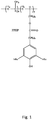
- This polymeric antioxidant is denoted PPHP (i.e. a PolyPropylene-Hindered Phenol copolymer), and its structure is illustrated in Figure 1 .
- Ternary blends of polypropylene (PP) polymer matrix, polymeric antioxidant (PPHP) and mono-or oligo-functional phenol antioxidant (AO) were prepared by mixing the PPHP described above with a polypropylene composition based upon a commercial PP.
- the commercial PP is a polypropylene homopolymer (capacitor grade) comprising 0.5 wt% of a mono- or oligo-functional phenol antioxidant. This 0.5 wt% mono- or oligo-functional phenol antioxidant composition is hereafter denoted PP (0.5 wt%). Ratios of from 1:1 PP (0.5 wt%):PPHP to 200:1 PP (0.5 wt%):PPHP w/w were prepared and tested.
- the pure commercial PP composition (comprising 0.5 wt% of a mono- or oligo-functional phenol antioxidant) was tested, as was a further commercially available polypropylene composition (denoted PP-Normal which is not a capacitor grade PP).
- the oxidative stability of the prepared compositions was tested by performing thermogravimetric analysis of a sample of each composition at a constant temperature of 190 °C in air.
- the weight% of each sample relative to the initial weight as a function of heating time in minutes is shown in Figure 2 , and the samples are denoted as shown above.
- phenol antioxidant moieties to the polymer composition from PPHP cannot account for the dramatic increase of the thermal/oxidative stability. Without wishing to be bound by theory, it seems that the PPHP copolymer serves as an interfacial agent between the polypropylene matrix and the mono- or oligo-functional phenol antioxidant in order to form a uniform morphology with the molecular dispersion of the mono- or oligo-functional phenol antioxidant in the polypropylene matrix. It appears that concentrations of about 2 weight% or greater of PPHP in the polymer composition are sufficient to provide completely uniform morphology at the mono- or oligo-functional phenol antioxidant concentration tested.
- the OIT of a number of samples was determined using the ASTM D3895-14 standard method. This involves determining the heat flow using differential scanning calorimetry when heating the samples at 190 °C in oxygen and measuring the response as a function of time. The results are shown in in the Table below.
- Polymer Composition OIT (min) PP-Normal 16 PP (0.5 wt%) 63 PP (0.5 wt%):PPHP 10:1 230 PP (0.5 wt%):PPHP 20:1 180 PP (0.5 wt%):PPHP 50:1 115 PP (0.5 wt%):PPHP 100:1 91 PP (0.5 wt%):PPHP 200:1 82
Landscapes
- Chemical & Material Sciences (AREA)
- Chemical Kinetics & Catalysis (AREA)
- Medicinal Chemistry (AREA)
- Polymers & Plastics (AREA)
- Organic Chemistry (AREA)
- Health & Medical Sciences (AREA)
- Engineering & Computer Science (AREA)
- Power Engineering (AREA)
- Microelectronics & Electronic Packaging (AREA)
- Manufacturing & Machinery (AREA)
- Spectroscopy & Molecular Physics (AREA)
- Physics & Mathematics (AREA)
- General Chemical & Material Sciences (AREA)
- Compositions Of Macromolecular Compounds (AREA)
- Fixed Capacitors And Capacitor Manufacturing Machines (AREA)
Claims (15)
- Polymerzusammensetzung, umfassend:a) eine Polymermatrix;b) ein polymeres Antioxidans, das mit der Polymermatrix kompatibel ist und seitenständige phenolische Antioxidansgruppierungen umfasst; undc) ein mono- oder oligofunktionelles phenolisches Antioxidans.
- Polymerzusammensetzung nach Anspruch 1, wobei die Polymermatrix ein Polyolefin, einen Naturkautschuk, ein Acryl, Polystyrol, ein Styrolcopolymer, ein Polyacetal, ein Polyamid, ein Polycarbonat, einen Polyester, ein Polyurethan, PVC und/oder Polyvinylbutyral umfasst.
- Polymerzusammensetzung nach einem der vorhergehenden Ansprüche, wobei es sich bei der Polymermatrix um ein Polyolefin handelt, das aus Polyethylen (PE), Polypropylen (PP), Polymethylpenten (PMP), Polybuten-1 (PB-1), Polyisobutylen (PIB), Ethylenpropylenkautschuk (EPR) und Ethylenpropylendienkautschuk (EPDM); wie LDPE, LLDPE, VLDPE, HDPE, XLPE, MDPE, UHMWPE und BOPP ausgewählt ist.
- Polymerzusammensetzung nach einem der vorhergehenden Ansprüche, wobei das polymere Antioxidans die gleichen Monomereinheiten wie die Polymermatrix umfasst.
- Polymerzusammensetzung nach einem der vorhergehenden Ansprüche, wobei die Polymermatrix und das polymere Antioxidans cokristallisieren können.
- Polymerzusammensetzung nach einem der vorhergehenden Ansprüche, wobei es sich bei der Polymermatrix um ein Polyolefin handelt und es sich bei dem polymeren Antioxidans um ein Polyolefincopolymer handelt.
- Polymerzusammensetzung nach einem der vorhergehenden Ansprüche, wobei die seitenständige phenolische Antioxidansgruppierung Phenolgruppen umfasst, die ein oder zwei aus C1-C4-Alkyl, C1-C4-Alkoxy, Amino, N-Alkylamino und N,N'-Dialkylamino ausgewählte ortho-Substituenten umfassen.
- Polymerzusammensetzung nach einem der vorhergehenden Ansprüche, wobei das polymere Antioxidans 0,2 bis 10 mol-% seitenständige phenolische Antioxidansgruppierungen umfasst.
- Polymerzusammensetzung nach einem der vorhergehenden Ansprüche, wobei das mono- oder oligofunktionelle phenolische Antioxidans aus 2,6-Di-tert-butyl-phenol, 2,6-Di-tert-butyl-4-methylphenol, 2-tert-Butyl-4-methoxyphenol und Octadecyl-3-(3,5-di-tert-butyl-4-hydroxyphenyl)-propionat, 2-tert-Butyl-6-(2-hydroxy-3-tert-butyl-5-methyl-benzyl)-4-methyl-phenol und 2-tert-Butyl-6-[(3-tert-butyl-5-ethyl-2-hydroxyphenyl)methyl]-4-ethylphenol, dem trifunktionellen 1,3,5-Trimethyl-2,4,6-tris(-3,5-Di-tert-butyl-4-hydroxybenzyl)benzol, 1,1,3-Tris(-2-methyl-4-hydrox-5-tert-butylphenyl) butan, Pentaerythrittetrakis(3-(3,5-di-tert-butyl-4-hydroxyphenyl)propionat) und Kombinationen davon ausgewählt ist.
- Polymerzusammensetzung nach einem der vorhergehenden Ansprüche, wobei die seitenständige phenolische Antioxidansgruppierung und das mono- oder oligofunktionelle phenolische Antioxidans ein übereinstimmendes Strukturelement vom Typ gehindertes Phenol, wie ein 3,5-Di-tert-butyl-4-hydroxyphenylpropionat-Strukturelement, aufweisen.
- Polymerzusammensetzung nach einem der vorhergehenden Ansprüche, wobei die Polymerzusammensetzung 0,1 Gew.-% bis 90 Gew.-% polymeres Antioxidans, berechnet bezogen auf das Gesamtgewicht der Polymerzusammensetzung, umfasst.
- Polymerzusammensetzung nach einem der vorhergehenden Ansprüche, wobei die Polymerzusammensetzung 0,1 Gew.-% bis 5 Gew.-% mono- oder oligofunktionelles phenolisches Antioxidans, berechnet bezogen auf das Gesamtgewicht der Polymerzusammensetzung, umfasst.
- Polymerzusammensetzung nach einem der vorhergehenden Ansprüche, wobei die Polymerzusammensetzung 5 Gew.-% bis 99,8 Gew.-% der Polymermatrix, berechnet bezogen auf das Gesamtgewicht der Polymerzusammensetzung, umfasst.
- Folienkondensator, der ein Dielektrikum umfasst, wobei das Dielektrikum eine Polymerzusammensetzung nach einem der Ansprüche 1-13 umfasst.
- Komponente eines elektrischen Netzes, die einen Isolator umfasst, wobei der Isolator eine Polymerzusammensetzung nach einem der Ansprüche 1-13 umfasst.
Applications Claiming Priority (2)
| Application Number | Priority Date | Filing Date | Title |
|---|---|---|---|
| LU100186 | 2017-05-03 | ||
| PCT/EP2018/060828 WO2018202562A1 (en) | 2017-05-03 | 2018-04-27 | Stabilized polymer compositions |
Publications (2)
| Publication Number | Publication Date |
|---|---|
| EP3619724A1 EP3619724A1 (de) | 2020-03-11 |
| EP3619724B1 true EP3619724B1 (de) | 2021-06-30 |
Family
ID=59009751
Family Applications (1)
| Application Number | Title | Priority Date | Filing Date |
|---|---|---|---|
| EP18719199.4A Active EP3619724B1 (de) | 2017-05-03 | 2018-04-27 | Stabilisierte polymerzusammensetzungen |
Country Status (6)
| Country | Link |
|---|---|
| US (1) | US12509576B2 (de) |
| EP (1) | EP3619724B1 (de) |
| JP (2) | JP7196096B2 (de) |
| KR (1) | KR102131574B1 (de) |
| CN (1) | CN110663090B (de) |
| WO (1) | WO2018202562A1 (de) |
Families Citing this family (6)
| Publication number | Priority date | Publication date | Assignee | Title |
|---|---|---|---|---|
| WO2021178274A1 (en) * | 2020-03-03 | 2021-09-10 | Advanced Polyolefin Technologies Llc | Functional polyolefin polymers and manufacture thereof |
| EP4114871A4 (de) | 2020-03-03 | 2024-05-22 | Advanced Polyolefin Technologies LLC | Funktionelle polyolefinpolymere und herstellung davon |
| WO2023034552A1 (en) | 2021-09-03 | 2023-03-09 | Advanced Polyolefin Technologies Llc | Polyolefin polymer incorporating hindered phenol and manufacture thereof |
| CN115886409A (zh) * | 2022-12-06 | 2023-04-04 | 苏州宏可菲材料科技有限公司 | 一种耐高温老化防滑魔术贴及其制备方法 |
| CN119039487A (zh) * | 2023-05-29 | 2024-11-29 | 中国石油天然气股份有限公司 | 一种改性聚丙烯及其制备方法和应用 |
| CN120005307A (zh) * | 2025-04-14 | 2025-05-16 | 佛山易事达电容材料有限公司 | 一种用于电容器的耐高温聚乙烯薄膜及其制备方法 |
Family Cites Families (14)
| Publication number | Priority date | Publication date | Assignee | Title |
|---|---|---|---|---|
| CA996563A (en) | 1968-06-21 | 1976-09-07 | Ciba-Geigy Corporation | Polymers containing hindered phenolic groups and process for their preparation |
| CA969192A (en) * | 1968-06-21 | 1975-06-10 | Ciba-Geigy Corporation | Polymeric antioxidants |
| US3645970A (en) * | 1969-10-01 | 1972-02-29 | Ciba Geigy Corp | Benzoate homopolymers hindered phenolic groups as stabilizers |
| US3819410A (en) | 1972-05-23 | 1974-06-25 | Nat Distillers Chem Corp | High voltage insulated conductor |
| GB2103624B (en) | 1981-07-24 | 1984-09-05 | Ciba Geigy Ag | Novel oligomeric phenols |
| EP0695733A1 (de) | 1990-07-10 | 1996-02-07 | Dsm N.V. | Gebundenes Antioxydans enthaltende Olefinpolymere |
| FR2686091B1 (fr) * | 1992-01-15 | 1994-06-10 | Flamel Tech Sa | Composition a base de polysilane (s). |
| JP3752747B2 (ja) | 1996-10-17 | 2006-03-08 | 東レ株式会社 | コンデンサー |
| US6815486B2 (en) | 2002-04-12 | 2004-11-09 | Dow Corning Corporation | Thermally conductive phase change materials and methods for their preparation and use |
| ATE476471T1 (de) | 2003-04-16 | 2010-08-15 | Prime Polymer Co Ltd | Polyolefinharzzusammensetzung und kombination von harzformkörpern unter deren verwendung |
| US8206825B2 (en) * | 2008-01-03 | 2012-06-26 | Equistar Chemicals, Lp | Preparation of wires and cables |
| US20130178726A1 (en) | 2012-01-05 | 2013-07-11 | Medtronic Minimed, Inc. | Stabilized polymers for use with analyte sensors and methods for making and using them |
| US9605093B2 (en) * | 2012-01-11 | 2017-03-28 | Oji Holdings Corporation | Biaxially stretched polypropylene film for capacitors |
| CN104558821B (zh) * | 2013-10-25 | 2017-08-11 | 中国石油化工股份有限公司 | 一种聚丙烯组合物和聚丙烯材料及其应用 |
-
2018
- 2018-04-27 EP EP18719199.4A patent/EP3619724B1/de active Active
- 2018-04-27 CN CN201880029158.8A patent/CN110663090B/zh active Active
- 2018-04-27 WO PCT/EP2018/060828 patent/WO2018202562A1/en not_active Ceased
- 2018-04-27 US US16/608,733 patent/US12509576B2/en active Active
- 2018-04-27 JP JP2019560094A patent/JP7196096B2/ja active Active
- 2018-04-27 KR KR1020197034599A patent/KR102131574B1/ko active Active
-
2020
- 2020-11-19 JP JP2020192431A patent/JP7202344B2/ja active Active
Also Published As
| Publication number | Publication date |
|---|---|
| US20200224015A1 (en) | 2020-07-16 |
| JP7196096B2 (ja) | 2022-12-26 |
| JP2021046548A (ja) | 2021-03-25 |
| CN110663090B (zh) | 2023-10-10 |
| US12509576B2 (en) | 2025-12-30 |
| KR102131574B1 (ko) | 2020-07-08 |
| KR20190135541A (ko) | 2019-12-06 |
| CN110663090A (zh) | 2020-01-07 |
| WO2018202562A1 (en) | 2018-11-08 |
| JP7202344B2 (ja) | 2023-01-11 |
| EP3619724A1 (de) | 2020-03-11 |
| JP2020521826A (ja) | 2020-07-27 |
Similar Documents
| Publication | Publication Date | Title |
|---|---|---|
| EP3619724B1 (de) | Stabilisierte polymerzusammensetzungen | |
| KR102414472B1 (ko) | 폴리올레핀 조성물 | |
| KR102396101B1 (ko) | 안정화된 수분-경화성 폴리머성 조성물 | |
| EP3662488B1 (de) | Feuchtigkeitshärtende zusammensetzung für draht- und kabelisolierung und mantelschichten | |
| CA2574515A1 (en) | Moisture-curable, silane crosslinkable composition | |
| CA2229895A1 (en) | Process for producing silane-crosslinked polyolefin | |
| KR20210146957A (ko) | 신속 수분-경화성인 폴리에틸렌 제형 | |
| TW200823248A (en) | Process for the preparation of an antistatic composition | |
| WO2010074916A1 (en) | Ambient temperature and ambient humidity-curing insulating compositions and methods | |
| TW202328222A (zh) | 包含受阻酚的聚烯烴聚合物及其製備 | |
| JP2020513422A (ja) | 半結晶性ポリオレフィン系添加剤マスターバッチ組成物 | |
| JP2007511656A (ja) | 耐候性の、顔料着色されたポリスチレン | |
| CN113383039B (zh) | 可湿固化聚烯烃调配物 | |
| CN113383038A (zh) | 可湿固化聚烯烃调配物 | |
| CN109890877B (zh) | 基于半结晶聚烯烃的添加剂母料组合物 | |
| CA2026169A1 (en) | Sulfide antioxidants for stabilizing crosslinked polyolefins | |
| JPH08225495A (ja) | フェノール化合物およびその用途 | |
| CN113439102A (zh) | 催化剂体系 | |
| BR112021017429B1 (pt) | Formulação de polietileno curável por umidificação | |
| BR122023024663A2 (pt) | Formulação de polietileno curável por umidificação, método para fabricar uma formulação de polietileno curável por umidificação, produto de polímero curado, artigo fabricado, condutor revestido e método para conduzir eletricidade | |
| BR112021016073B1 (pt) | Sistema de catalisador, lote mestre de catalisador, formulação de poliolefina curável por umidade, método para confeccionar uma formulação de poliolefina curável por umidade, produto de poliolefina curada com umidade, artigo manufaturado, condutor revestido e método para conduzir eletricidade | |
| US20200148866A1 (en) | Ethylene-Methoxy Polyethylene Glycol Methacrylate Copolymers | |
| JPH106376A (ja) | ポリオレフィン押出成形体 | |
| JPH0116263B2 (de) | ||
| JPH03205483A (ja) | 反応性酸化防止剤およびこれを含有する高分子組成物 |
Legal Events
| Date | Code | Title | Description |
|---|---|---|---|
| STAA | Information on the status of an ep patent application or granted ep patent |
Free format text: STATUS: UNKNOWN |
|
| STAA | Information on the status of an ep patent application or granted ep patent |
Free format text: STATUS: THE INTERNATIONAL PUBLICATION HAS BEEN MADE |
|
| PUAI | Public reference made under article 153(3) epc to a published international application that has entered the european phase |
Free format text: ORIGINAL CODE: 0009012 |
|
| STAA | Information on the status of an ep patent application or granted ep patent |
Free format text: STATUS: REQUEST FOR EXAMINATION WAS MADE |
|
| 17P | Request for examination filed |
Effective date: 20191202 |
|
| AK | Designated contracting states |
Kind code of ref document: A1 Designated state(s): AL AT BE BG CH CY CZ DE DK EE ES FI FR GB GR HR HU IE IS IT LI LT LU LV MC MK MT NL NO PL PT RO RS SE SI SK SM TR |
|
| AX | Request for extension of the european patent |
Extension state: BA ME |
|
| DAV | Request for validation of the european patent (deleted) | ||
| DAX | Request for extension of the european patent (deleted) | ||
| GRAP | Despatch of communication of intention to grant a patent |
Free format text: ORIGINAL CODE: EPIDOSNIGR1 |
|
| STAA | Information on the status of an ep patent application or granted ep patent |
Free format text: STATUS: GRANT OF PATENT IS INTENDED |
|
| INTG | Intention to grant announced |
Effective date: 20210203 |
|
| RAP1 | Party data changed (applicant data changed or rights of an application transferred) |
Owner name: ABB POWER GRIDS SWITZERLAND AG |
|
| GRAS | Grant fee paid |
Free format text: ORIGINAL CODE: EPIDOSNIGR3 |
|
| GRAA | (expected) grant |
Free format text: ORIGINAL CODE: 0009210 |
|
| STAA | Information on the status of an ep patent application or granted ep patent |
Free format text: STATUS: THE PATENT HAS BEEN GRANTED |
|
| AK | Designated contracting states |
Kind code of ref document: B1 Designated state(s): AL AT BE BG CH CY CZ DE DK EE ES FI FR GB GR HR HU IE IS IT LI LT LU LV MC MK MT NL NO PL PT RO RS SE SI SK SM TR |
|
| REG | Reference to a national code |
Ref country code: CH Ref legal event code: EP |
|
| REG | Reference to a national code |
Ref country code: AT Ref legal event code: REF Ref document number: 1407105 Country of ref document: AT Kind code of ref document: T Effective date: 20210715 |
|
| REG | Reference to a national code |
Ref country code: DE Ref legal event code: R096 Ref document number: 602018019356 Country of ref document: DE |
|
| REG | Reference to a national code |
Ref country code: IE Ref legal event code: FG4D |
|
| REG | Reference to a national code |
Ref country code: LT Ref legal event code: MG9D |
|
| REG | Reference to a national code |
Ref country code: SK Ref legal event code: T3 Ref document number: E 37866 Country of ref document: SK |
|
| PG25 | Lapsed in a contracting state [announced via postgrant information from national office to epo] |
Ref country code: BG Free format text: LAPSE BECAUSE OF FAILURE TO SUBMIT A TRANSLATION OF THE DESCRIPTION OR TO PAY THE FEE WITHIN THE PRESCRIBED TIME-LIMIT Effective date: 20210930 Ref country code: HR Free format text: LAPSE BECAUSE OF FAILURE TO SUBMIT A TRANSLATION OF THE DESCRIPTION OR TO PAY THE FEE WITHIN THE PRESCRIBED TIME-LIMIT Effective date: 20210630 Ref country code: FI Free format text: LAPSE BECAUSE OF FAILURE TO SUBMIT A TRANSLATION OF THE DESCRIPTION OR TO PAY THE FEE WITHIN THE PRESCRIBED TIME-LIMIT Effective date: 20210630 |
|
| REG | Reference to a national code |
Ref country code: NL Ref legal event code: MP Effective date: 20210630 |
|
| REG | Reference to a national code |
Ref country code: AT Ref legal event code: MK05 Ref document number: 1407105 Country of ref document: AT Kind code of ref document: T Effective date: 20210630 |
|
| PG25 | Lapsed in a contracting state [announced via postgrant information from national office to epo] |
Ref country code: GR Free format text: LAPSE BECAUSE OF FAILURE TO SUBMIT A TRANSLATION OF THE DESCRIPTION OR TO PAY THE FEE WITHIN THE PRESCRIBED TIME-LIMIT Effective date: 20211001 Ref country code: SE Free format text: LAPSE BECAUSE OF FAILURE TO SUBMIT A TRANSLATION OF THE DESCRIPTION OR TO PAY THE FEE WITHIN THE PRESCRIBED TIME-LIMIT Effective date: 20210630 Ref country code: RS Free format text: LAPSE BECAUSE OF FAILURE TO SUBMIT A TRANSLATION OF THE DESCRIPTION OR TO PAY THE FEE WITHIN THE PRESCRIBED TIME-LIMIT Effective date: 20210630 Ref country code: LV Free format text: LAPSE BECAUSE OF FAILURE TO SUBMIT A TRANSLATION OF THE DESCRIPTION OR TO PAY THE FEE WITHIN THE PRESCRIBED TIME-LIMIT Effective date: 20210630 Ref country code: NO Free format text: LAPSE BECAUSE OF FAILURE TO SUBMIT A TRANSLATION OF THE DESCRIPTION OR TO PAY THE FEE WITHIN THE PRESCRIBED TIME-LIMIT Effective date: 20210930 |
|
| RAP4 | Party data changed (patent owner data changed or rights of a patent transferred) |
Owner name: HITACHI ENERGY SWITZERLAND AG |
|
| PG25 | Lapsed in a contracting state [announced via postgrant information from national office to epo] |
Ref country code: SM Free format text: LAPSE BECAUSE OF FAILURE TO SUBMIT A TRANSLATION OF THE DESCRIPTION OR TO PAY THE FEE WITHIN THE PRESCRIBED TIME-LIMIT Effective date: 20210630 Ref country code: EE Free format text: LAPSE BECAUSE OF FAILURE TO SUBMIT A TRANSLATION OF THE DESCRIPTION OR TO PAY THE FEE WITHIN THE PRESCRIBED TIME-LIMIT Effective date: 20210630 Ref country code: ES Free format text: LAPSE BECAUSE OF FAILURE TO SUBMIT A TRANSLATION OF THE DESCRIPTION OR TO PAY THE FEE WITHIN THE PRESCRIBED TIME-LIMIT Effective date: 20210630 Ref country code: PT Free format text: LAPSE BECAUSE OF FAILURE TO SUBMIT A TRANSLATION OF THE DESCRIPTION OR TO PAY THE FEE WITHIN THE PRESCRIBED TIME-LIMIT Effective date: 20211102 Ref country code: RO Free format text: LAPSE BECAUSE OF FAILURE TO SUBMIT A TRANSLATION OF THE DESCRIPTION OR TO PAY THE FEE WITHIN THE PRESCRIBED TIME-LIMIT Effective date: 20210630 Ref country code: NL Free format text: LAPSE BECAUSE OF FAILURE TO SUBMIT A TRANSLATION OF THE DESCRIPTION OR TO PAY THE FEE WITHIN THE PRESCRIBED TIME-LIMIT Effective date: 20210630 Ref country code: CZ Free format text: LAPSE BECAUSE OF FAILURE TO SUBMIT A TRANSLATION OF THE DESCRIPTION OR TO PAY THE FEE WITHIN THE PRESCRIBED TIME-LIMIT Effective date: 20210630 Ref country code: AT Free format text: LAPSE BECAUSE OF FAILURE TO SUBMIT A TRANSLATION OF THE DESCRIPTION OR TO PAY THE FEE WITHIN THE PRESCRIBED TIME-LIMIT Effective date: 20210630 |
|
| PG25 | Lapsed in a contracting state [announced via postgrant information from national office to epo] |
Ref country code: PL Free format text: LAPSE BECAUSE OF FAILURE TO SUBMIT A TRANSLATION OF THE DESCRIPTION OR TO PAY THE FEE WITHIN THE PRESCRIBED TIME-LIMIT Effective date: 20210630 |
|
| REG | Reference to a national code |
Ref country code: DE Ref legal event code: R097 Ref document number: 602018019356 Country of ref document: DE |
|
| REG | Reference to a national code |
Ref country code: BE Ref legal event code: HC Owner name: HITACHI ENERGY SWITZERLAND AG; CH Free format text: DETAILS ASSIGNMENT: CHANGE OF OWNER(S), CHANGE OF OWNER(S) NAME; FORMER OWNER NAME: ABB POWER GRIDS SWITZERLAND AG Effective date: 20220128 |
|
| PG25 | Lapsed in a contracting state [announced via postgrant information from national office to epo] |
Ref country code: DK Free format text: LAPSE BECAUSE OF FAILURE TO SUBMIT A TRANSLATION OF THE DESCRIPTION OR TO PAY THE FEE WITHIN THE PRESCRIBED TIME-LIMIT Effective date: 20210630 |
|
| PLBE | No opposition filed within time limit |
Free format text: ORIGINAL CODE: 0009261 |
|
| STAA | Information on the status of an ep patent application or granted ep patent |
Free format text: STATUS: NO OPPOSITION FILED WITHIN TIME LIMIT |
|
| PG25 | Lapsed in a contracting state [announced via postgrant information from national office to epo] |
Ref country code: AL Free format text: LAPSE BECAUSE OF FAILURE TO SUBMIT A TRANSLATION OF THE DESCRIPTION OR TO PAY THE FEE WITHIN THE PRESCRIBED TIME-LIMIT Effective date: 20210630 |
|
| 26N | No opposition filed |
Effective date: 20220331 |
|
| REG | Reference to a national code |
Ref country code: DE Ref legal event code: R081 Ref document number: 602018019356 Country of ref document: DE Owner name: HITACHI ENERGY SWITZERLAND AG, CH Free format text: FORMER OWNER: ABB POWER GRIDS SWITZERLAND AG, BADEN, CH Ref country code: DE Ref legal event code: R081 Ref document number: 602018019356 Country of ref document: DE Owner name: HITACHI ENERGY LTD, CH Free format text: FORMER OWNER: ABB POWER GRIDS SWITZERLAND AG, BADEN, CH |
|
| REG | Reference to a national code |
Ref country code: SK Ref legal event code: TC4A Ref document number: E 37866 Country of ref document: SK Owner name: HITACHI ENERGY SWITZERLAND AG, BADEN, CH Effective date: 20220616 |
|
| PG25 | Lapsed in a contracting state [announced via postgrant information from national office to epo] |
Ref country code: IT Free format text: LAPSE BECAUSE OF FAILURE TO SUBMIT A TRANSLATION OF THE DESCRIPTION OR TO PAY THE FEE WITHIN THE PRESCRIBED TIME-LIMIT Effective date: 20210630 |
|
| REG | Reference to a national code |
Ref country code: CH Ref legal event code: PL |
|
| GBPC | Gb: european patent ceased through non-payment of renewal fee |
Effective date: 20220427 |
|
| PG25 | Lapsed in a contracting state [announced via postgrant information from national office to epo] |
Ref country code: MC Free format text: LAPSE BECAUSE OF FAILURE TO SUBMIT A TRANSLATION OF THE DESCRIPTION OR TO PAY THE FEE WITHIN THE PRESCRIBED TIME-LIMIT Effective date: 20210630 Ref country code: LU Free format text: LAPSE BECAUSE OF NON-PAYMENT OF DUE FEES Effective date: 20220427 Ref country code: LI Free format text: LAPSE BECAUSE OF NON-PAYMENT OF DUE FEES Effective date: 20220430 Ref country code: GB Free format text: LAPSE BECAUSE OF NON-PAYMENT OF DUE FEES Effective date: 20220427 Ref country code: CH Free format text: LAPSE BECAUSE OF NON-PAYMENT OF DUE FEES Effective date: 20220430 |
|
| PG25 | Lapsed in a contracting state [announced via postgrant information from national office to epo] |
Ref country code: LT Free format text: LAPSE BECAUSE OF FAILURE TO SUBMIT A TRANSLATION OF THE DESCRIPTION OR TO PAY THE FEE WITHIN THE PRESCRIBED TIME-LIMIT Effective date: 20210630 Ref country code: IE Free format text: LAPSE BECAUSE OF NON-PAYMENT OF DUE FEES Effective date: 20220427 |
|
| P01 | Opt-out of the competence of the unified patent court (upc) registered |
Effective date: 20230527 |
|
| REG | Reference to a national code |
Ref country code: BE Ref legal event code: PD Owner name: HITACHI ENERGY LTD; CH Free format text: DETAILS ASSIGNMENT: CHANGE OF OWNER(S), MERGE; FORMER OWNER NAME: HITACHI ENERGY SWITZERLAND AG Effective date: 20240123 |
|
| REG | Reference to a national code |
Ref country code: DE Ref legal event code: R082 Ref document number: 602018019356 Country of ref document: DE Representative=s name: DENNEMEYER & ASSOCIATES RECHTSANWALTSGESELLSCH, DE Ref country code: DE Ref legal event code: R082 Ref document number: 602018019356 Country of ref document: DE Representative=s name: DENNEMEYER & ASSOCIATES S.A., DE Ref country code: DE Ref legal event code: R081 Ref document number: 602018019356 Country of ref document: DE Owner name: HITACHI ENERGY LTD, CH Free format text: FORMER OWNER: HITACHI ENERGY SWITZERLAND AG, BADEN, CH |
|
| PG25 | Lapsed in a contracting state [announced via postgrant information from national office to epo] |
Ref country code: MK Free format text: LAPSE BECAUSE OF FAILURE TO SUBMIT A TRANSLATION OF THE DESCRIPTION OR TO PAY THE FEE WITHIN THE PRESCRIBED TIME-LIMIT Effective date: 20210630 Ref country code: CY Free format text: LAPSE BECAUSE OF FAILURE TO SUBMIT A TRANSLATION OF THE DESCRIPTION OR TO PAY THE FEE WITHIN THE PRESCRIBED TIME-LIMIT Effective date: 20210630 |
|
| PG25 | Lapsed in a contracting state [announced via postgrant information from national office to epo] |
Ref country code: HU Free format text: LAPSE BECAUSE OF FAILURE TO SUBMIT A TRANSLATION OF THE DESCRIPTION OR TO PAY THE FEE WITHIN THE PRESCRIBED TIME-LIMIT; INVALID AB INITIO Effective date: 20180427 |
|
| REG | Reference to a national code |
Ref country code: SK Ref legal event code: PC4A Ref document number: E 37866 Country of ref document: SK Owner name: HITACHI ENERGY LTD, ZUERICH, CH Free format text: FORMER OWNER: HITACHI ENERGY SWITZERLAND AG, BADEN, CH Effective date: 20240606 |
|
| PG25 | Lapsed in a contracting state [announced via postgrant information from national office to epo] |
Ref country code: TR Free format text: LAPSE BECAUSE OF FAILURE TO SUBMIT A TRANSLATION OF THE DESCRIPTION OR TO PAY THE FEE WITHIN THE PRESCRIBED TIME-LIMIT Effective date: 20210630 |
|
| PG25 | Lapsed in a contracting state [announced via postgrant information from national office to epo] |
Ref country code: MT Free format text: LAPSE BECAUSE OF FAILURE TO SUBMIT A TRANSLATION OF THE DESCRIPTION OR TO PAY THE FEE WITHIN THE PRESCRIBED TIME-LIMIT Effective date: 20210630 |
|
| REG | Reference to a national code |
Ref country code: DE Ref legal event code: R082 Ref document number: 602018019356 Country of ref document: DE Representative=s name: DENNEMEYER & ASSOCIATES RECHTSANWALTSGESELLSCH, DE |
|
| PGFP | Annual fee paid to national office [announced via postgrant information from national office to epo] |
Ref country code: DE Payment date: 20250422 Year of fee payment: 8 |
|
| PGFP | Annual fee paid to national office [announced via postgrant information from national office to epo] |
Ref country code: BE Payment date: 20250418 Year of fee payment: 8 |
|
| PGFP | Annual fee paid to national office [announced via postgrant information from national office to epo] |
Ref country code: FR Payment date: 20250425 Year of fee payment: 8 |
|
| PGFP | Annual fee paid to national office [announced via postgrant information from national office to epo] |
Ref country code: SK Payment date: 20250423 Year of fee payment: 8 |