EP3620464A1 - Cellule de voiture à pont disulfure réticulé sur une fraction de reconnaissance d'antigène - Google Patents
Cellule de voiture à pont disulfure réticulé sur une fraction de reconnaissance d'antigène Download PDFInfo
- Publication number
- EP3620464A1 EP3620464A1 EP18193369.8A EP18193369A EP3620464A1 EP 3620464 A1 EP3620464 A1 EP 3620464A1 EP 18193369 A EP18193369 A EP 18193369A EP 3620464 A1 EP3620464 A1 EP 3620464A1
- Authority
- EP
- European Patent Office
- Prior art keywords
- unit
- domain
- cell
- cells
- cross linker
- Prior art date
- Legal status (The legal status is an assumption and is not a legal conclusion. Google has not performed a legal analysis and makes no representation as to the accuracy of the status listed.)
- Withdrawn
Links
Images




Classifications
-
- C—CHEMISTRY; METALLURGY
- C07—ORGANIC CHEMISTRY
- C07K—PEPTIDES
- C07K16/00—Immunoglobulins [IG], e.g. monoclonal or polyclonal antibodies
- C07K16/18—Immunoglobulins [IG], e.g. monoclonal or polyclonal antibodies against material from animals or humans
- C07K16/28—Immunoglobulins [IG], e.g. monoclonal or polyclonal antibodies against material from animals or humans against receptors, cell surface antigens or cell surface determinants
- C07K16/2803—Immunoglobulins [IG], e.g. monoclonal or polyclonal antibodies against material from animals or humans against receptors, cell surface antigens or cell surface determinants against the immunoglobulin superfamily
-
- A—HUMAN NECESSITIES
- A61—MEDICAL OR VETERINARY SCIENCE; HYGIENE
- A61K—PREPARATIONS FOR MEDICAL, DENTAL OR TOILETRY PURPOSES
- A61K40/00—Cellular immunotherapy
- A61K40/10—Cellular immunotherapy characterised by the cell type used
- A61K40/11—T-cells, e.g. tumour infiltrating lymphocytes [TIL] or regulatory T [Treg] cells; Lymphokine-activated killer [LAK] cells
-
- A—HUMAN NECESSITIES
- A61—MEDICAL OR VETERINARY SCIENCE; HYGIENE
- A61K—PREPARATIONS FOR MEDICAL, DENTAL OR TOILETRY PURPOSES
- A61K40/00—Cellular immunotherapy
- A61K40/30—Cellular immunotherapy characterised by the recombinant expression of specific molecules in the cells of the immune system
- A61K40/31—Chimeric antigen receptors [CAR]
-
- A—HUMAN NECESSITIES
- A61—MEDICAL OR VETERINARY SCIENCE; HYGIENE
- A61K—PREPARATIONS FOR MEDICAL, DENTAL OR TOILETRY PURPOSES
- A61K40/00—Cellular immunotherapy
- A61K40/40—Cellular immunotherapy characterised by antigens that are targeted or presented by cells of the immune system
- A61K40/41—Vertebrate antigens
- A61K40/42—Cancer antigens
- A61K40/4202—Receptors, cell surface antigens or cell surface determinants
- A61K40/421—Immunoglobulin superfamily
- A61K40/4211—CD19 or B4
-
- A—HUMAN NECESSITIES
- A61—MEDICAL OR VETERINARY SCIENCE; HYGIENE
- A61K—PREPARATIONS FOR MEDICAL, DENTAL OR TOILETRY PURPOSES
- A61K40/00—Cellular immunotherapy
- A61K40/40—Cellular immunotherapy characterised by antigens that are targeted or presented by cells of the immune system
- A61K40/41—Vertebrate antigens
- A61K40/42—Cancer antigens
- A61K40/4202—Receptors, cell surface antigens or cell surface determinants
- A61K40/4221—CD20
-
- C—CHEMISTRY; METALLURGY
- C07—ORGANIC CHEMISTRY
- C07K—PEPTIDES
- C07K14/00—Peptides having more than 20 amino acids; Gastrins; Somatostatins; Melanotropins; Derivatives thereof
- C07K14/435—Peptides having more than 20 amino acids; Gastrins; Somatostatins; Melanotropins; Derivatives thereof from animals; from humans
- C07K14/705—Receptors; Cell surface antigens; Cell surface determinants
- C07K14/70503—Immunoglobulin superfamily
- C07K14/7051—T-cell receptor (TcR)-CD3 complex
-
- C—CHEMISTRY; METALLURGY
- C07—ORGANIC CHEMISTRY
- C07K—PEPTIDES
- C07K16/00—Immunoglobulins [IG], e.g. monoclonal or polyclonal antibodies
- C07K16/18—Immunoglobulins [IG], e.g. monoclonal or polyclonal antibodies against material from animals or humans
- C07K16/28—Immunoglobulins [IG], e.g. monoclonal or polyclonal antibodies against material from animals or humans against receptors, cell surface antigens or cell surface determinants
- C07K16/2887—Immunoglobulins [IG], e.g. monoclonal or polyclonal antibodies against material from animals or humans against receptors, cell surface antigens or cell surface determinants against CD20
-
- A—HUMAN NECESSITIES
- A61—MEDICAL OR VETERINARY SCIENCE; HYGIENE
- A61K—PREPARATIONS FOR MEDICAL, DENTAL OR TOILETRY PURPOSES
- A61K2239/00—Indexing codes associated with cellular immunotherapy of group A61K40/00
- A61K2239/10—Indexing codes associated with cellular immunotherapy of group A61K40/00 characterized by the structure of the chimeric antigen receptor [CAR]
- A61K2239/23—On/off switch
- A61K2239/24—Dimerizable CARs; CARs with adapter
-
- A—HUMAN NECESSITIES
- A61—MEDICAL OR VETERINARY SCIENCE; HYGIENE
- A61K—PREPARATIONS FOR MEDICAL, DENTAL OR TOILETRY PURPOSES
- A61K2239/00—Indexing codes associated with cellular immunotherapy of group A61K40/00
- A61K2239/31—Indexing codes associated with cellular immunotherapy of group A61K40/00 characterized by the route of administration
-
- A—HUMAN NECESSITIES
- A61—MEDICAL OR VETERINARY SCIENCE; HYGIENE
- A61K—PREPARATIONS FOR MEDICAL, DENTAL OR TOILETRY PURPOSES
- A61K2239/00—Indexing codes associated with cellular immunotherapy of group A61K40/00
- A61K2239/38—Indexing codes associated with cellular immunotherapy of group A61K40/00 characterised by the dose, timing or administration schedule
-
- A—HUMAN NECESSITIES
- A61—MEDICAL OR VETERINARY SCIENCE; HYGIENE
- A61K—PREPARATIONS FOR MEDICAL, DENTAL OR TOILETRY PURPOSES
- A61K2239/00—Indexing codes associated with cellular immunotherapy of group A61K40/00
- A61K2239/46—Indexing codes associated with cellular immunotherapy of group A61K40/00 characterised by the cancer treated
- A61K2239/48—Blood cells, e.g. leukemia or lymphoma
-
- C—CHEMISTRY; METALLURGY
- C07—ORGANIC CHEMISTRY
- C07K—PEPTIDES
- C07K2317/00—Immunoglobulins specific features
- C07K2317/50—Immunoglobulins specific features characterized by immunoglobulin fragments
- C07K2317/55—Fab or Fab'
-
- C—CHEMISTRY; METALLURGY
- C07—ORGANIC CHEMISTRY
- C07K—PEPTIDES
- C07K2319/00—Fusion polypeptide
- C07K2319/01—Fusion polypeptide containing a localisation/targetting motif
- C07K2319/03—Fusion polypeptide containing a localisation/targetting motif containing a transmembrane segment
Definitions
- the present invention is directed to CAR-cells (e.g. T cells, NK cells, B cells etc.) provided with a an adapter moiety comprising a (site-specific) cross linked thio-bridge.
- CAR-cells e.g. T cells, NK cells, B cells etc.
- an adapter moiety comprising a (site-specific) cross linked thio-bridge.
- the CAR binding motif expressed at the cell surface binds a desired target binding molecule in a non-specific manner, where the binding motif of the CAR is CD16 which is a low affinity Fc receptor that binds unspecifically to Immunoglobulin G antibodies. It is a disadvantage of this system that antibodies in vivo act as natural competitors to the administered antibody of interest supposed to enable specific tumor target lysis upon binding by the CAR T cells.
- WO2012082841A2 a universal, yet adaptable, anti-tag chimeric antigen receptor (AT-CAR) system is disclosed which provides T cells with the ability and specificity to recognize and kill target cells, such as tumor cells, that have been marked by tagged antibodies, e.g. FITC- or biotin labeled antibodies.
- the disadvantage is that the labels are for the subject to be treated either foreign molecules, e.g. FITC, and therefore immunogenic or the labels are identical to endogenous molecules, e.g. biotin, resulting in blocking of the CAR binding motif by the endogenous molecule which might prohibit the CAR from binding its intended molecule-labelled antibody, e.g. biotinylated antibody.
- labels are conjugated to the antibodies by random conjugation, resulting in variable degrees of tags attached to a single antibody,
- a CAR system makes use of CARs that target a moiety that is not produced or expressed by cells of the subject being treated.
- This CAR system thus allows for focused targeting of the cytotoxic lymphocytes to target cells, such as cancer cells.
- the targeted moiety is part of a small conjugate molecule (SCM) that also comprises a ligand of a tumor cell receptor. Because small organic molecules are typically used as the targeted moiety, clearance of the SCM from the bloodstream can be achieved within about 20 minutes.
- SCM small conjugate molecule
- the lymphocyte response can be targeted to only those cells expressing the tumor receptor, thereby reducing off-target toxicity, and the activation of lymphocytes can be more easily controlled due to the rapid clearance of the SCM.
- the CAR-expressing lymphocytes can also be used as a "universal" cytotoxic cell to target a wide variety of tumors without the need to prepare separate CAR constructs.
- the target moieties can be FITC or biotin, this system faces the same disadvantages as WO2012082841A2 and/or WO2013044225A1 .
- switches for regulating the activity of a chimeric antigen receptor effector cells (CAR-ECs). These switches generally comprise a chimeric antigen receptor-interacting domain (CAR-ID) and a target interacting domain (TID).
- CAR-ID may be e.g. FITC or biotin.
- This system features site-specific labeling of target cell binding moieties but relies on co-translational incorporation of non-natural amino acids. Again, this system faces the same disadvantages as WO2012082841A2 and/or WO2013044225A1 .
- a chimeric antigen receptor-effector cell switch comprising: a) a peptidic antigen that binds a chimeric antigen receptor on an effector cell; and b) a targeting moiety that binds a cell surface molecule on a target cell.
- the peptidic antigen is recombinantly expressed and based on or derived from a naturally occurring peptide or from a non-naturally occurring peptide.
- the disadvantage of this system is that there is a high risk of autoimmunity by tags derived from a human nuclear protein.
- a universal chimeric antigen receptor comprising three domains, wherein the first domain is a tag-binding domain, the second domain is a linking peptide chain including an extracellular hinge and a transmembrane domain and the third domain is a signal transduction domain, wherein the tag-binding domain binds to a tag derived from any human nuclear protein.
- suitable tags are peptide sequences from nuclear antigens, which cannot be accessed and bound by the corresponding tag-binding domain in the context of the native protein under physiological conditions.
- a disadvantage of this system is that the tag can only be added in a co-translational manner, thereby excluding the use of established monoclonal antibodies as tagged antigen binding molecules without prior redesign of the gene encoding said antigen binding molecule.
- US 2016/0000933 A1 discloses the crosslinking of antibodies at their disulfide bridge for the preparation of antibody conjugates.
- CAR-T cells are genetically engineered cells that express a chimeric antigen receptor (CAR) moiety on their surface which is used to recognize and target unwanted cells. Upon binding, the CAR triggers an activation signal on the CAR-T cells to kill the target cells.
- CAR chimeric antigen receptor
- an adapter molecule In order to mediate the recognition and binding between CAR-T cells and the target cells, an adapter molecule is required.
- An universal CAR T cell adapter molecule is composed of an antibody or antibody fragment (e.g. Fab) specific to recognize an antigen on the target cells plus a secondary moiety which is recognized only by the CAR-T cells. This way, the adapter molecule serves as a recognition bridge between the target cells and the CAR-T cells. By using Ab and Fabs different cell populations can be targeted. And the CAR-Tcells are only functional in the presence of the adapter molecule.
- affinity tags that are recognized by the CAR-T cells are Vitamins, which are naturally occurring ones and non-biologically orthogonal, e.g. Biotin .
- the invention is based on using a site-directed crosslinker that targets disulfide bridges on Ab and/or Fabs.
- the benefit relies on: i) specific location of disulfide bridge, which is known in the sequence and structure of Ab and Fabs at fixed positions; ii) the crosslinker covalently attaches to both reduced thiols of the disulfide bridge, thus preserving the native 3D structure and function of the Ab and Fab leaving no free thiols behind; iii) each crosslinker carries only one CAR recognition moiety e.g. Biotin), so for each disulfide bridge one will obtain one biotin providing a known and predictable stoichiometry (i.e.
- fabs only contain one disulfide bridge at the C-terminal); iv) the crosslink reaction is quantitative, meaning above 95% of Ab and Fab is labeled; v) degree of labeling can be stoichiometric controlled (i.e. for Ab).
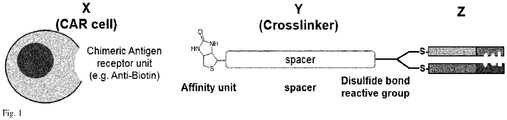
- object of the invention is a Cell with an antigen recognizing structure comprising the sequence: signaling domain, transmembrane domain, chimeric antigen receptor unit, affinity unit, spacer unit, cross linker unit and antigen recognizing domain characterized in that the antigen recognizing domain comprises a disulfide bond which is bound to the cross linker unit and wherein affinity unit is bound to the spacer unit and wherein the spacer unit is bound to the cross linker unit.
- it is an object of the invention to provide a method to provide a cell with an antigen recognizing structure comprising the sequence: signaling domain, transmembrane domain, chimeric antigen receptor unit, affinity unit, spacer unit, cross linker unit and antigen recognizing domain characterized in that a cell provided with an sequence comprising signaling domain, transmembrane domain, chimeric antigen receptor unit is bound to an adapter molecule comprising affinity unit, spacer unit, cross linker unit and antigen recognizing domain wherein the chimeric antigen receptor bind specifically to the unit.
- Yet another object of the invention is a use or a method for use of a cell with an antigen recognizing structure comprising the sequence: signaling domain, transmembrane domain, chimeric antigen receptor unit, affinity unit, spacer unit, cross linker unit and antigen recognizing domain wherein the antigen recognizing domain comprises a disulfide bond which is bound to the cross linker unit and wherein affinity unit is bound to the spacer unit and wherein the spacer unit is bound to the cross linker unit for recognizing cells expressing an antigen specifically binding to the antigen recognizing domain.
- the invention is directed to a method to manufacture an adapter molecule comprising an affinity unit, a spacer unit, cross linker unit and one antigen recognizing domain characterized in that the antigen recognizing domain comprises a disulfide bond which is bound to the cross linker unit and wherein affinity unit is bound to the spacer unit and wherein the spacer unit is bound to the cross linker unit.
- Fig.1 The general concept of the invention is shown in Fig.1 , showing a cell bearing an chimeric antigen receptor ("CAR") with the sequence of units signaling domain (not shown), transmembrane domain (not shown), chimeric antigen receptor unit (all depicted as X), affinity unit, spacer unit, cross linker unit (all depicted as Y) and antigen recognizing domain Z.
- CAR chimeric antigen receptor
- CAR cells CAR-T cell adapter molecule technology
- a person skilled in the art is aware how to obtain a cell e.g. a chimeric antigen receptor ("CAR") cell with the sequence of units signaling domain (not shown), transmembrane domain (not shown), chimeric antigen receptor unit (all depicted as X).
- the cell is a T-Cell, B-cell, NK cell or a dendritic cell.
- the cell e.g. the chimeric antigen receptor ("CAR") may be provided with a signaling domain is provided with a co-stimulatory domain.
- a co-stimulatory molecule examples include CD27, CD28, 4-1BB (CD137), OX40, CD30, CD40, PD-1, ICOS, lymphocyte function-associated antigen- 1 (LFA-1), CD2, CD7, LIGHT, NKG2C, B7-H3.
- affinity units which are selected from the group consisting of amino acids, peptides, proteins, creatinine, biotin, biocytin, thiamin, fluorochromes, lipids, hormones, vitamins, carbohydrates.
- affinity unit shall bind as specifically as possible to the chimeric antigen receptor unit, a person skilled in the art will have no difficulty to choose the appropriate chimeric antigen receptor unit for the cell.
- affinity unit an anti-biotin antibody or anti-biotin FAB should be selected as chimeric antigen receptor unit.
- antigen recognizing domain refers to any kind of antibody, fragmented antibody or fragmented antibody derivatives, directed against a target moiety expressed on a biological specimen of interest.
- the term relates to fully intact antibodies, fragmented antibody or fragmented antibody derivatives, e.g., Fab, Fab', F(ab')2, sdAb, scFv, di-scFv, nanobodies.
- fragmented antibody derivatives may be synthesized by recombinant procedures including covalent and non-covalent conjugates containing these kind of molecules.
- antigen recognizing moieties are peptide/MHC-complexes targeting TCR molecules, cell adhesion receptor molecules, receptors for costimulatory molecules, artificial engineered binding molecules, e.g., peptides or aptamers which target, e.g., cell surface molecules.
- Antigen recognizing domain refers to a moiety directed against antigen expressed by the biological specimens (target cells) intracellular, like IL2, FoxP3, CD154, CD33 (Siglec-3), CD123 (IL3RA), CD135 (FLT-3), CD44 (HCAM), CD44V6, CD47, CD184 (CXCR4), CLEC12A (CLL1), LeY, FR ⁇ , MICA/B, CD305 (LAIR-1), CD366 (TIM-3), CD96 (TACTILE), CD133, CD56, CD29 (ITGB1), CD44 (HCAM), CD47 (IAP), CD66 (CEA), CD112 (Nectin2), CD117 (c-Kit), CD133, CD146 (MCAM), CD155 (PVR), CD171 (LICAM), CD221 (IGF1), CD227 (MUC1), CD243 (MRD1), CD246 (ALK), CD271 (LNGFR), CD19, CD20, GD2, and EG
- antigen recognizing domain utilized in the present invention comprise a disulfide bond capable of reacting with the cross linker unit as disclosed later.
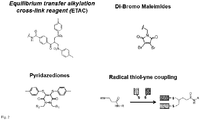
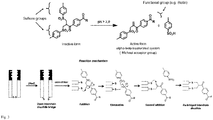
- Suitable cross linker unit comprise at least one reactive group selected from the group consisting of the family of equilibrium transfer alkylation reagents with at least one bis-sulfone leaving group, dibromo maleimides, dichloro maleimides and pyridazediones.
- the spacer unit is selected from the group consisting of PEG (polyethylene glycole), LC, peptides, nucleic acids, carbohydrates, poly hydroxyalkanoates, alkyl chains, alkanoic acids, carboxylic acids, farnesyls, polyethylene glycols, lipids, LCLC, , saturated and unsaturated aliphatic residues having 2 to 200 carbon atoms.
- PEG polyethylene glycole
- LC polyethylene glycole
- peptides nucleic acids
- carbohydrates poly hydroxyalkanoates
- alkyl chains alkanoic acids
- carboxylic acids farnesyls
- farnesyls polyethylene glycols
- lipids lipids
- LCLC saturated and unsaturated aliphatic residues having 2 to 200 carbon atoms.
- LC and/or LCLC with n 1 to 10 repeating units.
- adapter molecule refers to a group or molecule comprising affinity unit, spacer unit, cross linker unit and antigen recognizing domain. It is preferred to synthesize the adapter molecule independent from the cell with an antigen recognizing structure comprising the sequence: signalling domain, transmembrane domain, chimeric antigen receptor unit.
- the adapter molecule is synthesize step by step (or unit by unit) starting with the affinity unit bound to the chimeric antigen receptor unit.
- the method of the invention is directed to provide a cell with an antigen recognizing structure comprising the sequence: signalling domain, transmembrane domain, chimeric antigen receptor unit, affinity unit, spacer unit, cross linker unit and antigen recognizing domain characterized in that a cell provided with an sequence comprising signaling domain, transmembrane domain, chimeric antigen receptor unit is bound to an adapter molecule comprising affinity unit, spacer unit, cross linker unit and antigen recognizing domain wherein the chimeric antigen receptor bind specifically to the unit.
- Another object of the invention is a method to manufacture an adapter molecule comprising an affinity unit, a spacer unit, cross linker unit and one antigen recognizing domain characterized in that the antigen recognizing domain comprises a disulfide bond which is bound to the cross linker unit and wherein affinity unit is bound to the spacer unit and wherein the spacer unit is bound to the cross linker unit.
- the cells of the invention can be used to recognize, detect, kill or at least manipulate target cells like cancerous cells.
- the advantage of the cells and method of the invention is that due to the adapter technology, "standard CAR" cells can be easily converted into personalized CAR cells, equipped with a personalized antigen recognizing moiety to attack target cells.
- cells of the invention may be used in cellular therapy wherein the recipient may be the same subject from which the cells were obtained (autologous cell therapy) or from another subject of the same species (allogeneic cell therapy). In these therapies, the cells of the invention are administered to a recipient and are then able to kill or at least stop growth of cancerous cells expressing the antigen which is recognized by the cells according to the invention.
- a cell with an antigen recognizing structure comprising the sequence: signalling domain, transmembrane domain, chimeric antigen receptor unit, affinity unit, spacer unit, cross linker unit and antigen recognizing domain wherein the antigen recognizing domain comprises a disulfide bond which is bound to the cross linker unit and wherein affinity unit is bound to the spacer unit and wherein the spacer unit is bound to the cross linker unit for recognizing cells expressing an antigen specifically binding to the antigen recognizing domain.
- target cell or target moiety to be recognized with the aid of the invention can be on any biological specimen, like tissues slices, cell aggregates, suspension cells, or adherent cells.
- the cells may be living or dead.
- target moieties are antigens expressed intracellular or extracellular on biological specimen like whole animals, organs, tissues slices, cell aggregates, or single cells of invertebrates, (e.g., Caenorhabditis elegans, Drosophila melanogaster), vertebrates (e.g., Danio rerio, Xenopus laevis) and mammalians (e.g., Mus musculus, Homo sapiens). More preferred target moieties are found on cancer cells in a human subject.
- invertebrates e.g., Caenorhabditis elegans, Drosophila melanogaster
- vertebrates e.g., Danio rerio, Xenopus laevis
- mammalians
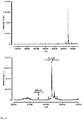
- CD19 Fab was used at a concentration of 1g/L in PEB buffer (PBS + EDTA buffer). DTT was added as a reducing agent for 1 hour. Then removed by buffer exchange and the ETAC crosslinker molecule added in a 1,8 fold excess and allow to react for 2-3 hours. After that the sample was buffer exchanged. To prepare the samples for LC-MS analysis, concentration was adjusted to 300 ⁇ g/ml by absorbance for both CD19Fab unmodified (control) and CD19Fab-monoBiotin.
- Fig. 4a shows intact mass determination by mass spectroscopy with: CD19 Fab with MW of 51506,394 Da.
- Fig 4b CD19 Fab-Biotin after conjugation of crosslinker to Fab via disulphide bond with MW of 52337,281 Da showing the addition of only one crosslinker per Fab molecule and thus obtaining a monofunctional (e.g. with Biotin) Fab.
- CD19 Fab was biotinylated by targeting its lysines with NHS-LCLC-Biotin. The result was compared to biotinylation by targeting the disulphide bond on the C-terminus of the CD19 Fab with the crosslinker which would introduce only one Biotin.
- CD19 Fab was dissolved in carbonate buffer at pH 8,5.
- the NHS-LCLC-Biotin reagent was dissolved in DMSO and added in 15 fold molar excess and allow to react for 2 hours, after which the samples was buffer exchanged to PBS.
- the labelling of CD19 Fab with ETAC crosslinker is described in example 1 (see above).
- Fig 5a mass spectroscopy intact mass determination data by microTOF QII of CD19 Fab conjugated with NHS-Biotin, resulting in a stochastic conjugation of multiple biotin units per Fab (from 2 to 11).
- Fig 5b mass spectroscopy intact mass determination data by microTOF QII of CD19 Fab conjugated with crosslinker Y targeting the C terminal disulphite bond in the fab and carrying Biotin as affinity unit resulting in a single conjugation product.
- CD20 positive Jeko-1 cells were seeded in a 96-well plate (50000 cells/well) and incubated for 10min at 4°C with biotin-crosslinker conjugated anti-CD20 FAb (Rtx Fab MS2) at different concentrations (0,01 -100 ⁇ g/ml and 0 ⁇ g/ml as negative control) in a total volume of 50 ⁇ l Buffer A (CliniMACS PBS/EDTA Buffer + 0.5% BSA). After that 50 ⁇ l of anti- Biotin APC (1:50 in Buffer A, Miltenyi Biotec, Art. No. 130-110-952) was added, and the sample was further incubated at 4°C for additional 10 min.
- Buffer A CliniMACS PBS/EDTA Buffer + 0.5% BSA
- Fig. 6 shows: Titration of Biotin-crosslinker Y conjugated to CD20 (Rtx Fab) on CD20+ Jeko-1 target cells. Different concentrations of FAb (0,01 - 100 ⁇ g/ml) was added to 50000? target cells in 50 ⁇ l and secondary staining was performed with anti-Biotin APC (Miltenyi Biotec). In a control sample direct anti-CD20 staining was performed using an anti-CD20-APC conjugate (Miltenyi Biotec).
- Example #6 showing functionality of killing target cancer cells by combination of X-Y-Z units
- PBMCs were isolated from buffy coat of healthy donors by separation on Ficoll.
- T cells were selected from PBMCs by MACS technology using the Pan T cell isolation kit (Miltenyi Biotec, 130-096-535).
- the T cells were seeded at 1x10⁶ cells/mL in TexMACS medium containing IL-7 (10 ng/mL) and IL-15 (10 ng/mL) and 1% (v/v) T Cell TransAct, human (Miltenyi Biotec, Art No: 130-111-160) and incubated at 37°C, 5% CO2. Transduction was performed on day 1 after activation.
- LV supernatant encoding for adapter CARs was added to T cells at a MOI of 5 and cells were carefully resuspended by pipetting up and down. TransAct was removed on day 3 and T cells were further expanded maintaining a cell density of 2x10⁶ cells/mL.
- LNGFR-expressing cells were separated by MACS using anti-LNGFR microbeads on an LS column (Miltenyi Biotec) according to the manufacturer's instructions. Selected, LNGFR+ cells were further expanded up to day 12 and then frozen in aliquots at 1x10⁷ cells/ml in TexMACS + 20% (v/v) FCS + 10% (v/v) DMSO and stored in liquid nitrogen. Aliquots of cells were thawed and cells were washed and recovered in TexMACS containing IL-7 (10 ng/mL) and IL-15 (10 ng/mL) for 48h before the experiment.
- Fig. 7 shows a proof-of-concept with the specific killing of target cancer cells (Jeko-1 cells) expressing an antigen recognized by the X-Y-Z construct comprised of: Anti-Biotin CAR T cells (X), biotin-CD19Fab (Y-Z).
- X Anti-Biotin CAR T cells
- Y-Z biotin-CD19Fab
- the Y-Z complex was added in increasing amounts (0-2,5 ⁇ g) to 10000 Jeko cells and 50000 CAR T cells (closed circles). Positive control (filled triangle) or negative control Mock (UTD) cells (open circles).
- the Direct CD19 CAR killing after 16h is in the range of 80%.
- maximal killing 77% is already observed at adapter doses as low as 0,0025 ng in a sample of 200 ⁇ l (0,0125 ng/ml) and decreased only by approx. 5 % over 6 decades of increasing different adapter concentrations.
- adapter associated background killing activity with Mock T cells is not detected up to 2,5 ng adapter added in the 200 ⁇ l sample (12,5 ng/ml).
- the Fab-based adapter in combination with the adapter CAR T cells enables a high degree of specific lysis (65%) over a broad concentration range covering over 4 decades of adapter concentrations.
- Two different types of adapter molecule were evaluated: i) Rituximab (anti-CD20 antibody) which was conjugated by NHS-esters and has on average 2-3 Biotin affinity units and the ii) Fab fragment which has 1 Biotin affinity unit/ molecule.
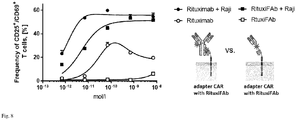
- Activation of T cells was analysed on a MACSQuant flow cytometer and the fraction of activated cells was defined by the fraction of CD69+ and CD25+ cells.
- both adapters efficiently triggered activation of adapter CAR T cells in the presence of target cells in a concentration range of 1x10⁻¹⁰ - 1x10⁻⁸ mol/l adapter (50% activation, depending on E:T ratio).
- the antibody was able to induce activation of the T cells (maximum activation was observed at a concentration of 1x10⁻¹⁰ mol/1), while monobiotinylated Fab was not able to induce activation of T cells in absence of target cells up to a concentration of 1x10⁻⁹ mol/l
- Fig. 8 shows monobiotinylated Fabs inducing activation of adapter CAR T cells only in presence of target cells, while adapter molecules based on full length antibodies, and with multiple affinity units, can induce activation of CAR T cells also in absence of target cells.
- Antibody (Rituximab) or Fab (RituxiFAb) is added at different concentrations (as indicated). The frequency of activated cells (defined by expression of CD69+ and CD25+) is shown.
- Activation of CAR T cells in general should be strictly dependent on presence of target cells and cognate adapter molecules, thereby increasing the safety of the approach, activation of T cells in absence of adapter molecules therefore is an undesired property of the adapter which is observed with the whole antibody molecule but not with the monobiotinylated Fab.
- Use of monobiotinylated Fab as adapter molecule might therefore improve overall safety of the adapter CAR technology.
- Example #8 Monobiotinylated Fab shows increased cytokine secretion from CAR T cells compare to the biotinylated antibody
- IL-2 proinflammatory cytokine
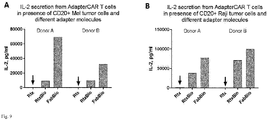
- Different target cells Mel526 (CD20+) and Raji (CD20+) were cocultured in a 96-well plate with adapter CAR T cells at an E:T ratio of 1:1 in 200 ⁇ l.
- Fig. 9 shows that the use of monobiotinylated Fabs can increase target cell specific cytokine release from adapter CAR T cells. Cytokine secretion after 18h of anti-biotin CAR T cells (25.000 cells) in co-culture with A) Mel526 tumor cells expressing CD20 and B) Raji tumor cells, at an effector to target cell ratio of 1:1. Unlabeled Rituximab (Rtx), Rituximab-Biotin (RtxBio) and monobiotinylated Fab (FabBio) were added to the co-culture at 2x10-11 mol/l. On both tumor cell lines, use of the monobiotinylated Fab shows increased cytokine secretion from CAR T cells compare to the biotinylated antibody (Detection limit: 100000 pg/ml).
- cytokine release was increased 3.2-7.4-fold on Mel526 cells and up to 2-fold on Raji cells compared to the biotinylated antibody. Overall this might be attributed to suboptimal orientations (multiple non-productive conformations) on the receptor, which are only possible for the whole antibody molecule having multiple affinity units.
- use of a monobiotinylated Fab may improve formation of productive conformations on the adapter CAR T cells in presence of target cells, allowing for an improved immunological synapse formation and cytokine release.
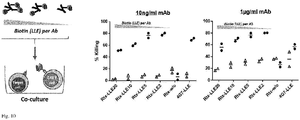
- Fig 10 shows that the low degree of labeling improves adapter (Ab) functionality.
- Rituximab-Biotin anti-CD20 Ab
- As control an anti-CD19 antibody with 6 biotins/molecule was used.
- Different concentrations of mAb 1 ⁇ g/ml and 10ng/ml are shown. Maximal tumor cell lysis after 18h is observed with antibody having a low degree of labeling (average of 2 biotin moieties/Rituximab molecule).
- NSG mice non-obese diabetic mice
- ⁇ c-/- mice mice of female sex were be used, age 7-10 weeks.
- SCID mice severe combined immunodeficiency mice derived on a non-obese diabetic (NOD) background with additional knockout of the common ⁇ -chain ( ⁇ c-/-).
- Mice were be obtained from external provider (Jackson labs) and kept in individually ventilated cages (IVC) at 5 animals per cage and group on a standard rodent diet (ssniff, Soest, Germany). Room temperature was constantly kept at 22°C with an air humidity between 50-60%. Light-dark rhythm interval was 12 hours. General health status of all animals will be monitored daily.
- Raji tumor cells genetically modified to express firefly luciferase (ffLuc), were transferred by i.v. injection (3x10⁵ cells in 100 ⁇ l) and developed systemic leukaemia in the engrafted mice. Tumor progression was regularly monitored (total tumor burden/distribution) by bioluminescence imaging (BLI) in the IVIS (in vivo imaging system). After tumor engraftment for 5 days, adapter CAR T cells and CD20 CAR T cells were be dosed by i.v. injection (1x10⁷ cells per mouse, volume 100 ⁇ l) on day 0. Adapter molecules were administered daily by i.p. injection starting on the same day of tumor injection. Administration of adapter molecules was continued for 10 days and tumor progression was continuously monitored.
- ffLuc firefly luciferase
- Fig. 11 shows the functionality of anti-affinity unit CAR T cells in presence of crosslinker-modified target cell binding domains (CD20Fab-Biotin) in vivo.
- NSG mice were engrafted with CD20+ tumor cells (Raji, expressing firefly luciferase) on day-5, CAR T cells were infused on day 0, adapter molecules (50 ⁇ g/mouse) were administered by i.p. injection on a daily basis.
Landscapes
- Health & Medical Sciences (AREA)
- Life Sciences & Earth Sciences (AREA)
- General Health & Medical Sciences (AREA)
- Chemical & Material Sciences (AREA)
- Immunology (AREA)
- Veterinary Medicine (AREA)
- Public Health (AREA)
- Animal Behavior & Ethology (AREA)
- Epidemiology (AREA)
- Organic Chemistry (AREA)
- Proteomics, Peptides & Aminoacids (AREA)
- Molecular Biology (AREA)
- Medicinal Chemistry (AREA)
- Genetics & Genomics (AREA)
- Biophysics (AREA)
- Biochemistry (AREA)
- Cell Biology (AREA)
- Toxicology (AREA)
- Zoology (AREA)
- Gastroenterology & Hepatology (AREA)
- Peptides Or Proteins (AREA)
Priority Applications (1)
| Application Number | Priority Date | Filing Date | Title |
|---|---|---|---|
| EP18193369.8A EP3620464A1 (fr) | 2018-09-10 | 2018-09-10 | Cellule de voiture à pont disulfure réticulé sur une fraction de reconnaissance d'antigène |
Applications Claiming Priority (1)
| Application Number | Priority Date | Filing Date | Title |
|---|---|---|---|
| EP18193369.8A EP3620464A1 (fr) | 2018-09-10 | 2018-09-10 | Cellule de voiture à pont disulfure réticulé sur une fraction de reconnaissance d'antigène |
Publications (1)
| Publication Number | Publication Date |
|---|---|
| EP3620464A1 true EP3620464A1 (fr) | 2020-03-11 |
Family
ID=63683632
Family Applications (1)
| Application Number | Title | Priority Date | Filing Date |
|---|---|---|---|
| EP18193369.8A Withdrawn EP3620464A1 (fr) | 2018-09-10 | 2018-09-10 | Cellule de voiture à pont disulfure réticulé sur une fraction de reconnaissance d'antigène |
Country Status (1)
| Country | Link |
|---|---|
| EP (1) | EP3620464A1 (fr) |
Cited By (5)
| Publication number | Priority date | Publication date | Assignee | Title |
|---|---|---|---|---|
| EP3878464A1 (fr) * | 2020-03-09 | 2021-09-15 | Miltenyi Biotec B.V. & Co. KG | Utilisation d'une cellule car à pont disulfure réticulé sur une fraction de reconnaissance d'antigène pour cibler les cellules cancéreuses |
| EP3916388A1 (fr) | 2020-05-27 | 2021-12-01 | Miltenyi Biotec B.V. & Co. KG | Réactifs pour la détection de cellules à récepteurs d'antigènes chimériques |
| WO2022043023A1 (fr) * | 2020-08-27 | 2022-03-03 | Miltenyi Biotec B.V. & Co. KG | Réactifs libérables pour la séparation de cellules |
| EP4234559A1 (fr) | 2022-02-24 | 2023-08-30 | Miltenyi Biotec B.V. & Co. KG | Réactif de biotinylation spécifique de bis-sulfhydryle résistant au sérum |
| EP4556907A1 (fr) * | 2023-11-20 | 2025-05-21 | Miltenyi Biotec B.V. & Co. KG | Conjugaison spécifique à un site de fragments d'anticorps à domaine unique (vhh) à l'aide d'un réactif d'alkylation par transfert d'équilibre (etac) |
Citations (11)
| Publication number | Priority date | Publication date | Assignee | Title |
|---|---|---|---|---|
| WO2012082841A2 (fr) | 2010-12-14 | 2012-06-21 | University Of Maryland, Baltimore | Lymphocytes t exprimant un récepteur d'antigène chimérique anti-étiquette universel et méthodes de traitement du cancer |
| WO2013044225A1 (fr) | 2011-09-22 | 2013-03-28 | The Trustees Of The University Of Pennsylvania | Récepteur immunitaire universel exprimé par des lymphocytes t pour le ciblage d'antigènes divers et multiples |
| WO2014100615A1 (fr) | 2012-12-20 | 2014-06-26 | Purdue Research Foundation | Cellules t exprimant un récepteur d'antigène chimérique et produits thérapeutiques anticancéreux |
| WO2015058018A1 (fr) | 2013-10-17 | 2015-04-23 | National University Of Singapore | Récepteur chimérique qui déclenche une cytotoxicité dépendante de la présence d'anticorps contre de multiples tumeurs |
| WO2015057834A1 (fr) | 2013-10-15 | 2015-04-23 | The California Institute For Biomedical Research | Commutateurs de cellules t à récepteur d'antigène chimère peptidique et leurs utilisations |
| WO2015057852A1 (fr) | 2013-10-15 | 2015-04-23 | The California Institute For Biomedical Research | Commutateurs de lymphocytes t des récepteurs d'antigène chimériques et leur utilisation |
| US20160000933A1 (en) | 2014-07-01 | 2016-01-07 | Andrei POLUKHTIN | Conjugated biological molecules and their preparation |
| WO2016030414A1 (fr) | 2014-08-29 | 2016-03-03 | Gemoab Monoclonals Gmbh | Récepteur d'antigène chimérique universel exprimant des cellules immuno-compétentes pour le ciblage de divers antigènes multiples et son procédé de fabrication et son utilisation pour le traitement du cancer, des infections et des troubles auto-immuns |
| WO2016154621A1 (fr) * | 2015-03-26 | 2016-09-29 | The California Institute For Biomedical Research | Récepteurs chimériques non-scfv commutables, commutateurs, et leurs utilisations |
| WO2016168769A1 (fr) * | 2015-04-15 | 2016-10-20 | The California Institute For Biomedical Research | Commutateurs de lymphocytes t récepteurs chimériques pour her2 |
| WO2017177149A2 (fr) * | 2016-04-08 | 2017-10-12 | Purdue Research Foundation | Méthodes et compositions pour thérapie par lymphocytes t car |
-
2018
- 2018-09-10 EP EP18193369.8A patent/EP3620464A1/fr not_active Withdrawn
Patent Citations (11)
| Publication number | Priority date | Publication date | Assignee | Title |
|---|---|---|---|---|
| WO2012082841A2 (fr) | 2010-12-14 | 2012-06-21 | University Of Maryland, Baltimore | Lymphocytes t exprimant un récepteur d'antigène chimérique anti-étiquette universel et méthodes de traitement du cancer |
| WO2013044225A1 (fr) | 2011-09-22 | 2013-03-28 | The Trustees Of The University Of Pennsylvania | Récepteur immunitaire universel exprimé par des lymphocytes t pour le ciblage d'antigènes divers et multiples |
| WO2014100615A1 (fr) | 2012-12-20 | 2014-06-26 | Purdue Research Foundation | Cellules t exprimant un récepteur d'antigène chimérique et produits thérapeutiques anticancéreux |
| WO2015057834A1 (fr) | 2013-10-15 | 2015-04-23 | The California Institute For Biomedical Research | Commutateurs de cellules t à récepteur d'antigène chimère peptidique et leurs utilisations |
| WO2015057852A1 (fr) | 2013-10-15 | 2015-04-23 | The California Institute For Biomedical Research | Commutateurs de lymphocytes t des récepteurs d'antigène chimériques et leur utilisation |
| WO2015058018A1 (fr) | 2013-10-17 | 2015-04-23 | National University Of Singapore | Récepteur chimérique qui déclenche une cytotoxicité dépendante de la présence d'anticorps contre de multiples tumeurs |
| US20160000933A1 (en) | 2014-07-01 | 2016-01-07 | Andrei POLUKHTIN | Conjugated biological molecules and their preparation |
| WO2016030414A1 (fr) | 2014-08-29 | 2016-03-03 | Gemoab Monoclonals Gmbh | Récepteur d'antigène chimérique universel exprimant des cellules immuno-compétentes pour le ciblage de divers antigènes multiples et son procédé de fabrication et son utilisation pour le traitement du cancer, des infections et des troubles auto-immuns |
| WO2016154621A1 (fr) * | 2015-03-26 | 2016-09-29 | The California Institute For Biomedical Research | Récepteurs chimériques non-scfv commutables, commutateurs, et leurs utilisations |
| WO2016168769A1 (fr) * | 2015-04-15 | 2016-10-20 | The California Institute For Biomedical Research | Commutateurs de lymphocytes t récepteurs chimériques pour her2 |
| WO2017177149A2 (fr) * | 2016-04-08 | 2017-10-12 | Purdue Research Foundation | Méthodes et compositions pour thérapie par lymphocytes t car |
Non-Patent Citations (7)
| Title |
|---|
| "Bioconjugate Techniques", 1 January 2013, ACADEMIC PRESS, ISBN: 978-0-12-382239-0, article GREG T. HERMANSON: "Antibody Modification and Conjugation", pages: 867 - 920, XP055589306, DOI: 10.1016/B978-0-12-382239-0.00020-0 * |
| HANIEH KHALILI ET AL: "Comparative Binding of Disulfide-Bridged PEG-Fabs", BIOCONJUGATE CHEMISTRY, vol. 23, no. 11, 21 September 2012 (2012-09-21), pages 2262 - 2277, XP055096650, ISSN: 1043-1802, DOI: 10.1021/bc300372r * |
| K. TAMADA ET AL: "Redirecting Gene-Modified T Cells toward Various Cancer Types Using Tagged Antibodies", CLINICAL CANCER RESEARCH, vol. 18, no. 23, 2 October 2012 (2012-10-02), pages 6436 - 6445, XP055154500, ISSN: 1078-0432, DOI: 10.1158/1078-0432.CCR-12-1449 * |
| LIBERATORE F. ET AL., BIOCONJUGATE CHEM, vol. 1, 1990 |
| ROSARIO ET AL., BIOCONJUGATE CHEM, vol. 1, 1990, pages 51 - 59 |
| SUMITA MITRA ET AL.: "Reagents for Cross-Linking of Proteins", JACS, vol. 101211, 1979 |
| WILBUR ET AL., BIOCONJUGATE CHEM, vol. 5, 1994, pages 220 - 235 |
Cited By (5)
| Publication number | Priority date | Publication date | Assignee | Title |
|---|---|---|---|---|
| EP3878464A1 (fr) * | 2020-03-09 | 2021-09-15 | Miltenyi Biotec B.V. & Co. KG | Utilisation d'une cellule car à pont disulfure réticulé sur une fraction de reconnaissance d'antigène pour cibler les cellules cancéreuses |
| EP3916388A1 (fr) | 2020-05-27 | 2021-12-01 | Miltenyi Biotec B.V. & Co. KG | Réactifs pour la détection de cellules à récepteurs d'antigènes chimériques |
| WO2022043023A1 (fr) * | 2020-08-27 | 2022-03-03 | Miltenyi Biotec B.V. & Co. KG | Réactifs libérables pour la séparation de cellules |
| EP4234559A1 (fr) | 2022-02-24 | 2023-08-30 | Miltenyi Biotec B.V. & Co. KG | Réactif de biotinylation spécifique de bis-sulfhydryle résistant au sérum |
| EP4556907A1 (fr) * | 2023-11-20 | 2025-05-21 | Miltenyi Biotec B.V. & Co. KG | Conjugaison spécifique à un site de fragments d'anticorps à domaine unique (vhh) à l'aide d'un réactif d'alkylation par transfert d'équilibre (etac) |
Similar Documents
| Publication | Publication Date | Title |
|---|---|---|
| JP7054948B2 (ja) | プロテアーゼ切断耐性、志賀毒素aサブユニットエフェクターポリペプチド及びそれを含む細胞標的化分子 | |
| US20240122976A1 (en) | Immune cells expressing an antigen binding receptor and a chimeric costimulatory receptor | |
| US20240279330A1 (en) | Erythrocyte-binding therapeutics | |
| KR102499753B1 (ko) | T 세포 수용체 조작 | |
| KR20190117667A (ko) | 기능화된 적혈구 세포 | |
| EP3532490B1 (fr) | Cellules exprimant le récepteur d'antigène chimérique d'adaptateur pour le ciblage d'antigènes multiples | |
| O’Reilly et al. | Bifunctional CD22 ligands use multimeric immunoglobulins as protein scaffolds in assembly of immune complexes on B cells | |
| TW201920249A (zh) | 具有結合位點之t細胞調節多聚體多肽及其使用方法 | |
| CA2328144A1 (fr) | Complexes polyvalents de recepteurs de lymphocytes t | |
| US20170112878A1 (en) | Programmable universal cell receptors and method of using the same | |
| WO2001090198A1 (fr) | Conjugues a composants multiples se liant a des molecules cibles et stimulant la lyse de cellules | |
| Amoury et al. | SNAP-tag based agents for preclinical in vitro imaging in malignant diseases | |
| US20220195006A1 (en) | Peptide markers to track genetically engineered cells | |
| Kalousková et al. | Tumor marker b7-h6 bound to the coiled coil peptide-polymer conjugate enables targeted therapy by activating human natural killer cells | |
| EP4078178B1 (fr) | Détection de cellules réversibles via mhc avec des conjugués possédant une fraction de détection clivable par voie enzymatique | |
| US12234273B2 (en) | Programmable immunocyte receptor complex system | |
| US20210275586A1 (en) | Use of a car cell having crosslinked disulfide bridge on antigen recognizing moiety for targetting cancer cells | |
| US20040068100A1 (en) | Multicomponent conjugates which bind to target molecules and stimulate cell lysis | |
| WO2024081824A2 (fr) | Intermédiaires synthétiques pour thérapies de cellules immunitaires de récepteur antigénique chimérique universel | |
| Descalzi‐Montoya et al. | Synthetic Antibody Mimics Based on Cancer‐Targeting Immunostimulatory Peptides | |
| CN120302987A (zh) | 嵌合抗原受体系统、制备方法及其用途 | |
| RU2779315C2 (ru) | Функционализированные эритроидные клетки | |
| WO2025255266A1 (fr) | Polypeptides modifiés pour l'activation de cellules immunitaires | |
| US20260049154A1 (en) | Immuno-nanoparticles, and related cells, compositions, methods and systems | |
| RU2778411C2 (ru) | Способы культивирования клеток и наборы и устройство для них |
Legal Events
| Date | Code | Title | Description |
|---|---|---|---|
| PUAI | Public reference made under article 153(3) epc to a published international application that has entered the european phase |
Free format text: ORIGINAL CODE: 0009012 |
|
| STAA | Information on the status of an ep patent application or granted ep patent |
Free format text: STATUS: THE APPLICATION HAS BEEN WITHDRAWN |
|
| AK | Designated contracting states |
Kind code of ref document: A1 Designated state(s): AL AT BE BG CH CY CZ DE DK EE ES FI FR GB GR HR HU IE IS IT LI LT LU LV MC MK MT NL NO PL PT RO RS SE SI SK SM TR |
|
| AX | Request for extension of the european patent |
Extension state: BA ME |
|
| 18W | Application withdrawn |
Effective date: 20200211 |