EP3620977A1 - Verfahren und vorrichtung zur erzeugung von bilddatensätzen zur verwendung beim lernen von cnn, die in der lage sind, ein hindernis im autonomen fahrzustand zu erkennen - Google Patents
Verfahren und vorrichtung zur erzeugung von bilddatensätzen zur verwendung beim lernen von cnn, die in der lage sind, ein hindernis im autonomen fahrzustand zu erkennen Download PDFInfo
- Publication number
- EP3620977A1 EP3620977A1 EP19171149.8A EP19171149A EP3620977A1 EP 3620977 A1 EP3620977 A1 EP 3620977A1 EP 19171149 A EP19171149 A EP 19171149A EP 3620977 A1 EP3620977 A1 EP 3620977A1
- Authority
- EP
- European Patent Office
- Prior art keywords
- synthesized
- label
- image
- specific object
- bounding box
- Prior art date
- Legal status (The legal status is an assumption and is not a legal conclusion. Google has not performed a legal analysis and makes no representation as to the accuracy of the status listed.)
- Ceased
Links
Images


Classifications
-
- G—PHYSICS
- G06—COMPUTING OR CALCULATING; COUNTING
- G06N—COMPUTING ARRANGEMENTS BASED ON SPECIFIC COMPUTATIONAL MODELS
- G06N3/00—Computing arrangements based on biological models
- G06N3/02—Neural networks
- G06N3/04—Architecture, e.g. interconnection topology
- G06N3/0464—Convolutional networks [CNN, ConvNet]
-
- G—PHYSICS
- G06—COMPUTING OR CALCULATING; COUNTING
- G06V—IMAGE OR VIDEO RECOGNITION OR UNDERSTANDING
- G06V10/00—Arrangements for image or video recognition or understanding
- G06V10/40—Extraction of image or video features
- G06V10/44—Local feature extraction by analysis of parts of the pattern, e.g. by detecting edges, contours, loops, corners, strokes or intersections; Connectivity analysis, e.g. of connected components
- G06V10/443—Local feature extraction by analysis of parts of the pattern, e.g. by detecting edges, contours, loops, corners, strokes or intersections; Connectivity analysis, e.g. of connected components by matching or filtering
- G06V10/449—Biologically inspired filters, e.g. difference of Gaussians [DoG] or Gabor filters
- G06V10/451—Biologically inspired filters, e.g. difference of Gaussians [DoG] or Gabor filters with interaction between the filter responses, e.g. cortical complex cells
- G06V10/454—Integrating the filters into a hierarchical structure, e.g. convolutional neural networks [CNN]
-
- B—PERFORMING OPERATIONS; TRANSPORTING
- B60—VEHICLES IN GENERAL
- B60W—CONJOINT CONTROL OF VEHICLE SUB-UNITS OF DIFFERENT TYPE OR DIFFERENT FUNCTION; CONTROL SYSTEMS SPECIALLY ADAPTED FOR HYBRID VEHICLES; ROAD VEHICLE DRIVE CONTROL SYSTEMS FOR PURPOSES NOT RELATED TO THE CONTROL OF A PARTICULAR SUB-UNIT
- B60W60/00—Drive control systems specially adapted for autonomous road vehicles
- B60W60/001—Planning or execution of driving tasks
-
- G—PHYSICS
- G06—COMPUTING OR CALCULATING; COUNTING
- G06F—ELECTRIC DIGITAL DATA PROCESSING
- G06F18/00—Pattern recognition
- G06F18/20—Analysing
- G06F18/21—Design or setup of recognition systems or techniques; Extraction of features in feature space; Blind source separation
- G06F18/214—Generating training patterns; Bootstrap methods, e.g. bagging or boosting
-
- G—PHYSICS
- G06—COMPUTING OR CALCULATING; COUNTING
- G06F—ELECTRIC DIGITAL DATA PROCESSING
- G06F18/00—Pattern recognition
- G06F18/20—Analysing
- G06F18/21—Design or setup of recognition systems or techniques; Extraction of features in feature space; Blind source separation
- G06F18/217—Validation; Performance evaluation; Active pattern learning techniques
-
- G—PHYSICS
- G06—COMPUTING OR CALCULATING; COUNTING
- G06N—COMPUTING ARRANGEMENTS BASED ON SPECIFIC COMPUTATIONAL MODELS
- G06N3/00—Computing arrangements based on biological models
- G06N3/02—Neural networks
- G06N3/04—Architecture, e.g. interconnection topology
- G06N3/045—Combinations of networks
-
- G—PHYSICS
- G06—COMPUTING OR CALCULATING; COUNTING
- G06N—COMPUTING ARRANGEMENTS BASED ON SPECIFIC COMPUTATIONAL MODELS
- G06N3/00—Computing arrangements based on biological models
- G06N3/02—Neural networks
- G06N3/08—Learning methods
- G06N3/09—Supervised learning
-
- G—PHYSICS
- G06—COMPUTING OR CALCULATING; COUNTING
- G06T—IMAGE DATA PROCESSING OR GENERATION, IN GENERAL
- G06T5/00—Image enhancement or restoration
- G06T5/50—Image enhancement or restoration using two or more images, e.g. averaging or subtraction
-
- G—PHYSICS
- G06—COMPUTING OR CALCULATING; COUNTING
- G06V—IMAGE OR VIDEO RECOGNITION OR UNDERSTANDING
- G06V10/00—Arrangements for image or video recognition or understanding
- G06V10/70—Arrangements for image or video recognition or understanding using pattern recognition or machine learning
- G06V10/764—Arrangements for image or video recognition or understanding using pattern recognition or machine learning using classification, e.g. of video objects
-
- G—PHYSICS
- G06—COMPUTING OR CALCULATING; COUNTING
- G06V—IMAGE OR VIDEO RECOGNITION OR UNDERSTANDING
- G06V10/00—Arrangements for image or video recognition or understanding
- G06V10/70—Arrangements for image or video recognition or understanding using pattern recognition or machine learning
- G06V10/77—Processing image or video features in feature spaces; using data integration or data reduction, e.g. principal component analysis [PCA] or independent component analysis [ICA] or self-organising maps [SOM]; Blind source separation
- G06V10/772—Determining representative reference patterns, e.g. averaging or distorting patterns; Generating dictionaries
-
- G—PHYSICS
- G06—COMPUTING OR CALCULATING; COUNTING
- G06V—IMAGE OR VIDEO RECOGNITION OR UNDERSTANDING
- G06V10/00—Arrangements for image or video recognition or understanding
- G06V10/70—Arrangements for image or video recognition or understanding using pattern recognition or machine learning
- G06V10/77—Processing image or video features in feature spaces; using data integration or data reduction, e.g. principal component analysis [PCA] or independent component analysis [ICA] or self-organising maps [SOM]; Blind source separation
- G06V10/774—Generating sets of training patterns; Bootstrap methods, e.g. bagging or boosting
-
- G—PHYSICS
- G06—COMPUTING OR CALCULATING; COUNTING
- G06V—IMAGE OR VIDEO RECOGNITION OR UNDERSTANDING
- G06V10/00—Arrangements for image or video recognition or understanding
- G06V10/70—Arrangements for image or video recognition or understanding using pattern recognition or machine learning
- G06V10/82—Arrangements for image or video recognition or understanding using pattern recognition or machine learning using neural networks
-
- G—PHYSICS
- G06—COMPUTING OR CALCULATING; COUNTING
- G06V—IMAGE OR VIDEO RECOGNITION OR UNDERSTANDING
- G06V20/00—Scenes; Scene-specific elements
- G06V20/50—Context or environment of the image
- G06V20/56—Context or environment of the image exterior to a vehicle by using sensors mounted on the vehicle
- G06V20/58—Recognition of moving objects or obstacles, e.g. vehicles or pedestrians; Recognition of traffic objects, e.g. traffic signs, traffic lights or roads
-
- B—PERFORMING OPERATIONS; TRANSPORTING
- B60—VEHICLES IN GENERAL
- B60W—CONJOINT CONTROL OF VEHICLE SUB-UNITS OF DIFFERENT TYPE OR DIFFERENT FUNCTION; CONTROL SYSTEMS SPECIALLY ADAPTED FOR HYBRID VEHICLES; ROAD VEHICLE DRIVE CONTROL SYSTEMS FOR PURPOSES NOT RELATED TO THE CONTROL OF A PARTICULAR SUB-UNIT
- B60W2552/00—Input parameters relating to infrastructure
- B60W2552/50—Barriers
-
- G—PHYSICS
- G06—COMPUTING OR CALCULATING; COUNTING
- G06T—IMAGE DATA PROCESSING OR GENERATION, IN GENERAL
- G06T2207/00—Indexing scheme for image analysis or image enhancement
- G06T2207/20—Special algorithmic details
- G06T2207/20084—Artificial neural networks [ANN]
-
- G—PHYSICS
- G06—COMPUTING OR CALCULATING; COUNTING
- G06T—IMAGE DATA PROCESSING OR GENERATION, IN GENERAL
- G06T2207/00—Indexing scheme for image analysis or image enhancement
- G06T2207/30—Subject of image; Context of image processing
- G06T2207/30248—Vehicle exterior or interior
- G06T2207/30252—Vehicle exterior; Vicinity of vehicle
- G06T2207/30261—Obstacle
-
- G—PHYSICS
- G06—COMPUTING OR CALCULATING; COUNTING
- G06V—IMAGE OR VIDEO RECOGNITION OR UNDERSTANDING
- G06V10/00—Arrangements for image or video recognition or understanding
- G06V10/20—Image preprocessing
- G06V10/255—Detecting or recognising potential candidate objects based on visual cues, e.g. shapes
Definitions
- the present invention relates to a method and a device for generating image data set to be used for learning CNN capable of detecting obstruction in autonomous driving circumstances, and more particularly, to a method of generating at least one image data set to be used for learning CNN capable of detecting at least one obstruction in one or more autonomous driving circumstances, including steps of: (a) a computing device acquiring (i) an original image representing a road driving circumstance and (ii) an initial synthesized label generated by using an original label corresponding to the original image and a bounding box corresponding to an arbitrary specific object wherein the arbitrary specific object does not relate to the original image (b) the computing device supporting a CNN module to generate a first synthesized image and a first synthesized label by using the original image and the initial synthesized label, wherein the first synthesized label is created by adding a specific label corresponding to the specific object to the original label at a location in the original label corresponding to a location of the bounding box, corresponding to the specific object, in the initial synthesized label, and where
- Deep CNN Deep Convolution Neural Networks, or Deep CNN is the most core of the remarkable development in the field of Deep Learning.
- the CNN has been employed to solve character recognition problems in 1990s, it is not until recently that the CNN has become widespread in Machine Learning. For example, in 2012, the CNN significantly outperformed its competitors in an annual software contest, the ImageNet Large Scale Visual Recognition Challenge, and won the contest. After that, the CNN has become a very useful tool in the field of machine learning.
- image segmentation is a method of generating a label image using an input image, e.g., a training image, a test image.
- an input image e.g., a training image, a test image.
- Deep Learning has been so much widespread that the Deep Learning is also being applied to the image segmentation.
- the learning device have to learn a variety of objects which may be faced in the autonomous driving circumstances. And for this, training images should include a variety of objects which may be faced in the autonomous driving circumstances.
- training images including unique objects which appears hardly in the road may not be collected easily from normal driving video data.
- images of human, bicycles, or cars may be acquired easily from the normal driving video data so that the learning device may learn the parameters of CNN by using training images with these common objects, but images of a tiger, or alligator may not be acquired easily from the normal driving video data so that the learning device cannot learn the parameters of CNN by using images with these unique objects.
- a method of generating at least one image data set to be used for learning CNN capable of detecting at least one obstruction in one or more autonomous driving circumstances, including steps of: (a) a computing device acquiring (i) an original image representing a road driving circumstance and (ii) an initial synthesized label generated by using an original label corresponding to the original image and a bounding box corresponding to an arbitrary specific object wherein the arbitrary specific object does not relate to the original image (b) the computing device supporting a CNN module to generate a first synthesized image and a first synthesized label by using the original image and the initial synthesized label, wherein the first synthesized label is created by adding a specific label corresponding to the specific object to the original label at a location in the original label corresponding to a location of the bounding box, corresponding to the specific object, in the initial synthesized label, and wherein the first synthesized image is created by adding a specific image of the specific object to the original image at a location
- the computing device further acquires (iii) a value of a random seed
- the computing device supports the CNN module to generate a plurality of adjusted first synthesized images by using the original image, the initial synthesized label, and the value of the random seed, wherein the adjusted first synthesized images are derived from the first synthesized image such that at least part of a size, a location, and a color of the specific object in each of the adjusted first synthesized images are adjusted from those of the specific object in the first synthesized image while changing the value of the random seed.
- the computing device further acquires (iii) a value of a random seed
- the method further comprises a step of :(c) the computing device supporting the CNN module to receive the first synthesized label, the first synthesized image, and the value of the random seed as inputs of the CNN module, and then supporting the CNN module to iteratively (i) generate one or more intermediate synthesized labels and one or more intermediate synthesized images and (ii) receive the generated intermediate synthesized labels and the generated intermediate synthesized images as the inputs of the CNN module, wherein, at the step of (c), while iteratively generating the intermediate synthesized labels and the intermediate synthesized images, the computing device iteratively combines the specific label and the specific image corresponding to the specific object with the generated intermediate synthesized labels and the generated intermediate synthesized images, respectively, such that the specific label and the specific image are respectively located at a same or similar location, corresponding to the location of the bounding box in the initial synthesized
- a shape of the bounding box is determined by referring to the probability distribution
- the shape of the bounding box is determined by determining the width and the height by referring to the first and the second probability distributions respectively.
- the location of the bounding box corresponding to the specific object is determined by referring to the probability distribution.
- the method further includes a step of:(d) the computing device adding the first synthesized image and the first synthesized label into a database including training data sets to be used for one of object detection and image segmentation.
- a computing device of generating at least one image data set to be used for learning CNN capable of detecting at least one obstruction in one or more autonomous driving circumstances, including: a communication part for acquiring (i) an original image representing a road driving circumstance and (ii) an initial synthesized label generated by using an original label corresponding to the original image and a bounding box corresponding to an arbitrary specific object wherein the arbitrary specific object does not relate to the original image; and a processor for performing a process of (I) supporting a CNN module to generate a first synthesized image and a first synthesized label by using the original image and the initial synthesized label, wherein the first synthesized label is created by adding a specific label corresponding to the specific object to the original label at a location in the original label corresponding to a location of the bounding box, corresponding to the specific object, in the initial synthesized label, and wherein the first synthesized image is created by adding the specific image of the specific object to the original image
- the communication part further acquires (iii) a value of a random seed
- the processor performs a process of supporting the CNN module to generate a plurality of adjusted first synthesized images by using the original image, the initial synthesized label, and the value of the random seed, wherein the adjusted first synthesized images are derived from the first synthesized image such that at least part of a size, a location, and a color of the specific object in each of the adjusted first synthesized images are adjusted from those of the specific object in the first synthesized image while changing the value of the random seed.
- the communication part further acquires (iii) a value of a random seed
- the processor further performs a process of: (II) supporting the CNN module to receive the first synthesized label, the first synthesized image, and the value of the random seed as inputs of the CNN module, and then supporting the CNN module to iteratively (i) generate one or more intermediate synthesized labels and one or more intermediate synthesized images repeatedly and (ii) receive the generated intermediate synthesized labels and the generated intermediate synthesized images as the inputs of the CNN module, wherein, at the process of (II), while iteratively generating the intermediate synthesized labels and the intermediate synthesized images, the processor iteratively combines the specific label and the specific image corresponding to the specific object with the generated intermediate synthesized labels and the generated intermediate synthesized images, respectively, such that the specific label and the specific image are respectively located at a same or similar location corresponding to the location of the bounding box in the initial synthesized label, in the generated intermediate synthesized
- a shape of the bounding box is determined by referring to the probability distribution.
- the shape of the bounding box is determined by determining the width and the height by referring to the first probability distribution and the second probability distributions respectively.
- the location of the bounding box corresponding to the specific object is determined by referring to the probability distribution.
- the processor further performs a process of: (III) adding the first synthesized image and the first synthesized label into a database including training data sets to be used for one of object detection and image segmentation.
- Fig. 1 shows a configuration of a computing device in accordance with the present invention.
- the computing device 100 may include a CNN module 200.
- An input process and an output process of the CNN module 200 may be performed by a communication part 110, and various processes of applying operations may be performed by a processor 120.
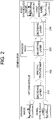
- Fig. 2 shows how the CNN module 200 applies various operations to its input.
- the CNN module 200 may include an encoding layer 210, an adjusting layer 220, and a decoding layer 230.
- the encoding layer 210 may perform a process of generating one or more feature maps by applying one or more convolution operations to an original image and an initial synthesized label.
- the adjusting layer 220 may perform a process of generating an adjusted feature map by using a specific feature map outputted lastly from the encoding layer and a value of a random seed.
- the decoding layer 230 may perform a process of generating a first synthesized image and a first synthesized label by applying one or more deconvolution operations to the adjusted feature map.
- the encoding layer 210 acquires the original image and the initial synthesized label to generate the feature maps. After concatenating the original image and the initial synthesized label channel-wise, which are 3-channel and 1-channel data respectively, the original image and the initial synthesized label are converted to 4-channel data, and the encoding layer 210 may apply the convolution operations to the 4-channel data.
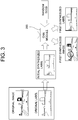
- Fig. 3 shows a process of the CNN module generating the training data sets.
- the computing device 100 may allow the communication part 110 to acquire (i) the original image representing a road driving circumstance and (ii) the initial synthesized label.
- the initial synthesized label is generated by using an original label corresponding to the original image and a bounding box corresponding to an arbitrary specific object.
- the specific arbitrary object does not relate to the original image.
- the computing device 100 When the computing device 100 acquires the original image and the initial synthesized label, the computing device 100 supports the CNN module 200 to generate the first synthesized image and the first synthesized label by using the original image and the initial synthesized label.
- the first synthesized image is created by adding a specific image of the specific object, corresponding to the bounding box, to the original image at a location in the original image corresponding to the location of the bounding box, of the specific object, in the initial synthesized label.
- the first synthesized label is created by adding a specific label, corresponding to the specific object, to the original label at a location in the original label corresponding to a location of the bounding box, of the specific object, in the initial synthesized label.
- the process of generating the first synthesized image and the first synthesized label may be performed by the processor 120.
- the initial synthesized label may be generated by combining the original label and the bounding box corresponding to the big-sized bus.
- the CNN module may generate (i) the first synthesized image by combining a specific image of the big-sized bus with the original image such that the specific image of the big-sized bus is located on the road in the original image, and (ii) the first synthesized label by replacing the bounding box in the initial synthesized label with the specific label of the big-sized bus.
- the computing device 100 may acquire the initial synthesized label (i) after the computing device 100 generates the initial synthesized label by itself or (ii) after another module(not described) coupled with the computing device 100 generates the initial synthesized label and then delivers the initial synthesized label to the computing device 100.
- the original label and the bounding box may be inputted to the computing device 100.
- image synthesizing techniques well known to those skilled in the art may be used to generate the first synthesized image and the first synthesized label.
- the specific label corresponding to the bounding box may be combined at a location in the original label corresponding to a location of the bounding box in the initial synthesized label to thereby generate the first synthesized label
- the specific image corresponding to the specific object included in the bounding box may be combined at a location in the original image corresponding to a location of the bounding box in the initial synthesized label to thereby generate the first synthesized image.
- Fig. 2 , Fig. 3 , and Fig. 4 there are circles in the first synthesized image, the intermediate synthesized label and the intermediate synthesized image.
- the circles are just shown to emphasize that the specific label corresponding to the big-sized bus or the specific image corresponding to the big-sized bus are added on the first synthesized image, the intermediate synthesized label or the intermediate synthesized image. That is, the circles per se are not included in the intermediate synthesized label, the intermediate synthesized image or the first synthesized image.
- a "seed" is a kind of input of a function, and if the value of the seed is fixed, at least one characteristic of an output of the function gets fixed. Thus, if the value of the random seed continuously changes, it can be used to make the output of the function various.
- the computing device 100 may support the CNN module 200 to generate a plurality of the adjusted first synthesized images and the adjusted first synthesized labels by using the original images, the initial synthesized labels and the value of the random seed.
- the CNN module may only generate simply the first synthesized image combined with the image of the big-sized bus whose characteristic is constant so that it cannot reflect various cases needed for training.
- the value of the random seed varying continuously may be additionally inputted. Accordingly, the adjusted first synthesized images are generated such that at least one of a color, a shape, and a location of the bus varies in the adjusted first synthesized images.
- Fig. 4 shows an iterative process to acquire the second synthesized image which is more similar to a real image.
- the computing device 100 supports the CNN module 200 to acquire the original image, the initial synthesized label and the value of the random seed, to thereby generate a first synthesized label and a first synthesized image.
- the computing device supports the CNN module to receive the first synthesized label, the first synthesized image, and the value of the random seed, and then supports the CNN module to iteratively (i) generate one or more intermediate synthesized labels and one or more intermediate synthesized images, and (ii) receive the generated intermediate synthesized labels and the generated intermediate synthesized images as the inputs of the CNN module.
- the computing device 100 iteratively combines the specific label and the specific image corresponding to the specific object with the generated intermediate synthesized labels and the generated intermediate synthesized images, respectively, such that the specific label and the specific image are respectively located at a same or similar location, corresponding to the location of the bounding box in the initial synthesized label, in the generated intermediate synthesized images and the generated intermediate synthesized labels, to thereby acquire an enough result.
- the enough result is a state that, supposing an image decision module which tells input images are fake or real, the image decision module cannot tell whether a certain inputted intermediate synthesized image is fake or real.
- the computing device supports the CNN module to finally output a second synthesized label and a second synthesized image which are the lastly generated intermediate image and the lastly generated intermediate label at the end of the iterative process.
- the value of the random seed may be randomly determined during the initial process and it may be constant during the later iterative process, but it is not limited thereto.
- the specific object with a constant shape and color and the specific label corresponding to the specific object may be combined at the same or similar location in each of the intermediate synthesized images and each corresponding intermediate synthesized label, respectively.
- the second synthesized image more similar to a real image and the second synthesized label corresponding to the second synthesized image may be acquired.
- the shape and the location of the bounding box should be determined case by case. So, how the shape and the location of the bounding box are determined will be examined.
- the specific object e.g., a deer, a body ratio of the deer according to a standard body shape may exist, and according to that, a probability of a deer with long body, that of a deer with short body, that of a deer with long legs and that of a deer with short legs may be calculated.
- the shapes of bounding box candidates to be provided for allowing the bounding box to be selected thereamong, corresponding to the specific object, i.e., a deer in this example, follow a probability distribution, and the shape of the bounding box may be determined by referring to the probability distribution.
- One of the ways may be that, supposing that the shape of the bounding box is a rectangular and each of a width and a height of the bounding box follows a first probability distribution and a second probability distribution respectively, the shape of the bounding box is determined by referring to the first probability distribution and the second probability distribution.
- an object located close to the viewer appears big and an object located far away from the viewer appears small, according to the law of perspective.
- a standard size of an object of the same kind of the specific object corresponding to the bounding box exists, it may appear far away from the viewer in the image if the size of the specific object is smaller than the standard size, and it may appear close to the viewer in the image if the size of the specific object is bigger than the standard size.
- the location of the bounding box candidates may be supposed that it follows a probability distribution which is acquired by referring to information on relative locations of various objects, in various images, whose types and sizes are similar to a type and a size of the specific object and accordingly, the location of the bounding box may be determined by referring to the supposed probability distribution.
- the first synthesized image and the first synthesized label may be added into a database in which training data sets to be used for one of object detection and image segmentation are stored.
- the present invention has an effect of generating training image sets to be used for increasing a performance of detecting objects which cannot be faced often in a real driving situation in autonomous driving circumstances.
- the present invention has another effect of generating synthesized images including bounding boxes.
- the present invention has still another effect of generating synthesized images more similar to real images and synthesized labels by performing processes of supporting a CNN module to receive a first synthesized image, a first synthesized label and a value of a random seed as inputs of the CNN module, and then supporting the CNN module to iteratively (i) generate one or more intermediate synthesized images and one or more intermediate synthesized labels, and (ii) receive the generated intermediate synthesized images and the generated intermediate synthesized labels as the inputs of the CNN module.
- the objects of the technical solution of the present invention or parts contributing to the prior art can be implemented in a form of executable program command through a variety of computer means and can be recorded to computer readable recording media.
- the computer readable media may include solely or in combination, program commands, data files, and data structures.
- the program commands recorded to the media may be components specially designed for the present invention or may be usable to a skilled person in a field of computer software.
- Computer readable record media include magnetic media such as hard disk, floppy disk, and magnetic tape, optical media such as CD-ROM and DVD, magnetooptical media such as floptical disk and hardware devices such as ROM, RAM, and flash memory specially designed to store and carry out programs.
- Program commands include not only a machine language code made by a compiler but also a high-level code that can be used by an interpreter etc., which is executed by a computer.
- the aforementioned hardware devices can work as more than a software module to perform the action of the present invention and they can do the same in the opposite case.
- the hardware devices may be combined with memory such as ROM and RAM to store program commands and include a processor such as CPU or GPU composed to execute commands stored in the memory and also include a communication part for sending and receiving signals with external devices.
Landscapes
- Engineering & Computer Science (AREA)
- Theoretical Computer Science (AREA)
- Physics & Mathematics (AREA)
- General Physics & Mathematics (AREA)
- Evolutionary Computation (AREA)
- Artificial Intelligence (AREA)
- Health & Medical Sciences (AREA)
- General Health & Medical Sciences (AREA)
- Multimedia (AREA)
- Computer Vision & Pattern Recognition (AREA)
- Software Systems (AREA)
- Computing Systems (AREA)
- Data Mining & Analysis (AREA)
- Life Sciences & Earth Sciences (AREA)
- Medical Informatics (AREA)
- Databases & Information Systems (AREA)
- General Engineering & Computer Science (AREA)
- Biomedical Technology (AREA)
- Molecular Biology (AREA)
- Mathematical Physics (AREA)
- Computational Linguistics (AREA)
- Biophysics (AREA)
- Bioinformatics & Cheminformatics (AREA)
- Evolutionary Biology (AREA)
- Bioinformatics & Computational Biology (AREA)
- Biodiversity & Conservation Biology (AREA)
- Automation & Control Theory (AREA)
- Mechanical Engineering (AREA)
- Transportation (AREA)
- Human Computer Interaction (AREA)
- Image Analysis (AREA)
- Control Of Driving Devices And Active Controlling Of Vehicle (AREA)
- Traffic Control Systems (AREA)
- Business, Economics & Management (AREA)
- Game Theory and Decision Science (AREA)
- Aviation & Aerospace Engineering (AREA)
- Radar, Positioning & Navigation (AREA)
- Remote Sensing (AREA)
Applications Claiming Priority (1)
| Application Number | Priority Date | Filing Date | Title |
|---|---|---|---|
| US16/121,659 US10467503B1 (en) | 2018-09-05 | 2018-09-05 | Method and device for generating image data set to be used for learning CNN capable of detecting obstruction in autonomous driving circumstance |
Publications (1)
| Publication Number | Publication Date |
|---|---|
| EP3620977A1 true EP3620977A1 (de) | 2020-03-11 |
Family
ID=66286251
Family Applications (1)
| Application Number | Title | Priority Date | Filing Date |
|---|---|---|---|
| EP19171149.8A Ceased EP3620977A1 (de) | 2018-09-05 | 2019-04-25 | Verfahren und vorrichtung zur erzeugung von bilddatensätzen zur verwendung beim lernen von cnn, die in der lage sind, ein hindernis im autonomen fahrzustand zu erkennen |
Country Status (5)
| Country | Link |
|---|---|
| US (1) | US10467503B1 (de) |
| EP (1) | EP3620977A1 (de) |
| JP (1) | JP6850037B2 (de) |
| KR (1) | KR102314524B1 (de) |
| CN (1) | CN110879960B (de) |
Families Citing this family (13)
| Publication number | Priority date | Publication date | Assignee | Title |
|---|---|---|---|---|
| JP6585995B2 (ja) * | 2015-11-06 | 2019-10-02 | クラリオン株式会社 | 画像処理システム |
| CN111507362B (zh) * | 2019-01-30 | 2023-12-19 | 中强光电股份有限公司 | 神经网络的训练方法、基于神经网络的分类方法及其装置 |
| US12536789B2 (en) * | 2019-10-16 | 2026-01-27 | Mobileye Vision Technologies Ltd. | Techniques for training systems for autonomous vehicle navigation |
| CN111145365A (zh) * | 2019-12-17 | 2020-05-12 | 北京明略软件系统有限公司 | 一种实现分类处理的方法、装置、计算机存储介质及终端 |
| CN113225613B (zh) * | 2020-01-21 | 2022-07-08 | 北京达佳互联信息技术有限公司 | 图像识别、视频直播方法和装置 |
| US11631163B2 (en) * | 2020-02-11 | 2023-04-18 | Samsung Electronics Co., Ltd. | Mobile data augmentation engine for personalized on-device deep learning system |
| JP7623107B2 (ja) * | 2020-05-21 | 2025-01-28 | 清水建設株式会社 | 学習装置、クラック検出装置、学習方法、クラック検出方法 |
| DE102020211023B4 (de) | 2020-09-01 | 2026-01-15 | Volkswagen Aktiengesellschaft | Verfahren und Vorrichtung zur Umfeldwahrnehmung eines Umfeldes eines zumindest teilautomatisiert fahrenden Fahrzeugs |
| US11270164B1 (en) | 2020-09-24 | 2022-03-08 | Ford Global Technologies, Llc | Vehicle neural network |
| US20220215143A1 (en) * | 2021-01-05 | 2022-07-07 | The Boeing Company | Machine learning based fastener design |
| JP2023531759A (ja) * | 2021-04-28 | 2023-07-25 | ベイジン バイドゥ ネットコム サイエンス テクノロジー カンパニー リミテッド | 車線境界線検出モデルの訓練方法、車線境界線検出モデルの訓練装置、電子機器、記憶媒体及びコンピュータプログラム |
| WO2022250071A1 (ja) * | 2021-05-27 | 2022-12-01 | パナソニック インテレクチュアル プロパティ コーポレーション オブ アメリカ | 学習方法、学習装置及びプログラム |
| US20230004760A1 (en) * | 2021-06-28 | 2023-01-05 | Nvidia Corporation | Training object detection systems with generated images |
Family Cites Families (5)
| Publication number | Priority date | Publication date | Assignee | Title |
|---|---|---|---|---|
| US9767565B2 (en) * | 2015-08-26 | 2017-09-19 | Digitalglobe, Inc. | Synthesizing training data for broad area geospatial object detection |
| US9965719B2 (en) * | 2015-11-04 | 2018-05-08 | Nec Corporation | Subcategory-aware convolutional neural networks for object detection |
| US11003995B2 (en) * | 2017-05-19 | 2021-05-11 | Huawei Technologies Co., Ltd. | Semi-supervised regression with generative adversarial networks |
| US20190096135A1 (en) * | 2017-09-26 | 2019-03-28 | Aquifi, Inc. | Systems and methods for visual inspection based on augmented reality |
| US11562213B2 (en) * | 2018-04-17 | 2023-01-24 | Intel Corporation | Methods and arrangements to manage memory in cascaded neural networks |
-
2018
- 2018-09-05 US US16/121,659 patent/US10467503B1/en active Active
-
2019
- 2019-04-25 EP EP19171149.8A patent/EP3620977A1/de not_active Ceased
- 2019-08-27 KR KR1020190105467A patent/KR102314524B1/ko active Active
- 2019-08-29 CN CN201910810618.7A patent/CN110879960B/zh active Active
- 2019-09-03 JP JP2019160650A patent/JP6850037B2/ja active Active
Non-Patent Citations (4)
| Title |
|---|
| JIANMING ZHANG: "Visual Saliency: From Pixel-Level to Object-Level Analysis", 1 January 2019, SPRINGER, pages: 73 - 75, XP055638055 * |
| MATTHEW JOHNSON-ROBERSON ET AL: "Driving in the Matrix: Can Virtual Worlds Replace Human-Generated Annotations for Real World Tasks?", 27 February 2017 (2017-02-27), pages 1 - 8, XP055637982, Retrieved from the Internet <URL:https://arxiv.org/pdf/1610.01983.pdf> [retrieved on 20191031] * |
| ROBERT FISHER: "Dictionary of Computer Vision and Image Processing, 2nd ed", 1 January 2014, SPRINGER, pages: 148, 236, XP055638147 * |
| XI OUYANG ET AL: "Pedestrian-Synthesis-GAN: Generating Pedestrian Data in Real Scene and Beyond", 14 April 2018 (2018-04-14), pages 1 - 22, XP055637970, Retrieved from the Internet <URL:https://arxiv.org/pdf/1804.02047.pdf> [retrieved on 20191031] * |
Also Published As
| Publication number | Publication date |
|---|---|
| KR20200027886A (ko) | 2020-03-13 |
| US10467503B1 (en) | 2019-11-05 |
| CN110879960A (zh) | 2020-03-13 |
| CN110879960B (zh) | 2023-11-14 |
| KR102314524B1 (ko) | 2021-10-20 |
| JP2020038668A (ja) | 2020-03-12 |
| JP6850037B2 (ja) | 2021-03-31 |
Similar Documents
| Publication | Publication Date | Title |
|---|---|---|
| US10467503B1 (en) | Method and device for generating image data set to be used for learning CNN capable of detecting obstruction in autonomous driving circumstance | |
| EP3620955B1 (de) | Verfahren und vorrichtung zur erzeugung eines bilddatensatzes, der zum lernen von cnn verwendet werden soll, das in der lage ist, eine behinderung unter autonomen fahrbedingungen zu erkennen, und prüfverfahren und prüfvorrichtung damit | |
| JP6853560B2 (ja) | 高精度イメージを分析するディープラーニングネットワークの学習に利用するためのトレーニングイメージをオートラベリングするための方法、及びこれを利用したオートラベリング装置{method for auto−labeling training images for use in deep learning network to analyze images with high precision, and auto−labeling device using the same} | |
| US10373026B1 (en) | Learning method and learning device for generation of virtual feature maps whose characteristics are same as or similar to those of real feature maps by using GAN capable of being applied to domain adaptation to be used in virtual driving environments | |
| US11205260B2 (en) | Generating synthetic defect images for new feature combinations | |
| US10346693B1 (en) | Method and device for attention-based lane detection without post-processing by using lane mask and testing method and testing device using the same | |
| KR20200027428A (ko) | 에지 이미지를 이용하여 객체를 검출하는 학습 방법 및 학습 장치 그리고 이를 이용한 테스트 방법 및 테스트 장치 | |
| US10565476B1 (en) | Method and computing device for generating image data set for learning to be used for detection of obstruction in autonomous driving circumstances and learning method and learning device using the same | |
| KR102337358B1 (ko) | 모바일 장치 또는 소형 네트워크에 적용 가능한 하드웨어를 최적화하는데 사용될 수 있는 roi를 풀링하기 위하여, 마스킹 파라미터를 이용하는 방법 및 장치, 그리고 이를 이용한 테스트 방법 및 테스트 장치 | |
| KR20200093424A (ko) | 도메인 적응에 적용될 수 있는 사이클 gan을 이용하여 실제 이미지 상의 객체 검출에 사용되는, 실제 세계 상의 실제 이미지를 가상 세계 상의 가상 이미지로 변환하는 런타임 입력 변환을 위한 학습 방법 및 학습 장치, 그리고 이를 이용한 테스트 방법 및 테스트 장치 | |
| CN115769229A (zh) | 训练和测试通过利用注意力图检测图像上对象的对象检测网络的方法及设备 | |
| US10311336B1 (en) | Method and device of neural network operations using a grid generator for converting modes according to classes of areas to satisfy level 4 of autonomous vehicles | |
| Li et al. | A simple background augmentation method for object detection with diffusion model | |
| US11074507B1 (en) | Method for performing adjustable continual learning on deep neural network model by using selective deep generative replay module and device using the same | |
| US9165220B2 (en) | Image object recognition based on a feature vector with context information | |
| KR20200091781A (ko) | 자율주행 자동차의 레벨 4를 충족시키기 위해 필요한 hd 지도와의 콜라보레이션을 지원하는 임베딩 로스 및 소프트맥스 로스를 이용하여 적어도 하나의 차선을 가지는 이미지를 세그멘테이션하는 학습 방법 및 학습 장치, 그리고 이를 이용한 테스트 방법 및 테스트 장치 | |
| CN113963289A (zh) | 目标检测方法、装置、电子设备及存储介质 | |
| KR102134640B1 (ko) | 데이터 처리 방법, 장치, 처리된 데이터를 이용한 객체 검출 방법 | |
| CN119169430A (zh) | 基于多模态产品服务应用方法、系统、设备及介质 | |
| US11250298B1 (en) | Methods for training and testing perception network by using images obtained from multiple imaging devices having diverse specifications and learning device and testing device using the same | |
| KR20200071808A (ko) | 객체 검출기의 학습 방법, 이를 수행하기 위한 기록매체 및 장치 | |
| US10460210B1 (en) | Method and device of neural network operations using a grid generator for converting modes according to classes of areas to satisfy level 4 of autonomous vehicles | |
| US11954898B1 (en) | Learning method and learning device for performing transfer learning on an object detector that has been trained to detect first object classes such that the object detector is able to detect second object classes, and testing method and testing device using the same | |
| US10339424B1 (en) | Method and device of neural network operations using a grid generator for converting modes according to classes of areas to satisfy level 4 of autonomous vehicles | |
| CN111507154A (zh) | 使用横向滤波器掩膜来检测车道线元素的方法和装置 |
Legal Events
| Date | Code | Title | Description |
|---|---|---|---|
| PUAI | Public reference made under article 153(3) epc to a published international application that has entered the european phase |
Free format text: ORIGINAL CODE: 0009012 |
|
| STAA | Information on the status of an ep patent application or granted ep patent |
Free format text: STATUS: REQUEST FOR EXAMINATION WAS MADE |
|
| 17P | Request for examination filed |
Effective date: 20190814 |
|
| AK | Designated contracting states |
Kind code of ref document: A1 Designated state(s): AL AT BE BG CH CY CZ DE DK EE ES FI FR GB GR HR HU IE IS IT LI LT LU LV MC MK MT NL NO PL PT RO RS SE SI SK SM TR |
|
| AX | Request for extension of the european patent |
Extension state: BA ME |
|
| RBV | Designated contracting states (corrected) |
Designated state(s): AL AT BE BG CH CY CZ DE DK EE ES FI FR GB GR HR HU IE IS IT LI LT LU LV MC MK MT NL NO PL PT RO RS SE SI SK SM TR |
|
| STAA | Information on the status of an ep patent application or granted ep patent |
Free format text: STATUS: EXAMINATION IS IN PROGRESS |
|
| 17Q | First examination report despatched |
Effective date: 20211109 |
|
| STAA | Information on the status of an ep patent application or granted ep patent |
Free format text: STATUS: THE APPLICATION HAS BEEN REFUSED |
|
| 18R | Application refused |
Effective date: 20241102 |