EP3620979A1 - Procédé d'apprentissage, dispositif d'apprentissage pour la détection d'objets à l'aide d'une image de bord et procédé de test, dispositif de test l'utilisant - Google Patents
Procédé d'apprentissage, dispositif d'apprentissage pour la détection d'objets à l'aide d'une image de bord et procédé de test, dispositif de test l'utilisant Download PDFInfo
- Publication number
- EP3620979A1 EP3620979A1 EP19172861.7A EP19172861A EP3620979A1 EP 3620979 A1 EP3620979 A1 EP 3620979A1 EP 19172861 A EP19172861 A EP 19172861A EP 3620979 A1 EP3620979 A1 EP 3620979A1
- Authority
- EP
- European Patent Office
- Prior art keywords
- testing
- specific
- map
- image
- guide
- Prior art date
- Legal status (The legal status is an assumption and is not a legal conclusion. Google has not performed a legal analysis and makes no representation as to the accuracy of the status listed.)
- Granted
Links
Images




Classifications
-
- G—PHYSICS
- G06—COMPUTING OR CALCULATING; COUNTING
- G06T—IMAGE DATA PROCESSING OR GENERATION, IN GENERAL
- G06T7/00—Image analysis
- G06T7/10—Segmentation; Edge detection
- G06T7/12—Edge-based segmentation
-
- G—PHYSICS
- G06—COMPUTING OR CALCULATING; COUNTING
- G06T—IMAGE DATA PROCESSING OR GENERATION, IN GENERAL
- G06T7/00—Image analysis
- G06T7/10—Segmentation; Edge detection
-
- G—PHYSICS
- G06—COMPUTING OR CALCULATING; COUNTING
- G06F—ELECTRIC DIGITAL DATA PROCESSING
- G06F18/00—Pattern recognition
- G06F18/20—Analysing
- G06F18/21—Design or setup of recognition systems or techniques; Extraction of features in feature space; Blind source separation
- G06F18/217—Validation; Performance evaluation; Active pattern learning techniques
-
- G—PHYSICS
- G06—COMPUTING OR CALCULATING; COUNTING
- G06F—ELECTRIC DIGITAL DATA PROCESSING
- G06F18/00—Pattern recognition
- G06F18/20—Analysing
- G06F18/24—Classification techniques
- G06F18/241—Classification techniques relating to the classification model, e.g. parametric or non-parametric approaches
- G06F18/2413—Classification techniques relating to the classification model, e.g. parametric or non-parametric approaches based on distances to training or reference patterns
- G06F18/24133—Distances to prototypes
-
- G—PHYSICS
- G06—COMPUTING OR CALCULATING; COUNTING
- G06N—COMPUTING ARRANGEMENTS BASED ON SPECIFIC COMPUTATIONAL MODELS
- G06N3/00—Computing arrangements based on biological models
-
- G—PHYSICS
- G06—COMPUTING OR CALCULATING; COUNTING
- G06N—COMPUTING ARRANGEMENTS BASED ON SPECIFIC COMPUTATIONAL MODELS
- G06N3/00—Computing arrangements based on biological models
- G06N3/02—Neural networks
- G06N3/04—Architecture, e.g. interconnection topology
- G06N3/045—Combinations of networks
-
- G—PHYSICS
- G06—COMPUTING OR CALCULATING; COUNTING
- G06N—COMPUTING ARRANGEMENTS BASED ON SPECIFIC COMPUTATIONAL MODELS
- G06N3/00—Computing arrangements based on biological models
- G06N3/02—Neural networks
- G06N3/04—Architecture, e.g. interconnection topology
- G06N3/045—Combinations of networks
- G06N3/0455—Auto-encoder networks; Encoder-decoder networks
-
- G—PHYSICS
- G06—COMPUTING OR CALCULATING; COUNTING
- G06N—COMPUTING ARRANGEMENTS BASED ON SPECIFIC COMPUTATIONAL MODELS
- G06N3/00—Computing arrangements based on biological models
- G06N3/02—Neural networks
- G06N3/04—Architecture, e.g. interconnection topology
- G06N3/0464—Convolutional networks [CNN, ConvNet]
-
- G—PHYSICS
- G06—COMPUTING OR CALCULATING; COUNTING
- G06N—COMPUTING ARRANGEMENTS BASED ON SPECIFIC COMPUTATIONAL MODELS
- G06N3/00—Computing arrangements based on biological models
- G06N3/02—Neural networks
- G06N3/08—Learning methods
- G06N3/084—Backpropagation, e.g. using gradient descent
-
- G—PHYSICS
- G06—COMPUTING OR CALCULATING; COUNTING
- G06N—COMPUTING ARRANGEMENTS BASED ON SPECIFIC COMPUTATIONAL MODELS
- G06N3/00—Computing arrangements based on biological models
- G06N3/02—Neural networks
- G06N3/08—Learning methods
- G06N3/09—Supervised learning
-
- G—PHYSICS
- G06—COMPUTING OR CALCULATING; COUNTING
- G06T—IMAGE DATA PROCESSING OR GENERATION, IN GENERAL
- G06T7/00—Image analysis
- G06T7/10—Segmentation; Edge detection
- G06T7/11—Region-based segmentation
-
- G—PHYSICS
- G06—COMPUTING OR CALCULATING; COUNTING
- G06T—IMAGE DATA PROCESSING OR GENERATION, IN GENERAL
- G06T7/00—Image analysis
- G06T7/10—Segmentation; Edge detection
- G06T7/13—Edge detection
-
- G—PHYSICS
- G06—COMPUTING OR CALCULATING; COUNTING
- G06V—IMAGE OR VIDEO RECOGNITION OR UNDERSTANDING
- G06V10/00—Arrangements for image or video recognition or understanding
- G06V10/40—Extraction of image or video features
- G06V10/44—Local feature extraction by analysis of parts of the pattern, e.g. by detecting edges, contours, loops, corners, strokes or intersections; Connectivity analysis, e.g. of connected components
-
- G—PHYSICS
- G06—COMPUTING OR CALCULATING; COUNTING
- G06V—IMAGE OR VIDEO RECOGNITION OR UNDERSTANDING
- G06V10/00—Arrangements for image or video recognition or understanding
- G06V10/40—Extraction of image or video features
- G06V10/44—Local feature extraction by analysis of parts of the pattern, e.g. by detecting edges, contours, loops, corners, strokes or intersections; Connectivity analysis, e.g. of connected components
- G06V10/443—Local feature extraction by analysis of parts of the pattern, e.g. by detecting edges, contours, loops, corners, strokes or intersections; Connectivity analysis, e.g. of connected components by matching or filtering
- G06V10/449—Biologically inspired filters, e.g. difference of Gaussians [DoG] or Gabor filters
- G06V10/451—Biologically inspired filters, e.g. difference of Gaussians [DoG] or Gabor filters with interaction between the filter responses, e.g. cortical complex cells
- G06V10/454—Integrating the filters into a hierarchical structure, e.g. convolutional neural networks [CNN]
-
- G—PHYSICS
- G06—COMPUTING OR CALCULATING; COUNTING
- G06V—IMAGE OR VIDEO RECOGNITION OR UNDERSTANDING
- G06V10/00—Arrangements for image or video recognition or understanding
- G06V10/70—Arrangements for image or video recognition or understanding using pattern recognition or machine learning
- G06V10/764—Arrangements for image or video recognition or understanding using pattern recognition or machine learning using classification, e.g. of video objects
-
- G—PHYSICS
- G06—COMPUTING OR CALCULATING; COUNTING
- G06V—IMAGE OR VIDEO RECOGNITION OR UNDERSTANDING
- G06V10/00—Arrangements for image or video recognition or understanding
- G06V10/70—Arrangements for image or video recognition or understanding using pattern recognition or machine learning
- G06V10/77—Processing image or video features in feature spaces; using data integration or data reduction, e.g. principal component analysis [PCA] or independent component analysis [ICA] or self-organising maps [SOM]; Blind source separation
- G06V10/80—Fusion, i.e. combining data from various sources at the sensor level, preprocessing level, feature extraction level or classification level
- G06V10/806—Fusion, i.e. combining data from various sources at the sensor level, preprocessing level, feature extraction level or classification level of extracted features
-
- G—PHYSICS
- G06—COMPUTING OR CALCULATING; COUNTING
- G06V—IMAGE OR VIDEO RECOGNITION OR UNDERSTANDING
- G06V10/00—Arrangements for image or video recognition or understanding
- G06V10/70—Arrangements for image or video recognition or understanding using pattern recognition or machine learning
- G06V10/82—Arrangements for image or video recognition or understanding using pattern recognition or machine learning using neural networks
-
- G—PHYSICS
- G06—COMPUTING OR CALCULATING; COUNTING
- G06V—IMAGE OR VIDEO RECOGNITION OR UNDERSTANDING
- G06V20/00—Scenes; Scene-specific elements
- G06V20/50—Context or environment of the image
- G06V20/56—Context or environment of the image exterior to a vehicle by using sensors mounted on the vehicle
- G06V20/588—Recognition of the road, e.g. of lane markings; Recognition of the vehicle driving pattern in relation to the road
-
- G—PHYSICS
- G06—COMPUTING OR CALCULATING; COUNTING
- G06N—COMPUTING ARRANGEMENTS BASED ON SPECIFIC COMPUTATIONAL MODELS
- G06N3/00—Computing arrangements based on biological models
- G06N3/02—Neural networks
- G06N3/04—Architecture, e.g. interconnection topology
- G06N3/048—Activation functions
-
- G—PHYSICS
- G06—COMPUTING OR CALCULATING; COUNTING
- G06T—IMAGE DATA PROCESSING OR GENERATION, IN GENERAL
- G06T2207/00—Indexing scheme for image analysis or image enhancement
- G06T2207/20—Special algorithmic details
- G06T2207/20081—Training; Learning
-
- G—PHYSICS
- G06—COMPUTING OR CALCULATING; COUNTING
- G06T—IMAGE DATA PROCESSING OR GENERATION, IN GENERAL
- G06T2207/00—Indexing scheme for image analysis or image enhancement
- G06T2207/20—Special algorithmic details
- G06T2207/20084—Artificial neural networks [ANN]
-
- G—PHYSICS
- G06—COMPUTING OR CALCULATING; COUNTING
- G06T—IMAGE DATA PROCESSING OR GENERATION, IN GENERAL
- G06T2207/00—Indexing scheme for image analysis or image enhancement
- G06T2207/30—Subject of image; Context of image processing
- G06T2207/30248—Vehicle exterior or interior
- G06T2207/30252—Vehicle exterior; Vicinity of vehicle
- G06T2207/30256—Lane; Road marking
Definitions
- the present disclosure relates to a learning method and a learning device for detecting an object based on convolutional neural network (CNN), and a testing method and a testing device using the same.
- CNN convolutional neural network
- Deep learning is a technology used to cluster or classify objects or data. For example, computers cannot distinguish dogs and cats from photographs alone. But a human can easily distinguish those two. To this end, a method called “machine learning” was devised. It is a technique to allow a computer to classify similar things among lots of data inputted into the computer. When a photo of an animal similar to a dog is inputted, the computer will classify it as a dog photo.
- Deep Convolution Neural Networks are the heart of the remarkable development in deep learning. CNNs have already been used in the 90's to solve the problem of character recognition, but their use has become as widespread as it is now thanks to recent research. These deep CNNs won the 2012 ImageNet image classification tournament, crushing other competitors. Then, the convolution neural network became a very useful tool in the field of the machine learning.
- Fig. 1 shows an example of various outputs to be acquired from a photograph using a deep CNN according to prior art.
- Classification is a method for identifying a type of a class to be acquired from a photograph, for example, as shown in Fig. 1 , determining whether an acquired object is a person, a lamb, or a dog.
- Detection is a method for finding every object and displaying the found object as enclosed in a bounding box.
- Segmentation is a method for distinguishing a region of a specific object from other objects in a photograph. As the deep learning has recently become popular, the classification, the detection, and the segmentation are using the deep learning heavily.
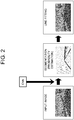
- Fig. 2 is a simplified drawing of a conventional lane detection method using a CNN
- Fig. 3 is a simplified drawing of a general CNN segmentation process.
- a learning device receives an input image, acquires feature maps by multiple convolution operations and non-linear operations like ReLU in multiple convolutional layers, and acquires a segmentation result by performing multiple deconvolution operations in multiple deconvolutional layers and SoftMax operations on a last of the feature maps.
- the segmentation result of the conventional lane detection method is composed of two elements, i.e., lanes and backgrounds, as shown in the middle of Fig. 2 .
- the segmentation result is expressed as probability estimation.
- the lanes are found by sampling pixels with high probabilities of being on any lane from candidate pixels selected as such, and then the lanes are finally determined by using a lane modeling function acquired from pixels on the found lanes.
- the background parts other than the lanes in an input image include various shapes such as a sign, a building and the like.
- CNN convolutional neural network
- a learning method for detecting a specific object based on convolutional neural network including steps of: (a) a learning device, if an input image is obtained, performing (i) a process of applying one or more convolution operations to the input image to thereby obtain at least one specific feature map and (ii) a process of obtaining an edge image by extracting at least one edge part from the input image, and obtaining at least one guide map including information on at least one specific edge part having a specific shape similar to that of the specific object from the obtained edge image; and (b) the learning device reflecting the guide map on the specific feature map to thereby obtain a segmentation result for detecting the specific object in the input image.
- CNN convolutional neural network
- the edge image is obtained by removing frequency components equal to or less than a specific threshold from the input image.
- the edge image is a canny edge image which is generated, after calculating gradients of pixels of the input image, by extracting at least one pixel having a gradient equal to or greater than a predetermined threshold among the pixels of the input image.
- the guide map is obtained by giving a first weight to the specific shape similar to that of the specific object and giving a second weight to at least one shape other than the specific shape similar to that of the specific object, wherein the first weight is greater than the second weight.
- the guide map is generated by widening the specific edge part by applying at least one dilation or morphological operation to the edge image.
- the learning device performs pixel-wise multiplication between the guide map and the specific feature map to thereby generate at least one edge-reinforced feature map.
- the step of (b) includes steps of: (b1) the learning device, on condition that there are a plurality of the specific feature maps, resizing the guide map to generate one or more resized guide maps such that a size of each of the resized guide maps corresponds to that of each of the specific feature maps; and (b2) the learning device performing the pixel-wise multiplication between the guide map and its corresponding specific feature map and performing the pixel-wise multiplication between the resized guide maps and their corresponding specific feature maps, to thereby generate the plurality of edge-reinforced feature maps.
- the specific feature map on which the guide map is reflected is selected among at least one feature map obtained from an encoding layer of the learning device and at least one feature map obtained from a decoding layer of the learning device.
- the specific object is at least one lane on a road.
- the learning method further includes steps of: (c) the learning device calculating a segmentation loss by referring to the segmentation result and its corresponding ground truth (GT); and (d) the learning device performing backpropagation by using the segmentation loss to thereby optimize at least one parameter of the learning device.
- a testing method for detecting at least one specific object included in a convolutional neural network (CNN)-based image including steps of: (a) on condition that, (i) a learning device has applied one or more convolution operations to a training image to thereby obtain at least one specific feature map for training; (ii) the learning device has obtained an edge image for training by extracting at least one edge part from the training image, and has obtained at least one guide map for training including information on a specific edge part for training having a specific shape similar to that of the specific object from the obtained edge image for training; (iii) the learning device has reflected the guide map for training on the specific feature map for training to thereby obtain a segmentation result for training for detecting the specific object in the training image; (iv) the learning device has calculated a segmentation loss by referring to the detected segmentation result for training and its corresponding ground truth (GT); and (v) the learning device has performed backpropagation by using the segmentation loss to thereby
- the edge image for testing is obtained by removing frequency components equal to or less than a specific threshold from the test image.
- the edge image for testing is a canny edge image which is generated, after calculating gradients of pixels of the test image, by extracting at least one pixel having a gradient equal to or greater than a predetermined threshold among the pixels of the test image.
- the guide map for testing is obtained by giving a first weight to the specific shape similar to that of the specific object and giving a second weight to at least one shape other than the specific shape similar to that of the specific object, wherein the first weight is greater than the second weight, and wherein the guide map for testing is generated by widening the specific edge part for testing by applying at least one dilation or morphological operation to the edge image for testing.
- the step of (c) includes steps of: (c1) the testing device, on condition that there are a plurality of the specific feature maps for testing, resizing the guide map for testing to generate one or more resized guide maps for testing such that a size of each of the resized guide maps for testing corresponds to that of each of the specific feature maps for testing; and (c2) the testing device performing the pixel-wise multiplication between the guide map for testing and its corresponding specific feature map for testing and performing the pixel-wise multiplication between the resized guide maps for testing and their corresponding specific feature maps for testing, to thereby generate the plurality of edge-reinforced feature maps for testing.
- a learning device for detecting a specific object based on convolutional neural network (CNN), comprising: a communication part for acquiring an input image as a training image; and a processor for performing processes of (I) applying one or more convolution operations to the input image to thereby obtain at least one specific feature map; (II) obtaining an edge image by extracting at least one edge part from the input image, and obtaining at least one guide map including information on at least one specific edge part having a specific shape similar to that of the specific object from the obtained edge image; and (III) reflecting the guide map on the specific feature map to thereby obtain a segmentation result for detecting the specific object in the input image.
- CNN convolutional neural network
- the edge image is obtained by removing frequency components equal to or less than a specific threshold from the input image.
- the edge image is a canny edge image which is generated, after calculating gradients of pixels of the input image, by extracting at least one pixel having a gradient equal to or greater than a predetermined threshold among the pixels of the input image.
- the guide map is obtained by giving a first weight to the specific shape similar to that of the specific object and giving a second weight to at least one shape other than the specific shape similar to that of the specific object, wherein the first weight is greater than the second weight.
- the guide map is generated by widening the specific edge part by applying at least one dilation or morphological operation to the edge image.
- the processor performs pixel-wise multiplication between the guide map and the specific feature map to thereby generate at least one edge-reinforced feature map.
- the process of (III) includes processes of: (III-1) on condition that there are a plurality of the specific feature maps, resizing the guide map to generate one or more resized guide maps such that a size of each of the resized guide maps corresponds to that of each of the specific feature maps; and (III-2) performing the pixel-wise multiplication between the guide map and its corresponding specific feature map and performing the pixel-wise multiplication between the resized guide maps and their corresponding specific feature maps, to thereby generate the plurality of edge-reinforced feature maps.
- the specific feature map on which the guide map is reflected is selected among at least one feature map obtained from an encoding layer thereof and at least one feature map obtained from a decoding layer thereof.
- the specific object is at least one lane on a road.
- the processor further performs processes of: (IV) calculating a segmentation loss by referring to the segmentation result and its corresponding ground truth (GT); and (V) performing backpropagation by using the segmentation loss to thereby optimize at least one parameter thereof.
- a testing device for detecting at least one specific object included in a convolutional neural network (CNN)-based image, comprising: a communication part for obtaining a test image on condition that, (i) a learning device has applied one or more convolution operations to a training image to thereby obtain at least one specific feature map for training; (ii) the learning device has obtained an edge image for training by extracting at least one edge part from the training image, and has obtained at least one guide map for training including information on a specific edge part for training having a specific shape similar to that of a specific object from the obtained edge image for training; (iii) the learning device has reflected the guide map for training on the specific feature map for training to thereby obtain a segmentation result for training for detecting the specific object in the training image; (iv) the learning device has calculated a segmentation loss by referring to the detected segmentation result for training and its corresponding ground truth (GT); and (v) the learning device has performed backpropag
- the edge image for testing is obtained by removing frequency components equal to or less than a specific threshold from the test image.
- the edge image for testing is a canny edge image which is generated, after calculating gradients of pixels of the test image, by extracting at least one pixel having a gradient equal to or greater than a predetermined threshold among the pixels of the test image.
- the guide map for testing is obtained by giving a first weight to the specific shape similar to that of the specific object and giving a second weight to at least one shape other than the specific shape similar to that of the specific object, wherein the first weight is greater than the second weight, and wherein the guide map for testing is generated by widening the specific edge part for testing by applying at least one dilation or morphological operation to the edge image for testing.
- the process of (II) includes processes of: (II_1) on condition that there are a plurality of the specific feature maps for testing, resizing the guide map for testing to generate one or more resized guide maps for testing such that a size of each of the resized guide maps for testing corresponds to that of each of the specific feature maps for testing; and (II_2) performing the pixel-wise multiplication between the guide map for testing and its corresponding specific feature map for testing and performing the pixel-wise multiplication between the resized guide maps for testing and their corresponding specific feature maps for testing, to thereby generate the plurality of edge-reinforced feature maps for testing.
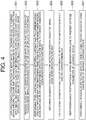
- Fig. 4 is a flowchart illustrating a method for detecting an object based on a convolutional neural network (CNN) in accordance with the present disclosure.
- CNN convolutional neural network
- a method for detecting a specific object based on CNN includes: applying one or more convolution operations to an input image, i.e., a training image, to thereby obtain at least one specific feature map, obtaining an edge image by extracting at least one edge part from the input image, and obtaining at least one guide map information on at least one specific edge part having a specific shape similar to that of the specific object from the obtained edge image at a step of S01; resizing the guide map to generate one or more resized guide maps such that a size of each of the resized guide maps corresponds to that of each of the specific feature maps at a step of S02; performing a pixel-wise multiplication between the guide map and its corresponding specific feature map and performing a pixel-wise multiplication between the resized guide maps and their corresponding specific feature maps, to thereby generate a plurality of edge-reinforced feature maps at a step of S03; obtaining a segmentation result for detecting
- a method for detecting a specific object based on CNN includes: performing a process of applying one or more convolution operations to the input image to thereby obtain a specific feature map and a process of obtaining an edge image by extracting at least one edge part from the input image at a step of S10; obtaining a guide map including information on at least one specific edge part having a specific shape similar to that of the specific object from the obtained edge image at a step of S20; and reflecting the guide map on the specific feature map to thereby obtain a segmentation result for detecting the specific object in the input image at a step of S30.
- the above-mentioned steps S10 to S30 will be illustrated in more detail by referring to Fig. 5 .
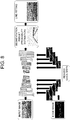
- Fig. 5 illustrates a process of detecting an object based on the CNN in accordance with the present disclosure
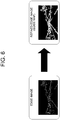
- Fig. 6 illustrates an example of a process of generating a guide map
- Fig. 7 illustrates another example of a process of generating the guide map
- Fig. 8 illustrates a process of detecting an object based on the CNN in accordance with another example embodiment of the present disclosure.
- the learning device applies one or more convolution operations and non-linear operations such as ReLU to the input image to thereby obtain at least one specific feature map.
- the learning device obtains an edge image by extracting at least one edge part from the input image, and obtains at least one guide map including information on a specific edge part having a specific shape similar to that of the specific object from the obtained edge image.
- the edge image may generated from the input image through the encoding layer in the learning device, but may also be generated from an input image in a separate device other than the learning device.
- the edge image may be obtained by removing frequency components equal to or less than a specific threshold from the input image.
- the edge image may include edge parts which are detected by using pixels having relatively large gradients.
- an edge image may be generated, after calculating gradients of pixels of the input image, by extracting at least one pixel having a gradient equal to or greater than a predetermined threshold among the pixels of the input image.
- the generated edge image becomes a canny edge image.
- a refined edge image (hereinafter, referred to as "guide map") is generated by processing the edge image such that object parts desired to be detected are clearly displayed.
- the guide map is generated by widening the edge part in the edge image.
- the guide map may be generated by removing parts other than parts having a shape similar to that of the specific object from the edge image.
- the guide map may be generated by widening the edge part by applying at least one dilation or morphological operation to the edge image.
- the guide map when detecting one or more lanes, is generated by removing edge parts having a shape of a tree from the edge image and retaining edge parts having a shape similar to that of one of the lanes in the edge image.
- a relatively large weight is given to the specific shape similar to that of one of the lanes, and a relatively small weight is given to at least one shape other than the specific shape similar to that of the specific object.
- the guide map is generated by applying a straight line algorithm or a curved line algorithm to the edge image and giving a large weight to a shape similar to one of the lanes when detecting the lanes.
- a plurality of feature maps of various sizes may be generated from the encoding layer, and a plurality of specific feature maps of various sizes may also be generated from the encoding layer and the decoding layer.
- the guide map may be reflected on at least one of the specific feature maps obtained from the encoding layer and the specific feature maps obtained from the decoding layer.
- the guide map is resized to generate resized guide maps such that a size of each of the resized guide maps corresponds to that of each of the specific feature maps.
- the pixel-wise multiplication between the guide map and its corresponding specific feature map is performed, and the pixel-wise multiplications between the resized guide maps and their corresponding specific feature maps are performed, to thereby generate a plurality of edge-reinforced feature maps.
- edge-reinforced feature maps In the generated edge-reinforced feature maps, a large weight is given to only the edge parts having the specific shape similar to that of the specific object desired to be detected, and thus the edge parts can be highlighted. In another embodiment, only the edge parts having the specific shape similar to that of the specific object desired to be detected may remain in the edge-reinforced feature maps and the other edge parts may be removed from the edge-reinforced feature maps.
- the guide map i.e., the refined edge image
- the guide map includes only lanes and some background parts or since the guide map has high pixel values for such lanes and some background parts
- inference is made except for the parts expressed as black in Fig. 6 or Fig. 7 by performing the pixel-wise multiplication between the guide map and the specific feature map in the form of mask or attention.
- additional operations such as deconvolution operation, an operation of FC layer, and an operation of softmax may be applied to the edge-reinforced feature maps to thereby obtain the segmentation result in which the class for the lanes is distinguished from the class for the background in the input image.
- the lanes are detected by using Polynomial fitting algorithm or spline fitting algorithm based on the segmentation result, i.e., by applying the Polynomial fitting algorithm or the spline fitting algorithm to lane candidate pixels to the segmentation result.
- the segmentation loss is calculated by referring to the segmentation result and its corresponding ground truth (GT), and the backpropagation is performed by using the segmentation loss to thereby optimize at least one parameter of the learning device.
- GT ground truth
- a process of detecting a specific object using a testing device is performed by using at least one parameter of the learned learning device.
- the learning device on condition that, (i) the learning device has applied one or more convolution operations to a training image to thereby obtain at least one specific feature map for training; (ii) the learning device has obtained an edge image for training by extracting at least one edge part from the training image, and has obtained at least one guide map including information on a specific edge part having a specific shape similar to that of the specific object from the obtained edge image for training; (iii) the learning device has reflected the guide map for training on the specific feature map for training to thereby obtain a segmentation result for training for detecting the specific object in the training image; (iv) the learning device has calculated a segmentation loss by referring to the detected segmentation result for training and its corresponding ground truth (GT); and (v) the learning device has performed backpropagation by using the segmentation loss to thereby optimize at least one parameter of the learning device, the testing device obtains a test image,
- the testing device performs (i) a process of applying one or more convolution operations to the test image to thereby obtain at least one specific feature map for testing and (ii) a process of obtaining an edge image for testing by extracting at least one edge part from the test image, and obtaining at least one guide map for testing including information on at least one specific edge part having a specific shape similar to that of the specific object from the obtained edge image for testing.
- the testing device reflects the guide map for testing on the specific feature map for testing to thereby obtain a segmentation result for testing for detecting the specific object in the test image.
- the present disclosure has an effect of easily detecting the lanes or the specific objects through the guide map which is generated by extracting the edge image and then processing the edge image such that only parts corresponding to the lanes or the specific objects are remained or a high weight is given to such parts.
- the amount of operations of the specific feature map may be significantly reduced by reflecting the edge-reinforced guide map on the specific feature map, and the specific objects or the lanes can be effectively detected by removing the background parts in advance.
- the present disclosure has another effect of clearly detecting only lanes by removing the background parts from the specific feature map through the guide map.
- a transmission and/or a reception of the above-described images can be performed by a communication unit of the learning device and the testing device, and the processes of the convolutional operation, the deconvolutional operation and the loss value operation can be mainly performed by the processor of the learning device and the testing device, but the present disclosure is not limited to these examples.
- the objects of the technical solution of the present disclosure or parts contributing to the prior art can be implemented in a form of executable program command through a variety of computer means and can be recorded to computer readable recording media.
- the computer readable media may include solely or in combination, program commands, data files, and data structures.
- the program commands recorded to the media may be components specially designed for the present disclosure or may be usable to a skilled person in a field of computer software.
- Computer readable record media include magnetic media such as hard disk, floppy disk, and magnetic tape, optical media such as CD-ROM and DVD, magneto-optical media such as floptical disk and hardware devices such as ROM, RAM, and flash memory specially designed to store and carry out programs.
- Program commands include not only a machine language code made by a compiler but also a high-level code that can be used by an interpreter etc., which is executed by a computer.
- the aforementioned hardware devices can work as more than a software module to perform the action of the present disclosure and they can do the same in the opposite case.
- the hardware devices may be combined with memory such as ROM and RAM to store program commands and include a processor such as CPU or GPU composed to execute commands stored in the memory and also include a communication part for sending and receiving signals with external devices.
Landscapes
- Engineering & Computer Science (AREA)
- Theoretical Computer Science (AREA)
- Physics & Mathematics (AREA)
- General Physics & Mathematics (AREA)
- Computer Vision & Pattern Recognition (AREA)
- Evolutionary Computation (AREA)
- Artificial Intelligence (AREA)
- General Health & Medical Sciences (AREA)
- Health & Medical Sciences (AREA)
- Software Systems (AREA)
- Computing Systems (AREA)
- Multimedia (AREA)
- Data Mining & Analysis (AREA)
- Life Sciences & Earth Sciences (AREA)
- General Engineering & Computer Science (AREA)
- Molecular Biology (AREA)
- Biomedical Technology (AREA)
- Computational Linguistics (AREA)
- Biophysics (AREA)
- Mathematical Physics (AREA)
- Databases & Information Systems (AREA)
- Medical Informatics (AREA)
- Evolutionary Biology (AREA)
- Bioinformatics & Computational Biology (AREA)
- Bioinformatics & Cheminformatics (AREA)
- Biodiversity & Conservation Biology (AREA)
- Image Analysis (AREA)
Applications Claiming Priority (1)
| Application Number | Priority Date | Filing Date | Title |
|---|---|---|---|
| US16/120,664 US10229346B1 (en) | 2018-09-04 | 2018-09-04 | Learning method, learning device for detecting object using edge image and testing method, testing device using the same |
Publications (3)
| Publication Number | Publication Date |
|---|---|
| EP3620979A1 true EP3620979A1 (fr) | 2020-03-11 |
| EP3620979C0 EP3620979C0 (fr) | 2023-08-09 |
| EP3620979B1 EP3620979B1 (fr) | 2023-08-09 |
Family
ID=65633215
Family Applications (1)
| Application Number | Title | Priority Date | Filing Date |
|---|---|---|---|
| EP19172861.7A Active EP3620979B1 (fr) | 2018-09-04 | 2019-05-06 | Procédé d'apprentissage, dispositif d'apprentissage pour la détection d'objets à l'aide d'une image de bord et procédé de test, dispositif de test l'utilisant |
Country Status (5)
| Country | Link |
|---|---|
| US (1) | US10229346B1 (fr) |
| EP (1) | EP3620979B1 (fr) |
| JP (1) | JP2020038658A (fr) |
| KR (1) | KR102325033B1 (fr) |
| CN (1) | CN110874841B (fr) |
Families Citing this family (33)
| Publication number | Priority date | Publication date | Assignee | Title |
|---|---|---|---|---|
| CN110096933B (zh) * | 2018-01-30 | 2023-07-18 | 华为技术有限公司 | 目标检测的方法、装置及系统 |
| EP3762865A1 (fr) * | 2018-03-05 | 2021-01-13 | Omron Corporation | Procédé, appareil, système et programme pour déterminer des données de caractéristiques de données d'image, et support de stockage |
| KR102666072B1 (ko) * | 2018-06-05 | 2024-05-17 | 삼성전자주식회사 | 기계 학습 장치 및 기계 학습 장치의 학습 방법 |
| US10311321B1 (en) * | 2018-10-26 | 2019-06-04 | StradVision, Inc. | Learning method, learning device using regression loss and testing method, testing device using the same |
| EP3888008A1 (fr) * | 2018-11-27 | 2021-10-06 | Raytheon Company | Architecture d'ordinateur pour la génération d'images artificielles |
| WO2020112189A1 (fr) * | 2018-11-27 | 2020-06-04 | Raytheon Company | Architecture d'ordinateur pour la génération d'images artificielles à l'aide d'un autoencodeur |
| US10402692B1 (en) * | 2019-01-22 | 2019-09-03 | StradVision, Inc. | Learning method and learning device for fluctuation-robust object detector based on CNN using target object estimating network adaptable to customers' requirements such as key performance index, and testing device using the same |
| US10346693B1 (en) * | 2019-01-22 | 2019-07-09 | StradVision, Inc. | Method and device for attention-based lane detection without post-processing by using lane mask and testing method and testing device using the same |
| US10373317B1 (en) * | 2019-01-22 | 2019-08-06 | StradVision, Inc. | Learning method and learning device for attention-driven image segmentation by using at least one adaptive loss weight map to be used for updating HD maps required to satisfy level 4 of autonomous vehicles and testing method and testing device using the same |
| US10387753B1 (en) * | 2019-01-23 | 2019-08-20 | StradVision, Inc. | Learning method and learning device for convolutional neural network using 1×1 convolution for image recognition to be used for hardware optimization, and testing method and testing device using the same |
| US10395140B1 (en) * | 2019-01-23 | 2019-08-27 | StradVision, Inc. | Learning method and learning device for object detector based on CNN using 1×1 convolution to be used for hardware optimization, and testing method and testing device using the same |
| US10496899B1 (en) * | 2019-01-25 | 2019-12-03 | StradVision, Inc. | Learning method and learning device for adjusting parameters of CNN in which residual networks are provided for meta learning, and testing method and testing device using the same |
| US10410352B1 (en) * | 2019-01-25 | 2019-09-10 | StradVision, Inc. | Learning method and learning device for improving segmentation performance to be used for detecting events including pedestrian event, vehicle event, falling event and fallen event using edge loss and test method and test device using the same |
| US10373323B1 (en) * | 2019-01-29 | 2019-08-06 | StradVision, Inc. | Method and device for merging object detection information detected by each of object detectors corresponding to each camera nearby for the purpose of collaborative driving by using V2X-enabled applications, sensor fusion via multiple vehicles |
| US10373027B1 (en) * | 2019-01-30 | 2019-08-06 | StradVision, Inc. | Method for acquiring sample images for inspecting label among auto-labeled images to be used for learning of neural network and sample image acquiring device using the same |
| US10373004B1 (en) * | 2019-01-31 | 2019-08-06 | StradVision, Inc. | Method and device for detecting lane elements to plan the drive path of autonomous vehicle by using a horizontal filter mask, wherein the lane elements are unit regions including pixels of lanes in an input image |
| US10423840B1 (en) * | 2019-01-31 | 2019-09-24 | StradVision, Inc. | Post-processing method and device for detecting lanes to plan the drive path of autonomous vehicle by using segmentation score map and clustering map |
| CN112116083B (zh) * | 2019-06-20 | 2024-03-08 | 地平线(上海)人工智能技术有限公司 | 神经网络加速器及其检测方法和装置 |
| CN110298321B (zh) * | 2019-07-02 | 2021-03-23 | 中国科学院空天信息创新研究院 | 基于深度学习图像分类的道路阻断信息提取方法 |
| CN110490082B (zh) * | 2019-07-23 | 2022-04-05 | 浙江科技学院 | 一种有效融合神经网络特征的道路场景语义分割方法 |
| US11688155B2 (en) * | 2020-01-06 | 2023-06-27 | Luminar, Llc | Lane detection and tracking techniques for imaging systems |
| KR102144706B1 (ko) * | 2020-03-11 | 2020-08-14 | 아주대학교산학협력단 | 합성곱 신경망 기반의 도로 검출 장치 및 방법 |
| CN111583229B (zh) * | 2020-05-09 | 2024-01-05 | 江苏野马软件科技有限公司 | 一种基于卷积神经网络路面故障检测方法 |
| CN111738295B (zh) * | 2020-05-22 | 2024-03-22 | 南通大学 | 图像的分割方法及存储介质 |
| CN111932545B (zh) * | 2020-07-14 | 2024-08-02 | 浙江大华技术股份有限公司 | 图像处理方法、目标计数方法及其相关装置 |
| KR102770798B1 (ko) * | 2020-08-07 | 2025-02-21 | 삼성전자주식회사 | 안개 제거를 위한 영상 처리 방법 및 장치 |
| CN112069958A (zh) * | 2020-08-27 | 2020-12-11 | 广西柳工机械股份有限公司 | 物料识别方法、装置、设备及存储介质 |
| US12136250B2 (en) * | 2021-05-27 | 2024-11-05 | Adobe Inc. | Extracting attributes from arbitrary digital images utilizing a multi-attribute contrastive classification neural network |
| KR102333642B1 (ko) * | 2021-06-04 | 2021-12-01 | 셀렉트스타 주식회사 | 크라우드소싱에서 이미지에 포함된 객체의 윤곽정보에 대한 가이드정보를 제공하는 방법, 컴퓨팅장치 및 컴퓨터-판독가능 매체 |
| CN113298837B (zh) * | 2021-07-27 | 2021-11-26 | 南昌工程学院 | 一种图像边缘提取方法、装置、存储介质及设备 |
| KR102837220B1 (ko) | 2021-10-21 | 2025-07-22 | 동의대학교 산학협력단 | 인공 신경망 적용 객체 감지 과정에서의 효과적인 하드웨어 사용을 위한 시스템 및 방법 |
| KR102846723B1 (ko) * | 2022-09-29 | 2025-08-14 | 충북대학교 산학협력단 | 실시간 물체 감지 네트워크 시스템 |
| CN115588024B (zh) * | 2022-11-25 | 2023-06-20 | 东莞市兆丰精密仪器有限公司 | 一种基于人工智能的复杂工业影像边缘提取方法及装置 |
Family Cites Families (17)
| Publication number | Priority date | Publication date | Assignee | Title |
|---|---|---|---|---|
| EP1229486A1 (fr) * | 2001-01-31 | 2002-08-07 | GRETAG IMAGING Trading AG | Détection automatique de modèle |
| JP3639283B2 (ja) * | 2003-07-14 | 2005-04-20 | 株式会社東芝 | 画像処理装置及び画像処理方法 |
| JP4715539B2 (ja) * | 2006-02-15 | 2011-07-06 | トヨタ自動車株式会社 | 画像処理装置、その方法、および画像処理用プログラム |
| JP4757808B2 (ja) * | 2007-01-25 | 2011-08-24 | 富士通テン株式会社 | 画像認識装置、画像認識方法、車両制御装置および車両制御方法 |
| JP5152002B2 (ja) * | 2009-01-16 | 2013-02-27 | 日産自動車株式会社 | 車線認識装置および車線認識方法 |
| US20160239706A1 (en) * | 2015-02-13 | 2016-08-18 | Qualcomm Incorporated | Convolution matrix multiply with callback for deep tiling for deep convolutional neural networks |
| US9972092B2 (en) * | 2016-03-31 | 2018-05-15 | Adobe Systems Incorporated | Utilizing deep learning for boundary-aware image segmentation |
| WO2017187516A1 (fr) * | 2016-04-26 | 2017-11-02 | 株式会社日立製作所 | Système de traitement d'informations et son procédé de fonctionnement |
| WO2017208367A1 (fr) * | 2016-05-31 | 2017-12-07 | 株式会社Pfu | Dispositif de traitement d'image, procédé de traitement d'image, et programme |
| RU2016138608A (ru) * | 2016-09-29 | 2018-03-30 | Мэджик Лип, Инк. | Нейронная сеть для сегментации изображения глаза и оценки качества изображения |
| WO2018076212A1 (fr) * | 2016-10-26 | 2018-05-03 | 中国科学院自动化研究所 | Procédé de segmentation sémantique de scène basé sur un réseau de neurones déconvolutif |
| CN106651886A (zh) * | 2017-01-03 | 2017-05-10 | 北京工业大学 | 一种基于超像素聚类优化cnn的云图分割方法 |
| JP2018132855A (ja) * | 2017-02-14 | 2018-08-23 | 国立大学法人電気通信大学 | 画像スタイル変換装置、画像スタイル変換方法および画像スタイル変換プログラム |
| US10373002B2 (en) * | 2017-03-31 | 2019-08-06 | Here Global B.V. | Method, apparatus, and system for a parametric representation of lane lines |
| CN107680090A (zh) * | 2017-10-11 | 2018-02-09 | 电子科技大学 | 基于改进全卷积神经网络的输电线路绝缘子状态识别方法 |
| CN107680113A (zh) * | 2017-10-27 | 2018-02-09 | 武汉大学 | 基于贝叶斯框架边缘先验的多层分割网络的图像分割方法 |
| CN108062756B (zh) * | 2018-01-29 | 2020-04-14 | 重庆理工大学 | 基于深度全卷积网络和条件随机场的图像语义分割方法 |
-
2018
- 2018-09-04 US US16/120,664 patent/US10229346B1/en active Active
-
2019
- 2019-05-06 EP EP19172861.7A patent/EP3620979B1/fr active Active
- 2019-08-27 KR KR1020190105474A patent/KR102325033B1/ko active Active
- 2019-08-29 CN CN201910806785.4A patent/CN110874841B/zh active Active
- 2019-09-02 JP JP2019159829A patent/JP2020038658A/ja active Pending
Non-Patent Citations (1)
| Title |
|---|
| JEONG CHIYOON ET AL: "A novel approach for detecting the horizon using a convolutional neural network and multi-scale edge detection", MULTIDIMENSIONAL SYSTEMS AND SIGNAL PROCESSING, SPRINGER US, BOSTON, vol. 30, no. 3, 23 June 2018 (2018-06-23), pages 1187 - 1204, XP036816336, ISSN: 0923-6082, [retrieved on 20180623], DOI: 10.1007/S11045-018-0602-4 * |
Also Published As
| Publication number | Publication date |
|---|---|
| EP3620979C0 (fr) | 2023-08-09 |
| CN110874841A (zh) | 2020-03-10 |
| EP3620979B1 (fr) | 2023-08-09 |
| US10229346B1 (en) | 2019-03-12 |
| JP2020038658A (ja) | 2020-03-12 |
| CN110874841B (zh) | 2023-08-29 |
| KR20200027428A (ko) | 2020-03-12 |
| KR102325033B1 (ko) | 2021-11-12 |
Similar Documents
| Publication | Publication Date | Title |
|---|---|---|
| US10229346B1 (en) | Learning method, learning device for detecting object using edge image and testing method, testing device using the same | |
| EP3620956B1 (fr) | Procédé d'apprentissage, dispositif d'apprentissage permettant de détecter une voie par classement de pixels de voie candidate et procédé de test, dispositif de test l'utilisant | |
| US10262214B1 (en) | Learning method, learning device for detecting lane by using CNN and testing method, testing device using the same | |
| US10275667B1 (en) | Learning method, learning device for detecting lane through lane model and testing method, testing device using the same | |
| US11823443B2 (en) | Segmenting objects by refining shape priors | |
| US10474713B1 (en) | Learning method and learning device using multiple labeled databases with different label sets and testing method and testing device using the same | |
| CN110914831B (zh) | 用于分析图像的方法和设备 | |
| EP3620985A1 (fr) | Procédé d'apprentissage, dispositif d'apprentissage pour optimiser les paramètres de cnn au moyen de multiples trames vidéo et procédé de test, dispositif de test l'utilisant | |
| EP3388978B1 (fr) | Procédé de classification d'image, dispositif électronique et support de stockage | |
| US20140270489A1 (en) | Learned mid-level representation for contour and object detection | |
| CN111489297B (zh) | 用于检测危险要素的学习用图像数据集的生成方法和装置 | |
| CN112257665B (zh) | 图像内容的识别方法、图像识别模型的训练方法及介质 | |
| TW201926140A (zh) | 影像標註方法、電子裝置及非暫態電腦可讀取儲存媒體 | |
| US9990710B2 (en) | Apparatus and method for supporting computer aided diagnosis | |
| KR102026280B1 (ko) | 딥 러닝을 이용한 씬 텍스트 검출 방법 및 시스템 | |
| KR102655789B1 (ko) | 얼굴 검출 방법 및 장치 | |
| EP3623991B1 (fr) | Procédé d'apprentissage, dispositif d'apprentissage pour la détection de voies à base de cnn et procédé de test, dispositif de test l'utilisant | |
| Yasmeen et al. | Text detection and classification from low quality natural images | |
| CN110751163A (zh) | 目标定位方法及其装置、计算机可读存储介质和电子设备 | |
| CN117612246B (zh) | 一种行人拖拽劫持行为检测方法、装置、设备及存储介质 | |
| CN116244643B (zh) | 多标签分类模型的训练方法、装置、设备和存储介质 | |
| CN116797785B (zh) | 一种基于特征提炼的伪装物体检测方法 | |
| KR102131243B1 (ko) | 딥러닝 및 연결성 그래프에 기초한 식물 영역 추출 시스템 및 방법 | |
| CN116091511A (zh) | 实例分割网络的训练方法、终端及计算机可读存储介质 |
Legal Events
| Date | Code | Title | Description |
|---|---|---|---|
| PUAI | Public reference made under article 153(3) epc to a published international application that has entered the european phase |
Free format text: ORIGINAL CODE: 0009012 |
|
| STAA | Information on the status of an ep patent application or granted ep patent |
Free format text: STATUS: REQUEST FOR EXAMINATION WAS MADE |
|
| 17P | Request for examination filed |
Effective date: 20190506 |
|
| AK | Designated contracting states |
Kind code of ref document: A1 Designated state(s): AL AT BE BG CH CY CZ DE DK EE ES FI FR GB GR HR HU IE IS IT LI LT LU LV MC MK MT NL NO PL PT RO RS SE SI SK SM TR |
|
| AX | Request for extension of the european patent |
Extension state: BA ME |
|
| RBV | Designated contracting states (corrected) |
Designated state(s): AL AT BE BG CH CY CZ DE DK EE ES FI FR GB GR HR HU IE IS IT LI LT LU LV MC MK MT NL NO PL PT RO RS SE SI SK SM TR |
|
| STAA | Information on the status of an ep patent application or granted ep patent |
Free format text: STATUS: EXAMINATION IS IN PROGRESS |
|
| 17Q | First examination report despatched |
Effective date: 20210719 |
|
| REG | Reference to a national code |
Ref country code: DE Ref legal event code: R079 Free format text: PREVIOUS MAIN CLASS: G06K0009620000 Ipc: G06V0010440000 Ref country code: DE Ref legal event code: R079 Ref document number: 602019034393 Country of ref document: DE Free format text: PREVIOUS MAIN CLASS: G06K0009620000 Ipc: G06V0010440000 |
|
| GRAP | Despatch of communication of intention to grant a patent |
Free format text: ORIGINAL CODE: EPIDOSNIGR1 |
|
| STAA | Information on the status of an ep patent application or granted ep patent |
Free format text: STATUS: GRANT OF PATENT IS INTENDED |
|
| RIC1 | Information provided on ipc code assigned before grant |
Ipc: G06V 10/80 20220101ALI20230206BHEP Ipc: G06N 3/045 20230101ALI20230206BHEP Ipc: G06T 7/12 20170101ALI20230206BHEP Ipc: G06N 3/084 20230101ALI20230206BHEP Ipc: G06V 20/56 20220101ALI20230206BHEP Ipc: G06V 10/82 20220101ALI20230206BHEP Ipc: G06V 10/764 20220101ALI20230206BHEP Ipc: G06V 10/44 20220101AFI20230206BHEP |
|
| INTG | Intention to grant announced |
Effective date: 20230223 |
|
| GRAS | Grant fee paid |
Free format text: ORIGINAL CODE: EPIDOSNIGR3 |
|
| GRAA | (expected) grant |
Free format text: ORIGINAL CODE: 0009210 |
|
| STAA | Information on the status of an ep patent application or granted ep patent |
Free format text: STATUS: THE PATENT HAS BEEN GRANTED |
|
| AK | Designated contracting states |
Kind code of ref document: B1 Designated state(s): AL AT BE BG CH CY CZ DE DK EE ES FI FR GB GR HR HU IE IS IT LI LT LU LV MC MK MT NL NO PL PT RO RS SE SI SK SM TR |
|
| REG | Reference to a national code |
Ref country code: GB Ref legal event code: FG4D |
|
| REG | Reference to a national code |
Ref country code: CH Ref legal event code: EP |
|
| REG | Reference to a national code |
Ref country code: IE Ref legal event code: FG4D |
|
| REG | Reference to a national code |
Ref country code: DE Ref legal event code: R096 Ref document number: 602019034393 Country of ref document: DE |
|
| U01 | Request for unitary effect filed |
Effective date: 20230905 |
|
| U07 | Unitary effect registered |
Designated state(s): AT BE BG DE DK EE FI FR IT LT LU LV MT NL PT SE SI Effective date: 20230912 |
|
| PG25 | Lapsed in a contracting state [announced via postgrant information from national office to epo] |
Ref country code: GR Free format text: LAPSE BECAUSE OF FAILURE TO SUBMIT A TRANSLATION OF THE DESCRIPTION OR TO PAY THE FEE WITHIN THE PRESCRIBED TIME-LIMIT Effective date: 20231110 |
|
| PG25 | Lapsed in a contracting state [announced via postgrant information from national office to epo] |
Ref country code: IS Free format text: LAPSE BECAUSE OF FAILURE TO SUBMIT A TRANSLATION OF THE DESCRIPTION OR TO PAY THE FEE WITHIN THE PRESCRIBED TIME-LIMIT Effective date: 20231209 |
|
| PG25 | Lapsed in a contracting state [announced via postgrant information from national office to epo] |
Ref country code: RS Free format text: LAPSE BECAUSE OF FAILURE TO SUBMIT A TRANSLATION OF THE DESCRIPTION OR TO PAY THE FEE WITHIN THE PRESCRIBED TIME-LIMIT Effective date: 20230809 Ref country code: NO Free format text: LAPSE BECAUSE OF FAILURE TO SUBMIT A TRANSLATION OF THE DESCRIPTION OR TO PAY THE FEE WITHIN THE PRESCRIBED TIME-LIMIT Effective date: 20231109 Ref country code: IS Free format text: LAPSE BECAUSE OF FAILURE TO SUBMIT A TRANSLATION OF THE DESCRIPTION OR TO PAY THE FEE WITHIN THE PRESCRIBED TIME-LIMIT Effective date: 20231209 Ref country code: HR Free format text: LAPSE BECAUSE OF FAILURE TO SUBMIT A TRANSLATION OF THE DESCRIPTION OR TO PAY THE FEE WITHIN THE PRESCRIBED TIME-LIMIT Effective date: 20230809 Ref country code: GR Free format text: LAPSE BECAUSE OF FAILURE TO SUBMIT A TRANSLATION OF THE DESCRIPTION OR TO PAY THE FEE WITHIN THE PRESCRIBED TIME-LIMIT Effective date: 20231110 |
|
| PG25 | Lapsed in a contracting state [announced via postgrant information from national office to epo] |
Ref country code: PL Free format text: LAPSE BECAUSE OF FAILURE TO SUBMIT A TRANSLATION OF THE DESCRIPTION OR TO PAY THE FEE WITHIN THE PRESCRIBED TIME-LIMIT Effective date: 20230809 |
|
| PG25 | Lapsed in a contracting state [announced via postgrant information from national office to epo] |
Ref country code: ES Free format text: LAPSE BECAUSE OF FAILURE TO SUBMIT A TRANSLATION OF THE DESCRIPTION OR TO PAY THE FEE WITHIN THE PRESCRIBED TIME-LIMIT Effective date: 20230809 |
|
| PG25 | Lapsed in a contracting state [announced via postgrant information from national office to epo] |
Ref country code: SM Free format text: LAPSE BECAUSE OF FAILURE TO SUBMIT A TRANSLATION OF THE DESCRIPTION OR TO PAY THE FEE WITHIN THE PRESCRIBED TIME-LIMIT Effective date: 20230809 Ref country code: RO Free format text: LAPSE BECAUSE OF FAILURE TO SUBMIT A TRANSLATION OF THE DESCRIPTION OR TO PAY THE FEE WITHIN THE PRESCRIBED TIME-LIMIT Effective date: 20230809 Ref country code: ES Free format text: LAPSE BECAUSE OF FAILURE TO SUBMIT A TRANSLATION OF THE DESCRIPTION OR TO PAY THE FEE WITHIN THE PRESCRIBED TIME-LIMIT Effective date: 20230809 Ref country code: CZ Free format text: LAPSE BECAUSE OF FAILURE TO SUBMIT A TRANSLATION OF THE DESCRIPTION OR TO PAY THE FEE WITHIN THE PRESCRIBED TIME-LIMIT Effective date: 20230809 Ref country code: SK Free format text: LAPSE BECAUSE OF FAILURE TO SUBMIT A TRANSLATION OF THE DESCRIPTION OR TO PAY THE FEE WITHIN THE PRESCRIBED TIME-LIMIT Effective date: 20230809 |
|
| REG | Reference to a national code |
Ref country code: DE Ref legal event code: R097 Ref document number: 602019034393 Country of ref document: DE |
|
| U20 | Renewal fee for the european patent with unitary effect paid |
Year of fee payment: 6 Effective date: 20240412 |
|
| PLBE | No opposition filed within time limit |
Free format text: ORIGINAL CODE: 0009261 |
|
| STAA | Information on the status of an ep patent application or granted ep patent |
Free format text: STATUS: NO OPPOSITION FILED WITHIN TIME LIMIT |
|
| 26N | No opposition filed |
Effective date: 20240513 |
|
| REG | Reference to a national code |
Ref country code: CH Ref legal event code: PL |
|
| PG25 | Lapsed in a contracting state [announced via postgrant information from national office to epo] |
Ref country code: MC Free format text: LAPSE BECAUSE OF FAILURE TO SUBMIT A TRANSLATION OF THE DESCRIPTION OR TO PAY THE FEE WITHIN THE PRESCRIBED TIME-LIMIT Effective date: 20230809 |
|
| GBPC | Gb: european patent ceased through non-payment of renewal fee |
Effective date: 20240506 |
|
| PG25 | Lapsed in a contracting state [announced via postgrant information from national office to epo] |
Ref country code: MC Free format text: LAPSE BECAUSE OF FAILURE TO SUBMIT A TRANSLATION OF THE DESCRIPTION OR TO PAY THE FEE WITHIN THE PRESCRIBED TIME-LIMIT Effective date: 20230809 Ref country code: CH Free format text: LAPSE BECAUSE OF NON-PAYMENT OF DUE FEES Effective date: 20240531 |
|
| PG25 | Lapsed in a contracting state [announced via postgrant information from national office to epo] |
Ref country code: IE Free format text: LAPSE BECAUSE OF NON-PAYMENT OF DUE FEES Effective date: 20240506 |
|
| PG25 | Lapsed in a contracting state [announced via postgrant information from national office to epo] |
Ref country code: GB Free format text: LAPSE BECAUSE OF NON-PAYMENT OF DUE FEES Effective date: 20240506 |
|
| U20 | Renewal fee for the european patent with unitary effect paid |
Year of fee payment: 7 Effective date: 20250523 |
|
| PG25 | Lapsed in a contracting state [announced via postgrant information from national office to epo] |
Ref country code: CY Free format text: LAPSE BECAUSE OF FAILURE TO SUBMIT A TRANSLATION OF THE DESCRIPTION OR TO PAY THE FEE WITHIN THE PRESCRIBED TIME-LIMIT; INVALID AB INITIO Effective date: 20190506 |
|
| PG25 | Lapsed in a contracting state [announced via postgrant information from national office to epo] |
Ref country code: HU Free format text: LAPSE BECAUSE OF FAILURE TO SUBMIT A TRANSLATION OF THE DESCRIPTION OR TO PAY THE FEE WITHIN THE PRESCRIBED TIME-LIMIT; INVALID AB INITIO Effective date: 20190506 |