EP3620982A1 - Probenverarbeitungsverfahren und -vorrichtung - Google Patents
Probenverarbeitungsverfahren und -vorrichtung Download PDFInfo
- Publication number
- EP3620982A1 EP3620982A1 EP19195094.8A EP19195094A EP3620982A1 EP 3620982 A1 EP3620982 A1 EP 3620982A1 EP 19195094 A EP19195094 A EP 19195094A EP 3620982 A1 EP3620982 A1 EP 3620982A1
- Authority
- EP
- European Patent Office
- Prior art keywords
- samples
- cluster
- determining
- filtered
- purity
- Prior art date
- Legal status (The legal status is an assumption and is not a legal conclusion. Google has not performed a legal analysis and makes no representation as to the accuracy of the status listed.)
- Granted
Links
Images


Classifications
-
- G—PHYSICS
- G06—COMPUTING OR CALCULATING; COUNTING
- G06F—ELECTRIC DIGITAL DATA PROCESSING
- G06F16/00—Information retrieval; Database structures therefor; File system structures therefor
- G06F16/90—Details of database functions independent of the retrieved data types
- G06F16/906—Clustering; Classification
-
- G—PHYSICS
- G06—COMPUTING OR CALCULATING; COUNTING
- G06F—ELECTRIC DIGITAL DATA PROCESSING
- G06F18/00—Pattern recognition
- G06F18/20—Analysing
- G06F18/23—Clustering techniques
-
- G—PHYSICS
- G06—COMPUTING OR CALCULATING; COUNTING
- G06F—ELECTRIC DIGITAL DATA PROCESSING
- G06F18/00—Pattern recognition
- G06F18/20—Analysing
- G06F18/21—Design or setup of recognition systems or techniques; Extraction of features in feature space; Blind source separation
- G06F18/211—Selection of the most significant subset of features
-
- G—PHYSICS
- G06—COMPUTING OR CALCULATING; COUNTING
- G06F—ELECTRIC DIGITAL DATA PROCESSING
- G06F16/00—Information retrieval; Database structures therefor; File system structures therefor
- G06F16/30—Information retrieval; Database structures therefor; File system structures therefor of unstructured textual data
- G06F16/35—Clustering; Classification
-
- G—PHYSICS
- G06—COMPUTING OR CALCULATING; COUNTING
- G06F—ELECTRIC DIGITAL DATA PROCESSING
- G06F18/00—Pattern recognition
- G06F18/20—Analysing
- G06F18/21—Design or setup of recognition systems or techniques; Extraction of features in feature space; Blind source separation
- G06F18/214—Generating training patterns; Bootstrap methods, e.g. bagging or boosting
-
- G—PHYSICS
- G06—COMPUTING OR CALCULATING; COUNTING
- G06N—COMPUTING ARRANGEMENTS BASED ON SPECIFIC COMPUTATIONAL MODELS
- G06N20/00—Machine learning
-
- G—PHYSICS
- G06—COMPUTING OR CALCULATING; COUNTING
- G06N—COMPUTING ARRANGEMENTS BASED ON SPECIFIC COMPUTATIONAL MODELS
- G06N3/00—Computing arrangements based on biological models
- G06N3/02—Neural networks
- G06N3/04—Architecture, e.g. interconnection topology
- G06N3/0418—Architecture, e.g. interconnection topology using chaos or fractal principles
-
- G—PHYSICS
- G06—COMPUTING OR CALCULATING; COUNTING
- G06N—COMPUTING ARRANGEMENTS BASED ON SPECIFIC COMPUTATIONAL MODELS
- G06N3/00—Computing arrangements based on biological models
- G06N3/02—Neural networks
- G06N3/04—Architecture, e.g. interconnection topology
- G06N3/048—Activation functions
-
- G—PHYSICS
- G06—COMPUTING OR CALCULATING; COUNTING
- G06V—IMAGE OR VIDEO RECOGNITION OR UNDERSTANDING
- G06V10/00—Arrangements for image or video recognition or understanding
- G06V10/70—Arrangements for image or video recognition or understanding using pattern recognition or machine learning
- G06V10/762—Arrangements for image or video recognition or understanding using pattern recognition or machine learning using clustering, e.g. of similar faces in social networks
-
- G—PHYSICS
- G06—COMPUTING OR CALCULATING; COUNTING
- G06V—IMAGE OR VIDEO RECOGNITION OR UNDERSTANDING
- G06V10/00—Arrangements for image or video recognition or understanding
- G06V10/70—Arrangements for image or video recognition or understanding using pattern recognition or machine learning
- G06V10/77—Processing image or video features in feature spaces; using data integration or data reduction, e.g. principal component analysis [PCA] or independent component analysis [ICA] or self-organising maps [SOM]; Blind source separation
- G06V10/771—Feature selection, e.g. selecting representative features from a multi-dimensional feature space
Definitions
- Embodiments of the present disclosure mainly relate to a field of computer technology, and more particular to a sample processing method, a sample processing device, a related apparatus and a computer readable storage medium.
- the machine learning is to use a statistical technique to provide a computer system with an ability of data "learning" (e.g., an ability of incrementally improving the performance of specific tasks).
- Supervised learning is a type of machine learning task that is based on a sample input-output pair to learn a function for mapping an input to an output.
- the function may be inferred from annotated training data (i.e., annotated samples) consisting of a set of training data.
- the task of the supervised learning task often requires large-scaled and high-precision annotated samples. Quality of the annotated samples may affect a learning effect of the supervised learning. Due to a high cost and inefficiency of a manner of manually annotating samples, a manner of mechanically and automatically annotating samples may be employed in many applications. The manner of mechanically and automatically annotating samples may annotate large-scaled data, but may have a lower accuracy than the manner of manually annotating samples, which limits a training effect of the machine learning model. Therefore, an efficient sample filtering and screening method may be needed to improve a quality of annotated samples for the machine learning, particularly the supervised learning.
- a sample processing method includes determining a feature representation of samples included in a sample set, each of the samples having a pre-annotated category; performing a clustering on the samples to obtain a cluster including one or more of the samples based on the feature representation; determining a purity of the cluster based on categories of samples included in the cluster, the purity indicating a chaotic degree of the categories of samples included in the cluster; and determining filtered samples from the samples included in the cluster based on the purity.
- a sample processing device may include a first representation determining module, configured to determine a feature representation of samples included in a sample set, each of the samples having a pre-annotated category; a first clustering module, configured to perform a clustering on the samples to obtain a cluster including one or more of the samples based on the feature representation; a first purity determining module, configured to determine a purity of the cluster based on categories of samples included in the cluster, the purity indicating a chaotic degree of the categories of samples included in the cluster; and a sample filtering module, configured to determine filtered samples from the samples included in the cluster based on the purity.
- an apparatus in a third aspect, includes one or more processors; and a storage device, configured to store one or more programs that when executed by the one or more processors cause the one or more processor to execute the method of the first aspect of the present disclosure.
- a computer readable storage medium has a computer program stored thereon.
- the computer program is executed by a processor, a method of the first aspect of the present disclosure is executed.
- the term “comprises” and the like are understood as open-ended, i.e., “including but not limited to”.
- the term “based on” should be understood as “based at least in part”.
- the term “one embodiment” or “an embodiment” should be understood to mean “at least one embodiment.”
- the terms “first,” “second,” and the like may refer to different or identical objects. Other explicit and implicit definitions may also be included below.
- clustering may refer to a process of attempting to divide samples included in a sample set into subsets that are generally disjoint. Each subset may be called as a "cluster.” Each cluster may have some potential concepts. It should be noted that, although the samples included in the sample set may have pre-annotated categories in the present disclosure, the categories may be not used in the clustering process. In addition, in some cases, a resulting cluster (which may be considered as another sample set) may be further clustered to obtain subsets each including one or more samples included in the resulting cluster (also called as a sub-cluster).
- neural network may refer to a broadly parallel interconnected network composed of adaptive simple units.
- Organization of the neural network may simulate an interactive behavior of a biological nervous system to a real-world object.
- a most basic component is a "neuron" model, which is the “simple unit” defined above.
- the machine learning model may be trained with a small number of high-quality samples selected in advance.
- the trained model may be used to predict total samples to select a sample with a high degree of confidence and the sample with the high degree of confidence is added into a high-quality sample set.
- the above scheme may rely on the quality of initial training samples on the one hand and the high-quality samples selected is likely to fit the initial training sample on the other hand, and thus it is difficult to cover the entire sample space.
- a sample processing method is proposed to determine a high-quality sample from total samples with pre-annotated categories.
- the samples included in the sample set may be clustered based on feature representations of the samples and a purity of each cluster obtained by clustering the samples may be determined based on the categories of the samples.
- different post-processing strategies may be employed based on the purity of each cluster to determine the filtered samples.
- the high-quality sample may be determined from the total noisy sample for a subsequent task of supervised learning.
- the solution of the present disclosure may advantageously achieve automatic, efficient, and low-cost sample filtering.
- FIG. 1 is a schematic diagram illustrating an exemplary scene 100 for implementing embodiments of the present disclosure.
- a sample set 101 may be processed by a computing device 102 to determine filtered samples from the sample set 101. For example, high-quality samples may be filtered.
- the scene 100 illustrated in FIG. 1 is merely exemplary and multiple computing devices may be used to process the sample set 101.
- the computing device 102 may be a stationary computing device or a portable computing device, such as a mobile telephone, a tablet computer, or the like.
- the sample set 101 may include multiple samples. As illustrated in FIG. 1 , the sample set 101 may include samples 110-1 to 110-9 (collectively referred to as samples 110 for ease of description). It should be understood, although nine samples 110 are illustrated to be included in the sample set 101 in FIG. 1 , the sample set 101 may include more or fewer samples 110. In some embodiments, the sample set 101 may include large-scaled samples 110, for example, thousands to tens of thousands of samples.
- the samples 110 may be of various types including, but not limited to, text, image, video, audio and the like.
- the samples 110-1 to 110-9 may be one or more articles, one or more segments of text, or one or more statements, respectively.
- the samples 110-1 to 110-9 may be one or more images, one or more segments of video, respectively. Embodiments of the present disclosure are not limited in the type of samples.
- the sample 110 may have a pre-annotated (or labelled) category, for example, one of categories A, B, and C as illustrated in FIG.
- the samples 110-1 to 110-4 may all have the category A
- the samples 110-5 to 110-7 may all have the category B
- the samples 110-8 and 110-9 may both have the category C.
- the sample 110 having three categories A, B, and C illustrated in FIG. 1 may be merely illustrative and is not intended to limit the scope of the present disclosure.
- Embodiments of the present disclosure may be applied to various classification scenarios, such as two-category, multi-classification scenarios.
- the category may be used to indicate that samples have a same or similar attribute in an aspect.
- the category of the sample may be a type of the article.
- the samples having the categories A, B, and C may be labeled as a news article, a review article, and a popular science article, respectively.
- the category of the sample may be a type of an object contained in the image.
- the samples having the categories A, B, and C may be labeled as containing humans, animals, and plants, respectively.
- the category may indicate various same or similar attributes of samples as needed, and the scope of the present disclosure is not limited thereto.
- the samples 110 may be annotated with the categories A, B, and C in various methods.
- the samples may be manually labeled.
- the samples 110 may also be obtained by data mining and may have predetermined categories.
- the categories of samples 110 may also be generated by other models or systems, and the scope of the present disclosure is not limited thereto.
- the pre-annotated category may be inaccurate, resulting in noise introduced into the sample set 101. That is, the sample set 101 may include noisy samples.
- the sample 110-7 pre-annotated as the category B illustrated in FIG. 1 in fact, correspond to the category C.
- the sample 110-7 is a noisy sample or an error sample that needs to be removed or corrected.
- the computing device 102 may process the sample set 101 with the method disclosed herein to determine at least some of the samples 110 as filtered samples. For example, as illustrated in FIG. 1 , the computing device 102 may determine samples 110-1, 110-2, 110-5, 110-6, and 110-9 from the sample set 101 as the filtered samples. These filtered samples 110-1, 110-2, 110-5, 110-6, and 110-9 may constitute, for example, a filtered sample set 103, which is a subset of the sample set 101. The filtered samples may refer to samples selected from the sample set or determined in other manners.
- samples 110-1, 110-2, 110-5, 110-6, and 110-9 are determined as the filtered samples as illustrated in FIG. 1 , the filtered samples may include more or fewer samples 110.
- the computing device 102 may be also configured to process the filtered sample set 103 with the method disclosed herein to further filter the filtered samples.
- FIG. 2 is a flow chart illustrating a sample processing method 200 according to embodiments of the present disclosure.
- the method 200 may be implemented by the computing device 102 illustrated in FIG. 1 .
- the method 200 may be described with reference to FIG. 1 .
- the computing device 102 determines a feature representation of samples 110 included in a sample set 101.
- Each of the samples 110 has a pre-annotated category.
- the samples 110-1 to 110-4 all have the category A
- the samples 110-5 to 110-7 all have the category B
- both the samples 110-8 and 110-9 have the category C.
- the feature representation may be used to indicate a subset of features associated with one or more attributes of the samples 110
- the feature representation may describe the samples 110 abstractly or mathematically.
- the feature representation may be a multidimensional vector or a matrix.
- the computing device 102 may determine the feature representation in a method for mapping initial samples 110 onto a feature space as a feature vector.
- a predefined feature space may be used.
- the computing device 102 may determine feature values of the samples 110 of the sample set 101 in the predefined feature space and determine a feature vector formed by the feature values as the feature representation.
- the feature representation of the samples 110 may be a word vector.
- the feature representation of the samples 110 may be an expression vector.
- a machine learning method may be used to learn the feature representation of the sample.
- the computing device 102 may use a feature extraction model to determine the feature representation.
- the feature extraction model may be based on any machine learning method.
- the feature extraction model may include a neural network such as a convolutional neural network CNN, a recurrent neural network, and the like.
- the computing device 102 may input the sample set 101 into the feature extraction model, i.e., the neural network, to obtain neurons of a hidden layer associated with the sample 110 of the sample set 101.
- the computing device 102 may further determine the feature representation of the samples 110 included in the sample set 101 based on the neurons of the hidden layer. That is, the computing device 102 may determine a generated hidden layer vector as the feature representation of the samples 110.
- a convolutional neural network CNN classifier may be used for training and the hidden layer vector generated during a process of training the model may be output as the feature vector of the sample.
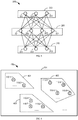
- FIG. 3 is a schematically diagram illustrating a neural network 300 for determining a feature representation according to embodiments of the present disclosure.
- the neural network 300 may include an input layer 310.
- the input layer may include neurons 311, 312 and 313 of the input layer.
- Each neuron 311, 312 and 313 of the input layer 310 may receive the feature value of each of the samples 110 as an input.
- a hidden layer 320 including neurons 321, 322, 323 and 324 of the hidden layer may receive an output from the input layer 320 and provide an output to a next layer 330 after some operations.
- a layer 330 including neurons 331, 332, and 333 may be an output layer or a next hidden layer.
- the computing device 102 may determine the feature representation of the samples 110 based on, for example, the neurons 321, 322, 323 and 324 of the hidden layer.
- the computing device 102 may determine values outputted from the neurons 321, 322, 323 and 324 of the hidden layer as values of the feature vector in respective dimensions and determine the feature vector as the feature representation.
- the feature vector used as the feature representation may have four dimensions.
- the feature representation may be determined based on the neurons 331, 332, and 333.
- the computing device 102 may use a neural network having any number of hidden layers and any number of neurons of the hidden layer. In addition, the computing device 102 may determine, based on actual requirements (such as the type of the sample, and the requirement on the task), a hidden layer of which the neurons may be used.
- the feature representation may be determined based on data of the hidden layer generated by the trainable neural network, rather than a direct representation of sample features.
- the feature representation may indicate a closely related representation to a target, facilitating subsequent clustering.
- the neural network since the neural network is used to acquire a hidden layer vector representation of the sample 110, a classification accuracy of the neural network model is not strictly required, and the total noise samples can be directly used for training.
- the computing device 102 perform a clustering on the sample set 101 based on the feature representation determined at block 210 to obtain clusters including one or more of the samples 110.
- the clustering may employ any suitable clustering algorithm, including a k-means clustering algorithm, a density clustering algorithm such as density-based clustering algorithm (DBSCAN), and the like.
- a result of the clustering may typically include n clusters. Each cluster may include a different number of samples 110.
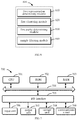
- FIG. 4 is a schematic diagram illustrating a result of a clustering according to embodiments of the present disclosure. As illustrated in FIG. 4 , clusters 401, 402 and 403 may be obtained by performing the clustering on the sample set 101. The cluster 401 may at least include the samples 110-1 and 110-2. The cluster 402 may at least include the samples 110-3, 110-5, 110-6 and 110-8. The cluster 403 may at least include the samples 110-4, 110-7 and 110-9. It should be understood, the results 400 of the clustering illustrated in FIG. 4 is merely illustrative and is not intended to limit the scope of the present disclosure. The result 400 of the clustering may also include more or fewer clusters, and the clusters 401, 402, and 403 each may also include more or fewer samples 110.
- the computing device 102 determines a purity of each cluster based on categories of samples included in the respective cluster.
- the purity may be used to indicate a chaotic degree the categories of samples included in the cluster. The more the categories of samples included in the cluster and the closer the number of samples corresponding to each category, the lower the purity of the cluster. Conversely, the higher the proportion of samples of a certain category in the cluster, the higher the purity of the cluster.
- the purity may be represented as a number between 0 and 1, or as a percentage, or can be represented using a suitable number.
- the computing device 102 may determine the purities for the clusters 401, 402, and 403, respectively. Different purity calculation methods may be designed according to different application requirements.
- a ratio of the number of samples included in a category having a largest number of samples to the number of samples included in the cluster may be used as the purity of the cluster.
- the computing device 102 can determine the number of samples for each category (i.e., the categories A, B, and C) in the cluster 402. For example, the computing device 102 may determine that, in the cluster 402, the number of samples corresponding to the category A may be 30, the number of samples corresponding to the category B may be 60, and the number of samples corresponding to the category C may be 10.
- the computing device 102 may determine a category having a maximum number based on the number of samples corresponding to each category A, B, and C. For example, the computing device 102 may determine that the number of samples corresponding to the category B is maximal in the cluster 402, and the maximum number is 60.
- the purity of other cluster (e.g., the cluster 401 and the cluster 403) may be determined in the same manner.
- k is 3
- p 1 represents the ratio (equaling to 0.6) corresponding to the category A
- p 2 represents the ratio (equaling to 0.3) corresponding to the category B
- p 3 represents the ratio (equaling to 0.1) corresponding to the category C.
- the computing device 102 determines filtered samples from the samples included in the cluster based on the purity determined at block 230.
- the computing device 102 may employ different post-processing strategies based on different purities to obtain high-quality samples from each cluster 401, 402 and 403. For example, different post-processing strategies may be adopted in three cases based on the purities.
- a first case is that the cluster includes a single category of samples (for example, the category A of samples).
- a second case is that the cluster includes multiple categories of samples and has a high purity (e.g., higher than a threshold).
- a third case is that the cluster includes multiple categories of samples and has a low purity (e.g., lower than a threshold).
- the process of determining the filtered samples based on the purity may be described in detail below with reference to FIG. 5 .
- the sample processing method 200 is described above.
- the entire sample set may be filtered and screened to obtain the high-quality annotated samples. Therefore, the solution of the present disclosure may filter and screen the samples, in particular, filter and screen the total large-scaled and noisy samples, thereby effectively removing noise samples, improving the quality of samples, and facilitating to improve an effect of large-scaled tasks of the supervised machine learning.
- the computing device 102 may perform the method 200 or a part of the method 200 illustrated in FIG. 2 on the filtered samples again to further filter the samples to obtain higher-quality samples.
- the computing device 102 may determine a subset of the sample set 102 based on the filtered samples obtained from the clusters 401, 402 and 403. As mentioned above with respect to FIG. 1 , the subset may be called in the present disclosure as the filtered sample set, such as the filtered sample set 103 illustrated in FIG. 1 .
- the filtered sample set 103 may include filtered samples obtained from the clusters 401, 402 and 403 associated with the sample set 101.
- blocks 210-240 illustrated in FIG. 2 may be applied to the filtered sample set 103 again to update the filtered samples.
- the computing device 102 may input the filtered sample set 103 into the feature extraction model (i.e., neural network) mentioned at block 210 to obtain an updated feature representation of the samples included in the filtered sample set 103. Since the neural network used of block 210 is learnable, in a case where the filtered sample set 103 different from the initial sample set 101 is applied, a different feature representation may be obtained for a same sample (e.g., for the sample 110-1). That is, an updated feature representation may be obtained.
- the computing device 102 may perform a clustering on the filtered sample set 103 based on the updated feature representation, to update the filtered samples based on a new result of the clustering (i.e., generated clusters and purities of the generated clusters). That is, the computing device 102 may repeat the blocks 230 and 240 of FIG. 2 .
- the blocks 220-240 of FIG. 2 may be executed for the filtered sample set 103 to update the filtered samples.
- the computing device 102 may perform the clustering on the filtered sample set 103 based on the feature representation previously determined at the block 210.
- the feature representation is unchanged for a same sample (e.g., sample 110-1).
- performing the clustering on the filtered sample set 103 may be implemented with different clustering algorithms or with different clustering parameters (e.g., a clustering distance) or with a combination thereof.
- the computing device 102 may further filter the samples based on the clusters obtained with the above-mentioned methods, to update the filtered samples.
- a better result of the clustering may be achieved by determining the high-quality samples.
- the better result of the clustering may facilitate to further obtain higher-quality samples until a termination condition is met.
- the termination condition may be designed according to a specific application scenario.
- the termination condition may be that, in the result of the clustering, a ratio of the number of samples included in the cluster having a low purity to the total number of samples included in the sample set 101 is less than a predetermined threshold.
- the termination condition may also be that the number of filtered samples is less than a predetermined number.
- the higher-quality samples may be further obtained by an iteration operation to improve the quality of samples ultimately obtained.
- the quality of samples may be further improved, thereby facilitating to improve an effect of a subsequent task of the supervised learning.
- FIG. 5 is a flow chart illustrating a method 500 for determining filtered samples according to embodiments of the present disclosure. The method 500 may be viewed as an implementation of the block 240 of FIG. 2 .
- the computing device 102 may determine whether the purity of the cluster is greater than a purity threshold.
- the purity threshold may depend on specific application scenarios, such as the categories of samples 110, requirements of the task of the supervised learning on sample accuracy, and the like.
- the filtered samples may be determined based on the categories of samples included in the cluster. That is, the method 500 may proceed to the block 520. For example, for the cluster 401 (or the cluster 402), the computing device 102 may determine that the purity of the cluster 401 (or the cluster 402) is greater than the purity threshold.
- the computing device 102 may determine whether the categories of samples included in the cluster 401 (or included in the cluster 402) are same to each other. In a case where the computing device 102 determines at the block 520 that the categories of samples included in the cluster are same to each other, the method 500 may proceed to the block 530. For example, for the cluster 401, the computing device 102 may determine 520 that the categories of samples included in the cluster 401 are all the category A. At the block 530, the computing device 102 may determine all of the samples included in the cluster 401 as the screened samples. For example, the samples 110-1, 110-2, etc. included in the cluster 401 may be determined as the screened samples.
- the method 500 may proceed to the block 540.
- the computing device 102 may determine that the samples in the cluster 402 correspond to the categories A, B, and C respectively.
- the cluster 402 includes multiple categories of samples and has a purity greater than the purity threshold, which means that a certain category of samples is the majority of the cluster 402.
- the computing device 102 may determine the number of samples corresponding to each category for the cluster 402. For example, as described above, the computing device 102 may determine that, in the cluster 402, the number of samples corresponding to the category A may be 30, the number of samples corresponding to the category B may be 60, and the number of samples corresponding to the category C may be 10.
- the computing device 102 may determine a category having the largest number of samples based on the number of samples for each category. For example, the computing device 102 may determine that, in the cluster 402, the number of samples corresponding to the category B is maximal.
- the computing device 102 may determine samples of the determined category as the filtered samples. For example, the computing device 102 may determine samples of the category B in cluster 402 (such as the samples 110-5 and 110-6) as the filtered samples.
- the samples 110-3, 110-8 and the like For other categories of samples than the category B (such as the samples 110-3, 110-8 and the like), different processing may be employed depending on different application scenarios, task requirements, and the like. For example, in a case where the number of samples of other categories is smaller than the total number of samples included in the sample set 101, the samples of these other categories may be discarded directly. If the subsequent task of the supervised learning needs higher requirements on the sample quality, the samples of other categories may be outputted, such that the samples of other categories may be manually annotated.
- automatic error correction may also be performed on samples of other categories in the cluster 402. For example, in a case where more than a certain proportion (such as 95%) of samples 110 included in the cluster 402 are of the category B, the samples of the categories A and C included in the cluster 402 may be corrected as samples of the category B. Further, corrected samples may also be determined as the filtered samples.
- the computing device 102 determines at the block 510 that the purity of the cluster is not greater than the purity threshold, different processing may be taken based on the number of samples included in the cluster. That is, the method 500 may proceed to the block 570. For example, for the cluster 403, the computing device 102 may determine at the block 510 that the purity of the cluster 403 is lower than the purity threshold, which means that the categories of the samples included in cluster 403 are uniformly distributed.
- the computing device 102 may determine a ratio of the number of samples included in the cluster 403 to the total number of samples included in the sample set 101.
- the computing device 102 may determine whether the ratio exceeds a ratio threshold.
- the ratio threshold is also called as an upper ratio threshold in the present disclosure. In a case where it is determined that the ratio exceeds the upper ratio threshold, the number of samples included in the cluster 403 is large and the method 500 may proceed to the block 590.
- the computing device 102 may perform the clustering on the samples (such as the samples 110-4, 110-7, 110-9, etc.) included in the cluster 403 to obtain a result of the clustering.
- the result of the clustering may be one or more subsets (also called as one or more sub-clusters) including the samples 110-4, 110-7, 110-9, etc. included in the cluster 403.
- the computing device 102 may determine at least part of the samples included in the cluster 403 as the filtered samples, based on the result of the clustering. For example, the computing device 102 may apply the blocks 230 and 240 of FIG. 2 to the one or more sub-clusters to determine the filtered samples.
- the computing device 102 may take different processing depending on the number of samples included in the cluster 403.
- the samples included in the cluster 403 may be discarded. For example, in a case where the ratio corresponding to the cluster 403 determined at the block 570 is less than another ratio threshold (also called as a lower ratio threshold, for ease of discussion), all samples included in the cluster 403 may be discarded.
- the ratio corresponding to the cluster 403 determined at the block 570 is greater than the lower ratio threshold
- different processing may be taken depending on the particular application scenario. For example, for a case that a requirement on sample accuracy is high and a total number of samples is not large enough, the samples included in the cluster 403 may be output and manually annotated. It is also possible to sampling the samples included in the cluster 403 and manually determine the subsequent processing. It is also possible to discard all the samples included in the cluster 403, or to reserve all of the samples for optimization in a next iteration.
- FIG. 6 is a block diagram illustrating a sample processing device 600 according to embodiments of the present disclosure.
- the device 600 may be integrated in the computing device 102 or may be implemented as the computing device 102.
- the device 600 may include a first representation determining module 610, configured to determine a feature representation of samples included in a sample set, each of the samples having a pre-annotated category.
- the device 600 may include a first clustering module 620, configured to perform a clustering on the samples to obtain a cluster including one or more of the samples based on the feature representation.
- the device 600 may include a first purity determining module 630, configured to determine a purity of the cluster based on categories of samples included in the cluster, the purity indicating a chaotic degree of the categories of samples included in the cluster.
- the device 600 may include a sample filtering module 640, configured to determine filtered samples from the samples included in the cluster based on the purity.
- the sample filtering module 640 may include a first sample determining module, configured to, in response to determining that the purity is higher than a purity threshold, determine the filtered samples based on the categories of the samples included in the cluster.
- the first sample determining module may include a second sample determining module, configured to, in response to determining that the categories of the samples included in the cluster are same to each other, determine the samples included in the cluster as the filtered samples.
- the first sample determining module may include a first number determining module, configured to, in response to determining that the categories of the samples included in the cluster are different, determine the number of samples for each category.
- the first sample determining module may include a maximal category determining module, configured to determine a target category having a maximal number of samples for the cluster based on the number of samples for each category.
- the first sample determining module may include a third sample determining module, configured to determine samples of the target category as the filtered samples.
- the sample clustering module 640 may include a sample ratio determining module, configured to, in response to determining that the purity is lower than a purity threshold, determine a ratio of the number of samples included in the cluster to the number of samples included in the sample set.
- the sample clustering module 640 may include a second clustering module, configured to, in response to determining that the ratio exceeds a ratio threshold, perform the clustering on the samples included in the cluster to obtain a result of the clustering.
- the sample clustering module 640 may include a fourth sample determining module, configured to determine at least part of the samples included in the cluster as the filtered samples at least based on the result of the clustering.
- the first representation determining module 610 may include a sample applying module, configured to input the sample set to a feature extraction model, to obtain neurons of hidden layer related to the sample set.
- the first representation determining module 610 may include a second representation determining module, configured to determine the feature representation of the samples included in the sample set based on the neurons of the hidden layer.
- the device 600 may further include a first subset determining module, configured to determine a subset of the sample set at least based on the filtered samples, the subset including filtered samples obtained from at least one cluster associated with the sample set.
- the device 600 may further include a first subset applying module, configured to input the subset into the feature extraction model to obtain an updated feature representation of samples included in the subset.
- the device 600 may further include a first sample updating module, configured to perform the clustering on the subset to update the filtered samples based on a result of the clustering based on the updated feature representation.
- the first representation determining module 610 may include a third representation determining module, configured to determine feature values of the samples included in the sample set in a predefined feature space as the feature representation.
- the device 600 may further include a second subset determining module, configured to determine a subset of the sample set at least based on the filtered samples, the subset including filtered screens obtained from at least one cluster associated with the sample set.
- the device 600 may further include a second sample updating module, configured to perform the clustering on the subset based on the feature representation to update the filtered samples based on a result of the clustering.
- the first purity determining module 630 may further include a second number determining module, configured to determine the number of samples of each category for the cluster.
- the first purity determining module 630 may further include a maximal number determining module, configured to determine a maximal number of samples based on the number of samples of each category.
- the first purity determining module 630 may further a second purity determining module, configured to determine the purity based on the maximal number of samples and a total number of samples included in the cluster.
- FIG. 7 is a block diagram illustrating an exemplary device 700 for implementing embodiments of the present disclosure.
- the device 700 may be configured to implement the computing device 102 illustrated in FIG. 1 .
- the device 700 includes a central processing unit (CPU) 701.
- the CPU 701 may be configured to execute various appreciate actions and processing according to computer program instructions stored in a read only memory (ROM) 702 or computer program instructions loaded from a storage unit 708 to a random-access memory (RAM) 703.
- ROM read only memory
- RAM random-access memory
- various programs and data required by the device 700 may be further stored.
- the CPU 701, the ROM 702 and the RAM 703 are connected to each other via a bus 704.
- An input/output (I/O) interface 705 is also connected to the bus 704.
- Components of the device 700 are connected to the I/O interface 705, including an input unit 706, such as a keyboard, a mouse, etc.; an output unit 707, such as various types of displays, loudspeakers, etc.; a storage unit 708, such as a magnetic disk, a compact disk, etc.; and a communication unit 709, such as a network card, a modem, a wireless communication transceiver, etc.
- the communication unit 709 allows the device 700 to exchange information/data with other devices through a computer network, such as Internet, and/or various telecommunication networks.
- the various procedures and processing described above, such as any of the method 200 and the method 500, may be performed by the processing unit 701.
- the method 200 can be implemented as a computer software program that is tangibly enclosed in a machine readable medium, such as the storage unit 708.
- some or all computer programs may be loaded and/or installed onto the device 700 via the ROM 702 and/or the communication unit 709.
- One or more blocks of the method 200 described above may be performed when a computer program is loaded into the RAM 703 and executed by the CPU 701.
- the CPU 701 can be configured to perform any of the method 200 and the method 500 by any other suitable means (e.g., by means of firmware).
- exemplary types of hardware logic components include: field programmable gate array (FPGA), application specific integrated circuit (ASIC), application specific standard product (ASSP), system on chip (SOC), complex programmable logic device (CPLD).
- FPGA field programmable gate array
- ASIC application specific integrated circuit
- ASSP application specific standard product
- SOC system on chip
- CPLD complex programmable logic device
- Program code for implementing the methods of the present disclosure can be written in any combination of one or more programming languages.
- the program code may be provided to a general purpose computer, a special purpose computer or a processor or controller of other programmable data processing apparatus such that the program code, when executed by the processor or controller, causes that the functions/operations specified in the flowcharts and/or block diagrams are implemented.
- the program code may be executed entirely on the machine, partly on the machine, as part of the stand-alone software package, and partly on the remote machine or entirely on the remote machine or server.
- a machine-readable medium can be a tangible medium that can contain or store a program for use by or in connection with an instruction execution system, apparatus, or device.
- the machine-readable medium can be a machine-readable signal medium or a machine-readable storage medium.
- a machine-readable medium can include, but is not limited to, an electronic, magnetic, optical, electromagnetic, infrared, or semiconductor system, apparatus, or device, or any suitable combination of the foregoing.
- machine-readable storage media may include electrical connections based on one or more wires, a portable computer disk, a hard disk, a random access memory (RAM), a read only memory (ROM), an erasable programmable read only memory (EPROM or flash memory), optical fiber, compact disk read only memory (CD-ROM), optical storage device, magnetic storage device, or any suitable combination of the foregoing.
- RAM random access memory
- ROM read only memory
- EPROM or flash memory erasable programmable read only memory
- CD-ROM compact disk read only memory
- magnetic storage device magnetic storage device
Landscapes
- Engineering & Computer Science (AREA)
- Theoretical Computer Science (AREA)
- Data Mining & Analysis (AREA)
- Physics & Mathematics (AREA)
- General Physics & Mathematics (AREA)
- General Engineering & Computer Science (AREA)
- Evolutionary Computation (AREA)
- Artificial Intelligence (AREA)
- Computer Vision & Pattern Recognition (AREA)
- Software Systems (AREA)
- Computing Systems (AREA)
- Life Sciences & Earth Sciences (AREA)
- Databases & Information Systems (AREA)
- Mathematical Physics (AREA)
- Medical Informatics (AREA)
- Health & Medical Sciences (AREA)
- Bioinformatics & Cheminformatics (AREA)
- Evolutionary Biology (AREA)
- General Health & Medical Sciences (AREA)
- Bioinformatics & Computational Biology (AREA)
- Biomedical Technology (AREA)
- Biophysics (AREA)
- Computational Linguistics (AREA)
- Molecular Biology (AREA)
- Multimedia (AREA)
- Information Retrieval, Db Structures And Fs Structures Therefor (AREA)
- Image Analysis (AREA)
Applications Claiming Priority (1)
| Application Number | Priority Date | Filing Date | Title |
|---|---|---|---|
| CN201811043185.9A CN109242106B (zh) | 2018-09-07 | 2018-09-07 | 样本处理方法、装置、设备和存储介质 |
Publications (2)
| Publication Number | Publication Date |
|---|---|
| EP3620982A1 true EP3620982A1 (de) | 2020-03-11 |
| EP3620982B1 EP3620982B1 (de) | 2023-12-06 |
Family
ID=65060243
Family Applications (1)
| Application Number | Title | Priority Date | Filing Date |
|---|---|---|---|
| EP19195094.8A Active EP3620982B1 (de) | 2018-09-07 | 2019-09-03 | Probenverarbeitungsverfahren und -vorrichtung |
Country Status (5)
| Country | Link |
|---|---|
| US (1) | US20200082213A1 (de) |
| EP (1) | EP3620982B1 (de) |
| JP (1) | JP6980728B2 (de) |
| KR (1) | KR102250728B1 (de) |
| CN (1) | CN109242106B (de) |
Cited By (2)
| Publication number | Priority date | Publication date | Assignee | Title |
|---|---|---|---|---|
| EP4244721A4 (de) * | 2020-11-13 | 2024-10-16 | Nasdaq, Inc. | Systeme und verfahren zur optimierung der ressourcenzuweisung unter verwendung von maschinenlernen und prädiktiver steuerung |
| US12579480B2 (en) | 2021-09-30 | 2026-03-17 | Nasdaq, Inc. | Systems and methods to generate data messages indicating a probability of execution for data transaction objects using machine learning |
Families Citing this family (8)
| Publication number | Priority date | Publication date | Assignee | Title |
|---|---|---|---|---|
| CN110598065B (zh) * | 2019-08-28 | 2025-07-11 | 腾讯云计算(北京)有限责任公司 | 一种数据挖掘方法、装置和计算机可读存储介质 |
| CN111783518A (zh) * | 2020-05-14 | 2020-10-16 | 北京三快在线科技有限公司 | 训练样本生成方法、装置、电子设备及可读存储介质 |
| CN111507428B (zh) * | 2020-05-29 | 2024-01-05 | 深圳市商汤科技有限公司 | 数据处理方法及装置、处理器、电子设备、存储介质 |
| CN112132173B (zh) * | 2020-08-10 | 2024-05-14 | 贵州电网有限责任公司 | 一种基于聚类特征树的变压器无监督运行状态识别方法 |
| US12541709B2 (en) * | 2021-06-29 | 2026-02-03 | International Business Machines Corporation | Feature generation optimization |
| CN113988176B (zh) * | 2021-10-27 | 2024-07-19 | 支付宝(杭州)信息技术有限公司 | 样本标注方法和装置 |
| CN114444619B (zh) * | 2022-04-02 | 2022-07-26 | 北京百度网讯科技有限公司 | 样本生成方法、训练方法、数据处理方法以及电子设备 |
| CN118152826B (zh) * | 2024-05-09 | 2024-08-02 | 深圳市翔飞科技股份有限公司 | 基于行为分析的摄像机智能报警系统 |
Family Cites Families (13)
| Publication number | Priority date | Publication date | Assignee | Title |
|---|---|---|---|---|
| JP2002183171A (ja) * | 2000-12-12 | 2002-06-28 | Matsushita Electric Ind Co Ltd | 文書データ・クラスタリングシステム |
| WO2010119615A1 (ja) * | 2009-04-15 | 2010-10-21 | 日本電気株式会社 | 学習データ生成装置、及び固有表現抽出システム |
| US10503756B2 (en) * | 2011-01-03 | 2019-12-10 | The Board Of Trustees Of The Leland Stanford Junior University | Cluster processing and ranking methods including methods applicable to clusters developed through density based merging |
| CN103870751B (zh) * | 2012-12-18 | 2017-02-01 | 中国移动通信集团山东有限公司 | 入侵检测方法及系统 |
| CN104392253B (zh) * | 2014-12-12 | 2017-05-10 | 南京大学 | 一种草图数据集的交互式类别标注方法 |
| CN106469276B (zh) * | 2015-08-19 | 2020-04-07 | 阿里巴巴集团控股有限公司 | 数据样本的类型识别方法及装置 |
| US11216491B2 (en) * | 2016-03-31 | 2022-01-04 | Splunk Inc. | Field extraction rules from clustered data samples |
| CN106528417A (zh) * | 2016-10-28 | 2017-03-22 | 中国电子产品可靠性与环境试验研究所 | 软件缺陷智能检测方法和系统 |
| KR102814912B1 (ko) * | 2016-12-15 | 2025-05-30 | 삼성전자주식회사 | 뉴럴 네트워크의 학습 방법 및 뉴럴 네트워크를 이용한 인식 방법, 및 그 장치 |
| US10791420B2 (en) * | 2017-02-22 | 2020-09-29 | Sony Corporation | Information processing device and information processing method |
| US10025813B1 (en) * | 2017-04-13 | 2018-07-17 | Sas Institute Inc. | Distributed data transformation system |
| CN107194430B (zh) * | 2017-05-27 | 2021-07-23 | 北京三快在线科技有限公司 | 一种样本筛选方法及装置,电子设备 |
| CN107463953B (zh) * | 2017-07-21 | 2019-11-19 | 上海媒智科技有限公司 | 在标签含噪情况下基于质量嵌入的图像分类方法及系统 |
-
2018
- 2018-09-07 CN CN201811043185.9A patent/CN109242106B/zh active Active
-
2019
- 2019-08-16 JP JP2019149372A patent/JP6980728B2/ja active Active
- 2019-08-29 KR KR1020190106197A patent/KR102250728B1/ko active Active
- 2019-09-03 EP EP19195094.8A patent/EP3620982B1/de active Active
- 2019-09-05 US US16/562,050 patent/US20200082213A1/en not_active Abandoned
Non-Patent Citations (6)
| Title |
|---|
| "International Conference on Financial Cryptography and Data Security", vol. 7573, 14 May 2012, SPRINGER, Berlin, Heidelberg, ISBN: 978-3-642-17318-9, article SAURABH SINGH ET AL: "Unsupervised Discovery of Mid-Level Discriminative Patches", pages: 73 - 86, XP055249243, 032548, DOI: 10.1007/978-3-642-33709-3_6 * |
| JAIN ARPIT ET AL: "Representing Videos Using Mid-level Discriminative Patches", IEEE COMPUTER SOCIETY CONFERENCE ON COMPUTER VISION AND PATTERN RECOGNITION. PROCEEDINGS, IEEE COMPUTER SOCIETY, US, 23 June 2013 (2013-06-23), pages 2571 - 2578, XP032493120, ISSN: 1063-6919, [retrieved on 20131002], DOI: 10.1109/CVPR.2013.332 * |
| LIU KAI ET AL: "Iterative samples labeling for sketch recognition", MULTIMEDIA TOOLS AND APPLICATIONS, KLUWER ACADEMIC PUBLISHERS, BOSTON, US, vol. 76, no. 10, 30 June 2016 (2016-06-30), pages 12819 - 12852, XP036242101, ISSN: 1380-7501, [retrieved on 20160630], DOI: 10.1007/S11042-016-3700-Z * |
| MARCHENKO YELIZAVETA ET AL: "Semi-supervised annotation of brushwork in paintings domain using serial combinations of multiple experts", ACM MULTIMEDIA 2006 & CO-LOCATED WORKSHOPS : OCTOBER 23 - 27, 2006, SANTA BARBARA, CALIFIRNIA, USA ; MM '06 ; PROCEEDINGS, ACM PRESS, [NEW YORK, NY], 23 October 2006 (2006-10-23), pages 529 - 538, XP058233329, ISBN: 978-1-59593-447-5, DOI: 10.1145/1180639.1180752 * |
| MICHAEL RIEGLER ET AL: "From Annotation to Computer-Aided Diagnosis", ACM TRANSACTIONS ON MULTIMEDIA COMPUTING COMMUNICATIONS ANDAPPLICATIONS, ASSOCIATION FOR COMPUTING MACHINERY, US, vol. 13, no. 3, 31 May 2017 (2017-05-31), pages 1 - 26, XP058372944, ISSN: 1551-6857, DOI: 10.1145/3079765 * |
| XU ET AL: "Integrated patch model: A generative model for image categorization based on feature selection", PATTERN RECOGNITION LETTERS, ELSEVIER, AMSTERDAM, NL, vol. 28, no. 12, 1 September 2007 (2007-09-01), pages 1581 - 1591, XP022134113, ISSN: 0167-8655, DOI: 10.1016/J.PATREC.2007.03.016 * |
Cited By (3)
| Publication number | Priority date | Publication date | Assignee | Title |
|---|---|---|---|---|
| EP4244721A4 (de) * | 2020-11-13 | 2024-10-16 | Nasdaq, Inc. | Systeme und verfahren zur optimierung der ressourcenzuweisung unter verwendung von maschinenlernen und prädiktiver steuerung |
| US12282803B2 (en) | 2020-11-13 | 2025-04-22 | Nasdaq, Inc. | Systems and methods of optimizing resource allocation using machine learning and predictive control |
| US12579480B2 (en) | 2021-09-30 | 2026-03-17 | Nasdaq, Inc. | Systems and methods to generate data messages indicating a probability of execution for data transaction objects using machine learning |
Also Published As
| Publication number | Publication date |
|---|---|
| US20200082213A1 (en) | 2020-03-12 |
| CN109242106B (zh) | 2022-07-26 |
| JP2020042797A (ja) | 2020-03-19 |
| EP3620982B1 (de) | 2023-12-06 |
| KR20200029351A (ko) | 2020-03-18 |
| JP6980728B2 (ja) | 2021-12-15 |
| KR102250728B1 (ko) | 2021-05-11 |
| CN109242106A (zh) | 2019-01-18 |
Similar Documents
| Publication | Publication Date | Title |
|---|---|---|
| EP3620982B1 (de) | Probenverarbeitungsverfahren und -vorrichtung | |
| CN108197652B (zh) | 用于生成信息的方法和装置 | |
| CN111753863B (zh) | 一种图像分类方法、装置、电子设备及存储介质 | |
| CN111523640B (zh) | 神经网络模型的训练方法和装置 | |
| CN109189767B (zh) | 数据处理方法、装置、电子设备及存储介质 | |
| WO2022042123A1 (zh) | 图像识别模型生成方法、装置、计算机设备和存储介质 | |
| CN112101190A (zh) | 一种遥感图像分类方法、存储介质及计算设备 | |
| CN110364185B (zh) | 一种基于语音数据的情绪识别方法、终端设备及介质 | |
| CN113377909B (zh) | 释义分析模型训练方法、装置、终端设备及存储介质 | |
| CN112749737A (zh) | 图像分类方法及装置、电子设备、存储介质 | |
| CN113011532A (zh) | 分类模型训练方法、装置、计算设备及存储介质 | |
| CN111368878B (zh) | 一种基于ssd目标检测的优化方法、计算机设备和介质 | |
| US20240233358A9 (en) | Image classification method, model training method, device, storage medium, and computer program | |
| CN115881103B (zh) | 语音情绪识别模型训练方法、语音情绪识别方法及装置 | |
| CN112445914A (zh) | 文本分类方法、装置、计算机设备和介质 | |
| CN116433974A (zh) | 一种标签分类的方法、装置、电子设备和存储介质 | |
| CN115661542A (zh) | 一种基于特征关系迁移的小样本目标检测方法 | |
| CN111507396A (zh) | 缓解神经网络对未知类样本产生错误分类的方法及装置 | |
| CN113239883A (zh) | 分类模型的训练方法、装置、电子设备以及存储介质 | |
| CN113627611A (zh) | 一种模型训练方法、装置、电子设备及存储介质 | |
| CN116229180B (zh) | 一种基于对称kld的处理多类型标签噪声的自适应动态阈值方法、系统、设备及介质 | |
| CN109447937B (zh) | 一种图像处理模型的确定方法及其相关装置 | |
| CN111767710B (zh) | 印尼语的情感分类方法、装置、设备及介质 | |
| CN116758365A (zh) | 视频处理方法、机器学习模型训练方法及相关装置、设备 | |
| CN114004291B (zh) | 用于生成词包的方法、装置、设备和介质 |
Legal Events
| Date | Code | Title | Description |
|---|---|---|---|
| PUAI | Public reference made under article 153(3) epc to a published international application that has entered the european phase |
Free format text: ORIGINAL CODE: 0009012 |
|
| STAA | Information on the status of an ep patent application or granted ep patent |
Free format text: STATUS: THE APPLICATION HAS BEEN PUBLISHED |
|
| AK | Designated contracting states |
Kind code of ref document: A1 Designated state(s): AL AT BE BG CH CY CZ DE DK EE ES FI FR GB GR HR HU IE IS IT LI LT LU LV MC MK MT NL NO PL PT RO RS SE SI SK SM TR |
|
| AX | Request for extension of the european patent |
Extension state: BA ME |
|
| STAA | Information on the status of an ep patent application or granted ep patent |
Free format text: STATUS: REQUEST FOR EXAMINATION WAS MADE |
|
| 17P | Request for examination filed |
Effective date: 20200911 |
|
| RBV | Designated contracting states (corrected) |
Designated state(s): AL AT BE BG CH CY CZ DE DK EE ES FI FR GB GR HR HU IE IS IT LI LT LU LV MC MK MT NL NO PL PT RO RS SE SI SK SM TR |
|
| STAA | Information on the status of an ep patent application or granted ep patent |
Free format text: STATUS: EXAMINATION IS IN PROGRESS |
|
| 17Q | First examination report despatched |
Effective date: 20210614 |
|
| REG | Reference to a national code |
Ref country code: DE Ref legal event code: R079 Free format text: PREVIOUS MAIN CLASS: G06K0009620000 Ipc: G06V0010762000 Ref document number: 602019042699 Country of ref document: DE |
|
| RIC1 | Information provided on ipc code assigned before grant |
Ipc: G06V 10/771 20220101ALI20230615BHEP Ipc: G06V 10/762 20220101AFI20230615BHEP |
|
| GRAP | Despatch of communication of intention to grant a patent |
Free format text: ORIGINAL CODE: EPIDOSNIGR1 |
|
| STAA | Information on the status of an ep patent application or granted ep patent |
Free format text: STATUS: GRANT OF PATENT IS INTENDED |
|
| INTG | Intention to grant announced |
Effective date: 20230809 |
|
| GRAS | Grant fee paid |
Free format text: ORIGINAL CODE: EPIDOSNIGR3 |
|
| GRAA | (expected) grant |
Free format text: ORIGINAL CODE: 0009210 |
|
| STAA | Information on the status of an ep patent application or granted ep patent |
Free format text: STATUS: THE PATENT HAS BEEN GRANTED |
|
| P01 | Opt-out of the competence of the unified patent court (upc) registered |
Effective date: 20231024 |
|
| AK | Designated contracting states |
Kind code of ref document: B1 Designated state(s): AL AT BE BG CH CY CZ DE DK EE ES FI FR GB GR HR HU IE IS IT LI LT LU LV MC MK MT NL NO PL PT RO RS SE SI SK SM TR |
|
| REG | Reference to a national code |
Ref country code: GB Ref legal event code: FG4D |
|
| REG | Reference to a national code |
Ref country code: CH Ref legal event code: EP |
|
| REG | Reference to a national code |
Ref country code: DE Ref legal event code: R096 Ref document number: 602019042699 Country of ref document: DE |
|
| REG | Reference to a national code |
Ref country code: IE Ref legal event code: FG4D |
|
| REG | Reference to a national code |
Ref country code: LT Ref legal event code: MG9D |
|
| PG25 | Lapsed in a contracting state [announced via postgrant information from national office to epo] |
Ref country code: GR Free format text: LAPSE BECAUSE OF FAILURE TO SUBMIT A TRANSLATION OF THE DESCRIPTION OR TO PAY THE FEE WITHIN THE PRESCRIBED TIME-LIMIT Effective date: 20240307 |
|
| REG | Reference to a national code |
Ref country code: NL Ref legal event code: MP Effective date: 20231206 |
|
| PG25 | Lapsed in a contracting state [announced via postgrant information from national office to epo] |
Ref country code: LT Free format text: LAPSE BECAUSE OF FAILURE TO SUBMIT A TRANSLATION OF THE DESCRIPTION OR TO PAY THE FEE WITHIN THE PRESCRIBED TIME-LIMIT Effective date: 20231206 |
|
| PG25 | Lapsed in a contracting state [announced via postgrant information from national office to epo] |
Ref country code: ES Free format text: LAPSE BECAUSE OF FAILURE TO SUBMIT A TRANSLATION OF THE DESCRIPTION OR TO PAY THE FEE WITHIN THE PRESCRIBED TIME-LIMIT Effective date: 20231206 |
|
| PG25 | Lapsed in a contracting state [announced via postgrant information from national office to epo] |
Ref country code: LT Free format text: LAPSE BECAUSE OF FAILURE TO SUBMIT A TRANSLATION OF THE DESCRIPTION OR TO PAY THE FEE WITHIN THE PRESCRIBED TIME-LIMIT Effective date: 20231206 Ref country code: GR Free format text: LAPSE BECAUSE OF FAILURE TO SUBMIT A TRANSLATION OF THE DESCRIPTION OR TO PAY THE FEE WITHIN THE PRESCRIBED TIME-LIMIT Effective date: 20240307 Ref country code: ES Free format text: LAPSE BECAUSE OF FAILURE TO SUBMIT A TRANSLATION OF THE DESCRIPTION OR TO PAY THE FEE WITHIN THE PRESCRIBED TIME-LIMIT Effective date: 20231206 Ref country code: BG Free format text: LAPSE BECAUSE OF FAILURE TO SUBMIT A TRANSLATION OF THE DESCRIPTION OR TO PAY THE FEE WITHIN THE PRESCRIBED TIME-LIMIT Effective date: 20240306 |
|
| REG | Reference to a national code |
Ref country code: AT Ref legal event code: MK05 Ref document number: 1639142 Country of ref document: AT Kind code of ref document: T Effective date: 20231206 |
|
| PG25 | Lapsed in a contracting state [announced via postgrant information from national office to epo] |
Ref country code: NL Free format text: LAPSE BECAUSE OF FAILURE TO SUBMIT A TRANSLATION OF THE DESCRIPTION OR TO PAY THE FEE WITHIN THE PRESCRIBED TIME-LIMIT Effective date: 20231206 |
|
| PG25 | Lapsed in a contracting state [announced via postgrant information from national office to epo] |
Ref country code: SE Free format text: LAPSE BECAUSE OF FAILURE TO SUBMIT A TRANSLATION OF THE DESCRIPTION OR TO PAY THE FEE WITHIN THE PRESCRIBED TIME-LIMIT Effective date: 20231206 Ref country code: RS Free format text: LAPSE BECAUSE OF FAILURE TO SUBMIT A TRANSLATION OF THE DESCRIPTION OR TO PAY THE FEE WITHIN THE PRESCRIBED TIME-LIMIT Effective date: 20231206 Ref country code: NO Free format text: LAPSE BECAUSE OF FAILURE TO SUBMIT A TRANSLATION OF THE DESCRIPTION OR TO PAY THE FEE WITHIN THE PRESCRIBED TIME-LIMIT Effective date: 20240306 Ref country code: NL Free format text: LAPSE BECAUSE OF FAILURE TO SUBMIT A TRANSLATION OF THE DESCRIPTION OR TO PAY THE FEE WITHIN THE PRESCRIBED TIME-LIMIT Effective date: 20231206 Ref country code: LV Free format text: LAPSE BECAUSE OF FAILURE TO SUBMIT A TRANSLATION OF THE DESCRIPTION OR TO PAY THE FEE WITHIN THE PRESCRIBED TIME-LIMIT Effective date: 20231206 Ref country code: HR Free format text: LAPSE BECAUSE OF FAILURE TO SUBMIT A TRANSLATION OF THE DESCRIPTION OR TO PAY THE FEE WITHIN THE PRESCRIBED TIME-LIMIT Effective date: 20231206 |
|
| PG25 | Lapsed in a contracting state [announced via postgrant information from national office to epo] |
Ref country code: IS Free format text: LAPSE BECAUSE OF FAILURE TO SUBMIT A TRANSLATION OF THE DESCRIPTION OR TO PAY THE FEE WITHIN THE PRESCRIBED TIME-LIMIT Effective date: 20240406 |
|
| PG25 | Lapsed in a contracting state [announced via postgrant information from national office to epo] |
Ref country code: AT Free format text: LAPSE BECAUSE OF FAILURE TO SUBMIT A TRANSLATION OF THE DESCRIPTION OR TO PAY THE FEE WITHIN THE PRESCRIBED TIME-LIMIT Effective date: 20231206 Ref country code: CZ Free format text: LAPSE BECAUSE OF FAILURE TO SUBMIT A TRANSLATION OF THE DESCRIPTION OR TO PAY THE FEE WITHIN THE PRESCRIBED TIME-LIMIT Effective date: 20231206 |
|
| PG25 | Lapsed in a contracting state [announced via postgrant information from national office to epo] |
Ref country code: SK Free format text: LAPSE BECAUSE OF FAILURE TO SUBMIT A TRANSLATION OF THE DESCRIPTION OR TO PAY THE FEE WITHIN THE PRESCRIBED TIME-LIMIT Effective date: 20231206 |
|
| PG25 | Lapsed in a contracting state [announced via postgrant information from national office to epo] |
Ref country code: SM Free format text: LAPSE BECAUSE OF FAILURE TO SUBMIT A TRANSLATION OF THE DESCRIPTION OR TO PAY THE FEE WITHIN THE PRESCRIBED TIME-LIMIT Effective date: 20231206 Ref country code: SK Free format text: LAPSE BECAUSE OF FAILURE TO SUBMIT A TRANSLATION OF THE DESCRIPTION OR TO PAY THE FEE WITHIN THE PRESCRIBED TIME-LIMIT Effective date: 20231206 Ref country code: RO Free format text: LAPSE BECAUSE OF FAILURE TO SUBMIT A TRANSLATION OF THE DESCRIPTION OR TO PAY THE FEE WITHIN THE PRESCRIBED TIME-LIMIT Effective date: 20231206 Ref country code: IT Free format text: LAPSE BECAUSE OF FAILURE TO SUBMIT A TRANSLATION OF THE DESCRIPTION OR TO PAY THE FEE WITHIN THE PRESCRIBED TIME-LIMIT Effective date: 20231206 Ref country code: IS Free format text: LAPSE BECAUSE OF FAILURE TO SUBMIT A TRANSLATION OF THE DESCRIPTION OR TO PAY THE FEE WITHIN THE PRESCRIBED TIME-LIMIT Effective date: 20240406 Ref country code: EE Free format text: LAPSE BECAUSE OF FAILURE TO SUBMIT A TRANSLATION OF THE DESCRIPTION OR TO PAY THE FEE WITHIN THE PRESCRIBED TIME-LIMIT Effective date: 20231206 Ref country code: CZ Free format text: LAPSE BECAUSE OF FAILURE TO SUBMIT A TRANSLATION OF THE DESCRIPTION OR TO PAY THE FEE WITHIN THE PRESCRIBED TIME-LIMIT Effective date: 20231206 Ref country code: AT Free format text: LAPSE BECAUSE OF FAILURE TO SUBMIT A TRANSLATION OF THE DESCRIPTION OR TO PAY THE FEE WITHIN THE PRESCRIBED TIME-LIMIT Effective date: 20231206 |
|
| PG25 | Lapsed in a contracting state [announced via postgrant information from national office to epo] |
Ref country code: PL Free format text: LAPSE BECAUSE OF FAILURE TO SUBMIT A TRANSLATION OF THE DESCRIPTION OR TO PAY THE FEE WITHIN THE PRESCRIBED TIME-LIMIT Effective date: 20231206 Ref country code: PT Free format text: LAPSE BECAUSE OF FAILURE TO SUBMIT A TRANSLATION OF THE DESCRIPTION OR TO PAY THE FEE WITHIN THE PRESCRIBED TIME-LIMIT Effective date: 20240408 |
|
| PG25 | Lapsed in a contracting state [announced via postgrant information from national office to epo] |
Ref country code: PT Free format text: LAPSE BECAUSE OF FAILURE TO SUBMIT A TRANSLATION OF THE DESCRIPTION OR TO PAY THE FEE WITHIN THE PRESCRIBED TIME-LIMIT Effective date: 20240408 Ref country code: PL Free format text: LAPSE BECAUSE OF FAILURE TO SUBMIT A TRANSLATION OF THE DESCRIPTION OR TO PAY THE FEE WITHIN THE PRESCRIBED TIME-LIMIT Effective date: 20231206 |
|
| REG | Reference to a national code |
Ref country code: DE Ref legal event code: R097 Ref document number: 602019042699 Country of ref document: DE |
|
| PG25 | Lapsed in a contracting state [announced via postgrant information from national office to epo] |
Ref country code: DK Free format text: LAPSE BECAUSE OF FAILURE TO SUBMIT A TRANSLATION OF THE DESCRIPTION OR TO PAY THE FEE WITHIN THE PRESCRIBED TIME-LIMIT Effective date: 20231206 |
|
| PLBE | No opposition filed within time limit |
Free format text: ORIGINAL CODE: 0009261 |
|
| STAA | Information on the status of an ep patent application or granted ep patent |
Free format text: STATUS: NO OPPOSITION FILED WITHIN TIME LIMIT |
|
| PG25 | Lapsed in a contracting state [announced via postgrant information from national office to epo] |
Ref country code: SI Free format text: LAPSE BECAUSE OF FAILURE TO SUBMIT A TRANSLATION OF THE DESCRIPTION OR TO PAY THE FEE WITHIN THE PRESCRIBED TIME-LIMIT Effective date: 20231206 |
|
| PG25 | Lapsed in a contracting state [announced via postgrant information from national office to epo] |
Ref country code: SI Free format text: LAPSE BECAUSE OF FAILURE TO SUBMIT A TRANSLATION OF THE DESCRIPTION OR TO PAY THE FEE WITHIN THE PRESCRIBED TIME-LIMIT Effective date: 20231206 Ref country code: DK Free format text: LAPSE BECAUSE OF FAILURE TO SUBMIT A TRANSLATION OF THE DESCRIPTION OR TO PAY THE FEE WITHIN THE PRESCRIBED TIME-LIMIT Effective date: 20231206 |
|
| 26N | No opposition filed |
Effective date: 20240909 |
|
| PG25 | Lapsed in a contracting state [announced via postgrant information from national office to epo] |
Ref country code: MC Free format text: LAPSE BECAUSE OF FAILURE TO SUBMIT A TRANSLATION OF THE DESCRIPTION OR TO PAY THE FEE WITHIN THE PRESCRIBED TIME-LIMIT Effective date: 20231206 |
|
| REG | Reference to a national code |
Ref country code: CH Ref legal event code: PL |
|
| PG25 | Lapsed in a contracting state [announced via postgrant information from national office to epo] |
Ref country code: LU Free format text: LAPSE BECAUSE OF NON-PAYMENT OF DUE FEES Effective date: 20240903 |
|
| REG | Reference to a national code |
Ref country code: BE Ref legal event code: MM Effective date: 20240930 |
|
| PG25 | Lapsed in a contracting state [announced via postgrant information from national office to epo] |
Ref country code: BE Free format text: LAPSE BECAUSE OF NON-PAYMENT OF DUE FEES Effective date: 20240930 |
|
| PG25 | Lapsed in a contracting state [announced via postgrant information from national office to epo] |
Ref country code: CH Free format text: LAPSE BECAUSE OF NON-PAYMENT OF DUE FEES Effective date: 20240930 |
|
| PG25 | Lapsed in a contracting state [announced via postgrant information from national office to epo] |
Ref country code: IE Free format text: LAPSE BECAUSE OF NON-PAYMENT OF DUE FEES Effective date: 20240903 |
|
| PG25 | Lapsed in a contracting state [announced via postgrant information from national office to epo] |
Ref country code: FI Free format text: LAPSE BECAUSE OF FAILURE TO SUBMIT A TRANSLATION OF THE DESCRIPTION OR TO PAY THE FEE WITHIN THE PRESCRIBED TIME-LIMIT Effective date: 20231207 |
|
| PGFP | Annual fee paid to national office [announced via postgrant information from national office to epo] |
Ref country code: DE Payment date: 20250919 Year of fee payment: 7 |
|
| PGFP | Annual fee paid to national office [announced via postgrant information from national office to epo] |
Ref country code: GB Payment date: 20250804 Year of fee payment: 7 |
|
| PGFP | Annual fee paid to national office [announced via postgrant information from national office to epo] |
Ref country code: FR Payment date: 20250728 Year of fee payment: 7 |
|
| PG25 | Lapsed in a contracting state [announced via postgrant information from national office to epo] |
Ref country code: CY Free format text: LAPSE BECAUSE OF FAILURE TO SUBMIT A TRANSLATION OF THE DESCRIPTION OR TO PAY THE FEE WITHIN THE PRESCRIBED TIME-LIMIT; INVALID AB INITIO Effective date: 20190903 |
|
| PG25 | Lapsed in a contracting state [announced via postgrant information from national office to epo] |
Ref country code: HU Free format text: LAPSE BECAUSE OF FAILURE TO SUBMIT A TRANSLATION OF THE DESCRIPTION OR TO PAY THE FEE WITHIN THE PRESCRIBED TIME-LIMIT; INVALID AB INITIO Effective date: 20190903 |