EP3622968A1 - Compositions et procédés d'administration d'une substance à une cible biologique - Google Patents
Compositions et procédés d'administration d'une substance à une cible biologique Download PDFInfo
- Publication number
- EP3622968A1 EP3622968A1 EP19193586.5A EP19193586A EP3622968A1 EP 3622968 A1 EP3622968 A1 EP 3622968A1 EP 19193586 A EP19193586 A EP 19193586A EP 3622968 A1 EP3622968 A1 EP 3622968A1
- Authority
- EP
- European Patent Office
- Prior art keywords
- tetrazine
- ligand
- dienophile
- agent
- target
- Prior art date
- Legal status (The legal status is an assumption and is not a legal conclusion. Google has not performed a legal analysis and makes no representation as to the accuracy of the status listed.)
- Withdrawn
Links
- DDVOEDXRXIHYSB-UHFFFAOYSA-N CCOC(CCCCCN)=N Chemical compound CCOC(CCCCCN)=N DDVOEDXRXIHYSB-UHFFFAOYSA-N 0.000 description 1
- GDPXFDGABMDKIV-UHFFFAOYSA-N Cc1nnc(CCCCCN)nn1 Chemical compound Cc1nnc(CCCCCN)nn1 GDPXFDGABMDKIV-UHFFFAOYSA-N 0.000 description 1
- XZISSJXNQHROCE-UHFFFAOYSA-N OC(CCC=CCC1)C1Sc1ccc(CC(O)=O)cc1 Chemical compound OC(CCC=CCC1)C1Sc1ccc(CC(O)=O)cc1 XZISSJXNQHROCE-UHFFFAOYSA-N 0.000 description 1
- ORXSLDYRYTVAPC-UHFFFAOYSA-N OC(Cc(cc1)ccc1S)=O Chemical compound OC(Cc(cc1)ccc1S)=O ORXSLDYRYTVAPC-UHFFFAOYSA-N 0.000 description 1
Images

Classifications
-
- G—PHYSICS
- G01—MEASURING; TESTING
- G01N—INVESTIGATING OR ANALYSING MATERIALS BY DETERMINING THEIR CHEMICAL OR PHYSICAL PROPERTIES
- G01N33/00—Investigating or analysing materials by specific methods not covered by groups G01N1/00 - G01N31/00
- G01N33/48—Biological material, e.g. blood, urine; Haemocytometers
- G01N33/50—Chemical analysis of biological material, e.g. blood, urine; Testing involving biospecific ligand binding methods; Immunological testing
- G01N33/53—Immunoassay; Biospecific binding assay; Materials therefor
- G01N33/5306—Improving reaction conditions, e.g. reduction of non-specific binding, promotion of specific binding
-
- A—HUMAN NECESSITIES
- A61—MEDICAL OR VETERINARY SCIENCE; HYGIENE
- A61K—PREPARATIONS FOR MEDICAL, DENTAL OR TOILETRY PURPOSES
- A61K47/00—Medicinal preparations characterised by the non-active ingredients used, e.g. carriers or inert additives; Targeting or modifying agents chemically bound to the active ingredient
- A61K47/50—Medicinal preparations characterised by the non-active ingredients used, e.g. carriers or inert additives; Targeting or modifying agents chemically bound to the active ingredient the non-active ingredient being chemically bound to the active ingredient, e.g. polymer-drug conjugates
- A61K47/51—Medicinal preparations characterised by the non-active ingredients used, e.g. carriers or inert additives; Targeting or modifying agents chemically bound to the active ingredient the non-active ingredient being chemically bound to the active ingredient, e.g. polymer-drug conjugates the non-active ingredient being a modifying agent
- A61K47/54—Medicinal preparations characterised by the non-active ingredients used, e.g. carriers or inert additives; Targeting or modifying agents chemically bound to the active ingredient the non-active ingredient being chemically bound to the active ingredient, e.g. polymer-drug conjugates the non-active ingredient being a modifying agent the modifying agent being an organic compound
- A61K47/555—Medicinal preparations characterised by the non-active ingredients used, e.g. carriers or inert additives; Targeting or modifying agents chemically bound to the active ingredient the non-active ingredient being chemically bound to the active ingredient, e.g. polymer-drug conjugates the non-active ingredient being a modifying agent the modifying agent being an organic compound pre-targeting systems involving an organic compound, other than a peptide, protein or antibody, for targeting specific cells
-
- A—HUMAN NECESSITIES
- A61—MEDICAL OR VETERINARY SCIENCE; HYGIENE
- A61K—PREPARATIONS FOR MEDICAL, DENTAL OR TOILETRY PURPOSES
- A61K47/00—Medicinal preparations characterised by the non-active ingredients used, e.g. carriers or inert additives; Targeting or modifying agents chemically bound to the active ingredient
- A61K47/50—Medicinal preparations characterised by the non-active ingredients used, e.g. carriers or inert additives; Targeting or modifying agents chemically bound to the active ingredient the non-active ingredient being chemically bound to the active ingredient, e.g. polymer-drug conjugates
- A61K47/51—Medicinal preparations characterised by the non-active ingredients used, e.g. carriers or inert additives; Targeting or modifying agents chemically bound to the active ingredient the non-active ingredient being chemically bound to the active ingredient, e.g. polymer-drug conjugates the non-active ingredient being a modifying agent
- A61K47/68—Medicinal preparations characterised by the non-active ingredients used, e.g. carriers or inert additives; Targeting or modifying agents chemically bound to the active ingredient the non-active ingredient being chemically bound to the active ingredient, e.g. polymer-drug conjugates the non-active ingredient being a modifying agent the modifying agent being an antibody, an immunoglobulin or a fragment thereof, e.g. an Fc-fragment
- A61K47/6891—Pre-targeting systems involving an antibody for targeting specific cells
- A61K47/6897—Pre-targeting systems with two or three steps using antibody conjugates; Ligand-antiligand therapies
-
- A—HUMAN NECESSITIES
- A61—MEDICAL OR VETERINARY SCIENCE; HYGIENE
- A61K—PREPARATIONS FOR MEDICAL, DENTAL OR TOILETRY PURPOSES
- A61K49/00—Preparations for testing in vivo
- A61K49/001—Preparation for luminescence or biological staining
- A61K49/0013—Luminescence
- A61K49/0017—Fluorescence in vivo
- A61K49/0019—Fluorescence in vivo characterised by the fluorescent group, e.g. oligomeric, polymeric or dendritic molecules
- A61K49/0021—Fluorescence in vivo characterised by the fluorescent group, e.g. oligomeric, polymeric or dendritic molecules the fluorescent group being a small organic molecule
- A61K49/0041—Xanthene dyes, used in vivo, e.g. administered to a mice, e.g. rhodamines, rose Bengal
-
- A—HUMAN NECESSITIES
- A61—MEDICAL OR VETERINARY SCIENCE; HYGIENE
- A61K—PREPARATIONS FOR MEDICAL, DENTAL OR TOILETRY PURPOSES
- A61K51/00—Preparations containing radioactive substances for use in therapy or testing in vivo
- A61K51/02—Preparations containing radioactive substances for use in therapy or testing in vivo characterised by the carrier, i.e. characterised by the agent or material covalently linked or complexing the radioactive nucleus
- A61K51/04—Organic compounds
- A61K51/0474—Organic compounds complexes or complex-forming compounds, i.e. wherein a radioactive metal (e.g. 111In3+) is complexed or chelated by, e.g. a N2S2, N3S, NS3, N4 chelating group
-
- A—HUMAN NECESSITIES
- A61—MEDICAL OR VETERINARY SCIENCE; HYGIENE
- A61K—PREPARATIONS FOR MEDICAL, DENTAL OR TOILETRY PURPOSES
- A61K51/00—Preparations containing radioactive substances for use in therapy or testing in vivo
- A61K51/02—Preparations containing radioactive substances for use in therapy or testing in vivo characterised by the carrier, i.e. characterised by the agent or material covalently linked or complexing the radioactive nucleus
- A61K51/04—Organic compounds
- A61K51/0495—Pretargeting
-
- A—HUMAN NECESSITIES
- A61—MEDICAL OR VETERINARY SCIENCE; HYGIENE
- A61P—SPECIFIC THERAPEUTIC ACTIVITY OF CHEMICAL COMPOUNDS OR MEDICINAL PREPARATIONS
- A61P31/00—Antiinfectives, i.e. antibiotics, antiseptics, chemotherapeutics
-
- B—PERFORMING OPERATIONS; TRANSPORTING
- B82—NANOTECHNOLOGY
- B82Y—SPECIFIC USES OR APPLICATIONS OF NANOSTRUCTURES; MEASUREMENT OR ANALYSIS OF NANOSTRUCTURES; MANUFACTURE OR TREATMENT OF NANOSTRUCTURES
- B82Y5/00—Nanobiotechnology or nanomedicine, e.g. protein engineering or drug delivery
-
- G—PHYSICS
- G01—MEASURING; TESTING
- G01N—INVESTIGATING OR ANALYSING MATERIALS BY DETERMINING THEIR CHEMICAL OR PHYSICAL PROPERTIES
- G01N33/00—Investigating or analysing materials by specific methods not covered by groups G01N1/00 - G01N31/00
- G01N33/48—Biological material, e.g. blood, urine; Haemocytometers
- G01N33/50—Chemical analysis of biological material, e.g. blood, urine; Testing involving biospecific ligand binding methods; Immunological testing
- G01N33/53—Immunoassay; Biospecific binding assay; Materials therefor
- G01N33/531—Production of immunochemical test materials
- G01N33/532—Production of labelled immunochemicals
-
- A—HUMAN NECESSITIES
- A61—MEDICAL OR VETERINARY SCIENCE; HYGIENE
- A61K—PREPARATIONS FOR MEDICAL, DENTAL OR TOILETRY PURPOSES
- A61K38/00—Medicinal preparations containing peptides
Definitions
- the present application provides compositions and methods using bioorthogonal inverse electron demand Diels-Alder cycloaddition reactions for rapid and specific covalent delivery of a "payload" to a ligand bound to a biological target.
- Bioorthogonal "click” chemistries are widely used in chemical biology for a myriad of applications such as activity based protein profiling, crosslinking of proteins, monitoring cell proliferation, generation of novel enzyme inhibitors, monitoring the synthesis of newly formed proteins, protein target identification, and studying glycan processing.
- intracellular live cell labeling requires reagents that can easily pass through biological membranes and kinetics that enable rapid labeling even with the low concentrations of agent that make it across the cell membrane.
- a practical intracellular bioorthogonal coupling scheme would need to incorporate a mechanism by which the fluorescent tag increases in fluorescence upon covalent reaction to avoid visualizing accumulated but unreacted imaging probes (i.e. background). This "turn-on” would significantly increase the signal-to-background ratio, which is particularly relevant to imaging targets inside living cells since a stringent washout of unreacted probe is not possible.
- the bioorthogonal Diels-Alder reaction is compatible with aqueous environments and has second order rate constants that are known to be enhanced up to several hundred-fold in aqueous media in comparison to organic solvents. ( Rideout DC et al., 1980, J Am Chem Soc 102:7816-7817 ; Graziano G, 2004, J Phys Org Chem 17:100-101 ). Many Diels-Alder reactions are reversible, therefore, they may not be suitable for biological labeling.
- the present invention provides methods and compositions based on a bioorthogonal inverse electron demand Diels-Alder cycloaddition reaction for rapid and specific covalent delivery of a "payload" to a ligand bound to a biological target.
- the Diels-Alder reaction connects the two components of the reaction, a diene and a dienophile.
- the diene and dienophile are each physically connected, e.g., through a linker, either to the payload or to a ligand that binds to the target.
- This bioorthogonal chemistry platform can be used extracellularly or intracellularly, in vivo or in vitro.
- the methods and compositions described herein include using inverse electron demand Diels-Alder cycloaddition chemistry to chemically couple a diene with a dienophile.
- the diene is a heteroaromatic ring system containing two adjacent nitrogen atoms.
- the diene is a substituted tetrazine.
- the diene is a heteroaromatic ring system containing adjacent nitrogen atoms whereby the bioconjugation releases dinitrogen.
- the dienophile is an alkene such as ethylene, propylene or other straight chain alkene. In some embodiments, the dienophile is an internal alkyne, terminal alkyne, or cyclic alkyne such as cyclooctyne. In some embodiments, the alkene is a strained alkene such as norbornene or trans-cyclooctene.
- the invention features a target specific ligand, such as an antibody with a functional group (such as an amine, an alcohol, a carboxylic acid or ester) which can be chemically coupled to a small organic molecule such as trans- cyclooctenol containing a reactive moiety (such as an amine, an alcohol, a carboxylic acid or succinimidyl ester) available for coupling to the antibody, and a dienophile such as an alkene, carbonyl, nitroso, or imine available for reaction with a tetrazine in a Diels-Alder reation.
- a functional group such as an amine, an alcohol, a carboxylic acid or ester
- a reactive moiety such as an amine, an alcohol, a carboxylic acid or succinimidyl ester
- Diels-Alder chemistry involving a diene such as a tetrazine or other heteroaromatic ring system possessing at least two nitrogens positioned next to each other and a dienophile such as a strained alkene, norbornene or trans -cyclooctene.
- the invention includes compositions for delivering an agent (e.g., a "payload” as described herein, e.g., a detectable agent or therapeutic agent) to a selected biological target.
- the compositions include a first component attached to a ligand that is specific for the biological target; and a second component attached to the agent, wherein the first and second components are each selected from either a diene or a dienophile and are reactants for the inverse electron demand Diels-Alder reaction.
- the first component is a diene
- the second is a dienophile, and vice-versa.
- the term "attached to” includes chemical linkages, e.g., via a reactive group or a linker, as well as incorporation of the diene or dienophile into the ligand or agent, e.g., as a non-natural amino acid or nucleoside.
- the detectable agent can be selected from the group consisting of organic small molecules, inorganic compounds, nanoparticles, enzymes or enzyme substrates, fluorescent materials, luminescent materials, bioluminescent materials, radioactive materials, and contrast agents.
- the detectable agent is linked to a diene, and undergoes fluorogenic activation in the presence of the strained dienophile (i.e., is not fluorescent or weakly fluorescent in the absence of the dienophile, and becomes more strongly fluorescent in the presence of the dienophile upon completion of the Diels-Alder reaction).
- the agent can be, e.g., a small molecule, enzyme inhibitor, receptor protein inhibitor, small interfering RNA (siRNA), cytotoxin, radioactive ion, or other therapeutic agent.
- a small molecule enzyme inhibitor, receptor protein inhibitor, small interfering RNA (siRNA), cytotoxin, radioactive ion, or other therapeutic agent.
- siRNA small interfering RNA
- the invention provides methods of delivering a detectable agent to a biological target.
- the methods include contacting a biological target with a ligand, wherein the ligand is linked to a first component selected from either a diene or a dienophile, to form a ligand-target conjugate; contacting the ligand-target conjugate with a second component that is selected from either a diene or a dienophile and participates in an inverse electron demand Diels-Alder reaction with the first component, and wherein the conjugate is also linked to a detectable agent; under conditions and for a time sufficient time for the first and second components to undergo an inverse electron demand Diels-Alder reaction, thereby delivering the detectable agent to the target.
- the detectable agent is selected from the group consisting of organic small molecules, inorganic compounds, nanoparticles, enzymes or enzyme substrates, fluorescent materials, luminescent materials, bioluminescent materials, radioactive materials, and contrast agents.
- the methods further include detecting the detectable agent, e.g., using histochemistry, fluorescence detection, chemiluminescence detection, bioluminescence detection, magnetic resonance imaging, nuclear magnetic resonance imaging, X-ray imaging, X-ray computed tomography, ultrasound imaging, or photoacoustic imaging.
- detecting the detectable agent e.g., using histochemistry, fluorescence detection, chemiluminescence detection, bioluminescence detection, magnetic resonance imaging, nuclear magnetic resonance imaging, X-ray imaging, X-ray computed tomography, ultrasound imaging, or photoacoustic imaging.
- the biological target is in or on a live or dead cell, tissue section, or organism. In some embodiments, the biological target is in an in vitro assay.
- the invention features methods for delivering a therapeutic agent to a biological target.
- the methods include contacting a biological target with a ligand, wherein the ligand is linked to a first component selected from either a diene or a dienophile, to form a ligand-target conjugate; contacting the ligand-target conjugate with a second component that is selected from either a diene or a dienophile and participates in an inverse electron demand Diels-Alder reaction with the first component, and wherein the conjugate is also linked to a therapeutic agent; under conditions and for a time sufficient for the first and second components to undergo an inverse electron demand Diels-Alder reaction, thereby delivering the therapeutic agent to the target.
- the therapeutic agent is a small molecule, enzyme inhibitor, receptor protein inhibitor, small interfering RNA (siRNA), cytotoxin, radioactive ion, or other therapeutic agent.
- the cytotoxin is selected from the group consisting of taxol, cytochalasin B, gramicidin D, ethidium bromide, emetine, mitomycin, etoposide, tenoposide, vincristine, vinblastine, colchicin, doxorubicin, daunorubicin, dihydroxy anthracin dione, mitoxantrone, mithramycin, actinomycin D, 1-dehydrotestosterone, glucocorticoids, procaine, tetracaine, lidocaine, propranolol, puromycin, maytansinoids, and analogs or homologs thereof.
- the radioactive ion is selected from the group consisting of iodine 125, iodine 131, strontium 89, phosphorous, palladium, cesium, iridium, phosphate, cobalt, yttrium and praseodymium.
- the therapeutic agent is selected from the group consisting of antimetabolites, alkylating agents, anthracyclines, antibiotics, and anti-mitotic agents.
- the present invention is directed to compositions and methods for delivering a "payload," such as a therapeutic or detectable agent, to a biological target.
- a "payload" such as a therapeutic or detectable agent
- These methods include the use of bioconjugation using bioorthogonal chemistry such as the inverse electron demand Diels-Alder reaction to deliver a payload, such as a therapeutic or detectable compound, using specific ligands such as antibodies, small molecules and other biomolecules.
- the specific ligand is attached, optionally through a linker, to one component of the Diels-Alder pair, and the payload is attached, also optionally through a linker, to the other component.
- the payload is attached to a dienophile
- the payload is attached to the diene.
- the methods and compositions can be used, e.g., in vivo and in vitro, both extracellularly or intracellularly, as well as in assays such as cell free assays.
- the methods and compositions described herein can be used to deliver a payload to any biological target for which a specific ligand exists or can be generated.
- the ligand can bind to the target either covalently or noncovalently.
- Exemplary biological targets include biopolymers, e.g., proteins, nucleic acids, or polysaccharides; exemplary proteins include enzymes, receptors, ion channels, Other exemplary targets include small molecules, e.g., lipids, phospholipids, sugars, peptides, hormones, or neurotransmitters.
- the target is a tissue- or cell-type specific marker, e.g., a protein that is expressed specifically on a selected tissue or cell type.
- the target is a receptor, such as, but not limited to, plasma membrane receptors and nuclear receptors; more specific examples include ligand-gated ion channels, G-protein-coupled receptors, and growth factor receptors.
- the receptor is an epidermal growth factor receptor (EGFR).
- a ligand can be any compound, such as a small molecule or biomolecule (e.g., an antibody or antigen-binding fragment thereof), that binds specifically to a selected target, and can be functionalized by the addition of a diene or dienophile optionally via a linker.
- a small molecule or biomolecule e.g., an antibody or antigen-binding fragment thereof
- antibody refers to an immunoglobulin molecule or immunologically active portion thereof, i.e., an antigen-binding portion.
- immunologically active portions of immunoglobulin molecules include F(ab) and F(ab') 2 fragments, which retain the ability to bind antigen.
- F(ab)2 fragments can be generated by treating the antibody with an enzyme such as pepsin, a non-specific endopeptidase that normally produces one F(ab)2 fragment and numerous small peptides of the Fc portion.
- the resulting F(ab)2 fragment is composed of two disulfide-connected Fab units.
- Fc fragment is extensively degraded and can be separated from the F(ab)2 by dialysis, gel filtration or ion exchange chromatography.
- F(ab) fragments can be generated using papain, a non-specific thiol-endopeptidase that digests IgG molecules, in the presence of a reducing agent, into three fragments of similar size: two Fab fragments and one Fc fragment.
- papain is the enzyme of choice because it yields a 50,00 Dalton Fc fragment; to isolate the F(ab) fragments, the Fc fragments can be removed, e.g., by affinity purification using protein A/G.
- kits are available commercially for generating F(ab) fragments, including the ImmunoPure IgG1 Fab and F(ab') 2 Preparation Kit (Pierce Biotechnology, Rockford, IL).
- kits for generating antigen-binding fragments can be used, e.g., Bio Express, West Riverside, NH.
- the antibody can be a polyclonal, monoclonal, recombinant, e.g., a chimeric, de-immunized or humanized, fully human, non-human, e.g., murine, or single chain antibody.
- the antibody has effector function and can fix complement.
- the antibody has reduced or no ability to bind an Fc receptor.
- the antibody can be an isotype or subtype, fragment or other mutant, which does not support binding to an Fc receptor, e.g., it has a mutagenized or deleted Fc receptor binding region.
- binding portions of such antibodies include Fab fragments, F(ab')2 fragments, and Fv fragments.
- Fab fragments fragments
- F(ab')2 fragments fragments
- Fv fragments fragments
- These antibody fragments can be made by conventional procedures, such as proteolytic fragmentation procedures, as described in J. Goding, Monoclonal Antibodies: Principles and Practice, pp. 98-118 (N.Y. Academic Press 1983 ).
- Chimeric, humanized, de-immunized, or completely human antibodies are desirable for applications which include repeated administration, e.g., therapeutic treatment of human subjects.
- the antibody can also be a single chain antibody.
- a single-chain antibody (scFV) can be engineered (see, for example, Colcher et al., Ann. N. Y. Acad. Sci. 880:263-80 (1999 ); and Reiter, Clin. Cancer Res. 2:245-52 (1996 )).
- the single chain antibody can be dimerized or multimerized to generate multivalent antibodies having specificities for different epitopes of the same target protein.
- the antibody is monovalent, e.g., as described in Abbs et al., Ther. Immunol. 1(6):325-31 (1994 ), incorporated herein by reference.
- the antibody binds specifically to a tumor antigen, or to an antigen present in a tissue in which a tumor is present.
- a tumor antigen or to an antigen present in a tissue in which a tumor is present.
- a number of antibodies against cancer-related antigens are known ( Ross et al., Am J Clin Pathol 119(4):472-485, 2003 ).
- Examples include Alemtuzumab (Campath); Daclizumab (Zenapax); Rituximab (Rituxan); Trastuzumab (Herceptin); Gemtuzumab (Mylotarg); Ibritumomab (Zevalin); Edrecolomab (Panorex); Tositumomab (Bexxar); CeaVac; Epratuzumab (LymphoCide); Mitumomab; Bevacizumab (Avastin); Cetuximab (C-225; Erbitux); Edrecolomab; Lintuzumab (Zamyl); MDX-210; IGN-101; MDX-010; MAb, AME; ABX-EGF; EMD 72 000; Apolizumab; Labetuzumab; ior-t1; MDX-220; MRA; H-11 scFv; Oregovomab; huJ591 MAb,
- Small molecules are low molecular weight organic compounds (less than 2000 Daltons). Small molecules useful in the compositions and methods described herein bind with high affinity to a biopolymer, such as protein, nucleic acid, or polysaccharide, or other biological target. Useful small molecules are capable of being functionalized with a dienophile or a diene.
- a small molecule can be an agent such as taxol, which binds specifically to microtubules and is capable of being functionalized with a dienophile such as trans -cyclooctene or another alkene.
- Other examples include small molecules that bind specifically to receptors for hormones, cytokines, chemokines, or other signaling molecules.
- Biomolecules are organic molecules produced by living organisms, including large polymeric molecules such as proteins, polysaccharides, and nucleic acids as well as small molecules such as primary metabolites, secondary metabolites, and natural products. Specific small molecule examples include, but are not limited to, estradiol, testosterone, cholesterol, phosphatidylserine, or phosphatidylcholine.
- linker refers to a group of atoms, e.g., 0-500 atoms, and may be comprised of the atoms or groups such as, but not limited to, carbon, amino, alkylamino, oxygen, sulfur, sulfoxide, sulfonyl, carbonyl, and imine.
- the linker chain may also comprise part of a saturated, unsaturated or aromatic ring, including polycyclic and heteroaromatic rings wherein the heteroaromatic ring is an aryl group containing from one to four heteroatoms, N, O or S. Specific examples include, but are not limited to, unsaturated alkanes, polyethylene glycols, and dextran polymers.
- the linker must not interfere with binding of the ligand to the target, or with the Diels-Alder reaction.
- compositions and methods described herein include the use of Diels-Alder pairs that include a diene and a dienophile.
- Diene e.g., a substituted tetrazine
- a dienophile e.g., an alkene or alkyne
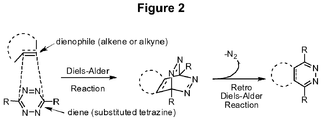
- the inverse electron demand Diels-Alder cycloaddition reaction of a diene (e.g., a substituted tetrazine) with a dienophile e.g., an alkene or alkyne
- a dienophile e.g., an alkene or alkyne
- the dihydropyrazine product may undergo an additional oxidation step to generate the corresponding pyrazine.
- Bioconjugation methods using inverse electron demand Diels-Alder cycloadditions between tetrazines and highly strained dienophiles such as norbornene and trans -cyclooctene are known in the literature, however the tetrazine used has limited stability to aqueous media.
- tetrazine To improve upon the stability of the tetrazine, a novel asymmetric tetrazine was employed that demonstrated superior stability in water and serum and can react with trans -cyclooctene at rates of approximately 10 3 M -1 sec -1 at 37 °C ( Devaraj et al., 2009, Angew Chem Int Ed Engl, 48, 7013-6 ). This extremely fast rate constant allows for the labeling of extracellular targets at low nanomolar concentrations of tetrazine labeling agent, concentrations that are sufficiently low to allow for real-time imaging of probe accummulation.
- the bioorthogonal inverse electron demand Diels-Alder reaction can be tailored to provide a straightforward method for the rapid, specific covalent labeling and imaging with ligands such as small molecules and other biomolecules inside living cells.
- ligands such as small molecules and other biomolecules inside living cells.
- no method has been universally adapted to intracellular labeling.
- described herein are a series of "turn-on" tetrazine-linked fluorescent probes that react rapidly via an inverse electron demand Diels-Alder reaction to strained dienophiles such as trans- cyclooctene. Upon cycloaddition, the fluorescence intensity increases dramatically, in some cases by ⁇ 20 fold.
- This fluorescence "turn-on" significantly lowers background signal.
- novel probes for live cell imaging of a ligand such as an antibody, small molecule, or other biomolecule modified with a strained alkene can provide a general method for labeling and imaging a ligand bound to a specific target.
- this bioorthogonal inverse electron demand Diels-Alder reaction can be applied to an asymmetric tetrazine and a strained alkene, which is physically coupled to a small molecule, i.e. a trans -cyclooctene modified taxol analog and can be used to label and image this small molecule bound to intracellular tubules.
- the rapid reaction rate coupled with fluorescence "turn-on” makes this a nearly ideal method for revealing small molecules inside living cells.
- the ligand e.g., an antibody, small molecule or other biomolecule
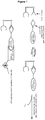
- the ligand is physically attached to the dienophile ( Figure 1 ).
- the ligand carries a functional group such as an amine, alcohol, carboxylic acid or ester, or other group of atoms on the ligand that can undergo a chemical reaction allowing attachment to the dienophile.
- the dienophile or heterodienophile which can be, e.g., an alkene, alkyne, nitroso, carbonyl or imine
- the reactive functional group on the ligand and/or dienophile undergoes a chemical reaction to form a link between the two.
- the functional group on the ligand can be a non-natural nucleoside or amino acid, e.g., as described in Xie and Schultz, Nat. Rev. Mol. Cell Biol. 7:775-782 (2006 ); for example, the diene or dienophile can be incorporated into a non-natural amino acid as the side chain.
- the ligand is a biopolymer such as a nucleic acid, peptide, or polypeptide
- the functional group on the ligand can be a non-natural nucleoside or amino acid, e.g., as described in Xie and Schultz, Nat. Rev. Mol. Cell Biol. 7:775-782 (2006 ); for example, the diene or dienophile can be incorporated into a non-natural amino acid as the side chain.
- One of skill in the art could readily
- the side chain of phenylalanine or tyrosine could be replace with a diene, e.g., a tetrazine; a dienophile, e.g., a trans-cyclooctene or norbornene, can replace the side chain of phenylalanine, tyrosine, isoleucine, leucine, or tryptophan.
- a diene e.g., a tetrazine
- a dienophile e.g., a trans-cyclooctene or norbornene
- These new non-natural amino acids can then be used similarly to known non-natural amino acids, e.g., cells can be incubated in the presence of the new non-natural amino acids, and proteins can be produced that include the diene or dienophile already incorporated into the primary structure of the protein.
- the diene can be a substituted tetrazine or other heteroaromatic ring system with at least two nitrogens adjacent to each other and which is a highly reactive participant in the inverse electron demand Diels-Alder reaction.
- the diene is linked to the payload (which can be, e.g., a therapeutic agent, fluorescence dye, or other detectable agent) ( Figure 2 ).
- the diene possesses a reactive group such as an amine, alcohol, carboxylic acid or ester, or other group that can undergo a chemical reaction with the reactive moiety on the payload to form a link between the two.
- Dienes useful in the present disclosure include but are not limited to aromatic ring systems that contain two adjacent nitrogen atoms, for example, tetrazines, pyridazines, substituted or unsubstituted 1,2-diazines.
- Other 1,2-diazines can include 1,2-diazines annelated to a second ⁇ -electron-deficient aromatic ring such as pyrido[3,4-d]pyridazines, pyridazino[4,5-d]pyridazines, and 1,2,4-triazines.
- Pyridazines can also be fused with a five-membered heterocycle such as imidazo[4,5-d]pyridazines and 1,2,3-triazolo[4,5-d]pyridazines.
- the diene is an asymmetrical tetrazine as described herein, e.g., 3-(p-Benzylamino)-1,2,4,5-tetrazine (1).
- Dienophiles useful in the present methods and compositions include but are not limited to carbon containing dienophiles such as alkenes or alkynes, or compounds containing nitroso, carbonyl or imine groups.
- the dienophile is a strained dienophile.
- a "strained" dienophile has a dihedral angle that deviates from the idealized 180 degree dihedral angle.
- non-strained dienophiles e.g., sytrenes
- electron rich electrophiles e.g., eneamines or vinyl ethers
- Alkenes as used herein refers to an alkyl group having one or more double carbon-carbon bonds such as an ethylene, propylene, and the like. Alkenes can also include cyclic, ring-strained alkenes such as trans -cyclooctene or norbornene carrying a double bond which induces significant ring strain and is thus highly reactive. Alkenes can also include more complex structures such as indoles and azaindoles, electron rich enamines. Heterodienophiles containing carbonyl, nitroso or imine groups can also be used. In some preferred embodiments, the dienophile is a trans-cyclooctenol, e.g., (E)-cyclooct-4-enol.
- the methods and compositions described herein are useful for delivering a payload to a biological target.
- the payload can be used, e.g., for labeling (e.g,. a detectable agent such as a fluorophore), or for therapeutic purposes (e.g., a cytotoxin or other therapeutic agent).
- the payload is a therapeutic agent such as a cytotoxin, radioactive ion, or other therapeutic agents.
- a cytotoxin or cytotoxic agent includes any agent that is detrimental to cells. Examples include taxol, cytochalasin B, gramicidin D, ethidium bromide, emetine, mitomycin, etoposide, tenoposide, vincristine, vinblastine, colchicin, doxorubicin, daunorubicin, dihydroxy anthracin dione, mitoxantrone, mithramycin, actinomycin D, 1-dehydrotestosterone, glucocorticoids, procaine, tetracaine, lidocaine, propranolol, puromycin, maytansinoids, e.g., maytansinol (see U.S.
- Radioactive ions include, but are not limited to iodine (e.g., iodine 125 or iodine 131), strontium 89, phosphorous, palladium, cesium, iridium, phosphate, cobalt, yttrium 90, Samarium 153 and praseodymium.
- therapeutic agents include, but are not limited to, antimetabolites (e.g., methotrexate, 6-mercaptopurine, 6-thioguanine, cytarabine, 5-fluorouracil decarbazine), alkylating agents (e.g., mechlorethamine, thioepa chlorambucil, CC-1065, melphalan, carmustine (BSNU) and lomustine (CCNU), cyclothosphamide, busulfan, dibromomannitol, streptozotocin, mitomycin C, and cis-dichlorodiamine platinum (II) (DDP) cisplatin), anthracyclines (e.g., daunorubicin (formerly daunomycin) and doxorubicin), antibiotics (e.g., dactinomycin (formerly actinomycin), bleomycin, mithramycin, and anthramycin (AMC)), and anti-mitotic agents
- Nucleic acids e.g., inhibitory nucleic acids, e.g., small interfering RNAs, antisense, aptamers, can also be used as therapeutic agents.
- detectable substances include various organic small molecules, inorganic compounds, nanoparticles, enzymes or enzyme substrates, fluorescent materials, luminescent materials, bioluminescent materials, chemiluminescent materials, radioactive materials, and contrast agents.
- suitable enzymes include horseradish peroxidase, alkaline phosphatase, beta-galactosidase, or acetylcholinesterase;
- suitable fluorescent materials include boron-dipyrromethene (BODIPY®), 4,4-difluoro-5,7-dimethyl-4-bora-3a,4a-diaza-s-indacene-3-propionic acid (BODIPY® FL), 6-((4,4-difluoro-1,3-dimethyl-5-(4-methoxyphenyl)-4-bora-3a,4a-diaza-s-indacene-2-propionyl)amino)hexanoic acid, succinimidyl ester (B
- contrast agents e.g., contrast agents for MRI or NMR, for X-ray CT, Raman imaging, optical coherence tomogrpahy, absorption imaging, ultrasound imaging, or thermal imaging can be used.
- contrast agents include gold (e.g., gold nanoparticles), gadolinium (e.g., chelated Gd), iron oxides (e.g., superparamagnetic iron oxide (SPIO), monocrystalline iron oxide nanoparticles (MIONs), and ultrasmall superparamagnetic iron oxide (USPIO)), manganese chelates (e.g., Mn-DPDP), barium sulfate, iodinated contrast media (iohexol), microbubbles, or perfluorocarbons can also be used.
- gold e.g., gold nanoparticles
- gadolinium e.g., chelated Gd
- iron oxides e.g., superparamagnetic iron oxide (SPIO), monocrystalline iron oxide nanoparticles (MIONs), and ultrasmall superparamagnetic iron oxide (USPIO)
- manganese chelates e.g., Mn-DPDP
- barium sulfate iodinated contrast
- the detectable agent is a non-detectable pre-cursor that becomes detectable upon activation.
- examples include fluorogenic tetrazine-fluorophore constructs (e.g., tetrazine-BODIPY FL, tetrazine-Oregon Green 488, or tetrazine-BODIPY TMR-X) or enzyme activatable fluorogenic agents (e.g., PROSENSE (VisEn Medical))
- the enzymatic label is detected by determination of conversion of an appropriate substrate to product.
- ELISAs enzyme linked immunosorbent assays
- IA enzyme immunoassay
- RIA radioimmunoassay
- Western blot analysis Western blot analysis.
- the compositions also include a cell penetrating moiety or agent that enhances intracellular delivery of the compositions.
- the compositions can include a cell-penetrating peptide sequence that facilitates delivery to the intracellular space, e.g., HIV-derived TAT peptide, penetratins, transportans, or hCT derived cell-penetrating peptides, see, e.g., Caron et al., (2001) Mol Ther. 3(3):310-8 ; Langel, Cell-Penetrating Peptides: Processes and Applications (CRC Press, Boca Raton FL 2002 ); El-Andaloussi et al., (2005) Curr Pharm Des.
- compositions can also be formulated to include a cell penetrating agent, e.g., liposomes, that enhances delivery of the compositions to the intracellular space.
- a cell penetrating agent e.g., liposomes
- compositions and methods described herein can be used in a number of different scenarios in which delivery of a substance (the "payload") to a biological target is desired, for example delivery of detectable substances for detection of the target, or delivery of a therapeutic agent.
- Detection methods can include both imaging in vitro and in vivo imaging methods, e.g., immunohistochemistry, bioluminescence imaging (BLI), Magnetic Resonance Imaging (MRI), positron emission tomography (PET), electron microscopy, X-ray computed tomography, Raman imaging, optical coherence tomography, absorption imaging, thermal imaging, fluorescence reflectance imaging, fluorescence microscopy, fluorescence molecular tomographic imaging, nuclear magnetic resonance imaging, X-ray imaging, ultrasound imaging, photoacoustic imaging, lab assays, or in any situation where tagging/staining/imaging is required.
- the Diels-Alder coupling reaction as described herein can be used in place of standard avidin (or streptavidin)/biotin coupling procedures.
- Many tissue types may contain endogenous biotin, so with the current standard biotin-based coupling procedures, an additional step to block the activity of the endogenous biotin may be necessary to eliminate unwanted non-specific background staining. This blocking step is not necessary if the compositions described herein are used.
- This procedure is also used for electron microscopy where the fluorophore-dienophile (or -diene) component is replaced by a gold nanoparticle-dienophile (or - diene) conjugate.
- the Diels-Alder coupling compositions described herein should also be applicable to any in situ hybridization (ISH) or fluorescence in situ hybridization (FISH) protocol for visualization of DNA or RNA in tissue or cell preparations in which the avidin (streptavidin)/biotin system is employed, e.g., Tyramide Signal Amplification FISH.
- ISH in situ hybridization
- FISH fluorescence in situ hybridization
- Diels-Alder coupling reaction as described herein can also be used as an alternative to secondary antibodies or in place of standard avidin (or streptavidin)/biotin coupling procedures during a western blot.
- compositions described herein can be used to deliver therapeutic agents to cells or tissues, e.g., in living animals.
- a therapeutic compound is attached to one half of the Diels-Alder pair, and a ligand that targets the desired cell or tissue is attached to the other half.
- a ligand such as an antibody that recognizes a tumor cell is attached to one half, and the other half is linked to a payload comprising a cytotoxin, e.g., a toxin or radioactive substance.
- compositions are particularly useful for pretargeting strategies where the ligand has a long half life in the body.
- monoclonal antibodies have a very long half-life in the blood. This property leads to poor target-to-background ratios when the antibodies are labeled directly with imaging agents or cytotoxins. See, e.g., Wu and Senter, Nat. Biotechnol. 23:1137-1146 (2005 ).
- the methods and compositions described herein can circumvent these problems.
- compositions which include compounds described herein as active ingredients. Also included are the pharmaceutical compositions themselves.
- the compositions include a ligand that is specific for a tumor antigen or cancerous tissue, and the payload is a therapeutic agent such as a cytotoxin, radioactive agent, or other therapeutic agent useful in treating cancer.
- compositions typically include a pharmaceutically acceptable carrier.
- pharmaceutically acceptable carrier includes saline, solvents, dispersion media, coatings, antibacterial and antifungal agents, isotonic and absorption delaying agents, and the like, compatible with pharmaceutical administration. Supplementary active compounds can also be incorporated into the compositions.
- compositions are typically formulated to be compatible with its intended route of administration.
- routes of administration include parenteral, e.g., intravenous, intradermal, subcutaneous, oral (e.g., inhalation), transdermal (topical), transmucosal, and rectal administration.
- solutions or suspensions used for parenteral, intradermal, or subcutaneous application can include the following components: a sterile diluent such as water for injection, saline solution, fixed oils, polyethylene glycols, glycerine, propylene glycol or other synthetic solvents; antibacterial agents such as benzyl alcohol or methyl parabens; antioxidants such as ascorbic acid or sodium bisulfite; chelating agents such as ethylenediaminetetraacetic acid; buffers such as acetates, citrates or phosphates and agents for the adjustment of tonicity such as sodium chloride or dextrose. pH can be adjusted with acids or bases, such as hydrochloric acid or sodium hydroxide.
- the parenteral preparation can be enclosed in ampoules, disposable sy
- compositions suitable for injectable use can include sterile aqueous solutions (where water soluble) or dispersions and sterile powders for the extemporaneous preparation of sterile injectable solutions or dispersion.
- suitable carriers include physiological saline, bacteriostatic water, Cremophor ELTM (BASF, Parsippany, NJ) or phosphate buffered saline (PBS).
- the composition must be sterile and should be fluid to the extent that easy syringability exists. It should be stable under the conditions of manufacture and storage and must be preserved against the contaminating action of microorganisms such as bacteria and fungi.
- the carrier can be a solvent or dispersion medium containing, for example, water, ethanol, polyol (for example, glycerol, propylene glycol, and liquid polyetheylene glycol, and the like), and suitable mixtures thereof.
- the proper fluidity can be maintained, for example, by the use of a coating such as lecithin, by the maintenance of the required particle size in the case of dispersion and by the use of surfactants.
- Prevention of the action of microorganisms can be achieved by various antibacterial and antifungal agents, for example, parabens, chlorobutanol, phenol, ascorbic acid, thimerosal, and the like.
- isotonic agents for example, sugars, polyalcohols such as mannitol, sorbitol, sodium chloride in the composition.
- Prolonged absorption of the injectable compositions can be brought about by including in the composition an agent that delays absorption, for example, aluminum monostearate and gelatin.
- Sterile injectable solutions can be prepared by incorporating the active compound in the required amount in an appropriate solvent with one or a combination of ingredients enumerated above, as required, followed by filtered sterilization.
- dispersions are prepared by incorporating the active compound into a sterile vehicle, which contains a basic dispersion medium and the required other ingredients from those enumerated above.
- the preferred methods of preparation are vacuum drying and freeze-drying, which yield a powder of the active ingredient plus any additional desired ingredient from a previously sterile-filtered solution thereof.
- Oral compositions generally include an inert diluent or an edible carrier.
- the active compound can be incorporated with excipients and used in the form of tablets, troches, or capsules, e.g., gelatin capsules.
- Oral compositions can also be prepared using a fluid carrier for use as a mouthwash.
- Pharmaceutically compatible binding agents, and/or adjuvant materials can be included as part of the composition.
- the tablets, pills, capsules, troches and the like can contain any of the following ingredients, or compounds of a similar nature: a binder such as microcrystalline cellulose, gum tragacanth or gelatin; an excipient such as starch or lactose, a disintegrating agent such as alginic acid, Primogel, or corn starch; a lubricant such as magnesium stearate or Sterotes; a glidant such as colloidal silicon dioxide; a sweetening agent such as sucrose or saccharin; or a flavoring agent such as peppermint, methyl salicylate, or orange flavoring.
- a binder such as microcrystalline cellulose, gum tragacanth or gelatin
- an excipient such as starch or lactose, a disintegrating agent such as alginic acid, Primogel, or corn starch
- a lubricant such as magnesium stearate or Sterotes
- a glidant such as colloidal silicon dioxide
- the compounds can be delivered in the form of an aerosol spray from a pressured container or dispenser that contains a suitable propellant, e.g., a gas such as carbon dioxide, or a nebulizer.
- a suitable propellant e.g., a gas such as carbon dioxide, or a nebulizer.
- Systemic administration of a therapeutic compound as described herein can also be by transmucosal or transdermal means.
- penetrants appropriate to the barrier to be permeated are used in the formulation.
- penetrants are generally known in the art, and include, for example, for transmucosal administration, detergents, bile salts, and fusidic acid derivatives.
- Transmucosal administration can be accomplished through the use of nasal sprays or suppositories.
- the active compounds are formulated into ointments, salves, gels, or creams as generally known in the art.
- compositions can also be prepared in the form of suppositories (e.g., with conventional suppository bases such as cocoa butter and other glycerides) or retention enemas for rectal delivery.
- suppositories e.g., with conventional suppository bases such as cocoa butter and other glycerides
- retention enemas for rectal delivery.
- Liposomes e.g., as described in U.S. Patent No. 6,472,375
- microencapsulation can also be used.
- Biodegradable targetable microparticle delivery systems can also be used (e.g., as described in U.S. Patent No. 6,471,996 ).
- the therapeutic compounds are prepared with carriers that will protect the therapeutic compounds against rapid elimination from the body, such as a controlled release formulation, including implants and microencapsulated delivery systems.
- a controlled release formulation including implants and microencapsulated delivery systems.
- Biodegradable, biocompatible polymers can be used, such as ethylene vinyl acetate, polyanhydrides, polyglycolic acid, collagen, polyorthoesters, and polylactic acid.
- Such formulations can be prepared using standard techniques, or obtained commercially, e.g., from Alza Corporation and Nova Pharmaceuticals, Inc.
- Liposomal suspensions (including liposomes targeted to selected cells with monoclonal antibodies to cellular antigens) can also be used as pharmaceutically acceptable carriers. These can be prepared according to methods known to those skilled in the art, for example, as described in U.S. Patent No. 4,522,811 .
- compositions can be included in a container, pack, or dispenser together with instructions for administration.
- Preparative HPLC was performed on a Varian ProStar model 210 instrument equipped with a model 335 diode array detector, a model 701 fraction collector, and a Varian RPC18 column (model A6002250X212) at a flow rate of 21 mL/minute.
- solvent A comprised water with 0.1% TFA
- solvent B comprised acetonitrile with 10% water and 0.1% TFA.
- All UV/vis spectra and kinetics experiments were recorded on an Agilent 8453 diode array UV/vis spectrophotometer. Pseudo first order rate constants from all kinetics experiments were calculated using the Agilent UV/vis Chemstation software package Rev. A.10.01. Fluorescence measurements were obtained using a Varian Cary Eclipse fluorescence spectrophotometer.
- the following example describes an exemplary method of synthesis of 3-(p-benzylamino)-tetrazine-VT680 conjugate.
- the remaining viscous pink oil ( ⁇ 20 g) was dissolved in 250 mL of buffer A and partially purified in 5 portions by loading onto 70 g Varian Mega Bond Elute RPC18 flash chromatography cartridges eluting with buffer A containing 25% MeOH.
- the resulting pink fractions were combined, concentrated, and purified by preparative HPLC using a gradient from 0 to 25% buffer B over 30 minutes, giving 1 (0.92 g, 20%) as a pink crystalline solid after solvent removal. The purity of 1 was verified by analytical HPLC.
- the expected molecular weight of 3 was calculated to be approximately 1309 for [M+H] + from the molecular weight of 1 and the vendor supplied molecular weight of 1238 for the NHS ester of VT680 (VivoTag 680 is an amine reactive N-hydroxysuccinimide (NHS) ester of a (benz)indolium-derived far red fluorescent dye).
- the experimentally observed molecular weight of 3 for [M+H] + is 1309.7.
- the following example describes an exemplary method of synthesis of 5-(4-(1,2,4,5-Tetrazin-3-yl)benzylamino)-5-oxopentanoic acid.
- the following example describes an exemplary method of synthesis of (4-(1,2,4,5 -Tetrazin-3 -yl)phenyl)methanol.
- the following example describes an exemplary method of synthesis of 2-(6-Methyl-1,2,4,5-tetrazin-3-yl)ethanol.
- the following example describes an exemplary method of synthesis of 2-(1,2,4,5-Tetrazin-3-yl)ethanol.
- the following example describes an exemplary method of synthesis of 5-(6-Methyl-1,2,4,5-tetrazin-3-yl)pentan-1-amine hydrochloride.
- the following example describes an exemplary method of synthesis of 5-(1,2,4,5-Tetrazin-3-yl)pentan-1-amine hydrochloride.
- the following example describes an exemplary method of synthesis of 2-(6-(Pyridin-2-yl)-1,2,4,5-tetrazin-3-yl)ethanol.
- the following example describes an exemplary method of synthesis of 2-(6-(Pyrimidin-2-yl)-1,2,4,5-tetrazin-3-yl)ethanol.
- 1,2,4,5-Tetrazine-3,6-diamine was prepared according the procedure described in JACS 1954, 76, 427 .
- ( E )-cyclooct-4-enol was synthesized from (Z)-cyclooct-4-enol using a modification of a previously reported protocol ( Royzen, M. et al. J. Am. Chem. Soc. 2008, 130, 3760-3761 ). Briefly, 1 gram of cyclooctenol (2) and 1.1 g methyl benzoate sensitizer was added to 250 mL solvent (9:1 Ether:Hexanes) in a 500 mL quartz reaction vessel (Southern New England Ultraviolet Company). No attempt to degas the solution was made.
- the vessel was irradiated with 254 nm light in a Rayonet RPR-100 UV reactor (Southern New England Ultraviolet Company) under constant stirring. At 30 minute intervals, the irradiation was stopped and the entire solution was passed through a column packed with silver nitrate (10%) impregnated silica (commercially available from Aldrich). The solution that passes through was then transferred back into the quartz flask and irradiation was continued. After 6 hours the irradiation was stopped and the silica was added to a solution of ammonium hydroxide and stirred for 5 minutes after which ether was added and stirring continued for 5 more minutes.
- ( E )-cyclooct-4-enyl 2,5-dioxopyrrolidin-1-yl carbonate 50 mg of ( E )-cyclooct-4-enol (major isomer) and 0.2 mL triethylamine were added to 3 mL anhydrous acetonitrile. To this solution was slowly added 250 mg of N,N-disuccinimidyl carbonate. The reaction mixture was stirred at room temperature until thin layer chromatography revealed that the reaction was complete (approximately 48 hours).
- Tetrazines conjugated to highly charged carbocyanine-based near-IR emitting fluorophores are useful in extracellular labeling.
- benzylamino tetrazine was conjugated to the succinimidyl esters of visible light emitting boron-dipyrromethene (BODIPY) dyes.
- BODIPY dyes are uncharged and lipophilic and for these reasons have seen use in intracellular applications ( Cole et al., 2000, J Microsc, 197, 239-49 ; Farinas and Verkman, 1999, J Biol Chem, 274, 7603-6 ; Miller et al., 2006, Nat Protoc, 1, 824-7 ; Takahashi et al., 2002, Diabetes, 51 Suppl 1, S25-8 ; Viht et al., 2003, Bioorg Med Chem Lett, 13, 3035-9 ).
- Tetrazines are well know to be an electron-poor class of heterocycles, hence their utility in inverse-electron demand cycloadditions.
- fluorogenic probes could have a myriad of applications, one use that would immediately benefit from a fluorogenic probe is the detection of small molecules inside live cells.
- fluorogenic tetrazines would be relevant for imaging intracellular molecular targets, we chose dienophile-modified paclitaxel (Taxol®) as a test system.
- Taxol® was selected because of its tremendous clinical impact, the large body of prior work that serves as reference, and because of its well studied ability to stabilize microtubules, providing a well-defined intracellular structure to image ( Evangelio et al., 1998, Cell Motil Cytoskeleton, 39, 73-90 ; Guy et al., 1996, Chem Biol, 3, 1021-31 ; Manfredi et al., 1982, J Cell Biol, 94, 688-96 ; Nicolaou et al., 1994, Angew. Chem. Int. Ed., 33, 15-44 ; Rowinsky et al., 1990, J. Natl.
- trans -cyclooctene taxol rapidly reacts with our tetrazine probes forming isomeric dihydropyrazine products, which can be detected by conventional means, such as LC-MS.
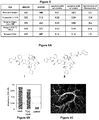
- Taxol trans -cyclooctene induced tubule bundles could be visualized by subsequent staining with tetrazine fluorophore probes such as tetrazine-BODIPY FL yielding brightly fluorescent tubule structures that could be imaged by fluorescent microscopy ( Figure 6c ).
- PtK2 rat kidney cells were incubated in cell media containing 1 ⁇ M trans -cyclooctene taxol for 1 hour at 37°C. After washing with media three times, the cells were exposed to media containing 1 ⁇ M tetrazine-BODIPY FL for 20 minutes at room temperature. The cells were then washed and imaged on a confocal microscope. Confocal microscopy of the PTK2 rat kangaroo cell after treatment with 1 ⁇ M trans-cyclooctene-taxol followed by 1 ⁇ M tetrazine-BODIPY FL showed that tubular structures were clearly stained.
- Taxol® is known to bind the microtubular networks of cells and there have been several reports of fluorescent taxol derivatives that can be used to image microtubular networks ( Evangelio et al., 1998, Cell Motil Cytoskeleton, 39, 73-90 ; Guy et al., 1996, Chem Biol, 3, 1021-31 ; Souto et al., 1995, Angew. Chem. Int. Ed., 34, 2710-2712 ).
- Epoxides like the one in the trans-cyclooctene product are reactive with nucleophiles such as amines and thiols and are used as is for attachment of the trans-octene to other biomolecules.
- alkyl-thiols (3-mercaptopropanoic acid, 2-(4-mercaptophenyl)acetic acid, etc.) or other nucleophiles containing additional functional groups such as, but not limited to carboxylic acids may be coupled to ( E )-9-oxabicyclo[6.1.0]non-4-ene via nucleophilic attack and subsequent ring opening of the epoxide functionality of ( E )-9-oxabicyclo[6.1.0]non-4-ene to yield corresponding carboxylic acid functionalized trans -cyclooctenes where the carboxylic acid functionality is linked to the cyclooctene via a chemically stable thioether bond.
- ( E )-2-(4-(8-hydroxycyclooct-4-enylthio)phenyl)acetic acid (as shown in the lower reaction path in the scheme above) is prepared by the reaction of 2-(4-mercaptophenyl)acetic acid (21.0 mg, 0.125 mmol) with ( E )-9-oxabicyclo[6.1.0]non-4-ene (15.5 mg, 0.125 mmol) in a mixture of acetonitrile (100 ⁇ L) and water (200 ⁇ L) with 20 mol% ZnCl 2 as catalyst. After stirring the biphasic mixture for 1 hour, the product is isolated by removal of the solvents under vacuum. LRMS-ESI [M+H] + calcd. for C 16 H 21 O 3 S + : 293.12, found: 293.1.
- This nucleophilic attack is adaptable to preparing amine-modified trans-cyclooctenes via nucleophilic attack of ammonia (or primary and secondary amines) on the epoxide of (E)-9-oxabicyclo[6.1.0]non-4-ene.
- HRP horseradish peroxidase
- succinimidyl esters of the dienophile or tetrazine coupling components are labeled with the succinimidyl esters of the dienophile or tetrazine coupling components.
- HRP in aqueous buffer is treated with the succinimidyl ester of 5-(4-(1,2,4,5-tetrazin-3-yl)benzylamino)-5-oxopentanoic acid (prepared by treatment of 5-(4-(1,2,4,5-tetrazin-3-yl)benzylamino)-5-oxopentanoic acid with disuccinimidyl carbonate in the presence of pyridine) to form tetrazine modified HRP (HRP-tetrazine).
- Antibodies such as, but not limited to, trastuzumab, were labeled with the succinimidyl esters of the dienophile or tetrazine coupling components.
- Trastuzumab in aqueous buffer was treated with a 30 molar excess of the succinimidyl ester of ((1S,2S,4S)-bicyclo[2.2.1]hept-5-en-2-yl acetic acid) (prepared by treatment of ((1S,2S,4S)-bicyclo[2.2.1]hept-5-en-2-yl acetic acid) in acetonitrile with 1.1 equiv of disuccinimidyl carbonate and 1 equiv of pyridine) to form ((1S,2S,4S)-bicyclo[2.2.1]hept-5-en-2-yl acetic acid) modified trastuzumab (mAb-norbornene).
- An anti-EGFR antibody (cetuximab) was labeled with trans-cyclooctene succinimidyl carbonate and used for pretargeting experiments as follows.
- Cetuximab (ImClone 2 mg/mL) was purchased and the solvent exchanged for 0.1M NaHCO 3 buffered at pH 8.5 with a final concentration of 7 mg/mL. To 200 uL of this stock solution was added 10 uL of DMF. (E)-cyclooct-4-enyl 2,5-dioxopyrrolidin-1-yl carbonate was dissolved in anhydrous DMF to make a 40 mM stock solution. For conjugation, the appropriate excess of amine reactive trans-cyclooctene in DMF was aliquoted into the antibody solution, vortexed, and reacted overnight at 4 °C.
- the final trans-cycloctene loadings of 1, 3, 5, and 6 correspond to using 2, 10, 30, and 100 equivalents of succinimidyl carbonate with respect to antibody.
- the antibodies were purified by centrifuge filtration using 5% DMSO PBS, concentrated to 2 mg/mL and stored in PBS at 4 °C.
- trans-cyclooctene modified antibody was physically absorbed onto polystyrene by immersing the surfaces in a 0.1 mg/mL solution of antibody in PBS for 3 hours. After numerous washes with PBS, the surface was exposed to 750 nM tetrazine VT680 in PBS at 37° C. After 5 minutes, the tetrazine solution was removed and the surface washed 3 times with PBS. The fluorescence due to the VT680 dye was measured on a fluorescence plate reader (Tecan Safire 2) and corrected for background fluorescence. The surface was again exposed to the tetrazine solution and the entire process repeated at 10, 15, 30, and 60 minutes.
- the fluorescence measurements were plotted versus time, fitted to a first order exponential growth curve and the pseudo first order rate constant determined. The entire experiment was repeated using two different concentrations of tetrazine (375 nM and 1000 nM) and the pseudo first order rate constants from all three experiments were plotted versus concentration, fitted to a straight line; the slope of the line was 6000 ⁇ 200 M-1sec-1 and was reported at the second order rate constant for the reaction between tetrazine VT680 and trans-cyclooctene bound to antibody.
- the human lung adenocarcinoma epithelial cell line A549 was selected for all experiments due to its mid-level over-expression of EGFR.
- the cell line was maintained in a standard ATCC formulated F-12K media supplemented with 10% fetal bovine serum and 5% penicillin/streptomycin.
- EGFP labeling of the cell line was done using a third-generation lentiviral vector system.
- 293T cells were transfected using lipofectamine 2000 in a subconfluent 10-cm dish with the vector pCCLsin.PPT.hPGK (10 ug), into which EGFP had been cloned, as well as pMDLg/p packaging (7 ug) and VSV-G envelope encoding pMD.G (5 ug) plasmids. These plasmids were obtained from Rafaella Sordella at the MGH Center for Cancer Research and Luigi Naldini at the San Raffaele Telethon Institute for Gene Therapy. Viral supernatant was collected after 48 hours, filtered with a 0.45 micron syringe filter, and stored at -80°C.
- the A549 cell line was infected in subconfluent wells of 24-well plates, using 300 uL of virus in 1 mL of F-12K culture media with 10% fetal calf serum. This protocol yielded an infection rate in excess of 80% (determined by visual assessment using fluorescence microscopy). EGFP-negative cells were removed using a modified 5-laser Becton-Dickinson FACSDiVa with standard techniques.
- the concentration of the tetrazine-VT680 label was lowered to 50 nm to enable observation of the covalent modification in real time.
- the images were taken during continuous imaging of the cycloaddition of the tetrazine-VT680 to the pretargeted trans-cyclooctene on live cancer cells in 100% FBS. Tetrazine- VT680 first became visible as it reacted and concentrated on the surface of cells; at later times, punctate spots within the cell were visible as tetrazine-labeled cetuximab was internalized.
- the loading density of the reactive transcyclooctene on the targeted antibodies was increased. A greater number of reactive sites per antibody should lead to more fluorophore per antibody after labeling and thus result in signal amplification.
- To vary the trans-cyclooctene loading we exposed cetuximab to different molar excesses of the amine-reactive trans-cyclooctene. The conjugates were modified with tetrazine- VT680, and the resulting fluorochrome absorbance was used to estimate the number of reactive trans-cyclooctene units per antibody.
- Confluent A549 cells were suspended using 0.05% Tryspin/0.53 mM EDTA, washed by centrifugation with PBS containing 2% FBS (PBS+), and 2.5x10⁵ cells were added to microcentrifuge tubes.
- Cetuximab antibody with the following modifications was then added at 10 ug/ml concentration in 100 uL PBS+: none (control), 1 trans-cyclooctene per antibody, 3 trans-cyclooctene per antibody, 5 trans-cyclooctene per antibody, 6 trans-cyclooctene per antibody.
- tetrazine-VT680 500 nm
- samples were washed with PBS+.
- trans-cyclooctene antibodies were labeled with Dylight 488 fluorophore (Pierce, ⁇ 1 per antibody) and the cells were resuspended in 100 uL PBS+ and incubated for 15, 30, or 60 minutes at 37°C before addition of 1 ml PBS+ and 2 washes by centrifugation.
- VT680 and DyeLight-488 fluorescence were assessed using an LSRII flow cytometer (Becton Dickinson) and analyzed using FlowJo software.
- this provides a highly sensitive technique for the covalent labeling of live cancer cells on the basis of the cycloaddition of a tetrazine to a highly strained trans-cyclooctene.
- Example 22 Pretargeting Methods Using an anti-HER2/neu Antibody
- trastuzumab Herceptin
- Her2/neu growth factor receptors Lewis et al., Cancer Immunol. Immun. 37, 255-263 (1993 )
- Preparative HPLC was performed on a Varian ProStar model 210 instrument equipped with a model 335 diode array detector, a model 701 fraction collector, and a Varian RPC18 column (model A6002250X212) at a flow rate of 21 mL/minute.
- solvent A consists of water with 0.1% TFA
- solvent B is composed of acetonitrile with 10% water and 0.1% TFA.
- All UV/vis spectra and kinetics experiments were recorded on an Agilent 8453 diode array UV/vis spectrophotometer. Pseudo first order rate constants from all kinetics experiments were calculated using the Agilent UV/vis Chemstation software package Rev. A.10.01.
- Fluorescence measurements were obtained using a Varian Cary Eclipse fluorescence spectrophotometer. 1H (400 MHz) and 13C NMR (100 MHz) spectra were collected on a Bruker Advance-400 NMR spectrometer at ambient temperature in D2O with 3- (trimethylsilyl)-propionic-2,2,3,3-D4 acid sodium salt (TSP) as an internal standard. High-resolution electrospray ionization (ESI) mass spectra were obtained on a Bruker Daltonics APEXIV 4.7 Tesla Fourier transform mass spectrometer (FT-ICR-MS).
- ESI electrospray ionization
- Norbornene carboxylic acid ((1S,2S,4S)-bicyclo[2.2.1]hept-5-en-2-yl acetic acid) was stirred for three hours with 1.1 equivalents of disuccinimidyl carbonate in acetontrile using 1 equivalent of pyridine as base. After reaction, solvent and base were removed by rotary evaporation and the crude norbornene succinimidyl ester with Nhydroxysuccinimide side product was recovered.
- SKBR-3 human mammary carcinoma cell lines were maintained in complete McCoy's medium. Cells were incubated at 37 oC with 200 nM modified trastuzumab for 30 minutes and then washed twice with 10% fetal bovine serum (FBS) in Hanks balanced salt solution (HBSS). Tetrazine labeling was performed by incubating the cells for 30 minutes at 37 oC in 10% FBS/HBSS containing 50 ⁇ M of tetrazine-VT680. Cells were then washed twice with 10% FBS/HBSS and imaged with by fluorescence microscopy.
- FBS fetal bovine serum
- HBSS Hanks balanced salt solution
- Nanoparticles containing amino functionality are labeled with the succinimidyl esters of the dienophile or tetrazine coupling components.
- Amine modified cross-linked iron oxide (CLIO-NH 2 ) nanoparticles are functionalized with the succinimidyl esters of the dienophile component by treatment of the CLIO-NH 2 with the succinimidyl ester of ((1S,2S,4S)-bicyclo[2.2.1]hept-5-en-2-yl acetic acid) in aqueous buffer followed by purification by centrifugal filtration or size exclusion chromatography.
- compositions described herein are useful in immunohistochemistry methods.
- the tissue section is incubated with the dienophile modified secondary antibody (mAb-norbornene) (prepared via a procedure analogous to the example above where trastuzumab is the antibody) After washing 3 times for 5 minutes each with PBS, the tissue section is incubated with HRP-tetrazine (as prepared in the example above) in PBS buffer for 30 minutes to conjugate the secondary antibody to the HRP-tetrazine via the inverse electron demand Diels-Alder coupling reaction. The tissue section is then washed 3 times for 5 minutes each to remove unconjugated HRP-tetrazine.
- the dienophile modified secondary antibody mAb-norbornene
- HRP-tetrazine as prepared in the example above
- tissue section is incubated with dilute H 2 O 2 (typically 0.5 to 10 ⁇ M) and the appropriate chromogenic peroxidase substrate such as, but not limited to, diaminobenzidine (DAB) or 3-amino-9-ethyl carbazole (AEC) until the desired staining intensity is obtained.
- DAB diaminobenzidine
- AEC 3-amino-9-ethyl carbazole
- HRP-tetrazine as prepared in the example above
- the tissue section is then washed 3 times for 5 minutes each to remove unconjugated HRP-tetrazine.
- the tissue section is incubated with dilute H 2 O 2 (typically 0.5 to 10 ⁇ M) and the appropriate chromogenic peroxidase substrate such as, but not limited to, diaminobenzidine (DAB) or 3-amino-9-ethyl carbazole (AEC) until the desired staining intensity is obtained.
- DAB diaminobenzidine
- AEC 3-amino-9-ethyl carbazole
- compositions described herein are useful in immunofluorescence methods.
- the tissue section is first incubated with norbornene or trans -cyclooctene labeled primary antibody (as prepared in the example above) in PBS buffer for 30 minutes. Unbound and non-specifically bound antibody is removed by washing with PBS 3 times for 5 minutes each. After washing, the tissue section is incubated with a tetrazine-fluorophore conjugate (such as, but not limited to tetrazine-VT680 (as prepared in a previous example)) in PBS buffer for 30 minutes to covalently couple the fluorophore to the primary antibody. The tissue section is then washed 3 times for 5 minutes each to remove unconjugated tetrazine-VT680. The procedure is completed by washing with water and mounting of the tissue section.
- a tetrazine-fluorophore conjugate such as, but not limited to tetrazine-VT680 (as prepared in a previous example)
- the tissue section is first incubated with unlabeled primary antibody in PBS buffer for 30 minutes. Unbound and non-specifically bound antibody is removed by washing with PBS 3 times for 5 minutes each. After washing, the tissue section is incubated with 4% blocking serum in PBS for 30 minutes using serum from the species in which the secondary antibody is made. The diluted serum solution is decanted and the tissue section is washed 3 times for 5 minutes each with PBS. Then the tissue section is incubated with the dienophile modified secondary antibody (mAb-norbornene) (prepared via a procedure analogous to the example above where trastuzumab is the antibody) for 30 minutes.
- mAb-norbornene dienophile modified secondary antibody
- tissue section After washing 3 times for 5 minutes each with PBS, the tissue section is incubated with a tetrazine-fluorophore conjugate (such as, but not limited to tetrazine-VT680 (as prepared in a previous example)) in PBS buffer for 30 minutes to covalently couple the fluorophore to the primary antibody.
- a tetrazine-fluorophore conjugate such as, but not limited to tetrazine-VT680 (as prepared in a previous example)
- PBS buffer for 30 minutes to covalently couple the fluorophore to the primary antibody.
- the tissue section is then washed 3 times for 5 minutes each to remove unconjugated tetrazine-VT680.
- the procedure is completed by washing with water and mounting of the tissue section.
- Norbornene or trans -cyclooctene labeled primary antibody (as prepared in the example above) is incubated with a tetrazine-fluorophore conjugate (such as, but not limited to tetrazine-VT680 (as prepared in a previous example)) in PBS buffer for 30 minutes to covalently couple the fluorophore to the primary antibody. If necessary this solution may be purified by centrifugal filtration. Otherwise, the crude fluorescently labeled primary antibody solution is incubated with the tissue section for 30 minutes in PBS. After incubation, unbound, non-specifically bound antibody, and any remaining tetrazine-fluorophore are removed by washing with PBS 3 times for 5 minutes each.
- a tetrazine-fluorophore conjugate such as, but not limited to tetrazine-VT680 (as prepared in a previous example
- compositions described herein are useful in TSA immunofluorescence methods.
- the tissue section is incubated with the dienophile modified secondary antibody (mAb-norbornene) (prepared via a procedure analogous to the example above where trastuzumab is the antibody) After washing 3 times for 5 minutes each with PBS, the tissue section is incubated with HRP-tetrazine (as prepared in the example above) in PBS buffer for 30 minutes to conjugate the secondary antibody to the HRP-tetrazine via the inverse electron demand Diels-Alder coupling reaction. The tissue section is then washed 3 times for 5 minutes each to remove unconjugated HRP-tetrazine.
- the dienophile modified secondary antibody mAb-norbornene
- HRP-tetrazine as prepared in the example above
- the tissue section is incubated with dilute H 2 O 2 (typically 0.5 to 10 ⁇ M) and the appropriate tyramide conjugated fluorophore substrate such as, but not limited to, fluorescein tyramide, tetramethylrhodamine tyramide, or Cy5 tyramide. After incubation for the desired time, the procedure is completed by washing with water or PBS 3 times for 5 minutes each to remove any excess fluorophore-tyramide and mounting of the tissue section.
- dilute H 2 O 2 typically 0.5 to 10 ⁇ M
- the appropriate tyramide conjugated fluorophore substrate such as, but not limited to, fluorescein tyramide, tetramethylrhodamine tyramide, or Cy5 tyramide.
- This procedure is also be used for electron microscopy where the fluorophore-tyramide component is replaced by a gold nanoparticle-tyramide conjugate.
- HRP-tetrazine as prepared in the example above
- tissue section is then washed 3 times for 5 minutes each to remove unconjugated HRP-tetrazine.
- the tissue section is incubated with dilute H 2 O 2 (typically 0.5 to 10 ⁇ M) and the appropriate tyramide conjugated fluorophore substrate such as, but not limited to, fluorescein tyramide, tetramethylrhodamine tyramide, or Cy5 tyramide. After incubation for the desired time, the procedure is completed by washing with water or PBS 3 times for 5 minutes each to remove any excess fluorophore-tyramide and mounting of the tissue section.
- dilute H 2 O 2 typically 0.5 to 10 ⁇ M
- tyramide conjugated fluorophore substrate such as, but not limited to, fluorescein tyramide, tetramethylrhodamine tyramide, or Cy5 tyramide.
- This procedure could also be used for electron microscopy where the fluorophore-tyramide component is replaced by a gold nanoparticle-tyramide conjugate.
- tissue section is then washed 3 times for 5 minutes each with PBS to remove unbound and non-specifically bound HRP secondary antibody.
- the tissue section is incubated with dilute H 2 O 2 (typically 0.5 to 10 ⁇ M) and tetrazine-tyramide or dienophile-tyramide constructs (prepared by coupling of the appropriate N-hydroxysuccinimidyl ester modified tetrazine or dienophile with tyramine) such as 5-(4-(1,2,4,5-tetrazin-3-yl)benzylamino)-5-oxopentanoic acid-tyramide.
- dilute H 2 O 2 typically 0.5 to 10 ⁇ M
- tetrazine-tyramide or dienophile-tyramide constructs prepared by coupling of the appropriate N-hydroxysuccinimidyl ester modified tetrazine or dienophile with tyramine
- tissue section is then treated with a fluorophore-dienophile conjugate (prepared by reaction of the N-hydroxysuccinimidyl ester of ((1S,2S,4S)-bicyclo[2.2.1]hept-5-en-2-yl acetic acid) or any trans -cyclooctene analog with the desired amine modified fluorophore, such as, but not limited to fluorescein, tetramethylrhodamine, or Cy5). After incubation for the desired time, the procedure is completed by washing with water or PBS 3 times for 5 minutes each to remove any excess fluorophore-dienophile and mounting of the tissue section.
- a fluorophore-dienophile conjugate prepared by reaction of the N-hydroxysuccinimidyl ester of ((1S,2S,4S)-bicyclo[2.2.1]hept-5-en-2-yl acetic acid
- any trans -cyclooctene analog such as, but not
- This procedure is also used for electron microscopy where the fluorophore-dienophile component is replaced by a gold nanoparticle-dienophile conjugate.
- the membrane is incubated blocking buffer for 30 minutes.
- the appropriate dilution of the primary antibody previously modified with trans -cyclooctene (prepared as dscribed in example 20), is then added to the solution, which is able to bind to its specific protein on the membrane.
- the membrane is incubated in this solution until a sufficient level of antibody binding is obtained.
- a tetrazine-fluorophore conjugate (prepared as described in examples 1 and 2), which undergoes inverse electron demand Diels-Alder cycloaddition to the trans -cyclooctene modified primary antibody, is incubated with the membrane for the appropriate time.
- the fluorescently tagged proteins on the membrane may be visualized by standard fluorescnece methodologies.
- the membrane is incubated with blocking buffer for 30 minutes to block non-specific sites on the membrane.
- the appropriate dilution of the primary antibody previously modified with trans -cyclooctene (prepared as dscribed in example 20), is then added to the solution, which is able to bind to its specific protein on the membrane.
- the membrane is incubated in this solution until a sufficient level of antibody binding is obtained.
- a tetrazine-HRP conjugate (prepared as described in example 19), which undergoes inverse electron demand Diels-Alder cycloaddition to the trans -cyclooctene modified primary antibody, is incubated with the membrane for the appropriate time.
- the membrane is incubated with H 2 O 2 (typically 0.5 to 10 ⁇ M) and the appropriate tyramide conjugated fluorophore substrate such as, but not limited to, fluorescein tyramide, tetramethylrhodamine tyramide, or Cy5 tyramide.
- the membrane After incubation for the desired time, the membrane is washed with PBS or water 3 times (for 5-15 minutes each) to remove non-coupled fluorophore-tyramide and the membrane is imaged by standard fluorescence procedures.
- the fluorophore instead of incubation with H 2 O 2 (typically 0.5 to 10 ⁇ M) and the appropriate tyramide conjugated fluorophore, the fluorophore can be replaced with a chemiluminescent substrate such as, but not limited to luminol.
- the membrane After addition of the H 2 O 2 /luminol solution to the membrane, in 1-5 minutes, the membrane may be imaged without washing by exposure of the membrane to X-ray film or with an appropriate digital camera system.
Landscapes
- Health & Medical Sciences (AREA)
- Life Sciences & Earth Sciences (AREA)
- Engineering & Computer Science (AREA)
- Chemical & Material Sciences (AREA)
- Immunology (AREA)
- General Health & Medical Sciences (AREA)
- Medicinal Chemistry (AREA)
- Animal Behavior & Ethology (AREA)
- Veterinary Medicine (AREA)
- Public Health (AREA)
- Epidemiology (AREA)
- Biomedical Technology (AREA)
- Molecular Biology (AREA)
- Pharmacology & Pharmacy (AREA)
- Hematology (AREA)
- Urology & Nephrology (AREA)
- Physics & Mathematics (AREA)
- Bioinformatics & Cheminformatics (AREA)
- Biotechnology (AREA)
- Nanotechnology (AREA)
- Biochemistry (AREA)
- General Physics & Mathematics (AREA)
- Analytical Chemistry (AREA)
- Cell Biology (AREA)
- Optics & Photonics (AREA)
- Microbiology (AREA)
- Proteomics, Peptides & Aminoacids (AREA)
- Pathology (AREA)
- Food Science & Technology (AREA)
- Chemical Kinetics & Catalysis (AREA)
- Medical Informatics (AREA)
- General Engineering & Computer Science (AREA)
- Biophysics (AREA)
- Crystallography & Structural Chemistry (AREA)
- Oncology (AREA)
- Nuclear Medicine, Radiotherapy & Molecular Imaging (AREA)
- Organic Chemistry (AREA)
- General Chemical & Material Sciences (AREA)
- Communicable Diseases (AREA)
- Medicines Containing Antibodies Or Antigens For Use As Internal Diagnostic Agents (AREA)
Applications Claiming Priority (3)
| Application Number | Priority Date | Filing Date | Title |
|---|---|---|---|
| US11012108P | 2008-10-31 | 2008-10-31 | |
| EP09824216.7A EP2361098B1 (fr) | 2008-10-31 | 2009-11-02 | Compositions et procédés d'administration d'une substance à une cible biologique |
| PCT/US2009/062958 WO2010051530A2 (fr) | 2008-10-31 | 2009-11-02 | Compositions et procédés d'administration d'une substance à une cible biologique |
Related Parent Applications (1)
| Application Number | Title | Priority Date | Filing Date |
|---|---|---|---|
| EP09824216.7A Division EP2361098B1 (fr) | 2008-10-31 | 2009-11-02 | Compositions et procédés d'administration d'une substance à une cible biologique |
Publications (1)
| Publication Number | Publication Date |
|---|---|
| EP3622968A1 true EP3622968A1 (fr) | 2020-03-18 |
Family
ID=42129583
Family Applications (2)
| Application Number | Title | Priority Date | Filing Date |
|---|---|---|---|
| EP19193586.5A Withdrawn EP3622968A1 (fr) | 2008-10-31 | 2009-11-02 | Compositions et procédés d'administration d'une substance à une cible biologique |
| EP09824216.7A Active EP2361098B1 (fr) | 2008-10-31 | 2009-11-02 | Compositions et procédés d'administration d'une substance à une cible biologique |
Family Applications After (1)
| Application Number | Title | Priority Date | Filing Date |
|---|---|---|---|
| EP09824216.7A Active EP2361098B1 (fr) | 2008-10-31 | 2009-11-02 | Compositions et procédés d'administration d'une substance à une cible biologique |
Country Status (4)
| Country | Link |
|---|---|
| US (2) | US8900549B2 (fr) |
| EP (2) | EP3622968A1 (fr) |
| CN (1) | CN102271712B (fr) |
| WO (1) | WO2010051530A2 (fr) |
Cited By (1)
| Publication number | Priority date | Publication date | Assignee | Title |
|---|---|---|---|---|
| WO2022197877A1 (fr) | 2021-03-19 | 2022-09-22 | Genentech, Inc. | Procédés et compositions pour une libération bio-orthogonale retardée d'agents cytotoxiques |
Families Citing this family (69)
| Publication number | Priority date | Publication date | Assignee | Title |
|---|---|---|---|---|
| CN102271712B (zh) | 2008-10-31 | 2015-11-25 | 通用医疗公司 | 用于将物质递送至生物靶标的组合物和方法 |
| WO2010119389A2 (fr) * | 2009-04-16 | 2010-10-21 | Koninklijke Philips Electronics N.V. | Kit de préciblage, procédé et agents utilisés dans celui-ci |
| US20120039803A1 (en) * | 2009-04-16 | 2012-02-16 | Koninklijke Philips Electronics N.V. | Pretargeting kit, method and agents used therein |
| CN103221398B (zh) * | 2010-07-23 | 2016-03-23 | 特拉华大学 | 用于快速构建放射性核素标记探针的四嗪-反式环辛烯连接反应 |
| TW201302793A (zh) | 2010-09-03 | 2013-01-16 | Glaxo Group Ltd | 新穎之抗原結合蛋白 |
| WO2012049624A1 (fr) | 2010-10-14 | 2012-04-19 | Koninklijke Philips Electronics N.V. | Kit et procédé de préciblage, et agents qu'ils utilisent |
| WO2012074840A2 (fr) | 2010-11-22 | 2012-06-07 | The General Hospital Corporation | Compositions et procédés d'imagerie in vivo |
| JP5992435B2 (ja) | 2010-12-21 | 2016-09-14 | コーニンクレッカ フィリップス エヌ ヴェKoninklijke Philips N.V. | 循環からの生体分子の除去剤 |
| EP2522369A1 (fr) * | 2011-05-09 | 2012-11-14 | Koninklijke Philips Electronics N.V. | Kit de pré-ciblage, procédé et agents utilisés avec celui-ci |
| EP2709666B1 (fr) * | 2011-05-16 | 2021-07-14 | Koninklijke Philips N.V. | Activation de médicament bio-orthogonal |
| JP6430253B2 (ja) | 2011-11-05 | 2018-11-28 | プレジデント アンド フェローズ オブ ハーバード カレッジ | 相互作用を検出および測定するための核酸ベースのリンカー |
| US10274490B2 (en) * | 2012-06-12 | 2019-04-30 | The General Hospital Corporation | Magnetic labeling of bacteria |
| WO2014065860A1 (fr) * | 2012-10-24 | 2014-05-01 | The General Hospital Corporation | Composés 1,2,4,5-tétrazines fonctionnalisés destinés à être utilisés dans des réactions de couplage bioorthogonaux |
| US10927139B2 (en) | 2012-11-22 | 2021-02-23 | Tagworks Pharmaceuticals B.V. | Chemically cleavable group |
| WO2014081299A1 (fr) * | 2012-11-22 | 2014-05-30 | Tagworks Pharmaceuticals B.V. | Liposome pouvant être actif |
| WO2014081300A1 (fr) * | 2012-11-22 | 2014-05-30 | Tagworks Pharmaceuticals B.V. | Liposomes activables par des protéines de canal |
| US20150359913A1 (en) * | 2013-01-25 | 2015-12-17 | Memorial Sloan-Kettering Cancer Center | Tetrazines/trans-cyclooctenes in solid phase synthesis of labeled peptides |
| EP3010486B1 (fr) | 2013-06-19 | 2023-11-22 | The Regents of The University of California | Structures chimiques pour l'administration localisée d'agents thérapeutiques |
| CN103411942A (zh) * | 2013-08-22 | 2013-11-27 | 贵州大学 | 一种检测Cu2+及细胞成像的荧光探针方法 |
| US20160272657A1 (en) | 2013-11-20 | 2016-09-22 | Christopher J. Ziegler | Highly fluorescent pyrrole-bf2 chromophores |
| DE102013224412A1 (de) * | 2013-11-28 | 2015-05-28 | Leica Microsystems Cms Gmbh | Verfahren zur Untersuchung einer Probe durch CARS-Mikroskopie |
| US9273078B2 (en) | 2013-12-05 | 2016-03-01 | The University Of Akron | Half-phthalocyanine-like chelates and synthesis thereof |
| CN104744293B (zh) * | 2013-12-31 | 2016-08-17 | 深圳先进技术研究院 | 胆碱类似物及其制备方法和应用、由染料分子标记的四嗪探针及其制备方法和应用 |
| WO2015107064A1 (fr) | 2014-01-14 | 2015-07-23 | European Molecular Biology Laboratory | Réactions de cycloaddition multiple pour le marquage de molécules |
| WO2015117235A1 (fr) * | 2014-02-10 | 2015-08-13 | Mcmaster University | Agents de contraste pour une imagerie moléculaire ciblée |
| AU2015229014B2 (en) * | 2014-03-14 | 2019-07-25 | The Regents Of The University Of California | TCO conjugates and methods for delivery of therapeutic agents |
| EP4169944A1 (fr) * | 2014-03-14 | 2023-04-26 | Biomolecular Holdings LLC | Procédé de préparation d'immunoglobuline hybride contenant une liaison non peptidyle |
| WO2016025480A1 (fr) * | 2014-08-11 | 2016-02-18 | The General Hospital Corporation | Cyclo-octènes pour réactions bio-orthogonales |
| US10087199B2 (en) | 2014-10-22 | 2018-10-02 | Yale University | Super-resolution imaging compositions and methods using same |
| US11198900B2 (en) | 2014-12-06 | 2021-12-14 | Children's Medical Center Corporation | Nucleic acid-based linkers for detecting and measuring interactions |
| US11396650B2 (en) | 2015-06-02 | 2022-07-26 | Children's Medical Center Corporation | Nucleic acid complexes for screening barcoded compounds |
| US12077807B2 (en) | 2015-06-27 | 2024-09-03 | The Research Foundation For The State University Of New York | Compositions and methods for analyte detection using nanoswitches |
| CN108135857A (zh) * | 2015-09-10 | 2018-06-08 | 沙思奇公司 | 生物正交组合物 |
| CN105419781A (zh) * | 2015-11-03 | 2016-03-23 | 西安电子科技大学 | 一种基于点击化学的肿瘤标记探针、制备方法及应用 |
| WO2017139409A1 (fr) | 2016-02-09 | 2017-08-17 | Children's Medical Center Corporation | Procédé de détection d'analytes via des complexes polymères |
| WO2017165647A1 (fr) | 2016-03-23 | 2017-09-28 | Children's Medical Center Corporation | Détection et quantification rapides et sensibles d'analytes dans des échantillons complexes à l'aide de procédés à base de polymères |
| US10919037B2 (en) | 2016-03-23 | 2021-02-16 | Children's Medical Center Corporation | Systems and apparatus for detecting compounds in human biological samples |
| GB201610156D0 (en) | 2016-06-10 | 2016-07-27 | Otsuka Pharma Co Ltd | Cliptac compositions |
| US11617799B2 (en) | 2016-06-27 | 2023-04-04 | Tagworks Pharmaceuticals B.V. | Cleavable tetrazine used in bio-orthogonal drug activation |
| EP4631529A3 (fr) * | 2016-06-28 | 2026-03-11 | Ventana Medical Systems, Inc. | Application de chimie clic pour l'amplification de signal dans des dosages ihc et ish |
| AU2018250312C1 (en) | 2017-04-07 | 2024-08-22 | Tambo, Inc. | Bioorthogonal compositions |
| US11560384B2 (en) | 2017-05-04 | 2023-01-24 | University Of Utah Research Foundation | Benzonorbornadiene derivatives and reactions thereof |
| CN107281204A (zh) * | 2017-05-04 | 2017-10-24 | 北京大学 | 一种非对称的1,2,4,5‑四嗪分子的应用 |
| WO2018218097A1 (fr) * | 2017-05-26 | 2018-11-29 | University Of Pittsburgh - Of The Commonwealth System Of Higher Education | Bioconjugués glucose oxydase-nanoparticule pour le traitement du cancer et leurs utilisations |
| AR111963A1 (es) * | 2017-05-26 | 2019-09-04 | Univ California | Método y moléculas |
| EP3651741A4 (fr) | 2017-07-14 | 2021-04-21 | The Penn State Research Foundation | Compositions et méthodes destinées à l'administration ciblée d'espèces thérapeutiques et/ou diagnostiques |
| WO2019084323A1 (fr) | 2017-10-25 | 2019-05-02 | Georgia State University Research Foundation, Inc. | Système de libération de produits chimiques déclenchée par enrichissement |
| US11591636B2 (en) | 2017-11-20 | 2023-02-28 | Children's Medical Center Corporation | Force-controlled nanoswitch assays for single-molecule detection in complex biological fluids |
| GB201720769D0 (en) | 2017-12-13 | 2018-01-24 | Univ Of Northumbria At Newcastle | Pericyclic reactions |
| CA3099419A1 (fr) | 2018-05-04 | 2019-11-07 | Tagworks Pharmaceuticals B.V. | Tetrazines pour un rendement eleve de conjugaison de chimie click in vivo et un rendement eleve de liberation de chimie click |
| AU2019262521B2 (en) | 2018-05-04 | 2024-04-18 | Tagworks Pharmaceuticals B.V. | Compounds comprising a linker for increasing transcyclooctene stability |
| WO2019232269A1 (fr) * | 2018-05-30 | 2019-12-05 | University Of Utah Research Foundation | Groupes d'encagements bioorthogonaux à libération rapide |
| EP3813889A1 (fr) | 2018-06-29 | 2021-05-05 | Rigshospitalet | Copolymères greffés à base de polypept(o)ide pour imagerie in vivo par chimie click de tétrazine transcyclooctène |
| US20220186296A1 (en) * | 2019-02-28 | 2022-06-16 | The Board Of Trustees Of The Leland Stanford Junior University | Multiplexed signal amplification methods using enzymatic based chemical deposition |
| CN109939242B (zh) * | 2019-03-18 | 2020-10-09 | 北京大学 | 抗体前药偶联物及其制备和应用 |
| WO2020256546A1 (fr) | 2019-06-17 | 2020-12-24 | Tagworks Pharmaceuticals B.V. | Composés pour libération de chimie click rapide et efficace |
| IL289094A (en) | 2019-06-17 | 2022-02-01 | Tagworks Pharmaceuticals B V | Tetrazines for increasing the speed and yield of the "click release" reaction |
| CN110951700B (zh) * | 2019-11-19 | 2021-10-08 | 北京大学 | 一种Diels-Alder反应酶及其应用 |
| CN110964702B (zh) * | 2019-11-19 | 2021-11-26 | 北京大学 | 一种Diels-Alder反应酶的应用及其突变体的制备方法与应用 |
| CN111138337B (zh) * | 2019-12-26 | 2021-06-22 | 清华大学 | 用于生物正交反应的双环[4.1.0]庚烷亚硝基脲衍生物及其制备方法与应用 |
| CN113321608A (zh) * | 2020-02-28 | 2021-08-31 | 国家纳米科学中心 | 一种特异性标记肿瘤细胞的荧光前药及其制备方法和应用 |
| CN113321610A (zh) * | 2020-02-28 | 2021-08-31 | 国家纳米科学中心 | 一种用于超分辨荧光成像的Cy5.5前药及其制备方法和应用 |
| WO2021174071A1 (fr) | 2020-02-29 | 2021-09-02 | President And Fellows Of Harvard College | Trains de compas de nanocommutateur pour analyse structurale à haut rendement et à haute résolution de biomolécules |
| JP2023537066A (ja) | 2020-08-07 | 2023-08-30 | タンボ・インコーポレイテッド | トランス-シクロオクテン生体直交型薬剤並びに癌及び免疫療法における使用 |
| CN113278050B (zh) * | 2021-05-06 | 2022-08-19 | 国家纳米科学中心 | 一种可控解组装超分子及其制备方法和应用 |
| CN113640259A (zh) * | 2021-07-07 | 2021-11-12 | 江苏省中医药研究院 | 一种蒽醌类坏死探针靶向机制的研究方法及应用 |
| CN117599085B (zh) * | 2023-11-23 | 2024-09-20 | 郑州大学 | 一种基于肺炎链球菌的生物杂合自由基发生器的制备方法及应用 |
| WO2025265126A1 (fr) * | 2024-06-21 | 2025-12-26 | Arizona Board Of Regents On Behalf Of Arizona State University | Systèmes et procédés de détection d'interactions biomoléculaires |
| CN119350262B (zh) * | 2024-09-14 | 2026-07-10 | 南方科技大学 | 一种可点击HaloTag配基及其制备方法与应用 |
Citations (11)
| Publication number | Priority date | Publication date | Assignee | Title |
|---|---|---|---|---|
| US4522811A (en) | 1982-07-08 | 1985-06-11 | Syntex (U.S.A.) Inc. | Serial injection of muramyldipeptides and liposomes enhances the anti-infective activity of muramyldipeptides |
| US5208020A (en) | 1989-10-25 | 1993-05-04 | Immunogen Inc. | Cytotoxic agents comprising maytansinoids and their therapeutic use |
| US5475092A (en) | 1992-03-25 | 1995-12-12 | Immunogen Inc. | Cell binding agent conjugates of analogues and derivatives of CC-1065 |
| US6468798B1 (en) | 1991-12-17 | 2002-10-22 | The Regents Of The University Of California | Expression of cloned genes in the lung by aerosol and liposome-based delivery |
| US6471996B1 (en) | 1996-12-20 | 2002-10-29 | Aventis Pasteur Limited | Biodegradable targetable microparticle delivery system |
| US6472375B1 (en) | 1998-04-16 | 2002-10-29 | John Wayne Cancer Institute | DNA vaccine and methods for its use |
| US20060269942A1 (en) | 2005-04-27 | 2006-11-30 | Kolb Hartmuth C | In situ click chemistry method for screening high affinity molecular imaging probes |
| EP1867638A1 (fr) * | 2006-06-16 | 2007-12-19 | Deutsches Krebsforschungszentrum Stiftung des öffentlichen Rechts | Procédé pour le lien de deux molécules par une réaction Diels-Alder avec une demande d'électron inverse |
| US20080181847A1 (en) | 2004-10-07 | 2008-07-31 | Koninklijke Philips Electronics, N.V. | Targeted Imaging and/or Therapy Using the Staudinger Ligation |
| WO2010119389A2 (fr) * | 2009-04-16 | 2010-10-21 | Koninklijke Philips Electronics N.V. | Kit de préciblage, procédé et agents utilisés dans celui-ci |
| US11012108B2 (en) | 2017-02-16 | 2021-05-18 | Datron World Communications, Inc. | Mobile mount for simultaneous portable radio and spare battery charging and method for the same |
Family Cites Families (5)
| Publication number | Priority date | Publication date | Assignee | Title |
|---|---|---|---|---|
| WO2004073030A2 (fr) * | 2003-02-06 | 2004-08-26 | Georgia Tech Research Corporation | Polymeres fonctionalises de metal 8-hydroxyquinoleine, materiaux et procedes associes de fabrication et d'utilisation de ces derniers |
| KR20080000620A (ko) * | 2005-04-27 | 2008-01-02 | 지멘스 메디컬 솔루션즈 유에스에이, 인크. | 분자 이미징 프로브를 합성하기 위한 클릭 화학 방법 |
| CA2614049C (fr) | 2005-07-06 | 2014-12-02 | Molly S. Shoichet | Procede d'immobilisation de biomolecule sur des polymeres faisant intervenir des reactions chimiques du type rapide |
| US20090062958A1 (en) | 2007-08-31 | 2009-03-05 | Morris Aaron C | Autonomous mobile robot |
| CN102271712B (zh) | 2008-10-31 | 2015-11-25 | 通用医疗公司 | 用于将物质递送至生物靶标的组合物和方法 |
-
2009
- 2009-11-02 CN CN200980153250.6A patent/CN102271712B/zh active Active
- 2009-11-02 WO PCT/US2009/062958 patent/WO2010051530A2/fr not_active Ceased
- 2009-11-02 EP EP19193586.5A patent/EP3622968A1/fr not_active Withdrawn
- 2009-11-02 US US13/126,660 patent/US8900549B2/en active Active
- 2009-11-02 EP EP09824216.7A patent/EP2361098B1/fr active Active
-
2013
- 2013-02-07 US US13/761,838 patent/US20130302246A1/en not_active Abandoned
Patent Citations (14)
| Publication number | Priority date | Publication date | Assignee | Title |
|---|---|---|---|---|
| US4522811A (en) | 1982-07-08 | 1985-06-11 | Syntex (U.S.A.) Inc. | Serial injection of muramyldipeptides and liposomes enhances the anti-infective activity of muramyldipeptides |
| US5208020A (en) | 1989-10-25 | 1993-05-04 | Immunogen Inc. | Cytotoxic agents comprising maytansinoids and their therapeutic use |
| US6468798B1 (en) | 1991-12-17 | 2002-10-22 | The Regents Of The University Of California | Expression of cloned genes in the lung by aerosol and liposome-based delivery |
| US5475092A (en) | 1992-03-25 | 1995-12-12 | Immunogen Inc. | Cell binding agent conjugates of analogues and derivatives of CC-1065 |
| US5585499A (en) | 1992-03-25 | 1996-12-17 | Immunogen Inc. | Cyclopropylbenzindole-containing cytotoxic drugs |
| US5846545A (en) | 1992-03-25 | 1998-12-08 | Immunogen, Inc. | Targeted delivery of cyclopropylbenzindole-containing cytotoxic drugs |
| US6471996B1 (en) | 1996-12-20 | 2002-10-29 | Aventis Pasteur Limited | Biodegradable targetable microparticle delivery system |
| US6472375B1 (en) | 1998-04-16 | 2002-10-29 | John Wayne Cancer Institute | DNA vaccine and methods for its use |
| US20080181847A1 (en) | 2004-10-07 | 2008-07-31 | Koninklijke Philips Electronics, N.V. | Targeted Imaging and/or Therapy Using the Staudinger Ligation |
| US20060269942A1 (en) | 2005-04-27 | 2006-11-30 | Kolb Hartmuth C | In situ click chemistry method for screening high affinity molecular imaging probes |
| EP1867638A1 (fr) * | 2006-06-16 | 2007-12-19 | Deutsches Krebsforschungszentrum Stiftung des öffentlichen Rechts | Procédé pour le lien de deux molécules par une réaction Diels-Alder avec une demande d'électron inverse |
| WO2007144200A1 (fr) | 2006-06-16 | 2007-12-21 | Deutsches Krebsforschungszentrum Stiftung des öffentlichen Rechts | Procédé de liaison covalente de deux molécules par réaction de diels-alder avec demande inverse d'électrons |
| WO2010119389A2 (fr) * | 2009-04-16 | 2010-10-21 | Koninklijke Philips Electronics N.V. | Kit de préciblage, procédé et agents utilisés dans celui-ci |
| US11012108B2 (en) | 2017-02-16 | 2021-05-18 | Datron World Communications, Inc. | Mobile mount for simultaneous portable radio and spare battery charging and method for the same |
Non-Patent Citations (65)
| Title |
|---|
| "Antibodies: A Laboratory Manual", 1988 |
| ABBS ET AL., THER. IMMUNOL., vol. 1, no. 6, 1994, pages 325 - 31 |
| BALCAR J ET AL., TET LETT, vol. 24, 1983, pages 1481 - 1484 |
| BASKIN ET AL., PROC NATL ACAD SCI USA, vol. 104, 2007, pages 16793 - 7 |
| BASKIN JM ET AL., PROC NATL ACAD SC. USA, vol. 104, 2007, pages 16793 - 16797 |
| BASKINBERTOZZI, QSAR COMB. SCI., vol. 26, 2007, pages 1211 - 1219 |
| BLACKMAN ET AL., J AM CHEM SOC, vol. 130, 2008, pages 13518 - 9 |
| BLACKMAN M L ET AL: "Tetrazine ligation: Fast bioconjugation based on inverse-electron-demand Diels-Alder reactivity", JOURNAL OF THE AMERICAN CHEMICAL SOCIETY, AMERICAN CHEMICAL SOCIETY, US, vol. 130, no. 41, 15 October 2008 (2008-10-15), pages 13518 - 13519, XP002544618, ISSN: 0002-7863, DOI: 10.1021/JA8053805 * |
| BRAUN K ET AL: "Treatment of glioblastoma multiforme cells with temozolomide-BioShuttle ligated by the inverse Diels-Alder ligation chemistry", DRUG DESIGN, DEVELOPMENT AND THERAPY, DOVE MEDICAL PRESS LTD, UNITED KINGDOM, vol. 2008, no. 2, 1 January 2009 (2009-01-01), pages 289 - 301, XP008134745, ISSN: 1177-8881, [retrieved on 20090104], DOI: 10.2147/DDDT.S3572 * |
| CARON ET AL., MOL THER., vol. 3, no. 3, 2001, pages 310 - 8 |
| CHEN ET AL., BIOORG. MED. CHEM. LETT., vol. 4, 1994, pages 2223 - 2228 |
| COLCHER ET AL., ANN. N. Y. ACAD. SCI., vol. 880, 1999, pages 263 - 80 |
| COLE ET AL., J MICROSC, vol. 197, 2000, pages 239 - 49 |
| DESHAYES ET AL., CELL MOL LIFE SCI., vol. 62, no. 16, 2005, pages 1839 - 49 |
| DEVARAJ ET AL., ANGEW CHEM INT ED ENGL, vol. 48, 2009, pages 7013 - 500 |
| DEVARAJ ET AL., BIOCONJUG CHEM, vol. 19, 2008, pages 2297 - 9 |
| DEVARAJ NEAL K ET AL: "Tetrazine -Based Cycloadditions: Application to Pretargeted Live Cell Imaging", BIOCONJUGATE CHEMISTRY, AMERICAN CHEMICAL SOCIETY, US, vol. 19, no. 12, 17 December 2008 (2008-12-17), pages 2297 - 2299, XP002544620, ISSN: 1043-1802, [retrieved on 20081121], DOI: 10.1021/BC8004446 * |
| DIMANDIS EP ET AL., CLIN CHEM, vol. 37, 1991, pages 625 - 636 |
| EL-ANDALOUSSI ET AL., CURR PHARM DES., vol. 11, no. 28, 2005, pages 3597 - 611 |
| EVANGELIO ET AL., CELL MOTIL CYTOSKELETON, vol. 39, 1998, pages 73 - 90 |
| FARINASVERKMAN, J BIOL CHEM, vol. 274, 1999, pages 7603 - 6 |
| GOODPASTERMCGUFFIN, ANAL CHEM, vol. 73, 2001, pages 2004 - 11 |
| GRAZIANO G, J PHYS ORG CHEM, vol. 17, 2004, pages 100 - 101 |
| GUY ET AL., CHEM BIOL, vol. 3, 1996, pages 1021 - 31 |
| HANGAUERBERTOZZI, ANGEW CHEM INT ED ENGL, vol. 47, 2008, pages 2394 - 7 |
| J. GODING: "Monoclonal Antibodies: Principles and Practice", 1983, ACADEMIC PRESS, pages: 98 - 118 |
| KIM ET AL., JAM CHEM SOC, vol. 126, 2004, pages 452 - 3 |
| KWART ET AL., CHEM REV, vol. 68, 1968, pages 415 - 447 |
| LAUGHLIN ET AL., SCIENCE, vol. 320, 2008, pages 664 - 7 |
| LEMIEUX ET AL., J AM CHEM SOC, vol. 125, 2003, pages 4708 - 9 |
| LEWIS ET AL., CANCER IMMUNOL. IMMUN., vol. 37, 1993, pages 255 - 263 |
| LINK JA ET AL., CURR OPIN BIOTECHNOL, vol. 14, 2003, pages 603 - 609 |
| LINK JA ET AL., JAM CHEM SOC, vol. 125, 2003, pages 11164 - 11165 |
| MANFREDI ET AL., J CELL BIOL, vol. 94, 1982, pages 688 - 96 |
| MELLADO ET AL., BIOCHEM BIOPHYS RES COMMUN, vol. 124, 1984, pages 329 - 36 |
| MILLER ET AL., NAT PROTOC, vol. 1, 2006, pages 824 - 7 |
| N DEVARAJ ET AL: "Supporting Information: Fast and Sensitive Pretargeted Labeling of Cancer Cells through a Tetrazine/trans-Cyclooctene Cycloaddition", 1 August 2009 (2009-08-01), XP055270552, Retrieved from the Internet <URL:https://onlinelibrary.wiley.com/action/downloadSupplement?doi=10.1002%2Fange.200903233&file=ange_200903233_sm_miscellaneous_information.pdf> [retrieved on 20160504] * |
| NEAL K. DEVARAJ ET AL: "Fast and Sensitive Pretargeted Labeling of Cancer Cells through a Tetrazine/ trans -Cyclooctene Cycloaddition", ANGEWANDTE CHEMIE INTERNATIONAL EDITION, vol. 48, no. 38, 20 August 2009 (2009-08-20), pages 7013 - 7016, XP055013102, ISSN: 1433-7851, DOI: 10.1002/anie.200903233 * |
| NEAL K. DEVARAJ ET AL: "Supporting Information: Tetrazine-Based Cycloadditions: Application to Pretargeted Live Cell Imaging", BIOCONJUGATE CHEMISTRY, 21 November 2008 (2008-11-21), XP055270652, Retrieved from the Internet <URL:https://pubs.acs.org/doi/suppl/10.1021/bc8004446/suppl_file/bc8004446_si_001.pdf> [retrieved on 20160504], DOI: 10.1021/bc8004446 * |
| NICOLAOU ET AL., ANGEW. CHEM. INT. ED., vol. 33, 1994, pages 15 - 44 |
| NING ET AL., ANGEWANDTE CHEMIE-INTERNATIONAL EDITION, vol. 47, 2008, pages 2253 - 2255 |
| PATEL ET AL., ANTICANCER RES., vol. 27, 2007, pages 3355 - 3366 |
| PIPKORN ET AL., J PEPT SCI, vol. 15, 2009, pages 235 - 41 |
| PRESCHER JA ET AL., NATURE, vol. 430, no. 7002, 2004, pages 873 - 877 |
| PRESCHERBERTOZZI, NAT CHEM BIOL, vol. 1, 2005, pages 13 - 21 |
| R?DIGER PIPKORN ET AL: "Inverse-electron-demand Diels-Alder reaction as a highly efficient chemoselective ligation procedure: Synthesis and function of a BioShuttle for temozolomide transport into prostate cancer cells", JOURNAL OF PEPTIDE SCIENCE, vol. 15, no. 3, 1 March 2009 (2009-03-01), pages 235 - 241, XP055040519, ISSN: 1075-2617, DOI: 10.1002/psc.1108 * |
| REITER, CLIN. CANCER RES., vol. 2, 1996, pages 245 - 52 |
| RIDEOUT DC ET AL., JAM CHEM SOC, vol. 102, 1980, pages 7816 - 7817 |
| ROSS ET AL., AM J CLIN PATHOL, vol. 119, no. 4, 2003, pages 472 - 485 |
| ROSTOVTSEV VV ET AL., ANGEW CHEM INT ED, vol. 41, no. 14, 2002, pages 2596 - 2599 |
| ROWINSKY ET AL., J. NATL. CANCER INST., vol. 82, 1990, pages 1247 - 1259 |
| ROYZEN, M. ET AL., J. AM. CHEM. SOC., vol. 130, 2008, pages 3760 - 3761 |
| SAUER J ET AL., CHEM BER, vol. 998, 1965, pages 1435 - 1445 |
| SCHIFFHORWITZ, BIOCHEMISTRY, vol. 20, 1981, pages 3247 - 52 |
| SHELANSKI ET AL., PROC NATL ACAD SCI USA, vol. 70, 1973, pages 765 - 8 |
| SIVAKUMAR ET AL., ORG LETT, vol. 6, 2004, pages 4603 - 6 |
| SOUTO ET AL., ANGEW. CHEM. INT. ED., vol. 34, 1995, pages 2710 - 2712 |
| TAKAHASHI ET AL., DIABETES, vol. 51, no. 1, 2002, pages 25 - 8 |
| THALHAMMER F ET AL., TET LETT, vol. 47, 1990, pages 6851 - 6854 |
| VIHT ET AL., BIOORG MED CHEM LETT, vol. 13, 2003, pages 3035 - 9 |
| VINCENZI ET AL., REV. ONCOL. HEMATOL., vol. 68, 2008, pages 93 - 106 |
| WALDECK W ET AL: "TMZ-BioShuttle - A reformulated temozolomide", INTERNATIONAL JOURNAL OF MEDICAL SCIENCES, IVYSPRING INTERNATIONAL PUBLISHER, LAKE HAVEN, AU, vol. 5, no. 5, 15 September 2008 (2008-09-15), pages 273 - 284, XP002577646, ISSN: 1449-1907 * |
| WUSENTER, NAT. BIOTECHNOL., vol. 23, 2005, pages 1137 - 1146 |
| XIESCHULTZ, NAT. REV. MOL. CELL BIOL., vol. 7, 2006, pages 775 - 782 |
| ZHOUFAHRNI, J AM CHEM SOC, vol. 126, 2004, pages 8862 - 3 |
Cited By (1)
| Publication number | Priority date | Publication date | Assignee | Title |
|---|---|---|---|---|
| WO2022197877A1 (fr) | 2021-03-19 | 2022-09-22 | Genentech, Inc. | Procédés et compositions pour une libération bio-orthogonale retardée d'agents cytotoxiques |
Also Published As
| Publication number | Publication date |
|---|---|
| EP2361098A2 (fr) | 2011-08-31 |
| US8900549B2 (en) | 2014-12-02 |
| US20110268654A1 (en) | 2011-11-03 |
| EP2361098B1 (fr) | 2019-08-28 |
| CN102271712A (zh) | 2011-12-07 |
| EP2361098A4 (fr) | 2015-05-06 |
| WO2010051530A2 (fr) | 2010-05-06 |
| US20130302246A1 (en) | 2013-11-14 |
| CN102271712B (zh) | 2015-11-25 |
| WO2010051530A3 (fr) | 2010-10-21 |
Similar Documents
| Publication | Publication Date | Title |
|---|---|---|
| EP2361098B1 (fr) | Compositions et procédés d'administration d'une substance à une cible biologique | |
| EP4516357A2 (fr) | Antitumoral, composé, son procédé de préparation et son utilisation | |
| ES2988965T3 (es) | Colorantes poliméricos solubles en agua que tienen cromóforos colgantes | |
| CN107648613B (zh) | 包含自脱落基团的化合物 | |
| JP6223962B2 (ja) | トランス−シクロオクテンジエノフィル及びジエンを有するイメージング又は治療用プレターゲティングキット | |
| Kislukhin et al. | Relative performance of alkynes in copper-catalyzed azide-alkyne cycloaddition | |
| JP2016528183A (ja) | ポリペプチドの酵素的結合 | |
| CN110078789A (zh) | 含有非天然氨基酸连接的海兔毒素衍生物的组合物、涉及该海兔毒素衍生物的方法及其用途 | |
| CN120118536A (zh) | 具有侧基窄发射受体的聚合物串联染料 | |
| US20230046947A1 (en) | Reactive conjugates | |
| US11465993B2 (en) | Water soluble novel cyanine fluorophore with tunable properties between near IR and SWIR region for in vivo imaging | |
| JP2016505528A (ja) | タンパク質の化学修飾のためのピクテ−スペングラーライゲーション | |
| Jouanno et al. | Kondrat’eva ligation: Diels–Alder-based irreversible reaction for bioconjugation | |
| Liu et al. | Near‐Infrared Bioorthogonally Activatable Fluorescence Probe for In Vivo Imaging of Immune Checkpoint in Cancer | |
| US11897917B2 (en) | Bioconjugation of polypeptides | |
| CA3260561A1 (fr) | Nouveau composé lieur et conjugué ligand-médicament associé | |
| US8143420B2 (en) | Bifunctional and trifunctional nitrone spin trapping compounds and uses thereof | |
| US20240174645A1 (en) | Compound, production method therefor, complex, and short wavelength infrared fluorescent agent | |
| EP2999408B1 (fr) | Dérivés de ddao et leur utilisation | |
| KR102912567B1 (ko) | 니클로사마이드 기반의 암 줄기세포 타겟 항암 약물 전구체 | |
| JP2021533102A (ja) | キノン含有複合体 | |
| US20250163101A1 (en) | Method for increasing production yield of antibody-drug conjugate by using thiol-reactive additive | |
| FR3064266A1 (fr) | Plateforme tetrazine modulaire biocompatible | |
| JP2026511082A (ja) | 核局在化ポリペプチド及びそのコンジュゲート並びにそれらの使用 | |
| KR20190085624A (ko) | 베타-갈락토오스 분해효소 선택성을 갖는 형광 프로브 화합물 및 이를 이용한 생체 내 베타-갈락토오스 분해효소 시각화 방법 |
Legal Events
| Date | Code | Title | Description |
|---|---|---|---|
| PUAI | Public reference made under article 153(3) epc to a published international application that has entered the european phase |
Free format text: ORIGINAL CODE: 0009012 |
|
| STAA | Information on the status of an ep patent application or granted ep patent |
Free format text: STATUS: THE APPLICATION HAS BEEN PUBLISHED |
|
| AC | Divisional application: reference to earlier application |
Ref document number: 2361098 Country of ref document: EP Kind code of ref document: P |
|
| AK | Designated contracting states |
Kind code of ref document: A1 Designated state(s): AT BE BG CH CY CZ DE DK EE ES FI FR GB GR HR HU IE IS IT LI LT LU LV MC MK MT NL NO PL PT RO SE SI SK SM TR |
|
| 18D | Application deemed to be withdrawn |
Effective date: 20200919 |