EP3624227B1 - Module de batterie ayant une stabilité de connexion électrique améliorée - Google Patents
Module de batterie ayant une stabilité de connexion électrique améliorée Download PDFInfo
- Publication number
- EP3624227B1 EP3624227B1 EP18881818.1A EP18881818A EP3624227B1 EP 3624227 B1 EP3624227 B1 EP 3624227B1 EP 18881818 A EP18881818 A EP 18881818A EP 3624227 B1 EP3624227 B1 EP 3624227B1
- Authority
- EP
- European Patent Office
- Prior art keywords
- electrode lead
- bus bar
- positive electrode
- pouch
- lead group
- Prior art date
- Legal status (The legal status is an assumption and is not a legal conclusion. Google has not performed a legal analysis and makes no representation as to the accuracy of the status listed.)
- Active
Links
Images





Classifications
-
- H—ELECTRICITY
- H01—ELECTRIC ELEMENTS
- H01M—PROCESSES OR MEANS, e.g. BATTERIES, FOR THE DIRECT CONVERSION OF CHEMICAL ENERGY INTO ELECTRICAL ENERGY
- H01M50/00—Constructional details or processes of manufacture of the non-active parts of electrochemical cells other than fuel cells, e.g. hybrid cells
- H01M50/50—Current conducting connections for cells or batteries
- H01M50/502—Interconnectors for connecting terminals of adjacent batteries; Interconnectors for connecting cells outside a battery casing
-
- H—ELECTRICITY
- H01—ELECTRIC ELEMENTS
- H01M—PROCESSES OR MEANS, e.g. BATTERIES, FOR THE DIRECT CONVERSION OF CHEMICAL ENERGY INTO ELECTRICAL ENERGY
- H01M50/00—Constructional details or processes of manufacture of the non-active parts of electrochemical cells other than fuel cells, e.g. hybrid cells
- H01M50/50—Current conducting connections for cells or batteries
- H01M50/543—Terminals
- H01M50/552—Terminals characterised by their shape
- H01M50/553—Terminals adapted for prismatic, pouch or rectangular cells
- H01M50/557—Plate-shaped terminals
-
- H—ELECTRICITY
- H01—ELECTRIC ELEMENTS
- H01M—PROCESSES OR MEANS, e.g. BATTERIES, FOR THE DIRECT CONVERSION OF CHEMICAL ENERGY INTO ELECTRICAL ENERGY
- H01M50/00—Constructional details or processes of manufacture of the non-active parts of electrochemical cells other than fuel cells, e.g. hybrid cells
- H01M50/10—Primary casings; Jackets or wrappings
- H01M50/116—Primary casings; Jackets or wrappings characterised by the material
- H01M50/117—Inorganic material
- H01M50/119—Metals
-
- H—ELECTRICITY
- H01—ELECTRIC ELEMENTS
- H01M—PROCESSES OR MEANS, e.g. BATTERIES, FOR THE DIRECT CONVERSION OF CHEMICAL ENERGY INTO ELECTRICAL ENERGY
- H01M50/00—Constructional details or processes of manufacture of the non-active parts of electrochemical cells other than fuel cells, e.g. hybrid cells
- H01M50/10—Primary casings; Jackets or wrappings
- H01M50/116—Primary casings; Jackets or wrappings characterised by the material
- H01M50/121—Organic material
-
- H—ELECTRICITY
- H01—ELECTRIC ELEMENTS
- H01M—PROCESSES OR MEANS, e.g. BATTERIES, FOR THE DIRECT CONVERSION OF CHEMICAL ENERGY INTO ELECTRICAL ENERGY
- H01M50/00—Constructional details or processes of manufacture of the non-active parts of electrochemical cells other than fuel cells, e.g. hybrid cells
- H01M50/10—Primary casings; Jackets or wrappings
- H01M50/116—Primary casings; Jackets or wrappings characterised by the material
- H01M50/124—Primary casings; Jackets or wrappings characterised by the material having a layered structure
-
- H—ELECTRICITY
- H01—ELECTRIC ELEMENTS
- H01M—PROCESSES OR MEANS, e.g. BATTERIES, FOR THE DIRECT CONVERSION OF CHEMICAL ENERGY INTO ELECTRICAL ENERGY
- H01M50/00—Constructional details or processes of manufacture of the non-active parts of electrochemical cells other than fuel cells, e.g. hybrid cells
- H01M50/10—Primary casings; Jackets or wrappings
- H01M50/172—Arrangements of electric connectors penetrating the casing
- H01M50/174—Arrangements of electric connectors penetrating the casing adapted for the shape of the cells
- H01M50/178—Arrangements of electric connectors penetrating the casing adapted for the shape of the cells for pouch or flexible bag cells
-
- H—ELECTRICITY
- H01—ELECTRIC ELEMENTS
- H01M—PROCESSES OR MEANS, e.g. BATTERIES, FOR THE DIRECT CONVERSION OF CHEMICAL ENERGY INTO ELECTRICAL ENERGY
- H01M50/00—Constructional details or processes of manufacture of the non-active parts of electrochemical cells other than fuel cells, e.g. hybrid cells
- H01M50/20—Mountings; Secondary casings or frames; Racks, modules or packs; Suspension devices; Shock absorbers; Transport or carrying devices; Holders
- H01M50/204—Racks, modules or packs for multiple batteries or multiple cells
- H01M50/207—Racks, modules or packs for multiple batteries or multiple cells characterised by their shape
- H01M50/211—Racks, modules or packs for multiple batteries or multiple cells characterised by their shape adapted for pouch cells
-
- H—ELECTRICITY
- H01—ELECTRIC ELEMENTS
- H01M—PROCESSES OR MEANS, e.g. BATTERIES, FOR THE DIRECT CONVERSION OF CHEMICAL ENERGY INTO ELECTRICAL ENERGY
- H01M50/00—Constructional details or processes of manufacture of the non-active parts of electrochemical cells other than fuel cells, e.g. hybrid cells
- H01M50/50—Current conducting connections for cells or batteries
- H01M50/502—Interconnectors for connecting terminals of adjacent batteries; Interconnectors for connecting cells outside a battery casing
- H01M50/503—Interconnectors for connecting terminals of adjacent batteries; Interconnectors for connecting cells outside a battery casing characterised by the shape of the interconnectors
-
- H—ELECTRICITY
- H01—ELECTRIC ELEMENTS
- H01M—PROCESSES OR MEANS, e.g. BATTERIES, FOR THE DIRECT CONVERSION OF CHEMICAL ENERGY INTO ELECTRICAL ENERGY
- H01M50/00—Constructional details or processes of manufacture of the non-active parts of electrochemical cells other than fuel cells, e.g. hybrid cells
- H01M50/50—Current conducting connections for cells or batteries
- H01M50/531—Electrode connections inside a battery casing
-
- H—ELECTRICITY
- H01—ELECTRIC ELEMENTS
- H01M—PROCESSES OR MEANS, e.g. BATTERIES, FOR THE DIRECT CONVERSION OF CHEMICAL ENERGY INTO ELECTRICAL ENERGY
- H01M50/00—Constructional details or processes of manufacture of the non-active parts of electrochemical cells other than fuel cells, e.g. hybrid cells
- H01M50/50—Current conducting connections for cells or batteries
- H01M50/572—Means for preventing undesired use or discharge
- H01M50/574—Devices or arrangements for the interruption of current
- H01M50/579—Devices or arrangements for the interruption of current in response to shock
-
- H—ELECTRICITY
- H01—ELECTRIC ELEMENTS
- H01M—PROCESSES OR MEANS, e.g. BATTERIES, FOR THE DIRECT CONVERSION OF CHEMICAL ENERGY INTO ELECTRICAL ENERGY
- H01M2220/00—Batteries for particular applications
- H01M2220/20—Batteries in motive systems, e.g. vehicle, ship, plane
-
- Y—GENERAL TAGGING OF NEW TECHNOLOGICAL DEVELOPMENTS; GENERAL TAGGING OF CROSS-SECTIONAL TECHNOLOGIES SPANNING OVER SEVERAL SECTIONS OF THE IPC; TECHNICAL SUBJECTS COVERED BY FORMER USPC CROSS-REFERENCE ART COLLECTIONS [XRACs] AND DIGESTS
- Y02—TECHNOLOGIES OR APPLICATIONS FOR MITIGATION OR ADAPTATION AGAINST CLIMATE CHANGE
- Y02E—REDUCTION OF GREENHOUSE GAS [GHG] EMISSIONS, RELATED TO ENERGY GENERATION, TRANSMISSION OR DISTRIBUTION
- Y02E60/00—Enabling technologies; Technologies with a potential or indirect contribution to GHG emissions mitigation
- Y02E60/10—Energy storage using batteries
Definitions
- the present disclosure relates to a battery module, and more particularly, to a battery module capable of preventing an electric contact between a pouch case and an electrode lead in pouch-type battery cells connected in parallel within the battery module and improving bonding stability between a bus bar and a plurality of electrode leads overlapped in multiple layers at a parallel connection structure.
- lithium secondary batteries may be classified into a can-type secondary battery in which an electrode assembly is included in a metal can and a pouch-type secondary battery in which an electrode assembly is included in a pouch made of an aluminum sheet, depending on the exterior shape.
- the electric vehicles include hybrid electric vehicles, plug-in hybrid electric vehicles, and pure electric vehicles powered by an electric motor and a battery without an internal combustion engine.
- pouch-type secondary batteries are widely used for the mid-to-large-sized devices since they are easily stacked.
- the battery modules of the mid-to-large-sized devices are implemented by stacking the pouch-type secondary batteries and connecting the electrode leads in series and/or in parallel.
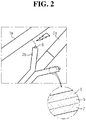
- a positive electrode lead 1a of one pouch-type battery cell 1 frequently interferes with a terrace front end 2b of a pouch case of another pouch-type battery cell 2 adjacent thereto.
- the pouch case has a layered structure in which an outer insulation layer 7, an aluminum layer 6, and an inner adhesion layer 5 are laminated in order.
- the electrode lead is allowed to contact the outer insulation layer 7 of the pouch case, but an electric short may occur when the electrode contacts the terrace front end 2b at which the aluminum layer 6 may be exposed.
- the positive electrode lead 1a contacts the aluminum layer 6 of the pouch case in a state where the insulation of the pouch case is broken, a short circuit may occur, which greatly increase the possibility of ignition.
- the pouch-type secondary battery may be somewhat vulnerable to an external physical impact due to its configuration.
- the vulnerability may become more serious so that a crack or a damage may occur in the inner adhesion layer 5 merely with a minor physical impact, thereby converting the aluminum layer 6 into an electrode.
- the aluminum layer 6 may be polarized since it is in direct contact with the electrode assembly.
- the negative electrode plate is disposed at an outermost side of the electrode assembly, the aluminum layer 6 becomes a negative electrode. In a state where the aluminum layer 6 becomes a negative electrode, when the positive electrode lead 1a contacts the terrace front end 2b of the pouch case as shown in FIG. 2 , a short circuit may occur, which may lead to ignition of the pouch-type secondary battery.
- US 2016/226043 relates to a battery module, wherein electrode leads of the battery cells have a damping structure.
- the present disclosure is directed to providing a battery module, which may prevent an electric contact between an electrode lead and a terrace front end of a pouch case in adjacent pouch-type battery cells among a plurality of pouch-type battery cells connected in parallel and may also improve bonding stability between a plurality of electrode leads and a bus bar overlapped in plural layers in a parallel connection structure.
- a battery module comprising pouch-type battery cells stacked on each other and electrically connected in series and/or in parallel.
- electrode leads of other pouch-type battery cells are biased to allow ends of the electrode leads to be overlapped, and each of the pouch-type battery cells include an R bending portion at which a boundary region between a terrace of a pouch case and the electrode leads is bent toward a direction in which the electrode leads are biased.
- the R bending portion has a rounded recess shape, and the terrace may be bent to allow a front end thereof is disposed near a deepest region of the rounded recess shape of the R bending portion.
- the battery module may comprise a positive electrode lead group in which ends of at least two positive electrode leads are overlapped and linearly extend; and a negative electrode lead group in which ends of at least two negative electrode leads provided in a same number as the positive electrode leads are overlapped and linearly extend in a same direction as the positive electrode lead group.
- a positive electrode lead and a first negative electrode lead that face each other at a shortest distance among the positive electrode lead group and the negative electrode lead group other positive electrode leads may be biased toward the first positive electrode lead, and other negative electrode leads may be biased toward the first negative electrode lead.
- the battery module may comprise a bus bar assembly configured to electrically connect the positive electrode lead group and the negative electrode lead group.
- the bus bar assembly may include a fixed bus bar formed in a rod-shaped conductor; a pair of movable bus bars disposed to be spaced apart from each other at both sides of the fixed bus bar with the fixed bus bar interposed therebetween to form a fitting space between the movable bus bars and the fixed bus bar for the positive electrode lead group and the negative electrode lead group to be respectively inserted therein; and an adhering member configured to move the pair of movable bus bars toward the fixed bus bar with the positive electrode lead group and the negative electrode lead group disposed in the fitting space to allow the positive electrode lead group and the negative electrode lead group to be coupled to the fixed bus bar.
- the adhering member may be a leaf spring having both ends coupled to the pair of movable bus bars to move the pair of movable bus bars in directions facing each other due to an elastic restoring force thereof.
- Each of the pair of movable bus bars may include a contact portion provided in parallel to the fixed bus bar; and gap adjusting portions that extend from both ends of the contact portion and are bent, and the gap adjusting portion may be connected to the adhering member.
- the pair of movable bus bars may be disposed symmetrically with respect to the fixed bus bar to surround the fixed bus bar.
- a battery pack comprising the battery module described above.
- an electric contact between the electrode lead and the terrace front end of the pouch case in adjacent pouch-type battery cells among a plurality of pouch-type battery cells connected in parallel may be prevented, and therefore, safety may be improved.
- the high efficiency is ensured compared to where a separate component or insulating taping is used in order to prevent an electrical short between the electrode lead and the pouch case.
- the automation rate of the battery module production line may be improved.
- a battery module includes a cell stack having pouch-type battery cells 10 stacked in one direction and electrically connected in series and/or in parallel, a voltage sensing assembly for electrically connecting the cell stack and sensing a voltage of the cell stack, a module housing for accommodating the cell stack to be protected from exterior elements and providing a mechanical support to the cell stack, and various devices for controlling charge and discharge of the pouch-type battery cells 10 such as a battery management system (BMS), a current sensor, a fuse, and the like.
- BMS battery management system
- a current sensor a fuse
- any configuration that may blur the gist of the present disclosure will not be explained, and characteristic features of the present disclosure will be described in detail.
- FIG. 3 is a diagram schematically showing a pouch-type battery cell 10 according to an embodiment of the present disclosure.
- a pouch-type battery cell 10 applied to the battery module according to the present disclosure includes an electrode assembly 13, a pouch case, and an electrode lead having one end connected to the electrode assembly 13 and the other end that extends out of the pouch case.
- a part of the electrode lead is thermally bonded together with the pouch case.
- the thermal bonding layer of the pouch case is made of a resin layer and the electrode lead is made of a metal, the thermal bonding between the electrode lead and the pouch case may be insufficient.
- an adhesive tape 16 may be used.
- the electrode lead may be thermally bonded to the pouch case in a state where its periphery is taped with the adhesive tape 16.
- the electrode assembly 13 may include a positive electrode plate, a separator, and a negative electrode plate, and may be configured so that the positive electrode plate and the negative electrode plate respectively coated with a positive electrode active material and a negative electrode active material are repeatedly laminated with the separator interposed therebetween.
- the negative electrode plate is slightly larger in size than the positive electrode plate and thus is disposed at the top and bottom ends of the electrode assembly 13.
- the electrode assembly 13 may be accommodated in the pouch case together with an electrolyte in a sealed state.
- the pouch case has a multi-layered structure in which a polyolefin resin layer that is a thermal bonding layer serving as a sealing material, a substrate for maintaining mechanical strength, an aluminum (AL) layer that is a metal layer for blocking moisture and oxygen, and a nylon layer that serves as a protective layer are laminated.
- Casted polypropylene (CPP) is often used as the polyolefin resin layer that serves as a thermal bonding layer.
- the pouch case is provided so that its edges are sealed after the electrode assembly 13 is accommodated therein and an electrolyte is injected therein.
- the pouch case includes a first pouch sheet 11a and a second pouch sheet 11b.
- the first pouch sheet 11a may be formed to accommodate the electrode assembly 13 in a central region thereof, and the second pouch sheet 11b may be provided to face the first pouch sheet 1 la to allow their edges to be thermally bonded to each other.
- the thermally bonded edge region of the pouch case is defined as a terrace 12.
- each of the pouch-type battery cells 10 of the battery module according to the present disclosure further includes an R bending portion 17.
- the R bending portion 17 is a portion prepared by bending a boundary region between the terrace 12 of the pouch exterior and the electrode lead. When multiple pouch-type battery cells 10 are connected in parallel, the R bending portion 17 prevents the electrode lead and a terrace front end 12a of the pouch exterior from interfering with each other or from contacting each other.
- the terrace front end 12a of the pouch case is disposed at a position where the R bending portion 17 is sharply bent compared to other portions to deviate from a linear line along which the electrode lead extends from the terrace 12 of the pouch exterior.
- the R bending portion 17 may have a rounded or arc recess shape in a region before and after the boundary region between the terrace 12 of the pouch exterior and the electrode lead.
- the terrace front end 12a of the pouch exterior is preferably disposed at a deepest region of the recess shape of the R bending portion 17.
- the R bending portion 17 is formed in a same direction as the direction in which, based on an electrode lead of one pouch-type battery cell 10, electrode leads of other pouch-type battery cells 10 are biased when several pouch-type battery cells 10 are connected in parallel.
- the pouch-type battery cells 10 of the battery module according to the present disclosure have a positive electrode lead group 18 in which one ends of at least two positive electrode leads 14 extend linearly, and a negative electrode lead group 19 in which negative electrode leads provided in the same number as the positive electrode leads 14 extend linearly in the same direction as the positive electrode lead group 18.
- first positive electrode lead 14 and a first negative electrode lead 15 that face each other at a shortest distance among the positive electrode lead group 18 and the negative electrode lead group 19 other positive electrode leads 14 may be biased toward the first positive electrode lead 14, and other negative electrode leads 15 may be biased toward the first negative electrode lead 15.
- first positive electrode lead 14 and a first negative electrode lead 15 that face each other at a shortest distance among the positive electrode lead group 18 and the negative electrode lead group 19 other positive electrode leads 14 may be biased toward the first positive electrode lead 14, and other negative electrode leads 15 may be biased toward the first negative electrode lead 15.
- the opposite side of the pouch-type battery cells 10 may have the same structure, even though its polarity is different, and thus it will not be described in detail again.
- the first positive electrode lead 14 may correspond to the positive electrode lead 14 of the third pouch-type battery cell 10, counted from the left side on the figures, and the first negative electrode lead 15 may correspond to the negative electrode lead 15 of the fourth pouch-type battery cell 10.
- the gap between the positive electrode lead group 18 and the negative electrode lead group 19 may be minimized, which makes it easier to connect the positive electrode lead group 18 and the negative electrode lead group 19 to a bus bar later.
- the positive electrode lead group 18 and the negative electrode lead group 19 according to the present disclosure may be coupled to the bus bar assembly 20, to be explained later, in a linearly extending form.
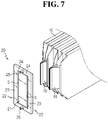
- FIGS. 7 to 9 are diagrams for illustrating each step of connecting the electrode leads of the pouch-type battery cells 10 according to an embodiment of the present disclosure to the bus bar assembly 20.
- the battery module of the present disclosure may further include a bus bar assembly 20 for electrically connecting the positive electrode lead group 18 and the negative electrode lead group 19.
- the bus bar assembly 20 may include a fixed bus bar 21, a pair of movable bus bars 22, and a contact portion 23 for allowing the pair of movable bus bars 22 to be movable relative to the fixed bus bar 21.
- the positive electrode lead group 18 and the negative electrode lead group 19 may be inserted into a fitting space S of the bus bar assembly 20, and subsequently, clamped and welded thereto.
- the bending process of the electrode lead is unnecessary, and therefore, the automation ratio of the production line may be increased.
- the electrode lead groups may be welded under mechanical compression. Thus, even when two or more electrode leads are joined in parallel, it is possible to maintain the reliability of electrical connection and the mechanical bonding strength.
- bus bar assembly 20 according to the present disclosure will be described in more detail.
- the fixed bus bar 21 may be formed as a rod-shaped and made of an electrically conductive material such as copper, silver, and tin-plated copper. Thus, when the positive electrode lead group 18 and the negative electrode lead group 19 contact the fixed bus bar 21, the current of the battery module may stably flow.
- the movable bus bar 22 may also be made of a metal with electrical conductivity such as copper, silver, tinned copper, or copper, similar to the fixed bus bar 21. However, the movable bus bar 22 has a main function of pressing the positive electrode lead group 18 and the negative electrode lead group 19 to be adhered to the fixed bus bar 21 and be clamped. Thus, it may be unnecessary to make the movable bus bar 22 with a metal material, and the movable bus bar 22 may be made of a non-metallic material.
- the movable bus bar 22 is provided in a pair to be movable relative to the fixed bus bar 21 interposed therebetween.
- a fitting space S is provided between the movable bus bar 22 and the fixed bus bar 21 to allow the positive electrode lead group 18 or the negative electrode lead group 19 to pass therethrough.
- the negative electrode lead group 19 may be inserted in the fitting space S between the left movable bus bar 22 and the fixed bus bar 21, and the positive electrode lead group 18 may be inserted in the fitting space S between the right movable bus bar 22 and the fixed bus bar 21.
- Each of the pair of movable bus bars 22 includes an contact portion 23 and a gap adjusting portion 24 that form a substantially square bracket shape and may be symmetrically disposed about the fixed bus bar 21 to surround the fixed bus bar.
- the contact portion 23 may be defined as a portion disposed in parallel to the fixed bus bar 21, and the gap adjusting portion 24 may be defined as a portion bent and extending from both ends of the contact portion 23 toward the fixed bus bar 21.
- the gap adjusting portion 24 of the left movable bus bar 22 and the gap adjusting portion 24 of the right movable bus bar 22 are configured to contact each other.
- the width of the fitting space S may be variously designed depending on the length of the gap adjusting portions 24 of the movable bus bars 22 in contact.
- An adhering member 25 may move the pair of movable bus bars 22 toward the fixed bus bar 21.
- a leaf spring is applied as the adhering member 25. Both ends of the leaf spring are coupled to left and right movable bus bar 22 in a state where the leaf spring is closed.
- the left and right movable bus bars 22 are released after being pulled outward by applying an external force, the left and right movable bus bars 22 are moved toward the fixed bus bar 21 into an original state due to the elastic restoring force of the leaf spring.
- the positive electrode lead group 18 and the negative electrode lead group 19 are formed by overlapping one ends of the positive electrode leads 14 and one ends of the negative electrode leads 15, respectively, with respect to the first positive electrode lead 14 and the first negative electrode lead 15 adjacent to each other.
- the left and right movable bus bars 22 of the bus bar assembly 20 are pulled outward to secure the sufficient fitting space S, and in this state, the positive electrode lead group 18 and the negative electrode lead group 19 are inserted into the corresponding fitting space S, respectively.
- the left and right movable bus bars 22 of the bus bar assembly 20 are released to allow the positive electrode lead group 18 and the negative electrode lead group 19 to abut the fixed bus bar 21.
- the positive electrode lead group 18 and the negative electrode lead group 19 may be clamped by the bus bar assembly 20 and be coupled to the fixed bus bar 21 in a linearly extending state. Further, a welding process may be used to more securely bond the positive electrode lead group 18 and the negative electrode lead group 19 to the bus bar assembly 20.
- the process of bending the electrode lead of the prior art is unnecessary during the electrode lead welding process.
- the manual process for bending the electrode leads may be eliminated to improve the automation ratio of the battery module production line.
- all of the electrode leads may be welded in a mechanically compressed state, the electrical connectivity and the reliability of mechanical bonding strength may be improved regardless of the number of the electrode leads in the parallel connection structure.
- a battery pack according to the present disclosure may include at least one battery modules of the present disclosure.
- the battery pack according to the present disclosure may further include a pack case for accommodating the battery module, various devices for controlling charge and discharge of each battery module, and the like.
Landscapes
- Chemical & Material Sciences (AREA)
- Chemical Kinetics & Catalysis (AREA)
- Electrochemistry (AREA)
- General Chemical & Material Sciences (AREA)
- Inorganic Chemistry (AREA)
- Connection Of Batteries Or Terminals (AREA)
- Battery Mounting, Suspending (AREA)
- Sealing Battery Cases Or Jackets (AREA)
Claims (6)
- Module de batterie, comprenant des éléments de batterie de type poche (10) empilés les uns sur les autres et connectés électriquement en série et/ou en parallèle, dans lequel vers un fil d'électrode (14, 15) d'un élément de batterie de type poche (10), des fils d'électrode (14, 15) d'autres éléments de batterie de type poche (10) sont polarisés pour permettre à des extrémités des fils d'électrode (14, 15) de se chevaucher, et
dans lequel chacun des éléments de batterie de type poche (10) comporte une partie courbée en R (17) au niveau de laquelle une région de limite entre une région de bord thermiquement liée (12) d'un étui de poche et le fil d'électrode (14, 15) est courbée vers une direction dans laquelle les fils d'électrode (14, 15) sont polarisés, dans lequel la partie courbée en R (17) est formée selon une forme d'évidement arrondi, et la région de bord thermiquement liée (12) est courbée pour permettre à une extrémité avant de celle-ci d'être disposée près d'une région la plus profonde d'une forme d'évidement arrondi de la partie courbée en R (17). - Module de batterie selon la revendication 1, comprenant :un groupe de fils d'électrode positive (18) dans lequel les extrémités d'au moins deux fils d'électrode positive (14) se chevauchent et s'étendent linéairement ; etun groupe de fils d'électrode négative (19) dans lequel les extrémités d'au moins deux fils d'électrode négative (15) fournis au même nombre que les fils d'électrode positive (14) se chevauchent et s'étendent linéairement dans une même direction que le groupe de fils d'électrode positive (18),dans lequel, par rapport à un premier fil d'électrode positive (14) et à un premier fil d'électrode négative (15) qui se font face mutuellement à une distance la plus courte parmi le groupe de fils d'électrode positive (18) et le groupe de fils d'électrode négative (19), d'autres fils d'électrode positive (14) sont polarisés vers le premier fil d'électrode positive (14), et d'autres fils d'électrode négative (15) sont polarisés vers le premier fil d'électrode négative (15).
- Module de batterie selon la revendication 2, comprenant en outre :
un ensemble barre omnibus (20) configuré pour connecter électriquement le groupe de fils d'électrode positive (18) et le groupe de fils d'électrode négative (19), dans lequel l'ensemble barre omnibus (20) comporte :une barre omnibus fixe (21) formée en un conducteur en forme de tige ;une paire de barres omnibus mobiles (22) disposées pour être espacées l'une de l'autre des deux côtés de la barre omnibus fixe (21) avec la barre omnibus fixe (21) interposée entre elles pour former un espace d'installation (S) entre les barres omnibus mobiles (22) et la barre omnibus fixe (21) pour permettre au groupe de fils d'électrode positive (18) et au groupe de fils d'électrode négative (19) d'être respectivement insérés dans celui-ci ; etun élément d'adhérence (25) configuré pour déplacer la paire de barres omnibus mobiles (22) vers la barre omnibus fixe (21) avec le groupe de fils d'électrode positive (18) et le groupe de fils d'électrode négative (19) disposés dans l'espace d'installation (S) pour permettre au groupe de fils d'électrode positive (18) et au groupe de fils d'électrode négative (19) d'être accouplés à la barre omnibus fixe (21). - Module de batterie selon la revendication 3, dans lequel l'élément d'adhérence (25) est un ressort à lames ayant les deux extrémités accouplées à la paire de barres omnibus mobiles (22) pour déplacer la paire de barres omnibus mobiles (22) dans des directions se faisant face mutuellement autrement qu'en raison d'une force de rétablissement élastique de celui-ci.
- Module de batterie selon la revendication 3, dans lequel chacune de la paire de barres omnibus mobiles comporte :une partie de contact (23) située parallèlement à la barre omnibus fixe (21) ; etdes parties d'ajustement d'espace (24) qui s'étendent depuis les deux extrémités de la partie de contact (23) et sont courbées, les parties d'ajustement d'espace (24) étant connectées à l'élément d'adhérence (25),dans lequel la paire de barres omnibus mobiles (22) sont disposées de manière symétrique par rapport à la barre omnibus fixe (21) pour entourer la barre omnibus fixe (21).
- Bloc-batterie, comprenant un module de batterie selon l'une quelconque des revendications 1 à 5.
Priority Applications (1)
| Application Number | Priority Date | Filing Date | Title |
|---|---|---|---|
| PL18881818T PL3624227T3 (pl) | 2017-11-24 | 2018-10-31 | Moduł akumulatorowy mający zwiększoną stabilność połączeń elektrycznych |
Applications Claiming Priority (2)
| Application Number | Priority Date | Filing Date | Title |
|---|---|---|---|
| KR1020170158519A KR102258819B1 (ko) | 2017-11-24 | 2017-11-24 | 전기적 연결 안전성이 향상된 배터리 모듈 |
| PCT/KR2018/013133 WO2019103344A1 (fr) | 2017-11-24 | 2018-10-31 | Module de batterie ayant une stabilité de connexion électrique améliorée |
Publications (3)
| Publication Number | Publication Date |
|---|---|
| EP3624227A1 EP3624227A1 (fr) | 2020-03-18 |
| EP3624227A4 EP3624227A4 (fr) | 2020-08-12 |
| EP3624227B1 true EP3624227B1 (fr) | 2021-06-02 |
Family
ID=66631067
Family Applications (1)
| Application Number | Title | Priority Date | Filing Date |
|---|---|---|---|
| EP18881818.1A Active EP3624227B1 (fr) | 2017-11-24 | 2018-10-31 | Module de batterie ayant une stabilité de connexion électrique améliorée |
Country Status (7)
| Country | Link |
|---|---|
| US (1) | US11217864B2 (fr) |
| EP (1) | EP3624227B1 (fr) |
| JP (1) | JP6798043B2 (fr) |
| KR (1) | KR102258819B1 (fr) |
| CN (1) | CN110622341B (fr) |
| PL (1) | PL3624227T3 (fr) |
| WO (1) | WO2019103344A1 (fr) |
Families Citing this family (13)
| Publication number | Priority date | Publication date | Assignee | Title |
|---|---|---|---|---|
| KR102273184B1 (ko) * | 2017-10-10 | 2021-07-05 | 주식회사 엘지에너지솔루션 | 전극 리드 접합용 버스바 조립체 및 이를 포함하는 배터리 모듈 |
| KR102320342B1 (ko) * | 2018-05-29 | 2021-11-03 | 주식회사 엘지에너지솔루션 | 배터리 모듈 |
| EP3767706B1 (fr) * | 2018-10-26 | 2023-09-27 | LG Energy Solution, Ltd. | Module de batterie ayant une structure apte à empêcher un endommagement d'élément de batterie et bloc-batterie, et véhicule comprenant un module de batterie |
| JP7115358B2 (ja) * | 2019-02-26 | 2022-08-09 | 住友電装株式会社 | 電子モジュール |
| KR102779614B1 (ko) * | 2019-03-12 | 2025-03-10 | 주식회사 엘지에너지솔루션 | 전지 모듈 및 그 제조 방법 |
| CN111755657B (zh) * | 2019-03-29 | 2022-02-15 | 宁德新能源科技有限公司 | 电极组件 |
| KR102541537B1 (ko) * | 2019-06-25 | 2023-06-08 | 주식회사 엘지에너지솔루션 | 전지 모듈 및 이를 포함하는 전지팩 |
| KR102792207B1 (ko) * | 2019-07-16 | 2025-04-04 | 주식회사 엘지에너지솔루션 | 전지 모듈 및 그 제조 방법 |
| KR102769905B1 (ko) | 2019-10-24 | 2025-02-17 | 주식회사 엘지에너지솔루션 | 배터리 모듈, 이러한 배터리 모듈을 포함하는 배터리 팩 및 자동차 |
| KR102506245B1 (ko) | 2019-11-14 | 2023-03-03 | 주식회사 엘지에너지솔루션 | 전지 모듈, 전지 모듈 제조 방법 및 전지 모듈을 포함하는 전지 팩 |
| KR102886187B1 (ko) * | 2020-09-08 | 2025-11-13 | 주식회사 엘지에너지솔루션 | 전극 리드가 비대칭 구조로 형성된 전지 셀 및 이를 포함하는 기계적 강도가 보강된 전지 모듈 |
| CN112151730B (zh) * | 2020-09-25 | 2023-02-21 | 飞毛腿(福建)电子有限公司 | 一种移动电源激光焊接装配结构及其装配工艺 |
| KR20240007501A (ko) * | 2022-07-08 | 2024-01-16 | 주식회사 엘지에너지솔루션 | 배터리 모듈, 배터리 팩 및 이를 포함하는 자동차 |
Family Cites Families (32)
| Publication number | Priority date | Publication date | Assignee | Title |
|---|---|---|---|---|
| KR0158519B1 (ko) | 1995-07-01 | 1998-11-16 | 김용진 | 전기압력 보온밥솥의 잡곡조리방법 |
| US6042966A (en) | 1998-01-20 | 2000-03-28 | Valence Technology, Inc. | Battery terminal insulation |
| JP2000021387A (ja) | 1998-07-01 | 2000-01-21 | Mitsubishi Cable Ind Ltd | シート型電池 |
| JP2001256960A (ja) | 2000-03-10 | 2001-09-21 | Mitsubishi Chemicals Corp | 電 池 |
| JP2002298825A (ja) * | 2001-03-29 | 2002-10-11 | Tdk Corp | 電気化学デバイスの製造方法、および電気化学デバイス |
| JP2003272572A (ja) * | 2002-03-20 | 2003-09-26 | Dainippon Printing Co Ltd | 電池用外装体と電池の包装方法 |
| JP4499977B2 (ja) | 2002-05-07 | 2010-07-14 | 富士重工業株式会社 | 板状電池の電極絶縁構造 |
| EP1394874B1 (fr) * | 2002-05-08 | 2006-08-23 | Nissan Motor Co., Ltd. | Module de cellules secondaires et procédé pour son production |
| JP3698320B2 (ja) | 2002-06-03 | 2005-09-21 | 日産自動車株式会社 | 組電池 |
| JP4211322B2 (ja) * | 2002-08-26 | 2009-01-21 | 日産自動車株式会社 | 積層型電池、組電池、電池モジュール並びに電気自動車 |
| JP3695435B2 (ja) * | 2002-09-03 | 2005-09-14 | 日産自動車株式会社 | ラミネート外装扁平型電池 |
| JP2004158434A (ja) | 2002-10-15 | 2004-06-03 | Dainippon Printing Co Ltd | リチウム電池 |
| KR20040054128A (ko) * | 2002-12-17 | 2004-06-25 | 삼성에스디아이 주식회사 | 파우치형 리튬 이차 전지 |
| JP3789438B2 (ja) * | 2003-03-03 | 2006-06-21 | Necラミリオンエナジー株式会社 | フィルム外装電池 |
| KR100502353B1 (ko) | 2003-06-12 | 2005-07-21 | 삼성에스디아이 주식회사 | 전지 |
| JP2005044583A (ja) * | 2003-07-25 | 2005-02-17 | Toshiba Corp | 薄型二次電池 |
| JP2007095465A (ja) | 2005-09-28 | 2007-04-12 | Sanyo Electric Co Ltd | 封口電池及びその製造方法 |
| KR100891078B1 (ko) | 2006-04-03 | 2009-03-30 | 주식회사 엘지화학 | 안전성과 용량이 증가된 리튬 이차전지 |
| KR101038680B1 (ko) * | 2010-03-12 | 2011-06-02 | 아이피지 포토닉스 코리아(주) | 이차전지 및 이를 이용한 이차전지 모듈 |
| US20120315531A1 (en) * | 2011-06-10 | 2012-12-13 | GM Global Technology Operations LLC | Battery cell connection apparatus |
| KR101905080B1 (ko) * | 2011-12-09 | 2018-10-05 | 삼성에스디아이 주식회사 | 배터리 팩 |
| KR102024002B1 (ko) | 2012-07-05 | 2019-09-23 | 에스케이이노베이션 주식회사 | 전지팩 |
| JP2014053104A (ja) | 2012-09-05 | 2014-03-20 | Captex Co Ltd | 電極接続構造 |
| EP2919294B1 (fr) * | 2012-11-09 | 2017-09-06 | Nissan Motor Co., Ltd | Batterie assemblée et procédé de fabrication de batterie assemblée |
| KR101747397B1 (ko) * | 2013-09-25 | 2017-06-14 | 주식회사 엘지화학 | 댐핑 구조가 형성되어 있는 전극리드를 포함하는 전지모듈 |
| WO2015152527A1 (fr) * | 2014-03-31 | 2015-10-08 | 주식회사 엘지화학 | Module de batterie et bloc-batterie le comportant |
| KR101821378B1 (ko) * | 2014-03-31 | 2018-01-23 | 주식회사 엘지화학 | 전극 리드와 버스바 사이의 결합력 및 공정성이 향상된 배터리 모듈 및 이를 포함하는 배터리 팩 |
| KR101736377B1 (ko) * | 2014-06-09 | 2017-05-16 | 주식회사 엘지화학 | 배터리 모듈 및 이를 포함하는 배터리 팩 |
| KR101957311B1 (ko) * | 2015-07-21 | 2019-03-12 | 주식회사 엘지화학 | 2차 전지 |
| US10532423B2 (en) * | 2015-12-09 | 2020-01-14 | Lg Chem, Ltd. | Battery pack and method for manufacturing the same |
| KR102424640B1 (ko) | 2015-12-29 | 2022-07-25 | 에이치그린파워 주식회사 | 배터리 모듈 및 이의 조립 방법 |
| US10122004B2 (en) * | 2017-03-16 | 2018-11-06 | Ford Global Technologies, Llc | Quick connect assembly for busbars in an electrified vehicle |
-
2017
- 2017-11-24 KR KR1020170158519A patent/KR102258819B1/ko active Active
-
2018
- 2018-10-31 WO PCT/KR2018/013133 patent/WO2019103344A1/fr not_active Ceased
- 2018-10-31 JP JP2019559766A patent/JP6798043B2/ja active Active
- 2018-10-31 US US16/609,981 patent/US11217864B2/en active Active
- 2018-10-31 EP EP18881818.1A patent/EP3624227B1/fr active Active
- 2018-10-31 CN CN201880031997.3A patent/CN110622341B/zh active Active
- 2018-10-31 PL PL18881818T patent/PL3624227T3/pl unknown
Also Published As
| Publication number | Publication date |
|---|---|
| KR20190060376A (ko) | 2019-06-03 |
| US11217864B2 (en) | 2022-01-04 |
| JP6798043B2 (ja) | 2020-12-09 |
| EP3624227A4 (fr) | 2020-08-12 |
| CN110622341B (zh) | 2022-04-08 |
| WO2019103344A1 (fr) | 2019-05-31 |
| PL3624227T3 (pl) | 2021-10-18 |
| US20200067066A1 (en) | 2020-02-27 |
| KR102258819B1 (ko) | 2021-05-31 |
| EP3624227A1 (fr) | 2020-03-18 |
| JP2020518970A (ja) | 2020-06-25 |
| CN110622341A (zh) | 2019-12-27 |
Similar Documents
| Publication | Publication Date | Title |
|---|---|---|
| EP3624227B1 (fr) | Module de batterie ayant une stabilité de connexion électrique améliorée | |
| EP3671902B1 (fr) | Module de batterie comprenant un ensemble barre omnibus | |
| EP2736097B1 (fr) | Batterie rechargeable et son module | |
| EP3537506B1 (fr) | Batterie rechargeable | |
| EP2846377B1 (fr) | Ensemble batterie ayant une seule partie de jonction de borne d'électrode | |
| KR102434771B1 (ko) | 배터리 팩 | |
| CN103367668B (zh) | 电池 | |
| KR101472167B1 (ko) | 안전성이 향상된 이차전지용 파우치 및 이를 이용한 파우치형 이차전지, 중대형 전지팩 | |
| EP2337118A1 (fr) | Batterie secondaire | |
| EP3514858A1 (fr) | Batterie secondaire | |
| US12463275B2 (en) | Electrode assembly including plastic member applied to electrode tabs-lead coupling portion and secondary battery including the same | |
| KR101734327B1 (ko) | 파우치형 이차전지 | |
| US9224989B2 (en) | Rechargeable battery and module thereof | |
| US20210376406A1 (en) | Solid-state battery module and solid-state battery cell | |
| CN103107302A (zh) | 电极引线连接体及非水电解质蓄电装置及其制造装置 | |
| KR20130135063A (ko) | 이차 전지 팩 | |
| KR101652653B1 (ko) | 전지 모듈 및 조전지 | |
| KR101255245B1 (ko) | 배터리 팩 | |
| CN104508867B (zh) | 蓄电装置 | |
| US10320035B2 (en) | Battery pack | |
| KR20260055640A (ko) | 전극 조립체 및 이를 포함하는 이차 전지 | |
| KR20260053919A (ko) | 보호회로모듈, 이를 포함하는 배터리 어셈블리 및 배터리 어셈블리 제조 방법 | |
| CN121863012A (zh) | 保护电路模块、电池组件及用于制造电池组件的方法 |
Legal Events
| Date | Code | Title | Description |
|---|---|---|---|
| STAA | Information on the status of an ep patent application or granted ep patent |
Free format text: STATUS: THE INTERNATIONAL PUBLICATION HAS BEEN MADE |
|
| PUAI | Public reference made under article 153(3) epc to a published international application that has entered the european phase |
Free format text: ORIGINAL CODE: 0009012 |
|
| STAA | Information on the status of an ep patent application or granted ep patent |
Free format text: STATUS: REQUEST FOR EXAMINATION WAS MADE |
|
| 17P | Request for examination filed |
Effective date: 20191210 |
|
| AK | Designated contracting states |
Kind code of ref document: A1 Designated state(s): AL AT BE BG CH CY CZ DE DK EE ES FI FR GB GR HR HU IE IS IT LI LT LU LV MC MK MT NL NO PL PT RO RS SE SI SK SM TR |
|
| AX | Request for extension of the european patent |
Extension state: BA ME |
|
| A4 | Supplementary search report drawn up and despatched |
Effective date: 20200709 |
|
| RIC1 | Information provided on ipc code assigned before grant |
Ipc: H01M 2/06 20060101ALI20200704BHEP Ipc: H01M 2/30 20060101ALI20200704BHEP Ipc: H01M 2/34 20060101ALI20200704BHEP Ipc: H01M 2/02 20060101ALI20200704BHEP Ipc: H01M 2/20 20060101AFI20200704BHEP Ipc: H01M 2/26 20060101ALI20200704BHEP Ipc: H01M 2/10 20060101ALI20200704BHEP |
|
| REG | Reference to a national code |
Ref country code: DE Ref legal event code: R079 Ref document number: 602018018200 Country of ref document: DE Free format text: PREVIOUS MAIN CLASS: H01M0002200000 Ipc: H01M0050116000 |
|
| DAV | Request for validation of the european patent (deleted) | ||
| DAX | Request for extension of the european patent (deleted) | ||
| GRAP | Despatch of communication of intention to grant a patent |
Free format text: ORIGINAL CODE: EPIDOSNIGR1 |
|
| STAA | Information on the status of an ep patent application or granted ep patent |
Free format text: STATUS: GRANT OF PATENT IS INTENDED |
|
| RIC1 | Information provided on ipc code assigned before grant |
Ipc: H01M 50/20 20210101ALI20210219BHEP Ipc: H01M 50/116 20210101AFI20210219BHEP Ipc: H01M 50/502 20210101ALI20210219BHEP Ipc: H01M 50/543 20210101ALI20210219BHEP Ipc: H01M 50/172 20210101ALI20210219BHEP Ipc: H01M 50/579 20210101ALI20210219BHEP |
|
| INTG | Intention to grant announced |
Effective date: 20210325 |
|
| GRAS | Grant fee paid |
Free format text: ORIGINAL CODE: EPIDOSNIGR3 |
|
| GRAA | (expected) grant |
Free format text: ORIGINAL CODE: 0009210 |
|
| STAA | Information on the status of an ep patent application or granted ep patent |
Free format text: STATUS: THE PATENT HAS BEEN GRANTED |
|
| REG | Reference to a national code |
Ref country code: CH Ref legal event code: EP |
|
| AK | Designated contracting states |
Kind code of ref document: B1 Designated state(s): AL AT BE BG CH CY CZ DE DK EE ES FI FR GB GR HR HU IE IS IT LI LT LU LV MC MK MT NL NO PL PT RO RS SE SI SK SM TR |
|
| REG | Reference to a national code |
Ref country code: GB Ref legal event code: FG4D |
|
| REG | Reference to a national code |
Ref country code: AT Ref legal event code: REF Ref document number: 1399285 Country of ref document: AT Kind code of ref document: T Effective date: 20210615 |
|
| REG | Reference to a national code |
Ref country code: IE Ref legal event code: FG4D |
|
| REG | Reference to a national code |
Ref country code: DE Ref legal event code: R096 Ref document number: 602018018200 Country of ref document: DE |
|
| REG | Reference to a national code |
Ref country code: SE Ref legal event code: TRGR |
|
| REG | Reference to a national code |
Ref country code: LT Ref legal event code: MG9D |
|
| PG25 | Lapsed in a contracting state [announced via postgrant information from national office to epo] |
Ref country code: FI Free format text: LAPSE BECAUSE OF FAILURE TO SUBMIT A TRANSLATION OF THE DESCRIPTION OR TO PAY THE FEE WITHIN THE PRESCRIBED TIME-LIMIT Effective date: 20210602 Ref country code: HR Free format text: LAPSE BECAUSE OF FAILURE TO SUBMIT A TRANSLATION OF THE DESCRIPTION OR TO PAY THE FEE WITHIN THE PRESCRIBED TIME-LIMIT Effective date: 20210602 Ref country code: LT Free format text: LAPSE BECAUSE OF FAILURE TO SUBMIT A TRANSLATION OF THE DESCRIPTION OR TO PAY THE FEE WITHIN THE PRESCRIBED TIME-LIMIT Effective date: 20210602 Ref country code: BG Free format text: LAPSE BECAUSE OF FAILURE TO SUBMIT A TRANSLATION OF THE DESCRIPTION OR TO PAY THE FEE WITHIN THE PRESCRIBED TIME-LIMIT Effective date: 20210902 |
|
| REG | Reference to a national code |
Ref country code: NL Ref legal event code: MP Effective date: 20210602 |
|
| REG | Reference to a national code |
Ref country code: AT Ref legal event code: MK05 Ref document number: 1399285 Country of ref document: AT Kind code of ref document: T Effective date: 20210602 |
|
| PG25 | Lapsed in a contracting state [announced via postgrant information from national office to epo] |
Ref country code: GR Free format text: LAPSE BECAUSE OF FAILURE TO SUBMIT A TRANSLATION OF THE DESCRIPTION OR TO PAY THE FEE WITHIN THE PRESCRIBED TIME-LIMIT Effective date: 20210903 Ref country code: NO Free format text: LAPSE BECAUSE OF FAILURE TO SUBMIT A TRANSLATION OF THE DESCRIPTION OR TO PAY THE FEE WITHIN THE PRESCRIBED TIME-LIMIT Effective date: 20210902 Ref country code: LV Free format text: LAPSE BECAUSE OF FAILURE TO SUBMIT A TRANSLATION OF THE DESCRIPTION OR TO PAY THE FEE WITHIN THE PRESCRIBED TIME-LIMIT Effective date: 20210602 Ref country code: RS Free format text: LAPSE BECAUSE OF FAILURE TO SUBMIT A TRANSLATION OF THE DESCRIPTION OR TO PAY THE FEE WITHIN THE PRESCRIBED TIME-LIMIT Effective date: 20210602 |
|
| RAP2 | Party data changed (patent owner data changed or rights of a patent transferred) |
Owner name: LG ENERGY SOLUTION LTD. |
|
| PG25 | Lapsed in a contracting state [announced via postgrant information from national office to epo] |
Ref country code: SK Free format text: LAPSE BECAUSE OF FAILURE TO SUBMIT A TRANSLATION OF THE DESCRIPTION OR TO PAY THE FEE WITHIN THE PRESCRIBED TIME-LIMIT Effective date: 20210602 Ref country code: ES Free format text: LAPSE BECAUSE OF FAILURE TO SUBMIT A TRANSLATION OF THE DESCRIPTION OR TO PAY THE FEE WITHIN THE PRESCRIBED TIME-LIMIT Effective date: 20210602 Ref country code: EE Free format text: LAPSE BECAUSE OF FAILURE TO SUBMIT A TRANSLATION OF THE DESCRIPTION OR TO PAY THE FEE WITHIN THE PRESCRIBED TIME-LIMIT Effective date: 20210602 Ref country code: CZ Free format text: LAPSE BECAUSE OF FAILURE TO SUBMIT A TRANSLATION OF THE DESCRIPTION OR TO PAY THE FEE WITHIN THE PRESCRIBED TIME-LIMIT Effective date: 20210602 Ref country code: AT Free format text: LAPSE BECAUSE OF FAILURE TO SUBMIT A TRANSLATION OF THE DESCRIPTION OR TO PAY THE FEE WITHIN THE PRESCRIBED TIME-LIMIT Effective date: 20210602 Ref country code: NL Free format text: LAPSE BECAUSE OF FAILURE TO SUBMIT A TRANSLATION OF THE DESCRIPTION OR TO PAY THE FEE WITHIN THE PRESCRIBED TIME-LIMIT Effective date: 20210602 Ref country code: RO Free format text: LAPSE BECAUSE OF FAILURE TO SUBMIT A TRANSLATION OF THE DESCRIPTION OR TO PAY THE FEE WITHIN THE PRESCRIBED TIME-LIMIT Effective date: 20210602 Ref country code: PT Free format text: LAPSE BECAUSE OF FAILURE TO SUBMIT A TRANSLATION OF THE DESCRIPTION OR TO PAY THE FEE WITHIN THE PRESCRIBED TIME-LIMIT Effective date: 20211004 Ref country code: SM Free format text: LAPSE BECAUSE OF FAILURE TO SUBMIT A TRANSLATION OF THE DESCRIPTION OR TO PAY THE FEE WITHIN THE PRESCRIBED TIME-LIMIT Effective date: 20210602 |
|
| REG | Reference to a national code |
Ref country code: DE Ref legal event code: R097 Ref document number: 602018018200 Country of ref document: DE |
|
| RAP4 | Party data changed (patent owner data changed or rights of a patent transferred) |
Owner name: LG ENERGY SOLUTION, LTD. |
|
| PLBE | No opposition filed within time limit |
Free format text: ORIGINAL CODE: 0009261 |
|
| STAA | Information on the status of an ep patent application or granted ep patent |
Free format text: STATUS: NO OPPOSITION FILED WITHIN TIME LIMIT |
|
| PG25 | Lapsed in a contracting state [announced via postgrant information from national office to epo] |
Ref country code: DK Free format text: LAPSE BECAUSE OF FAILURE TO SUBMIT A TRANSLATION OF THE DESCRIPTION OR TO PAY THE FEE WITHIN THE PRESCRIBED TIME-LIMIT Effective date: 20210602 |
|
| 26N | No opposition filed |
Effective date: 20220303 |
|
| REG | Reference to a national code |
Ref country code: CH Ref legal event code: PL |
|
| PG25 | Lapsed in a contracting state [announced via postgrant information from national office to epo] |
Ref country code: AL Free format text: LAPSE BECAUSE OF FAILURE TO SUBMIT A TRANSLATION OF THE DESCRIPTION OR TO PAY THE FEE WITHIN THE PRESCRIBED TIME-LIMIT Effective date: 20210602 |
|
| REG | Reference to a national code |
Ref country code: BE Ref legal event code: MM Effective date: 20211031 |
|
| PG25 | Lapsed in a contracting state [announced via postgrant information from national office to epo] |
Ref country code: MC Free format text: LAPSE BECAUSE OF FAILURE TO SUBMIT A TRANSLATION OF THE DESCRIPTION OR TO PAY THE FEE WITHIN THE PRESCRIBED TIME-LIMIT Effective date: 20210602 |
|
| PG25 | Lapsed in a contracting state [announced via postgrant information from national office to epo] |
Ref country code: LU Free format text: LAPSE BECAUSE OF NON-PAYMENT OF DUE FEES Effective date: 20211031 Ref country code: IT Free format text: LAPSE BECAUSE OF FAILURE TO SUBMIT A TRANSLATION OF THE DESCRIPTION OR TO PAY THE FEE WITHIN THE PRESCRIBED TIME-LIMIT Effective date: 20210602 Ref country code: BE Free format text: LAPSE BECAUSE OF NON-PAYMENT OF DUE FEES Effective date: 20211031 |
|
| PG25 | Lapsed in a contracting state [announced via postgrant information from national office to epo] |
Ref country code: LI Free format text: LAPSE BECAUSE OF NON-PAYMENT OF DUE FEES Effective date: 20211031 Ref country code: CH Free format text: LAPSE BECAUSE OF NON-PAYMENT OF DUE FEES Effective date: 20211031 |
|
| PG25 | Lapsed in a contracting state [announced via postgrant information from national office to epo] |
Ref country code: IE Free format text: LAPSE BECAUSE OF NON-PAYMENT OF DUE FEES Effective date: 20211031 |
|
| REG | Reference to a national code |
Ref country code: DE Ref legal event code: R081 Ref document number: 602018018200 Country of ref document: DE Owner name: LG ENERGY SOLUTION, LTD., KR Free format text: FORMER OWNER: LG CHEM, LTD., SEOUL, KR |
|
| P01 | Opt-out of the competence of the unified patent court (upc) registered |
Effective date: 20230512 |
|
| PG25 | Lapsed in a contracting state [announced via postgrant information from national office to epo] |
Ref country code: CY Free format text: LAPSE BECAUSE OF FAILURE TO SUBMIT A TRANSLATION OF THE DESCRIPTION OR TO PAY THE FEE WITHIN THE PRESCRIBED TIME-LIMIT Effective date: 20210602 |
|
| PG25 | Lapsed in a contracting state [announced via postgrant information from national office to epo] |
Ref country code: HU Free format text: LAPSE BECAUSE OF FAILURE TO SUBMIT A TRANSLATION OF THE DESCRIPTION OR TO PAY THE FEE WITHIN THE PRESCRIBED TIME-LIMIT; INVALID AB INITIO Effective date: 20181031 |
|
| REG | Reference to a national code |
Ref country code: GB Ref legal event code: 732E Free format text: REGISTERED BETWEEN 20230901 AND 20230906 |
|
| PG25 | Lapsed in a contracting state [announced via postgrant information from national office to epo] |
Ref country code: MK Free format text: LAPSE BECAUSE OF FAILURE TO SUBMIT A TRANSLATION OF THE DESCRIPTION OR TO PAY THE FEE WITHIN THE PRESCRIBED TIME-LIMIT Effective date: 20210602 |
|
| PG25 | Lapsed in a contracting state [announced via postgrant information from national office to epo] |
Ref country code: TR Free format text: LAPSE BECAUSE OF FAILURE TO SUBMIT A TRANSLATION OF THE DESCRIPTION OR TO PAY THE FEE WITHIN THE PRESCRIBED TIME-LIMIT Effective date: 20210602 |
|
| PG25 | Lapsed in a contracting state [announced via postgrant information from national office to epo] |
Ref country code: MT Free format text: LAPSE BECAUSE OF FAILURE TO SUBMIT A TRANSLATION OF THE DESCRIPTION OR TO PAY THE FEE WITHIN THE PRESCRIBED TIME-LIMIT Effective date: 20210602 |
|
| PGFP | Annual fee paid to national office [announced via postgrant information from national office to epo] |
Ref country code: PL Payment date: 20250924 Year of fee payment: 8 |
|
| PGFP | Annual fee paid to national office [announced via postgrant information from national office to epo] |
Ref country code: GB Payment date: 20250922 Year of fee payment: 8 |
|
| PGFP | Annual fee paid to national office [announced via postgrant information from national office to epo] |
Ref country code: FR Payment date: 20250925 Year of fee payment: 8 |
|
| PGFP | Annual fee paid to national office [announced via postgrant information from national office to epo] |
Ref country code: SE Payment date: 20250923 Year of fee payment: 8 |
|
| PGFP | Annual fee paid to national office [announced via postgrant information from national office to epo] |
Ref country code: DE Payment date: 20250922 Year of fee payment: 8 |