EP3624381A1 - Procédé de déclenchement de resynchronisation et station de base - Google Patents
Procédé de déclenchement de resynchronisation et station de base Download PDFInfo
- Publication number
- EP3624381A1 EP3624381A1 EP18812864.9A EP18812864A EP3624381A1 EP 3624381 A1 EP3624381 A1 EP 3624381A1 EP 18812864 A EP18812864 A EP 18812864A EP 3624381 A1 EP3624381 A1 EP 3624381A1
- Authority
- EP
- European Patent Office
- Prior art keywords
- resynchronization
- preset time
- time range
- feedback signal
- base station
- Prior art date
- Legal status (The legal status is an assumption and is not a legal conclusion. Google has not performed a legal analysis and makes no representation as to the accuracy of the status listed.)
- Granted
Links
Images

Classifications
-
- H—ELECTRICITY
- H04—ELECTRIC COMMUNICATION TECHNIQUE
- H04W—WIRELESS COMMUNICATION NETWORKS
- H04W56/00—Synchronisation arrangements
- H04W56/001—Synchronization between nodes
-
- H—ELECTRICITY
- H04—ELECTRIC COMMUNICATION TECHNIQUE
- H04W—WIRELESS COMMUNICATION NETWORKS
- H04W56/00—Synchronisation arrangements
- H04W56/001—Synchronization between nodes
- H04W56/0015—Synchronization between nodes one node acting as a reference for the others
-
- H—ELECTRICITY
- H04—ELECTRIC COMMUNICATION TECHNIQUE
- H04L—TRANSMISSION OF DIGITAL INFORMATION, e.g. TELEGRAPHIC COMMUNICATION
- H04L5/00—Arrangements affording multiple use of the transmission path
- H04L5/0001—Arrangements for dividing the transmission path
- H04L5/0003—Two-dimensional division
- H04L5/0005—Time-frequency
- H04L5/0007—Time-frequency the frequencies being orthogonal, e.g. OFDM(A) or DMT
- H04L5/001—Time-frequency the frequencies being orthogonal, e.g. OFDM(A) or DMT the frequencies being arranged in component carriers
-
- H—ELECTRICITY
- H04—ELECTRIC COMMUNICATION TECHNIQUE
- H04L—TRANSMISSION OF DIGITAL INFORMATION, e.g. TELEGRAPHIC COMMUNICATION
- H04L5/00—Arrangements affording multiple use of the transmission path
- H04L5/003—Arrangements for allocating sub-channels of the transmission path
- H04L5/0053—Allocation of signalling, i.e. of overhead other than pilot signals
-
- H—ELECTRICITY
- H04—ELECTRIC COMMUNICATION TECHNIQUE
- H04L—TRANSMISSION OF DIGITAL INFORMATION, e.g. TELEGRAPHIC COMMUNICATION
- H04L5/00—Arrangements affording multiple use of the transmission path
- H04L5/0091—Signalling for the administration of the divided path, e.g. signalling of configuration information
- H04L5/0096—Indication of changes in allocation
- H04L5/0098—Signalling of the activation or deactivation of component carriers, subcarriers or frequency bands
-
- H—ELECTRICITY
- H04—ELECTRIC COMMUNICATION TECHNIQUE
- H04W—WIRELESS COMMUNICATION NETWORKS
- H04W56/00—Synchronisation arrangements
- H04W56/0005—Synchronisation arrangements synchronizing of arrival of multiple uplinks
-
- H—ELECTRICITY
- H04—ELECTRIC COMMUNICATION TECHNIQUE
- H04W—WIRELESS COMMUNICATION NETWORKS
- H04W56/00—Synchronisation arrangements
- H04W56/004—Synchronisation arrangements compensating for timing error of reception due to propagation delay
- H04W56/0045—Synchronisation arrangements compensating for timing error of reception due to propagation delay compensating for timing error by altering transmission time
-
- H—ELECTRICITY
- H04—ELECTRIC COMMUNICATION TECHNIQUE
- H04W—WIRELESS COMMUNICATION NETWORKS
- H04W74/00—Wireless channel access
Definitions
- This application relates to the communications field, and in particular, to a resynchronization trigger method and a base station.
- a base station sends a timing advance (Timing Advances, TA) to a terminal.
- the terminal maintains uplink synchronization based on the TA.
- the terminal may send uplink data in a plurality of cells, but TAs of the plurality of cells may be different. Therefore, the terminal may need to maintain multiple timing advances (Multiple Timing Advances, MTAs) at a same time.
- MTAs Multiple Timing Advances
- a base station needs to trigger resynchronization 30 milliseconds later after an uplink secondary carrier cell (Secondary Carrier Cell, SCC) is activated.
- SCC Servicedary Carrier Cell
- This application provides a resynchronization trigger method and a base station, to resolve a problem of uplink throughput reduction caused by an existing resynchronization trigger method.
- a first aspect of this application provides a resynchronization trigger method, including: triggering, by a base station, resynchronization immediately after an uplink secondary carrier cell SCC is activated, where a triggering moment of the resynchronization is T1; and detecting, by the base station, whether a resynchronization feedback signal is received within a preset time range, and if not, triggering resynchronization, where a start moment of the preset time range is T1, an end moment of the preset time range is T2, and a difference between T2 and T1 is less than or equal to 30 milliseconds.
- the base station triggers resynchronization immediately after the uplink secondary carrier cell SCC is activated.
- a delay time for triggering resynchronization can be reduced, thereby increasing an uplink throughput.
- the base station re-triggers resynchronization. Therefore, different terminals can be supported, and this ensures that the terminals can correctly demodulate a physical downlink control channel command.
- a second aspect of this application provides a base station, including: a processor, configured to trigger resynchronization immediately after an uplink secondary carrier cell SCC is activated; and detect whether a resynchronization feedback signal is received within a preset time range, and if not, trigger resynchronization, where a triggering moment of the resynchronization is T1, a start moment of the preset time range is T1, an end moment of the preset time range is T2, and a difference between T2 and T1 is less than or equal to 30 milliseconds. Therefore, the base station can increase an uplink throughput in CA.
- a third aspect of this application provides a base station, including a resynchronization module and a detection module.
- the resynchronization module is configured to trigger resynchronization immediately after an uplink secondary carrier cell SCC is activated, where a triggering moment of the resynchronization is T1.
- the detection module is configured to detect whether a resynchronization feedback signal is received within a preset time range.
- the resynchronization module is further configured to: if the detection module does not receive a resynchronization feedback signal within the preset time range, trigger resynchronization, where a start moment of the preset time range is T1, an end moment of the preset time range is T2, and a difference between T2 and T1 is less than or equal to 30 milliseconds. Therefore, the base station can increase an uplink throughput in CA.
- the detecting, by the base station, whether a resynchronization feedback signal is received within a preset time range, and if not, triggering resynchronization includes: detecting, by the base station based on a preset period, whether a resynchronization feedback signal is received within the preset time range, and if not, triggering resynchronization, until a current moment t1 does not belong to the preset time range.
- the detecting, by the base station, whether a resynchronization feedback signal is received within a preset time range, and if not, triggering resynchronization includes: detecting, by the base station at a moment t2 in the preset time range, whether a resynchronization feedback signal is received, and if not, re-initiating a resynchronization request, where t2 ⁇ T2; and detecting, by the base station at the moment T2, whether a resynchronization feedback signal is received, and if not, initiating a resynchronization request for a last time.
- resynchronization is sent for three times. This can save resources while increasing an uplink throughput.
- a fourth aspect of this application provides a computer readable storage medium, where the computer readable storage medium stores an instruction, and when the instruction is run on a computer, the computer is enabled to perform the foregoing resynchronization trigger method.
- a fifth aspect of this application provides a computer program product including an instruction, where when the computer program product is run on a computer, the computer is enabled to perform the foregoing resynchronization trigger method.
- a sixth aspect of this application provides a chip system, including a processor, configured to perform the foregoing resynchronization trigger method.
- a resynchronization trigger method disclosed in embodiments of this application is applied to a scenario in which MTAs are enabled.
- the scenario in which MTAs are enabled may be a non-co-coverage (where two cells cover different areas) scenario in CA or may be a co-coverage (where two cells cover a same area) scenario in CA.
- CA may be two uplink carriers, or may be N (where N is an integer greater than 2) uplink carriers.
- a reason why a base station triggers resynchronization 30 milliseconds later after an uplink SCC is activated is as follows: Different terminals have different demodulation performance; antennas of some terminals cannot work immediately after the uplink SCC is activated; and the existing protocol specifies that an antenna startup delay time is 34 milliseconds, and correspondingly, the existing protocol specifies that the base station triggers resynchronization 30 milliseconds later after the uplink SCC is activated.
- a base station triggers resynchronization immediately after an uplink SCC is activated, a probability that an existing terminal can correctly demodulate a resynchronization signal, that is, a physical downlink control channel order (Physical Downlink Control Channel order, PDCCH order), can reach 80%.
- a physical downlink control channel order Physical Downlink Control Channel order, PDCCH order
- this application provides a resynchronization trigger method, to reduce a resynchronization trigger delay time without reducing demodulation performance of a terminal, thereby increasing a throughput in uplink CA.
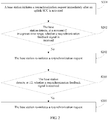
- FIG. 1 shows a resynchronization trigger method disclosed in an embodiment of this application. The method includes the following steps.
- a base station triggers resynchronization immediately after an uplink SCC is activated.
- the base station detects whether a resynchronization feedback signal is received within a preset time range, and if not, triggers resynchronization. If yes, the base station performs a subsequent step specified in an existing protocol. Details are not described herein.
- a start moment of the preset time range is a moment T1 at which the resynchronization is triggered in S101
- an end moment of the preset time range is T2
- a difference T2-T1 between T2 and T1 may be 30 milliseconds or less than 30 milliseconds.
- the resynchronization feedback signal is a preamble preamble signal sent by a terminal.
- the base station may perform S102 based on a preset period until a current moment t1 does not belong to the preset time range.
- a base station may trigger resynchronization according to the process shown in FIG. 2 .
- S202 and S203 are a specific implementation of S102.
- S201 The base station initiates a resynchronization request immediately after an uplink SCC is activated.
- S202 The base station detects, at a moment t2 (where t2 ⁇ T2) in the preset time range, whether a resynchronization feedback signal is received, and if not, re-initiates a resynchronization request.
- the base station detects, at the moment T2, whether a resynchronization feedback signal is received, and if not, initiates a resynchronization request for a last time.
- the base station initiates resynchronization for a first time at better timing.
- the base station initiates the resynchronization request immediately after the uplink SCC is activated. This mechanism can ensure that most terminals can correctly demodulate the PDCCH order.
- the base station re-triggers resynchronization before a maximum delay time elapses, to ensure that performance of the terminal is not affected because timing at which the resynchronization is initiated for the first time is changed.
- the base station may not perform S203.
- the base station performs detection only at the moment T2, and if no resynchronization feedback signal is received, re-initiates a resynchronization request.
- step shown in S101 may be flexibly adjusted based on an actual requirement by taking both PDCCH order demodulation accuracy of terminals and resource consumption into consideration.
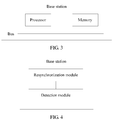
- FIG. 3 shows a base station disclosed in an embodiment of this application.
- the base station includes a processor, and optionally, further includes a memory.
- the processor is configured to trigger resynchronization immediately after an uplink secondary carrier cell SCC is activated, where a triggering moment of the resynchronization is T1; and detect whether a resynchronization feedback signal is received within a preset time range, and if not, trigger resynchronization, where a start moment of the preset time range is T1, an end moment of the preset time range is T2, and a difference between T2 and T1 is less than or equal to 30 milliseconds.
- the memory is configured to store an application program used to implement the functions of the processor and store data generated in a running process of the application program.
- the base station shown in FIG. 3 initiates a resynchronization request immediately after the uplink SCC is activated, and if the base station does not receive a resynchronization feedback, the base station re-sends a resynchronization request at most 30 milliseconds later. Therefore, this can increase a throughput in uplink CA while ensuring correct demodulation by a terminal.
- FIG. 4 shows a base station disclosed in an embodiment of this application.
- the base station includes a resynchronization module and a detection module.
- the resynchronization module is configured to trigger resynchronization immediately after an uplink secondary carrier cell SCC is activated, where a triggering moment of the resynchronization is T1.
- the detection module is configured to detect whether a resynchronization feedback signal is received within a preset time range.
- the resynchronization module is further configured to: if the detection module does not receive a resynchronization feedback signal within the preset time range, trigger resynchronization, where a start moment of the preset time range is T1, an end moment of the preset time range is T2, and a difference between T2 and T1 is less than or equal to 30 milliseconds.
- the detection module may periodically detect whether a resynchronization feedback signal is received within the preset time range.
- the detection module detects, at a moment t2 in the preset time range, whether a resynchronization feedback signal is received, and if not, detect, at the moment T2, whether a resynchronization feedback signal is received, where t2 ⁇ T2.
- the resynchronization module re-initiates a resynchronization request; and if the detection module does not receive a resynchronization feedback signal at the moment T2, the resynchronization module initiates a resynchronization request for a last time.
- the base station shown in FIG. 4 can increase a throughput in uplink CA while ensuring correct demodulation by a terminal. Further, a mechanism in which three resynchronization requests are initiated is used, to save resources while increasing a throughput.
Landscapes
- Engineering & Computer Science (AREA)
- Signal Processing (AREA)
- Computer Networks & Wireless Communication (AREA)
- Mobile Radio Communication Systems (AREA)
Applications Claiming Priority (2)
| Application Number | Priority Date | Filing Date | Title |
|---|---|---|---|
| CN201710427444.7A CN107196750B (zh) | 2017-06-08 | 2017-06-08 | 一种可重同步触发方法及基站 |
| PCT/CN2018/090035 WO2018223977A1 (fr) | 2017-06-08 | 2018-06-06 | Procédé de déclenchement de resynchronisation et station de base |
Publications (3)
| Publication Number | Publication Date |
|---|---|
| EP3624381A1 true EP3624381A1 (fr) | 2020-03-18 |
| EP3624381A4 EP3624381A4 (fr) | 2020-05-27 |
| EP3624381B1 EP3624381B1 (fr) | 2025-10-22 |
Family
ID=59877949
Family Applications (1)
| Application Number | Title | Priority Date | Filing Date |
|---|---|---|---|
| EP18812864.9A Active EP3624381B1 (fr) | 2017-06-08 | 2018-06-06 | Procédé de déclenchement de resynchronisation et station de base |
Country Status (5)
| Country | Link |
|---|---|
| US (1) | US11246109B2 (fr) |
| EP (1) | EP3624381B1 (fr) |
| JP (1) | JP6980038B2 (fr) |
| CN (1) | CN107196750B (fr) |
| WO (1) | WO2018223977A1 (fr) |
Cited By (1)
| Publication number | Priority date | Publication date | Assignee | Title |
|---|---|---|---|---|
| EP3687129A4 (fr) * | 2017-10-13 | 2020-11-04 | Huawei Technologies Co., Ltd. | Procédé de transmission, dispositif terminal et dispositif de réseau |
Families Citing this family (2)
| Publication number | Priority date | Publication date | Assignee | Title |
|---|---|---|---|---|
| CN107196750B (zh) | 2017-06-08 | 2020-03-20 | 上海华为技术有限公司 | 一种可重同步触发方法及基站 |
| WO2020000434A1 (fr) * | 2018-06-29 | 2020-01-02 | 华为技术有限公司 | Procédé et appareil de communication |
Family Cites Families (16)
| Publication number | Priority date | Publication date | Assignee | Title |
|---|---|---|---|---|
| CN101998615B (zh) | 2009-08-17 | 2014-06-11 | 中兴通讯股份有限公司 | 辅载波小区同步方法及终端 |
| CN102227939B (zh) * | 2009-10-30 | 2013-09-25 | 华为技术有限公司 | 一种上行同步方法、基站和用户设备 |
| US9084195B2 (en) | 2010-04-01 | 2015-07-14 | Nokia Technologies Oy | Multiple timing advance and carrier aggregation |
| EP3800959A1 (fr) * | 2010-09-28 | 2021-04-07 | Fujitsu Limited | Procédé d'établissement de mode de coexistence, équipement utilisateur, station de base et système associé |
| US20120082107A1 (en) * | 2010-10-05 | 2012-04-05 | Ou Meng-Hui | Method and apparatus for implicit scell deactivation in a wireless communication system |
| WO2012079197A1 (fr) * | 2010-12-16 | 2012-06-21 | Nokia Siemens Networks Oy | Désactivation de commande commune en agrégation de porteuses |
| US9014170B2 (en) * | 2011-02-11 | 2015-04-21 | Interdigital Patent Holdings, Inc. | Method and apparatus for synchronizing mobile station media flows during a collaborative session |
| US8743787B2 (en) * | 2011-05-02 | 2014-06-03 | Telefonaktiebolaget L M Ericsson (Publ) | Prohibition of sounding reference signal transmission on newly activated secondary cells |
| CN102780998B (zh) * | 2011-05-12 | 2016-01-06 | 华为技术有限公司 | 小区同步的维护方法和设备 |
| CN102244927B (zh) * | 2011-07-22 | 2015-01-28 | 新邮通信设备有限公司 | 多小区长期演进系统中建立上行同步的方法、设备和终端 |
| US9735934B2 (en) * | 2011-07-29 | 2017-08-15 | Nec Corporation | Radio station, radio terminal, and method for controling transmission timing in radio communication system |
| CN110062456A (zh) | 2011-07-29 | 2019-07-26 | 日本电气株式会社 | 无线通信系统中的无线站、无线终端和同步定时器控制方法 |
| KR20130045169A (ko) * | 2011-10-24 | 2013-05-03 | 주식회사 팬택 | 다중 요소 반송파 시스템에서 상향링크 동기의 수행장치 및 방법 |
| US9237537B2 (en) * | 2012-01-25 | 2016-01-12 | Ofinno Technologies, Llc | Random access process in a multicarrier base station and wireless device |
| US8934346B2 (en) * | 2012-03-16 | 2015-01-13 | Acer Incorporated | Apparatuses and methods for handling random access procedures |
| CN107196750B (zh) * | 2017-06-08 | 2020-03-20 | 上海华为技术有限公司 | 一种可重同步触发方法及基站 |
-
2017
- 2017-06-08 CN CN201710427444.7A patent/CN107196750B/zh active Active
-
2018
- 2018-06-06 EP EP18812864.9A patent/EP3624381B1/fr active Active
- 2018-06-06 JP JP2019567585A patent/JP6980038B2/ja active Active
- 2018-06-06 WO PCT/CN2018/090035 patent/WO2018223977A1/fr not_active Ceased
-
2019
- 2019-12-06 US US16/706,375 patent/US11246109B2/en active Active
Cited By (2)
| Publication number | Priority date | Publication date | Assignee | Title |
|---|---|---|---|---|
| EP3687129A4 (fr) * | 2017-10-13 | 2020-11-04 | Huawei Technologies Co., Ltd. | Procédé de transmission, dispositif terminal et dispositif de réseau |
| US11510158B2 (en) | 2017-10-13 | 2022-11-22 | Huawei Technologies Co., Ltd. | Transmission method, terminal device, and network device |
Also Published As
| Publication number | Publication date |
|---|---|
| JP6980038B2 (ja) | 2021-12-15 |
| US11246109B2 (en) | 2022-02-08 |
| EP3624381A4 (fr) | 2020-05-27 |
| CN107196750B (zh) | 2020-03-20 |
| JP2020522958A (ja) | 2020-07-30 |
| US20200145948A1 (en) | 2020-05-07 |
| CN107196750A (zh) | 2017-09-22 |
| WO2018223977A1 (fr) | 2018-12-13 |
| EP3624381B1 (fr) | 2025-10-22 |
Similar Documents
| Publication | Publication Date | Title |
|---|---|---|
| US10785801B2 (en) | Method and apparatus for random access in a wireless communication system | |
| EP4270836A1 (fr) | Procédé et appareil de positionnement d'état non connecté, et dispositif | |
| US20190357265A1 (en) | Random access method and terminal | |
| EP3254510B1 (fr) | Procédé et appareil pour mettre en oeuvre un temporisateur de protection d'alignement temporel | |
| US11246109B2 (en) | Resynchronization trigger method and base station | |
| EP3713368A1 (fr) | Procédé d'accès aléatoire, et équipement d'utilisateur | |
| US20250294373A1 (en) | Beam reporting triggered by data transmission | |
| CN115066973A (zh) | 解决唤醒信号冲突的网络辅助 | |
| KR20250003912A (ko) | 신호 측정의 완화 상태의 보고 | |
| EP4175397B1 (fr) | Demande de planification et déclenchement d'accès aléatoire pour sdt | |
| WO2023065246A1 (fr) | Procédé, dispositif et support lisible par ordinateur de communication | |
| CN114503771B (zh) | 在随机接入过程中监控窗口的终止 | |
| WO2025213337A1 (fr) | Rapport de couche 3 déclenché par activation de cellule | |
| WO2026031061A1 (fr) | Rétroaction commune de groupe pour fonctionnement de bloc d'informations système 1 | |
| WO2024031720A1 (fr) | Procédure d'accès étendu | |
| HK40114630A (en) | Scheduling request and random access triggering for sdt | |
| CN119732144A (zh) | 多SCell激活 |
Legal Events
| Date | Code | Title | Description |
|---|---|---|---|
| STAA | Information on the status of an ep patent application or granted ep patent |
Free format text: STATUS: THE INTERNATIONAL PUBLICATION HAS BEEN MADE |
|
| PUAI | Public reference made under article 153(3) epc to a published international application that has entered the european phase |
Free format text: ORIGINAL CODE: 0009012 |
|
| STAA | Information on the status of an ep patent application or granted ep patent |
Free format text: STATUS: REQUEST FOR EXAMINATION WAS MADE |
|
| 17P | Request for examination filed |
Effective date: 20191212 |
|
| AK | Designated contracting states |
Kind code of ref document: A1 Designated state(s): AL AT BE BG CH CY CZ DE DK EE ES FI FR GB GR HR HU IE IS IT LI LT LU LV MC MK MT NL NO PL PT RO RS SE SI SK SM TR |
|
| AX | Request for extension of the european patent |
Extension state: BA ME |
|
| A4 | Supplementary search report drawn up and despatched |
Effective date: 20200429 |
|
| RIC1 | Information provided on ipc code assigned before grant |
Ipc: H04L 5/00 20060101AFI20200423BHEP |
|
| DAV | Request for validation of the european patent (deleted) | ||
| DAX | Request for extension of the european patent (deleted) | ||
| STAA | Information on the status of an ep patent application or granted ep patent |
Free format text: STATUS: EXAMINATION IS IN PROGRESS |
|
| 17Q | First examination report despatched |
Effective date: 20210526 |
|
| GRAP | Despatch of communication of intention to grant a patent |
Free format text: ORIGINAL CODE: EPIDOSNIGR1 |
|
| STAA | Information on the status of an ep patent application or granted ep patent |
Free format text: STATUS: GRANT OF PATENT IS INTENDED |
|
| INTG | Intention to grant announced |
Effective date: 20250606 |
|
| GRAS | Grant fee paid |
Free format text: ORIGINAL CODE: EPIDOSNIGR3 |
|
| GRAA | (expected) grant |
Free format text: ORIGINAL CODE: 0009210 |
|
| STAA | Information on the status of an ep patent application or granted ep patent |
Free format text: STATUS: THE PATENT HAS BEEN GRANTED |
|
| AK | Designated contracting states |
Kind code of ref document: B1 Designated state(s): AL AT BE BG CH CY CZ DE DK EE ES FI FR GB GR HR HU IE IS IT LI LT LU LV MC MK MT NL NO PL PT RO RS SE SI SK SM TR |
|
| REG | Reference to a national code |
Ref country code: CH Ref legal event code: F10 Free format text: ST27 STATUS EVENT CODE: U-0-0-F10-F00 (AS PROVIDED BY THE NATIONAL OFFICE) Effective date: 20251022 Ref country code: GB Ref legal event code: FG4D |
|
| REG | Reference to a national code |
Ref country code: DE Ref legal event code: R096 Ref document number: 602018086583 Country of ref document: DE |
|
| REG | Reference to a national code |
Ref country code: IE Ref legal event code: FG4D |
|
| REG | Reference to a national code |
Ref country code: NL Ref legal event code: MP Effective date: 20251022 |
|
| PG25 | Lapsed in a contracting state [announced via postgrant information from national office to epo] |
Ref country code: NL Free format text: LAPSE BECAUSE OF FAILURE TO SUBMIT A TRANSLATION OF THE DESCRIPTION OR TO PAY THE FEE WITHIN THE PRESCRIBED TIME-LIMIT Effective date: 20251022 |
|
| PG25 | Lapsed in a contracting state [announced via postgrant information from national office to epo] |
Ref country code: ES Free format text: LAPSE BECAUSE OF FAILURE TO SUBMIT A TRANSLATION OF THE DESCRIPTION OR TO PAY THE FEE WITHIN THE PRESCRIBED TIME-LIMIT Effective date: 20251022 |
|
| REG | Reference to a national code |
Ref country code: LT Ref legal event code: MG9D |
|
| PG25 | Lapsed in a contracting state [announced via postgrant information from national office to epo] |
Ref country code: NO Free format text: LAPSE BECAUSE OF FAILURE TO SUBMIT A TRANSLATION OF THE DESCRIPTION OR TO PAY THE FEE WITHIN THE PRESCRIBED TIME-LIMIT Effective date: 20260122 |
|
| PG25 | Lapsed in a contracting state [announced via postgrant information from national office to epo] |
Ref country code: HR Free format text: LAPSE BECAUSE OF FAILURE TO SUBMIT A TRANSLATION OF THE DESCRIPTION OR TO PAY THE FEE WITHIN THE PRESCRIBED TIME-LIMIT Effective date: 20251022 Ref country code: AT Free format text: LAPSE BECAUSE OF FAILURE TO SUBMIT A TRANSLATION OF THE DESCRIPTION OR TO PAY THE FEE WITHIN THE PRESCRIBED TIME-LIMIT Effective date: 20251022 Ref country code: FI Free format text: LAPSE BECAUSE OF FAILURE TO SUBMIT A TRANSLATION OF THE DESCRIPTION OR TO PAY THE FEE WITHIN THE PRESCRIBED TIME-LIMIT Effective date: 20251022 |
|
| REG | Reference to a national code |
Ref country code: AT Ref legal event code: MK05 Ref document number: 1850171 Country of ref document: AT Kind code of ref document: T Effective date: 20251022 |
|
| PG25 | Lapsed in a contracting state [announced via postgrant information from national office to epo] |
Ref country code: RS Free format text: LAPSE BECAUSE OF FAILURE TO SUBMIT A TRANSLATION OF THE DESCRIPTION OR TO PAY THE FEE WITHIN THE PRESCRIBED TIME-LIMIT Effective date: 20260122 |
|
| PG25 | Lapsed in a contracting state [announced via postgrant information from national office to epo] |
Ref country code: IS Free format text: LAPSE BECAUSE OF FAILURE TO SUBMIT A TRANSLATION OF THE DESCRIPTION OR TO PAY THE FEE WITHIN THE PRESCRIBED TIME-LIMIT Effective date: 20260222 |
|
| PG25 | Lapsed in a contracting state [announced via postgrant information from national office to epo] |
Ref country code: PT Free format text: LAPSE BECAUSE OF FAILURE TO SUBMIT A TRANSLATION OF THE DESCRIPTION OR TO PAY THE FEE WITHIN THE PRESCRIBED TIME-LIMIT Effective date: 20260223 |
|
| PG25 | Lapsed in a contracting state [announced via postgrant information from national office to epo] |
Ref country code: PL Free format text: LAPSE BECAUSE OF FAILURE TO SUBMIT A TRANSLATION OF THE DESCRIPTION OR TO PAY THE FEE WITHIN THE PRESCRIBED TIME-LIMIT Effective date: 20251022 |
|
| PG25 | Lapsed in a contracting state [announced via postgrant information from national office to epo] |
Ref country code: LV Free format text: LAPSE BECAUSE OF FAILURE TO SUBMIT A TRANSLATION OF THE DESCRIPTION OR TO PAY THE FEE WITHIN THE PRESCRIBED TIME-LIMIT Effective date: 20251022 |