EP3626344A1 - Procédé de commande d'un thermocycleur et thermocycleur - Google Patents
Procédé de commande d'un thermocycleur et thermocycleur Download PDFInfo
- Publication number
- EP3626344A1 EP3626344A1 EP18195975.0A EP18195975A EP3626344A1 EP 3626344 A1 EP3626344 A1 EP 3626344A1 EP 18195975 A EP18195975 A EP 18195975A EP 3626344 A1 EP3626344 A1 EP 3626344A1
- Authority
- EP
- European Patent Office
- Prior art keywords
- temperature
- temperature control
- thermal cycler
- change rate
- data
- Prior art date
- Legal status (The legal status is an assumption and is not a legal conclusion. Google has not performed a legal analysis and makes no representation as to the accuracy of the status listed.)
- Withdrawn
Links
Images



Classifications
-
- B—PERFORMING OPERATIONS; TRANSPORTING
- B01—PHYSICAL OR CHEMICAL PROCESSES OR APPARATUS IN GENERAL
- B01L—CHEMICAL OR PHYSICAL LABORATORY APPARATUS FOR GENERAL USE
- B01L7/00—Heating or cooling apparatus; Heat insulating devices
- B01L7/52—Heating or cooling apparatus; Heat insulating devices with provision for submitting samples to a predetermined sequence of different temperatures, e.g. for treating nucleic acid samples
-
- B—PERFORMING OPERATIONS; TRANSPORTING
- B01—PHYSICAL OR CHEMICAL PROCESSES OR APPARATUS IN GENERAL
- B01L—CHEMICAL OR PHYSICAL LABORATORY APPARATUS FOR GENERAL USE
- B01L2200/00—Solutions for specific problems relating to chemical or physical laboratory apparatus
- B01L2200/14—Process control and prevention of errors
- B01L2200/143—Quality control, feedback systems
- B01L2200/147—Employing temperature sensors
-
- B—PERFORMING OPERATIONS; TRANSPORTING
- B01—PHYSICAL OR CHEMICAL PROCESSES OR APPARATUS IN GENERAL
- B01L—CHEMICAL OR PHYSICAL LABORATORY APPARATUS FOR GENERAL USE
- B01L2300/00—Additional constructional details
- B01L2300/02—Identification, exchange or storage of information
- B01L2300/024—Storing results with means integrated into the container
-
- B—PERFORMING OPERATIONS; TRANSPORTING
- B01—PHYSICAL OR CHEMICAL PROCESSES OR APPARATUS IN GENERAL
- B01L—CHEMICAL OR PHYSICAL LABORATORY APPARATUS FOR GENERAL USE
- B01L2300/00—Additional constructional details
- B01L2300/02—Identification, exchange or storage of information
- B01L2300/025—Displaying results or values with integrated means
- B01L2300/027—Digital display, e.g. LCD, LED
-
- B—PERFORMING OPERATIONS; TRANSPORTING
- B01—PHYSICAL OR CHEMICAL PROCESSES OR APPARATUS IN GENERAL
- B01L—CHEMICAL OR PHYSICAL LABORATORY APPARATUS FOR GENERAL USE
- B01L2300/00—Additional constructional details
- B01L2300/04—Closures and closing means
- B01L2300/041—Connecting closures to device or container
- B01L2300/043—Hinged closures
Definitions
- the invention relates to a method for determining a temperature change rate for controlling the temperature control device of a thermal cycler.
- the invention also relates to a thermal cycler, the control of which is set up to carry out such a method.
- a thermal cycler is a laboratory device that is able to set the temperature of at least one laboratory sample in succession to a predetermined temperature and to keep it at this temperature level for a predetermined duration.
- the sequence of this temperature control is cyclical. This means that a predetermined temperature cycle, that is to say a sequence of at least two temperature levels, typically three temperature levels, is carried out repeatedly. This procedure is usually used to carry out a polymerase chain reaction (PCR).
- PCR polymerase chain reaction
- the user When performing DNA duplication using a PCR, the user is dependent on the optimal result for the temperature being precisely and reproducibly tempered over the course of a temperature control schedule specified by the user.
- the temperature cycle of a thermal cycler is specified by the user by setting a temperature control plan, usually directly on an operating device of the device.
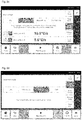
- An example of such a cycle is the setting option in Fig. 2a shown with reference to a screen display of an exemplary thermal cycler according to the invention.
- the user sets the level of each temperature level of a cycle and its holding time, as well as the total number of cycles to be completed.
- the control of the thermal cycler ensures that the temperature control plan is implemented as precisely as possible according to these specifications. In most cases, the user cannot determine exactly, the device control uses certain control parameters that are adapted to the hardware components used in the thermal cycler.
- Peltier elements which are used in the temperature control devices of the thermocyclers mostly as temperature control elements for temperature control of the sample block (thermoblocks) different performance values. The result of the tempering is also everyone
- Hardware and material parameters of the thermal cycler are determined, which have an influence on the heat transfer, i.e. the heat supply and heat dissipation, from the liquid laboratory samples to the Peltier element.
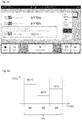
- Essential performance parameters of a thermal cycler are the maximum heating rate and the maximum cooling rate with which a thermal block of the thermal cycler can be tempered. Such a performance value is exemplary in Fig. 2b and Fig. 2c specified.
- Another performance characteristic is the transient response when setting the temperature levels of the thermoblock using temperature control. These performance values are characteristic of a thermal cycler or a class of thermal cyclers. The transient response is usually optimized to quickly reach a temperature level. The corresponding design of the temperature control is device-specific and is not known to the user. The manufacturers usually specify values for the maximum heating rate and the maximum cooling rate in the device specification.
- the actual temperature curve on the thermal block of the thermal cycler or the temperature curve in the liquid samples, which ultimately shapes the result of the temperature-dependent reaction sequences (e.g. PCR), depends not only on the user-defined temperature control schedule but also on the hardware-specific performance values mentioned.
- the difference quotient, starting from a first point in time t1 (end of the point in time of the first temperature level) and a second point in time t2 (start of the point in time of the second temperature level) and a first temperature T1 (t1) and a second temperature T2 (t2), is defined as (T2 (t2) - T1 (t1)) / (t2 - t1).
- the hardware-specific parameters are usually ignored by the user when carrying out a PCR. Instead, the temperatures are optimized (eg using a gradient) in order to obtain an optimal yield. When a PCR is migrated to another class of thermal cyclers, this yield usually decreases. This is not only due to the temperature deviating from the original device, but in particular also due to deviations in the dynamic behavior, ie on the ramp and during the transient response. Many users steer clear of that Repetition of attempts to switch to another device, as this does not produce the same result despite the same programming and application of the same temperature control plan.
- the object on which the invention is based relates to the reproduction of a temperature profile in a thermal cycler when a user-defined temperature control plan is used again, in particular in a situation in which the hardware-specific performance values have changed, as is the case, for example, when the thermal cycler is changed.
- the task is to be solved to make it easier for the user to switch from one thermal cycler to another thermal cycler with different performance values.
- the thermal cycler is designed in particular in accordance with the definitions of the present invention.
- the invention is based, among other things, on the observation that the entire runtime of the temperature control plan executed on the respective thermal cycler is easily ascertainable for the user and is generally also logged.
- the user pays attention to this runtime, since this is the essential parameter when developing the temperature control plan to determine the overall reaction time or to optimize the throughput is.
- the user specifies a known temperature control plan and a known runtime of this temperature control plan.
- Applying the invention increases the probability of successfully reproducing a temperature profile.
- the dynamic behavior, including in particular the ramp rates and settling behavior, of an original thermal cycler is simulated or simulated without the user having to make great effort in the form of experiments and entering numerous parameters.
- the temperature change rates in particular the heating and cooling rates, which the temperature control device of the thermal cycler uses to reach the respective temperature level can be determined from the running time of a temperature control plan run through on a thermal cycler.
- the running time then includes the at least one holding time of the at least one temperature level of the temperature control plan and at least one time interval during which the setting of this at least one temperature level is carried out as a function of at least one temperature change rate.
- r H is the temperature change rate (heating rate) to heat the temperature control block by a temperature difference ⁇ S_heat
- r C is the temperature change rate (cooling rate) to cool the temperature control block by a temperature difference A S_cool .
- heating rate, cooling rate and rate of temperature change respectively denote the effective heating rate, the effective cooling rate and the effective rate of temperature change, and not, for example, extreme values which are present for a short time when the temperature changes.
- the effective heating rate and the effective cooling rate are roughly constant. This can be easily determined for known thermal cyclers and saved as a table. This table can be stored in a data storage device in the thermal cycler or method according to the invention.
- the rates of temperature change are determined in particular on the assumption of a medium transient response (standard). This is exemplary in Fig. 2d shown. This affects the input variables ⁇ S_heat , ⁇ S_cool , T S_heat and T S_cool (for all s). It can be approximately assumed that the time intervals for heating up and cooling down each contain a constant time period (settling time period), which takes into account the settling of the control loop to the respective level of the temperature level.
- the settling time period is to be set by the period between the presence of the constant temperature change rate and the presence of a Temperature level determined.
- the settling time period for certain commercial thermal cyclers can also be determined and saved in a table.
- a table can contain a pre-selection from a limited selection of typical control modes.
- the table can be stored in a data storage device in the thermal cycler or method according to the invention.
- the thermal cycler or method according to the invention can be set up so that the user changes the constant value of the settling time period as a variable, in particular by input via a user interface device of the thermal cycler and a data input in this way. The user can thus easily correct the result by changing the transient response if the yield is not correct in the method.
- a temperature control of the temperature control block of a thermal cycler that is optimized for the controlled settling is known in principle.
- the oscillation to the desired target temperature of a temperature level of the temperature cycle uses an overshoot of the temperature set in the temperature control block to a maximum temperature value which is above the setpoint to be set, followed by an undershoot to a temperature value below the setpoint, to then switch back to a lower temperature value above the setpoint, etc., until the setpoint is reached.
- the settling can then be characterized by the temperature difference between the maximum overshoot temperature (for cooling: the minimum undershoot temperature) and the duration of the overshoot until the target temperature is reached. With a rapid settling, this temperature difference and the duration are small.
- the user can be given a preselection from a limited number of transient modes for selection.
- Each such settling mode can be characterized by specific values for the temperature difference and duration mentioned, each for heating and cooling, i.e. in particular by two pairs of values: mode _x (temperature difference _x , duration _x ) heating , (temperature difference _x , duration _x ) cooling .
- mode _x temperature difference _x , duration _x
- Such modes can be offered to the user via list selection on the display, for example under the designation “Fast”, “Intermediate”, “Standard”, “Safe”, as is the case in the exemplary embodiment of Figure 2d is provided.
- the method according to the invention and / or the thermal cycler according to the invention can be set up in such a way that a particular commercial thermal cycler TC X can be selected by the user, in particular via a user interface device of the thermal cycler, for example via a list selection that is displayed on a display or touchscreen of the user interface device and can be operated.
- the thermal cycler or the method then has the additional information that the runtime T specified by the user relates to the implementation of the temperature control plan on the thermal cycler of the TC X type.
- the method according to the invention and / or the thermal cycler according to the invention can access the tables in which the ratio r H / r C or the settling time is stored as a function of TC X , the calculation of the rates of temperature change can be made according to the selection made by the user TC X done automatically.
- the temperature plan data preferably determine at least a first hold time and a first temperature of a first temperature level and at least a second hold time and a second temperature of a second temperature level of the temperature plan.
- a cycle of the temperature control plan also has three temperature levels, if it is a PCR, so that the temperature control plan data also determine a third holding time and a third temperature of the third temperature level.
- the first temperature is assumed to be higher than the second temperature, and according to the temperature control plan, switching between temperature levels is carried out by cooling from the first temperature with a first temperature change rate (cooling rate) and heating starting from the second temperature with a second temperature change rate (heating rate) becomes.
- the evaluation program preferably determines the at least one first temperature change rate, which is used as the cooling rate for setting the second temperature level, and at least one second temperature rate of change which is used as the heating rate for setting the first temperature level, is determined from the temperature control plan data and the runtime data. These at least one cooling rate and at least one heating rate are preferably provided for the control of the temperature control device of the thermal cycler.
- the runtime can also include a latency interval, during which, at the beginning of a temperature control plan, a heatable cover, which covers the temperature control block of the thermal cycler containing the samples during the implementation of the polymerase chain reaction, is set to a target temperature, the runtime data also providing information about this latency interval include.
- the method for controlling the temperature control device is, in particular, a method for controlling a first thermal cycler by simulating the temperature control behavior of a second thermal cycler, the method for controlling the temperature control device including the method for determining at least one temperature change rate from temperature control plan data and runtime data, which control the temperature control behavior of the second thermal cycler characterize.
- the first thermal cycler can be operated at a first maximum temperature change rate, which is a cooling rate or a heating rate
- the second thermal cycler can in particular be operated at a second maximum temperature change rate, which is a cooling rate or a heating rate, the first maximum temperature rate of change being greater or is equal to the second maximum rate of temperature change.
- the first thermal cycler preferably tempers faster than the second thermal cycler.
- thermocycler® X50 from Eppendorf AG, Hamburg, Germany.
- the Mastercycler® X50 heats at a maximum of 10 ° C / s and cools at a maximum of 5 ° C / s.
- the at least one rate of temperature change is in particular smaller than the first maximum rate of temperature change.
- the data processing device of the electronic control device preferably has an interface device via which a data connection to an external data processing device can be established, the method for determining at least one temperature change rate from temperature control plan data and runtime data being carried out in particular on this external data processing device in order to provide the at least one temperature change rate, wherein the data processing device of the electronic control device is set up to receive this at least one temperature change rate, in particular also the temperature control plan data and / or the runtime data, via the data connection.
- the thermal cycler preferably has a user interface device, the electronic control device being set up to record the temperature control plan data entered by a user via the user interface device and to record the runtime data entered by a user via the user interface device.
- the invention also surpasses the use of the method for determining at least one temperature change rate from temperature control plan data and runtime data for controlling the temperature control device of a first thermal cycler by simulating the temperature control behavior of a second thermal cycler. This simulation helps the user migrate from the older, less powerful second thermal cycler to the more powerful first thermal cycler.
- a thermal cycler is a device that is able to set the temperature of at least one sample in succession to a predetermined temperature and to keep it at this temperature level for a predetermined holding time.
- the sequence of this temperature control is cyclical. That is, a predetermined temperature cycle, that is a sequence of at least two temperature levels is carried out repeatedly. This method is used in particular to carry out a polymerase chain reaction (PCR).
- PCR polymerase chain reaction
- a thermal cycler in particular the treatment device of the thermal cycler, preferably has a thermal block.
- a thermoblock is a sample holder made of a heat-conducting material, usually a metal-containing material or a metal, especially aluminum or silver.
- the sample holder has a contacting side which is contacted by at least one heating / cooling device of the thermal cycler, in particular at least one Peltier element, preferably several, in particular six, Peltier elements.
- the thermal cycler in particular the treatment device of the thermal cycler, has a control device with at least one control circuit, to which the at least one heating / cooling device is assigned as an actuator and at least one temperature measuring device as a measuring element.
- the temperature of a temperature level is regulated by means of the control device.
- a heat sink of the thermal cycler is used to cool sections of the thermal cycler, in particular the cooling of the Peltier elements.
- the thermal cycler in particular the treatment device of the thermal cycler, can have further heating and / or cooling elements.
- the thermal cycler, in particular the treatment device of the thermal cycler preferably has a timer device with which time parameters for setting the temperature cycle can be controlled.
- the device-controlled treatment of the at least one laboratory sample corresponds to a temperature cycle treatment to which the at least one sample is subjected.
- Possible parameters, in particular program parameters, in particular user parameters, which are used to influence a temperature cycle treatment in a temperature control plan, define in particular the temperature of a temperature level, the holding time of a temperature level, the control of further heating and / or cooling elements, and / or the number of temperature levels or Cycles, and / or at least one Process parameter that influences or defines the process, in particular the sequence, of a temperature control program consisting of several steps.
- the thermal cycler has, in particular, an electronic control device.
- a control device generally has, in particular, a data processing device, in particular a computing unit (CPU) for processing data and / or a microprocessor, or is a data processing device.
- the control device or a computing unit of the control device of a thermal cycler is preferably also set up for program-based control of the temperature control of the thermoblock.
- the data processing device preferably has a computing unit, in particular a CPU, further preferably at least one data storage device, in particular for the volatile and / or permanent storage of data.
- the data processing device is preferably designed to establish a data connection to an external computer or laboratory device, in particular a thermal cycler, via an interface device.
- a thermal cycler for the cyclical temperature control of laboratory samples, in particular for carrying out a PCR in these laboratory samples, is a device-controlled treatment, that is to say in particular an at least partially automated treatment.
- a partially automated treatment it is in particular possible for the treatment to be carried out in such a way that at least one user input is made after the start of the treatment and before the end of the treatment, with which the user can influence the ongoing treatment, in particular, for example, by using one User interface device of the thermal cycler answers automatic query, in particular confirms or denies an entry or makes other entries.
- the treatment it is possible in particular for the treatment to have a plurality of treatment steps, which are in particular carried out automatically one after the other in time, and to have at least one treatment step which requires user input, in particular via a user interface device.
- user inputs on a thermal cycler are here the input of temperature control data, the input of the runtime, and / or optionally the input or selection of a thermal cycler TC X assigned to the input runtime.
- the device-controlled treatment is preferably a program-controlled treatment, that is to say a treatment controlled by a program.
- a program-controlled treatment of a sample is understood to mean that the treatment process essentially takes place by processing a plurality or a plurality of program steps.
- the program-controlled treatment is preferably carried out using at least one program parameter, in particular at least one program parameter selected by the user.
- a parameter selected by a user is also referred to as a user parameter.
- Typical user parameters for a thermal cycler determine the temperature control plan, in particular the height and holding time of the temperature levels of a temperature control cycle, the total number of cycles, and in the context of the present invention also the runtime of the temperature control plan, which is known to the user from previous thermal cycler applications of the same temperature control plan.
- the program-controlled treatment is preferably carried out with the aid of a digital data processing device, which can in particular be part of the control device of the laboratory device.
- the data processing device can have at least one processor, i.e. have a CPU and / or have at least one microprocessor.
- the program-controlled treatment is preferably controlled and / or carried out in accordance with the specifications of a program, in particular a control program. In particular, in the case of a program-controlled treatment, at least after the program parameters required by the user have been recorded, essentially no user activity is required.
- a program parameter is understood to be a variable that can be set in a predetermined manner within a program or subroutine, valid for at least one execution (call) of the program or subroutine.
- the program parameter is determined, for example by the user, and controls the program or subroutine and effects data output depending on this program parameter.
- the program parameter influences and / or controls and / or the data output by the program control the control of the device, in particular the control of the treatment by means of the at least one treatment device.
- a program parameter can be a program parameter required by the user.
- a program parameter required by the user is characterized in that it is required for the execution of a treatment.
- Other program parameters that are not required by the user can be derived from the program parameters required by the user or made otherwise available, in particular optionally set by the user.
- a program parameter is set by a user in particular by displaying a selection of possible predefined values from a list of predefined values stored in the laboratory device, the user selecting and thus setting the desired parameter from this list. This applies, for example, to the selection of a TCx thermal cycler, which the user assigns to a known runtime of a temperature control plan. It is also possible that this program parameter is set by the user entering the value, e.g.
- numeric keypad Use a numeric keypad to enter a number that corresponds to the desired value or by the user increasing or decreasing a value continuously or in increments until it corresponds to the desired value and thus setting the value.
- Other forms of input e.g. voice control and / or gesture control are conceivable.
- a program is understood in particular to be a computer program.
- a program is a sequence of instructions, in particular consisting of declarations and instructions, in order to be able to process and / or solve a specific functionality, task or problem on a digital data processing system.
- a program is usually available as software that is used with a digital data processing system.
- the program can be present in particular as firmware, in the case of the present invention in particular as firmware of the control device of the laboratory device.
- the program is usually on a data carrier as an executable program file, often in the so-called machine code, which is loaded into the working memory of the computer of the digital data processing system for execution.
- the program is processed and executed by the processor (s) of the computer as a sequence of machine, ie processor instructions.
- 'Computer program' is also understood to mean, in particular, the source text of the program, from which the executable code can be generated in the course of the control of the laboratory device.
- a control program is understood to be an executable computer program which preferably controls and / or carries out the desired treatment of the at least one sample, in particular as a function of at least one program parameter.
- This program parameter can be a program parameter influenced and / or set by the user.
- the treatment can in particular be controlled by the control device generating one or more control parameters as a function of the program parameters, by means of which the at least one treatment device is controlled.
- the laboratory device preferably has an operating system, which can be or can have a control program.
- the control program can in particular designate an operating system of the laboratory device or a component of the operating system.
- the operating system controls the treatment and other operating functions of the laboratory device.
- the control program can be determinable by control parameters which can be derived from the control device from program parameters or user parameters.
- the control program can in particular be signal-connected to the user interface device and / or can control the user interface device.
- the control device of the user interface device can be integrated in the control device of the laboratory device or can be formed separately from this control device.
- the control device of the user interface device can be integrated in the control of the laboratory device, can be controllable by the control program and / or can in particular be integrated in the control program.
- the control program can control further functions of the laboratory device that are preferably provided, for example an energy-saving function of the laboratory device or a communication function for communication with external data processing devices, which are in particular provided separately from the laboratory device and in particular are not part of the laboratory device.
- the thermal block of the thermal cycler has in particular a large number of receptacles for sample containers.
- the control device of the thermal cycler can be set up to acquire information in the form of sample container data which are associated with the running time and the temperature control schedule. It is possible, for example, for the user to carry out a thermocyclically controlled reaction, in particular PCR, on an older thermocycler TCx, while a certain number of sample containers of a certain type with laboratory samples of a certain number and a certain volume were arranged in the thermoblock of the thermocycler TCx.
- the evaluation program can be set up to take such sample container data, in particular the number of sample containers, the type of sample container (s), number / volume of laboratory samples, into account when determining the at least one rate of temperature change from the runtime data and the temperature control plan data.
- a sample container can be a single container in which only a single sample is contained, or can be a multiple container in which a plurality of individual containers are arranged connected to one another.
- a single container can be an open container or a closable container.
- a cover element in particular a closure cap, can be provided.
- the lid element can be firmly connected to the container, e.g. as a hinged lid or hinged closure cap, or can be used as a separate component.
- the plurality of individual containers are preferably arranged in fixed positions relative to one another, in particular arranged according to the crossing points of a grid pattern. This simplifies the automated control of the positions and in particular the individual addressing of samples.
- a multiple relationship can be designed as a plate element in which the individual containers are connected in such a way that they form a plate-shaped arrangement.
- the individual containers can or can be designed as depressions in a plate be connected to one another via web elements.
- the plate element can have a frame element in which the individual containers are held.
- connections of components can be integral connections, that is to say integral connections and / or connections produced by a common injection molding process, or can be produced with a force fit (English “force fit”) and / or form fit (English “form fit”).
- the plate element can in particular be a microtiter plate.
- Multiple containers can have a plurality (from 2 to 10) of individual containers. They can also have a large number (greater than 10), typically 12, 16, 24, 32, 48, 64, 96, 384, 1536 individual containers.
- the multiple container can in particular be a microtiter plate.
- a microtiter plate can be designed according to one or more industry standards, in particular the industry standards ANSI / SBS 1-2004, ANSI / SBS 2-2004, ANSI / SBS 3-2004, ANSI / SBS 4-2004.
- the maximum sample volume that can be taken up by a sample ratio is typically between 0.01 ml and 100 ml, in particular 10-100 ⁇ l, 100-500 ⁇ l, 0.5-5 ml, 5-25 ml, 25 -50 ml, 50-100 ml, depending on the type of transport container or sample container selected.
- the sample container is preferably partially or completely made of plastic. It is preferably a consumable that is typically used only for one treatment or a small number of treatment steps of the sample. However, the sample container can also consist partially or completely of another material.
- Preferred embodiments of the thermal cycler according to the invention can be found in particular in the description of one of the methods according to the invention.
- Preferred configurations of the processes according to the invention can be found in particular in the description of the thermal cyclers according to the invention.
- Fig. 1a shows the perspective front view of a thermal cycler 100 according to the invention in one embodiment.
- the thermal cycler 100 is characterized by a lid handle 1 for closing and opening the heated lid, the heated lid 2, the heated plate 3 located in the heated lid to prevent condensation on the inside of the sample container with a heating plate 3 that can be heated to about 105 ° C., the aluminum thermoblock 4 with here 384 recordings for holding PCR tubes, in particular a 384 microtiter plate, which is contacted on its underside (not visible) here with six Peltier elements, which form the temperature control elements of the temperature control device of the thermal cycler for heating and cooling the thermoblock, and those on the underside ( are not visible) are contacted by a heat sink in order to dissipate the waste heat from the heat pumps to the environment, a mains connection socket with mains switch 5, a connection socket for Ethernet 6, a connection socket for data exchange with another thermal cycler 7, a flap 8 for covering a USB Connection, one as a user interface ellen responded serving touchscreen 9,
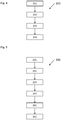
- the thermal cycler 100 has a control device with a program-controlled microprocessor (not shown), which is set up to carry out the steps of the method 200 and 300 according to the invention in that the control program of the thermal cycler 100 is programmed to be able to carry out these steps.
- the Fig. 3a shows a typical temperature control plan, which a user on the touch screen 9 (see, for example Fig. 2a ) may have been defined. It includes the desired (here: three) temperature levels 95 ° C, 65 ° C, 72 ° C and their holding times ⁇ t1, ⁇ t2, ⁇ t3 of a cycle that is to be repeated successively 30 times ("x30").
- the Fig. 3b shows a typical temperature control plan, which according to the control device of the thermal cycler from the temperature plan data Fig. 3a and was calculated based on the runtime data entered by the user.
- the temperature control schedule has the time intervals At S_cool , ⁇ t S_heat1 and ⁇ t S_heat2 .
- the average temperature measured by temperature sensors of the temperature control device on the temperature block is cooled from 95 ° C to 65 ° C, for example with the cooling rate 1.0 ° C / sec, which corresponds to the maximum cooling rate of an older thermocycler TCx used previously , which had required the runtime now entered by the user.
- the temperature is increased from 65 ° C to 72 ° C in the time interval ⁇ t S_heat1 , for example with a heating rate of 2.0 ° C / sec, which corresponds to the maximum heating rate of the older thermocycler TCx used previously, which is carried out by the user had now entered entered runtime.
- the temperature is increased from 72 ° C to 95 ° C, for example with a heating rate of 2.0 ° C / sec, so that the cycle can start again.
- the thermal cycler according to the invention has a larger maximum heating and cooling rate, namely 10 ° C./sec and 5 ° C./sec, so that it can easily carry out the calculated heating and cooling rates of the older devices.
- a settling time according to a standard settling control is also included in the time interval.
- the thermal cycler according to the invention simulates the temperature control behavior of the older device, so that the user can easily reproduce his previously performed reaction protocols. In this way, the migration from an older device to the thermal cycler according to the invention is facilitated.
Landscapes
- Health & Medical Sciences (AREA)
- Chemical & Material Sciences (AREA)
- Life Sciences & Earth Sciences (AREA)
- Biochemistry (AREA)
- General Health & Medical Sciences (AREA)
- Molecular Biology (AREA)
- Clinical Laboratory Science (AREA)
- Chemical Kinetics & Catalysis (AREA)
- Apparatus Associated With Microorganisms And Enzymes (AREA)
- Control Of Temperature (AREA)
- Devices For Use In Laboratory Experiments (AREA)
Priority Applications (8)
| Application Number | Priority Date | Filing Date | Title |
|---|---|---|---|
| EP18195975.0A EP3626344A1 (fr) | 2018-09-21 | 2018-09-21 | Procédé de commande d'un thermocycleur et thermocycleur |
| CA3112630A CA3112630A1 (fr) | 2018-09-21 | 2019-09-20 | Procede de commande d'un thermocycleur et thermocycleur |
| JP2021514511A JP2022501180A (ja) | 2018-09-21 | 2019-09-20 | サーマルサイクラーを制御する方法、及びサーマルサイクラー |
| PCT/EP2019/075286 WO2020058461A1 (fr) | 2018-09-21 | 2019-09-20 | Procédé de commande d'un thermocycleur et thermocycleur |
| AU2019343307A AU2019343307A1 (en) | 2018-09-21 | 2019-09-20 | Method for controlling a thermal cycler, and thermal cycler |
| US17/278,007 US20210370305A1 (en) | 2018-09-21 | 2019-09-20 | Method for controlling a thermal cycler, and thermal cycler |
| CN201980060990.9A CN112867567B (zh) | 2018-09-21 | 2019-09-20 | 用于控制热循环仪的方法和热循环仪 |
| EP19774080.6A EP3852929B1 (fr) | 2018-09-21 | 2019-09-20 | Procédé de commande d'un thermocycleur et thermocycleur |
Applications Claiming Priority (1)
| Application Number | Priority Date | Filing Date | Title |
|---|---|---|---|
| EP18195975.0A EP3626344A1 (fr) | 2018-09-21 | 2018-09-21 | Procédé de commande d'un thermocycleur et thermocycleur |
Publications (1)
| Publication Number | Publication Date |
|---|---|
| EP3626344A1 true EP3626344A1 (fr) | 2020-03-25 |
Family
ID=63678498
Family Applications (2)
| Application Number | Title | Priority Date | Filing Date |
|---|---|---|---|
| EP18195975.0A Withdrawn EP3626344A1 (fr) | 2018-09-21 | 2018-09-21 | Procédé de commande d'un thermocycleur et thermocycleur |
| EP19774080.6A Active EP3852929B1 (fr) | 2018-09-21 | 2019-09-20 | Procédé de commande d'un thermocycleur et thermocycleur |
Family Applications After (1)
| Application Number | Title | Priority Date | Filing Date |
|---|---|---|---|
| EP19774080.6A Active EP3852929B1 (fr) | 2018-09-21 | 2019-09-20 | Procédé de commande d'un thermocycleur et thermocycleur |
Country Status (7)
| Country | Link |
|---|---|
| US (1) | US20210370305A1 (fr) |
| EP (2) | EP3626344A1 (fr) |
| JP (1) | JP2022501180A (fr) |
| CN (1) | CN112867567B (fr) |
| AU (1) | AU2019343307A1 (fr) |
| CA (1) | CA3112630A1 (fr) |
| WO (1) | WO2020058461A1 (fr) |
Families Citing this family (1)
| Publication number | Priority date | Publication date | Assignee | Title |
|---|---|---|---|---|
| JP2024078737A (ja) * | 2022-11-30 | 2024-06-11 | 株式会社島津製作所 | 分析装置 |
Citations (5)
| Publication number | Priority date | Publication date | Assignee | Title |
|---|---|---|---|---|
| EP0488769A2 (fr) | 1990-11-29 | 1992-06-03 | The Perkin-Elmer Corporation | Dispositif à cycles thermiques pour l'exécution automatique de réactions en chaine de polymérase à régulation précise de température |
| US20020072112A1 (en) * | 1990-11-29 | 2002-06-13 | John Girdner Atwood | Thermal cycler for automatic performance of the polymerase chain reaction with close temperature control |
| EP2153901A1 (fr) * | 2008-08-01 | 2010-02-17 | Eppendorf Ag | Dispositif d'équilibrage de la température avec la possibilité de tester et procédé de test d'un dispositif d'équilibrage de la température |
| EP2338599A1 (fr) * | 2009-12-23 | 2011-06-29 | Eppendorf Ag | Appareil de laboratoire avec agencement pour tremper des échantillons et procédé pour tremper les échantillons |
| EP2907575A1 (fr) * | 2014-02-14 | 2015-08-19 | Eppendorf Ag | Appareil de laboratoire avec fonction d'entrée utilisateur et procédé d'entrée utilisateur pour un appareil de laboratoire |
Family Cites Families (16)
| Publication number | Priority date | Publication date | Assignee | Title |
|---|---|---|---|---|
| US5333675C1 (en) * | 1986-02-25 | 2001-05-01 | Perkin Elmer Corp | Apparatus and method for performing automated amplification of nucleic acid sequences and assays using heating and cooling steps |
| US5656493A (en) * | 1985-03-28 | 1997-08-12 | The Perkin-Elmer Corporation | System for automated performance of the polymerase chain reaction |
| US7188001B2 (en) * | 1998-03-23 | 2007-03-06 | Cepheid | System and method for temperature control |
| US8676383B2 (en) * | 2002-12-23 | 2014-03-18 | Applied Biosystems, Llc | Device for carrying out chemical or biological reactions |
| US7939312B2 (en) * | 2006-08-30 | 2011-05-10 | Dxna Llc | Rapid thermocycler with movable cooling assembly |
| WO2008116184A1 (fr) * | 2007-03-21 | 2008-09-25 | Applera Corporation | Procédé et système de régulation de température de bloc thermique adaptatif |
| US9156010B2 (en) * | 2008-09-23 | 2015-10-13 | Bio-Rad Laboratories, Inc. | Droplet-based assay system |
| EP2752668A3 (fr) * | 2010-07-23 | 2014-10-15 | Beckman Coulter, Inc. | Système ou procédé comprenant des unités analytiques |
| JP6078346B2 (ja) * | 2013-01-07 | 2017-02-08 | 株式会社日立ハイテクノロジーズ | 核酸増幅装置、温度制御方法、及び温度制御装置 |
| JP2014147296A (ja) * | 2013-01-31 | 2014-08-21 | Hitachi High-Technologies Corp | 核酸検査装置 |
| US9168533B2 (en) * | 2013-07-17 | 2015-10-27 | CrackerBio, Inc. | Thermal cycler device |
| US9630182B2 (en) * | 2013-12-04 | 2017-04-25 | Leidos Innovations Technology, Inc. | Non-contact infrared thermocycling |
| WO2015176253A1 (fr) * | 2014-05-21 | 2015-11-26 | Coyote Bioscience Co., Ltd. | Systèmes et procédés pour le cyclage thermique à faible puissance |
| JP2016144431A (ja) * | 2015-02-09 | 2016-08-12 | ソニー株式会社 | 核酸増幅用サーマルサイクラー、核酸分析装置、核酸増幅反応における温度変化率の制御システム、核酸増幅反応における温度変化率の制御方法、核酸分析方法及び核酸増幅反応における温度制御プログラム |
| WO2019118652A1 (fr) * | 2017-12-12 | 2019-06-20 | Essenlix Corporation | Manipulation d'échantillon et dosage avec changement de température rapide |
| WO2020014540A1 (fr) * | 2018-07-13 | 2020-01-16 | Deepdivebio, Inc. | Commande de réaction de thermocycleur |
-
2018
- 2018-09-21 EP EP18195975.0A patent/EP3626344A1/fr not_active Withdrawn
-
2019
- 2019-09-20 EP EP19774080.6A patent/EP3852929B1/fr active Active
- 2019-09-20 AU AU2019343307A patent/AU2019343307A1/en not_active Abandoned
- 2019-09-20 US US17/278,007 patent/US20210370305A1/en active Pending
- 2019-09-20 CA CA3112630A patent/CA3112630A1/fr active Pending
- 2019-09-20 JP JP2021514511A patent/JP2022501180A/ja active Pending
- 2019-09-20 CN CN201980060990.9A patent/CN112867567B/zh active Active
- 2019-09-20 WO PCT/EP2019/075286 patent/WO2020058461A1/fr not_active Ceased
Patent Citations (6)
| Publication number | Priority date | Publication date | Assignee | Title |
|---|---|---|---|---|
| EP0488769A2 (fr) | 1990-11-29 | 1992-06-03 | The Perkin-Elmer Corporation | Dispositif à cycles thermiques pour l'exécution automatique de réactions en chaine de polymérase à régulation précise de température |
| US20020072112A1 (en) * | 1990-11-29 | 2002-06-13 | John Girdner Atwood | Thermal cycler for automatic performance of the polymerase chain reaction with close temperature control |
| EP1452608B1 (fr) | 1990-11-29 | 2007-09-12 | Applera Corporation | Réaction de polymérase en chaîne automatisée |
| EP2153901A1 (fr) * | 2008-08-01 | 2010-02-17 | Eppendorf Ag | Dispositif d'équilibrage de la température avec la possibilité de tester et procédé de test d'un dispositif d'équilibrage de la température |
| EP2338599A1 (fr) * | 2009-12-23 | 2011-06-29 | Eppendorf Ag | Appareil de laboratoire avec agencement pour tremper des échantillons et procédé pour tremper les échantillons |
| EP2907575A1 (fr) * | 2014-02-14 | 2015-08-19 | Eppendorf Ag | Appareil de laboratoire avec fonction d'entrée utilisateur et procédé d'entrée utilisateur pour un appareil de laboratoire |
Also Published As
| Publication number | Publication date |
|---|---|
| CN112867567B (zh) | 2023-11-07 |
| EP3852929B1 (fr) | 2025-02-12 |
| US20210370305A1 (en) | 2021-12-02 |
| AU2019343307A1 (en) | 2021-05-06 |
| CA3112630A1 (fr) | 2020-03-26 |
| EP3852929A1 (fr) | 2021-07-28 |
| CN112867567A (zh) | 2021-05-28 |
| WO2020058461A1 (fr) | 2020-03-26 |
| JP2022501180A (ja) | 2022-01-06 |
Similar Documents
| Publication | Publication Date | Title |
|---|---|---|
| DE69133579T2 (de) | Automatisierte Polymerasekettenreaktion | |
| DE69831913T2 (de) | Verfahren, Geräte und Rechnerprogrammeprodukte zum Nachweis der Mengen von Nukleinsäure-Sequenzen in Proben | |
| EP2713166B1 (fr) | Automate de laboratoire et procédé de traitement automatique d'échantillons de laboratoire | |
| EP2857843A1 (fr) | Système présentant au moins deux appareils de laboratoire pour le traitement commandé par un appareil d'une tâche relative à une pièce dans un processus de traitement contenant des traitements d'au moins un échantillon de laboratoire, appareil de laboratoire et procédé | |
| EP2857841B1 (fr) | Appareil de laboratoire pour le traitement commandé par un appareil d'au moins un échantillon de laboratoire et procédé de configuration d'un appareil de laboratoire au moyen de la commande de configuration | |
| EP2907575A1 (fr) | Appareil de laboratoire avec fonction d'entrée utilisateur et procédé d'entrée utilisateur pour un appareil de laboratoire | |
| WO2007073872A2 (fr) | Procédé pour faire fonctionner un appareil de cuisson professionnel, en particulier un autocuiseur à convection ou un four à air pulsé, et appareil de cuisson permettant la mise en oeuvre de ce procédé | |
| DE102007039027A1 (de) | Verfahren zur Bestimmung der Kerntemperatur eines Garguts und Gargerät zur Durchführung solch eines Verfahrens | |
| EP2857844A1 (fr) | Appareil de laboratoire, système et procédé de traitement commandé par un appareil d'au moins un échantillon de laboratoire en utilisant au moins un article de consommation | |
| EP3852929B1 (fr) | Procédé de commande d'un thermocycleur et thermocycleur | |
| DE4409436A1 (de) | Verfahren zur Bearbeitung von Nukleinsäuren | |
| EP1355208A1 (fr) | Système d'automatisation de processus techniques | |
| DE102022124280A1 (de) | System zur Steuerung eines Produktionsablaufs | |
| EP3938111A1 (fr) | Dispositif et procédé de traitement thermique d'échantillons | |
| EP1494126B1 (fr) | Procédé et appareil pour analyser un matériau | |
| DE112008003552T9 (de) | Thermozykler-Instrument und Verfahren zur Durchführung von PCR | |
| DE112015005925B4 (de) | Nucleinsäure-Analysator | |
| DE102010016473B4 (de) | Verfahren zum Anleiten, Anweisen und/oder Anlernen von Benutzern eines Gargeräts und Gargerät zur Durchführung solch eines Verfahrens | |
| EP4027854B1 (fr) | Appareil ménager, système comportant un appareil ménager et procédé de fonctionnement d'un appareil ménager | |
| DE602004002098T2 (de) | Verfahren zur Automatisierung von Kochvorgängen | |
| DE102005011304A1 (de) | Verfahren und Elektrokochgerät zur Auswertung eines Gases, insbesondere zur Steuerung des Elektrogeräts | |
| EP2078899A2 (fr) | Procédé de commande d'un programme de cuisson et appareil de cuisson | |
| DE69706704T2 (de) | Verfahren und system zur qualitätsverwaltung in therapeutischen prozessen | |
| DE102020213213A1 (de) | Lebensmittelzubereitungssystem | |
| DE102011051106A1 (de) | Bedieneinrichtung für ein Gargerät und Verfahren zum Betreiben eines Gargeräts mit solch einer Bedieneinrichtung |
Legal Events
| Date | Code | Title | Description |
|---|---|---|---|
| PUAI | Public reference made under article 153(3) epc to a published international application that has entered the european phase |
Free format text: ORIGINAL CODE: 0009012 |
|
| STAA | Information on the status of an ep patent application or granted ep patent |
Free format text: STATUS: THE APPLICATION HAS BEEN PUBLISHED |
|
| AK | Designated contracting states |
Kind code of ref document: A1 Designated state(s): AL AT BE BG CH CY CZ DE DK EE ES FI FR GB GR HR HU IE IS IT LI LT LU LV MC MK MT NL NO PL PT RO RS SE SI SK SM TR |
|
| AX | Request for extension of the european patent |
Extension state: BA ME |
|
| STAA | Information on the status of an ep patent application or granted ep patent |
Free format text: STATUS: THE APPLICATION IS DEEMED TO BE WITHDRAWN |
|
| 18D | Application deemed to be withdrawn |
Effective date: 20200926 |