EP3626721A2 - Synthese von ester- und amid-derivaten von beta-lactam-kernen - Google Patents
Synthese von ester- und amid-derivaten von beta-lactam-kernen Download PDFInfo
- Publication number
- EP3626721A2 EP3626721A2 EP19189318.9A EP19189318A EP3626721A2 EP 3626721 A2 EP3626721 A2 EP 3626721A2 EP 19189318 A EP19189318 A EP 19189318A EP 3626721 A2 EP3626721 A2 EP 3626721A2
- Authority
- EP
- European Patent Office
- Prior art keywords
- tert
- azabicyclo
- oxo
- thio
- amino
- Prior art date
- Legal status (The legal status is an assumption and is not a legal conclusion. Google has not performed a legal analysis and makes no representation as to the accuracy of the status listed.)
- Granted
Links
- 0 CC(C)(C)OC(N[C@@]([C@]1SC=C(COC(C)=O)[C@](C(OCCC*)=O)N11)C1=O)=O Chemical compound CC(C)(C)OC(N[C@@]([C@]1SC=C(COC(C)=O)[C@](C(OCCC*)=O)N11)C1=O)=O 0.000 description 6
- PSPVIOHCSUFLAT-HDWXEKECSA-N CC(C)(C)OC(N[C@@H]([C@H]1SC(C)(C)C(C(OCCC[n]2nnc(COCC3OC3)c2)=O)N11)C1=O)=O Chemical compound CC(C)(C)OC(N[C@@H]([C@H]1SC(C)(C)C(C(OCCC[n]2nnc(COCC3OC3)c2)=O)N11)C1=O)=O PSPVIOHCSUFLAT-HDWXEKECSA-N 0.000 description 1
- QECVWWOBQGSEHA-VXNVDRBHSA-N CC(C)(C)OC(N[C@@H]([C@H]1SC(C)(C)CN11)C1=O)=O Chemical compound CC(C)(C)OC(N[C@@H]([C@H]1SC(C)(C)CN11)C1=O)=O QECVWWOBQGSEHA-VXNVDRBHSA-N 0.000 description 1
- TXKXPZOELGHDSP-XBOMOHCESA-N CC(C)(C)OC(N[C@@H]([C@H]1SC=C(COC(C)=O)C(C(N(CC#C)CC#C)=O)N11)C1=O)=O Chemical compound CC(C)(C)OC(N[C@@H]([C@H]1SC=C(COC(C)=O)C(C(N(CC#C)CC#C)=O)N11)C1=O)=O TXKXPZOELGHDSP-XBOMOHCESA-N 0.000 description 1
- SWDINMQTJWGHJV-VUMZAAJDSA-N CC(C)(C)OC(N[C@@H]([C@H]1SC=C(COC(C)=O)C(C(OCCC[n]2nnc(COCC3OC3)c2)=O)N11)C1=O)=O Chemical compound CC(C)(C)OC(N[C@@H]([C@H]1SC=C(COC(C)=O)C(C(OCCC[n]2nnc(COCC3OC3)c2)=O)N11)C1=O)=O SWDINMQTJWGHJV-VUMZAAJDSA-N 0.000 description 1
- OHKYQJFSCNTQIO-WVYCPIKRSA-N CC(C)(C)OC(N[C@@H]([C@H]1SCC(COC(C)=O)=C(C(OCCC[n]2nnc(COCC3OC3)c2)=O)N11)C1=O)=O Chemical compound CC(C)(C)OC(N[C@@H]([C@H]1SCC(COC(C)=O)=C(C(OCCC[n]2nnc(COCC3OC3)c2)=O)N11)C1=O)=O OHKYQJFSCNTQIO-WVYCPIKRSA-N 0.000 description 1
- JUXLIEGTOMOVQB-UHFFFAOYSA-N C[O](C(c1c2cccc1)(O)OC2=O)=C Chemical compound C[O](C(c1c2cccc1)(O)OC2=O)=C JUXLIEGTOMOVQB-UHFFFAOYSA-N 0.000 description 1
Images









Classifications
-
- C—CHEMISTRY; METALLURGY
- C07—ORGANIC CHEMISTRY
- C07D—HETEROCYCLIC COMPOUNDS
- C07D499/00—Heterocyclic compounds containing 4-thia-1-azabicyclo [3.2.0] heptane ring systems, i.e. compounds containing a ring system of the formula:, e.g. penicillins, penems; Such ring systems being further condensed, e.g. 2,3-condensed with an oxygen-, nitrogen- or sulfur-containing hetero ring
- C07D499/21—Heterocyclic compounds containing 4-thia-1-azabicyclo [3.2.0] heptane ring systems, i.e. compounds containing a ring system of the formula:, e.g. penicillins, penems; Such ring systems being further condensed, e.g. 2,3-condensed with an oxygen-, nitrogen- or sulfur-containing hetero ring with a nitrogen atom directly attached in position 6 and a carbon atom having three bonds to hetero atoms with at the most one bond to halogen, e.g. an ester or nitrile radical, directly attached in position 2
- C07D499/78—Compounds with an amino radical, acylated by carbonic acid, or by nitrogen or sulfur analogues thereof, attached in position 6
-
- A—HUMAN NECESSITIES
- A61—MEDICAL OR VETERINARY SCIENCE; HYGIENE
- A61P—SPECIFIC THERAPEUTIC ACTIVITY OF CHEMICAL COMPOUNDS OR MEDICINAL PREPARATIONS
- A61P33/00—Antiparasitic agents
-
- A—HUMAN NECESSITIES
- A61—MEDICAL OR VETERINARY SCIENCE; HYGIENE
- A61P—SPECIFIC THERAPEUTIC ACTIVITY OF CHEMICAL COMPOUNDS OR MEDICINAL PREPARATIONS
- A61P35/00—Antineoplastic agents
-
- C—CHEMISTRY; METALLURGY
- C07—ORGANIC CHEMISTRY
- C07D—HETEROCYCLIC COMPOUNDS
- C07D501/00—Heterocyclic compounds containing 5-thia-1-azabicyclo [4.2.0] octane ring systems, i.e. compounds containing a ring system of the formula:, e.g. cephalosporins; Such ring systems being further condensed, e.g. 2,3-condensed with an oxygen-, nitrogen- or sulfur-containing hetero ring
- C07D501/14—Compounds having a nitrogen atom directly attached in position 7
- C07D501/16—Compounds having a nitrogen atom directly attached in position 7 with a double bond between positions 2 and 3
-
- C—CHEMISTRY; METALLURGY
- C07—ORGANIC CHEMISTRY
- C07D—HETEROCYCLIC COMPOUNDS
- C07D501/00—Heterocyclic compounds containing 5-thia-1-azabicyclo [4.2.0] octane ring systems, i.e. compounds containing a ring system of the formula:, e.g. cephalosporins; Such ring systems being further condensed, e.g. 2,3-condensed with an oxygen-, nitrogen- or sulfur-containing hetero ring
- C07D501/14—Compounds having a nitrogen atom directly attached in position 7
- C07D501/60—Compounds having a nitrogen atom directly attached in position 7 with a double bond between positions 3 and 4
Definitions
- the present invention relates to a synthetic multi-step strategy for the preparation of new ester and amide derivatives of beta-lactam nuclei with the aim of creating a library of new molecules with a possible pharmacological activity, and the compounds thus obtained.
- the present invention relates to a method for the synthesis of ester derivatives of ⁇ -lactam nuclei comprising one or two azide groups.
- the present invention relates to a method for the synthesis of amide derivatives of ⁇ -lactam nuclei, namely of secondary amide derivatives of ⁇ -lactam nuclei comprising an azide group and tertiary amide derivatives of ⁇ -lactam nuclei containing two azide groups or two propargyl groups (Scheme 1).
- the present invention relates to the cycloaddition reaction catalyzed by copper to give new beta-lactam derivatives starting from azide esters and amides and from dipropargyl tertiary amides to obtain new derivatives of ⁇ -lactam nuclei containing differently functionalized triazoles (Scheme 1).
- the present invention also relates to a process for the synthesis of ⁇ -lactam nuclei containing differently functionalized triazoles or epoxides starting from said precursors, the relative precursors and derivatives.
- the present invention overcomes the problems relating to the preparation of a library of new beta-lactam derivatives (scheme 1) from two different points of view:
- Antibiotic resistance by bacteria and fungi represents a problem of ever-increasing importance and is one of the most important challenges to be faced in the years to come. (http: // www.who.int / medicines / publications / global-priority-list-antibiotic-resistant-bacteria / en /) .
- the indiscriminate use of antibiotics in fact, especially in the past, has led to the formation of new bacteria resistant not only to a specific antibiotic, but also to different classes of antibiotics.
- New beta-lactamase inhibitors other than beta-lactam nuclei, have recently been introduced onto the market, such as, for example, Avibactam ( D.Y. Wang et al.; "The road to avibactam: the first clinically useful non- ⁇ -lactam working somewhat like a ⁇ -lactam” Future Medicinal Chemistry 2016, 8 (10), 1063-1084 ). Also in this case, the first signs of bacterial resistance against this inhibitor have been found ( RM Humphries et al.; "First Report of Ceftazidime-Avibactam Resistance in a KPC-3-Expressing Klebsiella pneumoniae Isolate" Antimicrobial Agents and Chemotherapy 2015 Vol. 59 Number 10, 6605-6607 ).
- this invention is based on a synthetic strategy comprising multiple steps, for modifying the beta-lactam nuclei 6-APA (I) and 7-ACA (II), protected as tertbutyl carbonates on the amino group, with the addition of molecules having their own biological activity in the carboxyl position.
- This synthetic platform must make the preparation of new molecules or bio-adducts accessible, specifically containing the beta-lactam nucleus intact, but functionalized with molecules having a different or the same pharmacological activity, with the objective of both enhancing and modulating their activity, efficacy and absorption with respect to bacteria, mycobacteria, fungi and parasites, and increasing their resistance to bacterial defense systems.
- the antibiotic activity of ⁇ -lactam derivatives is historically and scientifically associated with the chemical reactivity of the ⁇ -lactam ring, but it also varies depending on the substituents present on this ring, in particular in relation to the substituents of the amino group.
- Bicyclic ⁇ -lactam antibiotics such as Penicillins and Cephalosporins
- Penicillins and Cephalosporins are, in fact, composed of a ⁇ -lactam ring fused with a thiazolidine ring having 5 or 6 atoms, with the protons all in cis position with respect to each other.
- the structural tension due to the fusion of the two cycles is of great importance for the reactivity of these antibiotics.
- There are also an amide group in position 6 or 7 and a carboxyl group (the positions are numbered following the number shown in Figure 7 for nucleus I and in Figure 8 for nucleus II).
- the activity of penicillins strongly depends on the substituents in position 6, whereas the carboxylic group is relevant for allowing modifications to be made to the molecule and generating pro-drugs.
- hydrophobic substituent groups tend to increase the activity of penicillin towards Gram+ bacteria, whereas hydrophilic substituent groups increase the activity towards Gram- bacteria.
- ⁇ -lactam antibiotics have a free carboxyl and negatively charged substituents, but the spreading of bacterial strains resistant to many of these antibiotics has made it necessary to identify synthetic routes and precursors or derivatives of ⁇ -lactam compounds having suitable structural characteristics, which allow their use as a starting point for generating new drugs and also for identifying the relationships between these compounds and bacterial enzymes.
- ⁇ -lactam derivatives are, in fact, characterized by also having other interesting properties at a biological level: they act as inhibitors of cholesterol absorption, as specific antigens when bound to proteins and are also syntons for the preparation of anticancer compounds such as Taxol.
- nuclei 6-APA (I) and 7-ACA (II) have been functionalized with a «2-azido-ethoxycarbonyloxymethyl ester» as described in Astra Lakemedel Aktiebolag "Penicillin esters and methods and compositions for treating infectious diseases " US3931405, A, SE Dahlenet al. ,” Dipenicillin and dicephalosporin ester antibiotics "1975, US3928595, A , An example of these compounds is shown in Figure 3 .
- nuclei I and II were then esterified with 1,3-diazidoisopropanol (2) (according to what is reported in the following scheme 2b) or transformed into tertiary amides containing two azide groups using bis (2-azidoethyl)amine (compound 15, scheme 2b) or into tertiary amides containing two propargyl groups with the use of dipropargylamine (compound 13, Scheme 2b), thus obtaining ⁇ -lactam derivatives activated with two azide groups (the esters IJ, IIJ and IIJ' and the tertiary amides IN, IIN and IIN') or with two propargyl groups (IG, IIG and IIG').
- the compounds IJ, IN, IIN and IIN', IG, IIG and IIG' are the first examples of beta-lactam antibiotics containing precursors for a double triazole functionality and therefore for new compounds with a high chelating activity for transition metals.
- Branched structures are emerging as a class of compounds of high pharmacological interest and to date no beta-lactam compounds with a branched structure of this type are known.
- PAMAM polyamidoamine
- a branched structure such as polyamidoamine (PAMAM) dendrimers allows pharmacological properties to be obtained that are useful for different applications in the biomedical field ( Amy M. Holmes et al. "Antimicrobial efficacy and mechanism of action of poly(amidoamine) (PAMAM) dendrimers against opportunistic pathogens "2019, International Journal of Antimicrobial Agents, 53, 500-507 ).
- esterification in diethyl ether there is, in fact, a mixture containing 85% of the isomer IIA with respect to IIA' whereas, in the case of the amidation process in dichloromethane, 70% of the isomer IIL' is obtained with respect to IIL (Scheme 2).
- the process according to the present invention is also particularly versatile and flexible and allows simple dimers of beta-lactam derivatives (IC, IIC and IIC') scheme 5 to be obtained, or beta-lactam intermediates with a branched structure (IJ, IIJ and IIJ', IN, IIN and IIN', IG, IIG and IIG') useful for developing possible macrocyclic structures:
- the propargyl derivative «N-Propargylphthalimide» is available on the market, whereas the corresponding azide derivative «diazonium-(1,3-dioxoisoindol-2-yl)azanide» is not currently commercially available.
- the possibility of having the azide derivatives of beta-lactam nuclei reduces costs, as in the case of the compound shown in Figure 4 .
- the azide group not only gives access to the cycloaddition reaction, but also allows reactions that are not possible with the propargyl group.
- the Villarasa-Staudinger reaction allows the formation of an amide group from an azide and a carboxylic acid ( J. Vilarrasa et al., "Catalytic Staudinger-Vilarrasa Reaction for the Direct Ligation of Carboxylic Acids and Azides” J. Org. Chem., 2009, 74, 2203-2206 ) .
- the Staudinger reaction reduces the azide to amide. This reaction is extremely important, for example, for the selective functionalization of carbohydrates ( S. Liu et al.; “Staudinger Reactions for Selective Functionalization of Polysaccharides: A Review” Biomacromolecules, 2015, 16(9), pp. 2556-2571 ).
- beta-lactam derivatives I and II containing two azide groups or two propargyl groups is to be able to prepare branched structures capable of giving a cycloaddition reaction catalyzed by copper (I) which, to date, are still unknown.
- This "branching" allows not only more complex structures with different functionalizations to be created, but also macrocyclic structures with significant effects on the structure-activity relationship of the molecules.
- 1,2,3 substituted triazoles have recently been studied for their capacity of chelating zinc II ( HA Michaels et al.; "2-Anthryltriazolyl-Containing Multidentate Ligands: Zinc-Coordination Mediated Photophysical Processes and Potential in Live-Cell Imaging Applications” Inorg. Chem. 2010, 49, 4278-4287 ).
- beta-lactam derivatives with a dual incorporated triazole function could be of great help in inhibiting this type of metal-beta-lactamase.
- the ramification of peptides can therefore be a method for creating new antibiotics ( R. Lakshminarayanan et al.; "Branched Peptide, B2088, Disrupts the Supramolecular Organization of Lipopolysaccharides and Sensitizes the Gram-negative Bacteria" 2016, Scientific Reports volume 6, Article number:25905 ).
- Branched fatty acids are capable of inhibiting Menaquinone (MK) in Helicobacter Pylori ( R. Tanaka et al. "Branched fatty acids inhibit the biosynthesis of menaquinone in Helicobacter pylori” 2011, The Journal of Antibiotics volume 64, pages 151- 153 ).
- the present invention involves the creation of advantages such as:
- the aldehyde group in fact, is important both for its therapeutic value and for its chemical reactivity. It is found in numerous compounds having a pharmacological activity including some molecules with an antimicrobial activity. Their antimicrobial activity appears to be linked to their capacity of interacting with the cytoplasmic membrane ( K.W. Hunter et al.; "Preparation of microparticulate ⁇ -glucan from Saccharomyces cerevisiae for use in immune potentiation" Letters in Applied Microbiology 2002, 35, 267-271 ).
- This method provides for the addition of thionyl chloride, at room temperature and in an equimolar ratio with the acid and nucleophilic amine, to a reaction mixture containing carboxylic acid and the desired amine in an equimolar ratio, in the presence of three equivalents of triethylamine.
- reaction yield in the case of the products IL, IIL and IIL' ranged from 5-10% to be reduced to 3-5% in the case of IN, IIN and IIN', IG, IIG and IIG'.
- DCM as solvent, however, involves an inversion of the percentage of the two isomers of nucleus II.
- IIG is obtained at 70%, whereas IIG' is obtained at 30% (NMR analysis).
- a modification of these reaction conditions allowed a yield of 23% to be obtained in the case of IL and 15% in the case of the mixture IIL and IIL', whereas a yield of 24% was obtained for IN and 5% for IIN', from 7 to 10% in the case of the IIG-IIG' mixture and 20% for IG.
- This modification consists in carrying out the reaction at 0°C, reversing the reaction order. Specifically, a solution of anhydrous DCM containing one millimole of carboxylic acid and one millimole of the primary or secondary amine in the presence of excess triethylamine or DIPEA (from3 to 5 equivalents) is added dropwise to a solution of one millimole of thionyl chloride in anhydrous DCM. The reaction is left under stirring and under anhydrous conditions for a time ranging from 1 hour to 24 hours.
- the reagent 14 was adopted, prepared using a synthesis sequence reported in literature ( Huan Zhang et al., "Regioselective Rapid Synthesis of Fully-substituted 1,2,3-TriazolesMediated y Propargyl Cations »Org. Lett 2013, 15, 20, 5222-5225 ) for other purposes.
- the reagent 15 was obtained through a simple nucleophilic substitution with sodium azide, starting from the commercial reagent bis (2-chloroethyl) ammonium chloride.
- the derivatives IG, and IL and IN were tested in the cycloaddition reaction with 3-azido-1-propanol and propargyl alcohol respectively to obtain the products IH, IM and IP with yields within the range of 30-60% (Scheme 9) .
- IP the product obtained at 30% is difficult to purify due to the presence of impurities.
- the peaks relating to the triazole proton however, integrate perfectly with the protons of nucleus I, confirming the success of the cycloaddition.
- COSY, carbon and HSQC analyzes confirm the structure of the derivative containing the two triazole groups and the intact structure of nucleus I.
- the present invention therefore provides a method for modifying the beta-lactam nuclei 6-APA (I) and 7-ACA (II), protected as tertbutyl carbonates on the amino group, in the carboxyl position with the objective of making the preparation accessible of new molecules or bio-adducts containing, specifically, the beta-lactam nucleus intact, but functionalized with molecules having a different pharmacological activity with the aim of both enhancing and modulating their activity towards bacteria, mycobacteria, fungi and parasites, and also increasing their resistance towards bacterial defense systems.
- the present invention provides a method for the functionalization at the level of the carboxyl group of the above-mentioned beta-lactam nuclei, with at least one reactive group different from the propargyl group previously indicated, thus introducing a group that allows a great versatility in the subsequent reactivity of the precursor.
- the present invention therefore relates to a process for the synthesis of derivatives of ⁇ -lactam compounds selected from derivatives of 6-aminopenicillanic acid (6-APA) and 7-aminocephalosporanic acid (7-ACA) which comprises the following steps:
- the present invention also relate to a process for the synthesis of triazole derivatives of ⁇ -lactam compounds wherein the precursor obtained at the end of step c) and containing a primary alcohol group is subjected to an oxidation reaction to obtain an aldehyde derivative.
- the process according to the present invention allows the carboxylic group of the ⁇ -lactam nuclei to be esterified under mild conditions which do not cause the breakage of the ⁇ -lactam ring.
- the process according to the present invention is characterized by specific reaction conditions which have allowed the azide derivative of the nucleus 7-ACA (II) to be isolated in quantities identical to those of the nucleus 6-APA (I).
- the use of 0.25 ml of anhydrous 1,4-dioxane per mmole of nucleus I and II and molecular sieves allowed not only the volume of diethyl ether to be reduced from 15 ml to 10 ml, but also increased the reaction yield up to 40% even in the case of the 7-aminocephalosporanic nucleus.
- the reaction is carried out at a temperature ranging from -5°C to 0°C until the nucleophile is added. The mixture is then left at room temperature for a time ranging from 24 to 52 hours, preferably from 24 to 36 hours.
- the reaction conditions are the following.
- the solvent used is anhydrous dichloromethane (DCM).
- DCM dichloromethane
- a solution is prepared of thionyl chloride in DCM at 0°C, to which a mixture in anhydrous DCM is added dropwise, containing carboxylic acid and the primary or secondary amine in equimolar quantities with the thionyl chloride, in the presence of an excess of triethylamine (TEA) or diisopropylethylamine (DIPEA) (3-5 equivalents).
- TAA triethylamine
- DIPEA diisopropylethylamine
- Step a) of the process according to the present invention which provides for the protection of the amino group in position 6 of APA or in position 7 of ACA by the formation of a carbamate can be carried out by reaction with a dicarbonate, which can be an aromatic or cyclic alkyl dicarbonate.
- dicarbonates can be optionally functionalized with groups which exert their biological activity or which then allow further derivatization in this position 6 or 7, possibly to confer a different pharmacological activity.
- dicarbonates examples include di- tert -butyl dicarbonate, bis (oxiran-2-ylmethyl) dicarbonate, bis (trifluoromethyl) dicarbonate, bis (2-ethoxycyclohexyl) dicarbonate or dibenzyl dicarbonate:
- Step a) is preferably carried out by forming the carbamate with di- tert -butyl dicarbonate. More preferably, step a) of the process according to the present invention is carried out at room temperature (20-30°C), for a time ranging from 10 to 32 hours, preferably for a time equal to about 24 hours in a solvent which is a 1:1 mixture by volume of 1,4-dioxane and water or a 1:1 mixture by volume of THF and water.
- the (tert-butyl-dicarbonate) reagent is present in a molar ratio of 2 to 1, preferably from 1.3 to 1, with respect to the ⁇ -lactam compound.
- step b) is carried out under anhydrous conditions using anhydrous diethyl ether in mixture with anhydrous 1,4-dioxane or anhydrous THF in ratios by volume of 10/0.25 in the presence of an amine selected from triethylamine (anhydrified on molecular sieves), diethylpropylamine (DIPEA), anhydrous pyridine and dimethylaminopyridine.
- an amine selected from triethylamine (anhydrified on molecular sieves), diethylpropylamine (DIPEA), anhydrous pyridine and dimethylaminopyridine.
- the carboxylic acid and alcohol are in an equimolar ratio, whereas the base used is present in a ratio of 2 to 1 with respect to the beta-lactam nucleus.
- Step b) of the reaction is carried out at a temperature ranging from -5°C to 0°C until the nucleophile is added, and is subsequently left to react at room temperature for a time ranging from 24 to 52 hours, preferably from 24 to 36 hours.
- the esters containing an azide group were produced with a yield ranging from 10 to 40%.
- the highest yields coincide with anhydrous conditions for both the solvent and for the products.
- the water present even in small quantities drastically reduces the reaction yield and in fact, using non-anhydrous solvents, the desired products are not formed.
- the cephalosporanic nucleus 7-ACA (IIA)
- the esterification process there is the formation of a mixture of the two isomers IIA (85) and IIA' (15%) according to the above scheme 2.
- the product IJ was obtained with a yield of about 10%.
- the derivative esterified with an alcohol that brings one or two azide groups into the carboxyl position of the ⁇ -lactam nucleus, obtained at the end of step b), allows, for example, a "copper(I)-catalyzed azide-alkyne cycloaddition (CuAAC) reaction" to be carried out with the consequent introduction of different, appropriate and selected structures with a triazole ring.
- CuAAC copper(I)-catalyzed azide-alkyne cycloaddition
- the compounds IA, IIA and IIA' were tested in the cycloaddition reaction with two different substrates to obtain new derivatives, indicated hereunder and characterized.
- reaction of IA, IIA and IIA' with propargyl alcohol 3 allowed compound IB and the mixture of isomers IIB and IIB' to be produced.
- This reaction allowed a hydroxyl group to be introduced not only with the aim of modulating the lipophilicity of the molecule, but as a possible starting point for further modifications.
- Step b) also consists in the synthesis of tertiary amide derivatives IN, IIN and IIN 'containing a double azide group and tertiary amides IG and IIG and IIG' containing a double propargyl group, and secondary amide derivatives IL, IIL and IIL' containing an azide group.
- the tertiary amides of nuclei I and II, containing a double propargyl group, again obtained in step b), are reacted with an organic azide, in particular with 3-azidopropanol (compound 1) to obtain the corresponding triazole derivatives.
- the cycloaddition reaction is mediated by copper in oxidation state I.
- Step c) is carried out in a mixture of water and at least one C 1 -C 4 aliphatic alcohol, preferably in water and isopropanol (IPA) 1 : 1 by volume, at a temperature ranging from 55 to 60°C, preferably from 58 at 60°C, for a time ranging from 4 to 10 hours, preferably from 4.5 to 6 hours.
- IPA isopropanol
- the process according to the present invention is also of particular interest for the preparation of compounds having an aldehyde group.
- the aldehyde group is found in numerous compounds having a pharmacological activity including some molecules with an antimicrobial activity.
- the antimicrobial activity appears to be linked to the capacity of interacting with the cytoplasm membrane.
- the aldehyde reacts with amino groups to form Schiff bases. These bases have been extensively studied for their versatility in different Wail Al Zoubi applications, " Biological Activities of Schiff Bases and Their Complexes: A Review of Recent Works” International Journal of Organic Chemistry "2013, 3, 73-95 .
- the present invention therefore also relates to amide derivatives of nuclei I and II (Scheme 8).
- secondary amides were produced containing an azide group and tertiary amides containing a double azide group or a double propargyl group (Scheme 9).
- An essential reason for preparing these amide derivatives is linked to the importance of the amide group from both a chemical point of view and also from the point of view of biological activity.
- the amide group is undoubtedly more resistant than the ester group, especially towards the hydrolytic action exerted by the esterases present in the human body.
- amide groups are found in numerous compounds having a pharmaceutical activity, in natural products and in polymers ( RM Lanigan et al., "Direct amidation of unprotected amino acids using B (OCH2CF3) 3" Chem. Commun. 2016, 52, 8846-8849 ). Biomolecules containing amide groups are of great interest in the pharmaceutical and biotechnological fields ( A. Goswami et al., “Enzymatic Strategies and Biocatalysts for Ammide Bond Formation: Tricks of the Trade Outside of the Ribosome” Mol Biosyst. 2015, 20; 11 (2), 338-353 ).
- the advantage of having a double azide or a double propargyl with respect to a single azide or propargyl group is extraordinarily important, as it allows branched and much more complex structures to be obtained. As already mentioned with respect to the product IJ.
- IG was obtained with a yield of 20%, IIG and IIG', as a mixture of isomers, with a yield of 7-10%.
- the amidation reaction was carried out as follows: a solution containing one millimole of acid, one millimole of compound 14 and a excess of TEA or DIPEA (5 equivalents) was added dropwise to a solution of one millimole of thionyl chloride in 3 ml of anhydrous DCM at 0°C. The reaction is then left under stirring for a period ranging from 30 minutes to three hours. The isolation of the products is effected by purification through a direct phase chromatographic column on silica.
- NMR and mass spectroscopy analyses confirm the desired structure for both compounds.
- NOESY analysis shows that even in the compound IG, the proton H1 does not "see” the protons H2 and H3.
- This analysis shows that the H1 proton is on the plane of the molecule, whereas the carboxyl group is below the plane ( Figure 6 ).
- the tertiary amide products containing the double azide group or the double propargyl group and the secondary amide derivatives containing an azide group can be subsequently functionalized to obtain new beta-lactam derivatives by means of the cycloaddition reaction catalyzed by copper I (Scheme 9).
- the product IH for example, was obtained with a yield of 45%, by reacting IG with two equivalents of 3-azidopropanol (compound 1). This product has a double functionalization of the penicillanic nucleus via two triazole groups.
- the product IM was obtained, again by means of the cycloaddition reaction catalyzed by copper I, by reacting the substrate IL with propargyl alcohol (compound 3), with a yield of 60%.
- the compound IP obtained with a yield of 30% was prepared in the same way.
- a further object of the present invention relates to triazole derivatives having the following names and the following structural formulae:
- the present invention provides a compound among those listed above, or a mixture of said compounds, for use as a medicament, preferably an antibiotic, antifungal and/or as an anticancer drug.
- TLC Thin layer chromatography
- silica gel 60 F254 purchased from Merck and verified by examination under UV light (254 and 366 nm).
- the coupling constants (J) are in Hz, and the multiplicities are described as singlet (s), doublet (d), triplet (t), quadruplet (q), double doublet (dd), double triplet (dt), broad (br), multiplet (m), and double doublet of doublets (ddd).
- the molecular weights were determined using the electrospray ionization technique (ESI-MS) using an Agilent QTOF 6538 (Wilmington, DE), coupled with an Agilent 1200 with a high resolution liquid chromatography (LC) system.
- Mobile phase 100% ACN for HPLC analysis the samples were injected into the DUAL ESI at a rate of 400 ⁇ L min and analyzed in the presence of standards.
- the capillary voltage is +3,800 V and -3,800V.
- the ion source was at a temperature of 300°C with a flow of 12l/min of nitrogen.
- DIPEA diisopropylethylamine
- TEA triethylamine
- anhydrous pyridine 1 mmole of DIPEA, or triethylamine (TEA) or anhydrous pyridine
- reaction mixture is reacted for 24 hours and monitored via TLC using a mixture of Hexane/Acetone 7/3.
- the solvent is evaporated using a rotavapor and the purification of the reaction mixture on silica, using Hexane/Acetone 9/1 as eluent, allows the desired product to be isolated with a yield ranging from 30 to 40%.
- One millimole of the azide ester and one millimole of the selected substrate containing a terminal alkyne are added to 3 mL of a 50% mixture of water and isopropyl alcohol at room temperature and under magnetic stirring.
- the reaction is carried out at a temperature ranging from 20 to 70°C for 2-48 hours and monitored via TLC with a 7/3 hexane/acetone mixture.
- reaction raw product is purified on silica using a mixture of DCM/Acetone 8/2 or DCM/MeOH 8/2 for the more hydrophilic compounds, to obtain the desired product either as a transparent oil or as a white solid with a yield ranging from 30 to 60%.
- the mixture is cooled to 0°C and filtered to remove part of the oxidizing reagent. Purification on a direct phase chromatographic column using silica and a mixture of hexane/acetone 6/4 does not allow the reaction by-products to be completely eliminated.
- the reaction is left under stirring for a time ranging from 40 minutes to 24 hours at room temperature and is monitored via TLC with Hexane 7/Acetone 3 as mobile phase.
- the solvent is evaporated and the product is purified by means of chromatography to obtain the amide with a yield ranging from 7 to 23%.
- a solution of anhydrous diethyl ether containing one millimole of azidopropanol (1) and one millimole of DIPEA is then added dropwise to the solution containing the carboxylic acid maintained at 0°C.
- reaction mixture is reacted for 24 hours and monitored via TLC using a mixture of Hexane/Acetone 7/3.
- the solvent is evaporated by means of the rotavapor and purification of the reaction mixture on silica, using Hexane/Acetone 9/1 as eluent, allows the desired product to be isolated with a yield of 40%.
- the product has the appearance of a transparent oil and was obtained with a 30% yield.
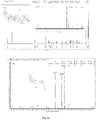
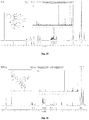
- the characterization was effected by NMR analysis and mass spectroscopy ( Figure 8 ).
- 1 mmole of carboxylic acid is dissolved in 0.5 mL of anhydrous 1,4-dioxane in a 25 mL flask in an atmosphere of N 2 and under stirring.
- 10 mL of anhydrous diethyl ether are added later.
- 1 mmole of diisopropylethylamine (DIPEA) is added to the solution which is left to react for 5 minutes at 0°C.
- DIPEA diisopropylethylamine
- a solution of anhydrous diethyl ether containing one millimole of azidopropanol (1) and one millimole of DIPEA is subsequently added dropwise to the solution containing the carboxylic acid maintained at 0°C.
- reaction mixture is reacted for 24 hours and monitored via TLC using a mixture of Hexane/Acetone 7/3.
- the ratio between the two isomers in the NMR analysis, after the chromatographic column, is about 60% IIA and 40% IIA'. Therefore when the signal of a proton is identified, in the case of the isomer IIA' it is about 0.4 of the total signal.
- the impure product which is difficult to purify on silica in direct phase, has the appearance of a transparent oil with a fruity fragrance.
- the formation of a proton can be noted at 10.04 ppm typical of an aldehyde.
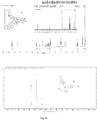
- this proton combines, HSQC analysis ( Figure 15-1S hereunder), with a carbon at ppm 185.35 ppm, typical of a carbaldehyde.
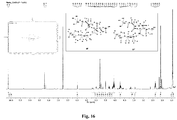
- Figure 15-2S overlapping of the 1 H-NMR of IB with the 1 H-NMR of IF, the protons H12-H13 of IB, following oxidation, disappear to give the proton H12 of IF.
- the product IIF also has the appearance of a transparent oil with a fruity odour as a mixture of the two isomers IIF and IIF' in a ratio of about 85:15 in percentage terms.
- the presence can be seen of the proton at 10.15 and 10.13 of the protons H15 and H15'.
- the reaction product is a mixture of the two isomers IIL and IIL' in a ratio of 30 to 70 in percentage terms with a yield of 15%.
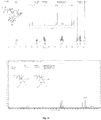
- the product has the appearance of a transparent oil. Purification by direct phase chromatography allowed the product IIL' to be isolated with a 10% yield. Characterization ( Figure 21 ).
Landscapes
- Organic Chemistry (AREA)
- Chemical & Material Sciences (AREA)
- Health & Medical Sciences (AREA)
- Veterinary Medicine (AREA)
- Pharmacology & Pharmacy (AREA)
- Chemical Kinetics & Catalysis (AREA)
- General Chemical & Material Sciences (AREA)
- Medicinal Chemistry (AREA)
- Nuclear Medicine, Radiotherapy & Molecular Imaging (AREA)
- Life Sciences & Earth Sciences (AREA)
- Animal Behavior & Ethology (AREA)
- General Health & Medical Sciences (AREA)
- Public Health (AREA)
- Tropical Medicine & Parasitology (AREA)
- Pharmaceuticals Containing Other Organic And Inorganic Compounds (AREA)
Applications Claiming Priority (1)
| Application Number | Priority Date | Filing Date | Title |
|---|---|---|---|
| IT201800007656 | 2018-07-31 |
Publications (3)
| Publication Number | Publication Date |
|---|---|
| EP3626721A2 true EP3626721A2 (de) | 2020-03-25 |
| EP3626721A3 EP3626721A3 (de) | 2020-07-29 |
| EP3626721B1 EP3626721B1 (de) | 2023-09-06 |
Family
ID=64316654
Family Applications (1)
| Application Number | Title | Priority Date | Filing Date |
|---|---|---|---|
| EP19189318.9A Active EP3626721B1 (de) | 2018-07-31 | 2019-07-31 | Synthese von ester- und amid-derivaten von beta-lactam-kernen |
Country Status (1)
| Country | Link |
|---|---|
| EP (1) | EP3626721B1 (de) |
Cited By (1)
| Publication number | Priority date | Publication date | Assignee | Title |
|---|---|---|---|---|
| IT202000031070A1 (it) | 2020-12-16 | 2022-06-16 | Paolo Bonomi | Procedimento di sintesi di derivati ammidici dell’acido 8-idrossi penicillanico |
Citations (4)
| Publication number | Priority date | Publication date | Assignee | Title |
|---|---|---|---|---|
| US3928595A (en) | 1972-03-13 | 1975-12-23 | Astra Laekemedel Ab | Dipenicillin and dicephalosporin ester antibiotics |
| US3931405A (en) | 1972-03-13 | 1976-01-06 | Astra Lakemedel Aktiebolag | New penicillin esters and methods and compositions for treating infectious diseases |
| WO2017153892A1 (en) | 2016-03-08 | 2017-09-14 | Paolo Bonomi | SYNTHESIS PROCESS OF PRECURSORS OF DERIVATIVES OF β-LACTAM NUCLEI AND PRECURSORS AND DERIVATIVES THEREOF |
| WO2017158392A1 (en) | 2016-03-14 | 2017-09-21 | Hepa Wash Gmbh | Systems or apparatuses and methods for performing dialysis |
Family Cites Families (4)
| Publication number | Priority date | Publication date | Assignee | Title |
|---|---|---|---|---|
| JPS5116434B1 (de) * | 1970-12-29 | 1976-05-24 | ||
| EP0059554A3 (de) * | 1981-02-27 | 1982-10-20 | Beecham Group Plc | Beta-Lactam-Antibiotika, Verfahren zu ihrer Herstellung und ihre Verwendung in pharmazeutischen Zubereitungen |
| JP2602685B2 (ja) * | 1988-03-01 | 1997-04-23 | 大鵬薬品工業株式会社 | 2α−メチル−2β―(1,2,3−トリアゾール−1−イル)メチルペナム−3α−カルボン酸誘導体の製造法 |
| GB201317619D0 (en) * | 2013-10-04 | 2013-11-20 | Uni I Oslo | Compounds |
-
2019
- 2019-07-31 EP EP19189318.9A patent/EP3626721B1/de active Active
Patent Citations (4)
| Publication number | Priority date | Publication date | Assignee | Title |
|---|---|---|---|---|
| US3928595A (en) | 1972-03-13 | 1975-12-23 | Astra Laekemedel Ab | Dipenicillin and dicephalosporin ester antibiotics |
| US3931405A (en) | 1972-03-13 | 1976-01-06 | Astra Lakemedel Aktiebolag | New penicillin esters and methods and compositions for treating infectious diseases |
| WO2017153892A1 (en) | 2016-03-08 | 2017-09-14 | Paolo Bonomi | SYNTHESIS PROCESS OF PRECURSORS OF DERIVATIVES OF β-LACTAM NUCLEI AND PRECURSORS AND DERIVATIVES THEREOF |
| WO2017158392A1 (en) | 2016-03-14 | 2017-09-21 | Hepa Wash Gmbh | Systems or apparatuses and methods for performing dialysis |
Non-Patent Citations (49)
| Title |
|---|
| "Biological Activities of Schiff Bases and Their Complexes: A Review of Recent Works", INTERNATIONAL JOURNAL OF ORGANIC CHEMISTRY, vol. 3, 2013, pages 73 - 95 |
| A. GOSWAMI ET AL.: "Enzymatic Strategies and Biocatalysts for Ammide Bond Formation: Tricks of the Trade Outside of the Ribosome", MOL BIOSYST., vol. 11, no. 2, 2015, pages 338 - 353, XP002780907 |
| A. LEGGIO ET AL.: "One-pot synthesis of amides from carboxylic acids activated using thionyl chloride", RSC ADV., vol. 6, 2016, pages 34468, XP055560032, DOI: 10.1039/C5RA24527C |
| A. LEGGIO ET AL.: "One-pot synthesis of ammides from carboxylic acids activated using thionyl chloride", RSC ADV., pages 34468 - 34475 |
| A. LEGGIO ET AL.: "One-pot synthesis of ammonium from carboxylic acids activated using thionyl chloride", RSC ADV., vol. 6, 2016, pages 34468 - 34475, XP055560032, DOI: 10.1039/C5RA24527C |
| AMY M. HOLMES ET AL.: "Antimicrobial efficacy and mechanism of action of poly(amidoamine) (PAMAM) dendrimers against opportunistic pathogens", INTERNATIONAL JOURNAL OF ANTIMICROBIAL AGENTS, vol. 53, 2019, pages 500 - 507, XP085653463, DOI: 10.1016/j.ijantimicag.2018.12.012 |
| B. GOLD ET AL.: "Novel Cephalosporins Selectively Active on Nonreplicating Mycobacterium tuberculosis", J. MED. CHEM., vol. 59, no. 13, May 2016 (2016-05-01), pages 6027 - 6044, XP055406781, DOI: 10.1021/acs.jmedchem.5b01833 |
| C. FALCIANI ET AL.: "Synthesis and biological activity of stable branched neurotensin peptides for tumor targeting", MOL.CANCER. THER., vol. 6, no. 9, 2007, pages 2441 - 2447, XP002567006 |
| C. PALOMO ET AL.: "Asymmetric Synthesis of /?-Lactams by Staudinger Ketene-Imine Cicloaddition Reaction", EUR.J. ORG. CHEM., 1999, pages 3223 - 3235 |
| C.A HUNTER ET AL.: "The Nature of π-π interactions", JACS, vol. 112, 1990, pages 5525 - 5534, XP002041843, DOI: 10.1021/ja00170a016 |
| CR PITTST. LECTKA: "Chemical Synthesis of fi-Lactams: Asymmetric Catalysis and Other Recent Advances", CHEM. REV., vol. 114, no. 16, 2014, pages 7930 - 795 |
| D. HUANG ET AL.: "Catalysis by 1,2,3-triazole- and related transition-metal complexes", COORDINATION CHEMISTRY REVIEWS, vol. 272, 2014, pages 145 - 165, XP028663610, DOI: 10.1016/j.ccr.2014.04.006 |
| D. Y. WANG ET AL.: "The road to avibactam: the first clinically useful non-fi-lactam working somewhat like a fi- lactam", FUTURE MEDICINAL CHEMISTRY, vol. 8, no. 10, 2016, pages 1063 - 1084, XP055411254, DOI: 10.4155/fmc-2016-0078 |
| DB, BOGGIAN ET AL.: "A solid- and solution-phase-based library of 2fJ-methyl substituted penicillin derivatives and their effects on growth inhibition of tumor cell lines", MED. CHEM. COMMUN., vol. 6, 2015, pages 619 - 625, XP002761526, DOI: 10.1039/C4MD00430B |
| DONG-JUN FU ET AL.: "Structure-Activity Relationship Studies of fi-Lactam-az.ide Analogues as Orally Active Antitumor Agents Targeting the Tubulin Colchicine Site", SCIENTIFIC REPORTS, vol. 7, no. 12788, 2017, pages 1 - 12 |
| DONG-JUN FU ET AL.: "Structure-Activity Relationship Studies of fi-Lactam-azide Analogues as Orally Active Antitumor Agents Targeting the Tubulin Colchicine Site", SCIENTIFIC REPORTS, vol. 7, no. 12788, 2017, pages 1 - 12 |
| GALLETTI, P. ET AL.: "Targeting integrins avfi3 and a5fi I with new f-lactam derivatives", EUR. J. MED. CHEM., vol. 83, 2014, pages 284 - 293 |
| GEESALA, R. ET AL.: "2-Azetidinones: Synthesis and biological evaluation as potential anti-breast cancer agents", EUR..MED. CHEM., vol. 124, 2016, pages 544 - 558 |
| HA MICHAELS ET AL.: "2-Anthryltriazolyl-Containing Multidentate Ligands: Zinc-Coordination Mediated Photophysical Processes and Potential in Live-Cell Imaging Applications", INORG. CHEM., vol. 49, 2010, pages 4278 - 4287 |
| HUAN ZHANG ET AL.: "Regioselective Rapid Synthesis of Fully-substituted 1,2,3-TriazolesMediated y Propargyl Cations", ORG. LETT, vol. 15, no. 20, 2013, pages 5222 - 5225 |
| J. VILARRASA ET AL.: "Catalytic Staudinger-Vilarrasa Reaction for the Direct Ligation of Carboxylic Acids and Azides", J. ORG. CHEM., vol. 74, 2009, pages 2203 - 2206 |
| J.E.WYNNW.L. SANTOS: "HIV-1 drug discovery: targeting folded RNA structures with branched peptides", BIOMOL. CHEM., vol. 13, 2015, pages 5848 - 5858 |
| JESSE D. MORE ET AL.: "A Simple and Advantageous Protocol for the Oxidation of Alcohols with O-Iodossibenzoic Acid (IBX)", ORG. LETT., vol. 4, no. 17, 2002 |
| K. BOZOROV ET AL.: "1,2,3-Triazole-containing hybrids as leads in medicinal chemistry: A recent overview", BIOORGANIC & MEDICINAL CHEMISTRY, Retrieved from the Internet <URL:https://doi.org/10.1016/i.bmc.2019.07.005> |
| K.W. HUNTER ET AL.: "Preparation of microparticulate fi-glucan from Saccharomyces cerevisiae for use in immune potentiation", LETTERS IN APPLIED MICROBIOLOGY, vol. 35, 2002, pages 267 - 271, XP008102420, DOI: 10.1046/j.1472-765X.2002.01201.x |
| KAREN BUSH: "Antibiotic and Chemotherapy", 2010, article "f-Lactam antibiotics: penicillins", pages: 200 - 225 |
| LEE VENTOLA, MS.: "The Antibiotic Resistance Crisis Part 1: Causes and Threats", PHARMACOLOGY AND THERAPEUTICS, vol. 40, no. 4, 2015, pages 277 283 |
| M.A.SCORCIAPINO ET AL.: "Antimicrobial Dendrimeric Peptides: Structure, Activity and New Therapeutic Applications", INT. J. MOL. SCI., vol. 18, 2017, pages 542 |
| MJ. CLEMENT ET AL., NMR CHARACTERIZATION AND MOLECULAR MODELING OF FUCOIDAN SHOWING THE IMPORTANCE OF OLIGOSACCHARIDE BRANCHING IN ITS ANTICOMPLEMENTARY ACTIVITY, pages 894 |
| N.I. BURZLAFF ET AL.: "The reaction cycle of isopenicillin N synthase observed by X-ray diffraction", NATURE, vol. 401, 1999, pages 721 - 724 |
| P. BONOMI ET AL.: "Modulation of the Microenvironment Surrounding the Active Site of Penicillin G Acylase Immobilized on Acrylic Carriers Improves the Enzymatic Synthesis of Cephalosporins", MOLECULES, vol. 18, 2013, pages 14349 - 14365 |
| P. SUMAN ET AL.: "Synthesis and antimycobacterial activity of 2-chloronicotinaldehydes based novel IH-1,2,3-triazolylbenzohydrazides", BIOORGANIC AND MEDICINAL CHEMISTRY LETTERS, vol. 25, no. 11, 2015, pages 2390 - 2394 |
| PEDRO M. S. D. CALA ET AL.: "Trends in therapeutic drug conjugates for bacterial diseases: a patent review", EXPERT OPINION ON THERAPEUTIC PATENTS, vol. 27, no. 2, 2017, pages 179 - 189, XP055652137, DOI: 10.1080/13543776.2017.1259411 |
| PF LAMIE ET AL.: "Design, Synthesis and Evaluation of Novel Phthalimide Derivatives as in Vitro Anti-Microbial, Anti-Oxidant and Anti-Inflammatory Agents", MOLECULES, vol. 20, 2015, pages 16620 - 16642 |
| PG CORNIER ET AL.: "In vitro anticancer activity and SAR studies of triazolyl aminoacyl (peptidyl) penicillins", MED. CHEM .COMMUNITY, vol. 5, 2014, pages 214 - 218 |
| R. D'ARCY: "Branched polyesters: Preparative strategies and applications", ADV. DRUG. DELIVERY REV., vol. 107, 2016, pages 60 - 81, XP029839849, DOI: 10.1016/j.addr.2016.05.005 |
| R. LAKSHMINARAYANAN ET AL.: "Branched Peptide, B2088, Disrupts the Supramolecular Organization of Lipopolysaccharides and Sensitizes the Gram-negative Bacteria", SCIENTIFIC REPORTS, vol. 6, 2016 |
| R. REDDY, CB ET AL.: "HDAC and NF- B mediated cytotoxicity induced by novel N-Chloro f -lactams and benzisoxazole derivatives", CHEM-BIOL., vol. 246, pages 69 - 76 |
| R. TANAKA ET AL.: "Branched fatty acids inhibit the biosynthesis of menaquinone in Helicobacter pylori", THE JOURNAL OF ANTIBIOTICS, vol. 64, 2011, pages 151 - 153 |
| RM HUMPHRIES ET AL.: "First Report of Ceftazidime-Avibactam Resistance in a KPC-3-Expressing Klebsiella pneumoniae Isolate", ANTIMICROBIAL AGENTS AND CHEMOTHERAPY, vol. 59, no. 10, 2015, pages 6605 - 6607 |
| RM LANIGAN ET AL.: "Direct amidation of unprotected amino acids using B (OCH2CF3) 3", CHEM. COMMUN., vol. 52, 2016, pages 8846 - 8849 |
| S. LIU ET AL.: "Staudinger Reactions for Selective Functionalization of Polysaccharides : A Review", BIOMACROMOLECULES, vol. 16, no. 9, 2015, pages 2556 - 2571 |
| S. LIU ET AL.: "Staudinger Reactions for Selective Functionalization of Polysaccharides: A Review", BIOMACROMOLECULES, vol. 16, no. 9, 2015, pages 2556 - 2571 |
| S. SHARMA ET AL.: "Synthesis of 2,3,6-trideoxy sugar triazole hybrids as potential new broad spectrum antimicrobial agents", EUROPEAN JOURNAL OF MEDICINAL CHEMISTRY, vol. 83, 2014, pages 474 - 489 |
| S. V. LEY ET AL.: "Rapid Asymmetric Synthesis of Disubstituted Allenes by Coupling of Flow-Generated Diazo Compounds and Propargylated Amines", ANGEW. CHEM.INT.ED, vol. 56, no. 7, 2017, pages 1864 - 1868 |
| S.MALIK ET AL.: "Pharmacological Importance of Triazole Derivatives: A Review", IJESC, vol. 6, no. 8, 2016, pages 2799 - 2803 |
| T. PALZKILL: "Metallo-j3-lactamase structure and function", ANN. NY ACAD. SCI., vol. 1277, January 2013 (2013-01-01), pages 91 - 104, XP055433974, DOI: 10.1111/j.1749-6632.2012.06796.x |
| WAIL AL ZOUBI, BIOLOGICAL ACTIVITIES OF SCHIFF BASES AND THEIR COMPLEXES: A REVIEW OF RECENT WORKS INTERNATIONAL JOURNAL OF ORGANIC CHEMISTRY, vol. 3, 2013, pages 73 - 9 |
| X. ZHANG ET AL.: "Polymerization or Cyclic Dimerization: Solvent Dependent Homo-Coupling of Terminal Alkynes at HOPG Surface", SCIENTIFIC REPORTS, vol. 4, 2014, pages 3899 |
Cited By (2)
| Publication number | Priority date | Publication date | Assignee | Title |
|---|---|---|---|---|
| IT202000031070A1 (it) | 2020-12-16 | 2022-06-16 | Paolo Bonomi | Procedimento di sintesi di derivati ammidici dell’acido 8-idrossi penicillanico |
| WO2022130238A1 (en) * | 2020-12-16 | 2022-06-23 | Paolo Bonomi | Process for the synthesis of amide derivatives of 8-hydroxypenicillanic acid |
Also Published As
| Publication number | Publication date |
|---|---|
| EP3626721A3 (de) | 2020-07-29 |
| EP3626721B1 (de) | 2023-09-06 |
Similar Documents
| Publication | Publication Date | Title |
|---|---|---|
| EP4349832A1 (de) | Chemischer kopplungslinker und seine verwendung | |
| Huczyński et al. | Synthesis and biological activity of salinomycin conjugates with floxuridine | |
| EP3538098A1 (de) | Antikörper-wirkstoff-konjugate | |
| Cheng et al. | Synthesis of oleanolic acid dimers as inhibitors of glycogen phosphorylase | |
| CA2704462A1 (en) | Beta-lactone compounds | |
| EP3626721B1 (de) | Synthese von ester- und amid-derivaten von beta-lactam-kernen | |
| JP7076433B2 (ja) | 新規細胞傷害性剤およびそのコンジュゲート | |
| JP2002511457A (ja) | 7−ヘキサノイルタキソール(登録商標)及びその調製法 | |
| Mishra et al. | Design, synthesis, and anti-bacterial activity of novel deoxycholic acid-amino alcohol conjugates | |
| JPH0977791A (ja) | ペプチド誘導体及びその用途 | |
| Singh et al. | Structure, chemistry, and biology of actinoplanic acids: potent inhibitors of Ras farnesyl-protein transferase | |
| US6362218B1 (en) | Brefeldin A derivatives | |
| Moroy et al. | Simultaneous presence of unsaturation and long alkyl chain at P1′ of Ilomastat confers selectivity for gelatinase A (MMP-2) over gelatinase B (MMP-9) inhibition as shown by molecular modelling studies | |
| RU2168513C2 (ru) | Производные таксана, способ их получения и фармацевтическая композиция | |
| JP5476541B2 (ja) | テロメラーゼ阻害剤 | |
| AU2016347606B2 (en) | Bifunctional prodrugs | |
| Antoszczak et al. | Differences in Antiproliferative Activity Between Salinomycin-AZT Conjugates Obtained via ‘Click’and Esterification Reactions | |
| EP0233101A1 (de) | Vinblastin-Derivate und diese enthaltende Arzneimittel | |
| WO2025106586A1 (en) | Macrocyclic ketone compounds and applications thereof | |
| EP3426662B1 (de) | Syntheseverfahren von vorläufern von -lactamzellkernderivaten sowie vorläufer und derivate davon | |
| Song et al. | Synthesis and biological evaluation of the Fluoro analog of Romidepsin with improved selectivity for class I histone deacetylases (HDACs) | |
| WO2009004146A2 (fr) | Nouveaux dérives analogues de l'herbimycine a, compositions les contenant et utilisation | |
| EP3283489B1 (de) | Epoxyazulenderivate verwendbar zur behandlung von krebs | |
| EP3215513B1 (de) | Funktionalisierte morpholinyl-anthracyclin-derivate | |
| Beck et al. | One-pot multicomponent synthesis of two novel thiolactone scaffolds |
Legal Events
| Date | Code | Title | Description |
|---|---|---|---|
| PUAI | Public reference made under article 153(3) epc to a published international application that has entered the european phase |
Free format text: ORIGINAL CODE: 0009012 |
|
| STAA | Information on the status of an ep patent application or granted ep patent |
Free format text: STATUS: THE APPLICATION HAS BEEN PUBLISHED |
|
| AK | Designated contracting states |
Kind code of ref document: A2 Designated state(s): AL AT BE BG CH CY CZ DE DK EE ES FI FR GB GR HR HU IE IS IT LI LT LU LV MC MK MT NL NO PL PT RO RS SE SI SK SM TR |
|
| AX | Request for extension of the european patent |
Extension state: BA ME |
|
| PUAL | Search report despatched |
Free format text: ORIGINAL CODE: 0009013 |
|
| AK | Designated contracting states |
Kind code of ref document: A3 Designated state(s): AL AT BE BG CH CY CZ DE DK EE ES FI FR GB GR HR HU IE IS IT LI LT LU LV MC MK MT NL NO PL PT RO RS SE SI SK SM TR |
|
| AX | Request for extension of the european patent |
Extension state: BA ME |
|
| RIC1 | Information provided on ipc code assigned before grant |
Ipc: C07D 501/16 20060101ALI20200619BHEP Ipc: C07D 501/60 20060101ALI20200619BHEP Ipc: A61P 35/00 20060101ALI20200619BHEP Ipc: C07D 499/78 20060101AFI20200619BHEP Ipc: A61P 33/00 20060101ALI20200619BHEP |
|
| STAA | Information on the status of an ep patent application or granted ep patent |
Free format text: STATUS: REQUEST FOR EXAMINATION WAS MADE |
|
| 17P | Request for examination filed |
Effective date: 20210126 |
|
| RBV | Designated contracting states (corrected) |
Designated state(s): AL AT BE BG CH CY CZ DE DK EE ES FI FR GB GR HR HU IE IS IT LI LT LU LV MC MK MT NL NO PL PT RO RS SE SI SK SM TR |
|
| STAA | Information on the status of an ep patent application or granted ep patent |
Free format text: STATUS: EXAMINATION IS IN PROGRESS |
|
| 17Q | First examination report despatched |
Effective date: 20210514 |
|
| GRAP | Despatch of communication of intention to grant a patent |
Free format text: ORIGINAL CODE: EPIDOSNIGR1 |
|
| STAA | Information on the status of an ep patent application or granted ep patent |
Free format text: STATUS: GRANT OF PATENT IS INTENDED |
|
| INTG | Intention to grant announced |
Effective date: 20230329 |
|
| P01 | Opt-out of the competence of the unified patent court (upc) registered |
Effective date: 20230424 |
|
| GRAS | Grant fee paid |
Free format text: ORIGINAL CODE: EPIDOSNIGR3 |
|
| GRAA | (expected) grant |
Free format text: ORIGINAL CODE: 0009210 |
|
| STAA | Information on the status of an ep patent application or granted ep patent |
Free format text: STATUS: THE PATENT HAS BEEN GRANTED |
|
| AK | Designated contracting states |
Kind code of ref document: B1 Designated state(s): AL AT BE BG CH CY CZ DE DK EE ES FI FR GB GR HR HU IE IS IT LI LT LU LV MC MK MT NL NO PL PT RO RS SE SI SK SM TR |
|
| REG | Reference to a national code |
Ref country code: GB Ref legal event code: FG4D |
|
| REG | Reference to a national code |
Ref country code: CH Ref legal event code: EP |
|
| REG | Reference to a national code |
Ref country code: DE Ref legal event code: R096 Ref document number: 602019036625 Country of ref document: DE |
|
| REG | Reference to a national code |
Ref country code: IE Ref legal event code: FG4D |
|
| REG | Reference to a national code |
Ref country code: LT Ref legal event code: MG9D |
|
| REG | Reference to a national code |
Ref country code: NL Ref legal event code: MP Effective date: 20230906 |
|
| PG25 | Lapsed in a contracting state [announced via postgrant information from national office to epo] |
Ref country code: GR Free format text: LAPSE BECAUSE OF FAILURE TO SUBMIT A TRANSLATION OF THE DESCRIPTION OR TO PAY THE FEE WITHIN THE PRESCRIBED TIME-LIMIT Effective date: 20231207 |
|
| PG25 | Lapsed in a contracting state [announced via postgrant information from national office to epo] |
Ref country code: SE Free format text: LAPSE BECAUSE OF FAILURE TO SUBMIT A TRANSLATION OF THE DESCRIPTION OR TO PAY THE FEE WITHIN THE PRESCRIBED TIME-LIMIT Effective date: 20230906 Ref country code: RS Free format text: LAPSE BECAUSE OF FAILURE TO SUBMIT A TRANSLATION OF THE DESCRIPTION OR TO PAY THE FEE WITHIN THE PRESCRIBED TIME-LIMIT Effective date: 20230906 Ref country code: NO Free format text: LAPSE BECAUSE OF FAILURE TO SUBMIT A TRANSLATION OF THE DESCRIPTION OR TO PAY THE FEE WITHIN THE PRESCRIBED TIME-LIMIT Effective date: 20231206 Ref country code: LV Free format text: LAPSE BECAUSE OF FAILURE TO SUBMIT A TRANSLATION OF THE DESCRIPTION OR TO PAY THE FEE WITHIN THE PRESCRIBED TIME-LIMIT Effective date: 20230906 Ref country code: LT Free format text: LAPSE BECAUSE OF FAILURE TO SUBMIT A TRANSLATION OF THE DESCRIPTION OR TO PAY THE FEE WITHIN THE PRESCRIBED TIME-LIMIT Effective date: 20230906 Ref country code: HR Free format text: LAPSE BECAUSE OF FAILURE TO SUBMIT A TRANSLATION OF THE DESCRIPTION OR TO PAY THE FEE WITHIN THE PRESCRIBED TIME-LIMIT Effective date: 20230906 Ref country code: GR Free format text: LAPSE BECAUSE OF FAILURE TO SUBMIT A TRANSLATION OF THE DESCRIPTION OR TO PAY THE FEE WITHIN THE PRESCRIBED TIME-LIMIT Effective date: 20231207 Ref country code: FI Free format text: LAPSE BECAUSE OF FAILURE TO SUBMIT A TRANSLATION OF THE DESCRIPTION OR TO PAY THE FEE WITHIN THE PRESCRIBED TIME-LIMIT Effective date: 20230906 |
|
| REG | Reference to a national code |
Ref country code: AT Ref legal event code: MK05 Ref document number: 1608452 Country of ref document: AT Kind code of ref document: T Effective date: 20230906 |
|
| PG25 | Lapsed in a contracting state [announced via postgrant information from national office to epo] |
Ref country code: NL Free format text: LAPSE BECAUSE OF FAILURE TO SUBMIT A TRANSLATION OF THE DESCRIPTION OR TO PAY THE FEE WITHIN THE PRESCRIBED TIME-LIMIT Effective date: 20230906 |
|
| PG25 | Lapsed in a contracting state [announced via postgrant information from national office to epo] |
Ref country code: IS Free format text: LAPSE BECAUSE OF FAILURE TO SUBMIT A TRANSLATION OF THE DESCRIPTION OR TO PAY THE FEE WITHIN THE PRESCRIBED TIME-LIMIT Effective date: 20240106 |
|
| PG25 | Lapsed in a contracting state [announced via postgrant information from national office to epo] |
Ref country code: AT Free format text: LAPSE BECAUSE OF FAILURE TO SUBMIT A TRANSLATION OF THE DESCRIPTION OR TO PAY THE FEE WITHIN THE PRESCRIBED TIME-LIMIT Effective date: 20230906 |
|
| PG25 | Lapsed in a contracting state [announced via postgrant information from national office to epo] |
Ref country code: ES Free format text: LAPSE BECAUSE OF FAILURE TO SUBMIT A TRANSLATION OF THE DESCRIPTION OR TO PAY THE FEE WITHIN THE PRESCRIBED TIME-LIMIT Effective date: 20230906 |
|
| PG25 | Lapsed in a contracting state [announced via postgrant information from national office to epo] |
Ref country code: SM Free format text: LAPSE BECAUSE OF FAILURE TO SUBMIT A TRANSLATION OF THE DESCRIPTION OR TO PAY THE FEE WITHIN THE PRESCRIBED TIME-LIMIT Effective date: 20230906 Ref country code: RO Free format text: LAPSE BECAUSE OF FAILURE TO SUBMIT A TRANSLATION OF THE DESCRIPTION OR TO PAY THE FEE WITHIN THE PRESCRIBED TIME-LIMIT Effective date: 20230906 Ref country code: IS Free format text: LAPSE BECAUSE OF FAILURE TO SUBMIT A TRANSLATION OF THE DESCRIPTION OR TO PAY THE FEE WITHIN THE PRESCRIBED TIME-LIMIT Effective date: 20240106 Ref country code: ES Free format text: LAPSE BECAUSE OF FAILURE TO SUBMIT A TRANSLATION OF THE DESCRIPTION OR TO PAY THE FEE WITHIN THE PRESCRIBED TIME-LIMIT Effective date: 20230906 Ref country code: EE Free format text: LAPSE BECAUSE OF FAILURE TO SUBMIT A TRANSLATION OF THE DESCRIPTION OR TO PAY THE FEE WITHIN THE PRESCRIBED TIME-LIMIT Effective date: 20230906 Ref country code: CZ Free format text: LAPSE BECAUSE OF FAILURE TO SUBMIT A TRANSLATION OF THE DESCRIPTION OR TO PAY THE FEE WITHIN THE PRESCRIBED TIME-LIMIT Effective date: 20230906 Ref country code: AT Free format text: LAPSE BECAUSE OF FAILURE TO SUBMIT A TRANSLATION OF THE DESCRIPTION OR TO PAY THE FEE WITHIN THE PRESCRIBED TIME-LIMIT Effective date: 20230906 Ref country code: SK Free format text: LAPSE BECAUSE OF FAILURE TO SUBMIT A TRANSLATION OF THE DESCRIPTION OR TO PAY THE FEE WITHIN THE PRESCRIBED TIME-LIMIT Effective date: 20230906 Ref country code: PT Free format text: LAPSE BECAUSE OF FAILURE TO SUBMIT A TRANSLATION OF THE DESCRIPTION OR TO PAY THE FEE WITHIN THE PRESCRIBED TIME-LIMIT Effective date: 20240108 |
|
| PG25 | Lapsed in a contracting state [announced via postgrant information from national office to epo] |
Ref country code: PL Free format text: LAPSE BECAUSE OF FAILURE TO SUBMIT A TRANSLATION OF THE DESCRIPTION OR TO PAY THE FEE WITHIN THE PRESCRIBED TIME-LIMIT Effective date: 20230906 Ref country code: IT Free format text: LAPSE BECAUSE OF FAILURE TO SUBMIT A TRANSLATION OF THE DESCRIPTION OR TO PAY THE FEE WITHIN THE PRESCRIBED TIME-LIMIT Effective date: 20230906 |
|
| REG | Reference to a national code |
Ref country code: DE Ref legal event code: R097 Ref document number: 602019036625 Country of ref document: DE |
|
| PG25 | Lapsed in a contracting state [announced via postgrant information from national office to epo] |
Ref country code: DK Free format text: LAPSE BECAUSE OF FAILURE TO SUBMIT A TRANSLATION OF THE DESCRIPTION OR TO PAY THE FEE WITHIN THE PRESCRIBED TIME-LIMIT Effective date: 20230906 |
|
| PLBE | No opposition filed within time limit |
Free format text: ORIGINAL CODE: 0009261 |
|
| STAA | Information on the status of an ep patent application or granted ep patent |
Free format text: STATUS: NO OPPOSITION FILED WITHIN TIME LIMIT |
|
| PG25 | Lapsed in a contracting state [announced via postgrant information from national office to epo] |
Ref country code: DK Free format text: LAPSE BECAUSE OF FAILURE TO SUBMIT A TRANSLATION OF THE DESCRIPTION OR TO PAY THE FEE WITHIN THE PRESCRIBED TIME-LIMIT Effective date: 20230906 Ref country code: SI Free format text: LAPSE BECAUSE OF FAILURE TO SUBMIT A TRANSLATION OF THE DESCRIPTION OR TO PAY THE FEE WITHIN THE PRESCRIBED TIME-LIMIT Effective date: 20230906 |
|
| 26N | No opposition filed |
Effective date: 20240607 |
|
| PG25 | Lapsed in a contracting state [announced via postgrant information from national office to epo] |
Ref country code: BG Free format text: LAPSE BECAUSE OF FAILURE TO SUBMIT A TRANSLATION OF THE DESCRIPTION OR TO PAY THE FEE WITHIN THE PRESCRIBED TIME-LIMIT Effective date: 20230906 |
|
| PG25 | Lapsed in a contracting state [announced via postgrant information from national office to epo] |
Ref country code: BG Free format text: LAPSE BECAUSE OF FAILURE TO SUBMIT A TRANSLATION OF THE DESCRIPTION OR TO PAY THE FEE WITHIN THE PRESCRIBED TIME-LIMIT Effective date: 20230906 |
|
| PG25 | Lapsed in a contracting state [announced via postgrant information from national office to epo] |
Ref country code: MC Free format text: LAPSE BECAUSE OF FAILURE TO SUBMIT A TRANSLATION OF THE DESCRIPTION OR TO PAY THE FEE WITHIN THE PRESCRIBED TIME-LIMIT Effective date: 20230906 |
|
| REG | Reference to a national code |
Ref country code: CH Ref legal event code: PL |
|
| PG25 | Lapsed in a contracting state [announced via postgrant information from national office to epo] |
Ref country code: LU Free format text: LAPSE BECAUSE OF NON-PAYMENT OF DUE FEES Effective date: 20240731 |
|
| GBPC | Gb: european patent ceased through non-payment of renewal fee |
Effective date: 20240731 |
|
| PG25 | Lapsed in a contracting state [announced via postgrant information from national office to epo] |
Ref country code: LU Free format text: LAPSE BECAUSE OF NON-PAYMENT OF DUE FEES Effective date: 20240731 |
|
| PG25 | Lapsed in a contracting state [announced via postgrant information from national office to epo] |
Ref country code: BE Free format text: LAPSE BECAUSE OF NON-PAYMENT OF DUE FEES Effective date: 20240731 Ref country code: CH Free format text: LAPSE BECAUSE OF NON-PAYMENT OF DUE FEES Effective date: 20240731 |
|
| PG25 | Lapsed in a contracting state [announced via postgrant information from national office to epo] |
Ref country code: GB Free format text: LAPSE BECAUSE OF NON-PAYMENT OF DUE FEES Effective date: 20240731 |
|
| REG | Reference to a national code |
Ref country code: BE Ref legal event code: MM Effective date: 20240731 |
|
| PG25 | Lapsed in a contracting state [announced via postgrant information from national office to epo] |
Ref country code: IE Free format text: LAPSE BECAUSE OF NON-PAYMENT OF DUE FEES Effective date: 20240731 |
|
| PGFP | Annual fee paid to national office [announced via postgrant information from national office to epo] |
Ref country code: DE Payment date: 20250729 Year of fee payment: 7 |
|
| PGFP | Annual fee paid to national office [announced via postgrant information from national office to epo] |
Ref country code: FR Payment date: 20250728 Year of fee payment: 7 |
|
| PG25 | Lapsed in a contracting state [announced via postgrant information from national office to epo] |
Ref country code: CY Free format text: LAPSE BECAUSE OF FAILURE TO SUBMIT A TRANSLATION OF THE DESCRIPTION OR TO PAY THE FEE WITHIN THE PRESCRIBED TIME-LIMIT; INVALID AB INITIO Effective date: 20190731 |
|
| PG25 | Lapsed in a contracting state [announced via postgrant information from national office to epo] |
Ref country code: HU Free format text: LAPSE BECAUSE OF FAILURE TO SUBMIT A TRANSLATION OF THE DESCRIPTION OR TO PAY THE FEE WITHIN THE PRESCRIBED TIME-LIMIT; INVALID AB INITIO Effective date: 20190731 |