EP3626727A1 - Verbindung, synthetisches zwischenprodukt, verwendung, pharmazeutische zusammensetzung und neuromodulatorisches therapieverfahren - Google Patents
Verbindung, synthetisches zwischenprodukt, verwendung, pharmazeutische zusammensetzung und neuromodulatorisches therapieverfahren Download PDFInfo
- Publication number
- EP3626727A1 EP3626727A1 EP18802073.9A EP18802073A EP3626727A1 EP 3626727 A1 EP3626727 A1 EP 3626727A1 EP 18802073 A EP18802073 A EP 18802073A EP 3626727 A1 EP3626727 A1 EP 3626727A1
- Authority
- EP
- European Patent Office
- Prior art keywords
- compound
- aminoacid
- hydrogen
- nfkf
- pharmaceutical composition
- Prior art date
- Legal status (The legal status is an assumption and is not a legal conclusion. Google has not performed a legal analysis and makes no representation as to the accuracy of the status listed.)
- Granted
Links
- 0 CC*(*1CCCCC1)C(C(C(NC#C)=C(C1)C(C=*2)C#C*=C2C#CCCC(C)O)=C=C1C1=CC=C(CCN2CCC2)CCC1N)=O Chemical compound CC*(*1CCCCC1)C(C(C(NC#C)=C(C1)C(C=*2)C#C*=C2C#CCCC(C)O)=C=C1C1=CC=C(CCN2CCC2)CCC1N)=O 0.000 description 1
Images






Classifications
-
- C—CHEMISTRY; METALLURGY
- C07—ORGANIC CHEMISTRY
- C07K—PEPTIDES
- C07K5/00—Peptides containing up to four amino acids in a fully defined sequence; Derivatives thereof
- C07K5/04—Peptides containing up to four amino acids in a fully defined sequence; Derivatives thereof containing only normal peptide links
- C07K5/10—Tetrapeptides
- C07K5/1021—Tetrapeptides with the first amino acid being acidic
-
- A—HUMAN NECESSITIES
- A61—MEDICAL OR VETERINARY SCIENCE; HYGIENE
- A61P—SPECIFIC THERAPEUTIC ACTIVITY OF CHEMICAL COMPOUNDS OR MEDICINAL PREPARATIONS
- A61P25/00—Drugs for disorders of the nervous system
- A61P25/08—Antiepileptics; Anticonvulsants
-
- A—HUMAN NECESSITIES
- A61—MEDICAL OR VETERINARY SCIENCE; HYGIENE
- A61P—SPECIFIC THERAPEUTIC ACTIVITY OF CHEMICAL COMPOUNDS OR MEDICINAL PREPARATIONS
- A61P25/00—Drugs for disorders of the nervous system
- A61P25/28—Drugs for disorders of the nervous system for treating neurodegenerative disorders of the central nervous system, e.g. nootropic agents, cognition enhancers, drugs for treating Alzheimer's disease or other forms of dementia
-
- A—HUMAN NECESSITIES
- A61—MEDICAL OR VETERINARY SCIENCE; HYGIENE
- A61P—SPECIFIC THERAPEUTIC ACTIVITY OF CHEMICAL COMPOUNDS OR MEDICINAL PREPARATIONS
- A61P29/00—Non-central analgesic, antipyretic or antiinflammatory agents, e.g. antirheumatic agents; Non-steroidal antiinflammatory drugs [NSAID]
-
- C—CHEMISTRY; METALLURGY
- C07—ORGANIC CHEMISTRY
- C07K—PEPTIDES
- C07K5/00—Peptides containing up to four amino acids in a fully defined sequence; Derivatives thereof
- C07K5/04—Peptides containing up to four amino acids in a fully defined sequence; Derivatives thereof containing only normal peptide links
- C07K5/08—Tripeptides
- C07K5/0819—Tripeptides with the first amino acid being acidic
-
- C—CHEMISTRY; METALLURGY
- C07—ORGANIC CHEMISTRY
- C07K—PEPTIDES
- C07K5/00—Peptides containing up to four amino acids in a fully defined sequence; Derivatives thereof
- C07K5/04—Peptides containing up to four amino acids in a fully defined sequence; Derivatives thereof containing only normal peptide links
- C07K5/10—Tetrapeptides
- C07K5/1002—Tetrapeptides with the first amino acid being neutral
- C07K5/1005—Tetrapeptides with the first amino acid being neutral and aliphatic
- C07K5/101—Tetrapeptides with the first amino acid being neutral and aliphatic the side chain containing 2 to 4 carbon atoms, e.g. Val, Ile, Leu
-
- C—CHEMISTRY; METALLURGY
- C07—ORGANIC CHEMISTRY
- C07K—PEPTIDES
- C07K7/00—Peptides having 5 to 20 amino acids in a fully defined sequence; Derivatives thereof
- C07K7/04—Linear peptides containing only normal peptide links
- C07K7/06—Linear peptides containing only normal peptide links having 5 to 11 amino acids
-
- G—PHYSICS
- G01—MEASURING; TESTING
- G01N—INVESTIGATING OR ANALYSING MATERIALS BY DETERMINING THEIR CHEMICAL OR PHYSICAL PROPERTIES
- G01N33/00—Investigating or analysing materials by specific methods not covered by groups G01N1/00 - G01N31/00
- G01N33/48—Biological material, e.g. blood, urine; Haemocytometers
- G01N33/50—Chemical analysis of biological material, e.g. blood, urine; Testing involving biospecific ligand binding methods; Immunological testing
- G01N33/94—Chemical analysis of biological material, e.g. blood, urine; Testing involving biospecific ligand binding methods; Immunological testing involving narcotics or drugs or pharmaceuticals, neurotransmitters or associated receptors
- G01N33/948—Sedatives, e.g. cannabinoids, barbiturates
-
- A—HUMAN NECESSITIES
- A61—MEDICAL OR VETERINARY SCIENCE; HYGIENE
- A61K—PREPARATIONS FOR MEDICAL, DENTAL OR TOILETRY PURPOSES
- A61K38/00—Medicinal preparations containing peptides
Definitions
- the present invention is in the fields of pharmaceutical sciences, medicine, chemistry and biotechnology. More specifically, the present invention describes a compound and its use for preparing a ligand of diagnostic and/or therapeutic interest, a synthetic intermediate in the preparation of compounds of pharmaceutical interest, the use of a compound for preparing a medicament, a pharmaceutical composition containing said compound and a therapeutic method.
- the compound of the present invention is peptidic and showed surprising stability and ease of handling when compared to the more closely related peptidic compounds.
- the pharmaceutical composition of the invention comprises said peptidic compound and showed surprising therapeutic results even when administered orally.
- administration of the composition of the invention provided superior therapeutic results when compared to the effects of hemopressin and cannabidiol.
- oral administration of the composition of the invention provides important and surprising results in the curative or prophylactic treatment of seizures, modulation of pain threshold and important neuroprotection, having substantially reduced the clinical symptoms of Multiple Sclerosis.
- the peptidic compound of the invention is surprisingly stable at extreme temperatures, does not pose the problem of fibril formation and provides for ease of handling in the preparation of products of pharmaceutical interest, including ligands for diagnostics and pharmaceutical compositions.
- hemopressin The peptidic compound which is closest to the present invention is hemopressin and its larger size variants with biological activity.
- hemopressin presents technical difficulties such as instability and tendency to form fibrils, which limit its use in pharmaceutical preparations ( Bomar MG & Galande AK, Modulation of the cannabinoid receptors by hemopressin peptides. 520-524 ).
- Bomar MG & Galande AK Modulation of the cannabinoid receptors by hemopressin peptides. 520-524 .
- These limitations have diminished initial enthusiasm with hemopressin: its natural tendency for aggregation/fibril formation substantially limits the range of possible concentrations at both the synthesis, pharmaceutical preparation and therapeutic use.
- hemopressin self-assembly may be physiologically relevant and potentially pathogenic or neurotoxic, analogously to the amyloid peptidic fibrils associated with Alzheimer's disease, Parkinson's disease and type II diabetes.
- the cannabinoid system which comprises the CB1 and CB2 receptors and their endogenous ligands, acts on various metabolic functions, including control of food intake, energy and/or lipid metabolism, regulation of intestinal motility, immune system, in the balance of the calcium cycle, among others.
- Cannabinoid receptors are widely expressed in the brain, including cortex, hippocampus, amygdala, pituitary, and hypothalamus.
- CB receptors, particularly CB1 have already been identified in numerous peripheral organs and tissues, including the thyroid gland, adrenal gland, reproductive organs, adipose tissue, liver, muscle, and gastrointestinal tract.
- Bomar & Gauß's article also shows that N-extended versions of hemopressin, such as RVD-Hp, VD-Hp, have shown an agonist effect on the CB1 receptor, and that, therefore, a difference of only two or three amino acids appears to interfere if the peptide exhibits antagonistic or agonist effect, so as to produce opposite effects on CB1.
- the signaling pathways for the different known peptides are different from the classical pathway mediated by the G protein, so that no extrapolation is reliable in light of the literature reports available so far. Similar conflicting effects may also occur with respect to the CB2 receptor.
- the present invention surprisingly proves the opposite: in addition to providing more intense therapeutic effects in the known uses for hemopressin and extended-size variants, it also provides other uses not previously known or suggested.
- small changes in peptide sizes may not only lead to substantial and unexpected changes in therapeutic effects, but may also lead to the complete absence of effects.
- the compound of the invention additionally provides the advantage of being a good candidate as substitute to the cannabinoid compounds, such as cannabidiol.
- Cannabidiol despite its proven effects, has been facing regulatory problems due to its origin, the Cannabis sativa plant.
- the present invention provides an additional therapeutic approach for patients suffering from seizures and having difficulty obtaining drugs, being based on a peptidic compound and not using derivatives of Cannabis sativa.
- the results showed that the compound of the invention, when used as an anticonvulsant, provides other surprising technical advantages in use, including increased therapeutic effect, oral use, lower dosage, less occurrence of side effects such as prostration and nasal bleeding, among other technical advantages.
- Pilocarpine (commonly called "Pilo") is an alkaloid extracted from the leaves of the jaborandi plant ( Pilocarpusjaborandi ), a plant used for centuries by the Tupi-Guarani Indians who inhabit Brazil and take advantage of their properties to produce sweat and saliva.
- Pilocarpine is a nonspecific muscarinic agonist, slowly degraded and without effects on nicotinic receptors and was introduced in clinical practice by the Brazilian physician Sifrônio Coutinho, in 1874, through extracts from the jaborandi leaf to obtain a diaphoretic (sweat production) and silagogue (production of saliva) effect.
- pilocarpine at high concentrations induces the occurrence of convulsions, being used as an experimental model therefor.
- Pilocarpine-induced seizures lead to neurotoxicity at the cellular level and may be related to increased cerebral oxidative stress and changes in the concentration of certain amino acids (Santos et al, 2011).
- pilocarpine causes cholinergic alterations capable of inducing status epilepticus (SE) associated with convulsive stereotyped movements.
- SE status epilepticus
- Pilocarpine is able to induce status epilepticus either administered directly into the brain or intraperitoneally.
- the pilocarpine model is also useful for evidencing changes in muscarinic receptors, such as the occurrence of salivation.
- Acetylcholine through its muscarinic receptor (mAChRs) plays an important role in cognitive functions, such as learning and memory.
- mAChRs are receptors that form complexes with G protein-receptor in the cell membranes of certain neurons and other cells. They play several roles, including acting as the ultimate end receptor stimulated by acetylcholine released from postganglionic fibers in the parasympathetic nervous system.
- Muscarinic receptors are so-called because they are more sensitive to muscarin than to nicotine. Its counterparts are nicotinic acetylcholine receptors (nAChRs), ion channels receptors that are also important in the autonomous nervous system. Many drugs and other substances (eg, pilocarpine and escopolamine) manipulate these two distinct receptors acting as selective agonists or antagonists.
- nAChRs nicotinic acetylcholine receptors
- Many drugs and other substances eg, pilocarpine and escopolamine
- the mAChRs are among the most well characterized among the transmembrane receptors (7TM), being widely expressed in the central nervous system (CNS).
- Seven mAChR subtypes were cloned (M1, M2, M3, M4 and M5) and are generally divided into two distinct classes based on signal transduction.
- mAChR M1, M3 and M5 are subtypes that signal through Gq/11 proteins and activate phospholipase-C and mobilize intracellular calcium.
- mAChR M2 and M4 predominate through Gi/o proteins inhibiting adenylate cyclase and reducing the intracellular concentration of cAMP.
- M1 subtype located in the cortex, hippocampus, striatum and thalamus, where it is found post-synaptic.
- M2 mAChRs are located predominantly in the brainstem and thalamus, although also in the cortex, hippocampus and striatum, where they control the release of acetylcholine.
- mAChRs of M3 and M5 are expressed at much lower levels than M1 or M2 mAChRs in the CNS, but M3 mAChRs are found in the cortex and hippocampus, while M5 mAChRs have a very discrete location in the substantia nigra.
- M4 mAChRs are found in many regions of the brain, including the cortex and hippocampus, but are more prominent in the striatum, where they are thought to play a role in the control of dopamine release and modulate locomotor activity.
- Multiple sclerosis is a neuroinflammatory disease of the central nervous system with a strong neurodegenerative component, and has a great impact on the health of the patients.
- the disease still has few satisfactory available therapeutic options, and the development of alternatives is highly desirable, as is the case of the present invention.
- Multiple sclerosis is characterized by the destruction of oligodendrocytes and neurons, resulting in heterogeneous and cumulative clinical symptoms.
- the currently available therapies are only partially effective and are primarily directed to the inflammatory phase of the disease.
- the neurodegenerative component of the disease is still the greatest challenge for new therapeutic approaches.
- the present invention is precisely intended to fill this important gap.
- EAE autoimmune encephalomyelitis
- Gomes et al ( Gomes I, Grushko JS, Golebiewska U, Hoogendoorn S, Gupta A, Heimann AS, Ferro ES, Scarlata S, Fricker LD, and Devi LA Novel endogenous peptide agonists of cannabinoid receptors FASEB J. 2009 Sep; 23 (9): 3020-3029 ) is another scientific publication which has as one of the authors the co-inventor in the present invention (Heimann). Said co-inventor, when tests were proposed by the other co-inventor in order to verify the hypothesis of the the present invention, was surprised by the hypothesis - which itself reveals the non-obviousness thereof.
- Gomes et al disclose the natural presence of certain endocannabinoids in the brain of mice (ie, local expression) having found N-extended versions of Hp.
- one of the conclusions of Gomes et al is that the N-extended versions found in the brain (RVD-Hpa and VD-Hpa) have opposite function to that of the peptide of the present invention, this being antagonist/inverse agonist and those being agonist of cannabinoid receptors.
- Gomes et al neither disclose or suggest the use of any endocannabinoid in the control of seizures or on neuromodulation, nor pharmaceutical compositions comprising any of these entities - much less the use of the peptide of the invention, any of the claimed uses, or oral compositions comprising the same.
- the compound of the invention is novel and has surprising properties; in previously known uses, is a substantial and surprising improvement; in previously unknown uses, it is novel and surprising, as it is also surprising that an oral pharmaceutical composition containing a peptide has a neuromodulatory action.
- One skilled in the art would not expect said peptidic compound of the invention to have greater stability and resist the gastrointestinal tract and interact in order to produce obtained the neuromodulation/neuroprotection effects.
- Document WO 2014/008567 has as one of the inventors the co-inventor in the present invention (Heimann). It discloses peptidic compounds and compositions useful for treating metabolic disorders comprising obesity, diabetes, systemic arterial hypertension (or disease, condition related and/or associated comorbidities); prevention of overweight; regulation of appetite; induction of satiety; prevention of weight gain after successful weight loss; increased energy consumption; aesthetic weight reduction; or bulimia.
- the compounds of said document interact with CB receptors, but are of different chemical structure than those of the present invention.
- the compound of the invention provides other therapeutic uses not disclosed or suggested in WO 2011/011847 : the test performed by the present inventors showed surprising results, especially in regard to neuromodulation, neuroprotection, inhibition of seizures, and of multiple sclerosis symptoms, facts not described or suggested in said document.
- said co-inventor of WO 2011/011847 when the other co-inventor proposed tests to verify the hypothesis of the present invention, was struck by the hypothesis - which in itself reveals the non-obviousness thereof.
- MAIOROV V. N.
- CRIPPEN G. M. Significance of root-mean-square deviation in comparing three-dimensional structures of globular proteins. Journal of Molecular Biology, v. 235, p. 625-634, 1994 .
- MORGAN C. A.
- HURLEY T. D. Characterization of two distinct structural classes of selective aldehyde dehydrogenase 1A1 inhibitors. Journal of Medicinal Chemistry, v. 58, p. 1964-1975, 2015 .
- PERTWEE R. G. The diverse CB1 and CB2 receptor pharmacology of three plant cannabinoids: ⁇ 9-tetrahydrocannabinol, cannabidiol and ⁇ 9-tetrahydrocannabivarin. British Journal of Pharmacology, v. 153, p. 199-215, 2008 .
- RAMACHANDRAN G. N.
- RAMAKRISHNAN C.
- SASISEKHARAN V. Stereochemistry of polypeptide chain configurations. Journal of Molecular Biology, v. 7, p. 95-99, 1963 .
- Bomar MG & Galande AK Modulation of the cannabinoid receptors by hemopressin peptides. Life Sci. 2013 92(8-9): 520-524 .
- the present invention addresses a number of known problems of the prior art, for example, to provide: a peptide compound which is more stable and easier to handle than hemopressin; a synthetic intermediate useful for the preparation of compounds of pharmaceutical interest; the use of said compound to prepare a ligand of diagnostic interest of the cannabinoid and/or muscarinic system; the use of the compound to prepare an improved medicament relative to those containing hemopressin or cannabidiol; a pharmaceutical composition for modulating metabolic functions and/or for improved analgesic effect over compositions containing hemopressin; an immunomodulatory pharmaceutical composition; a neuromodulatory, neuroprotective pharmaceutical composition for the curative or prophylactic treatment of convulsions and/or multiple sclerosis; a therapeutic method; a molecular entity which provides these and/or other technical effects without the disadvantages arising from the use of hemopressin such as instability, formation of aggregates and/or low therapeutic effect and without the inconveniences arising from the use of cannabinoid substances, such as prostration and nasal bleeding, among
- the peptidic compound of the invention provides advantages in the administration, bioavailability and/or therapeutic action in an animal when compared to other peptides, such as hemopressin and known variants, usually of larger size (9 to 15 aminoacids).
- the peptidic compound of the invention also provides oral administration to a mammalian animal and provides greater therapeutic effect than hemopressin, in addition to providing previously unknown uses and surprising in various aspects.
- the peptidic compound of the invention is useful for diagnostic applications.
- Another object of the invention is an in vitro process for diagnosing the presence, location and/or amount of cannabinoid and/or muscarinic receptors, as well as evaluating the binding of other compounds to such receptors.
- the compound of the invention is also useful for modulating muscarinic and/or cannabinoid receptors, either by modulating the CB1 receptor, the CB2 receptor, both concomitantly, by modulating the binding or action of other substances interacting in the cannabinoid system, by the modulation of proteases or peptidases that lead to the generation or degradation of active peptides in the cannabinoid system, or combinations thereof.
- Another object of the present invention is a synthetic intermediate in the preparation of compounds of pharmaceutical and/or diagnostic interest which comprise the peptidic compound of the invention and may include chemical modifications, substitutions, inclusion of other functional groups.
- Another object of the present invention is the use of the peptidic compound of the invention for the preparation of an improved analgesic pharmaceutical composition.
- administration of the peptidic compound of the invention to an animal provides important and surprising technical advantages, including superior anticonvulsant activity over cannabidiol and hemopressin, the use of which (hemopressin) as anticonvulsant being the subject matter of co-pending patent applications of the same inventors.
- Another objects of the invention are therapeutic methods for: curative or prophylactic treatment of metabolic disorders, pain, seizures, multiple sclerosis, as well as for neuromodulation and/or neuroprotection.
- Another object of the present invention is an improved pharmaceutical composition for modulating the metabolic functions of a mammal.
- Another object of the present invention is an improved analgesic pharmaceutical composition.
- Another object of the present invention is a neuromodulatory and/or neuroprotective pharmaceutical composition in a mammal.
- Another object of the present invention is an improved pharmaceutical composition for the curative or prophylactic treatment of seizures in a mammal.
- Another object of the present invention is a pharmaceutical composition for the curative or prophylactic treatment of multiple sclerosis in a mammal.
- the compound of the invention is a peptidic compound of formula: R 1 -N-AA 1 -K-AA 2 -R 2 wherein:
- the compound of the invention is synthetic and distinct from known natural forms and is useful for preparing a product of pharmaceutical interest selected from a ligand for diagnostic use and a curative or prophylactic medicament for a mammal.
- AA 1 is F, W, or L.
- R 1 and R 2 are both hydrogen.
- the compound of the invention is selected from the group consisting of: NFKF, NWKF, NLKF, NFKW, NWKW, NLKW, NFKL, NWKL, NLKL, VNFK, VNWK, VNLK, as well as modified or cyclic forms thereof, amidated, alkylated, alkoxylated, halogenated, hydroxylated, or PEGylated forms thereof, forms modified with other functional groups, as well as with an amino acid or peptide, including non-natural forms such as the d-aminoacid forms, their salts; and/or combinations thereof.
- the peptidic compound of the invention is selected from the group comprising: the NFK tripeptide, the NFKF tetrapeptide, the NFKL tetrapeptide, as well as modified or cyclic forms thereof, amidated, alkylated, alkoxylated, halogenated, hydroxylated, PEGylated forms, forms modified with other functional groups, as well as with an amino acid or peptide, including the non-natural ones as the d-amino acid forms, their salts; and/or combinations thereof.
- the pharmaceutical composition of the invention comprises the peptidic compound of the invention and a pharmaceutically acceptable vehicle, and may be in the form of a tablet, gel, oral liquid or syrup, capsule, suppository, injectable solution or inhalable or adhesive forms, optionally comprising other active ingredients.
- the compound of the invention is synthetic and distinct from known natural forms and is useful for preparing a product of pharmaceutical interest selected from a ligand for diagnostic use and a curative or prophylactic medicament for a mammal.
- AA 1 is F, W, or L.
- R 1 and R 2 are both hydrogen.
- the compound of the invention is selected from the group consisting of: NFKF, NWKF, NLKF, NFKW, NWKW, NLKW, NFKL, NWKL, NLKL, VNFK, VNWK, VNLK, as well as modified or cyclic forms thereof, amidated, alkylated, alkoxylated, halogenated, hydroxylated, or PEGylated forms thereof, forms modified with other functional groups, as well as with an amino acid or peptide, including non-natural forms such as the d-aminoacid forms, their salts; and/or combinations thereof.
- the peptidic compound of the invention is selected from the group comprising: the NFK tripeptide, the NFKF tetrapeptide, the NFKL tetrapeptide, as well as modified or cyclic forms thereof, amidated, alkylated, alkoxylated, halogenated, hydroxylated, PEGylated forms, forms modified with other functional groups, as well as with an amino acid or peptide, including the non-natural ones as the d-amino acid forms, their salts; and/or combinations thereof.
- Said peptidic compound has surprisingly high stability at extremes of temperature and ease of handling, being particularly useful in pharmaceutical preparations and medicaments.
- the peptidic compound of the invention provides advantages in the administration, bioavailability and/or therapeutic action in an animal when compared to other peptides, such as, for example, hemopressin and known variants, usually of larger size (9 to 23 amino acids).
- the peptidic compound of the invention also provides for oral administration to a mammalian animal and provides a greater therapeutic effect than those known for hemopressin and may advantageously replace hemopressin in all or almost all applications already described therefor.
- the compound of the invention is also a synthetic intermediate in the preparation of compounds of pharmaceutical interest which comprise the peptidic compound of the invention and include chemical modifications, substitutions, inclusion of other functional groups.
- the compound of the invention is an advantageous substitute for cannabidiol and provides advantages in the production, handling, use and safety and is useful for replacing cannabidiol in all or almost all applications already described therefor.
- the compound of the invention is a ligand of muscarinic and/or the cannabinoid system receptors, being useful for diagnostic applications or for modulating muscarinic and/or cannabinoid receptors, either by modulation of the CB1 receptor, CB2 receptor, both concomitantly, by modulating the binding or action of other substances interacting in the cannabinoid system, by modulating proteases or peptidases leading to the generation or degradation of active peptides in the cannabinoid system, or combinations thereof.
- the test results presented in the present patent application show that the compound of the invention interacts with and/or modulates the activity of cannabinoid and/or muscarinic receptors.
- the compound of the invention is useful in an improved pharmaceutical composition for modulating the metabolic functions of a mammal.
- the compound of the invention is useful in an improved analgesic pharmaceutical composition.
- the compound of the invention is useful in a pharmaceutical composition for the curative or prophylactic treatment of seizures in a mammal.
- Administration of the peptidic compound of the invention to an animal provides important and surprising technical advantages, including superior anticonvulsant activity over cannabidiol and hemopressin, the use of the latter as an anticonvulsant being the subject of co-pending patent application PCT/BR2017/050313 , of the same inventors.
- the compound of the invention is useful in a neuromodulatory and/or neuroprotective pharmaceutical composition in a mammal.
- the test results presented in the present patent application show that the composition of the invention modulates action of neurons and is also neuroprotective, anticonvulsive and is useful in the treatment of multiple sclerosis.
- compound of pharmaceutical interest means any molecular entity comprising the compound described as inventive concept common to the present application, including also molecular entities obtained by chemical modification/derivatization of the same, or with the inclusion of other functional groups, linear or branched side chains, alteration of hydrophilicity or hydrophobicity, among others, provided that they comprise as nucleus the entity R1-N-AA1-K-AA2-R2 as defined above, except for the natural and already known entities.
- composition is to be understood as any and all compositions containing an active principle, for prophylactic, palliative and/or curative purposes, acting in a manner to maintain and/or restore the homeostasis, and may be administered orally, topically, parenterally, enterally and/or intrathecally.
- a "pharmaceutically acceptable formulation” is meant as a formulation containing pharmaceutically acceptable excipients and carriers well known to those skilled in the art, such as the development of convenient doses and treatments for use in particular compositions which can be described in a number of treatment regimens, including oral, parenteral, intravenous, intranasal, intravitreal and intramuscular, intracerebral, intracerebroventricular and intraocular treatment and administration and/or formulation.
- modified peptide is to be understood as a non-naturally occurring, artificially modified or synthesized peptide, including halides, cyclized, amidated, alkylated, alkoxylated, hydroxylated, PEGylated forms, forms with other functional groups on any amino acid, or salt forms thereof, as well as on an amino acid or peptide, including the non-natural, such as d-amino acid forms.
- the peptidic compound may be pegylated using techniques known to those skilled in the art, such as, for example, pegylation with reagents containing the succinimidyl group, which preferentially react with primary amines present in the N-terminal region of the peptide.
- the peptidic compound of the invention may be alkylated at any amino acid using techniques known to those skilled in the art, including, for example, the Mitsunobu reaction described in Reichwein & Liskamp ( Reichwein JF & Liskamp RMJ, Site-specific N-alkylation of peptides on the solid phase, Tetrahedron Letters, Volume 39, Issue 10, 5 March 1998, Pages 1243-1246 ). Said article describes the introduction of any alkyl group into a specific amide function of a peptide.
- the peptidic compound of the invention may be alkoxylated, substituted with halogens, hydroxy or other functional groups on any amino acid using techniques known to those skilled in the art, including, for example, those described in the book Special Periodic Reports, Amino Acids, Peptides and Proteins: Volume 42, Royal Society of Chemistry, 2013 .
- the peptidic compound of the invention may be modified with other molecular species useful in diagnostic and/or therapeutic applications, such as Biotin, using techniques known to those skilled in the art.
- cyclic, cyclized or circular peptide is to be understood as a peptide which has a covalent bond between the two ends of a linear peptide molecule by any method known in the art, particularly by the activity of enzymes.
- the cyclic peptide can be used instead of the linear peptide because it is more difficult to be degraded, since its ends or zones of attack by hydrolyzing enzymes are not as exposed as in a linear peptide.
- agonist is to be understood as a drug, drug, hormone, neurotransmitter or other signaling molecule which forms a complex with a receptor site, thereby triggering an active response of a cell.
- inverse agonist or antagonist shall be understood as agent(s) (for example, drugs, drugs, hormones or enzymes) which bind(s) to agonist receptors and produce(s) pharmacological effects opposite to those of the agonists, such that the action of one partially or totally inhibits the effect of the other.
- agent(s) for example, drugs, drugs, hormones or enzymes
- a compound is an inverse agonist when it acts in the presence of an agonist, but reducing its activity
- an antagonist is a compound that will totally block the activity of the agonist.
- the concept of "equivalent dose in humans” is the dose at which, in humans, the same magnitude of effects is expected in animals at a given dose, as set forth in " Guidance for Industry Estimating the Maximum Safe Starting Dose in Initial Clinical Trials for Therapeutics in Adult Healthy Volunteers” published by the US Department of Health and Human Services Food and Drug Administration Center for Drug Evaluation and Research (CDER), July 2005 Pharmacology and Toxicology .
- the conversion of the observed dose in animals (mg/kg) to Equivalent Dose in Humans (mg/kg) entails dividing the result obtained in rats by 6.2 and the result obtained in mice by 12.3. These values are applicable to a human of 60 kg standard weight.
- This Guidance considers a safety range of 10 times the concentration limits tested to be adequate.
- a "ligand of CB receptor” is to be understood as a compound or molecule that interacts with the CB system and/or with CB1 or CB2 receptors.
- the compound of the invention is useful for modulating the cannabinoid system, either by modulating the CB1 receptor, or the CB2 receptor, of both concomitantly, by modulating the binding or action of other substances interacting in the cannabinoid system, by modulating proteases or peptidases which lead to the generation or degradation of active peptides in the cannabinoid system, or by improving the natural system by the protection of natural molecules with the compounds of the invention, that is, the compound of the invention could also lead the natural system to a protective action independently of the binding to said receptors, or combinations of said effects.
- the term "modulating the function of muscarinic receptors" should be understood as an interaction which leads to alterations in muscarinic acetylcholine receptors (mAChRs), which play an important role in cognitive functions, such as learning and memory, control of dopamine release, modulation of locomotor activity, its modulation being also useful in the control of Alzheimer's disease and/or control of dependency or addiction to abuse drugs. It is understood that the change is positive when an antagonist or inverse agonist effect occurs at muscarinic receptors and that the change is negative when an agonist effect occurs at muscarinic receptors.
- the tests presented in the present patent application suggest that the compound of the invention interacts with and/or modulates muscarinic receptors.
- this term is understood to include modulation of: energy and/or lipid metabolism; arterial hypertension, regulation of intestinal motility; immune system; balance of the calcium cycle, conditions associated with the thyroid gland, peripheral organs and tissues, including reproductive organs, adipose tissue, liver, muscles and gastrointestinal tract, being useful in the treatment of obesity, diabetes, diseases or immune/inflammatory disorders, osteopenia, osteoporosis, cancer.
- the peptidic compounds of the invention are also useful in pharmaceutical compositions for the treatment of metabolic disorders comprising preventing overweight; regulation of appetite; induction of satiety; prevention of weight gain after successful weight loss; increased energy consumption; aesthetic weight reduction; or bulimia.
- neuromodulator or “neuromodulator” is intended to modulate neuronal/neurological function, including modulation of brain, cortex, hippocampus, amygdala, pituitary, hypothalamic activity; adrenal gland.
- Neuromodulation includes the beneficial modulation of neuroprotection against agents or conditions leading to pathophysiological processes. Neuroprotective agents or compounds are preferably used prior to (or during) the prodromal stage of disease, which often begins many years before the onset of symptoms.
- a neuromodulator is potentially useful in the curative or prophylactic treatment of a variety of neurological conditions or diseases, including essential tremor, migraine, pain, neuropathic pain, multiple sclerosis, amyotrophic lateral sclerosis, psychiatric disorders such as anxiety, schizophrenia or bipolar disorder, congenital disorders such as dementia, Alzheimer's, Parkinson's, autism and also potentially useful in modifying the pathophysiological processes involved in the occurrence of seizures and/or epilepsy, as well as in other clinical conditions related to disorders of neuronal excitability or neuronal lesions due to ischemia, hypoxia or other harmful conditions.
- neurological conditions or diseases including essential tremor, migraine, pain, neuropathic pain, multiple sclerosis, amyotrophic lateral sclerosis, psychiatric disorders such as anxiety, schizophrenia or bipolar disorder, congenital disorders such as dementia, Alzheimer's, Parkinson's, autism and also potentially useful in modifying the pathophysiological processes involved in the occurrence of seizures and/or epilepsy, as
- the surprising pharmaceutical action of the invention may be linked to action on CB1 and/or CB2 and/or muscarinic receptors or possibly be linked to modulation of uptake of adenosine, GGPR55, PPARy receptors, intracellular calcium level, modulation of opioid receptors that form heterodimers with cannabinoid receptors, or combinations thereof.
- any therapeutic indication related to these targets may benefit from the present invention.
- AA1 and/or AA2 is F, W or L.
- said peptidic compound is selected from the group consisting of: NFKF, NWKF, NLKF, NFKW, NWKW, NLKW, NKKL, NWKL, NLKL, VNFK, VNWK, VNLK, as well as modified, cyclic forms, amidated, alkylated, alkoxylated, halogenated, hydroxylated, PEGylated forms, forms modified with other functional groups, as well as with an amino acid or peptide, including the non-natural such as d-amino acid forms, their salts; and/or combinations thereof.
- said peptidic compound is selected from the group consisting of: the NFK tripeptide, the NFKF tetrapeptide, the NFKL tetrapeptide, as well as modified, cyclic forms thereof, amidated, alkylated, alkoxylated, halogenated, hydroxylated, PEGylated forms, forms modified with other functional groups, as well as with an amino acid or peptide, including the non-natural as the d-amino acid forms, their salts; and/or combinations thereof.
- a pharmaceutical composition modulating metabolic functions in a mammal comprising a pharmaceutically acceptable carrier; and, as active principle, the compound described above.
- Analgesic pharmaceutical composition in a mammal comprising a pharmaceutically acceptable carrier; and, as active principle, the compound described above.
- a neuromodulatory and/or neuroprotective pharmaceutical composition comprising a pharmaceutically acceptable carrier; and, as active principle, the compound described above.
- a pharmaceutical composition for the curative or prophylactic treatment of seizures in a mammal comprising a pharmaceutically acceptable carrier; and, as active principle, the compound described above.
- composition for the curative or prophylactic treatment of Multiple Sclerosis in a mammal comprising a pharmaceutically acceptable carrier; and, as active principle, the compound described above.
- a pharmaceutical composition comprising the NFK tripeptide, the NFKF tetrapeptide, the NFKL tetrapeptide, or combinations thereof.
- a therapeutic modulator of metabolic functions of an animal comprising administering the peptide described above.
- the peptide of the invention is preferably modified so that its molecular weight is greater, minimizing or preventing the passage thereof through the blood-brain barrier.
- a therapeutic method for the curative or prophylactic treatment of pain comprising administering to an animal the compound described above.
- Therapeutic method for curative or prophylactic neuromodulation and/or neuroprotection comprising administering to an animal the compound described above.
- Therapeutic method for the curative or prophylactic treatment of seizures comprising administering, to an animal, the compound described above.
- Therapeutic method for the curative or prophylactic treatment of Multiple Sclerosis comprising administering to an animal the compound described above.
- the compound of the invention has proved to be much more stable than hemopressin, which in addition causes technical problems of fiber formation or fibrils, as well as its known variants.
- the peptidic compound of the invention has also been shown to be an appropriate synthetic intermediate for the preparation of other compounds useful in diagnostic and/or therapeutic applications. Tests conducted in the present invention show that the compound of the invention is suitably modified with biotin known to those skilled in the art as useful in diagnostic preparations or kits.
- the peptidic compound of the invention when modified/protected by biotin, has also been shown to bind to the CB1 receptor in tests with anti-CB1 antibodies sensitive to the activation/conformational changes of the receptor.
- Another object of the invention is an in vitro method of diagnosing the presence, amount and/or localization of cannabinoid, opioid and/or muscarinic receptors, as well as evaluating the binding of other compounds to these receptors.
- the neuromodulator/neuroprotective effect resulting from the administration of the compound of the invention in mammals is evidenced by the decrease and/or absence of symptoms, brain damage and death associated with the administration of substances known to be harmful, such as pilocarpine.
- the invention provides the use of said compound for the preparation of a neuromodulatory, neuroprotective medicament and/or for the curative or prophylactic treatment of seizures in a mammal.
- Administration, to an animal, of the compound of the invention provides neuromodulatory, neuroprotective, anticonvulsive and/or symptomatic multiple sclerosis inhibiting activity; makes oral administration feasible; does not have or entails the drawbacks arising from the production, storage, transport and use of cannabinoid substances, in addition to providing additional advantages in the preparation of therapeutic products for mammals in their administration and/or effects.
- administration of the compound of the invention to an animal provides important and surprising technical advantages, including superior anticonvulsant activity with respect to hemopressin, the use of which as an anticonvulsant is the subject of the co-pending co-pending application of the same inventors.
- the present invention describes the use of a compound for the preparation of pharmaceutical compositions useful for a wide variety of medical conditions, including those related to the central nervous system.
- the active compound of the invention is peptidic or predominantly peptidic, oral administration has provided brain effects in animals.
- in vivo tests with the composition of the invention have shown surprising results as to its neuroprotective activity.
- the composition of the invention when administered previously to animals, provided surprising, potent and long protection against damage resulting from the subsequent administration of substances known to be harmful to neurons. Accordingly, the neuroprotection provided by the compound of the invention is particularly useful as a therapeutic alternative for various medical conditions, including those related to disorders of neuronal excitability, such as seizures.
- in vivo tests with the compound of the invention demonstrated surprising results regarding its anticonvulsant activity.
- the compound of the invention when used as an anticonvulsant, additionally provides the advantage of being a good candidate to substitute for the cannabinoid compounds known to act as anticonvulsants, such as cannabidiol.
- Cannabidiol despite its proven effects as an anticonvulsant, has been facing regulatory problems due to its origin, the Cannabis sativa plant.
- the present invention provides an additional therapeutic approach for patients suffering from seizures and having difficulty in obtaining drugs, being based on a peptide, ie, does not use derivatives of Cannabis sativa.
- the results showed that the compound of the invention, when used as an anticonvulsant, provides other surprising technical advantages in use, including greater therapeutic effect, oral use, lower dosage, less occurrence of side effects such as prostration and nasal bleeding, among others technical advantages.
- CBD cannabidiol
- composition of the invention provides surprising technical advantages in use, including greater therapeutic effect, viability of oral use, lack of use of carrier oil (which in many cases causes side effects), lower dosage and lower occurrence of side effects such as prostration and nasal bleeding, among others.
- the pharmaceutical composition of the invention is also useful for the treatment of diseases associated with modulation of the activity of the cannabinoid system, cannabinoid (CB) and/or muscarinic receptors - with several technical advantages and without known undesirable effects of the available congeners in the state of the art.
- the use of the compound of the invention in the preparation of a neuromodulatory, neuroprotective and/or anticonvulsant drug provides for the delivery of a medicament orally administrable to a mammal.
- the results show/support the use of the compound of the invention regardless of whether the compound of the invention is the active which acts directly on the target, ie, does not degrade during oral ingestion, or the compound is a precursor which, upon modification chemistry, acts on the target - in this case, being characterized as a pro-drug.
- the oral administration of the pharmaceutical composition of the invention has provided important neuromodulatory, neuroprotective, anticonvulsive, pain-modulating and symptomatic multiple sclerosis and even avoiding deaths, clearly shows the surprising magnitude and relevance of solved technical problems.
- the pharmaceutical composition of the invention comprises the compound described above and also a pharmaceutically acceptable carrier, optionally also comprising other pharmaceutically acceptable actives and/or salts thereof.
- the pharmaceutical composition of the invention may be administered in the form of a tablet, gel, capsule, oral liquid or syrup, a suppository, an injectable solution or other suitable forms of administration for pharmaceutical and medical purposes.
- the neuromodulatory/neuroprotective/anticonvulsive effects of the composition of the invention have been evaluated in vivo by oral administration to animals.
- the pharmaceutical composition of the invention was administered to mammals ( Mus musculus or mouse) with an oral dose of treatment with different embodiments of the compound of the invention, compared to other compounds or to saline control.
- the test compounds were administered orally 10 minutes prior to (intraperitoneal) administration of pilocarpine.
- Pilocarpine hydrochloride 320 mg/kg, Merck
- dissolved in 0.9% sterile saline was given intraperitoneally for induction of SE (status epileticus) (Turski et al., 1983).
- SE status epileticus
- the neurotoxic effects begin about 15-25 minutes after the injection of Pilo, with the occurrence of motor and limbic seizures, the animals evolving to a state of continuous (clonic) seizures that characterize SE Sanabria and Cavalheiro, 2000).
- the compound of the invention being a ligand/modulator of an important GPCR (cannabinoid receptor), is useful in modulating GPCR receptor activity under pathological conditions, as well as modulating the target GPCR and also as a carrier of other targeted therapeutic molecular entities to cells expressing GPCRs that dimerize with cannabinoid receptors.
- the compound of the invention is also useful in therapies combined with antibodies, especially monoclonal antibodies, selective for the activated/modulated conformation of the receptor. Such therapies provide the advantage of conferring high specificity, potentially reducing also the dose of administration.
- Example 1 Stability tests under extreme conditions - Superiority of the compound of the invention in relation to Hemopressin
- the stability of the compound of the invention in the NFKF embodiment was compared to that of hemopressin (Hp, PVNFKFLSH) under extreme conditions.
- Hp is known to have the problem of fibril formation, as well as variants thereof which have a greater number of amino acids. Samples of NFKF and Hp were subjected to two separate tests, that of stability by freezing for 24 hours and heating at 100°C for 10 minutes.
- the compound of the invention provides much greater stability and lower degradation under extreme temperature conditions, which favors it in the manipulation, galenics, pharmaceutical preparations and stability of the pharmaceutical both in the post-acquisition phase of the active principle, and in the industrial production of medicines and, not least, in the transport logistics chain.
- the data suggest that the shelf life of the pharmaceutical product containing the compound of the invention should be greater than the congeners containing Hp or other actives with instability problems.
- the compound R 1 -N-AA 1 -K-AA 2 -R 2 is the tetrapeptide NFKF, which has been synthesized by chemical synthesis.
- Said peptide has been used in the preparation of an oral liquid pharmaceutical composition comprising between 2.7x10 -4 Molar of said peptide and a pharmaceutically acceptable carrier.
- said carrier is saline, the pharmaceutical composition being a solution for oral use.
- Said composition was used for in vivo oral administration to mammals according to examples 3-8 below.
- the pharmaceutical composition is in the form of a tablet, gel, oral liquid or syrup, capsule, suppository, injectable solution or inhalable or adhesive forms, optionally comprising other active principles.
- Example 3 Comparative pharmaceutical composition comprising the compound NFKF with the pharmaceutical composition comprising Hp - results of in vivo tests
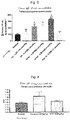
- Figure 2 shows the test results of the compound of the invention NFKF compared to the hemopressin test results, both in the pilocarpine model.
- control saline
- hemopressin Hp or PVNFKFLSH, 0.551334 ⁇ mol/kg
- hemopressin 0.91889 ⁇ mol/kg
- the peptide of the invention NFKF 0.540882 ⁇ mol/kg
- NFKF NFKF (0.901469 ⁇ mol/kg
- PEP-19 DIIADDEPLT, 0.908117 ⁇ mol/kg.
- the asterisks indicate the statistical significance: (*) P ⁇ 0.05 vs Control; (**) P ⁇ 0.01 vs Control; the + sign indicates P ⁇ 0.05 vs Hp 0.91889 ⁇ mol/kg.
- salivation induced by administration of pilocarpine is indicative of changes in muscarinic receptors. Accordingly, the substantial change in the time profile for the occurrence of the first salivation observed with prior administration of the compound of the invention suggests modulation, either directly or indirectly, of muscarinic receptors.
- Example 4 Comparative anticonvulsant pharmaceutical composition comprising the compound NFKF with the anticonvulsant pharmaceutical composition comprising Hp - results of in vivo tests
- the anticonvulsive effects of the composition of the invention were compared to the pharmaceutical composition containing Hemopressin (Hp or PVNFKFLSH), the use of which as an anticonvulsant is co-pending patent application PCT/BR2017/050313 , the same inventors.
- Hp or PVNFKFLSH Hemopressin
- Figure 3 shows the test results of the compound of the invention NFKF as an anticonvulsant compared to the results of tests of hemopressin as an anticonvulsant, both in the pilocarpine model.
- the percentages of time (relative to the control) for the first seizure occur with administration of the following treatment doses: hemopressin (Hp or PVNFKFLSH, 0.551334 ⁇ mol/kg); hemopressin (0.91889 ⁇ mol/kg); the peptide of the invention NFKF (0.540882 ⁇ mol/kg); NFKF (0.901469 ⁇ mol/kg); PEP-19 (DIIADDEPLT, 0.908117 ⁇ mol/kg) and control (saline).
- the asterisks indicate: (*) P ⁇ 0.05 vs Control; (**) P ⁇ 0.01 vs Control; the + sign indicates P ⁇ 0.05 vs Hp 0.91889 ⁇ mol/kg.
- Example 5 Anticonvulsive pharmaceutical composition comprising the compound NFKF - results of in vivo tests.
- the anticonvulsive effect of the composition of the invention prepared according to example 2 was evaluated by prior administration of the inventive composition and subsequent administration of pilocarpine to animals.
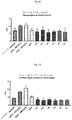
- Figure 4 presents the results of the pilocarpine model, indicating the time for the first salivation with the administration of control, cannabidiol (30mg/kg), the compound of the invention R 1 -N-AA 1 -K-AA 2 -R 2 , in which embodiment is the NFKF tetrapeptide (500 ⁇ g/kg).
- Figure 5 presents the results of pilocarpine modeling, indicating the time for the first seizure to occur with the administration of cannabidiol (30mg/kg) and the peptide of the invention NFKF (500 ⁇ g/kg).
- the asterisks indicate: (**) P ⁇ 0.02 vs Control; (***) P ⁇ 0.002 vs Control.
- Example 6 Neuromodulatory pharmaceutical composition comprising compound NFKF - results of in vivo tests
- the neuromodulatory effect of the composition of the invention prepared according to Example 2 was evaluated by prior administration of the inventive composition and subsequent administration of pilocarpine to animals.
- Other test compounds were also evaluated as described below.
- Administration of pilocarpine leads to severe brain injury, neurotoxicity and usually culminates in the death of the animals.
- This substance was used in the experiments described below but its harmful neuronal/encephalic effects were inhibited by the prior administration of the composition of the present invention: the vast majority of the animals subjected to these experiments had no symptoms related to brain lesions and survived without apparent damage, in contrast to groups of animals treated with other known substances.
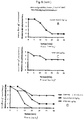
- FIG. 6 shows the results of neuroprotection tests with the compound of the invention on the NFKF embodiment in the pilocarpine model, the survival/death profile of the animals being indicated by the administration of NFKF.
- A) the survival profile of the animals administered the control (saline only) is shown;
- B) the survival profile of the animals administered cannabidiol 30 mg/kg is shown;
- C) the survival profile of animals given NFKF 500 ⁇ g/kg was shown;
- D) all profiles are shown in a single graph. Interestingly, in the group treated with NFKF 500 ⁇ g/kg only two animals died.
- the survival rate is three times higher in the first group, that is, in the group administered NFKF 500 ⁇ g/kg, even using a 60-fold lower relative concentration of compound.
- Example 7 Neuromodulatorv pharmaceutical composition comprising compound NFKF, NFKL, or NKF - results of in vivo tests
- Example 6 the peptides of the invention in the NFKF, NFKL and NKF embodiments were compared in the experiment described below, which shows that the harmful neuronal/encephalic effects of pilocarpine were inhibited by the prior administration of these embodiments of compounds of the present invention: some animals subjected to these experiments had no symptoms related to brain lesions and survived without apparent damage, in contrast to the group of animals treated with the control.
- the composition of the invention was prepared according to Example 2 with due concentration correction, for comparison of the effects of NFKF, NFKL and NFK, such compounds having been previously administered to the animal groups.
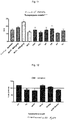
- Figure 7 shows the results of neuroprotection tests in the pilocarpine model, the survival/death profile of the animals being indicated by administration of these compounds of the invention and subsequently to pilocarpine. It is interesting to note that in the group treated with NFKL 600 ⁇ g/kg the results were even better than those obtained with NFKF, whereas the results with NFK were equivalent to those obtained with NFKF.
- Example 8 An anticonvulsant pharmaceutical composition comprising the compounds NFKF, NFKL, NFK, FKF, FKL - results of in vivo tests
- NFKF, NFKL, NFK, FKF, FKL, as well as the NF, FK, KF and KL dipeptides were evaluated in the pilocarpine model.
- Table 1 shows the time data of occurrence of the first salivation in the model tested.
- Table 1 control NFKF NFKL NFK FKF FKL NF FK KF KL 1 0.6667 1.83 1.183 1.38 0.38 1.6 0.83 0.1833 1.38 0.95 2 3.2000 1.97 1.067 0.75 0.95 0.2 0.97 1.5 1.75 0.50 3 1.6333 2.73 1.25 0.42 0.50 0.633 1.73 0.95 1.42 1.50 4 2.6667 1.58 2.45 0.98 1.50 1.5 0.58 2.183 1.98 5 0.8333 3.2 1.25 0.333 1.2
- Figure 8 presents the test results of the compounds of the invention NFKF, NFKL, NFK, FKF, FKL, as well as the dipeptides NF, FK, KF and KL in the pilocarpine model, indicating the time for the occurrence of the first salivation after administration of control or the test compounds. It is noteworthy the result of the administration of NFK, which inhibited or delayed the occurrence of first salivation in the pilocarpine model. This result indicates the modulation of muscarinic receptor function, such as acetylcholine (mAChRs), which plays an important role in cognitive functions, such as learning and memory, control of dopamine release, modulation of locomotor activity. Modulation of these receptors is useful in the control of Alzheimer's disease and/or control of dependence or addiction of drugs of abuse, as well as in protection against dementia of old age.
- mAChRs acetylcholine
- Table 2 shows the time data of occurrence of the first signal in the model tested.
- Table 2 control NFKF NFKL NFK FKF FKL NF FK KF KL 1 2.67 8.43 9.317 6.28 5.3 5.67 5.67 6.5 5.8 8.5 2 10.2 10.23 10.17 8.92 6.35 9.5 4.99 7.33 6.33 7.33 3 10.5 13.53 3.83 4.83 8.33 8.5 5.5 7.4 6.5 4 5.5 9.9 10.17 7.82 8.82 4.5 3.5 6.17 7.5 5 9.65 12.33 10.25 9.17 6.5
- Figure 9 shows the test results of the compounds of the invention NFKF, NFKL, NFK, FKF, FKL, as well as the dipeptides NF, FK, KF and KL in the pilocarpine model, indicating the time for the occurrence of the first signal after control administration or the test compounds.
- Table 3 shows the time data of occurrence of the first seizure in the model tested.
- Table 3 control NFKF NFKL NFK FKF FKL NF FK KF KL 1 7.9 15.17 18.4 11.33 6.28 5.3 5.67 5.67 6.5 5.8 2 10.5* 19.95 15.33 9.67 8.92 6.35 9.5 4.99 7.33 6.33 3 8.38 15.18 30 8 3.83 4.83 8.33 8.5 5.5 7.4 4 9.55 16 27.3 9.93 7.82 8.82 4.5 3.5 6.17 5 9.65 17.88 15.33 13.38 10.25 9.17 6.5
- Figure 10 shows the test results of the compounds of the invention NFKF, NFKL, NFK, FKF, FKL, as well as the dipeptides NF, FK, KF and KL in the pilocarpine model, indicating the time for the occurrence of the first seizure after control administration or the test compounds.
- Table 4 shows the time data of death occurrence in the model tested.
- Table 4 control NFKF NFKL NFK FKF FKL NF FK KF KL 1 13.17 18.92 26.63 13.53 13.17 14.53 13.17 13.17 11.7 16.67 2 18.67 20 25.13 11.7 20.67 11.7 20.67 20.67 10.92 13.5 3 17.67 15.18 10.92 16.67 10.92 16.67 16.67 13.5 19.88 4 10.87 13.5 10.87 13.5 5 13.9 16.83 12.9 12.9
- Figure 11 shows the test results of the compounds of the invention NFKF, NFKL, NFK, FKF, FKL, as well as the dipeptides NF, FK, KF and KL in the pilocarpine model, indicating the time for the occurrence of death after administration control compounds or test compounds.
- blank fields are from animals that convulsed and died at the same time.
- the peptidic compound of the invention is also useful as a synthetic intermediate in obtaining other compounds of pharmaceutical/diagnostic interest.
- the compound is referred to as a "modified peptide", which is unnatural, being artificially modified or obtained by synthesis, including halides, cyclized, amidated, alkylated, alkoxylated, hydroxylated, PEGylated, other functional groups in any amino acids, or salt forms thereof, as well as modified with an amino acid or peptide, including the non-natural as the d-amino acid forms.
- the peptidic compound of the invention has been modified with molecular species useful in diagnostic and/or therapeutic applications, such as Biotin, using techniques known to those skilled in the art.
- Biotin is a label or tag that can be used in the detection of the ligand target of the invention, in the present case the cannabinoid and/or muscarinic receptors, through the use of anti-biotin antibodies, or avidin/streptavidin detection strategies with enzymes such as horseradish peroxidase, alkaline phosphatase, or fluorescent probes.
- the modified compound of the invention in the biotinylated embodiment was used in Screening techniques using anti-CB1 receptor antibodies sensitive to conformational changes.
- Antibodies sensitive to CB1 receptor activation were generated and characterized by their specificities.
- Striatum membranes (5 ⁇ g per well) were plated on NUNC-Immuno 96-well plates (Nalge-Nunc) and dried at room temperature. Membranes were washed with PBS (phosphate buffered saline) and incubated with or without different ligands (1 ⁇ M) and the extent of receptor recognition by the antibodies was measured by ELISA. The results of the tests are shown in Table 5, which indicates the% binding to the CB1 receptor in relation to control:
- Figure 12 shows these results and confirms that the peptidic compound of the invention has also been shown to be an appropriate synthetic intermediate for the preparation of other compounds useful in diagnostic and/or therapeutic applications.
- the peptide compound of the invention when modified/protected by biotin, has also been shown to bind to the CB1 receptor in tests with anti-CB1 antibodies sensitive to the activation/conformational changes of the receptor.
- the present co-inventor has already shown (Gupta et al) that ⁇ and ⁇ opioid receptors dimerize with CB1 cannabinoid receptors and that heterodimerization leads to modulation of receptor function.
- the use of other CB1 receptor binding substances provides increased recognition of ⁇ opioid receptors, apparently mediated by conformational changes in them.
- test results in this example support the concept of an in vitro diagnostic process for protein-protein or peptide-protein interactions that modulate the function of GPCRs (G protein coupled receptors, or G-Protein Coupled Receptors/GPCRs), including heterodimeric interactions.
- GPCRs G protein coupled receptors, or G-Protein Coupled Receptors/GPCRs
- results of the present example support one of the invention objects, which is an in vitro process for diagnosing the presence, quantity and/or localization of cannabinoid, opioid and/or muscarinic receptors, as well as evaluating the binding of other compounds to these receptors.
- Said process comprises contacting the optionally modified compound of the invention with a biological sample containing a cannabinoid, opioid and/or muscarinic receptor.
- Said method is also useful in the identification and/or quantification of other molecular entities binding to these receptors, and includes a step of detecting said visual, optical, radioactive, chemical, spectroscopic signal connection. Examples include biochemical, cytochemical, histochemical tests.
- the ligand of the invention is also potentially useful for in vivo diagnostic and/or prognostic processes, including contrast and non-contrast imaging tests, for example magnetic resonance spectroscopy (MRS) of molecular entities whose presence and/or amount is modulated by administration of the compound of the invention.
- MRS magnetic resonance spectroscopy
- Example 10 In vitro and in silico binding/interaction tests of the compound NFKF to the CB1 receptor
- binding techniques were used to measure the affinity of the NFKF tetrapeptide (powder with 100% purity and prepared as stock solution 10mM in DMSO) by the cannabinoid CB1 receptor at concentrations of 1 and 10 ⁇ M.
- Results are expressed as the percentage of binding of the specific control according to formula: Binding specific as measured Binding specific of control ⁇ 100
- IC50 values concentration that causes half of maximal inhibition of specific control binding
- K D affinity of the radioligand for the receptor.
- Results showing inhibition or stimulation greater than 50% are considered to represent significant effect of the test compound. Results showing inhibition or stimulation between 25% and 50% are indicative of low to moderate effect of the test compound. Results showing inhibition or stimulation of less than 25% can be considered as minor. Results showing inhibition greater than or equal to 50% are indicative non-specific or allosteric effects of the test compound.
- the compound of the invention interacts with and/or modulates the activity of the CB1 receptor and/or its endogenous ligands.
- the compound of the invention is potentially useful in various metabolic functions, including control of food intake, metabolism of energy and/or lipids, regulation of intestinal motility, immune system, calcium cycle balance, among others.
- Cannabinoid receptors are widely expressed in the brain, including cortex, hippocampus, amygdala, pituitary, hypothalamus, adrenal gland.
- CB receptors, particularly CB1 have already been identified in numerous peripheral organs and tissues, including the thyroid gland, reproductive organs, adipose tissue, liver, muscle, and gastrointestinal tract.
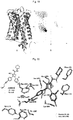
- the cannabinoid receptor 1 corresponds to the GPCR (Expressed Receptors to Protein G) most expressed in the human brain and is found at high levels in the Central Nervous System in general ( Figure 13 ). It is activated by endocannabinoids and has been identified as a promising therapeutic target for the treatment of various diseases such as pain and inflammation, multiple sclerosis and neurodegenerative diseases (agonist effect) and obesity, liver fibrosis and nicotine dependence (HUA) et al., 2016).
- Figure 13 shows an overview of the three-dimensional structure of a GPCR, in this case, the cannabinoid receptor of subtype 1.
- the scoring functions of the GOLD v. 5.5 were evaluated according to the ability to predict protein-binding complexes compatible with experimental results.
- three scoring functions Goldscore, Chemscore and ChemPLP
- PDB 5TGZ CB1 receptor binding site
- Figure 14 shows visually the overlap between the crystallographic structure complex (PDB 5TGZ) and the resulting complex from the AM6538 redocking experiment using the validated methodology.
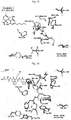
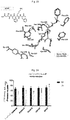
- the resulting docking complex of the NFKF tetrapeptide in CB1 scored 100.66, substantially higher than the score achieved by the reference ligands. This fact can be explained by additional hydrogen bonds observed between the tetrapeptide and the residues Ser-123, Thr-197, Ser-167 and Ser-383. In addition, the hydrophobic interactions observed for AM6538 are also present in the NFKF interaction mode ( Figure 18 ).
- Example 11 In vitro and in silico binding/interaction tests of compound NFKF to CB2 receptor
- in vitro test results demonstrate that the compound of the invention can be used as a binder of diagnostic interest, such as, for example, radioactive or chromophore labeling for subsequent identification of binding sites in cells and/or tissues.
- the construction of the 3D model of CB2 was done from a search in the UniProt database of the amino acid sequence of this receptor.
- the criterion used for sequence selection was the species ( Homo sapiens ).
- the sequence selected for carrying out the molecular modeling studies was that of code P34972.
- the Template Identification tool of the SwissModel server was used to identify and select the protein template.
- the sequence identified by the server as having the highest structural identity to the human CB2 sequence was that of PDT 5TGZ code (HUA et al., 2016) belonging to the species Homo sapiens, corresponding to the CB1 receptor.
- the target and template sequences were then aligned using the ClustalW2 software linked to the UniProt database to compare the sequences to establish the percentage of identity between them.
- the 3D homology model of human CB2 was constructed using the Automated Mode tool available on the Swiss-model server page and, for validation of the generated model, the overall structural quality and stereochemical quality of the model were analyzed through the value presented for the GMQE parameter and the Ramachandran graph analysis.
- the stereochemical quality of the model was analyzed using the Ramachandran graph ( Figure 19B ).
- the Ramachandran graph corresponds to a mathematical model, which relates the dihedral angles ⁇ (angle C-N-C ⁇ -C) on the x-axis and ⁇ (angle N-C ⁇ -C-N) on the y-axis.
- This graph is divided into regions capable of representing the probability of a combination between the angles ⁇ and ⁇ (RAMACHANDRAN; RAMAKRISHNAN; SASISEKHARAN, 1963). These regions are classified as: favorable, permitted, generously permitted and prohibited.
- the Ramachandran graph constructed for the human CB2 model showed the presence of approximately 96% of the amino acid residues in the most favorable regions and more than 4% of the residues in acceptable regions. No amino acid residue was found in forbidden regions, indicating the stereochemical validation of the model created. After the validation of the model, docking studies on CB2 of the NFKF tetrapeptide, the AM6538 antagonist, the cannabidiol endogenous ligand and the rimonabant antagonist were performed.
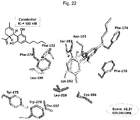
- Table 9 briefly summarizes the comparison between the scores obtained by the docking studies in both receivers (CB1 and CB2) in Example 10 and in this example. Table 9: Comparison between the scores obtained in the docking studies for CB1 and CB2 receptors. Scores Ligands CB1 CB2 Cannabidiol 54.91 43.31 Rimonabant 73.43 57.40 AM6538 87.39 61.53 NFKF 100.66 72.33
- Construction and validation of a 3D model by homology of the CB2 receptor also resulted in visualization of the behavior of all of the ligands mentioned at the binding site of such receptor, providing a comparative analysis with results obtained with CB1.
- the results of the in vitro and in silico experiments of examples 9, 10 and 11 indicate that the compounds of the invention are CB1 receptor ligands.
- less favourable interactions of the NFKF compound were evidenced in CB2 receptors, indicating a possible selectivity profile.
- the results of the experiments of Examples 10 and 11, notably those shown in Figures 17 and 23 show that NFK amino acids participate much more strongly in the binding of CB1 and CB2 than the amino acid F in the C-terminal position, indicating that this tripeptide is a potential candidate for ligand/modulator of such receptors.
- the results of the in vivo tests shown in figure 7 are in line with this statement.
- Example 12 Analgesic or neuropathic pain modulating pharmaceutical composition comprising the compound of the invention - results of in vivo tests
- the compounds of the present invention have also been tested as analgesics or neuropathic pain modulators.
- the compounds PVNFKF, PVNFK, VNFKF, NFKF were tested in the pain threshold model.
- the pain threshold was measured using a pressure apparatus (Ugo Basile, Italy), essentially as described (Randall & Selitto, 1957). Briefly, a force of increasing magnitude (16 g/s) was applied to the back of the right paw of rats. When animals react by kicking, the force in grams required to induce this response is the threshold of pain. Antinoniceptive activity was expressed as the increase in pain threshold compared to control animals.
- This induced pain model does not require concomitant administration of other substances.
- the compounds of the invention were administered orally to the animals at doses of 0.5 to 0.25 mg/kg and saline was used as a control.
- Table 10 shows the strength results in grams for pain threshold: Table 10: Immediate 1 Control 70 70 60 65 70 70 2 PVNFKF 75 65 60 70 80 75 3 PVNFK 70 75 75 65 60 75 4 VNFKF 70 65 65 70 75 75 5 NFKF 70 75 75 80 60 After 3h 1 Control 30 55 55 50 45 40 2 PVNFKF 45 30 55 45 65 55 3 PVNFK 55 45 40 55 60 40 4 VNFKF 85 40 35 50 50 5 NFKF 80 70 80 75 70 70 70
- Figure 24 shows the pain threshold results, force in grams applied to the back of the right paw of the animals. Significant and very evident is the analgesic effect provided by compound NFKF, which increased the pain threshold after 3h of administration when compared to the immediate pain threshold. In addition, compound NFKF was shown to be significantly and substantially superior to PVNFKF, with a 50.1% greater pain threshold in animals administered NFKF compared to PVNFKF.
- the present co-inventor has already demonstrated (Gupta et al) that ⁇ and ⁇ opioid receptors dimerize with CB1 cannabinoid receptors and that heterodimerization leads to modulation of receptor function.
- the use of other CB1 receptor binding substances provides increased recognition of ⁇ opioid receptors, apparently mediated by conformational changes in them.
- the evident analgesic effect data of the compound of the invention in the present example suggest that the compound of the invention provides similar effect to that of Hp when combined with morphine, i.e. with a lower dose of morphine in combination with Hp, the same analgesic effects.
- the use of the compound of the invention in combination with morphine therefore, may contribute to lessening important implications on the addiction and tolerance that morphine causes.
- Example 13 Pharmaceutical composition for the treatment of multiple sclerosis comprising the compound NFKF - results of in vivo testts
- EAE autoimmune encephalomyelitis
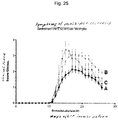
- transgenic mice knockout of the Endopeptidase 24.15 gene were challenged with MOG (Myelin Oligodendrocyte Glycoprotein), with administration of the compound of the invention NFKF or saline as a control. After the induction of the disease, a daily evaluation of the symptoms was made, according to table 11 below. Table 11.
- Figure 25 shows the results of experiments conducted according to the model described above, by administration of saline (control) or NFKF to knockout mice.
- A the Clinical Score curve of the Wild Type (WT) mice, that is, normal, submitted to EAE induction with MOG;
- B the Clinical Score curve of the mice knock out of the gene endopeptidase 24.15, that is, transgenic and prone to the symptoms of Multiple Sclerosis, is shown in the EAE model submitted to MOG induction;
- C the Clinical Score curve of the mice knock out 24.15, that is, transgenic and prone to the symptoms of Multiple Sclerosis in the EAE model, were submitted to induction with MOG and NFKF neuroprotection.
- the influence of the cannabinoid system on immune function can occur in sites located in the periphery and also within the central nervous system, which is why the literature suggests that the cannabinoid system plays an important role in the fine regulation of homeostatic immune balance.
- the compound of the invention having been shown to modulate the cannabinoid system, may interfere with this system, being potentially useful in a variety of inflammatory, immune, autoimmune conditions.
- inventive concept herein disclosed and exemplified in one or more forms was treated as an industrial secret and was not previously disclosed until the filing of this patent application or its priority.
- This industrial secret is immaterial asset of the applicant.
- the possible future publication of the patent application does not in itself constitute authorization for use by third parties, serving only as: (i) scientific knowledge to third parties of the existence of said industrial secret at the time of filing; (ii) unequivocal indication of its holder; and (iii) stimulating the development of new improvements based on the concept disclosed, in order to avoid reinvestment in the development of the same asset already held by the applicant.
Landscapes
- Health & Medical Sciences (AREA)
- Chemical & Material Sciences (AREA)
- Organic Chemistry (AREA)
- Life Sciences & Earth Sciences (AREA)
- General Health & Medical Sciences (AREA)
- Medicinal Chemistry (AREA)
- Molecular Biology (AREA)
- Engineering & Computer Science (AREA)
- Biochemistry (AREA)
- Genetics & Genomics (AREA)
- Proteomics, Peptides & Aminoacids (AREA)
- Biophysics (AREA)
- Biomedical Technology (AREA)
- Pharmacology & Pharmacy (AREA)
- Bioinformatics & Cheminformatics (AREA)
- Chemical Kinetics & Catalysis (AREA)
- Nuclear Medicine, Radiotherapy & Molecular Imaging (AREA)
- Animal Behavior & Ethology (AREA)
- Public Health (AREA)
- Veterinary Medicine (AREA)
- General Chemical & Material Sciences (AREA)
- Neurology (AREA)
- Neurosurgery (AREA)
- Pain & Pain Management (AREA)
- Hematology (AREA)
- Urology & Nephrology (AREA)
- Immunology (AREA)
- Hospice & Palliative Care (AREA)
- Psychiatry (AREA)
- Rheumatology (AREA)
- Food Science & Technology (AREA)
- General Physics & Mathematics (AREA)
- Microbiology (AREA)
- Biotechnology (AREA)
- Anesthesiology (AREA)
- Physics & Mathematics (AREA)
- Analytical Chemistry (AREA)
- Cell Biology (AREA)
- Pathology (AREA)
- Medicines That Contain Protein Lipid Enzymes And Other Medicines (AREA)
Priority Applications (1)
| Application Number | Priority Date | Filing Date | Title |
|---|---|---|---|
| EP25200805.7A EP4656243A3 (de) | 2017-05-15 | 2018-05-14 | Nfkf und/oder nfkl zur verwendung als synthesezwischenprodukt zur herstellung von verbindungen von pharmazeutischem interesse |
Applications Claiming Priority (3)
| Application Number | Priority Date | Filing Date | Title |
|---|---|---|---|
| BR102017010169-0A BR102017010169A2 (pt) | 2017-05-15 | 2017-05-15 | composto, intermediário de síntese, uso na preparação de anticonvulsivante, composição farmacêutica anticonvulsivante |
| PCT/BR2017/050314 WO2018068120A1 (pt) | 2016-10-13 | 2017-10-11 | Uso de composto, intermediário de síntese, composição farmacêutica e método terapêutico neuromodulador |
| PCT/BR2018/050156 WO2018209415A1 (pt) | 2017-05-15 | 2018-05-14 | Composto, intermediário de síntese, uso, composição farmacêutica e método terapêutico neuromodulador |
Related Child Applications (1)
| Application Number | Title | Priority Date | Filing Date |
|---|---|---|---|
| EP25200805.7A Division EP4656243A3 (de) | 2017-05-15 | 2018-05-14 | Nfkf und/oder nfkl zur verwendung als synthesezwischenprodukt zur herstellung von verbindungen von pharmazeutischem interesse |
Publications (4)
| Publication Number | Publication Date |
|---|---|
| EP3626727A1 true EP3626727A1 (de) | 2020-03-25 |
| EP3626727A4 EP3626727A4 (de) | 2021-02-24 |
| EP3626727B1 EP3626727B1 (de) | 2025-10-08 |
| EP3626727C0 EP3626727C0 (de) | 2025-10-08 |
Family
ID=64273083
Family Applications (2)
| Application Number | Title | Priority Date | Filing Date |
|---|---|---|---|
| EP25200805.7A Pending EP4656243A3 (de) | 2017-05-15 | 2018-05-14 | Nfkf und/oder nfkl zur verwendung als synthesezwischenprodukt zur herstellung von verbindungen von pharmazeutischem interesse |
| EP18802073.9A Active EP3626727B1 (de) | 2017-05-15 | 2018-05-14 | Verbindung, synthetisches zwischenprodukt, verwendung, pharmazeutische zusammensetzung und neuromodulatorisches therapieverfahren |
Family Applications Before (1)
| Application Number | Title | Priority Date | Filing Date |
|---|---|---|---|
| EP25200805.7A Pending EP4656243A3 (de) | 2017-05-15 | 2018-05-14 | Nfkf und/oder nfkl zur verwendung als synthesezwischenprodukt zur herstellung von verbindungen von pharmazeutischem interesse |
Country Status (6)
| Country | Link |
|---|---|
| US (1) | US20220098237A1 (de) |
| EP (2) | EP4656243A3 (de) |
| JP (1) | JP7241032B2 (de) |
| CN (1) | CN110891963B (de) |
| BR (1) | BR102017010169A2 (de) |
| WO (1) | WO2018209415A1 (de) |
Cited By (1)
| Publication number | Priority date | Publication date | Assignee | Title |
|---|---|---|---|---|
| EP3527217B1 (de) * | 2016-10-13 | 2022-02-16 | Proteimax Biotecnologia Ltda | Pharmazeutische zusammensetzungen, enthaltend pvnfkflsh oder pvnfkllsh-peptide zur verwendung bei der vorbeugung und behandlung von konvulsionen |
Families Citing this family (3)
| Publication number | Priority date | Publication date | Assignee | Title |
|---|---|---|---|---|
| WO2020154679A1 (en) * | 2019-01-25 | 2020-07-30 | The Board Of Regents Of The University Of Texas System | Novel non-opioid anti-pain medication |
| WO2022155716A1 (pt) | 2021-01-19 | 2022-07-28 | Proteimax Biotecnologia Ltda | Uso de composto, composição farmacêutica para o tratamento de distúrbios imunes ou metabólicos, composição farmacêutica para o tratamento de doenças causadas por ou associadas a vírus |
| CN115317590B (zh) * | 2022-08-12 | 2025-02-18 | 北京世桥生物制药有限公司 | 复方氨基酸注射液及其应用和制备方法 |
Family Cites Families (19)
| Publication number | Priority date | Publication date | Assignee | Title |
|---|---|---|---|---|
| US5888794A (en) * | 1990-07-11 | 1999-03-30 | New York University | Receptor-type phosphotyrosine phosphatase-alpha |
| AU2003282724B2 (en) | 2002-10-02 | 2010-03-04 | Catalyst Biosciences, Inc. | Methods of generating and screening for proteases with altered specificity |
| US20040258695A1 (en) * | 2003-01-31 | 2004-12-23 | Schryvers Anthony Bernard | Transferrin binding peptides and uses thereof |
| US7553944B2 (en) * | 2004-07-21 | 2009-06-30 | The University Of Hong Kong | Human virus causing respiratory tract infection and uses thereof |
| JP2010507069A (ja) | 2006-07-08 | 2010-03-04 | ユニバーシティー オブ ケンタッキー リサーチ ファンデーション | 肺癌診断アッセイ |
| US20080146510A1 (en) * | 2006-10-27 | 2008-06-19 | Wai Ming Wong | Biologically active peptide vapeehptllteaplnpk derivatives |
| US7943653B2 (en) | 2007-08-13 | 2011-05-17 | Janssen Pharmaceutica N.V. | Substituted 5-vinylphenyl-1-phenyl-pyrazole cannabinoid modulators |
| BRPI0902481B8 (pt) | 2009-07-31 | 2021-05-25 | Soc Beneficente De Senhoras Hospital Sirio Libanes | composição farmacêutica compreendendo hemopressina e seu uso. |
| EP4012714A1 (de) * | 2010-03-23 | 2022-06-15 | Iogenetics, LLC. | Bioinformatikverfahren zur bestimmung von peptidbindungen |
| WO2013040142A2 (en) * | 2011-09-16 | 2013-03-21 | Iogenetics, Llc | Bioinformatic processes for determination of peptide binding |
| CA2799746C (en) * | 2010-05-17 | 2020-11-24 | Sai Reddy | Rapid isolation of monoclonal antibodies from animals |
| ES2598829T3 (es) * | 2011-03-28 | 2017-01-30 | S.I.S. Shulov Innovative Science Ltd. | Procedimiento de tratamiento de trastornos cutáneos |
| GB201113596D0 (en) | 2011-08-08 | 2011-09-21 | Univ De Coimbra | Compounds, compositions and methods to promote oligodendrogenesis and remyelination |
| GB2514054A (en) * | 2011-09-29 | 2014-11-12 | Gw Pharma Ltd | A pharmaceutical composition comprising the phytocannabinoids cannabidivarin (CBDV) and cannabidiol (CBD) |
| BR102012017421A2 (pt) | 2012-07-13 | 2015-04-14 | Proteimax Biotecnolgia Ltda | Peptídeo, composicão farmacêutica, ligante de receptor cb, metodo para modular a funcao de receptor cb, uso, método para o tratamento de obesidade, e, método para promover a redução de peso estetica em um indivíduo |
| EP2792684A1 (de) * | 2013-04-15 | 2014-10-22 | Lipotec, S.A. | Verbindungen zur Behandlung und/oder Pflege der Haut und deren kosmetische oder pharmazeutische Zusammensetzungen |
| CN104211769B (zh) * | 2013-05-30 | 2018-08-03 | 中国科学院过程工程研究所 | 一种小分子抗体亲和肽及其应用 |
| BR102016023848A2 (pt) * | 2016-10-13 | 2018-05-02 | Proteimax Biotecnologia Ltda | Anticonvulsivante, uso e composição farmacêutica contendo o mesmo |
| WO2018068120A1 (pt) * | 2016-10-13 | 2018-04-19 | Proteimax Biotecnologia Ltda | Uso de composto, intermediário de síntese, composição farmacêutica e método terapêutico neuromodulador |
-
2017
- 2017-05-15 BR BR102017010169-0A patent/BR102017010169A2/pt not_active Application Discontinuation
-
2018
- 2018-05-14 US US16/612,220 patent/US20220098237A1/en not_active Abandoned
- 2018-05-14 JP JP2019564034A patent/JP7241032B2/ja active Active
- 2018-05-14 EP EP25200805.7A patent/EP4656243A3/de active Pending
- 2018-05-14 EP EP18802073.9A patent/EP3626727B1/de active Active
- 2018-05-14 CN CN201880047283.1A patent/CN110891963B/zh active Active
- 2018-05-14 WO PCT/BR2018/050156 patent/WO2018209415A1/pt not_active Ceased
Cited By (1)
| Publication number | Priority date | Publication date | Assignee | Title |
|---|---|---|---|---|
| EP3527217B1 (de) * | 2016-10-13 | 2022-02-16 | Proteimax Biotecnologia Ltda | Pharmazeutische zusammensetzungen, enthaltend pvnfkflsh oder pvnfkllsh-peptide zur verwendung bei der vorbeugung und behandlung von konvulsionen |
Also Published As
| Publication number | Publication date |
|---|---|
| EP3626727B1 (de) | 2025-10-08 |
| EP4656243A3 (de) | 2026-02-18 |
| JP7241032B2 (ja) | 2023-03-16 |
| BR102017010169A2 (pt) | 2019-02-26 |
| CN110891963B (zh) | 2024-02-20 |
| EP3626727A4 (de) | 2021-02-24 |
| BR112019002655A2 (pt) | 2019-07-02 |
| JP2020520941A (ja) | 2020-07-16 |
| US20220098237A1 (en) | 2022-03-31 |
| CN110891963A (zh) | 2020-03-17 |
| WO2018209415A1 (pt) | 2018-11-22 |
| EP3626727C0 (de) | 2025-10-08 |
| EP4656243A2 (de) | 2025-12-03 |
Similar Documents
| Publication | Publication Date | Title |
|---|---|---|
| EP3801500B1 (de) | Inhibitoren von sarm1 | |
| EP3626727B1 (de) | Verbindung, synthetisches zwischenprodukt, verwendung, pharmazeutische zusammensetzung und neuromodulatorisches therapieverfahren | |
| Khan et al. | Regulation of hypoxic neuronal death signaling by neuroglobin | |
| EP3338787B1 (de) | Vorbeugung und behandlung neurodegenerativer krankheiten durch autophagieaktivität, die von an die p62-zz-domäne bindendem ligand oder arginyliertem bip vermittelt wird | |
| US20110294782A1 (en) | Small molecule pak inhibitors | |
| CN107312069A (zh) | 兴奋性神经毒性相关损伤的治疗肽 | |
| WO2016048488A1 (en) | Methods of treating traumatic brain injury | |
| US20170275249A1 (en) | Small lipopeptidomimetic inhibitors of ghrelin o-acyl transferase | |
| KR20220124196A (ko) | 사이클릭 펩티드 수용체 란티오닌 신테타제 c-유사 단백질 (lancl) 및 이의 용도 | |
| KR20170023045A (ko) | p62 ZZ 도메인에 결합하는 리간드 또는 아르기닌화된 BiP에 의해 매개되는 오토파지 활성을 통한 신경변성 질환 예방 및 치료 | |
| EP3268021A1 (de) | Verfahren zur behandlung von kognitiven beeinträchtigungen oder fehlfunktionen | |
| AU2015305647A1 (en) | Methods of treating mild brain injury | |
| JP6262661B2 (ja) | 筋萎縮性側索硬化症治療剤 | |
| EP3527217B1 (de) | Pharmazeutische zusammensetzungen, enthaltend pvnfkflsh oder pvnfkllsh-peptide zur verwendung bei der vorbeugung und behandlung von konvulsionen | |
| WO2018068120A1 (pt) | Uso de composto, intermediário de síntese, composição farmacêutica e método terapêutico neuromodulador | |
| US10085969B1 (en) | Sortilin binding compounds, formulations, and uses thereof | |
| BR122025013235A2 (pt) | Intermediário de síntese e processo in vitro de diagnóstico | |
| BR112019002655B1 (pt) | Composição farmacêutica neuromoduladora e uso de um composto | |
| US20190030020A1 (en) | Allosteric Modulators of the Mu Opioid Receptor | |
| Eymery | Linking medicinal cannabis to autotaxin lysophosphatidic acid signalling and development of cannabinoid-inspired inhibitors | |
| Beaulieu | NTS2-selective analogs as an alternative treatment to chronic pain |
Legal Events
| Date | Code | Title | Description |
|---|---|---|---|
| STAA | Information on the status of an ep patent application or granted ep patent |
Free format text: STATUS: THE INTERNATIONAL PUBLICATION HAS BEEN MADE |
|
| PUAI | Public reference made under article 153(3) epc to a published international application that has entered the european phase |
Free format text: ORIGINAL CODE: 0009012 |
|
| STAA | Information on the status of an ep patent application or granted ep patent |
Free format text: STATUS: REQUEST FOR EXAMINATION WAS MADE |
|
| 17P | Request for examination filed |
Effective date: 20190425 |
|
| AK | Designated contracting states |
Kind code of ref document: A1 Designated state(s): AL AT BE BG CH CY CZ DE DK EE ES FI FR GB GR HR HU IE IS IT LI LT LU LV MC MK MT NL NO PL PT RO RS SE SI SK SM TR |
|
| AX | Request for extension of the european patent |
Extension state: BA ME |
|
| DAV | Request for validation of the european patent (deleted) | ||
| DAX | Request for extension of the european patent (deleted) | ||
| A4 | Supplementary search report drawn up and despatched |
Effective date: 20210122 |
|
| STAA | Information on the status of an ep patent application or granted ep patent |
Free format text: STATUS: EXAMINATION IS IN PROGRESS |
|
| 17Q | First examination report despatched |
Effective date: 20211217 |
|
| GRAP | Despatch of communication of intention to grant a patent |
Free format text: ORIGINAL CODE: EPIDOSNIGR1 |
|
| STAA | Information on the status of an ep patent application or granted ep patent |
Free format text: STATUS: GRANT OF PATENT IS INTENDED |
|
| RIC1 | Information provided on ipc code assigned before grant |
Ipc: A61P 25/00 20060101ALI20250416BHEP Ipc: A61P 3/00 20060101ALI20250416BHEP Ipc: C07K 5/087 20060101ALI20250416BHEP Ipc: C07K 5/072 20060101ALI20250416BHEP Ipc: C07K 5/068 20060101ALI20250416BHEP Ipc: C07K 5/065 20060101ALI20250416BHEP Ipc: A61P 9/12 20060101ALI20250416BHEP Ipc: A61P 1/00 20060101ALI20250416BHEP Ipc: G01N 33/68 20060101ALI20250416BHEP Ipc: A61K 38/08 20190101ALI20250416BHEP Ipc: A61K 38/07 20060101ALI20250416BHEP Ipc: A61K 38/06 20060101ALI20250416BHEP Ipc: C07K 7/06 20060101ALI20250416BHEP Ipc: C07K 5/113 20060101ALI20250416BHEP Ipc: C07K 5/093 20060101AFI20250416BHEP |
|
| INTG | Intention to grant announced |
Effective date: 20250507 |
|
| RIN1 | Information on inventor provided before grant (corrected) |
Inventor name: HEIMANN, ANDREA STERMAN Inventor name: REMER, RICARDO AMARAL |
|
| GRAJ | Information related to disapproval of communication of intention to grant by the applicant or resumption of examination proceedings by the epo deleted |
Free format text: ORIGINAL CODE: EPIDOSDIGR1 |
|
| STAA | Information on the status of an ep patent application or granted ep patent |
Free format text: STATUS: EXAMINATION IS IN PROGRESS |
|
| GRAP | Despatch of communication of intention to grant a patent |
Free format text: ORIGINAL CODE: EPIDOSNIGR1 |
|
| STAA | Information on the status of an ep patent application or granted ep patent |
Free format text: STATUS: GRANT OF PATENT IS INTENDED |
|
| INTC | Intention to grant announced (deleted) | ||
| GRAS | Grant fee paid |
Free format text: ORIGINAL CODE: EPIDOSNIGR3 |
|
| GRAA | (expected) grant |
Free format text: ORIGINAL CODE: 0009210 |
|
| STAA | Information on the status of an ep patent application or granted ep patent |
Free format text: STATUS: THE PATENT HAS BEEN GRANTED |
|
| INTG | Intention to grant announced |
Effective date: 20250820 |
|
| AK | Designated contracting states |
Kind code of ref document: B1 Designated state(s): AL AT BE BG CH CY CZ DE DK EE ES FI FR GB GR HR HU IE IS IT LI LT LU LV MC MK MT NL NO PL PT RO RS SE SI SK SM TR |
|
| REG | Reference to a national code |
Ref country code: GB Ref legal event code: FG4D Ref country code: CH Ref legal event code: F10 Free format text: ST27 STATUS EVENT CODE: U-0-0-F10-F00 (AS PROVIDED BY THE NATIONAL OFFICE) Effective date: 20251008 |
|
| REG | Reference to a national code |
Ref country code: DE Ref legal event code: R096 Ref document number: 602018086232 Country of ref document: DE |
|
| REG | Reference to a national code |
Ref country code: IE Ref legal event code: FG4D |
|
| U01 | Request for unitary effect filed |
Effective date: 20251031 |
|
| U07 | Unitary effect registered |
Designated state(s): AT BE BG DE DK EE FI FR IT LT LU LV MT NL PT RO SE SI Effective date: 20251106 |
|
| PG25 | Lapsed in a contracting state [announced via postgrant information from national office to epo] |
Ref country code: ES Free format text: LAPSE BECAUSE OF FAILURE TO SUBMIT A TRANSLATION OF THE DESCRIPTION OR TO PAY THE FEE WITHIN THE PRESCRIBED TIME-LIMIT Effective date: 20251008 |
|
| PG25 | Lapsed in a contracting state [announced via postgrant information from national office to epo] |
Ref country code: NO Free format text: LAPSE BECAUSE OF FAILURE TO SUBMIT A TRANSLATION OF THE DESCRIPTION OR TO PAY THE FEE WITHIN THE PRESCRIBED TIME-LIMIT Effective date: 20260108 |
|
| PG25 | Lapsed in a contracting state [announced via postgrant information from national office to epo] |
Ref country code: HR Free format text: LAPSE BECAUSE OF FAILURE TO SUBMIT A TRANSLATION OF THE DESCRIPTION OR TO PAY THE FEE WITHIN THE PRESCRIBED TIME-LIMIT Effective date: 20251008 |
|
| PG25 | Lapsed in a contracting state [announced via postgrant information from national office to epo] |
Ref country code: RS Free format text: LAPSE BECAUSE OF FAILURE TO SUBMIT A TRANSLATION OF THE DESCRIPTION OR TO PAY THE FEE WITHIN THE PRESCRIBED TIME-LIMIT Effective date: 20260108 |
|
| PG25 | Lapsed in a contracting state [announced via postgrant information from national office to epo] |
Ref country code: IS Free format text: LAPSE BECAUSE OF FAILURE TO SUBMIT A TRANSLATION OF THE DESCRIPTION OR TO PAY THE FEE WITHIN THE PRESCRIBED TIME-LIMIT Effective date: 20260208 |
|
| PG25 | Lapsed in a contracting state [announced via postgrant information from national office to epo] |
Ref country code: PL Free format text: LAPSE BECAUSE OF FAILURE TO SUBMIT A TRANSLATION OF THE DESCRIPTION OR TO PAY THE FEE WITHIN THE PRESCRIBED TIME-LIMIT Effective date: 20251008 |