EP3626821A1 - Composition pour la prévention ou le traitement de l'ataxie spino-cérébelleuse de type 36 - Google Patents
Composition pour la prévention ou le traitement de l'ataxie spino-cérébelleuse de type 36 Download PDFInfo
- Publication number
- EP3626821A1 EP3626821A1 EP18802436.8A EP18802436A EP3626821A1 EP 3626821 A1 EP3626821 A1 EP 3626821A1 EP 18802436 A EP18802436 A EP 18802436A EP 3626821 A1 EP3626821 A1 EP 3626821A1
- Authority
- EP
- European Patent Office
- Prior art keywords
- oligonucleotide
- aso
- nucleosides
- mrna
- sca36
- Prior art date
- Legal status (The legal status is an assumption and is not a legal conclusion. Google has not performed a legal analysis and makes no representation as to the accuracy of the status listed.)
- Pending
Links
Images



Classifications
-
- C—CHEMISTRY; METALLURGY
- C12—BIOCHEMISTRY; BEER; SPIRITS; WINE; VINEGAR; MICROBIOLOGY; ENZYMOLOGY; MUTATION OR GENETIC ENGINEERING
- C12N—MICROORGANISMS OR ENZYMES; COMPOSITIONS THEREOF; PROPAGATING, PRESERVING, OR MAINTAINING MICROORGANISMS; MUTATION OR GENETIC ENGINEERING; CULTURE MEDIA
- C12N15/00—Mutation or genetic engineering; DNA or RNA concerning genetic engineering, vectors, e.g. plasmids, or their isolation, preparation or purification; Use of hosts therefor
- C12N15/09—Recombinant DNA-technology
- C12N15/11—DNA or RNA fragments; Modified forms thereof; Non-coding nucleic acids having a biological activity
- C12N15/111—General methods applicable to biologically active non-coding nucleic acids
-
- A—HUMAN NECESSITIES
- A61—MEDICAL OR VETERINARY SCIENCE; HYGIENE
- A61K—PREPARATIONS FOR MEDICAL, DENTAL OR TOILETRY PURPOSES
- A61K31/00—Medicinal preparations containing organic active ingredients
- A61K31/70—Carbohydrates; Sugars; Derivatives thereof
- A61K31/7088—Compounds having three or more nucleosides or nucleotides
-
- A—HUMAN NECESSITIES
- A61—MEDICAL OR VETERINARY SCIENCE; HYGIENE
- A61K—PREPARATIONS FOR MEDICAL, DENTAL OR TOILETRY PURPOSES
- A61K31/00—Medicinal preparations containing organic active ingredients
- A61K31/70—Carbohydrates; Sugars; Derivatives thereof
- A61K31/7088—Compounds having three or more nucleosides or nucleotides
- A61K31/711—Natural deoxyribonucleic acids, i.e. containing only 2'-deoxyriboses attached to adenine, guanine, cytosine or thymine and having 3'-5' phosphodiester links
-
- A—HUMAN NECESSITIES
- A61—MEDICAL OR VETERINARY SCIENCE; HYGIENE
- A61K—PREPARATIONS FOR MEDICAL, DENTAL OR TOILETRY PURPOSES
- A61K31/00—Medicinal preparations containing organic active ingredients
- A61K31/70—Carbohydrates; Sugars; Derivatives thereof
- A61K31/7088—Compounds having three or more nucleosides or nucleotides
- A61K31/712—Nucleic acids or oligonucleotides having modified sugars, i.e. other than ribose or 2'-deoxyribose
-
- A—HUMAN NECESSITIES
- A61—MEDICAL OR VETERINARY SCIENCE; HYGIENE
- A61K—PREPARATIONS FOR MEDICAL, DENTAL OR TOILETRY PURPOSES
- A61K31/00—Medicinal preparations containing organic active ingredients
- A61K31/70—Carbohydrates; Sugars; Derivatives thereof
- A61K31/7088—Compounds having three or more nucleosides or nucleotides
- A61K31/7125—Nucleic acids or oligonucleotides having modified internucleoside linkage, i.e. other than 3'-5' phosphodiesters
-
- A—HUMAN NECESSITIES
- A61—MEDICAL OR VETERINARY SCIENCE; HYGIENE
- A61K—PREPARATIONS FOR MEDICAL, DENTAL OR TOILETRY PURPOSES
- A61K48/00—Medicinal preparations containing genetic material which is inserted into cells of the living body to treat genetic diseases; Gene therapy
-
- A—HUMAN NECESSITIES
- A61—MEDICAL OR VETERINARY SCIENCE; HYGIENE
- A61P—SPECIFIC THERAPEUTIC ACTIVITY OF CHEMICAL COMPOUNDS OR MEDICINAL PREPARATIONS
- A61P25/00—Drugs for disorders of the nervous system
-
- C—CHEMISTRY; METALLURGY
- C12—BIOCHEMISTRY; BEER; SPIRITS; WINE; VINEGAR; MICROBIOLOGY; ENZYMOLOGY; MUTATION OR GENETIC ENGINEERING
- C12N—MICROORGANISMS OR ENZYMES; COMPOSITIONS THEREOF; PROPAGATING, PRESERVING, OR MAINTAINING MICROORGANISMS; MUTATION OR GENETIC ENGINEERING; CULTURE MEDIA
- C12N15/00—Mutation or genetic engineering; DNA or RNA concerning genetic engineering, vectors, e.g. plasmids, or their isolation, preparation or purification; Use of hosts therefor
- C12N15/09—Recombinant DNA-technology
- C12N15/11—DNA or RNA fragments; Modified forms thereof; Non-coding nucleic acids having a biological activity
- C12N15/113—Non-coding nucleic acids modulating the expression of genes, e.g. antisense oligonucleotides; Antisense DNA or RNA; Triplex- forming oligonucleotides; Catalytic nucleic acids, e.g. ribozymes; Nucleic acids used in co-suppression or gene silencing
-
- C—CHEMISTRY; METALLURGY
- C12—BIOCHEMISTRY; BEER; SPIRITS; WINE; VINEGAR; MICROBIOLOGY; ENZYMOLOGY; MUTATION OR GENETIC ENGINEERING
- C12N—MICROORGANISMS OR ENZYMES; COMPOSITIONS THEREOF; PROPAGATING, PRESERVING, OR MAINTAINING MICROORGANISMS; MUTATION OR GENETIC ENGINEERING; CULTURE MEDIA
- C12N2310/00—Structure or type of the nucleic acid
- C12N2310/10—Type of nucleic acid
- C12N2310/11—Antisense
-
- C—CHEMISTRY; METALLURGY
- C12—BIOCHEMISTRY; BEER; SPIRITS; WINE; VINEGAR; MICROBIOLOGY; ENZYMOLOGY; MUTATION OR GENETIC ENGINEERING
- C12N—MICROORGANISMS OR ENZYMES; COMPOSITIONS THEREOF; PROPAGATING, PRESERVING, OR MAINTAINING MICROORGANISMS; MUTATION OR GENETIC ENGINEERING; CULTURE MEDIA
- C12N2310/00—Structure or type of the nucleic acid
- C12N2310/30—Chemical structure
- C12N2310/31—Chemical structure of the backbone
- C12N2310/315—Phosphorothioates
-
- C—CHEMISTRY; METALLURGY
- C12—BIOCHEMISTRY; BEER; SPIRITS; WINE; VINEGAR; MICROBIOLOGY; ENZYMOLOGY; MUTATION OR GENETIC ENGINEERING
- C12N—MICROORGANISMS OR ENZYMES; COMPOSITIONS THEREOF; PROPAGATING, PRESERVING, OR MAINTAINING MICROORGANISMS; MUTATION OR GENETIC ENGINEERING; CULTURE MEDIA
- C12N2310/00—Structure or type of the nucleic acid
- C12N2310/30—Chemical structure
- C12N2310/32—Chemical structure of the sugar
- C12N2310/321—2'-O-R Modification
-
- C—CHEMISTRY; METALLURGY
- C12—BIOCHEMISTRY; BEER; SPIRITS; WINE; VINEGAR; MICROBIOLOGY; ENZYMOLOGY; MUTATION OR GENETIC ENGINEERING
- C12N—MICROORGANISMS OR ENZYMES; COMPOSITIONS THEREOF; PROPAGATING, PRESERVING, OR MAINTAINING MICROORGANISMS; MUTATION OR GENETIC ENGINEERING; CULTURE MEDIA
- C12N2310/00—Structure or type of the nucleic acid
- C12N2310/30—Chemical structure
- C12N2310/32—Chemical structure of the sugar
- C12N2310/323—Chemical structure of the sugar modified ring structure
- C12N2310/3231—Chemical structure of the sugar modified ring structure having an additional ring, e.g. LNA, ENA
-
- C—CHEMISTRY; METALLURGY
- C12—BIOCHEMISTRY; BEER; SPIRITS; WINE; VINEGAR; MICROBIOLOGY; ENZYMOLOGY; MUTATION OR GENETIC ENGINEERING
- C12N—MICROORGANISMS OR ENZYMES; COMPOSITIONS THEREOF; PROPAGATING, PRESERVING, OR MAINTAINING MICROORGANISMS; MUTATION OR GENETIC ENGINEERING; CULTURE MEDIA
- C12N2310/00—Structure or type of the nucleic acid
- C12N2310/30—Chemical structure
- C12N2310/32—Chemical structure of the sugar
- C12N2310/323—Chemical structure of the sugar modified ring structure
- C12N2310/3233—Morpholino-type ring
-
- C—CHEMISTRY; METALLURGY
- C12—BIOCHEMISTRY; BEER; SPIRITS; WINE; VINEGAR; MICROBIOLOGY; ENZYMOLOGY; MUTATION OR GENETIC ENGINEERING
- C12N—MICROORGANISMS OR ENZYMES; COMPOSITIONS THEREOF; PROPAGATING, PRESERVING, OR MAINTAINING MICROORGANISMS; MUTATION OR GENETIC ENGINEERING; CULTURE MEDIA
- C12N2310/00—Structure or type of the nucleic acid
- C12N2310/30—Chemical structure
- C12N2310/34—Spatial arrangement of the modifications
- C12N2310/341—Gapmers, i.e. of the type ===---===
-
- C—CHEMISTRY; METALLURGY
- C12—BIOCHEMISTRY; BEER; SPIRITS; WINE; VINEGAR; MICROBIOLOGY; ENZYMOLOGY; MUTATION OR GENETIC ENGINEERING
- C12N—MICROORGANISMS OR ENZYMES; COMPOSITIONS THEREOF; PROPAGATING, PRESERVING, OR MAINTAINING MICROORGANISMS; MUTATION OR GENETIC ENGINEERING; CULTURE MEDIA
- C12N2310/00—Structure or type of the nucleic acid
- C12N2310/30—Chemical structure
- C12N2310/34—Spatial arrangement of the modifications
- C12N2310/346—Spatial arrangement of the modifications having a combination of backbone and sugar modifications
-
- C—CHEMISTRY; METALLURGY
- C12—BIOCHEMISTRY; BEER; SPIRITS; WINE; VINEGAR; MICROBIOLOGY; ENZYMOLOGY; MUTATION OR GENETIC ENGINEERING
- C12N—MICROORGANISMS OR ENZYMES; COMPOSITIONS THEREOF; PROPAGATING, PRESERVING, OR MAINTAINING MICROORGANISMS; MUTATION OR GENETIC ENGINEERING; CULTURE MEDIA
- C12N2320/00—Applications; Uses
- C12N2320/30—Special therapeutic applications
- C12N2320/34—Allele or polymorphism specific uses
Definitions
- the present invention relates to a composition for prevention or treatment of spinocerebellar ataxia type 36. More specifically, the present invention relates to the composition comprising an antisense nucleic acid targeting NOP56 gene.
- SCA Spinocerebellar ataxia
- Inherited spinocerebellar ataxia is classified depending on a causative gene thereof, and type 1 to type 36 have been reported so far.
- type 36 spikenocerebellar ataxia type 36: SCA36
- SCA36 spikenocerebellar ataxia type 36
- GGCCTG SEQ ID NO: 1
- Non Patent Literatures 1 and 2 From the analysis of autopsied tissues from SCA36 patients, it has further been reported that a structure where other RNAs or proteins aggregate (called RNA foci) with the repeat region in NOP56 pre-mRNA as a core is specifically formed in neurons of an affected area.
- RNA foci This formation of RNA foci is considered to be deeply involved in the onset of the disease (Non Patent Literature 3). This is because: for neurodegenerative diseases caused by the abnormal expansion of a repeat sequence in a particular gene, RNA foci are often formed in neurons of a lesion site (e.g., Non Patent Literature 4); and it is known that the suppression of the formation of the RNA foci ameliorates symptoms in the model animals (e.g., Non Patent Literature 5).
- the nucleic acid drugs generally refer to "drugs that contain an oligonucleic acid with linearly bonded nucleic acids or modified nucleic acids as an active pharmaceutical ingredient, are capable of acting directly on organisms without the mediation of proteins, and are produced by chemical synthesis".
- Examples of the nucleic acid drugs that function in the inside of cells include antisense oligonucleotides (hereinafter, also abbreviated to ASOs) and siRNA.
- ASOs antisense oligonucleotides
- siRNA siRNA
- ASOs are broadly classified into gapmer type and block type according to difference in the mechanism of action.
- the gapmer ASO is ASO capable of inducing the cleavage of target RNA by RNaseH.
- RNaseH is an endoribonuclease that is universally present in cells and recognizes a DNA/RNA duplex structure and thereby cleaves the RNA.
- the gapmer ASO generally has a structure having a central region consisting of deoxyribonucleotides so as to be able to stably form the DNA/RNA duplex structure by hybridizing to target RNA, and nuclease-resistant modified nucleotides flanking the region.
- the block ASO is ASO capable of inhibiting the function of target RNA through binding, without inducing the cleavage of the target RNA by RNaseH.
- Typical examples thereof include splicing-controlling type which binds to the splicing control site of target RNA and thereby changes the splicing pattern of the RNA, and miRNA-inhibiting type which binds to miRNA and thereby blocks the ability of the miRNA to hybridize (to another RNA).
- the gapmer ASO has achieved the best performance as a nucleic acid drug. This is because the gapmer ASO cleaves target RNA itself and is therefore capable of irreversibly inhibiting harmful effects resulting from the presence of the target RNA. However, the cleavage of the target RNA also inhibits protein expression from the RNA. Therefore, the application of the gapmer ASO to cases where the arrest of the protein expression or decreased expression levels thereof become problematic is limited in the circumstances.
- NOP56 protein encoded by the NOP56 gene is a constituent of box C/D small nucleolar ribonucleoprotein complexes responsible for the processing of pre-rRNA necessary for the assembly of 60S ribosomal subunits (Non Patent Literature 6). Furthermore, it has been reported as to temperature-sensitive mutants of budding yeast NOP56 gene that the assembly of 60S ribosomal subunits is inhibited at high temperatures due to the disrupted processing of pre-rRNA so that the mutants become inviable (Non Patent Literature 7).
- RNA foci with NOP56 pre-mRNA having SCA36 mutation as a core to use ASO that does not induce the cleavage of the pre-mRNA (i.e., block ASO).
- block ASO the mechanism of action of the block ASO is basically steric hindrance resulting from the binding of an ASO molecule to target RNA.
- target RNA having a small chain length the purpose may be attained by the binding of ASO throughout the whole length thereof (e.g., miRNA-inhibiting ASO).
- target RNA having a large chain length it is necessary for eliminating unknown influence ascribable to the administration of excess ASO to select a site to be bound (target sequence).
- target sequence for the purpose of changing the splicing pattern of target RNA (e.g., splicing-controlling ASO)
- target sequence for the purpose of inhibiting the formation of RNA foci caused by the abnormal expansion of the repeat sequence. This is because there is no effective suggestion about a portion to be noted for a sequence having hundreds of consecutive repeats of the same sequence.
- RNA foci are aggregates of other RNAs or proteins bound to the repeat region
- administration of ASO capable of binding to the repeat region might further promote the aggregation.
- An object of the present invention is to provide ASO that can effectively suppress a formation of RNA foci spontaneously occurring in neurons having SCA36 mutation, without inducing the cleavage of NOP56 pre-mRNA.
- the present inventor has established iPSCs from SCA36 patients, and induced the differentiation of the iPS to neurons to obtain human neurons that spontaneously form RNA foci (SCA36-iPSNs).
- SCA36-iPSNs As an analysis system, the present inventor has found that ASO that has a nucleotide sequence in which one or more nucleotide sequences complementary to a GGCCUG sequence (SEQ ID NO: 2) are consecutively connected, and does not induce the cleavage of the pre-mRNA by RNaseH, can effectively suppress a formation of RNA foci in neurons having SCA36 mutation.
- the present invention has been completed on the basis of the findings.
- SEQ ID NO: 2 refers to a nucleotide sequence (CAGGCC) complementary to the repeat unit (GGCCUG, SEQ ID NO: 3) of a repeat region existingresiding in intron 1 of NOP56 pre-mRNA.
- the present invention provides an antisense oligonucleotide that can effectively suppress RNA foci formation in human neurons having SCA36 mutation, without inducing the cleavage of NOP56 pre-mRNA.
- the present invention also provides a composition for prevention or treatment of SCA36 under the mechanism of inhibiting the formation of RNA foci.
- iPSNs cells obtained by inducing the differentiation of iPSCs into neurons are also referred to as iPSNs.
- mRNA having introns before removal of introns by splicing is referred to as pre-mRNA, and mRNA from which the introns have been removed is referred to as mRNA.
- Control-1 to Control-3 depict results about iPSCs or iPSNs derived from three healthy subjects
- SCA36-1 to SCA36-3 depict results about iPSCs or iPSNs derived from three SAC36 patients.
- Asterisks (*) in the drawings represent that significance with p value ⁇ 0.05 was confirmed as a result of a significance test; double asterisks (**) represent that significance with p value ⁇ 0.01 was confirmed; and double asterisks (**) represent that significance with p value ⁇ 0.001 was confirmed.
- the NOP56 gene according to the present invention is human NOP56 gene.
- Spinocerebellar ataxia type 36 (also abbreviated to SCA36) is an inherited autosomal dominant neurodegenerative disease that has received attention as a crossover disease between spinocerebellar ataxia and motor neuron disease because motor neuron signs similar to those of amyotrophic lateral sclerosis (ALS), such as lingual atrophy or group atrophy of muscle fibers are found in addition to cerebellar ataxia typical to spinocerebellar ataxia.
- ALS amyotrophic lateral sclerosis
- This disease has been found by a Japanese researcher and shown to be caused by the abnormal expansion of GGCCTG repeats residing in intron 1 of NOP56 gene encoding nucleolar protein 56 (abbreviated to NOP56) protein (NP_006383).
- the number of the repeats falls within the range of approximately 3 to 14 for healthy persons, but is expanded even to approximately 650 to 2,500 for SCA36 patients.
- the disease is also characterized by larger difference in the number of repeats between healthy subjects and patients than that of other repeat diseases (e.g., ALS/FTD caused by the abnormal expansion of GGGGCC repeats in C9ORF72 gene) (Non Patent Literatures 1 to 3).
- RNA foci RNA foci
- Non Patent Literature 4 It has further been reported that when ASO that binds to the pre-mRNA and thereby induces its degradation by RNaseH is administered to model insects and model mice having the mutated gene, toxicity derived from the mutated gene is mitigated ( Zhang, K, et al., (2015). The C9orf72 repeat expansion disrupts nucleocytoplasmic transport. Nature 525: 56-61 , and Non Patent Literature 5).
- the oligonucleotide according to the present invention is capable of effectively suppressing the formation of RNA foci spontaneously occurring in human neurons having SCA36 mutation (also referred to as SCA36 RNA foci), without inducing the cleavage of NOP56 pre-mRNA.
- SCA36 mutation refers to a mutation to abnormally increase the number of repeated GGCCTG (SEQ ID NO: 1) sequences (the number of repeats) residing in intron 1 of NOP56 gene. In the present application, the number of repeats of 600 or more is regarded as being abnormal.
- the SCA36 RNA foci refer to RNA foci formed with an abnormally expanded GGCCTG repeat region in intron 1 of human NOP56 pre-mRNA as a core.
- the SCA36 RNA foci are also simply referred to as RNA foci.
- the oligonucleotide according to the present invention is an oligonucleotide that has a nucleotide sequence in which one or more nucleotide sequences represented by SEQ ID NO: 2 are consecutively connected. Also, the oligonucleotide according to the present invention is complementary to pre-mRNA of NOP56 gene (i.e., ASO). The oligonucleotide binds to at least a portion of a repeat region of NOP56 pre-mRNA and then does not induce the cleavage of NOP56 pre-mRNA by RNaseH. Hence, it is required that the oligonucleotide according to the present invention should not comprise four or more consecutive deoxynucleosides.
- the oligonucleotide according to the present invention may comprise deoxyribonucleosides, ribonucleosides, and a mixture thereof as long as the oligonucleotide satisfies this condition.
- the "binding" of ASO to target RNA refers to "hybridization" to the target RNA.
- the oligonucleotide according to the present invention is preferably modified without inhibiting its binding to NOP56 pre-mRNA, from the viewpoint of improvement in stability.
- examples of such a modification include sugar moiety modification and base moiety modification.
- nucleosides with a modified sugar moiety examples include 2'-modified nucleosides, cross-linked nucleosides, and substituted nucleosides.
- Examples of the 2'-modified nucleosides include nucleosides in which the OH group at position 2' of sugar is substituted with a group selected from H, OR, R, SH, SR, NH 2 , NHR, NR 2 , CN, and halogen.
- the R is C1-C6, preferably a C1-C6 alkyl group, alkoxy group, alkenyl group, or alkynyl group, particularly preferably a methyl group, an ethyl group, a methoxyethyl group, an amino group, an aminopropyl group, or an isopropyl group.
- the halogen is preferably F, Cl, Br, or I, particularly preferably F.
- nucleosides modified with 2'-fluoro, 2'-O-methyl, or 2'-O-methoxyethyl can be particularly suitably used.
- cross-linked nucleosides examples include 2',4'-BNA (bridge nucleic acid, also called LNA (locked nucleic acid)) in which an oxygen atom at position 2' and a carbon atom at position 4' are bridged via a methylene bond ( Koshkin et al., J. American Chemical Society, 120: 13252-13253, 1998 ), BNA coc , BNA NC , ENA (2'-O,4'-C-ethylene-bridged nucleic acid) ( WO2000/047599 ), cEt BNA, and 4'-thionucleoside in which an oxygen atom of a furanose ring is replaced with a sulfur atom ( Dande, P., et al., J. Med. Chem., 49:1624-1634, 2006 , and WO2004/18494 ).
- LNA or ENA is particularly preferred, and ENA is most preferred.
- substituted nucleosides examples include nucleosides substituted with a morpholino ring (also referred to as morpholino) (see U.S. Patent No. 5,034,506 ).
- nucleosides with a modified base moiety examples include uridine and cytidine modified at position 5 (e.g., 5-(2-amino)propyluridine and 5-bromouridine), adenosine and guanosine modified at position 8 (e.g., 8-bromo-guanosine), deazanucleotides (e.g., 7-deazaadenosine), and O- and N-alkylated nucleosides (e.g., N6-methyladenosine).
- uridine and cytidine modified at position 5 e.g., 5-(2-amino)propyluridine and 5-bromouridine
- adenosine and guanosine modified at position 8 e.g., 8-bromo-guanosine
- deazanucleotides e.g., 7-deazaadenosine
- O- and N-alkylated nucleosides
- the ASO according to the present invention preferably consists of 18 to 30 nucleotides. Preferably, 20% or more nucleosides in all nucleosides undergo the modification, more preferably sugar moiety modification. Particularly, in the case of using ENA, 20 to 50% nucleosides are preferably ENA. This is because if more than 50% nucleosides are ENA, the effect of the present invention may not be obtained due to a strengthened buffering effect in terms of high-order functions. In the case of using morpholino, 100% nucleosides are preferably morpholino.
- the ASO according to the present invention may further have a bond such as a phosphorothioate bond (sulfurization), a phosphorodithioate bond, or a phosphoramidate bond between nucleosides, in addition to the sugar moiety modification or the base moiety modification.
- a phosphorothioate bond is preferred.
- a peptide, an aptamer, a hydrophobic molecule, or the like may be conjugated to the terminal (5'-terminal and/or 3'-terminal) nucleotide of the microRNA according to the present invention or the precursor, for the purpose of tissue-specific delivery or improvement in cell membrane permeability.
- the hydrophobic molecule suitable for this purpose include cholesterol, vitamin E ( ⁇ -tocopherol), and a palmitoyl group ( WO2005/115481 , and Uno Y., et al., Human Gene Therapy, 22:711-719,2011 ).
- the oligonucleotide according to the present invention has a nucleotide sequence comprising one or more nucleotide sequences represented by SEQ ID NO: 2 that are consecutively connected.
- the number of repetitions of the sequence of SEQ ID NO: 2 may be 1.
- the oligonucleotide includes a nucleotide sequence complementary to a start site of the GGCCTG repeat region of NOP56 pre-mRNA. This is because the oligonucleotide exerts an excellent effect of inhibiting the formation of RNA foci, even though only one molecule of the oligonucleotide can bind to one molecule of NOP56 pre-mRNA having SCA36 mutation.
- the oligonucleotide can be expected to produce high therapeutic effects at low doses and is therefore very useful.
- nucleotide sequence can include the nucleotide sequence represented by SEQ ID NO: 10.
- an oligonucleotide having the nucleotide sequence represented by SEQ ID NO: 10 and being modified at the sugar moiety and/or the base moiety as described above can be suitably used.
- suitable oligonucleotide include the oligonucleotide represented by SEQ ID NO: 10.
- Examples of the oligonucleotide having a nucleotide sequence comprising two or more nucleotide sequences represented by SEQ ID NO: 2 can include an oligonucleotide having the nucleotide sequence represented by SEQ ID NO: 4.
- an oligonucleotide having the nucleotide sequence represented by SEQ ID NO: 4 and being modified at the sugar moiety and/or the base moiety as described above can be suitably used.
- Examples of the suitable oligonucleotide include the oligonucleotide represented by SEQ ID NO: 4.
- composition for prevention or treatment of SCA36 according to the present invention comprises the ASO effectively suppressing SCA36 RNA foci as an active ingredient.
- the composition according to the present invention can contain a pharmaceutically acceptable carrier, diluent, excipient, adjuvant, and the like in addition to the active ingredient and can be produced by a pharmaceutical method usually used.
- the suitable form of the composition according to the present invention includes a liquid composition.
- the liquid composition may be produced by dissolving or suspending the active ingredient in a pharmaceutically acceptable liquid carrier.
- a liquid carrier known in the art, such as water, physiological saline, an injectable aqueous solution, or a Ringer's solution can be used as the liquid carrier, and a pharmaceutically acceptable salt may be further contained therein.
- a carrier for nucleic acid drugs may be added as the liquid carrier. Examples of such a carrier include cationic lipid and atelocollagen (Japanese Patent No. 5145557 ).
- composition according to the present invention comprises a nucleic acid encoded in the virus vector
- one or more dihydric alcohols or polyhydric alcohols and a nonionic surfactant e.g., sorbitan esters and TWEEN compounds
- a nonionic surfactant e.g., sorbitan esters and TWEEN compounds
- the liquid composition according to the present invention may be produced by encapsulating the active ingredient into nanoparticles for drug delivery, and then suspending the nanoparticles in a pharmaceutically acceptable liquid carrier.
- the nanoparticles for drug delivery are a particle dispersion or solid particles with a particle size of 10 to 1000 nm prepared from diverse materials such as lipids, proteins, polysaccharides, and synthetic polymers. Examples thereof include liposomes, micelle, metal nanoparticles, and polymer nanoparticles.
- liposomes include, but are not limited to, liposomes composed mainly of N-[2,3-(dioleoyloxy)propyl]-N,N,N-trimethylammonium chloride (DOTMA) or dioleoylphosphatidylethanolamine (DOPE).
- DOTMA N-[2,3-(dioleoyloxy)propyl]-N,N,N-trimethylammonium chloride
- DOPE dioleoylphosphatidylethanolamine
- the surface of the nanoparticles may be modified with various substances for the purpose of improvement in biocompatibility or delivery characteristics.
- nanoparticles for drug delivery may be produced according to methods well known to those skilled in the art.
- the liquid composition according to the present invention is a dispersion of nanoparticles consisting of poly-lactide-co-glycolide (PLGA) (PLGA nanoparticles) and containing the active ingredient.
- the average particle size of the PLGA nanoparticles is 50 to 200 nm, more preferably 60 to 150 nm, most preferably 70 to 100 nm, in terms of a value measured by a dynamic light scattering method, and the particle surface may be modified with chitosan.
- the dispersion may contain a dispersion stabilizer (e.g., polyvinyl alcohol) or a pH adjuster (e.g., citric acid hydrate).
- the production of the PLGA nanoparticles and the encapsulation of the active ingredient according to the present invention into the particles may be performed according to, for example, methods described in Japanese Patent No. 4340744 .
- the PLGA nanoparticles are excellent in biocompatibility, biodegradability, and sustained release. Therefore, the aforementioned dispersion of the PLGA nanoparticles containing the active ingredient according to the present invention may be used as an inhalation drug, an intramuscular injection drug, a stent, or the like (see Tsukada Y., et al, New Developments in Polylactic Acid Research, published by Nova Science Publishers, Chapter 6, pp.
- composition for prevention or treatment of SCA36 according to the present invention can be administered to a patient by use of a method known in the art.
- the liquid composition may be systemically administered by intravenous injection or transfusion, or may be locally administered into the ventricle or the medullary cavity using stereotactic injection, a needle or a catheter, an osmotic pump or an infusion pump, a drug eluting stent, or the like.
- the composition according to the present invention comprises the active ingredient in a state encoded in a virus vector
- the composition may be administered by stereotactic injection to the muscle (preferably skeletal muscle).
- 5735814 , 6042579 , and 5814014 disclose an injection system to the brain using an implantable pump and catheter, and these methods may be used.
- a large number of apparatuses for delivering drugs to the brain and the spinal cord are also commercially available (e.g., SynchroMed(R), manufactured by EL Infusion System), and these apparatuses may be used.
- the dose and the administration frequency can be adjusted according to various factors such as the severity of symptoms, age, and body weight of a subject.
- the "healthy subject” means a subject that is not affected by SCA36.
- composition according to the present invention can be suitably administered as a prophylactic or therapeutic drug to a human having the abnormal expansion of GGCCTG repeats (specifically, to 600 or more repeats) in intron 1 of NOP56 gene.
- the neurons are defined as cells that express one or more neuron marker genes such as ⁇ -III tubulin gene and has neurites ( ⁇ -III tubulin-positive neurites).
- the motor neurons are defined as neurons that express one or more motor neuron marker genes such as Islet1 and SMI32 genes.
- neurons and motor neurons having a thickened cell body are also referred to as mature neurons and mature motor neurons, respectively.
- RNA foci-positive cells were detected by FISH (fluorescence in situ hybridization) using, as a probe, a 5'-terminally Cy3-fluorescently labeled oligonucleotide (manufactured by GeneDesign, Inc.) having the nucleotide sequence represented by SEQ ID NO: 14 (CCAGGCCCAGGCCCAG) and consisting of 2',4'-BNA (2',4'-bridged nucleic acid, LNA).
- the oligonucleotide was complementary to a region containing GGCCUG repeats in intron 1 of pre-mRNA of the NOP56 gene, and was used in the detection of RNA foci in autopsied tissues from SCA36 patients.
- a probe consisting of an oligonucleotide having a sequence complementary to the probe was used as a negative control (hereinafter, referred to as a negative control probe).
- cells were fixed in 4% paraformaldehyde (10 minutes), permeabilized with 70% ethanol (on ice), and equilibrated with 2 ⁇ SSC containing 50% formamide (66°C, 30 minutes), and the probe (40 nM) denatured in advance was added thereto for hybridization (52°C, 3 hours). Subsequently, the cells were washed with 2 ⁇ SSC containing 50% formamide (52°C, 20 minutes, twice), further washed with 1 ⁇ SSC (at room temperature, three times), and then stained with DAPI. Then, ProLong Gold antifade reagent was mounted on the cells, which were then analyzed using LSM710 microscope (manufactured by Carl Zeiss AG) and IN CELL Analyzer 6000.
- DNase-free RNase A (manufactured by F. Hoffmann-La Roche, Ltd.) was added at 50 ⁇ g/ml to the cells thus fixed, and incubated at 37°C for 1.5 hours.
- RNA foci in neurons or motor neurons were detected by treating the cells thus washed with 1 ⁇ SSC, with a blocking buffer (buffer containing 5% bovine serum albumin and 0.2% Triton X-100) (room temperature, 20 minutes), followed by immunostaining.
- the primary antibody used was an anti- ⁇ -III tubulin antibody (1:2,000; manufactured by Cell Signaling Technology, Inc.) or an anti-Isletl antibody (1:200; manufactured by Developmental Studies Hybridoma Bank) (4°C, overnight), and the secondary antibody used was conjugated with Alexa (room temperature, 1 hour).
- the immunostaining was performed using Fluor-conjugated.
- the cells were washed three times with PBS and then stained with DAPI.
- ProLong Gold antifade reagent was mounted on the cells, which were then analyzed using LSM710 microscope (manufactured by Carl Zeiss AG) and IN CELL Analyzer 6000.
- RNA foci For analysis, Cy3 signals having a diameter of 0.60 ⁇ m or larger were captured as RNA foci, and the number of RNA foci-positive cells was autonomously counted using IN CELL Developer toolbox software 1.92. In the present application, cells having one or more of the RNA foci are regarded as RNA foci-positive cells. All the RNA foci detected in this method were observed within DAPI signals, and therefore, the RNA foci were considered to be formed in the nuclei.
- Each ASO was added at a final concentration of 400 nM to a culture system of iPSNs derived from healthy subjects or SCA36 patients, and introduced thereto by electroporation using Amaxa(TM) 4D-Nucleofector(TM) (manufactured by Lonza Group AG). The cells were cultured for 48 hours after the introduction and variously analyzed.
- the sequences of the ASOs used in Examples are shown in Table 1.
- iPSCs derived from human healthy subjects used were obtained from Riken BioResource Research Center (http://ja.brc.riken.jp/) (Control-1 and -2), or produced according to the method of Mishima et al. ( Mishima T, Ishikawa, T, Imamura, K, Kondo, T, Koshiba, Y, Takahashi, R, et al., (2016). Cytoplasmic aggregates of dynactin in iPSC-derived tyrosine hydroxylase-positive neurons from a patient with Perry syndrome. Parkinsonism Relat Disord 30: 67-72 .AC) (Control-3).
- iPSCs derived from SAC36 patients were produced according to the method of Okita et al. ( Okita, K, Yamakawa, T, Matsumura, Y, Sato, Y, Amano, N, Watanabe, A, et al., (2013).
- Each iPSC was immunostained to confirm that the expression of undifferentiated cell marker genes (NANOG and SSEA4 genes) was maintained (i.e., the ability to undifferentiate was maintained) ( Figure 1a ). It was also confirmed by repeated-primed PCR (see Kobayashi, H, Abe, K, Matsuura, T, Ikeda, Y, Hitomi, T, Akechi, Y, et al., (2011). Expansion of Intronic GGCCTG Hexanucleotide Repeat in NOP56 causes SCA36, a Type of Spinocerebellar Ataxia Accompanied by Motor Neuron Involvement.
- iPSCs were induced to differentiate into neurons by use of SFEBq (quick embryoid body-like aggregate method) ( Egawa, N, Kitaoka, S, Tsukita, K, Naitoh, M, Takahashi, K, Yamamoto, T, et al., (2012). Drug Screening for ALS Using Patient-Specific Induced Pluripotent Stem Cells. Sci Transl Med 4: 145ra104 ; and Maury, Y, Come, J, Piskorowski, RA, Salah-Mohellibi, N, Chevaleyre, V, Peschanski, M, et al., (2015). Combinatorial analysis of developmental cues efficiently converts human pluripotent stem cells into multiple neuronal subtypes. Nat Biotechnol 33: 89-96 ).
- SFEBq quick embryoid body-like aggregate method
- iPSCs were dissociated into single cells and rapidly reaggregated in a low-adhesion U-shaped 96-well plate. Then, the cell aggregates were cultured in Dulbecco's modified Eagle's medium/Ham's F12 (manufactured by Thermo Fisher Scientific Inc.) medium containing 5% KSR (manufactured by Invitrogen Corp.), minimum essential medium-nonessential amino acids (manufactured by Invitrogen Corp.), L-glutamine (manufactured by Sigma-Aldrich Co.
- Dulbecco's modified Eagle's medium/Ham's F12 manufactured by Thermo Fisher Scientific Inc.
- KSR manufactured by Invitrogen Corp.
- minimum essential medium-nonessential amino acids manufactured by Invitrogen Corp.
- L-glutamine manufactured by Sigma-Aldrich Co.
- the starting day of the culture in the medium is defined as a differentiation induction start day (i.e., Day 0). On Day 4, 100 nM retinoic acid (manufactured by Sigma-Aldrich Co.
- the cells were cultured in neurobasal medium containing 10 ng/ml brain-derived neurotrophic factor (manufactured by R&D Systems, Inc.), 10 ng/ml glial cell line-derived neurotrophic factor (manufactured by R&D Systems, Inc.), and 10 ng/ml neurotrophin-3 (manufactured by R&D Systems, Inc.) for 8 days.
- neurobasal medium containing 10 ng/ml brain-derived neurotrophic factor (manufactured by R&D Systems, Inc.), 10 ng/ml glial cell line-derived neurotrophic factor (manufactured by R&D Systems, Inc.), and 10 ng/ml neurotrophin-3 (manufactured by R&D Systems, Inc.) for 8 days.
- Control-iPSCs and SCA36-iPSCs cells induced from Control-iPSCs and SCA36-iPSCs to differentiate into neurons according to the method are also referred to as Control-iPSNs and SCA36-iPSNs, respectively.
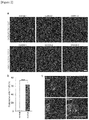
- SCA36-iPSNs were analyzed for whether or not RNA foci would be formed occur therein, as well as in neurons from patients, according to approach 1. The results are shown in Figure 2 .
- no probe-derived signal was substantially detected for any of the iPSNs derived from three healthy subjects as Control-iPSNs. Specifically, the neurons derived from healthy subjects were confirmed to not form RNA foci with the GGCCUG repeat region of pre-mRNA of the NOP56 gene as a core.
- RNA foci cells having, in the nucleus, strong fluorescent signals of 0.60 ⁇ m or larger in diameter derived from the probe (i.e., RNA foci) were confirmed in all the iPSNs derived from three patients as SCA36-iPSNs ( Figure 2a , lower panels). Results of counting the number of positive cells are shown in Figure 2b . It is evident that RNA foci spontaneously formed in 60% or more cells of SCA36-iPSNs. As a result of further performing immunostaining with an anti- ⁇ -III tubulin antibody or an anti-Islet1 antibody (approach 1) following the probe treatment, strong signals derived from the probe were detected in the nuclei of almost all the ⁇ -III tubulin-positive cells or Islet1-positive cells.
- the fluorescent probe-derived signals detected in SCA36-iPSNs were confirmed to result from the hybridization of the probe to the GGCCUG repeat region in NOP56 pre-mRNA, not the hybridization to the NOP56 gene (i.e., DNA).
- ASO-A to -E Five types of ASOs (ASO-A to -E) described in Table 2 were introduced to Control-iPSNs and SCA36-iPSNs according to [Approach 2] and analyzed for the presence or absence of RNA foci according to [Approach 1].
- the target site of each ASO is shown in Figure 3a .
- ASO-A and ASO-B each consist of a sequence having consecutive repeats of a nucleotide sequence (SEQ ID NO: 2) complementary to the GGCCUG sequence. Therefore, a plurality of molecules are capable of binding into the repeat region.
- ASO-C to ASO-E are capable of binding by only one molecule to a particular site in NOP56 pre-mRNA. Only ASO-A is block type, and ASO-B to ASO-E are gapmer type.
- block ASO was shown to be able to inhibit the formation of RNA foci, without inducing the cleavage of NOP56 pre-mRNA, at the same level as in gapmer ASO capable of inducing the cleavage of target RNA as long as a plurality of ASO molecules can bind into the repeat region.
- Block ASO capable of binding by only one molecule to NOP56 pre-mRNA was further prepared and studied for its effect.
- ASO-F to -H are modified with morpholino and are therefore ASOs capable of binding by only one molecule to NOP56 pre-mRNA, without inducing the cleavage of target RNA by RNaseH.
- ASO-F is ASO that has only one nucleotide sequence (SEQ ID NO: 2) complementary to the GGCCUG sequence and binds to a start site of the repeat region of NOP56 pre-mRNA.
- ASO-G and ASO-H have no nucleotide sequence (SEQ ID NO: 2) complementary to the GGCCUG sequence and are therefore ASOs binding to a moiety other than the repeat region of NOP56 pre-mRNA.
- ASO which binds by only one molecule to NOP56 pre-mRNA was shown to be able to effectively inhibit the formation of RNA foci as long as the ASO comprises one or more nucleotide sequences (SEQ ID NO: 2) complementary to the GGCCUG sequence and targets the start site of the repeat region.
- the antisense oligonucleotide that has a nucleotide sequence comprising one or more consecutive repeats of a nucleotide sequence (SEQ ID NO: 2) complementary to the GGCCUG sequence and can stably bind to human NOP56 pre-mRNA without being targeted by RNaseH can effectively suppress a spontaneous formation of RNA foci in neurons having SCA36 mutation.
Landscapes
- Health & Medical Sciences (AREA)
- Life Sciences & Earth Sciences (AREA)
- Engineering & Computer Science (AREA)
- Chemical & Material Sciences (AREA)
- Genetics & Genomics (AREA)
- Molecular Biology (AREA)
- Biomedical Technology (AREA)
- General Health & Medical Sciences (AREA)
- Biotechnology (AREA)
- Organic Chemistry (AREA)
- Bioinformatics & Cheminformatics (AREA)
- Animal Behavior & Ethology (AREA)
- Pharmacology & Pharmacy (AREA)
- Wood Science & Technology (AREA)
- Zoology (AREA)
- Public Health (AREA)
- Veterinary Medicine (AREA)
- Medicinal Chemistry (AREA)
- General Engineering & Computer Science (AREA)
- Biochemistry (AREA)
- Epidemiology (AREA)
- Plant Pathology (AREA)
- Biophysics (AREA)
- Physics & Mathematics (AREA)
- Microbiology (AREA)
- Nuclear Medicine, Radiotherapy & Molecular Imaging (AREA)
- General Chemical & Material Sciences (AREA)
- Chemical Kinetics & Catalysis (AREA)
- Neurosurgery (AREA)
- Neurology (AREA)
- Pharmaceuticals Containing Other Organic And Inorganic Compounds (AREA)
- Medicines That Contain Protein Lipid Enzymes And Other Medicines (AREA)
Applications Claiming Priority (2)
| Application Number | Priority Date | Filing Date | Title |
|---|---|---|---|
| JP2017099374 | 2017-05-18 | ||
| PCT/JP2018/019082 WO2018212271A1 (fr) | 2017-05-18 | 2018-05-17 | Composition pour la prévention ou le traitement de l'ataxie spino-cérébelleuse de type 36 |
Publications (2)
| Publication Number | Publication Date |
|---|---|
| EP3626821A1 true EP3626821A1 (fr) | 2020-03-25 |
| EP3626821A4 EP3626821A4 (fr) | 2021-03-03 |
Family
ID=64273806
Family Applications (1)
| Application Number | Title | Priority Date | Filing Date |
|---|---|---|---|
| EP18802436.8A Pending EP3626821A4 (fr) | 2017-05-18 | 2018-05-17 | Composition pour la prévention ou le traitement de l'ataxie spino-cérébelleuse de type 36 |
Country Status (4)
| Country | Link |
|---|---|
| US (1) | US11179411B2 (fr) |
| EP (1) | EP3626821A4 (fr) |
| JP (1) | JP7246729B2 (fr) |
| WO (1) | WO2018212271A1 (fr) |
Family Cites Families (17)
| Publication number | Priority date | Publication date | Assignee | Title |
|---|---|---|---|---|
| US3489670A (en) | 1964-07-29 | 1970-01-13 | Gen Electric | Process for gas purification |
| US5034506A (en) | 1985-03-15 | 1991-07-23 | Anti-Gene Development Group | Uncharged morpholino-based polymers having achiral intersubunit linkages |
| US5735814A (en) | 1996-04-30 | 1998-04-07 | Medtronic, Inc. | Techniques of treating neurodegenerative disorders by brain infusion |
| US6042579A (en) | 1997-04-30 | 2000-03-28 | Medtronic, Inc. | Techniques for treating neurodegenerative disorders by infusion of nerve growth factors into the brain |
| WO1999061066A2 (fr) | 1998-05-27 | 1999-12-02 | Avigen, Inc. | Apport ameliore par la convection de vecteurs viraux adeno-associes (aav) |
| ATE226449T1 (de) | 1998-12-03 | 2002-11-15 | Avigen Inc | Hilfsstoffe zur verwendung in adeno-assoziiertes virus enthaltenden pharmazeutischen zubereitungen und damit hergestellte pharmazeutische zubereitungen |
| ES2234563T5 (es) | 1999-02-12 | 2018-01-17 | Daiichi Sankyo Company, Limited | Nuevos análogos de nucleósidos y oligonucleótidos |
| US20050164968A1 (en) * | 2001-05-18 | 2005-07-28 | Sirna Therapeutics, Inc. | RNA interference mediated inhibition of ADAM33 gene expression using short interfering nucleic acid (siNA) |
| WO2004018494A1 (fr) | 2002-08-22 | 2004-03-04 | Geneticlab Co., Ltd. | 4'-thionucleotide |
| AU2005247509C1 (en) | 2004-05-27 | 2012-09-20 | Alnylam Pharmaceuticals, Inc. | Nuclease resistant double-stranded ribonucleic acid |
| WO2009099326A1 (fr) * | 2008-02-08 | 2009-08-13 | Prosensa Holding Bv | Méthodes et moyens pour traiter les affections génétiques associées à l’instabilité de répétition d’adn |
| JP4340744B2 (ja) | 2009-03-17 | 2009-10-07 | 株式会社ホソカワ粉体技術研究所 | 薬剤溶出型ステント |
| US10066228B2 (en) | 2011-11-30 | 2018-09-04 | Sarepta Therapeutics, Inc. | Oligonucleotides for treating expanded repeat diseases |
| ES2935606T3 (es) * | 2011-12-08 | 2023-03-08 | Sarepta Therapeutics Inc | Análogos de oligonucleótidos dirigidos a LMNA humana |
| US20150247141A1 (en) * | 2012-09-14 | 2015-09-03 | Rana Therapeutics, Inc. | Multimeric oligonucleotide compounds |
| CN104968783B (zh) * | 2012-10-15 | 2019-12-10 | Ionis制药公司 | 用于调节c9orf72表达的组合物 |
| EP3472321A2 (fr) | 2016-06-17 | 2019-04-24 | Genesis Technologies Limited | Système crips-cas, matériels et procédés |
-
2018
- 2018-05-17 JP JP2019518856A patent/JP7246729B2/ja active Active
- 2018-05-17 US US16/614,644 patent/US11179411B2/en active Active
- 2018-05-17 WO PCT/JP2018/019082 patent/WO2018212271A1/fr not_active Ceased
- 2018-05-17 EP EP18802436.8A patent/EP3626821A4/fr active Pending
Also Published As
| Publication number | Publication date |
|---|---|
| US20200222443A1 (en) | 2020-07-16 |
| JPWO2018212271A1 (ja) | 2020-03-26 |
| WO2018212271A1 (fr) | 2018-11-22 |
| US11179411B2 (en) | 2021-11-23 |
| JP7246729B2 (ja) | 2023-03-28 |
| EP3626821A4 (fr) | 2021-03-03 |
Similar Documents
| Publication | Publication Date | Title |
|---|---|---|
| JP5898843B2 (ja) | 血管新生、血管形成、若しくは血管修復を促進するか、又は腫瘍血管新生を阻害する方法 | |
| CN102387817B (zh) | 通过抑制针对脑衍生神经营养因子(bdnf)的天然反义转录物来治疗bdnf相关的疾病 | |
| CN108175862B (zh) | 靶向连接蛋白的反义化合物及其使用方法 | |
| CN113151261B (zh) | 反义寡核苷酸作为tgf-r信号传导的抑制剂 | |
| JP6066035B2 (ja) | グリア細胞由来神経栄養因子(gdnf)関連疾病の、gdnfに対する天然アンチセンス転写物の抑制による治療 | |
| CN113811311A (zh) | 用于组织特异性apoe调节的寡核苷酸 | |
| CN110438125A (zh) | 通过抑制脑源神经营养因子(bdnf)的天然反义转录物治疗bdnf相关疾病 | |
| CN102869777A (zh) | 通过抑制集落刺激因子3(csf3)的天然反义转录物而治疗csf3相关疾病 | |
| CN104313027A (zh) | 通过抑制脂连蛋白(adipoq)的天然反义转录物治疗脂连蛋白(adipoq)相关疾病 | |
| JP2024129091A (ja) | 統合失調症及び他の神経精神障害の治療方法 | |
| US10612021B2 (en) | Therapeutic or prophylactic composition for TDP-43 proteinopathy | |
| JP2010285426A (ja) | 核酸導入方法 | |
| US11179411B2 (en) | Composition for prevention or treatment of spinocerebellar ataxia type 36 | |
| JP7834290B2 (ja) | 医薬組成物 | |
| WO2016054399A1 (fr) | Amélioration de la cicatrisation de plaie dermique par régulation négative du microarn-26a | |
| HK40004436A (en) | In vitro nephrotoxicity screening assay |
Legal Events
| Date | Code | Title | Description |
|---|---|---|---|
| STAA | Information on the status of an ep patent application or granted ep patent |
Free format text: STATUS: THE INTERNATIONAL PUBLICATION HAS BEEN MADE |
|
| PUAI | Public reference made under article 153(3) epc to a published international application that has entered the european phase |
Free format text: ORIGINAL CODE: 0009012 |
|
| STAA | Information on the status of an ep patent application or granted ep patent |
Free format text: STATUS: REQUEST FOR EXAMINATION WAS MADE |
|
| 17P | Request for examination filed |
Effective date: 20191203 |
|
| AK | Designated contracting states |
Kind code of ref document: A1 Designated state(s): AL AT BE BG CH CY CZ DE DK EE ES FI FR GB GR HR HU IE IS IT LI LT LU LV MC MK MT NL NO PL PT RO RS SE SI SK SM TR |
|
| AX | Request for extension of the european patent |
Extension state: BA ME |
|
| DAV | Request for validation of the european patent (deleted) | ||
| DAX | Request for extension of the european patent (deleted) | ||
| A4 | Supplementary search report drawn up and despatched |
Effective date: 20210129 |
|
| RIC1 | Information provided on ipc code assigned before grant |
Ipc: A61K 31/7088 20060101ALI20210125BHEP Ipc: C12N 15/113 20100101AFI20210125BHEP Ipc: A61P 25/00 20060101ALN20210125BHEP Ipc: C12N 15/11 20060101ALI20210125BHEP |
|
| STAA | Information on the status of an ep patent application or granted ep patent |
Free format text: STATUS: EXAMINATION IS IN PROGRESS |
|
| 17Q | First examination report despatched |
Effective date: 20260306 |