EP3627869B1 - Procédé de vérification et de mise à jour d'une version de micrologiciel euicc et dispositif associé - Google Patents
Procédé de vérification et de mise à jour d'une version de micrologiciel euicc et dispositif associé Download PDFInfo
- Publication number
- EP3627869B1 EP3627869B1 EP17912655.2A EP17912655A EP3627869B1 EP 3627869 B1 EP3627869 B1 EP 3627869B1 EP 17912655 A EP17912655 A EP 17912655A EP 3627869 B1 EP3627869 B1 EP 3627869B1
- Authority
- EP
- European Patent Office
- Prior art keywords
- euicc
- identifier
- firmware version
- event
- target
- Prior art date
- Legal status (The legal status is an assumption and is not a legal conclusion. Google has not performed a legal analysis and makes no representation as to the accuracy of the status listed.)
- Active
Links
Images







Classifications
-
- G—PHYSICS
- G06—COMPUTING OR CALCULATING; COUNTING
- G06F—ELECTRIC DIGITAL DATA PROCESSING
- G06F8/00—Arrangements for software engineering
- G06F8/60—Software deployment
- G06F8/65—Updates
-
- H—ELECTRICITY
- H04—ELECTRIC COMMUNICATION TECHNIQUE
- H04W—WIRELESS COMMUNICATION NETWORKS
- H04W4/00—Services specially adapted for wireless communication networks; Facilities therefor
- H04W4/50—Service provisioning or reconfiguring
-
- G—PHYSICS
- G06—COMPUTING OR CALCULATING; COUNTING
- G06F—ELECTRIC DIGITAL DATA PROCESSING
- G06F16/00—Information retrieval; Database structures therefor; File system structures therefor
- G06F16/10—File systems; File servers
- G06F16/14—Details of searching files based on file metadata
- G06F16/148—File search processing
-
- G—PHYSICS
- G06—COMPUTING OR CALCULATING; COUNTING
- G06F—ELECTRIC DIGITAL DATA PROCESSING
- G06F21/00—Security arrangements for protecting computers, components thereof, programs or data against unauthorised activity
- G06F21/30—Authentication, i.e. establishing the identity or authorisation of security principals
- G06F21/31—User authentication
- G06F21/33—User authentication using certificates
-
- G—PHYSICS
- G06—COMPUTING OR CALCULATING; COUNTING
- G06F—ELECTRIC DIGITAL DATA PROCESSING
- G06F21/00—Security arrangements for protecting computers, components thereof, programs or data against unauthorised activity
- G06F21/30—Authentication, i.e. establishing the identity or authorisation of security principals
- G06F21/44—Program or device authentication
-
- G—PHYSICS
- G06—COMPUTING OR CALCULATING; COUNTING
- G06F—ELECTRIC DIGITAL DATA PROCESSING
- G06F21/00—Security arrangements for protecting computers, components thereof, programs or data against unauthorised activity
- G06F21/60—Protecting data
- G06F21/602—Providing cryptographic facilities or services
-
- G—PHYSICS
- G06—COMPUTING OR CALCULATING; COUNTING
- G06F—ELECTRIC DIGITAL DATA PROCESSING
- G06F21/00—Security arrangements for protecting computers, components thereof, programs or data against unauthorised activity
- G06F21/60—Protecting data
- G06F21/64—Protecting data integrity, e.g. using checksums, certificates or signatures
-
- G—PHYSICS
- G06—COMPUTING OR CALCULATING; COUNTING
- G06F—ELECTRIC DIGITAL DATA PROCESSING
- G06F8/00—Arrangements for software engineering
- G06F8/60—Software deployment
- G06F8/65—Updates
- G06F8/658—Incremental updates; Differential updates
-
- G—PHYSICS
- G06—COMPUTING OR CALCULATING; COUNTING
- G06F—ELECTRIC DIGITAL DATA PROCESSING
- G06F8/00—Arrangements for software engineering
- G06F8/70—Software maintenance or management
- G06F8/71—Version control; Configuration management
-
- H—ELECTRICITY
- H04—ELECTRIC COMMUNICATION TECHNIQUE
- H04L—TRANSMISSION OF DIGITAL INFORMATION, e.g. TELEGRAPHIC COMMUNICATION
- H04L63/00—Network architectures or network communication protocols for network security
- H04L63/08—Network architectures or network communication protocols for network security for authentication of entities
- H04L63/0869—Network architectures or network communication protocols for network security for authentication of entities for achieving mutual authentication
-
- H—ELECTRICITY
- H04—ELECTRIC COMMUNICATION TECHNIQUE
- H04L—TRANSMISSION OF DIGITAL INFORMATION, e.g. TELEGRAPHIC COMMUNICATION
- H04L67/00—Network arrangements or protocols for supporting network services or applications
- H04L67/34—Network arrangements or protocols for supporting network services or applications involving the movement of software or configuration parameters
-
- H—ELECTRICITY
- H04—ELECTRIC COMMUNICATION TECHNIQUE
- H04L—TRANSMISSION OF DIGITAL INFORMATION, e.g. TELEGRAPHIC COMMUNICATION
- H04L9/00—Cryptographic mechanisms or cryptographic arrangements for secret or secure communications; Network security protocols
- H04L9/32—Cryptographic mechanisms or cryptographic arrangements for secret or secure communications; Network security protocols including means for verifying the identity or authority of a user of the system or for message authentication, e.g. authorization, entity authentication, data integrity or data verification, non-repudiation, key authentication or verification of credentials
- H04L9/3263—Cryptographic mechanisms or cryptographic arrangements for secret or secure communications; Network security protocols including means for verifying the identity or authority of a user of the system or for message authentication, e.g. authorization, entity authentication, data integrity or data verification, non-repudiation, key authentication or verification of credentials involving certificates, e.g. public key certificate [PKC] or attribute certificate [AC]; Public key infrastructure [PKI] arrangements
- H04L9/3268—Cryptographic mechanisms or cryptographic arrangements for secret or secure communications; Network security protocols including means for verifying the identity or authority of a user of the system or for message authentication, e.g. authorization, entity authentication, data integrity or data verification, non-repudiation, key authentication or verification of credentials involving certificates, e.g. public key certificate [PKC] or attribute certificate [AC]; Public key infrastructure [PKI] arrangements using certificate validation, registration, distribution or revocation, e.g. certificate revocation list [CRL]
-
- H—ELECTRICITY
- H04—ELECTRIC COMMUNICATION TECHNIQUE
- H04W—WIRELESS COMMUNICATION NETWORKS
- H04W12/00—Security arrangements; Authentication; Protecting privacy or anonymity
- H04W12/06—Authentication
- H04W12/069—Authentication using certificates or pre-shared keys
-
- H—ELECTRICITY
- H04—ELECTRIC COMMUNICATION TECHNIQUE
- H04W—WIRELESS COMMUNICATION NETWORKS
- H04W4/00—Services specially adapted for wireless communication networks; Facilities therefor
- H04W4/60—Subscription-based services using application servers or record carriers, e.g. SIM application toolkits
-
- H—ELECTRICITY
- H04—ELECTRIC COMMUNICATION TECHNIQUE
- H04W—WIRELESS COMMUNICATION NETWORKS
- H04W8/00—Network data management
- H04W8/18—Processing of user or subscriber data, e.g. subscribed services, user preferences or user profiles; Transfer of user or subscriber data
-
- H—ELECTRICITY
- H04—ELECTRIC COMMUNICATION TECHNIQUE
- H04W—WIRELESS COMMUNICATION NETWORKS
- H04W8/00—Network data management
- H04W8/18—Processing of user or subscriber data, e.g. subscribed services, user preferences or user profiles; Transfer of user or subscriber data
- H04W8/20—Transfer of user or subscriber data
- H04W8/205—Transfer to or from user equipment or user record carrier
Definitions
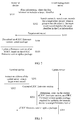
- FIG. 1 is a schematic architectural diagram of an eUICC remote configuration/management system.
- An SM-DP+ is responsible for preparing a profile package, and encrypts the profile package by using a key encryption key of a profile.
- the SM-DP+ binds the profile package encrypted with the key encryption key to an EID of a specified eUICC, and securely downloads the bound profile package to a terminal.
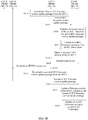
- FIG. 2 is a schematic flowchart of a method for updating a firmware version according to an embodiment of this application. As shown in the figure, the method includes the following steps. S101.
- a terminal device sends first information to an event management server, where the first information includes a target identifier, and the event management server receives the first information.
- the terminal device may include an LPA and an eUICC.
- the LPA and the eUICC may be two modules that are separated from each other and that have a physical or logical connection relationship.
- the LPA is disposed on a baseband chip, an application processor, or another hardware module of the terminal device.
- the LPA may also be directly deployed on the eUICC.
- the LPA may be a software module, or may be a plurality of software modules that are distributed and associated with each other.
- the event management server may be an SM-DS, or may be another server that has event management functions such as event registration, event deletion, event sending, and event modification, or may be a server that provides one or more SM-DP+ addresses or OPS addresses to the terminal device so that the terminal device establishes a communication connection to an SM-DS+ or an OPS.
- the event management server searches currently stored event records for a target event record, where a group event identifier in the target event record matches the target identifier in the first information, and the group event identifier includes at least one eUICC firmware version and at least one issuer identifier.
- an event record corresponding to an eUICC 1 there may be a plurality of event records stored in the event management server, for example, an event record corresponding to an eUICC 1, an event record corresponding to an eUICC 2, and an event record corresponding to an eUICC 3.
- an event record may be corresponding to an eUICC by using an eUICC identity (eUICC Identity, EID) or by using a group event identifier.
- EID eUICC Identity
- the correspondence when there is a one-to-one correspondence between the event record and the eUICC, the correspondence may be indicated by using the EID, to be specific, the EID is stored in the event record, and an eUICC that can match the EID in the event record is the eUICC corresponding to the event record.
- the correspondence may be indicated by using a group event identifier, to be specific, the group event identifier is stored in the event record, and an eUICC that can match the group event identifier in the event record is the eUICC corresponding to the event record.
- the target event record may be registered by the event management server before the terminal device sends the first information to the event management server, to be specific, before the event management server receives the first information sent by the terminal device, the method further includes: The event management server receives an event registration request sent by an update server, where the registration request carries the group event identifier; and the event management server stores the group event identifier in the target event record based on the registration request.
- the terminal may execute an operation of matching the group event identifier with an identifier locally stored in the terminal device, to be specific, the terminal device receives event records sent by the event management server, and the terminal device selects, from the event records, the target event record that matches the locally stored identifier.
- the target identifier in the first information includes some group event identifiers.
- the event management server searches the currently stored event records for event records that match the target identifier.
- the event management server sends the found event records that match the target identifier to the terminal device.
- the terminal device extracts complete group event identifiers from the event records, and matches the group event identifiers with locally stored identification information one by one, to determine the target event record.
- the target identifier includes only a part of the group event identifier, and there may be one or more event records that match the target identifier.
- the terminal determines the target event record based on the received one or more event records.
- the event server may perform preliminary filtering on the event records to screen out some event records that meet a condition, and then the terminal device performs final filtering on the event records to screen out the target event record whose group event identifier matches the identification information of the terminal device.
- the target event record may further include an address of the update server.
- the terminal device downloads an eUICC firmware version update package.
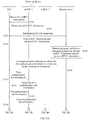
- FIG. 3 is a schematic flowchart of a method for downloading an eUICC firmware version update package by a terminal device according to an embodiment of this application. As shown in the figure, the method includes at least the following steps.
- the terminal device extracts the address of the update server from the target event record.
- the update server may be the OPS, or may be another server that provides an eUICC firmware update package download service for the terminal device.
- the update server may also be an SM-DP+ or the like.
- the terminal device may add the current eUICC firmware version to a first command (for example, AuthenticateClient) and send the first command to the update server in a bidirectional authentication process with the update server.
- the terminal device may add the current eUICC firmware version to a second command (for example, InitiateAuthentication) and send the second command to the update server in a bidirectional authentication process with the update server.
- the update server determines, based on the current eUICC firmware version, the eUICC firmware version update package required for updating the terminal device to the target firmware version.
- the eUICC firmware version update full package includes a completed firmware version installation package, and an eUICC needs to enter a recovery mode in advance, so that the eUICC firmware version update full package can be installed.
- the eUICC firmware version bug fix package may be an update package generated to resolve a bug fix problem of an eUICC platform, an eUICC system, or an eUICC platform and an eUICC system.
- the update server sends the eUICC firmware version update package to the terminal device, and the terminal device receives the eUICC firmware version update package.
- the following describes, by using the LPA and the eUICC of the terminal device as independent execution bodies, a specific implementation process of a method for updating an eUICC firmware version by the terminal device. It should be understood that after an interaction step (to be specific, an internal interaction process of the terminal device) between the LPA and the eUICC is omitted, operation steps performed by the LPA and the eUICC are operation steps performed by the terminal device.
- the following describes the foregoing embodiment in detail by using an SM-DS as the event management server and an OPS as the update server.
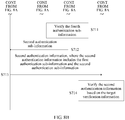
- FIG. 4A and FIG. 4B are a schematic flowchart of another method for updating an eUICC firmware version according to an embodiment of this application. As shown in the figure, the method includes the following steps.
- the OPS sends an event registration request (for example, RegisterEvent) to the SM-DS, where the event registration request carries a group event identifier, and the SM-DS receives the event registration request, where the group event identifier includes at least one eUICC firmware version and at least one issuer identifier.
- an event registration request for example, RegisterEvent
- the SM-DS receives the event registration request, where the group event identifier includes at least one eUICC firmware version and at least one issuer identifier.
- the event registration request may further carry an address of the OPS and an event identity (Event Identity, EventID).
- Event Identity Event Identity, EventID
- the event registration request may carry at least one eUICC firmware version. It indicates that the OPS may currently provide an eUICC firmware version update service for an eUICC corresponding to the at least one eUICC firmware version.
- the OPS may currently provide the eUICC firmware version update service for eUICCs in a plurality of versions.
- a target firmware version is 50000
- the OPS may provide the eUICC firmware version update service for an eUICC whose eUICC firmware version is 49999, 49998, or 49997.
- the OPS adds 49999, 49998, and 49997 to the event registration request and sends the event registration request to the SM-DS.
- the custom identifier may be a character within a digit range of a personal identification number, for example, the custom identifier is a character within a range from 100100110111 to 101110110101.
- the custom identifier may also be a character that is located at an n th bit of the personal identification number (a value of n is 1 to 12), or the custom identifier may also be characters that are located at odd bits of the personal identification number, to be specific, characters that are located at the first bit, the third bit, the fifth bit, the seventh bit, the ninth bit, and the eleventh bit of the personal identification number.
- the custom identifier may also be characters that are located at even bits of the personal identification number, to be specific, a second bit, a fourth bit, a sixth bit, an eighth bit, a tenth bit, and a twelfth bit of the personal identification number.
- the custom identifier may further be characters that are located at the first bit to the fifth bit of the personal identification number.
- the custom identifier may further be characters that are located at the third bit to the eighth bit of the personal identification number, or the like.
- the personal identification number includes 12 bits in total. There may be a plurality of setting rules for the preset custom bit. Correspondingly, different preset custom bits indicate different custom identifiers. Details are not listed herein.
- the SM-DS stores an event record.
- the SM-DS stores, in the event record, the group event identifier in the event registration request.
- the SM-DS may further store the address of the OPS and the event identity in the event record.
- the SM-DS stores the event record that includes the group event identifier and that waits for an LPA to query, where the group event identifier corresponds to at least one eUICC.
- the LPA establishes a hypertext transfer protocol secure (HyperText Transfer Protocol Secure, HTTPS) connection to the SM-DS.
- HTTPS HyperText Transfer Protocol Secure
- the LPA may obtain a default SM-DS address from the eUICC.
- a terminal device is customized and manufactured by an operator A, and the operator A specifies that an SM-DS address is preset in an eUICC, or a terminal manufacturer presets an SM-DS address shared by a plurality of operators in an eUICC.
- the HTTPS may run on a transport layer security (Transport Layer Security, TLS) connection.
- TLS Transport Layer Security
- the LPA performs unidirectional certificate authentication on the SM-DS, and establishes the TLS connection after the authentication succeeds.
- An eUICC sends first information to the LPA, and the LPA receives the first information, where the first information includes a target identifier.
- the first information may be second authentication information sent by the terminal device to the SM-DS in a bidirectional authentication process between the terminal device and the SM-DS.
- the first information may include eUICC to-be-signed data (for example, euiccSigned1), a signature value (for example, euiccSignature1) of the eUICC to-be-signed data, an eUICC certificate (for example, CERT.EUICC.ECDSA), an eUICC manufacturer certificate (for example, CERT.EUM.ECDSA), and the like.
- eUICC to-be-signed data for example, euiccSigned1
- a signature value for example, euiccSignature1
- an eUICC certificate for example, CERT.EUICC.ECDSA
- an eUICC manufacturer certificate for example, CERT.EUM.ECDSA
- the eUICC to-be-signed data may include eUICC information, where the eUICC information in the eUICC to-be-signed data (for example, euiccSigned1) is additional eUICC information (for example, euiccInfo2).
- the eUICC certificate (for example, CERT.EUICC.ECDSA) includes an eUICC identity (eUICC Identity, EID).
- the additional eUICC information (for example, euiccInfo2) includes an eUICC firmware version (euiccFirmwareVersion) and eUICC performance (UICCCapability).
- the first information may be information sent by the terminal device to the SM-DS after the bidirectional authentication process between the terminal device and the SM-DS ends.
- the first information may include the additional eUICC information (for example, euiccInfo2), the EID, and the like.
- the eUICC firmware version in the first information is a current firmware version of the eUICC.
- the current firmware version of the eUICC is 49997
- the eUICC firmware version in the first information is 49997.
- the LPA sends the first information to the SM-DS, and the SM-DS receives the first information.
- the SM-DS searches currently stored event records for a target event record, where the group event identifier in the target event record matches the target identifier in the first information.
- the SM-DS may obtain the eUICC firmware version from the additional eUICC information (for example, euiccInfo2) in the first information as the target identifier in the first information.
- the SM-DS may also obtain the EID from the eUICC certificate (for example, CERT.EUICC.ECDSA) in the first information, extract the eUICC firmware version from the EID as the target identifier in the first information, and separately compare the target identifier with a group event identifier in at least one event record, to determine, in the at least one event record, the target event record whose group event identifier matches the target identifier.
- the SM-DS may extract characters at the ninth bit to the thirteenth bit of the EID, and determine the characters as the eUICC firmware version, to be specific, the target identifier in the first information.
- the SM-DS may extract characters at the nineteenth bit to the thirtieth bit of the EID, extract characters in the preset custom bit from the extracted characters at the nineteenth bit to the thirtieth bit, and determine the characters the target identifier in the first information.
- the group event identifier is two or three types of information in an eUICC firmware version, an issuer identifier, the custom identifier, or the country code
- corresponding information may be obtained according to the foregoing method for separately obtaining the eUICC firmware version, the issuer identifier, or the custom identifier, the corresponding information is used as the target identifier in the first information, and the target identifier is compared with a group event identifier in an event record, to determine the target event record whose event identifier matches the target identifier.
- the SM-DS sends the target event record to the LPA, and the LPA receives the target event record.
- the LPA extracts the address of the OPS from the target event record.
- the LPA establishes an HTTPS connection to the OPS.
- the LPA sends a current eUICC firmware version of the terminal device to the OPS, and the OPS receives the current eUICC firmware version of the terminal device.
- the LPA may add the current eUICC firmware version of the terminal device to a second command (for example, InitiateAuthentication), and send the second command to the OPS.
- a second command for example, InitiateAuthentication
- the OPS sends third information to the LPA, and the LPA receives the third information.
- the third information may be first authentication information sent by the OPS to the terminal device in a bidirectional authentication process between the terminal device and the OPS.
- the third information may include a session identity (TransactionIdentity, TransactionID), authentication verification to-be-signed data (for example, OPSSigned1), a signature value of the authentication verification to-be-signed data (for example, OPSSignature1), a target public key identifier (for example, euiccCiPKIdToBeUsed), an authentication certificate of the update server (for example, CERT.OPSauth.ECDSA).
- a session identity TransactionIdentity, TransactionID
- authentication verification to-be-signed data for example, OPSSigned1
- a signature value of the authentication verification to-be-signed data for example, OPSSignature1
- a target public key identifier for example, euiccCiPKIdToBeUsed
- an authentication certificate of the update server for example, CERT.OPSauth.ECDSA.
- the authentication verification to-be-signed data may include the session identity, the current eUICC firmware version of the terminal device, the eUICC random number (for example, euiccChange1), a random number of the update server (for example, OPSChanllenge), and the address of the OPS.
- the eUICC random number for example, euiccChange1
- a random number of the update server for example, OPSChanllenge
- the LPA sends the third information to the eUICC, and the eUICC receives the third information.
- the LPA may add the third information to a third command (for example, AuthenticateServer) and send the third command to the eUICC.
- a third command for example, AuthenticateServer
- the eUICC sends second information to the LPA, and the LPA receives the second information, where the second information includes the target identifier, the eUICC performance, and the eUICC firmware version.
- the second information may be second authentication information sent by the terminal device to the OPS in the bidirectional authentication process between the terminal device and the OPS.
- the second information may include the eUICC to-be-signed data (for example, euiccSigned1), the signature value (for example, euiccSignature1) of the eUICC to-be-signed data, the eUICC certificate (for example, CERT.EUICC.ECDSA), the eUICC manufacturer certificate (for example, CERT.EUM.ECDSA), and the like.
- eUICC to-be-signed data for example, euiccSigned1
- the signature value for example, euiccSignature1
- the eUICC certificate for example, CERT.EUICC.ECDSA
- the eUICC manufacturer certificate for example, CERT.EUM.ECDSA
- the second information may be information sent by the terminal device to the OPS after the bidirectional authentication between the terminal device and the OPS ends.
- the second information may include the additional eUICC information (for example, euiccInfo2) and the EID.
- the LPA may add the second information to a first command (for example, AuthenticateClient) and send the first command to the OPS.
- a first command for example, AuthenticateClient
- step S316 For a specific implementation of determining whether the target identifier matches the group event identifier, refer to descriptions of step S306. Details are not described again. Specifically, when the target identifier matches the locally stored group event identifier, the OPS performs step S316.
- the OPS checks whether the eUICC performance and the eUICC firmware version meet a performance requirement and a firmware version requirement of a target firmware version.
- the OPS may check whether the eUICC performance can support updating the eUICC to the target firmware version.
- the OPS may check whether the eUICC firmware version belongs to a firmware version range in which a firmware version can be updated to the target firmware version.
- the OPS currently provides an eUICC firmware version update server for eUICCs whose eUICC firmware versions are 49997, 49998, and 49999. If the eUICC firmware version of the eUICC is one of eUICC firmware versions: 49997, 49998, and 49999, the eUICC firmware version meets the eUICC firmware version requirement of the target firmware version.
- the method further includes: generating third data (for example, patch Metadata); generating first to-be-signed data (for example, OPSSigned2); generating a signature value of the first to-be-signed data (for example, OPSSignature2); and sending second data to the LPA.
- third data for example, patch Metadata
- first to-be-signed data for example, OPSSigned2
- signature value of the first to-be-signed data for example, OPSSignature2
- the third data may include the target firmware version.
- the second data may include a session identity, the third data (for example, patch Metadata), the first to-be-signed data (for example, OPSSigned2), the signature value of the first to-be-signed data (for example, OPSSignature2), and the like.
- the first to-be-signed data may include the session identity, the target firmware version, a confirmation code flag (Confirmation Code Required Flag), a temporary key pair public key (for example, bppEuiccOtpk), and the like.
- the LPA may add the second data to a to-be-downloaded command (for example, PrepareDownload) and send the to-be-downloaded command to the eUICC.
- a to-be-downloaded command for example, PrepareDownload
- the OPS determines, based on the current eUICC firmware version of the terminal, an eUICC firmware version update package required for updating the terminal device to the target firmware version.
- the OPS may obtain the current eUICC firmware version of the terminal device by using step S310. In another implementation, the OPS may also obtain the current eUICC firmware version of the terminal device from the second information.
- different eUICC firmware version update packages may be designed for different eUICC firmware versions, where different eUICC firmware version update packages include different quantities of system patches and different quantities of function codes.
- the OPS may search for an eUICC firmware version update package corresponding to the current eUICC firmware version of the terminal device, and determine the eUICC firmware version update package as the eUICC firmware version update package required for updating the terminal device to the target firmware version.
- the OPS determines that the eUICC firmware version update package required for updating the terminal device to the target firmware version is the [49997-50000] update package. If the current eUICC firmware version of the terminal device is 49998, the OPS determines that the eUICC firmware version update package required for updating the terminal device to the target firmware version is the [49998-50000] update package. If the current eUICC firmware version of the terminal device is 49999, the OPS determines that the eUICC firmware version update package required for updating the terminal device to the target firmware version is the [49999-50000] update package.
- the OPS sends the eUICC firmware version update package to the LPA, and the LPA receives the eUICC firmware version update package.
- the LPA sends the eUICC firmware version update package to the eUICC, and the eUICC receives the eUICC firmware version update package.
- the LPA may add the eUICC firmware version update package to a fourth command (for example, LoadBoundPackage) and send the fourth command to the eUICC.
- a fourth command for example, LoadBoundPackage
- the eUICC updates the firmware version of the eUICC based on the eUICC firmware version update package.
- the eUICC updates the eUICC firmware version in the eUICC information.
- the eUICC may update the eUICC firmware version in the eUICC information based on first data (for example, encrypted data) in the eUICC firmware version update package, where the first data includes the target firmware version.
- first data for example, encrypted data
- the eUICC may also update the eUICC firmware version in the eUICC information based on the second data.
- the eUICC may update the eUICC firmware version in the eUICC information based on the third data (for example, patch Metadata) in the second data, or the eUICC may update the eUICC firmware version in the eUICC information based on the first to-be-signed data (for example, OPSSigned2) in the second data.
- the eUICC firmware version in the eUICC information may be updated before the eUICC updates the firmware version.
- the eUICC firmware version in the eUICC information is 49997, and the target firmware version is 50000.
- the eUICC updates the eUICC firmware version in the eUICC information to 50000.
- the eUICC firmware versions of the two eUICCs may be updated concurrently. It is assumed that the two eUICCs are respectively a first eUICC, namely, an eUICC 1, and a second eUICC, namely, an eUICC 2.
- step S405 For a specific implementation of step S405, refer to descriptions of step S303. Details are not described herein again.
- the first sub-information may include first eUICC to-be-signed data (for example, euicc1Signed1), a signature value (for example, euicc1Signature1) of the first eUICC to-be-signed data, a first eUICC certificate (for example, CERT.EUICC1.ECDSA), a first eUICC manufacturer certificate (for example, CERT.EUM1.ECDSA), and the like.
- first eUICC to-be-signed data for example, euicc1Signed1
- a signature value for example, euicc1Signature1
- a first eUICC certificate for example, CERT.EUICC1.ECDSA
- a first eUICC manufacturer certificate for example, CERT.EUM1.ECDSA
- the second sub-information may include second eUICC to-be-signed data (for example, euicc2Signed1), a signature value (for example, euicc2Signature1) of the second eUICC to-be-signed data, a second eUICC certificate (for example, CERT.EUICC2.ECDSA), a second eUICC manufacturer certificate (for example, CERT.EUM2.ECDSA), and the like.
- second eUICC to-be-signed data for example, euicc2Signed1
- a signature value for example, euicc2Signature1
- a second eUICC certificate for example, CERT.EUICC2.ECDSA
- a second eUICC manufacturer certificate for example, CERT.EUM2.ECDSA
- the second eUICC to-be-signed data (for example, euicc2Signed1) is eUICC to-be-signed data, and may specifically include second eUICC information.
- the second eUICC information in the second eUICC to-be-signed data (for example, euicc2Signed1) is second additional eUICC information (for example, euicc2Info2).
- the second eUICC certificate (for example, CERT.EUICC2.ECDSA) is an eUICC certificate, and may specifically include a second eUICC identity (for example, EID2).
- the second target identifier is a target identifier, and may specifically include at least one of the following information: an eUICC firmware version of the eUICC 2, an issuer identifier of the eUICC 2, a custom identifier of the eUICC 2, or a country code of the eUICC 2.
- step S406 and step S407 may be mutually independent and concurrent steps. In an optional embodiment, step S406 and step S407 may be performed simultaneously, or step S406 may be performed after step S407 is performed.
- a type/composition/definition/structure of the first sub-information and a type/composition/definition/structure of the second sub-information may be the same as that of the first information in step S304, to be specific, the first information in step S304 may include the first sub-information and/or the second sub-information.
- the LPA sends first information to the SM-DS, where the first information includes the first sub-information and the second sub-information, and the SM-DS receives the first information.
- the SM-DS separately searches currently stored event records for the first event record and the second event record, where the first group event identifier in the first event record matches the first target identifier, and the second group event identifier in the second event record matches the second target identifier.
- the SM-DS may obtain the first target identifier and the second target identifier from the first information, obtain the first group event identifier and the second group event identifier from the currently stored event records, match the first target identifier with the first group event identifier, and match the second target identifier with the second group event. If the first target identifier is the same as the first group event identifier or the first target identifier belongs to the first group event identifier, it is determined that the first target identifier matches the first group event identifier. If the second target identifier is the same as the second group event identifier or the second target identifier belongs to the second group event identifier, it is determined that the second target identifier matches the second group event identifier.
- step S306 For a specific implementation in which the SM-DS obtains the first target identifier and the second target identifier, determines that the first target identifier matches the first group event identifier, and determines that the second target identifier matches the second group event identifier, refer to descriptions of step S306. Details are not described again.
- the SM-DS sends the first event record and the second event record to the LPA, and the LPA receives the first event record and the second event record.
- the LPA obtains the first event record corresponding to the eUICC 1 and the second event record corresponding to the eUICC 2.
- the LPA may process the first event record and the second event record in sequence. S411.
- the LPA obtains the first eUICC identity of the eUICC 1.
- the LPA may obtain the first eUICC identity of the eUICC 1 by obtaining the certificate of the eUICC 1 in a process of performing bidirectional authentication with the SM-DS.
- the LPA may also obtain the first eUICC identity of the eUICC 1 by obtaining an EID instruction (for example, GetEID) after the bidirectional authentication process with the SM-DS ends.
- EID instruction for example, GetEID
- the LPA sends the first event record to the eUICC 1 based on the first eUICC identity, and the eUICC 1 receives the first event record.
- the LPA may obtain the first target identifier from the first eUICC identity, and when the first target identifier matches the first group event identifier in the first event record, the LPA determines to send the first event record to the eUICC 1.
- the LPA establishes an HTTPS connection to the OPS 1.
- the LPA downloads a first eUICC firmware version update package from the OPS 1.
- a specific implementation process in which the LPA downloads the first eUICC firmware version update package from the OPS 1 refer to steps S310 to S318. Details are not described again.
- the eUICC 1 updates the firmware version of the eUICC 1 based on the first eUICC firmware version update package.
- the LPA sends the second eUICC firmware version update package to the eUICC 2, and the eUICC 2 receives the second eUICC firmware version update package.
- steps S411 to S417 and steps S418 to S424 may be mutually independent and concurrent steps. In an optional embodiment, steps S411 to S417 and steps S418 to S424 may be performed simultaneously, or steps S411 to S417 may be performed after steps S418 to S424 are performed.
- definitions of the first eUICC firmware version update package and the second eUICC firmware version update package may be the same as a definition of the eUICC firmware version update package in step S318, to be specific, the eUICC firmware version update package in step S318 may include the first eUICC firmware version update package and/or the second eUICC firmware version update package.
- the SM-DS stores an event record, where the event record includes the group event identifier.
- An LPA establishes an HTTPS connection to the SM-DS.
- steps S501 to S503 refer to descriptions of steps S301 to S303. Details are not described again.
- the LPA sends first information to the SM-DS, where the first information includes the first sub-information and the second sub-information, and the SM-DS receives the first information.
- the SM-DS searches currently stored event records for a target event record, where a group event identifier in the target event record separately matches the first target identifier and the second target identifier.
- the eUICC 1 and the eUCC 2 belong to the same manufacturer, and the group event identifier in the target event record may simultaneously match the first target identifier and the second target identifier.
- step S306 For a specific implementation in which the SM-DS obtains the first target identifier and the second target identifier and determines that the first target identifier and the second target identifier separately match the group event, refer to descriptions of step S306. Details are not described again.
- the LPA obtains a first eUICC identity of the eUICC 1.
- the LPA sends the target event record to the eUICC 1 based on the first eUICC identity, and the eUICC 1 receives the target event record.
- steps S509 and S510 refer to descriptions of steps S411 and S412. Details are not described again.
- the LPA obtains a current eUICC firmware version of the eUICC 1.
- the LPA may further obtain a first eUICC random number (for example, eUICC 1 Challenge 1) of the eUICC 1 and first eUICC information of the eUICC 1, where the first eUICC information is first initial eUICC information (for example, euicc1Info1).
- a first eUICC random number for example, eUICC 1 Challenge 1
- first eUICC information is first initial eUICC information (for example, euicc1Info1).
- the LPA obtains a second eUICC identity of the eUICC 2.
- steps S512 and S513 refer to descriptions of steps S418 and S419. Details are not described again.
- the eUICC 1 sends fifth sub-information to the LPA, and the LPA receives the fifth sub-information, where the fifth sub-information includes the first target identifier.
- the eUICC 2 sends sixth sub-information to the LPA, and the LPA receives the sixth sub-information, where the sixth sub-information includes the second target identifier.
- the sixth sub-information may be second authentication sub-information in second authentication information sent by the eUICC 1 to the LPA in a bidirectional authentication process between the terminal device and the SM-DS.
- the OPS separately determines whether the first target identifier and the second target identifier match a locally stored group event identifier.
- the OPS determines, based on the current eUICC firmware version of the eUICC 2, a second eUICC firmware version update package required for updating the terminal device to the target firmware version.
- the LPA sends the first eUICC firmware version update package to the eUICC 1 based on the first eUICC identity, and the eUICC 1 receives the first eUICC firmware version update package.
- the eUICC 1 updates the eUICC firmware version of the eUICC 1 based on the first eUICC firmware version update package.
- the eUICC 1 updates an eUICC firmware version in the first eUICC information.
- steps S528 and S529 refer to descriptions of steps S320 and S321. Details are not described again.
- the OPS sends the second eUICC firmware version update package and the second eUICC identity to the LPA, and the LPA receives the second eUICC firmware version update package and the second eUICC identity.
- the eUICC 2 updates the eUICC firmware version of the eUICC 2 based on the second eUICC firmware version update package.
- the eUICC 2 updates an eUICC firmware version in the second eUICC information.
- steps S533 and S534 refer to descriptions of steps S320 and S321. Details are not described again.
- the remote server verifies the second authentication information based on the target verification information.
- the LPA obtains first eUICC information from the eUICC 1.
- the method further includes: The eUICC 1 generates the first eUICC random number (for example, eUICC 1 Challenge 1).
- the LPA obtains second eUICC information from the eUICC 2.
- the second eUICC information is second initial eUICC information (for example, euicc2Info1).
- the second initial eUICC information may include a second verification public key identifier list (for example, euiccCiPKIdListForVerification2) and a second signature public key identifier list (for example, euiccCiPKIdListForSigning2).
- the second verification public key identifier list (for example, euiccCiPKIdListForVerification2) may be the same as or different from the second signature public key identifier list (for example, euiccCiPKIdListForSigning2).
- the method further includes: The eUICC 2 generates the second eUICC random number (for example, eUICC2Challenge1).
- the LPA sends the first eUICC information and the second eUICC information to the remote server, and the remote server receives the first eUICC information and the second eUICC information.
- the second command may further carry the first eUICC random number (for example, eUICC2Challenge1), the second eUICC random number (for example, eUICC2Challenge1), an address of the remote server, and the like.
- first eUICC random number for example, eUICC2Challenge1
- second eUICC random number for example, eUICC2Challenge1
- the remote server may determine the target signature public key identifier based on the first signature public key identifier list (for example, euiccCiPKIdListForSigning1) in the first eUICC information and the second signature public key identifier list (for example, euiccCiPKIdListForSigning2) in the second eUICC information.
- the first signature public key identifier list for example, euiccCiPKIdListForSigning1
- the second signature public key identifier list for example, euiccCiPKIdListForSigning2
- the remote server may determine, as the target signature public key identifier (for example, euiccCiPKIdToBeUsed), the signature public key identifier that is in each of the three lists.
- the remote server may select a first signature public key identifier (for example, euiccCiPKIdToBeUsed1) that is in both the first signature public key identifier list and the local certificate issuer public key identifier list, and a second signature public key identifier (for example, euiccCiPKIdToBeUsed2) that is in both the second signature public key identifier list and the local certificate issuer public key identifier list, and determine the two signature public key identifiers as the target signature public key identifiers.
- a first signature public key identifier for example, euiccCiPKIdToBeUsed1
- a second signature public key identifier for example, euiccCiPKIdToBeUsed2
- the target signature public key identifier may be euiccCiPKIdToBeUsed, or the target signature public key identifiers may be euiccCiPKIdToBeUsed1 and euiccCiPKIdToBeUsed2.
- the local CI public key identifier list may further include a local CI public key identifier set.
- the first signature public key identifier list for example, euiccCiPKIdListForSigning1
- the second signature public key identifier list for example, euiccCiPKIdListForSigning2
- the local CI public key identifier list include a plurality of same signature public key identifiers
- a CI public key identifier corresponding to a CI public key with a highest priority may be selected as the target signature public key identifier (for example, euiccCiPKIdToBeUsed) based on a priority sequence of a plurality of signature public keys corresponding to the plurality of same signature public key identifiers.
- the first signature public key identifier list for example, euiccCiPKIdListForSigning1
- the local CI public key identifier list include a plurality of same CI public key identifiers
- a CI public key identifier corresponding to a CI public key with a highest priority may be selected as the first signature public key identifier (for example, euiccCiPKIdToBeUsed1) based on a priority sequence of a plurality of CI public keys corresponding to the plurality of same CI public key identifiers.
- the second signature public key identifier list for example, euiccCiPKIdListForSigning2
- the local signature public key identifier list include a plurality of same signature public key identifiers
- a signature public key identifier corresponding to a signature public key with a highest priority may be selected as the second signature public key identifier (for example, euiccCiPKIdToBeUsed2) based on a priority sequence of a plurality of signature public keys corresponding to the plurality of same signature public key identifiers.
- the remote server may determine the target verification certificate based on the first verification public key identifier list in the first eUICC information and the second verification public key identifier list in the second eUICC information.
- the remote server may determine, as the target verification certificate, a certificate (for example, CERT.DSauth.ECDSA) corresponding to a CI public key identifier that is in each of the three lists.
- a certificate for example, CERT.DSauth.ECDSA
- the remote server may select a first target verification certificate (for example, CERT.DSauth1.ECDSA) corresponding to a first CI public key identifier that is in both the first verification public key identifier list and the local certificate issuer public key identifier list, and a second target verification certificate (for example, CERT.DSauth2.ECDSA) corresponding to a second CI public key identifier that is in both the second verification public key identifier list and the local certificate issuer public key identifier list, and determine the two target verification certificates as the target verification certificates.
- a first target verification certificate for example, CERT.DSauth1.ECDSA
- CERT.DSauth2.ECDSA a second target verification certificate
- a CI public key identifier corresponding to a CI public key with a highest priority may be selected as a first verification public key identifier based on a priority sequence of a plurality of CI public keys corresponding to the plurality of same CI public key identifiers, and a verification certificate corresponding to the first verification public key identifier is determined as the first target verification certificate (for example, CERT.DSauth1.ECDSA).
- a CI public key identifier corresponding to a CI public key with a highest priority may be selected as a second verification public key identifier based on a priority sequence of a plurality of CI public keys corresponding to the plurality of same CI public key identifiers, and a verification certificate corresponding to the second verification public key identifier is determined as the second target verification certificate (for example, CERT.DSauth2.ECDSA).
- the method further includes: generating a session identity; generating a random number of the remote server (for example, serverChallenge), where the serverChallenge includes but is not limited to OPSChallenge, DSChallenge, and DPChallenge; generating first authentication verification to-be-signed data (for example, serverSigned11), where the serverSigned11 includes but is not limited to DSSigned11, DPSigned11, and OPSSigned11; generating second authentication verification to-be-signed data (for example, serverSigned12), where the serverSigned12 includes but is not limited to DSSigned12, DPSigned12, and OPSSigned12; generating a signature value (for example, serverSignature11) of the first authentication verification to-be-signed data, where the serverSignature11 includes but is not limited to DSSignature11, DPSignature11, and OPSSignature11; and generate a signature value (for example,
- the LPA obtains third authentication sub-information corresponding to the eUICC 1 from the first authentication information, and sends the third authentication sub-information to the eUICC 1, and the eUICC 1 receives the third authentication sub-information.
- the third authentication sub-information may include the session identity, the first authentication verification to-be-signed data (for example, serverSigned11), the signature value (for example, serverSignature11) of the first authentication verification to-be-signed data, the target signature public key identifier, and the target verification certificate, where the target signature public key identifier is euiccCiPKIdToBeUsed or euiccCiPKIdToBeUsed1, and the target verification certificate is CERT.DSauth.ECDSA or CERT.DSauth1.ECDSA.
- the eUICC 1 may verify the target verification certificate, verify the signature value (for example, serverSignature11) of the first authentication verification to-be-signed data by using the first authentication verification to-be-signed data (for example, serverSigned11), and verify the first authentication verification to-be-signed data (for example, serverSigned11). S709.
- the eUICC 1 sends first authentication sub-information to the LPA, and the LPA receives the first authentication sub-information.
- the remote server verifies the first eUICC certificate (for example, CERT.EUICC1.ECDSA), verifies the second eUICC certificate (for example, CERT.EUICC2.ECDSA), verifies the first eUICC manufacturer certificate (for example, CERT.EUM1.ECDSA), verifies the second eUICC manufacturer certificate (for example, CERT.EUM2.ECDSA), verifies the signature value (for example, euicc1Signature1) of the first eUICC to-be-signed data by using the first eUICC to-be-signed data (for example, euicc1Signed1), verifies the signature value (for example, euicc2Signature1) of the second eUICC to-be-signed data by using the second eUICC to-be-signed data (for example, euicc2Signed1), verifies the first eUICC to-be-signed data (for example, euicc1Signed1), and verifies the second eUI
- the remote server and the terminal device may perform another subsequent operation, so that the remote server can continue to provide various services for the terminal device.
- an SM-DP+ may provide a profile download service and a profile remote management service for the terminal device
- an SM-DS may provide an event query service for the terminal device
- an OPS may provide an eUICC firmware version update service for the terminal device.
- the target identifier includes a first target identifier of a first eUICC and a second target identifier of a second eUICC; the receiving module 1002 is specifically configured to:
- the target verification information includes a first target verification certificate corresponding to a first target verification public key identifier and a second target verification certificate corresponding to a second target verification public key identifier
- the first target verification public key identifier is selected by the remote server from a first verification public key identifier list of the first eUICC
- the first target verification public key identifier is also in the local certificate issuer public key identifier list of the remote server
- the second target verification public key identifier is selected by the remote server from a second verification public key identifier list of the second eUICC
- the second target verification public key identifier is also in the local certificate issuer public key identifier list.
- steps in the foregoing methods can be implemented by using an integrated logical circuit of hardware in a processor, or by using instructions in a form of software.
- the steps of the methods disclosed with reference to the embodiments of this application may be directly performed by a hardware processor, or may be performed by using a combination of hardware in the processor and a software module.
- the software module may be located in a mature storage medium in the art, such as a random access memory, a flash memory, a read-only memory, a programmable read-only memory, an electrically erasable programmable memory, a register, or the like.
- the storage medium is located in a memory, and the processor executes instructions in the memory and completes the steps in the foregoing methods in combination with hardware of the processor. To avoid repetition, details are not described herein again.
- the integrated module When the integrated module is implemented in the form of a software function module and sold or used as an independent product, the integrated module may be stored in a computer-readable storage medium. Based on such an understanding, the technical solutions of this application essentially, or the part contributing to the prior art, or all or some of the technical solutions may be implemented in the form of a software product.
- the computer software product is stored in a storage medium and includes several instructions for instructing a computer device (which may be a personal computer, a server, a network device, or the like) to perform all or some of the steps of the methods described in the embodiments of this application.
Landscapes
- Engineering & Computer Science (AREA)
- Computer Security & Cryptography (AREA)
- Theoretical Computer Science (AREA)
- Signal Processing (AREA)
- Computer Networks & Wireless Communication (AREA)
- General Engineering & Computer Science (AREA)
- Software Systems (AREA)
- General Physics & Mathematics (AREA)
- Physics & Mathematics (AREA)
- Computer Hardware Design (AREA)
- Databases & Information Systems (AREA)
- Health & Medical Sciences (AREA)
- Bioethics (AREA)
- General Health & Medical Sciences (AREA)
- Computing Systems (AREA)
- Data Mining & Analysis (AREA)
- Library & Information Science (AREA)
- Stored Programmes (AREA)
- Information Transfer Between Computers (AREA)
Claims (15)
- Procédé de mise à jour d'une version de micrologiciel de carte à circuit intégré universelle embarquée, eUICC, comprise dans un dispositif terminal, le procédé comprenant :la réception (S101, S305, S408, S506), par un serveur de gestion d'événements, de premières informations envoyées par le dispositif terminal, dans lequel les premières informations comprennent un identifiant cible ;la recherche (S102, S306, S409, S507), par le serveur de gestion d'événements, d'enregistrements d'événements actuellement stockés pour un enregistrement d'événement cible, dans lequel un identifiant d'événement de groupe dans l'enregistrement d'événement cible correspond à l'identifiant cible dans les premières informations, et l'identifiant d'événement de groupe comprend au moins une version de micrologiciel eUICC et au moins un identifiant d'émetteur ; etl'envoi (S103, S307, S410, S508), par le serveur de gestion d'événements, de l'enregistrement d'événement cible au dispositif terminal pour permettre au dispositif terminal de télécharger un package de mise à jour de la version du micrologiciel eUICC.
- Procédé selon la revendication 1, dans lequel avant la réception des premières informations envoyées par le dispositif terminal, le procédé comprend en outre :la réception (S301, S401, S403, S501), par le serveur de gestion d'événements, d'une demande d'enregistrement d'événement en provenance d'un serveur de mise à jour, dans lequel la demande d'enregistrement d'événement comprend l'identifiant d'événement de groupe ; etle stockage (S302, S402, S404, S502), par le serveur de gestion d'événements, de l'identifiant d'événement de groupe dans un enregistrement d'événements sur la base de la demande d'enregistrement d'événement.
- Procédé selon la revendication 1 ou 2, dans lequel l'identifiant d'événement de groupe comprend en outre un identifiant personnalisé ou un code pays.
- Procédé selon l'une quelconque des revendications 1 à 3, dans lequel l'identifiant cible comprend au moins l'une des informations suivantes : une version de micrologiciel eUICC, un identifiant d'émetteur, un identifiant personnalisé ou un code pays.
- Procédé selon la revendication 3 ou 4, dans lequel l'identifiant personnalisé comprend des informations d'émetteur supplémentaires ou un numéro d'identification personnel dans un bit personnalisé prédéfini.
- Procédé selon l'une quelconque des revendications 1 à 5, dans lequel l'identifiant cible comprend un premier identifiant cible d'une première eUICC et un second identifiant cible d'une seconde eUICC ;
dans lequel
la recherche (S102, S306, S409, S507), par le serveur de gestion d'événements, d'enregistrements d'événements actuellement stockés pour un enregistrement d'événement cible comprend :la recherche séparée (S409), par le serveur de gestion d'événements, des enregistrements d'événements actuellement stockés pour un premier enregistrement d'événements et un second enregistrement d'événements, etdans lequel un identifiant d'événement de groupe dans le premier enregistrement d'événements correspond au premier identifiant cible, et un identifiant d'événement de groupe dans le second enregistrement d'événements correspond au second identifiant cible ; etdans lequell'envoi (S103, S307, S410, S508), par le serveur de gestion d'événements, de l'enregistrement d'événement cible au dispositif terminal comprend :
l'envoi (S410), par le serveur de gestion d'événements, du premier enregistrement d'événements et du second enregistrement d'événements au dispositif terminal, et dans lequel le premier enregistrement d'événements permet au dispositif terminal de télécharger un premier package de mise à jour de version de micrologiciel eUICC de la première eUICC, et le second enregistrement d'événements permet au dispositif terminal de télécharger un second package de mise à jour de version de micrologiciel eUICC de la seconde eUICC. - Procédé de mise à jour d'une version de micrologiciel d'une carte à circuit intégré universelle embarquée, eUICC, comprise dans un dispositif terminal, le procédé comprenant :l'envoi (S101, S305, S408, S506), par le dispositif terminal, de premières informations à un serveur de gestion d'événements, dans lequel les premières informations comprennent un identifiant cible ;la réception (S103, S307, S410, S508, S527, S531), par le dispositif terminal, d'un enregistrement d'événement cible en provenance du serveur de gestion d'événements, dans lequel un identifiant d'événement de groupe dans l'enregistrement d'événement cible correspond à l'identifiant cible dans les premières informations, et dans lequel
l'identifiant d'événement de groupe comprend au moins une version de micrologiciel eUICC et au moins un identifiant d'émetteur ;le téléchargement (S104, S204, S318, S414, S421), par le dispositif terminal, d'un package de mise à jour de version de micrologiciel eUICC sur la base de l'enregistrement d'événement cible ; etla mise à jour (S105, S320, S423, S529, S533), par le dispositif terminal, de la version de micrologiciel de l'eUICC sur la base du package de mise à jour de version de micrologiciel eUICC. - Procédé selon la revendication 7, dans lequel l'identifiant d'événement de groupe comprend en outre un identifiant personnalisé ou un code pays.
- Procédé selon la revendication 7 ou 8, dans lequel l'identifiant cible comprend au moins l'une des informations suivantes : une version de micrologiciel eUICC, un identifiant d'émetteur, un identifiant personnalisé ou un code pays.
- Procédé selon la revendication 8 ou 9, dans lequel l'identifiant personnalisé comprend des informations d'émetteur supplémentaires ou un numéro d'identification personnel dans un bit personnalisé prédéfini.
- Procédé selon l'une quelconque des revendications 7 à 10, dans lequel l'identifiant cible comprend un premier identifiant cible d'une première eUICC et un second identifiant cible d'une seconde eUICC ;
dans lequel
la réception (S103, S307, S410, S508, S527, S531), par le dispositif terminal, d'un enregistrement d'événement cible en provenance du serveur de gestion d'événements, comprend :la réception (S410), par le dispositif terminal, d'un premier enregistrement d'événements et d'un second enregistrement d'événements en provenance du serveur de gestion d'événements, etdans lequel un identificateur d'événement de groupe dans le premier enregistrement d'événements correspond au premier identifiant cible, et un identifiant d'événement de groupe dans le second enregistrement d'événements correspond au second identifiant cible ;dans lequelle téléchargement (S104, S204, S318, S414, S421), par le dispositif terminal, d'un package de mise à jour de version de micrologiciel eUICC sur la base de l'enregistrement d'événement cible comprend :le téléchargement (S414), par le dispositif terminal, d'un premier package de mise à jour de version de micrologiciel eUICC de la première eUICC sur la base du premier enregistrement d'événements ; etle téléchargement (S421), par le dispositif terminal, d'un second package de mise à jour de version de micrologiciel eUICC de la seconde eUICC sur la base du second enregistrement d'événements ; etdans lequella mise à jour (S105, S320, S423, S529, S533), par le dispositif terminal, d'une version de micrologiciel d'une eUICC sur la base du package de mise à jour de version de micrologiciel eUICC comprend :la mise à jour (S529), par le dispositif terminal, d'une version de micrologiciel de la première eUICC sur la base du premier package de mise à jour de version de micrologiciel eUICC ; etla mise à jour (S533), par le dispositif terminal, d'une version de micrologiciel de la seconde eUICC sur la base du second package de mise à jour de version de micrologiciel eUICC. - Procédé selon la revendication 7, dans lequel le téléchargement (S104, S204, S318, S414, S421), par le dispositif terminal, d'un package de mise à jour de version de micrologiciel eUICC sur la base de l'enregistrement d'événement cible comprend :l'extraction (S201), par le dispositif terminal, d'une adresse d'un serveur de mise à jour à partir de l'enregistrement d'événement cible ;l'envoi (S202), par le dispositif terminal, d'une version actuelle de micrologiciel eUICC au serveur de mise à jour ; et la réception (S204), par le dispositif terminal, du package de mise à jour de version de micrologiciel eUICC en provenance du serveur de mise à jour sur la base de la version actuelle du micrologiciel eUICC.
- Procédé selon la revendication 12, dans lequel avant de recevoir (S204), par le dispositif terminal, le package de mise à jour de version de micrologiciel eUICC en provenance du serveur de mise à jour sur la base de la version actuelle de micrologiciel eUICC, le procédé comprend en outre :l'envoi (S314, S522), par le dispositif terminal, de secondes informations au serveur de mise à jour, dans lequel les secondes informations comprennent l'identifiant cible ; et dans lequel la réception (S204), par le dispositif terminal, du package de mise à jour de version de micrologiciel eUICC en provenance du serveur de mise à jour sur la base de la version actuelle de micrologiciel eUICC comprendla réception (S318, S531), par le dispositif terminal, du package de mise à jour de version de micrologiciel eUICC du serveur de mise à jour sur la base de la version actuelle de micrologiciel eUICC lorsque l'identifiant cible dans les secondes informations correspond à un identifiant d'événement de groupe stocké dans le serveur de mise à jour.
- Procédé selon l'une quelconque des revendications 7 à 13, dans lequel après la mise à jour (S105, S320, S423, S529, S533), par le dispositif terminal, d'une version de micrologiciel d'une eUICC sur la base du package de mise à jour de version de micrologiciel eUICC, le procédé comprend en outre :
la mise à jour (S321), par le dispositif terminal, d'une version de micrologiciel eUICC dans les informations eUICC. - Dispositif terminal (190), comprenant un processeur (1911), au moins une carte à circuit intégré universelle embarquée, eUICC, et un émetteur-récepteur (19163), dans lequel l'émetteur-récepteur (19163) est conçu pour envoyer des premières informations à un serveur de gestion d'événements, dans lequel les premières informations comprennent un identifiant cible ;
l'émetteur-récepteur (19163) est en outre conçu pour recevoir un enregistrement d'événement cible en provenance du serveur de gestion d'événements, dans lequel un identifiant d'événement de groupe dans l'enregistrement d'événement cible correspond à l'identifiant cible dans les premières informations, et dans lequel
l'identifiant d'événement de groupe comprend au moins une version de micrologiciel de carte de circuit intégré universelle embarquée, eUICC, et au moins un identifiant d'émetteur ;
le processeur (1911) est conçu pour télécharger un package de mise à jour de version de micrologiciel eUICC sur la base de l'enregistrement d'événement cible ; et
le processeur (1911) est en outre conçu pour mettre à jour une version de micrologiciel d'une eUICC sur la base du package de mise à jour de version de micrologiciel eUICC.
Priority Applications (1)
| Application Number | Priority Date | Filing Date | Title |
|---|---|---|---|
| EP21182563.3A EP3975600B1 (fr) | 2017-06-07 | 2017-06-07 | Procédé d'authentification et de mise à jour d'une version de micrologiciel euicc et appareil associé |
Applications Claiming Priority (1)
| Application Number | Priority Date | Filing Date | Title |
|---|---|---|---|
| PCT/CN2017/087425 WO2018223309A1 (fr) | 2017-06-07 | 2017-06-07 | Procédé de vérification et de mise à jour d'une version de micrologiciel euicc et dispositif associé |
Related Child Applications (2)
| Application Number | Title | Priority Date | Filing Date |
|---|---|---|---|
| EP21182563.3A Division EP3975600B1 (fr) | 2017-06-07 | 2017-06-07 | Procédé d'authentification et de mise à jour d'une version de micrologiciel euicc et appareil associé |
| EP21182563.3A Division-Into EP3975600B1 (fr) | 2017-06-07 | 2017-06-07 | Procédé d'authentification et de mise à jour d'une version de micrologiciel euicc et appareil associé |
Publications (3)
| Publication Number | Publication Date |
|---|---|
| EP3627869A1 EP3627869A1 (fr) | 2020-03-25 |
| EP3627869A4 EP3627869A4 (fr) | 2020-04-29 |
| EP3627869B1 true EP3627869B1 (fr) | 2021-08-04 |
Family
ID=64565880
Family Applications (2)
| Application Number | Title | Priority Date | Filing Date |
|---|---|---|---|
| EP21182563.3A Active EP3975600B1 (fr) | 2017-06-07 | 2017-06-07 | Procédé d'authentification et de mise à jour d'une version de micrologiciel euicc et appareil associé |
| EP17912655.2A Active EP3627869B1 (fr) | 2017-06-07 | 2017-06-07 | Procédé de vérification et de mise à jour d'une version de micrologiciel euicc et dispositif associé |
Family Applications Before (1)
| Application Number | Title | Priority Date | Filing Date |
|---|---|---|---|
| EP21182563.3A Active EP3975600B1 (fr) | 2017-06-07 | 2017-06-07 | Procédé d'authentification et de mise à jour d'une version de micrologiciel euicc et appareil associé |
Country Status (4)
| Country | Link |
|---|---|
| US (3) | US11061660B2 (fr) |
| EP (2) | EP3975600B1 (fr) |
| CN (3) | CN110679166B (fr) |
| WO (1) | WO2018223309A1 (fr) |
Families Citing this family (19)
| Publication number | Priority date | Publication date | Assignee | Title |
|---|---|---|---|---|
| US10700856B2 (en) * | 2013-11-19 | 2020-06-30 | Network-1 Technologies, Inc. | Key derivation for a module using an embedded universal integrated circuit card |
| EP3648487B1 (fr) * | 2017-08-30 | 2022-06-01 | Huawei Technologies Co., Ltd. | Procédé de mise à jour de micrologiciel, et appareil associé |
| US11023218B1 (en) * | 2017-12-31 | 2021-06-01 | Wells Fargo Bank, N.A. | Metadata driven product configuration management |
| KR102600813B1 (ko) * | 2018-06-07 | 2023-11-10 | 삼성전자 주식회사 | 메시지 서비스를 이용하여 프로파일을 설치하고 관리하는 방법 및 장치 |
| CN109274500B (zh) * | 2018-10-15 | 2020-06-02 | 百富计算机技术(深圳)有限公司 | 一种密钥下载方法、客户端、密码设备及终端设备 |
| WO2020080909A1 (fr) * | 2018-10-19 | 2020-04-23 | Samsung Electronics Co., Ltd. | Procédé et appareil de traitement d'exception de gestion de profils à distance |
| DE102018009835A1 (de) * | 2018-12-14 | 2020-06-18 | Giesecke+Devrient Mobile Security Gmbh | Inkrementelles Aktualisieren einer Firmware |
| CN111262962A (zh) * | 2020-01-16 | 2020-06-09 | 天津大学 | 一种自动绑定车牌与设备号的配置方法 |
| US11681513B2 (en) * | 2020-05-14 | 2023-06-20 | Texas Instmments Incorporated | Controlled scope of authentication key for software update |
| US11728997B2 (en) | 2020-09-08 | 2023-08-15 | Micron Technology, Inc. | Cloud-based creation of a customer-specific symmetric key activation database |
| CN112468305B (zh) * | 2020-12-15 | 2023-04-07 | 深圳杰睿联科技有限公司 | 物联网安全认证方法及设备 |
| CN113672264B (zh) * | 2021-05-13 | 2023-08-01 | 星汉智能科技股份有限公司 | 嵌入式通用集成电路卡的系统升级方法、装置及电子设备 |
| TWI816349B (zh) * | 2022-03-31 | 2023-09-21 | 啟碁科技股份有限公司 | 韌體更新應用程式安裝方法及其嵌入式裝置 |
| CN115098139A (zh) * | 2022-07-20 | 2022-09-23 | 深圳市普渡科技有限公司 | 固件更新方法、系统、下位机和存储介质 |
| CN121455527A (zh) * | 2022-09-09 | 2026-02-03 | 荣耀终端股份有限公司 | 差分文件的还原方法及电子设备 |
| WO2024127497A1 (fr) * | 2022-12-13 | 2024-06-20 | 日立Astemo株式会社 | Dispositif de traitement d'informations de système de mise à jour |
| CN116017403B (zh) * | 2022-12-30 | 2025-08-19 | 天翼物联科技有限公司 | eSIM设备的LPA自动编译方法、系统及介质 |
| CN117135620B (zh) * | 2023-02-01 | 2025-03-28 | 荣耀终端股份有限公司 | Profile文件下载管理方法、电子设备及计算机存储介质 |
| CN116887275B (zh) * | 2023-07-05 | 2025-10-03 | 中国电信股份有限公司技术创新中心 | 远程配置方法、通信设备、系统及存储介质 |
Family Cites Families (22)
| Publication number | Priority date | Publication date | Assignee | Title |
|---|---|---|---|---|
| KR20030093540A (ko) * | 2002-06-03 | 2003-12-11 | (주)코스모브리지 | 인터넷망을 기반으로 하는 전화통신 서비스 관리 시스템및 방법 |
| CN101163291B (zh) * | 2006-10-12 | 2010-09-08 | 华为技术有限公司 | 一种为多模终端提供接入网选择的方法、系统及装置 |
| US8577337B2 (en) * | 2012-03-05 | 2013-11-05 | Rogers Communications Inc. | Radio management method and system using embedded universal integrated circuit card |
| US8843179B2 (en) | 2012-05-11 | 2014-09-23 | Li Li | Provisioning an embedded subscriber identity module |
| CA2810360C (fr) | 2012-06-27 | 2016-05-10 | Rogers Communications Inc. | Systeme et procede de mise a disposition a distance de cartes a circuits integres universelles integrees |
| US9235404B2 (en) * | 2012-06-27 | 2016-01-12 | Microsoft Technology Licensing, Llc | Firmware update system |
| KR20140044231A (ko) * | 2012-10-04 | 2014-04-14 | 삼성전자주식회사 | 단말 장치 및 단말 장치 제어 방법 |
| CN103118356B (zh) * | 2013-02-07 | 2015-09-09 | 中国联合网络通信集团有限公司 | 嵌入式智能卡eUICC激活方法、系统、终端及平台 |
| US9100175B2 (en) * | 2013-11-19 | 2015-08-04 | M2M And Iot Technologies, Llc | Embedded universal integrated circuit card supporting two-factor authentication |
| WO2015080638A1 (fr) | 2013-11-29 | 2015-06-04 | Telefonaktiebolaget L M Ericsson (Publ) | Procédé et appareil et produit programme d'ordinateur correspondants pour se replier sur un abonnement de remplacement durant un changement d'abonnement d'euicc |
| CN104168327A (zh) | 2014-08-26 | 2014-11-26 | 许磊 | 一种外接设备自动升级的方法 |
| US9524158B2 (en) * | 2015-02-23 | 2016-12-20 | Apple Inc. | Managing firmware updates for integrated components within mobile devices |
| KR101904338B1 (ko) | 2015-03-22 | 2018-10-05 | 애플 인크. | 모바일 디바이스에서의 사용자 인증 및 인간 의도 검증을 위한 방법 및 장치 |
| US10664257B2 (en) * | 2015-05-06 | 2020-05-26 | Apple Inc. | Secure element activities |
| CN106325891A (zh) * | 2015-06-15 | 2017-01-11 | 中兴通讯股份有限公司 | 固件升级时提供应用推荐的方法、装置、服务器和终端 |
| US10200339B2 (en) | 2015-08-03 | 2019-02-05 | Verizon Patent And Licensing Inc. | Providing a service to a user device based on a capability of the user device when the user device shares an identifier |
| KR102621499B1 (ko) * | 2015-11-13 | 2024-01-09 | 삼성전자주식회사 | 단말의 eUICC(embedded universal integrated circuit card)에 프로파일을 다운로드하는 방법 및 장치 |
| CN105516962B (zh) | 2015-12-03 | 2019-03-05 | 中国联合网络通信集团有限公司 | 基于eUICC的开户方法和系统 |
| WO2018014930A1 (fr) * | 2016-07-18 | 2018-01-25 | Telefonaktiebolaget Lm Ericsson (Publ) | Fourniture à distance d'une entité d'abonné |
| CN106708564A (zh) * | 2016-11-29 | 2017-05-24 | 努比亚技术有限公司 | 一种fota更新方法、装置及服务器 |
| CN106789373A (zh) | 2017-03-02 | 2017-05-31 | 国电南瑞科技股份有限公司 | 一种对集中器进行远程升级的方法 |
| CN106790724A (zh) * | 2017-03-23 | 2017-05-31 | 中国联合网络通信集团有限公司 | 配置文件下载方法和装置 |
-
2017
- 2017-06-07 US US16/620,406 patent/US11061660B2/en active Active
- 2017-06-07 CN CN201780091365.1A patent/CN110679166B/zh active Active
- 2017-06-07 CN CN202110530603.2A patent/CN113407204B/zh active Active
- 2017-06-07 EP EP21182563.3A patent/EP3975600B1/fr active Active
- 2017-06-07 EP EP17912655.2A patent/EP3627869B1/fr active Active
- 2017-06-07 WO PCT/CN2017/087425 patent/WO2018223309A1/fr not_active Ceased
- 2017-06-07 CN CN202110527264.2A patent/CN113411780B/zh active Active
-
2021
- 2021-06-11 US US17/345,487 patent/US11635954B2/en active Active
-
2023
- 2023-03-14 US US18/183,492 patent/US11868762B2/en active Active
Also Published As
| Publication number | Publication date |
|---|---|
| US20230214476A1 (en) | 2023-07-06 |
| CN113411780A (zh) | 2021-09-17 |
| CN110679166A (zh) | 2020-01-10 |
| US11061660B2 (en) | 2021-07-13 |
| CN110679166B (zh) | 2021-05-18 |
| EP3627869A1 (fr) | 2020-03-25 |
| CN113411780B (zh) | 2022-09-09 |
| US11635954B2 (en) | 2023-04-25 |
| CN113407204A (zh) | 2021-09-17 |
| EP3975600B1 (fr) | 2024-07-31 |
| EP3627869A4 (fr) | 2020-04-29 |
| CN113407204B (zh) | 2025-10-21 |
| US11868762B2 (en) | 2024-01-09 |
| US20200089488A1 (en) | 2020-03-19 |
| WO2018223309A1 (fr) | 2018-12-13 |
| EP3975600A1 (fr) | 2022-03-30 |
| US20210303292A1 (en) | 2021-09-30 |
Similar Documents
| Publication | Publication Date | Title |
|---|---|---|
| EP3627869B1 (fr) | Procédé de vérification et de mise à jour d'une version de micrologiciel euicc et dispositif associé | |
| EP3648487B1 (fr) | Procédé de mise à jour de micrologiciel, et appareil associé | |
| CN108702386B (zh) | 一种嵌入式通用集成电路卡配置文件的管理方法及装置 | |
| US10820188B2 (en) | Electronic device and method for providing communication service based on subscriber identity information in electronic device | |
| EP3661146B1 (fr) | Procédé et terminal de mise à jour d'informations d'authentification d'application d'accès au réseau | |
| EP4009680B1 (fr) | Procédé de gestion de profil, carte de circuit intégrée universelle incorporée et terminal | |
| KR20200130731A (ko) | 프로파일 전송 방법, 관련 디바이스 및 저장 매체 | |
| US11064357B2 (en) | Method and apparatus for managing embedded universal integrated circuit card eUICC | |
| KR20160120598A (ko) | 무선 통신 시스템에서 단말에 프로파일을 다운로드 하는 방법 및 장치 | |
| US20230336970A1 (en) | Electronic device performing verification using embedded sim and operating method therefor | |
| EP3809663A1 (fr) | Procédé de configuration d'informations de signature et dispositif de communication | |
| EP4114056A1 (fr) | Mécanisme d'arriéré pour les profils d'abonnés sur euiccs | |
| HK40008345B (zh) | 更新固件的方法及相关装置 | |
| HK40008345A (en) | Method for updating firmware and related apparatus | |
| JP6911303B2 (ja) | 認証システム及び認証方法 | |
| EP3910898A1 (fr) | Gestion des règles du profil esim |
Legal Events
| Date | Code | Title | Description |
|---|---|---|---|
| STAA | Information on the status of an ep patent application or granted ep patent |
Free format text: STATUS: THE INTERNATIONAL PUBLICATION HAS BEEN MADE |
|
| PUAI | Public reference made under article 153(3) epc to a published international application that has entered the european phase |
Free format text: ORIGINAL CODE: 0009012 |
|
| STAA | Information on the status of an ep patent application or granted ep patent |
Free format text: STATUS: REQUEST FOR EXAMINATION WAS MADE |
|
| 17P | Request for examination filed |
Effective date: 20191218 |
|
| AK | Designated contracting states |
Kind code of ref document: A1 Designated state(s): AL AT BE BG CH CY CZ DE DK EE ES FI FR GB GR HR HU IE IS IT LI LT LU LV MC MK MT NL NO PL PT RO RS SE SI SK SM TR |
|
| AX | Request for extension of the european patent |
Extension state: BA ME |
|
| A4 | Supplementary search report drawn up and despatched |
Effective date: 20200327 |
|
| RIC1 | Information provided on ipc code assigned before grant |
Ipc: H04W 4/50 20180101ALI20200324BHEP Ipc: H04W 4/60 20180101ALI20200324BHEP Ipc: H04W 8/20 20090101ALI20200324BHEP Ipc: H04W 8/18 20090101AFI20200324BHEP Ipc: H04W 12/00 20090101ALI20200324BHEP |
|
| DAV | Request for validation of the european patent (deleted) | ||
| DAX | Request for extension of the european patent (deleted) | ||
| REG | Reference to a national code |
Ref country code: DE Ref legal event code: R079 Ref document number: 602017043640 Country of ref document: DE Free format text: PREVIOUS MAIN CLASS: H04W0008180000 Ipc: H04W0008200000 |
|
| GRAP | Despatch of communication of intention to grant a patent |
Free format text: ORIGINAL CODE: EPIDOSNIGR1 |
|
| STAA | Information on the status of an ep patent application or granted ep patent |
Free format text: STATUS: GRANT OF PATENT IS INTENDED |
|
| RIC1 | Information provided on ipc code assigned before grant |
Ipc: H04W 4/50 20180101ALI20210215BHEP Ipc: H04W 12/069 20210101ALI20210215BHEP Ipc: H04L 29/06 20060101ALI20210215BHEP Ipc: H04W 8/20 20090101AFI20210215BHEP Ipc: H04W 4/60 20180101ALI20210215BHEP |
|
| INTG | Intention to grant announced |
Effective date: 20210324 |
|
| GRAS | Grant fee paid |
Free format text: ORIGINAL CODE: EPIDOSNIGR3 |
|
| GRAA | (expected) grant |
Free format text: ORIGINAL CODE: 0009210 |
|
| STAA | Information on the status of an ep patent application or granted ep patent |
Free format text: STATUS: THE PATENT HAS BEEN GRANTED |
|
| AK | Designated contracting states |
Kind code of ref document: B1 Designated state(s): AL AT BE BG CH CY CZ DE DK EE ES FI FR GB GR HR HU IE IS IT LI LT LU LV MC MK MT NL NO PL PT RO RS SE SI SK SM TR |
|
| REG | Reference to a national code |
Ref country code: GB Ref legal event code: FG4D |
|
| REG | Reference to a national code |
Ref country code: AT Ref legal event code: REF Ref document number: 1418278 Country of ref document: AT Kind code of ref document: T Effective date: 20210815 |
|
| REG | Reference to a national code |
Ref country code: CH Ref legal event code: EP |
|
| REG | Reference to a national code |
Ref country code: DE Ref legal event code: R096 Ref document number: 602017043640 Country of ref document: DE |
|
| REG | Reference to a national code |
Ref country code: IE Ref legal event code: FG4D |
|
| REG | Reference to a national code |
Ref country code: LT Ref legal event code: MG9D |
|
| REG | Reference to a national code |
Ref country code: NL Ref legal event code: MP Effective date: 20210804 |
|
| REG | Reference to a national code |
Ref country code: AT Ref legal event code: MK05 Ref document number: 1418278 Country of ref document: AT Kind code of ref document: T Effective date: 20210804 |
|
| PG25 | Lapsed in a contracting state [announced via postgrant information from national office to epo] |
Ref country code: NO Free format text: LAPSE BECAUSE OF FAILURE TO SUBMIT A TRANSLATION OF THE DESCRIPTION OR TO PAY THE FEE WITHIN THE PRESCRIBED TIME-LIMIT Effective date: 20211104 Ref country code: PT Free format text: LAPSE BECAUSE OF FAILURE TO SUBMIT A TRANSLATION OF THE DESCRIPTION OR TO PAY THE FEE WITHIN THE PRESCRIBED TIME-LIMIT Effective date: 20211206 Ref country code: BG Free format text: LAPSE BECAUSE OF FAILURE TO SUBMIT A TRANSLATION OF THE DESCRIPTION OR TO PAY THE FEE WITHIN THE PRESCRIBED TIME-LIMIT Effective date: 20211104 Ref country code: AT Free format text: LAPSE BECAUSE OF FAILURE TO SUBMIT A TRANSLATION OF THE DESCRIPTION OR TO PAY THE FEE WITHIN THE PRESCRIBED TIME-LIMIT Effective date: 20210804 Ref country code: LT Free format text: LAPSE BECAUSE OF FAILURE TO SUBMIT A TRANSLATION OF THE DESCRIPTION OR TO PAY THE FEE WITHIN THE PRESCRIBED TIME-LIMIT Effective date: 20210804 Ref country code: RS Free format text: LAPSE BECAUSE OF FAILURE TO SUBMIT A TRANSLATION OF THE DESCRIPTION OR TO PAY THE FEE WITHIN THE PRESCRIBED TIME-LIMIT Effective date: 20210804 Ref country code: SE Free format text: LAPSE BECAUSE OF FAILURE TO SUBMIT A TRANSLATION OF THE DESCRIPTION OR TO PAY THE FEE WITHIN THE PRESCRIBED TIME-LIMIT Effective date: 20210804 Ref country code: ES Free format text: LAPSE BECAUSE OF FAILURE TO SUBMIT A TRANSLATION OF THE DESCRIPTION OR TO PAY THE FEE WITHIN THE PRESCRIBED TIME-LIMIT Effective date: 20210804 Ref country code: FI Free format text: LAPSE BECAUSE OF FAILURE TO SUBMIT A TRANSLATION OF THE DESCRIPTION OR TO PAY THE FEE WITHIN THE PRESCRIBED TIME-LIMIT Effective date: 20210804 Ref country code: HR Free format text: LAPSE BECAUSE OF FAILURE TO SUBMIT A TRANSLATION OF THE DESCRIPTION OR TO PAY THE FEE WITHIN THE PRESCRIBED TIME-LIMIT Effective date: 20210804 |
|
| PG25 | Lapsed in a contracting state [announced via postgrant information from national office to epo] |
Ref country code: PL Free format text: LAPSE BECAUSE OF FAILURE TO SUBMIT A TRANSLATION OF THE DESCRIPTION OR TO PAY THE FEE WITHIN THE PRESCRIBED TIME-LIMIT Effective date: 20210804 Ref country code: LV Free format text: LAPSE BECAUSE OF FAILURE TO SUBMIT A TRANSLATION OF THE DESCRIPTION OR TO PAY THE FEE WITHIN THE PRESCRIBED TIME-LIMIT Effective date: 20210804 Ref country code: GR Free format text: LAPSE BECAUSE OF FAILURE TO SUBMIT A TRANSLATION OF THE DESCRIPTION OR TO PAY THE FEE WITHIN THE PRESCRIBED TIME-LIMIT Effective date: 20211105 |
|
| PG25 | Lapsed in a contracting state [announced via postgrant information from national office to epo] |
Ref country code: NL Free format text: LAPSE BECAUSE OF FAILURE TO SUBMIT A TRANSLATION OF THE DESCRIPTION OR TO PAY THE FEE WITHIN THE PRESCRIBED TIME-LIMIT Effective date: 20210804 |
|
| PG25 | Lapsed in a contracting state [announced via postgrant information from national office to epo] |
Ref country code: DK Free format text: LAPSE BECAUSE OF FAILURE TO SUBMIT A TRANSLATION OF THE DESCRIPTION OR TO PAY THE FEE WITHIN THE PRESCRIBED TIME-LIMIT Effective date: 20210804 |
|
| REG | Reference to a national code |
Ref country code: DE Ref legal event code: R097 Ref document number: 602017043640 Country of ref document: DE |
|
| PG25 | Lapsed in a contracting state [announced via postgrant information from national office to epo] |
Ref country code: SM Free format text: LAPSE BECAUSE OF FAILURE TO SUBMIT A TRANSLATION OF THE DESCRIPTION OR TO PAY THE FEE WITHIN THE PRESCRIBED TIME-LIMIT Effective date: 20210804 Ref country code: SK Free format text: LAPSE BECAUSE OF FAILURE TO SUBMIT A TRANSLATION OF THE DESCRIPTION OR TO PAY THE FEE WITHIN THE PRESCRIBED TIME-LIMIT Effective date: 20210804 Ref country code: RO Free format text: LAPSE BECAUSE OF FAILURE TO SUBMIT A TRANSLATION OF THE DESCRIPTION OR TO PAY THE FEE WITHIN THE PRESCRIBED TIME-LIMIT Effective date: 20210804 Ref country code: EE Free format text: LAPSE BECAUSE OF FAILURE TO SUBMIT A TRANSLATION OF THE DESCRIPTION OR TO PAY THE FEE WITHIN THE PRESCRIBED TIME-LIMIT Effective date: 20210804 Ref country code: CZ Free format text: LAPSE BECAUSE OF FAILURE TO SUBMIT A TRANSLATION OF THE DESCRIPTION OR TO PAY THE FEE WITHIN THE PRESCRIBED TIME-LIMIT Effective date: 20210804 Ref country code: AL Free format text: LAPSE BECAUSE OF FAILURE TO SUBMIT A TRANSLATION OF THE DESCRIPTION OR TO PAY THE FEE WITHIN THE PRESCRIBED TIME-LIMIT Effective date: 20210804 |
|
| PLBE | No opposition filed within time limit |
Free format text: ORIGINAL CODE: 0009261 |
|
| STAA | Information on the status of an ep patent application or granted ep patent |
Free format text: STATUS: NO OPPOSITION FILED WITHIN TIME LIMIT |
|
| 26N | No opposition filed |
Effective date: 20220506 |
|
| PG25 | Lapsed in a contracting state [announced via postgrant information from national office to epo] |
Ref country code: IT Free format text: LAPSE BECAUSE OF FAILURE TO SUBMIT A TRANSLATION OF THE DESCRIPTION OR TO PAY THE FEE WITHIN THE PRESCRIBED TIME-LIMIT Effective date: 20210804 |
|
| PG25 | Lapsed in a contracting state [announced via postgrant information from national office to epo] |
Ref country code: SI Free format text: LAPSE BECAUSE OF FAILURE TO SUBMIT A TRANSLATION OF THE DESCRIPTION OR TO PAY THE FEE WITHIN THE PRESCRIBED TIME-LIMIT Effective date: 20210804 |
|
| PG25 | Lapsed in a contracting state [announced via postgrant information from national office to epo] |
Ref country code: MC Free format text: LAPSE BECAUSE OF FAILURE TO SUBMIT A TRANSLATION OF THE DESCRIPTION OR TO PAY THE FEE WITHIN THE PRESCRIBED TIME-LIMIT Effective date: 20210804 |
|
| REG | Reference to a national code |
Ref country code: CH Ref legal event code: PL |
|
| REG | Reference to a national code |
Ref country code: BE Ref legal event code: MM Effective date: 20220630 |
|
| PG25 | Lapsed in a contracting state [announced via postgrant information from national office to epo] |
Ref country code: LU Free format text: LAPSE BECAUSE OF NON-PAYMENT OF DUE FEES Effective date: 20220607 Ref country code: LI Free format text: LAPSE BECAUSE OF NON-PAYMENT OF DUE FEES Effective date: 20220630 Ref country code: IE Free format text: LAPSE BECAUSE OF NON-PAYMENT OF DUE FEES Effective date: 20220607 Ref country code: FR Free format text: LAPSE BECAUSE OF NON-PAYMENT OF DUE FEES Effective date: 20220630 Ref country code: CH Free format text: LAPSE BECAUSE OF NON-PAYMENT OF DUE FEES Effective date: 20220630 |
|
| PG25 | Lapsed in a contracting state [announced via postgrant information from national office to epo] |
Ref country code: BE Free format text: LAPSE BECAUSE OF NON-PAYMENT OF DUE FEES Effective date: 20220630 |
|
| PG25 | Lapsed in a contracting state [announced via postgrant information from national office to epo] |
Ref country code: MK Free format text: LAPSE BECAUSE OF FAILURE TO SUBMIT A TRANSLATION OF THE DESCRIPTION OR TO PAY THE FEE WITHIN THE PRESCRIBED TIME-LIMIT Effective date: 20210804 Ref country code: CY Free format text: LAPSE BECAUSE OF FAILURE TO SUBMIT A TRANSLATION OF THE DESCRIPTION OR TO PAY THE FEE WITHIN THE PRESCRIBED TIME-LIMIT Effective date: 20210804 |
|
| PG25 | Lapsed in a contracting state [announced via postgrant information from national office to epo] |
Ref country code: HU Free format text: LAPSE BECAUSE OF FAILURE TO SUBMIT A TRANSLATION OF THE DESCRIPTION OR TO PAY THE FEE WITHIN THE PRESCRIBED TIME-LIMIT; INVALID AB INITIO Effective date: 20170607 |
|
| PG25 | Lapsed in a contracting state [announced via postgrant information from national office to epo] |
Ref country code: MT Free format text: LAPSE BECAUSE OF FAILURE TO SUBMIT A TRANSLATION OF THE DESCRIPTION OR TO PAY THE FEE WITHIN THE PRESCRIBED TIME-LIMIT Effective date: 20210804 |
|
| PGFP | Annual fee paid to national office [announced via postgrant information from national office to epo] |
Ref country code: DE Payment date: 20250429 Year of fee payment: 9 |
|
| PGFP | Annual fee paid to national office [announced via postgrant information from national office to epo] |
Ref country code: GB Payment date: 20250501 Year of fee payment: 9 |
|
| PG25 | Lapsed in a contracting state [announced via postgrant information from national office to epo] |
Ref country code: TR Free format text: LAPSE BECAUSE OF FAILURE TO SUBMIT A TRANSLATION OF THE DESCRIPTION OR TO PAY THE FEE WITHIN THE PRESCRIBED TIME-LIMIT Effective date: 20210804 |