EP3628983A1 - Verfahren zum ermitteln des gasanteils in einem ein coriolis-massedurchflussmessgerät durchströmenden medium und coriolis-massedurchflussmessgerät - Google Patents
Verfahren zum ermitteln des gasanteils in einem ein coriolis-massedurchflussmessgerät durchströmenden medium und coriolis-massedurchflussmessgerät Download PDFInfo
- Publication number
- EP3628983A1 EP3628983A1 EP19197466.6A EP19197466A EP3628983A1 EP 3628983 A1 EP3628983 A1 EP 3628983A1 EP 19197466 A EP19197466 A EP 19197466A EP 3628983 A1 EP3628983 A1 EP 3628983A1
- Authority
- EP
- European Patent Office
- Prior art keywords
- medium
- flowing
- measuring tube
- gvq
- density value
- Prior art date
- Legal status (The legal status is an assumption and is not a legal conclusion. Google has not performed a legal analysis and makes no representation as to the accuracy of the status listed.)
- Granted
Links
Images


Classifications
-
- G—PHYSICS
- G01—MEASURING; TESTING
- G01F—MEASURING VOLUME, VOLUME FLOW, MASS FLOW OR LIQUID LEVEL; METERING BY VOLUME
- G01F1/00—Measuring the volume flow or mass flow of fluid or fluent solid material wherein the fluid passes through a meter in a continuous flow
- G01F1/76—Devices for measuring mass flow of a fluid or a fluent solid material
- G01F1/78—Direct mass flowmeters
- G01F1/80—Direct mass flowmeters operating by measuring pressure, force, momentum, or frequency of a fluid flow to which a rotational movement has been imparted
- G01F1/84—Coriolis or gyroscopic mass flowmeters
-
- G—PHYSICS
- G01—MEASURING; TESTING
- G01F—MEASURING VOLUME, VOLUME FLOW, MASS FLOW OR LIQUID LEVEL; METERING BY VOLUME
- G01F1/00—Measuring the volume flow or mass flow of fluid or fluent solid material wherein the fluid passes through a meter in a continuous flow
- G01F1/74—Devices for measuring flow of a fluid or flow of a fluent solid material in suspension in another fluid
-
- G—PHYSICS
- G01—MEASURING; TESTING
- G01F—MEASURING VOLUME, VOLUME FLOW, MASS FLOW OR LIQUID LEVEL; METERING BY VOLUME
- G01F1/00—Measuring the volume flow or mass flow of fluid or fluent solid material wherein the fluid passes through a meter in a continuous flow
- G01F1/76—Devices for measuring mass flow of a fluid or a fluent solid material
- G01F1/78—Direct mass flowmeters
- G01F1/80—Direct mass flowmeters operating by measuring pressure, force, momentum, or frequency of a fluid flow to which a rotational movement has been imparted
- G01F1/84—Coriolis or gyroscopic mass flowmeters
- G01F1/8409—Coriolis or gyroscopic mass flowmeters constructional details
- G01F1/8436—Coriolis or gyroscopic mass flowmeters constructional details signal processing
-
- G—PHYSICS
- G01—MEASURING; TESTING
- G01F—MEASURING VOLUME, VOLUME FLOW, MASS FLOW OR LIQUID LEVEL; METERING BY VOLUME
- G01F1/00—Measuring the volume flow or mass flow of fluid or fluent solid material wherein the fluid passes through a meter in a continuous flow
- G01F1/76—Devices for measuring mass flow of a fluid or a fluent solid material
- G01F1/78—Direct mass flowmeters
- G01F1/80—Direct mass flowmeters operating by measuring pressure, force, momentum, or frequency of a fluid flow to which a rotational movement has been imparted
- G01F1/84—Coriolis or gyroscopic mass flowmeters
- G01F1/8409—Coriolis or gyroscopic mass flowmeters constructional details
- G01F1/8431—Coriolis or gyroscopic mass flowmeters constructional details electronic circuits
-
- G—PHYSICS
- G01—MEASURING; TESTING
- G01F—MEASURING VOLUME, VOLUME FLOW, MASS FLOW OR LIQUID LEVEL; METERING BY VOLUME
- G01F1/00—Measuring the volume flow or mass flow of fluid or fluent solid material wherein the fluid passes through a meter in a continuous flow
- G01F1/76—Devices for measuring mass flow of a fluid or a fluent solid material
- G01F1/78—Direct mass flowmeters
- G01F1/80—Direct mass flowmeters operating by measuring pressure, force, momentum, or frequency of a fluid flow to which a rotational movement has been imparted
- G01F1/84—Coriolis or gyroscopic mass flowmeters
- G01F1/845—Coriolis or gyroscopic mass flowmeters arrangements of measuring means, e.g., of measuring conduits
- G01F1/8468—Coriolis or gyroscopic mass flowmeters arrangements of measuring means, e.g., of measuring conduits vibrating measuring conduits
-
- G—PHYSICS
- G01—MEASURING; TESTING
- G01F—MEASURING VOLUME, VOLUME FLOW, MASS FLOW OR LIQUID LEVEL; METERING BY VOLUME
- G01F15/00—Details of, or accessories for, apparatus of groups G01F1/00 - G01F13/00 insofar as such details or appliances are not adapted to particular types of such apparatus
- G01F15/02—Compensating or correcting for variations in pressure, density or temperature
- G01F15/022—Compensating or correcting for variations in pressure, density or temperature using electrical means
- G01F15/024—Compensating or correcting for variations in pressure, density or temperature using electrical means involving digital counting
-
- G—PHYSICS
- G01—MEASURING; TESTING
- G01F—MEASURING VOLUME, VOLUME FLOW, MASS FLOW OR LIQUID LEVEL; METERING BY VOLUME
- G01F25/00—Testing or calibration of apparatus for measuring volume, volume flow or liquid level or for metering by volume
- G01F25/10—Testing or calibration of apparatus for measuring volume, volume flow or liquid level or for metering by volume of flowmeters
-
- G—PHYSICS
- G01—MEASURING; TESTING
- G01F—MEASURING VOLUME, VOLUME FLOW, MASS FLOW OR LIQUID LEVEL; METERING BY VOLUME
- G01F1/00—Measuring the volume flow or mass flow of fluid or fluent solid material wherein the fluid passes through a meter in a continuous flow
- G01F1/76—Devices for measuring mass flow of a fluid or a fluent solid material
- G01F1/78—Direct mass flowmeters
- G01F1/80—Direct mass flowmeters operating by measuring pressure, force, momentum, or frequency of a fluid flow to which a rotational movement has been imparted
- G01F1/84—Coriolis or gyroscopic mass flowmeters
- G01F1/8409—Coriolis or gyroscopic mass flowmeters constructional details
- G01F1/8413—Coriolis or gyroscopic mass flowmeters constructional details means for influencing the flowmeter's motional or vibrational behaviour, e.g., conduit support or fixing means, or conduit attachments
-
- G—PHYSICS
- G01—MEASURING; TESTING
- G01F—MEASURING VOLUME, VOLUME FLOW, MASS FLOW OR LIQUID LEVEL; METERING BY VOLUME
- G01F1/00—Measuring the volume flow or mass flow of fluid or fluent solid material wherein the fluid passes through a meter in a continuous flow
- G01F1/76—Devices for measuring mass flow of a fluid or a fluent solid material
- G01F1/78—Direct mass flowmeters
- G01F1/80—Direct mass flowmeters operating by measuring pressure, force, momentum, or frequency of a fluid flow to which a rotational movement has been imparted
- G01F1/84—Coriolis or gyroscopic mass flowmeters
- G01F1/8409—Coriolis or gyroscopic mass flowmeters constructional details
- G01F1/8422—Coriolis or gyroscopic mass flowmeters constructional details exciters
-
- G—PHYSICS
- G01—MEASURING; TESTING
- G01N—INVESTIGATING OR ANALYSING MATERIALS BY DETERMINING THEIR CHEMICAL OR PHYSICAL PROPERTIES
- G01N9/00—Investigating density or specific gravity of materials; Analysing materials by determining density or specific gravity
- G01N9/002—Investigating density or specific gravity of materials; Analysing materials by determining density or specific gravity using variation of the resonant frequency of an element vibrating in contact with the material submitted to analysis
- G01N2009/006—Investigating density or specific gravity of materials; Analysing materials by determining density or specific gravity using variation of the resonant frequency of an element vibrating in contact with the material submitted to analysis vibrating tube, tuning fork
Definitions
- the invention relates to a method for determining the gas content in the medium flowing through a Coriolis mass flow meter, the Coriolis mass flow meter having at least one measuring tube, at least one vibration generator, at least two vibration sensors and at least one control and evaluation unit.
- the invention also relates to a Coriolis mass flow meter in this regard, which carries out such a method during operation.
- Coriolis mass flow meters and methods for operating Coriolis mass flow meters have been known in many different configurations for many decades.
- Coriolis mass flow meters can achieve high measuring accuracies, some of which are better than 0.1% of the measured value, so that Coriolis mass flow meters are also used in custody transfer, for example.
- Coriolis mass flow meters belong to the class of vibration meters. Their mode of operation is based on the fact that at least one measuring tube through which a medium flows is excited to oscillate by an oscillation generator.
- This vibration generator is often an electric drive, which is usually present as an electromagnetic drive.
- a coil is flowed through by an electric current as an electrical excitation signal, with the coil current in conjunction with the coil being able to directly exert a force on the measuring tube.
- the functionality of Coriolis mass flow meters is based on the fact that the mass-laden medium reacts on the wall of the measuring tube due to the Coriolis inertial force caused by two orthogonal movements - that of the flow and that of the measuring tube.
- This reaction of the medium on the measuring tube leads to a change in the measuring tube speed in comparison to the non-flowed vibration state of the measuring tube.
- the natural frequencies of the oscillatable parts of the Coriolis mass flow meter essentially the natural frequencies of the flow tube as a vibrating element, because the operating points of the Coriolis mass flow meter are usually placed on the natural frequencies of the measuring tube in order to determine the vibrations required for the induction of the Coriolis To be able to impress forces with a minimal expenditure of energy.
- the vibrations then carried out by the measuring tube have a certain shape, which is referred to as the intrinsic shape of the respective excitation.
- Another reason for the particular importance of natural frequencies in Coriolis mass flow meters is the direct physical link between the natural frequency of the flow tube in its own shape and the effectively deflected vibrating mass (measuring tube mass and mass of the medium in the measuring tube).
- the density of the medium in the measuring tube can be determined via this relationship, which is important for the present invention, even if it is not the primary parameter of interest of a flow measuring device.
- the resonance frequency of the excited or investigated vibration mode also changes. If the measuring tube is excited to oscillate at an unchanged frequency, the excited oscillation is damped due to the shifted resonance point.
- Various methods for operating a Coriolis mass flow meter are concerned with recognizing a variable resonance frequency and also tracking the frequency of the excitation into the resonance point when the resonance frequency changes; reference is made to the DE 10 2016 190 952 A1 or even that DE 10 2013 020 603 A1 .
- a particular challenge for the operation of a Coriolis mass flow meter is the occurrence of a multi-phase flow that has a gaseous fraction. This is often only referred to as a two-phase flow, this term then being based on the understanding that this flow has a gaseous phase and a non-gaseous phase, which in turn can have liquid and solid components. In this general sense, the term “two-phase flow” should also be understood here.
- the measuring accuracy suffers from the fact that the vibrating measuring tube no longer deflects the entire mass of the flowing medium to the full extent, but only partially experiences the deflection. This can be due, for example, to the fact that less dense parts flow around denser parts in the medium, which also applies to movement components orthogonal to the flow direction, which are essential for the Coriolis measurement. Compression or decompression of gaseous components in the medium, which are brought about by the inertia of heavier liquid or solid medium components, can also be important. Depending on the characteristics of the gas inclusions and the shape of the flow regime (stratified, wave-shaped, bubble-shaped, droplet-shaped), gas inclusions can also lead to the interruption of the measuring operation because a continuous measurement can no longer be guaranteed.
- the DE 10 2006 017 676 A1 is mentioned by way of example for the pure detection of a two-phase flow, with various state variables and changes in these state variables being evaluated, in some cases statistically, in order to obtain a two-phase signal that indicates the presence or the presence of the The non-existence of a two-phase flow with great accuracy is not indicated but reliably quantized.
- the previously derived task is solved by various method steps, which are usually implemented in the control and evaluation unit of the Coriolis mass flow meter.
- the control and evaluation unit is functionally connected to the organs of the Coriolis mass flow meter, so that the vibration generator can be controlled and the signals provided by the vibration sensors can be recorded.
- the control and evaluation unit will typically be a digital scanning system based, for example, on the use of digital signal processors. Of course, this also includes mediating circuits for signal processing, such as, for example, analog / digital converters, digital / analog converters and possibly electronic power components, which, however, is not important in the context of the present invention.
- the density value ⁇ 100 of the gasless medium is first determined ( ⁇ 100 step). Knowing the density of the medium flowing through the measuring tube, if it does not contain any gas components, is of fundamental importance for the calculation of the gas content in the medium if it contains gas components.
- the density value ⁇ 100 of the gasless medium can be predefined and stored in the control and evaluation unit, it can be determined theoretically and it can ultimately be based on a measurement.
- the density value ⁇ of the measuring measured by the measuring tube flowing medium ( ⁇ measured; step), for example by the resonant frequency of the system is determined from the measuring tube and through-flowing medium.
- a measure GVQ for the gas portion of the flowing through the measuring tube medium calculated (GVQ step), so that so a meaningful size over the proportion of gas in the medium is present.
- This quantity represents a quantitative statement about the gas content in the medium, it is far more than a mere indicator quantity about the presence or absence of gas in the medium flowing through the measuring tube.
- the GVQ measure for the gas portion of the medium flowing through the measuring tube is output, so that the GVQ value can be used for further calculations - also internal to the measuring device - or, for example, output via a display or externally via a communication connection (fieldbus) will and can serve as process monitoring; this is an exemplary, non-exhaustive list.
- an indicator variable I 2-phase for the presence of gas inclusions in the medium flowing through the measuring tube is determined in one indicator step.
- Such an indicator size only indicates whether there is a two-phase flow or not.
- the indicator variable I 2-phase is preferably determined continuously during operation of the Coriolis mass flow meter. The Coriolis mass flow meter thus always has knowledge of the state of the medium flowing through the measuring tube with regard to the presence of a gaseous phase.
- the measure described above now enables the ⁇ 100 step to be carried out by measuring the density of the medium flowing through the measuring tube when the indicator size I 2-phase indicates that the medium flowing through the measuring tube is free of gas inclusions.
- the method developed in this way thus uses the opportunity to currently determine the density of the gasless medium in the presence of a gas-free medium flow. This allows a reaction to a varying density of the gasless medium. It is preferably provided that the last determined density value ⁇ 100 of the gasless medium is used in the GVQ step, so that the most current density value of the gasless medium is always used for a calculation of the gas fraction.
- the indicator size I 2-phase triggers the ⁇ measuring step, and precisely when the indicator size I 2-phase indicates that the medium flowing through the measuring tube has gas inclusions.
- the density determination does not lead to a new density value ⁇ 100 of the gasless medium, but rather to a density value ⁇ mess of the gas-laden medium, on the basis of which a new value for the measure GVQ for the gas fraction through the measuring tube flowing medium can be calculated.
- the GVQ is calculated as the measure GVQ for the gas portion of the medium flowing through the measuring tube (gas volume ratio or void ratio), which corresponds to the quotient of the gas volume and the volume of the non-gaseous medium portion and is therefore calculated from the quotient of the difference between ⁇ 100 and ⁇ mess and ⁇ mess (( ⁇ 100 - ⁇ mess ) / ⁇ mess ).
- the gas volume fraction GVF (gas volume fraction or void fraction) is calculated as the dimension GVQ for the gas fraction of the medium flowing through the measuring tube, in which the fraction of the gas volume is related to the total volume examined and therefore calculated from the quotient of the difference between the density ⁇ 100 and the density ⁇ mess and the density ⁇ 100 (( ⁇ 100 - ⁇ mess ) / ⁇ 100 ).
- a preferred embodiment of the method provides that in the GVQ step the measure GVQ for the gas portion of the medium flowing through the measuring tube is calculated on the assumption that the density of the gas portion is negligible, in particular zero.
- the above calculations for the gas-volume ratio and the gas-volume fraction are based on this assumption.
- the medium pressure p m of the medium flowing through the measuring tube is measured and with the measured medium pressure p m and the measured density value ⁇ mess of the medium flowing through the measuring tube a corrected density value ⁇ mess (p m ) is determined, the corrected density value ⁇ mess (p m ) then being used as the measured density value ⁇ mess in the further method.
- the relationship ⁇ mess (p m ) can be determined experimentally, but it can also be derived on the basis of theoretical considerations. The relationship can take the form of a table of values be filed or also represented by a mathematical connection. The type of depositing the relationship ⁇ mess (p m ) is not important in detail, it is important that the relationship is taken into account in this configuration.
- a limit value for the gas portion of the medium flowing through the measuring tube it is possible to react to a limit value for the gas portion of the medium flowing through the measuring tube. In one embodiment, this is accomplished by comparing the calculated dimension GVQ for the gas portion of the medium flowing through the measuring tube with a limit value GVQ limit for the gas portion of the medium flowing through the measuring tube and with a certain deviation of the calculated dimension GVQ from the limit value GVQ limit a status message is issued. This deviation can be zero or different from zero.
- the status message can only consist of setting a bit in a register of the control and evaluation unit or writing to a memory cell with a corresponding value, the status message can be output in the form of a bus message via a bus interface, the status message can also be displayed Coriolis mass flow meter; there are many other ways of outputting the status signal.
- a hysteresis is realized in that the specific deviation of the calculated dimension GVQ from the limit value GVQ limit is chosen to be non-zero, for example GVQ tolerance . If the total value from the GVQiimit limit plus the GVQ tolerance value is exceeded, a status message is output. Conversely, the status message is deleted when the difference between the limit value GVQ limit and the tolerance value GVQ tolerance is undershot.
- the task derived at the outset is achieved in the Coriolis mass flow measuring device in question in that the method steps described above are carried out while the Coriolis mass flow measuring device is in operation. Most of the steps are carried out by the control and evaluation unit.
- the control and evaluation unit is designed in such a way that it determines the density value ⁇ 100 of the gasless medium in a ⁇ 100 step during operation of the Coriolis mass flow meter, in a ⁇ mess step the density value ⁇ mess of the measuring tube flowing medium in one GVQ step with the density value ⁇ 100 and calculates the density value ⁇ measured GVQ a measure for the gas portion of the flowing medium through the measuring tube and the degree GVQ outputs for the gas portion of the flowing medium through the measuring tube.
- a method 1 for determining the gas content in the medium 3 flowing through a Coriolis mass flow meter 2 is shown in various aspects.
- the Coriolis mass flow meter 2 points in the illustrated embodiment Fig. 1 two curved measuring tubes 4, a vibration generator 5, two vibration sensors 6 and a control and evaluation unit 7.
- the second measuring tube is covered by the first measuring tube 4 in this view.
- the measuring tubes 4 are excited with the vibration generator 5 to produce a harmonic vibration in a basic vibration mode. If there is a flow of the medium 3 through the measuring tubes 4, opposite Coriolis forces act on the measuring tubes 4 on the inlet and outlet sides, as a result of which a superimposed higher vibration mode is generated. The phase difference between the oscillation of the measuring tubes 4 superimposed on the inlet and outlet sides is a measure of the mass flow through the measuring tubes 4.
- the control and evaluation unit 7 in the exemplary embodiment according to FIG Fig. 1 a digital signal processor and corresponding I / O interfaces for controlling the vibration exciter 5 and for reading out the vibration signals of the vibration sensors 6.
- the control measures mentioned are implemented in terms of program technology on the digital signal processor.
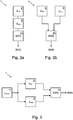
- a method 1 is shown with which the gas fraction in the medium 3 flowing through the Coriolis mass flow meter 2 can be determined.
- a ⁇ 100 step 8 the density value ⁇ 100 of the gasless medium is first determined.
- a ⁇ mess step 9 the density value ⁇ mess of the medium 3 flowing through the measuring tubes 4 is measured. The measurement is carried out here by determining the resonance frequency of the system.
- a measure GVQ for the gas portion of the medium 3 flowing through the measuring tubes 4 is then calculated in a GVQ step 10 with the density value ⁇ 100 and the density value ⁇ mess .
- the dimension GVQ for the gas portion of the medium 3 flowing through the measuring tubes 4 is output.
- the density value ⁇ 100 of the gasless medium is simply given as a fixed value, the density value ⁇ 100 is known in this case. This makes sense if it can practically be excluded that the density value ⁇ 100 of the gasless medium changes. In other cases, the density value ⁇ 100 of the gasless medium can also be determined, for example, by measurement, which is useful if it can be expected that the density value ⁇ 100 of the gasless medium can also change during operation.
- an indicator variable I 2-phase is used for the presence of gas inclusions in the medium flowing through the measuring tubes 4.
- the exemplary embodiments have in common that, in an indicator step 11, the indicator variable I 2-phase for the presence of gas inclusions in the medium flowing through the measuring tubes 4 3 is determined.
- this indicator variable I 2-phase is continuously determined during the operation of the Coriolis mass flow meter 2.
- the indicator size I 2-phase only provides information as to whether a gas phase is present in the medium 3 or not. It is therefore only a binary signal here.
- the indicator variable I 2-phase for the presence of gas inclusions in the medium 3 flowing through the measuring tubes 4 is determined in an indicator step 11.
- the method 1 is designed in such a way that the ⁇ 100 step 8 by measuring the density ⁇ of the medium 3 flowing through the measuring tubes 4 is only carried out if the indicator size I 2-phase indicates that the medium 3 flowing through the measuring tubes 4 is free of gas inclusions.
- the ⁇ 100 step 8 is therefore only triggered if the indicator variable I 2-phase indicates this, otherwise the ⁇ mess step 9 is calculated to determine the density value ⁇ mess when gas inclusions are present.
- the last determined value ⁇ 100 of the gasless medium 3 is then always used in the GVQ step 10.
- the density value ⁇ of the medium 3 is determined in a general step 8, 9. It is obvious that this density value ⁇ is the density value ⁇ 100 of the gasless medium 3 if the indicator size I 2-phase indicates that the medium 3 has no gas component. In the event that the medium 3 has a gas fraction - and this is therefore indicated by the indicator variable I 2-phase - the density value ⁇ corresponds to the density value ⁇ mess of the medium 3 flowing through the measuring tube 4. In the combined step 8, 9 So generally the density ⁇ of the medium 3 is always measured and, depending on the indicator size I 2-phase, saved as a density value ⁇ 100 or as a density value ⁇ mess .
- the further development of the method 1 for determining the gas content in the medium 3 flowing through the Coriolis mass flow meter 2 is characterized in that the medium pressure p m of the medium flowing through the measuring tubes 4 is measured 12 and with the measured medium pressure p m and the measured density value ⁇ meas of the medium 3 flowing through the measuring tube 4, a corrected density value ⁇ mess (p m ) is determined, the corrected density value ⁇ mess (p m ) being used as a basis for the further method as the measured density value ⁇ mess , in particular in the GVQ step 10 to determine the gas content.
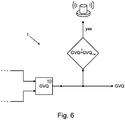
- Fig. 6 shown that the calculated measure GVQ for the gas portion of the medium 3 flowing through the measuring tubes 4 is compared with a limit value GVQ limit for the gas portion of the medium 3 flowing through the measuring tube 4 and, in the case of a certain deviation of the calculated dimension GVQ from the limit value GVQ limit one Status message is issued.
- Fig. 1 is shown schematically that the control and evaluation unit 7 is connected to a display unit 13.
- the measure GVQ for the gas portion in the medium 3 can be shown here directly on the display unit 13.
- the dimension GVQ is simply output in the control and evaluation unit 7 and stored there. The value for the GVQ measure can then also be used internally, for example for control or diagnostic purposes.
Landscapes
- Physics & Mathematics (AREA)
- Fluid Mechanics (AREA)
- General Physics & Mathematics (AREA)
- Engineering & Computer Science (AREA)
- Signal Processing (AREA)
- Measuring Volume Flow (AREA)
Abstract
Description
- Die Erfindung betrifft ein Verfahren zum Ermitteln des Gasanteils in dem ein Coriolis-Massedurchflussmessgerät durchströmenden Medium, wobei das Coriolis-Massedurchflussmessgerät mindestens ein Messrohr, mindestens einen Schwingungserzeuger, mindestens zwei Schwingungsaufnehmer und mindestens eine Ansteuerungs- und Auswerteeinheit aufweist. Darüber hinaus betrifft die Erfindung auch ein diesbezügliches Coriolis-Massedurchflussmessgerät, das im Betrieb ein derartiges Verfahren durchführt.
- Coriolis-Massedurchflussmessgeräte und Verfahren zum Betreiben von Coriolis-Massedurchflussmessgeräten sind seit vielen Jahrzehnten in ganz unterschiedlicher Ausgestaltung bekannt. Mit Coriolis-Massedurchflussmessgeräten lassen sich hohe Messgenauigkeiten erzielen, die teilweise besser sind als 0,1% vom Messwert, sodass Coriolis-Massedurchflussmessgeräte beispielsweise auch im eichpflichtigen Verkehr eingesetzt werden.
- Coriolis-Massedurchflussmessgeräte gehören zur Klasse der Vibrations-Messgeräte. Ihre Funktionsweise beruht darauf, dass wenigstens ein von einem Medium durchströmtes Messrohr von einem Schwingungserzeuger zu einer Schwingung angeregt wird. Dieser Schwingungserzeuger ist häufig ein elektrischer Antrieb, der üblicherweise als elektromagnetischer Antrieb vorliegt. Bei einem solchen elektromagnetischen Antrieb wird eine Spule von einem elektrischen Strom als elektrisches Anregungssignal durchflossen, wobei mit dem Spulenstrom in Verbindung mit der Spule unmittelbar eine Kraftwirkung auf das Messrohr ausübbar ist. Die Funktionsweise von Coriolis-Massedurchflussmessgeräten beruht darauf, dass das massebehaftete Medium aufgrund der durch zwei orthogonale Bewegungen - die der Strömung und die des Messrohres - hervorgerufene Coriolis-Trägheitskraft auf die Wandung des Messrohrs rückwirkt. Diese Rückwirkung des Mediums auf das Messrohr führt zu einer Änderung der Messrohrgeschwindigkeit im Vergleich zum undurchströmten Schwingungszustand des Messrohres. Durch die Erfassung dieser Besonderheiten der Schwingungen des durchströmten Coriolis-Messrohrs (Phasenverschiebung zwischen ein- und auslaufseitiger Messrohrschwingung) kann der Massedurchfluss durch das Messrohr mit hoher Genauigkeit bestimmt werden.
- Von besonderer Bedeutung sind die Eigenfrequenzen der schwingfähigen Teile des Coriolis-Massedurchflussmessgeräts, im Wesentlichen also die Eigenfrequenzen des durchströmten Messrohres als Schwingelement, weil die Arbeitspunkte des Coriolis-Massedurchflussmessgeräts üblicherweise auf Eigenfrequenzen des Messrohrs gelegt werden, um die erforderlichen Schwingungen für die Induktion der Coriolis-Kräfte mit einem minimalen Energieaufwand einprägen zu können. Die dann von dem Messrohr ausgeführten Schwingungen weisen eine bestimmte Form auf, die als Eigenform der jeweiligen Anregung bezeichnet wird. Ein weiterer Grund für die besondere Bedeutung von Eigenfrequenzen bei Coriolis-Massedurchflussmessgeräten ist die unmittelbare physikalische Verknüpfung zwischen der Eigenfrequenz des durchströmten Messrohrs in der jeweiligen Eigenform und der effektiv ausgelenkten Schwingmasse (Messrohrmasse und Masse des Mediums im Messrohr). Über diesen Zusammenhang kann die Dichte des Mediums in dem Messrohr bestimmt werden, was für die vorliegende Erfindung von Bedeutung ist, auch wenn es sich nicht um die primär interessierende Messgröße eines Durchflussmessgeräts handelt.
- Wenn sich die Masse des schwingfähigen Elements ändert, also die Masse des mit dem Medium durchströmten Messrohres, dann ändert sich auch die Resonanzfrequenz des angeregten bzw. untersuchten Schwingungsmodus;. Wird das Messrohr bei unveränderter Frequenz zur Schwingung angeregt, wird die angeregte Schwingung aufgrund des verschobenen Resonanzpunktes gedämpft. Verschiedene Verfahren zum Betreiben eines Coriolis-Massedurchflussmessgerätes beschäftigen sich damit, eine veränderliche Resonanzfrequenz zu erkennen und auch die Frequenz der Anregung in den Resonanzpunkt bei veränderlicher Resonanzfrequenz nachzuführen; hierzu wird beispielhaft verwiesen auf die
DE 10 2016 190 952 A1 oder auch dieDE 10 2013 020 603 A1 . - Eine besondere Herausforderung für den Betrieb eines Coriolis-Massedurchflussmessgeräts stellt das Auftreten einer Mehrphasenströmung dar, die einen gasförmigen Anteil aufweist. Hier wird häufig auch nur von einer Zweiphasenströmung gesprochen, wobei diesem Begriff dann das Verständnis zugrunde liegt, dass diese Strömung eine gasförmige Phase und eine nicht-gasförmige Phase aufweist, die ihrerseits flüssige und feste Bestandteile aufweisen kann. In diesem allgemeinen Sinne soll auch hier der Begriff "Zweiphasenströmung" verstanden werden.
- Das Auftreten einer Zweiphasenströmung (also Übergang von einer einphasigen Strömung mit nur flüssigem oder flüssig-festem Bestandteil zu einer Strömung mit Gasphase) ist deshalb problematisch, weil Gaseinschlüsse die Messgenauigkeit stark beeinflussen können und auch den sicheren Betrieb eines Coriolis-Massedurchflussmessgeräts erschweren oder sogar unmöglich machen. Die gleichen Probleme ergeben sich auch bei variierendem Gasanteil in dem strömenden Medium. Dabei können Gaseinschlüsse im Medium durchaus gewollt sein, beispielsweise bei Anwendungen in der Lebensmittelindustrie, in der verarbeitete Medien beispielsweise eine luftig aufgeschlagene Konsistenz haben können.
- Unabhängig davon, ob Medien beabsichtigt oder unbeabsichtigt Gaseinschlüsse aufweisen, leidet die Messgenauigkeit unter dem Umstand, dass nicht mehr die gesamte Masse des strömenden Mediums durch das vibrierende Messrohr in vollem Umfang ausgelenkt wird, sondern teilweise nur noch einen Teil der Auslenkung erfährt. Dies kann zum Beispiel daran liegen, dass weniger dichte Anteile im Medium dichtere Anteile umströmen, was auch für Bewegungskomponenten orthogonal zur Strömungsrichtung gilt, die für die Coriolis-Messung essenziell sind. Von Bedeutung kann auch die Kompression bzw. Dekompression gasförmiger Anteile im Medium sein, die durch die Massenträgheit schwererer flüssiger oder fester Mediumanteile bewirkt werden. Je nach Ausprägung der Gaseinschlüsse und der Form der Strömungsregime (geschichtet, wellenförmig, blasenförmig, tröpfchenförmig) können Gaseinschlüsse auch zum Aussetzen des Messbetriebes führen, weil eine durchgängige Messung nicht mehr gewährleistet werden kann.
- In der Vergangenheit sind große Anstrengungen darauf gerichtet worden, Zweiphasenströmungen zu erkennen und durch geeignete regelungstechnische Maßnahmen auf erkannte Zweiphasenströmungen zu reagieren, sodass der Messbetrieb gleichwohl fortgesetzt werden kann. Exemplarisch werden hier genannt die
DE 10 2005 012 505 A1 , dieDE 10 2006 031 198 A1 und dieDE 10 2008 039 012 A1 . Verschiedene dieser Maßnahmen sind Bestandteil des sogenannten "Entrained Gas Management" der Anmelderin. - Die
DE 10 2006 017 676 A1 wird exemplarisch genannt für die reine Detektion einer Zweiphasenströmung, wobei hier verschiedene Zustandsgrößen und Änderungen dieser Zustandsgrößen - teilweise statistisch - ausgewertet werden, um ein Zweiphasen-Signal zu erhalten, das das Vorliegen bzw. das Nicht-Vorliegen einer Zweiphasenströmung mit großer Treffsicherheit indiziert aber nicht zuverlässig quantisiert. - Vor dem aufgezeigten Hintergrund besteht ein Interesse daran, während des Messbetriebs nicht nur eine Aussage darüber zu enthalten, ob möglicherweise eine Zweiphasenströmung vorliegt, sondern vielmehr auch eine quantitative Angabe über den Gaseinteil in dem Medium zu erhalten, das durch das Messrohr eines Coriolis-Massedurchflussmessgeräts strömt.
- Die zuvor hergeleitete Aufgabe wird durch verschiedene Verfahrensschritte gelöst, die üblicherweise in der Ansteuerungs- und Auswerteeinheit des Coriolis-Massedurchflussmessgeräts implementiert sind. Die Ansteuerungs- und Auswerteeinheit ist mit den Organen des Coriolis-Massedurchflussmessgerätes funktional verbunden, sodass der Schwingungserzeuger angesteuert werden kann und die von den Schwingungsaufnehmern bereitgestellten Signale aufgenommen werden können. Dabei wird es sich bei der Ansteuerungs- und Auswerteeinheit typischerweise um ein digitales Abtastsystem handeln, das beispielsweise auf dem Einsatz von digitalen Signalprozessoren basiert. Dazu gehören selbstverständlich auch vermittelnde Schaltungen zur Signalverarbeitung, wie beispielsweise Analog/Digital-Wandler, Digital/Analog-Wandler und möglicherweise elektronische Leistungskomponenten, worauf es im Rahmen der vorliegenden Erfindung im Detail jedoch nicht ankommt.
- Von Bedeutung ist, dass zunächst der Dichtewert ρ100 des gaslosen Mediums ermittelt wird (ρ100-Schritt). Die Kenntnis der Dichte des durch das Messrohr strömenden Mediums, wenn es keine Gasbestandteile enthält, ist von grundlegender Bedeutung für die Berechnung des Gasanteils in dem Medium, sofern es Gasanteile beinhaltet. Der Dichtewert ρ100 des gaslosen Mediums kann dabei vorgegeben und in der Ansteuerungs- und Auswerteeinheit abgelegt sein, er kann theoretisch ermittelt worden sein und er kann schließlich auf einer Messung beruhen.
- In einem weiteren Schritt wird der Dichtewert ρmess des durch das Messrohr strömenden Mediums gemessen (ρmess-Schritt), beispielsweise indem die Resonanzfrequenz des Systems aus Messrohr und durchströmendem Medium ermittelt wird.
- In einem weiteren Verfahrensschritt wird mit dem Dichtewert ρ100 des gaslosen Mediums und dem Dichtewert ρmess des aktuell durch das Messrohr strömenden Mediums ein Maß GVQ für den Gasanteil des durch das Messrohr strömenden Mediums berechnet (GVQ-Schritt), sodass also eine aussagekräftige Größe über den Gasanteil in dem Medium vorliegt. Diese Größe stellt eine quantitative Aussage über den Gasanteil im Medium dar, sie ist weit mehr als eine reine Indikatorgröße über das Vorhandensein bzw. NichtVorhandensein von Gas in dem das Messrohr durchströmenden Medium.
- Schließlich wird das Maß GVQ für den Gasanteil des durch das Messrohr strömenden Mediums ausgegeben, sodass der GVQ-Wert für weitere - auch messgerätinterne - Berechnungen herangezogen werden kann oder beispielsweise über eine Anzeige ausgegeben wird oder über einen Kommunikations-Anschluss (Feldbus) nach extern ausgegeben wird und so der Prozess-Überwachung dienen kann; dies ist eine beispielhafte, nicht abschließende Aufzählung.
- Gemäß einer Weiterbildung des erfindungsgemäßen Verfahrens ist vorgesehen, dass in einem Indikatorschritt eine Indikatorgröße I2-phase für das Vorliegen von Gaseinschlüssen in dem das Messrohr durchströmenden Medium bestimmt wird. Eine derartige Indikatorgröße zeigt lediglich an, ob eine Zweiphasenströmung vorliegt oder auch nicht. Vorzugsweise wird die Indikatorgröße I2-phase im Betrieb des Coriolis-Massedurchflussmessgerätes fortwährend bestimmt. Das Coriolis-Massedurchflussmessgerät verfügt damit immer über Kenntnis über den Zustand des das Messrohr durchströmenden Mediums hinsichtlich des Vorliegens einer gasförmigen Phase.
- Die vorbeschriebene Maßnahme ermöglicht es nun bei einer Weiterbildung des Verfahrens, den ρ100-Schritt durch Messung der Dichte des durch das Messrohr strömenden Mediums dann auszuführen, wenn die Indikatorgröße I2-phase indiziert, dass das das Messrohr durchströmende Medium frei von Gaseinschlüssen ist. Das so weitergebildete Verfahren nutzt also die Gelegenheit , beim Vorliegen einer gasfreien Mediumströmung die Dichte des gaslosen Mediums aktuell zu bestimmen. Dadurch kann auch auf eine variierende Dichte des gaslosen Mediums reagiert werden. Vorzugsweise ist vorgesehen, dass der zuletzt ermittelte Dichtewert ρ100 des gaslosen Mediums in dem GVQ-Schritt verwendet wird, sodass für eine Berechnung des Gasanteils immer der aktuellste Dichtewert des gaslosen Mediums verwendet wird.
- In einer weiteren Ausgestaltung des Verfahrens löst die Indikatorgröße I2-phase den ρmess-Schritt aus, und zwar genau dann, wenn die Indikatorgröße I2-phase indiziert, dass das das Messrohr durchströmende Medium Gaseinschlüsse aufweist. In diesem Fall ist klar, dass die Dichtebestimmung nicht zu einem neuen Dichtewert ρ100 des gaslosen Mediums führt, sondern vielmehr zu einem Dichtewert ρmess des gasbehafteten Mediums, auf dessen Grundlage dann ein neuer Wert für das Maß GVQ für den Gasanteil des durch das Messrohr strömenden Mediums berechnet werden kann.
- In einer Ausgestaltung des Verfahrens wird als Maß GVQ für den Gasanteil des durch das Messrohr strömenden Mediums das Gas-Volumen-Verhältnis GVR berechnet (gas volume ratio oder void ratio), das dem Quotienten aus dem Gasvolumen und dem Volumen des nicht-gasförmigen Mediumanteils entspricht und sich demnach berechnet aus dem Quotienten aus der Differenz von ρ100 und ρmess und ρmess ((ρ100 - ρmess)/ρmess). In einer anderen Ausgestaltung des Verfahrens wird als Maß GVQ für den Gasannteil des durch das Messrohr strömenden Medium der Gas-Volumen-Anteil GVF berechnet (gas volume fraction oder void fraction), bei dem der Anteil des Gasvolumens auf das untersuchte Gesamtvolumen bezogen wird und sich demzufolge berechnet aus dem Quotienten aus der Differenz zwischen der Dichte ρ100 und der Dichte ρmess und der Dichte ρ100 ((ρ100 - ρmess)/ρ100).
- Eine bevorzugte Ausgestaltung des Verfahrens sieht vor, dass in dem GVQ-Schritt das Maß GVQ für den Gasanteil des durch das Messrohr strömenden Mediums unter der Annahme berechnet wird, dass die Dichte des Gasanteils vernachlässigbar ist, insbesondere null ist. Die oben angegebenen Berechnungen für das Gas-Volumen-Verhältnis und den Gas-Volumen-Anteil beruhen auf dieser Annahme.
- In einer davon abweichenden Weiterentwicklung des Verfahrens ist vorgesehen, dass der Mediumdruck pm des durch das Messrohr strömenden Mediums gemessen wird und mit dem gemessenen Mediumdruck pm und dem gemessenen Dichtewert ρmess des durch das Messrohr strömenden Mediums ein korrigierter Dichtewert ρmess(pm) ermittelt wird, wobei der korrigierte Dichtewert ρmess(pm) dem weiteren Verfahren dann als gemessener Dichtewert ρmess zugrunde gelegt wird. Der Zusammenhang ρmess(pm) kann dabei experimentell ermittelt werden, er kann aber auch aufgrund von theoretischen Überlegungen hergeleitet werden. Der Zusammenhang kann in Form einer Wertetabelle abgelegt sein oder aber auch durch einen mathematischen Zusammenhang abgebildet werden. Auf die Art der Hinterlegung des Zusammenhangs ρmess(pm) kommt es im Detail nicht an, wichtig ist, dass bei dieser Ausgestaltung der Zusammenhang überhaupt berücksichtigt wird.
- Bei einer weiteren Ausgestaltung des Verfahrens ist es möglich, auf einen Grenzwert für den Gasanteil des durch das Messrohr strömenden Mediums zu reagieren. Dies wird bei einer Ausgestaltung dadurch bewerkstelligt, dass das berechnete Maß GVQ für den Gasanteil des durch das Messrohr strömenden Mediums mit einem Grenzwert GVQlimit für den Gasanteil des durch das Messrohr strömenden Mediums verglichen wird und bei einer bestimmten Abweichung des berechneten Maßes GVQ vom Grenzwert GVQlimit eine Statusmeldung ausgegeben wird. Diese Abweichung kann null sein oder auch von null verschieden sein. Die Statusmeldung kann lediglich darin bestehen, dass in einem Register der Ansteuerungs- und Auswerteeinheit ein Bit gesetzt wird oder eine Speicherzelle mit einem entsprechenden Wert beschrieben wird, die Statusmeldung kann in Form einer Busnachricht über eine Busschnittstelle ausgegeben werden, die Statusmeldung kann auch über eine Anzeige des Coriolis-Massedurchflussmessgeräts angezeigt werden; es sind hier viele weitere Möglichkeiten der Ausgabe des Statussignals denkbar. Bei einer Ausgestaltung des vorgenannten Verfahrens wird eine Hysterese dadurch realisiert, dass die bestimmte Abweichung des berechneten Maßes GVQ vom Grenzwert GVQlimit ungleich null gewählt wird, beispielsweise also GVQtoleranz. Bei Überschreiten des Summenwertes aus dem Grenzwert GVQiimit zuzüglich dem Toleranzwert GVQtoleranz wird eine Statusmeldung ausgegeben. Umgekehrt wird die Statusmeldung gelöscht, wenn die Differenz aus dem Grenzwert GVQlimit und dem Toleranzwert GVQtoleranz unterschritten wird.
- Die eingangs hergeleitete Aufgabe wird bei dem hier in Rede stehenden Coriolis-Massedurchflussmessgerät dadurch gelöst, dass die zuvor beschriebenen Verfahrensschritte im Betrieb des Coriolis-Massedurchflussmessgeräts ausgeführt werden. Ein Großteil der Schritte wird dabei von der Ansteuerungs- und Auswerteeinheit ausgeführt. Konkret bedeutet das also, dass die Ansteuerungs- und Auswerteeinheit so ausgestaltet ist, dass sie im Betrieb des Coriolis-Massedurchflussmessgeräts in einem ρ100-Schritt den Dichtewert ρ100 des gaslosen Mediums ermittelt, in einem ρmess-Schritt den Dichtewert ρmess des durch das Messrohr strömenden Mediums misst, in einem GVQ-Schritt mit dem Dichtewert ρ100 und dem Dichtewert ρmess ein Maß GVQ für den Gasanteil des durch das Messrohr strömenden Mediums berechnet und das Maß GVQ für den Gasanteil des durch das Messrohr strömenden Mediums ausgibt.
- Im Einzelnen gibt es nun eine Vielzahl von Möglichkeiten, das dargestellte Verfahren zum Ermitteln des Gasanteils in dem ein Coriolis-Massedurchflussmessgerät durchströmenden Medium und das entsprechende Coriolis-Massedurchflussmessgerät auszugestalten und weiterzubilden. Dies wird nachfolgend anhand der Figuren beschrieben. In der Zeichnung zeigen
- Fig. 1
- schematisch ein Coriolis-Massedurchflussmessgerät, in dem ein Verfahren zum Ermitteln des Gasanteils in dem seine Messrohre durchströmenden Medium implementiert ist,
- Fig. 2
- schematisch ein Verfahren zum Ermitteln des Gasanteils in dem die Messrohre des Coriolis-Massedurchflussmessgeräts durchfließenden Mediums,
- Fig. 2
- schematisch eine weitere Ausgestaltung des Verfahrens zum Ermitteln des Gasanteils in dem ein Coriolis-Massedurchflussmessgerät durchströmenden Medium,
- Fig. 3
- schematisch das Verfahren zum Ermitteln des Gasanteils unter Nutzung einer Indikatorgröße für eine Zweiphasenströmung,
- Fig. 4
- eine weitere Variante des Verfahrens zum Ermitteln des Gasanteils unter Verwendung einer Indikatorgröße für eine Zweiphasenströmung,
- Fig. 5
- eine weitere Ausgestaltung der vorgenannten Verfahren unter Verwendung des Mediumdrucks und
- Fig. 6
- eine Ausgestaltung des Verfahrens unter Nutzung eines Grenzwertes für das Maß GVQ für den Gasanteil des durch das Messrohr strömenden Mediums.
- In den
Fig. 1 bis 6 ist in verschiedenen Aspekten dargestellt ein Verfahren 1 zum Ermitteln des Gasanteils in dem ein Coriolis-Massedurchflussmessgerät 2 durchströmenden Medium 3. Das Coriolis-Massedurchflussmessgerät 2 weist im dargestellten Ausführungsbeispiel gemäßFig. 1 zwei gebogene Messrohre 4, einen Schwingungserzeuger 5, zwei Schwingungsaufnehmer 6 und eine Ansteuerungs- und Auswerteeinheit 7 auf. In der Ansicht inFig. 1 ist nur ein Messrohr 4 zu erkennen, das zweite Messrohr ist von dem ersten Messrohr 4 in dieser Ansicht verdeckt. Prinzipiell kommt es bei der vorliegenden Erfindung nicht darauf an, ob das Coriolis-Massedurchflussmessgerät gerade oder gebogene Messrohre aufweist, auch spielt die Zahl der Messrohre keine Rolle hinsichtlich der grundsätzlichen Umsetzung des hier interessierenden Verfahrens 1. - Im Betrieb werden die Messrohre 4 mit dem Schwingungserzeuger 5 zu einer harmonischen Schwingung in einem Grundschwingungsmode angeregt. Bei Vorliegen einer Strömung des Mediums 3 durch die Messrohre 4 wirken ein- und auslaufseitig entgegengerichtete Coriolis-Kräfte auf die Messrohre 4, wodurch ein überlagerter höherer Schwingungsmode erzeugt wird. Der Phasenunterschied zwischen der ein- und auslaufseitigen überlagerten Schwingung der Messrohre 4 ist ein Maß für den Massedurchfluss durch die Messrohre 4.
- Wie eingangs ausgeführt worden ist, ist das Auftreten einer Zweiphasenströmung, also einer Strömung mit einem Gasanteil und einem flüssigen und/oder festen Strömungsanteil problematisch, weil Dämpfungs- und Rauscheffekte die Messung beeinträchtigen. Veränderliche Gasanteile bewirken zudem auch eine Änderung in der Dichte des Mediums 3 und damit auch eine Änderung der Resonanzfrequenz des schwingfähigen Elements bestehend aus den Messrohren 4 und dem in den Messrohren 4 strömenden Medium 3. Durch verschiedene regelungstechnische Maßnahmen kann es gelingen, den Arbeitspunkt des Coriolis-Massedurchflussmessgeräts 2 nachzuführen, indem also die Anregungsfrequenz der Schwingungserzeuger 5 der veränderlichen Resonanzfrequenz nachgeführt wird.
- Die Ansteuerungs- und Auswerteeinheit 7 umfasst in dem Ausführungsbeispiel gemäß
Fig. 1 einen digitalen Signalprozessor und entsprechende I/O-Schnittstellen zur Ansteuerung des Schwingungsanregers 5 und zum Auslesen der Schwingungssignale der Schwingungsaufnehmer 6. Die angesprochenen regelungstechnischen Maßnahmen sind programmtechnisch auf dem digitalen Signalprozessor umgesetzt. - Im Stand der Technik ist bekannt, durch Auswertung von Zustandsgrößen des Coriolis-Massedurchflussmessgeräts 2 das Auftreten einer Zweiphasenströmung zu erkennen und mit einer entsprechenden Indikatorgröße zu signalisieren, wobei eine solche Indikatorgröße keine zuverlässige quantitative Aussage über den Gasanteil im Medium 3 beinhaltet, sondern vielmehr eine binäre Aussage darüber macht, ob das Medium 3 einen Gasanteil aufweist oder nicht.
- In den
Fig. 2a, 2b ist ein Verfahren 1 dargestellt, mit dem der Gasanteil in dem das Coriolis-Massedurchflussmessgerät 2 durchströmenden Medium 3 bestimmt werden kann. Dazu ist vorgesehen, dass in einem ρ100-Schritt 8 zunächst der Dichtewert ρ100 des gaslosen Mediums ermittelt wird. In einem ρmess-Schritt 9 wird der Dichtewert ρmess des durch die Messrohre 4 strömenden Mediums 3 gemessen. Die Messung erfolgt hier über die Ermittlung der Resonanzfrequenz des Systems. Weiter wird dann in einem GVQ-Schritt 10 mit dem Dichtewert ρ100 und dem Dichtewert ρmess ein Maß GVQ für den Gasanteil des durch die Messrohre 4 strömenden Mediums 3 berechnet. Schlussendlich wird das Maß GVQ für den Gasanteil des durch die Messrohre 4 strömenden Mediums 3 ausgegeben. Die Unterschiede in denFig. 2a und 2b sollen verdeutlichen, dass es auf die Reihenfolge der Ausführung des ρ100-Schritts 8 und des ρmess-Schritts 9 nicht ankommt. Beide Werte, also der Dichtewert ρ100 und der Dichtewert ρmess, sind für die Ermittlung des Maßes GVQ für den Gasanteil in dem Medium 3 erforderlich. - In dem Ausführungsbeispiel gemäß
Fig. 2a ist der Dichtewert ρ100 des gaslosen Mediums einfach als fester Wert vorgegeben, der Dichtewert ρ100 ist also in diesem Fall bekannt. Dies ist dann sinnvoll, wenn praktisch ausgeschlossen werden kann, dass sich der Dichtewert ρ100 des gaslosen Mediums ändert. In anderen Fällen kann der Dichtewert ρ100 des gaslosen Mediums aber beispielsweise auch durch eine Messung ermittelt werden, was dann sinnvoll ist, wenn zu erwarten ist, dass sich der Dichtewert ρ100 des gaslosen Mediums im Betrieb auch ändern kann. - In den
Fig. 3 und4 ist dargestellt, dass eine Indikatorgröße I2-phase für das Vorliegen von Gaseinschlüssen in dem die Messrohre 4 durchströmenden Medium verwendet wird. Den Ausführungsbeispielen ist gemeinsam, dass zunächst in einem Indikatorschritt 11 die Indikatorgröße I2-phase für das Vorliegen von Gaseinschlüssen in dem die Messrohre 4 durchströmenden Medium 3 bestimmt wird. In den dargestellten Ausführungsbeispielen wird diese Indikatorgröße I2-phase fortwährend im Betrieb des Coriolis-Massedurchflussmessgeräts 2 bestimmt. Die Indikatorgröße I2-phase gibt nur Auskunft darüber, ob in dem Medium 3 eine Gasphase vorhanden ist oder nicht. Es ist hier demzufolge nur ein binäres Signal. Jedenfalls wird in einem Indikatorschritt 11 die Indikatorgröße I2-phase für das Vorliegen von Gaseinschlüssen in dem die Messrohre 4 durchströmenden Medium 3 bestimmt. Bei dem Ausführungsbeispiel gemäßFig. 3 ist das Verfahren 1 so ausgestaltet, dass der ρ100-Schritt 8 durch Messung der Dichte ρ des durch die Messrohre 4 strömenden Mediums 3 nur dann ausgeführt wird, wenn die Indikatorgröße I2-phase indiziert, dass das die Messrohre 4 durchströmende Medium 3 frei von Gaseinschlüssen ist. Der ρ100-Schritt 8 wird also nur dann ausgelöst, wenn die Indikatorgröße I2-phase dies anzeigt, andernfalls wird der ρmess-Schritt 9 zur Ermittlung des Dichtewerts ρmess bei Vorliegen von Gaseinschlüssen berechnet. In dem GVQ-Schritt 10 wird dann immer der zuletzt ermittelte Wert ρ100 des gaslosen Mediums 3 verwendet. - Bei dem Ausführungsbeispiel gemäß
Fig. 4 wird in einem allgemeinen Schritt 8, 9 der Dichtewert ρ des Mediums 3 ermittelt. Es leuchtet ein, dass es sich bei diesem Dichtewert ρ um den Dichtewert ρ100 des gaslosen Mediums 3 handelt, wenn die Indikatorgröße I2-phase anzeigt, dass das Medium 3 keinen Gasanteil aufweist. Für den Fall, dass das Medium 3 einen Gasanteil aufweist - und dies demzufolge von der Indikatorgröße I2-phase angezeigt wird - entspricht der Dichtewert ρ dem Dichtewert ρmess des durch das Messrohr 4 strömenden Mediums 3. In dem kombinierten Schritt 8, 9 wird also immer allgemein die Dichte ρ des Mediums 3 gemessen und in Abhängigkeit von der Indikatorgröße I2-phase als Dichtewert ρ100 oder als Dichtewert ρmess abgespeichert. - Die in
Fig. 5 gezeigte Weiterentwicklung des Verfahrens 1 zur Ermittlung des Gasanteils in dem das Coriolis-Massedurchflussmessgerät 2 durchströmenden Medium 3 zeichnet sich dadurch aus, dass der Mediumdruck pm des durch die Messrohre 4 strömenden Mediums gemessen 12 wird und mit dem gemessenen Mediumdruck pm und dem gemessenen Dichtewert ρmess des durch das Messrohr 4 strömenden Mediums 3 ein korrigierter Dichtewert ρmess(pm) ermittelt wird, wobei der korrigierte Dichtewert ρmess(pm) dem weiteren Verfahren als gemessener Dichtewert ρmess zugrunde gelegt wird, also insbesondere im GVQ-Schritt 10 zur Ermittlung des Gasanteils. - Schließlich ist in
Fig. 6 gezeigt, dass das berechnete Maß GVQ für den Gasanteil des durch die Messrohre 4 strömenden Mediums 3 mit einem Grenzwert GVQlimit für den Gasanteil des durch das Messrohr 4 strömenden Mediums 3 verglichen wird und bei einer bestimmten Abweichung des berechneten Maßes GVQ vom Grenzwert GVQlimit eine Statusmeldung ausgegeben wird. - In
Fig. 1 ist schematisch gezeigt, dass die Ansteuerungs- und Auswerteeinheit 7 mit einer Anzeigeeinheit 13 verbunden ist. Das Maß GVQ für den Gasanteil im Medium 3 kann hier direkt auf der Anzeigeeinheit 13 dargestellt werden. Es ist aber auch möglich, das Maß GVQ für den Gasanteil über eine Feldbusschnittstelle 14 auszugeben, beispielsweise an eine übergeordnete Leitwarte. In einer anderen Ausgestaltung wird das Maß GVQ einfach in die Ansteuerungs- und Auswerteeinheit 7 ausgegeben und dort abgespeichert. Der Wert für das GVQ-Maß kann dann auch intern, beispielsweise für regelungstechnische oder diagnostische Zwecke, weitergenutzt werden. -
- 1
- Verfahren
- 2
- Coriolis-Massedurchflussmessgerät
- 3
- Medium
- 4
- Messrohre
- 5
- Schwingungserzeuger
- 6
- Schwingungsaufnehmer
- 7
- Ansteuerungs- und Auswerteeinheit
- 8
- ρ100-Schritt
- 9
- ρmess-Schritt
- 10
- GVQ-Schritt
- 11
- Indikatorschritt
- 12
- Messen des Mediumdrucks pm
- 13
- Anzeigeeinheit
- 14
- Feldbusschnittstelle
- 15
- Ermitteln eines korrigierten Dichtewertes ρmess(pm)
Claims (10)
- Verfahren (1) zum Ermitteln des Gasanteils in dem ein Coriolis-Massedurchflussmessgerät (2) durchströmenden Medium (3), wobei das Coriolis-Massedurchflussmessgerät (2) mindestens ein Messrohr (4), mindestens einen Schwingungserzeuger (5), mindestens zwei Schwingungsaufnehmer (6) und mindestens eine Ansteuerungs- und Auswerteeinheit (7) aufweist,
dadurch gekennzeichnet,
dass in einem ρ100-Schritt (8) der Dichtewert ρ100 des gaslosen Mediums ermittelt wird,
dass in einem ρmess-Schritt (9) der Dichtewert ρmess des durch das Messrohr (4) strömenden Mediums (3) gemessen wird,
dass in einem GVQ-Schritt (10) mit dem Dichtewert ρ100 und dem Dichtewert ρmess ein Maß GVQ für den Gasanteil des durch das Messrohr (4) strömenden Mediums (3) berechnet wird und
dass das Maß GVQ für den Gasanteil des durch das Messrohr (4) strömenden Mediums (3) ausgegeben wird. - Verfahren (1) nach Anspruch 1, dadurch gekennzeichnet, dass in einem Indikatorschritt (11) eine Indikatorgröße I2-phase für das Vorliegen von Gaseinschlüssen in dem das Messrohr (4) durchströmenden Medium (3) bestimmt wird, insbesondere wobei die Indikatorgröße I2-phase im Betrieb des Coriolis-Massedurchflussmessgeräts (2) fortwährend bestimmt wird.
- Verfahren (1) nach Anspruch 2, dadurch gekennzeichnet, dass der ρ100-Schritt (8) durch Messung der Dichte des durch das Messrohr (4) strömenden Mediums (3) dann ausgeführt wird, wenn die Indikatorgröße I2-phase indiziert, dass das das Messrohr (4) durchströmende Medium (3) frei von Gaseinschlüssen ist, insbesondere wobei der zuletzt ermittelte Dichtewert ρ100 des gaslosen Mediums in dem GVQ-Schritt verwendet wird.
- Verfahren (1) nach Anspruch 2 oder 3, dadurch gekennzeichnet, dass der ρmess-Schritt (9) dann ausgeführt wird, wenn die Indikatorgröße I2-phase indiziert, dass das das Messrohr (4) durchströmende Medium (3) Gaseinschlüsse aufweist.
- Verfahren (1) nach einem der Ansprüche 1 bis 4, dadurch gekennzeichnet, dass als Maß GVQ für den Gasanteil des durch das Messrohr (4) strömenden Mediums (3) das Gas-Volumen-Verhältnis GVR oder der Gas-Volumen-Anteil GVF berechnet wird.
- Verfahren (1) nach einem der Ansprüche 1 bis 5, dadurch gekennzeichnet, dass in dem GVQ-Schritt (10) das Maß GVQ für den Gasanteil des durch das Messrohr (4) strömenden Mediums (3) unter der Annahme berechnet wird, dass die Dichte des Gasanteils vernachlässigbar, insbesondere null ist.
- Verfahren (1) nach einem der Ansprüche 1 bis 5, dadurch gekennzeichnet, dass der Mediumdruck pm des durch das Messrohr (4) strömenden Mediums (3) gemessen (12) wird und mit dem gemessenen Mediumdruck pm und dem gemessenen Dichtewert ρmess des durch das Messrohr (4) strömenden Mediums (3) ein korrigierter Dichtewert ρmess(pm) ermittelt (15) wird, wobei der korrigierte Dichtewert ρmess(pm) dem weiteren Verfahren als gemessener Dichtewert ρmess zugrunde gelegt wird.
- Verfahren (1) nach einem der Ansprüche 1 bis 7, dadurch gekennzeichnet, dass das berechnete Maß GVQ für den Gasanteil des durch das Messrohr (4) strömenden Mediums (3) mit einem Grenzwert GVQlimit für den Gasanteil des durch das Messrohr (4) strömenden Mediums (3) verglichen wird und bei einer bestimmten Abweichung des berechneten Maßes GVQ vom Grenzwert GVQlimit eine Statusmeldung ausgegeben wird.
- Coriolis-Massedurchflussmessgerät (2) mit mindestens einem von einem Medium (3) durchströmbarem Messrohr (4), mindestens einem Schwingungserzeuger (5), mindestens zwei Schwingungsaufnehmern (6) und mindestens einer Ansteuerungs- und Auswerteeinheit (7),
dadurch gekennzeichnet,
dass die Ansteuerungs- und Auswerteeinheit (7) so ausgestaltet ist, dass sie im Betrieb des Coriolis-Massedurchflussmessgeräts (2) in einem ρ100-Schritt (8) den Dichtewert ρ100 des gaslosen Mediums ermittelt,
in einem ρmess-Schritt (9) den Dichtewert ρmess des durch das Messrohr (4) strömenden Mediums (3) misst,
in einem GVQ-Schritt (10) mit dem Dichtewert ρ100 und dem Dichtewert ρmess ein Maß GVQ für den Gasanteil des durch das Messrohr (4) strömenden Mediums (3) berechnet und
das Maß GVQ für den Gasanteil des durch das Messrohr (4) strömenden Mediums (3) ausgibt. - Coriolis-Massedurchflussmessgerät (2) nach Anspruch 9, dadurch gekennzeichnet, dass die Ansteuerungs- und Auswerteeinheit (7) so ausgebildet ist, dass wenigstens einer der weiteren Verfahrensschritte gemäß dem Kennzeichnungsteil wenigstens eines Anspruchs der Ansprüche 2 bis 8 ausgeführt wird.
Applications Claiming Priority (1)
| Application Number | Priority Date | Filing Date | Title |
|---|---|---|---|
| DE102018123534.8A DE102018123534A1 (de) | 2018-09-25 | 2018-09-25 | Verahren zum Ermitteln des Gasanteils in dem ein Coriolis-Massedurchflussmessgerät durchströmenden Medium |
Publications (2)
| Publication Number | Publication Date |
|---|---|
| EP3628983A1 true EP3628983A1 (de) | 2020-04-01 |
| EP3628983B1 EP3628983B1 (de) | 2023-03-22 |
Family
ID=67981914
Family Applications (1)
| Application Number | Title | Priority Date | Filing Date |
|---|---|---|---|
| EP19197466.6A Active EP3628983B1 (de) | 2018-09-25 | 2019-09-16 | Verfahren zum ermitteln des gasanteils in einem ein coriolis-massedurchflussmessgerät durchströmenden medium und coriolis-massedurchflussmessgerät |
Country Status (4)
| Country | Link |
|---|---|
| US (1) | US11009380B2 (de) |
| EP (1) | EP3628983B1 (de) |
| CN (1) | CN110940388B (de) |
| DE (1) | DE102018123534A1 (de) |
Families Citing this family (2)
| Publication number | Priority date | Publication date | Assignee | Title |
|---|---|---|---|---|
| DE102020114713A1 (de) | 2020-06-03 | 2021-12-09 | Krohne Ag | Verfahren zur Ermittlung von Durchflussmesswerten eines Coriolis- Massedurchflussmessgeräts beim Vorliegen einer Zweiphasenströmung |
| CN115160468B (zh) * | 2022-08-11 | 2023-08-25 | 浙江京博聚烯烃新材料有限公司 | 一种用于制备共聚组成可控的聚烯烃材料的聚合方法 |
Citations (11)
| Publication number | Priority date | Publication date | Assignee | Title |
|---|---|---|---|---|
| US6327914B1 (en) * | 1998-09-30 | 2001-12-11 | Micro Motion, Inc. | Correction of coriolis flowmeter measurements due to multiphase flows |
| US20020033043A1 (en) * | 1999-10-28 | 2002-03-21 | Dutton Robert E. | Multiphase flow measurement system |
| US20050022611A1 (en) * | 2003-06-26 | 2005-02-03 | John Hemp | Viscosity-corrected flowmeter |
| US20050138993A1 (en) * | 2003-12-12 | 2005-06-30 | Mattar Wade M. | Densitometer with pulsing pressure |
| US20060096388A1 (en) * | 2004-11-05 | 2006-05-11 | Gysling Daniel L | System for measuring a parameter of an aerated multi-phase mixture flowing in a pipe |
| DE102005012505A1 (de) | 2005-02-16 | 2006-08-24 | Krohne Ag | Verfahren zum Betreiben eines Massendurchflußmeßgeräts |
| DE102006017676B3 (de) | 2006-04-12 | 2007-09-27 | Krohne Meßtechnik GmbH & Co KG | Verfahren zum Betrieb eines Coriolis-Massendurchflußmeßgeräts |
| DE102006031198A1 (de) | 2006-07-04 | 2008-01-17 | Krohne Ag | Verfahren zum Betreiben eines Coriolis-Massendurchflußmeßgeräts |
| DE102008039012A1 (de) | 2008-08-21 | 2010-03-04 | Krohne Meßtechnik GmbH & Co KG | Verfahren zum Betreiben eines Resonanzmeßsystems und Resonanzmeßsystem |
| DE102013020603B3 (de) | 2013-12-13 | 2015-04-30 | Krohne Messtechnik Gmbh | Verfahren zum Betrieb eines Coriolis-Massedurchflussmessgeräts |
| DE102016100952A1 (de) | 2016-01-20 | 2017-07-20 | Krohne Messtechnik Gmbh | Verfahren zum Betreiben eines Coriolis-Massedurchflussmessgeräts und entsprechendes Coriolis-Massedurchflussmessgerät |
Family Cites Families (17)
| Publication number | Priority date | Publication date | Assignee | Title |
|---|---|---|---|---|
| US7188534B2 (en) * | 2003-02-10 | 2007-03-13 | Invensys Systems, Inc. | Multi-phase coriolis flowmeter |
| US7059199B2 (en) * | 2003-02-10 | 2006-06-13 | Invensys Systems, Inc. | Multiphase Coriolis flowmeter |
| CN100394146C (zh) * | 2003-05-05 | 2008-06-11 | 因万西斯系统股份有限公司 | 两相蒸汽测量系统和方法及科里奥利变送器 |
| CN100543426C (zh) * | 2003-07-15 | 2009-09-23 | 塞德拉公司 | 用于补偿科里奥利计的设备和方法 |
| DE10358663B4 (de) * | 2003-12-12 | 2015-11-26 | Endress + Hauser Flowtec Ag | Coriolis-Massedurchfluß-Meßgerät |
| DE102004007889A1 (de) * | 2004-02-17 | 2005-09-01 | Endress + Hauser Flowtec Ag, Reinach | Coriolis-Massedurchfluß-Meßgerät |
| KR20110003401A (ko) * | 2005-05-20 | 2011-01-11 | 마이크로 모우션, 인코포레이티드 | 코리올리 유량계 신호로부터 다상 유체의 질량 분율을 신속히 결정하기 위한 방법 및 계측 전자장치 |
| MX2009011628A (es) * | 2007-05-03 | 2009-11-10 | Micro Motion Inc | Medidor de flujo vibratorio y metodo para corregir una fase arrastrada en un flujo de dos fases de un material de flujo. |
| WO2010085980A1 (de) * | 2009-01-30 | 2010-08-05 | Siemens Aktiengesellschaft | Coriolis-massendurchflussmesser und verfahren zur berechnung des gasanteils in einer flüssigkeit |
| MX2011011686A (es) * | 2009-05-04 | 2012-04-30 | Agar Corp Ltd | Procedimiento y aparato de medición de fluido de multi-fase. |
| EP2513612B1 (de) * | 2009-12-14 | 2015-03-04 | Siemens Aktiengesellschaft | Verfahren zum betreiben eines coriolis-massendurchflussmessgeräts sowie coriolis-massendurchflussmessgerät |
| EP2609402B1 (de) * | 2010-08-24 | 2021-02-17 | Schneider Electric Systems USA, Inc. | Messung einer mehrphasenströmung |
| DE102011012498A1 (de) * | 2010-11-19 | 2012-05-24 | Krohne Messtechnik Gmbh | Verfahren zum Betreiben eines Resonanzmesssystems |
| DE102016103048B3 (de) * | 2016-02-22 | 2017-04-20 | Krohne Messtechnik Gmbh | Verfahren zum Betreiben eines Coriolis-Massedurchflussmessgeräts |
| DE102016114974A1 (de) * | 2016-08-11 | 2018-02-15 | Endress+Hauser Flowtec Ag | Verfahren zum Bestimmen eines Gasvolumenanteils einer mit Gas beladenen Mediums |
| DE102016114972A1 (de) * | 2016-08-11 | 2018-02-15 | Endress+Hauser Flowtec Ag | Verfahren zum Bestimmen eines Gasvolumenanteils eines mit Gas beladenen flüssigen Mediums |
| DE102016122241A1 (de) * | 2016-11-18 | 2018-05-24 | Krohne Messtechnik Gmbh | Verfahren zum Betreiben eines Coriolis-Massedurchflussmessgeräts und Coriolis-Massedurchflussmessgerät |
-
2018
- 2018-09-25 DE DE102018123534.8A patent/DE102018123534A1/de not_active Ceased
-
2019
- 2019-09-16 EP EP19197466.6A patent/EP3628983B1/de active Active
- 2019-09-25 CN CN201910912272.1A patent/CN110940388B/zh active Active
- 2019-09-25 US US16/582,795 patent/US11009380B2/en active Active
Patent Citations (11)
| Publication number | Priority date | Publication date | Assignee | Title |
|---|---|---|---|---|
| US6327914B1 (en) * | 1998-09-30 | 2001-12-11 | Micro Motion, Inc. | Correction of coriolis flowmeter measurements due to multiphase flows |
| US20020033043A1 (en) * | 1999-10-28 | 2002-03-21 | Dutton Robert E. | Multiphase flow measurement system |
| US20050022611A1 (en) * | 2003-06-26 | 2005-02-03 | John Hemp | Viscosity-corrected flowmeter |
| US20050138993A1 (en) * | 2003-12-12 | 2005-06-30 | Mattar Wade M. | Densitometer with pulsing pressure |
| US20060096388A1 (en) * | 2004-11-05 | 2006-05-11 | Gysling Daniel L | System for measuring a parameter of an aerated multi-phase mixture flowing in a pipe |
| DE102005012505A1 (de) | 2005-02-16 | 2006-08-24 | Krohne Ag | Verfahren zum Betreiben eines Massendurchflußmeßgeräts |
| DE102006017676B3 (de) | 2006-04-12 | 2007-09-27 | Krohne Meßtechnik GmbH & Co KG | Verfahren zum Betrieb eines Coriolis-Massendurchflußmeßgeräts |
| DE102006031198A1 (de) | 2006-07-04 | 2008-01-17 | Krohne Ag | Verfahren zum Betreiben eines Coriolis-Massendurchflußmeßgeräts |
| DE102008039012A1 (de) | 2008-08-21 | 2010-03-04 | Krohne Meßtechnik GmbH & Co KG | Verfahren zum Betreiben eines Resonanzmeßsystems und Resonanzmeßsystem |
| DE102013020603B3 (de) | 2013-12-13 | 2015-04-30 | Krohne Messtechnik Gmbh | Verfahren zum Betrieb eines Coriolis-Massedurchflussmessgeräts |
| DE102016100952A1 (de) | 2016-01-20 | 2017-07-20 | Krohne Messtechnik Gmbh | Verfahren zum Betreiben eines Coriolis-Massedurchflussmessgeräts und entsprechendes Coriolis-Massedurchflussmessgerät |
Also Published As
| Publication number | Publication date |
|---|---|
| US20200096374A1 (en) | 2020-03-26 |
| CN110940388B (zh) | 2025-01-14 |
| EP3628983B1 (de) | 2023-03-22 |
| CN110940388A (zh) | 2020-03-31 |
| US11009380B2 (en) | 2021-05-18 |
| DE102018123534A1 (de) | 2020-03-26 |
Similar Documents
| Publication | Publication Date | Title |
|---|---|---|
| EP1281938B1 (de) | Coriolis massedurchfluss-/dichtemesser | |
| DE69713074T2 (de) | Viskosimeter mit parallelgeschalteten massendurchflussmessern nach dem coriolisprizip | |
| DE10002635C2 (de) | Verfahren zur Bestimmung wenigstens einer charakteristischen Größe eines Massendurchflußmeßgeräts | |
| EP3559609B1 (de) | Massedurchflussmessaufnehmer nach dem coriolis-prinzip und verfahren zum bestimmen eines massedurchflusses | |
| EP3045877B1 (de) | Verfahren zum betreiben eines coriolis-massedurchflussmessgeräts | |
| DE102015221350A1 (de) | Verfahren zum liefern eines qualitätsmasses für messgerät überprüfungsergebnisse | |
| EP2795287A1 (de) | Verfahren bzw. messsystem zum ermitteln einer dichte eines fluids | |
| EP2157412B1 (de) | Verfahren zum Betreiben eines Resonanzmesssystems und Resonanzmesssystem | |
| EP2677284A2 (de) | Verfahren zum Betreiben eines Resonanzmesssystems und diesbezügliches Resonanzmesssystem | |
| WO2019086188A2 (de) | Verfahren zum feststellen von belagsbildung in einem messrohr und messgerät zur durchführung des verfahrens | |
| WO2011072711A1 (de) | Verfahren zum betreiben eines coriolis-massendurchflussmessgeräts sowie coriolis-massendurchflussmessgerät | |
| EP1876428A1 (de) | Verfahren zum Betreiben eines Coriolis-Massendurchflussmessgerätes | |
| EP4208695B1 (de) | Vibronisches messsystem | |
| EP3721179B1 (de) | Verfahren zum bestimmen der viskosität eines mediums mittels eines coriolis-massedurchflussmessers und coriolis-massedurchflussmesser zur durchführung des verfahrens | |
| DE102020123945B4 (de) | Verfahren zum Betreiben eines magnetisch-induktiven Durchflussmessgeräts und entsprechendes magnetisch-induktives Durchflussmessgerät | |
| EP3794323A1 (de) | MESSGERÄT ZUM BESTIMMEN DER DICHTE, DES MASSEDURCHFLUSSES UND/ODER DER VISKOSITÄT EINES FLIEßFÄHIGEN MEDIUMS UND EIN BETRIEBSVERFAHREN DAFÜR | |
| EP3628983B1 (de) | Verfahren zum ermitteln des gasanteils in einem ein coriolis-massedurchflussmessgerät durchströmenden medium und coriolis-massedurchflussmessgerät | |
| EP3887771B1 (de) | Verfahren zum bestimmen einer durchflussmenge eines strömungsfähigen mediums und messstelle dafür | |
| EP3714253A1 (de) | Verfahren zum signalisieren einer standardfrequenz eines dichtemessers, welcher mindestens ein schwingfähiges messrohr zum führen eines mediums aufweist | |
| DE102021120452A1 (de) | Verfahren zum Betreiben eines Coriolis-Messgeräts | |
| WO2024133587A1 (de) | Verfahren zum ermitteln mindestens einer belagseigenschaft an einer wand eines messrohrs eines dichtemessgerätes | |
| EP3208598B1 (de) | Verfahren zum betreiben eines coriolis-massedurchflussmessgeräts | |
| EP4127612B1 (de) | Verfahren zum betreiben eines coriolis-messgeräts | |
| WO2010085980A1 (de) | Coriolis-massendurchflussmesser und verfahren zur berechnung des gasanteils in einer flüssigkeit | |
| WO2020221534A1 (de) | MESSGERÄT UND VERFAHREN ZUM CHARAKTERISIEREN EINES INHOMOGENEN, FLIEßFÄHIGEN MEDIUMS |
Legal Events
| Date | Code | Title | Description |
|---|---|---|---|
| PUAI | Public reference made under article 153(3) epc to a published international application that has entered the european phase |
Free format text: ORIGINAL CODE: 0009012 |
|
| STAA | Information on the status of an ep patent application or granted ep patent |
Free format text: STATUS: THE APPLICATION HAS BEEN PUBLISHED |
|
| AK | Designated contracting states |
Kind code of ref document: A1 Designated state(s): AL AT BE BG CH CY CZ DE DK EE ES FI FR GB GR HR HU IE IS IT LI LT LU LV MC MK MT NL NO PL PT RO RS SE SI SK SM TR |
|
| AX | Request for extension of the european patent |
Extension state: BA ME |
|
| STAA | Information on the status of an ep patent application or granted ep patent |
Free format text: STATUS: REQUEST FOR EXAMINATION WAS MADE |
|
| 17P | Request for examination filed |
Effective date: 20201001 |
|
| RBV | Designated contracting states (corrected) |
Designated state(s): AL AT BE BG CH CY CZ DE DK EE ES FI FR GB GR HR HU IE IS IT LI LT LU LV MC MK MT NL NO PL PT RO RS SE SI SK SM TR |
|
| GRAP | Despatch of communication of intention to grant a patent |
Free format text: ORIGINAL CODE: EPIDOSNIGR1 |
|
| STAA | Information on the status of an ep patent application or granted ep patent |
Free format text: STATUS: GRANT OF PATENT IS INTENDED |
|
| RIC1 | Information provided on ipc code assigned before grant |
Ipc: G01N 9/00 20060101ALN20221017BHEP Ipc: G01F 15/02 20060101ALI20221017BHEP Ipc: G01F 25/10 20220101ALI20221017BHEP Ipc: G01F 1/84 20060101ALI20221017BHEP Ipc: G01F 1/74 20060101AFI20221017BHEP |
|
| INTG | Intention to grant announced |
Effective date: 20221109 |
|
| GRAS | Grant fee paid |
Free format text: ORIGINAL CODE: EPIDOSNIGR3 |
|
| GRAA | (expected) grant |
Free format text: ORIGINAL CODE: 0009210 |
|
| STAA | Information on the status of an ep patent application or granted ep patent |
Free format text: STATUS: THE PATENT HAS BEEN GRANTED |
|
| AK | Designated contracting states |
Kind code of ref document: B1 Designated state(s): AL AT BE BG CH CY CZ DE DK EE ES FI FR GB GR HR HU IE IS IT LI LT LU LV MC MK MT NL NO PL PT RO RS SE SI SK SM TR |
|
| REG | Reference to a national code |
Ref country code: GB Ref legal event code: FG4D Free format text: NOT ENGLISH |
|
| REG | Reference to a national code |
Ref country code: CH Ref legal event code: EP |
|
| REG | Reference to a national code |
Ref country code: IE Ref legal event code: FG4D Free format text: LANGUAGE OF EP DOCUMENT: GERMAN |
|
| REG | Reference to a national code |
Ref country code: DE Ref legal event code: R096 Ref document number: 502019007263 Country of ref document: DE |
|
| REG | Reference to a national code |
Ref country code: AT Ref legal event code: REF Ref document number: 1555564 Country of ref document: AT Kind code of ref document: T Effective date: 20230415 |
|
| REG | Reference to a national code |
Ref country code: LT Ref legal event code: MG9D |
|
| P01 | Opt-out of the competence of the unified patent court (upc) registered |
Effective date: 20230607 |
|
| REG | Reference to a national code |
Ref country code: NL Ref legal event code: MP Effective date: 20230322 |
|
| PG25 | Lapsed in a contracting state [announced via postgrant information from national office to epo] |
Ref country code: RS Free format text: LAPSE BECAUSE OF FAILURE TO SUBMIT A TRANSLATION OF THE DESCRIPTION OR TO PAY THE FEE WITHIN THE PRESCRIBED TIME-LIMIT Effective date: 20230322 Ref country code: NO Free format text: LAPSE BECAUSE OF FAILURE TO SUBMIT A TRANSLATION OF THE DESCRIPTION OR TO PAY THE FEE WITHIN THE PRESCRIBED TIME-LIMIT Effective date: 20230622 Ref country code: LV Free format text: LAPSE BECAUSE OF FAILURE TO SUBMIT A TRANSLATION OF THE DESCRIPTION OR TO PAY THE FEE WITHIN THE PRESCRIBED TIME-LIMIT Effective date: 20230322 Ref country code: LT Free format text: LAPSE BECAUSE OF FAILURE TO SUBMIT A TRANSLATION OF THE DESCRIPTION OR TO PAY THE FEE WITHIN THE PRESCRIBED TIME-LIMIT Effective date: 20230322 Ref country code: HR Free format text: LAPSE BECAUSE OF FAILURE TO SUBMIT A TRANSLATION OF THE DESCRIPTION OR TO PAY THE FEE WITHIN THE PRESCRIBED TIME-LIMIT Effective date: 20230322 |
|
| PG25 | Lapsed in a contracting state [announced via postgrant information from national office to epo] |
Ref country code: SE Free format text: LAPSE BECAUSE OF FAILURE TO SUBMIT A TRANSLATION OF THE DESCRIPTION OR TO PAY THE FEE WITHIN THE PRESCRIBED TIME-LIMIT Effective date: 20230322 Ref country code: NL Free format text: LAPSE BECAUSE OF FAILURE TO SUBMIT A TRANSLATION OF THE DESCRIPTION OR TO PAY THE FEE WITHIN THE PRESCRIBED TIME-LIMIT Effective date: 20230322 Ref country code: GR Free format text: LAPSE BECAUSE OF FAILURE TO SUBMIT A TRANSLATION OF THE DESCRIPTION OR TO PAY THE FEE WITHIN THE PRESCRIBED TIME-LIMIT Effective date: 20230623 Ref country code: FI Free format text: LAPSE BECAUSE OF FAILURE TO SUBMIT A TRANSLATION OF THE DESCRIPTION OR TO PAY THE FEE WITHIN THE PRESCRIBED TIME-LIMIT Effective date: 20230322 |
|
| PG25 | Lapsed in a contracting state [announced via postgrant information from national office to epo] |
Ref country code: SM Free format text: LAPSE BECAUSE OF FAILURE TO SUBMIT A TRANSLATION OF THE DESCRIPTION OR TO PAY THE FEE WITHIN THE PRESCRIBED TIME-LIMIT Effective date: 20230322 Ref country code: RO Free format text: LAPSE BECAUSE OF FAILURE TO SUBMIT A TRANSLATION OF THE DESCRIPTION OR TO PAY THE FEE WITHIN THE PRESCRIBED TIME-LIMIT Effective date: 20230322 Ref country code: PT Free format text: LAPSE BECAUSE OF FAILURE TO SUBMIT A TRANSLATION OF THE DESCRIPTION OR TO PAY THE FEE WITHIN THE PRESCRIBED TIME-LIMIT Effective date: 20230724 Ref country code: ES Free format text: LAPSE BECAUSE OF FAILURE TO SUBMIT A TRANSLATION OF THE DESCRIPTION OR TO PAY THE FEE WITHIN THE PRESCRIBED TIME-LIMIT Effective date: 20230322 Ref country code: EE Free format text: LAPSE BECAUSE OF FAILURE TO SUBMIT A TRANSLATION OF THE DESCRIPTION OR TO PAY THE FEE WITHIN THE PRESCRIBED TIME-LIMIT Effective date: 20230322 |
|
| PG25 | Lapsed in a contracting state [announced via postgrant information from national office to epo] |
Ref country code: SK Free format text: LAPSE BECAUSE OF FAILURE TO SUBMIT A TRANSLATION OF THE DESCRIPTION OR TO PAY THE FEE WITHIN THE PRESCRIBED TIME-LIMIT Effective date: 20230322 Ref country code: PL Free format text: LAPSE BECAUSE OF FAILURE TO SUBMIT A TRANSLATION OF THE DESCRIPTION OR TO PAY THE FEE WITHIN THE PRESCRIBED TIME-LIMIT Effective date: 20230322 Ref country code: IS Free format text: LAPSE BECAUSE OF FAILURE TO SUBMIT A TRANSLATION OF THE DESCRIPTION OR TO PAY THE FEE WITHIN THE PRESCRIBED TIME-LIMIT Effective date: 20230722 |
|
| REG | Reference to a national code |
Ref country code: DE Ref legal event code: R097 Ref document number: 502019007263 Country of ref document: DE |
|
| PLBE | No opposition filed within time limit |
Free format text: ORIGINAL CODE: 0009261 |
|
| STAA | Information on the status of an ep patent application or granted ep patent |
Free format text: STATUS: NO OPPOSITION FILED WITHIN TIME LIMIT |
|
| PG25 | Lapsed in a contracting state [announced via postgrant information from national office to epo] |
Ref country code: SI Free format text: LAPSE BECAUSE OF FAILURE TO SUBMIT A TRANSLATION OF THE DESCRIPTION OR TO PAY THE FEE WITHIN THE PRESCRIBED TIME-LIMIT Effective date: 20230322 Ref country code: DK Free format text: LAPSE BECAUSE OF FAILURE TO SUBMIT A TRANSLATION OF THE DESCRIPTION OR TO PAY THE FEE WITHIN THE PRESCRIBED TIME-LIMIT Effective date: 20230322 Ref country code: CZ Free format text: LAPSE BECAUSE OF FAILURE TO SUBMIT A TRANSLATION OF THE DESCRIPTION OR TO PAY THE FEE WITHIN THE PRESCRIBED TIME-LIMIT Effective date: 20230322 |
|
| 26N | No opposition filed |
Effective date: 20240102 |
|
| PG25 | Lapsed in a contracting state [announced via postgrant information from national office to epo] |
Ref country code: LU Free format text: LAPSE BECAUSE OF NON-PAYMENT OF DUE FEES Effective date: 20230916 |
|
| REG | Reference to a national code |
Ref country code: BE Ref legal event code: MM Effective date: 20230930 |
|
| PG25 | Lapsed in a contracting state [announced via postgrant information from national office to epo] |
Ref country code: LU Free format text: LAPSE BECAUSE OF NON-PAYMENT OF DUE FEES Effective date: 20230916 Ref country code: IT Free format text: LAPSE BECAUSE OF FAILURE TO SUBMIT A TRANSLATION OF THE DESCRIPTION OR TO PAY THE FEE WITHIN THE PRESCRIBED TIME-LIMIT Effective date: 20230322 Ref country code: MC Free format text: LAPSE BECAUSE OF FAILURE TO SUBMIT A TRANSLATION OF THE DESCRIPTION OR TO PAY THE FEE WITHIN THE PRESCRIBED TIME-LIMIT Effective date: 20230322 |
|
| REG | Reference to a national code |
Ref country code: IE Ref legal event code: MM4A |
|
| PG25 | Lapsed in a contracting state [announced via postgrant information from national office to epo] |
Ref country code: IE Free format text: LAPSE BECAUSE OF NON-PAYMENT OF DUE FEES Effective date: 20230916 |
|
| PG25 | Lapsed in a contracting state [announced via postgrant information from national office to epo] |
Ref country code: IE Free format text: LAPSE BECAUSE OF NON-PAYMENT OF DUE FEES Effective date: 20230916 |
|
| PG25 | Lapsed in a contracting state [announced via postgrant information from national office to epo] |
Ref country code: BE Free format text: LAPSE BECAUSE OF NON-PAYMENT OF DUE FEES Effective date: 20230930 |
|
| PG25 | Lapsed in a contracting state [announced via postgrant information from national office to epo] |
Ref country code: BG Free format text: LAPSE BECAUSE OF FAILURE TO SUBMIT A TRANSLATION OF THE DESCRIPTION OR TO PAY THE FEE WITHIN THE PRESCRIBED TIME-LIMIT Effective date: 20230322 |
|
| PG25 | Lapsed in a contracting state [announced via postgrant information from national office to epo] |
Ref country code: BG Free format text: LAPSE BECAUSE OF FAILURE TO SUBMIT A TRANSLATION OF THE DESCRIPTION OR TO PAY THE FEE WITHIN THE PRESCRIBED TIME-LIMIT Effective date: 20230322 |
|
| PG25 | Lapsed in a contracting state [announced via postgrant information from national office to epo] |
Ref country code: CY Free format text: LAPSE BECAUSE OF FAILURE TO SUBMIT A TRANSLATION OF THE DESCRIPTION OR TO PAY THE FEE WITHIN THE PRESCRIBED TIME-LIMIT; INVALID AB INITIO Effective date: 20190916 |
|
| PG25 | Lapsed in a contracting state [announced via postgrant information from national office to epo] |
Ref country code: HU Free format text: LAPSE BECAUSE OF FAILURE TO SUBMIT A TRANSLATION OF THE DESCRIPTION OR TO PAY THE FEE WITHIN THE PRESCRIBED TIME-LIMIT; INVALID AB INITIO Effective date: 20190916 |
|
| REG | Reference to a national code |
Ref country code: CH Ref legal event code: U11 Free format text: ST27 STATUS EVENT CODE: U-0-0-U10-U11 (AS PROVIDED BY THE NATIONAL OFFICE) Effective date: 20251001 |
|
| PGFP | Annual fee paid to national office [announced via postgrant information from national office to epo] |
Ref country code: GB Payment date: 20250919 Year of fee payment: 7 |
|
| PGFP | Annual fee paid to national office [announced via postgrant information from national office to epo] |
Ref country code: FR Payment date: 20250922 Year of fee payment: 7 |
|
| REG | Reference to a national code |
Ref country code: AT Ref legal event code: MM01 Ref document number: 1555564 Country of ref document: AT Kind code of ref document: T Effective date: 20240916 |
|
| PG25 | Lapsed in a contracting state [announced via postgrant information from national office to epo] |
Ref country code: TR Free format text: LAPSE BECAUSE OF FAILURE TO SUBMIT A TRANSLATION OF THE DESCRIPTION OR TO PAY THE FEE WITHIN THE PRESCRIBED TIME-LIMIT Effective date: 20230322 |
|
| PGFP | Annual fee paid to national office [announced via postgrant information from national office to epo] |
Ref country code: DE Payment date: 20251110 Year of fee payment: 7 |
|
| PG25 | Lapsed in a contracting state [announced via postgrant information from national office to epo] |
Ref country code: AT Free format text: LAPSE BECAUSE OF NON-PAYMENT OF DUE FEES Effective date: 20240916 |
|
| PGFP | Annual fee paid to national office [announced via postgrant information from national office to epo] |
Ref country code: CH Payment date: 20251001 Year of fee payment: 7 |
|
| PGFP | Annual fee paid to national office [announced via postgrant information from national office to epo] |
Ref country code: AT Payment date: 20260410 Year of fee payment: 5 |