EP3629251A1 - Verarbeitungsverfahren für neuronales netzwerk, computersystem und speichermedium - Google Patents
Verarbeitungsverfahren für neuronales netzwerk, computersystem und speichermedium Download PDFInfo
- Publication number
- EP3629251A1 EP3629251A1 EP18894609.9A EP18894609A EP3629251A1 EP 3629251 A1 EP3629251 A1 EP 3629251A1 EP 18894609 A EP18894609 A EP 18894609A EP 3629251 A1 EP3629251 A1 EP 3629251A1
- Authority
- EP
- European Patent Office
- Prior art keywords
- compute nodes
- network
- original network
- node
- offline
- Prior art date
- Legal status (The legal status is an assumption and is not a legal conclusion. Google has not performed a legal analysis and makes no representation as to the accuracy of the status listed.)
- Granted
Links
Images


Classifications
-
- G—PHYSICS
- G06—COMPUTING OR CALCULATING; COUNTING
- G06N—COMPUTING ARRANGEMENTS BASED ON SPECIFIC COMPUTATIONAL MODELS
- G06N5/00—Computing arrangements using knowledge-based models
- G06N5/04—Inference or reasoning models
- G06N5/043—Distributed expert systems; Blackboards
-
- G—PHYSICS
- G06—COMPUTING OR CALCULATING; COUNTING
- G06N—COMPUTING ARRANGEMENTS BASED ON SPECIFIC COMPUTATIONAL MODELS
- G06N3/00—Computing arrangements based on biological models
- G06N3/02—Neural networks
- G06N3/04—Architecture, e.g. interconnection topology
- G06N3/045—Combinations of networks
-
- G—PHYSICS
- G06—COMPUTING OR CALCULATING; COUNTING
- G06N—COMPUTING ARRANGEMENTS BASED ON SPECIFIC COMPUTATIONAL MODELS
- G06N3/00—Computing arrangements based on biological models
- G06N3/02—Neural networks
- G06N3/06—Physical realisation, i.e. hardware implementation of neural networks, neurons or parts of neurons
- G06N3/063—Physical realisation, i.e. hardware implementation of neural networks, neurons or parts of neurons using electronic means
- G06N3/065—Analogue means
-
- G—PHYSICS
- G06—COMPUTING OR CALCULATING; COUNTING
- G06N—COMPUTING ARRANGEMENTS BASED ON SPECIFIC COMPUTATIONAL MODELS
- G06N3/00—Computing arrangements based on biological models
- G06N3/02—Neural networks
- G06N3/04—Architecture, e.g. interconnection topology
-
- G—PHYSICS
- G06—COMPUTING OR CALCULATING; COUNTING
- G06N—COMPUTING ARRANGEMENTS BASED ON SPECIFIC COMPUTATIONAL MODELS
- G06N3/00—Computing arrangements based on biological models
- G06N3/02—Neural networks
- G06N3/06—Physical realisation, i.e. hardware implementation of neural networks, neurons or parts of neurons
- G06N3/063—Physical realisation, i.e. hardware implementation of neural networks, neurons or parts of neurons using electronic means
-
- G—PHYSICS
- G06—COMPUTING OR CALCULATING; COUNTING
- G06N—COMPUTING ARRANGEMENTS BASED ON SPECIFIC COMPUTATIONAL MODELS
- G06N3/00—Computing arrangements based on biological models
- G06N3/02—Neural networks
- G06N3/08—Learning methods
Definitions
- the present disclosure relates to the technical field of deep learning, and specifically to a neural network processing method, a computer system and a storage medium.
- Deep learning is now seen everywhere and becomes indispensable with the development of artificial intelligence technology.
- Many extensible deep learning systems such as TensorFlow, MXNet, Caffe and PyTorch, are generated therefrom.
- the deep learning systems may be used for providing various neural network models that can be run on a processor like CPU or GPU.
- a neural network model such as a Caffe network model
- each of compute nodes in the neural network model is compiled and analyzed every time.
- each of the compute nodes may be executed in a certain form according to the form of the structure of the neural network model.
- the neural network model and the network structure may be trained or untrained artificial neural network model data.
- the above-mentioned neural network processing method may affect processing speed of the processor and cause low processing efficiency.
- the present disclosure provides a neural network processing method, a computer system and a storage medium to increase speed and efficiency for processing a neural network.
- the present disclosure provides a neural network processing method which may include:
- the current compute node can be executed on the application specific neural network processor, the current compute node is marked with the first operational attribute.
- the current compute node can be executed on the general purpose processor only, the current compute node is marked with the second operational attribute.
- the current compute node has an equivalent compute node via a preset function table, where the equivalent compute node is a compute node which can be executed on the application specific neural network processor.
- the current compute node has the equivalent compute node, it is determined that the current compute node can be executed on the application specific neural network processor.
- the current compute node does not have the equivalent compute node, it is determined that the current compute node can be executed merely on the general purpose processor.
- the operational attributes of the respective compute nodes in the original network may be acquired from the model dataset or the model structure parameters of the original network.
- the general purpose processor may include one or more of a central processing unit (CPU), a graphics processing unit (GPU), a digital signal processor (DSP), and a field programmable gate array (FPGA).
- CPU central processing unit
- GPU graphics processing unit
- DSP digital signal processor
- FPGA field programmable gate array
- the second operational attribute may include one or more of a CPU operational attribute, a GPU operational attribute, a DSP operational attribute, and an FPGA attribute.
- first compute nodes among more than two second compute nodes may be made equivalent to a first offline node.
- Each of the first compute nodes is a compute node having the first operational attribute
- each of the second compute nodes is a compute node having the second operational attribute.
- the first offline model may further include interface data among the first offline nodes and the second compute nodes.
- the network weight and the instruction corresponding to the current compute node may be stored in a second nonvolatile memory to acquire a second offline model corresponding to the original network.
- all of second compute nodes among more than two first compute nodes, which are executed in order, may be made equivalent to a second offline node.
- Each of the first compute nodes may be a compute node having the first operational attribute
- each of the second compute node may be a compute node having the second operational attribute.
- the second offline model may further include interface data among the second offline nodes and the first compute nodes.
- order of execution of the respective compute nodes in the original network may be acquired according to the model structure parameters of the original network.
- Target processors corresponding to the respective compute nodes may be acquired according to the operational attributes of the respective compute nodes.
- the respective compute nodes may be executed via the target processors corresponding to the respective compute nodes, according to the order of execution of the respective compute nodes in the original network, to acquire the instructions corresponding to the respective compute nodes in the original network.
- a memory allocation manner of the original network may be acquired according to the model dataset and the model structure parameters of the original network.
- Related data during running of the original network may be stored in a first memory according to the memory allocation manner, where the related data during running of the original network may include the network weights, the instructions, input data and output data corresponding to the respective compute nodes of the original network.
- the network weights and the instructions corresponding to the respective compute nodes having the first operational attribute in the original network may be acquired from the first memory and stored in the first nonvolatile memory to generate the first offline model.
- the network weights and the instructions corresponding to the respective compute nodes having the second operational attribute in the original network may be acquired from the second memory, and the network weights corresponding to the respective compute nodes having the second operational attribute in the original network may be stored in a second nonvolatile memory to generate the second offline model.
- the present disclosure provides a neural network processing method which may include:
- the first offline model may further include interface data among the first offline node and the second compute nodes.
- a second offline model may be acquired from a second nonvolatile memory, and the current compute node in the equivalent network may be executed according to the second offline model.
- the present disclosure may further provide a neural network processing method which may include:
- order of execution of the respective compute nodes in the original network may be acquired according to the model structure parameters of the original network.
- the original network may be run according to the order of execution of the respective compute nodes in the original network to acquire the instructions corresponding to the respective compute nodes in the original network.
- a memory allocation manner of the original network may be acquired according to the model dataset and the model structure parameters of the original network.
- Related data during running of the original network may be stored in a first memory according to the memory allocation manner of the original network, where the related data during running of the original network may include network weights, instructions, input data and output data corresponding to the respective compute nodes of the original network.
- the network weights and the instructions corresponding to the respective compute nodes of the original network may be acquired from the first memory and stored in a second memory to generate the offline model, where the second memory may be a nonvolatile memory.
- the offline model may further include node interface data, which is configured to represent connections among the respective compute nodes of the original network.
- a processor or a virtual device of a computer system may run the original network according to the model dataset and the model structure parameters of the original network.
- a model dataset and model structure parameters of a new original network may be acquired.
- the corresponding offline model of the new original network may be acquired from the nonvolatile memory, and the new original network may be run according to the corresponding offline model of the new original network.
- the new original network may be run according to the model dataset and the model structure parameters of the new original network, and a corresponding offline model of the new original network may be generated and stored in the nonvolatile memory.
- the present disclosure provides a neural network processing method which may further include:
- the present disclosure provides a computer system which may include:
- the present disclosure may provide a computer storage medium, where a computer program is stored.
- the computer program may implement the steps of the method in any example mentioned above when it is executed by one or more first processors.
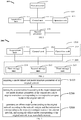
- Fig. 1 is a block diagram of a computer system according to an example.
- the computer system may include a processor 110, and a first memory 120 and a second memory 130 that are connected to the processor 110.
- the processor 110 may be configured to provide computation and control capabilities and may include an acquisition unit 111, an operation unit 113, a control unit 112, etc.
- the acquisition unit 111 may be a hardware unit, such as an IO (Input/Output) interface, and the operation unit 113 and the control unit 112 may both be hardware units.
- each of the operation unit 113 and the control unit 112 may be a digital circuit or an analog circuit, or the like.
- the physical implementation of the hardware circuits may include, but is not limited to, physical devices, and the physical devices may include, but are not limited to, transistors and memristors, and the like.
- the processor may be a general purpose processor, such as a CPU (Central Processing Unit), a GPU (Graphics Processing Unit), or a DSP (Digital Signal Processor).
- the processor may also be an application specific neural network processor, such as an IPU (Intelligence Processing Unit).
- the processor may also be an instruction set processor, a related chipset, an application specific microprocessor (such as an application specific integrated circuit (ASIC)), or an onboard memory for caching use, or the like.
- ASIC application specific integrated circuit
- the first memory or the second memory may store a computer program, which is configured to implement a neural network processing method provided in an example of the present disclosure.
- the neural network processing method may be configured to generate an offline model corresponding to an original network received by the processor.
- the offline model corresponding to the original network may include necessary network structure information, such as network weights and instructions corresponding to respective compute nodes in the original network.
- the instructions may be configured to indicate a kind of computation function to be executed by the compute nodes.
- the offline model may specifically include information such as computational attributes of the respective compute nodes, and connections among the respective compute nodes in the original network.
- the offline model corresponding to the original network may be run directly without the need of performing an operation, such as compiling, on the same original network again. Therefore, it is possible to reduce run duration of the network by the processor, and thus to increase the processing speed and efficiency of the processor.
- the first memory 120 may be an internal memory, such as a volatile memory including a cache memory, which may be configured to store related data, such as network input data, network output data, network weights, instructions, etc., during running of the neural network.
- the second memory 130 may be an external memory, such as a nonvolatile memory, which is configured to store an offline model corresponding to the neural network. When it is required to compile, by the computer system, the same original network again to run the original network, the offline model corresponding to the original network may be acquired directly from the second memory. Therefore, the processing speed and efficiency of the processor may be increased.
- the computer system may also include a processor and a memory.
- the computer system may include a processor 210 and a memory 220 connected to the processor 210.
- the processor 210 may include an acquisition unit 211, a control unit 212 and an operation unit 213.
- the structure of the processor 210 may be similar to that of the processor 110, which may be seen above.
- the memory 220 may include a first storage unit 221, a second storage unit 222, and a third storage unit 223.
- the first storage unit 221 may be configured to store a computer program, which is configured to implement the neural network processing method provided in the example of the present disclosure.
- the second storage unit 222 may be configured to store related data during running of the original network
- the third storage unit 223 may be configured to store the offline model corresponding to the original network.
- a count of the storage units included in the memory may be greater than three; however, it is not specifically limited here.
- running of the original network in the present example means that the processor may run a machine learning algorithm (such as a neural network algorithm) using artificial neural network model data and implement a target application of the algorithm (such as an artificial intelligence application, like speech recognition) by executing forward operation.
- a machine learning algorithm such as a neural network algorithm
- a target application of the algorithm such as an artificial intelligence application, like speech recognition
- a neural network processing method in an example of the present disclosure may be configured to generate and store the offline model corresponding to the original network according to the acquired data related to the original network. Consequently, the offline model corresponding to the original network may be run directly without the need of performing an operation, such as compiling, on the same original network again. Therefore, it is possible to reduce run duration of the network by the processor, and thus to increase the processing speed and efficiency of the processor.
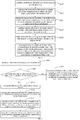
- the method may include: S100: acquiring a model dataset and model structure parameters of the original network.
- an acquisition unit of the processor may acquire a model dataset and model structure parameters of the original network, and a diagram of network structure of the original network may be obtained through the model dataset and the model structure parameters of the original network.
- the model dataset may include data like network weights corresponding to the respective compute nodes in the original network.
- W1 ⁇ W6 in the neural network shown in Fig. 7 represent network weights of the compute nodes.
- the model structure parameters may include connections among a plurality of compute nodes, and the computational attributes of the respective compute nodes in the original network. The connections among the respective compute nodes may be configured to represent whether data is transmitted among the compute nodes. For instance, if a data stream is transmitted among a plurality of compute nodes, the plurality of compute nodes may be connected.
- connections among the respective compute nodes may include input relation, output relation, etc.
- output of compute node F1 may serve as input of compute nodes F4 and F5. This suggests that the compute node F1 may be connected to the compute node F4, and the compute node F1 is connected to the compute node F4. For another instance, if data is not transmitted between the compute node F1 and compute node F2, the compute node F1 may be not connected to the compute node F2.
- Computational attributes of the respective compute nodes may include a computational type and computation parameters of the corresponding compute node.
- a computational type of the compute node refers to a kind of computation to be fulfilled by the compute node.
- the computational type of the compute node may include addition operation, subtraction operation, convolution operation, etc.
- the compute node may be a compute node configured to implement addition operation, a compute node configured to implement subtraction operation, a compute node configured to implement convolution operation, or the like.
- Computation parameters of a compute node may be necessary parameters required in implementation of the computational type corresponding to the compute node.
- the compute node of the computational type may be a compute node configured to implement addition operation, and accordingly, computation parameters of the compute node may be an addend in addition operation, and an augend in the addition operation may be acquired, as input data, by the acquisition unit, or the augend in the addition operation may be output data of the compute node prior to this compute node, etc.
- the original network may be an artificial neural network established for a general purpose processor, such as a CPU, a GPU or a DSP, based on a deep learning system, such as TensorFlow, MXNet, Caffe or PyTorch.
- the original network may also be an artificial neural network established for an intelligent processor such as an IPU.
- an intelligent processor such as an IPU.
- a model dataset (caffemodel) and model structure parameters (prototxt) of the Caffe network may be acquired.
- the model dataset includes data of the Caffe network such as network weights, and the model structure parameters (prototxt) include the computational attributes of the respective compute nodes, connections among a plurality of compute nodes, etc., of the Caffe network.
- S200 running the original network according to the model dataset and the model structure parameters of the original network to acquire instructions corresponding to the respective compute nodes in the original network.
- the operation unit of the processor may run the original network according to the model dataset and the model structure parameters of the original network, and acquire instructions corresponding to the respective compute nodes in the original network.
- the acquisition unit of the processor may acquire input data of the original network, and the operation unit of the processor may run the original network according to the input data, the network model dataset and the model structure parameters of the original network so as to acquire the instructions corresponding to the respective compute nodes in the original network.
- the process of running the original network to acquire the instructions of the respective compute nodes is substantially a process of compiling, which may be implemented by a processor or a virtual device of a computer system.
- the processor or the virtual device of the computer system may run the original network according to the model dataset and the model structure parameters of the original network.
- the virtual device refers to a processor running space virtualized in the memory space of the memory.
- running the original network in this example means that the processor may run a machine learning algorithm (such as a neural network algorithm) using artificial neural network model data, and implement a target application of the algorithm (such as an artificial intelligence application, like speech recognition) by executing a forward operation.
- a machine learning algorithm such as a neural network algorithm
- a target application of the algorithm such as an artificial intelligence application, like speech recognition
- S300 generating an offline model corresponding to the original network according to the network weights and the instructions corresponding to the respective compute nodes of the original network, and storing the offline model corresponding to the original network in an nonvolatile memory (such as a database).
- the control unit of the processor may generate an offline model corresponding to the original network according to the network weights and the instructions corresponding to the respective compute nodes of the original network.
- the control unit of the processor may store the network weights and the instructions corresponding to the respective compute nodes of the original network in the second memory, which may be nonvolatile, to generate and store the offline model.
- the network weight and instruction of the compute node may be stored in one-to-one correspondence.
- the offline model corresponding to the original network may be acquired from the nonvolatile memory directly, and the original network may be run according to the offline model corresponding to the original network without the need of acquiring instructions by compiling online the respective compute nodes of the original network. Therefore, the running speed and efficiency of the system may be increased.
- directly running the offline model corresponding to the original network means that a machine learning algorithm (such as a neural network algorithm) corresponding to the original network may be run using the offline model, and a target application of the algorithm (such as an artificial intelligence application, like speech recognition) may be implemented by executing a forward operation.
- a machine learning algorithm such as a neural network algorithm
- a target application of the algorithm such as an artificial intelligence application, like speech recognition
- the step S200 may include:
- the step S300 may further include:
- the processor may acquire the model dataset, the model structure parameters and the input data of the original network so as to acquire a diagram of network structure of the original network according to the model dataset and the model structure parameters of the original network as shown in Fig. 7 .
- the processor may acquire connections among the respective compute nodes of the original network according to the model structure parameters of the original network, and acquire order of execution of the respective compute nodes in the original network and the memory allocation manner during the running of the original network according to the connections among the respective compute nodes so as to acquire the position where the related data may be stored during running of the original network.
- the related data during running of the original network may be stored in a stack according to the order of execution of the respective compute nodes.
- the processor may store the network weights and the instructions corresponding to the respective compute nodes in the original network in the second memory, which is nonvolatile, to generate the offline model.
- the storage of the offline model is shown in the memory space of the right part of Fig. 8 .
- the offline model may merely include data such as network weights and instructions that are necessary in the original network without storing input data, output data or intermediate computation result during running of the original network. Therefore, the consumption of memory space in the second memory may be reduced.
- the offline model may further include node interface data configured to represent connections among the respective compute nodes of the original network.
- the node interface data may include input data sources and output data sources of the respective compute nodes.
- the node interface data may include compute nodes F1, F2 and F3 as start nodes. Input of these compute nodes may be preset input data, and output data of the compute node F1 may serve as input data of compute nodes F4 and F5.
- the original network may be executed according to the offline model corresponding to the original network as long as the start compute nodes of the original network and input data of the start compute nodes may be acquired.
- operation may be executed immediately using the offline model, or the offline model may be stored for use in computation as needed.
- the method may further include the following steps:
- a step may be implemented to run the new original network according to the model dataset and the model structure parameters of the new original network so as to generate a corresponding offline model of the new original network, and store the corresponding offline model of the new original network in the nonvolatile memory.
- the model dataset of the new original network is different from the model dataset of the original network, and/or the model structure parameters of the new original network are different from the model structure parameters of the original network, it may be considered that the original network and the new original network are different networks, and the new original network does not have an offline model.
- the steps S100 ⁇ S300 may be implemented. The specific implementation of steps S100 ⁇ S300 may be seen above and thus is omitted here.
- the corresponding offline model of the new original network may be acquired from the nonvolatile memory, and the new original network may be run according to the corresponding offline model of the new original network. Specifically, if the new original network has an offline model, the following steps may be implemented:
- the order of execution of the respective compute nodes in the neural network may be F1-F2-F3-F4-F5-F6.
- the network weight and the instruction corresponding to the compute node F1 may be acquired from the offline model, and network weights and instructions corresponding to the respective compute instructions F2 ⁇ F6 may be acquired successively. Therefore, the compute nodes in the new original network may be run successively without repeating the compiling of the respective compute nodes in the new original network. Therefore, running speed and efficiency of the processor may be increased.
- the offline model may further include node interface data configured to represent connections among the respective compute nodes in the original network.
- the node interface data may include input data sources and output data sources of the respective compute nodes.
- running the new original network according to the offline model corresponding to the original network may include:
- the start compute nodes of the neural network shown in Fig. 7 may be compute nodes F1, F2 and F3.
- an instruction and a network weight of each of the start compute nodes F1, F2 and F3 may be acquired firstly from the offline model.
- Compute nodes F4 and F5 connected to the start compute nodes F1, F2 and F3 may be acquired according to the node interface data in the offline model. Therefore, instructions and network weights of the compute nodes F4 and F4 may be acquired.
- compute node F6 connected to the compute nodes F4 and F5 may be acquired according to the node interface data in the offline model so as to acquire an instruction and a network weight of the compute node F6.
- the compute nodes of the new original network may be run successively without repeating the compiling of the respective compute nodes in the new original network. Therefore, running speed and efficiency of the processor may be increased.
- the interface data may include the connections among the respective compute nodes in the original network, and information such as start compute nodes of the original network.
- running the new original network according to the offline model corresponding to the original network may include:
- the present disclosure further provides a neural network processing method, including:
- the step S630 may be implemented through the steps S510 ⁇ S540 as shown in Fig. 5 .
- the step S630 may include:
- the offline model may further include node interface data, which is configured to represent connections among the respective compute nodes of the original network.
- the node interface data may include input data sources and output data sources of the respective compute nodes.
- running the original network according to the offline model corresponding to the original network and the model structure parameters of the original network may include:
- running the original network according to the offline model corresponding to the original network and the model structure parameters may include:
- the program may be stored in a computer-readable storage medium and may include the procedure of the example of each of the methods described above when it is executed.
- Any reference to the memory, storage, database or any other medium may include a nonvolatile and/or volatile memory, where the reference may be used in the examples provided in the present disclosure.
- the nonvolatile memory may include a read-only memory (ROM), a programmable ROM (PROM), an electrically programmable ROM (EPROM), an electrically erasable programmable ROM (EEPROM), or a flash memory.
- the volatile memory may include a random access memory (RAM), or an external cache memory.
- RAM is available in many forms, such as a static RAM (SRAM), a dynamic RAM (DRAM), a synchronous DRAM (SDRAM), a double data rate SDRAM (DDRSDRAM), an enhanced SDRAM (ESRAM), a synchlink DRAM (SLDRAM), a Rambus direct RAM (RDRAM), a direct Rambus dynamic RAM (DRDRAM), Rambus dynamic RAM (RDRAM), etc.
- SRAM static RAM
- DRAM dynamic RAM
- SDRAM synchronous DRAM
- DDRSDRAM double data rate SDRAM
- ESRAM enhanced SDRAM
- SLDRAM synchlink DRAM
- RDRAM Rambus direct RAM
- DRAM direct Rambus dynamic RAM
- RDRAM Rambus dynamic RAM
- an example of the present disclosure further provides a computer system, including a processor, a first memory, and a second memory.
- a computer program may be stored in the first memory or the second memory.
- the processor may execute the method according to any of the above-mentioned examples when executing the computer program. Specifically, when the processor executes the computer program, the following steps may be implemented:
- the computer system may be the computer system shown in Fig. 1 or Fig. 2
- the processor of the computer system may include one or combination of more of a central processing unit (CPU), a graphics processing unit (GPU), a digital signal processor (DSP), a field programmable gate array (FPGA) and an intelligent processor.
- CPU central processing unit
- GPU graphics processing unit
- DSP digital signal processor
- FPGA field programmable gate array
- an example of the present disclosure further provides a computer storage medium, in which a computer program may be stored.
- a computer program may be stored.
- the computer storage medium may include a nonvolatile and/or volatile memory.
- the nonvolatile memory may include a read-only memory (ROM), a programmable ROM (PROM), an electrically programmable ROM (EPROM), an electrically erasable programmable ROM (EEPROM), or a flash memory.
- the volatile memory may include a random access memory (RAM), or an external cache memory.
- a RAM is available in many forms, such as a static RAM (SRAM), a dynamic RAM (DRAM), a synchronous DRAM (SDRAM), a double data rate SDRAM (DDRSDRAM), an enhanced SDRAM (ESRAM), a synchlink DRAM (SLDRAM), a Rambus direct RAM (RDRAM), a direct Rambus dynamic RAM (DRDRAM), a Rambus dynamic RAM (RDRAM), etc.
- SRAM static RAM
- DRAM dynamic RAM
- SDRAM synchronous DRAM
- DDRSDRAM double data rate SDRAM
- ESRAM enhanced SDRAM
- SLDRAM synchlink DRAM
- RDRAM Rambus direct RAM
- DRAM direct Rambus dynamic RAM
- RDRAM Rambus dynamic RAM
- the neural network processing method, the computer system and the storage medium may acquire the offline model corresponding to the original network by storing the instructions corresponding to the respective compute nodes generated during running of the original network and the network weights corresponding to the respective compute nodes of the original network.
- the offline model corresponding to the original network may be run directly without compiling related data including the model dataset and the model structure parameters of the original network. Therefore, the time for running the same network by the processor may be reduced, and the processing speed and efficiency of the processor may be therefore improved.
- the computer system may be a multi-online system formed by a plurality of processors.
- Each of the processors may include a host processor and one or more coprocessors, and a memory may be provided corresponding to each processor.
- the computer system 300 may include a first processor 310, a first memory 320 and a second memory 330 connected to the first processor 310, one or more second processors 340 connected to the first processor 310, and third memories 350 corresponding to each of the second processors 340.
- the first processor 310 may be configured to provide computation and control capabilities and may include a first acquisition unit 311, a first operation unit 313, a first control unit 312, etc.
- the first acquisition unit 311 may be a hardware unit, such as an IO (Input/Output) interface, and the first operation unit 313 and the first control unit 312 may both be hardware units.
- each of the first operation unit 313 and the first control unit 312 may be a digital circuit or an analog circuit, or the like.
- the physical implementation of the hardware circuits may include, but is not limited to, physical devices, and the physical devices may include, but are not limited to, transistors, memristors, and the like.
- the first processor 310 which may serve as a host processor, may be a general purpose processor, such as a CPU (Central Processing Unit), a GPU (Graphics Processing Unit), a FPGA (Field-Programmable Gate Array), a DSP (Digital Signal Processor), or the like.
- the one or more second processors 340 which may serve as coprocessors, may be application specific neural network processors, such as an IPU (Intelligence Processing Unit).
- the second processors 340 may also be general purpose processors. Further, each of the second processors 340 may include a second acquisition unit, a second operation unit, a second control unit, etc.
- the second acquisition unit may be a hardware unit, such as an IO (Input/Output) interface, and the second operation unit and the second control unit are hardware units.
- each of the second operation unit and the second control unit may be a digital circuit, an analog circuit, or the like.
- the physical implementation of the hardware circuits may include, but is not limited to, physical devices, and the physical devices include, but are not limited to, transistors, memristors, and the like.
- the connections among the second acquisition unit, the second operation unit and the second control unit are similar to the connections among the units in the first processor, which may be seen above.
- the first memory 320 or second memory 330 may store a computer program, which is configured to implement a neural network processing method provided in an example of the present disclosure.
- the neural network processing method may be configured to generate an offline model corresponding to an original network received by the first processor.
- the offline model may include a first offline model, which may contain network weights and instructions corresponding to all of the compute nodes having a first operational attribute in the original network. Consequently, when the processor runs the original network again, the network weights and the instructions corresponding to all of the compute nodes having the first operational attribute in the original network may be acquired from the first offline model without the need of performing an operation, such as compiling, on the compute nodes having the first operational attribute in the same original network again.
- the offline model corresponding to the original network may also include a second offline model, which includes network weights and instructions corresponding to all of the compute nodes having a second operational attribute in the original network.
- the first memory 320 may be an internal memory, such as a volatile memory including a cache memory, which is configured to store related data during running of the neural network, such as network input data, network output data, network weights, instructions, etc.
- the second memory 330 and the third memory 350 may be external memories, such as nonvolatile memories.
- a neural network processing method may be used in the computer system shown in Fig. 9 to generate an offline model corresponding to an original network received by the first processor, thereby increasing the processing efficiency and speed of the computer system.
- the method may include: S700: acquiring a model dataset and model structure parameters of the original network.
- the model dataset may include network weights corresponding to the respective compute nodes in the original network, and the model structure parameters may include connections among a plurality of compute nodes in the original network.
- a first acquisition unit of the first processor may acquire a model dataset and model structure parameters of the original network, and a diagram of network structure of the network may be obtained through the model dataset and the model structure parameters of the original network.
- the model dataset may include data such as network weights corresponding to the respective compute nodes in the original network.
- W1 ⁇ W6 in the neural network shown in Fig. 14 represent network weights of the compute nodes.
- the model structure parameters may include connections among the plurality of compute nodes, and computational attributes of the respective compute nodes in the original network.
- the connections among the compute nodes may be configured to represent whether data is transmitted among the compute nodes. For instance, if a data stream is transmitted among the plurality of compute nodes, connections may exist among the plurality of compute nodes.
- connections among the compute nodes may include input relation, output relation, etc.
- output of compute node C1 may serve as input of compute nodes 11 and 12, which suggests that the compute node C1 may be connected to the compute node 11, and the compute node C1 may be connected to the compute node 12.
- the compute node C1 may be not connected to the compute node C2.
- Computational attributes of the respective compute nodes may include computational types and computation parameters of corresponding compute nodes.
- a computational type of a compute node means the kind of computation to be fulfilled by the compute node.
- the computational type of the compute node may include addition operation, subtraction operation, convolution operation, etc.
- the compute node may be a compute node for implementing addition operation, a compute node for implementing subtraction operation, a compute node for implementing convolution operation, or the like.
- Computation parameters of a compute node may be necessary parameters required in implementation of the computational type corresponding to the compute node.
- the computational type of the compute node may be a compute node configured to implement addition operation, and accordingly, computation parameters of the compute node may be an addend in addition operation, and an augend in the addition operation may be acquired by the acquisition unit as input data, or the augend in the addition operation may be input data of a compute node prior to this compute node, etc.
- the operational attributes of the respective compute nodes may include a first operational attribute and a second operational attribute.
- the first acquisition unit or a first operation unit of the processor may acquire operational attributes of the respective compute nodes in the original network.
- An operational attribute of a compute node may be configured to mark which processor the computation instruction corresponding to the compute node may be executed on.
- the first operational attribute may be configured to represent the capability that the computation instruction corresponding to the compute node may be executed on an application specific neural network processor, such as an IPU, and the a second operational attribute may be configured to represent the capability that the computation instruction corresponding to the compute node may be executed on a general purpose processor, such as a CPU, a GPU or a DSP.
- an application specific neural network processor such as an IPU
- a general purpose processor such as a CPU, a GPU or a DSP.
- the operational attributes of the respective compute nodes may be represented and stored by enumerating.
- an enumeration variable device may be defined.
- the enumeration variable may include more than two enumeration values. If an operational attribute of a current compute node is the first operational attribute, an enumeration value of the enumeration variable may be 1; if the operational attribute of the current compute node is the second operational attribute, the enumeration value of the enumeration variable may be 0.
- S720 running the original network according to the model dataset, the model structure parameters, and the operational attributes of the respective compute nodes to acquire instructions corresponding to the respective compute nodes in the original network.
- the first operation unit of the first processor may run the original network according to the model dataset, the model structure parameters and the operational attributes of the respective compute nodes to acquire instructions corresponding to the respective compute nodes in the original network.
- the first acquisition unit of the first processor may acquire input data of the original network
- the first operation unit of the first processor may run the original network according to the input data, the model dataset, the model structure parameters, and the operational attributes of the respective compute nodes in the original network to acquire instructions corresponding to the respective compute nodes in the original network.
- the process of running the original network to acquire the instructions corresponding to the respective compute nodes is substantially a process of compiling, which may be implemented by a processor or a virtual device of the computer system.
- the processor or the virtual device of the computer system may run the original network according to the model dataset and the model structure parameters of the original network.
- the virtual device may refer to a processor running space virtualized in the memory space of the memory.
- running of the original network in this example means that the processor may run a machine learning algorithm (such a as neural network algorithm) using artificial neural network model data and implement a target application of the algorithm (such as an artificial intelligence application, like speech recognition) by executing forward operation.
- a machine learning algorithm such as neural network algorithm
- a target application of the algorithm such as an artificial intelligence application, like speech recognition
- S730 if the operational attribute of the current compute node is the first operational attribute, storing the network weight and instruction corresponding to the current compute node in a first nonvolatile memory to acquire a first offline model corresponding to the original network.
- a first control unit of the first processor may store the network weight and instruction corresponding to the current compute node in the first nonvolatile memory to acquire a first offline model corresponding to the original network.
- the first nonvolatile memory may be a third memory corresponding to the application specific neural network processor, such as an IPU. Further, for every compute node of the original network, the network weight and instruction of the compute node may be stored in one-to-one correspondence.
- the first offline model corresponding to the original network may be acquired from the first nonvolatile memory, and all of the compute nodes having the first operational attribute in the original network may be run according to the first offline model without acquiring instructions by compiling online the compute nodes having the first operational attribute in the original network. Therefore, the running speed and efficiency of the system may be increased.
- directly running the first offline model corresponding to the original network means that a machine learning algorithm (such as a neural network algorithm) corresponding to the original network may be run using the first offline model, and a target application of the algorithm (such as an artificial intelligence application, like speech recognition) may be implemented by executing forward operation.
- a machine learning algorithm such as a neural network algorithm
- a target application of the algorithm such as an artificial intelligence application, like speech recognition
- the operational attributes of the respective compute nodes may be pre-stored in the network structure parameters or model dataset of the original network.
- the operational attributes of the respective compute nodes in the original network may be acquired directly during reading of the original network.
- the step S710 may specifically include: acquiring the operational attributes of the respective compute nodes in the original network from the network structure parameters or model dataset of the original network.
- the operational attributes of the respective compute nodes may be pre-stored in the network structure parameters or model dataset of the original network.
- the first acquisition unit of the first processor may acquire the operational attributes of the respective compute nodes in the original network during acquiring of the network structure parameters or model dataset of the original network.
- the operational attributes of the respective compute nodes in the original network may be acquired in real time during acquiring of the original network by the first acquisition unit of the first processor.
- the step S710 may specifically include: determining whether the respective compute nodes can be executed on an application specific neural network processor.
- the first acquisition unit of the first processor may determine whether the respective compute nodes can be executed on an application specific neural network processor.
- the current compute node may be marked with the first operational attribute; if the current compute node can be executed on a general purpose processor only, the current compute node may be marked with the second operational attribute. Consequently, the operational attributes of the respective compute nodes in the original network may be determined in real time during reading of the original network by the first processor. For instance, if the operational attribute of the current compute node is the first operational attribute, the enumeration variable corresponding to the current compute node may be marked with 1; if the operational attribute of the current compute node is not the first operational attribute, the enumeration variable corresponding to the current compute node may be marked with 0.
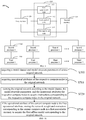
- the first operation unit of the first processor may inquire whether the current compute node has an equivalent compute node having the first operational attribute via a preset function table. If the current compute node has an equivalent compute node having the first operational attribute, the operational attribute of the current compute node may be marked as the first operational attribute. If the equivalent compute node having the first operational attribute and matched with the current compute node is not found via the preset function table, it is considered that the operational attribute of the current compute node may be the second operational attribute. As shown in Fig. 12 , the step S710 may further include: S711: inquiring whether the current compute node has an equivalent compute node having the first operational attribute via a preset function table.
- the equivalent compute node may be a compute node that can be executed on an application specific neural network processor.
- step S712 may be implemented to determine whether the current compute node can be executed on an application specific neural network processor.
- step S713 may be implemented to mark the operational attribute of the current compute node as the first operational attribute. Specifically, if the computation instruction corresponding to the current compute node can be converted into a computation instruction corresponding to the application specific neural network processor, it is considered that the current compute node may be an equivalent compute node having the first operational attribute, and the operational attribute of the current compute node may be marked as first operational attribute.
- step S714 may be implemented to determine whether the current compute node can be executed merely on a general purpose processor, such as a CPU.
- step S715 may be implemented to mark the operational attribute of the current compute node as the second operational attribute. Specifically, if the computation instruction corresponding to the current compute node can not be converted into a computation instruction corresponding to the application specific neural network processor, it is considered that the current compute node may not have an equivalent compute node having the first operational attribute, and the operational attribute of the current compute node may be marked as the second operational attribute.
- the step S720 may further include:
- the step S730 may further include:
- the first processor may acquire the model dataset, the model structure parameters and the input data of the original network, and may further acquire operational attributes of the respective compute nodes in the original network.
- the first processor may acquire the connections among the respective compute nodes of the original network according to the model structure parameters of the original network, and acquire the order of execution of the respective compute nodes in the original network according to the connections among the respective compute nodes and the memory allocation manner during the running of the original network so as to acquire the position where the related data is stored during running of the original network.
- the related data during running of the original network may be stored in a stack according to the order of execution of the respective compute nodes.
- the first processor may store, in the first nonvolatile memory, the network weights and the instructions corresponding to the respective compute nodes having the first operational attribute in the original network to generate the first offline model, the storage of which is shown in the memory space of the right part of Fig. 15 .
- the first offline model may only include data like network weights and instructions that are necessary for running the compute nodes having the first operational attribute in the original network without storing input data, output data or intermediate computation result during running of the original network. Therefore, the consumption of memory space may be reduced.
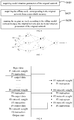
- the method may further include: according to the connections among the plurality of compute nodes in the original network, making all of first compute nodes among more than two second compute nodes, which are executed in order, equivalent to a first offline node (First Offline1) to acquire an equivalent network corresponding to the original network as shown in Fig. 14 .
- the first compute node may be a compute node having the first operational attribute
- the second compute node may be a compute node having the second operational attribute.
- the first offline model may further include interface data between the first offline node (First Offline 1) and the second compute node.
- the interface data may be configured to represent connections among the first offline node (First Offline1) and other second compute nodes, and may include input data sources and output data sources of the respective first offline nodes.
- all of compute nodes having the first operational attribute between two adjacent compute nodes having the CPU operational attribute may be made equivalent to a first offline node (First Offline1) so that an equivalent network of the original network may be acquired.
- first offline node is an equivalent node of a plurality of compute nodes having the first operational attribute
- the operational attribute of the first offline node (First Offline 1) is the first operational attribute.
- the connection between the first offline node (First Offline1) and the second compute node having the second operational attribute in the original network may be determined according to the input or output data. For instance, as shown in Fig.
- the network weights and the connections among the first offline node (First Offline1) and the second compute nodes C1, C2 and C3 may be determined according to the input data of the first offline node (First Offline 1), and the network weight and the connection between the first offline node (First Offline1) and the second offline node (Second Offline1) may be determined according to the output data of the first offline node (First Offline1).
- the interface data may include the input data of the first offline node (First Offline1) as output data of the compute nodes C1, C2 and C3, and the output data of the first offline node as input data of the second compute nodes C4 and C5.
- the offline model of the original network may further include network weights and instructions corresponding to the compute nodes having the second operational attribute in the original network.
- the method may further include: if the operational attribute of the current compute node is the second operational attribute, storing the network weight and the instruction corresponding to the current compute node in a second nonvolatile memory to acquire the second offline model corresponding to the original network.
- the network weights and the instructions corresponding to the respective compute nodes having the second operational attribute may be stored in the second nonvolatile memory (such as the second memory).
- the network weights and instructions corresponding to the plurality of compute nodes having the second operational attribute may form a second offline model unit of the original network.
- step S730 may further include: S734: acquiring the network weights and the instructions corresponding to the respective compute nodes having the second operational attribute in the original network from the first memory, and storing the network weights corresponding to the respective compute nodes having the second operational attribute in the original network in the second nonvolatile memory to generate the second offline model.
- the generation of the second offline model may be seen in Fig. 16 , where the second offline model is stored in the memory space in the left part of Fig. 16 .
- the first offline model stored in the first nonvolatile memory and the second offline model stored in the second nonvolatile memory form an offline model of the original network. Consequently, when it is required to execute the offline model again, the network weights and instructions corresponding to the compute nodes having the first operational attribute may be acquired from the first nonvolatile memory, and the network weights and instructions corresponding to the compute nodes having the second operational attribute may be acquired from the second nonvolatile memory. Therefore, the original network may be executed directly without compiling the original network again.
- the first processor may make all of the second compute nodes among more than two first compute nodes, which are executed in order, equivalent to a second offline node.
- the first compute nodes are compute nodes having the first operational attribute
- the second compute nodes are compute nodes having the second operational attribute.
- the second offline model may further include interface data among the second offline node and the first compute nodes.
- the first processor may acquire the model dataset, the model structure parameters, and the input data of the original network so as to acquire the diagram of network structure of the original network as shown in Fig. 14 according to the model dataset and the model structure parameters of the original network. Moreover, the first processor may acquire operational attributes of the respective compute nodes in the original network.
- the first processor may acquire the connections among the respective compute nodes of the original network according to the model structure parameters of the original network, acquire the order of execution of the respective compute nodes in the original network according to the connections among the respective compute nodes, and acquire the memory allocation manner during the running of the original network so as to acquire the position where the related data is stored during running of the original network.
- the related data during running of the original network may be stored in a stack according to the order of execution of the respective compute nodes.
- the first processor may store, in the first nonvolatile memory, the network weights and the instructions corresponding to the respective compute nodes having the first operational attribute in the original network to generate the first offline model, the storage of which is shown in the memory space of the right part of Fig. 16 .
- the first processor may also store the network weights and the instructions corresponding to the respective compute nodes having the second operational attribute in the original network in the second nonvolatile memory to generate the second offline model, the storage of which is shown in the memory space of the left part of Fig. 16 .
- the first offline model and the second offline model may only include data like network weights and instructions that are necessary for running the original network without storing input data, output data or intermediate computation result during running of the original network. Therefore, the consumption of memory space may be reduced.
- the general purpose processor may include one or more of a central processing unit (CPU), a graphics processing unit (GPU), a digital signal processor (DSP), and a field programmable gate array (FPGA).
- the second operational attribute may include one or more of a CPU operational attribute, a GPU operational attribute, a DSP operational attribute, and an FPGA attribute.
- the operational attribute of the compute node may be the CPU operational attribute, the first operational attribute, or combination of them.
- the operational attribute of the compute node is the CPU operational attribute
- the computation instruction corresponding to the compute node may need to be executed on the first processor (such as a CPU).
- the computation instruction corresponding to the compute node may need to be executed on the second processor.
- the operational attribute of the compute node is combination of the CPU operational attribute and the first operational attribute
- the computation instruction corresponding to the compute node may be executed on the first processor and may also be executed on the second processor.
- the operational attribute of the compute node may be marked as first operational attribute.
- the operational attributes of the respective compute nodes may be marked and stored by enumeration. For instance, the enumeration variable may include more than two enumeration values.
- an enumeration value of the enumeration variable may be 1; if operational attribute of the current compute node is the second operational attribute, the enumeration value of the enumeration variable may be 0.
- the operational attribute of a compute node may be combination of one or more of the CPU operational attribute, the GPU operational attribute, or the first operational attribute.
- the operational attribute of the compute node is the CPU operational attribute
- the computation instruction corresponding to the compute node may need to be executed on the first processor (such as CPU).
- the operational attribute of the compute node is the GPU operational attribute
- the computation instruction corresponding to the compute node may need to be executed on the second processor 1 (such as GPU).
- the computation instruction corresponding to the compute node may need to be executed on the second processor 2 (such as an IPU).
- the operational attribute of the compute node is a combination of the CPU operational attribute and the first operational attribute
- the computation instruction corresponding to the compute node may be executed on the first processor and may also be executed on the second processor 2 (IPU).
- the operational attribute of the compute node may be marked as the first operational attribute.
- the enumeration variable may have three enumeration values.
- the enumeration value of the enumeration variable may be 1; if the operational attribute of the current compute node is the CPU operational attribute, the enumeration value of the enumeration variable may be 0; and if the operational attribute of the current compute node is the GPU operational attribute, the enumeration value of the enumeration variable may be 2.
- the operational attribute of the current compute node may be learnt from the value of the enumeration variable.
- the second offline model may include a plurality of second offline sub-models.
- one of the second offline sub-models may include instructions and network weights corresponding to all of the compute nodes having the CPU operational attribute
- one of the second offline sub-models may include instructions and network weights corresponding to all of the compute nodes having the GPU operational attribute
- one of the second offline sub-models may include instructions and network weights corresponding to all of the compute nodes having the DSP operational attribute, etc.
- an operation may be executed immediately using the offline model, or the offline model may be stored for use in computation as needed.
- a neural network processing method including:
- all of compute nodes having the first operational attribute between two adjacent compute nodes having a CPU operational attribute may be made equivalent to a first offline node (First Offline1) to acquire an equivalent network corresponding to the original network according to the connections among the plurality of compute nodes in the original network.
- the operational attribute of the first offline node (First Offline1) may be the first operational attribute.
- the connection between the first offline node (First Offline1) and the second compute node having the second operational attribute in the original network may be determined according to input or output data.
- the order of execution of the respective compute nodes in the equivalent network corresponding to the original network may be C1-C2-C3-First Offline1-C4-C5-First Offline2.
- the second compute nodes C1, C2 and C3 may be executed concurrently, and compute C4 and C5 may be executed concurrently. Therefore, the processing efficiency of the computer system may be increased.
- S820 if a current compute node in the equivalent network is the first offline node, acquiring a first offline model from a first nonvolatile memory, and executing the first offline node according to the first offline model.
- the first offline model may include network weights and instructions corresponding to all of the first compute nodes having the first operational attribute in the original network. Specifically, if a current compute node is the first offline node, a first acquisition unit of a first processor may acquire a network weight and an instruction corresponding to a compute node having the first operational attribute from the first offline model according to the order of execution of the respective compute nodes in the equivalent network corresponding to the original network.
- the network weights and the instructions corresponding to the respective first compute nodes in the first offline node First Offline1 may be acquired from the first nonvolatile memory without compiling the instructions of the respective first compute nodes in the first offline node First Offline1. Therefore, the processing efficiency of the first processor may be increased.
- the first processor may continue to execute the second compute nodes C4 and C5 according to a structure of the equivalent network corresponding to the original network.
- the first processor may acquire the network weights and the instructions corresponding to the respective first compute nodes in the first offline node First Offline2 from the first nonvolatile memory according to the structure of the equivalent network corresponding to the original network. Therefore, it is not necessary to compile the instructions of the respective first compute nodes in the first offline node First Offline2.
- the first offline model may further include interface data among the first offline nodes and the second compute nodes.
- the first offline model may further include interface data among the respective first offline nodes and the second compute nodes connected to the respective first offline nodes.
- the interface data may include input data of the first offline node First Offline1 as output data of the second compute nodes C1 ⁇ C3, and output data of the first offline node First Offline1 as the second compute nodes C4 and C5.
- the first processor may execute the second compute nodes C4 and C5 after acquiring that the execution of the first offline node First Offline 1 is finished according to the interface data between the first offline node First Offline 1 and the second compute node connected to the first offline node First Offline 1 in the first offline model.
- the first processor may acquire the network weights and the instructions corresponding to the respective first compute nodes in the first offline node First Offline2 from the first nonvolatile memory according to the equivalent network corresponding to original network. Therefore, it is not necessary to compile the instructions of the respective first compute nodes in the first offline node First Offline2.
- the first offline model may include instructions and weights corresponding to a plurality of first offline nodes. Order of execution of the plurality of first offline nodes may be determined according to the equivalent network corresponding to the original network, and each of the first offline nodes may be labelled according to its order of execution.
- the network weight and the instruction may be looked up merely according to the label of the first offline node.
- the network weight and the instruction corresponding to the first offline node may be read directly according to a memory address of each of the first offline nodes, thus realizing an accurate search.
- the offline model of the original network may include network weights and instructions corresponding to other second compute nodes having the second operational attribute in the original network.
- the method may further include: if the current compute node in the equivalent network is not the first offline node, acquiring a second offline model from a second nonvolatile memory, and executing the current compute node in the equivalent network according to the second offline model.
- the first processor may make all of the second compute nodes among more than two first compute nodes, which are executed in order, equivalent to a second offline node according to connections among a plurality of compute nodes in the original network.
- the first compute nodes may be compute nodes having the first operational attribute
- the second compute nodes may be compute nodes having the second operational attribute.
- the second offline model may further include interface data among the second offline node and the first compute nodes.
- the first processor may execute second compute nodes C4 and C5 after acquiring that the execution of the first offline node First Offline 1 is finished according to the interface data between the first offline node First Offline 1 and the second compute node connected to the first offline node First Offline 1 in the first offline model.
- the first processor may acquire a network weight and an instruction corresponding to the second compute node C4, and a network weight and an instruction corresponding to the second compute node C5, and execute the compute nodes C4 and C5 according to the second offline model corresponding to the second offline node Second Offline 1. Meanwhile, the first processor may execute first offline node First Offline2 after the execution of the second offline node Second Offline 1 is finished according to the interface data between the second offline node Second Offline 1 and the first compute node connected to the second offline node Second Offline 1 in the second offline model.
- the first processor may acquire network weights and instructions corresponding to the respective first compute nodes in the first offline node First Offline2 from the first nonvolatile memory. Therefore, it is not necessary to compile instructions of the respective first compute nodes in the first offline node First Offline2.
- the second offline model may include instructions and weights corresponding to a plurality of second offline nodes. Order of execution of the plurality of second offline nodes may be determined according to the equivalent network corresponding to the original network, and each of the second offline node may be labelled according to its order of execution. When it is required to acquire a network weight and an instruction corresponding to a second offline node from the second offline model, the network weight and the instruction may be looked up according to the label of the second offline node. Of course, the network weight and the instruction corresponding to the second offline node may be read directly according to a memory address of each of the first offline nodes, thus realizing an accurate search.
- the second offline model may include a plurality of second offline sub-models.
- one of the second offline sub-models may include instructions and network weights corresponding to compute nodes having a CPU operational attribute
- one of the second offline sub-models may include instructions and network weights corresponding to compute nodes having a GPU operational attribute
- one of the second offline sub-models may include instructions and network weights corresponding to compute nodes having a DSP operational attribute, etc.
- the first processor may acquire network weights and instructions corresponding to the respective first compute nodes in the first offline node from the first nonvolatile memory, and execute the first offline node directly. If the current compute node is a compute node having the CPU operational attribute, a network weight and an instruction corresponding to the current compute node may be acquired from the second offline sub-model corresponding to the current compute node, and the current compute node may be executed directly.
- a network weight and an instruction corresponding to the current compute node may be acquired from the second offline sub-model corresponding to the current compute node, and the current compute node may be executed directly. If the current compute node is a compute node having the DSP operational attribute, a network weight and an instruction corresponding to the current compute node may be acquired from the second offline sub-model corresponding to the current compute node, and the current compute node may be executed directly.
- the nonvolatile memory may include a read-only memory (ROM), a programmable ROM (PROM), an electrically programmable ROM (EPROM), an electrically erasable programmable ROM (EEPROM), or a flash memory.
- ROM read-only memory
- PROM programmable ROM
- EPROM electrically programmable ROM
- EEPROM electrically erasable programmable ROM
- the volatile memory may include a random access memory (RAM) or an external cache memory.
- the RAM is available in many forms, such as a static RAM (SRAM), a dynamic RAM (DRAM), a synchronous DRAM (SDRAM), a double data rate SDRAM (DDRSDRAM), an enhanced SDRAM (ESRAM), a synchlink DRAM (SLDRAM), a Rambus direct RAM (RDRAM), a direct Rambus dynamic RAM (DRDRAM), and a Rambus dynamic RAM (RDRAM), etc.
- SRAM static RAM
- DRAM dynamic RAM
- SDRAM synchronous DRAM
- DDRSDRAM double data rate SDRAM
- ESRAM enhanced SDRAM
- SLDRAM synchlink DRAM
- RDRAM Rambus direct RAM
- DRAM direct Rambus dynamic RAM
- RDRAM Rambus dynamic RAM
- the present disclosure further provides a computer system 300, which includes a first processor 310, a first memory 320 and a second memory 330 corresponding to the first processor 310, one or more second processors 340, and one or more third memories 350 corresponding to the second processors 340.
- Each of the second processor 340 may be connected to the first processor 310, and the first memory 320 or the second memory 330 may store a computer program.
- the first processor 310 executes the computer program, the method as stated in any one of the examples may be executed. Specifically, when the first processor 310 executes the computer program, the following steps may be implemented:
- the operational attributes of the respective compute nodes may be represented and stored by enumerating.
- an enumeration variable device may be defined.
- the enumeration variable may include more than two enumeration values. If an operational attribute of a current compute node is the first operational attribute, an enumeration value of the enumeration variable may be 1; if the operational attribute of the current compute node is the second operational attribute, the enumeration value of the enumeration variable may be 0. running the original network according to the model dataset, the model structure parameters, and the operational attributes of the respective compute nodes to acquire instructions corresponding to the respective compute nodes in the original network.
- the first acquisition unit of the first processor may obtain input data of the original network
- the first operation unit of the first processor may run the original network according to the input data, the network model dataset, the model structure parameters, and the operational attributes of the respective compute nodes to acquire instructions corresponding to the respective compute nodes in the original network.
- the process of running the original network to acquire the instructions corresponding to the respective compute nodes is substantially a process of compiling, which may be implemented by a processor or a virtual device of the computer system.
- the processor or the virtual device of the computer system may run the original network according to the model dataset and the model structure parameters of the original network.
- the virtual device may refer to a processor running space virtualized in the memory space of the memory.
- running of the original network in this example means that the processor may run a machine learning algorithm (such as a neural network algorithm) using artificial neural network model data and implement a target application of the algorithm (such as an artificial intelligence application, like speech recognition) by executing forward operation.
- a machine learning algorithm such as a neural network algorithm
- a target application of the algorithm such as an artificial intelligence application, like speech recognition
- the first nonvolatile memory may be a third memory corresponding to the application specific neural network processor, such as an IPU.
- the network weight and the instruction of the compute node may be stored in one-to-one correspondence.
- the first offline model corresponding to the original network may be acquired from the first nonvolatile memory directly, and all of the compute nodes having the first operational attribute in the original network may be run according to the first offline model without acquiring instructions by compiling online the compute nodes having the first operational attribute in the original network. Therefore, the running speed and efficiency of the system may be increased.
- directly running the first offline model corresponding to the original network means that a machine learning algorithm (such as a neural network algorithm) corresponding to the original network may be run using the first offline model, and a target application of the algorithm (such as an artificial intelligence application, like speech recognition) may be implemented by executing forward operation.
- a machine learning algorithm such as a neural network algorithm
- a target application of the algorithm such as an artificial intelligence application, like speech recognition
- the computer system may be the computer system shown in Fig. 9
- the first processor of the computer system may be a central processing unit (CPU), a graphics processing unit (GPU), a digital signal processor (DSP), a field programmable gate array (FPGA), or the like.
- the second processor may be an application specific neural network processor, a central processing unit (CPU), a graphics processing unit (GPU), a digital signal processor (DSP), a field programmable gate array (FPGA), or the like. It is comprehensible that the operating principle of the computer system in this example is basically consistent with the implementation of the steps of the neural network processing method shown in Fig. 10- Fig. 13 , which is seen in the above text and therefore is omitted here.
- an example of the present disclosure further provides a computer storage medium, in which a computer program is stored.
- the computer storage medium may include a nonvolatile and/or volatile memory.
- the nonvolatile memory may include a read-only memory (ROM), a programmable ROM (PROM), an electrically programmable ROM (EPROM), an electrically erasable programmable ROM (EEPROM), or a flash memory.
- the volatile memory may include a random access memory (RAM), or an external cache memory.
- the RAM is available in many forms, such as a static RAM (SRAM), a dynamic RAM (DRAM), a synchronous DRAM (SDRAM), a double data rate SDRAM (DDRSDRAM), an enhanced SDRAM (ESRAM), a synchlink DRAM (SLDRAM), a Rambus direct RAM (RDRAM), a direct Rambus dynamic RAM (DRDRAM), a Rambus dynamic RAM (RDRAM), etc.
- SRAM static RAM
- DRAM dynamic RAM
- SDRAM synchronous DRAM
- DDRSDRAM double data rate SDRAM
- ESRAM enhanced SDRAM
- SLDRAM synchlink DRAM
- RDRAM Rambus direct RAM
- DRAM direct Rambus dynamic RAM
- RDRAM Rambus dynamic RAM
- the neural network processing method, the computer system, and the storage medium of the present disclosure may acquire the first offline model corresponding to the original network by storing an instructions and a network weight corresponding to a compute node having the first operational attribute during running of the original network.
- the instruction and the network weight corresponding to the compute node having the first operational attribute may be acquired from the first offline model corresponding to the original network without compiling related data (such as model dataset and model structure parameters) corresponding to the compute node having the first operational attribute in the original network again. Therefore, time for running the same network by a processor may be reduced, and processing speed and efficiency of the processor is increased.
Landscapes
- Engineering & Computer Science (AREA)
- Physics & Mathematics (AREA)
- Theoretical Computer Science (AREA)
- Health & Medical Sciences (AREA)
- Life Sciences & Earth Sciences (AREA)
- Biomedical Technology (AREA)
- Biophysics (AREA)
- Evolutionary Computation (AREA)
- Software Systems (AREA)
- Data Mining & Analysis (AREA)
- Artificial Intelligence (AREA)
- Computational Linguistics (AREA)
- Mathematical Physics (AREA)
- Computing Systems (AREA)
- General Engineering & Computer Science (AREA)
- General Physics & Mathematics (AREA)
- Molecular Biology (AREA)
- General Health & Medical Sciences (AREA)
- Neurology (AREA)
- Feedback Control In General (AREA)
- Devices For Executing Special Programs (AREA)
Applications Claiming Priority (3)
| Application Number | Priority Date | Filing Date | Title |
|---|---|---|---|
| CN201711487624.0A CN109993288B (zh) | 2017-12-29 | 2017-12-29 | 神经网络处理方法、计算机系统及存储介质 |
| CN201711483733.5A CN109993287B (zh) | 2017-12-29 | 2017-12-29 | 神经网络处理方法、计算机系统及存储介质 |
| PCT/CN2018/121399 WO2019128752A1 (zh) | 2017-12-29 | 2018-12-17 | 神经网络处理方法、计算机系统及存储介质 |
Publications (3)
| Publication Number | Publication Date |
|---|---|
| EP3629251A1 true EP3629251A1 (de) | 2020-04-01 |
| EP3629251A4 EP3629251A4 (de) | 2020-11-25 |
| EP3629251B1 EP3629251B1 (de) | 2025-06-25 |
Family
ID=67066560
Family Applications (1)
| Application Number | Title | Priority Date | Filing Date |
|---|---|---|---|
| EP18894609.9A Active EP3629251B1 (de) | 2017-12-29 | 2018-12-17 | Verarbeitungsverfahren für neuronales netzwerk, computersystem und speichermedium |
Country Status (5)
| Country | Link |
|---|---|
| US (1) | US12475356B2 (de) |
| EP (1) | EP3629251B1 (de) |
| JP (1) | JP7299846B2 (de) |
| KR (1) | KR102720330B1 (de) |
| WO (1) | WO2019128752A1 (de) |
Cited By (1)
| Publication number | Priority date | Publication date | Assignee | Title |
|---|---|---|---|---|
| EP4372619A4 (de) * | 2022-08-17 | 2025-01-15 | Samsung Electronics Co., Ltd. | Elektronische vorrichtung und verfahren zur ansteuerung von modellen auf basis von informationen, die gemeinsam von modellen genutzt werden |
Families Citing this family (4)
| Publication number | Priority date | Publication date | Assignee | Title |
|---|---|---|---|---|
| CN111309486B (zh) * | 2018-08-10 | 2024-01-12 | 中科寒武纪科技股份有限公司 | 转换方法、装置、计算机设备和存储介质 |
| KR102806266B1 (ko) * | 2019-11-18 | 2025-05-12 | 삼성전자주식회사 | 인공 지능 기능이 탑재된 스토리지 장치 및 이를 포함하는 스토리지 시스템 |
| KR102793526B1 (ko) | 2021-09-17 | 2025-04-09 | 삼성전자주식회사 | 연산 장치 및 그 동작 방법 |
| CN115018064B (zh) * | 2022-06-27 | 2024-11-08 | 中国科学技术大学 | 一种计算节点的空间分配方法及装置 |
Family Cites Families (13)
| Publication number | Priority date | Publication date | Assignee | Title |
|---|---|---|---|---|
| JP2001051968A (ja) | 1999-08-05 | 2001-02-23 | Fuji Xerox Co Ltd | ニューラルネットワーク構築方法及びニューラルネットワーク処理装置 |
| JP2007500379A (ja) | 2003-07-25 | 2007-01-11 | ヤマハ発動機株式会社 | インテリジェント制御システムのソフト演算最適化装置 |
| JP5184824B2 (ja) | 2007-06-15 | 2013-04-17 | キヤノン株式会社 | 演算処理装置及び方法 |
| CN102122132A (zh) * | 2010-01-11 | 2011-07-13 | 北京航空航天大学 | 一种基于模糊神经网络的用于环境模拟系统的智能控制系统 |
| JP6007430B2 (ja) | 2015-05-20 | 2016-10-12 | 大澤 昇平 | 機械学習モデル設計支援装置、機械学習モデル設計支援方法、機械学習モデル設計支援装置用プログラム |
| US20160358099A1 (en) * | 2015-06-04 | 2016-12-08 | The Boeing Company | Advanced analytical infrastructure for machine learning |
| US11120329B2 (en) | 2016-05-07 | 2021-09-14 | Intel Corporation | Multicast network and memory transfer optimizations for neural network hardware acceleration |
| CN106408343A (zh) | 2016-09-23 | 2017-02-15 | 广州李子网络科技有限公司 | 一种基于bp神经网络的用户行为分析与预测的建模方法及其装置 |
| CN106650922B (zh) | 2016-09-29 | 2019-05-03 | 清华大学 | 硬件神经网络转换方法、计算装置、软硬件协作系统 |
| CN106845631B (zh) | 2016-12-26 | 2020-05-29 | 上海寒武纪信息科技有限公司 | 一种流执行方法及装置 |
| CN106815644B (zh) * | 2017-01-26 | 2019-05-03 | 北京航空航天大学 | 机器学习方法和系统 |
| CN106953862B (zh) | 2017-03-23 | 2020-09-25 | 全球能源互联网研究院有限公司 | 网络安全态势的感知方法和装置及感知模型训练方法和装置 |
| CN107103113B (zh) | 2017-03-23 | 2019-01-11 | 中国科学院计算技术研究所 | 面向神经网络处理器的自动化设计方法、装置及优化方法 |
-
2018
- 2018-12-17 KR KR1020197037880A patent/KR102720330B1/ko active Active
- 2018-12-17 JP JP2019570862A patent/JP7299846B2/ja active Active
- 2018-12-17 WO PCT/CN2018/121399 patent/WO2019128752A1/zh not_active Ceased
- 2018-12-17 US US16/612,361 patent/US12475356B2/en active Active
- 2018-12-17 EP EP18894609.9A patent/EP3629251B1/de active Active
Cited By (1)
| Publication number | Priority date | Publication date | Assignee | Title |
|---|---|---|---|---|
| EP4372619A4 (de) * | 2022-08-17 | 2025-01-15 | Samsung Electronics Co., Ltd. | Elektronische vorrichtung und verfahren zur ansteuerung von modellen auf basis von informationen, die gemeinsam von modellen genutzt werden |
Also Published As
| Publication number | Publication date |
|---|---|
| KR20200100528A (ko) | 2020-08-26 |
| US20230196069A1 (en) | 2023-06-22 |
| JP2021508861A (ja) | 2021-03-11 |
| EP3629251B1 (de) | 2025-06-25 |
| JP7299846B2 (ja) | 2023-06-28 |
| KR102720330B1 (ko) | 2024-10-22 |
| US12475356B2 (en) | 2025-11-18 |
| EP3629251A4 (de) | 2020-11-25 |
| WO2019128752A1 (zh) | 2019-07-04 |
Similar Documents
| Publication | Publication Date | Title |
|---|---|---|
| EP3629251B1 (de) | Verarbeitungsverfahren für neuronales netzwerk, computersystem und speichermedium | |
| CN109993287B (zh) | 神经网络处理方法、计算机系统及存储介质 | |
| US11113104B2 (en) | Task parallel processing method, apparatus and system, storage medium and computer device | |
| US11314507B2 (en) | Model conversion method, device, computer equipment, and storage medium | |
| US20220147795A1 (en) | Neural network tiling method, prediction method, and related apparatus | |
| US20210224692A1 (en) | Hyperparameter tuning method, device, and program | |
| CN109993288B (zh) | 神经网络处理方法、计算机系统及存储介质 | |
| CN114723024A (zh) | 用于存算一体芯片的基于线性规划的神经网络映射方法 | |
| KR20220166176A (ko) | 딥 뉴럴 네트워크를 양자화하는 방법 및 장치 | |
| CN111667060B (zh) | 深度学习算法的编译方法、装置及相关产品 | |
| CN109685203B (zh) | 数据处理方法、装置、计算机系统及存储介质 | |
| US12530623B2 (en) | System, method, and computer program for computing change-agnostic data points through variability explanation stress testing | |
| US11593686B2 (en) | Methods, systems and apparatus to improve deep learning resource efficiency | |
| WO2023152612A1 (en) | Accuracy-preserving deep model compression | |
| CN111274023B (zh) | 数据处理方法、装置、计算机系统和存储介质 | |
| CN116400905B (zh) | 一种用于调控多设备的代码自动生成方法及相关设备 | |
| WO2019209571A1 (en) | Proactive data modeling | |
| CN121143983A (zh) | 资源分配方法、装置、计算设备及存储介质 | |
| KR20230100308A (ko) | 형상 분류를 위한 적응적 데이터 증강 학습 방법 및 시스템 | |
| JP2023084566A (ja) | 推定装置、推定方法および推定プログラム | |
| CN121578874A (zh) | 人机协同的机器人控制方法、装置、电子设备及存储介质 |
Legal Events
| Date | Code | Title | Description |
|---|---|---|---|
| STAA | Information on the status of an ep patent application or granted ep patent |
Free format text: STATUS: THE INTERNATIONAL PUBLICATION HAS BEEN MADE |
|
| PUAI | Public reference made under article 153(3) epc to a published international application that has entered the european phase |
Free format text: ORIGINAL CODE: 0009012 |
|
| STAA | Information on the status of an ep patent application or granted ep patent |
Free format text: STATUS: REQUEST FOR EXAMINATION WAS MADE |
|
| 17P | Request for examination filed |
Effective date: 20191224 |
|
| AK | Designated contracting states |
Kind code of ref document: A1 Designated state(s): AL AT BE BG CH CY CZ DE DK EE ES FI FR GB GR HR HU IE IS IT LI LT LU LV MC MK MT NL NO PL PT RO RS SE SI SK SM TR |
|
| AX | Request for extension of the european patent |
Extension state: BA ME |
|
| A4 | Supplementary search report drawn up and despatched |
Effective date: 20201022 |
|
| RIC1 | Information provided on ipc code assigned before grant |
Ipc: G06N 3/063 20060101AFI20201016BHEP Ipc: G06N 5/04 20060101ALI20201016BHEP |
|
| DAV | Request for validation of the european patent (deleted) | ||
| DAX | Request for extension of the european patent (deleted) | ||
| STAA | Information on the status of an ep patent application or granted ep patent |
Free format text: STATUS: EXAMINATION IS IN PROGRESS |
|
| 17Q | First examination report despatched |
Effective date: 20220531 |
|
| GRAP | Despatch of communication of intention to grant a patent |
Free format text: ORIGINAL CODE: EPIDOSNIGR1 |
|
| STAA | Information on the status of an ep patent application or granted ep patent |
Free format text: STATUS: GRANT OF PATENT IS INTENDED |
|
| INTG | Intention to grant announced |
Effective date: 20250207 |
|
| GRAS | Grant fee paid |
Free format text: ORIGINAL CODE: EPIDOSNIGR3 |
|
| GRAA | (expected) grant |
Free format text: ORIGINAL CODE: 0009210 |
|
| STAA | Information on the status of an ep patent application or granted ep patent |
Free format text: STATUS: THE PATENT HAS BEEN GRANTED |
|
| RAP3 | Party data changed (applicant data changed or rights of an application transferred) |
Owner name: CAMBRICON TECHNOLOGIES CORPORATION LIMITED |
|
| AK | Designated contracting states |
Kind code of ref document: B1 Designated state(s): AL AT BE BG CH CY CZ DE DK EE ES FI FR GB GR HR HU IE IS IT LI LT LU LV MC MK MT NL NO PL PT RO RS SE SI SK SM TR |
|
| REG | Reference to a national code |
Ref country code: GB Ref legal event code: FG4D |
|
| RIN1 | Information on inventor provided before grant (corrected) |
Inventor name: WU, LINYANG Inventor name: WEI, JIE Inventor name: GUO, QI Inventor name: CHEN, XUNYU |
|
| REG | Reference to a national code |
Ref country code: CH Ref legal event code: EP |
|
| REG | Reference to a national code |
Ref country code: CH Ref legal event code: EP |
|
| REG | Reference to a national code |
Ref country code: IE Ref legal event code: FG4D |
|
| REG | Reference to a national code |
Ref country code: DE Ref legal event code: R096 Ref document number: 602018083030 Country of ref document: DE |
|
| PG25 | Lapsed in a contracting state [announced via postgrant information from national office to epo] |
Ref country code: FI Free format text: LAPSE BECAUSE OF FAILURE TO SUBMIT A TRANSLATION OF THE DESCRIPTION OR TO PAY THE FEE WITHIN THE PRESCRIBED TIME-LIMIT Effective date: 20250625 |
|
| REG | Reference to a national code |
Ref country code: LT Ref legal event code: MG9D |
|
| PG25 | Lapsed in a contracting state [announced via postgrant information from national office to epo] |
Ref country code: NO Free format text: LAPSE BECAUSE OF FAILURE TO SUBMIT A TRANSLATION OF THE DESCRIPTION OR TO PAY THE FEE WITHIN THE PRESCRIBED TIME-LIMIT Effective date: 20250925 Ref country code: GR Free format text: LAPSE BECAUSE OF FAILURE TO SUBMIT A TRANSLATION OF THE DESCRIPTION OR TO PAY THE FEE WITHIN THE PRESCRIBED TIME-LIMIT Effective date: 20250926 |
|
| PG25 | Lapsed in a contracting state [announced via postgrant information from national office to epo] |
Ref country code: BG Free format text: LAPSE BECAUSE OF FAILURE TO SUBMIT A TRANSLATION OF THE DESCRIPTION OR TO PAY THE FEE WITHIN THE PRESCRIBED TIME-LIMIT Effective date: 20250625 |
|
| PG25 | Lapsed in a contracting state [announced via postgrant information from national office to epo] |
Ref country code: HR Free format text: LAPSE BECAUSE OF FAILURE TO SUBMIT A TRANSLATION OF THE DESCRIPTION OR TO PAY THE FEE WITHIN THE PRESCRIBED TIME-LIMIT Effective date: 20250625 |
|
| PG25 | Lapsed in a contracting state [announced via postgrant information from national office to epo] |
Ref country code: RS Free format text: LAPSE BECAUSE OF FAILURE TO SUBMIT A TRANSLATION OF THE DESCRIPTION OR TO PAY THE FEE WITHIN THE PRESCRIBED TIME-LIMIT Effective date: 20250925 |
|
| PG25 | Lapsed in a contracting state [announced via postgrant information from national office to epo] |
Ref country code: LV Free format text: LAPSE BECAUSE OF FAILURE TO SUBMIT A TRANSLATION OF THE DESCRIPTION OR TO PAY THE FEE WITHIN THE PRESCRIBED TIME-LIMIT Effective date: 20250625 |
|
| REG | Reference to a national code |
Ref country code: NL Ref legal event code: MP Effective date: 20250625 |
|
| PG25 | Lapsed in a contracting state [announced via postgrant information from national office to epo] |
Ref country code: NL Free format text: LAPSE BECAUSE OF FAILURE TO SUBMIT A TRANSLATION OF THE DESCRIPTION OR TO PAY THE FEE WITHIN THE PRESCRIBED TIME-LIMIT Effective date: 20250625 |
|
| PG25 | Lapsed in a contracting state [announced via postgrant information from national office to epo] |
Ref country code: PT Free format text: LAPSE BECAUSE OF FAILURE TO SUBMIT A TRANSLATION OF THE DESCRIPTION OR TO PAY THE FEE WITHIN THE PRESCRIBED TIME-LIMIT Effective date: 20251027 |
|
| REG | Reference to a national code |
Ref country code: AT Ref legal event code: MK05 Ref document number: 1807261 Country of ref document: AT Kind code of ref document: T Effective date: 20250625 |
|
| PG25 | Lapsed in a contracting state [announced via postgrant information from national office to epo] |
Ref country code: IS Free format text: LAPSE BECAUSE OF FAILURE TO SUBMIT A TRANSLATION OF THE DESCRIPTION OR TO PAY THE FEE WITHIN THE PRESCRIBED TIME-LIMIT Effective date: 20251025 |
|
| PGFP | Annual fee paid to national office [announced via postgrant information from national office to epo] |
Ref country code: DE Payment date: 20251211 Year of fee payment: 8 |
|
| PGFP | Annual fee paid to national office [announced via postgrant information from national office to epo] |
Ref country code: GB Payment date: 20251219 Year of fee payment: 8 |
|
| PG25 | Lapsed in a contracting state [announced via postgrant information from national office to epo] |
Ref country code: AT Free format text: LAPSE BECAUSE OF FAILURE TO SUBMIT A TRANSLATION OF THE DESCRIPTION OR TO PAY THE FEE WITHIN THE PRESCRIBED TIME-LIMIT Effective date: 20250625 Ref country code: SM Free format text: LAPSE BECAUSE OF FAILURE TO SUBMIT A TRANSLATION OF THE DESCRIPTION OR TO PAY THE FEE WITHIN THE PRESCRIBED TIME-LIMIT Effective date: 20250625 |
|
| PGFP | Annual fee paid to national office [announced via postgrant information from national office to epo] |
Ref country code: FR Payment date: 20251229 Year of fee payment: 8 |
|
| PG25 | Lapsed in a contracting state [announced via postgrant information from national office to epo] |
Ref country code: CZ Free format text: LAPSE BECAUSE OF FAILURE TO SUBMIT A TRANSLATION OF THE DESCRIPTION OR TO PAY THE FEE WITHIN THE PRESCRIBED TIME-LIMIT Effective date: 20250625 |
|
| PG25 | Lapsed in a contracting state [announced via postgrant information from national office to epo] |
Ref country code: PL Free format text: LAPSE BECAUSE OF FAILURE TO SUBMIT A TRANSLATION OF THE DESCRIPTION OR TO PAY THE FEE WITHIN THE PRESCRIBED TIME-LIMIT Effective date: 20250625 |
|
| PG25 | Lapsed in a contracting state [announced via postgrant information from national office to epo] |
Ref country code: EE Free format text: LAPSE BECAUSE OF FAILURE TO SUBMIT A TRANSLATION OF THE DESCRIPTION OR TO PAY THE FEE WITHIN THE PRESCRIBED TIME-LIMIT Effective date: 20250625 |
|
| PG25 | Lapsed in a contracting state [announced via postgrant information from national office to epo] |
Ref country code: SK Free format text: LAPSE BECAUSE OF FAILURE TO SUBMIT A TRANSLATION OF THE DESCRIPTION OR TO PAY THE FEE WITHIN THE PRESCRIBED TIME-LIMIT Effective date: 20250625 |
|
| PG25 | Lapsed in a contracting state [announced via postgrant information from national office to epo] |
Ref country code: ES Free format text: LAPSE BECAUSE OF FAILURE TO SUBMIT A TRANSLATION OF THE DESCRIPTION OR TO PAY THE FEE WITHIN THE PRESCRIBED TIME-LIMIT Effective date: 20250625 |
|
| PG25 | Lapsed in a contracting state [announced via postgrant information from national office to epo] |
Ref country code: RO Free format text: LAPSE BECAUSE OF FAILURE TO SUBMIT A TRANSLATION OF THE DESCRIPTION OR TO PAY THE FEE WITHIN THE PRESCRIBED TIME-LIMIT Effective date: 20250625 |
|
| PG25 | Lapsed in a contracting state [announced via postgrant information from national office to epo] |
Ref country code: DK Free format text: LAPSE BECAUSE OF FAILURE TO SUBMIT A TRANSLATION OF THE DESCRIPTION OR TO PAY THE FEE WITHIN THE PRESCRIBED TIME-LIMIT Effective date: 20250625 |
|
| PG25 | Lapsed in a contracting state [announced via postgrant information from national office to epo] |
Ref country code: IT Free format text: LAPSE BECAUSE OF FAILURE TO SUBMIT A TRANSLATION OF THE DESCRIPTION OR TO PAY THE FEE WITHIN THE PRESCRIBED TIME-LIMIT Effective date: 20250625 |
|
| PLBE | No opposition filed within time limit |
Free format text: ORIGINAL CODE: 0009261 |
|
| STAA | Information on the status of an ep patent application or granted ep patent |
Free format text: STATUS: NO OPPOSITION FILED WITHIN TIME LIMIT |