EP3629252A1 - Procédé et dispositif de fonctionnement d'un système de commande - Google Patents
Procédé et dispositif de fonctionnement d'un système de commande Download PDFInfo
- Publication number
- EP3629252A1 EP3629252A1 EP19191560.2A EP19191560A EP3629252A1 EP 3629252 A1 EP3629252 A1 EP 3629252A1 EP 19191560 A EP19191560 A EP 19191560A EP 3629252 A1 EP3629252 A1 EP 3629252A1
- Authority
- EP
- European Patent Office
- Prior art keywords
- machine learning
- learning system
- randomization
- trained
- depending
- Prior art date
- Legal status (The legal status is an assumption and is not a legal conclusion. Google has not performed a legal analysis and makes no representation as to the accuracy of the status listed.)
- Ceased
Links
Images






Classifications
-
- G—PHYSICS
- G06—COMPUTING OR CALCULATING; COUNTING
- G06N—COMPUTING ARRANGEMENTS BASED ON SPECIFIC COMPUTATIONAL MODELS
- G06N3/00—Computing arrangements based on biological models
- G06N3/02—Neural networks
- G06N3/04—Architecture, e.g. interconnection topology
- G06N3/045—Combinations of networks
-
- G—PHYSICS
- G06—COMPUTING OR CALCULATING; COUNTING
- G06N—COMPUTING ARRANGEMENTS BASED ON SPECIFIC COMPUTATIONAL MODELS
- G06N3/00—Computing arrangements based on biological models
- G06N3/02—Neural networks
- G06N3/08—Learning methods
-
- G—PHYSICS
- G06—COMPUTING OR CALCULATING; COUNTING
- G06N—COMPUTING ARRANGEMENTS BASED ON SPECIFIC COMPUTATIONAL MODELS
- G06N20/00—Machine learning
-
- G—PHYSICS
- G06—COMPUTING OR CALCULATING; COUNTING
- G06N—COMPUTING ARRANGEMENTS BASED ON SPECIFIC COMPUTATIONAL MODELS
- G06N3/00—Computing arrangements based on biological models
- G06N3/02—Neural networks
- G06N3/04—Architecture, e.g. interconnection topology
- G06N3/0464—Convolutional networks [CNN, ConvNet]
-
- G—PHYSICS
- G06—COMPUTING OR CALCULATING; COUNTING
- G06N—COMPUTING ARRANGEMENTS BASED ON SPECIFIC COMPUTATIONAL MODELS
- G06N3/00—Computing arrangements based on biological models
- G06N3/02—Neural networks
- G06N3/08—Learning methods
- G06N3/09—Supervised learning
-
- G—PHYSICS
- G06—COMPUTING OR CALCULATING; COUNTING
- G06N—COMPUTING ARRANGEMENTS BASED ON SPECIFIC COMPUTATIONAL MODELS
- G06N3/00—Computing arrangements based on biological models
- G06N3/02—Neural networks
- G06N3/08—Learning methods
- G06N3/0985—Hyperparameter optimisation; Meta-learning; Learning-to-learn
-
- G—PHYSICS
- G06—COMPUTING OR CALCULATING; COUNTING
- G06N—COMPUTING ARRANGEMENTS BASED ON SPECIFIC COMPUTATIONAL MODELS
- G06N7/00—Computing arrangements based on specific mathematical models
- G06N7/01—Probabilistic graphical models, e.g. probabilistic networks
Definitions
- the invention relates to a method for parameterizing a machine learning system, a training system, a control system, a method for operating the control system, a computer program and a machine-readable storage medium.
- a machine learning system such as a neural network
- parameters can be divided into architectural parameters such as depth, number and shape of the filters, choice of non-linearities and connections; and optimization parameters such as the step size, the size of the batches and the number of iterations.
- architectural parameters characterize the function f
- optimization parameters characterize the optimization method that is used during the training.
- the selection of these parameters can be based, for example, on experience or the performance of the neural network on a validation data record based. Since a neural network is usually parameterized by many more parameters than data points, there is a risk that the network will memorize the training data. A network trained in this way may not be well suited for use in safety-critical functions, for example for automated driving, since the output for new data points may not be easy to control.
- the method with the features of independent claim 1 prevents a machine learning system from memorizing the training data during training, i.e. Architecture and / or optimization parameters can be determined automatically by a parameter search.
- the architecture and / or optimization parameters determined in this way mean that the machine learning system can generalize in an improved manner.
- the invention therefore relates to a method and features of independent claim 1. Further aspects are the subject of the independent claims. Advantageous further developments are the subject of the dependent claims.
- the norm ⁇ w ⁇ can be, for example, the L2 norm of the weights or the L1 norm of the weights.
- a method for computer-aided parameterization of a machine learning system (in particular a neural network) is provided, which is set up to determine an associated class of a plurality of classes as the output signal from input signals, the machine learning system for different degrees of randomization p each with a labeled randomized data set X r p is trained with a corresponding proportion of randomly selected actual classifications, hyperparameters ⁇ H of the machine learning system being selected such that a classification accuracy of the trained machine learning system for the labeled randomized data set X r p is not above a specifiable upper bound.
- Hyper parameters ⁇ H can be characterized in that they are kept unchanged when training the machine learning system.
- the hyper parameters ⁇ H can include, for example, architecture parameters ⁇ A and / or optimization parameters ⁇ O.
- the architecture parameters ⁇ A characterize the structure of the machine learning system. If the machine learning system is a neural network, the architecture parameters ⁇ A include, for example, a depth (ie a number of layers) of the neural network and / or the number of filters and / or parameters that characterize the shape of the filters and / or Parameters that characterize non-linearities of the neural network and / or parameters that characterize which layers of the neural network are connected to which other layers of the neural network.
- the optimization parameters ⁇ O are parameters that characterize the behavior of an optimization algorithm for adapting parameters ⁇ that are adapted during the training. For example, these can include a numerical step size and / or a size of data batches and / or a minimum or maximum number of iterations.
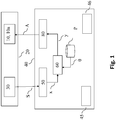
- Figure 1 shows an actuator 10 in its environment 20 in interaction with a control system 40.
- Actuator 10 and environment 20 are collectively referred to as an actuator system.
- a state of the actuator system is detected with a sensor 30, which can also be given by a plurality of sensors.
- the sensor signal S - or in the case of several sensors, one sensor signal S - from the sensor 30 is transmitted to the control system 40.
- the control system 40 thus receives a sequence of sensor signals S.
- the control system 40 uses this to determine control signals A, which are transmitted to the actuator 10.
- the control system 40 receives the sequence of sensor signals S from the sensor 30 in an optional receiving unit 50, which converts the sequence of sensor signals S into a sequence of input signals x (alternatively, the sensor signal S can also be directly accepted as the input signal x).
- the input signal x can be, for example, a section or further processing of the sensor signal S.
- the input signal x can comprise, for example, image data or images, or individual frames of a video recording. In other words, input signal x is determined as a function of sensor signal S.
- the input signal x is fed to a machine learning system 60, which is, for example, a neural network.
- the machine learning system 60 is preferably parameterized by parameters ⁇ , which are stored in a parameter memory P and are provided by the latter.
- the machine learning system 60 determines x output signals y from the input signals.
- the output signals y are fed to an optional conversion unit 80, which uses this to determine control signals A, which are fed to the actuator 10 in order to control the actuator 10 accordingly.
- the actuator 10 receives the control signals A, is controlled accordingly and carries out a corresponding action.
- the actuator 10 can comprise a control logic (not necessarily structurally integrated), which determines a second control signal from the control signal A, with which the actuator 10 is then controlled.
- control system 40 includes the sensor 30. In still further embodiments, the control system 40 alternatively or additionally also includes the actuator 10.
- control system 40 comprises one or a plurality of processors 45 and at least one machine-readable storage medium 46, on which instructions are stored which, when executed on the processors 45, cause the control system 40 to carry out the method according to the invention .
- a display unit 10a is provided as an alternative or in addition to the actuator 10.
- FIG. 2 shows an embodiment in which the control system 40 is used to control an at least partially autonomous robot, here an at least partially autonomous motor vehicle 100.
- the sensor 30 can be, for example, one or more video sensors and / or one or more radar sensors and / or one or more ultrasound sensors and / or one or more LiDAR sensors and / or one or more position sensors (for example, preferably arranged in the motor vehicle 100) GPS) act.
- the sensor 30 can also include an information system that provides information about determines a state of the actuator system, such as a weather information system that determines a current or future state of the weather in the environment 20.
- the machine learning system 60 can, for example, detect objects in the surroundings of the at least partially autonomous robot from the input data x.
- the output signal y can be information that characterizes where objects are present in the vicinity of the at least partially autonomous robot.
- the output signal A can then be determined depending on this information and / or according to this information.
- the actuator 10, which is preferably arranged in the motor vehicle 100, can be, for example, a brake, a drive or a steering of the motor vehicle 100.
- the control signal A can then be determined in such a way that the actuator or actuators 10 is controlled in such a way that the motor vehicle 100, for example, prevents a collision with the objects identified by the machine learning system 60, in particular when objects of certain classes, e.g. pedestrians.
- control signal A can be determined as a function of the determined class and / or according to the determined class.
- the at least partially autonomous robot can also be another mobile robot (not shown), for example one that moves by flying, swimming, diving or walking.
- the mobile robot can also be, for example, an at least partially autonomous lawn mower or an at least partially autonomous cleaning robot.
- the control signal A can be determined in such a way that the drive and / or steering of the mobile robot are controlled such that the at least partially autonomous robot prevents, for example, a collision with the objects identified by the machine learning system 60,
- the at least partially autonomous robot can also be a garden robot (not shown) that works with a robot imaging sensor 30 and machine learning system 60 determines a type or condition of plants in the environment 20.
- the actuator 10 can then be an applicator of chemicals, for example.
- the control signal A can be determined as a function of the determined type or the determined state of the plants in such a way that an amount of the chemicals corresponding to the determined type or the determined state is applied.
- the at least partially autonomous robot can also be a household appliance (not shown), in particular a washing machine, a stove, an oven, a microwave or a dishwasher.
- a household appliance for example an optical sensor
- a state of an object treated with the household appliance can be detected, for example in the case of the washing machine, a state of laundry which is in the washing machine.
- the machine learning system 60 a type or a state of this object can then be determined and characterized by the output signal y.
- the control signal A can then be determined in such a way that the household appliance is controlled as a function of the determined type or the determined state of the object. For example, in the case of the washing machine, this can be controlled depending on the material from which the laundry contained therein is made. Control signal A can then be selected depending on which material of the laundry has been determined.
- Figure 3 shows an embodiment in which the control system 40 is used to control a manufacturing machine 11 of a manufacturing system 200 by driving an actuator 10 controlling this manufacturing machine 11.
- the production machine 11 can, for example, be a machine for punching, sawing, drilling and / or cutting.
- the sensor 30 is then, for example, an optical sensor that detects, for example, properties of manufactured products 12. It is possible that the actuator 10 controlling the production machine 11 is controlled depending on the determined properties of the production product 12, so that the production machine 11 correspondingly performs a subsequent processing step of this manufactured product 12. It is also possible for the sensor 30 to determine the properties of the manufactured product 12 processed by the manufacturing machine 11 and, depending on this, to adapt a control of the manufacturing machine 11 for a subsequent finished product.
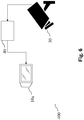
- Figure 4 shows an embodiment in which the control system 40 is used to control a personal assistant 250.
- Sensor 30 is preferably an acoustic sensor that receives voice signals from a user 249.
- the sensor 30 can also be configured to receive optical signals, for example video images of a gesture of the user 249.
- the control system 40 determines a control signal A of the personal assistant 250, for example by the machine learning system performing a gesture recognition. This determined control signal A is then transmitted to the personal assistant 250 and is therefore controlled accordingly.
- This determined control signal A ist can in particular be selected in such a way that it corresponds to a presumed desired activation by the user 249. This presumed desired activation can be determined depending on the gesture recognized by the machine learning system 60.
- the control system 40 can then select the control signal A for transmission to the personal assistant 250 depending on the presumed desired control and / or select the control signal A for transmission to the personal assistant in accordance with the presumed desired control 250.
- This corresponding control can include, for example, that the personal assistant 250 retrieves information from a database and reproduces it in a way that the user 249 can receive.
- a household appliance (not shown), in particular a washing machine, a stove, an oven, a microwave or a dishwasher, can also be provided in order to be controlled accordingly.
- FIG. 5 shows an embodiment in which the control system 40 is used to control an access system 300.
- Access system 300 may include physical access control, such as door 401.
- the sensor 30 can be, for example, an optical sensor (for example for recording image or video data), which is set up to detect a face. This captured image can be interpreted by means of the machine learning system 60. For example, the identity of a person can be determined.
- the actuator 10 can be a lock that, depending on the control signal A, releases the access control or not, for example opens the door 401 or not.
- the control signal A can be selected depending on the interpretation of the machine learning system 60, for example depending on the determined identity of the person.
- a logical access control can also be provided.
- Figure 6 shows an embodiment in which the control system 40 is used to control a monitoring system 400. From that in Figure 5 The illustrated embodiment differs from this embodiment in that the display unit 10a is provided instead of the actuator 10 and is controlled by the control system 40. For example, the machine learning system 60 can determine whether an object picked up by the optical sensor is suspicious, and the control signal A can then be selected such that this object is highlighted in color by the display unit 10a.
- Figure 7 shows an embodiment in which the control system 40 is used to control a medical imaging system 500, for example an MRI, X-ray or ultrasound device.
- the sensor 30 can be provided, for example, by an imaging sensor, and the control system 40 controls the display unit 10a.
- the machine learning system 60 can determine whether an area recorded by the imaging sensor is noticeable, and the control signal A can then be selected such that this area is highlighted in color by the display unit 10a.
- FIG 8 schematically shows an exemplary embodiment of a training system 140 for training the machine learning system 60.
- a training data unit 150 determines suitable input signals x which are fed to the machine learning system 60.
- the training data unit 150 accesses a computer-implemented database in which a set of training data is stored and, for example, randomly selects input signals x from the set of training data.
- the training data unit 150 also determines desired, or “actual”, output signals y T assigned to the input signals x, which are fed to an evaluation unit 180.
- the artificial neural network x is set up to determine associated output signals y from the input signals x supplied to it. These output signals y are fed to the evaluation unit 180.
- the training system 140 comprises a second parameter memory Q, in which the hyper parameters ⁇ H are stored.
- a modification unit 160 determines, for example, with the in Figure 9 illustrated method new parameters 0 'and feeds them to the parameter memory P, where they replace the parameters ⁇ .
- the modification unit 160 determines, for example, with the in Figure 9 illustrated method new hyperparameters ⁇ ' H and feeds them to the second parameter memory Q.
- the evaluation unit 180 can, for example, use a cost function (English: loss function ) dependent on the output signals y and the desired output signals y T determine that characterizes a performance of the machine learning system 60.
- the parameters ⁇ can depend on the parameter be optimized.
- the training system 140 comprises a one or a plurality of processors 145 and at least one machine-readable storage medium 146, on which instructions are stored which, when executed on the processors 145, cause the control system 140 to execute the method according to the invention to execute.
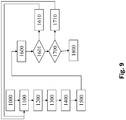
- Figure 9 shows in a flowchart the sequence of a method for parameterizing the machine learning system 60 according to an embodiment.
- the value for the regularization parameter ⁇ of the cost function (see formula (2)) is set to a predefinable initial value.
- the respective subsets X T are also called p-randomized subsets X T p designated.
- Randomization involves a random permutation of the assignment of input signals x T and associated output signals, ie classifications, y T within the selected p subset X T p generated, ie the output signals y T are interchanged.
- randomized classifications y T can also be generated by randomly drawing from the set of possible classes by means of the real random number generator or the generator of pseudo random numbers.
- the data set obtained by this randomization is called a randomized data set X r p referred to, wherein the superscript (p) is also omitted to simplify the notation below.
- the training data unit 150 for each of the trained machine learning systems 60 that is to say for each randomization degree p and associated set of parameters ⁇ , as test data in each case the randomized data set X r p , which was also used for training.
- Figure 10 shows the sequence of the method for operating the machine learning system 60.
- the machine learning system 60 receives (2000) input data x and determines associated output data y with the aid of a function f parameterized by the parameters ⁇ . Depending on the output data y, control signals A can be determined (2100). This ends the process.
- Figure 11 illustrates the dependence of the classification accuracy KG on the degree of randomization p for different values of the regularization parameter ⁇ .
- the degree of randomization p is shown with interpolated points, the right bound of inequality (3) as a dashed line.
Landscapes
- Engineering & Computer Science (AREA)
- Theoretical Computer Science (AREA)
- Physics & Mathematics (AREA)
- Software Systems (AREA)
- General Physics & Mathematics (AREA)
- Computing Systems (AREA)
- Artificial Intelligence (AREA)
- Mathematical Physics (AREA)
- Data Mining & Analysis (AREA)
- Evolutionary Computation (AREA)
- General Engineering & Computer Science (AREA)
- Computational Linguistics (AREA)
- Molecular Biology (AREA)
- General Health & Medical Sciences (AREA)
- Biophysics (AREA)
- Biomedical Technology (AREA)
- Life Sciences & Earth Sciences (AREA)
- Health & Medical Sciences (AREA)
- Computational Mathematics (AREA)
- Algebra (AREA)
- Probability & Statistics with Applications (AREA)
- Mathematical Analysis (AREA)
- Mathematical Optimization (AREA)
- Pure & Applied Mathematics (AREA)
- Computer Vision & Pattern Recognition (AREA)
- Medical Informatics (AREA)
- Feedback Control In General (AREA)
- Image Analysis (AREA)
Applications Claiming Priority (1)
| Application Number | Priority Date | Filing Date | Title |
|---|---|---|---|
| DE102018216298.0A DE102018216298A1 (de) | 2018-09-25 | 2018-09-25 | Verfahren und Vorrichtung zum Betreiben eines Steuerungssystems |
Publications (1)
| Publication Number | Publication Date |
|---|---|
| EP3629252A1 true EP3629252A1 (fr) | 2020-04-01 |
Family
ID=67658713
Family Applications (1)
| Application Number | Title | Priority Date | Filing Date |
|---|---|---|---|
| EP19191560.2A Ceased EP3629252A1 (fr) | 2018-09-25 | 2019-08-13 | Procédé et dispositif de fonctionnement d'un système de commande |
Country Status (3)
| Country | Link |
|---|---|
| EP (1) | EP3629252A1 (fr) |
| CN (1) | CN110942134A (fr) |
| DE (1) | DE102018216298A1 (fr) |
Families Citing this family (2)
| Publication number | Priority date | Publication date | Assignee | Title |
|---|---|---|---|---|
| DE102020212296A1 (de) | 2020-09-29 | 2022-03-31 | Festo Se & Co. Kg | Druckluft-Bereitstellungsvorrichtung und Verfahren |
| US12482233B2 (en) * | 2021-05-07 | 2025-11-25 | Fanuc Corporation | Machine learning device, classification device, and control device |
Citations (2)
| Publication number | Priority date | Publication date | Assignee | Title |
|---|---|---|---|---|
| DE202017102238U1 (de) | 2017-04-13 | 2017-05-12 | Robert Bosch Gmbh | Aktorsteuerungssystem |
| US20170357879A1 (en) * | 2017-08-01 | 2017-12-14 | Retina-Ai Llc | Systems and methods using weighted-ensemble supervised-learning for automatic detection of ophthalmic disease from images |
Family Cites Families (4)
| Publication number | Priority date | Publication date | Assignee | Title |
|---|---|---|---|---|
| US10332028B2 (en) * | 2015-08-25 | 2019-06-25 | Qualcomm Incorporated | Method for improving performance of a trained machine learning model |
| GB2552995A (en) * | 2016-08-19 | 2018-02-21 | Nokia Technologies Oy | Learned model data processing |
| DE202017102235U1 (de) * | 2017-04-13 | 2017-05-12 | Robert Bosch Gmbh | Trainingssystem |
| CN108406767A (zh) * | 2018-02-13 | 2018-08-17 | 华南理工大学 | 面向人机协作的机器人自主学习方法 |
-
2018
- 2018-09-25 DE DE102018216298.0A patent/DE102018216298A1/de not_active Withdrawn
-
2019
- 2019-08-13 EP EP19191560.2A patent/EP3629252A1/fr not_active Ceased
- 2019-09-24 CN CN201910903393.XA patent/CN110942134A/zh active Pending
Patent Citations (2)
| Publication number | Priority date | Publication date | Assignee | Title |
|---|---|---|---|---|
| DE202017102238U1 (de) | 2017-04-13 | 2017-05-12 | Robert Bosch Gmbh | Aktorsteuerungssystem |
| US20170357879A1 (en) * | 2017-08-01 | 2017-12-14 | Retina-Ai Llc | Systems and methods using weighted-ensemble supervised-learning for automatic detection of ophthalmic disease from images |
Non-Patent Citations (1)
| Title |
|---|
| CHIYUAN ZHANG ET AL: "UNDERSTANDING DEEP LEARNING REQUIRES RE- THINKING GENERALIZATION", ARXIV, 26 February 2017 (2017-02-26), pages 1 - 15, XP055644868, Retrieved from the Internet <URL:https://arxiv.org/abs/1611.03530> [retrieved on 20191121] * |
Also Published As
| Publication number | Publication date |
|---|---|
| DE102018216298A1 (de) | 2020-03-26 |
| CN110942134A (zh) | 2020-03-31 |
Similar Documents
| Publication | Publication Date | Title |
|---|---|---|
| EP3853778B1 (fr) | Procédé et dispositif servant à faire fonctionner un système de commande | |
| EP3788552B1 (fr) | Procede et dispositif pour la determination d'une image de profondeur a partir d'une image d'entree | |
| DE102020210352A1 (de) | Verfahren und Vorrichtung zum Transferlernen zwischen modifizierten Aufgaben | |
| EP3701434A1 (fr) | Procédé et dispositif destinés à produire automatiquement un réseau neuronal artificiel | |
| DE60002290T2 (de) | Verfahren zum Nachweis von Anomalien in einem Signal | |
| WO2020064211A1 (fr) | Procédé et dispositif de détermination d'un signal de commande | |
| DE102023213094A1 (de) | Verfahren und Vorrichtung zur Validierung von Erklärbarkeitsmethoden für ein maschinelles Lernsystem | |
| EP3785178B1 (fr) | Procede et dispositif pour determiner une configuration de reseau d'un reseau neuronal | |
| EP3629252A1 (fr) | Procédé et dispositif de fonctionnement d'un système de commande | |
| EP3605404B1 (fr) | Procédé et dispositif d'entraînement d'une routine d'apprentissage mécanique permettant de commander un système technique | |
| DE202021105192U1 (de) | Vorrichtung zum maschinellen Lernen aus einer geringen Anzahl von Trainingsdatenbeispielen | |
| EP3786853B1 (fr) | Compression d'un réseau de neurones profond | |
| WO2025219164A1 (fr) | Procédé de génération d'un programme de commande pour un contrôleur logique programmable et système d'automatisation | |
| DE102020212514A1 (de) | Verfahren zur Ermittlung eines Ausgabesignals mittels eines maschinellen Lernsystems | |
| DE102018216079A1 (de) | Verfahren und Vorrichtung zum Betreiben eines Steuerungssystems | |
| DE102020212108A1 (de) | Verfahren und Vorrichtung zum Anlernen eines maschinellen Lernsystems | |
| DE102020208671A1 (de) | Verfahren und Vorrichtung zum Erstellen eines Systems zum automatisierten Erstellen von maschinellen Lernsystemen | |
| EP3748574A1 (fr) | Correction adaptative des données mesurées en fonction de différents types de défaillances | |
| WO2020173700A1 (fr) | Procédé et dispositif de fonctionnement d'un système de commande | |
| EP3899809B1 (fr) | Procédé à l'apprentissage d'un réseau neuronal | |
| DE102021210775A1 (de) | Verfahren und Vorrichtung zum maschinellen Lernen aus einer geringen Anzahl von Trainingsdatenbeispielen | |
| WO2023016843A1 (fr) | Procédé et dispositif de création automatisée d'un système d'apprentissage machine pour la fusion de données de capteurs multiples | |
| DE102021207937A1 (de) | Verfahren und Vorrichtung zum Erstellen eines maschinellen Lernsystems mit einer Mehrzahl von Ausgängen | |
| DE102018216295B4 (de) | Verfahren und Vorrichtung zum Ermitteln eines Ansteuersignals zum Ansteuern eines Aktors | |
| DE102020208309A1 (de) | Verfahren und Vorrichtung zum Erstellen eines maschinellen Lernsystems |
Legal Events
| Date | Code | Title | Description |
|---|---|---|---|
| PUAI | Public reference made under article 153(3) epc to a published international application that has entered the european phase |
Free format text: ORIGINAL CODE: 0009012 |
|
| STAA | Information on the status of an ep patent application or granted ep patent |
Free format text: STATUS: THE APPLICATION HAS BEEN PUBLISHED |
|
| AK | Designated contracting states |
Kind code of ref document: A1 Designated state(s): AL AT BE BG CH CY CZ DE DK EE ES FI FR GB GR HR HU IE IS IT LI LT LU LV MC MK MT NL NO PL PT RO RS SE SI SK SM TR |
|
| AX | Request for extension of the european patent |
Extension state: BA ME |
|
| RAP1 | Party data changed (applicant data changed or rights of an application transferred) |
Owner name: ROBERT BOSCH GMBH |
|
| STAA | Information on the status of an ep patent application or granted ep patent |
Free format text: STATUS: REQUEST FOR EXAMINATION WAS MADE |
|
| 17P | Request for examination filed |
Effective date: 20201001 |
|
| RBV | Designated contracting states (corrected) |
Designated state(s): AL AT BE BG CH CY CZ DE DK EE ES FI FR GB GR HR HU IE IS IT LI LT LU LV MC MK MT NL NO PL PT RO RS SE SI SK SM TR |
|
| STAA | Information on the status of an ep patent application or granted ep patent |
Free format text: STATUS: EXAMINATION IS IN PROGRESS |
|
| 17Q | First examination report despatched |
Effective date: 20201127 |
|
| APBK | Appeal reference recorded |
Free format text: ORIGINAL CODE: EPIDOSNREFNE |
|
| APBN | Date of receipt of notice of appeal recorded |
Free format text: ORIGINAL CODE: EPIDOSNNOA2E |
|
| APBR | Date of receipt of statement of grounds of appeal recorded |
Free format text: ORIGINAL CODE: EPIDOSNNOA3E |
|
| APAF | Appeal reference modified |
Free format text: ORIGINAL CODE: EPIDOSCREFNE |
|
| APBT | Appeal procedure closed |
Free format text: ORIGINAL CODE: EPIDOSNNOA9E |
|
| STAA | Information on the status of an ep patent application or granted ep patent |
Free format text: STATUS: THE APPLICATION HAS BEEN REFUSED |
|
| 18R | Application refused |
Effective date: 20241120 |