EP3629257A1 - Procédés d'estimation de données de réparation utilisant l'intelligence artificielle et dispositifs associés - Google Patents
Procédés d'estimation de données de réparation utilisant l'intelligence artificielle et dispositifs associés Download PDFInfo
- Publication number
- EP3629257A1 EP3629257A1 EP19200112.1A EP19200112A EP3629257A1 EP 3629257 A1 EP3629257 A1 EP 3629257A1 EP 19200112 A EP19200112 A EP 19200112A EP 3629257 A1 EP3629257 A1 EP 3629257A1
- Authority
- EP
- European Patent Office
- Prior art keywords
- repair
- artificial intelligence
- identified
- repair data
- received
- Prior art date
- Legal status (The legal status is an assumption and is not a legal conclusion. Google has not performed a legal analysis and makes no representation as to the accuracy of the status listed.)
- Withdrawn
Links
Images




Classifications
-
- G—PHYSICS
- G06—COMPUTING OR CALCULATING; COUNTING
- G06Q—INFORMATION AND COMMUNICATION TECHNOLOGY [ICT] SPECIALLY ADAPTED FOR ADMINISTRATIVE, COMMERCIAL, FINANCIAL, MANAGERIAL OR SUPERVISORY PURPOSES; SYSTEMS OR METHODS SPECIALLY ADAPTED FOR ADMINISTRATIVE, COMMERCIAL, FINANCIAL, MANAGERIAL OR SUPERVISORY PURPOSES, NOT OTHERWISE PROVIDED FOR
- G06Q10/00—Administration; Management
- G06Q10/20—Administration of product repair or maintenance
-
- G—PHYSICS
- G06—COMPUTING OR CALCULATING; COUNTING
- G06N—COMPUTING ARRANGEMENTS BASED ON SPECIFIC COMPUTATIONAL MODELS
- G06N3/00—Computing arrangements based on biological models
- G06N3/02—Neural networks
- G06N3/04—Architecture, e.g. interconnection topology
- G06N3/0464—Convolutional networks [CNN, ConvNet]
-
- G—PHYSICS
- G06—COMPUTING OR CALCULATING; COUNTING
- G06N—COMPUTING ARRANGEMENTS BASED ON SPECIFIC COMPUTATIONAL MODELS
- G06N3/00—Computing arrangements based on biological models
- G06N3/02—Neural networks
- G06N3/08—Learning methods
-
- G—PHYSICS
- G06—COMPUTING OR CALCULATING; COUNTING
- G06N—COMPUTING ARRANGEMENTS BASED ON SPECIFIC COMPUTATIONAL MODELS
- G06N3/00—Computing arrangements based on biological models
- G06N3/02—Neural networks
- G06N3/08—Learning methods
- G06N3/09—Supervised learning
-
- G—PHYSICS
- G06—COMPUTING OR CALCULATING; COUNTING
- G06Q—INFORMATION AND COMMUNICATION TECHNOLOGY [ICT] SPECIALLY ADAPTED FOR ADMINISTRATIVE, COMMERCIAL, FINANCIAL, MANAGERIAL OR SUPERVISORY PURPOSES; SYSTEMS OR METHODS SPECIALLY ADAPTED FOR ADMINISTRATIVE, COMMERCIAL, FINANCIAL, MANAGERIAL OR SUPERVISORY PURPOSES, NOT OTHERWISE PROVIDED FOR
- G06Q40/00—Finance; Insurance; Tax strategies; Processing of corporate or income taxes
- G06Q40/08—Insurance
-
- G—PHYSICS
- G06—COMPUTING OR CALCULATING; COUNTING
- G06V—IMAGE OR VIDEO RECOGNITION OR UNDERSTANDING
- G06V20/00—Scenes; Scene-specific elements
- G06V20/10—Terrestrial scenes
-
- G—PHYSICS
- G07—CHECKING-DEVICES
- G07C—TIME OR ATTENDANCE REGISTERS; REGISTERING OR INDICATING THE WORKING OF MACHINES; GENERATING RANDOM NUMBERS; VOTING OR LOTTERY APPARATUS; ARRANGEMENTS, SYSTEMS OR APPARATUS FOR CHECKING NOT PROVIDED FOR ELSEWHERE
- G07C5/00—Registering or indicating the working of vehicles
- G07C5/08—Registering or indicating performance data other than driving, working, idle, or waiting time, with or without registering driving, working, idle or waiting time
- G07C5/0808—Diagnosing performance data
Definitions
- This technology generally relates to methods for accurately estimating repair data utilizing artificial intelligence and devices thereof.
- Prior technological solutions for assisting with providing estimates have generally been limited to software tools to capture and record input data and to limited on-line searching capabilities.
- an inspector from a vehicle repair shop may type in notes while inspecting for damages or other defects to a vehicle. Additionally, the inspector may try to access reference materials, such as parts lists, manuals, handbooks or other online databases, to identify a list of parts for repairing each of the defects.
- reference materials such as parts lists, manuals, handbooks or other online databases
- the inspector has to search for and correctly identify and access the correct reference materials or databases which takes a significant amount of time and effort. Since different vehicles may require different repairing processes and procedures, repairing materials and labor, the inspector needs to generate information that is vehicle specific for coming up with an accurate list of the parts and labor required. This traditional process is laborious and time consuming and often leads to an inaccurate list of parts.
- a method for automated estimating of repair data includes, applying, by a computing apparatus, a first generated artificial intelligence model on a received vehicle damage image associated with an electronic claim to identify one or more damaged components on a vehicle without using any metadata, the first generated artificial intelligence database is trained on prior vehicle damage images.
- a heat map analysis is performed by the computing apparatus on the received actual vehicle damage image to identify a damage severity value associated with at least one of the identified one or more damaged components.
- a second generated artificial intelligence model is applied, by the computing apparatus, on the received actual vehicle damage image and the damage severity value associated with at least one of the identified one or more damaged components to determine repair data and a repair-or-replace designation for at least one of the identified one or more damaged components.
- the determined repair data and the determined repair-or-replace designation for at least one of the identified one or more damaged components is provided, by the repair management computing apparatus, in response to the received actual vehicle damage image associated with the electronic claim.
- a non-transitory computer readable medium having stored thereon instructions for automated estimating of repair data comprising executable code, which when executed by at least one processor, cause the processor to apply a first generated artificial intelligence model on a received vehicle damage image associated with an electronic claim to identify one or more damaged components on a vehicle without using any metadata
- the first generated artificial intelligence database is trained on prior vehicle damage images.
- a heat map analysis is performed on the received actual vehicle damage image to identify a damage severity value associated with at least one of the identified one or more damaged components.
- a second generated artificial intelligence model is applied on the received actual vehicle damage image and the damage severity value associated with at least one of the identified one or more damaged components to determine repair data and a repair-or-replace designation for at least one of the identified one or more damaged components.
- the determined repair data and the determined repair-or-replace designation for at least one of the identified one or more damaged components is provided in response to the received actual vehicle damage image associated with the electronic claim.
- a repair management computing apparatus includes a memory coupled to the processor which is configured to be capable of executing programmed instructions comprising and stored in the memory to apply a first generated artificial intelligence model on a received vehicle damage image associated with an electronic claim to identify one or more damaged components on a vehicle without using any metadata, the first generated artificial intelligence database is trained on prior vehicle damage images.
- a heat map analysis is performed on the received actual vehicle damage image to identify a damage severity value associated with at least one of the identified one or more damaged components.
- a second generated artificial intelligence model is applied on the received actual vehicle damage image and the damage severity value associated with at least one of the identified one or more damaged components to determine repair data and a repair-or-replace designation for at least one of the identified one or more damaged components.
- the determined repair data and the determined repair-or-replace designation for at least one of the identified one or more damaged components is provided in response to the received actual vehicle damage image associated with the electronic claim.
- this technology provides methods, non-transitory computer readable medium, and apparatuses that accurately automate estimating repair data.
- examples of this technology apply a generated artificial intelligence model that has been revised and refined based on feedback received from an inference phase.
- the claimed technology advantageously utilize an artificial intelligence model that enables identifying damages to a vehicle directly from vehicle damage images and without requiring associated textual information, such as metadata.
- advantages of the disclosed technology include utilization of a heat map analysis to enable an automated and consistent determination of a repair-or-replace designation for each damaged component in real-time or near real time without requiring any user intervention.
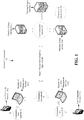
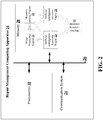
- FIGS. 1-2 An environment 10 with an example of a repair management computing apparatus 14 is illustrated in FIGS. 1-2 .
- the environment 10 includes the repair management computing apparatus 14, plurality of claims management devices 12(1)-12(n), plurality of user computing devices 13(1)-13(n), plurality of insurance data servers 16(1)-16(n), and a training images database 17 coupled via one or more communication networks 30, although the environment could include other types and numbers of systems, devices, components, and/or other elements as is generally known in the art and will not be illustrated or described herein.
- This technology provides a number of advantages including providing methods, non-transitory computer readable medium, and apparatuses that more accurately manage generation of repair estimation data, such as required labor hours, part price, and rate as well as a repair-or-replace designation, with artificial intelligence and a heat map analysis.
- the repair management computing apparatus 14 is programmed to more accurately manage repair estimation data, such as required labor hours, part price, and rate as well as a repair-or-replace designation, with artificial intelligence and a heat map analysis, although the apparatus can perform other types and/or numbers of functions or other operations and this technology can be utilized with other types of claims.
- the repair management computing apparatus 14 includes a processor 18, a memory 20, and a communication system 24 which are coupled together by a bus 26, although the repair management computing apparatus 14 may comprise other types and/or numbers of physical and/or virtual systems, devices, components, and/or other elements in other configurations.
- the processor 18 in the repair management computing apparatus 14 may execute one or more programmed instructions stored in the memory 20 for more accurately manage repair estimation data, such as required labor hours, part price, and rate as well as a repair-or-replace designation, with artificial intelligence and a heat map analysis as illustrated and described in the examples herein, although other types and numbers of functions and/or other operations can be performed.
- the processor 18 in the repair management computing apparatus 14 may include one or more central processing units and/or general purpose processors with one or more processing cores, for example.
- the memory 20 in the repair management computing apparatus 14 stores the programmed instructions and other data for one or more aspects of the present technology as described and illustrated herein, although some or all of the programmed instructions could be stored and executed elsewhere.
- a variety of different types of memory storage devices such as a random access memory (RAM) or a read only memory (ROM) in the system or a floppy disk, hard disk, CD ROM, DVD ROM, or other computer readable medium which is read from and written to by a magnetic, optical, or other reading and writing system that is coupled to the processor 18, can be used for the memory 20. Additionally as illustrated in FIG.
- memory 20 comprises an image processing engine 21, metadata parsing engine 22, artificial intelligence learning engine 23, artificial intelligence inference engine 25, and the machine learning database 27, although the memory 20 can include other types or amounts of modules or components that would assist the repair management computing apparatus 14 with accurately estimating repair data using artificial intelligence.
- the image processing engine 21 assists with processing the received image(s) associated with a damage or repair of a vehicle, although the image processing engine 21 can be configured to perform other types or amounts of activities. Further in this example, the image processing engine 21 scans the received image(s) to identify the damage(s) on the vehicle, the severity of the damage(s), type of damage(s), although the image processing engine 21 can scan the received image to identify other types or amounts of information.
- the image processing engine 21 can use algorithms, such as pattern recognition, independent component analysis, convolutional neural networks, and principal components analysis, while scanning the received image, although the image processing engine 21 can use other types or amounts of algorithms. Additionally in this example, the image processing engine 21 also assists with performing a severity of the damage analysis on the received image(s) by analyzing the heat map of the image(s) to determine a repair-or-replace designation, although the image processing engine 21 can use other techniques to identify the severity of the damage.
- algorithms such as pattern recognition, independent component analysis, convolutional neural networks, and principal components analysis
- the metadata parsing engine 22 within the memory 20 assists with parsing the metadata associated with a received image(s), although the metadata parsing engine 22 can be configured to perform other functions.
- the metadata parsing engine 22 can identify the data such as make of the vehicle, model of the vehicle, year of the make and model of the vehicle, damage described in the line item of the claim, although the metadata parsing engine 22 can identify other types or amounts of information.
- the artificial intelligence learning engine 23 within the memory 20 assists with machine learning of the damages and the severity of the damages using neural networks and/or convolution neural networks (CNN) (wherein CNN is a type of neural network structure, and a subpart of neural networks), although the artificial intelligence learning engine 23 can use other techniques to identify the damage(s) and the severity of the damage(s).
- CNN convolution neural networks
- the artificial intelligence learning engine 23 receives the input from the image processing engine 21 and the metadata parsing engine 22 as inputs to the neural networks and the CNN and assists with identifying the component, make, model, repair cost, labor data, and a decision of whether to repair or replace the component, although the artificial intelligence learning engine 23 can be configured to perform other functions.
- the memory 20 includes an artificial intelligence inference engine 25 that assists with using the learning data from the artificial intelligence learning engine to component, make, model, repair cost, labor data, and a decision of whether to repair or replace the component for a provided image without requiring metadata, although the artificial intelligence inference engine 25 can be configured to perform other types or amounts of functions.
- the machine learning database 27 within the memory can be used to store the artificial intelligence model or the learning of the artificial intelligence learning engine 23, although the machine learning database 27 can store other types or amounts of data.
- the artificial intelligence model stored in the machine learning database 27 can be further used by the artificial intelligence inference engine 25 to assist with accurately estimating the repair data in real-time.
- the communication system 24 in the repair management computing apparatus 14 operatively couples and communicates between one or more of the plurality of claims management devices 12(1)-12(n), one or more of the plurality of insurance data servers 16(1)-16(n), and the training images database 17 which are all coupled together by one or more of the communication networks 30, although other types and numbers of communication networks or systems with other types and numbers of connections and configurations to other devices and elements.
- the communication networks 30 can use TCP/IP over Ethernet and industry-standard protocols, including NFS, CIFS, SOAP, XML, LDAP, SCSI, and SNMP, although other types and numbers of communication networks, can be used.
- the communication networks 30 in this example may employ any suitable interface mechanisms and network communication technologies, including, for example, any local area network, any wide area network (e.g., Internet), teletraffic in any suitable form (e.g., voice, modem, and the like), Public Switched Telephone Network (PSTNs), Ethernet-based Packet Data Networks (PDNs), and any combinations thereof and the like.
- PSTNs Public Switched Telephone Network
- PDNs Packet Data Networks
- each of the plurality of claims management devices 12(1)-12(n) may electronic claims associated with damage(s) to a vehicle to receive an estimation of the repair data such as labor hours, part price, or rate, operation code of an item, such as a vehicle panel, although the plurality of claims management devices 12(1)-12(n) can send other types or amounts of in other manners and/or from other sources.
- Each of the plurality of claims management devices 12(1)-12(n) may include a processor, a memory, user input device, such as a keyboard, mouse, and/or interactive display screen by way of example only, a display device, and a communication interface, which are coupled together by a bus or other link, although each may have other types and/or numbers of other systems, devices, components, and/or other elements.
- Each of the plurality of user computing devices 13(1)-13(n) may include a processor, a memory, user input device, such as a keyboard, mouse, and/or interactive display screen by way of example only, a display device, and a communication interface, which are coupled together by a bus or other link, although each may have other types and/or numbers of other systems, devices, components, and/or other elements.
- each of the plurality of user computing devices 13(1)-13(n) can submit one or more images of a vehicle damage along with an insurance claim to the plurality of claims management devices 12(1)-12(n), although the plurality of user computing devices 13(1)-13(n) can submit other types or amounts of information.
- the plurality of insurance data servers 16(1)-16(n) may store and provide data to more accurately estimation repair data, such as required labor hours, part price, and labor rate, and an operation code, to the repair management computing apparatus 14 via one or more of the communication networks 30, for example, although other types and/or numbers of storage media in other configurations could be used.
- each of the plurality of insurance data servers 16(1)-16(n) may comprise various combinations and types of storage hardware and/or software and represent a system with multiple network server devices in a data storage pool, which may include internal or external networks.
- Various network processing applications such as CIFS applications, NFS applications, HTTP Web Network server device applications, and/or FTP applications, may be operating on the plurality of insurance data servers 16(1)-16(n) and may transmit data in response to requests from the repair management computing apparatus 14.
- Each the plurality of insurance data servers 16(1)-16(n) may include a processor, a memory, and a communication interface, which are coupled together by a bus or other link, although each may have other types and/or numbers of other systems, devices, components, and/or other elements.
- the training images database 17 may include a processor, a memory, and a communication interface, which are coupled together by a bus or other link, although each may have other types and/or numbers of other systems, devices, components, and/or other elements.
- the training images database 17 provides the training images of vehicle damage necessary to build, train, and refine the artificial intelligence database 27, although the training images database 17 can include other types or amounts of information.
- training images database 17 may comprise various combinations and types of storage hardware and/or software and represent a system with multiple network server devices in a data storage pool, which may include internal or external networks.
- Various network processing applications such as CIFS applications, NFS applications, HTTP Web Network server device applications, and/or FTP applications, may be operating on the training images database 17 and may transmit data in response to requests from the repair management computing apparatus 14.
- the exemplary network environment 10 with the repair management computing apparatus 14, the plurality of claims management devices 12(1)-12(n), the plurality of user computing devices 13(1)-13(n), the plurality of insurance data servers 16(1)-16(n), the training images database 17, and the communication networks 30 are described and illustrated herein, other types and numbers of systems, devices, components, and/or elements in other topologies can be used. It is to be understood that the systems of the examples described herein are for exemplary purposes, as many variations of the specific hardware and software used to implement the examples are possible, as will be appreciated by those skilled in the relevant art(s).
- two or more computing systems or devices can be substituted for any one of the systems or devices in any example. Accordingly, principles and advantages of distributed processing, such as redundancy and replication also can be implemented, as desired, to increase the robustness and performance of the devices, apparatuses, and systems of the examples.
- the examples may also be implemented on computer system(s) that extend across any suitable network using any suitable interface mechanisms and traffic technologies, including by way of example only teletraffic in any suitable form (e.g., voice and modem), wireless traffic media, wireless traffic networks, cellular traffic networks, G3 traffic networks, Public Switched Telephone Network (PSTNs), Packet Data Networks (PDNs), the Internet, intranets, and combinations thereof.
- PSTNs Public Switched Telephone Network
- PDNs Packet Data Networks
- the Internet intranets, and combinations thereof.
- the examples also may be embodied as a non-transitory computer readable medium having instructions stored thereon for one or more aspects of the present technology as described and illustrated by way of the examples herein, as described herein, which when executed by the processor, cause the processor to carry out the steps necessary to implement the methods of this technology as described and illustrated with the examples herein.
- step 305 the image processing engine 21 within the repair management computing apparatus 14 obtains a plurality of training vehicle damage images from the training images database 17, although the repair management computing apparatus 14 can receive the image from other devices, such as the plurality of insurance data servers 16(1)-16(n), and can receive images of other types of items.
- each of the plurality of vehicle damage images includes a picture of a damaged component of a vehicle, although the vehicle damage images can include other types of information.
- FIG. 4A and FIG. 4B illustrate examples of two vehicle damage images: first training image 405; and the second training image 410, although the repair management computing apparatus 14 can include other types and/or numbers of training images.
- the metadata parsing engine 22 within the repair management computing apparatus 14 obtains and parses the metadata out of each of the obtained plurality of training vehicle damage images.
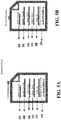
- the exemplary parsed metadata from each of the plurality of training images is illustrated in FIGS 5A and 5B .
- the first metadata 500 in FIG. 5A for the first training image 405 shown in FIG. 4A includes metadata on the make 505, model, 510, year 515, color 520, trim 525, and the description of the damage and the severity 530, although each of the images may have other types and/or numbers of metadata.
- the second metadata 500 in FIG. 5B for the second training image 410 shown in FIG. 4B includes metadata on the make 560, model 656, year 570, color 575, trim 580, and description of the damage and the severity of the damage 585, although each of the images may have other types and/or numbers of metadata.
- the image processing engine 21 within the repair management computing apparatus 14 processes the obtained plurality of training vehicle damage images to identify the damaged component(s), although other types or amounts of damages may be identified.
- the image processing engine 21 within the repair management computing apparatus identifies the make, model, and year of the vehicle to obtain the corresponding vehicle data and the specifications from one of the plurality of data servers 16(1)-16(n) and the specifications are then used to compare against the obtained training images to identify the damage.
- the image processing engine 21 within the repair management computing apparatus 14 identifies the make of the car as Toyota®, model as Corolla, and the year of vehicle as 2019 from the metadata.
- the image processing engine 21 within the repair management computing apparatus 14 obtains the vehicle data and the specifications data which may include images to compare against the first training image 405 to identify damage to the front bumper 605 in the first training image as illustrated in FIG. 6A .
- the first damage to the front bumper 605 identified by the image processing engine 21 correlates to the description of the damage 530 described in the first metadata 500 associated with the first training image 405.
- the image processing engine 21 within the repair management computing apparatus 14 identifies damage to the front bumper 610 illustrated in FIG. 6B .
- the artificial intelligence learning engine 23 within the repair management computing apparatus 14 obtains stored repair data on the actual completed repair performed on the vehicle based on the extracted metadata from one of the plurality of insurance data servers 16(1)-16(n), although the artificial intelligence learning engine 23 within the repair management computing apparatus 14 can obtain this historical repair data from other locations or sources.
- the artificial intelligence learning engine 23 within the repair management computing apparatus 14 uses the vehicle make, model, year, and the identified damages to the component(s) to obtain the corresponding repair from one of the plurality of insurance data servers 16(1)-16(n), although other techniques can be used to obtain the corresponding repair data.
- FIG. 7 illustrates repair data 700 associated with the first training image 405 and the second training image 410.
- the repair data 700 includes data on a type of vehicle 705, make of the vehicle 710, a model of the vehicle 715, a year of the model 720, a damaged component 725, a repair cost 730, a replacement cost 735, labor hours 740, a severity of damage rating 745, and a designation of whether to repair-or-replace 750 or other operation codes (such as total loss), although the repair data 700 can include other types data associated with the repair that was performed on the damage to the front bumper 605 (illustrated in FIG. 6A ) and the damage to the front bumper 610 (illustrated in FIG. 6B ).
- step 325 the artificial intelligence learning engine 23 within the repair management computing apparatus 14 generates an artificial intelligence model by correlating the identified damage to the component(s) and the repair data to the corresponding obtained plurality of plurality of training vehicle damage images, although the artificial intelligence model can be developed using other techniques.
- the steps 305 to 320 illustrate and describe assisting with generating a trained artificial intelligence model for determining repair data from image(s) without metadata.
- step 330 the artificial intelligence learning engine 23 within the repair management computing apparatus 14 stores the generated artificial intelligence model into the machine learning database 27, although the artificial intelligence learning engine 23 within the repair management computing apparatus 14 can store other types or amounts of data at other locations.
- the exemplary flow proceeds back to step 305 where the image processing engine 21 within the repair management computing apparatus 14 receives a subsequent plurality of training vehicle damage images to further refine the machine learning phase 300.
- the artificial intelligence learning engine 23 within the repair management computing apparatus 14 refines the generated artificial intelligence model by learning to identify damage and the associated repair data using the images, the metadata, and the associated historic repair data along with techniques, such as neural networks and/or convolution neural networks (CNN).
- CNN convolution neural networks
- the artificial intelligence learning engine 23 within the repair management computing apparatus 14 can accurately identify damage in images of a vehicle and accurately identify the make, model, damaged component, labor price, and the replace-or-repair designation or a total loss designation with the heat map analysis.
- FIG. 8 An example of the artificial intelligence learning engine 23 within the repair management computing apparatus 14 refining the generated artificial intelligence model using the convolution neural network technique is illustrated in FIG. 8 .
- the artificial intelligence learning engine 23 within the repair management computing apparatus 14 learns to identify the make, mode, year, damaged component, as illustrated above for the training images 805 and 810.
- the artificial intelligence learning engine 23 within the repair management computing apparatus 14 applies the learning from the training images 805 and 810 to the training images 815 and 820.
- the training images 815 and 820 are captured at different angles and so the artificial intelligence learning engine 23 within the repair management computing apparatus 14 first rotates the training images 815 and 820 similar to training images 805 and 810 and then learns to identify the make, mode, year, and damaged component, severity of the damage, damage type, part price, labor hours, and labor rate as illustrated.
- the artificial intelligence learning engine 23 within the repair management computing apparatus 14 can apply numerous transformation functions such as mirroring or contrast reducing or increasing on the training images to identify the make, mode, year, and damaged component. After several iterations of learning, the artificial intelligence learning engine 23 within the repair management computing apparatus 14 is able to accurately identify the images associated with the front bumper of the Corolla.
- the artificial intelligence learning engine 23 within the repair management computing apparatus 14 is able to map the inputs of training images such as 805, 810, 815, and 820 to a Toyota® Corolla with a damaged front bumper.
- artificial intelligence learning engine 23 within the repair management computing apparatus 14 is able to generate a refined artificial intelligence model when compared to the artificial intelligence model generated in step 325.
- the refined artificial intelligence model is also stored in the machine learning database 27, although the refined artificial intelligence model can be stored at other memory locations.
- step 905 the image processing engine 21 within the repair management computing apparatus 14 receives one or more vehicle damage images within an electronic claim from one of the plurality of claims management devices 12(1)-12(n), although the repair management computing apparatus 14 can receive other the image(s) from other sources and may receive other types or amounts of data, such as textual data associated with the damaged vehicle.
- one of the plurality of user computing devices 12(1)-12(n) submits one or more images associated with a vehicle damage along with the related data as an electronic claim to one of the plurality of claims management devices 12(1)-12(n).
- the receiving one of the plurality of claims management devices 12(1)-12(n) forwards only the received vehicle damage image(s) to the image processing engine 21 within the repair management computing apparatus 14.
- An example of the received image is illustrated in FIG. 10 as the vehicle damage image 1000.
- the electronic claim can include other types or amounts of data associated with the damaged vehicle and/or the component.
- the artificial intelligence inference engine 25 within the repair management computing apparatus 14 analyzes the received one or more images to identify the damage(s), the component damaged, the make, model, and year of manufacture, based on the refined artificial intelligence model in the machine learning database 27.
- the artificial intelligence inference engine 25 within the repair management computing apparatus 14 in another example, can use other parameters available at the time of inference phase 900 such as geo location of the images, techniques, or data to identify the damage(s), the component damaged, the make, model, year of manufacture, severity of the damage.
- the artificial intelligence inference engine 25 within the repair management computing apparatus 14 does not require the metadata illustrated in FIG. 5A and FIG.
- the learning phase 300 to identify the damage(s), the component damaged, the make, model, and year of manufacture, and severity of the damage.
- just the received one or more vehicle damage images is sufficient to identify the damage to the component(s), the make, model, and year of manufacture, and the disclosed technology is able to accurately identify the aforementioned parameters based on the refined artificial intelligence model.
- the image processing engine 21 within the repair management computing apparatus 14 identifies the severity of the damage for each of the one or more vehicle damage images.
- FIG. 11A illustrates a first heat map 1105 associated with the first damage to the front bumper
- FIG. 11B illustrates a second heat map 1110 associated with the second damage to the front bumper.
- the image processing engine 21 within the repair management computing apparatus 14 can use any existing heat map detection algorithms to analyze the images and identify the heat map, that can be recognized by a person having ordinary skill in the art.
- heat map includes a graphical representation of localized area of damage, although the heat map can include other types or amounts of information.
- a darker shade illustrated in in the first heat map 1105 relates to severe damage to the component (front bumper in this example) and a lighter shade of the first heat map relates to less severe damage to the component. Accordingly, if substantial portion of the heat map (as illustrated in FIG. 11A first heat map 1105) of the component is of darker shade, then the image processing engine 21 within the repair management computing apparatus 14 identifies that the component is severely damaged and therefore has to be replaced due to a total loss. On the contrary, if substantial portion of the heat map is of a lighter shade, then the image processing engine 21 within the repair management computing apparatus 14 would determine that the component has not been severely damaged and therefore could be repaired.
- step 920 the artificial intelligence inference engine 25 within the repair management computing apparatus 14 generates a repair estimate, replacement estimate, labor hours, and a decision regarding whether the damaged component is to be repaired, replaced, or other types of operations for the identified damage(s) to the component, although the artificial intelligence inference engine 25 within the repair management computing apparatus 14 can generate other types or amounts of information.
- An example of the generated estimate 1005 is illustrated in FIG. 10 .
- the artificial intelligence inference engine 25 within the repair management computing apparatus 14 does not require the repair data 700 illustrated in FIG. 7 of the learning phase 300 to generate the repair estimate, replacement estimate, labor hours, and a decision regarding whether the damaged component is to be repaired or replaced for the identified damage(s) to the component.
- just the received one or more vehicle damage images is sufficient to generate the repair estimate, replacement estimate, labor hours, and a decision regarding whether the damaged component is to be repaired or replaced for the identified damage(s) to the component, and the disclosed technology is able to accurately generate the aforementioned data based on the refined machine learning developed during the learning phase 300. Additionally, the disclosed technology not only identifies the severity of the damage to the component, but is also able to provide the necessary determination of the repair-or-replace designation for the damaged component.
- the artificial intelligence inference engine 25 within the repair management computing apparatus 14 provides the generated repair estimate, replacement estimate, and a decision regarding whether the damaged component is to be repaired or replaced in this example to the requesting one of the plurality of claims management devices 12(1)-12(n), although the artificial intelligence inference engine 25 within the repair management computing apparatus 14 can provide the generated repair estimate, replacement estimate, and a decision in other formats and to other systems or devices.
- the artificial intelligence inference engine 25 within the repair management computing apparatus 14 generates a graphical user interface including the generated repair estimate, replacement estimate, and a decision regarding whether the damaged component is to be repaired or replaced for the identified damage(s) to the component, and provides the generated data via the generated graphical user interface.
- the artificial intelligence inference engine 25 within the repair management computing apparatus 14 can provide the generated data using other techniques.
- the artificial intelligence inference engine 25 within the repair management computing apparatus 14 determines when there are any adjustments required to the generated repair estimate, replacement estimate, labor hours, and a decision regarding whether the damaged component is to be repaired or replaced. In this example, if there are any adjustments required to the generated data, the artificial intelligence inference engine 25 within the repair management computing apparatus 14 receives the adjustments from the requesting one of the plurality of claims management devices 12(1)-12(n) on the graphical user interface, although the adjustments can be received by other techniques. Similarly, if there are no adjustments required, the artificial intelligence inference engine 25 within the repair management computing apparatus 14 receives a confirmation from the requesting one of the plurality of claims management devices 12(1)-12(n) on the graphical user interface, although the confirmation can be received using other techniques. Accordingly, when the artificial intelligence inference engine 25 within the repair management computing apparatus 14 determines that there are further adjustments required, then the Yes branch is taken step 935.
- step 935 the artificial intelligence inference engine 25 within the repair management computing apparatus 14 makes the necessary changes to the generated repair estimate, replacement estimate, labor hours, and a decision regarding whether the damaged component is to be repaired or replaced based on the adjustments received from the requesting one of the plurality of claims management devices 12(1)-12(n).
- the artificial intelligence inference engine 25 within the repair management computing apparatus 14 then provides the revised repair estimate, replacement estimate, labor hours, and a decision regarding whether the damaged component is to be repaired or replaced based on the adjustments to the requesting one of the plurality of claims management devices 12(1)-12(n) via the graphical user interface, although other the revised changes can be provided using other techniques.
- the exemplary flow proceeds to step 940 which will be further illustrated below.
- step 940 the artificial intelligence inference engine 25 within the repair management computing apparatus 14 sends the no adjustment instruction to the refined artificial intelligence model indicating that the generated repair estimate and decision regarding whether the damaged component is to be repaired or replaced was accurate.
- an adjustment instruction is sent back to the refined artificial intelligence model indicating that the generated repair estimate and decision regarding whether the damaged component is to be repaired or replaced was not accurate.
- the disclosed technology is able to further refine the machine learning to make the estimation of repair data more accurate by using that as an input while further training the machine learning model.
- the artificial intelligence inference engine 25 within the repair management computing apparatus 14 would provide a substantially similar repair estimate and the decision regarding whether the damaged component is to be repaired or replaced when a subsequent image(s) substantially similar to the image in 905 is received.
- the artificial intelligence inference engine 25 within the repair management computing apparatus 14 would provide repair estimate and the decision regarding whether the damaged component is to be repaired or replaced substantially similar to the adjustment that was received in step 930 when a subsequent image(s) substantially similar to the image in 905 is received.
- the exemplary method ends at step 945.
- this technology provides methods, non-transitory computer readable medium, and apparatuses that accurately automates estimating repair data.
- examples of this technology applies a generated artificial intelligence model that has been revised and refined based on feedback received from an inference phase.
- the claimed technology advantageously utilize the artificial intelligence model that enables identifying damages to the vehicle using vehicle damage images and without requiring textual information such as metadata.
- advantages of the disclosed technology include a heat map analysis to provide a repair-or-replace designation for each damaged component in real-time or near real-time without requiring any user intervention.
Landscapes
- Engineering & Computer Science (AREA)
- Physics & Mathematics (AREA)
- Theoretical Computer Science (AREA)
- Business, Economics & Management (AREA)
- General Physics & Mathematics (AREA)
- Human Resources & Organizations (AREA)
- General Business, Economics & Management (AREA)
- Strategic Management (AREA)
- Marketing (AREA)
- Economics (AREA)
- Software Systems (AREA)
- Data Mining & Analysis (AREA)
- Computing Systems (AREA)
- General Engineering & Computer Science (AREA)
- General Health & Medical Sciences (AREA)
- Mathematical Physics (AREA)
- Evolutionary Computation (AREA)
- Life Sciences & Earth Sciences (AREA)
- Computational Linguistics (AREA)
- Biophysics (AREA)
- Biomedical Technology (AREA)
- Molecular Biology (AREA)
- Artificial Intelligence (AREA)
- Health & Medical Sciences (AREA)
- Finance (AREA)
- Accounting & Taxation (AREA)
- Quality & Reliability (AREA)
- Tourism & Hospitality (AREA)
- Operations Research (AREA)
- Entrepreneurship & Innovation (AREA)
- Development Economics (AREA)
- Technology Law (AREA)
- Multimedia (AREA)
- Management, Administration, Business Operations System, And Electronic Commerce (AREA)
- Image Analysis (AREA)
Applications Claiming Priority (1)
| Application Number | Priority Date | Filing Date | Title |
|---|---|---|---|
| US201862738824P | 2018-09-28 | 2018-09-28 |
Publications (1)
| Publication Number | Publication Date |
|---|---|
| EP3629257A1 true EP3629257A1 (fr) | 2020-04-01 |
Family
ID=68109112
Family Applications (1)
| Application Number | Title | Priority Date | Filing Date |
|---|---|---|---|
| EP19200112.1A Withdrawn EP3629257A1 (fr) | 2018-09-28 | 2019-09-27 | Procédés d'estimation de données de réparation utilisant l'intelligence artificielle et dispositifs associés |
Country Status (3)
| Country | Link |
|---|---|
| US (1) | US12026679B2 (fr) |
| EP (1) | EP3629257A1 (fr) |
| CA (1) | CA3056989A1 (fr) |
Cited By (1)
| Publication number | Priority date | Publication date | Assignee | Title |
|---|---|---|---|---|
| CN111881856A (zh) * | 2020-07-31 | 2020-11-03 | 支付宝(杭州)信息技术有限公司 | 基于图像的车辆定损方法和装置 |
Families Citing this family (10)
| Publication number | Priority date | Publication date | Assignee | Title |
|---|---|---|---|---|
| US12393987B1 (en) * | 2019-03-08 | 2025-08-19 | State Farm Mutual Automobile Insurance Company | Methods and apparatus for automated insurance claim processing using historical data |
| EP4009038A4 (fr) * | 2019-09-10 | 2023-05-31 | Siemens Energy Global GmbH & Co. KG | Procédé et dispositif de détection de pièces d'un équipement mécanique |
| WO2021069996A1 (fr) * | 2019-10-10 | 2021-04-15 | 3M Innovative Properties Company | Système de prédiction et de vérification de matériaux de réparation de véhicule |
| JP7030292B2 (ja) * | 2020-01-31 | 2022-03-07 | コグニビジョン株式会社 | 見積装置、見積システム、見積方法及びプログラム |
| CN114333141A (zh) * | 2020-09-25 | 2022-04-12 | 深圳富桂精密工业有限公司 | 纸箱回收方法、电子装置及存储介质 |
| CN112836831B (zh) * | 2020-12-30 | 2022-04-12 | 邦邦汽车销售服务(北京)有限公司 | 汽车维修关联配件的数据处理方法和装置 |
| US20220284693A1 (en) * | 2021-03-05 | 2022-09-08 | The Boeing Company | Method, apparatus and computer program product for managing identified issues |
| EP4330627A4 (fr) * | 2021-04-26 | 2025-03-12 | 2872475 Ontario Limited | Système et procédé de détection d'endommagement de véhicule |
| CN115438741B (zh) * | 2022-09-16 | 2025-10-21 | 中国航空工业集团公司上海航空测控技术研究所 | 一种磨损部件自主维修决策方法 |
| US20240420094A1 (en) * | 2023-06-13 | 2024-12-19 | State Farm Mutual Automobile Insurance Company | Systems and methods for windshield damage identification and recommendation |
Citations (1)
| Publication number | Priority date | Publication date | Assignee | Title |
|---|---|---|---|---|
| US9886771B1 (en) * | 2016-05-20 | 2018-02-06 | Ccc Information Services Inc. | Heat map of vehicle damage |
Family Cites Families (45)
| Publication number | Priority date | Publication date | Assignee | Title |
|---|---|---|---|---|
| US5432904A (en) | 1991-02-19 | 1995-07-11 | Ccc Information Services Inc. | Auto repair estimate, text and graphic system |
| US5504674A (en) | 1991-02-19 | 1996-04-02 | Ccc Information Services, Inc. | Insurance claims estimate, text, and graphics network and method |
| US5950169A (en) | 1993-05-19 | 1999-09-07 | Ccc Information Services, Inc. | System and method for managing insurance claim processing |
| US5900459A (en) | 1994-02-24 | 1999-05-04 | Dow Corning Corporation | Silicone release agent and method |
| WO1999040529A1 (fr) | 1998-02-04 | 1999-08-12 | Biodynamic Research Corp. | Systeme et procede d'acquisition et de quantification d'informations sur des degats subis par un vehicule |
| US6470303B2 (en) | 1998-02-04 | 2002-10-22 | Injury Sciences Llc | System and method for acquiring and quantifying vehicular damage information |
| US6047858A (en) | 1998-08-05 | 2000-04-11 | Romer; Arthur H. | Pastry dough or cake decorating device |
| US8095391B2 (en) | 1998-08-05 | 2012-01-10 | Ccc Information Services, Inc. | System and method for performing reinspection in insurance claim processing |
| US7359821B1 (en) | 2002-06-11 | 2008-04-15 | Injury Sciences Llc | Methods and apparatus for using black box data to analyze vehicular accidents |
| US20050267774A1 (en) | 2004-06-01 | 2005-12-01 | David Merritt | Method and apparatus for obtaining and using vehicle sales price data in performing vehicle valuations |
| US7580742B2 (en) * | 2006-02-07 | 2009-08-25 | Microsoft Corporation | Using electroencephalograph signals for task classification and activity recognition |
| US7502772B2 (en) | 2006-02-27 | 2009-03-10 | Injury Sciences Llc | Method and apparatus for obtaining and using impact severity triage data |
| US8239220B2 (en) | 2006-06-08 | 2012-08-07 | Injury Sciences Llc | Method and apparatus for obtaining photogrammetric data to estimate impact severity |
| US7698086B2 (en) | 2006-06-08 | 2010-04-13 | Injury Sciences Llc | Method and apparatus for obtaining and using event data recorder triage data |
| US8160904B1 (en) | 2007-04-11 | 2012-04-17 | United Services Automobile Association (Usaa) | System and method to provide process status update information |
| US8019629B1 (en) | 2008-04-07 | 2011-09-13 | United Services Automobile Association (Usaa) | Systems and methods for automobile accident claims initiation |
| US20170352104A1 (en) * | 2011-04-28 | 2017-12-07 | Allstate Insurance Company | Automatic Hail Damage Detection And Repair |
| US8788297B2 (en) * | 2011-08-10 | 2014-07-22 | Hartford Fire Insurance Company | Systems and methods for automobile total loss calculations |
| US10387960B2 (en) * | 2012-05-24 | 2019-08-20 | State Farm Mutual Automobile Insurance Company | System and method for real-time accident documentation and claim submission |
| US11532048B2 (en) * | 2012-08-16 | 2022-12-20 | Allstate Insurance Company | User interactions in mobile damage assessment and claims processing |
| US20140122130A1 (en) | 2012-10-29 | 2014-05-01 | Ccc Information Services, Inc. | System and method for preparing vehicle repair estimates and sourcing parts for vehicles |
| US20150213556A1 (en) | 2014-01-30 | 2015-07-30 | Ccc Information Services | Systems and Methods of Predicting Vehicle Claim Re-Inspections |
| AU2015258993A1 (en) * | 2014-05-16 | 2017-01-12 | Symbility Solutions Inc. | Asset estimate generation system |
| US9721400B1 (en) | 2014-10-30 | 2017-08-01 | United Services Automobile Association (Usaa) | Detecting motor vehicle damage |
| US10360601B1 (en) * | 2014-12-11 | 2019-07-23 | Alexander Omeed Adegan | Method for generating a repair estimate through predictive analytics |
| US9846093B2 (en) | 2014-12-23 | 2017-12-19 | Ccc Information Services Inc. | Analyzing a collision with a vehicle having unknown damage |
| US10713717B1 (en) * | 2015-01-22 | 2020-07-14 | Allstate Insurance Company | Total loss evaluation and handling system and method |
| US9218626B1 (en) | 2015-02-25 | 2015-12-22 | Ccc Information Services Inc. | Automatic prediction and recommendation of parts, materials, and services for vehicle insurance claim estimates and supplements |
| GB201517462D0 (en) * | 2015-10-02 | 2015-11-18 | Tractable Ltd | Semi-automatic labelling of datasets |
| US10410439B1 (en) | 2015-10-09 | 2019-09-10 | United Services Automobile Association (Usaa) | Determining and assessing post-accident vehicle damage |
| US9824453B1 (en) * | 2015-10-14 | 2017-11-21 | Allstate Insurance Company | Three dimensional image scan for vehicle |
| US20170132528A1 (en) * | 2015-11-06 | 2017-05-11 | Microsoft Technology Licensing, Llc | Joint model training |
| US10692050B2 (en) * | 2016-04-06 | 2020-06-23 | American International Group, Inc. | Automatic assessment of damage and repair costs in vehicles |
| US10740891B1 (en) * | 2016-05-20 | 2020-08-11 | Ccc Information Services Inc. | Technology for analyzing images depicting vehicles according to base image models |
| US11361380B2 (en) * | 2016-09-21 | 2022-06-14 | Allstate Insurance Company | Enhanced image capture and analysis of damaged tangible objects |
| GB2554361B8 (en) * | 2016-09-21 | 2022-07-06 | Emergent Network Intelligence Ltd | Automatic image based object damage assessment |
| US10430021B2 (en) * | 2016-10-05 | 2019-10-01 | Snap-On Incorporated | System and method for providing an interactive vehicle diagnostic display |
| US10510142B1 (en) | 2017-01-13 | 2019-12-17 | United Services Automobile Association (Usaa) | Estimation using image analysis |
| US10839015B1 (en) * | 2017-04-05 | 2020-11-17 | State Farm Mutual Automobile Insurance Company | Systems and methods for post-collision vehicle routing via blockchain |
| US10937103B1 (en) * | 2017-04-21 | 2021-03-02 | Allstate Insurance Company | Machine learning based accident assessment |
| US20180322623A1 (en) * | 2017-05-08 | 2018-11-08 | Aquifi, Inc. | Systems and methods for inspection and defect detection using 3-d scanning |
| US20180121888A1 (en) * | 2017-12-20 | 2018-05-03 | Patrick Richard O'Reilly | System and method for improved vehicle collision damage estimating and repair |
| US10832065B1 (en) * | 2018-06-15 | 2020-11-10 | State Farm Mutual Automobile Insurance Company | Methods and systems for automatically predicting the repair costs of a damaged vehicle from images |
| US10949814B1 (en) | 2019-05-09 | 2021-03-16 | Ccc Information Services Inc. | Intelligent vehicle repair estimation system |
| US10922726B1 (en) | 2019-05-09 | 2021-02-16 | Ccc Information Services Inc. | Intelligent vehicle repair estimation system |
-
2019
- 2019-09-27 EP EP19200112.1A patent/EP3629257A1/fr not_active Withdrawn
- 2019-09-27 CA CA3056989A patent/CA3056989A1/fr active Pending
- 2019-09-27 US US16/585,468 patent/US12026679B2/en active Active
Patent Citations (1)
| Publication number | Priority date | Publication date | Assignee | Title |
|---|---|---|---|---|
| US9886771B1 (en) * | 2016-05-20 | 2018-02-06 | Ccc Information Services Inc. | Heat map of vehicle damage |
Cited By (1)
| Publication number | Priority date | Publication date | Assignee | Title |
|---|---|---|---|---|
| CN111881856A (zh) * | 2020-07-31 | 2020-11-03 | 支付宝(杭州)信息技术有限公司 | 基于图像的车辆定损方法和装置 |
Also Published As
| Publication number | Publication date |
|---|---|
| US20200104805A1 (en) | 2020-04-02 |
| CA3056989A1 (fr) | 2020-03-28 |
| US12026679B2 (en) | 2024-07-02 |
Similar Documents
| Publication | Publication Date | Title |
|---|---|---|
| US12026679B2 (en) | Methods for estimating repair data utilizing artificial intelligence and devices thereof | |
| EP3200139A1 (fr) | Procédés permettant d'améliorer l'évaluation automatisée de dommages et dispositifs associés | |
| US20210064648A1 (en) | System for automated dynamic guidance for diy projects | |
| WO2015030824A1 (fr) | Adaptation fondée sur le lieu d'un système de gestion financière | |
| JP2018503172A5 (fr) | ||
| US20210241208A1 (en) | Method and system for identifying and onboarding a vehicle into inventory | |
| CN114820618B (zh) | 瑕疵检测模型的训练方法、装置、设备及存储介质 | |
| JP2022002138A5 (fr) | ||
| WO2023044632A1 (fr) | Procédé et appareil de génération de stratégie de maintenance d'équipement industriel, dispositif électronique et support de stockage | |
| US20240386348A1 (en) | Building management system with building lifecycle workflow applcation | |
| CN108959374B (zh) | 数据存储方法、装置及电子设备 | |
| CN109710528A (zh) | 一种测试脚本生成方法、装置、设备和介质 | |
| JP7440823B2 (ja) | 情報処理装置、情報処理方法及びプログラム | |
| CN113569988A (zh) | 一种算法模型评测方法及系统 | |
| US20220327452A1 (en) | Method for automatically updating unit cost of inspection by using comparison between inspection time and work time of crowdsourcing-based project for generating artificial intelligence training data | |
| US20190114597A1 (en) | Methods for predictive estimation of repair lines based on historical data and devices thereof | |
| CN114841663A (zh) | Gps设备安装质量的核验方法、装置、设备及存储介质 | |
| CN119322795B (zh) | 一种基于大模型的合规报告自动生成方法 | |
| JP2023086053A (ja) | 学習データ管理方法、学習データ生成装置、および機械学習方法 | |
| US20240281768A1 (en) | System for reporting precise real-time market compensation data, using novel hybrid ai transformations, exponential data capture and advanced machine learning strategies | |
| CN117350745B (zh) | 一种用于电商平台的售后处理方法、装置、设备和介质 | |
| CN117196633A (zh) | 交易清算方法、装置、设备及存储介质 | |
| CN118364044A (zh) | 基于迁移学习的车辆故障文本数据生成方法及系统 | |
| CN113660322B (zh) | 一种线下合同上云的方法及系统 | |
| CN118626592B (zh) | 一种数据质量管控方法、系统、设备及存储介质 |
Legal Events
| Date | Code | Title | Description |
|---|---|---|---|
| PUAI | Public reference made under article 153(3) epc to a published international application that has entered the european phase |
Free format text: ORIGINAL CODE: 0009012 |
|
| STAA | Information on the status of an ep patent application or granted ep patent |
Free format text: STATUS: THE APPLICATION HAS BEEN PUBLISHED |
|
| AK | Designated contracting states |
Kind code of ref document: A1 Designated state(s): AL AT BE BG CH CY CZ DE DK EE ES FI FR GB GR HR HU IE IS IT LI LT LU LV MC MK MT NL NO PL PT RO RS SE SI SK SM TR |
|
| AX | Request for extension of the european patent |
Extension state: BA ME |
|
| RIN1 | Information on inventor provided before grant (corrected) |
Inventor name: HYLAND, JOSEPH Inventor name: GULATI, ABHIJEET Inventor name: NEMANI, RAVI Inventor name: LAMBA PRARIT |
|
| STAA | Information on the status of an ep patent application or granted ep patent |
Free format text: STATUS: REQUEST FOR EXAMINATION WAS MADE |
|
| 17P | Request for examination filed |
Effective date: 20201001 |
|
| RBV | Designated contracting states (corrected) |
Designated state(s): AL AT BE BG CH CY CZ DE DK EE ES FI FR GB GR HR HU IE IS IT LI LT LU LV MC MK MT NL NO PL PT RO RS SE SI SK SM TR |
|
| STAA | Information on the status of an ep patent application or granted ep patent |
Free format text: STATUS: EXAMINATION IS IN PROGRESS |
|
| 17Q | First examination report despatched |
Effective date: 20210728 |
|
| P01 | Opt-out of the competence of the unified patent court (upc) registered |
Effective date: 20230525 |
|
| STAA | Information on the status of an ep patent application or granted ep patent |
Free format text: STATUS: THE APPLICATION IS DEEMED TO BE WITHDRAWN |
|
| 18D | Application deemed to be withdrawn |
Effective date: 20250401 |