EP3631431B1 - Procédé permettant de détecter la présence d'une molécule marqueur dans une solution - Google Patents
Procédé permettant de détecter la présence d'une molécule marqueur dans une solution Download PDFInfo
- Publication number
- EP3631431B1 EP3631431B1 EP18728570.5A EP18728570A EP3631431B1 EP 3631431 B1 EP3631431 B1 EP 3631431B1 EP 18728570 A EP18728570 A EP 18728570A EP 3631431 B1 EP3631431 B1 EP 3631431B1
- Authority
- EP
- European Patent Office
- Prior art keywords
- pulse
- marker molecule
- solution
- appliance
- sensor assembly
- Prior art date
- Legal status (The legal status is an assumption and is not a legal conclusion. Google has not performed a legal analysis and makes no representation as to the accuracy of the status listed.)
- Active
Links
Images


Classifications
-
- G—PHYSICS
- G01—MEASURING; TESTING
- G01N—INVESTIGATING OR ANALYSING MATERIALS BY DETERMINING THEIR CHEMICAL OR PHYSICAL PROPERTIES
- G01N27/00—Investigating or analysing materials by the use of electric, electrochemical, or magnetic means
- G01N27/26—Investigating or analysing materials by the use of electric, electrochemical, or magnetic means by investigating electrochemical variables; by using electrolysis or electrophoresis
- G01N27/416—Systems
- G01N27/4166—Systems measuring a particular property of an electrolyte
-
- C—CHEMISTRY; METALLURGY
- C02—TREATMENT OF WATER, WASTE WATER, SEWAGE, OR SLUDGE
- C02F—TREATMENT OF WATER, WASTE WATER, SEWAGE, OR SLUDGE
- C02F1/00—Treatment of water, waste water, or sewage
- C02F1/52—Treatment of water, waste water, or sewage by flocculation or precipitation of suspended impurities
-
- C—CHEMISTRY; METALLURGY
- C11—ANIMAL OR VEGETABLE OILS, FATS, FATTY SUBSTANCES OR WAXES; FATTY ACIDS THEREFROM; DETERGENTS; CANDLES
- C11D—DETERGENT COMPOSITIONS; USE OF SINGLE SUBSTANCES AS DETERGENTS; SOAP OR SOAP-MAKING; RESIN SOAPS; RECOVERY OF GLYCEROL
- C11D3/00—Other compounding ingredients of detergent compositions covered in group C11D1/00
- C11D3/02—Inorganic compounds ; Elemental compounds
- C11D3/04—Water-soluble compounds
- C11D3/046—Salts
-
- C—CHEMISTRY; METALLURGY
- C11—ANIMAL OR VEGETABLE OILS, FATS, FATTY SUBSTANCES OR WAXES; FATTY ACIDS THEREFROM; DETERGENTS; CANDLES
- C11D—DETERGENT COMPOSITIONS; USE OF SINGLE SUBSTANCES AS DETERGENTS; SOAP OR SOAP-MAKING; RESIN SOAPS; RECOVERY OF GLYCEROL
- C11D3/00—Other compounding ingredients of detergent compositions covered in group C11D1/00
- C11D3/16—Organic compounds
- C11D3/20—Organic compounds containing oxygen
- C11D3/2075—Carboxylic acids-salts thereof
- C11D3/2086—Hydroxy carboxylic acids-salts thereof
-
- D—TEXTILES; PAPER
- D06—TREATMENT OF TEXTILES OR THE LIKE; LAUNDERING; FLEXIBLE MATERIALS NOT OTHERWISE PROVIDED FOR
- D06F—LAUNDERING, DRYING, IRONING, PRESSING OR FOLDING TEXTILE ARTICLES
- D06F33/00—Control of operations performed in washing machines or washer-dryers
- D06F33/30—Control of washing machines characterised by the purpose or target of the control
- D06F33/46—Control of the energy or water consumption
-
- D—TEXTILES; PAPER
- D06—TREATMENT OF TEXTILES OR THE LIKE; LAUNDERING; FLEXIBLE MATERIALS NOT OTHERWISE PROVIDED FOR
- D06F—LAUNDERING, DRYING, IRONING, PRESSING OR FOLDING TEXTILE ARTICLES
- D06F34/00—Details of control systems for washing machines, washer-dryers or laundry dryers
- D06F34/14—Arrangements for detecting or measuring specific parameters
- D06F34/22—Condition of the washing liquid, e.g. turbidity
-
- G—PHYSICS
- G01—MEASURING; TESTING
- G01N—INVESTIGATING OR ANALYSING MATERIALS BY DETERMINING THEIR CHEMICAL OR PHYSICAL PROPERTIES
- G01N27/00—Investigating or analysing materials by the use of electric, electrochemical, or magnetic means
- G01N27/26—Investigating or analysing materials by the use of electric, electrochemical, or magnetic means by investigating electrochemical variables; by using electrolysis or electrophoresis
- G01N27/28—Electrolytic cell components
- G01N27/30—Electrodes, e.g. test electrodes; Half-cells
-
- G—PHYSICS
- G01—MEASURING; TESTING
- G01N—INVESTIGATING OR ANALYSING MATERIALS BY DETERMINING THEIR CHEMICAL OR PHYSICAL PROPERTIES
- G01N27/00—Investigating or analysing materials by the use of electric, electrochemical, or magnetic means
- G01N27/26—Investigating or analysing materials by the use of electric, electrochemical, or magnetic means by investigating electrochemical variables; by using electrolysis or electrophoresis
- G01N27/416—Systems
- G01N27/49—Systems involving the determination of the current at a single specific value, or small range of values, of applied voltage for producing selective measurement of one or more particular ionic species
-
- C—CHEMISTRY; METALLURGY
- C02—TREATMENT OF WATER, WASTE WATER, SEWAGE, OR SLUDGE
- C02F—TREATMENT OF WATER, WASTE WATER, SEWAGE, OR SLUDGE
- C02F2103/00—Nature of the water, waste water, sewage or sludge to be treated
- C02F2103/002—Grey water, e.g. from clothes washers, showers or dishwashers
-
- D—TEXTILES; PAPER
- D06—TREATMENT OF TEXTILES OR THE LIKE; LAUNDERING; FLEXIBLE MATERIALS NOT OTHERWISE PROVIDED FOR
- D06F—LAUNDERING, DRYING, IRONING, PRESSING OR FOLDING TEXTILE ARTICLES
- D06F2103/00—Parameters monitored or detected for the control of domestic laundry washing machines, washer-dryers or laundry dryers
- D06F2103/20—Washing liquid condition, e.g. turbidity
- D06F2103/22—Content of detergent or additives
-
- D—TEXTILES; PAPER
- D06—TREATMENT OF TEXTILES OR THE LIKE; LAUNDERING; FLEXIBLE MATERIALS NOT OTHERWISE PROVIDED FOR
- D06F—LAUNDERING, DRYING, IRONING, PRESSING OR FOLDING TEXTILE ARTICLES
- D06F2105/00—Systems or parameters controlled or affected by the control systems of washing machines, washer-dryers or laundry dryers
- D06F2105/54—Changing between normal operation mode and special operation modes, e.g. service mode, component cleaning mode or stand-by mode
-
- D—TEXTILES; PAPER
- D06—TREATMENT OF TEXTILES OR THE LIKE; LAUNDERING; FLEXIBLE MATERIALS NOT OTHERWISE PROVIDED FOR
- D06F—LAUNDERING, DRYING, IRONING, PRESSING OR FOLDING TEXTILE ARTICLES
- D06F2105/00—Systems or parameters controlled or affected by the control systems of washing machines, washer-dryers or laundry dryers
- D06F2105/58—Indications or alarms to the control system or to the user
-
- D—TEXTILES; PAPER
- D06—TREATMENT OF TEXTILES OR THE LIKE; LAUNDERING; FLEXIBLE MATERIALS NOT OTHERWISE PROVIDED FOR
- D06F—LAUNDERING, DRYING, IRONING, PRESSING OR FOLDING TEXTILE ARTICLES
- D06F34/00—Details of control systems for washing machines, washer-dryers or laundry dryers
- D06F34/08—Control circuits or arrangements thereof
Definitions
- a detergent composition for use in a water utilizing appliance such that the detergent composition enables selection of an enhanced mode of operation of the appliance.
- the present invention relates to a method of selecting an enhanced mode of operation in an appliance such as a washing machine, during a laundry wash cycle utilizing a detergent composition comprising a marker molecule a surfactant, wherein the marker molecule is detected in a solution of the detergent composition by a sensor assembly in the appliance.
- Processes such as chemical processes or cleaning processes requiring chemical ingredients or formulations as their input raw material depend significantly on the purity and compositional correctness of the chemical ingredients or formulations.
- chemical processes or cleaning processes requiring chemical ingredients or formulations as their input raw material depend significantly on the purity and compositional correctness of the chemical ingredients or formulations.
- One way to control the formulation is to incorporate a sensor in the machine or process to detect whether the appropriate formulation is used in the machine or not.
- a sensor may be provided in the reservoir of the fluid formulation or in the passage between reservoir and the location in which process occurs.
- US patent publication US 5,441,611 discloses a method for determining the concentration of an iodine or iodide-containing active substance in aqueous solutions. Electrodes are used to perform a potentiometric measurement, wherein the electrodes are arranged to behave selectively towards iodide ions. This requires specific electrodes which are only suitable for detection of a specific active substance.
- International patent publication WO 2016/030713 discloses an apparatus and method for detection and quantification of biological and chemical analytes.
- the apparatus uses two electrodes to which a holding voltage is provided such that an analyte in an analytical sample polarizes and diffuses towards one of the electrodes. Subsequently, a pulsating sweep voltage is applied to the two electrodes, and a current-voltage profile and/or a capacitance-voltage profile is measured. The analyte is then determined based on the measured current-voltage and/or capacitance-voltage profile.
- U.S. patent publication US 2007/0235346 discloses methods and devices for determining the concentration of a constituent in a physiological sample.
- the physiological sample is introduced into an electrochemical cell having a working and counter electrode.
- At least one electrochemical signal is measured based on a reaction taking place at the cell.
- the preliminary concentration of the constituent is then calculated from the electrochemical signal.
- This preliminary concentration is then multiplied by a hematocrit correction factor to obtain the constituent concentration in the sample, where the hematocrit correction factor is a function of the at least one electrochemical signal.
- EP 2 277 431 relates to a water-connected domestic appliance, in particular a dishwashing machine, comprising a control device for carrying out at least one rinsing program, wherein the rinsing program is executed by the control device depending on at least one cleaning agent; and an analysis unit, connected to the control device, is used for recognizing the cleaning agent.
- DE 10 2007 011 119 relates to a washing machine with automatic control of the wash program through colour sensitive optical sensors, the optical sensors identify detergents characterized with standardized colouring and provide feedback to washing process.
- OLSSON J ET AL "Determination of detergents in washing machine wastewater with a voltametric electronic tongue", TALANTA, vol. 76, no. 1, 30 June 2008, pages 91-95 , discloses the use of an electrochemical sensor in a washing machine for the determination of detergent residue amounts in the wastewater.
- a detergent composition for use in a water-utilizing appliance allows for selection of an enhanced mode of operation of the appliance, based on the detection of a marker molecule in the solution of the detergent composition, where the enhanced mode comprises treatment of waste water generated during use of the appliance.
- the present invention provides a method of selecting an enhanced mode of operation in an appliance, such as a washing machine, during a laundry wash cycle utilizing a detergent composition comprising a marker molecule and a surfactant, according to claim 1, wherein the marker molecule is detected in a solution of the detergent composition by sensor assembly in the appliance.
- the appliance is arranged to select between a normal mode of operation and an enhanced mode of operation based on the detected absence or presence of the marker molecule in the solution of the detergent composition during the operation of the appliance, and the enhanced mode of operation comprises treatment of waste water generated during use of the appliance.
- the marker molecule is capable of being reversibly reduced or oxidized in response to a plurality of applied potential levels.
- the sensor assembly detects the marker molecule by detecting a unique electrochemical signature generated by the marker molecule.
- the sensor assembly comprises of: a pulse generator unit (2) for generating a pulse train, a current measurement unit (3), at least two electrodes (8, 9) in contact with the solution of the detergent composition, and connected to the pulse generator unit (2) and the current measurement unit (3), the pulse generator unit (2) being arranged to supply a pulse train to the at least two electrodes (8, 9) during operation, the pulse train comprising at least two subsequent pulses, each having a pulse level (Vx, Vy), wherein the pulse levels (Vx, Vy) are selected from a plurality of pulse levels associated with marker molecule oxidation or reduction events, and the current measurement unit (3) being arranged to measure at least two total current responses (TR1, TR2) during each of the associated pulses (Vx, Vy), to determine at least one ratio value (PR) of the at least two total current responses (TR1, TR2).
- the detection of the unique electrochemical signature generated by the marker molecule by the sensor assembly preferably comprises matching the at least two total current responses (TR1, TR2) and the at least one ratio value (PR) with predetermined characteristic values associated with the marker molecule in the solution.
- the washing machine selects between a normal mode of operation and an enhanced mode of operation based on the detected presence of the marker molecule in the solution of the detergent composition.
- the enhanced mode of operation comprises treatment of waste water generated by the use of the appliance.
- the present invention embodiments allow to provide a highly accurate, robust and reliable detection of a marker molecule in a solution, allowing application of enhanced operating modes in many appliances, such as washing machines.
- a specific detergent composition for use in a water utilizing appliance comprises a marker molecule; and a surfactant.
- the marker molecule is capable of being detected in a solution of the detergent composition by a sensor assembly in the appliance, wherein the appliance is arranged to select between a normal mode of operation and an enhanced mode of operation based on the detected absence or presence of the marker molecule in the solution of the detergent composition during the operation of the appliance.
- the enhanced mode of operation comprises treatment of waste water generated during use of the appliance.
- the present invention relates to a method of selecting an enhanced mode of operation in an appliance, such as a washing machine during a laundry wash cycle, according to claim 1.
- the method pertains to detecting the marker molecule in a solution of the detergent composition during the wash cycle.
- the marker molecule is capable of being reversibly reduced or oxidized in response to a plurality of applied potential levels.
- the marker molecule is detected by a sensor assembly in the washing machine.
- the sensor assembly detects the marker molecule by detecting a unique electrochemical signature generated by the marker molecule.
- the marker molecule may be selected based upon the specific application where the invention embodiments are applied. E.g. in detergents used in washing machines, potassium iodide (KI) may be added as marker molecule, without negative effect on the detergent itself.
- KI potassium iodide
- detecting the marker molecule in the detergent solution may be executed in a reliable and robust manner.
- a sensor assembly is provided in a first embodiment of the method of the present invention, which comprises a pulse generator unit 2 for generating a pulse train, a current measurement (and integration) unit 3, and at least two electrodes 8, 9 connected to the pulse generator unit 2 and the current measurement unit 3.
- the pulse generator unit 2 is arranged to supply a pulse train to the at least two electrodes 8, 9 during operation, the pulse train comprising at least two subsequent pulses each having a pulse duration and a pulse level Vx, Vy, wherein the pulse levels Vx, Vy are each associated with a different reduction or oxidation event of the marker molecule in the solution.
- the redox event is either an oxidation event or a reduction event, depending on the marker molecule in the solution and further characteristics of the solution.
- the present invention utilizes marker molecules that are capable of undergoing at least two reduction or oxidation events at two different pulse levels.
- the current measurement unit 3 is preferably arranged to measure at least two total current responses TR1, TR2 during the associated pulses (Vx, Vy), to determine at least one ratio value PR of two of the at least two total current responses TR1, TR2, and to match the at least two total current responses TR1, TR2 and the at least one ratio value PR with predetermined characteristic values associated with the marker molecule in the solution, which comprises the unique electrochemical signal of the marker molecule.
- a sensor assembly 1 may be referred to as a multiple pulse chrono amperometry unit.
- the sensor assembly 1 may be used as part of a washing machine 10, as schematically shown in Fig. 1 .
- the washing machine 10 (or more general an appliance 10) comprises a process chamber 11 (i.e. the washing drum) and a solution reservoir 12, which in operation comprises a solution 13 (e.g. a detergent in solution).
- the sensor assembly components as described above (pulse generator unit 2 and current measurement unit 3) are also shown in this schematic view, as are the electrodes 8, 9 which are directly connected to the pulse generator unit 2.
- the current measurement unit 3 may be interfacing with the electrodes 8, 9 directly, or via the connection leads to the pulse generator unit 2, as indicated by the arrow 5 as input to the current measurement unit 3.
- the process chamber 11 of the washing machine 10 is controlled by a data processing unit 4, e.g. using a control signal 6 for a process initiation (e.g. starting a specific part of a washing cycle).
- the process chamber 11 provides a control signal 7 to the pulse generator unit 2 in order to allow initiation of the sensor assembly 1.
- the data processing unit 4 may be a stand-alone unit with the indicated interfaces, it may be part of the washing machine 10 itself, or it may be part of the sensor assembly 1 (e.g. as part of the current measurement unit 3).
- the control signalling between the machine 10 and the sensor assembly 1 may be physically different, e.g. by having all of the control signals 6, 7 being routed via the data processing unit 4.
- the enhanced mode of operation comprises treatment of wastewater, e.g. by flocculation or coagulation, intended for re-using (part) of wastewater in washing machine 10.
- the sensor assembly 1 may be used for controlling an appliance (a machine or a process) by controlling the quality of a fluid formulation to be introduced in the appliance.
- the sensor assembly 1 comprises electrodes 8, 9, which may be positioned inside the reservoir 12 that holds the solution (or fluid formulation) or in a passage between the reservoir 12 and the location in which the process occurs, i.e. process chamber 11.
- the combination of pulse generator unit 2, current measurement unit 3 and data processing unit 4 (as described with reference to Fig. 1 ) provides the required input parameters to the electrodes 8, 9 of the sensor assembly 1 and also receives/measures the output of the electrodes 8, 9, in order to allow analysis of the output of the electrodes 8, 9 and decision making to initiate the chemical process or not.
- the sensor assembly 1 is used to detect the presence of a marker molecule, e.g. potassium iodide (KI) in a detergent to control specific washing cycle applications in a washing machine 10.
- a marker molecule e.g. potassium iodide (KI)
- the washing machine 10 may have the capability to execute a specific washing cycle under the right conditions for flocculation to occur for recycling water. If an incorrect detergent type were to be used with that washing cycle, the desired effect (flocculation) may not occur, and worse, it could possibly lead to irreversible damage of the washing machine 10.
- a different type of application would be in a washing machine 10 allowing spot stain removal using a spray technique, provided that the correct detergent is used. Usage of an inappropriate detergent type could then even lead to an inhalation safety issue.
- An even further alternative or additional application would be a (washing) machine 10 having a water recycling capability, provided a specific type of detergent (solution) is used.
- the detection of the presence (or absence) of a marker molecule in a solution used in the machine 10 is based on amperometry, in a specific application.
- a marker detection technique is known based on single pulse chrono amperometry (SPCA).
- SPCA single pulse chrono amperometry
- a pulse with an amplitude that matches with the oxidation potential of iodide (the marker molecule) is applied across the sensor electrodes.
- the sensor was arranged to differentiate between detergent liquids with and without iodide.
- SPCA single pulse chrono amperometry
- this known SPCA technique possesses an inherent disadvantage in terms of specificity. Any component in the sample that possesses an oxidation potential less than or equal to that of iodide could be wrongly sensed by the sensor as iodide.
- the pulse generator unit 2 sends a pulse train to the electrodes 8, 9 having (at least) two subsequent pulses each having a pulse duration (as indicated one from to-ti and the next from t 1 -t 2 ) and a (constant) pulse level Vx, and Vy, respectively.
- the current measurement unit 3 is continuously monitoring the current flowing between the electrodes 8, 9.
- the data processing unit 4 acquires the current values and sums up these values during a measurement interval (i.e. an integration calculation), which is within each pulse duration, to obtain the respective total current responses TR1, TR2.
- the current measuring unit 3 is further arranged to measure the at least two total current responses by applying an integration of a measured current value over a predetermined part of the pulse duration. It is e.g. possible to not use the full pulse durations to-ti and t 1 -t 2 , but only a characterizing part thereof, e.g. summing with a sampling interval (e.g. 0.2 sec) over a part of the pulse period (e.g. 5 sec). This allows to focus on the specific characteristic parts of the measured signal, or it would also allow time for performing further calculations.
- a sampling interval e.g. 0.2 sec
- the at least two subsequent pulses have a time period t 0 t 1 and t 1 -t 2 of 0.1-15 sec. This would provide a measurable redox response in the solution with the marker molecule as a result of applying the pulse train to the electrodes 8, 9.
- the pulse generator unit 2 is, in a further embodiment, further arranged to supply the pulse train with a lead pulse preceding the at least two subsequent pulses, the lead pulse having a lead amplitude lower than the pulse levels Vx, Vy. This allows for electrochemical preparation of the electrodes 8, 9 of the sensor assembly, without initiating a first redox response by the marker molecule.
- the pulse generator unit is further arranged to supply the pulse train with a polarity reversal pulse after a last one of the at least two subsequent pulses, the polarity reversal pulse having an amplitude Vr opposite to the pulse levels Vx, Vy.
- a pulse train An example of such a pulse train is shown in the timing diagram of Fig. 2C .
- the amplitude of the polarity reversal pulse has a magnitude (Vr) which is equal to the highest value of the pulse level (Vx, Vy) of the at least two subsequent pulses, in an even further embodiment.
- the polarity reversal pulse is applied to recondition the electrodes 8, 9 for a subsequent test sequence.
- Fig 2B shows a timing diagram of a pulse train generated by the pulse generator unit 2 of an even further embodiment.
- the pulse train here comprises three subsequent pulses of increasing amplitude V 1 - V 2 - V 3 .
- the detection method can then be made more robust, as even more data can be obtained and compared to characterising threshold values associated with a specific marker molecule.
- the marker molecule is potassium iodide (KI)
- the pulse levels Vx, Vy are selected from the group of associated potassium iodide KI oxidation events at different pulse levels.
- the different pulse levels for KI are e.g. 0.6V, 1.1V, and 1.6V.
- the current measurement data TR1, TR2 of two of the pulse levels may be used, e.g. the combinations for two pulses at 0.6V/ 1.1V; 0.6V/ 1.6V; or 1.1V /1.6V.
- all three pulse level responses TR1, TR2, TR3 may be measured, and three pulse ratios may be calculated (TR1/TR2; TR2/TR3; TR1/TR3) and matched with predetermined threshold levels.
- the potentials at which the redox events (i.e. oxidation or reduction) for a particular marker molecule occur, can be dependent on the following characteristics of the sensor assembly 1: Electrode material, electrode system, solution conditions (like pH), etc.
- the electrode system may comprise two electrodes 8, 9 as described above, however it is also possible to measure the redox potential using a (more expensive) three electrode system (having a working electrode, reference electrode and auxiliary electrode). It is noted that it is possible to use the present invention embodiments in various detergent solution environments, e.g. having a pH value of at least 9 (typical for liquid detergents) up to even 10.8 or even 11 (powder detergents).
- the material of the electrodes 8, 9 may be chosen from conducting materials like metals, carbon, dimensionally stable anodes and mixed metal oxide coated anodes.
- the electrodes 8, 9 are e.g. made of carbon, platinum, palladium, titanium, gold, silver or platinised titanium. Electrodes 8, 9 that are chemically or enzymatically modified to increase specificity to the marker molecule can also be used.
- the value of the pulse levels Vx, Vy changes to 1.1V, 1.4V and 1.6V.
- the marker molecule is gallic acid
- the pulse levels Vx, Vy are selected from the group of associated gallic acid oxidation events at different pulse levels.
- Gallic acid in a formulation solution at pH7 would exhibit two oxidation potentials Vx, Vy, one at 0.25V and other at 0.9V.
- KI is well known to possess an oxidation potential at 0.6V and the same can be used to detect KI if it is present in detergent formulations.
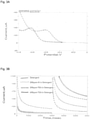
- Triethanolamine (TEA) a molecule commonly used in detergent formulations, exhibits an oxidation event around 0.8V. This oxidation event can potentially be misinterpreted by a sensor as a signal for presence of KI.
- Figure 3A shows the voltammetric profile of 200 ppm KI and 200ppm TEA.
- the present invention exploits the ability of KI to undergo multiple oxidation events, at a plurality of applied potentials , apart from the 0.6V event.
- KI is known to show oxidation peaks at 0.6V, 1.1V and 1.6V.
- the methods disclosed herein verifies all the oxidation events associated with KI not limiting to the event at 0.6V. By verifying the signature reduction or oxidation events specific to a molecule of interest, more specificity is built in for detection of the molecule.
- the senor is typically placed inside the formulation chamber (referred to as the sensor chamber).
- the sensor comprises of two electrodes (Electrode 1 and Electrode 2) connected to a pulse generator circuit.
- the electrodes are physically separated such that the formulation becomes the medium present between the electrodes, and acts as the medium of electrical conduction between the electrodes.
- the pulse generator is preprogrammed to generate a sequence of pulses, with the amplitude of each pulse corresponding to the respective redox potential of the marker molecule of interest.
- the current that flows across the electrodes through the formulation, during the application of each pulse is measured using a current measurement module.
- the test sensor set-up generates two pulses one at 0.6V and another at 1.1V.
- the measured value of current for the individual pulses (TR1 and TR2) are fed to the data processing unit which evaluates whether the measured values of current (i), along with their ratio (PR), matches with the expected predetermined values characteristic of KI, in other words which corresponds to that of KI (the electrochemical signature for KI).
- the data processing unit thereafter sends a control signal to the process machine, whether to initiate the enhanced process or not.
- PR is obtained from the ratio between TR1 and TR2.
- TEA did not show a current response for 1 st pulse.
- KI on the contrary showed a current response for both 1 st & 2 nd pulse and the amplitude of the responses and their ratio was significantly different from that of TEA containing detergent.
- the above described embodiments provide a method for selecting an enhanced mode of operation by detecting presence of a marker molecule in a solution, comprising generating a pulse train, supplying a pulse train to at least two electrodes 8, 9 in contact with the solution during operation, the pulse train comprising at least two subsequent pulses each having a pulse duration and a pulse level Vx, Vy, wherein the pulse levels Vx, Vy are each associated with a different redox event (i.e.
- an oxidation event or a reduction event of the marker molecule in the solution, measuring at least two total current response TR1, TR2 during the associated pulse duration, determining at least one ratio value PR of two of the at least two total current responses TR1, TR2, and matching the at least two total current responses TR1, TR2 and the at least one ratio value PR with predetermined characteristic values associated with the marker molecule in the solution.
Landscapes
- Chemical & Material Sciences (AREA)
- Life Sciences & Earth Sciences (AREA)
- Health & Medical Sciences (AREA)
- Chemical Kinetics & Catalysis (AREA)
- Engineering & Computer Science (AREA)
- Organic Chemistry (AREA)
- Electrochemistry (AREA)
- Biochemistry (AREA)
- Pathology (AREA)
- Immunology (AREA)
- General Physics & Mathematics (AREA)
- Molecular Biology (AREA)
- General Health & Medical Sciences (AREA)
- Physics & Mathematics (AREA)
- Analytical Chemistry (AREA)
- Oil, Petroleum & Natural Gas (AREA)
- Wood Science & Technology (AREA)
- Textile Engineering (AREA)
- Inorganic Chemistry (AREA)
- Emergency Medicine (AREA)
- Hydrology & Water Resources (AREA)
- Environmental & Geological Engineering (AREA)
- Water Supply & Treatment (AREA)
- Investigating Or Analyzing Materials By The Use Of Electric Means (AREA)
- Detergent Compositions (AREA)
- Control Of Washing Machine And Dryer (AREA)
Claims (11)
- Procédé de sélection d'un mode de fonctionnement amélioré dans un appareil, tel qu'une machine à laver, pendant un cycle de lavage de linge utilisant une composition détergente, la composition détergente comprenant une molécule marqueur et un tensioactif, où la molécule marqueur est capable d'être réduite ou oxydée de manière réversible en réponse à une pluralité de niveaux de potentiel appliqués; où la molécule marqueur est détectée dans une solution de la composition détergente par un ensemble capteur dans l'appareil, où l'appareil est conçu pour choisir entre un mode de fonctionnement normal et un mode de fonctionnement amélioré sur la base de la présence détectée de la molécule marqueur dans la solution de la composition détergente pendant le fonctionnement de l'appareil, où le mode de fonctionnement amélioré comprend le traitement des eaux usées générées pendant l'utilisation de l'appareil; où l'ensemble capteur comprend une unité génératrice d'impulsions (2) pour générer un train d'impulsions, une unité de mesure de courant (3) et au moins deux électrodes (8, 9) en contact avec la solution de la composition détergente, connectées à l'unité génératrice d'impulsions (2) et à l'unité de mesure de courant (3), l'unité génératrice d'impulsions (2) étant conçue pour fournir le train d'impulsions aux deux électrodes (8, 9) pendant le fonctionnement, le train d'impulsions comprenant au moins deux impulsions subséquentes ayant chacune une durée d'impulsion et un niveau d'impulsion (Vx, Vy), où les niveaux d'impulsion (Vx, Vy) sont associés chacun à un événement de réduction ou d'oxydation différent de la molécule marqueur dans la solution, et où l'ensemble capteur détecte la molécule marqueur en détectant une signature électrochimique unique générée par la molécule marqueur.
- Procédé selon la revendication 1, où les niveaux d'impulsion (Vx, Vy) sont choisis parmi une pluralité de niveaux d'impulsion associés à des événements d'oxydation ou de réduction de la molécule marqueur, et l'unité de mesure de courant (3) étant conçue pour mesurer au moins deux réponses en courant totales (TR1, TR2) pendant chacune des impulsions (Vx, Vy) associées, pour déterminer au moins une valeur de rapport (PR) des au moins deux réponses en courant totales (TR1, TR2).
- Procédé selon la revendication 2, où la détection de la molécule marqueur par l'ensemble capteur comprend la mise en coïncidence des au moins deux réponses en courant totales (TR1, TR2) et de la au moins une valeur de rapport (PR) avec des valeurs caractéristiques prédéterminées associées avec la molécule marqueur dans la solution, où les valeurs caractéristiques prédéterminées comprennent la signature électrochimique unique de la molécule marqueur.
- Procédé selon la revendication 2, où l'unité génératrice d'impulsions (2) est conçue en outre pour fournir le train d'impulsions avec une impulsion de tête précédant les au moins deux impulsions subséquentes, l'impulsion de tête ayant une amplitude de tête inférieure aux deux niveaux d'impulsion (Vx, Vy) subséquents.
- Procédé selon la revendication 2, où l'unité génératrice d'impulsions (2) est conçue en outre pour fournir le train d'impulsions avec une impulsion à inversion de polarité après au moins l'une des au moins deux impulsions subséquentes, l'impulsion à inversion de polarité ayant une amplitude (Vr) opposée aux niveaux d'impulsion (Vx, Vy).
- Procédé selon la revendication 5, où l'amplitude de l'impulsion à inversion de polarité a une grandeur (Vr) qui est égale à la valeur la plus élevée du niveau d'impulsion (Vx, Vy) des au moins deux impulsions subséquentes.
- Procédé selon la revendication 2, où les au moins deux impulsions subséquentes ont une durée de 0,1 - 15 secondes.
- Procédé selon la revendication 2, où la molécule marqueur est l'iodure de potassium (KI).
- Procédé selon la revendication 2, où la molécule marqueur est l'acide gallique.
- Procédé selon l'une quelconque des revendications 1 à 9, où l'appareil est une machine à laver le linge.
- Procédé selon l'une quelconque des revendications 1 à 10 comprenant la détection d'une molécule marqueur pendant le cycle de lavage par un ensemble capteur dans une machine à laver, où les niveaux d'impulsion (Vx, Vy) sont choisis parmi une pluralité de niveaux d'impulsion associés aux événements d'oxydation ou de réduction de la molécule marqueur, et l'unité de mesure de courant (3) étant conçue pour mesurer au moins deux réponses en courant totales (TR1, TR2) pendant chacune de la durée d'impulsion associée, pour déterminer au moins une valeur de rapport (PR) des au moins deux réponses en courant totales (TR1, TR2), où la détection de la signature électrochimique unique générée par la molécule marqueur par l'ensemble capteur comprend la mise en coïncidence des au moins deux réponses en courant totales (TR1, TR2) et de la au moins une valeur de rapport (PR) avec des valeurs caractéristiques prédéterminées associées à la molécule marqueur dans la solution.
Applications Claiming Priority (2)
| Application Number | Priority Date | Filing Date | Title |
|---|---|---|---|
| EP17173310 | 2017-05-29 | ||
| PCT/EP2018/063762 WO2018219795A1 (fr) | 2017-05-29 | 2018-05-25 | Ensemble capteur et procédé de détection de la présence d'une molécule marqueur dans une solution |
Publications (2)
| Publication Number | Publication Date |
|---|---|
| EP3631431A1 EP3631431A1 (fr) | 2020-04-08 |
| EP3631431B1 true EP3631431B1 (fr) | 2022-02-02 |
Family
ID=58800722
Family Applications (1)
| Application Number | Title | Priority Date | Filing Date |
|---|---|---|---|
| EP18728570.5A Active EP3631431B1 (fr) | 2017-05-29 | 2018-05-25 | Procédé permettant de détecter la présence d'une molécule marqueur dans une solution |
Country Status (5)
| Country | Link |
|---|---|
| US (1) | US20210122996A1 (fr) |
| EP (1) | EP3631431B1 (fr) |
| CN (1) | CN110709693B (fr) |
| WO (1) | WO2018219795A1 (fr) |
| ZA (1) | ZA201907596B (fr) |
Family Cites Families (11)
| Publication number | Priority date | Publication date | Assignee | Title |
|---|---|---|---|---|
| US622854A (en) * | 1899-04-11 | On-the-main | ||
| US3622852A (en) * | 1970-03-03 | 1971-11-23 | Whirlpool Co | Electronic speed control circuit for direct drive automatic washer |
| ZA802875B (en) * | 1979-05-17 | 1981-12-30 | Unilever Ltd | Process for making detergent compositions |
| US5229027A (en) * | 1991-03-20 | 1993-07-20 | Colgate-Palmolive Company | Aqueous liquid automatic dishwashing detergent composition comprising hypochlorite bleach and an iodate or iodide hypochlorite bleach stabilizer |
| DE4127663A1 (de) | 1991-08-22 | 1993-02-25 | Henkel Kgaa | Verfahren zum bestimmen und regeln der konzentration von wirkstoffen zur reinigung und desinfektion in waessrigen reinigungs- und desinfektionsmittelloesungen |
| DE10039408B4 (de) * | 2000-06-16 | 2004-04-08 | Aweco Appliance Systems Gmbh & Co. Kg | Haushaltsmaschine |
| CA2548024A1 (fr) * | 2003-12-05 | 2005-06-16 | Unilever Plc | Composition detergente liquide |
| US20070235346A1 (en) | 2006-04-11 | 2007-10-11 | Popovich Natasha D | System and methods for providing corrected analyte concentration measurements |
| DE102007011119A1 (de) * | 2007-03-07 | 2008-09-11 | BSH Bosch und Siemens Hausgeräte GmbH | Waschmaschine mit automatischer Regelung des Waschprozesses |
| DE102009027950A1 (de) * | 2009-07-23 | 2011-01-27 | BSH Bosch und Siemens Hausgeräte GmbH | Wasserführendes Haushaltsgerät |
| EP3186624B1 (fr) | 2014-08-25 | 2024-12-04 | United Arab Emirates University | Appareil et procédé de détection et de quantification d'analytes biologiques et chimiques |
-
2018
- 2018-05-25 WO PCT/EP2018/063762 patent/WO2018219795A1/fr not_active Ceased
- 2018-05-25 EP EP18728570.5A patent/EP3631431B1/fr active Active
- 2018-05-25 CN CN201880036125.6A patent/CN110709693B/zh active Active
- 2018-05-25 US US16/617,420 patent/US20210122996A1/en not_active Abandoned
-
2019
- 2019-11-15 ZA ZA2019/07596A patent/ZA201907596B/en unknown
Non-Patent Citations (1)
| Title |
|---|
| None * |
Also Published As
| Publication number | Publication date |
|---|---|
| EP3631431A1 (fr) | 2020-04-08 |
| ZA201907596B (en) | 2021-04-28 |
| CN110709693B (zh) | 2022-10-21 |
| US20210122996A1 (en) | 2021-04-29 |
| CN110709693A (zh) | 2020-01-17 |
| WO2018219795A1 (fr) | 2018-12-06 |
Similar Documents
| Publication | Publication Date | Title |
|---|---|---|
| US7347926B2 (en) | Method and apparatus for measuring specific component | |
| CN102012389B (zh) | 使用传感器的定量分析方法和定量分析装置 | |
| CN106940341B (zh) | 用于检测使用过且变干的传感器的系统和方法 | |
| TW510970B (en) | Sample detection to initiate timing of an electrochemical assay | |
| RU2465812C2 (ru) | Система детектирования аномального выходного сигнала для биосенсора | |
| CA2649644C (fr) | Systeme de detection de remplissage insuffisant pour biocapteur | |
| US10724985B2 (en) | Biosensor for determining a concentration of a biosensor using an underfill procedure | |
| WO2006109280A2 (fr) | Methode et appareil de detection de traces anormales au cours de la detection electrochimique d'un analyte | |
| DE746762T1 (de) | Biosensor mit einem steckbaren speicherschlüssel | |
| US9664636B2 (en) | Chlorine detection with pulsed amperometric detection | |
| WO2011059670A1 (fr) | Système de reconnaissance de sous-remplissage pour un biodétecteur | |
| Olsson et al. | Determination of detergents in washing machine wastewater with a voltammetric electronic tongue | |
| CA2811851C (fr) | Sytemes et methodes de discrimination entre un echantillon de controle et un fluide de test au moyen de la capacitance | |
| JPWO2009057794A1 (ja) | コントロール液の判別方法および分析装置 | |
| EP3631431B1 (fr) | Procédé permettant de détecter la présence d'une molécule marqueur dans une solution | |
| EP4206652B1 (fr) | Procédé de mesure de la concentration d'une espèce chimique à l'aide d'une ligne de base de réactif | |
| JPS6243134B2 (fr) | ||
| JPS60211354A (ja) | 水溶液中の塩素イオン濃度の測定方法 | |
| HK1241019A1 (en) | System and method for detecting used and dried sensors | |
| HK1206227B (en) | System and method for detecting used and dried sensors | |
| HK1241019B (zh) | 用於检测使用过且变乾的传感器的系统和方法 | |
| HK1133080B (en) | Underfill detection system for an electrochemical biosensor |
Legal Events
| Date | Code | Title | Description |
|---|---|---|---|
| STAA | Information on the status of an ep patent application or granted ep patent |
Free format text: STATUS: UNKNOWN |
|
| STAA | Information on the status of an ep patent application or granted ep patent |
Free format text: STATUS: THE INTERNATIONAL PUBLICATION HAS BEEN MADE |
|
| PUAI | Public reference made under article 153(3) epc to a published international application that has entered the european phase |
Free format text: ORIGINAL CODE: 0009012 |
|
| STAA | Information on the status of an ep patent application or granted ep patent |
Free format text: STATUS: REQUEST FOR EXAMINATION WAS MADE |
|
| 17P | Request for examination filed |
Effective date: 20191107 |
|
| AK | Designated contracting states |
Kind code of ref document: A1 Designated state(s): AL AT BE BG CH CY CZ DE DK EE ES FI FR GB GR HR HU IE IS IT LI LT LU LV MC MK MT NL NO PL PT RO RS SE SI SK SM TR |
|
| AX | Request for extension of the european patent |
Extension state: BA ME |
|
| DAV | Request for validation of the european patent (deleted) | ||
| DAX | Request for extension of the european patent (deleted) | ||
| STAA | Information on the status of an ep patent application or granted ep patent |
Free format text: STATUS: EXAMINATION IS IN PROGRESS |
|
| 17Q | First examination report despatched |
Effective date: 20201008 |
|
| RIC1 | Information provided on ipc code assigned before grant |
Ipc: D06F 34/08 20200101ALN20210301BHEP Ipc: D06F 34/22 20200101ALI20210301BHEP Ipc: D06F 33/46 20200101ALI20210301BHEP Ipc: C11D 3/20 20060101ALI20210301BHEP Ipc: G01N 27/416 20060101AFI20210301BHEP Ipc: A47L 15/00 20060101ALI20210301BHEP Ipc: D06F 103/22 20200101ALN20210301BHEP Ipc: D06F 105/58 20200101ALN20210301BHEP Ipc: C11D 3/04 20060101ALI20210301BHEP Ipc: G01N 27/49 20060101ALI20210301BHEP Ipc: D06F 105/54 20200101ALN20210301BHEP |
|
| GRAP | Despatch of communication of intention to grant a patent |
Free format text: ORIGINAL CODE: EPIDOSNIGR1 |
|
| STAA | Information on the status of an ep patent application or granted ep patent |
Free format text: STATUS: GRANT OF PATENT IS INTENDED |
|
| INTG | Intention to grant announced |
Effective date: 20210527 |
|
| GRAJ | Information related to disapproval of communication of intention to grant by the applicant or resumption of examination proceedings by the epo deleted |
Free format text: ORIGINAL CODE: EPIDOSDIGR1 |
|
| STAA | Information on the status of an ep patent application or granted ep patent |
Free format text: STATUS: EXAMINATION IS IN PROGRESS |
|
| INTC | Intention to grant announced (deleted) | ||
| GRAP | Despatch of communication of intention to grant a patent |
Free format text: ORIGINAL CODE: EPIDOSNIGR1 |
|
| STAA | Information on the status of an ep patent application or granted ep patent |
Free format text: STATUS: GRANT OF PATENT IS INTENDED |
|
| RAP1 | Party data changed (applicant data changed or rights of an application transferred) |
Owner name: UNILEVER IP HOLDINGS B.V. Owner name: UNILEVER GLOBAL IP LIMITED |
|
| RIC1 | Information provided on ipc code assigned before grant |
Ipc: D06F 105/58 20200101ALN20210902BHEP Ipc: D06F 105/54 20200101ALN20210902BHEP Ipc: D06F 103/22 20200101ALN20210902BHEP Ipc: D06F 34/08 20200101ALN20210902BHEP Ipc: D06F 34/22 20200101ALI20210902BHEP Ipc: D06F 33/46 20200101ALI20210902BHEP Ipc: C11D 3/20 20060101ALI20210902BHEP Ipc: C11D 3/04 20060101ALI20210902BHEP Ipc: A47L 15/00 20060101ALI20210902BHEP Ipc: G01N 27/49 20060101ALI20210902BHEP Ipc: G01N 27/416 20060101AFI20210902BHEP |
|
| INTG | Intention to grant announced |
Effective date: 20210922 |
|
| GRAS | Grant fee paid |
Free format text: ORIGINAL CODE: EPIDOSNIGR3 |
|
| GRAA | (expected) grant |
Free format text: ORIGINAL CODE: 0009210 |
|
| STAA | Information on the status of an ep patent application or granted ep patent |
Free format text: STATUS: THE PATENT HAS BEEN GRANTED |
|
| AK | Designated contracting states |
Kind code of ref document: B1 Designated state(s): AL AT BE BG CH CY CZ DE DK EE ES FI FR GB GR HR HU IE IS IT LI LT LU LV MC MK MT NL NO PL PT RO RS SE SI SK SM TR |
|
| REG | Reference to a national code |
Ref country code: GB Ref legal event code: FG4D |
|
| REG | Reference to a national code |
Ref country code: CH Ref legal event code: EP Ref country code: AT Ref legal event code: REF Ref document number: 1466711 Country of ref document: AT Kind code of ref document: T Effective date: 20220215 |
|
| REG | Reference to a national code |
Ref country code: DE Ref legal event code: R096 Ref document number: 602018030381 Country of ref document: DE |
|
| RAP4 | Party data changed (patent owner data changed or rights of a patent transferred) |
Owner name: UNILEVER IP HOLDINGS B.V. Owner name: UNILEVER GLOBAL IP LIMITED |
|
| REG | Reference to a national code |
Ref country code: IE Ref legal event code: FG4D |
|
| REG | Reference to a national code |
Ref country code: LT Ref legal event code: MG9D |
|
| REG | Reference to a national code |
Ref country code: NL Ref legal event code: MP Effective date: 20220202 |
|
| REG | Reference to a national code |
Ref country code: AT Ref legal event code: MK05 Ref document number: 1466711 Country of ref document: AT Kind code of ref document: T Effective date: 20220202 |
|
| PG25 | Lapsed in a contracting state [announced via postgrant information from national office to epo] |
Ref country code: SE Free format text: LAPSE BECAUSE OF FAILURE TO SUBMIT A TRANSLATION OF THE DESCRIPTION OR TO PAY THE FEE WITHIN THE PRESCRIBED TIME-LIMIT Effective date: 20220202 Ref country code: RS Free format text: LAPSE BECAUSE OF FAILURE TO SUBMIT A TRANSLATION OF THE DESCRIPTION OR TO PAY THE FEE WITHIN THE PRESCRIBED TIME-LIMIT Effective date: 20220202 Ref country code: PT Free format text: LAPSE BECAUSE OF FAILURE TO SUBMIT A TRANSLATION OF THE DESCRIPTION OR TO PAY THE FEE WITHIN THE PRESCRIBED TIME-LIMIT Effective date: 20220602 Ref country code: NO Free format text: LAPSE BECAUSE OF FAILURE TO SUBMIT A TRANSLATION OF THE DESCRIPTION OR TO PAY THE FEE WITHIN THE PRESCRIBED TIME-LIMIT Effective date: 20220502 Ref country code: NL Free format text: LAPSE BECAUSE OF FAILURE TO SUBMIT A TRANSLATION OF THE DESCRIPTION OR TO PAY THE FEE WITHIN THE PRESCRIBED TIME-LIMIT Effective date: 20220202 Ref country code: LT Free format text: LAPSE BECAUSE OF FAILURE TO SUBMIT A TRANSLATION OF THE DESCRIPTION OR TO PAY THE FEE WITHIN THE PRESCRIBED TIME-LIMIT Effective date: 20220202 Ref country code: HR Free format text: LAPSE BECAUSE OF FAILURE TO SUBMIT A TRANSLATION OF THE DESCRIPTION OR TO PAY THE FEE WITHIN THE PRESCRIBED TIME-LIMIT Effective date: 20220202 Ref country code: ES Free format text: LAPSE BECAUSE OF FAILURE TO SUBMIT A TRANSLATION OF THE DESCRIPTION OR TO PAY THE FEE WITHIN THE PRESCRIBED TIME-LIMIT Effective date: 20220202 Ref country code: BG Free format text: LAPSE BECAUSE OF FAILURE TO SUBMIT A TRANSLATION OF THE DESCRIPTION OR TO PAY THE FEE WITHIN THE PRESCRIBED TIME-LIMIT Effective date: 20220502 |
|
| PG25 | Lapsed in a contracting state [announced via postgrant information from national office to epo] |
Ref country code: PL Free format text: LAPSE BECAUSE OF FAILURE TO SUBMIT A TRANSLATION OF THE DESCRIPTION OR TO PAY THE FEE WITHIN THE PRESCRIBED TIME-LIMIT Effective date: 20220202 Ref country code: LV Free format text: LAPSE BECAUSE OF FAILURE TO SUBMIT A TRANSLATION OF THE DESCRIPTION OR TO PAY THE FEE WITHIN THE PRESCRIBED TIME-LIMIT Effective date: 20220202 Ref country code: GR Free format text: LAPSE BECAUSE OF FAILURE TO SUBMIT A TRANSLATION OF THE DESCRIPTION OR TO PAY THE FEE WITHIN THE PRESCRIBED TIME-LIMIT Effective date: 20220503 Ref country code: FI Free format text: LAPSE BECAUSE OF FAILURE TO SUBMIT A TRANSLATION OF THE DESCRIPTION OR TO PAY THE FEE WITHIN THE PRESCRIBED TIME-LIMIT Effective date: 20220202 Ref country code: AT Free format text: LAPSE BECAUSE OF FAILURE TO SUBMIT A TRANSLATION OF THE DESCRIPTION OR TO PAY THE FEE WITHIN THE PRESCRIBED TIME-LIMIT Effective date: 20220202 |
|
| PG25 | Lapsed in a contracting state [announced via postgrant information from national office to epo] |
Ref country code: IS Free format text: LAPSE BECAUSE OF FAILURE TO SUBMIT A TRANSLATION OF THE DESCRIPTION OR TO PAY THE FEE WITHIN THE PRESCRIBED TIME-LIMIT Effective date: 20220602 |
|
| PG25 | Lapsed in a contracting state [announced via postgrant information from national office to epo] |
Ref country code: SM Free format text: LAPSE BECAUSE OF FAILURE TO SUBMIT A TRANSLATION OF THE DESCRIPTION OR TO PAY THE FEE WITHIN THE PRESCRIBED TIME-LIMIT Effective date: 20220202 Ref country code: SK Free format text: LAPSE BECAUSE OF FAILURE TO SUBMIT A TRANSLATION OF THE DESCRIPTION OR TO PAY THE FEE WITHIN THE PRESCRIBED TIME-LIMIT Effective date: 20220202 Ref country code: RO Free format text: LAPSE BECAUSE OF FAILURE TO SUBMIT A TRANSLATION OF THE DESCRIPTION OR TO PAY THE FEE WITHIN THE PRESCRIBED TIME-LIMIT Effective date: 20220202 Ref country code: EE Free format text: LAPSE BECAUSE OF FAILURE TO SUBMIT A TRANSLATION OF THE DESCRIPTION OR TO PAY THE FEE WITHIN THE PRESCRIBED TIME-LIMIT Effective date: 20220202 Ref country code: DK Free format text: LAPSE BECAUSE OF FAILURE TO SUBMIT A TRANSLATION OF THE DESCRIPTION OR TO PAY THE FEE WITHIN THE PRESCRIBED TIME-LIMIT Effective date: 20220202 Ref country code: CZ Free format text: LAPSE BECAUSE OF FAILURE TO SUBMIT A TRANSLATION OF THE DESCRIPTION OR TO PAY THE FEE WITHIN THE PRESCRIBED TIME-LIMIT Effective date: 20220202 |
|
| REG | Reference to a national code |
Ref country code: DE Ref legal event code: R097 Ref document number: 602018030381 Country of ref document: DE |
|
| PG25 | Lapsed in a contracting state [announced via postgrant information from national office to epo] |
Ref country code: AL Free format text: LAPSE BECAUSE OF FAILURE TO SUBMIT A TRANSLATION OF THE DESCRIPTION OR TO PAY THE FEE WITHIN THE PRESCRIBED TIME-LIMIT Effective date: 20220202 |
|
| PLBE | No opposition filed within time limit |
Free format text: ORIGINAL CODE: 0009261 |
|
| STAA | Information on the status of an ep patent application or granted ep patent |
Free format text: STATUS: NO OPPOSITION FILED WITHIN TIME LIMIT |
|
| REG | Reference to a national code |
Ref country code: CH Ref legal event code: PL |
|
| 26N | No opposition filed |
Effective date: 20221103 |
|
| REG | Reference to a national code |
Ref country code: BE Ref legal event code: MM Effective date: 20220531 |
|
| PG25 | Lapsed in a contracting state [announced via postgrant information from national office to epo] |
Ref country code: MC Free format text: LAPSE BECAUSE OF FAILURE TO SUBMIT A TRANSLATION OF THE DESCRIPTION OR TO PAY THE FEE WITHIN THE PRESCRIBED TIME-LIMIT Effective date: 20220202 Ref country code: LU Free format text: LAPSE BECAUSE OF NON-PAYMENT OF DUE FEES Effective date: 20220525 Ref country code: LI Free format text: LAPSE BECAUSE OF NON-PAYMENT OF DUE FEES Effective date: 20220531 Ref country code: CH Free format text: LAPSE BECAUSE OF NON-PAYMENT OF DUE FEES Effective date: 20220531 |
|
| PG25 | Lapsed in a contracting state [announced via postgrant information from national office to epo] |
Ref country code: SI Free format text: LAPSE BECAUSE OF FAILURE TO SUBMIT A TRANSLATION OF THE DESCRIPTION OR TO PAY THE FEE WITHIN THE PRESCRIBED TIME-LIMIT Effective date: 20220202 |
|
| PG25 | Lapsed in a contracting state [announced via postgrant information from national office to epo] |
Ref country code: IE Free format text: LAPSE BECAUSE OF NON-PAYMENT OF DUE FEES Effective date: 20220525 |
|
| PG25 | Lapsed in a contracting state [announced via postgrant information from national office to epo] |
Ref country code: BE Free format text: LAPSE BECAUSE OF NON-PAYMENT OF DUE FEES Effective date: 20220531 |
|
| PG25 | Lapsed in a contracting state [announced via postgrant information from national office to epo] |
Ref country code: IT Free format text: LAPSE BECAUSE OF FAILURE TO SUBMIT A TRANSLATION OF THE DESCRIPTION OR TO PAY THE FEE WITHIN THE PRESCRIBED TIME-LIMIT Effective date: 20220202 |
|
| PG25 | Lapsed in a contracting state [announced via postgrant information from national office to epo] |
Ref country code: MK Free format text: LAPSE BECAUSE OF FAILURE TO SUBMIT A TRANSLATION OF THE DESCRIPTION OR TO PAY THE FEE WITHIN THE PRESCRIBED TIME-LIMIT Effective date: 20220202 Ref country code: CY Free format text: LAPSE BECAUSE OF FAILURE TO SUBMIT A TRANSLATION OF THE DESCRIPTION OR TO PAY THE FEE WITHIN THE PRESCRIBED TIME-LIMIT Effective date: 20220202 |
|
| PG25 | Lapsed in a contracting state [announced via postgrant information from national office to epo] |
Ref country code: HU Free format text: LAPSE BECAUSE OF FAILURE TO SUBMIT A TRANSLATION OF THE DESCRIPTION OR TO PAY THE FEE WITHIN THE PRESCRIBED TIME-LIMIT; INVALID AB INITIO Effective date: 20180525 |
|
| PG25 | Lapsed in a contracting state [announced via postgrant information from national office to epo] |
Ref country code: MT Free format text: LAPSE BECAUSE OF FAILURE TO SUBMIT A TRANSLATION OF THE DESCRIPTION OR TO PAY THE FEE WITHIN THE PRESCRIBED TIME-LIMIT Effective date: 20220202 |
|
| PGFP | Annual fee paid to national office [announced via postgrant information from national office to epo] |
Ref country code: DE Payment date: 20250521 Year of fee payment: 8 |
|
| PGFP | Annual fee paid to national office [announced via postgrant information from national office to epo] |
Ref country code: GB Payment date: 20250527 Year of fee payment: 8 |
|
| PGFP | Annual fee paid to national office [announced via postgrant information from national office to epo] |
Ref country code: FR Payment date: 20250528 Year of fee payment: 8 |
|
| PGFP | Annual fee paid to national office [announced via postgrant information from national office to epo] |
Ref country code: TR Payment date: 20250520 Year of fee payment: 8 |