EP3632271A1 - Appareil de cuisson pour la cuisson de grains entiers tels que le riz à grains entiers - Google Patents
Appareil de cuisson pour la cuisson de grains entiers tels que le riz à grains entiers Download PDFInfo
- Publication number
- EP3632271A1 EP3632271A1 EP18197842.0A EP18197842A EP3632271A1 EP 3632271 A1 EP3632271 A1 EP 3632271A1 EP 18197842 A EP18197842 A EP 18197842A EP 3632271 A1 EP3632271 A1 EP 3632271A1
- Authority
- EP
- European Patent Office
- Prior art keywords
- cooking
- grains
- grain
- temperature
- soaked
- Prior art date
- Legal status (The legal status is an assumption and is not a legal conclusion. Google has not performed a legal analysis and makes no representation as to the accuracy of the status listed.)
- Withdrawn
Links
Images


Classifications
-
- A—HUMAN NECESSITIES
- A47—FURNITURE; DOMESTIC ARTICLES OR APPLIANCES; COFFEE MILLS; SPICE MILLS; SUCTION CLEANERS IN GENERAL
- A47J—KITCHEN EQUIPMENT; COFFEE MILLS; SPICE MILLS; APPARATUS FOR MAKING BEVERAGES
- A47J27/00—Cooking-vessels
- A47J27/004—Cooking-vessels with integral electrical heating means
-
- A—HUMAN NECESSITIES
- A47—FURNITURE; DOMESTIC ARTICLES OR APPLIANCES; COFFEE MILLS; SPICE MILLS; SUCTION CLEANERS IN GENERAL
- A47J—KITCHEN EQUIPMENT; COFFEE MILLS; SPICE MILLS; APPARATUS FOR MAKING BEVERAGES
- A47J27/00—Cooking-vessels
- A47J27/56—Preventing boiling over, e.g. of milk
- A47J27/62—Preventing boiling over, e.g. of milk by devices for automatically controlling the heat supply by switching off heaters or for automatically lifting the cooking-vessels
Definitions
- the present invention relates to a cooking appliance at least for cooking whole grains such as bran-covered rice, the cooking appliance comprising a cooking chamber for cooking the grains in water; a heating element arrangement thermally coupled to the cooking chamber; a temperature sensor arrangement thermally coupled to the cooking chamber; and a controller adapted to control the heating element arrangement and being responsive to the temperature sensor arrangement.
- the present invention further relates to a method of cooking whole grains in such a cooking appliance.
- bran-covered rice in which the rice grains still contain their outer bran has significant nutritional benefits over white rice in which the bran layer and germ part have been removed, e.g. through polishing, in order to expose the core of the rice grain formed of endosperm cells that mainly consist of starch and protein.
- whole grain rice e.g. brown rice, black rice, red rice and so on, typically has a much higher degree of dietary fiber, vitamin B family, minerals and so on and is therefore often considered a healthier alternative to white rice.
- white rice is often chosen for convenience reasons notwithstanding the inferior nutritional content of white rice compared to whole grain rice varieties due to the fact that white rice can be prepared much faster than whole grain rice alternatives.
- Whole grains typically require a period of soaking prior to cooking the rice in order to allow water to penetrate to the inside endosperm part from the outer bran layer such that the inner core of the rice grains can be fully gelatinized, i.e. cooked, more quickly.
- the table below identifies different types of grains as well as typical recommended cooking times and quantities of water.
- 1 cup of grains Water Cooking time Yield Amaranth 2 cups 15-20 minutes 2 1 ⁇ 2 cups Barley, hulled 3 cups 45-60 minutes 3 1 ⁇ 2 cups Buckwheat 2 cups 20 minutes 4 cups Bulgur 2 cups 10-12 minutes 3 cups Farro 2 1 ⁇ 2 cups 25-40 minutes 3 cups Kamut wheat 4 cups Soaking overnight then 45-60 minutes 3 cups Millet, hulled 2 1 ⁇ 2 cups 25-35 minutes 4 cups Oats, rolled 2 1 ⁇ 2 cups 15 minutes 3 1 ⁇ 2 cups Oats, whole 3 cups 1 hour 3 1 ⁇ 2 cups Quinoa 2 cups 12-15 minutes 3 cups Rice, brown long 1 1 ⁇ 2 cups 45 minutes 3 cups Rice, brown short 2 cups 55 minutes 3 cups Rice, wild 2 1 ⁇ 2 cups 50 minutes 4 cups Rye 4 cups Soaking overnight then 45-60 minutes 3 cups Sorghum 4 cups 25-40 minutes 3 cups Spelt 4 cups Soaking overnight then 45-60 minutes 3 cups Teff 3 cups 20 minutes
- domestic cooking appliances e.g. rice cookers
- rice cookers have a number of cooking programs including a cooking program for brown rice that has an increased water absorption time to improve the cooking of the brown rice.
- a cooking appliance It would be desirable for a cooking appliance to be able to perform a suitable cooking profile without requiring significant input from a user.
- a cooking appliance for cooking whole grains comprising:
- This cooking apparatus is able to provide an optimum cooking profile for cooking whole grains.
- the cooking profile is typically a temperature-time profile, and it is tailored to the particular grains being cooked as well as taking account of whether or not the grains have been pre-soaked.
- the first and second inputs may be received from outside the cooking appliance e.g. as external user input, or they may be generated internally based on sensor readings.
- the indication of the type of grains may be an indication of multiple types of grain which have been mixed and the controller is adapted to implement a cooking profile which further depends on multiple types of grains mixed, or mixed whole grains and refined grains.
- the appliance may thus tailor the cooking profile for multiple types of grains mixed, or for mixed whole grains and refined grains (such as white rice).
- the first input preferably comprises a user input.
- a user is able to identify whether pre-soaking has been carried out with a simply binary input.
- the first input may instead be for receiving an indication of a type of pre-soaking from a range of possible pre-soaking types.
- the cooking appliance may in this way take into account different pre-soaking methods, such as the temperature of soaking (e.g. room temperature or freezer temperature) and the soaking time.
- the second input may also comprise a user input.
- a user is able to identify the types of grain using a user interface, which may be a wireless connection to a user portable device or it may be a manual user input such as using a touch screen.
- the user may input information about multiple grains and proportions of different grain types as well.
- a camera for capturing an image of a grain and an image processing system for identifying the type of grain, and providing said identification as the second input.
- the cooking appliance may automatically identify a type of grain using image analysis.
- the user can choose whether to provide the required information to the system or to make use of the automated system using the camera.
- the image processing system maybe further for identifying multiple types of grain, and for determining the proportions of the different types of grain.
- ⁇ ⁇ ⁇ ⁇ ⁇ ⁇ ⁇ ⁇ ⁇ ⁇ ⁇ ⁇ ⁇ ⁇ ⁇ ⁇ ⁇ ⁇ ⁇ ⁇ ⁇ ⁇ ⁇ ⁇ ⁇ ⁇ ⁇ ⁇ ⁇ ⁇ ⁇ ⁇ ⁇ ⁇ ⁇ ⁇ ⁇ ⁇ ⁇ ⁇ ⁇ ⁇ ⁇ ⁇ ⁇ ⁇ ⁇ ⁇ ⁇ ⁇ ⁇ ⁇ ⁇ ⁇ ⁇ ⁇ ⁇ ⁇ ⁇ ⁇ ⁇ ⁇ ⁇ ⁇ ⁇ ⁇ ⁇ ⁇ ⁇ ⁇ ⁇ ⁇ ⁇ ⁇ ⁇ ⁇ ⁇ ⁇ ⁇ ⁇ ⁇ ⁇ ⁇ ⁇ ⁇ ⁇ ⁇ ⁇ ⁇ ⁇ ⁇ ⁇ ⁇ ⁇ ⁇ ⁇ ⁇ ⁇ ⁇ ⁇ ⁇ ⁇ ⁇ ⁇ ⁇ ⁇ ⁇ ⁇ ⁇ ⁇ ⁇ ⁇ ⁇ ⁇ ⁇ ⁇ ⁇ ⁇ ⁇ ⁇ ⁇ ⁇ ⁇ ⁇ ⁇ ⁇
- the cooking appliance may comprise a weight sensor, wherein the controller is further adapted to control the heating element arrangement in response to a measured weight of the grains to be cooked.
- the weight may be used to control the cooking process, but it also enables an evaluation of nutritional content. Based on identified proportions, the total weight may be divided between the different grain types which are present when there are multiple grain types present. This may enable a more suitable cooking profile to be obtained.
- the weight information may also be used to monitor intake quantities.
- the controller may be further adapted to determine an amount of water to be added.
- the amount of water to be added may also take into account different combinations of grain types.
- the controller may be adapted to implement:
- a two-stage cooking process is most effective for non-pre-soaked whole grains whereas a one-stage cooking process is most effective for pre-soaked whole grains.
- the controller may be further adapted to derive nutritional information in respect of the grains and provide the nutritional information as output.
- the cooking apparatus may use all the input indications, as well as weight information when available, to derive nutrition information.
- the cooking apparatus may further comprise a wireless communications module for receiving user input wirelessly from a portable device of the user. This provides a user-friendly experience for the user and it means the cooing apparatus itself can be kept to a low cost.
- the cooking apparatus is preferably a rice cooker.
- the invention also provides a cooking method for cooking whole grains in water using a cooking apparatus, comprising:
- Receiving an indication of whether the grains to be cooked have been pre-soaked or not may be based on user input to the cooking apparatus, and receiving an indication of the type of grains to be cooked may either be based on user input to the cooking apparatus or based on image analysis.
- the cooking appliance may in this way take into account different pre-soaking methods, such as the temperature of soaking (e.g. room temperature or freezer temperature) and the soaking time.
- the method may comprise:
- the invention provides a cooking appliance for cooking whole grains (or possibly also mixtures of different types of whole grains or mixtures of whole grains and refined grains).
- a first input receives an indication of whether grains to be cooked have been pre-soaked or not and a second input receives an indication of the type of grains to be cooked.
- a selected cooking profile is selected from a memory based on these inputs. This provides an automated cooking profile selection, to make the cooking process easier for the user.
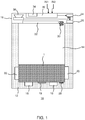
- FIG. 1 schematically depicts a cross-sectional view of an embodiment of a cooking appliance 10 according to the present invention.
- the cooking appliance 10 preferably is a domestic cooking appliance, e.g. a rice cooker or a multi-food cooker, although embodiments of the present invention are not limited to domestic (kitchen) appliances.
- the cooking appliance 10 comprises a housing 12, which maybe made in any suitable shape using any suitable materials, e.g. metal, metal alloy, plastics and combinations thereof, in which a cooking chamber 14 is located.
- the cooking appliance 10 may further comprise a lid 16 arranged on the housing 12 in any suitable manner, e.g. a lid 16 that may be removable or a lid 16 that is attached to the housing 12 through one or more hinges.
- the lid 16 is arranged to seal the cooking chamber 14.
- Such a seal may be a hermetic seal, which for example is desirable when the cooking appliance 10 may cook a food product such as rice under increased pressure, i.e. a pressure higher than ambient pressure.
- a seal may not be hermetic, for instance because the lid 16 comprises one or more vents that may be adjustable, such that the pressure within the cooking chamber 14 remains in equilibrium with ambient pressure.
- the cooking appliance 10 typically further comprises one or more heating elements for heating the food product in the cooking chamber 14.
- the cooking appliance 10 may comprise at least one of a heating element 18 in a floor of the cooking chamber 14, a heating element 20 in a sidewall of the cooking chamber 14 and a heating element 22 in the lid 16 of the cooking appliance 10. Any suitable arrangement of such heating elements may be contemplated, and any suitable type of heating element may be used for this purpose.
- a weighing scale 19 is also provided at the floor of the cooking chamber.
- the heating elements are typically controlled by a controller 24, which may take any suitable shape, e.g. a micro-processor or the like and may be located in any suitable location within the cooking appliance 10, such as in the lid 16. It is noted for the avoidance of doubt that the connections between the one or more heating elements 18, 20, 22 and the weighing scale, and the controller 24, are not shown in the figures for the sake of clarity only.
- the controller 24 is arranged to control the one or more heating elements in accordance with a cooking program for a particular food product, which is retrieved by the controller 24 from a data storage device 26 which may form part of the cooking appliance 10 or maybe accessible over a data communication network to which the cooking appliance 10 is connected.
- the controller 24 may be adapted to keep the food product in the cooking chamber 14 at a constant temperature for a period of time as defined in the cooking program and operate the one or more heating elements accordingly.
- the cooking appliance further comprises one or more temperature sensors that are communicatively coupled to the controller 24 and that are arranged to sense the temperature of the food product in the cooking chamber 14 such that the controller 24 can operate the one or more heating elements 18, 20, 22 in accordance with the temperature feedback provided by the one or more temperature sensors.
- the temperature sensors maybe located in any suitable location within the cooking appliance 10.
- a temperature sensor 28 may be located in the floor of the cooking appliance 10 or a temperature sensor 30 may be located in the lid 16 of the cooking appliance 10.
- Other suitable locations of such a temperature sensors will be immediately apparent to the skilled person. It is noted for the avoidance of doubt that the connections between the one or more temperature sensors 28, 30 and the controller 24 are not shown in the figures of the present application for the sake of clarity only.
- the cooking appliance 10 further comprises a user interface 32 communicatively coupled to the controller 24 through which a user may control the operation of the cooking appliance 10.
- the user interface 32 may be located in any suitable location within the cooking appliance 10, such as in the lid 16.
- the cooking appliance 10 is operable to perform a plurality of cooking programs such as cooking programs that are optimized for a particular type of grain type, in which case a user may select the appropriate cooking program using the user interface 32.
- Such a cooking program maybe configurable, in which case the user may also use the user interface 32 to provide the configuration information for a selected cooking program.
- the cooking programs include a program for cooking rice
- the user may be able to specify the desired firmness and/or stickiness of the rice to be cooked through the user interface 32, as is well-known per se.
- Such configuration information may be used by the controller 24 to adjust the cooking program of the selected food product e.g. grains accordingly, e.g. by adjusting the cooking time of the food product as is also well-known per se.
- the controller 24 may adjust the cooking program of the selected food product e.g. grains accordingly, e.g. by adjusting the cooking time of the food product as is also well-known per se.
- Many other examples of such food program configurability for many different types of food will be immediately apparent to the skilled person and are therefore not explained in further detail for the sake of brevity only.
- the user interface 32 may take any suitable form.
- the user interface 32 may include a display 34 under control of the controller 24 through which the various menu options that a user can select are presented through the user.
- a display 34 may be a touchscreen display in which case the user may select a particular menu option by touching the touchscreen display.
- the user interface 32 may further comprise an arrangement of buttons, dials or the like, which may be used to make such menu option selections as displayed on the display 34 or in the absence of a display 34.
- Many other suitable embodiments of such a user interface 32 will be immediately apparent to the skilled person.
- an external device 38 may comprise the user interface, in which case the cooking appliance 10 maybe connected to the external device 38 through a wireless communication interface 40 of the cooking appliance 10 that is communicatively coupled to the controller 24.
- the wireless communication interface 40 may be located in any suitable location within the cooking appliance 10, such as in the lid 14.
- the wireless communication interface 40 may be adapted to establish a P2P connection such as an infrared or Bluetooth connection between the cooking appliance 10 and the external device 38 or alternatively the wireless communication interface 40 may be adapted to connect to a wireless network such as Wi-Fi network over which the external device 38 can communicate with the cooking appliance 10.
- the external device 3 8 may be dedicated remote control device or an electronic device configured with an app or the like that configures the electronic device to act as the user interface of the cooking appliance 10.
- an electronic device for example may be a smart phone, tablet computer, personal digital assistant, laptop computer, a desktop computer, and so on.
- a first, but optional, modification is the addition of a camera 36 as shown in Figure 1 , for performing identification of a grain type or multiple grain types.
- the invention makes use of a controller 24 which comprises a first input "IN1" for receiving an indication of whether grains to be cooked have been pre-soaked or not and a second input "IN2" for receiving an indication of the type of grains to be cooked.
- the user typically inputs manually information on whether there has been grain pre-soaking or not. This may be based on the user interface 32 of the cooking appliance or the external device 38.
- the first input may be binary input, or it may additionally indicate a type of pre-soaking from a range of possible pre-soaking types, such as the temperature of soaking (e.g. room temperature or freezer temperature) and the soaking time.
- a first option is for a consumer to directly select the type of whole grain they are using by operating the user interface 32 or the external device 38.
- the grain type may be brown rice, sorghum, or buckwheat for example.
- the number of different grains that have their own cooking profiles may be much larger, for example including many or all of the examples in the table above.
- the camera 36 may instead be used to image one or more grains, then send the signal to the controller which then has a database to enable the type of whole grain to be determined. Both options are shown in Figure 1 .
- the information may instead be provided by the external device 38, either based on use of the camera of that device (such as a smart phone or tablet) or by user selection.
- the controller 24 then implements a selected cooking profile from the memory 26 which depends on the indications received at the first and second inputs.
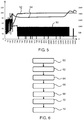
- Figure 3 shows an example of a cooking profile for one type of whole grains which have not been pre-soaked.
- the left y-axis shows temperature in degrees Celsius
- the right y-axis shows power in Watts
- the x-axis shows time in seconds.
- Plot 50 is the heater power, and is associated with the right y-axis.
- Plot 52 is the temperature sensed at the lid (the “top temperature”) and plot 54 is the temperature sensed at the base (the “bottom temperature”).
- a first phase 56 the bottom temperature is regulated to around 80 degrees, and this regulation is achieved by pulsed control of the heating element based on temperature sensing feedback.
- the heating is by induction, with heating of the water and grains from the bottom and from the surroundings. When the temperature is 80 degrees, the water temperature achieves the same temperature. In the first phase, because the water temperature is below the boiling point, the top temperature is also quite low.
- This first phase in this example has a duration of 22 minutes (1320 seconds).
- the second phase 58 involves heating to 100 degrees with a increased delivery of heating power.
- the heating power is for example 900 Watts with a pulsed heating mode with 5 seconds on and 5 seconds off. These pulses cannot be seen in the figure due to the scale of the x-axis.
- the container is filled with steam, so that the top temperature reaches around 100 degrees.
- the bottom surface of the cooker is almost dry and this causes a sharp increase in bottom temperature at the end of the cooking process.
- the second phase in this example has a duration of 20 minutes, so the total cooking time is 42 minutes.
- the cooking profile is optimized and has a fixed time profile which aims to balance cooking efficiency (speed) and taste.
- Figure 4 shows an example of a cooking profile for a different type of whole grains which have not been pre-soaked.
- the left y-axis shows temperature in degrees Celsius
- the right y-axis shows power in Watts
- the x-axis shows time in seconds.
- This profile has a shorter first phase of 20 minutes (1200 seconds) but the same second phase duration of 20 minutes, giving a total cooking time of 40 minutes.
- Figure 5 shows an example of a cooking profile for one type of whole grains which have been pre-soaked.
- the left y-axis again shows temperature in degrees Celsius
- the right y-axis shows power in Watts
- the x-axis shows time in seconds.
- a single phase cooking profile is used with a duration of around 27 minutes (1620 seconds).
- This cooking apparatus is thus able to provide an optimum cooking profile for cooking whole grains.
- the cooking profile is a temperature-time profile, and it is tailored to the particular grains being cooked as well as taking account of whether or not the grains have been pre-soaked.
- the cooking apparatus as a minimum has cooking profiles for two types of whole grain, and for soaked and non-soaked. However, more preferably, there are cooking profiles for three or more types of whole grain. Examples of different types of whole grain are given above.
- the second input IN2 may further receive an indication of multiple types of grain which have been mixed and the controller is adapted to implement a cooking profile which further depends on multiple types of grains mixed, or mixed whole grains and refined grains.
- the cooking appliance in this way can tailor the cooking profile for multiple types of grains mixed, or for mixed whole grains and refined grains (i.e. white rice).
- this indication may be manually input by the user or it may be determined based on image analysis.
- an image recognition system may be used to capture an image and analyze the color and other image information to distinguish between refined grains (especially white rice) and whole grains.
- the weighing scale is for example used to measure the weight of the mixed grains in the cooking device. It is then possible for the controller to determine the proportion and amount of whole grains and refined grains in the mixed grains according to the image analysis and weight information.
- This information can be used both to select a most appropriate cooking profile, but also to track the whole grain intake, to enable a user to track their nutritional intake.
- the weighing scale measures a weight before cooking and before the addition of water, when the grains are first put into the chamber 14.
- the cooking appliance then reminds the consumer to add the water to the container, and then record the amount added based on the change in weight.
- the appliance can provide feedback about the amount of water added. It can also determine the amount of water needed based on the grain type (or multiple grain types) and the initial dry grain weight.
- the weighing scale capacity is for example up to 3000 grams, with a precision of 0.1 gram.
- the controller can also use a nutrition database or look-up table so that from the type of grain and weight of grains, basic nutritional information may be calculated and estimated, including calories, fiber content, vitamin B content, minerals, etc.
- FIG. 6 shows a cooking method for cooking whole grains in water using a cooking apparatus.
- the method comprises:
- step 60 a type of grain is identified, or optionally multiple types of grains, and this information is provided to the cooking appliance.
- This step may involve the user manually inputting information to the cooking appliance or to an external control device (such as a tablet or phone) or it may involve the user capturing an image of a sample of the grains either using the external device or a camera which forms part of the cooking appliance. This image may be taken after the grains are placed in the cooker, or there may be an image capture area where grains are first placed.
- the grain identification may also provide information of a ratio of different grain types.
- step 62 an indication of whether the grains to be cooked have been pre-soaked or not is provided to the cooking appliance.
- the cooking appliance may trigger the user to provide this information as part of the control routine implemented by the user interface.
- step 64 an integrated weighing scale performs a weight measurement. If there are multiple grain types, the different weights are then determined.
- step 66 an amount of water required is determined, based on the grain type and soaking information. This information is provided to the user.
- step 68 the addition of water is monitored by tracking a change in weight, so that feedback can be provided to the user.
- a cooking profile is selected from a memory of the cooking apparatus in dependence on the grain type and soaking information, and cooking is performed according to the profile.
- a cooking profile for non-pre-soaked grains typically have a first temperature for a first time period and a second, higher, temperature for a second subsequent time period.
- a cooking profile for pre-soaked grains typically have a single temperature.
- step 72 nutritional information is provided to the user relating to the properties of the cooked grains.
- the optimization enabled by differentiating between grain types and soaking conditions enables a shortening of the cooking process.
- the three profiles described above have durations of 27 minutes, 40 minutes and 42 minutes. These are shorter than the cooking profiles of conventional rice cookers for the same types of rice.
- a multifunctional cooker may include a rice cooking function as well as cooking functions for other (grain and non-grain) food products.
- a computer program may be stored/distributed on a suitable medium, such as an optical storage medium or a solid-state medium supplied together with or as part of other hardware, but may also be distributed in other forms, such as via the Internet or other wired or wireless telecommunication systems. Any reference signs in the claims should not be construed as limiting the scope.
Landscapes
- Engineering & Computer Science (AREA)
- Food Science & Technology (AREA)
- Cookers (AREA)
Priority Applications (4)
| Application Number | Priority Date | Filing Date | Title |
|---|---|---|---|
| EP18197842.0A EP3632271A1 (fr) | 2018-10-01 | 2018-10-01 | Appareil de cuisson pour la cuisson de grains entiers tels que le riz à grains entiers |
| CN201980032741.9A CN112118774B (zh) | 2018-05-17 | 2019-05-14 | 用于烹饪诸如全谷物米的全谷物的烹饪器具 |
| PCT/EP2019/062261 WO2019219632A1 (fr) | 2018-05-17 | 2019-05-14 | Appareil de cuisson destiné à la cuisson de grains entiers tels que du riz à grains entiers |
| EP19724441.1A EP3809925B1 (fr) | 2018-05-17 | 2019-05-14 | Appareil de cuisson pour la cuisson de grains entiers tels que le riz à grains entiers |
Applications Claiming Priority (1)
| Application Number | Priority Date | Filing Date | Title |
|---|---|---|---|
| EP18197842.0A EP3632271A1 (fr) | 2018-10-01 | 2018-10-01 | Appareil de cuisson pour la cuisson de grains entiers tels que le riz à grains entiers |
Publications (1)
| Publication Number | Publication Date |
|---|---|
| EP3632271A1 true EP3632271A1 (fr) | 2020-04-08 |
Family
ID=63896045
Family Applications (1)
| Application Number | Title | Priority Date | Filing Date |
|---|---|---|---|
| EP18197842.0A Withdrawn EP3632271A1 (fr) | 2018-05-17 | 2018-10-01 | Appareil de cuisson pour la cuisson de grains entiers tels que le riz à grains entiers |
Country Status (1)
| Country | Link |
|---|---|
| EP (1) | EP3632271A1 (fr) |
Cited By (2)
| Publication number | Priority date | Publication date | Assignee | Title |
|---|---|---|---|---|
| CN112315331A (zh) * | 2020-10-23 | 2021-02-05 | 珠海格力电器股份有限公司 | 基于烹饪设备的烹饪控制方法、装置和烹饪设备 |
| JP2023173112A (ja) * | 2022-05-25 | 2023-12-07 | 東芝ホームテクノ株式会社 | 加熱調理器 |
Citations (3)
| Publication number | Priority date | Publication date | Assignee | Title |
|---|---|---|---|---|
| US5111026A (en) * | 1989-04-01 | 1992-05-05 | Ma Chun Ho | Control device and method for an electric rice cooker |
| WO2016157060A1 (fr) * | 2015-04-01 | 2016-10-06 | Panda Raja | Appareil et procédé de cuisson électrique permettant la cuisson d'aliments à faible teneur en amidon |
| EP3289933A1 (fr) * | 2016-08-30 | 2018-03-07 | Seb S.A. | Procédé de commande d'un appareil de cuisson de graines et appareil de cuisson pour la mise en oeuvre d'un tel procédé |
-
2018
- 2018-10-01 EP EP18197842.0A patent/EP3632271A1/fr not_active Withdrawn
Patent Citations (3)
| Publication number | Priority date | Publication date | Assignee | Title |
|---|---|---|---|---|
| US5111026A (en) * | 1989-04-01 | 1992-05-05 | Ma Chun Ho | Control device and method for an electric rice cooker |
| WO2016157060A1 (fr) * | 2015-04-01 | 2016-10-06 | Panda Raja | Appareil et procédé de cuisson électrique permettant la cuisson d'aliments à faible teneur en amidon |
| EP3289933A1 (fr) * | 2016-08-30 | 2018-03-07 | Seb S.A. | Procédé de commande d'un appareil de cuisson de graines et appareil de cuisson pour la mise en oeuvre d'un tel procédé |
Cited By (2)
| Publication number | Priority date | Publication date | Assignee | Title |
|---|---|---|---|---|
| CN112315331A (zh) * | 2020-10-23 | 2021-02-05 | 珠海格力电器股份有限公司 | 基于烹饪设备的烹饪控制方法、装置和烹饪设备 |
| JP2023173112A (ja) * | 2022-05-25 | 2023-12-07 | 東芝ホームテクノ株式会社 | 加熱調理器 |
Similar Documents
| Publication | Publication Date | Title |
|---|---|---|
| JP6687676B2 (ja) | 食品調理装置 | |
| US6587739B1 (en) | Appliance communication and control system and appliances for use in same | |
| US20210259453A1 (en) | Cooking device and system | |
| CN107257645B (zh) | 运行电机驱动的厨用机器的方法 | |
| EP3660659B1 (fr) | Dispositif et système de cuisson | |
| KR20190000908U (ko) | 주방 기구들의 유도성 가열 및 무선 급전을 갖는 요리 시스템 | |
| EP3608593B1 (fr) | Système de cuisson comprenant un four et un moyen de calcul externe, et procédé de fonctionnement d'un tel système | |
| CN108008649B (zh) | 烹饪器及其检测方法和系统、控制方法和系统 | |
| CN106618149A (zh) | 多功能烹调器 | |
| WO2017118845A1 (fr) | Tampon de détection | |
| CN107610751A (zh) | 智能厨房秤的控制方法和智能厨房秤 | |
| EP3809925B1 (fr) | Appareil de cuisson pour la cuisson de grains entiers tels que le riz à grains entiers | |
| US11879769B2 (en) | Automatic cooking assistance device and method to provide cooking instructions | |
| KR20170013841A (ko) | 프라이어를 제어하기 위한 방법 및 컴퓨터 프로그램, 및 이러한 방법을 수행하기 위해 배열된 프라이어 | |
| EP3632271A1 (fr) | Appareil de cuisson pour la cuisson de grains entiers tels que le riz à grains entiers | |
| CN109696858B (zh) | 烹饪器具及其烹饪控制方法、装置 | |
| CN109764370B (zh) | 一种烹饪设备、烹饪设备的控制方法及存储介质 | |
| EP3581073A1 (fr) | Appareil pour la cuisson de riz et methode de cuisson de riz | |
| EP3379437A1 (fr) | Système et procédé d'estimation de valeur nutritionnelle | |
| WO2020177388A1 (fr) | Procédé, appareil et dispositif de cuisson, et support d'informations informatique | |
| KR100892157B1 (ko) | 전기밥솥 표시 제어방법 | |
| US20230190046A1 (en) | Grain dispenser and method of controlling same | |
| TWI664877B (zh) | 智慧型多功能烹調設備 | |
| EP3555781B1 (fr) | Système et procédé d'estimation de valeur nutritionnelle | |
| TW202024541A (zh) | 用於製備食品的系統及方法 |
Legal Events
| Date | Code | Title | Description |
|---|---|---|---|
| PUAI | Public reference made under article 153(3) epc to a published international application that has entered the european phase |
Free format text: ORIGINAL CODE: 0009012 |
|
| STAA | Information on the status of an ep patent application or granted ep patent |
Free format text: STATUS: THE APPLICATION HAS BEEN PUBLISHED |
|
| AK | Designated contracting states |
Kind code of ref document: A1 Designated state(s): AL AT BE BG CH CY CZ DE DK EE ES FI FR GB GR HR HU IE IS IT LI LT LU LV MC MK MT NL NO PL PT RO RS SE SI SK SM TR |
|
| AX | Request for extension of the european patent |
Extension state: BA ME |
|
| STAA | Information on the status of an ep patent application or granted ep patent |
Free format text: STATUS: THE APPLICATION IS DEEMED TO BE WITHDRAWN |
|
| 18D | Application deemed to be withdrawn |
Effective date: 20201009 |