EP3632917B1 - Procédé de préparation d'un composé dérivé hétérocyclique - Google Patents
Procédé de préparation d'un composé dérivé hétérocyclique Download PDFInfo
- Publication number
- EP3632917B1 EP3632917B1 EP18806513.0A EP18806513A EP3632917B1 EP 3632917 B1 EP3632917 B1 EP 3632917B1 EP 18806513 A EP18806513 A EP 18806513A EP 3632917 B1 EP3632917 B1 EP 3632917B1
- Authority
- EP
- European Patent Office
- Prior art keywords
- compound
- formula
- acid
- pyrido
- hydrate
- Prior art date
- Legal status (The legal status is an assumption and is not a legal conclusion. Google has not performed a legal analysis and makes no representation as to the accuracy of the status listed.)
- Active
Links
- CQGJDKGJRNPQNG-UHFFFAOYSA-N Bc1cc(C(N2c(cncc3)c3OCC2)=O)cc(Br)c1O Chemical compound Bc1cc(C(N2c(cncc3)c3OCC2)=O)cc(Br)c1O CQGJDKGJRNPQNG-UHFFFAOYSA-N 0.000 description 1
- HKSOYMJNDHHYEI-UHFFFAOYSA-N C1Nc2cnccc2OC1 Chemical compound C1Nc2cnccc2OC1 HKSOYMJNDHHYEI-UHFFFAOYSA-N 0.000 description 1
Images




Classifications
-
- C—CHEMISTRY; METALLURGY
- C07—ORGANIC CHEMISTRY
- C07D—HETEROCYCLIC COMPOUNDS
- C07D498/00—Heterocyclic compounds containing in the condensed system at least one hetero ring having nitrogen and oxygen atoms as the only ring hetero atoms
- C07D498/02—Heterocyclic compounds containing in the condensed system at least one hetero ring having nitrogen and oxygen atoms as the only ring hetero atoms in which the condensed system contains two hetero rings
- C07D498/04—Ortho-condensed systems
-
- A—HUMAN NECESSITIES
- A61—MEDICAL OR VETERINARY SCIENCE; HYGIENE
- A61K—PREPARATIONS FOR MEDICAL, DENTAL OR TOILETRY PURPOSES
- A61K31/00—Medicinal preparations containing organic active ingredients
- A61K31/33—Heterocyclic compounds
- A61K31/395—Heterocyclic compounds having nitrogen as a ring hetero atom, e.g. guanethidine or rifamycins
- A61K31/535—Heterocyclic compounds having nitrogen as a ring hetero atom, e.g. guanethidine or rifamycins having six-membered rings with at least one nitrogen and one oxygen as the ring hetero atoms, e.g. 1,2-oxazines
- A61K31/5375—1,4-Oxazines, e.g. morpholine
- A61K31/5383—1,4-Oxazines, e.g. morpholine ortho- or peri-condensed with heterocyclic ring systems
-
- A—HUMAN NECESSITIES
- A61—MEDICAL OR VETERINARY SCIENCE; HYGIENE
- A61K—PREPARATIONS FOR MEDICAL, DENTAL OR TOILETRY PURPOSES
- A61K9/00—Medicinal preparations characterised by special physical form
- A61K9/14—Particulate form, e.g. powders, Processes for size reducing of pure drugs or the resulting products, Pure drug nanoparticles
- A61K9/16—Agglomerates; Granulates; Microbeadlets ; Microspheres; Pellets; Solid products obtained by spray drying, spray freeze drying, spray congealing,(multiple) emulsion solvent evaporation or extraction
- A61K9/1682—Processes
-
- A—HUMAN NECESSITIES
- A61—MEDICAL OR VETERINARY SCIENCE; HYGIENE
- A61K—PREPARATIONS FOR MEDICAL, DENTAL OR TOILETRY PURPOSES
- A61K9/00—Medicinal preparations characterised by special physical form
- A61K9/20—Pills, tablets, discs, rods
-
- A—HUMAN NECESSITIES
- A61—MEDICAL OR VETERINARY SCIENCE; HYGIENE
- A61P—SPECIFIC THERAPEUTIC ACTIVITY OF CHEMICAL COMPOUNDS OR MEDICINAL PREPARATIONS
- A61P13/00—Drugs for disorders of the urinary system
- A61P13/12—Drugs for disorders of the urinary system of the kidneys
-
- A—HUMAN NECESSITIES
- A61—MEDICAL OR VETERINARY SCIENCE; HYGIENE
- A61P—SPECIFIC THERAPEUTIC ACTIVITY OF CHEMICAL COMPOUNDS OR MEDICINAL PREPARATIONS
- A61P19/00—Drugs for skeletal disorders
- A61P19/06—Antigout agents, e.g. antihyperuricemic or uricosuric agents
-
- A—HUMAN NECESSITIES
- A61—MEDICAL OR VETERINARY SCIENCE; HYGIENE
- A61P—SPECIFIC THERAPEUTIC ACTIVITY OF CHEMICAL COMPOUNDS OR MEDICINAL PREPARATIONS
- A61P29/00—Non-central analgesic, antipyretic or antiinflammatory agents, e.g. antirheumatic agents; Non-steroidal antiinflammatory drugs [NSAID]
-
- C—CHEMISTRY; METALLURGY
- C07—ORGANIC CHEMISTRY
- C07C—ACYCLIC OR CARBOCYCLIC COMPOUNDS
- C07C63/00—Compounds having carboxyl groups bound to a carbon atoms of six-membered aromatic rings
- C07C63/04—Monocyclic monocarboxylic acids
- C07C63/06—Benzoic acid
-
- C—CHEMISTRY; METALLURGY
- C07—ORGANIC CHEMISTRY
- C07C—ACYCLIC OR CARBOCYCLIC COMPOUNDS
- C07C63/00—Compounds having carboxyl groups bound to a carbon atoms of six-membered aromatic rings
- C07C63/04—Monocyclic monocarboxylic acids
- C07C63/06—Benzoic acid
- C07C63/10—Halides thereof
-
- C—CHEMISTRY; METALLURGY
- C07—ORGANIC CHEMISTRY
- C07C—ACYCLIC OR CARBOCYCLIC COMPOUNDS
- C07C69/00—Esters of carboxylic acids; Esters of carbonic or haloformic acids
- C07C69/96—Esters of carbonic or haloformic acids
-
- C—CHEMISTRY; METALLURGY
- C07—ORGANIC CHEMISTRY
- C07B—GENERAL METHODS OF ORGANIC CHEMISTRY; APPARATUS THEREFOR
- C07B2200/00—Indexing scheme relating to specific properties of organic compounds
- C07B2200/13—Crystalline forms, e.g. polymorphs
Definitions
- the present invention relates to a new process for preparing a heterocycle derivative of the following Formula I.
- Benzbromarone which is a uricosuric agent having an inhibitory activity of human urate anion transporter 1 (hURAT1), as well as Probenecid and Sulfinpyrazone.
- hURAT1 human urate anion transporter 1
- Probenecid and Sulfinpyrazone drugs do not have sufficient activities on URAT1.
- Benzbromarone has some demerits in the aspect of adverse effects.
- Benzbromarone shows a strong inhibitory function to 2C9 protein among cytochrome P450 (CYP450) proteins and thus has a possibility of drug-drug interaction. Formation of reactive metabolites also has been reported from glutathione (GSH) conjugate formation experiments [ Dermot F. McGinnity et al., Drug Metabolism and Disposition, 33, p1700-1707 (2005 )].
- Benzbromarone has a benzofuran backbone similar to the drug structures of Benziodarone, Benzarone and Amiodarone which are drugs reported to show hepatotoxicity, it has a problem of incidence of death cases due to hepatotoxicity induction as well as adverse effect of liver injury. Therefore, the liver function of patients who intend to take this drug must be examined before the administration, and even during the administration it is recommended in therapy to check out for a certain period (six months) on whether hepatotoxicity has been induced or not. Hence, a drug that solves these problems is required in the medical field [ Hautekeete M.
- PCT Publication No. WO 2009/145456 discloses that the above heterocycle derivative compounds show a strong inhibitory activity on human urate anion transporter 1 (hURAT1) as compared with conventional inhibitors of hURAT1 activity and thus are useful as an inhibitor, specifically a selective inhibitor, of uric acid reuptake.
- hURAT1 human urate anion transporter 1
- the compounds show no drug-drug interaction on cytochrome P450 (CYP450), show a selectivity between organic anion transporters, have higher solubility and metabolic stability so as to show advantageous pharmacokinetics, and thus show an excellent effect compared with conventional drugs in the treatment or prophylaxis of hyperuricemia, acute gouty arthritis, chronic gouty arthritis, tophus (gouty node), gout nephrosis, nephritis, chronic renal failure, nephrolithiasis, uremia, urolithiasis and complications reported to be accompanied with uric acid increase in blood such as hyperlipidemia, ischemic heart disease, myocardial infarction, arteriosclerosis, cerebral infarction, cerebrovascular disease, diabetes and hypertension.
- CYP450 cytochrome P450
- the above document also discloses a process for preparing the heterocycle derivative compounds of Formula I, comprising the steps of: (1) halogenating a compound of the following Formula VII to obtain a compound of the following Formula X and then reacting the obtained compound of Formula X with a compound of the following Formula IX to obtain a compound of the following Formula VIII, or alternatively carrying out a Mitsunobu reaction of the compound of Formula VII and the compound of Formula IX to obtain the compound of Formula VIII; (2) cyclizing the obtained compound of Formula VIII to obtain a compound of the following Formula IV; and (3) carrying out a peptide coupling reaction of the obtained compound of Formula IV with a compound of the following Formula III:
- 3,5-dibromo-4-methoxy-benzoyl chloride having the following structure which is the compound of the above [Formula III] in the above-mentioned preparation method, is obtained from the expensive starting material, 3,5-dibromo-4-methoxybenzoic acid.
- the process of synthesizing the compound of the [Formula III] with the oxazine derivative of the [Formula IV] has a possibility of generating a genetic mutation, and thus a process capable of minimizing such a possibility is required.
- US Patent Publication No. US 2007-0010670 A1 discloses an oxazine derivative compound of the following formula effective for the treatment of hyperuricemia, gout and the like, and a method of synthesizing the same:
- the previous method for preparing the heterocycle derivative of Formula I has a problem in that the degradation of the oxazine derivative obtained as an intermediate generates impurities that are likely to cause carcinogenicity or mutagenesis, and another problem in that the synthesis reaction of the above oxazine derivative with 3,5-dibromo-4-methoxy-benzoyl chloride generates toxic intermediates that induce a genetic mutation. It also has a disadvantage in that additional purification steps are required to remove impurities at each step, and thus the preparation method must go through a number of steps, thereby it is not suitable for large-scale production.
- the present invention provides a new process for preparing the heterocycle derivative compound of Formula I, characterized by employing a novel oxazine derivative HBr salt (dihydrobromide, 2HBr), which is a stabilized form of the above oxazine derivative, and a novel benzoic acid intermediate that does not generate a toxic-inducing substance and is capable of in situ reaction, thereby reducing the preparation steps and thus is suitable for large-scale production.
- a novel oxazine derivative HBr salt dihydrobromide, 2HBr
- the present invention is intended to provide novel intermediate compounds used in the above preparation method.
- the present disclosure is directed at a composition for use in the treatment or prevention of hyperuricemia, gout disease, nephritis, chronic renal failure, nephrolithiasis, uremia, urolithiasis, or a disease associated with uric acid, which comprises as an active ingredient the compound of Formula I, or a pharmaceutically acceptable salt thereof or a hydrate thereof at a dose of greater than 2 mg to 10 mg or less based on the free base of the compound of Formula I and is orally administered once daily.
- the present invention provides a process for preparing a compound of the following Formula I, or a pharmaceutically acceptable salt thereof or a hydrate thereof, comprising coupling-reacting a compound of the following Formula III with a compound of the following Formula IV: wherein R is hydrogen or tert-butyloxycarbonyl (Boc).
- the compound of Formula III can be obtained by reacting a compound of the following Formula II with di-tert-butyl dicarbonate and pyridine.
- the above process for preparing the compound of Formula I may comprise the following steps: (1) reacting the compound of Formula III with the compound of Formula IV to obtain a compound of Formula V; (2) reacting the compound of Formula V with an alcohol in the presence of an acid to obtain a salt of the compound of Formula I; and (3) reacting the salt of the compound of Formula I with a base first and then with an acid secondarily:
- the above steps (1) and (2) can be carried out as an in situ reaction.
- the above step of obtaining the compound of Formula III from the compound of Formula II, and the above steps (1) and (2) can be carried out as an in situ reaction.
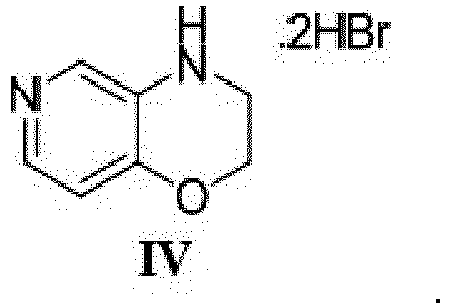
- the compound of Formula IV is obtained by reacting 3,4-dihydro-2 H -pyrido[4,3- b ][1,4]oxazine with bromic acid in acetic acid.
- the present invention also provides an intermediate compound of the following Formula III: wherein R is hydrogen or Boc.
- compositions for the treatment or prevention of hyperuricemia, gout disease, nephritis, chronic renal failure, nephrolithiasis, uremia, urolithiasis, or a disease associated with uric acid which comprises as an active ingredient the compound of Formula I, or a pharmaceutically acceptable salt thereof or a hydrate thereof at a dose of greater than 2 mg to 10 mg or less based on the free base of the compound of Formula I and is orally administered once daily.
- the present disclosure also provides the use of the compound of Formula I, or a pharmaceutically acceptable salt thereof or a hydrate thereof for the treatment or prevention of hyperuricemia, gout disease, nephritis, chronic renal failure, nephrolithiasis, uremia, urolithiasis, or a disease associated with uric acid, wherein said compound of Formula I, or a pharmaceutically acceptable salt thereof or a hydrate thereof is orally administered once daily at a dose of greater than 2 mg to 10 mg or less based on the free base of the compound of Formula I.
- the present disclosure also provides a method for treating or preventing hyperuricemia, gout disease, nephritis, chronic renal failure, nephrolithiasis, uremia, urolithiasis, or a disease associated with uric acid in a subject, comprising administering to the subject in need thereof orally once daily the compound of Formula I, or a pharmaceutically acceptable salt thereof or a hydrate thereof at a dose of greater than 2 mg to 10 mg or less based on the free base of the compound of Formula I.
- the dose of the compound of Formula I may be 3 mg to 8 mg based on the free base of the compound.
- the compound of Formula I may be in the form of hydrochloride of the compound of Formula I or its 1.5 hydrate (sesquihydrate).
- the present disclosure also provides hydrochloride 1.5 hydrate (sesquihydrate) of the compound of Formula I.
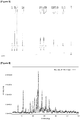
- the hydrochloride 1.5 hydrate of the compound of Formula I may display characteristic peaks at the following 2 ⁇ (two-theta) positions in the powder X-ray diffraction (XRD) analysis: 11.48° ⁇ 0.5°, 24.11° ⁇ 0.5°, 24.76° ⁇ 0.5°, 27.99° ⁇ 0.5°, 31.43° ⁇ 0.5°, 34.20° ⁇ 0.5°.
- XRD powder X-ray diffraction
- the hydrochloride 1.5 hydrate of the compound of Formula I may further display characteristic peaks at the following 2 ⁇ (two-theta) positions in the powder X-ray diffraction (XRD) analysis: 6.89° ⁇ 0.5°, 17.61° ⁇ 0.5°, 21.42° ⁇ 0.5°, 23.27° ⁇ 0.5°.
- XRD powder X-ray diffraction
- the present disclosure also provides a process for preparing the hydrochloride 1.5 hydrate of the compound of Formula I, comprising reacting the compound of Formula I with acetic acid, aqueous hydrochloric acid solution and acetone to form crystals.
- the present disclosure also provides a pharmaceutical composition formulated for oral administration, comprising the hydrochloride 1.5 hydrate of the compound of Formula I.
- the pharmaceutical composition may be in the form of a tablet.
- the process for preparing the heterocycle derivative compound of Formula I according to the present invention solves the problem of generating impurities that are likely to cause carcinogenicity or mutagenesis, by employing instead of the oxazine derivative its stabilized HBr salt (dihydrobromide, 2HBr) form.
- the process of the present invention also solves another problem of generating toxic intermediates that induce a genetic mutation, by employing a novel benzoic acid intermediate instead of 3,5-dibromo-4-methoxy-benzoyl chloride. Accordingly, the process of the present invention eliminates the need for additional purification steps to remove impurities at each step, which is advantageous for a large-scale production through an in situ reaction.
- the present invention relates to a process for preparing the compound of Formula I, or a pharmaceutically acceptable salt thereof or a hydrate thereof, comprising coupling-reacting a compound of the following Formula III with a compound of the following Formula IV: wherein R is hydrogen or Boc.
- a base is added to the compound of Formula III, and the compound is subject to a coupling reaction with 3,4-dihydro-2 H -pyrido[4,3- b ][1,4]oxazine HBr salt (2HBr) which is the compound of Formula IV.
- the resulting intermediate compound is subject to a post-treatment to obtain the compound of Formula I, (3,5-dibromo-4-hydroxyphenyl)(2,3-dihydro-4 H -pyrido[4,3- b ][1,4]oxazin-4-yl)-methanone or a pharmaceutically acceptable salt thereof.
- the compound of Formula III can be obtained by reacting a compound of the following Formula II with di-tert-butyl dicarbonate and pyridine:
- the 3,5-dibromo-4-hydroxybenzoic acid, the compound of Formula II, which is used as a low-cost starting material can be prepared by referencing known methods or can be commercially purchased from a reagent company.
- solvents include but are not limited to: ether solvents such as diethyl ether, tetrahydrofuran, dioxane, 1,2-dimethoxyethane, diglyme, etc.; hydrocarbon solvents such as benzene, toluene, hexane, xylene, etc.; halogenated hydrocarbon solvents such as dichloromethane, chloroform, carbon tetrachloride, 1,2-dichloroethane, etc.; alcohol solvents such as methanol, ethanol, isopropyl alcohol, tert-butyl alcohol, etc.; ester solvents such as ethyl acetate, methyl acetate, butyl acetate, etc.; and polar solvents such as acetone, N,N-dimethyl formamide, N,N-dimethyl acetamide, dimethyl sulfoxide, acet
- tetrahydrofuran THF
- 3,5-dibromo-4-hydroxybenzoic acid the compound of Formula II
- di-tert-butyl dicarbonate is added.
- Pyridine is added under a nitrogen atmosphere, and the reaction is carried out to obtain the compound of Formula III.
- the reaction can be carried out with stirring at a temperature of 25-30°C for about 1-3 hours.
- the resulting compound of Formula III is a novel benzoic acid intermediate compound. Therefore, the present invention also encompasses the compound of the following Formula III: wherein R is hydrogen or Boc.
- the process for preparing the compound of Formula I according to the present invention may comprise the following steps:
- the process may further comprise a step of reacting the compound of Formula II with di-tert-butyl dicarbonate and pyridine, prior to step (1).
- the process for preparing the compound of Formula I can be represented by the following reaction scheme: wherein R is hydrogen or Boc.
- the above steps (1) and (2) can be carried out as an in situ reaction.
- the above step of obtaining the compound of Formula III from the compound of Formula II, and the above steps (1) and (2) can be carried out as an in situ reaction.
- in situ reaction means conducting successive chemical reactions in one reactor, and it is also referred to as a "one-pot reaction.”
- An in situ reaction is very economical and suitable for large-scale production because it allows a following (next) reaction to be carried out immediately without the separation step and the purification step of intermediate compounds.
- Step (1) Reacting the compound of Formula III with the compound of Formula IV to obtain the compound of Formula V
- a base is added to the compound of Formula III, and the compound is reacted with 3,4-dihydro-2 H -pyrido[4,3- b ][1,4]oxazine HBr salt (dihydrobromide, 2HBr) which is the compound of Formula IV.
- Examples of base used in the reaction include organic bases such as triethylamine, pyridine, 4-methylaminopyridine, 4-methylmorpholine, piperazine, N-methylpiperazine, etc.; alkali metal hydroxides such as lithium hydroxide, sodium hydroxide, potassium hydroxide, calcium hydroxide, etc.; alkali metal hydrides such as sodium hydride, potassium hydride, etc.; alkali metal carbonates such as sodium carbonate, potassium carbonate, cesium carbonate, etc.; and alkali metal hydrogen carbonates such as sodium hydrogen carbonate, potassium hydrogen carbonate, etc.; and potassium phosphate. Triethylamine is preferable for this reaction.
- Step (2) Reacting the compound of Formula V with an alcohol in the presence of an acid to obtain a salt of the compound of Formula I
- Examples of acid used in the reaction include inorganic acids such as hydrochloric acid, sulfuric acid, nitric acid, phosphoric acid, hydrobromic acid, hydroiodic acid, etc.; organic carbon acids such as tartaric acid, formic acid, citric acid, acetic acid, trichloroacetic acid or trifluoroacetic acid, gluconic acid, benzoic acid, lactic acid, fumaric acid, maleic acid, etc.; and sulfonic acids such as methanesulfonic acid, benzenesulfonic acid, p-toluenesulfonic acid or naphthalsulfonic acid. Hydrochloric acid is preferable for this reaction.
- alcohol used in the reaction examples include methanol, ethanol, isopropyl alcohol, tert-butyl alcohol, etc., and isopropyl alcohol is preferable for this reaction.
- isopropyl alcohol is added to the reactor at a temperature of 25-30°C which contains tert-butyl-(2,6-dibromo-4-(1,2,3,4-tetrahydro-1,7-naphthyridine-1-carbonyl)phenyl)carbonate which is the compound of Formula V, and then concentrated hydrochloric acid is slowly added at 45°C or lower.
- the reaction solution is cooled to 25-30°C and stirred for about 1-2 hours.
- Isopropyl alcohol is added to the reaction solution at 25-30°C and further stirred for about 1 hour, and then the reaction solution is cooled to 20-25°C.
- Step (3) Reacting the salt of the compound of Formula I with a base first and then with an acid secondarily to obtain the compound of Formula I
- Examples of base used in the reaction include organic bases such as triethylamine, pyridine, 4-methylaminopyridine, 4-methylmorpholine, piperazine, N-methylpiperazine, etc.; alkali metal hydroxides such as lithium hydroxide, sodium hydroxide, potassium hydroxide, calcium hydroxide, etc.; alkali metal hydrides such as sodium hydride, potassium hydride, etc.; alkali metal carbonates such as sodium carbonate, potassium carbonate, cesium carbonate, etc.; and alkali metal hydrogen carbonates such as sodium hydrogen carbonate, potassium hydrogen carbonate, etc.; and potassium phosphate.
- organic bases such as triethylamine, pyridine, 4-methylaminopyridine, 4-methylmorpholine, piperazine, N-methylpiperazine, etc.
- alkali metal hydroxides such as lithium hydroxide, sodium hydroxide, potassium hydroxide, calcium hydroxide, etc.
- alkali metal hydrides such as sodium hydride, potassium hydr
- Examples of acid used in the reaction include inorganic acids such as hydrochloric acid, sulfuric acid, nitric acid, phosphoric acid, hydrobromic acid, hydroiodic acid, etc.; organic carbon acids such as tartaric acid, formic acid, citric acid, acetic acid, trichloroacetic acid or trifluoroacetic acid, gluconic acid, benzoic acid, lactic acid, fumaric acid, maleic acid, etc.; and sulfonic acids such as methanesulfonic acid, benzenesulfonic acid, p-toluenesulfonic acid or naphthalsulfonic acid. Hydrochloric acid is preferable for this reaction.
- the compound of Formula IV can be produced by a preparation method that comprises a step of reacting 3,4-dihydro-2 H- pyrido[4,3- b ][1,4]oxazine with bromic acid in acetic acid.
- the compound of Formula IV can be produced by the following steps:
- the above preparation method is as follows.
- compositions for the treatment or prevention of hyperuricemia, gout disease, nephritis, chronic renal failure, nephrolithiasis, uremia, urolithiasis, or a disease associated with uric acid which comprises as an active ingredient the compound of Formula I, or a pharmaceutically acceptable salt thereof or a hydrate thereof at a dose of greater than 2 mg to 10 mg or less based on the free base of the compound of Formula I and is orally administered once daily.
- Also disclosed herein is the use of the compound of Formula I, or a pharmaceutically acceptable salt thereof or a hydrate thereof for the treatment or prevention of hyperuricemia, gout disease, nephritis, chronic renal failure, nephrolithiasis, uremia, urolithiasis, or a disease associated with uric acid, wherein said compound of Formula I, or a pharmaceutically acceptable salt thereof or a hydrate thereof is orally administered once daily at a dose of greater than 2 mg to 10 mg or less based on the free base of the compound of Formula I.
- Also disclosed herein is a method for treating or preventing hyperuricemia, gout disease, nephritis, chronic renal failure, nephrolithiasis, uremia, urolithiasis, or a disease associated with uric acid in a subject, comprising administering to the subject in need thereof orally once daily the compound of Formula I, or a pharmaceutically acceptable salt thereof or a hydrate thereof at a dose of greater than 2 mg to 10 mg or less based on the free base of the compound of Formula I.
- the compound of Formula I which is included as an active ingredient in the pharmaceutical composition, the use and the method, may be in the form of a pharmaceutically acceptable salt or hydrate thereof.
- the pharmaceutically acceptable salts may include acid addition salts prepared by acids that form non-toxic acid addition salts containing pharmaceutically acceptable anions— for example, inorganic acids such as hydrochloric acid, sulfuric acid, nitric acid, phosphoric acid, hydrobromic acid, hydroiodic acid, etc.; organic carbon acids such as tartaric acid, formic acid, citric acid, acetic acid, trichloroacetic acid or trifluoroacetic acid, gluconic acid, benzoic acid, lactic acid, fumaric acid, maleic acid, etc.; and sulfonic acids such as methanesulfonic acid, benzenesulfonic acid, p-toluenesulfonic acid or naphthalsulfonic acid.
- inorganic acids such as hydrochloric acid, sulfuric acid, nitric acid, phosphoric acid, hydrobromic acid, hydroiodic acid, etc.
- organic carbon acids such as tartaric acid, formic acid, cit
- Salts with alkali metal such as sodium, potassium or the like are also included.
- salts with other acids or bases that are known and conventionally used in the technical field pertaining to aromatic amidine derivatives or lactam derivatives may be included.
- the hydrate forms may include hemihydrate, monohydrate, 1.5 hydrate (sesquihydrate), dihydrate, trihydrate and the like.
- the pharmaceutically acceptable salt may be hydrochloride, and the hydrate may be 1.5 hydrate.
- Hyperuricemia is the abnormally high level of uric acid in blood. It is defined as a condition wherein the serum uric acid level is higher than normal (7-8 mg/dl for males, 6 mg/dl for females) due to under-excretion of uric acid in the kidney or overproduction of uric acid in the liver. Gout disease has a remarkably higher level uric acid in blood than normal (7-8 mg/dl for males, 6 mg/dl for females) due to overproduction of uric acid or under-excretion of uric acid.
- Uric acid crystals can be deposited on connective soft tissues such as joints and ligaments, and needle-like uric acid crystals can prick (stick) muscles around the joints.
- uric acid crystals which causes severe pain and swelling around the joints.
- Such paroxysmal and inflammatory forms of arthritis are called gout.
- the uric acid crystals are deposited mainly in the metatarsophalangeal joint of the big toe, and rarely in the lumbar spine [ Vervaeck M., et al., Clinical Neurology and Neurosurgery, 93, p233-236 (1991 )].
- Gout is a very dangerous factor because it may cause a complication of various metabolic diseases such as diabetes, hypertension, heart disease, obesity, nephrolithiasis, urolithiasis and the like. Peak incidence of gout is observed predominantly in males in age of 40's to 50's and increases in postmenopausal female patients. Also, the onset frequency is high in obese persons and those who engage in very vigorous exercise.
- Incidence of gouty attack is closely associated with patients who have had hyperuricemia for years. It has been reported that incidence of gouty attack is 4.9% when uric acid level in the body is 9 mg/dl or higher, 0.5% when uric acid level in the body is 7.0 ⁇ 8.9 mg/dl and 0.1% when uric acid level in the body is 7.0 mg/dl or lower, and accumulated incidence of gouty attack for 5 years is about 22% in patients having uric acid level in the body of 9 mg/dl or higher [ Campion E. W. et al., Am. J. Med., 82, p421-426 (1987 )].
- Reducing the serum uric acid (UA) level below ⁇ 6.0 mg/dL, more preferably below ⁇ 5.0 mg/dL, is clinically significant for the treatment of patients with severe gout.
- the dosage regimen in which the compound of Formula I, or a pharmaceutically acceptable salt thereof or a hydrate thereof is orally administered once daily at a dose of greater than 2 mg to 10 mg or less based on the free base of the compound of Formula I, has a significant effect in reducing the patient's serum uric acid level to below ⁇ 5.0 mg/dL.
- the dosage regimen in which the compound of Formula I is orally administered once daily at a dose of greater than 2 mg to 10 mg or less shows a potent inhibitory activity on human urate anion transporter 1 (hURAT1), and thus it is useful for the treatment or prevention of hyperuricemia, gout disease such as acute gouty arthritis, chronic gouty arthritis, gouty nodules and gouty nephropathy; nephritis, chronic renal failure, nephrolithiasis, uremia, urolithiasis, and a disease associated with uric acid, such as hyperlipidemia, ischemic heart disease, myocardial infarction, cerebral infarction, cerebrovascular disease, diabetes, hypertension and the like.
- the dose of the compound of Formula I may vary depending on the disease, condition, age, body weight of the patient and the dosage form within the range of greater than 2 mg to 10 mg or less by oral administration once daily. Specifically, the compound can be orally administered once daily at a dose of 3 mg to 8 mg, and more specifically, once daily at a dose of 3 mg to 6 mg.
- the above dose range is based on the free base form of the compound of Formula I which is the active ingredient, and the compound of Formula I can be administered in the form of hydrochloride or its 1.5 hydrate form. Specifically, when the compound of Formula I is administered in its hydrochloride 1.5 hydrate form, the dose may be greater than 2.3 mg to 11.5 mg or less.
- the subject of the use according to the present disclosure may be an animal, preferably a mammal, most preferably a human.
- the present disclosure also relates to hydrochloride 1.5 hydrate (sesquihydrate) of the compound of Formula I.
- the present disclosure also provides a process for preparing the hydrochloride 1.5 hydrate of the compound of Formula I, comprising reacting the compound of Formula I with acetic acid, aqueous hydrochloric acid solution and acetone to form crystals.
- the compound of Formula I (3,5-dibromo-4-hydroxyphenyl)(2,3-dihydro-4 H -pyrido[4,3- b ][1,4]oxazin-4-yl)-methanone, is placed in a reactor at 25°C, acetic acid is immediately added thereto at the same temperature, and water is added to the reactor.
- the hydrochloride 1.5 hydrate of the compound of Formula I may display characteristic peaks at the following 2 ⁇ (two-theta) positions in the powder X-ray diffraction (XRD) analysis: 11.48° ⁇ 0.5°, 24.11° ⁇ 0.5°, 24.76° ⁇ 0.5°, 27.99° ⁇ 0.5°, 31.43° ⁇ 0.5°, 34.20° ⁇ 0.5°.
- XRD powder X-ray diffraction
- the hydrochloride 1.5 hydrate of the compound of Formula I may further display characteristic peaks at the following 2 ⁇ (two-theta) positions in the powder X-ray diffraction (XRD) analysis: 6.89° ⁇ 0.5°, 17.61° ⁇ 0.5°, 21.42° ⁇ 0.5°, 23.27° ⁇ 0.5°.
- XRD powder X-ray diffraction
- the hydrochloride 1.5 hydrate of the compound of Formula I may display characteristic peaks at the following 2 ⁇ (two-theta) positions in the powder X-ray diffraction (XRD) analysis: 6.89° ⁇ 0.5°, 10.84° ⁇ 0.5°, 11.48° ⁇ 0.5°, 13.73° ⁇ 0.5°, 15.85° ⁇ 0.5°, 17.61° ⁇ 0.5°, 18.51° ⁇ 0.5°, 19.98° ⁇ 0.5°, 21.42° ⁇ 0.5°, 22.99° ⁇ 0.5°, 23.27° ⁇ 0.5°, 24.11° ⁇ 0.5°, 24.76° ⁇ 0.5°, 27.37° ⁇ 0.5°, 27.99° ⁇ 0.5°, 31.43° ⁇ 0.5°, 34.20° ⁇ 0.5°.
- XRD powder X-ray diffraction
- the present disclosure relates to a pharmaceutical composition formulated for oral administration, comprising the hydrochloride 1.5 hydrate of the compound of Formula I.
- the pharmaceutical composition may be prepared by mixing an effective amount of the hydrochloride 1.5 hydrate of the compound of Formula I as an active ingredient with a pharmaceutically acceptable carrier, vehicle, binder, stabilizer and/or diluent.
- the pharmaceutical composition may be manufactured as a unit dosage form or included in a multi-dose container by formulation with pharmaceutically acceptable carriers and/or excipients according to a method that could be easily carried out by those skilled in the art.
- Pharmaceutically acceptable carriers may be solid or liquid and may be one or more selected from excipients, antioxidants, buffers, bacteriostats, dispersants, adsorbents, surfactants, binders, preservatives, disintegrants, sweeteners, flavors, glidants, release-controlling agents, wetting agents, stabilizers, suspending agents and lubricants.
- the pharmaceutically acceptable carriers may be selected from saline solution, sterilized water, Ringer's solution, buffered saline, dextrose solution, maltodextrin solution, glycerol, ethanol and mixtures thereof.
- the pharmaceutical composition may be prepared in forms of pharmaceutical formulation suitable for oral administration.
- the above pharmaceutical preparations can be administered orally in form of powder, granule, tablet, capsule, syrup or suspension, and specifically they may be in the form of tablets.
- the above pharmaceutical preparation may be formulated so as to coat the active ingredient or protect it from degradation in the stomach.
- the separated organic layer was washed with 200 mL of saturated sodium bicarbonate (NaHCO 3 ) and 200 mL of brine, respectively, and the collected organic layer was dried over magnesium sulfate (MgSO 4 ), filtered, and concentrated under reduced pressure to obtain 60 g of concentrated crystals of 4-chloro-3-nitropyridine in pale yellow color.
- NaHCO 3 saturated sodium bicarbonate
- CaSO 4 magnesium sulfate
- the MC used herein was 1,000 mL (10 v/w) of 2 H -pyrido[4,3- b ][1,4]oxazin-3(4 H )-one.
- To the 3,4-dihydro-2 H- pyrido[4,3-b][1,4]-oxazine/MC solution was added bromic acid in 294 g (210 mL) of 33% acetic acid (d, 1.40 g/mL), which corresponds to 1.8 equivalents (based on 2 H -pyrido[4,3- b ][1,4]-oxazine-3(4 H )-one, 1.199 mmol), in dropwise at 20-30°C for 20-30 minutes.
- reaction solution 125 g (1.58 mol) of pyridine was added under a nitrogen atmosphere, and the reaction solution was stirred at 25-30°C for 2 hours to obtain a reaction solution that contains 3,5-dibromo-4-tert-butoxycarbonyloxy-benzoic acid and 3,5-dibromo-4-((tert-butoxycarbonyl)oxy)benzoic(tert-butylcarbonyl) anhydride.
- Type Initial purity Condition 1 week 2 weeks 4 weeks Note 1 Free base 99.36% 30°C, 65%RH 97.72% 97.96% 98.18% > 97.5% 40°C, 75%RH 97.74% 97.91% 98.10% 2 Bromate 99.79% 30°C, 65%RH 99.89% 99.61 % 99.58% stable 40°C, 75%RH 99.89% 99.61% 99.56% 3 Sulfate 98.88% 30°C, 65%RH 99.05% 99.85% melted unstable 40°C, 75%RH melted melted melted melted melted melted melted melted melted melted melted melted melted melted melted melted melted melted melted melted melted melted melted melted melted melted melted melted melted melted melted melted melted melted melted melted melted melted melted melted melted melted melted melted melted melted melted melted melted melted melted melted melted
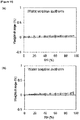
- Solubility was compared between (3,5-dibromo-4-hydroxyphenyl)(2,3-dihydro-4 H- pyrido[4,3- b ][1,4]oxazin-4-yl)-methanone hydrochloride 1.5 hydrate according to the present invention prepared in Example 3 and hydrochloride non-solvate of the same compound.
- the solubility test was carried out using 50 mL of FeSSIF (pH 5.0) as a medium and setting the paddle speed at 50 rpm under the operation condition at 37°C.
- the solubility was measured using a physical mixture of 10 mg of the compound and 100 mg of lactose as a sample. The results are shown in Figure 12 .
- the solubility of the hydrochloride 1.5 hydrate was about 125 ⁇ g/mL, whereas the solubility of the non-solvate was decreased to about 112.5 ⁇ g/mL.
- the efficacy and safety of the compound on the serum uric acid (UA) level was evaluated in comparison with the placebo.
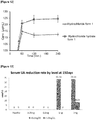
- Serum uric acid levels were measured on the 15th day after administration, and the percentages of patients whose serum uric acid level fell below ⁇ 6.0 mg/dL and below ⁇ 5.0 mg/dL were determined and shown in Figure 13 .
- Figure 13 in the case of administration of the compound at doses of 0.25 mg, 0.5 mg and 1 mg, no patient showed the serum uric acid level below ⁇ 5.0 mg/dL, and only in the case of 2 mg dose the percentage was merely about 8%. From the above results, it could be understood that a dose less than 2 mg is not effective in the treatment of diseases such as hyperuricemia and gout.
- the efficacy and safety of the compound on the serum uric acid level was evaluated in comparison with the placebo.
- Serum uric acid levels were measured on the 15th day after administration, and the percentages of patients whose serum uric acid level fell below ⁇ 6.0 mg/dL and below ⁇ 5.0 mg/dL were determined and shown in Figure 14 .
- the percentages of patients whose serum uric acid level fell below ⁇ 5.0 mg/dL were approximately 23%, 64%, 80% and 73%, respectively, in other words, in the range of about 23% to 80%.
- Patients whose serum uric acid level fell below ⁇ 6.0 mg/dL also appeared in all experimental doses.
Landscapes
- Health & Medical Sciences (AREA)
- Chemical & Material Sciences (AREA)
- Organic Chemistry (AREA)
- General Health & Medical Sciences (AREA)
- Veterinary Medicine (AREA)
- Public Health (AREA)
- Medicinal Chemistry (AREA)
- Animal Behavior & Ethology (AREA)
- Life Sciences & Earth Sciences (AREA)
- Pharmacology & Pharmacy (AREA)
- Epidemiology (AREA)
- Bioinformatics & Cheminformatics (AREA)
- Engineering & Computer Science (AREA)
- General Chemical & Material Sciences (AREA)
- Chemical Kinetics & Catalysis (AREA)
- Nuclear Medicine, Radiotherapy & Molecular Imaging (AREA)
- Rheumatology (AREA)
- Pain & Pain Management (AREA)
- Physical Education & Sports Medicine (AREA)
- Urology & Nephrology (AREA)
- Pharmaceuticals Containing Other Organic And Inorganic Compounds (AREA)
- Nitrogen And Oxygen Or Sulfur-Condensed Heterocyclic Ring Systems (AREA)
- Medicinal Preparation (AREA)
- Organic Low-Molecular-Weight Compounds And Preparation Thereof (AREA)
- Plural Heterocyclic Compounds (AREA)
Claims (7)
- Procédé pour préparer un composé de la formule I suivante, ou un sel pharmaceutiquement acceptable de celui-ci ou un hydrate de celui-ci, comprenant le couplage-réaction d'un composé de la formule III suivante avec un composé de la formule IV suivante :

- Procédé selon la revendication 1, dans lequel le composé de formule III est obtenu en faisant réagir un composé de formule II suivante avec du dicarbonate de di-tert-butyle et de la pyridine :

- Procédé selon la revendication 1, dans lequel ledit procédé comprend les étapes suivantes :(1) faire réagir le composé de formule III avec le composé de formule IV pour obtenir un composé de formule V ;(2) la réaction du composé de formule V avec un alcool en présence d'un acide pour obtenir un sel du composé de formule I ; et(3) la réaction du sel du composé de formule I avec une base d'abord et ensuite avec un acide secondairement :

- Procédé selon la revendication 3, dans lequel le composé de formule III est obtenu en faisant réagir le composé de formule II avec du dicarbonate de di-tert-butyle et de la pyridine :

- Procédé selon la revendication 1, dans lequel le composé de formule IV est obtenu par réaction de la 3,4-dihydro-2H-pyrido[4,3-b][1,4]oxazine avec l'acide bromique dans l'acide acétique.
- Un composé de la formule III suivante :

- Un composé de la formule IV suivante :
Priority Applications (4)
| Application Number | Priority Date | Filing Date | Title |
|---|---|---|---|
| EP21180717.7A EP3909956B1 (fr) | 2017-05-25 | 2018-05-24 | Composé dérivé hétérocyclique comme sel de chlorhydrate 1.5 hydrate |
| PL18806513T PL3632917T3 (pl) | 2017-05-25 | 2018-05-24 | Sposób wytwarzania pochodnych heterocyklicznych |
| DK21180717.7T DK3909956T3 (da) | 2017-05-25 | 2018-05-24 | Hydrochloridsalt 1,5 hydrat af en heterocyklisk derivatforbindelse |
| EP21180716.9A EP3909955A1 (fr) | 2017-05-25 | 2018-05-24 | Composition pharmaceutique contenant un dérivé heterocyclique pour le traitement du hyperuricemie |
Applications Claiming Priority (2)
| Application Number | Priority Date | Filing Date | Title |
|---|---|---|---|
| KR20170064914 | 2017-05-25 | ||
| PCT/KR2018/005932 WO2018217050A1 (fr) | 2017-05-25 | 2018-05-24 | Procédé de préparation d'un composé dérivé hétérocyclique, composition le contenant, et hydrate dudit composé |
Related Child Applications (4)
| Application Number | Title | Priority Date | Filing Date |
|---|---|---|---|
| EP21180716.9A Division EP3909955A1 (fr) | 2017-05-25 | 2018-05-24 | Composition pharmaceutique contenant un dérivé heterocyclique pour le traitement du hyperuricemie |
| EP21180716.9A Division-Into EP3909955A1 (fr) | 2017-05-25 | 2018-05-24 | Composition pharmaceutique contenant un dérivé heterocyclique pour le traitement du hyperuricemie |
| EP21180717.7A Division EP3909956B1 (fr) | 2017-05-25 | 2018-05-24 | Composé dérivé hétérocyclique comme sel de chlorhydrate 1.5 hydrate |
| EP21180717.7A Division-Into EP3909956B1 (fr) | 2017-05-25 | 2018-05-24 | Composé dérivé hétérocyclique comme sel de chlorhydrate 1.5 hydrate |
Publications (3)
| Publication Number | Publication Date |
|---|---|
| EP3632917A1 EP3632917A1 (fr) | 2020-04-08 |
| EP3632917A4 EP3632917A4 (fr) | 2020-07-01 |
| EP3632917B1 true EP3632917B1 (fr) | 2021-11-17 |
Family
ID=64396846
Family Applications (3)
| Application Number | Title | Priority Date | Filing Date |
|---|---|---|---|
| EP21180717.7A Active EP3909956B1 (fr) | 2017-05-25 | 2018-05-24 | Composé dérivé hétérocyclique comme sel de chlorhydrate 1.5 hydrate |
| EP18806513.0A Active EP3632917B1 (fr) | 2017-05-25 | 2018-05-24 | Procédé de préparation d'un composé dérivé hétérocyclique |
| EP21180716.9A Pending EP3909955A1 (fr) | 2017-05-25 | 2018-05-24 | Composition pharmaceutique contenant un dérivé heterocyclique pour le traitement du hyperuricemie |
Family Applications Before (1)
| Application Number | Title | Priority Date | Filing Date |
|---|---|---|---|
| EP21180717.7A Active EP3909956B1 (fr) | 2017-05-25 | 2018-05-24 | Composé dérivé hétérocyclique comme sel de chlorhydrate 1.5 hydrate |
Family Applications After (1)
| Application Number | Title | Priority Date | Filing Date |
|---|---|---|---|
| EP21180716.9A Pending EP3909955A1 (fr) | 2017-05-25 | 2018-05-24 | Composition pharmaceutique contenant un dérivé heterocyclique pour le traitement du hyperuricemie |
Country Status (25)
| Country | Link |
|---|---|
| US (6) | US20200207784A1 (fr) |
| EP (3) | EP3909956B1 (fr) |
| JP (4) | JP2020521007A (fr) |
| KR (1) | KR102307504B1 (fr) |
| CN (3) | CN114085235B (fr) |
| AU (1) | AU2018273020B2 (fr) |
| CA (2) | CA3150710C (fr) |
| DK (1) | DK3909956T3 (fr) |
| EA (1) | EA201992801A1 (fr) |
| ES (2) | ES2907590T3 (fr) |
| FI (1) | FI3909956T3 (fr) |
| HR (1) | HRP20250183T1 (fr) |
| HU (1) | HUE070148T2 (fr) |
| IL (2) | IL294127B2 (fr) |
| LT (1) | LT3909956T (fr) |
| MX (2) | MX393863B (fr) |
| MY (1) | MY201054A (fr) |
| NZ (2) | NZ758513A (fr) |
| PH (1) | PH12019502418B1 (fr) |
| PL (2) | PL3909956T3 (fr) |
| PT (1) | PT3909956T (fr) |
| SI (1) | SI3909956T1 (fr) |
| TW (2) | TWI837089B (fr) |
| WO (1) | WO2018217050A1 (fr) |
| ZA (1) | ZA201908433B (fr) |
Families Citing this family (5)
| Publication number | Priority date | Publication date | Assignee | Title |
|---|---|---|---|---|
| JP2021079225A (ja) * | 2021-03-01 | 2021-05-27 | 株式会社三洋物産 | 遊技機 |
| JP2021087836A (ja) * | 2021-03-01 | 2021-06-10 | 株式会社三洋物産 | 遊技機 |
| JP7556432B2 (ja) * | 2022-08-22 | 2024-09-26 | 株式会社三洋物産 | 遊技機 |
| JP7556433B2 (ja) * | 2022-08-22 | 2024-09-26 | 株式会社三洋物産 | 遊技機 |
| JP7556434B2 (ja) * | 2022-08-22 | 2024-09-26 | 株式会社三洋物産 | 遊技機 |
Family Cites Families (10)
| Publication number | Priority date | Publication date | Assignee | Title |
|---|---|---|---|---|
| JPS6197291A (ja) * | 1984-10-17 | 1986-05-15 | Yamanouchi Pharmaceut Co Ltd | 7−〔α−(2−アミノ−4−チアゾリル)−α−(低級アルコキシイミノ)アセトアミド〕−3−〔6−(2H−ピリド〔4,3−b〕−1,4−オキサジニオ)メチル〕−Δ3−セフエム−4−カルボキシレ−トおよびその製造法 |
| IL119466A (en) * | 1995-11-03 | 2001-08-26 | Akzo Nobel Nv | Thrombin inhibitors, their preparation and pharmaceutical compositions containing them |
| AR051780A1 (es) * | 2004-11-29 | 2007-02-07 | Japan Tobacco Inc | Compuestos en anillo fusionados que contienen nitrogeno y utilizacion de los mismos |
| JP3988832B2 (ja) * | 2004-11-29 | 2007-10-10 | 日本たばこ産業株式会社 | 窒素含有縮合環化合物及びその用途 |
| JP4646068B2 (ja) * | 2005-09-30 | 2011-03-09 | 国立大学法人東京工業大学 | ポジ型感光性樹脂組成物、その製造方法、及びレリーフパターンの形成方法 |
| US20080064871A1 (en) * | 2006-05-26 | 2008-03-13 | Japan Tobacco Inc. | Production Method of Nitrogen-Containing Fused Ring Compounds |
| US20080305169A1 (en) * | 2006-05-26 | 2008-12-11 | Japan Tobacco Inc. | Pharmaceutical Compositions Comprising Nitrogen-Containing Fused Ring Coumpounds |
| WO2008062740A1 (fr) * | 2006-11-20 | 2008-05-29 | Japan Tobacco Inc. | Composé azoté à anneaux fusionnés et son utilisation |
| JP5314123B2 (ja) * | 2008-03-31 | 2013-10-16 | シー アンド シー リサーチ ラボラトリーズ | 複素環誘導体 |
| EP2281128B1 (fr) * | 2008-04-28 | 2019-08-28 | Robert Bosch GmbH | Composant annulaire pour courroie d'entraînement, procédé de fabrication et matériau de base d'acier à trempe secondaire martensitique pour ce composant |
-
2018
- 2018-05-24 TW TW107117713A patent/TWI837089B/zh active
- 2018-05-24 ES ES18806513T patent/ES2907590T3/es active Active
- 2018-05-24 KR KR1020197032941A patent/KR102307504B1/ko active Active
- 2018-05-24 CN CN202111329839.6A patent/CN114085235B/zh active Active
- 2018-05-24 CN CN202411028089.2A patent/CN119143779A/zh active Pending
- 2018-05-24 LT LTEP21180717.7T patent/LT3909956T/lt unknown
- 2018-05-24 ES ES21180717T patent/ES3011357T3/es active Active
- 2018-05-24 TW TW112144614A patent/TW202411234A/zh unknown
- 2018-05-24 NZ NZ758513A patent/NZ758513A/en unknown
- 2018-05-24 HR HRP20250183TT patent/HRP20250183T1/hr unknown
- 2018-05-24 IL IL294127A patent/IL294127B2/en unknown
- 2018-05-24 NZ NZ780383A patent/NZ780383A/en unknown
- 2018-05-24 CA CA3150710A patent/CA3150710C/fr active Active
- 2018-05-24 MY MYPI2019006799A patent/MY201054A/en unknown
- 2018-05-24 US US16/615,566 patent/US20200207784A1/en not_active Abandoned
- 2018-05-24 HU HUE21180717A patent/HUE070148T2/hu unknown
- 2018-05-24 PL PL21180717.7T patent/PL3909956T3/pl unknown
- 2018-05-24 FI FIEP21180717.7T patent/FI3909956T3/fi active
- 2018-05-24 JP JP2020516362A patent/JP2020521007A/ja not_active Withdrawn
- 2018-05-24 EP EP21180717.7A patent/EP3909956B1/fr active Active
- 2018-05-24 PL PL18806513T patent/PL3632917T3/pl unknown
- 2018-05-24 EP EP18806513.0A patent/EP3632917B1/fr active Active
- 2018-05-24 SI SI201831214T patent/SI3909956T1/sl unknown
- 2018-05-24 EA EA201992801A patent/EA201992801A1/ru unknown
- 2018-05-24 CA CA3061301A patent/CA3061301C/fr active Active
- 2018-05-24 IL IL270789A patent/IL270789B2/en unknown
- 2018-05-24 EP EP21180716.9A patent/EP3909955A1/fr active Pending
- 2018-05-24 PH PH1/2019/502418A patent/PH12019502418B1/en unknown
- 2018-05-24 DK DK21180717.7T patent/DK3909956T3/da active
- 2018-05-24 MX MX2019013937A patent/MX393863B/es unknown
- 2018-05-24 PT PT211807177T patent/PT3909956T/pt unknown
- 2018-05-24 AU AU2018273020A patent/AU2018273020B2/en active Active
- 2018-05-24 WO PCT/KR2018/005932 patent/WO2018217050A1/fr not_active Ceased
- 2018-05-24 CN CN201880034458.5A patent/CN110691783A/zh active Pending
-
2019
- 2019-11-21 MX MX2022005722A patent/MX2022005722A/es unknown
- 2019-12-18 ZA ZA2019/08433A patent/ZA201908433B/en unknown
-
2022
- 2022-06-14 JP JP2022095779A patent/JP7557500B2/ja active Active
- 2022-07-07 US US17/859,566 patent/US11866448B2/en active Active
- 2022-07-07 US US17/859,603 patent/US12497410B2/en active Active
-
2023
- 2023-09-26 US US18/372,856 patent/US12103938B2/en active Active
- 2023-11-01 US US18/386,093 patent/US12030895B2/en active Active
-
2024
- 2024-07-10 JP JP2024110729A patent/JP7796815B2/ja active Active
- 2024-07-10 JP JP2024110726A patent/JP2024129160A/ja active Pending
-
2025
- 2025-11-14 US US19/389,519 patent/US20260070923A1/en active Pending
Also Published As
Similar Documents
| Publication | Publication Date | Title |
|---|---|---|
| US12103938B2 (en) | Method for preparing heterocyclic derivative compound, composition containing same compound, and hydrate of same compound | |
| HK40114586A (zh) | 杂环衍生物化合物的制备方法、包含所述化合物的组合物及所述化合物的水合物 | |
| HK40065441B (zh) | 杂环衍生物化合物的制备方法、包含所述化合物的组合物及所述化合物的水合物 | |
| HK40065441A (en) | Method for preparing heterocyclic derivative compound, composition containing same compound, and hydrate of same compound | |
| EA047565B1 (ru) | Способ получения соединения гетероциклического производного, композиции, содержащей указанное соединение, и гидрата указанного соединения | |
| HK40018060A (en) | Method for preparing heterocyclic derivative compound, composition containing same compound, and hydrate of same compound | |
| BR112019024253B1 (pt) | Processos para preparar um composto, ou um sal farmaceuticamente aceitável do mesmo ou um hidrato do mesmo, e para preparar 1,5 hidrato de cloridrato do composto, composto, composição farmacêutica, e, 1,5 hidrato (sesqui-hidrato) de cloridrato do composto | |
| EA042271B1 (ru) | Способ лечения с помощью соединения гетероциклического производного | |
| WO2024260312A1 (fr) | Formes cristallines de sel de sodium d'un dérivé de carbamoylpyridone polycyclique, leur procédé de préparation et leur utilisation |
Legal Events
| Date | Code | Title | Description |
|---|---|---|---|
| STAA | Information on the status of an ep patent application or granted ep patent |
Free format text: STATUS: THE INTERNATIONAL PUBLICATION HAS BEEN MADE |
|
| PUAI | Public reference made under article 153(3) epc to a published international application that has entered the european phase |
Free format text: ORIGINAL CODE: 0009012 |
|
| STAA | Information on the status of an ep patent application or granted ep patent |
Free format text: STATUS: REQUEST FOR EXAMINATION WAS MADE |
|
| 17P | Request for examination filed |
Effective date: 20191223 |
|
| AK | Designated contracting states |
Kind code of ref document: A1 Designated state(s): AL AT BE BG CH CY CZ DE DK EE ES FI FR GB GR HR HU IE IS IT LI LT LU LV MC MK MT NL NO PL PT RO RS SE SI SK SM TR |
|
| AX | Request for extension of the european patent |
Extension state: BA ME |
|
| RIC1 | Information provided on ipc code assigned before grant |
Ipc: A61K 9/20 20060101ALI20200318BHEP Ipc: A61K 31/5383 20060101ALI20200318BHEP Ipc: C07D 498/04 20060101AFI20200318BHEP |
|
| RIN1 | Information on inventor provided before grant (corrected) |
Inventor name: PYUN, DO KYU Inventor name: OO, KYOUNG JIN |
|
| A4 | Supplementary search report drawn up and despatched |
Effective date: 20200603 |
|
| RIC1 | Information provided on ipc code assigned before grant |
Ipc: A61K 31/5383 20060101ALI20200527BHEP Ipc: C07D 498/04 20060101AFI20200527BHEP Ipc: A61K 9/20 20060101ALI20200527BHEP |
|
| DAV | Request for validation of the european patent (deleted) | ||
| DAX | Request for extension of the european patent (deleted) | ||
| GRAP | Despatch of communication of intention to grant a patent |
Free format text: ORIGINAL CODE: EPIDOSNIGR1 |
|
| STAA | Information on the status of an ep patent application or granted ep patent |
Free format text: STATUS: GRANT OF PATENT IS INTENDED |
|
| INTG | Intention to grant announced |
Effective date: 20210611 |
|
| GRAS | Grant fee paid |
Free format text: ORIGINAL CODE: EPIDOSNIGR3 |
|
| GRAA | (expected) grant |
Free format text: ORIGINAL CODE: 0009210 |
|
| STAA | Information on the status of an ep patent application or granted ep patent |
Free format text: STATUS: THE PATENT HAS BEEN GRANTED |
|
| AK | Designated contracting states |
Kind code of ref document: B1 Designated state(s): AL AT BE BG CH CY CZ DE DK EE ES FI FR GB GR HR HU IE IS IT LI LT LU LV MC MK MT NL NO PL PT RO RS SE SI SK SM TR |
|
| REG | Reference to a national code |
Ref country code: GB Ref legal event code: FG4D |
|
| REG | Reference to a national code |
Ref country code: IE Ref legal event code: FG4D |
|
| REG | Reference to a national code |
Ref country code: DE Ref legal event code: R096 Ref document number: 602018026930 Country of ref document: DE |
|
| REG | Reference to a national code |
Ref country code: AT Ref legal event code: REF Ref document number: 1447984 Country of ref document: AT Kind code of ref document: T Effective date: 20211215 |
|
| REG | Reference to a national code |
Ref country code: LT Ref legal event code: MG9D |
|
| REG | Reference to a national code |
Ref country code: NL Ref legal event code: MP Effective date: 20211117 |
|
| REG | Reference to a national code |
Ref country code: AT Ref legal event code: MK05 Ref document number: 1447984 Country of ref document: AT Kind code of ref document: T Effective date: 20211117 |
|
| REG | Reference to a national code |
Ref country code: ES Ref legal event code: FG2A Ref document number: 2907590 Country of ref document: ES Kind code of ref document: T3 Effective date: 20220425 |
|
| PG25 | Lapsed in a contracting state [announced via postgrant information from national office to epo] |
Ref country code: RS Free format text: LAPSE BECAUSE OF FAILURE TO SUBMIT A TRANSLATION OF THE DESCRIPTION OR TO PAY THE FEE WITHIN THE PRESCRIBED TIME-LIMIT Effective date: 20211117 Ref country code: LT Free format text: LAPSE BECAUSE OF FAILURE TO SUBMIT A TRANSLATION OF THE DESCRIPTION OR TO PAY THE FEE WITHIN THE PRESCRIBED TIME-LIMIT Effective date: 20211117 Ref country code: FI Free format text: LAPSE BECAUSE OF FAILURE TO SUBMIT A TRANSLATION OF THE DESCRIPTION OR TO PAY THE FEE WITHIN THE PRESCRIBED TIME-LIMIT Effective date: 20211117 Ref country code: BG Free format text: LAPSE BECAUSE OF FAILURE TO SUBMIT A TRANSLATION OF THE DESCRIPTION OR TO PAY THE FEE WITHIN THE PRESCRIBED TIME-LIMIT Effective date: 20220217 Ref country code: AT Free format text: LAPSE BECAUSE OF FAILURE TO SUBMIT A TRANSLATION OF THE DESCRIPTION OR TO PAY THE FEE WITHIN THE PRESCRIBED TIME-LIMIT Effective date: 20211117 |
|
| PG25 | Lapsed in a contracting state [announced via postgrant information from national office to epo] |
Ref country code: IS Free format text: LAPSE BECAUSE OF FAILURE TO SUBMIT A TRANSLATION OF THE DESCRIPTION OR TO PAY THE FEE WITHIN THE PRESCRIBED TIME-LIMIT Effective date: 20220317 Ref country code: SE Free format text: LAPSE BECAUSE OF FAILURE TO SUBMIT A TRANSLATION OF THE DESCRIPTION OR TO PAY THE FEE WITHIN THE PRESCRIBED TIME-LIMIT Effective date: 20211117 Ref country code: PT Free format text: LAPSE BECAUSE OF FAILURE TO SUBMIT A TRANSLATION OF THE DESCRIPTION OR TO PAY THE FEE WITHIN THE PRESCRIBED TIME-LIMIT Effective date: 20220317 Ref country code: NO Free format text: LAPSE BECAUSE OF FAILURE TO SUBMIT A TRANSLATION OF THE DESCRIPTION OR TO PAY THE FEE WITHIN THE PRESCRIBED TIME-LIMIT Effective date: 20220217 Ref country code: NL Free format text: LAPSE BECAUSE OF FAILURE TO SUBMIT A TRANSLATION OF THE DESCRIPTION OR TO PAY THE FEE WITHIN THE PRESCRIBED TIME-LIMIT Effective date: 20211117 Ref country code: LV Free format text: LAPSE BECAUSE OF FAILURE TO SUBMIT A TRANSLATION OF THE DESCRIPTION OR TO PAY THE FEE WITHIN THE PRESCRIBED TIME-LIMIT Effective date: 20211117 Ref country code: HR Free format text: LAPSE BECAUSE OF FAILURE TO SUBMIT A TRANSLATION OF THE DESCRIPTION OR TO PAY THE FEE WITHIN THE PRESCRIBED TIME-LIMIT Effective date: 20211117 Ref country code: GR Free format text: LAPSE BECAUSE OF FAILURE TO SUBMIT A TRANSLATION OF THE DESCRIPTION OR TO PAY THE FEE WITHIN THE PRESCRIBED TIME-LIMIT Effective date: 20220218 |
|
| PG25 | Lapsed in a contracting state [announced via postgrant information from national office to epo] |
Ref country code: SM Free format text: LAPSE BECAUSE OF FAILURE TO SUBMIT A TRANSLATION OF THE DESCRIPTION OR TO PAY THE FEE WITHIN THE PRESCRIBED TIME-LIMIT Effective date: 20211117 Ref country code: SK Free format text: LAPSE BECAUSE OF FAILURE TO SUBMIT A TRANSLATION OF THE DESCRIPTION OR TO PAY THE FEE WITHIN THE PRESCRIBED TIME-LIMIT Effective date: 20211117 Ref country code: RO Free format text: LAPSE BECAUSE OF FAILURE TO SUBMIT A TRANSLATION OF THE DESCRIPTION OR TO PAY THE FEE WITHIN THE PRESCRIBED TIME-LIMIT Effective date: 20211117 Ref country code: EE Free format text: LAPSE BECAUSE OF FAILURE TO SUBMIT A TRANSLATION OF THE DESCRIPTION OR TO PAY THE FEE WITHIN THE PRESCRIBED TIME-LIMIT Effective date: 20211117 Ref country code: DK Free format text: LAPSE BECAUSE OF FAILURE TO SUBMIT A TRANSLATION OF THE DESCRIPTION OR TO PAY THE FEE WITHIN THE PRESCRIBED TIME-LIMIT Effective date: 20211117 Ref country code: CZ Free format text: LAPSE BECAUSE OF FAILURE TO SUBMIT A TRANSLATION OF THE DESCRIPTION OR TO PAY THE FEE WITHIN THE PRESCRIBED TIME-LIMIT Effective date: 20211117 |
|
| REG | Reference to a national code |
Ref country code: DE Ref legal event code: R097 Ref document number: 602018026930 Country of ref document: DE |
|
| PLBE | No opposition filed within time limit |
Free format text: ORIGINAL CODE: 0009261 |
|
| STAA | Information on the status of an ep patent application or granted ep patent |
Free format text: STATUS: NO OPPOSITION FILED WITHIN TIME LIMIT |
|
| 26N | No opposition filed |
Effective date: 20220818 |
|
| PG25 | Lapsed in a contracting state [announced via postgrant information from national office to epo] |
Ref country code: AL Free format text: LAPSE BECAUSE OF FAILURE TO SUBMIT A TRANSLATION OF THE DESCRIPTION OR TO PAY THE FEE WITHIN THE PRESCRIBED TIME-LIMIT Effective date: 20211117 |
|
| PG25 | Lapsed in a contracting state [announced via postgrant information from national office to epo] |
Ref country code: SI Free format text: LAPSE BECAUSE OF FAILURE TO SUBMIT A TRANSLATION OF THE DESCRIPTION OR TO PAY THE FEE WITHIN THE PRESCRIBED TIME-LIMIT Effective date: 20211117 |
|
| PG25 | Lapsed in a contracting state [announced via postgrant information from national office to epo] |
Ref country code: MC Free format text: LAPSE BECAUSE OF FAILURE TO SUBMIT A TRANSLATION OF THE DESCRIPTION OR TO PAY THE FEE WITHIN THE PRESCRIBED TIME-LIMIT Effective date: 20211117 Ref country code: LU Free format text: LAPSE BECAUSE OF NON-PAYMENT OF DUE FEES Effective date: 20220524 |
|
| PG25 | Lapsed in a contracting state [announced via postgrant information from national office to epo] |
Ref country code: IE Free format text: LAPSE BECAUSE OF NON-PAYMENT OF DUE FEES Effective date: 20220524 |
|
| P01 | Opt-out of the competence of the unified patent court (upc) registered |
Effective date: 20230525 |
|
| PG25 | Lapsed in a contracting state [announced via postgrant information from national office to epo] |
Ref country code: MK Free format text: LAPSE BECAUSE OF FAILURE TO SUBMIT A TRANSLATION OF THE DESCRIPTION OR TO PAY THE FEE WITHIN THE PRESCRIBED TIME-LIMIT Effective date: 20211117 Ref country code: CY Free format text: LAPSE BECAUSE OF FAILURE TO SUBMIT A TRANSLATION OF THE DESCRIPTION OR TO PAY THE FEE WITHIN THE PRESCRIBED TIME-LIMIT Effective date: 20211117 |
|
| PG25 | Lapsed in a contracting state [announced via postgrant information from national office to epo] |
Ref country code: HU Free format text: LAPSE BECAUSE OF FAILURE TO SUBMIT A TRANSLATION OF THE DESCRIPTION OR TO PAY THE FEE WITHIN THE PRESCRIBED TIME-LIMIT; INVALID AB INITIO Effective date: 20180524 |
|
| PG25 | Lapsed in a contracting state [announced via postgrant information from national office to epo] |
Ref country code: MT Free format text: LAPSE BECAUSE OF FAILURE TO SUBMIT A TRANSLATION OF THE DESCRIPTION OR TO PAY THE FEE WITHIN THE PRESCRIBED TIME-LIMIT Effective date: 20211117 |
|
| PGFP | Annual fee paid to national office [announced via postgrant information from national office to epo] |
Ref country code: IT Payment date: 20250321 Year of fee payment: 8 |
|
| PGFP | Annual fee paid to national office [announced via postgrant information from national office to epo] |
Ref country code: DE Payment date: 20250320 Year of fee payment: 8 |
|
| PGFP | Annual fee paid to national office [announced via postgrant information from national office to epo] |
Ref country code: ES Payment date: 20250613 Year of fee payment: 8 |
|
| PGFP | Annual fee paid to national office [announced via postgrant information from national office to epo] |
Ref country code: CH Payment date: 20250601 Year of fee payment: 8 |
|
| PG25 | Lapsed in a contracting state [announced via postgrant information from national office to epo] |
Ref country code: TR Free format text: LAPSE BECAUSE OF FAILURE TO SUBMIT A TRANSLATION OF THE DESCRIPTION OR TO PAY THE FEE WITHIN THE PRESCRIBED TIME-LIMIT Effective date: 20211117 |
|
| PGFP | Annual fee paid to national office [announced via postgrant information from national office to epo] |
Ref country code: GB Payment date: 20260324 Year of fee payment: 9 |
|
| PGFP | Annual fee paid to national office [announced via postgrant information from national office to epo] |
Ref country code: BE Payment date: 20260323 Year of fee payment: 9 |
|
| PGFP | Annual fee paid to national office [announced via postgrant information from national office to epo] |
Ref country code: FR Payment date: 20260323 Year of fee payment: 9 |
|
| PGFP | Annual fee paid to national office [announced via postgrant information from national office to epo] |
Ref country code: PL Payment date: 20260325 Year of fee payment: 9 |