EP3633062A1 - TÔLE D'ACIER À REVÊTEMENT DE SURFACE À BASE DE Zn-Al-Mg À HAUTE RÉSISTANCE ET SON PROCÉDÉ DE PRODUCTION - Google Patents
TÔLE D'ACIER À REVÊTEMENT DE SURFACE À BASE DE Zn-Al-Mg À HAUTE RÉSISTANCE ET SON PROCÉDÉ DE PRODUCTION Download PDFInfo
- Publication number
- EP3633062A1 EP3633062A1 EP17912284.1A EP17912284A EP3633062A1 EP 3633062 A1 EP3633062 A1 EP 3633062A1 EP 17912284 A EP17912284 A EP 17912284A EP 3633062 A1 EP3633062 A1 EP 3633062A1
- Authority
- EP
- European Patent Office
- Prior art keywords
- steel sheet
- hot
- dip
- plating
- strength
- Prior art date
- Legal status (The legal status is an assumption and is not a legal conclusion. Google has not performed a legal analysis and makes no representation as to the accuracy of the status listed.)
- Granted
Links
Images

Classifications
-
- C—CHEMISTRY; METALLURGY
- C21—METALLURGY OF IRON
- C21D—MODIFYING THE PHYSICAL STRUCTURE OF FERROUS METALS; GENERAL DEVICES FOR HEAT TREATMENT OF FERROUS OR NON-FERROUS METALS OR ALLOYS; MAKING METAL MALLEABLE, e.g. BY DECARBURISATION OR TEMPERING
- C21D3/00—Diffusion processes for extraction of non-metals; Furnaces therefor
- C21D3/02—Extraction of non-metals
- C21D3/06—Extraction of hydrogen
-
- C—CHEMISTRY; METALLURGY
- C21—METALLURGY OF IRON
- C21D—MODIFYING THE PHYSICAL STRUCTURE OF FERROUS METALS; GENERAL DEVICES FOR HEAT TREATMENT OF FERROUS OR NON-FERROUS METALS OR ALLOYS; MAKING METAL MALLEABLE, e.g. BY DECARBURISATION OR TEMPERING
- C21D8/00—Modifying the physical properties of ferrous metals or ferrous alloys by deformation combined with, or followed by, heat treatment
- C21D8/02—Modifying the physical properties of ferrous metals or ferrous alloys by deformation combined with, or followed by, heat treatment during manufacturing of plates or strips
-
- C—CHEMISTRY; METALLURGY
- C22—METALLURGY; FERROUS OR NON-FERROUS ALLOYS; TREATMENT OF ALLOYS OR NON-FERROUS METALS
- C22C—ALLOYS
- C22C18/00—Alloys based on zinc
-
- C—CHEMISTRY; METALLURGY
- C22—METALLURGY; FERROUS OR NON-FERROUS ALLOYS; TREATMENT OF ALLOYS OR NON-FERROUS METALS
- C22C—ALLOYS
- C22C18/00—Alloys based on zinc
- C22C18/04—Alloys based on zinc with aluminium as the next major constituent
-
- C—CHEMISTRY; METALLURGY
- C22—METALLURGY; FERROUS OR NON-FERROUS ALLOYS; TREATMENT OF ALLOYS OR NON-FERROUS METALS
- C22C—ALLOYS
- C22C38/00—Ferrous alloys, e.g. steel alloys
-
- C—CHEMISTRY; METALLURGY
- C22—METALLURGY; FERROUS OR NON-FERROUS ALLOYS; TREATMENT OF ALLOYS OR NON-FERROUS METALS
- C22C—ALLOYS
- C22C38/00—Ferrous alloys, e.g. steel alloys
- C22C38/02—Ferrous alloys, e.g. steel alloys containing silicon
-
- C—CHEMISTRY; METALLURGY
- C22—METALLURGY; FERROUS OR NON-FERROUS ALLOYS; TREATMENT OF ALLOYS OR NON-FERROUS METALS
- C22C—ALLOYS
- C22C38/00—Ferrous alloys, e.g. steel alloys
- C22C38/04—Ferrous alloys, e.g. steel alloys containing manganese
-
- C—CHEMISTRY; METALLURGY
- C22—METALLURGY; FERROUS OR NON-FERROUS ALLOYS; TREATMENT OF ALLOYS OR NON-FERROUS METALS
- C22C—ALLOYS
- C22C38/00—Ferrous alloys, e.g. steel alloys
- C22C38/06—Ferrous alloys, e.g. steel alloys containing aluminium
-
- C—CHEMISTRY; METALLURGY
- C22—METALLURGY; FERROUS OR NON-FERROUS ALLOYS; TREATMENT OF ALLOYS OR NON-FERROUS METALS
- C22C—ALLOYS
- C22C38/00—Ferrous alloys, e.g. steel alloys
- C22C38/12—Ferrous alloys, e.g. steel alloys containing tungsten, tantalum, molybdenum, vanadium, or niobium
-
- C—CHEMISTRY; METALLURGY
- C22—METALLURGY; FERROUS OR NON-FERROUS ALLOYS; TREATMENT OF ALLOYS OR NON-FERROUS METALS
- C22C—ALLOYS
- C22C38/00—Ferrous alloys, e.g. steel alloys
- C22C38/14—Ferrous alloys, e.g. steel alloys containing titanium or zirconium
-
- C—CHEMISTRY; METALLURGY
- C22—METALLURGY; FERROUS OR NON-FERROUS ALLOYS; TREATMENT OF ALLOYS OR NON-FERROUS METALS
- C22C—ALLOYS
- C22C38/00—Ferrous alloys, e.g. steel alloys
- C22C38/18—Ferrous alloys, e.g. steel alloys containing chromium
- C22C38/32—Ferrous alloys, e.g. steel alloys containing chromium with boron
-
- C—CHEMISTRY; METALLURGY
- C22—METALLURGY; FERROUS OR NON-FERROUS ALLOYS; TREATMENT OF ALLOYS OR NON-FERROUS METALS
- C22C—ALLOYS
- C22C38/00—Ferrous alloys, e.g. steel alloys
- C22C38/18—Ferrous alloys, e.g. steel alloys containing chromium
- C22C38/38—Ferrous alloys, e.g. steel alloys containing chromium with more than 1.5% by weight of manganese
-
- C—CHEMISTRY; METALLURGY
- C23—COATING METALLIC MATERIAL; COATING MATERIAL WITH METALLIC MATERIAL; CHEMICAL SURFACE TREATMENT; DIFFUSION TREATMENT OF METALLIC MATERIAL; COATING BY VACUUM EVAPORATION, BY SPUTTERING, BY ION IMPLANTATION OR BY CHEMICAL VAPOUR DEPOSITION, IN GENERAL; INHIBITING CORROSION OF METALLIC MATERIAL OR INCRUSTATION IN GENERAL
- C23C—COATING METALLIC MATERIAL; COATING MATERIAL WITH METALLIC MATERIAL; SURFACE TREATMENT OF METALLIC MATERIAL BY DIFFUSION INTO THE SURFACE, BY CHEMICAL CONVERSION OR SUBSTITUTION; COATING BY VACUUM EVAPORATION, BY SPUTTERING, BY ION IMPLANTATION OR BY CHEMICAL VAPOUR DEPOSITION, IN GENERAL
- C23C2/00—Hot-dipping or immersion processes for applying the coating material in the molten state without affecting the shape; Apparatus therefor
- C23C2/02—Pretreatment of the material to be coated, e.g. for coating on selected surface areas
-
- C—CHEMISTRY; METALLURGY
- C23—COATING METALLIC MATERIAL; COATING MATERIAL WITH METALLIC MATERIAL; CHEMICAL SURFACE TREATMENT; DIFFUSION TREATMENT OF METALLIC MATERIAL; COATING BY VACUUM EVAPORATION, BY SPUTTERING, BY ION IMPLANTATION OR BY CHEMICAL VAPOUR DEPOSITION, IN GENERAL; INHIBITING CORROSION OF METALLIC MATERIAL OR INCRUSTATION IN GENERAL
- C23C—COATING METALLIC MATERIAL; COATING MATERIAL WITH METALLIC MATERIAL; SURFACE TREATMENT OF METALLIC MATERIAL BY DIFFUSION INTO THE SURFACE, BY CHEMICAL CONVERSION OR SUBSTITUTION; COATING BY VACUUM EVAPORATION, BY SPUTTERING, BY ION IMPLANTATION OR BY CHEMICAL VAPOUR DEPOSITION, IN GENERAL
- C23C2/00—Hot-dipping or immersion processes for applying the coating material in the molten state without affecting the shape; Apparatus therefor
- C23C2/02—Pretreatment of the material to be coated, e.g. for coating on selected surface areas
- C23C2/022—Pretreatment of the material to be coated, e.g. for coating on selected surface areas by heating
-
- C—CHEMISTRY; METALLURGY
- C23—COATING METALLIC MATERIAL; COATING MATERIAL WITH METALLIC MATERIAL; CHEMICAL SURFACE TREATMENT; DIFFUSION TREATMENT OF METALLIC MATERIAL; COATING BY VACUUM EVAPORATION, BY SPUTTERING, BY ION IMPLANTATION OR BY CHEMICAL VAPOUR DEPOSITION, IN GENERAL; INHIBITING CORROSION OF METALLIC MATERIAL OR INCRUSTATION IN GENERAL
- C23C—COATING METALLIC MATERIAL; COATING MATERIAL WITH METALLIC MATERIAL; SURFACE TREATMENT OF METALLIC MATERIAL BY DIFFUSION INTO THE SURFACE, BY CHEMICAL CONVERSION OR SUBSTITUTION; COATING BY VACUUM EVAPORATION, BY SPUTTERING, BY ION IMPLANTATION OR BY CHEMICAL VAPOUR DEPOSITION, IN GENERAL
- C23C2/00—Hot-dipping or immersion processes for applying the coating material in the molten state without affecting the shape; Apparatus therefor
- C23C2/02—Pretreatment of the material to be coated, e.g. for coating on selected surface areas
- C23C2/022—Pretreatment of the material to be coated, e.g. for coating on selected surface areas by heating
- C23C2/0222—Pretreatment of the material to be coated, e.g. for coating on selected surface areas by heating in a reactive atmosphere, e.g. oxidising or reducing atmosphere
-
- C—CHEMISTRY; METALLURGY
- C23—COATING METALLIC MATERIAL; COATING MATERIAL WITH METALLIC MATERIAL; CHEMICAL SURFACE TREATMENT; DIFFUSION TREATMENT OF METALLIC MATERIAL; COATING BY VACUUM EVAPORATION, BY SPUTTERING, BY ION IMPLANTATION OR BY CHEMICAL VAPOUR DEPOSITION, IN GENERAL; INHIBITING CORROSION OF METALLIC MATERIAL OR INCRUSTATION IN GENERAL
- C23C—COATING METALLIC MATERIAL; COATING MATERIAL WITH METALLIC MATERIAL; SURFACE TREATMENT OF METALLIC MATERIAL BY DIFFUSION INTO THE SURFACE, BY CHEMICAL CONVERSION OR SUBSTITUTION; COATING BY VACUUM EVAPORATION, BY SPUTTERING, BY ION IMPLANTATION OR BY CHEMICAL VAPOUR DEPOSITION, IN GENERAL
- C23C2/00—Hot-dipping or immersion processes for applying the coating material in the molten state without affecting the shape; Apparatus therefor
- C23C2/02—Pretreatment of the material to be coated, e.g. for coating on selected surface areas
- C23C2/022—Pretreatment of the material to be coated, e.g. for coating on selected surface areas by heating
- C23C2/0224—Two or more thermal pretreatments
-
- C—CHEMISTRY; METALLURGY
- C23—COATING METALLIC MATERIAL; COATING MATERIAL WITH METALLIC MATERIAL; CHEMICAL SURFACE TREATMENT; DIFFUSION TREATMENT OF METALLIC MATERIAL; COATING BY VACUUM EVAPORATION, BY SPUTTERING, BY ION IMPLANTATION OR BY CHEMICAL VAPOUR DEPOSITION, IN GENERAL; INHIBITING CORROSION OF METALLIC MATERIAL OR INCRUSTATION IN GENERAL
- C23C—COATING METALLIC MATERIAL; COATING MATERIAL WITH METALLIC MATERIAL; SURFACE TREATMENT OF METALLIC MATERIAL BY DIFFUSION INTO THE SURFACE, BY CHEMICAL CONVERSION OR SUBSTITUTION; COATING BY VACUUM EVAPORATION, BY SPUTTERING, BY ION IMPLANTATION OR BY CHEMICAL VAPOUR DEPOSITION, IN GENERAL
- C23C2/00—Hot-dipping or immersion processes for applying the coating material in the molten state without affecting the shape; Apparatus therefor
- C23C2/02—Pretreatment of the material to be coated, e.g. for coating on selected surface areas
- C23C2/024—Pretreatment of the material to be coated, e.g. for coating on selected surface areas by cleaning or etching
-
- C—CHEMISTRY; METALLURGY
- C23—COATING METALLIC MATERIAL; COATING MATERIAL WITH METALLIC MATERIAL; CHEMICAL SURFACE TREATMENT; DIFFUSION TREATMENT OF METALLIC MATERIAL; COATING BY VACUUM EVAPORATION, BY SPUTTERING, BY ION IMPLANTATION OR BY CHEMICAL VAPOUR DEPOSITION, IN GENERAL; INHIBITING CORROSION OF METALLIC MATERIAL OR INCRUSTATION IN GENERAL
- C23C—COATING METALLIC MATERIAL; COATING MATERIAL WITH METALLIC MATERIAL; SURFACE TREATMENT OF METALLIC MATERIAL BY DIFFUSION INTO THE SURFACE, BY CHEMICAL CONVERSION OR SUBSTITUTION; COATING BY VACUUM EVAPORATION, BY SPUTTERING, BY ION IMPLANTATION OR BY CHEMICAL VAPOUR DEPOSITION, IN GENERAL
- C23C2/00—Hot-dipping or immersion processes for applying the coating material in the molten state without affecting the shape; Apparatus therefor
- C23C2/04—Hot-dipping or immersion processes for applying the coating material in the molten state without affecting the shape; Apparatus therefor characterised by the coating material
- C23C2/06—Zinc or cadmium or alloys based thereon
-
- C—CHEMISTRY; METALLURGY
- C23—COATING METALLIC MATERIAL; COATING MATERIAL WITH METALLIC MATERIAL; CHEMICAL SURFACE TREATMENT; DIFFUSION TREATMENT OF METALLIC MATERIAL; COATING BY VACUUM EVAPORATION, BY SPUTTERING, BY ION IMPLANTATION OR BY CHEMICAL VAPOUR DEPOSITION, IN GENERAL; INHIBITING CORROSION OF METALLIC MATERIAL OR INCRUSTATION IN GENERAL
- C23C—COATING METALLIC MATERIAL; COATING MATERIAL WITH METALLIC MATERIAL; SURFACE TREATMENT OF METALLIC MATERIAL BY DIFFUSION INTO THE SURFACE, BY CHEMICAL CONVERSION OR SUBSTITUTION; COATING BY VACUUM EVAPORATION, BY SPUTTERING, BY ION IMPLANTATION OR BY CHEMICAL VAPOUR DEPOSITION, IN GENERAL
- C23C2/00—Hot-dipping or immersion processes for applying the coating material in the molten state without affecting the shape; Apparatus therefor
- C23C2/26—After-treatment
-
- C—CHEMISTRY; METALLURGY
- C23—COATING METALLIC MATERIAL; COATING MATERIAL WITH METALLIC MATERIAL; CHEMICAL SURFACE TREATMENT; DIFFUSION TREATMENT OF METALLIC MATERIAL; COATING BY VACUUM EVAPORATION, BY SPUTTERING, BY ION IMPLANTATION OR BY CHEMICAL VAPOUR DEPOSITION, IN GENERAL; INHIBITING CORROSION OF METALLIC MATERIAL OR INCRUSTATION IN GENERAL
- C23C—COATING METALLIC MATERIAL; COATING MATERIAL WITH METALLIC MATERIAL; SURFACE TREATMENT OF METALLIC MATERIAL BY DIFFUSION INTO THE SURFACE, BY CHEMICAL CONVERSION OR SUBSTITUTION; COATING BY VACUUM EVAPORATION, BY SPUTTERING, BY ION IMPLANTATION OR BY CHEMICAL VAPOUR DEPOSITION, IN GENERAL
- C23C2/00—Hot-dipping or immersion processes for applying the coating material in the molten state without affecting the shape; Apparatus therefor
- C23C2/26—After-treatment
- C23C2/261—After-treatment in a gas atmosphere, e.g. inert or reducing atmosphere
-
- C—CHEMISTRY; METALLURGY
- C23—COATING METALLIC MATERIAL; COATING MATERIAL WITH METALLIC MATERIAL; CHEMICAL SURFACE TREATMENT; DIFFUSION TREATMENT OF METALLIC MATERIAL; COATING BY VACUUM EVAPORATION, BY SPUTTERING, BY ION IMPLANTATION OR BY CHEMICAL VAPOUR DEPOSITION, IN GENERAL; INHIBITING CORROSION OF METALLIC MATERIAL OR INCRUSTATION IN GENERAL
- C23C—COATING METALLIC MATERIAL; COATING MATERIAL WITH METALLIC MATERIAL; SURFACE TREATMENT OF METALLIC MATERIAL BY DIFFUSION INTO THE SURFACE, BY CHEMICAL CONVERSION OR SUBSTITUTION; COATING BY VACUUM EVAPORATION, BY SPUTTERING, BY ION IMPLANTATION OR BY CHEMICAL VAPOUR DEPOSITION, IN GENERAL
- C23C2/00—Hot-dipping or immersion processes for applying the coating material in the molten state without affecting the shape; Apparatus therefor
- C23C2/26—After-treatment
- C23C2/28—Thermal after-treatment, e.g. treatment in oil bath
Definitions
- the present invention relates to a surface-treated steel sheet in which a Zn-Al-Mg-based surface-coating layer is formed on a surface of a high-strength steel sheet, and in particular, the present invention relates to such a high-strength surface-coated steel sheet that is lowered in an in-steel hydrogen concentration which becomes a factor of hydrogen embrittlement while maintaining high corrosion resistance.
- the present invention also relates to a method for producing the same.
- the brittle fracture of this type is an event caused by hydrogen having entered in a plating line. It has also been found that, in a hot-dip Zn-Al-Mg-based-plated steel sheet, the plating layer is more likely to become a "barrier" that prevents release of hydrogen from the steel sheet as compared with another general hot-dip galvanized steel sheet. Accordingly, in order to increase the level of reliability for working of a high-strength steel sheet after subjected to hot-dip Zn-Al-Mg-based plating, there is a need for establishment of a technique for suppressing hydrogen embrittlement of the steel sheet.
- NPL 1 Kobe Steel Engineering Reports, Vol.50, No.1, p.65
- PTL 1 discloses a technique for suppressing entrance of hydrogen generated in a corrosion reaction under the atmospheric environment into a steel sheet by optimizing the chemical composition and metallic structure of the steel.
- PTL 2 discloses a technique for suppressing hydrogen embrittlement due to hydrogen having entered from an environment by reducing microsegregation of Mn at a position deeper than the pitting corrosion depth of the surface.
- a baking treatment is known as a treatment for releasing hydrogen having entered a steel material to the outside of the steel material.
- a baking treatment is a treatment of heating a steel material that hydrogen has entered at a temperature around 200°C to allow the hydrogen having entered the steel material to diffuse and exit the surface of the steel material.
- NPL 1 has a statement about a baking treatment of a steel bolt having been subjected to electrogalvanizing. According to the statement, heating at 150°C or higher is effective for releasing diffusible hydrogen and heating at about 200°C is particularly effective.
- PTL 3 discloses a technique of forming a coating which is black due to a black oxide of Zn by heating a hot-dip Zn-Al-Mg-plated steel sheet in a steam atmosphere as a post-treatment.
- the document shows no example of applying a high-tensile steel as a base steel sheet for plating.
- An object of the present invention is to provide a high-strength steel sheet having been subjected to hot-dip Zn-Al-Mg-based plating, the steel sheet being significantly lowered in the in-steel concentration of hydrogen having entered the steel in a plating line, while exhibiting the inherent excellent corrosion resistance of a hot-dip Zn-Al-Mg-based plating layer.
- the present invention also discloses a technique for improving the design properties of the surface appearance in such a steel sheet.
- the present inventors have found that when a hot-dip Zn-Al-Mg-based-plated steel sheet in which a high-tensile steel is used as a base steel sheet for plating is subjected to bending-stretching deformation with a tension leveler or a skin pass rolling to thereby generate cracks in a plating layer, followed by a baking treatment, it is possible to efficiently release hydrogen having entered the steel material even if the baking temperature is set within a low temperature range of 150°C or lower. In this case, the inherent high corrosion resistance of a hot-dip Zn-Al-Mg-based plating layer can be sufficiently maintained. It has also been found that when the baking treatment is conducted in a steam atmosphere, a coating layer having a black appearance which has high design properties can be obtained. The present invention has been completed based on the findings.
- a high-strength surface-coated steel sheet including: a base steel sheet having a steel composition by mass of C: 0.01 to 0.20%, Si: 0.01 to 0.50%, Mn: 0.10 to 2.50%, P: 0.005 to 0.050%, B: 0.0005 to 0.010%, Ti: 0.01 to 0.20%, Nb: 0 to 0.10%, Mo: 0 to 0.50%, Cr: 0 to 0.50%, Al: 0.01 to 0.10%, and the balance of Fe and inevitable impurities; and a Zn-Al-Mg-based coating layer disposed on a surface of the base steel sheet, the Zn-Al-Mg-based coating layer having a metal element composition ratio by mass of Al: 1.0 to 22.0%, Mg: 1.3 to 10.0%, Si: 0 to 2.0%, Ti: 0 to 0.10%, B: 0 to 0.05%, Fe: 2.0% or less, and the balance of Zn and inevitable impurities, the high-strength surface
- the high-strength surface-coated steel sheet has a tensile strength in the direction perpendicular to the rolling direction of, for example, 590 MPa or higher.
- the Zn-Al-Mg-based coating layer has a mean thickness of, for example, 3 to 100 ⁇ m.
- a steel sheet having a black appearance with a lightness L* of a coating layer surface of 60 or less is provided as one having improved design properties.
- L* is a lightness index L* in the CIE 1976 L*a*b* color space.
- the Zn-Al-Mg-based coating layer may further include an inorganic coating or an organic coating on the surface thereof.
- a method for producing the high-strength surface-coated steel sheet including:
- a steel sheet that has a diffusible hydrogen concentration in the base steel sheet of 0.35 ppm or more is particularly effectively applied.
- a steel sheet having a black appearance with a lightness L* of 60 or less can be obtained.
- the present invention can provide a surface-treated steel sheet in which hot-dip Zn-Al-Mg-based plating is applied on a high-tensile steel used as a base steel sheet for plating and in which the concentration of hydrogen having entered the steel in a plating line or the like is decreased by a baking treatment.
- the surface-treated steel sheet has high reliability in the resistance to hydrogen embrittlement.
- the inherent excellent corrosion resistance of a hot-dip Zn-Al-Mg-based plating layer is maintained despite application of the baking treatment. Furthermore, it is possible to achieve a black appearance with high design properties by using the baking treatment.
- the present invention makes it possible to achieve all of the followings together: the high corrosion resistance inherent in a hot-dip Zn-Al-Mg-based-plated steel sheet, the high strength due to a high-tensile steel, the high reliability in resistance to hydrogen embrittlement, and further, if required, the high design properties due to a black-tone surface appearance.
- the base steel sheet corresponding to a base steel sheet for plating will be described.
- the "%” with respect to the chemical composition of a base steel sheet means “% by mass” unless otherwise specified.
- C is an essential element for achieving high strength of a steel.
- a C content of 0.01% or more is required for achieving a strength level of a tensile strength of 590 MPa or higher. With an excess C content, the unevenness in the structure becomes significant to lower the workability.
- the C content is limited to 0.20% or less and may be controlled to 0.16% or less.
- Si is not only effective for achieving high strength but also has an action of suppressing precipitation of cementite and is effective for suppressing generation of perlite or the like.
- An Si content of 0.01% or more is ensured to substantially exhibit the actions.
- an Si-concentrated layer may be generated in a steel sheet surface, which becomes a factor of lowering the plating properties.
- the Si content is limited to 0.50% or less and more preferably to 0.25% or less.
- Mn is effective for achieving high strength.
- An Mn content of 0.10% or more is ensured to stably achieve a strength level of a tensile strength of 590 MPa or higher.
- An Mn content of 0.50% or more is more effective. With an excess Mn content, segregation is liable to occur to lower the workability.
- the Mn content is 2.50% or less.
- P is effective for solid solution strengthening.
- a P content of 0.005% or more is ensured.
- the P content may be controlled to 0.010% or more. With an excess P content, segregation is liable to occur to lower the workability.
- the P content is limited to 0.050% or less.
- B suppresses the austenite-ferrite transformation of a steel and contributes to microstructure transition hardening.
- B when Ti or Nb is added, B has an effect of decreasing the precipitation temperature of Ti-based carbide or Nb-based carbide by suppressing the austenite-ferrite transformation to reduce the size of the carbides.
- a B content of 0.0005% or more is ensured to sufficiently achieve the above effects.
- a B content of 0.001% or more is more effective.
- a large B content becomes a factor of lowering the workability due to generation of a boride.
- B, if added, is to be added in the range of 0.010% or less and may be controlled to 0.005% or less.
- Ti binds to C to form a fine Ti-based carbide and contributes to achieving high strength.
- a Ti content of 0.01% or more is ensured to sufficiently exhibit the action.
- An excess Ti content leads to lower workability.
- the Ti content is 0.20% or less and may be controlled to 0.15% or less.
- Nb binds to C to form a fine Nb-based carbide and contributes to achieving high strength.
- Nb is effective for achieving size reduction and evenness of a structure. Accordingly, Nb can be contained as required. It is more effective to ensure a Nb content of 0.005% or more for sufficiently achieving the above effects. A large Nb content leads to lower workability.
- Nb, if added, is contained in the range of 0.10% or less.
- Mo and Cr both have an action of increasing strength by solid solution strengthening.
- one or both of Mo and Cr can be added as required. It is more effective to ensure a Mo content of 0.01% or more and a Cr content of 0.01% or more for sufficiently achieving the above action. Large contents of the elements lead to lower ductility. If one or both of the elements are added, the Mo content is in the range of 0.50% or less and the Cr content is in the range of 0.50% or less.
- Al has an action of deoxidizing.
- Al is desirably added in an Al content in the steel of 0.01% or more for sufficiently achieving the action.
- An excess Al content leads to lower workability.
- the Al content is limited to 0.10% or less and may be controlled to 0.05% or less.
- S incorporated as impurities is acceptable in a content of 0.010% or less and the content is more preferably 0.005% or less. Since a too low S content leads to an increased load in the steelmaking, the S content may usually be 0.0005% or more.
- a Zn-Al-Mg-based coating layer has to be present on a surface of a base steel sheet having the above chemical composition.
- the coating layer is derived from a plating layer which is formed by hot-dip Zn-Al-Mg-based plating. This layer is herein referred to as a "Zn-Al-Mg-based coating layer".
- the Zn-Al-Mg-based coating layer has undergone a baking treatment after introduction of cracks. Accordingly, the Zn-Al-Mg-based coating layer after the baking treatment has cracks.
- the total extension of the cracks per mm 2 is, for example, 3.0 to 8.0 mm.
- the cracks have contributed to release of hydrogen from the base steel sheet and it is found that even if cracks having a total extension of the above range remain, decrease in the corrosion resistance due to the cracks is not a problem.
- the temperature in the baking treatment has large influence on whether the inherent excellent corrosion resistance of a hot-dip Zn-Al-Mg-based plating layer is maintained.
- the high-strength surface-coated steel sheet according to the present invention is produced while avoiding baking at a high temperature as described later, the high-strength surface-coated steel sheet has an excellent corrosion resistance such that a time until occurrence of red rust is 7000 hours or more as measured by a neutral salt spray test (salt concentration: 50 g/L, temperature: 35°C, back face and edge face seal of test piece: present) according to JIS Z2371:2015.
- a steel sheet which includes a black Zn-Al-Mg-based coating layer formed by conducting a baking treatment in a steam atmosphere also has the same excellent corrosion resistance.
- the chemical composition substantially maintains the composition of the original hot-dip Zn-Al-Mg-based plating layer.
- a part of Zn has changed to its black oxide in a black Zn-Al-Mg-based coating layer formed by conducting a baking treatment in a steam atmosphere, but also in this case, the composition of the original hot-dip Zn-Al-Mg-based plating layer is substantially maintained in terms of the metal element composition ratio.
- a plating layer having a composition within a composition range applied to a hot-dip Zn-Al-Mg-based-plated steel sheet excellent in corrosion resistance is used herein.
- a plating layer having a metal element composition ratio by mass of Al: 1.0 to 22.0%, Mg: 1.3 to 10.0%, Si: 0 to 2.0%, Ti: 0 to 0.10%, B: 0 to 0.05%, Fe: 2.0% or less, and the balance of Zn and inevitable impurities is a subject herein.
- the Zn-Al-Mg-based coating layer preferably has a mean thickness of 3 ⁇ m or more. Layer formation at a too large thickness is not economical and also leads to lower workability of the coating layer itself.
- the Zn-Al-Mg-based coating layer may have a mean thickness in the rage of 100 ⁇ m or less.
- the mean thickness of a coating layer can be determined by observing a cross section parallel to the sheet thickness direction.
- a Zn-Al-Mg-based coating layer having a black appearance is formed by a surface of the hot-dip Zn-Al-Mg-based plating layer which is brought into contact with steam during a baking treatment to generate a black oxide of Zn in the coating layer. Accordingly, the black oxide of Zn is relatively largely distributed in an upper layer portion of the Zn-Al-Mg-based coating layer to provide an effect of giving a black-tone surface appearance. As a result of various studies, it has been found that when the black oxide of Zn is formed so that the lightness L* of the surface of the Zn-Al-Mg-based coating layer is 60 or less, a black appearance which is excellent in design properties with hardly noticeable uneven discoloration is provided.
- the black appearance due to the black oxide of Zn can be achieved within such a condition range of a baking treatment that the in-steel diffusible hydrogen concentration is decreased to 0.30 ppm or less.
- the hydrogen concentration of a base steel sheet which becomes a factor of hydrogen embrittlement can be evaluated by measuring the diffusible hydrogen concentration.
- the diffusible hydrogen concentration can be determined by measuring the amount of hydrogen released when the steel sheet is heated from a room temperature to 300°C at a temperature-rising rate of 5°C /min in an atmospheric pressure ionization mass spectrometer.
- a measurement sample a sample composed only of a base steel sheet obtained by removing a Zn-Al-Mg-based coating layer with abrasive paper can be used.
- the diffusible hydrogen concentration of the base steel sheet before a baking treatment is 0.35 ppm or more.
- the diffusible hydrogen concentration in the base steel sheet is defined to 0.30 ppm or less.
- the diffusible hydrogen concentration is more preferably 0.20 ppm or less.
- the matrix (steel base) of a base steel sheet is desirably a structure of a bainitic ferrite phase or a mixed structure of a ferritic phase and a martensitic phase.
- the amount of martensite is preferably 10 to 50% by volume.
- the tensile strength be 590 to 1180 MPa and the total elongation at break be 10% or more in a tensile test (JIS Z2241:2011) in the direction perpendicular to the rolling direction.
- a high-strength surface-coated steel sheet having a diffusible hydrogen concentration in a base steel sheet lowered as described above can be produced by producing a hot-dip Zn-Al-Mg-based-plated steel sheet using a steel sheet having the above chemical composition as a base steel sheet for plating, introducing cracks in the plating layer of the plated steel sheet, and then applying a baking treatment in a temperature range controlled to a relatively low level.
- the hot-dip Zn-Al-Mg-based-plated steel sheet may be produced by a conventionally known method.
- a continuous hot-dip plating line in a site of mass production can be used.
- a heat treatment which is applied immediately before hot-dip plating and which also functions as a surface reduction treatment is conducted by heating at 550 to 900°C in a mixed gas of hydrogen and nitrogen.
- the proportion of hydrogen gas in the mixed gas is desirably 25 to 35% by volume.
- the time period where the material temperature is kept in the above temperature range is desirably adjusted in the range of 20 to 200 seconds.
- the in-steel concentration of hydrogen can be considerably decreased by a baking treatment as described later.
- the thickness of the base steel sheet is, for example, 0.8 to 4.5 mm. After the heat treatment, the steel sheet is immersed in a hot-dip plating bath without exposed to the atmosphere.
- the composition of the hot-dip plating bath by mass is Al: 1.0 to 22.0%, Mg: 1.3 to 10.0%, Si: 0 to 2.0%, Ti: 0 to 0.10%, B: 0 to 0.05%, Fe: 2.0% or less, and the balance of Zn and inevitable impurities.
- the plating layer composition of the resulting plated steel sheet almost reflects the plating bath composition.
- the steel sheet taken out of the plating bath is cooled by an ordinary method after adjusting the amount of deposited plating by a gas wiping method or the like.
- the amount of deposited plating is preferably 3 to 100 ⁇ m in terms of a plating layer mean thickness on one face.
- the baking treatment is required to be applied in a low temperature range as described later.
- a hot-dip Zn-Al-Mg-based plating layer is liable to interfere with hydrogen release as compared with a general galvanizing layer.
- a baking treatment in a low temperature range is applied on a hot-dip Zn-Al-Mg-based-plated steel sheet, it is difficult to stably decrease hydrogen in the base steel sheet to a certain concentration or lower.
- a pretreatment for the baking treatment cracks are introduced into the plating layer.
- the introduction of cracks into a plating layer can be achieved by bending-stretching deformation with a tension leveler or a skin pass rolling.
- the deformation by a tension leveler or a skin pass roller may be applied several times in total.
- a strain of a total elongation rate of 0.2 to 1.0% is desirably applied on a steel sheet.
- a baking treatment is a heat treatment for decreasing the in-steel hydrogen concentration by releasing hydrogen having entered a steel material to the outside thereof.
- the baking treatment also functions as a blackening treatment therefor.
- the present inventors have made studies on a relationship between the heating temperature (maximum temperature the material reaches) in a baking treatment and the corrosion resistance.
- the heating temperature maximum temperature the material reaches
- the phase structure in the plating layer changes and degradation in corrosion resistance becomes apparent.
- the baking treatment is conducted by heating and holding at 70 to 150°C.
- the time period of the baking treatment that is, the time period where a hot-dip Zn-Al-Mg-based-plated steel sheet is held at a prescribed temperature which is set in the range of 70 to 150°C is set to be such a time period that the diffusible hydrogen concentration in the base steel sheet can be decreased to a target level of 0.30 ppm or less or 0.20 ppm or less.
- An appropriate treatment time may be set by performing a pretest according to the hot-dip plating conditions, the atmospheric gas conditions of the baking treatment, and the baking treatment temperature.
- a treatment time for achieving a good result can be set in the range of 1 to 50 hours, and is preferably in the range of 2 to 36 hours.
- the heating atmosphere of the baking treatment is required to be a steam atmosphere when a black-tone surface appearance is to be obtained, but in the other cases, the heating atmosphere may be any atmosphere, such as an air, a vacuum, or an inert gas atmosphere.
- the content of impurity gas components (gas components other than steam) in the steam atmosphere is desirably 5% by volume or less.
- a hot-dip Zn-Al-Mg-based plating layer When a hot-dip Zn-Al-Mg-based plating layer is brought into contact with steam at the above temperature, Zn in the plating layer is prominently oxidized to form a black Zn oxide, whereby a black-tone surface appearance having high design properties with a lightness L* of 60 or less can be obtained.
- the partial pressure of steam is adjusted so that the relative humidity (the partial pressure of steam actually present in the atmosphere to the saturated steam pressure in the temperature) is 70 to 100%. With a relative humidity lower than 70%, the generation rate of the black oxide of Zn is low and uneven discoloration is liable to occur in such a time period that the release of hydrogen in the steel is sufficiently achieved.
- a technique of allowing a sheet to pass through a continuous annealing furnace can be applied.
- a steel sheet coiled into a coil is subjected to a baking treatment, for example, a bell-type batch annealing furnace can be used. In this case, it is possible to perform a treatment under a prescribed atmosphere other than the air atmosphere.
- the treatment When blackening is applied in a steam atmosphere, the treatment is conducted in a furnace insulated from the air atmosphere.
- An airtightly closed container is desirably used as a furnace body.
- a hot-dip Zn-Al-Mg-based-plated steel sheet When contained in a furnace, the steel sheet is placed so that the plating layer surface is in contact with the atmospheric gas.
- steam is introduced to convert the atmosphere in the furnace into a steam atmosphere and the temperature is elevated and kept at a prescribed temperature, thereby conducting a baking treatment.
- the atmosphere in the furnace is controlled so that a prescribed gas composition is maintained during the baking treatment.
- An inorganic coating can be formed on a surface of a Zn-Al-Mg-based coating layer modified by the baking treatment described above.
- known various coatings that have conventionally been applied to a hot-dip Zn-Al-Mg-based-plated steel sheet can be applied.
- an inorganic coating that contains one or two or more compounds selected from the group consisting of oxides of valve metals, oxoates of valve metals, hydroxides of valve metals, phosphates of valve metals, and fluorides of valve metals (hereinafter also referred to as "valve metal compounds”) can be mentioned as suitable examples.
- valve metals include Ti, Zr, Hf, V, Nb, Ta, W, Si, and Al.
- a valve metal compound containing one or more of the above valve metals is desirably applied as the valve metal compound.
- An inorganic coating can be formed by a known method. For example, a method in which an inorganic paint containing a valve metal compound and other components is applied on a surface of a Zn-Al-Mg-based coating layer by a roll coating method, a spin coating method, a spraying method, or the like can be adopted.
- An organic coating can also be formed on a surface of a Zn-Al-Mg-based coating layer modified by the baking treatment described above.
- Various known organic resin coatings which has conventionally been applied on a hot-dip Zn-Al-Mg-based-plated steel sheet can similarly be applied. Examples thereof include coatings containing a urethan resin, an epoxy resin, an olefin resin, a styrene resin, a polyester resin, an acrylic resin, a fluororesin, or a combination of the above resins, or a copolymer or a modified product of the above resins.
- An organic coating can similarly be formed by a known method.
- a method in which an organic paint containing the above resin component is applied on a surface of a Zn-Al-Mg-based coating layer by a roll coating method, a spin coating method, a spraying method, or the like can be adopted.
- a cast slab having each chemical composition shown in Table 1 was heated to 1250°C and then was subjected to hot rolling to produce a hot rolled steel sheet for a hot rolled base steel sheet for plating or for a cold rolled base steel sheet for plating.
- the conditions for hot rolling are, for the hot rolled base steel sheet for plating a finish rolling temperature of 880°C, a coiling temperature of 600°C, and a sheet thickness of 3.2 mm, and for the cold rolled base steel sheet for plating, a finish rolling temperature of 880°C, a coiling temperature of 460°C, and a sheet thickness of 2 mm.
- the finish rolling temperature is represented by the sheet surface temperature immediately after the last pass of the hot rolling.
- the hot rolled steel sheet for a hot rolled base steel sheet for plating was subjected to acid cleaning and then was used as a hot rolled base steel sheet for plating as it was.
- the hot rolled steel sheet for a cold rolled base steel sheet for plating was subjected to acid cleaning and then was subjected to cold rolling at each cold rolling ratio shown in Table 2 to thereby obtain a cold rolled base steel sheet for plating.
- Table 1 all the steels shown in Table 1 are the "Inventive steels" which meet the chemical composition defined in the present invention.
- the steels in Table 2 having a cold rolling ratio of 0% are examples in which a hot rolled base steel sheet for plating was used.
- a hot-dip Zn-Al-Mg-based-plated steel sheet was produced using each base steel sheet for plating in a continuous hot-dip plating line.
- a base steel sheet for plating (base steel sheet) was heated in a mixed gas of hydrogen and nitrogen to anneal the sheet, then immersing the sheet in a hot-dip plating bath without exposed to the air atmosphere, then taking out the sheet from the plating bath, and adjusting the amount of deposited plating by a gas wiping method, thereby obtaining a hot-dip Zn-Al-Mg-based-plated steel sheet.
- the composition of the plating bath by mass was Al: 6.0%, Mg: 3.0%, Si: 0.01%, Ti: 0.002%, B: 0.0005%, Fe: 0.1%, and the balance of Zn.
- the atmosphere and temperature in the annealing are shown in Table 2.
- the amount of deposited plating was adjusted so that the plating layer thickness of one face of the steel sheet was 10 ⁇ m.
- the continuous hot-dip plating line used includes a tension leveler (T.Lv) and a skin pass roller (SKP) in a stage after a plating apparatus (on the downstream side in the sheet direction).
- T.Lv tension leveler
- SSP skin pass roller
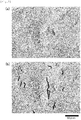
- plated steel sheets of the portions of the above (i) to (iii) were sampled and the metal structures of cross sections of directions parallel to the rolling direction and the sheet thickness direction (L cross sections) were observed with an optical microscope.
- a tensile test piece JIS No. 5 in the direction perpendicular to the rolling direction was prepared and was subjected to a tensile test as defined in JIS Z2241:2011 to determine the tensile strength TS (MPa) and the total elongation at break T.El (%).
- the furnace was airtightly closed and was subjected to evacuation with a vacuum pump, and steam was introduced from a gas inlet tube. Then, the temperature in the furnace was increased to a prescribed baking treatment temperature while controlling the pressure in the furnace so that the relative humidity is 100%. The temperature was kept for a prescribed time period and then was decreased and the inside of the furnace was released to the atmosphere.
- the atmospheric gas during the baking treatment was 100% by volume of steam and the relative humidity was 100% (the same applies to all the examples in Table 5).
- the Zn-Al-Mg-based coating layer which is a surface layer of the steel sheet sample was removed with abrasive paper to produce a sample composed only of the base steel sheet.
- the measurement conditions of the diffusible hydrogen concentration are shown below.
- a neutral salt spray test according to JIS Z2371:2015 (salt concentration: 50 g/L, temperature: 35°C, back face and edge face seal of test piece: present) was conducted. Spray was stopped every 100 hours after 4000 hours elapsed from the start of the salt spray test and the occurrence of red rust on the test piece surface was visually observed.
- the accumulated time of spray of a salt solution at the time when the occurrence of red rust was first recognized was taken as a time until occurrence of red rust of the sample. Since the observation was performed every 100 hours here, for example, a sample having a time until occurrence of red rust of 7100 hours can be evaluated as at least meeting the corrosion resistance requirement: "the time until occurrence of red rust is 7000 hours or more".
- the lightness L* value was measured using a spectral color difference meter (TC-1800 manufactured by Tokyo Denshoku Co. Ltd.) by a spectral reflectance measuring method according to JIS K5600. The measurement conditions are shown below.
- the V bending test was performed using various pushing metal fittings having different radii of curvature of the tip end and the surface of the portion subject to bending working was visually observed after the test to determine the minimum bending radius MBR (mm) at which no fracture was caused. The results are shown in Table 6.
Landscapes
- Chemical & Material Sciences (AREA)
- Engineering & Computer Science (AREA)
- Materials Engineering (AREA)
- Mechanical Engineering (AREA)
- Metallurgy (AREA)
- Organic Chemistry (AREA)
- Chemical Kinetics & Catalysis (AREA)
- Thermal Sciences (AREA)
- Physics & Mathematics (AREA)
- Crystallography & Structural Chemistry (AREA)
- Oil, Petroleum & Natural Gas (AREA)
- Coating With Molten Metal (AREA)
- Heat Treatment Of Sheet Steel (AREA)
- Other Surface Treatments For Metallic Materials (AREA)
Applications Claiming Priority (2)
| Application Number | Priority Date | Filing Date | Title |
|---|---|---|---|
| JP2017109575A JP6271067B1 (ja) | 2017-06-01 | 2017-06-01 | 高強度Zn−Al−Mg系表面被覆鋼板およびその製造方法 |
| PCT/JP2017/031654 WO2018220873A1 (fr) | 2017-06-01 | 2017-09-01 | TÔLE D'ACIER À REVÊTEMENT DE SURFACE À BASE DE Zn-Al-Mg À HAUTE RÉSISTANCE ET SON PROCÉDÉ DE PRODUCTION |
Publications (3)
| Publication Number | Publication Date |
|---|---|
| EP3633062A1 true EP3633062A1 (fr) | 2020-04-08 |
| EP3633062A4 EP3633062A4 (fr) | 2020-09-30 |
| EP3633062B1 EP3633062B1 (fr) | 2024-08-14 |
Family
ID=61074720
Family Applications (1)
| Application Number | Title | Priority Date | Filing Date |
|---|---|---|---|
| EP17912284.1A Active EP3633062B1 (fr) | 2017-06-01 | 2017-09-01 | Tôle d'acier à revêtement de surface à base de zn-al-mg à haute résistance et son procédé de production |
Country Status (12)
| Country | Link |
|---|---|
| US (1) | US12227851B2 (fr) |
| EP (1) | EP3633062B1 (fr) |
| JP (1) | JP6271067B1 (fr) |
| KR (1) | KR102401156B1 (fr) |
| CN (1) | CN110678571B (fr) |
| AU (1) | AU2017416292A1 (fr) |
| BR (1) | BR112019025169A2 (fr) |
| CA (1) | CA3065183A1 (fr) |
| MX (1) | MX2019014172A (fr) |
| RU (1) | RU2019143089A (fr) |
| TW (1) | TW201903168A (fr) |
| WO (1) | WO2018220873A1 (fr) |
Cited By (4)
| Publication number | Priority date | Publication date | Assignee | Title |
|---|---|---|---|---|
| US11530463B2 (en) | 2018-03-30 | 2022-12-20 | Jfe Steel Corporation | High-strength galvanized steel sheet, high strength member, and method for manufacturing the same |
| KR20230069975A (ko) * | 2020-10-27 | 2023-05-19 | 제이에프이 스틸 가부시키가이샤 | 열간 프레스 부재 및 열간 프레스용 강판 그리고 그것들의 제조 방법 |
| EP4275885A4 (fr) * | 2021-03-31 | 2024-06-05 | Nippon Steel Corporation | Tôle d'acier plaquée pré-revêtue et article moulé |
| US12497519B2 (en) | 2021-03-31 | 2025-12-16 | Nippon Steel Corporation | Pre-coated plated steel sheet and molded product |
Families Citing this family (15)
| Publication number | Priority date | Publication date | Assignee | Title |
|---|---|---|---|---|
| JP6962452B2 (ja) * | 2018-03-28 | 2021-11-05 | Jfeスチール株式会社 | 高強度合金化溶融亜鉛めっき鋼板およびその製造方法 |
| EP3748029B1 (fr) * | 2018-03-30 | 2022-05-04 | JFE Steel Corporation | Tôle d'acier galvanisée à haute résistance, élément à haute résistance et procédés de fabrication associés |
| US11409904B2 (en) | 2019-04-18 | 2022-08-09 | Microsoft Technology Licensing, Llc | User interface for building a data privacy pipeline and contractual agreement to share data |
| JP2021055136A (ja) * | 2019-09-27 | 2021-04-08 | 日本製鉄株式会社 | 溶融Zn−Al−Mg系めっき鋼板およびその製造方法 |
| KR102360526B1 (ko) | 2020-05-27 | 2022-02-09 | 포스코강판 주식회사 | 내공식성이 우수한 도금강판 및 그 제조방법 |
| US11361106B2 (en) | 2020-09-01 | 2022-06-14 | Microsoft Technology Licensing, Llc | Chaining, triggering, and enforcing entitlements |
| CN112575275A (zh) * | 2020-12-03 | 2021-03-30 | 攀钢集团研究院有限公司 | 高成形性的热浸镀锌铝镁合金镀层钢板及其制备方法 |
| JP7787395B2 (ja) * | 2021-11-18 | 2025-12-17 | 日本製鉄株式会社 | 溶融Zn-Al-Mg系めっき鋼板、自動車用部品、及びこれらの製造方法 |
| US11922145B2 (en) | 2022-03-01 | 2024-03-05 | Microsoft Technology Licensing, Llc | Initiating data privacy pipelines using reusable templates |
| US12182004B2 (en) * | 2022-03-01 | 2024-12-31 | Microsoft Technology Licensing, Llc | Debugging data privacy pipelines using sample data |
| PE20250886A1 (es) * | 2022-08-18 | 2025-03-28 | Nippon Steel Corp | Chapa de acero enchapada |
| CN115305446B (zh) * | 2022-08-24 | 2024-03-15 | 常州大学 | HK40耐热钢表面MgCr2O4镀层及其制备方法 |
| KR20250138244A (ko) | 2023-02-09 | 2025-09-19 | 닛폰세이테츠 가부시키가이샤 | 도금 강판 |
| US12583015B2 (en) | 2023-04-12 | 2026-03-24 | Simon Fraser University | Methods for self-assembling monolayers to mitigate hydrogen permeation |
| JP7782757B1 (ja) * | 2024-03-08 | 2025-12-09 | Jfeスチール株式会社 | 高強度合金化溶融亜鉛めっき鋼板とその製造方法 |
Family Cites Families (21)
| Publication number | Priority date | Publication date | Assignee | Title |
|---|---|---|---|---|
| JPS5335364Y2 (fr) | 1973-12-29 | 1978-08-30 | ||
| US5097305A (en) | 1991-02-19 | 1992-03-17 | Synaptics Corporation | Integrating photosensor and imaging system having wide dynamic range |
| JP3035084B2 (ja) * | 1992-07-17 | 2000-04-17 | 株式会社神戸製鋼所 | 水素脆化の発生しない超高強度亜鉛めっき鋼板 |
| JP3286047B2 (ja) | 1993-11-26 | 2002-05-27 | 株式会社神戸製鋼所 | 耐水素脆化特性の良好な加工用超高強度鋼板の製造法 |
| JPH10317121A (ja) * | 1997-05-19 | 1998-12-02 | Nkk Corp | 塗装下地用溶融亜鉛めっき鋼板の製造方法 |
| JP3307312B2 (ja) * | 1998-01-06 | 2002-07-24 | 住友金属工業株式会社 | 耐低温チッピング性、加工性に優れた合金化溶融亜鉛めっき鋼板の製造方法 |
| JP4500124B2 (ja) * | 2004-07-23 | 2010-07-14 | 新日本製鐵株式会社 | ホットプレス用めっき鋼板の製造方法 |
| US20090176041A1 (en) * | 2005-11-01 | 2009-07-09 | Kazuyuki Omote | Steel Pipe for Automobile Piping |
| JP4130215B1 (ja) * | 2007-05-10 | 2008-08-06 | 株式会社アール・エス・ケー | パイプ組立式収納棚 |
| JP5394709B2 (ja) * | 2008-11-28 | 2014-01-22 | 株式会社神戸製鋼所 | 耐水素脆化特性および加工性に優れた超高強度鋼板 |
| JP4943558B2 (ja) * | 2009-08-31 | 2012-05-30 | 新日本製鐵株式会社 | 高強度溶融亜鉛めっき鋼板及びその製造方法 |
| JP5906753B2 (ja) * | 2011-02-24 | 2016-04-20 | Jfeスチール株式会社 | 合金化溶融亜鉛めっき鋼板 |
| JP5655627B2 (ja) | 2011-02-24 | 2015-01-21 | 新日鐵住金株式会社 | 耐水素脆化特性に優れた高強度ばね用鋼 |
| JP5799819B2 (ja) * | 2012-01-13 | 2015-10-28 | 新日鐵住金株式会社 | めっき濡れ性及び耐ピックアップ性に優れる溶融亜鉛めっき鋼板の製造方法 |
| CA2865910C (fr) * | 2012-03-07 | 2017-10-17 | Nippon Steel & Sumitomo Metal Corporation | Tole d'acier destinee a l'emboutissage a chaud, son procede de production et materiau en acier embouti a chaud |
| JP5097305B1 (ja) * | 2012-04-25 | 2012-12-12 | 日新製鋼株式会社 | 黒色めっき鋼板 |
| JP6052145B2 (ja) * | 2013-11-28 | 2016-12-27 | Jfeスチール株式会社 | 焼付け硬化型溶融亜鉛めっき鋼板 |
| JP2015193907A (ja) * | 2014-03-28 | 2015-11-05 | 株式会社神戸製鋼所 | 加工性、および耐遅れ破壊特性に優れた高強度合金化溶融亜鉛めっき鋼板、並びにその製造方法 |
| CN103952653B (zh) * | 2014-04-18 | 2016-06-01 | 河北钢铁股份有限公司 | 热冲压成形钢用抗高温氧化镀层材料以及热浸渡工艺 |
| CN104018088B (zh) * | 2014-05-12 | 2016-05-11 | 盐城市鑫洋电热材料有限公司 | 一种高强热镀锌钢板及其制备方法 |
| KR102312464B1 (ko) * | 2017-02-10 | 2021-10-13 | 제이에프이 스틸 가부시키가이샤 | 고강도 아연 도금 강판 및 그 제조 방법 |
-
2017
- 2017-06-01 JP JP2017109575A patent/JP6271067B1/ja active Active
- 2017-09-01 CA CA3065183A patent/CA3065183A1/fr not_active Abandoned
- 2017-09-01 MX MX2019014172A patent/MX2019014172A/es unknown
- 2017-09-01 KR KR1020197038518A patent/KR102401156B1/ko active Active
- 2017-09-01 EP EP17912284.1A patent/EP3633062B1/fr active Active
- 2017-09-01 RU RU2019143089A patent/RU2019143089A/ru unknown
- 2017-09-01 BR BR112019025169-3A patent/BR112019025169A2/pt not_active Application Discontinuation
- 2017-09-01 CN CN201780091360.9A patent/CN110678571B/zh active Active
- 2017-09-01 AU AU2017416292A patent/AU2017416292A1/en not_active Abandoned
- 2017-09-01 WO PCT/JP2017/031654 patent/WO2018220873A1/fr not_active Ceased
- 2017-09-01 US US16/615,955 patent/US12227851B2/en active Active
- 2017-10-23 TW TW106136335A patent/TW201903168A/zh unknown
Cited By (7)
| Publication number | Priority date | Publication date | Assignee | Title |
|---|---|---|---|---|
| US11530463B2 (en) | 2018-03-30 | 2022-12-20 | Jfe Steel Corporation | High-strength galvanized steel sheet, high strength member, and method for manufacturing the same |
| KR20230069975A (ko) * | 2020-10-27 | 2023-05-19 | 제이에프이 스틸 가부시키가이샤 | 열간 프레스 부재 및 열간 프레스용 강판 그리고 그것들의 제조 방법 |
| EP4215294A4 (fr) * | 2020-10-27 | 2023-11-01 | JFE Steel Corporation | Élément formé à chaud à la presse, tôle d'acier pour formage à chaud à la presse et leurs procédés de production |
| EP4275885A4 (fr) * | 2021-03-31 | 2024-06-05 | Nippon Steel Corporation | Tôle d'acier plaquée pré-revêtue et article moulé |
| AU2022249552B2 (en) * | 2021-03-31 | 2024-10-31 | Nippon Steel Corporation | Pre-coated plated steel sheet and molded product |
| US12421588B2 (en) | 2021-03-31 | 2025-09-23 | Nippon Steel Corporation | Pre-coated plated steel sheet and molded product |
| US12497519B2 (en) | 2021-03-31 | 2025-12-16 | Nippon Steel Corporation | Pre-coated plated steel sheet and molded product |
Also Published As
| Publication number | Publication date |
|---|---|
| US12227851B2 (en) | 2025-02-18 |
| CN110678571A (zh) | 2020-01-10 |
| WO2018220873A1 (fr) | 2018-12-06 |
| EP3633062A4 (fr) | 2020-09-30 |
| JP2018204065A (ja) | 2018-12-27 |
| JP6271067B1 (ja) | 2018-01-31 |
| AU2017416292A1 (en) | 2019-12-12 |
| BR112019025169A2 (pt) | 2020-06-16 |
| TW201903168A (zh) | 2019-01-16 |
| EP3633062B1 (fr) | 2024-08-14 |
| KR20200012938A (ko) | 2020-02-05 |
| KR102401156B1 (ko) | 2022-05-24 |
| MX2019014172A (es) | 2020-01-21 |
| RU2019143089A (ru) | 2021-07-09 |
| CA3065183A1 (fr) | 2018-12-06 |
| US20200173004A1 (en) | 2020-06-04 |
| CN110678571B (zh) | 2022-02-18 |
Similar Documents
| Publication | Publication Date | Title |
|---|---|---|
| EP3633062B1 (fr) | Tôle d'acier à revêtement de surface à base de zn-al-mg à haute résistance et son procédé de production | |
| RU2544977C2 (ru) | СТАЛЬНОЙ ЛИСТ С Al-Zn ПОКРЫТИЕМ, НАНЕСЕННЫМ СПОСОБОМ ГОРЯЧЕГО ОКУНАНИЯ | |
| EP3719156B1 (fr) | Tôle d'acier galvanisée à résistance élevée et son procédé de fabrication | |
| KR100561893B1 (ko) | 강도-연성 밸런스와 도금 밀착성이 우수한 용융아연도금강판 및 그 제조방법 | |
| EP2184374B1 (fr) | Tôle d'acier galvanisée par trempage à chaud, de haute résistance, et son procédé de fabrication | |
| EP3159420B1 (fr) | Procédé de fabrication de tôle d'acier haute résistance galvanisée à chaud au trempé | |
| EP2918696B1 (fr) | Tôle d'acier galvanisée par immersion à chaud et alliée et son procédé de fabrication | |
| JP2017145441A (ja) | 黒色表面被覆高強度鋼板およびその製造方法 | |
| MX2011010247A (es) | Plancha de acero galvanizado por inmersion en caliente de alta resistencia y metodo para producir la misma. | |
| EP3409807B1 (fr) | Tôle d'acier galvanisé haute résistance à rapport d'élasticité élevé et son procédé de production | |
| WO2013157222A1 (fr) | Feuille d'acier galvanisée par immersion à chaud à résistance élevée et son procédé de fabrication | |
| JP2019031728A (ja) | 建築部材用高強度Zn−Al−Mg系表面被覆鋼板およびそれを用いた建築部材 | |
| EP3778980A1 (fr) | Tôle d'acier alliée galvanisée par immersion à chaud à haute résistance et procédé de fabrication associé | |
| EP4215294A1 (fr) | Élément formé à chaud à la presse, tôle d'acier pour formage à chaud à la presse et leurs procédés de production | |
| KR20140128414A (ko) | 고강도 용융 아연 도금 강판 및 그 제조 방법 | |
| EP3396005B1 (fr) | Tôle d'acier contenant du manganèse, recuite après galvanisation par immersion à chaud et son procédé de fabrication | |
| JP2019031727A (ja) | 自動車部品用高強度Zn−Al−Mg系表面被覆鋼板およびそれを用いた自動車部品 | |
| JP6816550B2 (ja) | 曲げ加工性に優れた黒色表面被覆高強度溶融Zn−Al−Mg系めっき鋼板及びその製造方法 | |
| EP2865780B1 (fr) | Feuille d'acier plaquée de zinc allié ayant d'excellentes propriétés anti-farinage | |
| JP2018145507A (ja) | 曲げ加工性に優れた建築部材用黒色表面被覆高強度溶融Zn−Al−Mg系めっき鋼板及びそれを用いた建築部材 | |
| JP2021055136A (ja) | 溶融Zn−Al−Mg系めっき鋼板およびその製造方法 | |
| JP2018145506A (ja) | 曲げ加工性に優れた自動車部品用黒色表面被覆高強度溶融Zn−Al−Mg系めっき鋼板及びそれを用いた自動車部品 |
Legal Events
| Date | Code | Title | Description |
|---|---|---|---|
| STAA | Information on the status of an ep patent application or granted ep patent |
Free format text: STATUS: THE INTERNATIONAL PUBLICATION HAS BEEN MADE |
|
| PUAI | Public reference made under article 153(3) epc to a published international application that has entered the european phase |
Free format text: ORIGINAL CODE: 0009012 |
|
| STAA | Information on the status of an ep patent application or granted ep patent |
Free format text: STATUS: REQUEST FOR EXAMINATION WAS MADE |
|
| 17P | Request for examination filed |
Effective date: 20191126 |
|
| AK | Designated contracting states |
Kind code of ref document: A1 Designated state(s): AL AT BE BG CH CY CZ DE DK EE ES FI FR GB GR HR HU IE IS IT LI LT LU LV MC MK MT NL NO PL PT RO RS SE SI SK SM TR |
|
| AX | Request for extension of the european patent |
Extension state: BA ME |
|
| DAV | Request for validation of the european patent (deleted) | ||
| DAX | Request for extension of the european patent (deleted) | ||
| A4 | Supplementary search report drawn up and despatched |
Effective date: 20200828 |
|
| RIC1 | Information provided on ipc code assigned before grant |
Ipc: C23C 2/02 20060101ALI20200824BHEP Ipc: C23C 2/28 20060101ALI20200824BHEP Ipc: C22C 18/04 20060101ALI20200824BHEP Ipc: C22C 18/00 20060101ALI20200824BHEP Ipc: C22C 38/38 20060101ALI20200824BHEP Ipc: C23C 2/06 20060101AFI20200824BHEP Ipc: C23C 2/26 20060101ALI20200824BHEP Ipc: C22C 38/00 20060101ALI20200824BHEP |
|
| RAP1 | Party data changed (applicant data changed or rights of an application transferred) |
Owner name: NIPPON STEEL CORPORATION |
|
| STAA | Information on the status of an ep patent application or granted ep patent |
Free format text: STATUS: EXAMINATION IS IN PROGRESS |
|
| 17Q | First examination report despatched |
Effective date: 20231106 |
|
| GRAP | Despatch of communication of intention to grant a patent |
Free format text: ORIGINAL CODE: EPIDOSNIGR1 |
|
| STAA | Information on the status of an ep patent application or granted ep patent |
Free format text: STATUS: GRANT OF PATENT IS INTENDED |
|
| INTG | Intention to grant announced |
Effective date: 20240415 |
|
| GRAS | Grant fee paid |
Free format text: ORIGINAL CODE: EPIDOSNIGR3 |
|
| GRAA | (expected) grant |
Free format text: ORIGINAL CODE: 0009210 |
|
| STAA | Information on the status of an ep patent application or granted ep patent |
Free format text: STATUS: THE PATENT HAS BEEN GRANTED |
|
| AK | Designated contracting states |
Kind code of ref document: B1 Designated state(s): AL AT BE BG CH CY CZ DE DK EE ES FI FR GB GR HR HU IE IS IT LI LT LU LV MC MK MT NL NO PL PT RO RS SE SI SK SM TR |
|
| REG | Reference to a national code |
Ref country code: GB Ref legal event code: FG4D |
|
| REG | Reference to a national code |
Ref country code: CH Ref legal event code: EP |
|
| REG | Reference to a national code |
Ref country code: DE Ref legal event code: R096 Ref document number: 602017084164 Country of ref document: DE |
|
| REG | Reference to a national code |
Ref country code: IE Ref legal event code: FG4D |
|
| REG | Reference to a national code |
Ref country code: LT Ref legal event code: MG9D |
|
| REG | Reference to a national code |
Ref country code: NL Ref legal event code: MP Effective date: 20240814 |
|
| PG25 | Lapsed in a contracting state [announced via postgrant information from national office to epo] |
Ref country code: NO Free format text: LAPSE BECAUSE OF FAILURE TO SUBMIT A TRANSLATION OF THE DESCRIPTION OR TO PAY THE FEE WITHIN THE PRESCRIBED TIME-LIMIT Effective date: 20241114 |
|
| REG | Reference to a national code |
Ref country code: AT Ref legal event code: MK05 Ref document number: 1713350 Country of ref document: AT Kind code of ref document: T Effective date: 20240814 |
|
| PG25 | Lapsed in a contracting state [announced via postgrant information from national office to epo] |
Ref country code: NL Free format text: LAPSE BECAUSE OF FAILURE TO SUBMIT A TRANSLATION OF THE DESCRIPTION OR TO PAY THE FEE WITHIN THE PRESCRIBED TIME-LIMIT Effective date: 20240814 Ref country code: PL Free format text: LAPSE BECAUSE OF FAILURE TO SUBMIT A TRANSLATION OF THE DESCRIPTION OR TO PAY THE FEE WITHIN THE PRESCRIBED TIME-LIMIT Effective date: 20240814 Ref country code: PT Free format text: LAPSE BECAUSE OF FAILURE TO SUBMIT A TRANSLATION OF THE DESCRIPTION OR TO PAY THE FEE WITHIN THE PRESCRIBED TIME-LIMIT Effective date: 20241216 Ref country code: FI Free format text: LAPSE BECAUSE OF FAILURE TO SUBMIT A TRANSLATION OF THE DESCRIPTION OR TO PAY THE FEE WITHIN THE PRESCRIBED TIME-LIMIT Effective date: 20240814 Ref country code: GR Free format text: LAPSE BECAUSE OF FAILURE TO SUBMIT A TRANSLATION OF THE DESCRIPTION OR TO PAY THE FEE WITHIN THE PRESCRIBED TIME-LIMIT Effective date: 20241115 |
|
| PG25 | Lapsed in a contracting state [announced via postgrant information from national office to epo] |
Ref country code: BG Free format text: LAPSE BECAUSE OF FAILURE TO SUBMIT A TRANSLATION OF THE DESCRIPTION OR TO PAY THE FEE WITHIN THE PRESCRIBED TIME-LIMIT Effective date: 20240814 |
|
| PG25 | Lapsed in a contracting state [announced via postgrant information from national office to epo] |
Ref country code: LV Free format text: LAPSE BECAUSE OF FAILURE TO SUBMIT A TRANSLATION OF THE DESCRIPTION OR TO PAY THE FEE WITHIN THE PRESCRIBED TIME-LIMIT Effective date: 20240814 |
|
| PG25 | Lapsed in a contracting state [announced via postgrant information from national office to epo] |
Ref country code: AT Free format text: LAPSE BECAUSE OF FAILURE TO SUBMIT A TRANSLATION OF THE DESCRIPTION OR TO PAY THE FEE WITHIN THE PRESCRIBED TIME-LIMIT Effective date: 20240814 Ref country code: IS Free format text: LAPSE BECAUSE OF FAILURE TO SUBMIT A TRANSLATION OF THE DESCRIPTION OR TO PAY THE FEE WITHIN THE PRESCRIBED TIME-LIMIT Effective date: 20241214 |
|
| PG25 | Lapsed in a contracting state [announced via postgrant information from national office to epo] |
Ref country code: HR Free format text: LAPSE BECAUSE OF FAILURE TO SUBMIT A TRANSLATION OF THE DESCRIPTION OR TO PAY THE FEE WITHIN THE PRESCRIBED TIME-LIMIT Effective date: 20240814 |
|
| PG25 | Lapsed in a contracting state [announced via postgrant information from national office to epo] |
Ref country code: ES Free format text: LAPSE BECAUSE OF FAILURE TO SUBMIT A TRANSLATION OF THE DESCRIPTION OR TO PAY THE FEE WITHIN THE PRESCRIBED TIME-LIMIT Effective date: 20240814 Ref country code: RS Free format text: LAPSE BECAUSE OF FAILURE TO SUBMIT A TRANSLATION OF THE DESCRIPTION OR TO PAY THE FEE WITHIN THE PRESCRIBED TIME-LIMIT Effective date: 20241114 |
|
| PG25 | Lapsed in a contracting state [announced via postgrant information from national office to epo] |
Ref country code: RS Free format text: LAPSE BECAUSE OF FAILURE TO SUBMIT A TRANSLATION OF THE DESCRIPTION OR TO PAY THE FEE WITHIN THE PRESCRIBED TIME-LIMIT Effective date: 20241114 Ref country code: PT Free format text: LAPSE BECAUSE OF FAILURE TO SUBMIT A TRANSLATION OF THE DESCRIPTION OR TO PAY THE FEE WITHIN THE PRESCRIBED TIME-LIMIT Effective date: 20241216 Ref country code: PL Free format text: LAPSE BECAUSE OF FAILURE TO SUBMIT A TRANSLATION OF THE DESCRIPTION OR TO PAY THE FEE WITHIN THE PRESCRIBED TIME-LIMIT Effective date: 20240814 Ref country code: NO Free format text: LAPSE BECAUSE OF FAILURE TO SUBMIT A TRANSLATION OF THE DESCRIPTION OR TO PAY THE FEE WITHIN THE PRESCRIBED TIME-LIMIT Effective date: 20241114 Ref country code: NL Free format text: LAPSE BECAUSE OF FAILURE TO SUBMIT A TRANSLATION OF THE DESCRIPTION OR TO PAY THE FEE WITHIN THE PRESCRIBED TIME-LIMIT Effective date: 20240814 Ref country code: LV Free format text: LAPSE BECAUSE OF FAILURE TO SUBMIT A TRANSLATION OF THE DESCRIPTION OR TO PAY THE FEE WITHIN THE PRESCRIBED TIME-LIMIT Effective date: 20240814 Ref country code: IS Free format text: LAPSE BECAUSE OF FAILURE TO SUBMIT A TRANSLATION OF THE DESCRIPTION OR TO PAY THE FEE WITHIN THE PRESCRIBED TIME-LIMIT Effective date: 20241214 Ref country code: HR Free format text: LAPSE BECAUSE OF FAILURE TO SUBMIT A TRANSLATION OF THE DESCRIPTION OR TO PAY THE FEE WITHIN THE PRESCRIBED TIME-LIMIT Effective date: 20240814 Ref country code: GR Free format text: LAPSE BECAUSE OF FAILURE TO SUBMIT A TRANSLATION OF THE DESCRIPTION OR TO PAY THE FEE WITHIN THE PRESCRIBED TIME-LIMIT Effective date: 20241115 Ref country code: FI Free format text: LAPSE BECAUSE OF FAILURE TO SUBMIT A TRANSLATION OF THE DESCRIPTION OR TO PAY THE FEE WITHIN THE PRESCRIBED TIME-LIMIT Effective date: 20240814 Ref country code: ES Free format text: LAPSE BECAUSE OF FAILURE TO SUBMIT A TRANSLATION OF THE DESCRIPTION OR TO PAY THE FEE WITHIN THE PRESCRIBED TIME-LIMIT Effective date: 20240814 Ref country code: BG Free format text: LAPSE BECAUSE OF FAILURE TO SUBMIT A TRANSLATION OF THE DESCRIPTION OR TO PAY THE FEE WITHIN THE PRESCRIBED TIME-LIMIT Effective date: 20240814 Ref country code: AT Free format text: LAPSE BECAUSE OF FAILURE TO SUBMIT A TRANSLATION OF THE DESCRIPTION OR TO PAY THE FEE WITHIN THE PRESCRIBED TIME-LIMIT Effective date: 20240814 |
|
| PG25 | Lapsed in a contracting state [announced via postgrant information from national office to epo] |
Ref country code: SM Free format text: LAPSE BECAUSE OF FAILURE TO SUBMIT A TRANSLATION OF THE DESCRIPTION OR TO PAY THE FEE WITHIN THE PRESCRIBED TIME-LIMIT Effective date: 20240814 Ref country code: RO Free format text: LAPSE BECAUSE OF FAILURE TO SUBMIT A TRANSLATION OF THE DESCRIPTION OR TO PAY THE FEE WITHIN THE PRESCRIBED TIME-LIMIT Effective date: 20240814 Ref country code: DK Free format text: LAPSE BECAUSE OF FAILURE TO SUBMIT A TRANSLATION OF THE DESCRIPTION OR TO PAY THE FEE WITHIN THE PRESCRIBED TIME-LIMIT Effective date: 20240814 |
|
| PG25 | Lapsed in a contracting state [announced via postgrant information from national office to epo] |
Ref country code: EE Free format text: LAPSE BECAUSE OF FAILURE TO SUBMIT A TRANSLATION OF THE DESCRIPTION OR TO PAY THE FEE WITHIN THE PRESCRIBED TIME-LIMIT Effective date: 20240814 |
|
| PG25 | Lapsed in a contracting state [announced via postgrant information from national office to epo] |
Ref country code: CZ Free format text: LAPSE BECAUSE OF FAILURE TO SUBMIT A TRANSLATION OF THE DESCRIPTION OR TO PAY THE FEE WITHIN THE PRESCRIBED TIME-LIMIT Effective date: 20240814 |
|
| PG25 | Lapsed in a contracting state [announced via postgrant information from national office to epo] |
Ref country code: IT Free format text: LAPSE BECAUSE OF FAILURE TO SUBMIT A TRANSLATION OF THE DESCRIPTION OR TO PAY THE FEE WITHIN THE PRESCRIBED TIME-LIMIT Effective date: 20240814 Ref country code: SK Free format text: LAPSE BECAUSE OF FAILURE TO SUBMIT A TRANSLATION OF THE DESCRIPTION OR TO PAY THE FEE WITHIN THE PRESCRIBED TIME-LIMIT Effective date: 20240814 |
|
| REG | Reference to a national code |
Ref country code: CH Ref legal event code: PL |
|
| REG | Reference to a national code |
Ref country code: DE Ref legal event code: R097 Ref document number: 602017084164 Country of ref document: DE |
|
| PG25 | Lapsed in a contracting state [announced via postgrant information from national office to epo] |
Ref country code: LU Free format text: LAPSE BECAUSE OF NON-PAYMENT OF DUE FEES Effective date: 20240901 |
|
| PLBE | No opposition filed within time limit |
Free format text: ORIGINAL CODE: 0009261 |
|
| STAA | Information on the status of an ep patent application or granted ep patent |
Free format text: STATUS: NO OPPOSITION FILED WITHIN TIME LIMIT |
|
| PG25 | Lapsed in a contracting state [announced via postgrant information from national office to epo] |
Ref country code: MC Free format text: LAPSE BECAUSE OF FAILURE TO SUBMIT A TRANSLATION OF THE DESCRIPTION OR TO PAY THE FEE WITHIN THE PRESCRIBED TIME-LIMIT Effective date: 20240814 |
|
| REG | Reference to a national code |
Ref country code: BE Ref legal event code: MM Effective date: 20240930 |
|
| PG25 | Lapsed in a contracting state [announced via postgrant information from national office to epo] |
Ref country code: BE Free format text: LAPSE BECAUSE OF NON-PAYMENT OF DUE FEES Effective date: 20240930 |
|
| 26N | No opposition filed |
Effective date: 20250515 |
|
| GBPC | Gb: european patent ceased through non-payment of renewal fee |
Effective date: 20241114 |
|
| PG25 | Lapsed in a contracting state [announced via postgrant information from national office to epo] |
Ref country code: CH Free format text: LAPSE BECAUSE OF NON-PAYMENT OF DUE FEES Effective date: 20240930 |
|
| PG25 | Lapsed in a contracting state [announced via postgrant information from national office to epo] |
Ref country code: IE Free format text: LAPSE BECAUSE OF NON-PAYMENT OF DUE FEES Effective date: 20240901 |
|
| PG25 | Lapsed in a contracting state [announced via postgrant information from national office to epo] |
Ref country code: SE Free format text: LAPSE BECAUSE OF FAILURE TO SUBMIT A TRANSLATION OF THE DESCRIPTION OR TO PAY THE FEE WITHIN THE PRESCRIBED TIME-LIMIT Effective date: 20240814 |
|
| PGFP | Annual fee paid to national office [announced via postgrant information from national office to epo] |
Ref country code: DE Payment date: 20250730 Year of fee payment: 9 |
|
| PG25 | Lapsed in a contracting state [announced via postgrant information from national office to epo] |
Ref country code: GB Free format text: LAPSE BECAUSE OF NON-PAYMENT OF DUE FEES Effective date: 20241114 |
|
| PGFP | Annual fee paid to national office [announced via postgrant information from national office to epo] |
Ref country code: FR Payment date: 20250808 Year of fee payment: 9 |
|
| PG25 | Lapsed in a contracting state [announced via postgrant information from national office to epo] |
Ref country code: CY Free format text: LAPSE BECAUSE OF FAILURE TO SUBMIT A TRANSLATION OF THE DESCRIPTION OR TO PAY THE FEE WITHIN THE PRESCRIBED TIME-LIMIT; INVALID AB INITIO Effective date: 20170901 |
|
| PG25 | Lapsed in a contracting state [announced via postgrant information from national office to epo] |
Ref country code: HU Free format text: LAPSE BECAUSE OF FAILURE TO SUBMIT A TRANSLATION OF THE DESCRIPTION OR TO PAY THE FEE WITHIN THE PRESCRIBED TIME-LIMIT; INVALID AB INITIO Effective date: 20170901 |