EP3633362A1 - Nanosheet enthaltendes orientierungsmittel für nmr-messung - Google Patents
Nanosheet enthaltendes orientierungsmittel für nmr-messung Download PDFInfo
- Publication number
- EP3633362A1 EP3633362A1 EP18806859.7A EP18806859A EP3633362A1 EP 3633362 A1 EP3633362 A1 EP 3633362A1 EP 18806859 A EP18806859 A EP 18806859A EP 3633362 A1 EP3633362 A1 EP 3633362A1
- Authority
- EP
- European Patent Office
- Prior art keywords
- nanosheet
- tins
- nanosheets
- group
- coating agent
- Prior art date
- Legal status (The legal status is an assumption and is not a legal conclusion. Google has not performed a legal analysis and makes no representation as to the accuracy of the status listed.)
- Withdrawn
Links
Images





Classifications
-
- G—PHYSICS
- G01—MEASURING; TESTING
- G01R—MEASURING ELECTRIC VARIABLES; MEASURING MAGNETIC VARIABLES
- G01R33/00—Arrangements or instruments for measuring magnetic variables
- G01R33/20—Arrangements or instruments for measuring magnetic variables involving magnetic resonance
- G01R33/44—Arrangements or instruments for measuring magnetic variables involving magnetic resonance using nuclear magnetic resonance [NMR]
- G01R33/46—NMR spectroscopy
-
- B—PERFORMING OPERATIONS; TRANSPORTING
- B32—LAYERED PRODUCTS
- B32B—LAYERED PRODUCTS, i.e. PRODUCTS BUILT-UP OF STRATA OF FLAT OR NON-FLAT, e.g. CELLULAR OR HONEYCOMB, FORM
- B32B9/00—Layered products comprising a layer of a particular substance not covered by groups B32B11/00 - B32B29/00
- B32B9/04—Layered products comprising a layer of a particular substance not covered by groups B32B11/00 - B32B29/00 comprising such particular substance as the main or only constituent of a layer, which is next to another layer of the same or of a different material
-
- C—CHEMISTRY; METALLURGY
- C01—INORGANIC CHEMISTRY
- C01B—NON-METALLIC ELEMENTS; COMPOUNDS THEREOF; METALLOIDS OR COMPOUNDS THEREOF NOT COVERED BY SUBCLASS C01C
- C01B32/00—Carbon; Compounds thereof
- C01B32/15—Nano-sized carbon materials
- C01B32/182—Graphene
- C01B32/194—After-treatment
-
- C—CHEMISTRY; METALLURGY
- C01—INORGANIC CHEMISTRY
- C01B—NON-METALLIC ELEMENTS; COMPOUNDS THEREOF; METALLOIDS OR COMPOUNDS THEREOF NOT COVERED BY SUBCLASS C01C
- C01B32/00—Carbon; Compounds thereof
- C01B32/15—Nano-sized carbon materials
- C01B32/182—Graphene
- C01B32/198—Graphene oxide
-
- C—CHEMISTRY; METALLURGY
- C01—INORGANIC CHEMISTRY
- C01G—COMPOUNDS CONTAINING METALS NOT COVERED BY SUBCLASSES C01D OR C01F
- C01G23/00—Compounds of titanium
- C01G23/04—Oxides; Hydroxides
-
- C—CHEMISTRY; METALLURGY
- C01—INORGANIC CHEMISTRY
- C01G—COMPOUNDS CONTAINING METALS NOT COVERED BY SUBCLASSES C01D OR C01F
- C01G23/00—Compounds of titanium
- C01G23/04—Oxides; Hydroxides
- C01G23/047—Titanium dioxide
-
- C—CHEMISTRY; METALLURGY
- C01—INORGANIC CHEMISTRY
- C01G—COMPOUNDS CONTAINING METALS NOT COVERED BY SUBCLASSES C01D OR C01F
- C01G33/00—Compounds of niobium
-
- G—PHYSICS
- G01—MEASURING; TESTING
- G01N—INVESTIGATING OR ANALYSING MATERIALS BY DETERMINING THEIR CHEMICAL OR PHYSICAL PROPERTIES
- G01N24/00—Investigating or analyzing materials by the use of nuclear magnetic resonance, electron paramagnetic resonance or other spin effects
- G01N24/08—Investigating or analyzing materials by the use of nuclear magnetic resonance, electron paramagnetic resonance or other spin effects by using nuclear magnetic resonance
-
- G—PHYSICS
- G01—MEASURING; TESTING
- G01N—INVESTIGATING OR ANALYSING MATERIALS BY DETERMINING THEIR CHEMICAL OR PHYSICAL PROPERTIES
- G01N24/00—Investigating or analyzing materials by the use of nuclear magnetic resonance, electron paramagnetic resonance or other spin effects
- G01N24/08—Investigating or analyzing materials by the use of nuclear magnetic resonance, electron paramagnetic resonance or other spin effects by using nuclear magnetic resonance
- G01N24/087—Structure determination of a chemical compound, e.g. of a biomolecule such as a protein
-
- C—CHEMISTRY; METALLURGY
- C01—INORGANIC CHEMISTRY
- C01P—INDEXING SCHEME RELATING TO STRUCTURAL AND PHYSICAL ASPECTS OF SOLID INORGANIC COMPOUNDS
- C01P2002/00—Crystal-structural characteristics
- C01P2002/70—Crystal-structural characteristics defined by measured X-ray, neutron or electron diffraction data
-
- C—CHEMISTRY; METALLURGY
- C01—INORGANIC CHEMISTRY
- C01P—INDEXING SCHEME RELATING TO STRUCTURAL AND PHYSICAL ASPECTS OF SOLID INORGANIC COMPOUNDS
- C01P2002/00—Crystal-structural characteristics
- C01P2002/80—Crystal-structural characteristics defined by measured data other than those specified in group C01P2002/70
-
- C—CHEMISTRY; METALLURGY
- C01—INORGANIC CHEMISTRY
- C01P—INDEXING SCHEME RELATING TO STRUCTURAL AND PHYSICAL ASPECTS OF SOLID INORGANIC COMPOUNDS
- C01P2004/00—Particle morphology
- C01P2004/01—Particle morphology depicted by an image
- C01P2004/04—Particle morphology depicted by an image obtained by TEM, STEM, STM or AFM
-
- C—CHEMISTRY; METALLURGY
- C01—INORGANIC CHEMISTRY
- C01P—INDEXING SCHEME RELATING TO STRUCTURAL AND PHYSICAL ASPECTS OF SOLID INORGANIC COMPOUNDS
- C01P2004/00—Particle morphology
- C01P2004/20—Particle morphology extending in two dimensions, e.g. plate-like
- C01P2004/24—Nanoplates, i.e. plate-like particles with a thickness from 1-100 nanometer
-
- C—CHEMISTRY; METALLURGY
- C01—INORGANIC CHEMISTRY
- C01P—INDEXING SCHEME RELATING TO STRUCTURAL AND PHYSICAL ASPECTS OF SOLID INORGANIC COMPOUNDS
- C01P2004/00—Particle morphology
- C01P2004/60—Particles characterised by their size
- C01P2004/61—Micrometer sized, i.e. from 1-100 micrometer
Definitions
- the present invention relates to an orientation agent for NMR spectroscopy containing nanosheets that are self-orientable in a magnetic field and are coated with particular compound(s) such as proteins.
- X-ray crystallography is a technique in which a crystalline target is irradiated with X-rays that cause diffraction phenomenon to be measured for predicting the 3-dimensional structure of proteins. This technique is applicable to a compound of significantly large molecules since a target to be measured is subjected to no limitations in molecular weight. Obviously, this technique cannot be applied to an incrystallizable sample. Also, the X-ray crystallography is unsuitable to the dynamic analysis of biomolecules since this technique originally aims at measuring static structures to the accuracy of atomic level.
- NMR nuclearmagnetic resonance
- measurement target molecules are in a random thermal motion in a solvent, and hence need to be magnetically oriented for measuring anisotropy terms such as Residual Dipolar Coupling (RDC).
- RDC Residual Dipolar Coupling
- a medium having a property of orienting itself to a particular direction with reference to the static magnetic field hereafter referred to as "orientation agent” may be concomitantly used to orient the measurement target molecules to certain directions to thereby improve the accuracy of the NMR spectroscopy.
- An orientation agent employing a fibrous phage that is referred to as pf1 may also be publicly available (non-patent document 1).
- Patent document 1 Japanese Unexamined Patent Application Publication No. 2001-89946
- Non-patent document 1 Hansen MR, Mueller L, Pardi A.(1998) Nat Struct Biol Dec;5(12):1065-74
- the bicelles need to be adjusted to have relatively high concentrations.
- the bicelles are expensive in terms of cost per unit weight, it is economically unfavorable to use such a highly concentrated orientation agent employing bicelle.
- the temperature of a solution containing the bicelles needs to be adjusted to a temperature in a limited range of about 30 to about 50 °C for the bicelles to be magnetically spontaneously oriented with the use of a magnetic field. That is, the orientation agent of bicelle is disadvantageous in that the agent is difficult to prepare.
- the orientation agent employing bicelle is also disadvantageous in that the orientation agent and/or the target molecules cannot be collected after use.
- An orientation agent employing a fibrous phage works well at a lower concentration but this agent is more expensive than the bicelle. Further, as the orientation agent employing fibrous phage cannot perform individual surface-modifications that are specifically tailored to target molecules, this agent is applicable only to a limited range of target molecules and thus has low versatility. Additionally, as the orientation agent employs a phage, this agent is disadvantageous in that the phage necessitates an appropriate biohazard measure in use.
- the object of the present invention is to solve the above-noted disadvantages in the prior arts, and to provide an orientation agent for NMR spectroscopy which is easy to prepare, excellent in handleability, economic efficiency and versatility, and is capable of being stably oriented to the magnetic field.
- the present invention is to provide the followings:
- nanosheet refers to a sheet having a nanoscale thickness.
- the thickness of the nanosheet may be as thin as a thickness of one single atom but a nanosheet having a thickness of 0.5 nm or less is generally difficult to make.
- the nanosheet of the present invention preferably has a thickness of 0.5 to 3.0 nm, more preferably 1.0 to 2.5 nm, provided that the thickness of the nanosheet is exclusive of a coating agent to be described below.
- the nanosheet preferably has a thickness of 10 nm or smaller if the thickness includes the thickness of the coating agent.
- the thickness of the nanosheet as used herein refers to a value calculated from a cross-sectional profile at a given place observed by atomic force microscope (AFM).
- AFM atomic force microscope
- the nanosheet of the present invention has a size preferably of 100 nm or more in favor of magnetic orientation property. It is preferred that the size of the nanosheet be as large as possible, provided that it is capable of being dispersed in the solution. However, the nanosheet has an actual upper limit of about 100 ⁇ m.
- the size of the nanosheet as used herein is intended to refer to the breadth extended in the lateral directions, which is calculated as the particle diameter at which cumulative frequency for the particle radius is 50% of the frequent distribution, measured by the dynamic light scattering technique, with reference to the volume ratio.
- the nanosheet typically has a size of a few micrometers, and has a thickness of a few nanometers where the aspect ratio of the thickness to the overall size is about 1:10 3 .
- the present invention employs a nanosheet that exhibits anisotropic property in magnetic susceptibility to the external magnetic field.
- the nanosheets orient themselves to the directions that are energetically most stable in such a way that the interaction potential of the nanosheets to the magnetic field takes minimum. This is because the magnetic susceptibility, or the extent to which the nanosheets are susceptible with respect to the magnetic field varies depending on the direction in which the magnetic field is applied thereto.
- Such nanosheets may be prepared by any one of the known techniques. For example, a layered precursor may be exfoliated to provide nanosheets of large surface area. The resultant nanosheets of larger surface areas may exhibit more significant magnetic orientation property.
- the nanosheets of the present invention may orient small molecular particles such as water or glucose if uncoated nanosheets are solely used. Further, the nanosheets of the present invention may magnetically orient proteins of larger molecular weight in a solution if the nanosheets are coated with a coating agent such as proteins which will be described later in detail.
- nanosheets magnetically orient themselves when the sum of the magnetic anisotropies of the atoms composing the nanosheets outweighs their free movement in the solution.
- Each of the nanosheets theoretically orients itself, though the scales of the anisotropy are individually different from each other, irrespective of the composition or the type of the atom consisting the nanosheet if the nanosheet is sufficiently large, provided that all of the nanosheets consist of atoms having magnetic anisotropy.
- the nanosheet may be of any type or have any composition as long as the nanosheets exhibit magnetic orientation property.
- Such nanosheet may, for example, be of the followings:
- Nanosheet of titanium oxide such as Ti 0.91 O 2 , Ti 0.87 O 2 , Ti 3 O 7 , Ti 4 O 9 , or Ti 5 O 11 ; Nanosheet of niobium oxides such as Nb 3 O 8 , Nb 6 O 17 , or Ca 2 Nb 3 O 10 ; graphene oxide; graphene; boron nitride (h-BN); Graphitic Carbon Nitride (g-C 3 N 4 ) Nanosheet of polylactate, polythiophene or polystyrene or the like; DNA (DNA origami); Nanosheet of Metal Organic Framework (Molecular organic framework; MOF); Nanosheet of Covalent Organic framework (COF) Nanosheet of black phosphorus; Nanosheet of peptoid; or any other nanosheet of hydroxyapatite (Ca 5 (PO 4 ) 3 (OH)), NbS 3 , NbSe 3 , NbTe 3 , Ti, Ti-Ni, Zn-Ti, Zn-Al, Pd
- the nanosheets of titanium oxide, niobium oxide and graphene oxide are particularly favorable as the nanosheets of the present invention.
- the titanium oxide nanosheet herein has a two-dimensional nanostructure which may be obtained by chemically treating the single crystal of layered titanate compound under a mild condition, and thus delaminating the single crystal one by one into individual single layers, each of them being an elemental unit of the crystal structure.
- the titanium oxide nanosheet has an exceptionally high aspect ratio.
- the nanosheet having a crystalline structure of Ti 0.87 ⁇ 0.13 O 2 ( ⁇ : vacancy) has a thickness of about 0.75 nm and a width of several micrometers long (see FIG. 1 ).
- Such nanosheet has a magnetic orientation axis in the thickness direction and has a large surface area that is negatively charged at high density, which causes the sheets to be strongly and electrostatically repulsed from each other. For this reason, these nanosheets are excellent in dispersibility owing to the strong electrostatic repulsive forces exerted between the nanosheets, which allows a layered alignment of the nanosheets in the external magnetic field.
- FIGs. 2A to 2B illustrate schematic views of the titanium oxide nanosheets that are magnetically oriented.
- FIG. 2A is a side view
- FIG. 2B is a top view.
- the symbol B represents the magnetic field where the arrow beside the symbol B and the encircled dot both indicate the direction of the magnetic field.
- the titanium oxide nanosheets orient themselves in such a way that the normal directions of the nanosheets are each in line with the direction of the external magnetic field. Also, as the large electrostatic repulsive forces are exerted between the nanosheets, all of the nanosheet surfaces face in the same direction to be co-facially oriented with each other. The nanosheets, therefore, possess a powerful orientation property.
- FIGs. 3A to 3B illustrate schematic views of the niobium oxide nanosheets that are magnetically oriented.
- FIG. 3A is a side view and FIG. 3B is a top view.
- the symbol B represents the magnetic field where the arrow beside the symbol B and the encircled dot both indicate the direction of the magnetic field.
- the niobium oxide nanosheets orient themselves in such a way that the tangent directions of the nanosheets are each in line with the direction of the external magnetic field. For this reason, the nanosheets are each rotatable about the orientation axis of the nanosheet where the orientation axis is in line with the tangent direction of the sheet.
- the graphene oxide nanosheets orient themselves in such a way that the tangent directions of the nanosheets are each in line with the direction of the external magnetic field as is the case of the niobium oxide nanosheet. For this reason, the nanosheets are each rotatable about the orientation axis of the nanosheet where the orientation axis is in line with the tangent direction of the sheet.
- the nanosheet of the present invention may magnetically orient not only small molecules such as glucose but also proteins having larger molecular weight for implementing NMR spectroscopy when coated with a coating agent.
- the coating agent to be applied to the nanosheet surface may be selected based on the target molecules for the NMR spectroscopy to optimize the interaction between the nanosheet and the target molecules to thereby control the nonspecific adsorption of proteins (or target molecules).
- the coating of the coating agent allows the nanosheets to retain their dispersibility without being significantly affected by the presence of salts or pH.
- the coating agent of the present invention is a water-soluble compound that may be physically adsorbed on the nanosheet in a multipoint manner.
- the above-noted coating agent is adsorbed on the nanosheet via interactions such as hydrogen-bonding and/or dipolar interaction.
- the coating agent of the present invention may be a compound containing 35 or more polar functional groups per molecule, where the polar functional groups are at least one selected from a hydroxy group, an amino group, an amide group, a carbonyl group, a carboxyl group, a sulfo group, a phosphate group, an imidazole group and a guanidine group, which are illustrated below:
- the number of the at least one functional group selected from a hydroxy group, an amino group, an amide group, a carbonyl group, a carboxyl group, a sulfo group, a phosphate group, an imidazole group and a guanidine group, in one molecule is preferably 50 or more, more preferably 100 or more.
- the upper limit to the number of the functional groups may not particularly be limited but typically be about 100 to 1000 for the proteins as described below.
- the number of the functional groups herein is counted as one functional unit for each of the above listed functional groups. For example, if a molecule of the coating agent contains an amide group, this amide group is not counted as one carbonyl group and one amino group but rather as one single functional group of one amide group.
- the nanosheet coating agent of the present invention needs to have a molecular weight of 1,500 or more, preferably of 1,700 or more in order for the material to be physically adsorbed on the nanosheet to perform multi-point interaction.
- the molecular weight of the coating agent may appropriately be determined based on the type of coating agent. For example, when the coating agent is of a single component such as tannic acid, this molecular weight is defined as a chemical formula weight.
- the molecular weight of the compound is determined as an average molecular weight converted from the particle diameter at which cumulative frequency for the particle radius is 50% of the frequent distribution, measured by the dynamic light scattering technique, with reference to the volume ratio, into the molecular weight of the polyethylene glycol (PEG) having a comparative molecular weight.
- the coating agent is of protein such as that exemplified by casein (to be described later)
- the molecular weight of such protein is determined as that calculated from the molecular structures of the known amino acid sequences.
- the upper limit to the molecular weight of the coating agent may not particularly be limited but typically be about 10,000 to 100,000 for the proteins described below.
- the coating agent having said number of the functional groups and the molecular weight as noted above, includes a polymer compound consisting of a plurality of the following units that are linked with each other, where the compound may be of a natural polymer compound or a synthetic polymer compound.
- these units of the coating agent may, for example, be amino acids such as arginine, histidine, alanine, glycine, serine, aspartic acid, lysine, glutamic acid, alanine, glutamine, methionine, phenylalanine, proline, isoleucine, leucine, cysteine, valine, tyrosine, tryptophan, threonine or asparagine.
- amino acids such as arginine, histidine, alanine, glycine, serine, aspartic acid, lysine, glutamic acid, alanine, glutamine, methionine, phenylalanine, proline, isoleucine, leucine, cysteine, valine, tyrosine, tryptophan, threonine or asparagine.
- the coating agent may be of a polyamino acid whose composition units involve any one of these amino acids, or of a polyamino acid whose composition units involve any two or more of these amino acids.
- polyamino acids that consist of any one of these amino acids as the composition unit may be polyarginine, polyhistidine, polyalanine, polyglycine, polyserine, polyaspartic acid, polylysine, polyglutamic acid, polyglutamine, polyglutamine, polymethionine, polyphenylalanine, polyproline, polyisoleucine, polyleucine, polycysteine, polycysteine, polyvaline, polytyrosine, polytryptophan, polythreonine, or polyasparagine.
- examples of the polyamino acids that consist of any two or more of these amino acids as the units may include casein, lysozyme, albumin, pepsin, ribonuclease, serum protein, protamine, concanavalin A, fibroblast growth factor (FGF), tumor necrosis factor (TNF), transforming growth factor (TGF), nerve growth factor (NGF), epithelium growth factor (EGF), insulin-like growth factor (IGF), brain-derived neurotrophic factor (BDNF), vascular endothelial growth factor (VEGF), granulocyte colony stimulating factor (G-CSF), granulocyte macrophage colony stimulating factor (GM-CSF), platelet derived growth factor (PDGF), erythropoietin (EPO), thrombopoietin (TPO), hepatocyte growth factor (HGF), bone morphogenetic protein (BMP), immunoglobulin, glucose oxidase, ovalbumin, lectin, ferritin ,
- the coating agent may, for example, be of polyvinyl alcohol, polycatechol, polyacrylamide, poly (N-isopropylacrylamide), polydimethylacrylamide, polyamidoamine, polyvinyl pyrrolidone, polyacrylamido 2-methyl 1-propanesulfonic acid, polyurethane, polyurea, polythiourea, polyethylenimine, polyacrylic acid, polyallylamine, polystyrene sulfonic acid, polyvinyl sulfonic acid, poly (diallyldimethylamine chloride), polydimethylaminoethoxy methacrylate, polytrimethylamino ethoxy methacrylate hydrochloride, or polyanetole sulfonic acid.
- polyvinyl alcohol polycatechol
- polyacrylamide poly (N-isopropylacrylamide)
- polydimethylacrylamide polyamidoamine
- polyvinyl pyrrolidone polyacrylamido 2-methyl 1-propanes
- These coating agents may be of a homopolymer or of a copolymer consisting any two or more of these monomers. If the coating agent is of a copolymer, the copolymer may have a monomer arrangement in any one of the random, block, and graft forms. Further, if these polymers are ionic electrolyte, the coating agent may include the salts of the polymers.
- examples of the coating agents include sugar chains such as agarose, chitin, chitosan, alginic acid, hyaluronic acid, curdlan, pullulan, cellulose, gellan gum, dextran, cyclodextran, albinogalactan, starches, chondroitin sulfate, heparan sulfate, heparin, and pectin. If these sugar chains are ionic electrolyte, the coating agent may include the salts of the sugar chains.
- sugar chains such as agarose, chitin, chitosan, alginic acid, hyaluronic acid, curdlan, pullulan, cellulose, gellan gum, dextran, cyclodextran, albinogalactan, starches, chondroitin sulfate, heparan sulfate, heparin, and pectin. If these sugar chains are ionic electrolyte, the coating agent may include the salt
- the coating agent may employ not only the polymer compound consisting of the plurality of the above described units that are linked with each other but also a compound having a large number of phenolic hydroxyl groups in one molecule such as tannic acid, provided that the compound contains the above-specified number of functional groups and the above-defined molecular weight.
- the nanosheet coating agent of the present invention may be a mixture containing at least any one of the compounds as set forth herein.
- the mixture contains the compounds by an amount of 2 to 99 wt%, preferably of 20 to 80 wt%. Examples of such mixture may include a skimmed milk and an ager.
- the type of coating agent may appropriately be determined based on the target molecules for NMR spectroscopy.
- the target molecule is anionic, it is preferable that the nanosheets be coated with an anionic coating agent such as that of casein.
- the target molecule is cationic, it is preferable that the nanosheets be coated with a cationic coating agent such as that of lysozyme.
- the coating agent if a strong fluorescence is observed by using a confocal laser microscope after the nanosheets, coated with the coating agent, are mixed with fluorescence-labeled target molecules, it is determined that such material is not suitable as a coating agent. This indicates a presence of strong interaction between target molecules and the nanosheet coated with the coating agent, which thereby causes disturbance to the orientation behavior. Meanwhile, if a weak fluorescence is observed, this implies that the orientation behavior of the nanosheets coated with the coating agent is not being disrupted and that the nanosheets favorably orient themselves together with the target molecules. In that case, it is determined that such material is favorable as a coating agent.
- Coating of the nanosheet may be performed as follows:
- the precipitate obtained after centrifugation may be re-dispersed in an appropriate solvent, and may also be subjected to cleaning repetitively by centrifugation and re-dispersion.
- the centrifugation condition depends on the type of the nanosheet and the coating agent, but typically is 15,000 rpm for 15 minutes at 4 °C.
- PEG-NHS molecular weight: 10,000 g/mol, SUNBRIGHT
- catechol Tokyo Chemical Industry Co., Ltd
- DMF dimethylformamide
- unreacted molecules were removed by dialysis treatment to obtain a reaction product as a PEG-modified catechol (Average molecular weight: 10, 153, the number of polar functional groups: 3 per molecule) represented by the following formula.
- the molecular weight of PEG-NHS was determined in terms of PEG by gel permeation chromatography (GPC).
- the casein as used herein is that prepared, with reference to a previous report ( Tomishige M, Vale RD.(1998) J Cell Biol 151:1081-92 ), by base-treating a commercially available casein with sodium hydrate overnight, followed by centrifuging the same to remove the precipitate.
- the dynamic light scattering (DLS) method gave an average particle diameter of 4.17 nm, which was converted into the molecular weight of the PEG, having the particle diameter comparable with the average diameter thereof, to calculate the converted molecular weight of the poly(diallyldimethylamine chloride).
- the dynamic light scattering (DLS) gave an average particle diameter of 6.61 nm, which was converted into the molecular weight of the PEG, having the particle diameter comparable with the average diameter thereof, to calculate the converted molecular weight of the chondroitin sulfate.
- SAX Small Angle X-ray scattering
- Nanosheet Coating agent 1 TiNS TiNS None 2 small TiNS small TiNS None 3 NbNS NbNS None Working example Nanosheet Coating agent 1 TiNS Cas TiNS Casein (Cas) 2 TiNS Alb Albumin (Alb) 3 TiNS Lys Lysozyme (Lys) 4 TiNS Skim Skim milk (Skim) 5 TiNS Tan Tannic acid (Tan) 6 TiNS PDDA Poly(diallyldimethylamine chloride) (PDDA) 7 TiNS Cho Chondroitin sulfate (Cho) 8 NbNS Cas NbNS Casein (Cas) 9 GONS Cas GONS Casein (Cas) Comparative example Nanosheet Coating agent 1 TiNS Cate TiNS PEG-modified catechol (Cate)
- TiNS titanium oxide nanosheet
- composition Ti 0.87 O 2 ; herein denoted as "TiNS”
- TiNS titanium oxide nanosheet
- TMA tetramethylammonium
- TiNS prepared in reference example 1 underwent ultrasonication for 3 minutes using a sonicator (Trade name: XL-2000 MicrosonTM; by Qsonica) to prepare a titanium oxide nanosheet (herein denoted as " small TiNS”).
- a sonicator Trade name: XL-2000 MicrosonTM; by Qsonica
- small TiNS was dispersed in the tetramethylammonium solution (TMA; 1 mM) before various measurements.
- NbNS niobium oxide nanosheet
- TSA tetrabutylammonium solution
- the mixture was centrifuged (15,000 rpm) for 15 minutes at 4 °C by using a centrifugal machine (Tradename: CT15RE by HITACHI) to remove the un-adsorbed casein.
- TiNS Cas casein-coated titanium nanosheet
- concentration of TiNS Cas in the dispersion liquid was adjusted to an optimum concentration for various measurements by adjusting the amount of buffer solution in which the final precipitate is dispersed. Note that TiNS Cas used for various measurements were those dispersed in the buffer solution for the re-dispersion unless otherwise specified.
- a dispersion liquid of albumin-coated titanium nanosheet (TiNS Alb ) was obtained by using a method similar to that illustrated in Working example 1 except that 2.0 wt% of albumin was used instead of 2.0 wt% of casein.
- TMA tetramethylammonium
- Reference example 1 A mixture of 500 ⁇ L of tetramethylammonium (TMA) solution (2 mM) containing 2.0 wt% of lysozyme and 500 ⁇ L of aqueous solution containing 0.1 wt% of TiNS as exemplified in Reference example 1 was prepared. The mixture was allowed to stand still for 60 minutes before removing the un-adsorbed lysozyme by centrifugation in a manner similar to that as performed in Working example 1. The precipitate was dispersed in 500 ⁇ L of Tris-hydrochloride buffer solution (1 mM, pH: 2.3) to obtain a dispersion liquid of lysozyme-coated titanium nanosheet (TiNS Lys ).
- TMA tetramethylammonium
- a dispersion liquid of skim milk-coated titanium nanosheet was obtained by using a method similar to that illustrated in Working example 1 except that 2.0 wt% of skim milk was used instead of 2.0 wt% of casein.
- a mixture of 1 mL of aqueous solution containing 0.85 wt% of tannic acid and 4 mL of aqueous solution containing 0.5 wt% of TiNS as exemplified in Reference example 1 was prepared.
- the mixture was allowed to stand still for 5 minutes before performing a cleaning operation, similar to that performed in Working example 1, 10 times by using pure water as a re-dispersing aqueous solution, thereby obtaining a dispersion liquid of the tannic acid-coated titanium nanosheet (TiNS Tan ).
- a mixture of 1 mL of aqueous solution containing 0.1 wt% of poly(diallyldimethylamine chloride)(PDDA) and 1 mL of aqueous solution containing 0.02 wt% of TiNS as exemplified in Reference example 1 was prepared.
- the mixture was allowed to stand still for 60 minutes before removing the un-adsorbed PDDA by centrifugation in a manner similar to that as performed in Working example 3 to disperse the precipitate in 500 ⁇ L of Tris-hydrochloride buffer solution (1 mM; pH: 2.3), thereby obtaining a dispersion liquid of PDDA-coated titanium nanosheet (TiNS PDDA ).
- a mixture of 1 mL of aqueous solution containing 0.2 wt% of chondroitin sulfate(Cho) and 1 mL of aqueous solution containing 0.01 wt% of TiNS as exemplified in Reference example 1 was prepared.
- the mixture was allowed to stand still for 60 minutes before performing a cleaning operation, similar to that as performed in Working example 1, three times by using pure water as a re-dispersing solution to obtain a dispersion aqueous solution of chondroitin sulfate-coated titanium nanosheet (TiNS Tan ).
- a dispersion liquid of casein-coated niobium nanosheet (NbNS Cas ) was obtained by using a method similar to Working example 1 except that NbNS as outlined in Reference example 3 was used instead of TiNS as outlined in Reference example 1.
- a dispersion liquid of casein-coated graphene oxide nanosheet was obtained by using a method similar to that illustrated in Working example 1 except that GONS(Trade name: Rap eGO(TQ11); NiSiNa material) was used instead of TiNS as outlined in Reference example 1.
- Comparative example 1 TiNS Cate preparation
- a mixture of 1 mL of aqueous solution containing 0.2 wt% of PEG-modified catechol and 1 mL of aqueous solution containing 0.8 wt% of TiNS as exemplified in Reference example 1 was prepared. The mixture was allowed to stand still for 60 minutes before performing a cleaning operation, similar to that as performed in Working example 1, 10 times to obtain a dispersion aqueous solution of PEG-modified catechol-coated titanium nanosheet (TiNS Cate ).
- the images of the nanosheet-dispersed liquids as obtained in each of the examples are shown in FIG. 4 . It was visually confirmed that all of the nanosheets in these examples were dispersed in the liquid. In addition, as for the TiNS dispersed liquids, a characteristic smoke-like texture originating from the TiNS domain structures was also confirmed in each of the dispersion liquids after being coated.
- FIG. 5 shows pictures of the nanosheet-dispersed liquids after adding sodium chloride aqueous solution.
- Nanosheet precipitation was confirmed for TiNS with no coating agent. It was also confirmed that the nanosheets coated with coating agents were capable of maintaining nanosheet dispersibility even in the presence of salts whereas TiNS Cate of Comparative example 1 caused precipitation in the presence of salts. This signifies the importance of multipoint interaction between the coating agent and the nanosheet.
- the coated nanosheets coated with the coating agent of the present invention are stably dispersed in the presence of salts, it is expected that the coated nanosheets be utilized as an orientation agent for solution NMR spectroscopy of proteins.
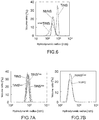
- FIG. 6 shows size distributions as estimated by DLS for each of the un-coated nanosheets.
- the sizes for TiNS, small TiNS, and NbNS estimated by DLS were 825 nm, 295 nm, and 325 nm, respectively.
- FIGs. 7A and 7B show size distributions before and after coating the same with the coating agents. A slight increase in size was observed with each of the TiNS and NbNS nanosheets that were coated with the coating agents. It was hence suggested that the nanosheets were coated by the coating agents. It was also confirmed that the nanosheets coated with the coating agents were dispersed in the solutions as were the cases with the nanosheets with no coating agent.
- FIGs. 8A to 8C each shows a TEM image of nanosheets with no coating agent while FIGs. 9A to 9D each shows a TEM image of nanosheets being coated with coating agents.
- the dotted line in each of the TEM images is for highlighting the contours of the nanosheets.
- Each of the nanosheets was dispersed without exhibiting any aggreation, and their sizes were consistent with the estimated values by DLS.
- FIGs. 10A to 10E show AFM images of TiNS.
- the average thicknesses of the nanosheets were calculated from the cross-sectional profiles along the dotted lines in the AFM images.
- the nanosheets showed about 1.0 to 5.0 nm increase in thickness after being coated with the coating agents as compared to those with no coating agent. This strongly suggests the presence of coating agents being adsorbed on the surface of TiNS.
- the zeta potential for TiNS Cas was found to be -43.6mV, which suggests that the casein as an anionic protein was adsorbed on the surface of the nanosheets. Meanwhile, the zeta potential for TiNS Lys was found to be +50.1mV, which suggests that the lysozyme as a cationic protein was adsorbed on the surface of the nanosheets.
- the adsorbed amount of protein after coating was determined quantitatively by using CBB staining, where the nanosheets were prepared in each case by using different amounts of coating protein (0 to 2.0 mg/mL). The obtained results are shown in FIGs. 11A to 11D .
- nanosheets made by the preparation method as exemplified in the working examples, were prepared by using the coating agent in an amount of more than the saturation amount confirmed by the present experiment.
- CBB staining was performed in a similar manner for both TiNS Skim and GONS Cas to examine the protein adsorption.
- the obtained results are shown in FIGs. 12A and 12B .
- the results each showed an absorption peak around 585 nm that originated from CBB adsorbed on the proteins. It was thus confirmed that the protein was adsorbed on both TiNS and GONS.
- TiNS Cas (0.7 wt%) was dispersed in Tris-hydrochloride buffer solution (1 mM; pH: 7.7) and the dispersion liquid was allowed to stand still under room temperature.
- the dispersion liquids that were allowed to stand still for 0.5, 1, 2, and 5 days from the production of the nanosheets were each centrifuged (15,000 rpm) for 15 minutes at 4 °C by using a centrifugal machine (Tradename: CT15RE by HITACHI).
- the protein contained in the supernatant solution was determined quantitatively by CBB staining.
- the amount of protein adsorbed on the nanosheet was estimated as a ratio determined by subtracting the dissociated amounts of protein, having being dissociated from the nanosheets that are allowed to stand still respectively for 0.5, 1, 2 and 5 days, from the amount of protein adsorbed on the nanosheets immediately after the nanosheet preparation where the amount of protein adsorbed thereon immediately after the nanosheet preparation was defined as 100 % and the dissociated amount of protein immediately after the nanosheet preparation was defined as 0%.
- the dissociated amount of protein was estimated from the amount of protein contained in the supernatant solution.
- a fluorescence-labeled protein was utilized as a model compound.
- the model compound was mixed with the nanosheet-dispersed liquid and allowed to stand still.
- the nanosheet dispersed liquid was then observed by using a confocal laser microscope (CLSM) for identifying the interaction between the nanosheet and the model compound.
- CLSM confocal laser microscope
- a fluorescence-labeled albumin FL Alb
- a fluorescence-labeled ribonuclease A Fl RN-A
- FIG. 14A shows a result in which TiNS Cas in Tris-hydrochloride buffer solution (1 mM; pH: 7.7) was used as a nanosheet
- FIG. 14C shows a result in which TiNS Lys in Tris-hydrochloride buffer solution (1 mM; pH: 2.3) was used.
- FIGs. 14D to 14F show the results in which Fl RN-A(0.5 mg/mL) was used to be mixed with TiNS, TiNS Cas or TiNS Lys , respectively.
- FIGs. 14B and 14F exhibit the results of low fluorescence intensity. It was revealed that the adsorption of anionic FL Alb onto the negatively charged TiNS Cas had been significantly suppressed and that the adsorption of cationic Fl RN-A onto the positively charged TiNS Cas had been significantly suppressed.
- NMR spectroscopy target molecules It is not favorable for the NMR spectroscopy target molecules to have strong interaction with nanosheets because it interrupts their orientation property. For that reason, regarding the selection of the nanosheets and NMR spectroscopy target molecules, it is favorable to select a combination that exhibits low fluorescence intensity such as those shown in FIGs. 14B or 14F .
- SAX Small angle X-ray scattering
- TiNS Cas , TiNS Alb , and TiNS Lys were embedded in dimethylacrylamide gel before performing SAX analysis for examining magnetic field orientation property of the nanosheets coated with the coating agents.
- FIG. 15A illustrates a schematic view showing the outline of the examination where the symbol B represents the magnetic field vector.
- the SAX analysis results, as shown in FIGs. 15B to 15D indicated that the protein-coated nanosheets were perpendicularly oriented to the magnetic field as were the cases with TiNS with no coating agent.
- Magnetic orientation property of the nanosheets was first evaluated by water as being small molecule from the split peak width for the quadrupole splitting of water.
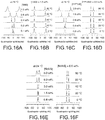
- nanosheet concentration dependency for nanosheets with no coating agents was examined using different nanosheet concentrations in the testing samples while keeping the measurement temperature constant at 24 °C. Then, temperature dependency of the same was examined using different measurement temperatures for the measurement while keeping the nanosheet concentration in the testing samples constant.
- FIGs. 16A to 16F show the split peaks for D 2 O quadrupole interaction in solutions as summarized in table 3.
- Reference example Nanosheet Solvent 1 TiNS Tetramethylammonium (TMA)(1mM) 2 small TiNS Tetramethylammonium (TMA)(1mM) 3 NbNS Tetrabutylammonium (TBA)(1mM)
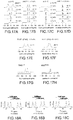
- FIGs. 17A to 17H show split peaks for D 2 O quadrupole interaction in the solutions as listed in Table 4 for the respective nanosheets that are coated with the corresponding coating agents.
- Working example Nanosheet Solvent 1 TiNS Cas Tris hydrochloride buffer (1mM; pH:7.7) 3 TiNS Lys Tris hydrochloride buffer (1mM; pH:2.3) 5 TiNS Tan Water (pH:7.0) 6 TiNS PDDA Tris hydrochloride buffer (1mM; pH:2.3) 7 TiNS Cho Water (pH:7.0) 9 GONS Cas Tris hydrochloride buffer (1mM; pH:7.7)
- the NMR testing samples were obtained by adding 3 wt% of glucose to the TMA solution (1 mM) of TiNS (1.5 wt%) or to the TBA solution (1 mM) of NbNS (4 wt%). The obtained results were shown in FIGs. 18A to 18C .
- FIG. 18A shows the measured result for the 13 C labeled glucose with no additive nanosheet.
- FIG. 18B shows the measured result with the addition of TiNS.
- FIG. 18C shows the measured result with the addition of NbNS. It was found from the coupling shift of 13 C that the peaks were shifted for the cases when TiNS or NbNS is added as compared to the case of no nanosheet addition, which shows that the ⁇ glucose molecules were oriented.
- TiNS Cas or NbNS Cas was used to perform NMR spectroscopy for the ⁇ 1 domain of protein G labeled with 15 N ( 15 N-GB1).
- the measurement for TiNS Cas was performed at various measuring temperatures ranging from 5 to 80 °C.
- the test for NbNS Cas was performed at 35 °C.
- FIGs. 19A to 19G show IPAP-HSQC spectra.
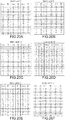
- FIGs. 20A to 20F show lists of Residual Dipolar Coupling (RDC) calculated from the IPAP-HSQC spectra of 1 H- 15 N couplings that originate from amino acid backbones. It was found that both IPAP-HSQC spectra and RDC were observed in the presence of nanosheets.
- RDC Residual Dipolar Coupling
- FIGs. 21A to 21E show graphs illustrating correlations between the measured RDC data for TiNS Cas and the corresponding RDC data estimated from the reported structures for various measurement temperatures (from 5 to 65 °C).
- the nanosheet according to the present invention functions as a protein orientation agent for NMR spectroscopy in a temperature range wider than those of the prior orientation agents.
- TiNS Cas (2.5 wt%) and 15 N-GB1(4 mg/mL) were mixed in Tris-hydrochloride buffer solution (10 mM; pH: 6.8) for two hours before being centrifuged (15,000rpm) to obtain a supernatant solution.
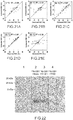
- FIG. 22 shows the obtained result of SDS-PAGE.
- the 1 st lane indicates the protein markers
- 2 nd lane indicates 15 N-GB1
- 3 rd lane indicates TiNS Cas supernatant solution
- 4 th lane indicates TiNS supernatant solution.
- a band originating from 15 N-GB1 was detected in the TiNS Cas supernatant solution. It was thus confirmed that 15 N-GB1 is collectable from the supernatant solution.
- the nanosheet coated with the coating agent of the present invention allows one, by a simple centrifugation process, to collect target proteins for NMR spectroscopy that used to be uncollectable by the prior orientation agents, and that the nanosheets itself are reusable.
Landscapes
- Chemical & Material Sciences (AREA)
- Physics & Mathematics (AREA)
- Organic Chemistry (AREA)
- High Energy & Nuclear Physics (AREA)
- Life Sciences & Earth Sciences (AREA)
- Inorganic Chemistry (AREA)
- Health & Medical Sciences (AREA)
- General Physics & Mathematics (AREA)
- Engineering & Computer Science (AREA)
- Pathology (AREA)
- Immunology (AREA)
- General Health & Medical Sciences (AREA)
- Biochemistry (AREA)
- Analytical Chemistry (AREA)
- Nanotechnology (AREA)
- Materials Engineering (AREA)
- Spectroscopy & Molecular Physics (AREA)
- Environmental & Geological Engineering (AREA)
- Geology (AREA)
- General Life Sciences & Earth Sciences (AREA)
- Molecular Biology (AREA)
- Crystallography & Structural Chemistry (AREA)
- Condensed Matter Physics & Semiconductors (AREA)
- Inorganic Compounds Of Heavy Metals (AREA)
- Ceramic Engineering (AREA)
- Carbon And Carbon Compounds (AREA)
Applications Claiming Priority (2)
| Application Number | Priority Date | Filing Date | Title |
|---|---|---|---|
| JP2017105022A JP6792268B2 (ja) | 2017-05-26 | 2017-05-26 | ナノシートを含むnmr測定用配向剤 |
| PCT/JP2018/019655 WO2018216689A1 (ja) | 2017-05-26 | 2018-05-22 | ナノシートを含むnmr測定用配向剤 |
Publications (2)
| Publication Number | Publication Date |
|---|---|
| EP3633362A1 true EP3633362A1 (de) | 2020-04-08 |
| EP3633362A4 EP3633362A4 (de) | 2021-04-07 |
Family
ID=64395665
Family Applications (1)
| Application Number | Title | Priority Date | Filing Date |
|---|---|---|---|
| EP18806859.7A Withdrawn EP3633362A4 (de) | 2017-05-26 | 2018-05-22 | Nanosheet enthaltendes orientierungsmittel für nmr-messung |
Country Status (4)
| Country | Link |
|---|---|
| US (1) | US20200271740A1 (de) |
| EP (1) | EP3633362A4 (de) |
| JP (1) | JP6792268B2 (de) |
| WO (1) | WO2018216689A1 (de) |
Cited By (1)
| Publication number | Priority date | Publication date | Assignee | Title |
|---|---|---|---|---|
| CN116084041A (zh) * | 2022-12-06 | 2023-05-09 | 海南大学 | 黑磷复合材料、抗菌纳米纤维材料、制备方法及应用 |
Families Citing this family (6)
| Publication number | Priority date | Publication date | Assignee | Title |
|---|---|---|---|---|
| JP2020138941A (ja) * | 2019-02-28 | 2020-09-03 | 国立研究開発法人理化学研究所 | バイセル及びその利用 |
| CN114040889A (zh) | 2019-06-17 | 2022-02-11 | 堪萨斯州立大学研究基金会 | 石墨烯/氧化石墨烯核/壳颗粒及其制备和使用方法 |
| JP7498452B2 (ja) * | 2019-12-17 | 2024-06-12 | 国立研究開発法人理化学研究所 | エアロゲル及びその製造方法 |
| CN114010783B (zh) * | 2021-11-03 | 2022-10-18 | 大连理工大学 | 一种基于共价有机框架材料的多功能富硼纳米靶向制剂及制备方法和应用 |
| CN115487310A (zh) * | 2022-09-19 | 2022-12-20 | 中南大学湘雅医院 | 一种靶向药物及其制备方法和应用 |
| WO2024148340A1 (en) * | 2023-01-06 | 2024-07-11 | University Of Houston System | Composites containing magnetically aligned graphene nanosheets and methods of manufacture thereof |
Family Cites Families (3)
| Publication number | Priority date | Publication date | Assignee | Title |
|---|---|---|---|---|
| JP2001089946A (ja) | 1999-07-22 | 2001-04-03 | Du Pont Toray Co Ltd | ゴム補強用芳香族ポリアミド繊維コード |
| US9867889B2 (en) * | 2010-09-29 | 2018-01-16 | The Board Of Trustees Of The University Of Alabama | Shape-controlled magnetic nanoparticles as T1 contrast agents for magnetic resonance imaging |
| CN103317786A (zh) * | 2012-03-22 | 2013-09-25 | 中国科学院海洋研究所 | 一种二氧化钛纳米片/溶菌酶多层复合薄膜及其制备和应用 |
-
2017
- 2017-05-26 JP JP2017105022A patent/JP6792268B2/ja active Active
-
2018
- 2018-05-22 US US16/615,916 patent/US20200271740A1/en not_active Abandoned
- 2018-05-22 WO PCT/JP2018/019655 patent/WO2018216689A1/ja not_active Ceased
- 2018-05-22 EP EP18806859.7A patent/EP3633362A4/de not_active Withdrawn
Cited By (1)
| Publication number | Priority date | Publication date | Assignee | Title |
|---|---|---|---|---|
| CN116084041A (zh) * | 2022-12-06 | 2023-05-09 | 海南大学 | 黑磷复合材料、抗菌纳米纤维材料、制备方法及应用 |
Also Published As
| Publication number | Publication date |
|---|---|
| EP3633362A4 (de) | 2021-04-07 |
| JP6792268B2 (ja) | 2020-11-25 |
| JP2018200233A (ja) | 2018-12-20 |
| US20200271740A1 (en) | 2020-08-27 |
| WO2018216689A1 (ja) | 2018-11-29 |
Similar Documents
| Publication | Publication Date | Title |
|---|---|---|
| EP3633362A1 (de) | Nanosheet enthaltendes orientierungsmittel für nmr-messung | |
| Hoeger et al. | Ultrathin film coatings of aligned cellulose nanocrystals from a convective-shear assembly system and their surface mechanical properties | |
| Bantz et al. | The surface properties of nanoparticles determine the agglomeration state and the size of the particles under physiological conditions | |
| Safi et al. | Interactions between sub-10-nm iron and cerium oxide nanoparticles and 3T3 fibroblasts: the role of the coating and aggregation state | |
| Schweiger et al. | Novel magnetic iron oxide nanoparticles coated with poly (ethylene imine)-g-poly (ethylene glycol) for potential biomedical application: synthesis, stability, cytotoxicity and MR imaging | |
| Ji et al. | Fabrication of a superhydrophobic surface from the amplified exponential growth of a multilayer | |
| Illés et al. | Novel carboxylated PEG-coating on magnetite nanoparticles designed for biomedical applications | |
| Beh et al. | Development of high water permeability and chemically stable thin film nanocomposite (TFN) forward osmosis (FO) membrane with poly (sodium 4-styrenesulfonate)(PSS)-coated zeolitic imidazolate framework-8 (ZIF-8) for produced water treatment | |
| El Kurdi et al. | Tuning the surface of Au nanoparticles using poly (ethylene glycol)-block-poly (propylene glycol)-block-poly (ethylene glycol): enzyme free and label free sugar sensing in serum samples using resonance Rayleigh scattering spectroscopy | |
| Jedlovszky-Hajdú et al. | Carboxylated magnetic nanoparticles as MRI contrast agents: Relaxation measurements at different field strengths | |
| Iwasaki et al. | Label-free detection of C-reactive protein using highly dispersible gold nanoparticles synthesized by reducible biomimetic block copolymers | |
| Moskalewicz et al. | Improvement of the Ti-6Al-4V alloy’s tribological properties and electrochemical corrosion resistance by nanocomposite TiN/PEEK708 coatings | |
| Zhou et al. | Chitosan-N-poly (ethylene oxide) brush polymers for reduced nonspecific protein adsorption | |
| Carnerero et al. | Understanding and improving aggregated gold nanoparticle/dsDNA interactions by molecular spectroscopy and deconvolution methods | |
| Yamamoto et al. | Synthesis of Fe70Pd30 nanoparticles and their surface modification by zwitterionic linker | |
| Fujii et al. | The simplest layer-by-layer assembly structure: Best paired polymer electrolytes with one charge per main chain carbon atom for multilayered thin films | |
| Mishra et al. | Thermodynamics of multilayer protein adsorption on a gold nanoparticle surface | |
| Fernandes et al. | Electrochemical behaviour of self-assembly multilayer films based on iron-substituted α-Keggin polyoxotungstates | |
| Ostolska et al. | The impact of polymer structure on the adsorption of ionic polyamino acid homopolymers and their diblock copolymers on colloidal chromium (III) oxide | |
| Chen et al. | Tuning of surface protein adsorption by spherical mixed charged silica brushes (MCB) with zwitterionic carboxybetaine component | |
| Alcantara et al. | Adsorption of cobalt ferrite nanoparticles within layer-by-layer films: a kinetic study carried out using quartz crystal microbalance | |
| Fuchs et al. | Biomimetic silver-containing colloids of poly (2-methacryloyloxyethyl phosphorylcholine) and their film-formation properties | |
| Tóth et al. | Clustering of carboxylated magnetite nanoparticles through polyethylenimine: Covalent versus electrostatic approach | |
| Lupínková et al. | Enhancing immobilization of iron oxide particles on various polymer surfaces | |
| de Lima et al. | An investigation of the synergistic effect between magnetite nanoparticles and polypyrrole in nanostructured layer‐by‐layer films |
Legal Events
| Date | Code | Title | Description |
|---|---|---|---|
| STAA | Information on the status of an ep patent application or granted ep patent |
Free format text: STATUS: THE INTERNATIONAL PUBLICATION HAS BEEN MADE |
|
| PUAI | Public reference made under article 153(3) epc to a published international application that has entered the european phase |
Free format text: ORIGINAL CODE: 0009012 |
|
| STAA | Information on the status of an ep patent application or granted ep patent |
Free format text: STATUS: REQUEST FOR EXAMINATION WAS MADE |
|
| 17P | Request for examination filed |
Effective date: 20191129 |
|
| AK | Designated contracting states |
Kind code of ref document: A1 Designated state(s): AL AT BE BG CH CY CZ DE DK EE ES FI FR GB GR HR HU IE IS IT LI LT LU LV MC MK MT NL NO PL PT RO RS SE SI SK SM TR |
|
| AX | Request for extension of the european patent |
Extension state: BA ME |
|
| DAV | Request for validation of the european patent (deleted) | ||
| DAX | Request for extension of the european patent (deleted) | ||
| REG | Reference to a national code |
Ref country code: DE Ref legal event code: R079 Free format text: PREVIOUS MAIN CLASS: G01N0024000000 Ipc: G01N0024080000 |
|
| A4 | Supplementary search report drawn up and despatched |
Effective date: 20210311 |
|
| RIC1 | Information provided on ipc code assigned before grant |
Ipc: C01B 32/194 20170101ALI20210304BHEP Ipc: C01B 32/198 20170101ALI20210304BHEP Ipc: C01G 33/00 20060101ALI20210304BHEP Ipc: G01N 24/08 20060101AFI20210304BHEP Ipc: C01G 23/04 20060101ALI20210304BHEP |
|
| STAA | Information on the status of an ep patent application or granted ep patent |
Free format text: STATUS: THE APPLICATION HAS BEEN WITHDRAWN |
|
| 18W | Application withdrawn |
Effective date: 20230621 |