EP3633549A1 - Procédé d'apprentissage de détection faciale, appareil et dispositif électronique - Google Patents
Procédé d'apprentissage de détection faciale, appareil et dispositif électronique Download PDFInfo
- Publication number
- EP3633549A1 EP3633549A1 EP18810647.0A EP18810647A EP3633549A1 EP 3633549 A1 EP3633549 A1 EP 3633549A1 EP 18810647 A EP18810647 A EP 18810647A EP 3633549 A1 EP3633549 A1 EP 3633549A1
- Authority
- EP
- European Patent Office
- Prior art keywords
- training
- loss value
- sample
- face detection
- batch data
- Prior art date
- Legal status (The legal status is an assumption and is not a legal conclusion. Google has not performed a legal analysis and makes no representation as to the accuracy of the status listed.)
- Granted
Links
Images


Classifications
-
- G—PHYSICS
- G06—COMPUTING OR CALCULATING; COUNTING
- G06V—IMAGE OR VIDEO RECOGNITION OR UNDERSTANDING
- G06V10/00—Arrangements for image or video recognition or understanding
- G06V10/70—Arrangements for image or video recognition or understanding using pattern recognition or machine learning
- G06V10/764—Arrangements for image or video recognition or understanding using pattern recognition or machine learning using classification, e.g. of video objects
-
- G—PHYSICS
- G06—COMPUTING OR CALCULATING; COUNTING
- G06F—ELECTRIC DIGITAL DATA PROCESSING
- G06F18/00—Pattern recognition
- G06F18/20—Analysing
- G06F18/21—Design or setup of recognition systems or techniques; Extraction of features in feature space; Blind source separation
- G06F18/214—Generating training patterns; Bootstrap methods, e.g. bagging or boosting
-
- G—PHYSICS
- G06—COMPUTING OR CALCULATING; COUNTING
- G06F—ELECTRIC DIGITAL DATA PROCESSING
- G06F18/00—Pattern recognition
- G06F18/20—Analysing
- G06F18/21—Design or setup of recognition systems or techniques; Extraction of features in feature space; Blind source separation
- G06F18/217—Validation; Performance evaluation; Active pattern learning techniques
-
- G—PHYSICS
- G06—COMPUTING OR CALCULATING; COUNTING
- G06F—ELECTRIC DIGITAL DATA PROCESSING
- G06F18/00—Pattern recognition
- G06F18/20—Analysing
- G06F18/24—Classification techniques
- G06F18/243—Classification techniques relating to the number of classes
- G06F18/2433—Single-class perspective, e.g. one-against-all classification; Novelty detection; Outlier detection
-
- G—PHYSICS
- G06—COMPUTING OR CALCULATING; COUNTING
- G06N—COMPUTING ARRANGEMENTS BASED ON SPECIFIC COMPUTATIONAL MODELS
- G06N3/00—Computing arrangements based on biological models
- G06N3/02—Neural networks
-
- G—PHYSICS
- G06—COMPUTING OR CALCULATING; COUNTING
- G06V—IMAGE OR VIDEO RECOGNITION OR UNDERSTANDING
- G06V10/00—Arrangements for image or video recognition or understanding
- G06V10/20—Image preprocessing
-
- G—PHYSICS
- G06—COMPUTING OR CALCULATING; COUNTING
- G06V—IMAGE OR VIDEO RECOGNITION OR UNDERSTANDING
- G06V10/00—Arrangements for image or video recognition or understanding
- G06V10/40—Extraction of image or video features
-
- G—PHYSICS
- G06—COMPUTING OR CALCULATING; COUNTING
- G06V—IMAGE OR VIDEO RECOGNITION OR UNDERSTANDING
- G06V10/00—Arrangements for image or video recognition or understanding
- G06V10/70—Arrangements for image or video recognition or understanding using pattern recognition or machine learning
- G06V10/77—Processing image or video features in feature spaces; using data integration or data reduction, e.g. principal component analysis [PCA] or independent component analysis [ICA] or self-organising maps [SOM]; Blind source separation
- G06V10/774—Generating sets of training patterns; Bootstrap methods, e.g. bagging or boosting
-
- G—PHYSICS
- G06—COMPUTING OR CALCULATING; COUNTING
- G06V—IMAGE OR VIDEO RECOGNITION OR UNDERSTANDING
- G06V10/00—Arrangements for image or video recognition or understanding
- G06V10/70—Arrangements for image or video recognition or understanding using pattern recognition or machine learning
- G06V10/77—Processing image or video features in feature spaces; using data integration or data reduction, e.g. principal component analysis [PCA] or independent component analysis [ICA] or self-organising maps [SOM]; Blind source separation
- G06V10/776—Validation; Performance evaluation
-
- G—PHYSICS
- G06—COMPUTING OR CALCULATING; COUNTING
- G06V—IMAGE OR VIDEO RECOGNITION OR UNDERSTANDING
- G06V10/00—Arrangements for image or video recognition or understanding
- G06V10/70—Arrangements for image or video recognition or understanding using pattern recognition or machine learning
- G06V10/82—Arrangements for image or video recognition or understanding using pattern recognition or machine learning using neural networks
-
- G—PHYSICS
- G06—COMPUTING OR CALCULATING; COUNTING
- G06V—IMAGE OR VIDEO RECOGNITION OR UNDERSTANDING
- G06V40/00—Recognition of biometric, human-related or animal-related patterns in image or video data
- G06V40/10—Human or animal bodies, e.g. vehicle occupants or pedestrians; Body parts, e.g. hands
- G06V40/16—Human faces, e.g. facial parts, sketches or expressions
- G06V40/161—Detection; Localisation; Normalisation
-
- G—PHYSICS
- G06—COMPUTING OR CALCULATING; COUNTING
- G06V—IMAGE OR VIDEO RECOGNITION OR UNDERSTANDING
- G06V40/00—Recognition of biometric, human-related or animal-related patterns in image or video data
- G06V40/10—Human or animal bodies, e.g. vehicle occupants or pedestrians; Body parts, e.g. hands
- G06V40/16—Human faces, e.g. facial parts, sketches or expressions
- G06V40/168—Feature extraction; Face representation
-
- G—PHYSICS
- G06—COMPUTING OR CALCULATING; COUNTING
- G06V—IMAGE OR VIDEO RECOGNITION OR UNDERSTANDING
- G06V40/00—Recognition of biometric, human-related or animal-related patterns in image or video data
- G06V40/10—Human or animal bodies, e.g. vehicle occupants or pedestrians; Body parts, e.g. hands
- G06V40/16—Human faces, e.g. facial parts, sketches or expressions
- G06V40/172—Classification, e.g. identification
Definitions
- the present disclosure relates to the field of image processing technologies, and specifically, to a face detection training method and apparatus, and an electronic device.
- Face detection is a technology in which a face detector is used to detect a face from an image. Quality of face detection training directly affects face detection performance. Therefore, how to optimize a face detection training process has become a researching focus for persons skilled in the art.
- CNN-based face detection training has become a mainstream face detection training method.
- face detection training is performed by using a Faster Region-based convolutional neural network (Faster RCNN).
- a CNN-based face detection training process mainly includes: constructing a face detection model, performing iterative training with training samples, to update network parameters of the face detection model in each iteration, thereby optimizing the face detection training.
- the process of updating network parameters of the face detection model in each iteration may be considered as a face detection optimization process.
- the goal of the conventional face detection optimization target is to maximize a difference between a face and a non-face (that is, maximizing an inter-class difference). Less attention is paid to a difference between faces in the conventional face detection, resulting in a poor identification capability and poor face detection robustness while dealing with a face change in different scenarios.
- embodiments of the present disclosure provide a face detection training method and apparatus, and an electronic device, to improve a capability of identifying a face by the face detection and enhance face detection robustness.
- a face detection training method includes:
- the embodiments of the present disclosure further provide a face detection training apparatus, including:
- the embodiments of the present disclosure further provide an electronic device, including a memory and a processor, the memory storing a program, when being executed by the processor, causes the processor for:
- the embodiments of the present disclosure further provide a computer-readable storage medium including instructions, when being executed on a computer, cause the computer to perform the method according to the first aspect.
- the embodiments of the present disclosure further provide a computer program product including instructions, when being executed on a computer, cause the computer to perform the method according to the first aspect.
- a face detection training procedure may include: obtaining a batch data training sample of a current iteration, the batch data training sample including a plurality of training samples of different sample classes; determining, according to an eigenvector of each of the plurality of training samples and a center eigenvector for a sample class to which each of the plurality of training samples belongs, a center loss value corresponding to each of the plurality of training samples; determining, according to the center loss value corresponding to each of the plurality of training samples, a center loss value corresponding to the batch data training sample; determining a target loss value of face detection according to at least the center loss value corresponding to the batch data training sample; if the target loss value of the face detection does not satisfy a specified training convergence condition, updating a network parameter of a face detection module according to the target loss value of the face detection, and entering a next iteration until the target loss value of the face detection satisfies the specified training convergence condition
- a face detection training optimization target is combined with the center loss value corresponding to the batch data training sample, so that the face detection is invariant for the intra-class difference between faces. Therefore, by performing an optimized face detection training in combination with the center loss value corresponding to the batch data training sample, the optimized face detection after the training is invariant to intra-class difference between faces, and face detection robustness is enhanced while ensuring a high inter-class detection performance for detecting a face and non-face.
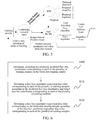
- FIG. 1 An optional face detection model constructed based on a convolutional neural network (CNN) in the embodiments of the present disclosure may be shown in FIG. 1 , which includes an underlying network layer, a proposal prediction layer, and a face detection layer.
- CNN convolutional neural network
- the underlying network layer may be a subnet formed by sequentially connecting a series of convolution layers and pooling layers.
- the underlying network layer may perform a layer-by-layer convolution processing on a training sample (where the training sample may be a sample in a form of an image) by using the series of convolution layers.
- a current convolution layer performs a convolution processing on a convolution processing result outputted by a previous convolution layer.
- a shallow layer feature can represent various features such as edge points, textures and structures
- a deep layer feature can represent a further abstract mapping based on the shallow layer feature.
- image features of different layers can be extracted.
- the underlying network layer outputs a feature map by the convolution processing of the last layer, and the feature map can represent the image features.
- the proposal prediction layer may be a subnet having a fully convolutional structure, and is established based on the image feature output by the underlying network layer.
- the proposal prediction layer may map features from each training sample by using convolution layers, thereby establishing a proposal classifier and a proposal regressor by using mapping nodes, such that a detection for candidate region proposals (hereinafter abbreviated to proposals) is realized.
- the proposal classifier may be configured to predict probabilities of the proposals, and the proposal regressor may be configured to predict coordinates of the proposals. In such manner, the proposals are outputted.
- the proposals output by the proposal prediction layer may be inputted to the face detection layer.
- the face detection layer may be a subnet including a region-of-interest pooling layer (RoI Pooling), and is established based on the image features outputted by the underlying network layer and the proposals outputted by the proposal prediction layer.
- the face detection layer may perform, based on the proposal, a dimension-reducing sampling on the image features of the training sample which are outputted by the underlying network layer, to obtain a feature map having a fixed size. All nodes in the feature map are connected and mapped to an eigenvector having a fixed length, so as to obtain the eigenvector of each training sample.
- a face classifier and a face regressor are built based on each training sample. The face classifier and the face regressor jointly implement face detection.
- the face classifier can predict a probability of a face and a non-face, and the face regressor may perform more accurate coordinates regression for a box containing a human face based on the proposal.
- the face detection model described in FIG. 1 may be implemented using a Faster RCNN-based face detection model.
- the Faster RCNN is a typical algorithm for face detection, and can be divided into a Region Proposal Network (RPN) layer and a Fast RCNN layer.
- RPN Region Proposal Network
- the RPN layer generates candidate bounding boxes, and the Fast RCNN layer may obtain a final detection result based on the candidate bounding boxes.
- the face detection model based on the Faster RCNN may include an underlying network layer, an RPN layer, and a Fast RCNN layer.
- the RPN layer may be considered as an optional implementation of the proposal prediction layer
- the Fast RCNN layer may be considered as an optional implementation of the face detection layer.
- an objective of the RPN layer is to generate proposals based on image features output by the underlying network layer.
- a plurality of anchor boxes may be predefined, and the plurality of anchor boxes may have different sizes and aspect ratios.
- Sub-boxes in a training sample may be determined by using the plurality of predefined anchor boxes, and the proposal is predicted by using the sub-boxes (for example, proposal detection may be trained by using the sub-boxes, and subsequently be used to predict the proposal).
- the anchor box may be used for defining and establishing a classifier and a regressor in the RPN layer for generating the proposal.
- the proposal detection may be known from an RPN.
- each anchor box is associated with a detection (classification and regression), and a predicted value and a target value are required by the training and learning of the classification and the regression.
- a target classification value is determined (that is, whether the output is defined as a positive class or a negative class) according to an overlapping rate of the anchor box and a true box.
- a target classification value is determined according to an overlapping rate of the proposal and the true box.
- the anchor box used in the RPN and the proposal used in the Fast RCNN have similar functions when establishing the classifier, and the anchor box may be considered as a candidate box of the proposal.
- a plurality of proposal detections (each proposal detection is associated with one anchor box) may be established for each node obtained after the convolution processing is performed on image features.
- An objective of the Fast RCNN layer is to generate an eigenvector of a training sample based on the proposals and the image features outputted by the underlying network layer, so that a face classifier and a face regressor are built by using eigenvectors of the training samples.
- the face detection is implemented using both the face classifier and the face regressor.
- an iterative training may be performed by using a model optimization algorithm such as a stochastic gradient descent (SGD) algorithm.
- a model optimization algorithm such as a stochastic gradient descent (SGD) algorithm.
- SGD stochastic gradient descent
- maximizing a difference between a face and a non-face is a main optimized objective of the face detection, but face variations for faces in different scenarios are ignored. For example, face variations in different scenarios, such as different photographing angles, resolutions, lighting conditions, expression changes, and blocking, are ignored, leading to a poor identification capability and poor face detection robustness.
- face variations in different scenarios such as different photographing angles, resolutions, lighting conditions, expression changes, and blocking, are ignored, leading to a poor identification capability and poor face detection robustness.
- an intra-class difference should be minimized, thereby the face detection is ensured to be invariant to the intra-class differences.
- the embodiments of the present disclosure improve a process of optimizing the iterative training of face detection, and provide a new face detection training method, which can reduce an intra-class difference between faces and improve a face identification capability in the face detection while ensuring a high performance of identifying a face and a non-face.
- the face detection training method provided in the embodiments of the present disclosure may be loaded, in a form of a program, onto an electronic device configured to implement the face detection training.
- the electronic device may be a terminal device such as a network-side server or a user-side personal computer (PC).
- a form of the electronic device may be determined based on an actual requirement of the face detection training.
- a hardware structure of the electronic device configured to implement the face detection training may be shown in FIG. 3 , and includes at least one processor 1, at least one communications interface 2, at least one memory 3, and at least one communications bus 4.
- Fig.3 merely shows one of schematic communication connection between the processor 1, the communications interface 2, the memory 3, and the communications bus 4.
- the communications interface 2 may be an interface of a communications module, for example, an interface of a GSM module.
- the processor 1 may be a central processing unit (CPU) or an application-specific integrated circuit (ASIC), or may be configured as one or more integrated circuits for implementing embodiments of the present disclosure.
- CPU central processing unit
- ASIC application-specific integrated circuit
- the memory 3 may include a high-speed RAM memory, and/or a non-volatile memory (NVM), for example, at least one magnetic disk memory.
- NVM non-volatile memory
- the memory 3 stores a program.
- the processor 1 can invoke the program stored in the memory 3, so as to implement the face detection training method provided in the embodiments of the present disclosure.
- an iterative training of a face detection may be performed by using a model optimization algorithm such as a stochastic gradient descent (SGD) algorithm.
- SGD stochastic gradient descent
- the SGD is a conventional convolutional neural network optimization algorithm, and is effective for resolving a large-scale machine learning problem.
- a gradient descent optimization is performed by using a batch data training sample (Minibatch) extracted randomly from a training sample set.
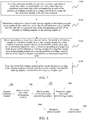
- FIG. 4 a procedure of the face detection training method provided in the embodiment of the present disclosure may be shown FIG. 4 .
- the face detection training procedure in each of multiple iterations may refer to FIG. 4 .
- the face detection training method provided in the embodiment of the present disclosure may include the following steps S100 to S 160.
- step S100 a batch data training sample of a current iteration is obtained, where the batch data training sample includes a plurality of training samples of different sample classes.
- the batch data training sample (Minibatch) is selected from a training sample set including all training samples.
- the face detection may be considered as a two-class task (a face and a non-face).
- a plurality of face images may be obtained from the training sample set and used as training samples of a positive class
- a plurality of non-face images may be obtained and used as training samples of a negative class.
- the obtained training samples of the positive class and the obtained training samples of the negative class constitute the batch data training sample in each iteration.
- the batch data training sample used in the current iteration may include the plurality of training samples which can be classified into a positive class (that is, the training samples of the positive class, corresponding to the face images) and a negative class (that is, the training samples of negative class, corresponding to the non-face images).
- Step S110 a center loss value corresponding to each training sample of the plurality of training samples is determined, according to an eigenvector of each training sample of the plurality of training samples and a center eigenvector for a sample class to which each training sample of the plurality of training samples belongs,.
- an eigenvector of the training sample and a center eigenvector that corresponds to a sample class to which the training sample belongs in the batch data training sample may be determined, thereby determining a center loss value corresponding to the training sample.
- Such processing may be performed on each training sample in the batch data training sample, to obtain the center loss value corresponding to each training sample in the batch data training sample.
- a center eigenvector for a sample class in the batch data training sample may be correspondingly updated by using an average value of eigenvectors of training samples belonging to the sample class in the batch data training sample in the current iteration.
- the training samples belonging to the sample class in the batch data training sample may be determined.
- the average value of the eigenvectors of the training samples belonging to the sample class is determined according to the eigenvectors of the training samples belonging to the sample class in the batch data training sample, to obtain an update variable of the center eigenvector for the sample class in the batch data training sample.
- the center eigenvector for the sample class in the batch data training sample is obtained according to the update variable and a predetermined learning rate. In this way, the center eigenvector for the sample class is updated according to the average value of the eigenvectors of the training samples belonging to the sample class in the batch data training sample.
- the center eigenvector corresponding to the sample class in the batch data training sample of the current iteration may be obtained by subtracting a product of the update variable and the specified learning rate from a center eigenvector corresponding to the sample class in a batch data training sample of a previous iteration.
- eigenvectors of training samples belonging to the positive class in the batch data training sample may be determined, and an average value of the eigenvectors of the training samples belonging to the positive class may be determined, so as to update a center eigenvector of the positive sample class.
- eigenvectors of training samples belonging to the negative class in the batch data training sample may be determined, and an average value of the eigenvectors of the training samples belonging to the negative class may be determined, so as to update a center eigenvector of the negative sample class.
- a center loss value corresponding to each training sample of the positive class may be determined according to an eigenvector of each training sample of the positive class and the center eigenvector of the positive sample class.
- a center loss value corresponding to each training sample of the negative class may be determined according to an eigenvector of each training sample of the negative class and the center eigenvector of the negative sample class.
- a center loss value of a training sample may be represented by a distance between an eigenvector of the training sample and a center eigenvector for a sample class to which the training sample belongs.
- x represents an i th training sample in the batch data training sample
- c yi represents a center eigenvector for the sample class y i to which x i belongs
- a center loss value of the sample x i may be defined as ⁇ x i ⁇ c y i ⁇ 2 2 .
- a process of determining an eigenvector of a training sample may be as follows. After an underlying network layer outputs image features of the training sample, a face detection layer determines, according to proposals, a region of interest in the training sample, so that the face detection layer performs a dimension-reducing sampling on the image feature in the region of interest of the training sample, to obtain a feature map having a fixed size. All nodes on the feature map are connected and mapped to an eigenvector having a fixed length, to obtain the eigenvector of the training sample.
- step S120 a center loss value corresponding to the batch data training sample is determined according to the center loss value corresponding to each of the plurality of training samples.
- an average value of center loss values corresponding to the training samples may be determined according to the center loss values corresponding to the training samples, and the center loss value corresponding to the batch data training sample may be determined according to the average value of the center loss values corresponding to the training samples.
- the average value of the center loss values corresponding to the training samples may be directly used as the center loss value corresponding to the batch data training sample.
- the average value of the center loss values corresponding to the training samples may be multiplied by a predetermined value (for example, by 1/2) to obtain the center loss value corresponding to the batch data training sample.
- step S130 a target loss value of face detection is determined according to at least the center loss value corresponding to the batch data training sample.
- the target loss value of the face detection represents an optimization target of an iterative training process of the face detection.
- the iterative training may be terminated and the face detection may be outputted.
- the conventional face detection optimization target can be combined with the center loss value corresponding to the used batch data training sample, to serve as a face detection optimization target in the embodiments of the present disclosure, thereby obtaining the target loss value of the face detection.
- the target loss value of the face detection may be determined according to the center loss value corresponding to the batch data training sample, a classification loss value corresponding to the batch data training sample and a face box coordinates regression loss value corresponding to the batch data training sample.
- the classification loss value corresponding to the batch data training sample may be determined according to a difference between a prediction probability for classification and a target probability for classification (a true probability for classification) of each training sample in the batch data training sample.
- a sample class to which the training sample belongs may be predicted by using a Softmax function or the like, and the prediction probability for classification of the training sample is obtained.
- the classification loss value corresponding to the training sample may be determined according to the prediction probability for classification of the training sample and the true target probability for classification of the training sample (for example, calculating a difference between the prediction probability for classification and a target probability for classification of the training sample).
- the classification loss value corresponding to the batch data training sample may be determined according to the classification loss value corresponding to each of the training samples in the batch data training sample (for example, calculating an average value of classification loss values of the training samples or the like).
- the classification loss value corresponding to the batch data training sample is an indicator for inter-class classification of a face and a non-face in the face detection, and the classification loss value corresponding to the batch data training sample may represent a difference between a face and a non-face (an inter-class difference).
- the classification loss value corresponding to the batch data training sample is a part of the face detection optimization target, so that optimized face detection has a high performance in the inter-class classification for a face and a non-face.
- the center loss value corresponding to the batch data training sample represents a distance between the eigenvector of the training sample and the center eigenvector for the sample class to which the training sample belongs. Therefore, the center loss value corresponding to the batch data training sample can illustrate a difference between the eigenvector of the training sample and the center eigenvector for the sample class to which the training sample belongs, and can represent a difference between intra-class eigenvectors of training samples of each sample class.
- the center loss value corresponding to the batch data training sample is a part of the face detection optimization target, so that the optimized face detection is invariant to the intra-class differences between faces (for example, an intra-class difference between faces in different scenarios) and face detection robustness can be enhanced.
- the face detection training may be a joint training process including a classification training and a regression training.
- loss values including a center loss value and a classification loss value corresponding to a batch data training sample may be considered as a optimization target of the classification training. For example, minimizing the loss values including the center loss value and the classification loss value corresponding to the batch data training sample is used as the optimization target the classification training in the face detection training.
- a optimization target of the regression training in the face detection training may include a face box coordinates regression loss value corresponding to the batch data training sample.
- the target loss value of the face detection which represents the face detection training optimization target, may be formed by combining the center loss value, the classification loss value, and the face box coordinates regression loss value corresponding to the batch data training sample in an iteration.
- a product of the center loss value corresponding to the batch data training sample and a first specified weight, a product of the face box coordinates regression loss value corresponding to the batch data training sample and a second specified weight, and the classification loss value corresponding to the batch data training sample are summed to obtain the target loss value of the face detection.
- the target loss value of the face detection may be represented as L cls + ⁇ L c + ⁇ Lr eg , ⁇ and ⁇ representing specified weight coefficients, ⁇ being the first specified weight, and ⁇ being the second specified weight.
- the center loss value, the classification loss value, and the face box coordinates regression loss value corresponding to the batch data training sample may be directly summed to obtain the target loss value of the face detection.
- step S140 whether the target loss value of the face detection satisfies a specified training convergence condition is determined; if the determination result is negative, perform step S150; and otherwise, perform step S160.
- the specified training convergence condition may be considered as that the target loss value of the face detection is minimized.
- the smaller center loss value corresponding to the batch data training sample is, the smaller intra-class eigenvector difference between training samples in each sample class is, so that a difference between training samples in the same sample class is reduced, thereby reducing a difference between faces in the sample class.
- a distance between an eigenvector of each training sample in the batch data training sample and a center eigenvector for a sample class to which the training sample belongs is minimized.
- the target loss value of the face detection is determined by using the center loss value corresponding to the batch data training sample, and then whether the training convergence condition is satisfied is determined by using the target loss value of the face detection.
- the face detection can be invariant to an intra-class difference between faces (for example, an intra-class difference between faces in different scenarios) such that the face detection robustness is enhanced while minimizing the center loss value corresponding to the batch data training sample in the face detection.
- step S150 network parameters of a face detection model relating to the face detection are updated according to the target loss value of the face detection, and then return to step S100 to enter a next iteration.
- the network parameters of the face detection model may be updated according to the target loss value of the face detection.
- step S100 is returned to start an iterative training procedure, so as to cyclically perform step S100 to step S140 by using the face detection model with the updated network parameters until a determining result in step S140 is that the target loss value of the face detection satisfies the specified training convergence condition.
- step S100 may be returned by using a stochastic gradient descent method.
- step S160 the face detection is outputted.
- the face detection obtained through training by using the face detection model may be outputted, to complete the process of optimizing the iterative training of the face detection.
- the face detection training procedure may include: obtaining a batch data training sample in a current iteration, the batch data training sample including a plurality of training samples of different sample classes; determining, according to an eigenvector of each training sample and a center eigenvector for a sample class to which each training sample belongs, a center loss value corresponding to each training sample; determining, according to the center loss value corresponding to each training sample, a center loss value corresponding to the batch data training sample; determining a target loss value of face detection according to at least the center loss value corresponding to the batch data training sample; if the target loss value of the face detection does not satisfy a specified training convergence condition, updating network parameters of a face detection model according to the target loss value of the face detection, and entering a next iteration until the target loss value of the face detection satisfies the specified training convergence condition; and outputting the face detection if the target loss value of the face detection satisfies the specified training convergence condition, to complete face detection training
- the face detection training optimization target is combined with the center loss value corresponding to the batch data training sample, so that the face detection is invariant to the intra-class difference between faces. Therefore, according to optimized face detection training performed in combination with the center loss value corresponding to the batch data training sample, the optimized face detection after training is invariant to the intra-class difference between faces and face detection robustness is enhanced while ensuring higher inter-class detection performance for a face and non-face.
- the network parameters of the face detection model when the network parameters of the face detection model are updated according to the target loss value of the face detection, the network parameters of the face detection model may be updated by a back propagation based on the target loss value of the face detection.
- a parameter update value of the face detection may be determined according to the target loss value of the face detection and the network parameters of the face detection model in a previous iteration, so as to update the network parameter of the face detection model in the previous iteration according to the parameter update value of the face detection.
- W2 denotes an updated network parameter of the face detection model
- k denotes momentum
- ⁇ denotes a learning rate
- s denotes a weight decay coefficient
- a center loss function may be set on a face detection layer (for example, a Fast RCNN layer).
- the center loss function may function on a full-connected feature presentation layer of the face detection layer.
- the full-connected feature presentation layer may connect and map, in a form of a full connection, all nodes in a feature map to an eigenvector having a fixed length, to obtain an eigenvector of each training sample.
- a center loss value corresponding to each training sample in the batch data training sample may be determined by the center loss function using an eigenvector of each training sample in the batch data training sample used in the current iteration, and the center loss value L c corresponding to the batch data training sample is correspondingly determined.
- a Softmax function may be set on the face detection layer (for example, a Fast RCNN layer).
- the Softmax function may function on the full-connected feature presentation layer of the face detection layer.
- the Softmax function may be used to process the eigenvector of each training sample, to determine a prediction probability for classification of each training sample. Then, a difference between a prediction probability for classification of a training sample and a target classification probability (a true classification probability) is represented by using a Softmax Loss (a classification loss function), and the classification loss value L cls corresponding to the batch data training sample is determined.
- an input of the Softmax function is an eigenvector of a training sample, and an output is a prediction probability for each sample class to which the training sample belongs.
- p the prediction probability for classification
- p* the target probability for classification
- a loss value (Loss) is an output.
- a smaller Loss indicates a more accurate classification.
- the Center Loss and the Softmax Loss function on a same layer that is, the same eigenvectors are inputted).
- the Center Loss is used as a secondary supervision signal in the face detection optimization, and a smaller Center Loss indicates a smaller difference between intra-class features detected in the face detection.
- the Softmax Loss drives inter-class features detected in the face detection to be separate from each other, thereby ensuring a distinguishable inter-class difference.
- a face box regression prediction function SmoothLl (a smoothLl norm function) may be set on the face detection layer (for example, the Fast RCNN layer).
- Predicted face box coordinates corresponding to each training sample in the batch data training sample are determined based on a proposal by using the SmoothL1.
- a face box coordinates regression loss value corresponding to each training sample is determined by using a SmoothLl Loss.
- An input of the SmoothLl Loss is predicted face box coordinates and target face box coordinates corresponding to the training sample, and an output is a loss value (Loss). Further, based on this, the face box coordinates regression loss value L reg corresponding to the batch data training sample is determined.
- the network parameters of the face detection model is updated by using the target loss value Loss obtained in each iteration, until the target loss value Loss satisfies a minimum value.
- a process of determining the classification loss value corresponding to the batch data training sample may be as follows:
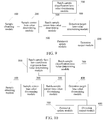
- a process of determining the face box coordinates regression loss value corresponding to the batch data training sample may be shown in FIG. 6 , and includes the following steps S200 to S220.
- step S200 predicted face box coordinates corresponding to each training sample in the batch data training sample are determined based on a proposal.
- a region of interest of each training sample in the batch data training sample in a current iteration may be determined according to a proposal output by a proposal prediction layer, to obtain predicted face box coordinates corresponding to each training sample.
- Predicted face box coordinates of a training sample may be represented by using horizontal and vertical coordinates of an upper-left vertex and horizontal and vertical coordinates of a lower-right vertex.
- a face box regression prediction function SmoothLl (a smoothLl norm function) may be set on a face detection layer (for example, a Fast RCNN layer), and predicted face box coordinates corresponding to each training sample are determined based on the proposal by using the SmoothL1.
- a face box coordinates regression loss value corresponding to each training sample is determined according to the predicted face box coordinates corresponding to each training sample and target face box coordinates corresponding to each training sample.
- target face box coordinates corresponding to a training sample may be coordinates corresponding to a true face box in the training sample.
- a difference between the predicted face box coordinates corresponding to the training sample and the target face box coordinates corresponding to the training sample may be used to determine a face box coordinates regression loss value corresponding to the training sample. Such processing is performed on each training sample to obtain the face box coordinates regression loss value corresponding to each of the training samples.
- the face box coordinates regression loss value may be represented by a SmoothLl Loss.
- An input of the SmoothLl Loss is the predicted face box coordinates and the target face box coordinates corresponding to the training sample, and an output is a loss value (Loss), where a smaller Loss indicates a more accurate face box regression.
- step S220 a face box coordinates regression loss value corresponding to the batch data training sample is determined according to the face box coordinates regression loss value corresponding to each training sample.
- an average value of face box coordinates regression loss values corresponding to the training samples may be determined according to the face box coordinates regression loss value corresponding to each of the training samples in the batch data training sample, and the face box coordinates regression loss value (SmoothLl Loss) corresponding to the batch data training sample is determined according to the average value.
- a joint multi-loss function training including two joint tasks of a face classification and regression, is performed in the iterative training process of the face detection.
- the classification training is optimized by using both the Center Loss and the Softmax Loss, and the regression training is optimized by using the SmoothLl Loss.
- a final face detection optimization target is minimizing a weighted sum of three loss values, i.e., the Center Loss, the Softmax Loss, and the SmoothLl Loss, corresponding to the batch data training sample.
- a finetuning may be performed on a pre-trained model in a large-scale face recognition task (ImageNet).
- the center loss value is introduced as a secondary optimization target of the face detection, to guide optimization and training of the face detection model, and to improve a capability of identifying an intra-class difference between faces in the face detection.
- a training sample that is in the training sample set and that is relatively difficult to detect in the face detection may be determined based on a face detection model in a previous iteration of an iterative training process, to determine a batch data training sample to be used in a next iteration, so as to strengthen a capability of detecting the training sample that is relatively difficult to detect in the face detection.
- Whether a training sample is relatively difficult to detect may be determined by measuring a target loss value corresponding to the training sample. A larger target loss value indicates a longer way for the training sample to realizing the optimization target and a larger detection difficulty.
- FIG. 7 is a flowchart of a method for obtaining the batch data training sample in the current iteration according to an embodiment of the present disclosure.
- the method may include the following steps S300 to S320.
- step S300 a face detection model in a previous iteration is fixed, and a center loss value, a classification loss value, and a face box coordinates regression loss value corresponding to each training sample in the training sample set of the face detection model in the previous iteration are obtained.
- step S310 the target loss value of each training sample in the training sample set is determined according to the center loss value, the classification loss value, and the face box coordinates regression loss value corresponding to each training sample in the training sample set.
- a weighed sum of the center loss value, the classification loss value, and the face box coordinates regression loss value of the training sample may be calculated, to obtain a target loss value of the training sample.
- Processing may be performed on each of the training samples to obtain the target loss value of each of the training samples.
- the target loss value of the training sample may be represented as: classification loss value + ⁇ center loss value + ⁇ face box coordinates regression loss value.
- the center loss value, the classification loss value, and the face box coordinates regression loss value of the training sample may be summed to obtain a target loss value of the training sample.
- step S320 a first number of training samples that are of the positive sample class and have a maximum target loss value are selected, according to a target loss value of each training sample of a positive sample class in the training sample set, and a second number of training samples that are of the negative sample class and have a maximum target loss value are selected, according to a target loss value of each training sample of a negative sample class in the training sample set, where a ratio of the first number to the second number corresponding to a specified ratio.
- the training samples in the training sample set may be classified according to positive and negative classes, thereby determining a target loss value of each training sample belonging to a positive sample class in the training sample set and a target loss value of each training sample belonging to a negative sample class in the training sample set.
- the training samples belonging to the positive class may be sorted (which may be sorted in descending order of the target loss values or in ascending order of the target loss values) according to the target loss value of each training sample of the positive sample class, and the training samples belonging to the negative class may be sorted according to the target loss value of each training sample of the negative sample class.
- the first number of training samples that are of the positive sample class and have a maximum target loss value are selected according to the target loss value of each training sample of the positive sample class in the training sample set
- the second number of training samples that are of the negative sample class and have a maximum target loss value are selected according to the target loss value of each training sample of the negative sample class in the training sample set, so that a ratio of the first number to the second number corresponds to the specified ratio of the number of the samples of the positive class to the number of the samples of the negative class in the batch data training sample.
- the specified ratio may be set to 1: 1, that is, the first number is the same as the second number.
- step S330 the batch data training sample in the current iteration are formed by the training samples selected from the positive sample class and the training samples selected from the negative sample class.
- the face detection may be updated and optimized according to a Center Loss and a Softmax Loss of the batch data training sample in the previous iteration, and a face regressor is updated and optimized according to a SmoothLl Loss of the batch data training sample in the previous iteration, so that the face detection is optimized toward a direction of minimizing a weighted sum of the Center Loss, the Softmax Loss, and the SmoothLl Loss.
- a batch data training sample used in a next iteration may be determined according to the previous iteration.
- a target loss value of a Center Loss, a Softmax Loss, and a SmoothLl Loss of each training sample in the training sample set may be determined by using a face detection model obtained after the previous iteration, thereby selecting, from the training sample set, the first number of training samples that are of the positive class and that have a maximum target loss value and the second number of training samples that are of the negative class and that have a maximum target loss value, to form a Minibatch (that is, the batch data training sample) in the next iteration.
- the next iteration is entered.
- the Minibatch is sent to the face detection model for training, thereby a cyclical and iterative training is performed, until a weighted sum of a SmoothLl Loss, a Softmax Loss, and a SmoothLl Loss of the batch data training sample satisfies a minimum value in an iteration.
- training samples that are relatively difficult to detect in face detection obtained after training in the previous iteration is used as the Minibatch to be used in the next iteration, so that the estimation for the Center Loss can be better in each iteration, thereby supervising and learning a feature of the training sample having intra-class difference identifiability much better.
- the gradient descent optimization is performed not by simply using a randomly selected batch data training sample (Minibatch). Instead, the Minibatch used in the next iteration is determined in combination with the training sample that is relatively difficult to detect in the training sample set in the previous iteration.
- the embodiments of the present disclosure provide a robust face detection training method.
- the method is implemented based on a neural network.
- a Center Loss (a center loss value) that corresponds to a batch data training sample is used as a secondary loss function of a two-class task including a face and a non-face.
- the Center Loss is combined with a Softmax Loss (a classification loss value) corresponding to the batch data training sample to jointly supervise optimized training of the face detection.
- a learning process of the face detection may be guided, so that an intra-class difference between faces is reduced and a capability of identifying a face in the face detection is improved while ensures an inter-class difference between a face and a non-face in the face detection.
- an online hard example mining (OHEM) algorithm is used to mine, according to a total loss value of training samples, training samples of a positive class and training samples of a negative class that are relatively difficult to detect in the previous training, and a ratio of the number of positive samples to the number of negative samples remains to be 1: 1, thereby enhancing a capability of classifying a training sample that is relatively difficult to detect in the face detection, and improving the overall performance of the face detection.
- OHEM online hard example mining
- anchor boxes having a plurality of sizes and a plurality of aspect ratios
- the face detection trained by using the face detection training method provided in the embodiments of the present disclosure can effectively improve accuracy and enhance robustness. Performance comparison between the face detection in the embodiments of the present disclosure and face detection trained in conventional manner may be shown in Table 1.
- Table 1 Method Recall rate (in a case of 2000 false detections) Faster RCNN 0.9720 Faster RCNN+OHEM 0.9745 Faster RCNN+OHEM+Center Loss (according to the embodiments of the present disclosure) 0.9781
- the embodiments of the present disclosure can improve a capability of identifying faces in the face detection and enhance face detection robustness.
- a face detection training apparatus provided in an embodiment of the present disclosure.
- Content of the face detection training apparatus described below may be considered as program modules set in an electronic device configured to implement face detection training, to implement the face detection training method provided in the embodiments of the present disclosure.
- the content of the face detection training apparatus described below and the content of the face detection training method described above may be referenced between each other.
- FIG. 8 is a structural block diagram of a face detection training apparatus according to an embodiment of the present disclosure.
- the face detection training apparatus may include:
- the detection target-loss-value determining module 400 when determining the target loss value of face detection according to the center loss value corresponding to the batch data training sample, is further configured to specifically includes: determine the target loss value of the face detection according to the center loss value corresponding to the batch data training sample, a classification loss value corresponding to the batch data training sample, and a face box coordinates regression loss value corresponding to the batch data training sample.
- the detection target-loss-value determining module 400 when determining the target loss value of the face detection according to the center loss value corresponding to the batch data training sample, the classification loss value corresponding to the batch data training sample, and the face box coordinates regression loss value corresponding to the batch data training sample, is further configured to: sum a product of the center loss value corresponding to the batch data training sample and a first specified weight, a product of the face box coordinates regression loss value corresponding to the batch data training sample and a second specified weight, and the classification loss value corresponding to the batch data training sample, to obtain the target loss value of the face detection.
- the sample obtaining module 100 when obtaining a batch data training sample of the current iteration, is further configured to:
- the sample obtaining module 100 when determining the target loss value corresponding to each of the training samples in the training sample set by using the face detection model in the previous iteration, is further configured to:
- FIG. 9 is another structural block diagram of the face detection training apparatus according to an embodiment of the present disclosure.
- the face detection training apparatus may further include: a batch-sample classification-loss-value determining module 700, configured to: determine a classification loss value corresponding to each of the training samples in the batch data training sample according to a prediction probability for classification probability and a target probability for classification that are corresponding to each of the training samples in the batch data training sample; and determine the classification loss value corresponding to the batch data training sample according to the classification loss value corresponding to each of the training samples in the batch data training sample.
- a batch-sample classification-loss-value determining module 700 configured to: determine a classification loss value corresponding to each of the training samples in the batch data training sample according to a prediction probability for classification probability and a target probability for classification that are corresponding to each of the training samples in the batch data training sample; and determine the classification loss value corresponding to the batch data training sample according to the classification loss value corresponding to each of the training samples in the batch data training sample.
- the sample center-loss-value determining module 200 when determining, according to the eigenvector of each training sample and the center eigenvector for a sample class to which each training sample belongs, the center loss value corresponding to each training sample, is further configured to:
- sample center-loss-value determining module 200 when determining the center eigenvector of each sample class in the batch data training sample, is configured to:
- FIG. 10 shows a still another structural block diagram of the face detection training apparatus according to an embodiment of the present disclosure.
- the face detection training apparatus may further include: a batch-sample face-box-coordinate regression-loss-value determining module 800, configured to:
- the parameter update module 500 when updating network parameters of a face detection model according to the target loss value of the face detection, is further configured to: : update the network parameters of the face detection model through a back propagation according to the target loss value of the face detection.
- the parameter update module 500 when updating the network parameter of the face detection model through the back propagation according to the target loss value of the face detection, is further configured to:
- the face detection training apparatus provided in this embodiment of the present disclosure may be further configured to:
- An embodiment of the present disclosure further provides an electronic device.
- a hardware structure of the electronic device may be shown in FIG. 3 , which includes at least one memory and at least one processor.
- the memory stores a program, when being invoked by the processor, cause the processor for:
- steps of the method or algorithm described may be directly implemented using hardware, a software module executed by a processor, or the combination thereof.
- the software module may be placed in a random access memory (RAM), a memory, a read-only memory (ROM), an electrically programmable ROM (EPROM), an electrically erasable programmable ROM (EEPROM), a register, a hard disk, a removable magnetic disk, a CD-ROM, or any storage medium of other forms well-known in the technical field.
Landscapes
- Engineering & Computer Science (AREA)
- Theoretical Computer Science (AREA)
- Physics & Mathematics (AREA)
- General Physics & Mathematics (AREA)
- Health & Medical Sciences (AREA)
- General Health & Medical Sciences (AREA)
- Multimedia (AREA)
- Evolutionary Computation (AREA)
- Artificial Intelligence (AREA)
- Computer Vision & Pattern Recognition (AREA)
- Software Systems (AREA)
- Computing Systems (AREA)
- Data Mining & Analysis (AREA)
- Oral & Maxillofacial Surgery (AREA)
- Human Computer Interaction (AREA)
- Databases & Information Systems (AREA)
- Medical Informatics (AREA)
- Life Sciences & Earth Sciences (AREA)
- General Engineering & Computer Science (AREA)
- Biomedical Technology (AREA)
- Computational Linguistics (AREA)
- Molecular Biology (AREA)
- Biophysics (AREA)
- Mathematical Physics (AREA)
- Bioinformatics & Cheminformatics (AREA)
- Bioinformatics & Computational Biology (AREA)
- Evolutionary Biology (AREA)
- Image Analysis (AREA)
- Image Processing (AREA)
Applications Claiming Priority (2)
| Application Number | Priority Date | Filing Date | Title |
|---|---|---|---|
| CN201710406726.9A CN108985135A (zh) | 2017-06-02 | 2017-06-02 | 一种人脸检测器训练方法、装置及电子设备 |
| PCT/CN2018/079281 WO2018219016A1 (fr) | 2017-06-02 | 2018-03-16 | Procédé d'apprentissage de détection faciale, appareil et dispositif électronique |
Publications (3)
| Publication Number | Publication Date |
|---|---|
| EP3633549A1 true EP3633549A1 (fr) | 2020-04-08 |
| EP3633549A4 EP3633549A4 (fr) | 2021-03-10 |
| EP3633549B1 EP3633549B1 (fr) | 2024-10-30 |
Family
ID=64426184
Family Applications (1)
| Application Number | Title | Priority Date | Filing Date |
|---|---|---|---|
| EP18810647.0A Active EP3633549B1 (fr) | 2017-06-02 | 2018-03-16 | Procédé et appareil d'apprentissage d'un modèle de détection faciale |
Country Status (8)
| Country | Link |
|---|---|
| US (2) | US10929644B2 (fr) |
| EP (1) | EP3633549B1 (fr) |
| JP (1) | JP6855098B2 (fr) |
| KR (1) | KR102236046B1 (fr) |
| CN (2) | CN110490177A (fr) |
| MA (1) | MA48806A (fr) |
| TW (1) | TWI665613B (fr) |
| WO (1) | WO2018219016A1 (fr) |
Families Citing this family (85)
| Publication number | Priority date | Publication date | Assignee | Title |
|---|---|---|---|---|
| CN110490177A (zh) * | 2017-06-02 | 2019-11-22 | 腾讯科技(深圳)有限公司 | 一种人脸检测器训练方法及装置 |
| CN108694401B (zh) * | 2018-05-09 | 2021-01-12 | 北京旷视科技有限公司 | 目标检测方法、装置及系统 |
| CN110889487A (zh) * | 2018-09-10 | 2020-03-17 | 富士通株式会社 | 神经网络架构搜索装置和方法及计算机可读记录介质 |
| US11620555B2 (en) * | 2018-10-26 | 2023-04-04 | Samsung Electronics Co., Ltd | Method and apparatus for stochastic inference between multiple random variables via common representation |
| CN111191782A (zh) * | 2018-11-14 | 2020-05-22 | 普天信息技术有限公司 | 卷积网络训练方法和装置 |
| TWI684959B (zh) * | 2018-11-16 | 2020-02-11 | 國立雲林科技大學 | 口鼻異物遮蔽檢測方法及其系統 |
| US10891845B2 (en) | 2018-11-28 | 2021-01-12 | National Yunlin University Of Science And Technology | Mouth and nose occluded detecting method and system thereof |
| TWI705340B (zh) * | 2018-12-13 | 2020-09-21 | 財團法人工業技術研究院 | 相位圖像生成器的訓練方法及相位圖像分類器的訓練方法 |
| CN111325223B (zh) * | 2018-12-13 | 2023-10-24 | 中国电信股份有限公司 | 深度学习模型的训练方法、装置和计算机可读存储介质 |
| CN109829893B (zh) * | 2019-01-03 | 2021-05-25 | 武汉精测电子集团股份有限公司 | 一种基于注意力机制的缺陷目标检测方法 |
| CN111477212B (zh) * | 2019-01-04 | 2023-10-24 | 阿里巴巴集团控股有限公司 | 内容识别、模型训练、数据处理方法、系统及设备 |
| US10430691B1 (en) * | 2019-01-22 | 2019-10-01 | StradVision, Inc. | Learning method and learning device for object detector based on CNN, adaptable to customers' requirements such as key performance index, using target object merging network and target region estimating network, and testing method and testing device using the same to be used for multi-camera or surround view monitoring |
| US10423860B1 (en) * | 2019-01-22 | 2019-09-24 | StradVision, Inc. | Learning method and learning device for object detector based on CNN to be used for multi-camera or surround view monitoring using image concatenation and target object merging network, and testing method and testing device using the same |
| CN109801636A (zh) * | 2019-01-29 | 2019-05-24 | 北京猎户星空科技有限公司 | 声纹识别模型的训练方法、装置、电子设备及存储介质 |
| CN111522228B (zh) * | 2019-02-02 | 2023-09-22 | 北京京东乾石科技有限公司 | 一种飞行器的检测方法及装置 |
| CN111626087A (zh) * | 2019-02-28 | 2020-09-04 | 北京市商汤科技开发有限公司 | 神经网络训练及眼睛睁闭状态检测方法、装置及设备 |
| CN109948478B (zh) * | 2019-03-06 | 2021-05-11 | 中国科学院自动化研究所 | 基于神经网络的大规模非均衡数据的人脸识别方法、系统 |
| CN109934198B (zh) * | 2019-03-22 | 2021-05-14 | 北京市商汤科技开发有限公司 | 人脸识别方法及装置 |
| CN110070107B (zh) * | 2019-03-26 | 2020-12-25 | 华为技术有限公司 | 物体识别方法及装置 |
| CN110033332A (zh) * | 2019-04-23 | 2019-07-19 | 杭州智趣智能信息技术有限公司 | 一种人脸识别方法、系统及电子设备和存储介质 |
| CN110059707B (zh) * | 2019-04-25 | 2021-05-14 | 北京小米移动软件有限公司 | 图像特征点的优化方法、装置和设备 |
| CN110414550B (zh) * | 2019-06-14 | 2022-07-29 | 北京迈格威科技有限公司 | 人脸识别模型的训练方法、装置、系统和计算机可读介质 |
| CN110443280B (zh) * | 2019-07-05 | 2022-06-03 | 北京达佳互联信息技术有限公司 | 图像检测模型的训练方法、装置及存储介质 |
| CN110443366B (zh) * | 2019-07-30 | 2022-08-30 | 上海商汤智能科技有限公司 | 神经网络的优化方法及装置、目标检测方法及装置 |
| TWI712961B (zh) * | 2019-08-07 | 2020-12-11 | 瑞昱半導體股份有限公司 | 全連接卷積神經網路影像處理方法與電路系統 |
| CN110432895B (zh) * | 2019-08-09 | 2022-02-11 | 上海鹰瞳医疗科技有限公司 | 训练数据处理、心电波形检测方法及电子设备 |
| CN110490115B (zh) * | 2019-08-13 | 2021-08-13 | 北京达佳互联信息技术有限公司 | 人脸检测模型的训练方法、装置、电子设备及存储介质 |
| CN110263774B (zh) * | 2019-08-19 | 2019-11-22 | 珠海亿智电子科技有限公司 | 一种人脸检测方法 |
| CN110532985B (zh) * | 2019-09-02 | 2022-07-22 | 北京迈格威科技有限公司 | 目标检测方法、装置及系统 |
| TWI719696B (zh) | 2019-11-01 | 2021-02-21 | 財團法人工業技術研究院 | 臉部影像重建方法與系統 |
| WO2021087985A1 (fr) * | 2019-11-08 | 2021-05-14 | 深圳市欢太科技有限公司 | Procédé et appareil d'apprentissage de modèle, support de stockage et dispositif électronique |
| CN110956255B (zh) * | 2019-11-26 | 2023-04-07 | 中国医学科学院肿瘤医院 | 难样本挖掘方法、装置、电子设备及计算机可读存储介质 |
| WO2021125434A1 (fr) | 2019-12-19 | 2021-06-24 | 주식회사 노타 | Procédé et dispositif d'authentification faciale sur dispositif en temps réel basée sur l'apprentissage profond |
| US11277626B2 (en) | 2020-02-21 | 2022-03-15 | Alibaba Group Holding Limited | Region of interest quality controllable video coding techniques |
| CN111275011B (zh) * | 2020-02-25 | 2023-12-19 | 阿波罗智能技术(北京)有限公司 | 移动红绿灯检测方法、装置、电子设备和存储介质 |
| US11388423B2 (en) | 2020-03-23 | 2022-07-12 | Alibaba Group Holding Limited | Region-of-interest based video encoding |
| CN111563541B (zh) * | 2020-04-21 | 2023-04-18 | 北京百度网讯科技有限公司 | 图像检测模型的训练方法和装置 |
| CN113673272B (zh) * | 2020-05-13 | 2023-04-28 | 北京君正集成电路股份有限公司 | 一种基于宠物检测的双层标注二级级联计算损失值的方法 |
| CN111598185B (zh) * | 2020-05-27 | 2021-11-19 | 深圳市铁越电气有限公司 | 一种基于深度学习的训练数据平衡方法、设备和系统 |
| CN111814553B (zh) * | 2020-06-08 | 2023-07-11 | 浙江大华技术股份有限公司 | 人脸检测方法、模型的训练方法及其相关装置 |
| WO2021252940A1 (fr) * | 2020-06-12 | 2021-12-16 | University Of Washington | Suivi oculaire dans des afficheurs proches de l'œil |
| KR20210128491A (ko) * | 2020-06-29 | 2021-10-26 | 베이징 바이두 넷컴 사이언스 앤 테크놀로지 코., 엘티디. | 위험 주행 행위 식별 방법, 장치, 전자 설비 및 저장매체 |
| CN112070205B (zh) * | 2020-07-30 | 2025-03-04 | 华为技术有限公司 | 一种多损失模型获取方法以及装置 |
| CN112016599B (zh) * | 2020-08-13 | 2023-09-15 | 驭势科技(浙江)有限公司 | 用于图像检索的神经网络训练方法、装置及电子设备 |
| CN111930980B (zh) * | 2020-08-21 | 2023-07-07 | 深圳市升幂科技有限公司 | 图像检索模型的训练方法及图像检索方法、装置、及介质 |
| CN112016450B (zh) * | 2020-08-27 | 2023-09-05 | 京东方科技集团股份有限公司 | 机器学习模型的训练方法、装置和电子设备 |
| CN111985439B (zh) * | 2020-08-31 | 2024-08-13 | 中移(杭州)信息技术有限公司 | 人脸检测方法、装置、设备和存储介质 |
| CN112257781B (zh) * | 2020-10-22 | 2024-11-15 | 腾讯音乐娱乐科技(深圳)有限公司 | 一种模型训练方法及装置 |
| CN112541587A (zh) * | 2020-11-19 | 2021-03-23 | 西人马帝言(北京)科技有限公司 | 一种识别模型训练方法、装置、设备及计算机存储介质 |
| KR20220073914A (ko) * | 2020-11-27 | 2022-06-03 | 연세대학교 산학협력단 | 경량화 신경망을 이용한 얼굴 인식 장치 및 방법 |
| KR20220098503A (ko) * | 2021-01-04 | 2022-07-12 | 오드컨셉 주식회사 | 중복 이미지 검출 방법 및 장치 |
| CN112766104A (zh) * | 2021-01-07 | 2021-05-07 | 湖北公众信息产业有限责任公司 | 保险新零售服务平台 |
| CN112734740B (zh) * | 2021-01-18 | 2024-02-23 | 推想医疗科技股份有限公司 | 训练目标检测模型的方法、目标检测的方法及其装置 |
| CN113822111B (zh) * | 2021-01-19 | 2024-05-24 | 北京京东振世信息技术有限公司 | 人群检测模型训练方法、装置以及人群计数方法、装置 |
| KR102444495B1 (ko) * | 2021-01-21 | 2022-09-19 | 순천향대학교 산학협력단 | 영상 인식 검출기 및 그 동작방법 |
| US20220237682A1 (en) * | 2021-01-27 | 2022-07-28 | Adobe Inc. | Scalable architecture for recommendation |
| CN112861671B (zh) * | 2021-01-27 | 2022-10-21 | 电子科技大学 | 一种对深度伪造人脸图像和视频的鉴别方法 |
| CN112890572B (zh) * | 2021-02-07 | 2021-08-17 | 广州一盒科技有限公司 | 一种食材烹调智能控制系统及方法 |
| CN112884040B (zh) * | 2021-02-19 | 2024-04-30 | 北京小米松果电子有限公司 | 训练样本数据的优化方法、系统、存储介质及电子设备 |
| CN112733808B (zh) * | 2021-02-22 | 2025-08-22 | 深圳市商汤科技有限公司 | 模型训练与图像处理方法、装置、电子设备和存储介质 |
| CN112949855B (zh) * | 2021-02-26 | 2023-08-25 | 平安科技(深圳)有限公司 | 人脸识别模型训练方法、识别方法、装置、设备及介质 |
| CN113057647B (zh) * | 2021-03-25 | 2022-04-22 | 山东省人工智能研究院 | 一种心电信号的质量评估方法 |
| CN115204381A (zh) * | 2021-03-26 | 2022-10-18 | 北京三快在线科技有限公司 | 弱监督模型训练方法及装置、电子设备 |
| CN113221655B (zh) * | 2021-04-12 | 2022-09-30 | 重庆邮电大学 | 基于特征空间约束的人脸欺骗检测方法 |
| CN113129337B (zh) * | 2021-04-14 | 2022-07-19 | 桂林电子科技大学 | 背景感知跟踪方法、计算机可读存储介质及计算机设备 |
| CN113221530B (zh) * | 2021-04-19 | 2024-02-13 | 杭州火石数智科技有限公司 | 一种文本相似度匹配方法、装置、计算机设备和储存介质 |
| CN113239975B (zh) * | 2021-04-21 | 2022-12-20 | 国网甘肃省电力公司白银供电公司 | 一种基于神经网络的目标检测方法和装置 |
| CN113139462A (zh) * | 2021-04-23 | 2021-07-20 | 杭州魔点科技有限公司 | 无监督的人脸图像质量评估方法、电子设备和存储介质 |
| CN113192646B (zh) * | 2021-04-25 | 2024-03-22 | 北京易华录信息技术股份有限公司 | 目标检测模型构建方法及不同目标间距离监控方法、装置 |
| US12131489B2 (en) * | 2021-05-26 | 2024-10-29 | Nec Corporation | Semi-automatic data collection and association for multi-camera tracking |
| CN113326773A (zh) * | 2021-05-28 | 2021-08-31 | 北京百度网讯科技有限公司 | 识别模型训练方法、识别方法、装置、设备及存储介质 |
| CN113191461B (zh) * | 2021-06-29 | 2021-09-17 | 苏州浪潮智能科技有限公司 | 一种图片识别方法、装置、设备及可读存储介质 |
| CN113673357A (zh) * | 2021-07-27 | 2021-11-19 | 浙江大华技术股份有限公司 | 停车场寻车方法、设备及存储介质 |
| CN114141298B (zh) * | 2021-08-27 | 2025-08-01 | 浪潮电子信息产业股份有限公司 | 一种磁盘故障检测方法、装置、系统及可读存储介质 |
| CN113807237B (zh) * | 2021-09-15 | 2022-11-08 | 河南星环众志信息科技有限公司 | 活体检测模型的训练、活体检测方法、计算机设备及介质 |
| CN116152871A (zh) * | 2021-11-18 | 2023-05-23 | 北京眼神智能科技有限公司 | 卷积神经网络训练和人脸检测方法、装置、介质及设备 |
| CN114255377B (zh) * | 2021-12-02 | 2025-11-18 | 青岛图灵科技有限公司 | 一种智能货柜的差异商品检测分类方法 |
| CN114495228A (zh) * | 2022-01-26 | 2022-05-13 | 北京百度网讯科技有限公司 | 人脸检测器的训练方法及装置、设备、介质和产品 |
| CN114743665A (zh) * | 2022-03-21 | 2022-07-12 | 平安科技(深圳)有限公司 | 患病风险估计网络的优化方法、装置、介质及设备 |
| CN115601300B (zh) * | 2022-09-07 | 2025-08-29 | 上海致景信息科技有限公司 | 一种坯布缺陷模型的快速训练方法、系统、介质及计算机 |
| CN115937929A (zh) * | 2022-10-26 | 2023-04-07 | 深圳须弥云图空间科技有限公司 | 针对难例样本的人脸识别模型的训练方法及装置 |
| CN115661909B (zh) * | 2022-12-14 | 2024-09-17 | 深圳大学 | 人脸图像处理方法、设备及计算机可读存储介质 |
| CN117218697A (zh) * | 2023-07-21 | 2023-12-12 | 宏龙科技(杭州)有限公司 | 一种基于目标检测算法的多分类人脸检测方法和模型 |
| CN117609842A (zh) * | 2023-11-30 | 2024-02-27 | 安徽大学 | 一种基于元学习的细胞分类方法 |
| CN121353919B (zh) * | 2025-12-16 | 2026-03-13 | 南昌大学 | 一种桥梁表观损伤检测方法及系统 |
Family Cites Families (18)
| Publication number | Priority date | Publication date | Assignee | Title |
|---|---|---|---|---|
| US6219142B1 (en) * | 1997-10-17 | 2001-04-17 | Southwest Sciences Incorporated | Method and apparatus for determining wave characteristics from wave phenomena |
| JPH11161786A (ja) * | 1997-11-25 | 1999-06-18 | Toshiba Corp | パターン認識方法および記録媒体 |
| US6466685B1 (en) * | 1998-07-14 | 2002-10-15 | Kabushiki Kaisha Toshiba | Pattern recognition apparatus and method |
| KR100729273B1 (ko) * | 2005-02-04 | 2007-06-15 | 오병주 | Pca와 역전파 알고리즘을 이용한 얼굴인식 방법 |
| US7471378B2 (en) * | 2005-06-30 | 2008-12-30 | Dbm Optical Technologies, Inc. | Method and system for determining a polarization dependent characteristics of optical and opto-electrical devices |
| CN100587708C (zh) * | 2008-01-25 | 2010-02-03 | 华中科技大学 | 一种分类器集成方法 |
| JP5207870B2 (ja) * | 2008-08-05 | 2013-06-12 | 日立コンピュータ機器株式会社 | 次元削減方法、パターン認識用辞書生成装置、及びパターン認識装置 |
| US9324135B2 (en) * | 2011-01-20 | 2016-04-26 | Nec Corporation | Image processing system, image processing method, and image processing program |
| CN102663370B (zh) * | 2012-04-23 | 2013-10-09 | 苏州大学 | 一种人脸识别的方法及系统 |
| CN104680121B (zh) * | 2013-11-27 | 2022-06-03 | 腾讯科技(深圳)有限公司 | 一种人脸图像的处理方法及装置 |
| US10462450B2 (en) * | 2014-04-28 | 2019-10-29 | Autodesk, Inc. | Combining two-dimensional images with depth data to detect junctions or edges |
| CN104063865B (zh) * | 2014-06-27 | 2017-08-01 | 小米科技有限责任公司 | 分类模型创建方法、图像分割方法及相关装置 |
| CN106326815B (zh) * | 2015-06-30 | 2019-09-13 | 芋头科技(杭州)有限公司 | 一种人脸图像识别方法 |
| CN105069430B (zh) * | 2015-08-05 | 2016-09-14 | 杭州南江机器人股份有限公司 | 一种基于msnrd特征的多姿态人脸检测器的设计方法 |
| KR102477190B1 (ko) * | 2015-08-10 | 2022-12-13 | 삼성전자주식회사 | 얼굴 인식 방법 및 장치 |
| CN106485230B (zh) * | 2016-10-18 | 2019-10-25 | 中国科学院重庆绿色智能技术研究院 | 基于神经网络的人脸检测模型的训练、人脸检测方法及系统 |
| CN106682734A (zh) * | 2016-12-30 | 2017-05-17 | 中国科学院深圳先进技术研究院 | 一种提升卷积神经网络泛化能力的方法及装置 |
| CN110490177A (zh) * | 2017-06-02 | 2019-11-22 | 腾讯科技(深圳)有限公司 | 一种人脸检测器训练方法及装置 |
-
2017
- 2017-06-02 CN CN201910834138.4A patent/CN110490177A/zh active Pending
- 2017-06-02 CN CN201710406726.9A patent/CN108985135A/zh active Pending
-
2018
- 2018-03-16 EP EP18810647.0A patent/EP3633549B1/fr active Active
- 2018-03-16 KR KR1020197026337A patent/KR102236046B1/ko active Active
- 2018-03-16 WO PCT/CN2018/079281 patent/WO2018219016A1/fr not_active Ceased
- 2018-03-16 JP JP2019525952A patent/JP6855098B2/ja active Active
- 2018-03-16 MA MA048806A patent/MA48806A/fr unknown
- 2018-04-20 TW TW107113594A patent/TWI665613B/zh active
-
2019
- 2019-04-23 US US16/392,270 patent/US10929644B2/en active Active
-
2020
- 2020-12-02 US US17/109,574 patent/US11594070B2/en active Active
Also Published As
| Publication number | Publication date |
|---|---|
| WO2018219016A1 (fr) | 2018-12-06 |
| KR20190116397A (ko) | 2019-10-14 |
| KR102236046B1 (ko) | 2021-04-02 |
| CN108985135A (zh) | 2018-12-11 |
| US10929644B2 (en) | 2021-02-23 |
| TWI665613B (zh) | 2019-07-11 |
| MA48806A (fr) | 2020-04-08 |
| US20210089752A1 (en) | 2021-03-25 |
| JP6855098B2 (ja) | 2021-04-07 |
| EP3633549A4 (fr) | 2021-03-10 |
| EP3633549B1 (fr) | 2024-10-30 |
| CN110490177A (zh) | 2019-11-22 |
| TW201832134A (zh) | 2018-09-01 |
| US11594070B2 (en) | 2023-02-28 |
| JP2020501238A (ja) | 2020-01-16 |
| US20190251333A1 (en) | 2019-08-15 |
Similar Documents
| Publication | Publication Date | Title |
|---|---|---|
| EP3633549A1 (fr) | Procédé d'apprentissage de détection faciale, appareil et dispositif électronique | |
| EP3882820A1 (fr) | Procédé de classification de n?ud, procédé d'entraînement de modèle, dispositif, appareil et support d'informations | |
| CN109784293B (zh) | 多类目标对象检测方法、装置、电子设备、存储介质 | |
| JP7384217B2 (ja) | 学習装置、学習方法、及び、プログラム | |
| EP2068271A2 (fr) | Détection d'un objet dans une image | |
| US9842279B2 (en) | Data processing method for learning discriminator, and data processing apparatus therefor | |
| US20240160196A1 (en) | Hybrid model creation method, hybrid model creation device, and recording medium | |
| CN113989519B (zh) | 一种长尾目标检测方法及系统 | |
| EP3916667A1 (fr) | Prédiction de série temporelle en temps réel pour la détection d'anomalies | |
| CN110956255A (zh) | 难样本挖掘方法、装置、电子设备及计算机可读存储介质 | |
| JP2017102906A (ja) | 情報処理装置、情報処理方法及びプログラム | |
| CN110826485B (zh) | 一种遥感影像的目标检测方法及系统 | |
| US11507776B2 (en) | Image recognition method for detection tasks based on single convolutional neural network and image recognition system thereof | |
| EP4343616A1 (fr) | Procédé de classification d'image, procédé d'apprentissage de modèle, dispositif, support de stockage et programme informatique | |
| CN114445716A (zh) | 关键点检测方法、装置、计算机设备、介质及程序产品 | |
| US10846559B2 (en) | Image detection method, system and non-volatile computer readable medium | |
| CN115439708B (zh) | 一种图像数据处理方法和装置 | |
| CN115862087A (zh) | 基于可靠性建模的无监督行人重识别方法及系统 | |
| CN114037865A (zh) | 图像处理方法、装置、设备、存储介质和程序产品 | |
| CN113989905A (zh) | 一种人脸识别模型的训练、人脸识别方法及相关装置 | |
| CN116612348B (zh) | 一种静电线检测模型训练方法、装置、设备及存储介质 | |
| CN118247513A (zh) | 光伏板组件分割方法、装置、电子设备和介质 | |
| CN114092739A (zh) | 图像处理方法、装置、设备、存储介质和程序产品 | |
| CN114581751B (zh) | 图像识别模型的训练方法和图像识别方法、装置 | |
| CN116258883B (zh) | 一种目标检测方法、装置、设备及可读存储介质 |
Legal Events
| Date | Code | Title | Description |
|---|---|---|---|
| STAA | Information on the status of an ep patent application or granted ep patent |
Free format text: STATUS: THE INTERNATIONAL PUBLICATION HAS BEEN MADE |
|
| PUAI | Public reference made under article 153(3) epc to a published international application that has entered the european phase |
Free format text: ORIGINAL CODE: 0009012 |
|
| STAA | Information on the status of an ep patent application or granted ep patent |
Free format text: STATUS: REQUEST FOR EXAMINATION WAS MADE |
|
| 17P | Request for examination filed |
Effective date: 20190618 |
|
| AK | Designated contracting states |
Kind code of ref document: A1 Designated state(s): AL AT BE BG CH CY CZ DE DK EE ES FI FR GB GR HR HU IE IS IT LI LT LU LV MC MK MT NL NO PL PT RO RS SE SI SK SM TR |
|
| AX | Request for extension of the european patent |
Extension state: BA ME |
|
| A4 | Supplementary search report drawn up and despatched |
Effective date: 20210208 |
|
| RIC1 | Information provided on ipc code assigned before grant |
Ipc: G06K 9/62 20060101AFI20210202BHEP |
|
| RAP3 | Party data changed (applicant data changed or rights of an application transferred) |
Owner name: TENCENT TECHNOLOGY (SHENZHEN) COMPANY LIMITED |
|
| STAA | Information on the status of an ep patent application or granted ep patent |
Free format text: STATUS: EXAMINATION IS IN PROGRESS |
|
| 17Q | First examination report despatched |
Effective date: 20221122 |
|
| REG | Reference to a national code |
Ref country code: DE Ref legal event code: R079 Free format text: PREVIOUS MAIN CLASS: G06K0009620000 Ipc: G06V0010774000 Ref document number: 602018076052 Country of ref document: DE |
|
| GRAP | Despatch of communication of intention to grant a patent |
Free format text: ORIGINAL CODE: EPIDOSNIGR1 |
|
| STAA | Information on the status of an ep patent application or granted ep patent |
Free format text: STATUS: GRANT OF PATENT IS INTENDED |
|
| RIC1 | Information provided on ipc code assigned before grant |
Ipc: G06V 40/16 20220101ALI20240501BHEP Ipc: G06V 10/82 20220101ALI20240501BHEP Ipc: G06V 10/776 20220101ALI20240501BHEP Ipc: G06V 10/774 20220101AFI20240501BHEP |
|
| INTG | Intention to grant announced |
Effective date: 20240528 |
|
| GRAS | Grant fee paid |
Free format text: ORIGINAL CODE: EPIDOSNIGR3 |
|
| GRAA | (expected) grant |
Free format text: ORIGINAL CODE: 0009210 |
|
| STAA | Information on the status of an ep patent application or granted ep patent |
Free format text: STATUS: THE PATENT HAS BEEN GRANTED |
|
| AK | Designated contracting states |
Kind code of ref document: B1 Designated state(s): AL AT BE BG CH CY CZ DE DK EE ES FI FR GB GR HR HU IE IS IT LI LT LU LV MC MK MT NL NO PL PT RO RS SE SI SK SM TR |
|
| REG | Reference to a national code |
Ref country code: GB Ref legal event code: FG4D |
|
| REG | Reference to a national code |
Ref country code: CH Ref legal event code: EP |
|
| REG | Reference to a national code |
Ref country code: DE Ref legal event code: R096 Ref document number: 602018076052 Country of ref document: DE |
|
| REG | Reference to a national code |
Ref country code: IE Ref legal event code: FG4D |
|
| REG | Reference to a national code |
Ref country code: LT Ref legal event code: MG9D |
|
| REG | Reference to a national code |
Ref country code: NL Ref legal event code: MP Effective date: 20241030 |
|
| PG25 | Lapsed in a contracting state [announced via postgrant information from national office to epo] |
Ref country code: PT Free format text: LAPSE BECAUSE OF FAILURE TO SUBMIT A TRANSLATION OF THE DESCRIPTION OR TO PAY THE FEE WITHIN THE PRESCRIBED TIME-LIMIT Effective date: 20250228 Ref country code: HR Free format text: LAPSE BECAUSE OF FAILURE TO SUBMIT A TRANSLATION OF THE DESCRIPTION OR TO PAY THE FEE WITHIN THE PRESCRIBED TIME-LIMIT Effective date: 20241030 Ref country code: IS Free format text: LAPSE BECAUSE OF FAILURE TO SUBMIT A TRANSLATION OF THE DESCRIPTION OR TO PAY THE FEE WITHIN THE PRESCRIBED TIME-LIMIT Effective date: 20250228 |
|
| PG25 | Lapsed in a contracting state [announced via postgrant information from national office to epo] |
Ref country code: FI Free format text: LAPSE BECAUSE OF FAILURE TO SUBMIT A TRANSLATION OF THE DESCRIPTION OR TO PAY THE FEE WITHIN THE PRESCRIBED TIME-LIMIT Effective date: 20241030 Ref country code: NL Free format text: LAPSE BECAUSE OF FAILURE TO SUBMIT A TRANSLATION OF THE DESCRIPTION OR TO PAY THE FEE WITHIN THE PRESCRIBED TIME-LIMIT Effective date: 20241030 |
|
| REG | Reference to a national code |
Ref country code: AT Ref legal event code: MK05 Ref document number: 1737700 Country of ref document: AT Kind code of ref document: T Effective date: 20241030 |
|
| PG25 | Lapsed in a contracting state [announced via postgrant information from national office to epo] |
Ref country code: BG Free format text: LAPSE BECAUSE OF FAILURE TO SUBMIT A TRANSLATION OF THE DESCRIPTION OR TO PAY THE FEE WITHIN THE PRESCRIBED TIME-LIMIT Effective date: 20241030 |
|
| PG25 | Lapsed in a contracting state [announced via postgrant information from national office to epo] |
Ref country code: ES Free format text: LAPSE BECAUSE OF FAILURE TO SUBMIT A TRANSLATION OF THE DESCRIPTION OR TO PAY THE FEE WITHIN THE PRESCRIBED TIME-LIMIT Effective date: 20241030 |
|
| PG25 | Lapsed in a contracting state [announced via postgrant information from national office to epo] |
Ref country code: NO Free format text: LAPSE BECAUSE OF FAILURE TO SUBMIT A TRANSLATION OF THE DESCRIPTION OR TO PAY THE FEE WITHIN THE PRESCRIBED TIME-LIMIT Effective date: 20250130 |
|
| PG25 | Lapsed in a contracting state [announced via postgrant information from national office to epo] |
Ref country code: LV Free format text: LAPSE BECAUSE OF FAILURE TO SUBMIT A TRANSLATION OF THE DESCRIPTION OR TO PAY THE FEE WITHIN THE PRESCRIBED TIME-LIMIT Effective date: 20241030 Ref country code: GR Free format text: LAPSE BECAUSE OF FAILURE TO SUBMIT A TRANSLATION OF THE DESCRIPTION OR TO PAY THE FEE WITHIN THE PRESCRIBED TIME-LIMIT Effective date: 20250131 Ref country code: AT Free format text: LAPSE BECAUSE OF FAILURE TO SUBMIT A TRANSLATION OF THE DESCRIPTION OR TO PAY THE FEE WITHIN THE PRESCRIBED TIME-LIMIT Effective date: 20241030 |
|
| PG25 | Lapsed in a contracting state [announced via postgrant information from national office to epo] |
Ref country code: PL Free format text: LAPSE BECAUSE OF FAILURE TO SUBMIT A TRANSLATION OF THE DESCRIPTION OR TO PAY THE FEE WITHIN THE PRESCRIBED TIME-LIMIT Effective date: 20241030 |
|
| PG25 | Lapsed in a contracting state [announced via postgrant information from national office to epo] |
Ref country code: RS Free format text: LAPSE BECAUSE OF FAILURE TO SUBMIT A TRANSLATION OF THE DESCRIPTION OR TO PAY THE FEE WITHIN THE PRESCRIBED TIME-LIMIT Effective date: 20250130 |
|
| PG25 | Lapsed in a contracting state [announced via postgrant information from national office to epo] |
Ref country code: SM Free format text: LAPSE BECAUSE OF FAILURE TO SUBMIT A TRANSLATION OF THE DESCRIPTION OR TO PAY THE FEE WITHIN THE PRESCRIBED TIME-LIMIT Effective date: 20241030 |
|
| PG25 | Lapsed in a contracting state [announced via postgrant information from national office to epo] |
Ref country code: DK Free format text: LAPSE BECAUSE OF FAILURE TO SUBMIT A TRANSLATION OF THE DESCRIPTION OR TO PAY THE FEE WITHIN THE PRESCRIBED TIME-LIMIT Effective date: 20241030 |
|
| VS25 | Lapsed in a validation state [announced via postgrant information from nat. office to epo] |
Ref country code: MD Free format text: LAPSE BECAUSE OF FAILURE TO SUBMIT A TRANSLATION OF THE DESCRIPTION OR TO PAY THE FEE WITHIN THE PRESCRIBED TIME-LIMIT Effective date: 20241030 |
|
| PG25 | Lapsed in a contracting state [announced via postgrant information from national office to epo] |
Ref country code: EE Free format text: LAPSE BECAUSE OF FAILURE TO SUBMIT A TRANSLATION OF THE DESCRIPTION OR TO PAY THE FEE WITHIN THE PRESCRIBED TIME-LIMIT Effective date: 20241030 |
|
| PG25 | Lapsed in a contracting state [announced via postgrant information from national office to epo] |
Ref country code: RO Free format text: LAPSE BECAUSE OF FAILURE TO SUBMIT A TRANSLATION OF THE DESCRIPTION OR TO PAY THE FEE WITHIN THE PRESCRIBED TIME-LIMIT Effective date: 20241030 |
|
| PG25 | Lapsed in a contracting state [announced via postgrant information from national office to epo] |
Ref country code: SK Free format text: LAPSE BECAUSE OF FAILURE TO SUBMIT A TRANSLATION OF THE DESCRIPTION OR TO PAY THE FEE WITHIN THE PRESCRIBED TIME-LIMIT Effective date: 20241030 |
|
| PG25 | Lapsed in a contracting state [announced via postgrant information from national office to epo] |
Ref country code: CZ Free format text: LAPSE BECAUSE OF FAILURE TO SUBMIT A TRANSLATION OF THE DESCRIPTION OR TO PAY THE FEE WITHIN THE PRESCRIBED TIME-LIMIT Effective date: 20241030 |
|
| PG25 | Lapsed in a contracting state [announced via postgrant information from national office to epo] |
Ref country code: IT Free format text: LAPSE BECAUSE OF FAILURE TO SUBMIT A TRANSLATION OF THE DESCRIPTION OR TO PAY THE FEE WITHIN THE PRESCRIBED TIME-LIMIT Effective date: 20241030 |
|
| REG | Reference to a national code |
Ref country code: DE Ref legal event code: R097 Ref document number: 602018076052 Country of ref document: DE |
|
| PLBE | No opposition filed within time limit |
Free format text: ORIGINAL CODE: 0009261 |
|
| STAA | Information on the status of an ep patent application or granted ep patent |
Free format text: STATUS: NO OPPOSITION FILED WITHIN TIME LIMIT |
|
| PG25 | Lapsed in a contracting state [announced via postgrant information from national office to epo] |
Ref country code: SE Free format text: LAPSE BECAUSE OF FAILURE TO SUBMIT A TRANSLATION OF THE DESCRIPTION OR TO PAY THE FEE WITHIN THE PRESCRIBED TIME-LIMIT Effective date: 20241030 |
|
| 26N | No opposition filed |
Effective date: 20250731 |
|
| PG25 | Lapsed in a contracting state [announced via postgrant information from national office to epo] |
Ref country code: MC Free format text: LAPSE BECAUSE OF FAILURE TO SUBMIT A TRANSLATION OF THE DESCRIPTION OR TO PAY THE FEE WITHIN THE PRESCRIBED TIME-LIMIT Effective date: 20241030 |
|
| REG | Reference to a national code |
Ref country code: CH Ref legal event code: H13 Free format text: ST27 STATUS EVENT CODE: U-0-0-H10-H13 (AS PROVIDED BY THE NATIONAL OFFICE) Effective date: 20251024 |
|
| PG25 | Lapsed in a contracting state [announced via postgrant information from national office to epo] |
Ref country code: LU Free format text: LAPSE BECAUSE OF NON-PAYMENT OF DUE FEES Effective date: 20250316 |
|
| REG | Reference to a national code |
Ref country code: BE Ref legal event code: MM Effective date: 20250331 |
|
| PG25 | Lapsed in a contracting state [announced via postgrant information from national office to epo] |
Ref country code: BE Free format text: LAPSE BECAUSE OF NON-PAYMENT OF DUE FEES Effective date: 20250331 |
|
| PG25 | Lapsed in a contracting state [announced via postgrant information from national office to epo] |
Ref country code: CH Free format text: LAPSE BECAUSE OF NON-PAYMENT OF DUE FEES Effective date: 20250331 |
|
| PG25 | Lapsed in a contracting state [announced via postgrant information from national office to epo] |
Ref country code: IE Free format text: LAPSE BECAUSE OF NON-PAYMENT OF DUE FEES Effective date: 20250316 |
|
| PGFP | Annual fee paid to national office [announced via postgrant information from national office to epo] |
Ref country code: GB Payment date: 20260324 Year of fee payment: 9 |
|
| PGFP | Annual fee paid to national office [announced via postgrant information from national office to epo] |
Ref country code: DE Payment date: 20260320 Year of fee payment: 9 |
|
| VS25 | Lapsed in a validation state [announced via postgrant information from nat. office to epo] |
Ref country code: MA Free format text: LAPSE BECAUSE OF FAILURE TO SUBMIT A TRANSLATION OF THE DESCRIPTION OR TO PAY THE FEE WITHIN THE PRESCRIBED TIME-LIMIT Effective date: 20241030 |
|
| PGFP | Annual fee paid to national office [announced via postgrant information from national office to epo] |
Ref country code: FR Payment date: 20260324 Year of fee payment: 9 |