EP3633680A1 - Arzneimittelentwicklungsverfahren - Google Patents
Arzneimittelentwicklungsverfahren Download PDFInfo
- Publication number
- EP3633680A1 EP3633680A1 EP19189381.7A EP19189381A EP3633680A1 EP 3633680 A1 EP3633680 A1 EP 3633680A1 EP 19189381 A EP19189381 A EP 19189381A EP 3633680 A1 EP3633680 A1 EP 3633680A1
- Authority
- EP
- European Patent Office
- Prior art keywords
- profile
- genes
- gene
- disease
- biological
- Prior art date
- Legal status (The legal status is an assumption and is not a legal conclusion. Google has not performed a legal analysis and makes no representation as to the accuracy of the status listed.)
- Withdrawn
Links
- 238000000034 method Methods 0.000 title claims abstract description 153
- 238000007876 drug discovery Methods 0.000 title claims abstract description 55
- 230000037361 pathway Effects 0.000 claims abstract description 136
- 201000010099 disease Diseases 0.000 claims abstract description 116
- 208000037265 diseases, disorders, signs and symptoms Diseases 0.000 claims abstract description 116
- 108090000623 proteins and genes Proteins 0.000 claims description 413
- 230000014509 gene expression Effects 0.000 claims description 55
- 102000004169 proteins and genes Human genes 0.000 claims description 52
- 230000000694 effects Effects 0.000 claims description 38
- 238000004422 calculation algorithm Methods 0.000 claims description 27
- 230000004071 biological effect Effects 0.000 claims description 17
- 238000002560 therapeutic procedure Methods 0.000 claims description 16
- 150000001875 compounds Chemical class 0.000 claims description 14
- 230000035945 sensitivity Effects 0.000 claims description 11
- 230000008236 biological pathway Effects 0.000 claims description 10
- 238000006243 chemical reaction Methods 0.000 claims description 9
- 238000005094 computer simulation Methods 0.000 claims description 9
- 238000012360 testing method Methods 0.000 claims description 8
- 238000002651 drug therapy Methods 0.000 claims description 7
- 238000011282 treatment Methods 0.000 claims description 6
- 239000003550 marker Substances 0.000 claims description 5
- 229940000406 drug candidate Drugs 0.000 claims description 3
- 238000012216 screening Methods 0.000 claims description 3
- 229940079593 drug Drugs 0.000 abstract description 28
- 239000003814 drug Substances 0.000 abstract description 28
- 230000004044 response Effects 0.000 abstract description 8
- 230000008569 process Effects 0.000 description 46
- 230000031018 biological processes and functions Effects 0.000 description 32
- 238000002474 experimental method Methods 0.000 description 28
- 102100026557 Short-wave-sensitive opsin 1 Human genes 0.000 description 25
- 238000013459 approach Methods 0.000 description 25
- 210000004027 cell Anatomy 0.000 description 23
- 230000003993 interaction Effects 0.000 description 23
- 230000006907 apoptotic process Effects 0.000 description 22
- 230000006870 function Effects 0.000 description 19
- 238000004458 analytical method Methods 0.000 description 15
- 230000009141 biological interaction Effects 0.000 description 15
- 238000009826 distribution Methods 0.000 description 15
- 238000011161 development Methods 0.000 description 14
- 238000003556 assay Methods 0.000 description 13
- 239000003596 drug target Substances 0.000 description 13
- 238000010205 computational analysis Methods 0.000 description 12
- 230000033077 cellular process Effects 0.000 description 11
- 238000010586 diagram Methods 0.000 description 11
- 238000013508 migration Methods 0.000 description 11
- 230000005012 migration Effects 0.000 description 11
- 210000001519 tissue Anatomy 0.000 description 11
- 230000008859 change Effects 0.000 description 9
- 230000007423 decrease Effects 0.000 description 8
- 238000011160 research Methods 0.000 description 8
- 230000001413 cellular effect Effects 0.000 description 7
- 238000002493 microarray Methods 0.000 description 7
- 230000001105 regulatory effect Effects 0.000 description 7
- 101000937797 Homo sapiens Apoptosis regulator BAX Proteins 0.000 description 6
- 108010042653 IgA receptor Proteins 0.000 description 6
- 102100034014 Prolyl 3-hydroxylase 3 Human genes 0.000 description 6
- 238000004364 calculation method Methods 0.000 description 6
- 230000009274 differential gene expression Effects 0.000 description 6
- 102000058077 human BAX Human genes 0.000 description 6
- 230000009878 intermolecular interaction Effects 0.000 description 6
- 210000002569 neuron Anatomy 0.000 description 6
- 241000710960 Sindbis virus Species 0.000 description 5
- 230000004913 activation Effects 0.000 description 5
- 230000008827 biological function Effects 0.000 description 5
- 238000010276 construction Methods 0.000 description 5
- 230000000875 corresponding effect Effects 0.000 description 5
- 239000012636 effector Substances 0.000 description 5
- 208000015181 infectious disease Diseases 0.000 description 5
- 230000004043 responsiveness Effects 0.000 description 5
- 230000008093 supporting effect Effects 0.000 description 5
- 108091032973 (ribonucleotides)n+m Proteins 0.000 description 4
- 206010061218 Inflammation Diseases 0.000 description 4
- 108091028043 Nucleic acid sequence Proteins 0.000 description 4
- 230000027455 binding Effects 0.000 description 4
- 230000001186 cumulative effect Effects 0.000 description 4
- 230000034994 death Effects 0.000 description 4
- 238000005516 engineering process Methods 0.000 description 4
- 230000004054 inflammatory process Effects 0.000 description 4
- 230000002401 inhibitory effect Effects 0.000 description 4
- 108020004999 messenger RNA Proteins 0.000 description 4
- 239000000203 mixture Substances 0.000 description 4
- 230000004048 modification Effects 0.000 description 4
- 238000012986 modification Methods 0.000 description 4
- 230000026731 phosphorylation Effects 0.000 description 4
- 238000006366 phosphorylation reaction Methods 0.000 description 4
- 238000012552 review Methods 0.000 description 4
- 238000010200 validation analysis Methods 0.000 description 4
- 238000007792 addition Methods 0.000 description 3
- 230000003915 cell function Effects 0.000 description 3
- -1 e.g. Proteins 0.000 description 3
- 230000002349 favourable effect Effects 0.000 description 3
- 210000005260 human cell Anatomy 0.000 description 3
- 230000010354 integration Effects 0.000 description 3
- 230000002452 interceptive effect Effects 0.000 description 3
- 238000002372 labelling Methods 0.000 description 3
- 230000000670 limiting effect Effects 0.000 description 3
- 239000003607 modifier Substances 0.000 description 3
- 108090000765 processed proteins & peptides Proteins 0.000 description 3
- 230000004850 protein–protein interaction Effects 0.000 description 3
- 238000007619 statistical method Methods 0.000 description 3
- 238000010396 two-hybrid screening Methods 0.000 description 3
- 238000012795 verification Methods 0.000 description 3
- 238000012800 visualization Methods 0.000 description 3
- 108700028369 Alleles Proteins 0.000 description 2
- 206010007559 Cardiac failure congestive Diseases 0.000 description 2
- 108090000790 Enzymes Proteins 0.000 description 2
- 102000004190 Enzymes Human genes 0.000 description 2
- 108700005081 Overlapping Genes Proteins 0.000 description 2
- 101800004937 Protein C Proteins 0.000 description 2
- 101800001700 Saposin-D Proteins 0.000 description 2
- 102400000827 Saposin-D Human genes 0.000 description 2
- 210000001744 T-lymphocyte Anatomy 0.000 description 2
- 230000002159 abnormal effect Effects 0.000 description 2
- 230000004075 alteration Effects 0.000 description 2
- 230000006399 behavior Effects 0.000 description 2
- 238000005842 biochemical reaction Methods 0.000 description 2
- 230000033228 biological regulation Effects 0.000 description 2
- 230000001364 causal effect Effects 0.000 description 2
- HVYWMOMLDIMFJA-DPAQBDIFSA-N cholesterol Chemical compound C1C=C2C[C@@H](O)CC[C@]2(C)[C@@H]2[C@@H]1[C@@H]1CC[C@H]([C@H](C)CCCC(C)C)[C@@]1(C)CC2 HVYWMOMLDIMFJA-DPAQBDIFSA-N 0.000 description 2
- 238000003776 cleavage reaction Methods 0.000 description 2
- 230000002596 correlated effect Effects 0.000 description 2
- 210000000172 cytosol Anatomy 0.000 description 2
- 238000013479 data entry Methods 0.000 description 2
- 238000012217 deletion Methods 0.000 description 2
- 230000037430 deletion Effects 0.000 description 2
- 238000013461 design Methods 0.000 description 2
- 230000008482 dysregulation Effects 0.000 description 2
- 230000007613 environmental effect Effects 0.000 description 2
- 229940088598 enzyme Drugs 0.000 description 2
- 238000000605 extraction Methods 0.000 description 2
- NOESYZHRGYRDHS-UHFFFAOYSA-N insulin Chemical compound N1C(=O)C(NC(=O)C(CCC(N)=O)NC(=O)C(CCC(O)=O)NC(=O)C(C(C)C)NC(=O)C(NC(=O)CN)C(C)CC)CSSCC(C(NC(CO)C(=O)NC(CC(C)C)C(=O)NC(CC=2C=CC(O)=CC=2)C(=O)NC(CCC(N)=O)C(=O)NC(CC(C)C)C(=O)NC(CCC(O)=O)C(=O)NC(CC(N)=O)C(=O)NC(CC=2C=CC(O)=CC=2)C(=O)NC(CSSCC(NC(=O)C(C(C)C)NC(=O)C(CC(C)C)NC(=O)C(CC=2C=CC(O)=CC=2)NC(=O)C(CC(C)C)NC(=O)C(C)NC(=O)C(CCC(O)=O)NC(=O)C(C(C)C)NC(=O)C(CC(C)C)NC(=O)C(CC=2NC=NC=2)NC(=O)C(CO)NC(=O)CNC2=O)C(=O)NCC(=O)NC(CCC(O)=O)C(=O)NC(CCCNC(N)=N)C(=O)NCC(=O)NC(CC=3C=CC=CC=3)C(=O)NC(CC=3C=CC=CC=3)C(=O)NC(CC=3C=CC(O)=CC=3)C(=O)NC(C(C)O)C(=O)N3C(CCC3)C(=O)NC(CCCCN)C(=O)NC(C)C(O)=O)C(=O)NC(CC(N)=O)C(O)=O)=O)NC(=O)C(C(C)CC)NC(=O)C(CO)NC(=O)C(C(C)O)NC(=O)C1CSSCC2NC(=O)C(CC(C)C)NC(=O)C(NC(=O)C(CCC(N)=O)NC(=O)C(CC(N)=O)NC(=O)C(NC(=O)C(N)CC=1C=CC=CC=1)C(C)C)CC1=CN=CN1 NOESYZHRGYRDHS-UHFFFAOYSA-N 0.000 description 2
- 210000004698 lymphocyte Anatomy 0.000 description 2
- 229920002521 macromolecule Polymers 0.000 description 2
- 238000013507 mapping Methods 0.000 description 2
- 230000004001 molecular interaction Effects 0.000 description 2
- 210000000056 organ Anatomy 0.000 description 2
- 230000000144 pharmacologic effect Effects 0.000 description 2
- 230000010399 physical interaction Effects 0.000 description 2
- 230000001766 physiological effect Effects 0.000 description 2
- 102000054765 polymorphisms of proteins Human genes 0.000 description 2
- 229920001184 polypeptide Polymers 0.000 description 2
- 102000004196 processed proteins & peptides Human genes 0.000 description 2
- 229960000856 protein c Drugs 0.000 description 2
- 238000003908 quality control method Methods 0.000 description 2
- 108020003175 receptors Proteins 0.000 description 2
- 102000005962 receptors Human genes 0.000 description 2
- 238000009877 rendering Methods 0.000 description 2
- 230000007017 scission Effects 0.000 description 2
- 230000003068 static effect Effects 0.000 description 2
- 238000013179 statistical model Methods 0.000 description 2
- 238000003860 storage Methods 0.000 description 2
- 230000004960 subcellular localization Effects 0.000 description 2
- 208000024891 symptom Diseases 0.000 description 2
- 238000013519 translation Methods 0.000 description 2
- 230000003827 upregulation Effects 0.000 description 2
- 101150078635 18 gene Proteins 0.000 description 1
- 208000007848 Alcoholism Diseases 0.000 description 1
- 208000019901 Anxiety disease Diseases 0.000 description 1
- 238000012935 Averaging Methods 0.000 description 1
- 210000002237 B-cell of pancreatic islet Anatomy 0.000 description 1
- 241000894006 Bacteria Species 0.000 description 1
- 102100035875 C-C chemokine receptor type 5 Human genes 0.000 description 1
- 101710149870 C-C chemokine receptor type 5 Proteins 0.000 description 1
- 208000035473 Communicable disease Diseases 0.000 description 1
- 108020004414 DNA Proteins 0.000 description 1
- 206010012335 Dependence Diseases 0.000 description 1
- 101150071111 FADD gene Proteins 0.000 description 1
- 102000003688 G-Protein-Coupled Receptors Human genes 0.000 description 1
- 108090000045 G-Protein-Coupled Receptors Proteins 0.000 description 1
- 208000002705 Glucose Intolerance Diseases 0.000 description 1
- 206010018429 Glucose tolerance impaired Diseases 0.000 description 1
- 206010019280 Heart failures Diseases 0.000 description 1
- 208000035150 Hypercholesterolemia Diseases 0.000 description 1
- 206010020772 Hypertension Diseases 0.000 description 1
- 102000004877 Insulin Human genes 0.000 description 1
- 108090001061 Insulin Proteins 0.000 description 1
- OUYCCCASQSFEME-QMMMGPOBSA-N L-tyrosine Chemical compound OC(=O)[C@@H](N)CC1=CC=C(O)C=C1 OUYCCCASQSFEME-QMMMGPOBSA-N 0.000 description 1
- 238000000342 Monte Carlo simulation Methods 0.000 description 1
- 101100109294 Mus musculus Arhgef28 gene Proteins 0.000 description 1
- 108010038807 Oligopeptides Proteins 0.000 description 1
- 102000015636 Oligopeptides Human genes 0.000 description 1
- 241000577979 Peromyscus spicilegus Species 0.000 description 1
- 241000700605 Viruses Species 0.000 description 1
- 230000001133 acceleration Effects 0.000 description 1
- 230000009471 action Effects 0.000 description 1
- 230000003213 activating effect Effects 0.000 description 1
- 238000011360 adjunctive therapy Methods 0.000 description 1
- 230000002776 aggregation Effects 0.000 description 1
- 238000004220 aggregation Methods 0.000 description 1
- 230000008484 agonism Effects 0.000 description 1
- 201000007930 alcohol dependence Diseases 0.000 description 1
- 210000003484 anatomy Anatomy 0.000 description 1
- 238000010171 animal model Methods 0.000 description 1
- 230000003042 antagnostic effect Effects 0.000 description 1
- 230000008485 antagonism Effects 0.000 description 1
- 230000036506 anxiety Effects 0.000 description 1
- 230000003542 behavioural effect Effects 0.000 description 1
- 230000008901 benefit Effects 0.000 description 1
- 230000008238 biochemical pathway Effects 0.000 description 1
- 230000003851 biochemical process Effects 0.000 description 1
- 239000012620 biological material Substances 0.000 description 1
- 230000005540 biological transmission Effects 0.000 description 1
- 210000000601 blood cell Anatomy 0.000 description 1
- 210000004556 brain Anatomy 0.000 description 1
- 239000003153 chemical reaction reagent Substances 0.000 description 1
- 239000003086 colorant Substances 0.000 description 1
- 230000000295 complement effect Effects 0.000 description 1
- 238000013329 compounding Methods 0.000 description 1
- 238000013075 data extraction Methods 0.000 description 1
- 238000013499 data model Methods 0.000 description 1
- 230000009849 deactivation Effects 0.000 description 1
- 230000003247 decreasing effect Effects 0.000 description 1
- 206010012601 diabetes mellitus Diseases 0.000 description 1
- 238000005315 distribution function Methods 0.000 description 1
- 230000008030 elimination Effects 0.000 description 1
- 238000003379 elimination reaction Methods 0.000 description 1
- 235000019441 ethanol Nutrition 0.000 description 1
- 238000011156 evaluation Methods 0.000 description 1
- 230000005713 exacerbation Effects 0.000 description 1
- 238000013401 experimental design Methods 0.000 description 1
- 238000004880 explosion Methods 0.000 description 1
- 231100000573 exposure to toxins Toxicity 0.000 description 1
- 238000010195 expression analysis Methods 0.000 description 1
- 238000007667 floating Methods 0.000 description 1
- 230000002068 genetic effect Effects 0.000 description 1
- 230000006698 induction Effects 0.000 description 1
- 230000005764 inhibitory process Effects 0.000 description 1
- 230000000977 initiatory effect Effects 0.000 description 1
- 238000003780 insertion Methods 0.000 description 1
- 230000037431 insertion Effects 0.000 description 1
- 229940125396 insulin Drugs 0.000 description 1
- 239000003446 ligand Substances 0.000 description 1
- 210000005265 lung cell Anatomy 0.000 description 1
- 238000004949 mass spectrometry Methods 0.000 description 1
- 230000010534 mechanism of action Effects 0.000 description 1
- 238000010946 mechanistic model Methods 0.000 description 1
- 230000002503 metabolic effect Effects 0.000 description 1
- 239000002207 metabolite Substances 0.000 description 1
- 238000010606 normalization Methods 0.000 description 1
- 150000007523 nucleic acids Chemical group 0.000 description 1
- 210000004940 nucleus Anatomy 0.000 description 1
- 230000036961 partial effect Effects 0.000 description 1
- 244000052769 pathogen Species 0.000 description 1
- 239000008177 pharmaceutical agent Substances 0.000 description 1
- 230000002974 pharmacogenomic effect Effects 0.000 description 1
- 230000008092 positive effect Effects 0.000 description 1
- 230000029279 positive regulation of transcription, DNA-dependent Effects 0.000 description 1
- 230000002265 prevention Effects 0.000 description 1
- 230000000069 prophylactic effect Effects 0.000 description 1
- 238000011321 prophylaxis Methods 0.000 description 1
- 230000002829 reductive effect Effects 0.000 description 1
- 238000007670 refining Methods 0.000 description 1
- 230000002441 reversible effect Effects 0.000 description 1
- 238000001963 scanning near-field photolithography Methods 0.000 description 1
- 238000009991 scouring Methods 0.000 description 1
- 238000001629 sign test Methods 0.000 description 1
- 238000004088 simulation Methods 0.000 description 1
- 210000004927 skin cell Anatomy 0.000 description 1
- 150000003384 small molecules Chemical class 0.000 description 1
- 230000000391 smoking effect Effects 0.000 description 1
- 239000007787 solid Substances 0.000 description 1
- 210000003594 spinal ganglia Anatomy 0.000 description 1
- 230000007480 spreading Effects 0.000 description 1
- 238000003892 spreading Methods 0.000 description 1
- 238000000551 statistical hypothesis test Methods 0.000 description 1
- 238000012916 structural analysis Methods 0.000 description 1
- 239000000126 substance Substances 0.000 description 1
- 230000008685 targeting Effects 0.000 description 1
- 230000001225 therapeutic effect Effects 0.000 description 1
- 231100000331 toxic Toxicity 0.000 description 1
- 230000002588 toxic effect Effects 0.000 description 1
- 231100000027 toxicology Toxicity 0.000 description 1
- 230000002103 transcriptional effect Effects 0.000 description 1
- 230000009466 transformation Effects 0.000 description 1
- 230000009261 transgenic effect Effects 0.000 description 1
- OUYCCCASQSFEME-UHFFFAOYSA-N tyrosine Natural products OC(=O)C(N)CC1=CC=C(O)C=C1 OUYCCCASQSFEME-UHFFFAOYSA-N 0.000 description 1
- 230000000007 visual effect Effects 0.000 description 1
Images


Classifications
-
- G—PHYSICS
- G16—INFORMATION AND COMMUNICATION TECHNOLOGY [ICT] SPECIALLY ADAPTED FOR SPECIFIC APPLICATION FIELDS
- G16B—BIOINFORMATICS, i.e. INFORMATION AND COMMUNICATION TECHNOLOGY [ICT] SPECIALLY ADAPTED FOR GENETIC OR PROTEIN-RELATED DATA PROCESSING IN COMPUTATIONAL MOLECULAR BIOLOGY
- G16B20/00—ICT specially adapted for functional genomics or proteomics, e.g. genotype-phenotype associations
-
- G—PHYSICS
- G16—INFORMATION AND COMMUNICATION TECHNOLOGY [ICT] SPECIALLY ADAPTED FOR SPECIFIC APPLICATION FIELDS
- G16B—BIOINFORMATICS, i.e. INFORMATION AND COMMUNICATION TECHNOLOGY [ICT] SPECIALLY ADAPTED FOR GENETIC OR PROTEIN-RELATED DATA PROCESSING IN COMPUTATIONAL MOLECULAR BIOLOGY
- G16B25/00—ICT specially adapted for hybridisation; ICT specially adapted for gene or protein expression
- G16B25/10—Gene or protein expression profiling; Expression-ratio estimation or normalisation
-
- G—PHYSICS
- G16—INFORMATION AND COMMUNICATION TECHNOLOGY [ICT] SPECIALLY ADAPTED FOR SPECIFIC APPLICATION FIELDS
- G16B—BIOINFORMATICS, i.e. INFORMATION AND COMMUNICATION TECHNOLOGY [ICT] SPECIALLY ADAPTED FOR GENETIC OR PROTEIN-RELATED DATA PROCESSING IN COMPUTATIONAL MOLECULAR BIOLOGY
- G16B40/00—ICT specially adapted for biostatistics; ICT specially adapted for bioinformatics-related machine learning or data mining, e.g. knowledge discovery or pattern finding
-
- G—PHYSICS
- G16—INFORMATION AND COMMUNICATION TECHNOLOGY [ICT] SPECIALLY ADAPTED FOR SPECIFIC APPLICATION FIELDS
- G16B—BIOINFORMATICS, i.e. INFORMATION AND COMMUNICATION TECHNOLOGY [ICT] SPECIALLY ADAPTED FOR GENETIC OR PROTEIN-RELATED DATA PROCESSING IN COMPUTATIONAL MOLECULAR BIOLOGY
- G16B5/00—ICT specially adapted for modelling or simulations in systems biology, e.g. gene-regulatory networks, protein interaction networks or metabolic networks
-
- G—PHYSICS
- G16—INFORMATION AND COMMUNICATION TECHNOLOGY [ICT] SPECIALLY ADAPTED FOR SPECIFIC APPLICATION FIELDS
- G16B—BIOINFORMATICS, i.e. INFORMATION AND COMMUNICATION TECHNOLOGY [ICT] SPECIALLY ADAPTED FOR GENETIC OR PROTEIN-RELATED DATA PROCESSING IN COMPUTATIONAL MOLECULAR BIOLOGY
- G16B5/00—ICT specially adapted for modelling or simulations in systems biology, e.g. gene-regulatory networks, protein interaction networks or metabolic networks
- G16B5/20—Probabilistic models
-
- G—PHYSICS
- G16—INFORMATION AND COMMUNICATION TECHNOLOGY [ICT] SPECIALLY ADAPTED FOR SPECIFIC APPLICATION FIELDS
- G16B—BIOINFORMATICS, i.e. INFORMATION AND COMMUNICATION TECHNOLOGY [ICT] SPECIALLY ADAPTED FOR GENETIC OR PROTEIN-RELATED DATA PROCESSING IN COMPUTATIONAL MOLECULAR BIOLOGY
- G16B50/00—ICT programming tools or database systems specially adapted for bioinformatics
-
- G—PHYSICS
- G16—INFORMATION AND COMMUNICATION TECHNOLOGY [ICT] SPECIALLY ADAPTED FOR SPECIFIC APPLICATION FIELDS
- G16B—BIOINFORMATICS, i.e. INFORMATION AND COMMUNICATION TECHNOLOGY [ICT] SPECIALLY ADAPTED FOR GENETIC OR PROTEIN-RELATED DATA PROCESSING IN COMPUTATIONAL MOLECULAR BIOLOGY
- G16B50/00—ICT programming tools or database systems specially adapted for bioinformatics
- G16B50/10—Ontologies; Annotations
-
- G—PHYSICS
- G16—INFORMATION AND COMMUNICATION TECHNOLOGY [ICT] SPECIALLY ADAPTED FOR SPECIFIC APPLICATION FIELDS
- G16B—BIOINFORMATICS, i.e. INFORMATION AND COMMUNICATION TECHNOLOGY [ICT] SPECIALLY ADAPTED FOR GENETIC OR PROTEIN-RELATED DATA PROCESSING IN COMPUTATIONAL MOLECULAR BIOLOGY
- G16B25/00—ICT specially adapted for hybridisation; ICT specially adapted for gene or protein expression
-
- G—PHYSICS
- G16—INFORMATION AND COMMUNICATION TECHNOLOGY [ICT] SPECIALLY ADAPTED FOR SPECIFIC APPLICATION FIELDS
- G16B—BIOINFORMATICS, i.e. INFORMATION AND COMMUNICATION TECHNOLOGY [ICT] SPECIALLY ADAPTED FOR GENETIC OR PROTEIN-RELATED DATA PROCESSING IN COMPUTATIONAL MOLECULAR BIOLOGY
- G16B45/00—ICT specially adapted for bioinformatics-related data visualisation, e.g. displaying of maps or networks
Definitions
- This invention relates to methods of drug discovery and, in particular, utilizing an information database relating to genomics data for the purposes of understanding phenotypic traits.
- RNA, polypeptide or protein RNA, polypeptide or protein
- researchers can design drugs that antagonize or inhibit, or agonize or enhance, the expression of or activity (i.e., function) of the gene or gene product in order to treat or prevent the disease.
- researchers will have not only knowledge of the association of a given gene or gene product with a disease but a fuller understanding of the entire disease pathway, i.e., the series of biochemical processes within the body that result in disease.
- researchers also desire to have a fuller understanding of other pathways that may comprise the given gene or gene product, as well as other pathways, i.e., pathways that do not comprise the gene or gene product, that lead to the same disease.
- researchers would wish to have a fuller understanding of additional indicators of safety and efficacy, such as genotypic or phenotypic "markers" or biochemical or environmental factors that are associated with responses to specific drugs, which responses vary among subsets of a patient population.
- Protein A a hypothetical protein, referred to now for illustrative purposes as Protein A
- Protein A is a likely target for drug intervention because a drug that inhibits Protein A is likely to have a positive effect on Protein A-related inflammation.
- the researchers would also have a fuller understanding of additional pathways that may comprise Protein A, as such information would help researchers predict side effects. Also, researchers would wish to have a fuller understanding of alternative pathways that result in the same disease because such information would help them better predict the efficacy of inhibiting Protein A. As noted above, researchers would also want to understand more fully additional factors that would help them predict safety or efficacy in given patients.
- Genotypic markers typically comprise specific polymorphisms, such as repeats, SNPs, insertions or deletions; phenotypic markers can include a number of factors such as race, gender, ethnicity, age, weight, etc.; environmental factors can include, e.g., behaviors such as smoking or drinking alcohol, exposure to toxins, etc.; biochemical markers can include, e.g., cholesterol levels, etc.
- GenBank which is maintained by NCBI.
- Gene sequences entered in such databases are usually annotated with information that may include, e.g., the type of cell in which a given gene sequence is expressed, the probable function of the sequence, etc.
- the present invention relates to methods for identifying pathways for particular phenotypic traits.
- the invention relates to methods of identifying drug discovery targets by defining disease pathways by computer analysis of direct as well as complex relations among different genes, gene products, or processes.
- the invention provides methods for identifying new uses for known drugs, methods for predicting likely side effects of treatment with a given drug, and methods of predicting efficacy of a given drug in a given individual.
- the invention makes use of a structured database representation of information concerning genes, gene products, processes, and phenotypic traits of interest, and optionally other information (including for example information concerning SNPs, non-genomic DNA sequences, allelic variations, etc..) such that relationships that are several steps removed and that may be multi-directional, can be identified.
- the information that is stored typically comprises data from public sources such as databases and scientific publications. It can also be proprietary data or a mix of proprietary and public data.
- the phenotypic trait of interest is typically a disease, a susceptibility to a disease, or a drug response, e.g., a side effect or a degree of efficacy.
- a structured database representation of information will be able to define biological relationships that are at least one step removed.
- information that may be acquired from one data source e.g., a scientific journal article
- Protein A phosphorylates Protein B.
- Information from a second data source e.g., a second scientific journal article, might conclude that Protein B, upon phosphorylation, up regulates Gene C.
- the relationship between Protein A and Gene C is one step removed.
- Each such "step” can actually involve a number of biological interactions between or otherwise affecting the relationship between or among two or more components of the body.
- the system will be able to define biological relationships that are 2, 3, 4, 5, 6, 7, 8, 9, or 10 or more steps removed.
- the biological relationships that can be defined will often times be complex, or multi-directional, relationships in the sense that one or more genes or gene products in a given pathway may also appear to be parts of multiple other pathways so that many of the genes or gene products in the database will be related to others in a complex, "spiderweb-like" relationship.
- a biological relationship exists when a component (i.e., concept) of a pathway has a biological effect upon, or is biologically affected by, another component of the pathway. So, with reference to the simple illustration provided above, a biological relationship exists between any two of, and among all of, Protein A, the gene that expresses protein A, Protein B, the gene that expresses Protein B, Gene C, and the gene product of Gene C.
- a preferred database for use in the invention may be referred to as a "biological relationships database,” i.e., one that identifies related biological concepts and that specifies what the functional biological relationship (or functional biological relationships) between or among the concepts is (or are).
- a method for identifying a drug discovery target includes the steps of querying the database to identify a disease-related pathway whereby each of the "actor concepts" in the pathway (as described hereinbelow) is an actual or putative candidate drug discovery target.
- the genomics information may comprise information relating to the biological interactions of each of the "concepts" in the pathway, both within the pathway as well as external to the pathway. Such external information can be used to select, de-select, or prioritize certain "steps" as drug discovery targets.
- the candidate drug discovery targets in the disease related pathway may be prioritized based on factors that include function and complexity, a presence of markers for side effects and patient responsiveness, and "drugability" (this term is used in the field of drug discovery to indicate the likelihood that the activity of a particular biological entity can be affected by use of a pharmaceutical agent, e.g., by looking at the protein family class (e.g. GPCR family members generally considered more easily target-able because they sit on the cell surface), through structural analysis, or other experiences.
- Results of querying the database may be combined with the results of additional data obtained from one or more additional methods for identifying candidate drug discovery targets (e.g., differential gene expression studies).
- the database may include the use of an "ontology" as this particular form of structured information may be used to infer classifications based upon the biological interactions of interest.
- This classifying one or more findings using an ontology may further include determining a likelihood that the one or more findings residing in a particular biological classification in the ontology is statistically significant (e.g., by testing a null hypothesis).
- a method for identifying a new use for a known therapy including the steps of providing a means for querying the database to identify a disease-related pathway comprising a known therapy target; selecting at least one of such disease-related pathways wherein the known therapy target is also comprised within a second disease-related pathway; and identifying treatment of the second disease as a new use for the known therapy.
- a method for prioritizing candidate development compounds for further development includes the steps of querying the database to identify all pathways associated with the target of each candidate development compound and giving higher priority to development compounds on the basis of whether or not they are likely to result in an undesirable effect based on their involvement in other biological pathways.
- a method for identifying disease-related pathways wherein the disease is a side effect of drug therapy includes the steps of identifying the disease-related pathway affected by a drug or drug discovery target and providing a means for querying the database to identify alternative pathways that are also affected by the drug or the drug discovery target and that result in the undesirable phenotype.
- a method for identifying or validating a genotypic marker for a disease state includes providing a means for querying the database to identify a genotypic marker that is associated with a disease state.
- a method for evaluating user-supplied genomics data includes (a) defining a profile model based on one or more profile definition criterion; (b) building a collection of profiles according to the profile model; (c) identifying one or more profiles that overlap at least a portion of the user-supplied genomics data and determining, for each such overlapped profile, whether the overlap is statistically significant; and (d) analyzing one or more statistically significant profiles together with the user-supplied genomics data including inspecting database-asserted biological interactions embodied in the one or more statistically significant profiles.
- the building step may further include building profile libraries containing a plurality of profiles, each one of which being based upon a unique profile model.
- the profiles may correspond to static profile models, i.e., pre-generated, or dynamic, i.e., created on an as-needed basis by direct queries of the database.
- static profile models i.e., pre-generated
- dynamic i.e., created on an as-needed basis by direct queries of the database.
- a separately stored, structured representation of profiles is the primary focus for subsequent analysis, rather than the database or a copy of the database.
- Profiles may be generated using one of a data-driven and model-driven approach and each of the profiles may be generated by building a profile about a central genomic data type, e.g., gene, gene product, process.
- Statistical significance may be measured in other ways, such as the statistical significance of one or more biological associations that appear to correlate with the overlapped profiles.
- the first database is a knowledge base ("KB") of the scientific findings structured according to predetermined, causal relationships that generally take the form of effector gene (and/or product) -> object gene (and/or product) type relationships (hereinafter the "Findings KB").
- the preferred database structure for this Findings KB is a frame-based knowledge representation data model, although other database structures may alternatively be used for structuring the scientific findings.
- the second database type is an ontology.
- An ontology is a multiple-hierarchical representation of the taxonomy and formal concepts and relationships relevant to the domain of interest, preferably organized in a frame-based format.
- the Findings KB and ontology are herein collectively referred to as a knowledge representation system ("KRS").
- KRS knowledge representation system
- Other database structures comprising one or more knowledge bases comprising a KRS, may be employed for representing a body of knowledge when practicing the invention.
- an ontology is used together with other KBs to form a KRS, or solely as a KRS, the methods of the invention can leverage the taxonomy and formal concepts and relationships defined in an ontology for purposes of inferring conclusions about scientific findings which may not otherwise be readily apparent, especially where findings form part of a complex, or multi-directional series of causal events. Accordingly, provided below is a further description of a preferred ontology that may be used to practice the invention.
- the principal domain of interest is genomic information, which comprises at a minimum information relating to genes, their DNA sequences, mRNA, the proteins that result when the genes are expressed, and one or more biological effects of the expressed proteins but which can include other, related information.
- genomics information can also be information relating to other genomics, proteinomics, metabolic and behavioral information, as well to other biological processes and to biological components other than proteins and genes, such as cells, including, e.g., the biological effects of cells.
- a preferred ontology structure stores its contents in a frame-based format, which allows searching of the ontology to find relationships between or to make inferences about items stored in the ontology.
- the primary organizational grouping is called a class.
- a class represents a group of things that share similar properties.
- one class is human cells, which class includes lung cells, skin cells, brains cell and so on.
- Each of the members of a class is an "instance" of that class, which instances represent single items or elements belonging within the specified class.
- an individual blood cell is an instance of the class of human cells.
- slots can be thought of as the verbs that relate two classes. For example, pancreatic Beta cells have a slot, "produce,” linking them to insulin.
- a “facet” represents more detailed information about a "slot” and can in some cases restrict the values that a slot can have when related to specific instances of a class.
- the slots and facets define and structure the taxonomic relationships and partonomic relationships between classes.
- each finding is separated into its discrete components, or “concepts.”
- the finding “Human Bax protein accelerated the death by apoptosis of rat dorsal root ganglion ("DRG") neurons after infection with Sindbis Virus”
- DRG dorsal root ganglion
- each of the following bracketed phrases is a concept: [Human Bax protein] [accelerated] the [death] by [apoptosis] of [rat] [DRG neurons] after [infection] with [Sindbis Virus].
- the actor concepts are the physical biological components of the pathway that cause or lead to another reaction in the pathway.
- the actor concepts are Human Bax protein and Sindbis Virus.
- Actor concepts are likely to be genes or gene products (including, e.g., receptors and enzymes) but can also be, e.g., other DNA sequences (including, e.g., DNA that is not transcribed or that is not transcribed and translated,) RNA (including, e.g., mRNA transcripts,) cells, and bacteria, viruses or other pathogens.
- genes or gene products including, e.g., receptors and enzymes
- RNA including, e.g., mRNA transcripts,
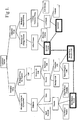
- Figure 1 illustrates how these concepts are structured in a preferred ontology.
- Human Bax protein is a subclass of protein; apoptosis is a subclass of death, and DRG is a subclass of neuron.
- This figure also illustrates how the concepts in this simple, illustrative finding are related to each other, making it easier to visualize how each of these concepts can be further linked to other concepts in other findings, at the same level and at higher and lower levels.
- findings are structured to represent causality, thus permitting the discovery of unidirectional sets of findings that are likely to lead, collectively, to a given biological effect.
- genomics information will preferably be organized to ensure semantic consistency. For example, data entry could be limited to a pre-set, or glossary of terms, inclusion of a scientific thesaurus that automatically converts inputted terms into accepted terms, and human review to update the thesaurus or glossary.
- An abstracted fact refers to a fact retrieved from an information source that is rewritten (e.g., by using a template) in the computational information language of the ontology.
- a completed fact template is called an instantiated template.
- the contents of the instantiated templates are placed in the ontology.
- the type and format of these fact templates are dictated by the content and structure of the ontology.
- the information contained in these facts are also stored in the Findings KB, which, as mentioned above, is used to store scientific findings.
- Findings KB Although all information in the Findings KB is also contained in the ontology, it is preferred to use the Findings KB when specific findings are later retrieved as this can facilitate computational efficiency for searches of multiple findings where information about the classification of, e.g., the effector and/or object in the finding within the ontology is not needed.
- Each type of permitted fact of the ontology can also be associated with a fact template that is created to facilitate the proper entry of the information or data comprising that particular type of fact into the ontology.
- These fact templates are presented to scientists as they abstract information from the sources. Pull-down menus within the template present the scientist with the appropriate classes, slots and facets for the particular fact type.
- the process of abstracting information is called structuring knowledge, as it places knowledge into the structure and architecture of the ontology.
- the method for structuring the knowledge is based on formalized models of experimental design and biological concepts. These models provide the framework for capturing a considerable portion of the loosely articulated findings typically found in academic literature. The specific level of experimental results that is of greatest value to industrial and academic scientists can be particularly targeted for capture. So, for example, in the field of genomics, knowledge that focuses on the effects that both perturbation to genes, gene products (RNA and proteins) and small molecules and various physical stimuli have upon biological systems is singled out. These perturbations and stimuli form the backbone of the ontology and provide the necessary framework for developing a more sophisticated representation of complex biological information.
- biological systems are defined in terms of processes and objects.
- Discrete objects are physical things such as specific genes, proteins, cells and organisms. Processes are actions that act on those objects. Examples of processes include phosphorylation, which acts on discrete objects such as proteins, and apoptosis, which acts on cells. Perturbation of an object can have an effect on a process or on an object.
- the information in the ontology may be represented by a variety of fact types.
- templates are associated with each fact type.
- the corresponding fact types may be described as observational facts, comparison facts, case control facts, case control modifier facts, or case-control comparison facts.
- observational facts comparison facts
- case control facts case control modifier facts
- case-control comparison facts case-control comparison facts
- Observational facts are observations about something.
- An example of an OF is " Tyrosine phosporylation of INRS-1 was observed.”
- Comparison facts compare a property of one thing to a property of another thing.
- An example of a CF is "The size of a lymphocyte in one organism is greater than the size of a lymphocyte in another organism.”
- Case control facts describe an alteration in something which causes changes to a property aspect of something.
- CCF CCF
- Case control comparison facts compare the effect that something has in a first fact to the effect that something has in a second fact.
- An example of a CCCF is "Fas increases total apoptosis of 293 cells with Brd4 (introduced by vector transformation) more than it increases total apoptosis of 293 cells without Brd4.”
- Case control modifier facts CPMFs express an alteration in something that causes changes to a property of a modifier of a process.
- An example of a CCPMF is "Mouse-derived BRCA-1 increased the rate of the induction of 293 cell apoptosis.”
- a fact verification scheme includes a natural language display of the fact derived from the template so that a scientist can verify, by reviewing the natural language representation of the structured fact entered into the template, whether the fact entered into the template was the fact as intended.
- information is extracted automatically by use of a computer to "read” and analyze papers and to extract data therefrom for inclusion in the ontology.
- a natural language e.g., English
- a natural language source text is first interpreted using computational linguistics to determine, to the extent possible, the precise meaning of the "fact” contained in the natural language source. After this "fact” has been determined, it may be reviewed and then abstracted according to an automated procedure, manual procedure (i.e., human involvement) or a combination of both.
- a combination manual and automated procedure is used to verify that the fact extracted from the source text is both a fact of interest, that it accurately reflects the intended meaning of the source text, and that it is appropriately structured for storage in the ontology.
- the data sources are not restricted to journal articles. Other data sources include, e.g., public databases, private databases, and proprietary data such as confidential data developed within and confined to a particular laboratory.
- Findings information may come from informal sources, as well as the more formalized documents and publication sources discussed above. For example, findings may be extracted using a network search tool that searches a network and then attempts to extract information contained in pages that seem to be about a biological concept of interest (e.g., a web-crawler that searches over the internet). Alternately, or additionally, a search engine may be used to scan corporate email, discussion groups, PowerPoint presentations, etc., to try to identify and then extract information relating to biological functions. Of course, one should expect a lower quality of results from these sources, both because the data parsing would be automatic, there would likely be higher error rates than manually entered content, and the content sources will more likely be informal or invalidated discussions, rather than peer-reviewed journals and the like.
- Findings need not be limited to literature-based private or public information.
- findings could include findings derived from, e.g., a company's microarray chip experiments.
- the array data could be reviewed to try to identify which genes are being co-expressed and/or co-regulated, from which a "A ⁇ -->B" relationship could be deduced.
- These findings could then go into the KB directly or into a graph structure directly.
- the data may also include findings that scientists enter directly, or could be data straight from experiments (i.e. w/out interpretation by scientists).
- the findings acquisition process discussed above may also be useful as a tool for publication, in addition to a data extraction or entry process.
- the author or a 3rd party may perform the findings extraction (e.g., as in the way the National Library of Medicine is currently responsible for approving, if not creating, the keywords associated with paper abstracts).
- KRS technology is not required for creating a structured database. While KRS technology may be preferred as it can simplify certain tasks in the data acquisition and data structuring process, it is also possible to create a KB using existing relational, object or XML database technology.
- Such further validation can be done in an number of ways including by correlating the targets with other relevant data, such as differential gene expression data as described below, or by use of animal models, including but not limited to transgenic knockouts.
- human Bax protein is a candidate drug discovery target because inhibiting the expression of or activity of the protein will potentially avoid acceleration of apoptosis of DRG neurons after infection with Sindbis Virus.
- Figure 2 illustrates slightly more complex relationships in disease-related pathways.
- the database is queried to identify pathways to a phenotypic trait, e.g., a disease state or a predisposition to a disease state or other phenotypic trait of interest, by constructing a query designed to produce a response, following computational analysis of the database (or ontology), that reveals all concepts that are biologically related to the phenotypic trait state or to a biological component of the body that is already known to be biologically related to the phenotypic trait.
- the query can also fix the number of steps removed from the phenotypic trait or other biological component. So, with reference to the simple illustration provided in Fig 1 , a query might be, e.,g., "Identify all concepts that are related to apoptosis of DRG neurons.”
- the means for storing and accessing genomics information and the means for computational analysis of complex relationships among the stored concepts will typically comprise a computer system, i.e., any type of system that comprises stored, e.g., digitized, data and a means to query the stored data.
- a computer system can be a stand alone computer, a multicomponent computer, e.g., one in which the stored data are physically remote from the user interface, networked computers, etc.
- Any known means for querying the database will also be useful, e.g., software and hardware for electronically searching fields, categories or whole databases.
- the invention comprises a method for identifying a candidate drug discovery target by (a) providing a means for storing and accessing genomics information wherein said means permits computational analysis of complex relationships among the stored concepts; (b) querying the database to identify a disease-related pathway; and (c) identifying the biochemical reactions in the disease-related pathway whereby each of the actor concepts involved in each such reaction is a candidate drug discovery target.
- the candidate drug discovery targets are prioritized based on their function and complexity.
- gene products that phosphorylate or activate a second gene product may be of special interest, as may gene products that are "simple" in the sense that they are involved in few other pathways and therefore are less likely to produce undesirable physiological effects.
- "two-hybrid data” might be considered to have a lower likelihood of representing an actual functional or physiological effect because two-hybrid experiments measure only simple protein-protein interactions and therefore provide a relatively impoverished representation of biological function and state.
- two-hybrid experiments have a relatively high false positive rate, resulting in noisy data that might further reduce the likelihood of representing true biological function.
- genes that have highly redundant links, i.e., are involved in multiple other pathways may be deprioritized because as targets their disruption may be expected to disrupt a number of pathways.
- pathways to disease for which there are multiple pathways are also, in general, less preferred.
- candidate drug targets are also prioritized based on involvement in other pathways that are unlikely to result in unwanted side effects. For example, inhibiting a gene product such that a desirable biochemical pathway is unintentionally inhibited is likely to result in unwanted side effects and should, in certain cases, be avoided.
- the means for storing and accessing the genomics information may be used to predict side effects or non-responsiveness by queries that identify all known pathways linked to a candidate drug discovery target, which would include pathways of genes and gene products that would be undesirably affected by affecting the candidate drug discovery target.
- the invention may also be used to identify multiple drug discovery targets leading to development of an adjunctive therapy that may include administering more than one drug, whereby multiple pathways to the same disease are interrupted. In some cases, there may be an existing known drug for one or more of the alternative pathways.
- a method for determining or validating the mechanism of action of a drug which comprises using the means for storing and accessing genomics information to define the pathway or pathways between the drug target and the disease.
- the invention can be used to aid target validation by elucidating other pathways that may be affected by agonism or antagonism of a candidate drug discovery target and by showing alternative pathways that might complement or replace the pathway affected by drug intervention at the point of a given candidate drug discovery target.
- this invention comprises a method for identifying diagnostic markers for a given disease.
- the invention comprises: (a) providing a means for storing and accessing genomics information wherein said means permits computational analysis of complex relationships among the stored concepts and (b) querying the database to identify markers that are associated with the disease.
- the markers that are associated with the disease are typically genetic markers, i.e., polymorphisms such as repeats, inserts, deletions, SNP's, etc. They can also be protein markers, i.e., proteins that are expressed or not expressed, relatively under expressed or over expressed, post-translationally processed differently or mutated. Other markers are also useful, e.g., antibodies, mRNA, biochemical markers such as enzyme or metabolite levels, etc.
- the present invention is also useful in the growing field of pharmacogenomics.
- the invention provides a method for identifying diagnostic markers specifically for drug response, i.e., unwanted side effects or non-responsiveness.
- identifying markers for side-effects or non-responsiveness a population of patients having a given disease can be stratified into sub-populations based on likelihood of having a serious adverse event or for not responding to a given therapy, for purposes of enrollment in clinical trials or for treatment.
- the invention in yet another aspect comprises a method for identifying new uses for known drugs.
- the invention comprises using the means for storing and accessing genomics information to identify all pathways in which the target of the known drug is involved, additional to the pathway for the disease for which the drug is indicated, and then determining which if any of the additional pathways result in a different disease. In this way, it is possible to identify different diseases, i.e., new uses, for the known drug.
- the method of the invention for predicting disease pathways and targets for drug discovery may be enhanced by leveraging the information obtained by querying a database with data obtained from other methods for identifying disease pathways or targets for drug discovery.
- the method of the invention may include, additionally, the use of differential expression data in conjunction with relationships asserted in the database.
- the invention also contemplates use of drug discovery targets for drug discovery. How to use drug discovery targets identified through the use of the invention (optionally following further validation) in drug discovery will be apparent to persons of ordinary skill in the art.
- a typical means includes screening a diverse library of compounds against the target and using knowledge gained thereby to iteratively design and screen new compounds having greater potency.
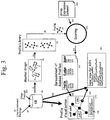
- FIG. 3 An example of a process flow for analysis of microarray data in accordance with the invention is illustrated in Fig. 3 .
- API Application Program Interface
- Fig. 3 shows the conceptual components of the analysis.
- the data structures, algorithms, and software components used to perform the analysis may form a stand alone software tool or they may be integrated with an existing platform and / or suite of applications that are used to access information stored in the KRS.
- the analysis may include two steps. A first step involves a series of computations over a copy of the KB to identify profiles, and a second step that involves scoring these profiles against user provided data.
- a first step involves a series of computations over a copy of the KB to identify profiles, and a second step that involves scoring these profiles against user provided data.
- an example of the analysis uses user-supplied expression array.
- a library (7) of profiles is preferably pre-generated, but in other embodiments profiles may be generated as needed. The nature of this group of profiles may vary considerably based on the goals of the analysis, as is explained in greater detail below.
- a pre-generated "library" of profiles, mapping an entire KB, may be preferred for the sake of performance - pre-generate all of these maps so that retrieving them later will be faster.
- the user-supplied data may include array data provided from a third party product, e.g., an Affymetrix GeneChip (c) , online service or proprietary database.
- a “profile” may include information about, and be defined according to concepts such as a particular combination of genes or gene products that appear to act in a biologically coordinated manner, e.g., form all or part of a disease related pathway, cells and/or cellular components, anatomical parts, molecular, cellular or disease processes, and the relationships between them.
- An overview of a preferred profile generation and profile-to-data scoring algorithm is presented below. However, before turning to this example, it is important to emphasize that a "profile” as used in this discussion refers to a subset of the data contained in the database that is defined according to criterion(s) suited to the researcher's goals.
- criteria means any attribute of a profile that is determined, at least in part, by the researcher's needs. This may include criterion defined in terms of one or more biological concepts, the size of the profile (e.g., graph size), or the findings connectivity in the profile. It should therefore be remembered that the examples of profile criteria enumerated below are intended only as exemplary embodiments of profile defining criteria. In general, it is understood and indeed expected that profile defining criteria will vary from one application of the invention to another since a profile structure according to the invention is driven by research goals.
- the effectiveness of one or more profiles in communicating information depends upon the criterion (or criteria) used to define the profile(s), which naturally depends upon the particular scientific goal for which information is being sought. For example, if it is believed that information relating to a particular cellular process would be highly informative of a targeted pathway, then findings relating to this cellular process would be a factor to consider when selecting a profile criterion. In another situation, the source of the findings (e.g., tissue type) or the size of the profile (e.g., the size of a graph structure illustrating the profile) may be effective profile selection criterion.
- tissue type e.g., tissue type
- the size of the profile e.g., the size of a graph structure illustrating the profile
- step one profile generation, begins with a pre-calculation that assembles one or more libraries of profiles from the KB.
- Each library contains all the profiles found in the KB that fit a certain set of criteria.
- the criteria may be pre-set by the system or defined by the user and may pertain to any category in the database, e.g., genes or gene products, processes, sources for findings, organism type, etc.., or other criteria, e.g., limit number of nodes per profile.
- each profile is a response to a query against the KB to find networks of findings that meet the criteria.
- the libraries may be pre-built to optimize performance, or the libraries may be built directly against the KRS, so as to allow libraries to incorporate recently discovered findings as they are stored in the KB.
- Profiles could also be built using something of a "bootstrap approach": an initial set of profiles could be built, then tested for sensitivity in detecting expression changes, and the best profiles could be enlarged (by adding more gene members, by merging profiles, or by otherwise changing the criteria that define the profile model), and the sensitivity test repeated. Eventually profiles that are optimal in detecting gene expression changes (the per gene-member sensitivity measure would be optimal) but not too large could emerge from this process.
- a gene-centric algorithm may be used.
- the algorithm creates one profile for each gene in the KB.
- Each gene's profile consists of the gene that "anchors” the profile and a set of “nearby” genes that match a certain criteria.
- “nearby” it is meant those genes that are most directly related to the anchor (or “seed”) gene through some process, in terms of the number findings linking the gene to the anchor gene.
- This approach is termed “model-driven” because the profiles are based on a pre-defined algorithmic model.
- a "data-driven” model may be used, where the profile is not pre-generated but instead is assumed to be the set of differentially regulated user genes together with their know interactions as revealed by the KB. This essentially takes all the user genes and connects them using findings from the KB.
- Step two Profile Scoring (12), is the process of computing a P-value that ranks a profile (9) against the expression data (10).
- the profiles are preferably pre-generated independently of expression data and are stored in a profile library.
- profile libraries generated, each of which contains profiles matching the user or system specified criteria.
- Profile Scoring described herein will work for any of these libraries.
- the algorithm makes two simplifying assumptions.
- a continuous measure of dysregulation is used, rather than an expression level cutoff when comparing microarray data to profiles.
- the system could allow user annotation to indicate (hypothesized) dependencies within the expression dataset. Specifically, if users have a priori knowledge about dependencies between the genes in their experiment, allow this to be included (e.g. as edge annotations, additions of new edges, or removal of edges whose evidence is hypothesized to be weak) in the set of genes to be analyzed. This feature, which is preferred, would require that the analysis gene sets have edge drawings (if it is desirable to display this information in graph form) which use the same semantics of directness as those underlying the profile edges, i.e., a data-driven profile can be constructed from user-supplied information. Alternatively, forms may be provided to input edges and tables provided for visual output for the edges.
- users can add their own findings, or modify existing ones by, e.g., specifying a confidence measure.
- These user findings could be modifications to the KB itself (add custom findings to the KB, which are then converted to the graph (5) format) or to the graph itself (convert KB ⁇ graph as usual, but then modify graph (5)).
- Updates to the KB may use templates to enter these new findings, as discussed above. If these findings are added to the graph, then templates customized for graph edits may be used.
- This resulting data or model driven profile (or profiles, if there is more than one hypothesized dependency for a gene set) may then be used to further rank existing profiles by, e.g., doing an isomorphism comparison with model-based profiles.
- data- or model-driven profiles are ranked against both the prior knowledge asserted in the KRS and the user's personal knowledge assumptions about the data.
- profiles could be generated based on the KB and the expression data itself, without necessarily converting the expression data to KB findings. This would be a hybrid data-driven and model-driven approach.
- Results from the analysis may be presented to the user in various forms. In one embodiment, three types are presented:
- the results output may be delivered to the user online as part of an integrated site that makes available all related KB applications.
- This is advantageous because every piece of information generated in all of the outputs is based on concepts and findings stored in the KB, which can also be made available to clients located on a network (e.g., the internet) for purposes of interrogating the KB for more detailed information related to the profile summaries.
- a network e.g., the internet
- embodiments of the invention can be tightly integrated with supporting content, for example by allowing "click-thru” and “drill-down” functionality to take users from the high-level profile summaries to the detailed supporting evidence.
- One example of such a network adapted for this use is Ingenuity's LifeSciences web site where users may click on a node representing a gene to take the user to a "GeneView" page for that gene.
- a first step of the analysis generates computational models for biological pathways.
- These models become tools for interrogating and interpreting genomic data sets like microarray expression data. They are constructed from findings in the KB, and consist of sets of gene (product) abstractions, together with their known macromolecular interactions, and various biological processes the KB asserts the genes to play roles in.
- the gene abstractions consist of official LocusLink gene symbols to which are mapped known instances of gene and gene products in the KB, potentially from both human and non-human species.
- the intermolecular interactions consist of specific instances of effector gene (product) ⁇ object gene (product) relations; the mapping of gene (product) instances to the more abstract gene symbols thus allows inferred generalized effector gene symbol ⁇ object gene symbol relationships (as discussed earlier).
- the available genes and gene interactions can be represented computationally as collections of "nodes” (for genes) connected by directed "edges” (for interactions), with various properties being associated with each node (e.g. gene properties), and various properties associated with each edge (e.g. molecular process types, direction of process changes, number of findings/publications asserting the interaction, etc).
- various properties can be associated with the entire profile, including for example, biological processes, the number of genes in the profile, the method of construction, etc.
- Profiles may be "gene centric” in nature: A pathway profile is constructed around each of the gene symbols in the KB, using each as a “seed” gene, and including other genes with which it is known in the KB to interact. In this way, the profiles come to represent the "interaction neighborhood” or “sphere of influence” of the seed gene. Profiles may alternatively be constructed using non-gene concepts as the "seeds". For example, a cellular process like Apoptosis could be selected as a seed, and then all or some subset of the genes the KB implicates in Apoptosis could be added to the profile, together with their known inter-molecular interactions (as edges).
- profiles may be constructed in a myriad of ways. All of these approaches attempt to deal with the following concerns:
- the complete set of macromolecular interactions represented by a KRS will usually be too large and too diverse to be compared in its entirety with a genomics data set.
- an algorithm is needed to "carve up” this large “macromolecular interaction space” into numerous practical-sized interaction neighborhoods to support a finer-grained probing of genomic data sets. This carving up should be done with considerable gene overlap among the different profiles to minimize the chance that a rare combination of genes might be missed.
- profiles should be modest in size so that the set of biological functions that might be ascribed to the profile are not too diverse or heterogeneous. Smaller size profiles also aid in human review and interpretation.
- profiles should be sufficiently large (i.e., they should include, e.g., a sufficient number of genes) so that there will be enough statistical power when computing correlations with genomic data sets and/or with biological associations, such as molecular, cellular, organismal, and/or disease processes defined in the KB (as discussed below).
- Another concern is that a profile should be relatively symmetrical in the collection of genes connected to the central "seed" gene.
- a highly interconnected "1st tier" gene i.e., a gene connected directly to the seed
- 2nd-tier genes i.e., genes one step removed from the seed
- Graph (5) is constructed from a complete set of the pair-wise macromolecular interactions held in the KB, and will naturally differ in density (i.e., connectedness among nodes) in different parts of it. For each gene or gene product concept represented by a node in the master graph:
- Profile Libraries may be constructed which use specific edge types / molecular process criterions [these critiera can be more general: can be based on cellular process types, disease states, etc] (e.g. binding only, functional interactions only, or all types) when selecting from available edges. Then, when analyzing a genomic data set (e.g. expression data set), each and every model in the profile library (or libraries) may be used to interrogate the data set, and the corresponding fit between the model and the data set is computed. This approach is referred to as "model-driven”.
- the nodes from which the profiles are built consist of only those genes (or products) that are observed to be altered (e.g. dysregulated) in a genomic data set.
- interesting “spreading activation” patterns of profile enlargement can be seen.
- the pathway profiles could be fed to simulation software that could allow the dynamic behavior of the interacting genes to be explored.
- the process nature and directionalities (increases/decreases) of the inter-molecular interactions can be used to track "what if' scenarios regarding the changes (abundance) in one or more genes in the profile and the consequences of that change on the other members of the profile.
- Boolean networks and Petri nets offer some technologies that might be used in such simulations. Another example of how the pathways could be used is in the generation of testable hypotheses.
- Computational systems could be devised to generate experimentally verifiable predictions about the molecular interactions, and perhaps even report on reagents available (e.g. mouse knockouts in some of the profile's genes) and additional information for performing the experiments. There could also be computational support for the revision/fine-tuning of the profile models to reflect new knowledge obtained from those experimental verifications.
- a system according to the invention may be constructed to automatically annotate profiles with biological associations and render the profiles as interactive graphics.
- Biological annotations consist of biological processes thought to be emergent properties of the set of interacting genes in the profile. These biological processes correspond to concepts defined in the Knowledge Base (KB), and can span different levels of biological abstraction/granularity:
- the linked biological processes are those determined to be shared among a statistically significant fraction of the genes in a pathway profile.
- a "P-value" significance measure may be computed for each profile--biological process association to provide a means to rank different associations, and to flag particular associations as outstanding.
- the ranked list of biological associations can be presented to a user, together with lists of specific genes linked to those biological processes. In this way, a user is provided with biological "readouts" of a profile, which can aid in assessing the fit of the profile to the known biology of a tissue sample, or alternatively, reveal new insights about the biology underlying an uncharacterized tissue sample.
- annotations are limited to biological process concepts; however, other embodiments of the system could leverage additional types of concepts in a KB (e.g.
- Biological annotations of pathway profiles can occur either before or after the scoring of profiles against expression data. In the former case, the biological annotations can be used in prefiltering the set of profiles based on biological criteria. In the latter case, the biological annotations can be used in ranking the various scored profiles according to biological weightings.
- Graphical rendering of profiles aims to convert the extensively integrated information of a pathway profile into something that is quickly interpretable by a user.
- genes (or gene products) in the profile may be rendered as nodes, and inter-molecular interactions are rendered as lines connecting the nodes.
- labels accompany the renderings (nodes are labeled internally with gene symbols, and edges are labeled with molecular process abbreviations).
- the central "seed" gene may be graphically distinguished from other nodes (e.g., by using an octagon shape), and the protein structural class of each gene product may be conveyed by a unique node shape.
- dysregulated genes are labeled with their fold change (a + or - floating point value), and colored such that down-regulated genes are red, up-regulated genes are green, and the intensity of color parallels the magnitude of the dysregulation.
- Interactions between dysregulated genes may be highlighted visually by color and/or line thickness and/or line density and/or labeling of the line. All intermolecular interactions are preferably labeled with a series of single-letter abbreviations indicating interaction types, such as activation, deactivation, binding, transcriptional effects, modifications, cleavage, etc. This use of single-level abbreviations allows multiple processes to be summarized without creating over-crowded labeling.
- Lines connecting gene (or product) nodes may take the form of arrows, so that an "effector” gene is connected at the 'tail' end of the arrow, and "object” genes are connected at the 'head' end of the arrows.
- effector gene
- object genes
- two arrows of reciprocal direction may be drawn between the gene nodes.
- Subcellular localization of the gene products may be conveyed by placing the gene nodes into labeled boxes corresponding to each of 5 main locations (nucleus, cytosol, cell surface, cell periphery, and unknown).
- the arrangement of the subcellular location boxes may or may not follow the convention of nucleus at the bottom, cell periphery and cell surface at the top, and cytosol and unknown in the middle of the graphic.
- Information about known or suspected drug targets are conveyed graphically using gene nodes that are highlighted in color and/or shape and/or labeling.
- a biological process graphical feature may include a box containing the name of the biological process, the number of genes from the profile that are implicated in the process, and a computed P-value reflecting the statistical significance of the association with the member genes.
- the biological process box may be connected by dotted lines (to distinguish from intermolecular interaction lines which are solid) to those nodes depicting genes in the profile which the KB asserts are implicated in the biological process.
- the user may have an option to dynamically control the types and amounts of information conveyed.
- elements in the graphic profile display can be hyperlinked to detailed views into the KB for the concepts to which those elements correspond (e.g. a GUI summarizing all available knowledge about a particular gene).
- the combination of extensive knowledge integration (connectivity, directionality, interaction types) within profiles, computed biological annotations, computer-generated graphical displays of the profiles, and superimposition of known pharmacological targets result in a system that can support rational strategies for drug target selection.
- the knowledge of connectivity and directionality of interactions among member genes in a profile can reveal the potential for information flow through the set of genes.
- the integrated knowledge regarding protein structural classes (drug target opportunities) as well as prior known drug targets (e.g., IP obstacles) can help in the selection of appropriate drug target candidates.
- the biological process annotations and connections to genes can help in predicting the biological consequences of modulating specific genes in the profiles. Taken together, topological knowledge, target candidacy, and biological consequences can support the selection and evaluation of novel pharmacological intervention strategies.
- the goal is to reveal biological phenomena from the KB that is associated with the collection of genes in profiles in a statistically significant fashion.
- the 20 or 40 genes in a profile are each likely to be associated with many biological processes, the ones of most interest are those that are shared by many of the genes.
- the shared biological associations should occur at a frequency that is higher than that expected by chance alone. Not only do we want to find these significant associations, we would like a measure of the significance of the association.
- This statistical measure of significance is called a "P-value”. It is a probability measure (with values in the range of 0 to 1) that indicates the likelihood that the observed biological associations are simply due to chance. The lower the P-value, especially when below 0.05 (i.e. more than 95% confidence), the less likely the associations can be explained as mere chance events.
- This test is commonly referred to as the "Fischer Sign Test", and in the preferred embodiment is automatically performed on a profile for any of the cellular, organismal, and disease associations linked to the genes in the KB.
- Fig. 4 illustrates the relationships among the above sets in the form of a Venn diagram.
- the statistical approach described herein is concerned with determining whether an overlap (OVP) of some subset of a BCP with the SIG is statistically significant based upon the probability that OVP is a random event. Two possible approaches for determining this probability of randomness are presented
- the initial approach calculates the exact probability of observing an overlap of size OVP given a fixed KB, MAP, BCP, and SIG. It computes what would be expected if the algorithm that generated the profiles randomly picked sets of BCP genes from the set of KB total genes (i.e., ignored all information we have about how the genes are related to each other, and blindly picked every combination of BCP total genes) and if the dysregulated genes in the assay are also random (i.e., every assayed gene has an equal probability of being dysregulated).
- the purpose of this statistic is to indicate how likely it is to observe the overlap if everything, both the matched profile and assay results, were completely random. So the closer the computed value is to one (100%), the more likely the overlap occurred by chance, and the closer the value is to zero, the better since 'random chance' as an explanation of how the overlap occurred (the null hypothesis) becomes less likely.
- N K refers to the mathematical operation (1/K!)*(N!/(N-K)! for N, K integers.
- the first quotient enclosed within square brackets in Eq. 5 computes the fraction of the different profiles containing BCP total genes randomly picked from the KB total possible genes that also include the overlap OVP genes.
- the second quotient enclosed within square brackets in Eq. 5 computes the probability that the overlapping gene(s) are dysregulated but occurred by chance in the user's data.
- SIG mapped dysregulated gene
- MAP mapped user genes
- there are 1000 ways a different single mapped gene could be chosen (ie. one way for each of the 1000 MAP genes). So there is a 1/1000 chance in this case that a single randomly chosen gene is dysregulated (SIG) and in the overlap (OVP).
- P(OVP) the probability that a given set of overlap genes would occur in randomly-chosen profiles (each containing BCP genes) and that the overlap genes happened to be randomly 'dysregulated' genes-the null hypothesis.
- Fig. 5 is a graph which shows the dominant effect (#2 above)-the greater the number of dysregulated user genes that overlap a profile, the less probable the overlap is to occur by random chance. Note that the y-axis is on a log scale, so each additional overlapping gene decreases the probability by several orders of magnitude. Note also that this effect is still dramatic even for larger profiles (ie. where the percentage of genes in the overlap as a fraction of total genes in the BCP is smaller). In this example, the values 7000 KB genes, 1500 MAP genes, and 70 SIG genes were used.
- a preferred statistic for comparing overlaps across experiments, as well as getting a better intuitive feel for the significance of an overlap uses a cumulative probability distribution, instead of a single value from a probability distribution function (i.e., which is Approach 1). This can be computed by summing all of the individual probability values that are less than or equal to the exact probability value, and determining what fraction of the total sum of all the possible probability values it represents; this measure is usually called the 'P-value'.
- the P-value is computed by summing all probability values that are less than or equal to the probability value computed by the first approach and dividing by the sum of all possible probability values. Note that since the outcomes most likely to occur by chance involve an overlap of one gene, for cases where the observed OVP is greater than one, the P-value will tend to be quite small. So unlike the normal distribution, where a P-value ⁇ 0.05 is generally 'significant', a lower threshold is preferably imposed for this distribution. A metric that computes the percentage of all possible outcomes that are less than or equal to the observed probability value may be better for assessing profile scores for single experiments than by using a straight probability value, but would not be suitable for comparing across experiments since the weight (probability value) for each outcome may vary significantly.
- PQAs Pathway Quality Attributes
- Table 1 provides several examples of PQAs. Each row refers to a favorable attribute of a pathway in a profile. A pathway in a profile that has one or more of these favorable attributes may tend to reflect either the KB's ability to accurately represent a true biological pathway (Category 1) and/or the pathway's ability to explain the true biological pathway in the user data (Category 2).
- PQA nos. 1-10, 13-15 and 18 refer to Category 1-type PQAs
- PQA nos. 11, 12, 16 and 17 refer to Category 2-type PQAs.
- Attribute Under column heading "Attribute”, the attribute type, or quality, is summarized and under the column “Description”, there is an example (or examples) of how this attribute may appear in a profile, or be implemented as a profile model criterion.
- Table 1 Pathway Quality Attributes (PQAs) Attribute Description 1 Contains tight sub-network of recognizable pathway genes Assume three genes minimum to form a notion of a pathway. Want the profile to include a network of at least three highly-interconnected genes for the recognizable pathway (the more, the better).
- Findings connectivity Prefer high level of connectedness of sub-network of genes, where connectedness is measured by # of findings supporting a given relationship or edge (e.g., pick profile size of 4 nodes that have at least 5 findings connecting nodes or prefer profiles where all pairs of nodes (genes) are related by 5 or more findings on average).
- 4 Edge connectivity Prefer high level of connectedness of sub-network of genes, where connectedness is measured by # of edges (e.g., if there are 4 nodes in a network, then require minimum of 3 edges connecting each node to other nodes).
- 5 Journal source connectivity Prefer high level of connectedness of sub-network of genes, where connectedness is measured by # journal sources.
- Finding quality believability Prefer high level of connectedness of sub-network of genes, where connectedness is defined by canonical or high-confidence profile edges given preference. This refers to a preference for findings that come from content sources that are more trusted. For example, 1 finding from a review article may be considered as trustworthy as 5 similar findings from original research papers because the latter are more likely to be shown to be wrong over time. 7 Consistent cellular function Prefer genes known to be involved in same cellular function (A ⁇ apoptosis and B ⁇ apoptosis then A ⁇ B).
- Tissue consistency Prefer genes consistent with studied tissue: either shown to be dysregulated in experiment, or known to be expressed in tissue being studied (for non-dysregulated genes). 10
- Direct (physical interactions are more reliable/robust) Prefer connections/edges that are supported by evidence of direct physical molecular relationship, as opposed to only high-level / cellular / disease type associations. Direct physical interactions are considered better because they describe an actual mechanistic molecular interaction rather than the higher level result of that interaction (e g. symptoms of a disease)
- 11 Consistent with experimental expression change pattern
- Prefer profiles where profile description of regulation relationships and dependencies is consistent with KB finding expression directional effects. This attribute may be evaluated for expression changes provided as a time series or without (since array results show evidence of past cellular events as well).
- No findings or literature bias Avoid connectivity metrics that may be biased by coverage in the literature, or the coverage of a particular group of biological concepts (e.g., a particular group of genes) in the literature during KB data acquisition. This bias may be accounted for by, e.g. a normalization based on an understanding of the scope of content coverage in the KB, or the scope of content (e.g., genes types) studied in the literature.
- One or more seed concepts for profiles A "seed" approach to associating a pathway to a profile (e.g., a seed gene) is one of various ways in which a story or significance can be drawn out of profiles for users. This allows profiles to have e.g. one or more seed genes that are considered to be the most central to the profile function.
- a system for practicing the methods of the invention need not be limited to a single entity, e.g., a private company, which, for example, builds and interrogates a KB for biological pathway information and provides the user interface for inspecting results. Rather, a system may be created as a result of combined efforts from one or more entities, which when combined (e.g., by a customer or through a systems integrator) provides a system capable of being used to practice methods of the invention.
- an example of how each of the tasks associated with developing components of this system is provided. Reference is made to a "Company A", “Company B", etc. These entities may correspond to public entities, private entities, public-private entities or a combination thereof.
Landscapes
- Health & Medical Sciences (AREA)
- Physics & Mathematics (AREA)
- Life Sciences & Earth Sciences (AREA)
- Engineering & Computer Science (AREA)
- Bioinformatics & Cheminformatics (AREA)
- Medical Informatics (AREA)
- Theoretical Computer Science (AREA)
- Biophysics (AREA)
- Spectroscopy & Molecular Physics (AREA)
- General Health & Medical Sciences (AREA)
- Bioinformatics & Computational Biology (AREA)
- Biotechnology (AREA)
- Evolutionary Biology (AREA)
- Molecular Biology (AREA)
- Genetics & Genomics (AREA)
- Physiology (AREA)
- Databases & Information Systems (AREA)
- Bioethics (AREA)
- Proteomics, Peptides & Aminoacids (AREA)
- Analytical Chemistry (AREA)
- Chemical & Material Sciences (AREA)
- Probability & Statistics with Applications (AREA)
- Data Mining & Analysis (AREA)
- Computer Vision & Pattern Recognition (AREA)
- Artificial Intelligence (AREA)
- Epidemiology (AREA)
- Evolutionary Computation (AREA)
- Public Health (AREA)
- Software Systems (AREA)
- Measuring Or Testing Involving Enzymes Or Micro-Organisms (AREA)
- Information Retrieval, Db Structures And Fs Structures Therefor (AREA)
- Medicines That Contain Protein Lipid Enzymes And Other Medicines (AREA)
- Investigating Or Analysing Biological Materials (AREA)
- Management, Administration, Business Operations System, And Electronic Commerce (AREA)
Applications Claiming Priority (4)
| Application Number | Priority Date | Filing Date | Title |
|---|---|---|---|
| US35317602P | 2002-02-04 | 2002-02-04 | |
| US42177202P | 2002-10-29 | 2002-10-29 | |
| EP03706023A EP1490822A2 (de) | 2002-02-04 | 2003-02-03 | Verfahren zur arzneimittelentdeckung |
| PCT/US2003/003006 WO2003067504A2 (en) | 2002-02-04 | 2003-02-03 | Drug discovery methods |
Related Parent Applications (1)
| Application Number | Title | Priority Date | Filing Date |
|---|---|---|---|
| EP03706023A Division EP1490822A2 (de) | 2002-02-04 | 2003-02-03 | Verfahren zur arzneimittelentdeckung |
Publications (1)
| Publication Number | Publication Date |
|---|---|
| EP3633680A1 true EP3633680A1 (de) | 2020-04-08 |
Family
ID=27737434
Family Applications (2)
| Application Number | Title | Priority Date | Filing Date |
|---|---|---|---|
| EP19189381.7A Withdrawn EP3633680A1 (de) | 2002-02-04 | 2003-02-03 | Arzneimittelentwicklungsverfahren |
| EP03706023A Ceased EP1490822A2 (de) | 2002-02-04 | 2003-02-03 | Verfahren zur arzneimittelentdeckung |
Family Applications After (1)
| Application Number | Title | Priority Date | Filing Date |
|---|---|---|---|
| EP03706023A Ceased EP1490822A2 (de) | 2002-02-04 | 2003-02-03 | Verfahren zur arzneimittelentdeckung |
Country Status (6)
| Country | Link |
|---|---|
| US (2) | US8489334B2 (de) |
| EP (2) | EP3633680A1 (de) |
| JP (1) | JP4594622B2 (de) |
| AU (2) | AU2003207786B2 (de) |
| CA (1) | CA2474754C (de) |
| WO (1) | WO2003067504A2 (de) |
Cited By (1)
| Publication number | Priority date | Publication date | Assignee | Title |
|---|---|---|---|---|
| CN112396185A (zh) * | 2021-01-21 | 2021-02-23 | 中国人民解放军国防科技大学 | 一种事实验证方法、系统、计算机设备和存储介质 |
Families Citing this family (48)
| Publication number | Priority date | Publication date | Assignee | Title |
|---|---|---|---|---|
| US7577683B2 (en) | 2000-06-08 | 2009-08-18 | Ingenuity Systems, Inc. | Methods for the construction and maintenance of a knowledge representation system |
| US6741986B2 (en) * | 2000-12-08 | 2004-05-25 | Ingenuity Systems, Inc. | Method and system for performing information extraction and quality control for a knowledgebase |
| US8793073B2 (en) | 2002-02-04 | 2014-07-29 | Ingenuity Systems, Inc. | Drug discovery methods |
| CA2474754C (en) | 2002-02-04 | 2022-03-22 | Ingenuity Systems, Inc. | Systems for evaluating genomics data |
| US7865534B2 (en) | 2002-09-30 | 2011-01-04 | Genstruct, Inc. | System, method and apparatus for assembling and mining life science data |
| WO2005055113A2 (en) * | 2003-11-26 | 2005-06-16 | Genstruct, Inc. | System, method and apparatus for causal implication analysis in biological networks |
| WO2005096207A1 (ja) * | 2004-03-30 | 2005-10-13 | Shigeo Ihara | 文献情報処理システム |
| US7493333B2 (en) | 2004-09-03 | 2009-02-17 | Biowisdom Limited | System and method for parsing and/or exporting data from one or more multi-relational ontologies |
| US7496593B2 (en) | 2004-09-03 | 2009-02-24 | Biowisdom Limited | Creating a multi-relational ontology having a predetermined structure |
| US7505989B2 (en) | 2004-09-03 | 2009-03-17 | Biowisdom Limited | System and method for creating customized ontologies |
| US20060053172A1 (en) * | 2004-09-03 | 2006-03-09 | Biowisdom Limited | System and method for creating, editing, and using multi-relational ontologies |
| US7644077B2 (en) * | 2004-10-21 | 2010-01-05 | Microsoft Corporation | Methods, computer readable mediums and systems for linking related data from at least two data sources based upon a scoring algorithm |
| EP1836665B1 (de) * | 2004-11-19 | 2013-01-16 | GlaxoSmithKline LLC | Verfahren zur anpassung des abgebens von medikamentenkombinationsprodukten variabler dosis für die individualisierung von therapien |
| FI20055198A7 (fi) | 2005-04-28 | 2006-10-29 | Valtion Teknillinen Tutkimuskeskus | Visualisointitekniikka biologista informaatiota varten |
| WO2007035613A1 (en) * | 2005-09-19 | 2007-03-29 | Bg Medicine, Inc. | Correlation analysis of biological systems |
| CA2658991A1 (en) * | 2006-07-28 | 2008-01-31 | Ingenuity Systems, Inc. | Genomics based targeted advertising |
| US20100210025A1 (en) * | 2006-08-15 | 2010-08-19 | Victor Chang Cardiac Research Institute Limited | Common Module Profiling of Genes |
| US20100112728A1 (en) * | 2007-03-31 | 2010-05-06 | Advanced Technology Materials, Inc. | Methods for stripping material for wafer reclamation |
| US8082109B2 (en) | 2007-08-29 | 2011-12-20 | Selventa, Inc. | Computer-aided discovery of biomarker profiles in complex biological systems |
| CN105304485B (zh) | 2010-10-06 | 2019-02-12 | 恩特格里斯公司 | 选择性蚀刻金属氮化物的组合物及方法 |
| EP2740026A4 (de) * | 2011-08-03 | 2015-06-24 | Ingenuity Systems Inc | Verfahren und systeme zur biologischen datenanalyse |
| KR101143466B1 (ko) * | 2011-09-26 | 2012-05-10 | 한국과학기술정보연구원 | 연구 연관도 서비스 제공 방법 및 시스템 |
| US9773091B2 (en) | 2011-10-31 | 2017-09-26 | The Scripps Research Institute | Systems and methods for genomic annotation and distributed variant interpretation |
| WO2013070634A1 (en) * | 2011-11-07 | 2013-05-16 | Ingenuity Systems, Inc. | Methods and systems for identification of causal genomic variants |
| US9600625B2 (en) | 2012-04-23 | 2017-03-21 | Bina Technologies, Inc. | Systems and methods for processing nucleic acid sequence data |
| US11342048B2 (en) | 2013-03-15 | 2022-05-24 | The Scripps Research Institute | Systems and methods for genomic annotation and distributed variant interpretation |
| US9418203B2 (en) | 2013-03-15 | 2016-08-16 | Cypher Genomics, Inc. | Systems and methods for genomic variant annotation |
| CA2942811A1 (en) | 2013-03-15 | 2014-09-25 | The Scripps Research Institute | Systems and methods for genomic annotation and distributed variant interpretation |
| CN105095623B (zh) * | 2014-05-13 | 2017-11-17 | 中国人民解放军总医院 | 疾病生物标志物的筛选分析方法、平台、服务器及系统 |
| JP6550571B2 (ja) * | 2014-11-18 | 2019-07-31 | 国立研究開発法人産業技術総合研究所 | 薬剤探索装置、薬剤探索方法およびプログラム |
| US10546019B2 (en) | 2015-03-23 | 2020-01-28 | International Business Machines Corporation | Simplified visualization and relevancy assessment of biological pathways |
| US10395759B2 (en) | 2015-05-18 | 2019-08-27 | Regeneron Pharmaceuticals, Inc. | Methods and systems for copy number variant detection |
| WO2016187708A1 (en) * | 2015-05-22 | 2016-12-01 | Csts Health Care Inc. | Thermodynamic measures on protein-protein interaction networks for cancer therapy |
| EP3304261A4 (de) | 2015-05-26 | 2019-02-06 | Ayasdi Inc. | Ergebnisanalyse zur grapherzeugung |
| CA2999890A1 (en) * | 2015-09-24 | 2017-03-30 | Caris Science, Inc. | Method, apparatus, and computer program product for analyzing biological data |
| US10930372B2 (en) * | 2015-10-02 | 2021-02-23 | Northrop Grumman Systems Corporation | Solution for drug discovery |
| JP6765433B2 (ja) | 2016-02-12 | 2020-10-07 | リジェネロン・ファーマシューティカルズ・インコーポレイテッドRegeneron Pharmaceuticals, Inc. | 異常な核型の検出のための方法 |
| US10773088B2 (en) | 2017-04-11 | 2020-09-15 | Medtronic, Inc. | Low power wireless communication |
| US11721441B2 (en) * | 2019-01-15 | 2023-08-08 | Merative Us L.P. | Determining drug effectiveness ranking for a patient using machine learning |
| WO2021035453A1 (en) * | 2019-08-23 | 2021-03-04 | Foshan Hl Science & Technology Limited | Intelligent green-manufacturing system for making recipe-products with coal-based nano-carbon polymorphs |
| EP4070316B1 (de) * | 2019-12-03 | 2025-12-10 | BenevolentAI Technology Limited | Priorisierung biologischer targets |
| CN111782818B (zh) * | 2020-06-05 | 2024-11-26 | 杭州德睿智药科技有限公司 | 生物医疗知识图谱的构建装置、方法、系统及存储器 |
| CN111986818A (zh) * | 2020-08-21 | 2020-11-24 | 南通大学 | 一种基于tmprss2的新冠covid-19治疗药物筛选系统 |
| US12131808B2 (en) * | 2020-12-10 | 2024-10-29 | Hewlett Packard Enterprise Development Lp | Massively parallel processing database for sequence and graph data structures applied to rapid-response drug repurposing |
| US11481235B2 (en) | 2021-01-11 | 2022-10-25 | Evicore Healthcare MSI, LLC | Database framework model transformation for pathway identification |
| CN113488119B (zh) * | 2021-06-18 | 2024-02-02 | 重庆医科大学 | 药物小分子数值特征结构化数据库及其建立方法 |
| CN114255885B (zh) * | 2021-12-14 | 2024-09-13 | 浙江创邻科技有限公司 | 一种基于图数据的新药研发管理系统及方法 |
| CN120220862B (zh) * | 2025-03-28 | 2025-11-11 | 中国中药有限公司 | 一种基于实验室设备的谱图数据管理方法 |
Citations (2)
| Publication number | Priority date | Publication date | Assignee | Title |
|---|---|---|---|---|
| US3819701A (en) | 1970-03-18 | 1974-06-25 | Hokko Chem Ind Co | Formamidine derivatives and the composition containing same |
| EP1158447A1 (de) * | 2000-05-26 | 2001-11-28 | GMD- Forschungszentrum Informationstechnik GmbH | Verfahren zur Bewertung der Zustände von biologischen Systemen |
Family Cites Families (61)
| Publication number | Priority date | Publication date | Assignee | Title |
|---|---|---|---|---|
| US5317507A (en) * | 1990-11-07 | 1994-05-31 | Gallant Stephen I | Method for document retrieval and for word sense disambiguation using neural networks |
| US5398183A (en) * | 1990-12-10 | 1995-03-14 | Biomedical Systems Corporation | Holter ECG report generating system |
| US5371807A (en) * | 1992-03-20 | 1994-12-06 | Digital Equipment Corporation | Method and apparatus for text classification |
| US5418971A (en) * | 1992-04-20 | 1995-05-23 | International Business Machines Corporation | System and method for ordering commands in an automatic volume placement library |
| US5377103A (en) * | 1992-05-15 | 1994-12-27 | International Business Machines Corporation | Constrained natural language interface for a computer that employs a browse function |
| US5434777A (en) * | 1992-05-27 | 1995-07-18 | Apple Computer, Inc. | Method and apparatus for processing natural language |
| DE69331456T2 (de) * | 1992-10-09 | 2002-11-07 | Matsushita Electric Industrial Co., Ltd. | Überprüfbare optische Zeichenerkennung |
| US5794050A (en) * | 1995-01-04 | 1998-08-11 | Intelligent Text Processing, Inc. | Natural language understanding system |
| US6061675A (en) * | 1995-05-31 | 2000-05-09 | Oracle Corporation | Methods and apparatus for classifying terminology utilizing a knowledge catalog |
| US5963966A (en) * | 1995-11-08 | 1999-10-05 | Cybernet Systems Corporation | Automated capture of technical documents for electronic review and distribution |
| JP3612125B2 (ja) * | 1995-12-14 | 2005-01-19 | 株式会社東芝 | 情報フィルタリング方法および情報フィルタリング装置 |
| US6076088A (en) * | 1996-02-09 | 2000-06-13 | Paik; Woojin | Information extraction system and method using concept relation concept (CRC) triples |
| JPH1049549A (ja) * | 1996-05-29 | 1998-02-20 | Matsushita Electric Ind Co Ltd | 文書検索装置 |
| US6101488A (en) * | 1996-09-04 | 2000-08-08 | Fujitsu Limited | Intelligent information program generation and retrieval system |
| US6023659A (en) * | 1996-10-10 | 2000-02-08 | Incyte Pharmaceuticals, Inc. | Database system employing protein function hierarchies for viewing biomolecular sequence data |
| JPH10207939A (ja) * | 1997-01-17 | 1998-08-07 | Nec Corp | ワークフローシステム |
| US6038560A (en) * | 1997-05-21 | 2000-03-14 | Oracle Corporation | Concept knowledge base search and retrieval system |
| CA2239146C (en) * | 1997-05-30 | 2007-08-07 | Alan D. Ableson | Method and apparatus for determining internal n-dimensional topology of a system within a space |
| US6484183B1 (en) * | 1997-07-25 | 2002-11-19 | Affymetrix, Inc. | Method and system for providing a polymorphism database |
| US6554705B1 (en) * | 1997-08-22 | 2003-04-29 | Blake Cumbers | Passive biometric customer identification and tracking system |
| US5976842A (en) * | 1997-10-30 | 1999-11-02 | Clontech Laboratories, Inc. | Methods and compositions for use in high fidelity polymerase chain reaction |
| US6226377B1 (en) * | 1998-03-06 | 2001-05-01 | Avaya Technology Corp. | Prioritized transaction server allocation |
| JP3597370B2 (ja) | 1998-03-10 | 2004-12-08 | 富士通株式会社 | 文書処理装置および記録媒体 |
| US6236987B1 (en) * | 1998-04-03 | 2001-05-22 | Damon Horowitz | Dynamic content organization in information retrieval systems |
| US6424980B1 (en) * | 1998-06-10 | 2002-07-23 | Nippon Telegraph And Telephone Corporation | Integrated retrieval scheme for retrieving semi-structured documents |
| US6067548A (en) * | 1998-07-16 | 2000-05-23 | E Guanxi, Inc. | Dynamic organization model and management computing system and method therefor |
| US6370542B1 (en) * | 1998-10-23 | 2002-04-09 | Qwest Communications International, Inc. | Method and apparatus for knowledge acquisition and management |
| US6498795B1 (en) * | 1998-11-18 | 2002-12-24 | Nec Usa Inc. | Method and apparatus for active information discovery and retrieval |
| US6442566B1 (en) * | 1998-12-15 | 2002-08-27 | Board Of Trustees Of The Leland Stanford Junior University | Frame-based knowledge representation system and methods |
| US6904423B1 (en) * | 1999-02-19 | 2005-06-07 | Bioreason, Inc. | Method and system for artificial intelligence directed lead discovery through multi-domain clustering |
| US6292796B1 (en) * | 1999-02-23 | 2001-09-18 | Clinical Focus, Inc. | Method and apparatus for improving access to literature |
| US6581038B1 (en) | 1999-03-15 | 2003-06-17 | Nexcura, Inc. | Automated profiler system for providing medical information to patients |
| US6741976B1 (en) * | 1999-07-01 | 2004-05-25 | Alexander Tuzhilin | Method and system for the creation, application and processing of logical rules in connection with biological, medical or biochemical data |
| WO2001013105A1 (en) * | 1999-07-30 | 2001-02-22 | Agy Therapeutics, Inc. | Techniques for facilitating identification of candidate genes |
| US6598043B1 (en) * | 1999-10-04 | 2003-07-22 | Jarg Corporation | Classification of information sources using graph structures |
| US7022905B1 (en) * | 1999-10-18 | 2006-04-04 | Microsoft Corporation | Classification of information and use of classifications in searching and retrieval of information |
| GB2363874B (en) * | 1999-11-06 | 2004-08-04 | Dennis Sunga Fernandez | Bioinformatic transaction scheme |
| JP2001134600A (ja) | 1999-11-08 | 2001-05-18 | Nec Corp | 情報抽出システム、情報抽出方法および情報抽出用プログラムを記録した記録媒体 |
| EP1264249A1 (de) | 2000-01-27 | 2002-12-11 | Informax, Inc. | Integrierter zugang zu biomedizinischen informationsquellen |
| US20030171876A1 (en) * | 2002-03-05 | 2003-09-11 | Victor Markowitz | System and method for managing gene expression data |
| US20010049671A1 (en) * | 2000-06-05 | 2001-12-06 | Joerg Werner B. | e-Stract: a process for knowledge-based retrieval of electronic information |
| US6741986B2 (en) * | 2000-12-08 | 2004-05-25 | Ingenuity Systems, Inc. | Method and system for performing information extraction and quality control for a knowledgebase |
| US6772160B2 (en) * | 2000-06-08 | 2004-08-03 | Ingenuity Systems, Inc. | Techniques for facilitating information acquisition and storage |
| US7577683B2 (en) * | 2000-06-08 | 2009-08-18 | Ingenuity Systems, Inc. | Methods for the construction and maintenance of a knowledge representation system |
| US20020087275A1 (en) * | 2000-07-31 | 2002-07-04 | Junhyong Kim | Visualization and manipulation of biomolecular relationships using graph operators |
| US20020183936A1 (en) * | 2001-01-24 | 2002-12-05 | Affymetrix, Inc. | Method, system, and computer software for providing a genomic web portal |
| GB0108080D0 (en) * | 2001-03-30 | 2001-05-23 | Univ Bath | Audio compression |
| US20020194201A1 (en) * | 2001-06-05 | 2002-12-19 | Wilbanks John Thompson | Systems, methods and computer program products for integrating biological/chemical databases to create an ontology network |
| US20030018522A1 (en) * | 2001-07-20 | 2003-01-23 | Psc Scanning, Inc. | Biometric system and method for identifying a customer upon entering a retail establishment |
| CA2474754C (en) | 2002-02-04 | 2022-03-22 | Ingenuity Systems, Inc. | Systems for evaluating genomics data |
| US8793073B2 (en) | 2002-02-04 | 2014-07-29 | Ingenuity Systems, Inc. | Drug discovery methods |
| US7865534B2 (en) * | 2002-09-30 | 2011-01-04 | Genstruct, Inc. | System, method and apparatus for assembling and mining life science data |
| WO2004046998A2 (en) * | 2002-11-20 | 2004-06-03 | Genstruct, Inc. | Epistemic engine |
| WO2005003308A2 (en) * | 2003-06-25 | 2005-01-13 | Smithkline Beecham Corporation | Biological data set comparison method |
| US7505989B2 (en) * | 2004-09-03 | 2009-03-17 | Biowisdom Limited | System and method for creating customized ontologies |
| US7914468B2 (en) * | 2004-09-22 | 2011-03-29 | Svip 4 Llc | Systems and methods for monitoring and modifying behavior |
| US20060143082A1 (en) * | 2004-12-24 | 2006-06-29 | Peter Ebert | Advertisement system and method |
| US20070282632A1 (en) * | 2006-05-30 | 2007-12-06 | Eric Sachs | Method and apparatus for serving advertisements in an electronic medical record system |
| CA2658991A1 (en) * | 2006-07-28 | 2008-01-31 | Ingenuity Systems, Inc. | Genomics based targeted advertising |
| US8140270B2 (en) * | 2007-03-22 | 2012-03-20 | National Center For Genome Resources | Methods and systems for medical sequencing analysis |
| US20110098193A1 (en) * | 2009-10-22 | 2011-04-28 | Kingsmore Stephen F | Methods and Systems for Medical Sequencing Analysis |
-
2003
- 2003-02-03 CA CA2474754A patent/CA2474754C/en not_active Expired - Lifetime
- 2003-02-03 WO PCT/US2003/003006 patent/WO2003067504A2/en not_active Ceased
- 2003-02-03 JP JP2003566780A patent/JP4594622B2/ja not_active Expired - Fee Related
- 2003-02-03 AU AU2003207786A patent/AU2003207786B2/en not_active Expired
- 2003-02-03 EP EP19189381.7A patent/EP3633680A1/de not_active Withdrawn
- 2003-02-03 US US10/502,420 patent/US8489334B2/en not_active Expired - Lifetime
- 2003-02-03 EP EP03706023A patent/EP1490822A2/de not_active Ceased
-
2009
- 2009-12-16 AU AU2009250971A patent/AU2009250971B2/en not_active Expired
-
2013
- 2013-06-10 US US13/914,419 patent/US10453553B2/en not_active Expired - Lifetime
Patent Citations (2)
| Publication number | Priority date | Publication date | Assignee | Title |
|---|---|---|---|---|
| US3819701A (en) | 1970-03-18 | 1974-06-25 | Hokko Chem Ind Co | Formamidine derivatives and the composition containing same |
| EP1158447A1 (de) * | 2000-05-26 | 2001-11-28 | GMD- Forschungszentrum Informationstechnik GmbH | Verfahren zur Bewertung der Zustände von biologischen Systemen |
Non-Patent Citations (2)
| Title |
|---|
| KARP P D ET AL: "Integrated pathway-genome databases and their role in drug discovery.", TRENDS IN BIOTECHNOLOGY. JUL 1999, vol. 17, no. 7, July 1999 (1999-07-01), pages 275 - 281, XP004169726, ISSN: 0167-7799 * |
| VAN HELDEN J ET AL: "Representing and analysing molecular and cellular function using the computer.", BIOLOGICAL CHEMISTRY. 2000 SEP-OCT, vol. 381, no. 9-10, September 2000 (2000-09-01), pages 921 - 935, XP008032491, ISSN: 1431-6730 * |
Cited By (3)
| Publication number | Priority date | Publication date | Assignee | Title |
|---|---|---|---|---|
| CN112396185A (zh) * | 2021-01-21 | 2021-02-23 | 中国人民解放军国防科技大学 | 一种事实验证方法、系统、计算机设备和存储介质 |
| CN112396185B (zh) * | 2021-01-21 | 2021-05-11 | 中国人民解放军国防科技大学 | 一种事实验证方法、系统、计算机设备和存储介质 |
| US11521041B2 (en) | 2021-01-21 | 2022-12-06 | National University Of Defense Technology | Fact validation method and system, computer device and storage medium |
Also Published As
| Publication number | Publication date |
|---|---|
| US10453553B2 (en) | 2019-10-22 |
| AU2003207786A1 (en) | 2003-09-02 |
| WO2003067504A2 (en) | 2003-08-14 |
| CA2474754C (en) | 2022-03-22 |
| US8489334B2 (en) | 2013-07-16 |
| JP4594622B2 (ja) | 2010-12-08 |
| JP2006501531A (ja) | 2006-01-12 |
| US20140121120A1 (en) | 2014-05-01 |
| US20060036368A1 (en) | 2006-02-16 |
| AU2003207786B2 (en) | 2009-09-17 |
| EP1490822A2 (de) | 2004-12-29 |
| AU2009250971A1 (en) | 2010-01-14 |
| AU2009250971B2 (en) | 2012-02-02 |
| CA2474754A1 (en) | 2003-08-14 |
| WO2003067504A3 (en) | 2004-09-30 |
Similar Documents
| Publication | Publication Date | Title |
|---|---|---|
| US10453553B2 (en) | Drug discovery methods | |
| US10006148B2 (en) | Drug discovery methods | |
| Mulligan et al. | GeneNetwork: a toolbox for systems genetics | |
| JP2006501531A5 (de) | ||
| Pritchard et al. | Inference of population structure using multilocus genotype data | |
| US7428554B1 (en) | System and method for determining matching patterns within gene expression data | |
| AU2015342771B2 (en) | Predicting health outcomes | |
| Alves et al. | Gene association analysis: a survey of frequent pattern mining from gene expression data | |
| Masseroli et al. | GFINDer: Genome Function INtegrated Discoverer through dynamic annotation, statistical analysis, and mining | |
| McIntosh et al. | High confidence rule mining for microarray analysis | |
| JP2009520278A (ja) | 科学情報知識管理のためのシステムおよび方法 | |
| WO2016118771A1 (en) | System and method for drug target and biomarker discovery and diagnosis using a multidimensional multiscale module map | |
| Althagafi et al. | DeepSVP: integration of genotype and phenotype for structural variant prioritization using deep learning | |
| Chen et al. | How will bioinformatics impact signal processing research? | |
| Jupiter et al. | A visual data mining tool that facilitates reconstruction of transcription regulatory networks | |
| Linkowski et al. | Gene sets analysis using network patterns | |
| Akay | Genomics and proteomics engineering in medicine and biology | |
| Rayan et al. | Precision medicine in the context of ontology | |
| Van Steen et al. | Perspectives on data integration in human complex disease analysis | |
| Albrecht et al. | Machine Learning in Quality Assessment of Early Stage Next-Generation Sequencing Data | |
| Masseroli et al. | GFINDer a tool for Genome Function INtegrated Discovery using dynamic annotation, statistical analysis, and mining | |
| Toldo et al. | Integrated bioinformatics application for automated target discovery | |
| Pham | Novel Pattern Mining Techniques for Genome-wide Association Studies | |
| MUSA | Network-Based Systems Pharmacogenomics | |
| Sullivan | Informatics |
Legal Events
| Date | Code | Title | Description |
|---|---|---|---|
| PUAI | Public reference made under article 153(3) epc to a published international application that has entered the european phase |
Free format text: ORIGINAL CODE: 0009012 |
|
| STAA | Information on the status of an ep patent application or granted ep patent |
Free format text: STATUS: THE APPLICATION HAS BEEN PUBLISHED |
|
| AC | Divisional application: reference to earlier application |
Ref document number: 1490822 Country of ref document: EP Kind code of ref document: P |
|
| AK | Designated contracting states |
Kind code of ref document: A1 Designated state(s): AT BE BG CH CY CZ DE DK EE ES FI FR GB GR HU IE IT LI LU MC NL PT SE SI SK TR |
|
| STAA | Information on the status of an ep patent application or granted ep patent |
Free format text: STATUS: REQUEST FOR EXAMINATION WAS MADE |
|
| 17P | Request for examination filed |
Effective date: 20201008 |
|
| RBV | Designated contracting states (corrected) |
Designated state(s): AT BE BG CH CY CZ DE DK EE ES FI FR GB GR HU IE IT LI LU MC NL PT SE SI SK TR |
|
| STAA | Information on the status of an ep patent application or granted ep patent |
Free format text: STATUS: EXAMINATION IS IN PROGRESS |
|
| 17Q | First examination report despatched |
Effective date: 20230601 |
|
| STAA | Information on the status of an ep patent application or granted ep patent |
Free format text: STATUS: THE APPLICATION HAS BEEN WITHDRAWN |
|
| 18W | Application withdrawn |
Effective date: 20230707 |