EP3634034A1 - Procédé et appareil de communication - Google Patents
Procédé et appareil de communication Download PDFInfo
- Publication number
- EP3634034A1 EP3634034A1 EP18824692.0A EP18824692A EP3634034A1 EP 3634034 A1 EP3634034 A1 EP 3634034A1 EP 18824692 A EP18824692 A EP 18824692A EP 3634034 A1 EP3634034 A1 EP 3634034A1
- Authority
- EP
- European Patent Office
- Prior art keywords
- cell
- session
- terminal device
- network device
- network slice
- Prior art date
- Legal status (The legal status is an assumption and is not a legal conclusion. Google has not performed a legal analysis and makes no representation as to the accuracy of the status listed.)
- Granted
Links
Images



Classifications
-
- H—ELECTRICITY
- H04—ELECTRIC COMMUNICATION TECHNIQUE
- H04W—WIRELESS COMMUNICATION NETWORKS
- H04W36/00—Hand-off or reselection arrangements
- H04W36/0005—Control or signalling for completing the hand-off
- H04W36/0011—Control or signalling for completing the hand-off for data sessions of end-to-end connection
- H04W36/0016—Hand-off preparation specially adapted for end-to-end data sessions
-
- H—ELECTRICITY
- H04—ELECTRIC COMMUNICATION TECHNIQUE
- H04W—WIRELESS COMMUNICATION NETWORKS
- H04W36/00—Hand-off or reselection arrangements
-
- H—ELECTRICITY
- H04—ELECTRIC COMMUNICATION TECHNIQUE
- H04W—WIRELESS COMMUNICATION NETWORKS
- H04W36/00—Hand-off or reselection arrangements
- H04W36/0005—Control or signalling for completing the hand-off
- H04W36/0011—Control or signalling for completing the hand-off for data sessions of end-to-end connection
-
- H—ELECTRICITY
- H04—ELECTRIC COMMUNICATION TECHNIQUE
- H04W—WIRELESS COMMUNICATION NETWORKS
- H04W36/00—Hand-off or reselection arrangements
- H04W36/13—Cell handover without a predetermined boundary, e.g. virtual cells
-
- H—ELECTRICITY
- H04—ELECTRIC COMMUNICATION TECHNIQUE
- H04W—WIRELESS COMMUNICATION NETWORKS
- H04W76/00—Connection management
- H04W76/30—Connection release
Definitions
- This application relates to the field of communications technologies, and in particular, to a communication method and an apparatus.
- a network slice (slice, "slice” for short) is a combination of a network function and a resource that are needed to implement a particular service or some services, and can flexibly allocate and reallocate resources based on user requirements. It may be understood as satisfying a plurality of software-defined functions by using same hardware. However, network slices are separated from each other, and an error or a failure of one network slice does not affect communication of another network slice. Although a network slice can be used to support different services or subleased to different operators, the network slice is merely presented as some dedicated bearers (bearer) on an access network side and includes a fixed quality of service (quality of service, QoS) parameter to ensure performance (such as bandwidth and latency).
- quality of service quality of service
- a session identifier (session ID) of a related protocol data unit (protocol data unit, PDU) is assigned to data of the applications for transmission.
- PDU protocol data unit
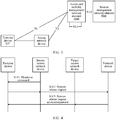
- FIG. 1 is a schematic diagram of a scenario in which a network slice is not supported by the target cell during handover. It is assumed that a cell A supports a service of a slice 1 and a service of a slice 2 and a terminal device also needs the services of the two slices. Assuming that a cell B supports the service of the slice 2 and a service of a slice 3, if a terminal device accesses the cell B, a part of the slice services is not supported. Assuming that the terminal device moves towards a cell C, because the cell C supports merely the service of the slice 3, the slice services that the user terminal originally needs are not supported.
- a terminal device when moving to a cell that does not support a slice service, a terminal device is disconnected from a network, and the terminal device attempts to reselect a cell and reselects to register to a network. For example, the terminal device switches from the cell A to the cell B, so that the service of the slice 2 supported by the cell B is no longer interrupted.
- a core network is used to control cell handover.
- this type of handover it is difficult for this type of handover to satisfy the latency requirements of some services sensitive with latency interruptions and to quickly release sessions corresponding to slices that are not supported.
- This application provides a communication method and an apparatus, to quickly release, during cell handover, a session corresponding to a slice that is not supported and continue a session corresponding to a slice that is supported.
- a communication method including: receiving, by a terminal device, a handover command from a source access network device, where the handover command includes an identifier of a target cell; sending, by the terminal device, a session release request to a network device, where the session release request is used to request to release a session performed by the terminal device on at least one network slice in a source cell, the at least one network slice is not supported by the target cell, and the session release request includes the identifier of the target cell; and receiving, by the terminal device, a session release request acknowledgement from the network device.
- the terminal device when the terminal device switches to the target cell, by requesting the network device to release a session corresponding to a network slice that is not supported by the target cell, the session corresponding to the network slice that is not supported can be quickly released, and a network resource is saved while a session corresponding to a network slice supported by the target cell is enabled to be continued.
- the session release request includes an identifier of the session performed on the at least one network slice, and one network slice corresponds to at least one session.
- the terminal device includes, in the session release request, an identifier of a session on a slice that is requested to be released, so that the network device may release a corresponding session based on the identifier of the session.
- the handover command includes an indication of whether the target cell supports the network slice in the source cell, or the handover command includes a network slice identifier supported by the target cell, or the handover command includes a network slice identifier that is not supported by the target cell.
- the source access network device indicates, to the terminal device by using the handover command, related information of a slice corresponding to a to-be-released session, and the terminal device sends the session release request to the network device based on the related information.
- the method further includes: starting, by the terminal device, a timer; and the sending, by the terminal device, a session release request to a network device includes: sending, by the terminal device when the timer expires, the session release request to the network device.
- the terminal device may send, based on slice availability of the target cell, the session release request to the network device after a period of time.
- a communication method including: sending, by a source access network device, a handover command to a terminal device, where the handover command includes an identifier of a target cell, the handover command further includes an indication of whether the target cell supports a network slice in a source cell, or the handover command includes a network slice identifier supported by the target cell, or the handover command includes a network slice identifier that is not supported by the target cell.
- the session corresponding to the network slice that is not supported can be quickly released, and a network resource is saved while a session corresponding to a network slice supported by the target cell is enabled to be continued.
- Slice-related information about the target cell is notified by the source access network device.
- a communication method including: receiving, by a network device, a session release request from a terminal device, where the session release request is used to request to release a session performed by the terminal device on at least one network slice in a source cell, the at least one network slice is not supported by a target cell, and the session release request includes an identifier of the target cell; and sending, by the network device, a session release request acknowledgement to the terminal device.
- the network device in a handover process of the terminal device, after receiving the request of the terminal device to release a session corresponding to a network slice that is not supported by the target cell, the network device releases the corresponding session, so that the session corresponding to the network slice that is not supported is quickly released, and a network resource is saved while a session corresponding to a network slice supported by the target cell is enabled to be continued.
- the session release request includes an identifier of a session performed on the at least one network slice, and one network slice corresponds to at least one session; and before the sending, by the network device, a session release request acknowledgement to the terminal device, the method further includes: determining, by the network device, to release a session corresponding to the identifier of the session performed on the at least one network slice.
- the terminal device includes, in the session release request, an identifier of a session on a slice that is requested to be released, so that the network device may release a corresponding session based on the identifier of the session.
- the method before the sending, by the network device, a session release request acknowledgement to the terminal device, the method further includes: comparing, by the network device based on the identifier of the target cell, a network slice supported by the source cell with a network slice supported by the target cell, to determine the at least one network slice that is not supported by the target cell; and determining, by the network device, to release the session performed on the at least one network slice.
- the source access network device indicates, to the terminal device by using the handover command, related information of a slice corresponding to a to-be-released session, and the terminal device sends the session release request to the network device based on the related information.
- the network device determines, based on the related information of the slice and session information managed by the network device, the session that needs to be released.
- a communication method including: sending, by a terminal device after a first cell is switched into a secondary cell and a second cell is switched into a primary cell or after the terminal device receives a connection release command from the second cell, a session release request to a network device, where the session release request is used to request to release a session performed by the terminal device on at least one network slice in the first cell, the at least one network slice is not supported by the second cell, the session release request includes an identifier of the second cell, and the terminal device is connected to both the first cell and the second cell; and receiving, by the terminal device, a session release request acknowledgement from the network device.
- the terminal device when the terminal device is connected to a new primary cell, by requesting the network device to release a session corresponding to a network slice that is not supported by the new primary cell, the session corresponding to the network slice that is not supported can be quickly released, and a network resource is saved while a session corresponding to a network slice supported by the new primary cell is enabled to be continued.
- the sending, by a terminal device, a session release request to a network device includes: sending the session release request to an access and mobility management function AMF entity by using an access network device of the first cell; or sending the session release request to the AMF by using an access network device of the second cell, where the access network device of the first cell and the access network device of the second cell are connected to the same AMF; or sending the session release request to the access network device of the first cell by using the access network device of the second cell, where the access network device of the first cell and the access network device of the second cell are connected to different AMFs.
- the session release request may be sent, based on whether the first cell and the second cell are connected to a same AMF, to the network device by the access network device of the first cell or the access network device of the second cell.
- a communication method including: receiving, by an access network device of a first cell, a session release request from a terminal device, where the session release request is used to request to release a session performed on at least one network slice in the first cell, the at least one network slice is not supported by a second cell, the session release request includes an identifier of the second cell, and the terminal device is connected to both the first cell and the second cell; and sending, by the access network device of the first cell, the session release request of the terminal device to an access and mobility management function AMF entity.
- the terminal device sends the session release request to an original primary cell, and an access network device of the original primary cell sends the session release request to a network device.
- the session corresponding to the network slice that is not supported can be quickly released, and a network resource is saved while a session corresponding to a network slice supported by the new primary cell is enabled to be continued.
- a communication method including: receiving, by an access network device of a first cell, a session release request that is from a terminal device and forwarded by an access network device of a second cell, where the session release request is used to request to release a session performed by the terminal device on at least one network slice in the first cell, the at least one network slice is not supported by a second cell, the session release request includes an identifier of the second cell, and the terminal device is connected to both the first cell and the second cell; and sending, by the access network device of the first cell, the session release request to an access and mobility management function AMF entity.
- the access network device of the first cell and the access network device of the second cell are connected to different AMFs.
- the terminal device sends the session release request to a new primary cell. Because the new primary cell and an original primary cell are connected to different AMFs, the new primary cell forwards the session release request to the original primary cell, and an access network device of the original primary cell sends the session release request to a network device. By requesting the network device to release a session corresponding to a network slice that is not supported by the new primary cell, the session corresponding to the network slice that is not supported can be quickly released, and a network resource is saved while a session corresponding to a network slice supported by the new primary cell is enabled to be continued.
- a communication method including: receiving, by a network device, a session release request from a terminal device, where the session release request is used to request to release a session performed by the terminal device on at least one network slice in a first cell, the session release request includes an identifier of a second cell, and the terminal device is connected to both the first cell and the second cell; and sending, by the network device, a session release request acknowledgement to the terminal device.
- the terminal device when the terminal device is connected to a new primary cell, by requesting the network device to release a session corresponding to a network slice that is not supported by the new primary cell, the session corresponding to the network slice that is not supported can be quickly released, and a network resource is saved while a session corresponding to a network slice supported by the new primary cell is enabled to be continued.
- the method before the sending, by the network device, a session release request acknowledgement to the terminal device, the method further includes: comparing, by the network device based on the identifier of the second cell, a network slice supported by the first cell with a network slice supported by the second cell, to determine the at least one network slice that is supported by the first cell and not supported by the second cell; and determining, by the network device, to release the session performed on the at least one network slice. In this implementation, the network device determines the released session.
- the session release request and the session release request acknowledgement are included in a radio resource control RRC message, and the RRC message further includes a session release reason.
- the reason is used to indicate that a PDU session is released because a target cell slice is unavailable.
- the reason may affect a subsequent terminal device behavior. For example, when reselecting a cell, the terminal device avoids the target cell, or the reason is used by an operator for later network maintenance and optimization.
- a communication method including: sending, by a source access network device, a message to a network device, where the message is used to indicate that a terminal device is switching to a target cell in which at least one network slice is not supported, and the message includes an identifier of the target cell; and sending, by the source access network device, a handover command to the terminal device, where the handover command includes the identifier of the target cell.
- the source access network device sends an indication message to the network device to indicate that the terminal device is switching to a target cell in which all/some of network slices are not supported.
- the network device instructs, based on the indication message, the terminal device to release sessions performed on all/some of the network slices, to quickly release a session corresponding to a network slice that is not supported and save a network resource while enabling a session corresponding to a network slice supported by the target cell or a new primary cell to be continued.
- the message further includes network slice information, and the network slice information includes at least one of the following information: a network slice identifier and network slice selection assistance information.
- a communication method including: receiving, by a network device, a message from a source access network device, where the message is used to indicate that a terminal device is switching to a target cell in which at least one network slice is not supported, and the message includes an identifier of the target cell; and sending, by the network device, a session release command to the terminal device, where the session release command is used to instruct the terminal device to release a session performed on the at least one network slice.
- the source access network device sends an indication message to the network device to indicate that the terminal device is switching to a target cell in which all/some of network slices are not supported.
- the network device instructs, based on the indication message, the terminal device to release sessions performed on all/some of the network slices, to quickly release a session corresponding to a network slice that is not supported and save a network resource while enabling a session corresponding to a network slice supported by the target cell or a new primary cell to be continued.
- the method before the sending, by the network device, a session release command to the terminal device, the method further includes: comparing, by the network device based on the identifier of the target cell, a network slice supported by the source cell with a network slice supported by the target cell, to determine the at least one network slice that is supported by the source cell and is not supported by the target cell; and determining, by the network device, to release the session performed on the at least one network slice.
- the message further includes network slice information, and the network slice information includes at least one of the following information: a network slice identifier and network slice selection assistance information.
- the session release command is included in a radio resource control RRC message, and the RRC message further includes a session release reason.
- a communication method including: receiving, by a terminal device, a handover command from a source access network device, where the handover command includes an identifier of a target cell; and receiving, by the terminal device, a session release command from a network device, where the session release command is used to instruct the terminal device to release a session performed on at least one network slice, and the at least one network slice is a network slice that is supported by a source cell and not supported by the target cell.
- the source access network device sends an indication message to the network device to indicate that the terminal device is switching to a target cell in which all/some of network slices are not supported.
- the network device instructs, based on the indication message, the terminal device to release sessions performed on all/some of the network slices, to quickly release a session corresponding to a network slice that is not supported and save a network resource while enabling a session corresponding to a network slice supported by the target cell or a new primary cell to be continued.
- a communication method including: sending, by a terminal device, a radio resource control RRC connection release request to an access network device, where the RRC connection release request includes a session release request, the session release request is used to request a network device to release a session performed on at least one network slice in a source cell, the at least one network slice is not supported by a target cell, and the session release request includes an identifier of the target cell; and receiving, by the terminal device, an RRC connection release command from the access network device, where the RRC connection release command includes a session release request acknowledgement from the network device.
- the RRC connection release request and/or the RRC connection release command include/includes a session release reason.
- a release reason is added to an RRC message of interaction between the terminal device and the access network device during handover, and the reason is used to indicate that a PDU session is released because a target cell slice is unavailable.
- the reason may affect a subsequent terminal device behavior. For example, when reselecting a cell, the terminal device avoids the target cell, or the reason is used by an operator for later network maintenance and optimization.
- the method further includes: receiving, by the terminal device, an RRC connection reconfiguration command from the access network device, where the RRC connection reconfiguration command includes the session release reason.
- a communication method including: receiving, by an access network device, a radio resource control RRC connection release request from a terminal device, where the RRC connection release request includes a session release request, the session release request is used to request a network device to release a session performed on at least one network slice in a source cell, the at least one network slice is not supported by a target cell, and the session release request includes an identifier of the target cell; and sending, by the access network device, an RRC connection release command to the terminal device, where the RRC connection release command includes a session release request acknowledgement from the network device, and the RRC connection release request and/or the RRC connection release command include/includes a session release reason.
- the method further includes: sending, by the access network device, an RRC connection reconfiguration command to the terminal device, where the RRC connection reconfiguration command includes the session release reason.
- the session release request further includes an identifier of the session performed on the at least one network slice, and/or an identifier of the at least one network slice.
- this application further provides a terminal device.
- the terminal device may implement the foregoing communication method.
- the terminal device may be a chip (such as a baseband chip or a communications chip) or a sending device (such as a terminal device).
- the foregoing method may be implemented by using software, hardware, or hardware executing corresponding software.
- a structure of the terminal device includes a processor and a memory.
- the processor is configured to support the apparatus in performing a corresponding function in the foregoing communication method.
- the memory is configured to couple to the processor, and the memory stores a necessary program (instruction) and/or data of the apparatus.
- the terminal device may further include a communications interface configured to support the apparatus in communicating with another network element.
- the terminal device may include: a receiving unit, configured to receive a handover command from a source access network device, where the handover command includes an identifier of a target cell; and a sending unit, configured to send a session release request to a network device, where the session release request is used to request to release a session performed by the terminal device on at least one network slice in a source cell, the at least one network slice is not supported by the target cell, and the session release request includes the identifier of the target cell, where the receiving unit is further configured to receive a session release request acknowledgement from the network device.
- the terminal device further includes a timing unit, configured to start a timer, where the sending unit is specifically configured to send, when the timer expires, the session release request to the network device.
- this application further provides an access network device.
- the access network device may implement the foregoing communication method.
- the access network device may be a chip (such as a baseband chip or a communications chip) or a sending device (such as an access network device or a baseband processing board).
- the foregoing method may be implemented by using software, hardware, or hardware executing corresponding software.
- a structure of the access network device includes a processor and a memory.
- the processor is configured to support the apparatus in performing a corresponding function in the foregoing communication method.
- the memory is configured to couple to the processor, and the memory stores a necessary program (instruction) and/or data of the apparatus.
- the access network device may further include a communications interface configured to support the apparatus in communicating with another network element.
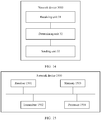
- the access network device may include: a sending unit, configured to send a handover command to a terminal device, where the handover command includes an identifier of a target cell, the handover command further includes an indication of whether the target cell supports a network slice in a source cell, or the handover command includes a network slice identifier supported by the target cell, or the handover command includes a network slice identifier that is not supported by the target cell.
- a sending unit configured to send a handover command to a terminal device, where the handover command includes an identifier of a target cell, the handover command further includes an indication of whether the target cell supports a network slice in a source cell, or the handover command includes a network slice identifier supported by the target cell, or the handover command includes a network slice identifier that is not supported by the target cell.
- a network device has a function of implementing behaviors of the network device in the foregoing methods.
- the function may be implemented by hardware, or may be implemented by executing corresponding software by hardware.
- the hardware or the software includes one or more modules corresponding to the foregoing functions.
- the network device may include: a receiving unit, configured to receive a session release request from a terminal device, where the session release request is used to request to release a session performed by the terminal device on at least one network slice in a source cell, the at least one network slice is not supported by a target cell, and the session release request includes an identifier of the target cell; and a sending unit, configured to send the session release request acknowledgement to the terminal device.
- a receiving unit configured to receive a session release request from a terminal device, where the session release request is used to request to release a session performed by the terminal device on at least one network slice in a source cell, the at least one network slice is not supported by a target cell, and the session release request includes an identifier of the target cell
- a sending unit configured to send the session release request acknowledgement to the terminal device.
- the session release request includes an identifier of the session performed on the at least one network slice; and one network slice corresponds to at least one session; and the network device further includes: a first determining unit, configured to determine to release a session corresponding to the identifier of the session performed on the at least one network slice.
- the network device further includes a second determining unit, configured to, compare, based on the identifier of the target cell, a network slice supported by the source cell with a network slice supported by the target cell, to determine the at least one network slice that is not supported by the target cell, and determine to release the session performed on the at least one network slice.
- a second determining unit configured to, compare, based on the identifier of the target cell, a network slice supported by the source cell with a network slice supported by the target cell, to determine the at least one network slice that is not supported by the target cell, and determine to release the session performed on the at least one network slice.
- the network device includes: a receiver, a transmitter, a memory and a processor.
- the memory stores a set of program code
- the processor is configured to invoke the program code stored in the memory, to perform the following operations: receiving, by the receiver, a session release request from a terminal device, where the session release request is used to request to release a session performed by the terminal device on at least one network slice in a source cell, the at least one network slice is not supported by a target cell, and the session release request includes an identifier of the target cell; and sending, by the transmitter, the session release request acknowledgement to the terminal device.
- this application further provides a terminal device.
- the terminal device may implement the foregoing communication method.
- the terminal device may be a chip (such as a baseband chip or a communications chip) or a sending device (such as a terminal device).
- the foregoing method may be implemented by using software, hardware, or hardware executing corresponding software.
- a structure of the terminal device includes a processor and a memory.
- the processor is configured to support the apparatus in performing a corresponding function in the foregoing communication method.
- the memory is configured to couple to the processor, and the memory stores a necessary program (instruction) and/or data of the apparatus.
- the terminal device may further include a communications interface configured to support the apparatus in communicating with another network element.
- the terminal device may include: a sending unit, configured to send, after a first cell is switched into a secondary cell and a second cell is switched into a primary cell or after the terminal device receives a connection release command from the second cell, a session release request to a network device, where the session release request is used to request to release a session performed by the terminal device on at least one network slice in the first cell, the at least one network slice is not supported by the second cell, the session release request includes an identifier of the second cell, and the terminal device is connected to both the first cell and the second cell; and a receiving unit, configured to receive a session release request acknowledgement from the network device.
- a sending unit configured to send, after a first cell is switched into a secondary cell and a second cell is switched into a primary cell or after the terminal device receives a connection release command from the second cell, a session release request to a network device, where the session release request is used to request to release a session performed by the terminal device on at least one network slice in the first cell,
- the sending unit is specifically configured to: send the session release request to an access and mobility management function AMF entity by using an access network device of the first cell; or send the session release request to the AMF by using an access network device of the second cell, where the access network device of the first cell and the access network device of the second cell are connected to the same AMF; or send the session release request to the access network device of the first cell by using the access network device of the second cell, where the access network device of the first cell and the access network device of the second cell are connected to different AMFs.
- this application further provides an access network device.
- the access network device may implement the foregoing communication method.
- the access network device may be a chip (such as a baseband chip or a communications chip) or a sending device (such as an access network device or a baseband processing board).
- the foregoing method may be implemented by using software, hardware, or hardware executing corresponding software.
- a structure of the access network device includes a processor and a memory.
- the processor is configured to support the apparatus in performing a corresponding function in the foregoing communication method.
- the memory is configured to couple to the processor, and the memory stores a necessary program (instruction) and/or data of the apparatus.
- the access network device may further include a communications interface configured to support the apparatus in communicating with another network element.
- the access network device may include: a receiving unit, configured to receive a session release request from a terminal device, where the session release request is used to request to release a session performed on at least one network slice in a first cell, the at least one network slice is not supported by a second cell, the session release request includes an identifier of the second cell, and the terminal device is connected to both the first cell and the second cell; and a sending unit, configured to send the session release request of the terminal device to an access and mobility management function AMF entity.
- this application further provides an access network device.
- the access network device may implement the foregoing communication method.
- the access network device may be a chip (such as a baseband chip or a communications chip) or a sending device (such as an access network device or a baseband processing board).
- the foregoing method may be implemented by using software, hardware, or hardware executing corresponding software.
- a structure of the access network device includes a processor and a memory.
- the processor is configured to support the apparatus in performing a corresponding function in the foregoing communication method.
- the memory is configured to couple to the processor, and the memory stores a necessary program (instruction) and/or data of the apparatus.
- the access network device may further include a communications interface configured to support the apparatus in communicating with another network element.
- the access network device may include: a receiving unit, configured to receive a session release request that is from a terminal device and forwarded by an access network device of a second cell, where the session release request is used to request to release a session performed by the terminal device on at least one network slice in the first cell, the at least one network slice is not supported by the second cell, the session release request includes an identifier of the second cell, and the terminal device is connected to both the first cell and the second cell; and a sending unit, configured to send the session release request to an access and mobility management function AMF entity, where an access network device of the first cell and the access network device of the second cell are connected to different AMFs.
- a receiving unit configured to receive a session release request that is from a terminal device and forwarded by an access network device of a second cell, where the session release request is used to request to release a session performed by the terminal device on at least one network slice in the first cell, the at least one network slice is not supported by the second cell, the session release request includes an identifier of
- a network device has a function of implementing behaviors of the network device in the foregoing method.
- the function may be implemented by hardware, or may be implemented by executing corresponding software by hardware.
- the hardware or the software includes one or more modules corresponding to the foregoing functions.
- the network device includes: a receiving unit, configured to receive a session release request from a terminal device, where the session release request is used to request to release a session performed by the terminal device on at least one network slice in a first cell, the session release request includes an identifier of a second cell, and the terminal device is connected to both the first cell and the second cell; and a sending unit, configured to send a session release request acknowledgement to the terminal device.
- the network device further includes a determining unit, where the determining unit is configured to: compare, based on the identifier of the second cell, a network slice supported by the first cell with a network slice supported by the second cell, to determine the at least one network slice that is supported by the first cell and is not supported by the second cell, and determine to release the session performed on the at least one network slice.
- the network device may include: a receiver, a transmitter, a memory and a processor.
- the memory stores a set of program code
- the processor is configured to invoke the program code stored in the memory, to perform the following operations: receiving, by the receiver, a session release request from a terminal device, where the session release request is used to request to release a session performed by the terminal device on at least one network slice in the first cell, the session release request includes an identifier of the second cell, and the terminal device is connected to both the first cell and the second cell; and sending, by the transmitter, a session release request acknowledgement to the terminal device.
- this application further provides an access network device.
- the access network device may implement the foregoing communication method.
- the access network device may be a chip (such as a baseband chip or a communications chip) or a sending device (such as an access network device or a baseband processing board).
- the foregoing method may be implemented by using software, hardware, or hardware executing corresponding software.
- a structure of the access network device includes a processor and a memory.
- the processor is configured to support the apparatus in performing a corresponding function in the foregoing communication method.
- the memory is configured to couple to the processor, and the memory stores a necessary program (instruction) and/or data of the apparatus.
- the access network device may further include a communications interface configured to support the apparatus in communicating with another network element.
- the access network device may include a sending unit, configured to send a message to a network device, where the message is used to indicate that a terminal device is switching to a target cell in which at least one network slice is not supported, and the message includes an identifier of the target cell.
- the sending unit is further configured to send a handover command to the terminal device, where the handover command includes the identifier of the target cell.
- a network device has a function of implementing behaviors of the network device in the foregoing method.
- the function may be implemented by hardware, or may be implemented by executing corresponding software by hardware.
- the hardware or the software includes one or more modules corresponding to the foregoing functions.
- the network device includes: a receiving unit, configured to receive a message from a source access network device, where the message is used to indicate that a terminal device is switching to a target cell in which at least one network slice is not supported, and the message includes an identifier of the target cell; and a sending unit, configured to send a session release command to the terminal device, where the session release command is used to instruct the terminal device to release a session performed on the at least one network slice.
- the network device further includes: a determining unit, where the determining unit is configured to: compare, based on the identifier of the target cell, a network slice supported by a source cell with a network slice supported by the target cell, to determine the at least one network slice that is supported by the source cell and is not supported by the target cell, and determine to release the session performed on the at least one network slice.
- the network device includes: a receiver, a transmitter, a memory and a processor.
- the memory is configured to store a set of program code
- the processor is configured to invoke the program code stored in the memory, to perform the following operations: receiving, by the receiver, a message from a source access network device, where the message is used to indicate that a terminal device is switching to a target cell in which at least one network slice is not supported, and the message includes an identifier of the target cell; and sending, by the transmitter, a session release command to the terminal device, where the session release command is used to instruct the terminal device to release a session performed on the at least one network slice.
- this application further provides a terminal device.
- the terminal device may implement the foregoing communication method.
- the terminal device may be a chip (such as a baseband chip or a communications chip) or a sending device (such as a terminal device).
- the foregoing method may be implemented by using software, hardware, or hardware executing corresponding software.
- a structure of the terminal device includes a processor and a memory.
- the processor is configured to support the apparatus in performing a corresponding function in the foregoing communication method.
- the memory is configured to couple to the processor, and the memory stores a necessary program (instruction) and/or data of the apparatus.
- the terminal device may further include a communications interface configured to support the apparatus in communicating with another network element.
- the terminal device may include a receiving unit, configured to receive a handover command from a source access network device, where the handover command includes an identifier of the target cell.
- the receiving unit is further configured to receive a session release command from a network device, where the session release command is used to instruct the terminal device to release a session performed on at least one network slice, and the at least one network slice is a network slice that is supported by a source cell and not supported by the target cell.
- this application further provides a terminal device.
- the terminal device may implement the foregoing communication method.
- the terminal device may be a chip (such as a baseband chip or a communications chip) or a sending device (such as a terminal device).
- the foregoing method may be implemented by using software, hardware, or hardware executing corresponding software.
- a structure of the terminal device includes a processor and a memory.
- the processor is configured to support the apparatus in performing a corresponding function in the foregoing communication method.
- the memory is configured to couple to the processor, and the memory stores a necessary program (instruction) and/or data of the apparatus.
- the terminal device may further include a communications interface configured to support the apparatus in communicating with another network element.
- the terminal device may include: a sending unit, configured to send a radio resource control RRC connection release request to an access network device, where the RRC connection release request includes a session release request, the session release request is used to request a network device to release a session performed on at least one network slice in a source cell, the at least one network slice is not supported by a target cell, and the session release request includes an identifier of the target cell; and a receiving unit, configured to receive an RRC connection release command from the access network device, where the RRC connection release command includes a session release request acknowledgement from the network device, where the RRC connection release request and/or the RRC connection release command include/includes a session release reason.
- a sending unit configured to send a radio resource control RRC connection release request to an access network device, where the RRC connection release request includes a session release request, the session release request is used to request a network device to release a session performed on at least one network slice in a source cell, the at least one network slice is not supported by a target
- the receiving unit is further configured to receive an RRC connection reconfiguration command from the access network device, and the RRC connection reconfiguration command includes the session release reason.
- this application further provides an access network device.
- the access network device may implement the foregoing communication method.
- the access network device may be a chip (such as a baseband chip or a communications chip) or a sending device (such as an access network device or a baseband processing board).
- the foregoing method may be implemented by using software, hardware, or hardware executing corresponding software.
- a structure of the access network device includes a processor and a memory.
- the processor is configured to support the apparatus in performing a corresponding function in the foregoing communication method.
- the memory is configured to couple to the processor, and the memory stores a necessary program (instruction) and/or data of the apparatus.
- the access network device may further include a communications interface configured to support the apparatus in communicating with another network element.
- the access network device may include: a receiving unit, configured to receive a radio resource control RRC connection release request from a terminal device, where the RRC connection release request includes a session release request, the session release request is used to request a network device to release a session performed on at least one network slice in a source cell, the at least one network slice is not supported by a target cell, and the session release request includes an identifier of the target cell; and a sending unit, configured to send an RRC connection release command to the terminal device, where the RRC connection release command includes a session release request acknowledgement from the network device, and the RRC connection release request and/or the RRC connection release command include/includes a session release reason.
- a receiving unit configured to receive a radio resource control RRC connection release request from a terminal device, where the RRC connection release request includes a session release request, the session release request is used to request a network device to release a session performed on at least one network slice in a source cell, the at least one network slice is not supported by a target
- the sending unit is further configured to send an RRC connection reconfiguration command to the terminal device, where the RRC connection reconfiguration command includes the session release reason.
- the computer readable storage medium stores an instruction, and when the instruction is run on a computer, the computer is enabled to perform the methods according to the foregoing aspects.
- Another aspect of this application provides a computer program product including an instruction, and when the computer program product is run on a computer, the computer is enabled to perform the methods according to the foregoing aspects.
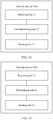
- FIG. 2 is a schematic architectural diagram of a communications system according to an embodiment of the present invention.
- the communications system in this embodiment of the present invention mainly includes: a terminal device 100, a first access network device 200, a second access network device 300 and a network device 400.
- the communications system of this embodiment of the present invention may include more terminal devices and access network devices.
- the terminal device 100 moves from a source cell covered by the first access network device 200 to a target cell covered by the second access network device 300.
- the terminal device may access a radio access network in an access mode of the third generation partnership project (the third generation partnership project, 3GPP), or in an access mode of non-3GPP (non-3GPP, N3G).
- the third generation partnership project the third generation partnership project
- non-3GPP non-3GPP
- the access network device in FIG. 2 is referred to as a radio access network (radio access network, RAN) element; and in the access mode of N3G, the access network device is referred to as an access network (access network, AN) network element or a non-3GPP interworking function (non-3gpp interworking function, N3IWF) network element.
- the access network device includes: a NodeB (NodeB), a radio network controller (radio network controller, RNC) and the like.
- NodeB NodeB
- RNC radio network controller
- FIG. 3 is a schematic architectural diagram of an example of a next generation communications system according to an embodiment of the present invention.
- the network device in FIG. 2 is a core network device (certainly, with the evolution of a network architecture, an access network and a core network may not be distinguished from each other).
- a network device of this embodiment mainly includes the access and mobility management function (access and mobility management function, AMF) entity and the session management function (session management function, SMF) entity in FIG. 3 .
- a terminal device accesses a network through an access network device, the AMF is mainly responsible of access management of the terminal device, and the session management function entity is responsible of uniform session management.
- another function entity may also be included, and some function entities in this application are merely focused on for description.
- the entities are connected to each other by using Nx interfaces (for example, the N1 and the N2 in the diagram).
- access and mobility management function entity and session management function entity are merely names, and the names do not constitute a limitation to the entities.
- the access and mobility management function entity may be replaced with "access and mobility management function-" or another name.
- the access and mobility management function entity may correspond to an entity including another function in addition to access and mobility management function.
- the session management function entity may be replaced with "session management function” or another name.
- the session management function entity may further correspond to an entity including another function in addition to a session management function. Unified description is made herein, and it is not described again hereinafter. A person of ordinary skill in the art may learn that related functions or names of the AMF and the SMF may change with the evolution of a network architecture and the emergence of a new service scenario.
- Any function node or network element in the foregoing system may be implemented by a physical device during specific implementation, or may be implemented by a plurality of physical devices, and this is not specifically limited in the embodiments of the present invention. That is, it may be understood that any function node or network element in the system may be a logical function module in a physical device, or may be a logical function module including a plurality of physical devices. This is not specifically limited in the embodiments of the present invention.
- the terminal device in this application is a device having a wireless receiving and sending function.
- the device may be deployed on the land, including an indoor or outdoor device, a handheld device, a wearable device, or an in-vehicle device; or may be deployed on the water (for example, on a steamer); or may be deployed in the air (for example, on an air plane, a balloon, or a satellite).
- the terminal device may be a mobile phone (mobile phone), a tablet computer (PAD), a computer having a wireless receiving and sending function, a virtual reality (virtual reality, VR) terminal device, an augmented reality (augmented reality, AR) terminal device, a wireless terminal in industrial control (industrial control), a wireless terminal in self driving (self driving), a wireless terminal in telemedicine (remote medical), a wireless terminal in a smart grid (smart grid), a wireless terminal in transportation safety (transportation safety), a wireless terminal in a smart city (smart city), a wireless terminal in a smart home (smart home), or the like.
- An application scenario is not limited in this embodiment of this application.
- the terminal device may also be referred to as user equipment (user equipment, UE), an access terminal device, a UE unit, a UE station, a mobile station, a mobile console, a remote station, a remote terminal device, a mobile device, a UE terminal device, a terminal device, a wireless communications device, a UE agent, a UE apparatus, or the like sometimes.
- user equipment user equipment
- UE user equipment
- an access terminal device a UE unit, a UE station, a mobile station, a mobile console, a remote station, a remote terminal device, a mobile device, a UE terminal device, a terminal device, a wireless communications device, a UE agent, a UE apparatus, or the like sometimes.
- system and “network” may be used interchangeably in the embodiments of the present invention.
- a plurality of means two or more than two. In view of this, the term “a plurality of” may also be understood as “at least two” in the embodiments of the present invention.
- the term “and/or” describes an association relationship between associated objects and represents that three relationships may exist. For example, A and/or B may represent the following three cases: Only A exists, both A and B exist, and only B exists. In addition, the character “/" generally indicates an "or" relationship between the associated objects.
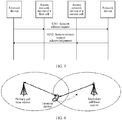
- FIG. 4 is a schematic interactive flowchart of a communication method according to an embodiment of the present invention. The method may include the following steps:
- Handover between cells is invisible to the network device, and a base station does not know which sessions of UE are being performed. Therefore, a source base station sends the handover command to the terminal device, and the terminal device sends the session release request to the network device.
- the terminal device may learn, before handover, the slices supported by the target cell, and may include, in the session release request, an identifier of the session performed on the at least one network slice.
- the network device may directly send, based on the identifier of the session, the session release request acknowledgement. That is, before S103, the method may further include a step: determining, by the network device, to release a session corresponding to the identifier of the session performed on the at least one network slice.
- the terminal device may not learn, before handover, the slices supported by the target cell, then the source base station needs to add slice-related information of the target cell to the handover command.
- the slice-related information may include an indication of whether the target cell supports the network slice in the source cell, or a network slice identifier supported by the target cell, or a network slice identifier that is not supported by the target cell. That is, before S103, the method may further include a step: comparing, by the network device based on the identifier of the target cell, a network slice supported by the source cell and a network slice supported by the target cell, to determine the at least one network slice that is not supported by the target cell; and determining, by the network device, to release the session performed on the at least one network slice.
- the following are specific descriptions based on different scenarios.
- the terminal device learns, before handover, the slices supported by the target cell. For example, the terminal device pre-stores slice information of adjacent cells.
- the terminal device sends a session release request (session release request) to the network device.
- the terminal device sends a session release request to the network device after receiving the handover command sent by the source cell base station, then performs a subsequent step (initiates random access in the target cell) of handover, and in another manner, the terminal device first switches to the target cell (completes a random access process) after receiving the handover command sent by the source cell base station, then sends the session release request to the network device.
- the session release request may be directly sent to the network device by the target cell (a new service cell), or may be forwarded to an original service cell by the target cell (a current service cell) and then sent to the network device.
- the session release request is a non-access stratum (non-access stratum, NAS) message, and is transmitted to the base station by using an RRC message. That is, the RRC message includes the session release request, and the base station obtains the session release request from the RRC message and forwards the session release request to a core network.
- NAS non-access stratum
- the session release request includes an identifier of the target cell.
- the session release request may not include a specific session ID (or session list).
- the network device determines which sessions to release.
- One network slice may correspond to one or more PDU sessions, and each session has an ID for identification.
- an SMF compares a slice corresponding to a session currently performed by the terminal device with a slice supported by the target cell, to determine the slices that are not supported by the target cell, to release sessions corresponding to these slices.
- IDs of the specific sessions to be released are sent to the terminal device with the session release request acknowledgement.
- the session release request may further include specific session IDs.
- the SMF releases sessions corresponding to these session IDs. In this case, released-session IDs may be or may not be added to the session release request acknowledgement.
- the session release request acknowledgement (session release request Ack) that the network device returns to the terminal device is sent by a target cell base station to the terminal device through the RRC message after the terminal device accesses the target cell base station. That is, the RRC message sent to the terminal device by the target cell base station includes the session release request acknowledgement.
- the RRC message carrying the session release request may be an RRC connection release request (RRC connection release request).
- the RRC message may further include a session release reason, and the reason is used to indicate that a PDU session is released because a target cell slice is unavailable.
- the reason may be a failure error code, or an internal reason such as UEM_UECNT_REL_TGT_SLICE_UNAVAILABLE, or may be a value in a cause value variable.
- the reason may affect a subsequent terminal device behavior. For example, when reselecting a cell, the terminal device avoids the target cell, or the reason is used by an operator for later network maintenance and optimization.
- RRC connection release RRC connection release
- RRC connection reconfiguration RRC connection reconfiguration
- the terminal device by enabling the terminal device to request, after receiving the handover command, the network device to release a session, the session corresponding to the slice that is not supported by the target cell is quickly released without affecting a session on another slice supported by the target cell.
- the terminal device does not learn, before handover, the slices supported by the target cell. Because the base station learns of a slice supported by an adjacent cell, the handover command sent by the source cell base station to the terminal device includes the slice-related information.
- the slice-related information may be: an indicator (indicator), indicating whether a target cell handover supports all current slices; or a slice list (slice list) that is included in the handover command and supported by the target cell; or a slice list that is included in the handover command and not supported by the target cell.
- the terminal device sends, after receiving a handover command, a session release request to the network device based on the handover command, then performs handover.
- the network device determines which slices are not supported by adjacent cells, and determines which PDU sessions to release.
- a session release request is sent to the network device, and which PDU sessions (for example, one list includes PDU session IDs) need to be released is indicated, then handover is performed; and in another manner, the terminal device first switches to the target cell (completes a random access process) after receiving the handover command sent by the source cell base station, then sends the session release request to the network device.
- the session release request may be directly sent to the network device by the target cell (a new service cell), or may be forwarded to an original service cell by the target cell (a current service cell) and then sent to the network device.
- the session release request acknowledgement that the network device returns to the terminal device is sent by a target cell base station to the terminal device through the RRC message after the terminal device accesses the target cell base station. That is, the RRC message includes the session release request acknowledgement.
- a session release reason is added to an RRC interaction message, such as an RRC connection release request, an RRC connection release command and an RRC connection reconfiguration command, between the terminal device and the base station.
- the session corresponding to the slice that is not supported by the target cell is quickly released without affecting a session on another slice supported by the target cell.
- the session release request further includes an identifier of the session performed on the at least one network slice and/or an identifier of the at least one network slice.
- the terminal device may further send, based on slice availability of the target cell, the session release request after a period of time. That is, after S101, the method further includes: starting, by the terminal device, a timer. Step S102 specifically includes: sending, by the terminal device when the timer expires, the session release request to the network device. Detailed descriptions are as follows:
- the terminal device finds, after switching to a new cell (or when the handover command is delivered), that some slice services are not supported by the new cell.
- a timer timer
- the terminal device sends one or more PDU session release requests corresponding to these slices to the network device.
- the network device After receiving the requests, the network device sends PDU session release acknowledgements to the terminal device, and the terminal device releases the corresponding PDU sessions.
- a process of sending the session release requests by the terminal device and a process of sending the session release request acknowledgements by the network device are the same as those in the foregoing implementations, and details are not described herein again.
- the terminal device starts, based on the target cell slice availability, the timer after handover, and when the timer expires, the terminal device can request the network device to release a PDU session, so that the session corresponding to the slice that is not supported by the target cell is quickly released without affecting a session on another slice supported by the target cell.
- the terminal device when the terminal device switches to the target cell, by requesting the network device to release a session corresponding to a network slice that is not supported by the target cell, the session corresponding to the network slice that is not supported can be quickly released, and a network resource is saved while a session corresponding to a network slice supported by the target cell is enabled to be continued.
- FIG. 5 is a schematic interactive flowchart of another communication method according to an embodiment of the present invention. The method may include the following steps:
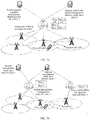
- FIG. 6 is a schematic diagram of a double connection scenario of a terminal device.
- Double connection is a method in which the terminal device simultaneously maintains, in a process of moving from one cell to another cell, two links between the terminal device and two base station cells to implement zero-millisecond interruption of user data.
- MgNB is a primary cell base station (that is, a first cell)
- SgNB is a secondary cell base station (that is, a second cell).
- role change As the terminal device moves towards a secondary cell, role change (role change) is applied to the base stations of two cells, to be specific, the original primary cell base station transforms into a secondary cell base station, and the original secondary cell base station transforms into a new primary cell base station to work. As the terminal device moves farther, a connection of the secondary cell base station (the original primary cell base station) is released, to complete the handover process.
- the terminal device Regardless of whether the terminal device learns of, in advance, the slices supported by the target cell, after establishing double connection, the terminal device certainly obtains the slice-related information of the secondary cell (base stations learn of the slices supported by each other, and when adding the target cell as the secondary cell (when establishing a connection), the terminal device can learn of the slices supported by the cell; or when the target cell is added as the secondary cell, the primary cell base station notifies, in the RRC message, the terminal device of the slices supported by the secondary cell). Because a link between the terminal device and the original primary cell base station is maintained in a handover process, a PDU session corresponding to an original slice service should not be released temporarily.
- the terminal device After roles of base stations are changed, or after the new primary cell base station (the original secondary cell base station) sends a secondary cell base station (the original primary cell base station) connection release command to the terminal device, the terminal device sends a NAS message to the network device before a connection between the terminal device and the original primary cell is released, and initiates a PDU session release request related to a slice that is not supported by the new primary cell.
- the session release request includes at least one of the following identifiers: an identifier of the new primary cell, an identifier of the session performed on the at least one network slice and an identifier of the at least one network slice.
- FIG. 7a is a schematic diagram of a network connection. If the primary cell base station and the secondary cell base station are connected to a same AMF, the session release request may be sent to the AMF by the original primary cell base station (the current secondary cell base station) or forwarded to the AMF by the new primary cell base station (the original secondary cell base station).
- FIG. 7b is a schematic diagram of another network connection. If the primary cell base station and the secondary cell base station are connected to different AMFs, the session release request may be sent to the AMF by the original primary cell base station (the current secondary cell base station), or forwarded to the original primary cell base station (the current secondary cell base station) by the new primary cell base station (the original secondary cell base station) and then sent to the AMF.
- S201 specifically includes: sending, by the terminal device, the session release request to an AMF through an access network device of the first cell.
- the access network device of the first cell receives the session release request from the terminal device, and sends the session release request of the terminal device to the AMF.
- S201 specifically includes: sending, by the terminal device, the session release request to an AMF through an access network device of the second cell, where the access network device of the first cell and the access network device of the second cell are connected to the same AMF; and receiving, by the access network device of the second cell, the session release request from the terminal device, and sending the session release request of the terminal device to the AMF.
- S201 specifically includes: sending, by the terminal device, the session release request to an access network device of the first cell through an access network device of the second cell, where the access network device of the first cell and the access network device of the second cell are connected to different AMFs.
- the access network device of the first cell receives the session release request that is from the terminal device and that is forwarded by the access network device of the second cell, and sends the session release request to the AMF
- the network device After receiving the request, the network device makes a judgment and sends a PDU session release acknowledgement to the terminal device. Specifically, before S202, the method further includes the following steps: comparing, by the network device based on the identifier of the second cell, a network slice supported by the first cell with a network slice supported by the second cell, to determine the at least one network slice that is supported by the first cell and is not supported by the second cell; and determining, by the network device, to release the session performed on the at least one network slice.
- the session release request acknowledgement that the network device returns to the terminal device is sent by a target cell base station to the terminal device through the RRC message after the terminal device accesses the target cell base station. That is, the RRC message sent to the terminal device by the target cell base station includes the session release request acknowledgement.
- the RRC message carrying the session release request may be an RRC connection release request.
- the RRC message may further include a session release reason, and the reason is used to indicate that a PDU session is released because a target cell slice is unavailable.
- the reason may be a failure error code, or an internal reason such as UEM_UECNT_REL_TGT_SLICE_UNAVAILABLE, or may be a value in a cause value variable.
- the reason may affect a subsequent terminal device behavior. For example, when reselecting a cell, the terminal device avoids the target cell, or the reason is used by an operator for later network maintenance and optimization.
- another RRC message of interaction between the base station and the terminal device for example, an RRC connection release command and an RRC connection reconfiguration command that are sent to the terminal device by a target base station may further carry the session release reason.
- the terminal device when the terminal device is connected to the new primary cell, by requesting the network device to release a session corresponding to a network slice that is not supported by the new primary cell and to keep a session corresponding to a network slice that is supported by the new primary cell, the session corresponding to the network slice that is not supported can be quickly released, and a network resource is saved while the session corresponding to the network slice supported by the new primary cell is enabled to be continued.
- FIG. 8 is a schematic interactive flowchart of still another communication method according to an embodiment of the present invention. The method may include the following steps:
- the source cell base station learns of the slice services supported by adjacent cells and determines a time when the terminal device performs handover, the source cell base station sends, to the network device after sending the handover command to the terminal device (or after a handover trigger condition is satisfied), a message indication: the terminal device is switching to a cell that does not support a (some) slice(s).
- the message may include a target cell ID and network slice selection assistance information (network slice selection assistance information, NSSAI).
- the network device determines which PDU sessions to release, that is, after S301 and before S302, the method further includes the following steps: comparing, by the network device based on the identifier of the target cell, a network slice supported by the source cell with a network slice supported by the target cell, to determine the at least one network slice that is supported by the source cell and is not supported by the target cell, and determining, by the network device, to release the session performed on the at least one network slice. Subsequently, based on a target cell ID carried in the message sent by the source cell base station, a PDU session release command is sent to the terminal device through the target cell.
- the session release command is a NAS message carried by an RRC message.
- PDU session release Ack PDU session release acknowledgement
- the session release request further includes an identifier of the session performed on the at least one network slice and/or an identifier of the at least one network slice.
- the RRC message carrying the session release request may be an RRC connection release request.
- the RRC message may further include a session release reason, and the reason is used to indicate that a PDU session is released because a target cell slice is unavailable.
- the reason may be a failure error code, or an internal reason such as UEM_UECNT_REL_TGT_SLICE_UNAVAILABLE, or may be a value in a cause value variable.
- the reason may affect a subsequent terminal device behavior. For example, when reselecting a cell, the terminal device avoids the target cell, or the reason is used by an operator for later network maintenance and optimization.
- another RRC message of interaction between the base station and the terminal device for example, an RRC connection release command and an RRC connection reconfiguration command that are sent to the terminal device by a target base station may further carry the session release reason.
- the source base station indicates, to the network device, that the terminal device will perform handover soon, and the network device makes a judgment and initiates a release process of the related PDU session, so that the session corresponding to a network slice that is not supported by the target cell can be quickly released, and a network resource can be saved while a session corresponding to a network slice supported by the target cell is enabled to be continued.
- the source cell base station directly initiates a session release request to the network device. Because the source cell base station learns of the slice services supported by adj acent cells and determines a time when the terminal device performs handover, the source cell base station sends, after sending the handover command to the terminal device, the PDU session release request to the network device, and a reason that a user is switching to a cell (including a target cell ID and slice-related information) that does not support a (some) slice(s) (note: the PDU session release request initiated by the source cell base station cannot include a specific PDU ID).
- the network device determines, after receiving the PDU session release request, which PDU sessions to release. In addition, based on a target cell ID carried in an indication sent by the source cell base station, a PDU session release command is sent to a user through the target cell.
- the terminal device releases the related PDU session after receiving the PDU session release command, and sends a PDU session release acknowledgement (PDU session release Ack) to the network device by using an RRC message sent to a target cell base station.
- PDU session release Ack PDU session release acknowledgement
- the source base station determines when to perform handover, by enabling the source cell base station to initiate the PDU session release request to the network device, a request for a quick PDU session release is implemented.
- the terminal device finds, after switching to a new cell, that some slice services are not supported by the new cell, and in this case, a timer is started inside the terminal device.
- a timer is started inside the terminal device.
- a user starts a timer when the handover command is delivered.
- a PDU session, of the terminal device corresponding to a slice that is not supported by the new cell is automatically released.
- the automatic release of the PDU session when the timer expires is implemented by adding a timer and starting the timer when a new cell slice is unavailable after handover to a new cell.
- FIG. 9 is a schematic interactive flowchart of still another communication method according to an embodiment of the present invention.
- the method may include the following steps:
- RRC messages include the first RRC connection reconfiguration command, the RRC connection release request, the RRC connection release command and/or the second RRC connection reconfiguration command.
- these RRC messages include a session release reason. The reason/a value of the reason is used to indicate that a reason for a PDU session release is that a target cell base station slice is unavailable (target cell/gNB slice unavailable).
- the reason may be a failure error code, or an internal reason such as UEM_UECNT_REL_TGT_SLICE_UNAVAILABLE, or may be a value in a cause value variable.
- the reason may affect a subsequent terminal device behavior. For example, when reselecting a cell, the terminal device avoids the target cell, or the reason is used by an operator for later network maintenance and optimization.
- a release reason is added to an RRC message of interaction between the terminal device and the access network device during handover, and the reason is used to indicate that a PDU session is released because a target cell slice is unavailable.
- the reason may affect a subsequent terminal device behavior. For example, when reselecting a cell, the terminal device avoids the target cell, or the reason is used by an operator for later network maintenance and optimization.
- FIG. 10 is a schematic structural diagram of a simplified terminal device.
- the terminal device includes a processor, a memory, a radio frequency circuit, an antenna, and an input/output apparatus.
- the processor is mainly configured to: process a communication protocol and communication data, control the terminal device, execute a software program, process data of the software program, and the like.
- the memory is mainly configured to store the software program and data.
- the radio frequency circuit is mainly configured to: perform conversion between a baseband signal and a radio frequency signal, and process the radio frequency signal.
- the antenna is mainly configured to receive and send a radio frequency signal in a form of an electromagnetic wave.
- the input/output apparatus such as a touchscreen, a display, or a keyboard, is mainly configured to: receive data entered by a user and output data to the user. It should be noted that terminal devices of some types may not have the input/output apparatus.
- the processor When needing to send data, after performing baseband processing on to-be-sent data, the processor outputs a baseband signal to the radio frequency circuit; and the radio frequency circuit performs radio frequency processing on the baseband signal and then sends the radio frequency signal to outside in a form of an electromagnetic wave by using the antenna.
- the radio frequency circuit receives the radio frequency signal by using the antenna, converts the radio frequency signal into a baseband signal, and outputs the baseband signal to the processor.
- the processor converts the baseband signal into data, and processes the data.
- FIG. 10 shows only one memory and one processor. In an actual terminal device product, there may be one or more processors and one or more memories.
- the memory may also be referred to as a storage medium, a storage device, or the like.
- the memory may be disposed independent of the processor, or may be integrated with the processor. This is not limited in this embodiment of this application.
- the antenna and the radio frequency circuit that have a receiving and sending function may be considered as a receiving unit and a sending unit of the terminal device (or may be collectively referred to as a transceiver unit), and the processor having a processing function may be considered as a processing unit of the terminal device.
- the terminal device includes a transceiver unit 1201 and a processing unit 1202.
- the transceiver unit may specifically include a receiving unit and a sending unit.
- the receiving unit may also be referred to as a receiver, a receiving device, a receiver circuit, and the like.
- the sending unit may also be referred to as a sender, a transmitter, a transmitting device, a transmitter circuit, and the like.
- the processing unit 1202 may also be referred to as a processor, a processing board, a processing module, a processing apparatus, and the like.
- the receiving unit is configured to perform step S101 and step S103 of the embodiment shown in FIG. 4 .
- the sending unit is configured to perform step S102 of the embodiment shown in FIG. 4 .
- the sending unit is configured to perform step S201 of the embodiment shown in FIG. 5 .
- the receiving unit is configured to perform step S202 of the embodiment shown in FIG. 5 .
- the receiving unit is configured to perform step S302 of the embodiment shown in FIG. 8 .
- the receiving unit is configured to perform steps S401, S403 and S404 of the embodiment shown in FIG. 9 .
- the sending unit is configured to perform step S402 of the embodiment shown in FIG. 9 .
- FIG. 11 is a schematic structural diagram of a simplified access network device.
- the access network device includes a part 1301 and a part 1302.
- the part 1301 is a radio frequency signal receiving and sending and conversion part, the radio frequency signal receiving and sending and conversion part further includes a receiving unit and a sending unit.
- the receiving unit and the sending unit may further be collectively referred to as a transceiver unit.
- the radio frequency signal receiving and sending and conversion part is mainly configured to: receive and send a radio frequency signal and perform conversion between a radio frequency signal and a baseband signal.
- the part 1302 is mainly configured to perform baseband processing and access network device control, and the like.
- the receiving unit may also be referred to as a receiver, a receiving device, a receiver circuit, and the like.
- the sending unit may also be referred to as a sender, a transmitter, a transmitting device, a transmitter circuit, and the like.
- the part 1302 is usually a control center of the access network device, and may be usually referred to as a processing unit. For details, refer to the foregoing descriptions of the related parts.
- the part 1302 may include one or more boards.
- Each board may include one or more processors and one or more memories, and the processor is configured to: read and execute a program in the memory, to implement a baseband processing function and control the access network device. If there are a plurality of boards, the boards may be interconnected to enhance a processing capability. In an optional implementation, alternatively, the plurality of boards may share one or more processors, or the plurality of boards share one or more memories, or the plurality of boards simultaneously share one or more processors.
- the sending unit is configured to perform step S101 of the embodiment shown in FIG. 4 .
- the sending unit is configured to perform step S301 of the embodiment shown in FIG. 8 .
- the sending unit is configured to perform step S401 of the embodiment shown in FIG. 9
- the receiving unit is configured to perform step S402 of the embodiment shown in FIG. 9 .
- some or all of functions of the part 1302 and the part 1301 may be implemented by using the SoC technology such as an access network device function chip.
- the access network device function chip is integrated with devices such as a processor, a memory, and an antenna interface, a program of a function related to an access network device is stored in the memory, and the program is executed by the processor to implement the function related to the access network device.
- the access network device function chip can also read a memory outside the chip to implement the function related to the access network device.
- FIG. 12 is a schematic diagram of modules of a network device according to an embodiment of the present invention.
- the network device 1000 may include a receiving unit 11 and a sending unit 13, and may further include a first determining unit 12 or a second determining unit (not shown).
- the receiving unit 11 is configured to receive a session release request from a terminal device, where the session release request is used to request to release a session performed by the terminal device on at least one network slice in a source cell, the at least one network slice is not supported by a target cell, and the session release request includes an identifier of the target cell.
- the sending unit 13 is configured to send a session release request acknowledgement to the terminal device.
- the session release request includes an identifier of the session performed on the at least one network slice, and one network slice corresponds to at least one session.
- the network device further includes the first determining unit 12 configured to determine to release a session corresponding to the identifier of the session performed on the at least one network slice.
- the network device further includes the second determining unit, configured to: compare, based on the identifier of the target cell, a network slice supported by the source cell with a network slice supported by the target cell, to determine the at least one network slice that is not supported by the target cell, and determine to release the session performed on the at least one network slice.
- FIG. 13 is a schematic diagram of modules of another network device according to an embodiment of the present invention.
- the network device 2000 may include a receiving unit 21 and a sending unit 23, and may further include a determining unit 22.
- the receiving unit 21 is configured to receive a session release request from a terminal device, where the session release request is used to request to release a session performed by the terminal device on at least one network slice in a first cell, the session release request includes an identifier of a second cell, and the terminal device is connected to both the first cell and the second cell.
- the sending unit 23 is configured to send a session release request acknowledgement to the terminal device.
- the network device further includes the determining unit 22.
- the determining unit 22 is configured to: compare, based on the identifier of the second cell, a network slice supported by the first cell with a network slice supported by the second cell, to determine the at least one network slice that is supported by the first cell and is not supported by the second cell, and determine to release the session performed on the at least one network slice.
- FIG. 14 is a schematic diagram of modules of another network device according to an embodiment of the present invention.
- the network device 3000 may include a receiving unit 31 and a sending unit 33, and may further include a determining unit 32.
- the receiving unit 31 is configured to receive a message from a source access network device, where the message is used to indicate that a terminal device is switching to a target cell in which at least one network slice is not supported, and the message includes an identifier of the target cell.
- the sending unit 33 is configured to send a session release command to the terminal device, where the session release command is used to instruct the terminal device to release a session performed on the at least one network slice.
- the network device further includes the determining unit 32.
- the determining unit 32 is configured to: compare, based on the identifier of the target cell, a network slice supported by the source cell with a network slice supported by the target cell, to determine the at least one network slice that is supported by the source cell and is not supported by the target cell, and determine to release the session performed on the at least one network slice.
- the message further includes network slice information, and the network slice information includes at least one of the following information: a network slice identifier and network slice selection assistance information.
- the session release command is included in a radio resource control RRC message, and the RRC message further includes a session release reason.
- An embodiment of the present invention further provides a network device.
- the network device may use the hardware architecture shown in FIG. 15 .
- the network device 1500 may include a receiver 1501, a transmitter 1502, a memory 1503 and a processor 1504.
- the receiver 1501, the transmitter 1502, the memory 1503 and the processor 1504 are connected to each other by using a bus.
- a related function implemented by the sending unit 13 in FIG. 12 , the sending unit 23 in FIG. 13 or the sending unit 33 in FIG. 14 may be implemented by the transmitter 1502.
- a related function implemented by the receiving unit 11 in FIG. 12 , the receiving unit 21 in FIG. 13 or the receiving unit 31 in FIG. 14 may be implemented by the receiver 1501.
- a related function implemented by the first determining unit 12 or the second determining unit in FIG. 12 , the determining unit 22 in FIG. 13 or the determining unit 32 in FIG. 14 may be implemented by one or more processors 1504.
- the memory 1503 includes but is not limited to a RAM, a ROM, an EPROM, and a CD-ROM, and the memory is configured to store related instructions and data.
- the receiver 1501 is configured to receive data and/or a signal
- the transmitter 1502 is configured to send data and/or a signal.
- the transmitter and the receiver may be independent devices, or may be an integrated device.
- the processor 1504 may include one or more processors, for example, one or more CPUs.
- the processor may be one CPU, the CPU may be a single-core CPU, or may be a multi-core CPU.
- the receiver 1501 is configured to perform step S102 of the embodiment shown in FIG. 4
- the transmitter 1502 is configured to perform step S103 of the embodiment shown in FIG. 4 .
- the receiver 1501 is configured to perform step S201 of the embodiment shown in FIG. 5
- the transmitter 1502 is configured to perform step S202 of the embodiment shown in FIG. 5 .
- the receiver 1501 is configured to perform step S301 of the embodiment shown in FIG. 8
- the transmitter 1502 is configured to perform step S302 of the embodiment shown in FIG. 8 .
- FIG. 15 merely shows a simplified design of the network device.
- the network device may further separately include another necessary element, which includes but is not limited to any quantity of transceivers, processors, controllers, memories and the like, and network devices that can implement the embodiments of the present invention shall all fall within the protection scope of the present invention.
- An embodiment of the present invention further provides a computer storage medium, configured to store a computer software instruction used by a communications apparatus.
- the computer storage medium includes a program designed to execute the foregoing method embodiments.
- An embodiment of the present invention further provides a computer program product, configured to store a computer software instruction used by a communications apparatus.
- the computer program product includes a program designed to execute the foregoing method embodiments.
- function modules of the terminal device or the network device may be divided based on the foregoing method examples.
- function modules may be divided corresponding to functions, or two or more functions may be integrated into one processing module.
- the integrated module may be implemented in a form of hardware, or may be implemented in a form of a software function module.
- module division is exemplary, and is merely a logical function division. In actual implementation, another division manner may be used.
- An example in which function modules are divided based on functions is used hereinafter for description.
- the disclosed system, apparatus, and method may be implemented in other manners.
- the described apparatus embodiment is merely an example.
- the unit division is merely logical function division and may be other division in actual implementation.
- a plurality of units or components may be combined or integrated into another system, or some features may be ignored or not performed.
- the displayed or discussed mutual couplings or direct couplings or communication connections may be implemented by using some interfaces.
- the indirect couplings or communication connections between the apparatuses or units may be implemented in electronic, mechanical, or other forms.
- the units described as separate parts may or may not be physically separate, and parts displayed as units may or may not be physical units, may be located in one position, or may be distributed on a plurality of network units. Some or all of the units may be selected based on actual requirements to achieve the objectives of the solutions of the embodiments.
- function units in the embodiments of this application may be integrated into one processing unit, or each of the units may exist alone physically, or two or more units are integrated into one unit.
- All or some of the foregoing embodiments may be implemented by means of software, hardware, firmware, or any combination thereof.
- the embodiments may be implemented completely or partially in a form of a computer program product.
- the computer program product includes one or more computer instructions (program or code).
- program or code When the computer program instructions are loaded and executed on the computer, the procedure or functions according to the embodiments of the present invention are all or partially generated.
- the computer may be a general-purpose computer, a dedicated computer, a computer network, or other programmable apparatuses.
- the computer instruction may be stored in a computer readable storage medium, or may be transmitted by using the computer readable storage medium.
- the computer instructions may be transmitted from a website, computer, server, or data center to another website, computer, server, or data center in a wired (for example, a coaxial cable, an optical fiber, or a digital subscriber line DSL) or wireless (for example, infrared, radio, and microwave, or the like) manner.
- the computer-readable storage medium may be any usable medium accessible by a computer, or a data storage device, such as a server or a data center, integrating one or more usable media.
- the usable medium may be a magnetic medium (for example, a floppy disk, a hard disk, or a magnetic tape), an optical medium (for example, a digital versatile disc (digital versatile disc, DVD)), a semiconductor medium (for example, a solid-state drive (solid state disk, SSD)), or the like.
- a magnetic medium for example, a floppy disk, a hard disk, or a magnetic tape
- an optical medium for example, a digital versatile disc (digital versatile disc, DVD)
- a semiconductor medium for example, a solid-state drive (solid state disk, SSD)
- the program may be stored in a computer readable storage medium. When the program runs, the processes of the methods in the embodiments are performed.
- the foregoing storage medium includes: any medium that can store program code, such as a read-only memory (read-only memory, ROM), a random access memory (random access memory, RAM), a magnetic disk, or an optical disc.
Landscapes
- Engineering & Computer Science (AREA)
- Computer Networks & Wireless Communication (AREA)
- Signal Processing (AREA)
- Mobile Radio Communication Systems (AREA)
Applications Claiming Priority (2)
| Application Number | Priority Date | Filing Date | Title |
|---|---|---|---|
| CN201710522936.4A CN109429276B (zh) | 2017-06-30 | 2017-06-30 | 通信方法及装置 |
| PCT/CN2018/093763 WO2019001576A1 (fr) | 2017-06-30 | 2018-06-29 | Procédé et appareil de communication |
Publications (3)
| Publication Number | Publication Date |
|---|---|
| EP3634034A1 true EP3634034A1 (fr) | 2020-04-08 |
| EP3634034A4 EP3634034A4 (fr) | 2020-05-20 |
| EP3634034B1 EP3634034B1 (fr) | 2022-06-29 |
Family
ID=64741143
Family Applications (1)
| Application Number | Title | Priority Date | Filing Date |
|---|---|---|---|
| EP18824692.0A Active EP3634034B1 (fr) | 2017-06-30 | 2018-06-29 | Procédé et appareil de communication |
Country Status (4)
| Country | Link |
|---|---|
| US (1) | US11019536B2 (fr) |
| EP (1) | EP3634034B1 (fr) |
| CN (1) | CN109429276B (fr) |
| WO (1) | WO2019001576A1 (fr) |
Cited By (1)
| Publication number | Priority date | Publication date | Assignee | Title |
|---|---|---|---|---|
| EP4132095A4 (fr) * | 2020-04-02 | 2023-08-30 | Vivo Mobile Communication Co., Ltd. | Procédé de transfert de cellule, procédé de traitement de transfert de cellule, terminal et dispositif de réseau |
Families Citing this family (23)
| Publication number | Priority date | Publication date | Assignee | Title |
|---|---|---|---|---|
| EP3544335B1 (fr) * | 2018-01-19 | 2021-05-26 | Guangdong Oppo Mobile Telecommunications Corp., Ltd. | Procédé et dispositif pour configurer un identifiant de tranche de réseau, et support de stockage d'ordinateur |
| CN111108774B (zh) * | 2018-08-28 | 2023-02-21 | 苹果公司 | 蜂窝通信的移动性增强 |
| WO2020056880A1 (fr) * | 2018-09-17 | 2020-03-26 | Oppo广东移动通信有限公司 | Procédé de libération de connexion, procédé de traitement de données, dispositif et support d'informations |
| US12004029B2 (en) * | 2019-02-26 | 2024-06-04 | Lg Electronics Inc. | Mobility condition change based on serving cell quality and connection release |
| WO2020199080A1 (fr) * | 2019-04-01 | 2020-10-08 | 北京小米移动软件有限公司 | Appareil et procédé de séparation de réseau |
| US11356940B2 (en) * | 2019-07-30 | 2022-06-07 | Qualcomm Incorporated | Mobility enhancement with network slicing |
| US12289791B2 (en) * | 2019-08-14 | 2025-04-29 | Nokia Technologies Oy | Network-assisted fallback to contention-based random access |
| EP4020914B1 (fr) | 2019-08-22 | 2026-01-14 | Beijing Xiaomi Mobile Software Co., Ltd. | Procédé et appareil de traitement de transfert intercellulaire |
| EP4042830B1 (fr) * | 2019-10-07 | 2023-12-13 | Telefonaktiebolaget LM Ericsson (publ) | Libération en masse de plusieurs sessions pdu |
| US11026149B1 (en) * | 2020-01-31 | 2021-06-01 | Dish Wireless Llc | Systems and methods for reducing slice access failures |
| WO2021203249A1 (fr) * | 2020-04-07 | 2021-10-14 | Oppo广东移动通信有限公司 | Procédé et appareil de libération de session |
| KR102949222B1 (ko) | 2020-04-10 | 2026-04-06 | 지티이 코포레이션 | 슬라이스 정보 업데이트를 위한 방법 |
| EP4136880A1 (fr) * | 2020-05-21 | 2023-02-22 | Google LLC | Configurations de gestion pour rétablir une connexion radio |
| US12532253B2 (en) | 2020-07-07 | 2026-01-20 | Nokia Technologies Oy | Operator control of user equipment behavior in registering and deregistering with network slices and establishing and releasing PDU sessions in a communication system |
| WO2022016429A1 (fr) * | 2020-07-22 | 2022-01-27 | Oppo广东移动通信有限公司 | Procédé, appareil et dispositif de commutation, et support de stockage |
| CN114071595B (zh) * | 2020-07-31 | 2026-01-02 | 华为技术有限公司 | 通信方法和通信装置 |
| US11871285B2 (en) * | 2020-09-24 | 2024-01-09 | Electronics And Telecommunications Research Institute | Handover processing method based slice and device for performing the method |
| WO2022099475A1 (fr) * | 2020-11-10 | 2022-05-19 | Oppo广东移动通信有限公司 | Procédé de gestion de session, dispositif terminal et dispositif de réseau |
| CN116250290B (zh) * | 2020-12-18 | 2024-10-25 | Oppo广东移动通信有限公司 | 无线通信方法、终端设备、第一接入网设备以及网元 |
| EP4302524A1 (fr) * | 2021-03-01 | 2024-01-10 | Telefonaktiebolaget LM Ericsson (publ) | Continuité de tranche dans un transfert intercellulaire |
| KR20230056500A (ko) * | 2021-10-20 | 2023-04-27 | 삼성전자주식회사 | 셀 재선택 절차를 수행하는 방법 및 장치 |
| US12127061B2 (en) * | 2021-12-08 | 2024-10-22 | Verizon Patent And Licensing Inc. | Method and system for end device network slice selection |
| CN120786395A (zh) * | 2024-04-07 | 2025-10-14 | 华为技术有限公司 | 信息传输方法及通信装置 |
Family Cites Families (8)
| Publication number | Priority date | Publication date | Assignee | Title |
|---|---|---|---|---|
| CN101478795B (zh) * | 2008-04-30 | 2011-07-06 | 华为技术有限公司 | 资源处理的方法、通信系统和移动性管理网元 |
| US8358624B1 (en) * | 2008-11-13 | 2013-01-22 | Clearwire Ip Holdings Llc | Bidirectional uplink/downlink handoff |
| CA2781558C (fr) * | 2009-11-23 | 2021-06-29 | Research In Motion Limited | Procede et appareil pour transition d'etat ou de mode |
| US10425830B2 (en) * | 2015-09-07 | 2019-09-24 | Electronics And Telecommunications Research Institute | Mobile communication network system and method for composing network component configurations |
| WO2017098442A1 (fr) * | 2015-12-08 | 2017-06-15 | Huawei Technologies Co., Ltd. | Système et procédé pour des configurations d'état d'équipement utilisateur pour de multiples services |
| WO2017140340A1 (fr) * | 2016-02-15 | 2017-08-24 | Telefonaktiebolaget Lm Ericsson (Publ) | Nœuds de réseau et procédés exécutés dans ceux-ci pour permettre une communication dans un réseau de communication |
| WO2018029931A1 (fr) * | 2016-08-10 | 2018-02-15 | 日本電気株式会社 | Nœud de réseau d'accès sans fil, terminal sans fil, nœud de réseau central, et procédés associés |
| WO2018038503A1 (fr) * | 2016-08-22 | 2018-03-01 | 삼성전자 주식회사 | Procédé et appareil d'exploitation d'un système de communication sans fil doté d'une gestion de mobilité et d'une gestion de session séparées |
-
2017
- 2017-06-30 CN CN201710522936.4A patent/CN109429276B/zh active Active
-
2018
- 2018-06-29 WO PCT/CN2018/093763 patent/WO2019001576A1/fr not_active Ceased
- 2018-06-29 EP EP18824692.0A patent/EP3634034B1/fr active Active
-
2019
- 2019-12-27 US US16/728,879 patent/US11019536B2/en active Active
Cited By (1)
| Publication number | Priority date | Publication date | Assignee | Title |
|---|---|---|---|---|
| EP4132095A4 (fr) * | 2020-04-02 | 2023-08-30 | Vivo Mobile Communication Co., Ltd. | Procédé de transfert de cellule, procédé de traitement de transfert de cellule, terminal et dispositif de réseau |
Also Published As
| Publication number | Publication date |
|---|---|
| US20200137639A1 (en) | 2020-04-30 |
| US11019536B2 (en) | 2021-05-25 |
| WO2019001576A1 (fr) | 2019-01-03 |
| CN109429276B (zh) | 2021-03-30 |
| EP3634034B1 (fr) | 2022-06-29 |
| CN109429276A (zh) | 2019-03-05 |
| EP3634034A4 (fr) | 2020-05-20 |
Similar Documents
| Publication | Publication Date | Title |
|---|---|---|
| US11019536B2 (en) | Communication method and apparatus | |
| KR101870850B1 (ko) | D2d 관련 정보 지시 및 d2d 송신 자원 확정 방법 및 장치 | |
| CN109246770B (zh) | 一种切换的方法、终端设备及网络设备 | |
| KR20210008053A (ko) | 통신 방법 및 통신 장치 | |
| EP3755112B1 (fr) | Procédé et système de gestion de session | |
| CN108521880B (zh) | 切换基站的方法、装置及系统 | |
| EP3457755B1 (fr) | Procédé et dispositif d'exécution d'une transmission de données | |
| EP3048748A1 (fr) | Procédé de communications entre terminaux mobiles, dispositif et équipement apparenté | |
| JP2021503846A (ja) | ハンドオーバー方法、端末およびネットワーク側装置 | |
| JP7616755B2 (ja) | 通信方法及び関連する装置 | |
| CN107635271B (zh) | 一种传输数据的方法和设备 | |
| US12581568B2 (en) | Communication method and related apparatus thereof | |
| RU2732736C1 (ru) | Способ связи, вторичный узел сети и терминал | |
| CN114071801B (zh) | 一种终端设备的状态指示方法及通信装置 | |
| CN108924959B (zh) | 无线通信的方法、amf和ran | |
| TWI775009B (zh) | 用於行動通訊系統之基地台及其資料傳輸方法 | |
| CN111565479B (zh) | 通信方法及其装置、系统 | |
| CN104349301A (zh) | 双连接的实现方法、系统及基站 | |
| EP3477995B1 (fr) | Procédé d'accès à une cellule inter-rat, et dispositif associé | |
| KR20250100722A (ko) | 단일 연결을 사용한 폴백 조건부 핸드오버 구성 | |
| CN116208977B (zh) | 切换配置方法、系统、基站和存储介质 | |
| WO2023024705A1 (fr) | Procédé de mise à jour de réseau et dispositif associé | |
| KR20250150087A (ko) | 네트워크 관리 | |
| WO2023208011A1 (fr) | Procédé de communication et appareil de communication |
Legal Events
| Date | Code | Title | Description |
|---|---|---|---|
| STAA | Information on the status of an ep patent application or granted ep patent |
Free format text: STATUS: THE INTERNATIONAL PUBLICATION HAS BEEN MADE |
|
| PUAI | Public reference made under article 153(3) epc to a published international application that has entered the european phase |
Free format text: ORIGINAL CODE: 0009012 |
|
| STAA | Information on the status of an ep patent application or granted ep patent |
Free format text: STATUS: REQUEST FOR EXAMINATION WAS MADE |
|
| 17P | Request for examination filed |
Effective date: 20191231 |
|
| AK | Designated contracting states |
Kind code of ref document: A1 Designated state(s): AL AT BE BG CH CY CZ DE DK EE ES FI FR GB GR HR HU IE IS IT LI LT LU LV MC MK MT NL NO PL PT RO RS SE SI SK SM TR |
|
| AX | Request for extension of the european patent |
Extension state: BA ME |
|
| A4 | Supplementary search report drawn up and despatched |
Effective date: 20200421 |
|
| RIC1 | Information provided on ipc code assigned before grant |
Ipc: H04W 36/00 20090101AFI20200415BHEP |
|
| DAV | Request for validation of the european patent (deleted) | ||
| DAX | Request for extension of the european patent (deleted) | ||
| GRAP | Despatch of communication of intention to grant a patent |
Free format text: ORIGINAL CODE: EPIDOSNIGR1 |
|
| STAA | Information on the status of an ep patent application or granted ep patent |
Free format text: STATUS: GRANT OF PATENT IS INTENDED |
|
| INTG | Intention to grant announced |
Effective date: 20220222 |
|
| GRAS | Grant fee paid |
Free format text: ORIGINAL CODE: EPIDOSNIGR3 |
|
| GRAA | (expected) grant |
Free format text: ORIGINAL CODE: 0009210 |
|
| STAA | Information on the status of an ep patent application or granted ep patent |
Free format text: STATUS: THE PATENT HAS BEEN GRANTED |
|
| AK | Designated contracting states |
Kind code of ref document: B1 Designated state(s): AL AT BE BG CH CY CZ DE DK EE ES FI FR GB GR HR HU IE IS IT LI LT LU LV MC MK MT NL NO PL PT RO RS SE SI SK SM TR |
|
| REG | Reference to a national code |
Ref country code: CH Ref legal event code: EP |
|
| REG | Reference to a national code |
Ref country code: DE Ref legal event code: R096 Ref document number: 602018037407 Country of ref document: DE |
|
| REG | Reference to a national code |
Ref country code: AT Ref legal event code: REF Ref document number: 1502106 Country of ref document: AT Kind code of ref document: T Effective date: 20220715 |
|
| REG | Reference to a national code |
Ref country code: IE Ref legal event code: FG4D |
|
| REG | Reference to a national code |
Ref country code: LT Ref legal event code: MG9D |
|
| PG25 | Lapsed in a contracting state [announced via postgrant information from national office to epo] |
Ref country code: SE Free format text: LAPSE BECAUSE OF FAILURE TO SUBMIT A TRANSLATION OF THE DESCRIPTION OR TO PAY THE FEE WITHIN THE PRESCRIBED TIME-LIMIT Effective date: 20220629 Ref country code: NO Free format text: LAPSE BECAUSE OF FAILURE TO SUBMIT A TRANSLATION OF THE DESCRIPTION OR TO PAY THE FEE WITHIN THE PRESCRIBED TIME-LIMIT Effective date: 20220929 Ref country code: LT Free format text: LAPSE BECAUSE OF FAILURE TO SUBMIT A TRANSLATION OF THE DESCRIPTION OR TO PAY THE FEE WITHIN THE PRESCRIBED TIME-LIMIT Effective date: 20220629 Ref country code: HR Free format text: LAPSE BECAUSE OF FAILURE TO SUBMIT A TRANSLATION OF THE DESCRIPTION OR TO PAY THE FEE WITHIN THE PRESCRIBED TIME-LIMIT Effective date: 20220629 Ref country code: GR Free format text: LAPSE BECAUSE OF FAILURE TO SUBMIT A TRANSLATION OF THE DESCRIPTION OR TO PAY THE FEE WITHIN THE PRESCRIBED TIME-LIMIT Effective date: 20220930 Ref country code: FI Free format text: LAPSE BECAUSE OF FAILURE TO SUBMIT A TRANSLATION OF THE DESCRIPTION OR TO PAY THE FEE WITHIN THE PRESCRIBED TIME-LIMIT Effective date: 20220629 Ref country code: BG Free format text: LAPSE BECAUSE OF FAILURE TO SUBMIT A TRANSLATION OF THE DESCRIPTION OR TO PAY THE FEE WITHIN THE PRESCRIBED TIME-LIMIT Effective date: 20220929 |
|
| REG | Reference to a national code |
Ref country code: NL Ref legal event code: MP Effective date: 20220629 |
|
| REG | Reference to a national code |
Ref country code: AT Ref legal event code: MK05 Ref document number: 1502106 Country of ref document: AT Kind code of ref document: T Effective date: 20220629 |
|
| PG25 | Lapsed in a contracting state [announced via postgrant information from national office to epo] |
Ref country code: RS Free format text: LAPSE BECAUSE OF FAILURE TO SUBMIT A TRANSLATION OF THE DESCRIPTION OR TO PAY THE FEE WITHIN THE PRESCRIBED TIME-LIMIT Effective date: 20220629 Ref country code: LV Free format text: LAPSE BECAUSE OF FAILURE TO SUBMIT A TRANSLATION OF THE DESCRIPTION OR TO PAY THE FEE WITHIN THE PRESCRIBED TIME-LIMIT Effective date: 20220629 |
|
| PG25 | Lapsed in a contracting state [announced via postgrant information from national office to epo] |
Ref country code: NL Free format text: LAPSE BECAUSE OF FAILURE TO SUBMIT A TRANSLATION OF THE DESCRIPTION OR TO PAY THE FEE WITHIN THE PRESCRIBED TIME-LIMIT Effective date: 20220629 |
|
| PG25 | Lapsed in a contracting state [announced via postgrant information from national office to epo] |
Ref country code: SM Free format text: LAPSE BECAUSE OF FAILURE TO SUBMIT A TRANSLATION OF THE DESCRIPTION OR TO PAY THE FEE WITHIN THE PRESCRIBED TIME-LIMIT Effective date: 20220629 Ref country code: SK Free format text: LAPSE BECAUSE OF FAILURE TO SUBMIT A TRANSLATION OF THE DESCRIPTION OR TO PAY THE FEE WITHIN THE PRESCRIBED TIME-LIMIT Effective date: 20220629 Ref country code: RO Free format text: LAPSE BECAUSE OF FAILURE TO SUBMIT A TRANSLATION OF THE DESCRIPTION OR TO PAY THE FEE WITHIN THE PRESCRIBED TIME-LIMIT Effective date: 20220629 Ref country code: PT Free format text: LAPSE BECAUSE OF FAILURE TO SUBMIT A TRANSLATION OF THE DESCRIPTION OR TO PAY THE FEE WITHIN THE PRESCRIBED TIME-LIMIT Effective date: 20221031 Ref country code: ES Free format text: LAPSE BECAUSE OF FAILURE TO SUBMIT A TRANSLATION OF THE DESCRIPTION OR TO PAY THE FEE WITHIN THE PRESCRIBED TIME-LIMIT Effective date: 20220629 Ref country code: EE Free format text: LAPSE BECAUSE OF FAILURE TO SUBMIT A TRANSLATION OF THE DESCRIPTION OR TO PAY THE FEE WITHIN THE PRESCRIBED TIME-LIMIT Effective date: 20220629 Ref country code: AT Free format text: LAPSE BECAUSE OF FAILURE TO SUBMIT A TRANSLATION OF THE DESCRIPTION OR TO PAY THE FEE WITHIN THE PRESCRIBED TIME-LIMIT Effective date: 20220629 |
|
| REG | Reference to a national code |
Ref country code: CH Ref legal event code: PL |
|
| REG | Reference to a national code |
Ref country code: BE Ref legal event code: MM Effective date: 20220630 |
|
| PG25 | Lapsed in a contracting state [announced via postgrant information from national office to epo] |
Ref country code: PL Free format text: LAPSE BECAUSE OF FAILURE TO SUBMIT A TRANSLATION OF THE DESCRIPTION OR TO PAY THE FEE WITHIN THE PRESCRIBED TIME-LIMIT Effective date: 20220629 Ref country code: IS Free format text: LAPSE BECAUSE OF FAILURE TO SUBMIT A TRANSLATION OF THE DESCRIPTION OR TO PAY THE FEE WITHIN THE PRESCRIBED TIME-LIMIT Effective date: 20221029 |
|
| REG | Reference to a national code |
Ref country code: DE Ref legal event code: R097 Ref document number: 602018037407 Country of ref document: DE |
|
| PG25 | Lapsed in a contracting state [announced via postgrant information from national office to epo] |
Ref country code: MC Free format text: LAPSE BECAUSE OF FAILURE TO SUBMIT A TRANSLATION OF THE DESCRIPTION OR TO PAY THE FEE WITHIN THE PRESCRIBED TIME-LIMIT Effective date: 20220629 Ref country code: AL Free format text: LAPSE BECAUSE OF FAILURE TO SUBMIT A TRANSLATION OF THE DESCRIPTION OR TO PAY THE FEE WITHIN THE PRESCRIBED TIME-LIMIT Effective date: 20220629 |
|
| PG25 | Lapsed in a contracting state [announced via postgrant information from national office to epo] |
Ref country code: LU Free format text: LAPSE BECAUSE OF NON-PAYMENT OF DUE FEES Effective date: 20220629 Ref country code: LI Free format text: LAPSE BECAUSE OF NON-PAYMENT OF DUE FEES Effective date: 20220630 Ref country code: IE Free format text: LAPSE BECAUSE OF NON-PAYMENT OF DUE FEES Effective date: 20220629 Ref country code: DK Free format text: LAPSE BECAUSE OF FAILURE TO SUBMIT A TRANSLATION OF THE DESCRIPTION OR TO PAY THE FEE WITHIN THE PRESCRIBED TIME-LIMIT Effective date: 20220629 Ref country code: CZ Free format text: LAPSE BECAUSE OF FAILURE TO SUBMIT A TRANSLATION OF THE DESCRIPTION OR TO PAY THE FEE WITHIN THE PRESCRIBED TIME-LIMIT Effective date: 20220629 Ref country code: CH Free format text: LAPSE BECAUSE OF NON-PAYMENT OF DUE FEES Effective date: 20220630 |
|
| PLBE | No opposition filed within time limit |
Free format text: ORIGINAL CODE: 0009261 |
|
| STAA | Information on the status of an ep patent application or granted ep patent |
Free format text: STATUS: NO OPPOSITION FILED WITHIN TIME LIMIT |
|
| PG25 | Lapsed in a contracting state [announced via postgrant information from national office to epo] |
Ref country code: BE Free format text: LAPSE BECAUSE OF NON-PAYMENT OF DUE FEES Effective date: 20220630 |
|
| 26N | No opposition filed |
Effective date: 20230330 |
|
| PG25 | Lapsed in a contracting state [announced via postgrant information from national office to epo] |
Ref country code: FR Free format text: LAPSE BECAUSE OF NON-PAYMENT OF DUE FEES Effective date: 20220829 |
|
| PG25 | Lapsed in a contracting state [announced via postgrant information from national office to epo] |
Ref country code: SI Free format text: LAPSE BECAUSE OF FAILURE TO SUBMIT A TRANSLATION OF THE DESCRIPTION OR TO PAY THE FEE WITHIN THE PRESCRIBED TIME-LIMIT Effective date: 20220629 |
|
| PG25 | Lapsed in a contracting state [announced via postgrant information from national office to epo] |
Ref country code: IT Free format text: LAPSE BECAUSE OF FAILURE TO SUBMIT A TRANSLATION OF THE DESCRIPTION OR TO PAY THE FEE WITHIN THE PRESCRIBED TIME-LIMIT Effective date: 20220629 |
|
| PG25 | Lapsed in a contracting state [announced via postgrant information from national office to epo] |
Ref country code: MK Free format text: LAPSE BECAUSE OF FAILURE TO SUBMIT A TRANSLATION OF THE DESCRIPTION OR TO PAY THE FEE WITHIN THE PRESCRIBED TIME-LIMIT Effective date: 20220629 Ref country code: CY Free format text: LAPSE BECAUSE OF FAILURE TO SUBMIT A TRANSLATION OF THE DESCRIPTION OR TO PAY THE FEE WITHIN THE PRESCRIBED TIME-LIMIT Effective date: 20220629 |
|
| PG25 | Lapsed in a contracting state [announced via postgrant information from national office to epo] |
Ref country code: HU Free format text: LAPSE BECAUSE OF FAILURE TO SUBMIT A TRANSLATION OF THE DESCRIPTION OR TO PAY THE FEE WITHIN THE PRESCRIBED TIME-LIMIT; INVALID AB INITIO Effective date: 20180629 |
|
| PG25 | Lapsed in a contracting state [announced via postgrant information from national office to epo] |
Ref country code: TR Free format text: LAPSE BECAUSE OF FAILURE TO SUBMIT A TRANSLATION OF THE DESCRIPTION OR TO PAY THE FEE WITHIN THE PRESCRIBED TIME-LIMIT Effective date: 20220629 |
|
| PG25 | Lapsed in a contracting state [announced via postgrant information from national office to epo] |
Ref country code: MT Free format text: LAPSE BECAUSE OF FAILURE TO SUBMIT A TRANSLATION OF THE DESCRIPTION OR TO PAY THE FEE WITHIN THE PRESCRIBED TIME-LIMIT Effective date: 20220629 |
|
| PG25 | Lapsed in a contracting state [announced via postgrant information from national office to epo] |
Ref country code: BG Free format text: LAPSE BECAUSE OF FAILURE TO SUBMIT A TRANSLATION OF THE DESCRIPTION OR TO PAY THE FEE WITHIN THE PRESCRIBED TIME-LIMIT Effective date: 20220629 |
|
| PG25 | Lapsed in a contracting state [announced via postgrant information from national office to epo] |
Ref country code: BG Free format text: LAPSE BECAUSE OF FAILURE TO SUBMIT A TRANSLATION OF THE DESCRIPTION OR TO PAY THE FEE WITHIN THE PRESCRIBED TIME-LIMIT Effective date: 20220629 |
|
| PGFP | Annual fee paid to national office [announced via postgrant information from national office to epo] |
Ref country code: DE Payment date: 20250507 Year of fee payment: 8 |
|
| PGFP | Annual fee paid to national office [announced via postgrant information from national office to epo] |
Ref country code: GB Payment date: 20250508 Year of fee payment: 8 |