EP3634036A1 - Procédé et dispositif de transfert basé cc - Google Patents
Procédé et dispositif de transfert basé cc Download PDFInfo
- Publication number
- EP3634036A1 EP3634036A1 EP18818705.8A EP18818705A EP3634036A1 EP 3634036 A1 EP3634036 A1 EP 3634036A1 EP 18818705 A EP18818705 A EP 18818705A EP 3634036 A1 EP3634036 A1 EP 3634036A1
- Authority
- EP
- European Patent Office
- Prior art keywords
- base station
- handover
- ambr
- target base
- source base
- Prior art date
- Legal status (The legal status is an assumption and is not a legal conclusion. Google has not performed a legal analysis and makes no representation as to the accuracy of the status listed.)
- Granted
Links
Images



Classifications
-
- H—ELECTRICITY
- H04—ELECTRIC COMMUNICATION TECHNIQUE
- H04W—WIRELESS COMMUNICATION NETWORKS
- H04W36/00—Hand-off or reselection arrangements
- H04W36/0005—Control or signalling for completing the hand-off
- H04W36/0011—Control or signalling for completing the hand-off for data sessions of end-to-end connection
- H04W36/0016—Hand-off preparation specially adapted for end-to-end data sessions
-
- H—ELECTRICITY
- H04—ELECTRIC COMMUNICATION TECHNIQUE
- H04W—WIRELESS COMMUNICATION NETWORKS
- H04W36/00—Hand-off or reselection arrangements
- H04W36/0005—Control or signalling for completing the hand-off
- H04W36/0011—Control or signalling for completing the hand-off for data sessions of end-to-end connection
- H04W36/0027—Control or signalling for completing the hand-off for data sessions of end-to-end connection for a plurality of data sessions of end-to-end connections, e.g. multi-call or multi-bearer end-to-end data connections
-
- H—ELECTRICITY
- H04—ELECTRIC COMMUNICATION TECHNIQUE
- H04W—WIRELESS COMMUNICATION NETWORKS
- H04W36/00—Hand-off or reselection arrangements
- H04W36/0005—Control or signalling for completing the hand-off
- H04W36/0055—Transmission or use of information for re-establishing the radio link
- H04W36/0069—Transmission or use of information for re-establishing the radio link in case of dual connectivity, e.g. decoupled uplink/downlink
-
- H—ELECTRICITY
- H04—ELECTRIC COMMUNICATION TECHNIQUE
- H04W—WIRELESS COMMUNICATION NETWORKS
- H04W36/00—Hand-off or reselection arrangements
- H04W36/08—Reselecting an access point
-
- H—ELECTRICITY
- H04—ELECTRIC COMMUNICATION TECHNIQUE
- H04W—WIRELESS COMMUNICATION NETWORKS
- H04W36/00—Hand-off or reselection arrangements
- H04W36/13—Cell handover without a predetermined boundary, e.g. virtual cells
-
- H—ELECTRICITY
- H04—ELECTRIC COMMUNICATION TECHNIQUE
- H04W—WIRELESS COMMUNICATION NETWORKS
- H04W36/00—Hand-off or reselection arrangements
- H04W36/24—Reselection being triggered by specific parameters
- H04W36/26—Reselection being triggered by specific parameters by agreed or negotiated communication parameters
- H04W36/28—Reselection being triggered by specific parameters by agreed or negotiated communication parameters involving a plurality of connections, e.g. multi-call or multi-bearer connections
-
- H—ELECTRICITY
- H04—ELECTRIC COMMUNICATION TECHNIQUE
- H04W—WIRELESS COMMUNICATION NETWORKS
- H04W60/00—Affiliation to network, e.g. registration; Terminating affiliation with the network, e.g. de-registration
- H04W60/04—Affiliation to network, e.g. registration; Terminating affiliation with the network, e.g. de-registration using triggered events
-
- H—ELECTRICITY
- H04—ELECTRIC COMMUNICATION TECHNIQUE
- H04W—WIRELESS COMMUNICATION NETWORKS
- H04W88/00—Devices specially adapted for wireless communication networks, e.g. terminals, base stations or access point devices
- H04W88/08—Access point devices
Definitions
- This application relates to the field of communications technologies, and in particular, to a handover method that is based on DC and a device.
- a handover process is mainly divided into three parts: a handover preparation phase, a handover execution phase, and a handover completion phase.
- a handover preparation phase there is no connection between user equipment and a source base station (source eNB/gNB) (that is, in the phase, the connection between the user equipment and the source base station is broken).
- source eNB/gNB source base station
- target eNB/gNB target base station
- DC-based handover means that in the handover process, the user equipment maintains a connection to the source base station while establishing a connection to the target base station, to ensure an uninterrupted handover.
- This application provides a handover method that is based on DC and a device, and a user equipment capability is coordinated between a source base station (or source cell) and a target base station (or target cell) by using the source base station and/or the target base station, so that technical issues of the user equipment capability are not exceeded during a DC-based handover.
- a user capability may include a user equipment aggregate maximum bit rate (user equipment aggregate maximum bit rate, UE-AMBR) and network slice information of UE.
- coordinating a UE-AMBR means that the UE-AMBR is properly allocated between the source base station (or source cell) and the target base station (or target cell).
- Coordinating network slice information of UE is mutually notifying a network side of a largest quantity of at least one network slice currently allowed to be accessed by the UE, a largest quantity of network slices supported by the UE, or a largest quantity of network slices that can be simultaneously accessed by the UE.
- the network slice information of the UE is coordinated, so that the target base station (or target cell) can verify access of the UE, and the target base station (or target cell) finds a more suitable target cell (or target base station) for the UE during a next handover.
- whether DC is used and a type of DC used for a handover may be determined by the source base station or the target base station. In this case, flexibility of a DC handover may be improved.
- information exchanged in a handover process may further include a GPRS tunneling protocol (GPRS tunneling protocol, GTP) tunnel port identifier (tunnel endpoint) of each bearer (each drb).
- GTP GPRS tunneling protocol
- the tunnel port identifier is used by the target base station to transmit an uplink packet data convergence protocol (Packet Data Convergence Protocol, PDCP) data packet, for example, a PDCP packet data unit (packet data unit, PDU) to the source base station, or used by the source base station to transmit a downlink PDCP data packet, for example, a PDCP PUD to the target base station; and the information exchanged in the handover process may further include timing information or trigger information that is used to instruct the user equipment to release a connection to the source base station after a preset time arrives or a preset trigger condition is satisfied, thereby saving an air interface resource.
- PDCP Packet Data Convergence Protocol
- a handover method that is based on dual connectivity DC, where the handover method includes: sending, by a source base station, a handover request to a target base station, where the handover request carries a target base station user equipment aggregate maximum bit rate UE-AMBR and/or network slice information of user equipment UE; and receiving, by the source base station, a handover request feedback sent by the target base station.
- the target base station UE-AMBR is obtained by the source base station based on a received UE-AMBR.
- the target base station UE-AMBR is an AMBR during communication between the target base station and the UE; and the network slice information includes an allowed network slice indicator or a supported largest quantity of network slices.
- the allowed network slice indicator is used to indicate at least one network slice that a network side allows the UE to access in a registration area or a tracking area to which a source cell belongs; and the supported largest quantity of network slices is a largest quantity of network slices supported by the UE or a largest quantity of network slices that can be simultaneously accessed by the UE.
- the handover request further carries at least one of a handover type identifier and a GPRS tunneling protocol, a GTP tunnel port identifier, of the target base station, which is based on each bearer, and the handover type identifier is used to indicate that a handover is a DC-based handover.
- the handover request feedback carries the GTP tunnel port identifier, of the target base station, that is based on each bearer.
- the handover method further includes: sending, by the source base station, a handover message to the UE.
- the handover message carries one or more of the following information: a handover type identifier, timing information, and trigger information, where the handover type identifier is used to indicate that a handover is a DC-based handover, the timing information is used to instruct the user equipment to release a connection to the source base station after a preset time arrives, and the trigger information is used to indicate a trigger condition of releasing, by the user equipment, the connection to the source base station.
- the handover type identifier is used to indicate that a handover is a DC-based handover
- the timing information is used to instruct the user equipment to release a connection to the source base station after a preset time arrives
- the trigger information is used to indicate a trigger condition of releasing, by the user equipment, the connection to the source base station.
- a handover method that is based on DC
- the handover method includes: receiving, by a target base station, a handover request sent by a source base station, where the handover request carries a target base station UE-AMBR and/or network slice information of UE; and establishing, by the target base station, communication with the UE based on the target base station UE-AMBR and/or the network slice information.
- the handover method further includes: sending, by the target base station, a handover request feedback to the source base station, where the handover request feedback carries a GTP tunnel port identifier, of the target base station, that is based on each bearer.
- the target base station UE-AMBR is an AMBR during communication between the target base station and the UE; and the network slice information includes an allowed network slice indicator or a supported largest quantity of network slices.
- the allowed network slice indicator is used to indicate at least one network slice that a network side allows the UE to access in a registration area or a tracking area to which a source cell belongs; and the supported largest quantity of network slices is a largest quantity of network slices supported by the UE or a largest quantity of network slices that can be simultaneously accessed by the UE.
- the handover request further carries at least one of a handover type identifier and a GPRS tunneling protocol, a GTP tunnel port identifier, of the target base station, which is based on each bearer, and the handover type identifier is used to indicate that a handover is a DC-based handover.
- a handover method that is based on DC
- the handover method includes: sending, by user equipment, a measurement report to a source base station; receiving, by the user equipment, a handover message sent by the source base station, where the handover message carries one or more of the following information: a handover type identifier, timing information, and trigger information.
- the handover type identifier is used to indicate that a handover is a DC-based handover
- the timing information is used to instruct the user equipment to release a connection to the source base station after a preset time arrives
- the trigger information is used to indicate a trigger condition of releasing, by the user equipment, the connection to the source base station.
- a handover method that is based on DC
- the handover method includes: receiving, by a target base station, a handover request sent by a source base station; and sending, by the target base station, a handover request feedback to the source base station based on the handover request, where the handover request feedback carries a source base station UE-AMBR, and the source base station UE-AMBR is an AMBR during communication between the source base station and the UE.
- the handover request carries at least one of a handover type identifier and a GPRS tunneling protocol, a GTP tunnel port identifier, of the source base station, which is based on each bearer, and the handover type identifier is used to indicate that a handover is a DC-based handover.
- the handover request feedback further carries at least one of a handover type identifier and a GTP tunnel port identifier, of the target base station, which is based on each bearer, and the handover type identifier is used to indicate that a handover is a DC-based handover.
- the handover type identifier is determined by the target base station based on a user equipment capability.
- the source base station UE-AMBR is obtained by the target base station based on a received UE-AMBR that is sent by the source base station or the UE.
- a handover method that is based on DC
- the handover method includes: sending, by a source base station, a handover request to a target base station, where the handover request carries a UE-AMBR; receiving, by the source base station, a handover request feedback sent by the target base station, where the handover request feedback carries the source base station UE-AMBR; and maintaining, by the source base station, a connection to UE based on the source base station UE-AMBR.
- the handover request carries one or more of the following information: a handover type identifier, network slice information of the UE, and a GPRS tunneling protocol, a GTP tunnel port identifier, of the source base station, that is based on each bearer.
- the handover type identifier is used to indicate that a handover is a DC-based handover.
- the handover method further includes: sending, by the source base station, a handover message to the UE.
- the handover message carries one or more of the following information: a handover type identifier, timing information, and trigger information.
- the handover type identifier is used to indicate that a handover is a DC-based handover
- the timing information is used to instruct the user equipment to release a connection to the source base station after a preset time arrives
- the trigger information is used to indicate a trigger condition of releasing, by the user equipment, the connection to the source base station.
- a base station supporting a DC handover includes: a receiver, a transmitter, a memory, and a processor, where the memory stores an instruction.
- the processor executes the instruction, the following operations are performed: sending, by the transmitter, a handover request to a target base station, where the handover request carries a target base station UE-AMBR and/or network slice information of UE; and receiving, by the receiver, a handover request feedback sent by the target base station.
- the target base station UE-AMBR is obtained by the processor based on a UE-AMBR received by the receiver.
- the target base station UE-AMBR is an AMBR during communication between the target base station and the UE; and the network slice information includes an allowed network slice indicator or a supported largest quantity of network slices.
- the allowed network slice indicator is used to indicate at least one network slice that a network side allows the UE to access in a registration area or a tracking area to which a source cell belongs; and the supported largest quantity of network slices is a largest quantity of network slices supported by the UE or a largest quantity of network slices that can be simultaneously accessed by the UE.
- the handover request further carries at least one of a handover type identifier and a GPRS tunneling protocol, a GTP tunnel port identifier, of the target base station, which is based on each bearer, and the handover type identifier is used to indicate that a handover is a DC-based handover.
- the handover request feedback carries the GTP tunnel port identifier, of the target base station, that is based on each bearer.
- the transmitter is further configured to send a handover message to the UE.
- the handover message carries one or more of the following information: a handover type identifier, timing information, and trigger information.
- the handover type identifier is used to indicate that a handover is a DC-based handover
- the timing information is used to instruct the user equipment to release a connection to the source base station after a preset time arrives
- the trigger information is used to indicate a trigger condition of releasing, by the user equipment, the connection to the source base station.
- a base station supporting a DC handover includes: a receiver, a transmitter, a memory, and a processor, where the memory stores an instruction.
- the processor executes the instruction, the following operations are performed: receiving, by the receiver, a handover request sent by a source base station, where the handover request carries a target base station UE-AMBR and/or network slice information of UE; and establishing, by the receiver and the transmitter, communication with the UE based on the target base station UE-AMBR and/or the network slice information.
- the transmitter is further configured to send a handover request feedback to the source base station, and the handover request feedback carries a GTP tunnel port identifier, of the target base station, that is based on each bearer.
- the target base station UE-AMBR is an AMBR during communication between the target base station and the UE; and the network slice information includes an allowed network slice indicator or a supported largest quantity of network slices.
- the allowed network slice indicator is used to indicate at least one network slice that a network side allows the UE to access in a registration area or a tracking area to which a source cell belongs; and the supported largest quantity of network slices is a largest quantity of network slices supported by the UE or a largest quantity of network slices that can be simultaneously accessed by the UE.
- the handover request further carries at least one of a handover type identifier and a GPRS tunneling protocol, a GTP tunnel port identifier, of the target base station, which is based on each bearer, and the handover type identifier is used to indicate that a handover is a DC-based handover.
- DC-based UE where the UE includes: a transceiver, a memory, and a processor, where the memory stores an instruction.
- the processor executes the instruction, the following operations are performed: sending, by the transceiver, a measurement report to a source base station; receiving, by the transceiver, a handover message sent by the source base station.
- the handover message carries one or more of the following information: a handover type identifier, timing information, and trigger information.
- the handover type identifier is used to indicate that a handover is a DC-based handover, the timing information is used to instruct the user equipment to release a connection to the source base station after a preset time arrives, and the trigger information is used to indicate a trigger condition of releasing, by the user equipment, the connection to the source base station.
- a base station performing a handover based on DC where the base station includes: a receiver, a transmitter, a memory, and a processor, where the memory stores an instruction.
- the processor executes the instruction, the following operations are performed: receiving, by the receiver, a handover request sent by a source base station; and sending, by the transmitter, a handover request feedback to the source base station based on the handover request, where the handover request feedback carries a source base station UE-AMBR, and the source base station UE-AMBR is an AMBR during communication between the source base station and the UE.
- the handover request carries at least one of a handover type identifier and a GPRS tunneling protocol, GTP tunnel port identifier, of the source base station, which is based on each bearer, and the handover type identifier is used to indicate that a handover is a DC-based handover.
- the handover request feedback further carries at least one of a handover type identifier and a GTP tunnel port identifier, of the target base station, which is based on each bearer, and the handover type identifier is used to indicate that a handover is a DC-based handover.
- the handover type identifier is determined by the processor based on a user equipment capability.
- the source base station UE-AMBR is obtained by the processor based on a UE-AMBR that is received by the receiver and that is sent by the source base station or the UE.
- a base station performing a handover based on DC includes: a receiver, a transmitter, a memory, and a processor, where the memory stores an instruction, and when the processor executes the instruction, the following operations are performed: sending, by the transmitter, a handover request to a target base station, where the handover request carries a UE-AMBR; receiving, by the receiver, a handover request feedback sent by the target base station, where the handover request feedback carries a source base station UE-AMBR; and maintaining, by the transmitter, a connection to UE based on the source base station UE-AMBR.
- the handover request carries one or more of the following information: a handover type identifier, network slice information of the UE, and a GPRS tunneling protocol, GTP tunnel port identifier, of the source base station, that is based on each bearer.
- the handover type identifier is used to indicate that a handover is a DC-based handover.
- the transmitter is further configured to send a handover message to the UE, where the handover message carries one or more of the following information: a handover type identifier, timing information, and trigger information.
- the handover type identifier is used to indicate that a handover is a DC-based handover
- the timing information is used to instruct the user equipment to release a connection to the source base station after a preset time arrives
- the trigger information is used to indicate a trigger condition of releasing, by the user equipment, the connection to the source base station.
- a readable-storage medium includes an instruction, where the instruction is run to implement the method according to one or more of the following aspects: the first aspect, the second aspect, the fourth aspect, and the fifth aspect.
- a readable-storage medium includes an instruction, where the instruction is run to implement the method according to the third aspect.
- a computer program product is provided, and includes an instruction.
- the computer program product is run on a computer, the computer is enabled to perform the method according to one or more of the following aspects: the first aspect, the second aspect, the fourth aspect, and the fifth aspect.
- a computer program product is provided, and includes an instruction.
- the computer program product is run on a computer, the computer is enabled to perform the method according to the third aspect.
- a system includes the base station according to the fifth aspect and the sixth aspect.
- a system includes the base station according to the eighth aspect and the ninth aspect.
- a dual connectivity DC-based base station includes: a sending unit, configured to send a handover request to a target base station, where the handover request carries a target base station user equipment aggregate maximum bit rate UE-AMBR and/or network slice information of user equipment UE; and a receiving unit, configured to receive a handover request feedback sent by the target base station.
- the base station further includes an obtaining unit, where the obtaining unit is configured to obtain the target base station UE-AMBR based on a received UE-AMBR.
- the target base station UE-AMBR is an AMBR during communication between the target base station and the UE; and the network slice information includes an allowed network slice indicator or a supported largest quantity of network slices.
- the allowed network slice indicator is used to indicate at least one network slice that a network side allows the UE to access in a registration area or a tracking area to which a source cell belongs; and the supported largest quantity of network slices is a largest quantity of network slices supported by the UE or a largest quantity of network slices that can be simultaneously accessed by the UE.
- the handover request further carries at least one of a handover type identifier and a GPRS tunneling protocol, GTP tunnel port identifier, of the target base station, which is based on each bearer, and the handover type identifier is used to indicate that a handover is a DC-based handover.
- the handover request feedback carries the GTP tunnel port identifier, of the target base station, that is based on each bearer.
- the sending unit is further configured to send a handover message to the UE.
- the handover message carries one or more of the following information: a handover type identifier, timing information, and trigger information.
- the handover type identifier is used to indicate that a handover is a DC-based handover
- the timing information is used to instruct the user equipment to release a connection to a source base station after a preset time arrives
- the trigger information is used to indicate a trigger condition of releasing, by the user equipment, the connection to the source base station.
- a base station performing a handover based on DC includes: a receiving unit, configured to receive a handover request sent by a source base station, where the handover request carries a target base station UE-AMBR and/or network slice information of UE; and a communication establishment unit, configured to establish communication with the UE based on the target base station UE-AMBR and/or the network slice information.
- the base station further includes a sending unit that is configured to send a handover request feedback to the source base station, and the handover request feedback carries a GTP tunnel port identifier, of the target base station, that is based on each bearer.
- the target base station UE-AMBR is an AMBR during communication between the target base station and the UE; and the network slice information includes an allowed network slice indicator or a supported largest quantity of network slices.
- the allowed network slice indicator is used to indicate at least one network slice that a network side allows the UE to access in a registration area or a tracking area to which a source cell belongs; and the supported largest quantity of network slices is a largest quantity of network slices supported by the UE or a largest quantity of network slices that can be simultaneously accessed by the UE.
- UE performing a handover based on DC includes: a sending unit, configured to send a measurement report to a source base station; and a receiving unit, configured to receive a handover message sent by the source base station.
- the handover message carries one or more of the following information: a handover type identifier, timing information, and trigger information.
- the handover type identifier is used to indicate that a handover is a DC-based handover
- the timing information is used to instruct the user equipment to release a connection to the source base station after a preset time arrives
- the trigger information is used to indicate a trigger condition of releasing, by the user equipment, the connection to the source base station.
- a base station performing a handover based on DC includes: a receiving unit, configured to receive a handover request sent by a source base station; and a sending unit, configured to send a handover request feedback to the source base station.
- the handover request feedback carries a source base station UE-AMBR, and the source base station UE-AMBR is an AMBR during communication between the source base station and the UE.
- the handover request carries at least one of a handover type identifier and a GPRS tunneling protocol, GTP tunnel port identifier, of the source base station, which is based on each bearer, and the handover type identifier is used to indicate that a handover is a DC-based handover.
- the handover request feedback further carries at least one of a handover type identifier and a GTP tunnel port identifier, of the target base station, which is based on each bearer, and the handover type identifier is used to indicate that a handover is a DC-based handover.
- the base station further includes a determining unit.
- the determining unit is configured to determine the handover type identifier based on a user equipment capability.
- the base station further includes an obtaining unit.
- the obtaining unit is configured to obtain the source base station UE-AMBR based on a received UE-AMBR that is sent by the source base station or the UE.
- a DC-based base station includes: a sending unit, configured to send a handover request, where the handover request carries a UE-AMBR; a receiving unit, configured to receive a handover request feedback sent by a target base station, where the handover request feedback carries a source base station UE-AMBR; and a connection maintaining unit, configured to maintain a connection to UE based on the source base station UE-AMBR.
- the handover request carries one or more of the following information: a handover type identifier, network slice information of the UE, and a GPRS tunneling protocol, a GTP tunnel port identifier, of the source base station, that is based on each bearer.
- the handover type identifier is used to indicate that a handover is a DC-based handover.
- the sending unit is further configured to send a handover message to the UE.
- the handover message carries one or more of the following information: a handover type identifier, timing information, and trigger information.
- the handover type identifier is used to indicate that a handover is a DC-based handover
- the timing information is used to instruct the user equipment to release a connection to the source base station after a preset time arrives
- the trigger information is used to indicate a trigger condition of releasing, by the user equipment, the connection to the source base station.
- the supported largest quantity of network slices is a largest quantity of network slices supported by the UE or a largest quantity of network slices that can be simultaneously accessed by the UE, and indicates a capability of a UE network slice.
- the allowed network slice indicator information indicates at least one network slice that a network side allows the UE to access in a registration area (registration area) or a tracking area (tracking area) to which a source cell belongs, or at least one network slice that a network side for a public land mobile network PLMN (public land mobile network, PLMN) allows the UE to access in a registration area or a tracking area to which a source cell belongs.
- the source cell is a cell that communicates with the UE and to which a source base station before a handover belongs.
- the allowed network slice indicator may be represented by using at least one of the following parameters:
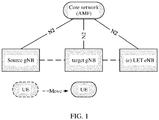
- FIG. 1 is a schematic architectural diagram of a communications network to which this application is applicable.
- a 5G network scenario in a wireless communications network is used as an example for description.
- the solutions in this application may be further applied to another wireless communications network, and a corresponding name may be replaced by a name of a corresponding function in the another wireless communications network.
- a communications network mainly includes a (radio) access network ((Radio) Access Network, (R)AN) and a core network (core network, CN).
- R Radio) Access Network
- CN core network
- a control panel of the CN mainly has a mobility management function (Access and mobility management, AMF), and an effect of the AMF is similar to that of an MME in LTE.
- AMF Access and mobility management
- an evolved eNB may also access a 5G core network, and support some functions of a 5G base station. Due to mobility of UE, the UE that is in a connected state and that is performing a session moves from a source base station (or source cell) to a target base station (or target cell), so that a handover process is generated.
- the source base station is a base station connected to the UE before the handover
- the target base station is a base station connected to the UE after the handover.
- FIG. 2 is a schematic flowchart of a non-DC-based handover in the prior art. For details, refer to chapter 10 in 3GPP TS 36.300.
- an existing handover is mainly divided into three parts: a handover preparation phase (from S304 to S306), a handover execution phase (from S307 to S310), and a handover completion phase (from S311 to S314).
- a handover preparation phase from S304 to S306
- S307 to S310 a handover execution phase
- S311 to S314 the entire handover execution phase, there is no connection between UE and a source base station (in other words, in this phase, the connection between the UE and the source base station is already disconnected).
- a main improvement of a handover procedure is that S406 is different from S306, and in S406, the UE needs to be notified that the handover is a DC-based handover, so that the UE continues to maintain the connection to the source base station in the handover execution process.
- the existing solution is only simple notification, and does not consider how a source base station and a target base station control dual connectivity.
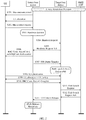
- FIG. 4 is a schematic flowchart of a DC-based handover according to this application. As shown in FIG. 4 , the handover method includes the following steps.
- the Source base station sends a handover request to a target base station, where the handover request carries a target base station user equipment aggregate maximum bit rate UE-AMBR and/or network slice information of user equipment UE; and the source base station receives a handover request feedback sent by the target base station.
- the handover request may carry the target base station UE-AMBR (target gNB UE-AMBR), the target base station UE-AMBR is obtained by the source base station based on a received UE-AMBR, and the UE-AMBR may be sent by a core network, the UE, or another base station to the source base station.
- the target base station UE-AMBR is obtained by the source base station based on the UE-AMBR, the measurement report, a resource usage status of the source base station, and/or the like.
- the target base station establishes a connection to the UE based on the target base station UE-AMBR, and the source base station maintains a connection to the source base station based on a source base station UE-AMBR.
- the UE-AMBR is 90 (bps).
- current spectral efficiency of the target base station is twice that of the source base station.
- the source base station obtains that there is a 2:1 relationship between the target base station UE-AMBR and the source base station UE-AMBR, to be specific, the target base station UE-AMBR is 60 (bps), and the source base station UE-AMBR is 30 (bps).
- the source base station may also obtain, based on the current resource usage status, a source base station UE-AMBR that is 20 (bps) and that can be provided by the source base station for the UE, and in this case, the source base station determines that the source base station UE-AMBR is 20 (bps) and the target base station UE-AMBR is 70 (bps).
- the target base station Through coordination by the source base station, a case in which the target base station and the source base station separately perform independent scheduling and the UE-AMBR is exceeded (where for example, the UE-AMBR is 50 (bps); and if the target base station does not know the case, the target base station allocates 40 (bps) to the UE, that is, the target base station UE-AMBR is 40 (bps), the source base station allocates 20 (bps) to the UE, that is, the source base station UE-AMBR is 20 (bps), and consequently, a sum of the two is finally greater than 50 (bps)) is avoided. Coordinating the UE-AMBR by using the source base station ensures a smooth DC-based handover.
- the handover request may carry the network slice information of UE.
- the network slice information is received by the source base station from a core network or the UE, or received from another base station, and the network slice information is sent to the target base station.
- the target base station cannot obtain the information during a handover.
- the target base station has the following technical effects: First, rights of the UE may be verified on an (R)AN side.
- the target base station may learn that the network slice identifier carried by the UE is an invalid identifier, and may reject the RRC connection request, or select a default AMF for the UE. Second, after obtaining the network slice information, the target base station may find a more suitable target cell or target base station for the UE during a next handover.
- RRC radio resource control
- a network slice to which a session of the UE belongs is a network slice 1
- network slices that the current network allows the UE to access are the network slice 1, a network slice 2, and a network slice 3.
- the target base station (or target cell) in this case, a target base station (or target cell) in a previous handover changes to a source base station (or source cell) in an upcoming handover
- a next target cell (or target base station) 1 supports the network slice 1, the network slice 2, and the network slice 3, and a next target cell (or target base station) 2 supports the network slice 1, the network slice 2, and a network slice 4, both the next target cell (or target base station) 1 and the next target cell (or target base station) 2 may be selected (or the same) if reference is made only to the network slice to which the current session of the UE belongs.
- the target cell (or target base station) 1 may be preferentially selected as a next target, because the target cell (or target base station) may support more allowed network slices of the UE.
- the session may occur after the handover.
- the target cell 2 does not support the UE in initiating the session of the network slice 3. However, the case does not occur when the UE is handed over to the next target cell (or target base station) 1.
- the target base station receives a largest quantity of network slices supported by the UE or a largest quantity of network slices that can be simultaneously accessed by the UE. A session may be established for the UE based on the information, and if the UE hopes to establish a session in which a quantity of network slices exceeds the quantity, the target base station rejects the session.
- the handover request may further carry a GTP tunnel port identifier, of the source base station, that is based on each bearer, the GTP tunnel port identifier is used by the target base station to transmit an uplink packet data convergence protocol (Packet Data Convergence Protocol, PDCP) packet data unit (packet data unit, PDU) to the source base station.
- PDCP Packet Data Convergence Protocol
- the GTP tunnel port identifier needs to be carried, because a core network side connection has not been handed over from the source base station (or source cell) to the target base station within a period of time after the UE completes an air interface side connection to the target base station.
- uplink data cannot be transmitted from the target base station to the core network, and if the GTP tunnel port identifier is carried in this case, the uplink data may be transmitted to the core network by using the source base station, thereby reducing a latency of uplink data transmission caused by the handover.
- the handover request may further carry a handover type identifier, and the handover type identifier is used to indicate that the handover is a DC-based handover.
- the handover request may further indicate a type of DC that the handover is based on.
- the handover type identifier is carried, so that the target base station knows a protocol stack required for communication in a connection establishment process.
- the DC may include DC-1A, DC-1B, DC-3C, DC-3B, and the like.
- FIG. 5 is a schematic structural diagram of a protocol stack of a DC-based handover according to this application. As shown in FIG.
- a difference between different DC lies in different protocol stacks namely, protocol stacks of the target base station that a data flow transmitted on the target base station (which may also be referred to as a second base station, second gNB, SgNB) passes through.
- an MCG is a Master cell group, namely, a master cell group
- an SCG is a Second cell group, namely, a second cell group.
- protocol stacks that a data flow passes through in the target base station include the service data adaptation protocol (Service Data Adaptation Protocol, SDAP)/PDCP/RLC/MAC.
- SDAP Service Data Adaptation Protocol
- protocol stacks that a data flow passes through on the target base station include RLC, MAC, and a part of PDCP.
- protocol stacks that a data flow passes through in the target base station includes RLC and MAC, that is, the data transmitted by the target base station is transmitted to the target base station after being processed by SDAP and PDCP of the source base station (which may also be referred to as a first base station, a master base station, or an MgNB). Then, the data is processed and sent by RLC and MAC of the target base station.
- the source base station receives the handover request feedback sent by the target base station.
- the handover request feedback carries a GTP tunnel port identifier, of the target base station, that is based on each bearer.
- the GTP tunnel port identifier is a GTP tunnel port identifier, of the target base station, for each received bearer, and is used by the source base station to transmit a downlink PDCP PDU to the target base station.
- the GTP tunnel port identifier may be used to identify data of each bearer, that is, identify a bearerto which the data belongs. This is similar to the GTP tunnel port identifier carried in the handover request, so that a handover latency may be reduced.
- the handover method of this application further includes: S504.
- the source base station sends a handover message to the user equipment, and the handover message may be a radio resource control RRC reconfiguration message or a handover command message.
- the handover message may include a handover type identifier that is used to indicate whether a handover is a DC-based handover, and optionally, indicate a type of DC that the handover is based on, which is similar to the handover type identifier carried in the handover request. For details, refer to the description of the handover type identifier carried in the handover request.
- the handover message may include timing information that is used to instruct the user equipment to release a connection to the source base station after a preset time arrives.
- the UE obtains, based on the timing information, a time for releasing the connection to the source base station, thereby avoiding releasing the connection only when a radio link failure occurs.
- the timer may be started after handover information sent by the source base station is received, and a terminal releases a connection to the source base station after the timer expires.
- the timer may be started after a terminal establishes a connection to the target base station, and the terminal releases a connection to the source base station after the timer expires.
- a start time of the timer is not specifically limited in this solution.
- the handover message may include trigger information, and the trigger information is used to indicate a trigger condition of releasing the connection to the source base station by the user equipment.
- the trigger condition may include a trigger condition or a trigger event.
- the trigger information is determined by the source base station or the target base station. This is not limited in this embodiment. If the trigger information is determined by the target base station, the trigger information needs to be carried in the handover request feedback, and sent by the source base station to the UE by using the handover message.
- the trigger information instructs the UE to release the connection to the source base station after a signal received by the UE from the source base station is lower than a threshold; or the trigger information instructs the UE to release the connection to the source base station after a signal difference between signals that are of the source base station and the target base station and that are received by the UE reaches a threshold, or release the connection to the source base station when a radio link failure (radio link failure, RLF) occurs between the UE and the source base station; or the trigger information instructs the UE to release the connection to the source base station after a quantity of times of RLC retransmission between a terminal and the source base station reaches a particular threshold, or release the connection to the source base station when a quantity of times of out-of-synchronization between the UE and the source base station reaches a specified threshold.
- the connection is released in time, thereby avoiding a waste of an air interface resource.
- timing information or the trigger information may be used to terminate uplink data transmission between the UE and the source base station, or terminate downlink data transmission between the UE and the source base station, or may be used to simultaneously terminate uplink and downlink data transmission between the UE and the source base station.
- the timing information or the trigger information may enable the UE to know when to release the connection to the source base station, thereby avoiding invalid air interface retransmission. If the UE does not receive the timing information or the trigger information, the UE does not know when to release the connection to the source base station, thereby causing invalid air interface retransmission.
- a handover process may already be completed, in other words, the source base station has released a context of the UE, consequently all uplink transmission, of the UE, in which the UE context (UE context) is released is invalid.
- the UE context UE context
- the UE may move out of a current target cell (or target base station) within a short time and return to a source cell. If specified timing information does not exceed the time, the UE may continue to be served after returning to the source cell without a data interruption.
- the source base station coordinates a UE capability between the source base station and the target base station, shares network slice information, and explicitly specifies a type of DC that a handover is based on. Therefore, a handover latency is reduced, a waste of an air interface resource is avoided, and a DC-based handover is comprehensively improved in a plurality of aspects.
- FIG. 6 is another schematic flowchart of a DC-based handover according to this application. As shown in FIG. 6 , a handover method includes the following steps.
- a target base station receives a handover request sent by a source base station.
- the handover request carries a GTP tunnel port identifier, of the source base station, that is based on each bearer.
- the GTP tunnel port identifier, of the source base station, that is based on each bearer is the same as the GTP tunnel port identifier, of the source base station, that is based on each bearer in S502. Refer to the description of the GTP tunnel port identifier, of the source base station, that is based on each bearer in S502. Details are not described herein again.
- the handover request carries a handover type identifier
- the handover type identifier is used to indicate that a handover is a DC-based handover.
- the handover type identifier is the same as the handover type identifier in S502. Reference may be made to the description of the identifier in S502. Details are not described herein again.
- the handover request may carry a UE-AMBR
- the target base station obtains a source base station UE-AMBR based on the UE-AMBR carried in the handover request.
- the handover request may further carry network slice information.
- the network slice information is the same as the network slice information in S502, and is not described in detail herein again. For details, refer to the description of the network slice information in S502.
- the target base station sends a handover request feedback based on the handover request, where the handover request feedback carries the source base station UE-AMBR, and the source base station UE-AMBR is obtained by the target base station in advance.
- the target base station obtains the source base station UE-AMBR based on a UE-AMBR carried in the received handover request sent by the source base station, and a received measurement report and/or received resource use status of the target base station that are sent by the source base station.
- the target base station establishes a connection to UE based on a target base station UE-AMBR, and the source base station maintains a connection to the source base station based on the source base station UE-AMBR.
- the UE-AMBR is 90 (bps).
- current spectral efficiency of the target base station is twice that of the source base station.
- the source base station obtains that there is a 2:1 relationship between the target base station UE-AMBR and the source base station UE-AMBR, to be specific, the target base station UE-AMBR is 60 (bps), and the source base station UE-AMBR is 30 (bps).
- the target base station may also obtain, based on a current resource usage status, a target base station UE-AMBR that is 20 (bps) and that can be provided by the target base station for the UE, and in this case the target base station determines that the source base station UE-AMBR is 20 (bps) and the target base station UE-AMBR is 70 (bps).
- the target base station Through coordination by the target base station, a case in which the target base station and the source base station separately perform independent scheduling and the UE-AMBR is exceeded (where for example, the UE-AMBR is 50 (bps); and if the target base station does not know the case, the target base station allocates 40 (bps) to the UE, that is, the target base station UE-AMBR is 40 (bps), the source base station allocates 20 (bps) to the UE, that is, the source base station UE-AMBR is 20 (bps), and consequently, a sum of the two is finally greater than 50 (bps)) is avoided. Coordinating the UE-AMBR by using the source base station ensures a smooth DC-based handover.
- the handover request feedback further carries a handover type identifier that is used to indicate that the handover is a DC-based handover.
- the target base station may determine, based on a received UE capability, whether to use the DC-based handover, and a type of DC used for the handover.
- a determining result is sent to the source base station by using the handover request feedback, to notify the source base station that a DC-based handover is used for this handover or further notify the source base station of the type of DC that this handover is based on.
- the target base station obtains, based on a UE capability sent by the source base station, whether the UE supports DC, and if the UE supports the DC, the target base station may determine to perform a DC-based handover; or if the UE does not support the DC, a DC-based handover cannot be performed. Whether to use a DC-based handover is determined by using the target base station, thereby improving flexibility of a handover.
- a specific DC type is the same as the description of the DC in S502. Refer to the description in S502. Details are not described herein again.
- the handover request feedback further carries a GTP tunnel port identifier, of the target base station, that is based on each bearer.
- the GTP tunnel port identifier, of the target base station, that is based on each bearer is the same as the GTP tunnel port identifier, of the target base station, that is based on each bearer in S503. Refer to the description in S503. Details are not described herein again.
- S703 may be included:
- the source base station sends a handover message to the UE.
- S703 is the same as S504. For details, refer to the description in S504. Details are not described herein again.
- the target base station coordinates a UE capability between the source base station and the target base station, and explicitly specifies a handover type. Therefore, a handover latency is reduced, and a DC-based handover is comprehensively improved in a plurality of aspects.
- Division of functional units may be performed on the source base station, the target base station and the UE based on the foregoing method examples.
- the functional units may be divided to correspond to the functions, or two or more functions may be integrated into one unit. All or some of the foregoing integrated units may be implemented by using software, hardware, firmware, or any combination thereof.
- unit division is exemplary, and is merely a logical function division. In actual implementation, another division manner may be used.
- FIG.7 is a schematic structural diagram of a device 100 according to this application. The device 100 may be applied to implement a source base station, a target base station, or UE in this application. Referring to FIG.
- the device 100 includes a receiving unit 101 and a sending unit 102.
- the receiving unit 101 is configured to receive a handover request feedback sent by the target base station
- the sending unit 102 is configured to send a handover request to the target base station.
- the receiving unit 101 is configured to receive a handover request sent by the source base station
- the sending unit 102 is configured to send a handover request feedback to the target base station.
- the sending unit 102 is configured to send a measurement report to the source base station
- the receiving unit 101 is configured to receive a handover message sent by the source base station.
- the receiving unit may be implemented by using a communications interface, a receiver, a receiving circuit, or the like.
- the sending unit may be implemented by using a communications interface, a transmitter, a sending circuit, or the like. It should be understood that functions of the receiving unit and the sending unit may be integrated together, and are implemented by a communications interface, a transceiver, and a transceiver circuit.
- the communications interface is a collective term, and may include one or more interfaces.
- the hardware may further include a processor, a memory, an antenna array, a duplexer, and a baseband processing part.
- the processor may be a central processing unit (Central Processing Unit, CPU), a general-purpose processor, a digital signal processor (Digital Signal Processor, DSP), an application-specific integrated circuit (Application-Specific Integrated Circuit, ASIC), a field programmable gate array (Field Programmable Gate Array, FPGA), or another programmable logic device, a hardware component, or a combination thereof.
- CPU Central Processing Unit
- DSP digital signal processor
- ASIC Application-Specific Integrated Circuit
- FPGA Field Programmable Gate Array
- the processor may be a combination of processors implementing a computing function, for example, a combination of one or more microprocessors, or a combination of the DSP and a microprocessor, and or the like.
- the memory may be disposed in the processor, or may exist independently.
- the duplexer is configured to implement the antenna array and is configured to send and receive signals.
- the transmitter is configured to implement conversion between a radio frequency signal and a baseband signal.
- the transmitter may usually include a power amplifier, a digital-to-analog converter, and a frequency converter, and the receiver may usually include a low-noise amplifier, an analog-to-digital converter, and a frequency converter.
- the receiver and the transmitter may be collectively referred to as a transceiver sometimes.
- the baseband processing part is configured to: process a sent or received signal, for example, layer mapping, preceding, modulation/demodulation, and encoding/decoding, and separately process a physical control channel, a physical data channel, a physical broadcast channel, a reference signal, and the like.
- functions of the receiver and the transmitter may be implemented by using a transceiver circuit or a dedicated transceiver chip.
- the processor may be implemented by using a dedicated processing chip, a processing circuit, a processor, or a general-purpose chip.
- program code used to implement functions of the processor, the receiver, and the transmitter is stored in the memory.
- a general-purpose processor implements the functions of the processor, the receiver, and the transmitter by executing the code in the memory.
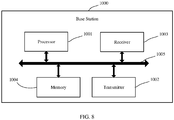
- a base station 1000 is provided, and includes a processor 1001, a memory 1004, a receiver 1003, and a transmitter 1002.
- the receiver 1003 and the transmitter 1002 are configured to communicate with another network element.
- the memory 1004 is configured to store a program that can be executed by the processor 1001, and the program includes instructions used to implement the methods, the steps, or the procedures described in the foregoing embodiments.
- a specific method, process, step, beneficial effect, and the like refer to description about the content in the foregoing embodiments. Details are not described herein.
- UE 2000 is provided, and includes a processor 2001, a memory 2003, and a transceiver 2002.
- the transceiver 2002 is configured to communicate with another network element (may communicate with the another network element by using an antenna).
- the memory 2003 is configured to store a program that can be executed by the processor 2001, and the program includes instructions used to implement the methods, the steps, or the procedures described in the foregoing embodiments.
- a specific method, process, step, beneficial effect, and the like refer to description about the content in the foregoing embodiments. Details are not described herein.
- the source base station, the target base station, or the UE is implemented by using software, for a concept, an explanation, a detailed description, and another step that are related to this application and that are provided for the source base station, the target base station, or the UE, refer to descriptions about the content in the foregoing methods.
- the method in this application may be implemented completely or partially in a form of a computer program product.
- the computer program product includes one or more computer instructions. When the computer program instructions are loaded and executed on a computer, the procedure or functions according to the embodiments of the present invention are all or partially generated.
- the computer may be a general-purpose computer, a dedicated computer, a computer network, or other programmable apparatuses.
- the computer instructions may be stored in a computer-readable storage medium or may be transmitted from a computer-readable storage medium to another computer-readable storage medium.
- the computer instructions may be transmitted from a website, computer, server, or data center to another website, computer, server, or data center in a wired (for example, a coaxial cable, an optical fiber, or a digital subscriber line (DSL)) or wireless (for example, infrared, radio, and microwave, or the like) manner.
- the computer-readable storage medium may be any usable medium accessible by a computer, or a data storage device, such as a server or a data center, integrating one or more usable media.
- the usable medium may be a magnetic medium (for example, a floppy disk, a hard disk, or a magnetic tape), an optical medium (for example, a DVD), a semiconductor medium (for example, a solid-state drive Solid State Disk (SSD)), or the like.
- the storage medium may be integrated in a device, a module, or a processor, or may be disposed separately.
- this application further provides a communications system, including the foregoing source base station, target base station, and UE.
- this application provides a communications system, including the source base station and the target base station.
Landscapes
- Engineering & Computer Science (AREA)
- Computer Networks & Wireless Communication (AREA)
- Signal Processing (AREA)
- Mobile Radio Communication Systems (AREA)
Applications Claiming Priority (2)
| Application Number | Priority Date | Filing Date | Title |
|---|---|---|---|
| CN201710459804.1A CN109151940B (zh) | 2017-06-16 | 2017-06-16 | 一种基于dc的切换方法及设备 |
| PCT/CN2018/087427 WO2018228126A1 (fr) | 2017-06-16 | 2018-05-18 | Procédé et dispositif de transfert basé cc |
Publications (3)
| Publication Number | Publication Date |
|---|---|
| EP3634036A1 true EP3634036A1 (fr) | 2020-04-08 |
| EP3634036A4 EP3634036A4 (fr) | 2020-08-26 |
| EP3634036B1 EP3634036B1 (fr) | 2023-10-11 |
Family
ID=64659290
Family Applications (1)
| Application Number | Title | Priority Date | Filing Date |
|---|---|---|---|
| EP18818705.8A Active EP3634036B1 (fr) | 2017-06-16 | 2018-05-18 | Procédé et dispositif de transfert a base de double connectivité |
Country Status (4)
| Country | Link |
|---|---|
| US (1) | US11252615B2 (fr) |
| EP (1) | EP3634036B1 (fr) |
| CN (1) | CN109151940B (fr) |
| WO (1) | WO2018228126A1 (fr) |
Cited By (3)
| Publication number | Priority date | Publication date | Assignee | Title |
|---|---|---|---|---|
| EP4030820A4 (fr) * | 2019-09-26 | 2022-11-09 | Huawei Technologies Co., Ltd. | Procédé et dispositif de communication |
| US12063554B2 (en) | 2019-02-14 | 2024-08-13 | Telefonaktiebolaget Lm Ericsson (Publ) | User equipment and methods therein for performing handover |
| EP4274335A4 (fr) * | 2020-12-30 | 2024-12-18 | China Mobile Communication Co., Ltd. Research Institute | Procédé et appareil de transmission d'informations, dispositif associé et support de stockage |
Families Citing this family (25)
| Publication number | Priority date | Publication date | Assignee | Title |
|---|---|---|---|---|
| CN109792612B (zh) * | 2017-04-18 | 2021-10-22 | 华为技术有限公司 | 终端监控信息的同步方法、设备及系统 |
| US11438812B2 (en) * | 2018-07-10 | 2022-09-06 | Qualcomm Incorporated | Performing a combination of handover techniques |
| EP3905778B1 (fr) * | 2019-01-16 | 2024-06-19 | Huawei Technologies Co., Ltd. | Procédé d'enregistrement de cellule et dispositif terminal |
| WO2020150997A1 (fr) | 2019-01-25 | 2020-07-30 | Mediatek Singapore Pte. Ltd. | Appareil et procédés permettant la prise en charge d'un protocole double destiné à une amélioration de la mobilité |
| CN111903153B (zh) | 2019-02-03 | 2022-03-08 | Oppo广东移动通信有限公司 | 业务处理方法、装置、芯片及计算机程序 |
| ES2993566T3 (en) * | 2019-02-11 | 2025-01-02 | Nokia Technologies Oy | Enhanced mobility in cellular deployments with network slicing |
| CN111726840B (zh) * | 2019-03-21 | 2021-09-24 | 大唐移动通信设备有限公司 | 一种终端的双连接配置处理方法及装置 |
| US11012913B2 (en) * | 2019-04-08 | 2021-05-18 | Qualcomm Incorporated | User equipment capability-based transition |
| WO2020258245A1 (fr) * | 2019-06-28 | 2020-12-30 | Oppo广东移动通信有限公司 | Procédé de traitement d'informations utilisé pour une commutation et dispositif de réseau |
| CN112188544A (zh) * | 2019-07-04 | 2021-01-05 | 大唐移动通信设备有限公司 | 一种基站间用户设备网络切片信息处理的方法和装置 |
| US20220279396A1 (en) * | 2019-08-02 | 2022-09-01 | Nec Corporation | Methods, devices and computer readable media for simultaneous connectivity based handover |
| WO2021026818A1 (fr) * | 2019-08-14 | 2021-02-18 | 华为技术有限公司 | Procédé, système et dispositif de commutation de cellules |
| WO2021031012A1 (fr) * | 2019-08-16 | 2021-02-25 | Oppo广东移动通信有限公司 | Procédé et dispositif de transfert intercellulaire |
| US12273857B2 (en) * | 2019-11-14 | 2025-04-08 | Beijing Xiaomi Mobile Software Co., Ltd. | Paging method |
| WO2021128157A1 (fr) * | 2019-12-26 | 2021-07-01 | 华为技术有限公司 | Dispositif, système et procédé de transfert |
| KR102932742B1 (ko) | 2020-01-20 | 2026-02-27 | 지티이 코포레이션 | 슬라이스 특정 정보에 대한 방법 |
| CN115088304B (zh) * | 2020-03-19 | 2024-09-06 | 华为技术有限公司 | 小区切换方法和装置 |
| WO2021217573A1 (fr) * | 2020-04-30 | 2021-11-04 | 北京小米移动软件有限公司 | Procédé et appareil de commande de vitesse de transmission de données, dispositif de communication et support de stockage |
| WO2021229136A1 (fr) * | 2020-05-13 | 2021-11-18 | Nokia Technologies Oy | Prolongement de service vocal dans un état actif |
| CN114071361B (zh) * | 2020-08-06 | 2022-09-09 | 大唐移动通信设备有限公司 | 一种基站内精确查找用户的方法、基站及装置 |
| WO2022067643A1 (fr) * | 2020-09-30 | 2022-04-07 | 华为技术有限公司 | Procédé et appareil de sélection de cellule et procédé et appareil de radiomessagerie |
| CN112492580B (zh) * | 2020-11-25 | 2023-08-18 | 北京小米移动软件有限公司 | 信息处理方法及装置、通信设备及存储介质 |
| CN115119240A (zh) * | 2021-03-23 | 2022-09-27 | 联发科技(新加坡)私人有限公司 | 传输路径协调方法及其用户设备 |
| CN115696486A (zh) * | 2021-07-31 | 2023-02-03 | 华为技术有限公司 | 一种周期业务的传输方法及通信装置 |
| JPWO2023234181A1 (fr) * | 2022-06-02 | 2023-12-07 |
Family Cites Families (13)
| Publication number | Priority date | Publication date | Assignee | Title |
|---|---|---|---|---|
| CN101635962B (zh) * | 2008-07-24 | 2012-01-04 | 电信科学技术研究院 | 一种用户设备切换时获取承载状况的方法和mme |
| CN103052116B (zh) * | 2011-10-14 | 2015-04-29 | 华为技术有限公司 | 传输速率控制方法、移动性管理实体和通讯系统 |
| JP6321643B2 (ja) * | 2012-08-02 | 2018-05-09 | テレフオンアクチーボラゲット エルエム エリクソン(パブル) | 複数の基地局に向けての端末の多重的な接続性を可能とする、ベアラのサブセットをハンドオーバさせるためのノード及び方法 |
| CN110213032B (zh) * | 2012-12-18 | 2021-10-08 | 北京三星通信技术研究有限公司 | 配置ue的聚合最大速率的方法 |
| CN110087272B (zh) * | 2013-02-22 | 2021-10-08 | 三星电子株式会社 | 在多个e节点b和用户设备间提供同时连接的方法和系统 |
| GB2512659A (en) * | 2013-04-05 | 2014-10-08 | Nec Corp | Communication system |
| EP3097732A1 (fr) * | 2014-01-24 | 2016-11-30 | Nokia Solutions and Networks Oy | Procédé, appareil et programme informatique permettant de réaliser un ordonnancement dans le cadre de scénarii de connectivité double |
| WO2015120571A1 (fr) * | 2014-02-11 | 2015-08-20 | 华为技术有限公司 | Procédé et appareil de commande de débit de transmission de données dans une agrégation de porteuses |
| CN104955109B (zh) * | 2014-03-28 | 2020-02-07 | 北京三星通信技术研究有限公司 | 配置UE的聚合最大速率的方法、协调non-GBR业务的聚合速率及基站 |
| CN105472659B (zh) * | 2014-08-07 | 2019-02-22 | 中国电信股份有限公司 | 节点间无线资源分配方法和系统 |
| GB2528988A (en) * | 2014-08-08 | 2016-02-10 | Nec Corp | Communication system |
| US10349329B2 (en) * | 2015-07-28 | 2019-07-09 | Qualcomm Incorporated | Mechanisms for differentiated treatment of offloaded traffic |
| US10264506B2 (en) * | 2017-05-13 | 2019-04-16 | Qualcomm Incorporated | Enable a network-trigger change of network slices |
-
2017
- 2017-06-16 CN CN201710459804.1A patent/CN109151940B/zh active Active
-
2018
- 2018-05-18 EP EP18818705.8A patent/EP3634036B1/fr active Active
- 2018-05-18 WO PCT/CN2018/087427 patent/WO2018228126A1/fr not_active Ceased
-
2019
- 2019-12-13 US US16/713,489 patent/US11252615B2/en active Active
Cited By (4)
| Publication number | Priority date | Publication date | Assignee | Title |
|---|---|---|---|---|
| US12063554B2 (en) | 2019-02-14 | 2024-08-13 | Telefonaktiebolaget Lm Ericsson (Publ) | User equipment and methods therein for performing handover |
| EP4030820A4 (fr) * | 2019-09-26 | 2022-11-09 | Huawei Technologies Co., Ltd. | Procédé et dispositif de communication |
| US12363601B2 (en) | 2019-09-26 | 2025-07-15 | Huawei Technologies Co., Ltd. | Communication method and apparatus |
| EP4274335A4 (fr) * | 2020-12-30 | 2024-12-18 | China Mobile Communication Co., Ltd. Research Institute | Procédé et appareil de transmission d'informations, dispositif associé et support de stockage |
Also Published As
| Publication number | Publication date |
|---|---|
| CN109151940A (zh) | 2019-01-04 |
| CN109151940B (zh) | 2021-12-03 |
| EP3634036A4 (fr) | 2020-08-26 |
| EP3634036B1 (fr) | 2023-10-11 |
| US11252615B2 (en) | 2022-02-15 |
| WO2018228126A1 (fr) | 2018-12-20 |
| US20200120548A1 (en) | 2020-04-16 |
Similar Documents
| Publication | Publication Date | Title |
|---|---|---|
| US11252615B2 (en) | Handover method that is based on DC and device | |
| US12335765B2 (en) | Apparatus and method for measurement in wireless communication system | |
| US10028331B2 (en) | User terminal, communication control method and chipset | |
| US11412356B2 (en) | Charging system and method, and network device | |
| US10631243B2 (en) | Base station, radio terminal, and mobility management apparatus | |
| WO2020103824A1 (fr) | Gestion de ressources insuffisantes dans l'équipement utilisateur lors d'une procédure d'établissement de session pdu | |
| US9730129B2 (en) | PDCP operation for dual connection | |
| CN104255056B (zh) | 切换方法和设备 | |
| CN113039857B (zh) | 多无线接入技术双重连接的优化辅节点报告 | |
| KR102433768B1 (ko) | 무선 통신 시스템에서 측정을 위한 장치 및 방법 | |
| WO2014198133A1 (fr) | Procédé et dispositif d'allocation de ressources pour un support radio de données (drb) | |
| CN104113875A (zh) | 一种小区切换方法、装置及设备 | |
| US10433227B2 (en) | Base station and wireless LAN termination apparatus | |
| WO2020164556A1 (fr) | Procédé et appareil pour traiter l'établissement d'entités | |
| KR102445758B1 (ko) | 무선 이동 통신 시스템에서 세컨더리 기지국을 변경하는 방법 및 장치 | |
| US20250048229A1 (en) | Communication method and device | |
| JP2018174597A (ja) | ベアラ管理装置、方法及び通信システム | |
| WO2022082688A1 (fr) | Procédé, appareil et système de communication | |
| KR102445757B1 (ko) | 무선 이동 통신 시스템에서 세컨더리 기지국을 변경하는 방법 및 장치 | |
| CN105165103A (zh) | 无线连接建立方法和装置 | |
| EP3373693A1 (fr) | Station de base, noeud de terminaison de réseau local sans fil, et terminal sans fil | |
| KR20230021425A (ko) | 무선 이동 통신 시스템에서 rrc 연결을 재개하는 방법 및 장치 |
Legal Events
| Date | Code | Title | Description |
|---|---|---|---|
| STAA | Information on the status of an ep patent application or granted ep patent |
Free format text: STATUS: THE INTERNATIONAL PUBLICATION HAS BEEN MADE |
|
| PUAI | Public reference made under article 153(3) epc to a published international application that has entered the european phase |
Free format text: ORIGINAL CODE: 0009012 |
|
| STAA | Information on the status of an ep patent application or granted ep patent |
Free format text: STATUS: REQUEST FOR EXAMINATION WAS MADE |
|
| 17P | Request for examination filed |
Effective date: 20200102 |
|
| AK | Designated contracting states |
Kind code of ref document: A1 Designated state(s): AL AT BE BG CH CY CZ DE DK EE ES FI FR GB GR HR HU IE IS IT LI LT LU LV MC MK MT NL NO PL PT RO RS SE SI SK SM TR |
|
| AX | Request for extension of the european patent |
Extension state: BA ME |
|
| RIC1 | Information provided on ipc code assigned before grant |
Ipc: H04W 36/28 20090101ALN20200416BHEP Ipc: H04W 88/08 20090101ALN20200416BHEP Ipc: H04W 36/18 20090101ALI20200416BHEP Ipc: H04W 36/00 20090101AFI20200416BHEP Ipc: H04W 36/08 20090101ALN20200416BHEP |
|
| A4 | Supplementary search report drawn up and despatched |
Effective date: 20200723 |
|
| RIC1 | Information provided on ipc code assigned before grant |
Ipc: H04W 88/08 20090101ALN20200718BHEP Ipc: H04W 36/08 20090101ALN20200718BHEP Ipc: H04W 36/28 20090101ALN20200718BHEP Ipc: H04W 36/00 20090101AFI20200718BHEP Ipc: H04W 36/18 20090101ALI20200718BHEP |
|
| DAV | Request for validation of the european patent (deleted) | ||
| DAX | Request for extension of the european patent (deleted) | ||
| STAA | Information on the status of an ep patent application or granted ep patent |
Free format text: STATUS: EXAMINATION IS IN PROGRESS |
|
| 17Q | First examination report despatched |
Effective date: 20210818 |
|
| REG | Reference to a national code |
Ref legal event code: R079 Free format text: PREVIOUS MAIN CLASS: H04W0036080000 Ref country code: DE Ref legal event code: R079 Ref document number: 602018059268 Country of ref document: DE Free format text: PREVIOUS MAIN CLASS: H04W0036080000 Ipc: H04W0036000000 |
|
| GRAP | Despatch of communication of intention to grant a patent |
Free format text: ORIGINAL CODE: EPIDOSNIGR1 |
|
| STAA | Information on the status of an ep patent application or granted ep patent |
Free format text: STATUS: GRANT OF PATENT IS INTENDED |
|
| RIC1 | Information provided on ipc code assigned before grant |
Ipc: H04W 36/28 20090101ALN20230324BHEP Ipc: H04W 36/08 20090101ALN20230324BHEP Ipc: H04W 88/08 20090101ALN20230324BHEP Ipc: H04W 36/18 20090101ALI20230324BHEP Ipc: H04W 36/00 20090101AFI20230324BHEP |
|
| RIC1 | Information provided on ipc code assigned before grant |
Ipc: H04W 36/28 20090101ALN20230419BHEP Ipc: H04W 36/08 20090101ALN20230419BHEP Ipc: H04W 88/08 20090101ALN20230419BHEP Ipc: H04W 36/18 20090101ALI20230419BHEP Ipc: H04W 36/00 20090101AFI20230419BHEP |
|
| INTG | Intention to grant announced |
Effective date: 20230503 |
|
| GRAS | Grant fee paid |
Free format text: ORIGINAL CODE: EPIDOSNIGR3 |
|
| GRAA | (expected) grant |
Free format text: ORIGINAL CODE: 0009210 |
|
| STAA | Information on the status of an ep patent application or granted ep patent |
Free format text: STATUS: THE PATENT HAS BEEN GRANTED |
|
| AK | Designated contracting states |
Kind code of ref document: B1 Designated state(s): AL AT BE BG CH CY CZ DE DK EE ES FI FR GB GR HR HU IE IS IT LI LT LU LV MC MK MT NL NO PL PT RO RS SE SI SK SM TR |
|
| REG | Reference to a national code |
Ref country code: GB Ref legal event code: FG4D |
|
| REG | Reference to a national code |
Ref country code: CH Ref legal event code: EP |
|
| REG | Reference to a national code |
Ref country code: DE Ref legal event code: R096 Ref document number: 602018059268 Country of ref document: DE |
|
| REG | Reference to a national code |
Ref country code: IE Ref legal event code: FG4D |
|
| REG | Reference to a national code |
Ref country code: LT Ref legal event code: MG9D |
|
| REG | Reference to a national code |
Ref country code: NL Ref legal event code: MP Effective date: 20231011 |
|
| REG | Reference to a national code |
Ref country code: AT Ref legal event code: MK05 Ref document number: 1621470 Country of ref document: AT Kind code of ref document: T Effective date: 20231011 |
|
| PG25 | Lapsed in a contracting state [announced via postgrant information from national office to epo] |
Ref country code: NL Free format text: LAPSE BECAUSE OF FAILURE TO SUBMIT A TRANSLATION OF THE DESCRIPTION OR TO PAY THE FEE WITHIN THE PRESCRIBED TIME-LIMIT Effective date: 20231011 |
|
| PG25 | Lapsed in a contracting state [announced via postgrant information from national office to epo] |
Ref country code: GR Free format text: LAPSE BECAUSE OF FAILURE TO SUBMIT A TRANSLATION OF THE DESCRIPTION OR TO PAY THE FEE WITHIN THE PRESCRIBED TIME-LIMIT Effective date: 20240112 |
|
| PG25 | Lapsed in a contracting state [announced via postgrant information from national office to epo] |
Ref country code: IS Free format text: LAPSE BECAUSE OF FAILURE TO SUBMIT A TRANSLATION OF THE DESCRIPTION OR TO PAY THE FEE WITHIN THE PRESCRIBED TIME-LIMIT Effective date: 20240211 |
|
| PG25 | Lapsed in a contracting state [announced via postgrant information from national office to epo] |
Ref country code: LT Free format text: LAPSE BECAUSE OF FAILURE TO SUBMIT A TRANSLATION OF THE DESCRIPTION OR TO PAY THE FEE WITHIN THE PRESCRIBED TIME-LIMIT Effective date: 20231011 |
|
| PG25 | Lapsed in a contracting state [announced via postgrant information from national office to epo] |
Ref country code: AT Free format text: LAPSE BECAUSE OF FAILURE TO SUBMIT A TRANSLATION OF THE DESCRIPTION OR TO PAY THE FEE WITHIN THE PRESCRIBED TIME-LIMIT Effective date: 20231011 |
|
| PG25 | Lapsed in a contracting state [announced via postgrant information from national office to epo] |
Ref country code: ES Free format text: LAPSE BECAUSE OF FAILURE TO SUBMIT A TRANSLATION OF THE DESCRIPTION OR TO PAY THE FEE WITHIN THE PRESCRIBED TIME-LIMIT Effective date: 20231011 |
|
| PG25 | Lapsed in a contracting state [announced via postgrant information from national office to epo] |
Ref country code: LT Free format text: LAPSE BECAUSE OF FAILURE TO SUBMIT A TRANSLATION OF THE DESCRIPTION OR TO PAY THE FEE WITHIN THE PRESCRIBED TIME-LIMIT Effective date: 20231011 Ref country code: IS Free format text: LAPSE BECAUSE OF FAILURE TO SUBMIT A TRANSLATION OF THE DESCRIPTION OR TO PAY THE FEE WITHIN THE PRESCRIBED TIME-LIMIT Effective date: 20240211 Ref country code: GR Free format text: LAPSE BECAUSE OF FAILURE TO SUBMIT A TRANSLATION OF THE DESCRIPTION OR TO PAY THE FEE WITHIN THE PRESCRIBED TIME-LIMIT Effective date: 20240112 Ref country code: ES Free format text: LAPSE BECAUSE OF FAILURE TO SUBMIT A TRANSLATION OF THE DESCRIPTION OR TO PAY THE FEE WITHIN THE PRESCRIBED TIME-LIMIT Effective date: 20231011 Ref country code: BG Free format text: LAPSE BECAUSE OF FAILURE TO SUBMIT A TRANSLATION OF THE DESCRIPTION OR TO PAY THE FEE WITHIN THE PRESCRIBED TIME-LIMIT Effective date: 20240111 Ref country code: AT Free format text: LAPSE BECAUSE OF FAILURE TO SUBMIT A TRANSLATION OF THE DESCRIPTION OR TO PAY THE FEE WITHIN THE PRESCRIBED TIME-LIMIT Effective date: 20231011 Ref country code: PT Free format text: LAPSE BECAUSE OF FAILURE TO SUBMIT A TRANSLATION OF THE DESCRIPTION OR TO PAY THE FEE WITHIN THE PRESCRIBED TIME-LIMIT Effective date: 20240212 |
|
| PG25 | Lapsed in a contracting state [announced via postgrant information from national office to epo] |
Ref country code: SE Free format text: LAPSE BECAUSE OF FAILURE TO SUBMIT A TRANSLATION OF THE DESCRIPTION OR TO PAY THE FEE WITHIN THE PRESCRIBED TIME-LIMIT Effective date: 20231011 Ref country code: RS Free format text: LAPSE BECAUSE OF FAILURE TO SUBMIT A TRANSLATION OF THE DESCRIPTION OR TO PAY THE FEE WITHIN THE PRESCRIBED TIME-LIMIT Effective date: 20231011 Ref country code: PL Free format text: LAPSE BECAUSE OF FAILURE TO SUBMIT A TRANSLATION OF THE DESCRIPTION OR TO PAY THE FEE WITHIN THE PRESCRIBED TIME-LIMIT Effective date: 20231011 Ref country code: NO Free format text: LAPSE BECAUSE OF FAILURE TO SUBMIT A TRANSLATION OF THE DESCRIPTION OR TO PAY THE FEE WITHIN THE PRESCRIBED TIME-LIMIT Effective date: 20240111 Ref country code: LV Free format text: LAPSE BECAUSE OF FAILURE TO SUBMIT A TRANSLATION OF THE DESCRIPTION OR TO PAY THE FEE WITHIN THE PRESCRIBED TIME-LIMIT Effective date: 20231011 Ref country code: HR Free format text: LAPSE BECAUSE OF FAILURE TO SUBMIT A TRANSLATION OF THE DESCRIPTION OR TO PAY THE FEE WITHIN THE PRESCRIBED TIME-LIMIT Effective date: 20231011 |
|
| PG25 | Lapsed in a contracting state [announced via postgrant information from national office to epo] |
Ref country code: DK Free format text: LAPSE BECAUSE OF FAILURE TO SUBMIT A TRANSLATION OF THE DESCRIPTION OR TO PAY THE FEE WITHIN THE PRESCRIBED TIME-LIMIT Effective date: 20231011 |
|
| REG | Reference to a national code |
Ref country code: DE Ref legal event code: R097 Ref document number: 602018059268 Country of ref document: DE |
|
| PG25 | Lapsed in a contracting state [announced via postgrant information from national office to epo] |
Ref country code: CZ Free format text: LAPSE BECAUSE OF FAILURE TO SUBMIT A TRANSLATION OF THE DESCRIPTION OR TO PAY THE FEE WITHIN THE PRESCRIBED TIME-LIMIT Effective date: 20231011 |
|
| PG25 | Lapsed in a contracting state [announced via postgrant information from national office to epo] |
Ref country code: SK Free format text: LAPSE BECAUSE OF FAILURE TO SUBMIT A TRANSLATION OF THE DESCRIPTION OR TO PAY THE FEE WITHIN THE PRESCRIBED TIME-LIMIT Effective date: 20231011 |
|
| PG25 | Lapsed in a contracting state [announced via postgrant information from national office to epo] |
Ref country code: SM Free format text: LAPSE BECAUSE OF FAILURE TO SUBMIT A TRANSLATION OF THE DESCRIPTION OR TO PAY THE FEE WITHIN THE PRESCRIBED TIME-LIMIT Effective date: 20231011 Ref country code: SK Free format text: LAPSE BECAUSE OF FAILURE TO SUBMIT A TRANSLATION OF THE DESCRIPTION OR TO PAY THE FEE WITHIN THE PRESCRIBED TIME-LIMIT Effective date: 20231011 Ref country code: RO Free format text: LAPSE BECAUSE OF FAILURE TO SUBMIT A TRANSLATION OF THE DESCRIPTION OR TO PAY THE FEE WITHIN THE PRESCRIBED TIME-LIMIT Effective date: 20231011 Ref country code: IT Free format text: LAPSE BECAUSE OF FAILURE TO SUBMIT A TRANSLATION OF THE DESCRIPTION OR TO PAY THE FEE WITHIN THE PRESCRIBED TIME-LIMIT Effective date: 20231011 Ref country code: EE Free format text: LAPSE BECAUSE OF FAILURE TO SUBMIT A TRANSLATION OF THE DESCRIPTION OR TO PAY THE FEE WITHIN THE PRESCRIBED TIME-LIMIT Effective date: 20231011 Ref country code: DK Free format text: LAPSE BECAUSE OF FAILURE TO SUBMIT A TRANSLATION OF THE DESCRIPTION OR TO PAY THE FEE WITHIN THE PRESCRIBED TIME-LIMIT Effective date: 20231011 Ref country code: CZ Free format text: LAPSE BECAUSE OF FAILURE TO SUBMIT A TRANSLATION OF THE DESCRIPTION OR TO PAY THE FEE WITHIN THE PRESCRIBED TIME-LIMIT Effective date: 20231011 |
|
| PLBE | No opposition filed within time limit |
Free format text: ORIGINAL CODE: 0009261 |
|
| STAA | Information on the status of an ep patent application or granted ep patent |
Free format text: STATUS: NO OPPOSITION FILED WITHIN TIME LIMIT |
|
| 26N | No opposition filed |
Effective date: 20240712 |
|
| PG25 | Lapsed in a contracting state [announced via postgrant information from national office to epo] |
Ref country code: SI Free format text: LAPSE BECAUSE OF FAILURE TO SUBMIT A TRANSLATION OF THE DESCRIPTION OR TO PAY THE FEE WITHIN THE PRESCRIBED TIME-LIMIT Effective date: 20231011 |
|
| PG25 | Lapsed in a contracting state [announced via postgrant information from national office to epo] |
Ref country code: SI Free format text: LAPSE BECAUSE OF FAILURE TO SUBMIT A TRANSLATION OF THE DESCRIPTION OR TO PAY THE FEE WITHIN THE PRESCRIBED TIME-LIMIT Effective date: 20231011 |
|
| REG | Reference to a national code |
Ref country code: DE Ref legal event code: R119 Ref document number: 602018059268 Country of ref document: DE |
|
| REG | Reference to a national code |
Ref country code: CH Ref legal event code: PL |
|
| PG25 | Lapsed in a contracting state [announced via postgrant information from national office to epo] |
Ref country code: MC Free format text: LAPSE BECAUSE OF FAILURE TO SUBMIT A TRANSLATION OF THE DESCRIPTION OR TO PAY THE FEE WITHIN THE PRESCRIBED TIME-LIMIT Effective date: 20231011 |
|
| PG25 | Lapsed in a contracting state [announced via postgrant information from national office to epo] |
Ref country code: LU Free format text: LAPSE BECAUSE OF NON-PAYMENT OF DUE FEES Effective date: 20240518 |
|
| PG25 | Lapsed in a contracting state [announced via postgrant information from national office to epo] |
Ref country code: MC Free format text: LAPSE BECAUSE OF FAILURE TO SUBMIT A TRANSLATION OF THE DESCRIPTION OR TO PAY THE FEE WITHIN THE PRESCRIBED TIME-LIMIT Effective date: 20231011 Ref country code: LU Free format text: LAPSE BECAUSE OF NON-PAYMENT OF DUE FEES Effective date: 20240518 Ref country code: CH Free format text: LAPSE BECAUSE OF NON-PAYMENT OF DUE FEES Effective date: 20240531 |
|
| REG | Reference to a national code |
Ref country code: BE Ref legal event code: MM Effective date: 20240531 |
|
| PG25 | Lapsed in a contracting state [announced via postgrant information from national office to epo] |
Ref country code: DE Free format text: LAPSE BECAUSE OF NON-PAYMENT OF DUE FEES Effective date: 20241203 |
|
| PG25 | Lapsed in a contracting state [announced via postgrant information from national office to epo] |
Ref country code: IE Free format text: LAPSE BECAUSE OF NON-PAYMENT OF DUE FEES Effective date: 20240518 |
|
| PG25 | Lapsed in a contracting state [announced via postgrant information from national office to epo] |
Ref country code: BE Free format text: LAPSE BECAUSE OF NON-PAYMENT OF DUE FEES Effective date: 20240531 |
|
| PG25 | Lapsed in a contracting state [announced via postgrant information from national office to epo] |
Ref country code: FR Free format text: LAPSE BECAUSE OF NON-PAYMENT OF DUE FEES Effective date: 20240531 |
|
| PGFP | Annual fee paid to national office [announced via postgrant information from national office to epo] |
Ref country code: GB Payment date: 20250401 Year of fee payment: 8 |
|
| PG25 | Lapsed in a contracting state [announced via postgrant information from national office to epo] |
Ref country code: CY Free format text: LAPSE BECAUSE OF FAILURE TO SUBMIT A TRANSLATION OF THE DESCRIPTION OR TO PAY THE FEE WITHIN THE PRESCRIBED TIME-LIMIT; INVALID AB INITIO Effective date: 20180518 |
|
| PG25 | Lapsed in a contracting state [announced via postgrant information from national office to epo] |
Ref country code: HU Free format text: LAPSE BECAUSE OF FAILURE TO SUBMIT A TRANSLATION OF THE DESCRIPTION OR TO PAY THE FEE WITHIN THE PRESCRIBED TIME-LIMIT; INVALID AB INITIO Effective date: 20180518 |
|
| PG25 | Lapsed in a contracting state [announced via postgrant information from national office to epo] |
Ref country code: FI Free format text: LAPSE BECAUSE OF FAILURE TO SUBMIT A TRANSLATION OF THE DESCRIPTION OR TO PAY THE FEE WITHIN THE PRESCRIBED TIME-LIMIT Effective date: 20231011 |