EP3634074A1 - Procédé d'accès aléatoire et dispositif terminal - Google Patents
Procédé d'accès aléatoire et dispositif terminal Download PDFInfo
- Publication number
- EP3634074A1 EP3634074A1 EP18911143.8A EP18911143A EP3634074A1 EP 3634074 A1 EP3634074 A1 EP 3634074A1 EP 18911143 A EP18911143 A EP 18911143A EP 3634074 A1 EP3634074 A1 EP 3634074A1
- Authority
- EP
- European Patent Office
- Prior art keywords
- random access
- priority
- access event
- backoff time
- terminal device
- Prior art date
- Legal status (The legal status is an assumption and is not a legal conclusion. Google has not performed a legal analysis and makes no representation as to the accuracy of the status listed.)
- Granted
Links
Images


Classifications
-
- H—ELECTRICITY
- H04—ELECTRIC COMMUNICATION TECHNIQUE
- H04W—WIRELESS COMMUNICATION NETWORKS
- H04W74/00—Wireless channel access
- H04W74/08—Non-scheduled access, e.g. ALOHA
- H04W74/0833—Random access procedures, e.g. with 4-step access
- H04W74/0841—Random access procedures, e.g. with 4-step access with collision treatment
- H04W74/085—Random access procedures, e.g. with 4-step access with collision treatment collision avoidance
-
- H—ELECTRICITY
- H04—ELECTRIC COMMUNICATION TECHNIQUE
- H04W—WIRELESS COMMUNICATION NETWORKS
- H04W74/00—Wireless channel access
- H04W74/08—Non-scheduled access, e.g. ALOHA
- H04W74/0833—Random access procedures, e.g. with 4-step access
-
- H—ELECTRICITY
- H04—ELECTRIC COMMUNICATION TECHNIQUE
- H04W—WIRELESS COMMUNICATION NETWORKS
- H04W74/00—Wireless channel access
- H04W74/08—Non-scheduled access, e.g. ALOHA
- H04W74/0866—Non-scheduled access, e.g. ALOHA using a dedicated channel for access
- H04W74/0875—Non-scheduled access, e.g. ALOHA using a dedicated channel for access with assigned priorities based access
Definitions
- Embodiments of the present application relate to the field of communications and in particular, relates to a method for random access and a terminal device.
- a network may indicate a time range that a terminal device needs to wait to retransmit a random access preamble, though a backoff indicator (BI).
- BI backoff indicator
- a time may be randomly selected between 0 and BI, and a random access procedure is re-initiated after the time.
- the random access procedure with a high priority can be optimized.
- a concept of scaling factor is introduced, and the backoff time of a random access event with a high priority can be determined according to BI* scaling factor, that is, the backoff time of the random access procedure with the high priority can be selected from 0 to BI* scaling factor, and the backoff time of a random access event with a low priority is still selected between 0 and BI.
- BI* scaling factor that is, the backoff time of the random access procedure with the high priority can be selected from 0 to BI* scaling factor, and the backoff time of a random access event with a low priority is still selected between 0 and BI.
- a method for random access and a terminal device are provided, which can avoid conflicts between random access events of different priorities.
- a method for random access including: determining, by a terminal device, a backoff time of a random access event according to a priority of the random access event, where the random access event with the first priority corresponds to a first backoff time range, a random access event of a second priority corresponds to a second backoff time range, the first priority is higher than the second priority, and the first backoff time range and the second backoff time range do not overlap; and re-initiating, by the terminal device, a random access procedure after the backoff time.
- random access events of different priorities may correspond to different backoff time ranges, thereby facilitating avoidance of the conflict problem among random access events of different priorities when the random access is re-initiated.
- a maximum backoff time of the first backoff time range is K ⁇ T
- a minimum backoff time of the second backoff time range is greater than or equal to K ⁇ T, where 0 ⁇ K ⁇ 1, and T is indicated by the network device through a backoff indicator (BI).
- the determining, by a terminal device, a backoff time of a random access event, according to a priority of the random access event includes: if the priority of the random access event is the first priority, randomly selecting, by the terminal device, a first time between 0 and K ⁇ T, and taking a time value obtained after the first time is multiplied by a scaling factor as the backoff time of the random access event.
- an upper limit of the first backoff time range may be K ⁇ T
- a lower limit of the first backoff time range may be 0, for a random access event with a high priority
- the terminal device may randomly select a T1 between 0 ⁇ K ⁇ T, and determine the time value obtained by T1 ⁇ factor as the backoff time of the random access event.
- the scaling factor is configured by the network device, and is used to adjust the backoff time of the random access event with the first priority, the first scaling factor is a positive number less than 1.
- the determining, by the terminal device, a backoff time of a random access event, according to a priority of the random access event includes: if the priority of the random access event is the second priority, randomly selecting, by the terminal device, a second time between K ⁇ T and T as the backoff time of the random access event.
- the upper limit of the first backoff time range may be K ⁇ T
- the lower limit of the first backoff time range may be 0,
- a lower limit of the second backoff time range may be K ⁇ T
- an upper limit of the second backoff time range may be T.
- K is configured by the network device.
- K is 1/2.
- the maximum backoff time of the first backoff time range is f ⁇ T
- the minimum backoff time of the second backoff time range is greater than or equal to the f ⁇ T, where 0 ⁇ f ⁇ 1, T is indicated by the network device through the backoff indicator (BI), and f is a scaling factor configured by the network device.
- the determining, by the terminal device, a backoff time of a random access event, according to a priority of the random access event includes: if the priority of the random access event is the first priority, randomly selecting, by the terminal device, a third time between 0 and f ⁇ T as the backoff time of the random access event.
- the determining, by the terminal device, a backoff time of a random access event, according to a priority of the random access event includes: if the priority of the random access event is the second priority, randomly selecting, by the terminal device, a fourth time between f ⁇ T and T as the backoff time of the random access event.
- the upper limit of the first backoff time range may be f ⁇ T
- the lower limit of the first backoff time range may be 0
- the lower limit of the second backoff time range may be f ⁇ T
- the upper limit of the second backoff time range may be T.
- the random access event with the first priority includes random access caused by handover and beam failure recovery (BFR), and the random access event with the second priority includes random access events other than the random access event with the first priority.
- BFR beam failure recovery
- a method for random access including: determining, by the terminal device, a backoff time of a random access event, according to a priority of the random access event, where the random access event with the first priority and a random access event of a second priority correspond to a same backoff time range, and the first priority is higher than the second priority; and re-initiating, by the terminal device, a random access procedure after the backoff time.
- the terminal device may determine the backoff time of the random access event according to the priority of the random access event in combination with the same backoff time range. For example, for a random access event with a higher priority, the terminal device may randomly select a time value within the backoff time range, and then multiply the time value by a specific scaling factor (less than 1) to obtain a time value, which is determined as the backoff time of the random access event, or for a random access event with a lower priority, the terminal device may randomly select a time value within the backoff time range, which is determined as the backoff time of the random access event, so that the random access event with the high priority can re-initiate random access as soon as possible, and at the same time, although the random access events of different priorities correspond to the same backoff time range, since the backoff times are determined in different specific ways, the conflict problem among random access events of different priorities can also be reduced to some extent.
- a specific scaling factor less than 1
- a maximum backoff time of the same backoff time range is T, and T is determined by a network device through a backoff indicator (BI).
- the determining, by the terminal device, a backoff time of a random access event, according to a priority of the random access event includes: if the priority of the random access event is the first priority, randomly selecting, by the terminal device, a fifth time between 0 and T, and taking a time value obtained after the fifth time is multiplied by a scaling factor as the backoff time of the random access event.
- the scaling factor is configured by the network device, and is used to adjust the backoff time of the random access event with the first priority, and the first scaling factor is a positive number less than 1.
- the determining, by the terminal device, a backoff time of a random access event, according to a priority of the random access event includes: if the priority of the random access event is the second priority, randomly selecting, by the terminal device, a sixth time between 0 and T as the backoff time of the random access event.
- the random access event with the first priority includes random access caused by handover and beam failure recovery (BFR), and the second priority random access event includes random access events other than the random access event with the first priority.
- BFR beam failure recovery
- a terminal device for performing the method of the above first aspect or any of the possible implementations of the first aspect.
- the terminal device includes units for performing the method of the above first aspect or any of the possible implementations of the first aspect.
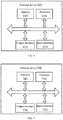
- a terminal device in a fourth aspect, includes: a memory, a processor, an input interface, and an output interface, and the memory, the processor, the input interface, and the output interface are connected by a bus system.
- the memory is configured to store instructions
- the processor is configured to perform instructions that are stored in the memory to perform the method of above first aspect or any of the possible implementations of the first aspect.
- a terminal device for performing the method of the above second aspect or any of the possible implementations of the second aspect.
- the terminal device includes units for performing the method of the above second aspect or any of the possible implementations of the second aspect.
- a terminal device in a sixth aspect, includes: a memory, a processor, an input interface, and an output interface, and the memory, the processor, the input interface, and the output interface are connected by a bus system.
- the memory is configured to store instructions
- the processor is configured to perform instructions that are stored in the memory to perform the method of above second aspect or any of the possible implementations of the second aspect.
- a computer storage medium for storing computer software instructions that are used to perform the method of the above first aspect or any of the possible implementations of the first aspect, which includes a program designed to perform the above aspects.
- a computer program product including instructions, which when running on a computer, enables the computer to perform the method of the above first aspect or any of the possible implementations of the first aspect.
- a computer storage medium for storing computer software instructions that are used to perform the method of the above second aspect or any of the possible implementations of the second aspect, which includes a program designed to perform the above aspects.
- a computer program product including instructions, which when running on a computer, enables the computer to perform the method of the above second aspect or any of the possible implementations of the second aspect.
- LTE long term evolution
- FDD frequency division duplex
- TDD time division duplex
- FIG. 1 shows a wireless communication system 100 applied in an embodiment of the present application.
- the wireless communication system 100 may include a network device 110.
- the network device 100 may be a device that communicates with a terminal device.
- the network device 100 may provide communication coverage for a specific geographic area and may communicate with a terminal device (e.g., UE) located in the coverage area.
- the network device 100 may be an evolutional Node B (eNB or eNodeB) in the LTE system, or the network device may be a relay station, an access point, the in-vehicle equipment, the wearable equipment, and a network side device of the future 5G network or a network device in a future evolutional public land mobile network (PLMN).
- eNB evolutional Node B
- PLMN public land mobile network
- the wireless communication system 100 also includes at least one terminal device 120 located in the coverage of the network device 110.
- the terminal device 120 can be mobile or fixed.
- the terminal device 120 may refer to an access terminal, the user equipment (UE), a user unit, a user station, a mobile station, a mobile platform, a remote station, a remote terminal, the mobile equipment, a user terminal, a terminal, and the wireless communication equipment, a user agent, or a user device.
- UE user equipment
- the access terminal may be a cellular phone, a cordless phone, a session initiation protocol (SIP) phone, a wireless local loop (WLL) station, a personal digital assistant (PDA), an handheld equipment with wireless communication functions, a computing equipment or other processing equipment connected to wireless modems, an in-vehicle equipment, a wearable equipment, a terminal device in a future 5G network, or a terminal device in a future evolutional PLMN, and the like.
- SIP session initiation protocol
- WLL wireless local loop
- PDA personal digital assistant
- FIG. 2 is a schematic flowchart of a method 200 for random access according to an embodiment of the present application.
- the method 200 may be performed by the terminal device in the communication system shown in FIG. 1 .
- the method 200 includes:
- random access events of different priorities may correspond to different backoff time ranges, thereby facilitating avoidance of the conflict problem among random access events of different priorities when the random access is re-initiated, .
- the backoff time is a waiting time from a random access failure to a next re-initiation of the random access
- the terminal device determines the random access fail when it does not receive a RAR or when it receives a Msg4 and determines the failure of competition resolution according to the Msg4.
- the random access event with the first priority may include random access caused by handover and beam failure recovery (BFR), and the random access event with the second priority includes random access events other than the random access event with the first priority, where the random access event with the first priority has a higher priority.
- BFR beam failure recovery
- the random access event with the first priority corresponds to the first backoff time range
- the random access event with the second priority corresponds to the second backoff time range
- the first backoff time range and the second backoff time range do not overlap.
- the first backoff time range and the second backoff time range do not overlap, which may be that the first backoff time range and the second backoff time range do not overlap at all, for example, the first backoff time range is 0-T/3, while the second backoff time range is T/2-T, or may be that the first backoff time range and the second backoff time range overlap at an endpoint position, for example, the first backoff time range is 0 ⁇ T/2, the second backoff time range is T/2 ⁇ T.
- the maximum backoff time of the first backoff time range may be less than or equal to the minimum backoff time of the second backoff time range, that is the backoff time of the random access event with a high priority is shorter, so that the random access event with the high priority can re-initiate random access as soon as possible, and therefore, access time delay can be reduced and user experience can be improved.
- Embodiment 1 the maximum backoff time of the first backoff time range is K ⁇ T, and the minimum backoff time of the second backoff time range is greater than or equal to the K ⁇ T, where 0 ⁇ K ⁇ 1, and T is indicated by the network device through a backoff indicator (BI).
- BI backoff indicator
- the terminal device may determine a duration T according to the BI sent by the network device. Further, the terminal device may use a duration obtained by multiplying the duration T by a scaling factor K as the maximum backoff time of the random access event with the high priority (that is, K ⁇ T). In order to enable the random access event with the high priority to re-initiate random access as soon as possible, it may take 0 ⁇ K ⁇ 1. At the same time, the minimum backoff time of the second backoff time range may be set to be greater than or equal to K ⁇ T, so that the backoff times of random access events of different priorities do not overlap, and then the conflict problem among random access events of different priorities can be avoided.
- the K may be configured by a network, or agreed by a protocol, which is not limited in the embodiment of the present application.
- K may be 1/2, or 1/3, and so on, which is not limited in the embodiment of the present application.
- S210 may include: if the priority of the random access event is the first priority, the terminal device randomly selects a first time between 0 and K ⁇ T, and takes a time value obtained after the first time is multiplied by a scaling factor, factor, as the backoff time of the random access event.
- the upper limit of the first backoff time range may be K ⁇ T
- the lower limit of the first backoff time range may be 0. If the priority of the random access event is the high priority, the terminal device randomly selects a first time between 0 and K ⁇ T, marked as BT1, and then takes the time value obtained by multiplying BT1 by factor as the backoff time of the random access event.
- the scaling factor is configured by a network device, or agreed by a protocol, and the scaling factor may be used to adjust the backoff time of the random access event with the first priority, and the first scaling factor is a positive number less than 1.
- S210 may include: if the priority of the random access event is the second priority, the terminal device randomly selects a second time between the K ⁇ T and T as the backoff time of the random access event.
- the lower limit of the second backoff time range may be K ⁇ T
- the upper limit of the second backoff time range may be T. If the priority of the random access event is the low priority, the terminal device randomly selects a second time between the K ⁇ T and T, marked as BT2, and further may take BT2 as the backoff time of the random access event.
- the backoff time ranges of the determined backoff times are also different, which could avoid the conflict problem between random access events of different priorities.
- Embodiment 2 the maximum backoff time of the first backoff time range is f ⁇ T, and the minimum backoff time of the second backoff time range is greater than or equal to the f ⁇ T, where 0 ⁇ f ⁇ 1, T is indicated by the network device through the backoff indicator (BI), and f is a scaling factor configured by the network device.
- the f may correspond to the scaling factor, factor, described above, that is, in the embodiment 2, the upper limit of the first backoff time range may be the product of the duration T and the scaling factor f determined according to BI, the lower limit of the second backoff time range may be greater than or equal to the product of the duration T and the scaling factor f, and therefore, the first backoff time range and the second backoff time range may respectively correspond to different backoff time ranges, thereby facilitating avoidance of the conflict problem between random access events of different priorities.
- S210 may include: if the priority of the random access event is the first priority, the terminal device randomly selects a third time between 0 and f ⁇ T as the backoff time of the random access event.
- the terminal device may randomly select a third time between 0 and f ⁇ T as the backoff time of the random access event.
- S210 may include: if the priority of the random access event is the second priority, the terminal device randomly selects a fourth time between f ⁇ T and T as the backoff time of the random access event.
- the terminal device may randomly select a fourth time between f ⁇ T and T as the backoff time of the random access event.
- the backoff time ranges of the determined backoff times are also different, and thereby the conflict problem between random access events of different priorities can be avoided.
- the backoff time ranges corresponding to the random access events of different priorities are only examples, the first backoff time range and the second backoff time range may also be other time ranges, and the embodiments of the present application constitutes any limitation.
- FIG. 3 is a schematic flowchart of a method 300 for random access according to another embodiment of the present application, the method 300 may be performed by the terminal device in the communication system shown in FIG. 1 , and as shown in FIG. 3 , the method 300 includes the following contents:
- the random access events of different priorities may correspond to the same backoff time range
- the terminal device may determine the backoff time of the random access event according to the priority of the random access event in combination with the same backoff time range. For example, for the random access event with the higher priority, the terminal device may randomly select a time value within the backoff time range, and then multiply the time value by a specific scale factor (less than 1) to obtain a time value, which is determined as the backoff time of the random access event, or for the random access event with the lower priority, the terminal device may randomly select a time value within the backoff time range, which is determined as the backoff time of the random access event, so that the random access event of the high priority can re-initiate random access as soon as possible, and at the same time, although the random access events of different priorities correspond to the same backoff time range, since the backoff times are determined in different specific ways, the conflict problem between random access events of different priorities can also be reduced to some extent.
- the maximum backoff time of the same backoff time range is T, and T is determined by a network device through a backoff indicator (BI).
- BI backoff indicator
- the determining, by a terminal device, a backoff time of a random access event according to a priority of the random access event includes: if the priority of the random access event is the first priority, the terminal device randomly selects a fifth time between 0 and T, and takes a time value obtained after the fifth time is multiplied by a scaling factor as the backoff time of the random access event.
- the scaling factor is configured by a network device, and is used to adjust the backoff time of the random access event with the first priority, and the first scaling factor is a positive number less than 1.
- the scaling factor here may correspond to the factor mentioned above, and the specific implementation process is similar, which will not be repeated here.
- S310 may include: if the priority of the random access event is the second priority, the terminal device randomly selects a sixth time between 0 and T as the backoff time of the random access event.
- the random access event with the first priority includes random access caused by handover and beam failure recovery (BFR), and the second priority random access event includes random access events other than the random access event with the first priority.
- BFR beam failure recovery
- FIG. 4 shows a schematic block diagram of a terminal device 400 according to an embodiment of the present application.
- the terminal device 400 includes:
- a maximum backoff time of the first backoff time range is K ⁇ T, where 0 ⁇ K ⁇ 1, T is indicated by a network device through a backoff indicator (BI), and a minimum backoff time of the second backoff time range is greater than or equal to K ⁇ T.
- the determining module 410 is specifically configured to: if the priority of the random access event is the first priority, randomly select a first time between 0 and K ⁇ T, and take a time value obtained after the first time is multiplied by a scaling factor as the backoff time of the random access event.
- the scaling factor is configured by the network device, and used to adjust the backoff time of the random access event with the first priority, and the first scaling factor is a positive number less than 1.
- the determining module 410 is further configured to: if the priority of the random access event is the second priority, randomly select a second time between the K ⁇ T and T as the backoff time of the random access event.
- K is configured by the network device.
- K is 1/2.
- the maximum backoff time of the first backoff time range is f ⁇ T
- the minimum backoff time of the second backoff time range is greater than or equal to the f ⁇ T, where 0 ⁇ f ⁇ 1, T is indicated by the network device through a backoff indicator (BI), and f is a scaling factor configured by the network device.
- the determining module 410 is further configured to: if the priority of the random access event is the first priority, randomly select a third time between 0 and the f ⁇ T as the backoff time of the random access event.
- the determining module 410 is further used to: if the priority of the random access event is the second priority, randomly select a fourth time between f ⁇ T and T as the backoff time of the random access event.
- the random access event with the first priority includes random access caused by handover and beam failure recovery (BFR), and the random access event with the second priority includes random access events other than the random access event with the first priority.
- BFR beam failure recovery
- terminal device 400 may correspond to the terminal device in the method embodiments of the present application, and the above and other operations and/or functions of the units in the terminal device 400 are respectively for implementing the corresponding processes of the terminal device in the method 200 shown in FIG. 2 , and are not repeated here for brevity.
- FIG. 5 is a schematic block diagram of a terminal device according to another embodiment of the present application.
- the terminal device 500 in FIG. 5 includes:
- a maximum backoff time of the same backoff time range is T, and T is determined by a network device through a backoff indicator (BI).
- BI backoff indicator
- the determining module 510 is specifically configured to: if the priority of the random access event is the first priority, randomly select a fifth time between 0 and T, and take a time value obtained after the fifth time is multiplied by a scaling factor as the backoff time of the random access event.
- the scaling factor is configured by a network device, and used to adjust the backoff time of the random access event with the first priority, and the first scaling factor is a positive number less than 1.
- the determining module 510 is further configured to: if the priority of the random access event is the second priority, randomly select a sixth time between 0 and the T as the backoff time of the random access event.
- the random access event with the first priority includes random access caused by handover and beam failure recovery (BFR), and the random access event with the second priority includes random access events other than the random access event with the first priority.
- BFR beam failure recovery
- the terminal device 500 may correspond to (for example, may be configured in or be itself) the terminal device described in the above method 300, and the modules or units in the terminal device 500 are respectively configured to perform the actions or processes performed by the terminal device in the foregoing method 300.
- the terminal device 500 in order to avoid repeating, detailed description is omitted.
- an embodiment of the present application further provides a terminal device 600, which may be the terminal device 400 in FIG. 4 , and which can be configured to perform the content of the terminal device corresponding to the method 200 in FIG. 2 .
- the terminal device 600 includes: an input interface 610, an output interface 620, a processor 630, and a memory 640.
- the input interface 610, the output interface 620, the processor 630, and the memory 640 may be connected by a bus system.
- the memory 640 is configured to store a program, instructions or code.
- the processor 630 is configured to perform the program, instructions or code in the memory 640 to control the input interface 610 to receive a signal, control the output interface 620 to transmit a signal, and complete the operations in the foregoing method embodiments.
- the processor 630 may be a central processing unit (CPU), and the processor 630 may also be other general-purpose processors, digital signal processors (DSP), application specific integrated circuit (ASIC), ready-made programmable gate array (FPGA) or other programmable logic devices, discrete gate or transistor logic devices, discrete hardware components, and so on.
- the general purpose processor may be a microprocessor or the processor may also be any conventional processors, and so on.
- the memory 640 may include read-only memory and random access memory, and provides instructions and data to the processor 630. Apart of the memory 640 may also include non-volatile random access memory. For example, the memory 640 can also store information of a type of a device.
- the contents of the above method may be completed by an integrated logic circuit of hardware in the processor 630 or an instruction in a form of software.
- the contents of the method disclosed in the embodiments of the present application may be directly performed by a hardware processor, or may be performed by a combination of hardware and software modules in the processor.
- the software module can be located in a mature storage medium in the art, such as a random access memory, a flash memory, a read-only memory, a programmable read-only memory or an electrically erasable programmable memory, a register, or the like.
- the storage medium is located in the memory 640, the processor 630 reads information in the memory 640 and completes the contents of the above method in combination with its hardware. To avoid repetition, it will not be described in detail here.
- the determining module 410 included in the terminal device 400 in FIG. 4 may be implemented by the processor 630 in FIG. 6 .
- the access module 420 included in the terminal device 400 in FIG. 4 may be implemented by the input interface 610 and the output interface 620 in FIG. 6 .
- an embodiment of the present application further provides a terminal device 700, and the terminal device 700 may be the terminal device 500 in FIG. 5 , which can be used to perform the content of the terminal device corresponding to the method 300 in FIG. 3 .
- the terminal device 700 includes an input interface 710, an output interface 720, a processor 730, and a memory 740.
- the input interface 710, the output interface 720, the processor 730, and the memory 740 may be connected through a bus system.
- the memory 740 is configured to store a program, instructions or code.
- the processor 730 is configured to perform the program, instructions or code in the memory 740 to control the input interface 710 to receive a signal, control the output interface 720 to transmit a signal, and complete the operations in the foregoing method embodiments.
- the processor 730 may be a central processing unit (CPU), the processor 730 may also be other general purpose processors, digital signal processor (DSP), application specific integrated circuit (ASIC), ready-made programmable gate array (FPGA) or other programmable logic devices, discrete gate or transistor logic devices, discrete hardware components, and so on.
- the general-purpose processor may be a microprocessor or the processor may also be any conventional processors, and so on.
- the memory 740 may include a read-only memory and a random access memory, and provides instructions and data to the processor 730. Apart of the memory 740 may also include a non-volatile random access memory. For example, the memory 740 can also store information of a type of a device.
- the content of the above method may be completed by an integrated logic circuit of hardware in the processor 730 or an instruction in a form of software.
- the content of the method disclosed in the embodiments of the present application may be directly performed by a hardware processor, or may be performed by a combination of hardware and software modules in the processor.
- the software module can be located in a mature storage medium such as a random access memory, a flash memory, a read-only memory, a programmable read-only memory or an electrically erasable programmable memory, a register, or the like.
- the storage medium is located in the memory 740, the processor 730 reads information in the memory 740 and completes the contents of the above method in combination with its hardware. To avoid repetition, it will not be described in detail here.
- the determining module 510 included in the terminal device 500 in FIG. 5 may be implemented by the processor 730 in FIG. 7 .
- the access module 520 included in the terminal device 500 in FIG. 5 may be implemented by the input interface 710 and the output interface 720 in FIG. 7 .
- An embodiment of the present application further proposes a computer readable storage medium that stores one or more programs, the one or more programs including instructions, the instructions when being performed by a portable electronic device that includes multiple applications, can cause the portable electronic device to perform the method of the embodiments shown in FIG. 2 and FIG. 3 .
- An embodiment of the present application also proposes a computer program that includes instructions, the computer program when being performed by a computer, causes the computer to perform the corresponding flow of the method of the embodiments shown in FIG. 2 and FIG. 3 .
- the disclosed systems, devices, and methods may be implemented in other ways.
- the device embodiments described above are merely illustrative, for example, the division of the unit is only a logical function division, in an actual implementation, there may be other division manners, for example, multiple units or components may be combined or may be integrated into another system, or some features may be ignored or not performed.
- the mutual coupling or direct coupling or communication connection shown or discussed may be an indirect coupling or communication connection through some interfaces, devices or units, and may be electrical, mechanical or other forms.
- the units described as separate components may or may not be physically separated, and the components displayed as units may or may not be physical units, that is, may be located in one place, or may be distributed to multiple network units. Some or all of the units may be selected according to actual needs to achieve the purpose of the scheme of the embodiment.
- each functional unit in each embodiment of the present application may be integrated into one processing unit, or each unit may exist physically separately, or two or more units may be integrated into one unit.
- This function can be stored on a computer readable storage medium, if the function is implemented in a software function unit form and sold or used as an independent product.
- the technical solution of the present application in essence, or a part that contributes to the prior art, or a part of the technical solution, may be embodied in the form of a software product, which is stored in a storage medium, including a number of instructions which are used to cause a computer equipment (which may be a personal computer, server, or network device, etc.) to perform all or part of the steps of each embodiment of the present application.
- the foregoing storage medium includes: a U disk, a mobile hard disk, a Read-Only Memory (ROM), a Random Access Memory (RAM), a magnetic disk, or an optical disk, and the like, which can store program code.
Landscapes
- Engineering & Computer Science (AREA)
- Computer Networks & Wireless Communication (AREA)
- Signal Processing (AREA)
- Mobile Radio Communication Systems (AREA)
Applications Claiming Priority (1)
| Application Number | Priority Date | Filing Date | Title |
|---|---|---|---|
| PCT/CN2018/080044 WO2019178810A1 (fr) | 2018-03-22 | 2018-03-22 | Procédé d'accès aléatoire et dispositif terminal |
Publications (3)
| Publication Number | Publication Date |
|---|---|
| EP3634074A1 true EP3634074A1 (fr) | 2020-04-08 |
| EP3634074A4 EP3634074A4 (fr) | 2020-08-12 |
| EP3634074B1 EP3634074B1 (fr) | 2021-07-07 |
Family
ID=66117558
Family Applications (1)
| Application Number | Title | Priority Date | Filing Date |
|---|---|---|---|
| EP18911143.8A Active EP3634074B1 (fr) | 2018-03-22 | 2018-03-22 | Procédé d'accès aléatoire et dispositif terminal |
Country Status (7)
| Country | Link |
|---|---|
| US (1) | US11246168B2 (fr) |
| EP (1) | EP3634074B1 (fr) |
| JP (1) | JP2021520089A (fr) |
| KR (1) | KR20200135790A (fr) |
| CN (2) | CN112261734A (fr) |
| AU (1) | AU2018414649A1 (fr) |
| WO (1) | WO2019178810A1 (fr) |
Cited By (1)
| Publication number | Priority date | Publication date | Assignee | Title |
|---|---|---|---|---|
| WO2023126542A1 (fr) * | 2022-01-03 | 2023-07-06 | Continental Automotive Technologies GmbH | Procédé de réduction de congestion mis en œuvre par un équipement utilisateur dans des systèmes de communication |
Families Citing this family (11)
| Publication number | Priority date | Publication date | Assignee | Title |
|---|---|---|---|---|
| CN110621079B (zh) * | 2018-06-19 | 2021-04-13 | 维沃移动通信有限公司 | 随机接入资源的选择方法及终端设备 |
| WO2020029091A1 (fr) * | 2018-08-07 | 2020-02-13 | 北京小米移动软件有限公司 | Procédé et appareil de signalement d'informations, terminal et support de stockage |
| WO2021008316A1 (fr) * | 2019-07-12 | 2021-01-21 | Guangdong Oppo Mobile Telecommunications Corp., Ltd. | Appareil et procédé de reprise après défaillance de faisceau pour une cellule secondaire |
| WO2021072961A1 (fr) * | 2019-10-18 | 2021-04-22 | Oppo广东移动通信有限公司 | Procédé et appareil de configuration de priorité, et dispositif de terminal |
| CN113079580B (zh) * | 2020-01-03 | 2022-11-25 | 上海朗帛通信技术有限公司 | 一种被用于无线通信的节点中的方法和装置 |
| CN113810883A (zh) * | 2021-07-01 | 2021-12-17 | 中铁二院工程集团有限责任公司 | 物联网大规模随机接入控制方法 |
| CN117156595B (zh) * | 2022-05-24 | 2026-01-23 | 荣耀终端股份有限公司 | 随机接入的方法和终端设备 |
| DE102024108182A1 (de) * | 2024-03-21 | 2025-09-25 | Continental Automotive Technologies GmbH | Verfahren und Vorrichtung zum Verbessern der Nutzung von RACH-Uplink-Ressourcen durch Ambient-IoT-Vorrichtungen durch das Zuweisen von sich gegenseitig ausschließenden Backoff-Verzögerungswerten |
| WO2025196127A1 (fr) | 2024-03-22 | 2025-09-25 | Continental Automotive Technologies GmbH | Procédé de planification pour dispositifs ido ambiants |
| WO2025196146A1 (fr) | 2024-03-22 | 2025-09-25 | Continental Automotive Technologies GmbH | Procédé d'accès aléatoire pour dispositifs sans fil collectant l'énergie ambiante |
| DE102024205501A1 (de) * | 2024-06-14 | 2025-12-18 | Continental Automotive Technologies GmbH | Verfahren und Vorrichtung zum Verbessern der Nutzung von Direktzugriff-Uplink-Ressourcen durch Ambient-IoT-Vorrichtungen durch das Zuweisen von sich gegenseitig ausschließenden Backoff-Verzögerungsbereichen |
Family Cites Families (24)
| Publication number | Priority date | Publication date | Assignee | Title |
|---|---|---|---|---|
| KR100891788B1 (ko) * | 2002-07-08 | 2009-04-07 | 삼성전자주식회사 | 실시간 어플리케이션을 위한 액세스 경쟁 방법 및 이를위한 매체 액세스 제어 계층 모듈 |
| CN101394334B (zh) * | 2007-09-19 | 2010-10-27 | 北京中电华大电子设计有限责任公司 | 一种用于无线局域网的数据包调度发送装置 |
| CN102291846B (zh) * | 2010-06-21 | 2016-01-20 | 中兴通讯股份有限公司 | 一种随机接入方法及实现随机接入的系统 |
| CN102378364B (zh) * | 2010-08-24 | 2014-12-10 | 中兴通讯股份有限公司 | 一种随机接入方法及实现随机接入的系统 |
| US8588163B2 (en) * | 2010-10-01 | 2013-11-19 | Industrial Technology Research Institute | Random access method, parameter assignment method, wireless communication device, and base station using the same |
| CN102014516B (zh) * | 2010-11-18 | 2013-08-14 | 北京邮电大学 | Lte-a系统中的随机接入方法 |
| CN102625462A (zh) | 2011-01-31 | 2012-08-01 | 财团法人工业技术研究院 | 网络接入方法及其无线通信装置、基站与m2m装置 |
| US9025455B2 (en) * | 2011-04-26 | 2015-05-05 | Industrial Technology Research Institute | Prioritized random access method, resource allocation method and collision resolution method |
| US9078257B2 (en) * | 2011-11-11 | 2015-07-07 | Intel Coproration | Random backoff for extended access barring |
| CN102413580B (zh) * | 2011-11-16 | 2014-05-07 | 浙江宇脉科技有限公司 | 一种无线网络接入控制方法 |
| CN104186010B (zh) * | 2012-03-16 | 2018-09-21 | 交互数字专利控股公司 | 无线系统中的随机接入过程 |
| JP6074053B2 (ja) * | 2012-10-23 | 2017-02-01 | エルジー エレクトロニクス インコーポレイティド | 無線通信システムにおけるバックオフを実行する方法及び装置 |
| KR102079601B1 (ko) * | 2013-08-14 | 2020-02-21 | 삼성전자주식회사 | 가상 셀 네트워크 시스템에서 랜덤 억세스 방법 및 장치 |
| CN106413117B (zh) * | 2015-07-29 | 2021-08-17 | 索尼公司 | 无线通信系统、基站侧和用户设备侧的装置及方法 |
| WO2018174496A1 (fr) * | 2017-03-22 | 2018-09-27 | 엘지전자 주식회사 | Procédé et dispositif pour l'ajustement d'un paramètre de réduction de puissance d'accès aléatoire |
| CN108633106B (zh) * | 2017-03-24 | 2019-09-17 | 电信科学技术研究院 | 一种随机接入回退后的随机接入及指示方法、装置 |
| CN106982467B (zh) | 2017-04-25 | 2020-02-11 | 电子科技大学 | 一种基于动态分配prach资源的接入拥塞控制方法 |
| US10785802B2 (en) * | 2017-05-05 | 2020-09-22 | Motorola Mobility Llc | Transmitting SR prior to completing RACH |
| US10708958B2 (en) * | 2017-05-22 | 2020-07-07 | Lg Electronics Inc. | Transmitting trigger frame in wireless local area network and wireless terminal using the same |
| US12309831B2 (en) * | 2017-06-16 | 2025-05-20 | Qualcomm Incorporated | Differentiated random access in new radio |
| US11259329B2 (en) * | 2017-08-21 | 2022-02-22 | Qualcomm Incorporated | Prioritized random access procedure |
| CN109495977A (zh) | 2017-09-11 | 2019-03-19 | 华为技术有限公司 | 一种随机接入方法和设备 |
| CN109587813B (zh) | 2017-09-28 | 2023-09-22 | 华为技术有限公司 | 随机接入方法、通信装置以及终端 |
| CN111819907B (zh) * | 2018-02-21 | 2023-04-28 | 鸿颖创新有限公司 | 下一代网络中决定接入及服务的优先顺序之方法及其装置 |
-
2018
- 2018-03-22 WO PCT/CN2018/080044 patent/WO2019178810A1/fr not_active Ceased
- 2018-03-22 EP EP18911143.8A patent/EP3634074B1/fr active Active
- 2018-03-22 KR KR1020207027380A patent/KR20200135790A/ko not_active Withdrawn
- 2018-03-22 AU AU2018414649A patent/AU2018414649A1/en not_active Abandoned
- 2018-03-22 CN CN202011156964.7A patent/CN112261734A/zh not_active Withdrawn
- 2018-03-22 CN CN201880003201.3A patent/CN109661852B/zh active Active
- 2018-03-22 JP JP2020550847A patent/JP2021520089A/ja active Pending
-
2020
- 2020-01-03 US US16/733,961 patent/US11246168B2/en active Active
Cited By (1)
| Publication number | Priority date | Publication date | Assignee | Title |
|---|---|---|---|---|
| WO2023126542A1 (fr) * | 2022-01-03 | 2023-07-06 | Continental Automotive Technologies GmbH | Procédé de réduction de congestion mis en œuvre par un équipement utilisateur dans des systèmes de communication |
Also Published As
| Publication number | Publication date |
|---|---|
| CN109661852B (zh) | 2020-11-20 |
| AU2018414649A1 (en) | 2020-10-15 |
| EP3634074A4 (fr) | 2020-08-12 |
| JP2021520089A (ja) | 2021-08-12 |
| EP3634074B1 (fr) | 2021-07-07 |
| KR20200135790A (ko) | 2020-12-03 |
| CN109661852A (zh) | 2019-04-19 |
| US20200146074A1 (en) | 2020-05-07 |
| CN112261734A (zh) | 2021-01-22 |
| WO2019178810A1 (fr) | 2019-09-26 |
| US11246168B2 (en) | 2022-02-08 |
Similar Documents
| Publication | Publication Date | Title |
|---|---|---|
| US11246168B2 (en) | Method for random access and terminal device | |
| CN109587052B (zh) | 一种多链路数据传输方法及装置 | |
| CN109644352B (zh) | 激活与去激活辅小区的方法和终端设备 | |
| EP3579649A1 (fr) | Procédé d'accès aléatoire, dispositif terminal et dispositif réseau | |
| EP3614767B1 (fr) | Procédé de transmission d'informations, dispositif terminal et dispositif de réseau | |
| US11265950B2 (en) | Communication method, network device, and terminal device | |
| CN112788712A (zh) | 随机接入响应rar的检测方法、终端设备和网络设备 | |
| US20200351951A1 (en) | Random access method and device | |
| EP3554175B1 (fr) | Procédés et appareil d'accès aléatoire | |
| US11540215B2 (en) | Paging method, terminal device and network device | |
| JP7148639B2 (ja) | データ伝送方法及び通信装置 | |
| EP3606181A1 (fr) | Procédé permettant à un dispositif terminal d'accéder à un réseau, dispositif terminal et dispositif de réseau | |
| WO2019084924A1 (fr) | Procédé et dispositif de transmission de données | |
| US11122548B2 (en) | Device-to-device communication method and terminal device | |
| EP3703445A1 (fr) | Procédé de transmission de données, dispositif terminal et dispositif de réseau | |
| CN108650049B (zh) | 一种信道检测方法、装置及基站 | |
| CN111866968B (zh) | 网络模式切换方法和装置 |
Legal Events
| Date | Code | Title | Description |
|---|---|---|---|
| STAA | Information on the status of an ep patent application or granted ep patent |
Free format text: STATUS: THE INTERNATIONAL PUBLICATION HAS BEEN MADE |
|
| PUAI | Public reference made under article 153(3) epc to a published international application that has entered the european phase |
Free format text: ORIGINAL CODE: 0009012 |
|
| STAA | Information on the status of an ep patent application or granted ep patent |
Free format text: STATUS: REQUEST FOR EXAMINATION WAS MADE |
|
| 17P | Request for examination filed |
Effective date: 20200102 |
|
| AK | Designated contracting states |
Kind code of ref document: A1 Designated state(s): AL AT BE BG CH CY CZ DE DK EE ES FI FR GB GR HR HU IE IS IT LI LT LU LV MC MK MT NL NO PL PT RO RS SE SI SK SM TR |
|
| AX | Request for extension of the european patent |
Extension state: BA ME |
|
| A4 | Supplementary search report drawn up and despatched |
Effective date: 20200709 |
|
| RIC1 | Information provided on ipc code assigned before grant |
Ipc: H04W 74/08 20090101AFI20200704BHEP |
|
| GRAP | Despatch of communication of intention to grant a patent |
Free format text: ORIGINAL CODE: EPIDOSNIGR1 |
|
| STAA | Information on the status of an ep patent application or granted ep patent |
Free format text: STATUS: GRANT OF PATENT IS INTENDED |
|
| DAV | Request for validation of the european patent (deleted) | ||
| DAX | Request for extension of the european patent (deleted) | ||
| INTG | Intention to grant announced |
Effective date: 20210322 |
|
| GRAS | Grant fee paid |
Free format text: ORIGINAL CODE: EPIDOSNIGR3 |
|
| GRAA | (expected) grant |
Free format text: ORIGINAL CODE: 0009210 |
|
| STAA | Information on the status of an ep patent application or granted ep patent |
Free format text: STATUS: THE PATENT HAS BEEN GRANTED |
|
| AK | Designated contracting states |
Kind code of ref document: B1 Designated state(s): AL AT BE BG CH CY CZ DE DK EE ES FI FR GB GR HR HU IE IS IT LI LT LU LV MC MK MT NL NO PL PT RO RS SE SI SK SM TR |
|
| REG | Reference to a national code |
Ref country code: GB Ref legal event code: FG4D |
|
| REG | Reference to a national code |
Ref country code: AT Ref legal event code: REF Ref document number: 1409875 Country of ref document: AT Kind code of ref document: T Effective date: 20210715 |
|
| REG | Reference to a national code |
Ref country code: DE Ref legal event code: R096 Ref document number: 602018019921 Country of ref document: DE |
|
| REG | Reference to a national code |
Ref country code: IE Ref legal event code: FG4D |
|
| REG | Reference to a national code |
Ref country code: LT Ref legal event code: MG9D |
|
| REG | Reference to a national code |
Ref country code: NL Ref legal event code: MP Effective date: 20210707 |
|
| REG | Reference to a national code |
Ref country code: AT Ref legal event code: MK05 Ref document number: 1409875 Country of ref document: AT Kind code of ref document: T Effective date: 20210707 |
|
| PG25 | Lapsed in a contracting state [announced via postgrant information from national office to epo] |
Ref country code: SE Free format text: LAPSE BECAUSE OF FAILURE TO SUBMIT A TRANSLATION OF THE DESCRIPTION OR TO PAY THE FEE WITHIN THE PRESCRIBED TIME-LIMIT Effective date: 20210707 Ref country code: RS Free format text: LAPSE BECAUSE OF FAILURE TO SUBMIT A TRANSLATION OF THE DESCRIPTION OR TO PAY THE FEE WITHIN THE PRESCRIBED TIME-LIMIT Effective date: 20210707 Ref country code: ES Free format text: LAPSE BECAUSE OF FAILURE TO SUBMIT A TRANSLATION OF THE DESCRIPTION OR TO PAY THE FEE WITHIN THE PRESCRIBED TIME-LIMIT Effective date: 20210707 Ref country code: FI Free format text: LAPSE BECAUSE OF FAILURE TO SUBMIT A TRANSLATION OF THE DESCRIPTION OR TO PAY THE FEE WITHIN THE PRESCRIBED TIME-LIMIT Effective date: 20210707 Ref country code: AT Free format text: LAPSE BECAUSE OF FAILURE TO SUBMIT A TRANSLATION OF THE DESCRIPTION OR TO PAY THE FEE WITHIN THE PRESCRIBED TIME-LIMIT Effective date: 20210707 Ref country code: BG Free format text: LAPSE BECAUSE OF FAILURE TO SUBMIT A TRANSLATION OF THE DESCRIPTION OR TO PAY THE FEE WITHIN THE PRESCRIBED TIME-LIMIT Effective date: 20211007 Ref country code: LT Free format text: LAPSE BECAUSE OF FAILURE TO SUBMIT A TRANSLATION OF THE DESCRIPTION OR TO PAY THE FEE WITHIN THE PRESCRIBED TIME-LIMIT Effective date: 20210707 Ref country code: NL Free format text: LAPSE BECAUSE OF FAILURE TO SUBMIT A TRANSLATION OF THE DESCRIPTION OR TO PAY THE FEE WITHIN THE PRESCRIBED TIME-LIMIT Effective date: 20210707 Ref country code: PT Free format text: LAPSE BECAUSE OF FAILURE TO SUBMIT A TRANSLATION OF THE DESCRIPTION OR TO PAY THE FEE WITHIN THE PRESCRIBED TIME-LIMIT Effective date: 20211108 Ref country code: NO Free format text: LAPSE BECAUSE OF FAILURE TO SUBMIT A TRANSLATION OF THE DESCRIPTION OR TO PAY THE FEE WITHIN THE PRESCRIBED TIME-LIMIT Effective date: 20211007 Ref country code: HR Free format text: LAPSE BECAUSE OF FAILURE TO SUBMIT A TRANSLATION OF THE DESCRIPTION OR TO PAY THE FEE WITHIN THE PRESCRIBED TIME-LIMIT Effective date: 20210707 |
|
| PG25 | Lapsed in a contracting state [announced via postgrant information from national office to epo] |
Ref country code: PL Free format text: LAPSE BECAUSE OF FAILURE TO SUBMIT A TRANSLATION OF THE DESCRIPTION OR TO PAY THE FEE WITHIN THE PRESCRIBED TIME-LIMIT Effective date: 20210707 Ref country code: LV Free format text: LAPSE BECAUSE OF FAILURE TO SUBMIT A TRANSLATION OF THE DESCRIPTION OR TO PAY THE FEE WITHIN THE PRESCRIBED TIME-LIMIT Effective date: 20210707 Ref country code: GR Free format text: LAPSE BECAUSE OF FAILURE TO SUBMIT A TRANSLATION OF THE DESCRIPTION OR TO PAY THE FEE WITHIN THE PRESCRIBED TIME-LIMIT Effective date: 20211008 |
|
| REG | Reference to a national code |
Ref country code: DE Ref legal event code: R097 Ref document number: 602018019921 Country of ref document: DE |
|
| PG25 | Lapsed in a contracting state [announced via postgrant information from national office to epo] |
Ref country code: DK Free format text: LAPSE BECAUSE OF FAILURE TO SUBMIT A TRANSLATION OF THE DESCRIPTION OR TO PAY THE FEE WITHIN THE PRESCRIBED TIME-LIMIT Effective date: 20210707 |
|
| PLBE | No opposition filed within time limit |
Free format text: ORIGINAL CODE: 0009261 |
|
| STAA | Information on the status of an ep patent application or granted ep patent |
Free format text: STATUS: NO OPPOSITION FILED WITHIN TIME LIMIT |
|
| PG25 | Lapsed in a contracting state [announced via postgrant information from national office to epo] |
Ref country code: SM Free format text: LAPSE BECAUSE OF FAILURE TO SUBMIT A TRANSLATION OF THE DESCRIPTION OR TO PAY THE FEE WITHIN THE PRESCRIBED TIME-LIMIT Effective date: 20210707 Ref country code: SK Free format text: LAPSE BECAUSE OF FAILURE TO SUBMIT A TRANSLATION OF THE DESCRIPTION OR TO PAY THE FEE WITHIN THE PRESCRIBED TIME-LIMIT Effective date: 20210707 Ref country code: RO Free format text: LAPSE BECAUSE OF FAILURE TO SUBMIT A TRANSLATION OF THE DESCRIPTION OR TO PAY THE FEE WITHIN THE PRESCRIBED TIME-LIMIT Effective date: 20210707 Ref country code: EE Free format text: LAPSE BECAUSE OF FAILURE TO SUBMIT A TRANSLATION OF THE DESCRIPTION OR TO PAY THE FEE WITHIN THE PRESCRIBED TIME-LIMIT Effective date: 20210707 Ref country code: CZ Free format text: LAPSE BECAUSE OF FAILURE TO SUBMIT A TRANSLATION OF THE DESCRIPTION OR TO PAY THE FEE WITHIN THE PRESCRIBED TIME-LIMIT Effective date: 20210707 Ref country code: AL Free format text: LAPSE BECAUSE OF FAILURE TO SUBMIT A TRANSLATION OF THE DESCRIPTION OR TO PAY THE FEE WITHIN THE PRESCRIBED TIME-LIMIT Effective date: 20210707 |
|
| 26N | No opposition filed |
Effective date: 20220408 |
|
| PG25 | Lapsed in a contracting state [announced via postgrant information from national office to epo] |
Ref country code: IT Free format text: LAPSE BECAUSE OF FAILURE TO SUBMIT A TRANSLATION OF THE DESCRIPTION OR TO PAY THE FEE WITHIN THE PRESCRIBED TIME-LIMIT Effective date: 20210707 |
|
| PG25 | Lapsed in a contracting state [announced via postgrant information from national office to epo] |
Ref country code: MC Free format text: LAPSE BECAUSE OF FAILURE TO SUBMIT A TRANSLATION OF THE DESCRIPTION OR TO PAY THE FEE WITHIN THE PRESCRIBED TIME-LIMIT Effective date: 20210707 |
|
| REG | Reference to a national code |
Ref country code: CH Ref legal event code: PL |
|
| REG | Reference to a national code |
Ref country code: BE Ref legal event code: MM Effective date: 20220331 |
|
| PG25 | Lapsed in a contracting state [announced via postgrant information from national office to epo] |
Ref country code: LU Free format text: LAPSE BECAUSE OF NON-PAYMENT OF DUE FEES Effective date: 20220322 Ref country code: LI Free format text: LAPSE BECAUSE OF NON-PAYMENT OF DUE FEES Effective date: 20220331 Ref country code: IE Free format text: LAPSE BECAUSE OF NON-PAYMENT OF DUE FEES Effective date: 20220322 Ref country code: CH Free format text: LAPSE BECAUSE OF NON-PAYMENT OF DUE FEES Effective date: 20220331 |
|
| PG25 | Lapsed in a contracting state [announced via postgrant information from national office to epo] |
Ref country code: BE Free format text: LAPSE BECAUSE OF NON-PAYMENT OF DUE FEES Effective date: 20220331 |
|
| P01 | Opt-out of the competence of the unified patent court (upc) registered |
Effective date: 20230412 |
|
| PG25 | Lapsed in a contracting state [announced via postgrant information from national office to epo] |
Ref country code: MK Free format text: LAPSE BECAUSE OF FAILURE TO SUBMIT A TRANSLATION OF THE DESCRIPTION OR TO PAY THE FEE WITHIN THE PRESCRIBED TIME-LIMIT Effective date: 20210707 Ref country code: CY Free format text: LAPSE BECAUSE OF FAILURE TO SUBMIT A TRANSLATION OF THE DESCRIPTION OR TO PAY THE FEE WITHIN THE PRESCRIBED TIME-LIMIT Effective date: 20210707 |
|
| PG25 | Lapsed in a contracting state [announced via postgrant information from national office to epo] |
Ref country code: HU Free format text: LAPSE BECAUSE OF FAILURE TO SUBMIT A TRANSLATION OF THE DESCRIPTION OR TO PAY THE FEE WITHIN THE PRESCRIBED TIME-LIMIT; INVALID AB INITIO Effective date: 20180322 |
|
| PG25 | Lapsed in a contracting state [announced via postgrant information from national office to epo] |
Ref country code: MT Free format text: LAPSE BECAUSE OF FAILURE TO SUBMIT A TRANSLATION OF THE DESCRIPTION OR TO PAY THE FEE WITHIN THE PRESCRIBED TIME-LIMIT Effective date: 20210707 |
|
| PG25 | Lapsed in a contracting state [announced via postgrant information from national office to epo] |
Ref country code: TR Free format text: LAPSE BECAUSE OF FAILURE TO SUBMIT A TRANSLATION OF THE DESCRIPTION OR TO PAY THE FEE WITHIN THE PRESCRIBED TIME-LIMIT Effective date: 20210707 |
|
| PGFP | Annual fee paid to national office [announced via postgrant information from national office to epo] |
Ref country code: GB Payment date: 20260202 Year of fee payment: 9 |
|
| PGFP | Annual fee paid to national office [announced via postgrant information from national office to epo] |
Ref country code: DE Payment date: 20260128 Year of fee payment: 9 |
|
| PGFP | Annual fee paid to national office [announced via postgrant information from national office to epo] |
Ref country code: FR Payment date: 20260209 Year of fee payment: 9 |