EP3634080A1 - Sitzungsverarbeitungsverfahren, -vorrichtung und -system - Google Patents
Sitzungsverarbeitungsverfahren, -vorrichtung und -system Download PDFInfo
- Publication number
- EP3634080A1 EP3634080A1 EP18814410.9A EP18814410A EP3634080A1 EP 3634080 A1 EP3634080 A1 EP 3634080A1 EP 18814410 A EP18814410 A EP 18814410A EP 3634080 A1 EP3634080 A1 EP 3634080A1
- Authority
- EP
- European Patent Office
- Prior art keywords
- ladn
- session
- functional entity
- management functional
- area covered
- Prior art date
- Legal status (The legal status is an assumption and is not a legal conclusion. Google has not performed a legal analysis and makes no representation as to the accuracy of the status listed.)
- Granted
Links
Images





Classifications
-
- H—ELECTRICITY
- H04—ELECTRIC COMMUNICATION TECHNIQUE
- H04W—WIRELESS COMMUNICATION NETWORKS
- H04W76/00—Connection management
- H04W76/20—Manipulation of established connections
-
- H—ELECTRICITY
- H04—ELECTRIC COMMUNICATION TECHNIQUE
- H04W—WIRELESS COMMUNICATION NETWORKS
- H04W76/00—Connection management
- H04W76/20—Manipulation of established connections
- H04W76/22—Manipulation of transport tunnels
-
- H—ELECTRICITY
- H04—ELECTRIC COMMUNICATION TECHNIQUE
- H04W—WIRELESS COMMUNICATION NETWORKS
- H04W80/00—Wireless network protocols or protocol adaptations to wireless operation
- H04W80/08—Upper layer protocols
- H04W80/10—Upper layer protocols adapted for application session management, e.g. SIP [Session Initiation Protocol]
-
- H—ELECTRICITY
- H04—ELECTRIC COMMUNICATION TECHNIQUE
- H04W—WIRELESS COMMUNICATION NETWORKS
- H04W36/00—Hand-off or reselection arrangements
- H04W36/0005—Control or signalling for completing the hand-off
- H04W36/0011—Control or signalling for completing the hand-off for data sessions of end-to-end connection
-
- H—ELECTRICITY
- H04—ELECTRIC COMMUNICATION TECHNIQUE
- H04W—WIRELESS COMMUNICATION NETWORKS
- H04W76/00—Connection management
- H04W76/10—Connection setup
- H04W76/11—Allocation or use of connection identifiers
-
- H—ELECTRICITY
- H04—ELECTRIC COMMUNICATION TECHNIQUE
- H04W—WIRELESS COMMUNICATION NETWORKS
- H04W76/00—Connection management
- H04W76/30—Connection release
-
- H—ELECTRICITY
- H04—ELECTRIC COMMUNICATION TECHNIQUE
- H04W—WIRELESS COMMUNICATION NETWORKS
- H04W76/00—Connection management
- H04W76/30—Connection release
- H04W76/38—Connection release triggered by timers
-
- H—ELECTRICITY
- H04—ELECTRIC COMMUNICATION TECHNIQUE
- H04W—WIRELESS COMMUNICATION NETWORKS
- H04W8/00—Network data management
- H04W8/02—Processing of mobility data, e.g. registration information at HLR [Home Location Register] or VLR [Visitor Location Register]; Transfer of mobility data, e.g. between HLR, VLR or external networks
- H04W8/08—Mobility data transfer
-
- H—ELECTRICITY
- H04—ELECTRIC COMMUNICATION TECHNIQUE
- H04W—WIRELESS COMMUNICATION NETWORKS
- H04W8/00—Network data management
- H04W8/18—Processing of user or subscriber data, e.g. subscribed services, user preferences or user profiles; Transfer of user or subscriber data
- H04W8/20—Transfer of user or subscriber data
-
- H—ELECTRICITY
- H04—ELECTRIC COMMUNICATION TECHNIQUE
- H04W—WIRELESS COMMUNICATION NETWORKS
- H04W88/00—Devices specially adapted for wireless communication networks, e.g. terminals, base stations or access point devices
- H04W88/14—Backbone network devices
Definitions
- This application relates to the field of wireless communications technologies, and in particular, to a session processing method, an apparatus, and a system.
- a local area data network is a network covering a specific local area.
- the LADN may be a network covering a place such as a corporate campus, a campus, an airport, a railway station, a shopping mall, or a stadium.
- User equipment User Equipment
- UE accesses a local gateway through radio access, to directly access an LADN corresponding to the local gateway, and the UE can obtain, from the LADN, data frequently used by the UE, without using a network different from the LADN. This reduces a delay in obtaining data, and decreases bandwidth that is occupied because the UE needs to frequently request to obtain data from the network different from the LADN.
- a session management functional entity delivers, to the UE based on a location of the UE, configuration information of the LADN and information about an area covered by the LADN; and when determining, based on the received information about the area covered by the LADN, that the UE has entered the area covered by the LADN, the UE connects to the LADN based on the received configuration information of the LADN, and requests to establish an LADN session for data transmission. After the UE leaves the area covered by the LADN, there is no method for processing the LADN session established for the UE in the prior art.
- Embodiments of this application provide a session processing method, an apparatus, and a system, so as to process, after UE leaves an area covered by an LADN, an LADN session established before the UE leaves the area covered by the LADN.
- an embodiment of this application provides a session processing method, where the method includes: determining, by a session management functional entity, that UE has left an area covered by an LADN; triggering deactivation of an LADN session; and determining, within preset duration and depending on whether the UE re-enters the area covered by the LADN, whether to release the LADN session, where the LADN session is a session used by the UE to perform data transmission in the area covered by the LADN.
- the session management functional entity for the LADN session established by the session management functional entity for the UE that has entered the area covered by the LADN, after determining that the UE has left the area covered by the LADN, the session management functional entity triggers deactivation of the LADN session to release a network resource occupied by the LADN session, and determines, depending on whether the UE re-enters, within the preset duration, the area covered by the LADN, whether to release the LADN session.
- the LADN session established before the UE leaves the area covered by the LADN is processed, facilitating proper utilization of the network resource occupied by the LADN session, and improving network resource utilization.
- Case 1 If the UE does not re-enter, within the preset duration, the area covered by the LADN, the session management functional entity releases the LADN session.
- the session management functional entity can release the LADN session established for the UE that does not re-enter, within the preset duration, the area covered by the LADN, to prevent the following problem: If the LADN session of the UE is not released in a long time after the UE leaves the area covered by the LADN, the LADN session occupies the network resource for a long time, causing a waste of the resource.
- Case 2 If the UE re-enters, within the preset duration, the area covered by the LADN, the session management functional entity determines not to release the LADN session.
- the session management functional entity can determine not to release the LADN session established for the UE that re-enters, within the preset duration, the area covered by the LADN, to prevent the following problem: If the LADN session of the UE is released immediately after the UE leaves the area covered by the LADN, when the UE re-enters the area covered by the LADN, an LADN session needs to be established for the UE again; and repeated establishment of an LADN session causes an increase in signaling overheads.
- the session management functional entity determines not to release the LADN session, because the LADN session is still in an inactive state, if receiving, from the UE, a service request SR message for requesting to perform data transmission by using the LADN session, the session management functional entity triggers activation of the LADN session.
- the UE that re-enters, within the preset duration, the area covered by the LADN can perform data transmission by using the activated LADN session, and an LADN session does not need to be established again for the UE that re-enters the area covered by the LADN, to prevent unnecessary signaling overheads.
- the session management functional entity after the session management functional entity triggers deactivation of the LADN session and before the session management functional entity determines whether to release the LADN session, because the session management functional entity is temporarily unable to determine whether to release the LADN session, if receiving, from the UE, the SR message for requesting to perform data transmission by using the LADN session, the session management functional entity sends, to the UE, a response message for indicating that a request corresponding to the SR message fails.
- the session management functional entity can process the SR message from the UE.
- a method used by the session management functional entity to determine that the UE has left the area covered by the LADN is as follows: receiving, by the session management functional entity, indication information from a mobility management functional entity, where the indication information is used to indicate a location of the UE; and determining, by the session management functional entity based on the indication information, that the UE has left the area covered by the LADN.
- the session management functional entity can determine that the UE has left the area covered by the LADN, so that the session management functional entity can trigger deactivation of the LADN session established before the UE leaves the area covered by the LADN.
- the session management functional entity may request the mobility management functional entity to report location information of the UE to the session management functional entity, or the session management functional entity may request the mobility management functional entity to provide a notification for the session management functional entity when determining that the UE has left the area covered by the LADN.
- Method 1 The indication information includes the location information of the UE; in this case, if the location indicated by the location information of the UE is not in an area indicated by information, pre-stored by the session management functional entity, about the area covered by the LADN, the session management functional entity determines that the UE has left the area covered by the LADN.
- the session management functional entity can determine that the UE has left the area covered by the LADN.
- the indication information includes information for indicating that the UE has left the area covered by the LADN; in this case, the session management functional entity determines, based on the information, included in the indication information, for indicating that the UE has left the area covered by the LADN, that the UE has left the area covered by the LADN.
- the mobility management functional entity Before the session management functional entity receives the indication information from the mobility management functional entity, the mobility management functional entity obtains the location information of the UE, and determines, based on the location information of the UE and the information, pre-stored by the mobility management functional entity, about the area covered by the LADN, that the UE has left the area covered by the LADN, and sends, to the session management functional entity, the information for indicating that the UE has left the area covered by the LADN.
- the session management functional entity can directly determine that the UE has left the area covered by the LADN.
- the location information of the UE includes a cell identity of a cell in which the UE is located, and the information about the area covered by the LADN includes cell identities of all cells in the area covered by the LADN; or the location information of the UE includes a tracking area identity TAI of the UE, and the information about the area covered by the LADN includes all TAIs in the area covered by the LADN.
- a method used by the session management functional entity to trigger deactivation of the LADN session includes the following operations: sending, by the session management functional entity to a user plane functional entity, a message for instructing to release a downlink tunnel resource of the LADN session; or sending, by the session management functional entity to the mobility management functional entity, a message for instructing to release an air interface resource of the LADN session.
- the downlink tunnel resource and the air interface resource that are occupied by the LADN session can be released, to improve utilization of these resources.
- an embodiment of this application further provides a session management functional entity, where the session management functional entity has a function of implementing operations of the session management functional entity in the method example in the first aspect.
- the function may be implemented by using hardware, or may be implemented by executing corresponding software by hardware.
- the hardware or the software includes one or more modules corresponding to the foregoing function.
- a structure of the session management functional entity includes a processing unit and a transceiver unit. These units may implement corresponding functions in the method example provided in any implementation of the first aspect. For details, refer to detailed descriptions in the method example. Details are not repeated herein.
- an embodiment of this application further provides a session management functional entity, where the session management functional entity has a function of implementing operations of the session management functional entity in the method example in the first aspect.
- the function may be implemented by using hardware.
- a structure of the session management functional entity includes a memory, a processor, and a transceiver.
- the processor, the memory, and the transceiver are connected to each other by using a bus.
- the memory is configured to store a computer readable program.
- the processor executes, by invoking an instruction stored in the memory, the method provided in any implementation of the first aspect, to implement a function of the processing unit included in the structure of the session management functional entity in the second aspect.
- the transceiver is configured to receive data and/or send data under control of the processor, to implement a function of the transceiver unit included in the structure of the session management functional entity in the second aspect.
- an embodiment of this application further provides a session processing system, where the system includes a mobility management functional entity and a session management functional entity.
- the mobility management functional entity is configured to send indication information to the session management functional entity, where the indication information is used to indicate a location of user equipment UE.
- the session management functional entity is configured to: receive the indication information sent by the mobility management functional entity; determine, based on the indication information, that the UE has left an area covered by an LADN; trigger deactivation of an LADN session, where the LADN session is a session used by the UE to perform data transmission in the area covered by the LADN; and determine, within preset duration and depending on whether the UE re-enters the area covered by the LADN, whether to release the LADN session.
- the session management functional entity is configured to execute the method provided in any implementation of the first aspect.
- an embodiment of this application provides a session processing method, where the method includes: sending, by a session management functional entity, an event subscription request to a mobility management functional entity, where an event in the event subscription request includes that UE leaves an area covered by an LADN; receiving, from the mobility management functional entity, a first notification message for notifying that the UE has left the area covered by the LADN; and triggering, by the session management functional entity, a first session operation based on the first notification message, where the first session operation includes releasing an LADN session or deactivating an LADN session, and the LADN session is a session used by the UE to perform data transmission in the area covered by the LADN.
- the session management functional entity subscribes, from the mobility management functional entity by using the event subscription request, to a notification of the event that the UE leaves the area covered by the LADN, and after receiving the first notification message, sent by the mobility management functional entity, for notifying that the UE has left the area covered by the LADN, triggers, based on the first notification message, deactivation of the LADN session or releasing of the LADN session.
- the LADN session established before the UE leaves the area covered by the LADN is processed, facilitating proper utilization of a network resource occupied by the LADN session, and improving network resource utilization.
- Method 1 The session management functional entity releases the LADN session based on the first notification message.
- the method 1 can prevent a problem that a resource waste is caused because the LADN session of the UE is still reserved after the UE leaves the area covered by the LADN.
- Method 2 The session management functional entity triggers, based on the first notification message, deactivation of the LADN session, and determining, within preset duration and depending on whether the UE re-enters the area covered by the LADN, whether to release the LADN session.
- the event in the event subscription request further includes that the UE enters the area covered by the LADN. If the event in the event subscription request includes that the UE enters the area covered by the LADN, after the session management functional entity sends the event subscription request to the mobility management functional entity, the session management functional entity may further receive, from the mobility management functional entity, a second notification message for notifying that the UE has entered the area covered by the LADN, and trigger a second session operation based on the second notification message.
- the second session operation includes activating the LADN session or triggering establishment of an LADN session between the UE and the LADN.
- Case 1 When the session management functional entity triggers, based on the first notification message, deactivation of the LADN session, and the session management functional entity determines, based on the second notification message, that the UE has re-entered the area covered by the LADN, because the LADN session is in an inactive state at this time, if the session management functional entity receives, from the UE, an SR message for requesting to perform data transmission by using the LADN session, the session management functional entity activates, based on the second notification message, the LADN session deactivated by the session management functional entity based on the first notification message.
- the UE can perform data transmission directly by using the activated LADN session.
- Case 2 When the session management functional entity releases the LADN session based on the first notification message, and the session management functional entity does not unsubscribe to a notification that the UE has re-entered the area covered by the LADN, if receiving, from the UE, a message for requesting to establish an LADN session between the UE and the LADN, the session management functional entity triggers, based on the second notification message, establishment of an LADN session between the UE and the LADN.
- the UE can perform data transmission by using the established LADN session.
- an embodiment of this application further provides a session management functional entity, where the session management functional entity has a function of implementing operations of the session management functional entity in the method example in the fifth aspect.
- the function may be implemented by using hardware, or may be implemented by executing corresponding software by hardware.
- the hardware or the software includes one or more modules corresponding to the foregoing function.
- a structure of the session management functional entity includes a processing unit and a transceiver unit. These units may implement corresponding functions in the method example provided in any implementation of the fifth aspect. For details, refer to detailed descriptions in the method example. Details are not repeated herein.
- an embodiment of this application further provides a session management functional entity, where the session management functional entity has a function of implementing operations of the session management functional entity in the method example in the fifth aspect, and the function may be implemented by using hardware.
- a structure of the session management functional entity includes a memory, a processor, and a transceiver.
- the processor, the memory, and the transceiver are connected to each other by using a bus.
- the memory is configured to store a computer readable program.
- the processor executes, by invoking an instruction stored in the memory, the method provided in any implementation of the fifth aspect, to implement a function of the processing unit included in the structure of the session management functional entity in the sixth aspect.
- the transceiver is configured to receive data and/or send data under control of the processor, to implement a function of the transceiver unit included in the structure of the session management functional entity in the sixth aspect.
- an embodiment of this application further provides a session processing system, where the system includes a mobility management functional entity and a session management functional entity.
- the session management functional entity is configured to send an event subscription request to the mobility management functional entity, where the event may include that UE leaves an area covered by an LADN.
- the mobility management functional entity is configured to: after receiving the event subscription request sent by the session management functional entity, if determining that the UE has left the area covered by the LADN, send, to the session management functional entity, a first notification message for notifying that the UE has left the area covered by the LADN.
- the session management functional entity is further configured to: after receiving the first notification message, trigger a first session operation based on the first notification message, where the first session operation includes deactivating an LADN session or releasing an LADN session.
- the session management functional entity is configured to execute the method provided in any implementation of the fifth aspect.
- an embodiment of this application further provides a computer storage medium.
- the storage medium stores a software program.
- the software program can implement the method provided in the first aspect or any implementation of the first aspect.
- an embodiment of this application provides a computer program product including an instruction.
- the computer can execute the session processing method in the first aspect or any implementation of the first aspect.
- an embodiment of this application further provides a computer storage medium.
- the storage medium stores a software program.
- the software program can implement the method provided in the fifth aspect or any implementation of the fifth aspect.
- an embodiment of this application provides a computer program product including an instruction.
- the product runs on a computer, the computer can execute the session processing method in any one of the fifth aspect.
- the session management functional entity for the LADN session established by the session management functional entity for the UE that has entered the area covered by the LADN, after determining that the UE has left the area covered by the LADN, the session management functional entity triggers deactivation of the LADN session, and determines, depending on whether the UE re-enters, within the preset duration, the area covered by the LADN, whether to release the LADN session.
- the LADN session established before the UE leaves the area covered by the LADN is processed. Therefore, according to the technical solutions provided in the embodiments of this application, the network resource occupied by the LADN session can be properly utilized, and network resource utilization can be improved.
- the embodiments of this application provide a session processing method, an apparatus, and a system, so as to process, after UE leaves an area covered by an LADN, an LADN session established before the UE leaves the area covered by the LADN.
- the method, the apparatus, and the system are based on a same concept. Because problem-resolving principles of the method, the apparatus, and the system are similar, mutual reference may be made between implementation of the method, the apparatus, and the system, and repeated descriptions are omitted.
- the LADN is a network covering a specific local area.
- the LADN may be a network covering a place such as a campus or a station.
- UE accesses a user plane node of an LADN by using a radio access network, to directly access the LADN corresponding to the user plane node of the LADN, and the UE can obtain, from the LADN, data frequently used by the UE, without using a network different from the LADN. This reduces a delay in obtaining data, and decreases bandwidth that is occupied because the UE needs to frequently request to obtain data from the network different from the LADN.
- a process of connecting the UE to the LADN includes: After the UE enters an area covered by the LADN, a session management functional entity in a control plane node delivers, to the UE based on a location of the UE, configuration information of the LADN and information about the area covered by the LADN; and after determining, based on the received information about the area covered by the LADN, that the UE has entered the area covered by the LADN, the UE connects to the LADN based on the received configuration information of the LADN.
- the network After the UE is connected to the LADN, the network establishes an LADN session for the UE, where the LADN session is a session used by the UE to perform data transmission in the area covered by the LADN.
- the LADN session is classified into an LADN session in an active state and an LADN session in an inactive state.
- the LADN session in the active state occupies a downlink tunnel resource and an air interface resource, and the UE can perform, by using the LADN session in the active state, data transmission in the area covered by the LADN.
- the LADN session in the inactive state does not occupy the downlink tunnel resource or the air interface resource, and the LADN session in the inactive state cannot be used by the UE to perform data transmission in the area covered by the LADN.
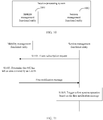
- An embodiment of this application provides a session processing system.
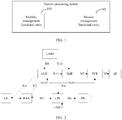
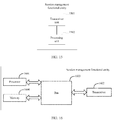
- An architecture of the system may be shown in FIG. 1 , including a mobility management functional entity 101 and a session management functional entity 102.
- An operating principle of the system is as follows: The mobility management functional entity 101 sends indication information to the session management functional entity 102. After receiving the indication information sent by the mobility management functional entity 101, the session management functional entity 102 determines, based on a UE location indicated by the indication information, that UE has left an area covered by an LADN.
- the session management functional entity 102 When determining that the UE has left the area covered by the LADN, the session management functional entity 102 triggers deactivation of an LADN session, and determines, within preset duration and depending on whether the UE re-enters the area covered by the LADN, whether to release the LADN session. If the UE does not re-enter, within the preset duration, the area covered by the LADN, the session management functional entity 102 releases the LADN session. This can prevent the following problem: If the LADN session of the UE is not released in a long time after the UE leaves the area covered by the LADN, the LADN session occupies a network resource for a long time, causing a waste of the resource.
- the session management functional entity 102 determines not to release the LADN session. This can prevent the following problem: If the LADN session of the UE is released immediately after the UE leaves the area covered by the LADN, when the UE re-enters the area covered by the LADN, an LADN session needs to be established for the UE again; and repeated establishment of an LADN session causes an increase in signaling overheads.
- the indication information is used to indicate the location of the UE, and the indication information may include location information of the UE or information for indicating that the UE has left the area covered by the LADN. If the indication information includes the location information of the UE, the session management functional entity 102 determines, based on the location information of the UE included in the indication information and pre-stored information about the area covered by the LADN, that the UE has left the area covered by the LADN.
- the mobility management functional entity 101 determines, based on the location information of the UE and pre-stored information about the area covered by the LADN, that the UE has left the area covered by the LADN, and sends, to the session management functional entity 102, the indication information including the information for indicating that the UE has left the area covered by the LADN.
- the LADN session established before the UE leaves the area covered by the LADN can be processed, facilitating proper utilization of the network resource occupied by the LADN session, and improving network resource utilization.
- the applicable systems may be a Global System for Mobile Communications (Global System for Mobile Communications, GSM) system, a Code Division Multiple Access (Code Division Multiple Access, CDMA) system, a Wideband Code Division Multiple Access (Wideband Code Division Multiple Access, WCDMA) system, a general packet radio service (General Packet Radio Service, GPRS) system, a Long Term Evolution (Long Term Evolution, LTE) system, an LTE frequency division duplex (Frequency Division Duplex, FDD) system, an LTE time division duplex (Time Division Duplex, TDD) system, a Universal Mobile Telecommunications System (Universal Mobile Telecommunication System, UMTS), a Worldwide Interoperability for Microwave Access (Worldwide Interoperability for Microwave Access, WiMAX) system, the 5G system, and the like.
- GSM Global System for Mobile Communications
- CDMA Code Division Multiple Access
- WCDMA Wideband Code Division Multiple Access
- GPRS General Packet Radio Service
- LTE Long Term Evolution
- FDD Frequency Division
- the plurality of systems each include a session management functional entity and a mobility management functional entity.
- Session management functional entities and mobility management functional entities in different systems may correspondingly have different names.
- a name of a session management functional entity is SMF (Session Management Function)
- a name of a mobility management functional entity is AMF (Access and Mobility Management Function).
- the 5G system includes an SMF, an AMF, a radio access network (Radio Access Network, RAN), and a user plane functional entity (User Plane Function, UPF), and may further include a policy control functional entity (Policy Control Function, PCF), an application functional entity (Application Function, AF), a data network (Data Network, DN), a united data management functional entity (United Data Management, UDM), and the like.
- Policy Control Function, PCF Policy Control Function
- AF Application Function
- DN data network
- UDM united data management functional entity
- the SMF is mainly configured to trigger and control session establishment, release, and update in the 5G system.
- the AMF may receive UE signaling through an N1 interface and receive RAN signaling through an N2 interface, to complete UE registration, signaling forwarding, and UE mobility management.
- the SMF and the AMF are control plane nodes.
- the N1 interface is a signaling interface between UE and the mobility management functional entity
- the N2 interface is a signaling interface between the RAN and the mobility management functional entity.
- the UPF is a user plane node, which can implement a user plane gateway function, and is mainly configured to control implementation of specific functions such as data forwarding, listening, and charging on a user plane.
- the RAN can connect the UE to a core network in a wireless manner.
- the RAN may be ground infrastructure that provides management tasks for users in a specific range, including access, roaming, connecting to a public switched telephone network, and connecting to a network. In the 5G system shown in FIG.
- the UE may connect, by using the UPF, to the DN connected to the UPF. If the UPF is a user plane node of another network different from an LADN, the DN connected to the UPF is the another network different from the LADN. If the UPF is a user plane node of an LADN, the DN connected to the UPF is the LADN.
- the UE in this embodiment of this application may be a device that provides voice and/or data connectivity for a user, a handheld device with a wireless connection function, or another processing device connected to a wireless modem.
- the UE may communicate with one or more core networks by using a RAN.
- the wireless terminal device may be a mobile terminal device such as a mobile phone (also referred to as a "cellular" phone) or a computer provided with a mobile terminal device.
- the wireless terminal device may be a portable, pocket-sized, handheld, computer built-in, or in-vehicle mobile apparatus, which exchanges voice and/or data with the radio access network.
- the wireless terminal device is a device such as a personal communication service (Personal Communication Service, PCS) phone, a cordless telephone set, a Session Initiation Protocol (Session Initiated Protocol, SIP) phone, a wireless local loop (Wireless Local Loop, WLL) station, or a personal digital assistant (Personal Digital Assistant, PDA).
- PCS Personal Communication Service
- SIP Session Initiation Protocol
- WLL Wireless Local Loop
- PDA Personal Digital Assistant
- the wireless terminal device may also be referred to as a system, a subscriber unit (Subscriber Unit), a subscriber station (Subscriber Station), a mobile station (Mobile Station), a mobile console (Mobile), a remote station (Remote Station), an access point (Access Point), a remote terminal device (Remote Terminal), an access terminal device (Access Terminal), a user terminal device (User Terminal), a user agent (User Agent), a user device (User Device), or user equipment (User Equipment).
- the session management functional entity triggers deactivation of the LADN session after determining that the UE has left the area covered by the LADN, and after the LADN session is deactivated, determines, depending on whether the UE re-enters the area covered by the LADN, whether to release the LADN session. In this way, after the UE leaves the area covered by the LADN, the LADN session established before the UE leaves the area covered by the LADN is processed.
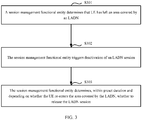
- An embodiment of this application provides a session processing method. As shown in FIG. 3 , the method includes the following steps.
- a session management functional entity determines that UE has left an area covered by an LADN.
- the session management functional entity may determine, based on indication information for indicating a location of the UE, that the UE has left the area covered by the LADN. Before S301, the session management functional entity may receive, from a mobility management functional entity, the indication information for indicating the location of the UE.
- the session management functional entity may determine, by using the following two methods, that the UE has left the area covered by the LADN:
- the mobility management functional entity may obtain the location information of the UE from a radio access network.
- the information about the area covered by the LADN includes cell identities of all cells in the area covered by the LADN, and the location information of the UE includes a cell identity of a cell in which the UE is located; and/or the information about the area covered by the LADN includes all tracking area identities (Tracking Area Identity, TAI) in the area covered by the LADN, and the location information of the UE includes a TAI of the UE.
- TAI Track Area Identity
- the information about the area covered by the LADN includes the cell identities of all the cells in the area covered by the LADN, and the location information of the UE includes the cell identity of the cell in which the UE is located.
- the session management functional entity receives, from the mobility management functional entity, the cell identity of the cell in which the UE is located, if the cell identity of the cell in which the UE is located does not exist in the cell identities of all the cells in the area covered by the LADN, the cell in which the UE is located is not a cell in the area covered by the LADN, and the session management functional entity may determine that the UE has left the area covered by LADN.
- the session management functional entity triggers deactivation of an LADN session.
- the LADN session is a session used by the UE to perform data transmission in the area covered by the LADN.
- the LADN session is still in an active state after the UE leaves the area covered by the LADN, and the LADN session can only be used by the UE to perform data transmission in the area covered by the LADN. Therefore, the UE needs to be prohibited from continuing to perform data transmission by using the LADN session in the active state after leaving the area covered by the LADN.
- the LADN session in the active state occupies a downlink tunnel resource and an air interface resource, the LADN session in the active state continues to occupy these resources after the UE leaves the area covered by the LADN, causing a waste of the resources.
- the session management functional entity when determining that the UE has left the area covered by the LADN, the session management functional entity triggers deactivation of the LADN session, to prevent the UE from continuing to perform data transmission by using the LADN session in the active state after the UE leaves the area covered by the LADN, and release the downlink tunnel resource and the air interface resource that are occupied by the LADN session.
- a method used by the session management functional entity to trigger deactivation of the LADN session includes: The session management functional entity sends, to a user plane functional entity, a message for instructing to release the downlink tunnel resource occupied by the LADN session, and after receiving the message, the user plane functional entity releases the downlink tunnel resource occupied by the LADN session.
- the session management functional entity sends, to the mobility management functional entity, a message for instructing to release the air interface resource occupied by the LADN session, the mobility management functional entity forwards the message to the radio access network, and the radio access network interacts with the UE to release the air interface resource occupied by the LADN session.
- a sequence between the sending, by the session management functional entity to a user plane functional entity, a message for instructing to release the downlink tunnel resource occupied by the LADN session and the sending, by the session management functional entity to the mobility management functional entity, a message for instructing to release the air interface resource occupied by the LADN session is not limited.
- the session management functional entity determines, within preset duration and depending on whether the UE re-enters the area covered by the LADN, whether to release the LADN session.
- the session management functional entity releases the LADN session. This can prevent the following problem: If the LADN session of the UE is not released in a long time after the UE leaves the area covered by the LADN, the LADN session occupies a network resource for a long time, causing a waste of the resource. Alternatively, if the UE re-enters, within the preset duration, the area covered by the LADN, the session management functional entity determines not to release the LADN session.
- a timer may be used for timing the preset duration in S303 to implement S303.
- a method includes the following: When the session management functional entity determines that the UE has left the area covered by the LADN, the session management functional entity starts the timer whose timing duration is the preset duration, and starts to detect whether the UE re-enters the area covered by the LADN. If it is detected, before the timer expires, that the UE re-enters the area covered by the LADN, the session management functional entity determines not to release the LADN session, and turns off the timer. If it is not detected, when the timer expires, that the UE re-enters the area covered by the LADN, the session management functional entity releases the LADN session.
- the session management functional entity determines that the UE has left the area covered by the LADN and then triggers deactivation of the LADN session, if the session management functional entity has not detected, within the preset duration, that the UE re-enters the area covered by the LADN, and the preset duration has not elapsed, the session management functional entity is temporarily unable to determine whether to release the LADN session.
- the session management functional entity receives a service request (Service Request, SR) message from the UE, where the SR message is used by the UE to request to perform data transmission by using the LADN session, the session management functional entity sends, to the UE, a response message for indicating that a request corresponding to the SR message fails.
- the SR message may be further used to indicate the location of the UE, so that the session management functional entity can determine, based on the UE location indicated by the SR message, that the UE has not re-entered the area covered by the LADN.
- the preset duration is 5 minutes
- the session management functional entity receives the SR message from the UE at a second minute. Up to this time, the session management functional entity has not detected that the UE re-enters the area covered by the LADN, and the session management functional entity sends, to the UE, the response message for indicating that the request corresponding to the SR message fails.
- the session management functional entity determines not to release the LADN session, because the LADN session is in an inactive state, if the session management functional entity receives, from the UE, an SR message for requesting to perform data transmission by using the LADN session, the session management functional entity triggers activation of the LADN session, so that the UE can perform data transmission directly by using the activated LADN session.
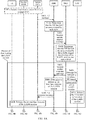
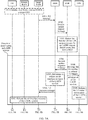
- a process in which the UE performs handover between RANs based on an Xn interface is combined with an LADN session processing process, where the Xn interface is an interface between a source RAN and a target RAN.
- Network elements in the 5G system that are used in the session processing method provided in this embodiment of this application include the source RAN, the target RAN, the AMF, the SMF, the UPF, and the like.
- a process of interaction between the network elements is as follows: S401.
- the target RAN sends an N2 message to the AMF
- the target RAN After the UE is handed over from the source RAN to the target RAN, the target RAN sends the N2 message to the AMF.
- the N2 message includes location information of the UE and N2-interface-based session management (Session Management, SM) information, and the SM information includes N3 tunnel information of all LADN sessions of the UE that are in an active state.
- Session Management Session Management
- the AMF determines that the UE has left an area covered by an LADN.
- the AMF After the AMF receives the N2 message sent by the target RAN, the AMF determines, based on the location information of the UE included in the N2 message and information, pre-stored by the AMF, about the area covered by the LADN, that the UE has left the area covered by the LADN.
- the AMF sends a session update request message to the SMF.
- the session update request message sent by the AMF to the SMF includes information for indicating that the UE has left the area covered by the LADN.
- the SMF determines that the UE has left the area covered by the LADN, triggers deactivation of an LADN session, and starts a timer.
- the SMF After receiving the session update request message sent by the AMF, the SMF directly determines, based on the information, included in the received session update request message, for indicating that the UE has left the area covered by the LADN, that the UE has left the area covered by the LADN. After the SMF determines that the UE has left the area covered by the LADN, the SMF triggers deactivation of the LADN session, and starts the timer whose timing duration is preset duration. A start moment of the timing duration may be a moment at which the SMF determines that the UE has left the area covered by the LADN.
- That the SMF triggers deactivation of the LADN session includes releasing an air interface resource and an N3 tunnel resource of the LADN session. After S404 is performed, the following four steps S405 to S408 are performed to release the air interface resource of the LADN session, and the following two steps S409 and S410 are performed to release the N3 tunnel resource of the LADN session.
- the SMF sends a session update response message to the AMF
- the session update response message sent by the SMF to the AMF includes an identifier for instructing to deactivate the LADN session of the UE.
- the AMF determines to release an air interface resource of the LADN session.
- the AMF After receiving the session update response message sent by the SMF, the AMF determines, based on the identifier, included in the session update response message, for instructing to deactivate the LADN session of the UE, to release the air interface resource occupied by the LADN session of the UE.
- the AMF sends an N2 response message to the target RAN.
- the AMF After determining to release the air interface resource occupied by the LADN session of the UE, the AMF sends the N2 response message to the target RAN, where the N2 response message includes the identifier for instructing to deactivate the LADN session of the UE.
- the target RAN After the target RAN receives the N2 response message sent by the AMF, the target RAN releases, based on the identifier, included in the N2 response message, for instructing to deactivate the LADN session of the UE, the air interface resource occupied by the LADN session of the UE.
- the target RAN interacts with the UE to release the air interface resource occupied by the LADN session of the UE.
- the SMF sends, to the UPF, a message for instructing to release N3 tunnel information of the LADN session.
- the UPF releases the N3 tunnel information of the LADN session.
- An N3 interface is a user plane interface between a RAN and the UPF, and the N3 interface may be used for signaling transmission between the RAN and the UPF.
- a sequence for performing the four steps S405 to S408 and performing the two steps S409 and S410 is not limited, that is, a sequence between releasing the air interface resource of the LADN session and releasing the tunnel resource of the LADN session is not limited.
- the SMF determines, within timing duration of the timer and depending on a result of detecting whether the UE re-enters the area covered by the LADN, whether to release the LADN session.
- S412 If the SMF detects, within the timing duration of the timer, that the UE re-enters the area covered by the LADN, S412 is performed. If the SMF has not detected, within the timing duration of the timer, that the UE re-enters the area covered by the LADN, S413 is performed.
- the SMF determines not to release the LADN session.
- the SMF determines not to release the LADN session, and turns off the timer.
- the SMF releases the LADN session.
- the SMF releases the LADN session.
- the SMF sends, to the AMF, a message for instructing to release the LADN session.
- the AMF After the AMF receives the message, sent by the SMF, for instructing to release the LADN session, the AMF releases the LADN session according to the instruction of the message.
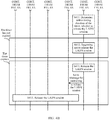
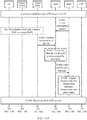
- a process in which the UE performs handover between RANs based on an Xn interface is combined with an LADN session processing process.
- Network elements in the 5G system that are used in the session processing method provided in this embodiment of this application include a source RAN, a target RAN, the AMF, the SMF, the UPF, and the like.
- a process of interaction between the network elements is shown in FIG. 5A and FIG. 5B .
- the interaction process shown in FIG. 5A and FIG. 5B is similar to the interaction process shown in FIG. 4A and FIG. 4B .
- a similar part between the two interaction processes is not described, and a main difference between the two interaction processes lies in the following several steps.
- the AMF sends a session update request message including location information of the UE to the SMF.
- the AMF After receiving the N2 message sent by the target RAN, the AMF obtains the location information of the UE included in the N2 message, and sends the session update request message to the SMF, where the session update request message includes the location information of the UE.
- the SMF determines that the UE has left an area covered by an LADN, triggers deactivation of an LADN session, and starts a timer.
- the SMF After the SMF receives the session update request message sent by the AMF, the SMF determines, based on the location information of the UE included in the received session update request message and information, pre-stored by the SMF, about the area covered by the LADN, that the UE has left the area covered by the LADN. After the SMF determines that the UE has left the area covered by the LADN, the SMF triggers deactivation of the LADN session, and starts the timer whose timing duration is preset duration. A start moment of the timing duration may be a moment at which the SMF determines that the UE has left the area covered by the LADN.
- steps S501 and S503 to S514 in the process of interaction between the network elements shown in FIG. 5A and FIG. 5B refer to the related descriptions of steps S401 and S404 to S415 in the process of interaction between the network elements shown in FIG. 4A and FIG. 4B . Details are not repeated herein.
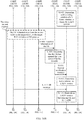
- a process of processing an LADN session by using an independent information exchange process in the 5G system shown in FIG. 2 is used as an example.
- a specific process of interaction between the network elements in the 5G system is shown in FIG. 6 .
- Network elements in the 5G system that are used in the session processing method provided in this embodiment of this application include a source RAN, a target RAN, the AMF, the SMF, the UPF, and the like.
- a process of interaction between the network elements is as follows: S601.
- the AMF sends location information of UE to the SMF.
- the AMF After a network establishes an LADN session for the UE, the AMF sends the location information of the UE to the SMF.
- the SMF may request the AMF to report the location information of the UE to the SMF.
- the SMF may further request frequency at which the AMF reports the location information of the UE to the SMF, a quantity of times for which the AMF reports the location information of the UE to the SMF, and the like.
- the SMF may request the AMF to report the location information of the UE to the SMF only once.
- the SMF may request the AMF to report the location information of the UE to the SMF every 1 second.
- the SMF determines that the UE has left an area covered by an LADN, triggers deactivation of an LADN session, and starts a timer.
- the SMF After the SMF receives the location information of the UE sent by the AMF, the SMF determines, based on the received location information of the UE and pre-stored information about the area covered by the LADN, that the UE has left the area covered by the LADN.
- the SMF After the SMF determines that the UE has left the area covered by the LADN, the SMF triggers deactivation of the LADN session, and starts the timer whose timing duration is preset duration.
- the SMF sends, to the AMF, a message for instructing to deactivate the LADN session of the UE, or the SMF sends, to the UPF, a message for instructing to release N3 tunnel information of the LADN session.
- That the SMF triggers deactivation of the LADN session includes releasing an air interface resource and a downlink tunnel resource of the LADN session. After S602 is performed, S603 is performed to release the air interface resource and the downlink tunnel resource of the LADN session.
- a process in which the AMF and the target RAN release the air interface resource of the LADN session in S603 is similar to the four steps S405 to S408 in the interaction process shown in FIG. 4A and FIG. 4B
- a process in which the UPF releases the downlink tunnel resource of the LADN session is similar to the two steps S409 and S410 in the interaction process shown in FIG. 4A and FIG. 4B . Details are not repeated herein.
- a process of processing an LADN session by using an independent information exchange process in the 5G system shown in FIG. 2 is used as an example.
- Network elements in the 5G system that are used in the session processing method provided in this embodiment of this application include a source RAN, a target RAN, the AMF, the SMF, the UPF, and the like.
- a process of interaction between the network elements is shown in FIG. 7 .
- the interaction process shown in FIG. 7 is similar to the interaction process shown in FIG. 6 .
- a similar part between the two interaction processes is not described, and a main difference between the two interaction processes lies in the following two steps.
- the AMF determines that UE has left an area covered by an LADN.
- the AMF determines, based on location information of the UE and pre-stored information about the area covered by the LADN, that the UE has left the area covered by the LADN.
- the AMF sends, to the SMF, information for indicating that the UE has left the area covered by the LADN.
- the SMF determines that the UE has left the area covered by the LADN.
- the SMF After the SMF receives the information, sent by the AMF, for indicating that the UE has left the area covered by the LADN, the SMF directly determines, based on the information, that the UE has left the area covered by the LADN.
- steps S704 to S709 in the process of interaction between the network elements shown in FIG. 7 refer to the related descriptions of steps S603 to S608 in the process of interaction between the network elements shown in FIG. 6 . Details are not repeated herein.
- the session management functional entity for the LADN session established by the session management functional entity for the UE that has entered the area covered by the LADN, after determining that the UE has left the area covered by the LADN, the session management functional entity triggers deactivation of the LADN session, and determines, depending on whether the UE re-enters, within the preset duration, the area covered by the LADN, whether to release the LADN session.
- the LADN session established before the UE leaves the area covered by the LADN is processed. Therefore, according to the technical solution provided in this embodiment of this application, the network resource occupied by the LADN session can be properly utilized, and network resource utilization can be improved.
- an embodiment of this application further provides a session management functional entity.
- the session management functional entity can implement the method provided in the embodiment corresponding to FIG. 3 .
- the session management functional entity includes a processing unit 801 and a transceiver unit 802.
- the processing unit 801 is configured to determine that user equipment UE has left an area covered by a local area data network LADN.
- the transceiver unit 802 is configured to trigger deactivation of an LADN session, where the LADN session is a session used by the UE to perform data transmission in the area covered by the LADN.
- the processing unit 801 is further configured to determine, within preset duration and depending on whether the UE re-enters the area covered by the LADN, whether to release the LADN session.
- the processing unit 801 when determining, within the preset duration and depending on whether the UE re-enters the area covered by the LADN, whether to release the LADN session, is specifically configured to release the LADN session if the UE does not re-enter, within the preset duration, the area covered by the LADN.
- the processing unit 801 when determining, within the preset duration and depending on whether the UE re-enters the area covered by the LADN, whether to release the LADN session, is specifically configured to: if the UE re-enters, within the preset duration, the area covered by the LADN, determine not to release the LADN session.
- the processing unit 801 is further configured to: after determining not to release the LADN session, if a service request SR message for requesting to perform data transmission by using the LADN session is received from the UE by using the transceiver unit 802, trigger, by using the transceiver unit 802, activation of the LADN session.
- the transceiver unit 802 is further configured to: after the transceiver unit 802 triggers deactivation of the LADN session and before the processing unit 801 determines whether to release the LADN session, if receiving, from the UE, the service request SR message for requesting to perform data transmission by using the LADN session, send, to the UE, a response message for indicating that a request corresponding to the SR message fails.
- the processing unit 801 is specifically configured to: receive indication information from a mobility management functional entity by using the transceiver unit 802, where the indication information is used to indicate a location of the UE; and determine, based on the indication information, that the UE has left the area covered by the LADN.
- the indication information may include location information of the UE; and if the indication information includes the location information of the UE, when determining, based on the indication information, that the UE has left the area covered by the LADN, the processing unit 801 is specifically configured to: if the location indicated by the location information of the UE is not in an area indicated by information, pre-stored by the session management functional entity, about the area covered by the LADN, determine that the UE has left the area covered by the LADN.
- the indication information may include information for indicating that the UE has left the area covered by the LADN; and if the indication information includes the information for indicating that the UE has left the area covered by the LADN, when determining, based on the indication information, that the UE has left the area covered by the LADN, the processing unit 801 is specifically configured to: determine, based on the information, included in the indication information, for indicating that the UE has left the area covered by the LADN, that the UE has left the area covered by the LADN.
- the location information of the UE includes a cell identity of a cell in which the UE is located, and the information about the area covered by the LADN includes cell identities of all cells in the area covered by the LADN; or the location information of the UE includes a tracking area identity TAI of the UE, and the information about the area covered by the LADN includes all TAIs in the area covered by the LADN.
- the transceiver unit 802 when triggering deactivation of the LADN session, is specifically configured to: send, to a user plane functional entity, a message for instructing to release a downlink tunnel resource of the LADN session; or send, to the mobility management functional entity, a message for instructing to release an air interface resource of the LADN session.
- division of units in this embodiment of this application is merely an example, and is only division of logical functions. Another division manner may be available in actual implementation.
- Functional units in this embodiment of this application may be integrated into one processing unit, or each of the units may exist alone physically, or two or more units may be integrated into one unit.
- the integrated unit may be implemented in a form of hardware, or may be implemented in a form of a software functional unit.
- the integrated unit When the integrated unit is implemented in the form of a software functional unit and sold or used as an independent product, the integrated unit may be stored in a computer readable storage medium. Based on such an understanding, the technical solutions of this application essentially, or the part contributing to the prior art, or all or some of the technical solutions may be implemented in a form of a software product.
- the computer software product is stored in a storage medium and includes several instructions for instructing a computer device (which may be a personal computer, a server, a network device, or the like) or a processor (processor) to perform all or some of the steps of the methods described in the embodiments of this application.
- the foregoing storage medium includes any medium that can store program code, such as a USB flash drive, a removable hard disk, a read-only memory (Read-Only Memory, ROM), a random access memory (Random Access Memory, RAM), a magnetic disk, or an optical disc.
- program code such as a USB flash drive, a removable hard disk, a read-only memory (Read-Only Memory, ROM), a random access memory (Random Access Memory, RAM), a magnetic disk, or an optical disc.
- an embodiment of this application further provides a session management functional entity.
- the session management functional entity can implement the method provided in the embodiment corresponding to FIG. 3 , and may be an apparatus the same as the session management functional entity shown in FIG. 8 .
- the session management functional entity includes a processor 901, a transceiver 902, a bus 903, and a memory 904.
- the processor 901 is configured to read a program in the memory 903 to perform the following process: determining that UE has left an area covered by an LADN; triggering deactivation of an LADN session by using the transceiver 902, where the LADN session is a session used by the UE to perform data transmission in the area covered by the LADN; and determining, within preset duration and depending on whether the UE re-enters the area covered by the LADN, whether to release the LADN session.
- the transceiver 902 is configured to receive and send data under control of the processor 901.
- the processor 901 when determining whether to release the LADN session, is specifically configured to release the LADN session if the UE does not re-enter, within the preset duration, the area covered by the LADN.
- the processor 901 when determining whether to release the LADN session, is specifically configured to: if the UE re-enters, within the preset duration, the area covered by the LADN, determine not to release the LADN session.
- the processor 901 is further configured to: after determining not to release the LADN session, trigger activation of the LADN session if an SR message for requesting to perform data transmission by using the LADN session is received from the UE by using the transceiver 902.
- the processor 901 is further configured to: after deactivation of the LADN session is triggered by using the transceiver 902, and before the processor 901 determines whether to release the LADN session, if the SR message for requesting to perform data transmission by using the LADN session is received from the UE by using the transceiver 902, send, to the UE by using the transceiver 902, a response message for indicating that a request corresponding to the SR message fails.
- the processor 901 when determining that the user equipment UE has left the area covered by the local area data network LADN, is specifically configured to: receive indication information from a mobility management functional entity by using the transceiver 902, where the indication information is used to indicate a location of the UE; and determine, based on the indication information, that the UE has left the area covered by the LADN.
- the indication information may include location information of the UE; and if the indication information includes the location information of the UE, when determining, based on the indication information, that the UE has left the area covered by the LADN, the processor 901 is specifically configured to: if the location indicated by the location information of the UE is not in an area indicated by information, pre-stored by the session management functional entity, about the area covered by the LADN, determine that the UE has left the area covered by the LADN.
- the indication information may include information for indicating that the UE has left the area covered by the LADN; and if the indication information includes the information for indicating that the UE has left the area covered by the LADN, when determining, based on the indication information, that the UE has left the area covered by the LADN, the processor 901 is specifically configured to: determine, based on the information, included in the indication information, for indicating that the UE has left the area covered by the LADN, that the UE has left the area covered by the LADN.
- the location information of the UE includes a cell identity of a cell in which the UE is located, and the information about the area covered by the LADN includes cell identities of all cells in the area covered by the LADN; or the location information of the UE includes a tracking area identity TAI of the UE, and the information about the area covered by the LADN includes all TAIs in the area covered by the LADN.
- the processor 901 when triggering deactivation of the LADN session by using the transceiver 902, the processor 901 is specifically configured to: send, to a user plane functional entity by using the transceiver 902, a message for instructing to release a downlink tunnel resource of the LADN session; or send, to the mobility management functional entity by using the transceiver 902, a message for instructing to release an air interface resource of the LADN session.
- the processor 901, the transceiver 902, and the memory 904 are connected to each other by using the bus 903.
- the bus 903 may be a Peripheral Component Interconnect (peripheral component interconnect, PCI) bus, an Extended Industry Standard Architecture (extended industry standard architecture, EISA) bus, or the like.
- PCI Peripheral Component Interconnect
- EISA Extended Industry Standard Architecture
- the bus may be classified into an address bus, a data bus, a control bus, and the like.
- a bus architecture may include any quantity of interconnected buses and bridges, and specifically connect together various circuits of one or more processors represented by the processor 901 and a memory represented by the memory 904.
- the bus architecture may further connect together various other circuits such as a peripheral device, a voltage stabilizer, and a power management circuit. These are well known in the art, and therefore are not further described in this specification.
- a bus interface provides an interface.
- the transceiver 902 may be a plurality of elements, including a transmitter and a receiver, and provides units configured to perform communication with various other apparatuses over a transmission medium.
- the processor 901 is responsible for management of the bus architecture and general processing, and the memory 904 may store data used by the processor 901 when the processor 901 performs an operation.
- the processor 901 may be a central processing unit, an application-specific integrated circuit (Application Specific Integrated Circuit, ASIC), a field-programmable gate array (Field-Programmable Gate Array, FPGA) or a complex programmable logic device (Complex Programmable Logic Device, CPLD).
- ASIC Application Specific Integrated Circuit
- FPGA Field-Programmable Gate Array
- CPLD Complex Programmable Logic Device
- An embodiment of this application further provides a session processing system.
- An architecture of the system may be the same as the architecture of the session processing system described above.
- the session processing system includes a mobility management functional entity 1001 and a session management functional entity 1002.
- An operating principle of the system is as follows:
- the session management functional entity 1002 sends an event subscription request to the mobility management functional entity 1001, where the event may include that UE leaves an area covered by an LADN.
- the mobility management functional entity 1001 After receiving the event subscription request sent by the session management functional entity 1002, if determining that the UE has left the area covered by the LADN, the mobility management functional entity 1001 sends, to the session management functional entity 1002, a first notification message for notifying that the UE has left the area covered by the LADN.
- the session management functional entity 1002 may trigger a first session operation based on the first notification message, where the first session operation includes deactivating an LADN session or releasing an LADN session.
- the session management functional entity 1002 may trigger deactivation of the LADN session based on the first notification message. This facilitates releasing, after the UE leaves the area covered by the LADN, a downlink tunnel resource and an air interface resource that are occupied by the LADN session, thereby improving network resource utilization.
- the session management functional entity 1002 may alternatively release the LADN session based on the first notification message. This can prevent a problem that a resource waste is caused because the LADN session of the UE is still reserved after the UE leaves the area covered by the LADN.
- the session management functional entity 1002 may further deactivate the LADN session based on the first notification message, and determine, within preset duration and depending on whether the UE re-enters the area covered by the LADN, whether to release the LADN session.
- the mobility management functional entity 1001 may determine, based on location information of the UE and pre-stored information about the area covered by the LADN, that the UE has left the area covered by the LADN.
- the event in the event subscription request may further include that the UE re-enters the area covered by the LADN.
- the mobility management functional entity 1001 receives the event subscription request sent by the session management functional entity 1002, if the event in the event subscription request includes that the UE re-enters the area covered by the LADN, and if the mobility management functional entity 1001 determines that the UE has re-entered the area covered by the LADN, the mobility management functional entity 1001 sends, to the session management functional entity 1002, a second notification message for notifying that the UE has re-entered the area covered by the LADN.
- the session management functional entity 1002 After receiving the second notification message from the mobility management functional entity 1001, the session management functional entity 1002 triggers a second session operation, where the second session operation includes activating the LADN session or triggering establishment of an LADN session between the UE and the LADN.
- the mobility management functional entity 1001 may also determine, based on location information of the UE and the pre-stored information about the area covered by the LADN, that the UE has entered the area covered by the LADN.
- An embodiment of this application further provides a session processing method. As shown in FIG. 11 , the method includes the following steps.
- a session management functional entity sends an event subscription request to a mobility management functional entity.
- An event in the event subscription request may include that UE leaves an area covered by an LADN. If the event in the event subscription request includes that the UE leaves the area covered by the LADN, the event subscription request is used to instruct the mobility management functional entity to notify, after the mobility management functional entity determines that the UE has left the area covered by the LADN, the session management functional entity of the event that the UE has left the area covered by the LADN.
- the event in the event subscription request may further include that the UE enters the area covered by the LADN.
- the event further includes that the UE re-enters the area covered by the LADN after leaving the area covered by the LADN.
- the event subscription request includes but is not limited to an identifier of the UE and an identifier of the LADN, and the identifier of the LADN may be a local data network name (Local Data Network Ntoe, Local DNN).
- the session management functional entity may send one event subscription request to the mobility management functional entity, or may send two event subscription requests to the mobility management functional entity at different moments. This is not limited in this embodiment.
- the session management functional entity sends, to the mobility management functional entity, an event subscription request for subscribing to the notification of the event that the UE leaves the area covered by the LADN; after the mobility management functional entity determines that the UE has left the area covered by the LAND, and then sends a first notification message, the session management functional entity receives the first notification message and sends, to the mobility management functional entity, an event subscription request for subscribing to the notification of the event that the UE enters the area covered by the LADN.
- the mobility management functional entity If determining that UE has left an area covered by an LADN, the mobility management functional entity sends a first notification message to the session management functional entity.
- the mobility management functional entity may obtain the identifier of the UE and the identifier of the LADN that are included in the event subscription request, and then determine whether the UE indicated by the identifier of the UE has left the area covered by the LADN indicated by the identifier of the LADN. If the mobility management functional entity determines that the UE has left the area covered by the LADN, the mobility management functional entity may send, to the session management functional entity, the first notification message for notifying that the UE has left the area covered by the LADN.
- the mobility management functional entity may determine, based on location information of the UE and information about the area covered by the LADN, that the UE has left the area covered by the LADN.
- a method for determining that the UE has left the area covered by the LADN is the same as the method, in S301, used by the session management functional entity to determine whether the UE has left the area covered by the LADN.
- the specific method refer to the method, in S301, used by the session management functional entity to determine whether the UE has left the area covered by the LADN. Details are not repeated herein.
- the session management functional entity triggers a first session operation based on the first notification message.
- the LADN session is a session used by the UE to perform data transmission in the area covered by the LADN.
- the LADN session is still in an active state after the UE leaves the area covered by the LADN, and the LADN session can only be used by the UE to perform data transmission in the area covered by the LADN. Therefore, the UE needs to be prohibited from continuing to perform data transmission by using the LADN session in the active state after leaving the area covered by the LADN.
- the LADN session in the active state occupies a network resource
- the LADN session in the active state continues to occupy the network resource after the UE leaves the area covered by the LADN, causing a waste of the network resource.
- the session management functional entity may trigger the first session operation, to prevent the UE from continuing to perform data transmission by using the LADN session in the active state after the UE leaves the area covered by the LADN, release the network resource occupied by the LADN session, and improve network resource utilization.
- the first session operation in S1103 includes releasing the LADN session or deactivating the LADN session.
- that the session management functional entity releases the LADN session includes two cases. The following describes in detail several cases included in the first session operation.
- the session management functional entity may send, to a user plane functional entity, a message for instructing to release a downlink tunnel resource occupied by the LADN session, and after receiving the message, the user plane functional entity releases the downlink tunnel resource occupied by the LADN session; or the session management functional entity may send, to the mobility management functional entity, a message for instructing to release an air interface resource occupied by the LADN session, the mobility management functional entity forwards the message to a radio access network, and the radio access network interacts with the UE to release the air interface resource occupied by the LADN session.
- a method used by the session management functional entity to trigger deactivation of the LADN session is similar to the method, in S302, used by the session management functional entity to trigger deactivation of the LADN session.
- the specific implementation method, in the case 1, used by the session management functional entity to trigger deactivation of the LADN session refer to the method, in S302, used by the session management functional entity to trigger deactivation of the LADN session. Details are not repeated herein.
- Case 2 If the first session operation includes releasing the LADN session, that the session management functional entity releases the LADN session based on the first notification message is specifically: The session management functional entity may directly release the LADN session based on the first notification message.
- Case 3 If the first session operation includes releasing the LADN session, that the session management functional entity releases the LADN session based on the first notification message is specifically: The session management functional entity triggers, based on the first notification message, deactivation of the LADN session, and determines, within preset duration and depending on whether the UE re-enters the area covered by the LADN, whether to release the LADN session. If the session management functional entity has not detected, within the preset duration, that the UE re-enters the area covered by the LADN, the session management functional entity determines not to release the LADN session.
- the following describes in detail methods in the case 3 that are used by the session management functional entity to determine, within the preset duration, whether the UE has re-entered the area covered by the LADN.
- Method 1 If the event in the event subscription request sent by the session management functional entity to the mobility management functional entity includes that the UE enters the area covered by the LADN, the session management functional entity may determine, based on a second notification message from the mobility management functional entity, whether the UE has re-entered, within the preset duration, the area covered by the LADN. The second notification message is used to notify that the UE has entered the area covered by the LADN.
- the session management functional entity receives the second notification message from the mobility management functional entity within the preset duration, it indicates that the UE has re-entered the area covered by the LADN, so that the session management functional entity can determine, based on the second notification message, not to release the LADN session; if the session management functional entity does not receive the second notification message from the mobility management functional entity within the preset duration, it indicates that the UE has not re-entered, within the preset duration, the area covered by the LADN, so that the session management functional entity can release the LADN session.
- Method 2 The session management functional entity determines, based on the location information of the UE and the pre-stored information about the area covered by the LADN, whether the UE has re-entered, within the preset duration, the area covered by the LADN.
- a specific implementation method, in the method 2, used by the session management functional entity to determine, within the preset duration and depending on whether the UE re-enters the area covered by the LADN, whether to release the LADN session is similar to the method, in S303, used by the session management functional entity to determine whether to release the LADN session.
- S303 used by the session management functional entity to determine whether to release the LADN session. Details are not repeated herein.
- a timer may be used for timing the preset duration.
- the session management functional entity may send, to the mobility management functional entity, a request for unsubscribing to the event. If the event in the event subscription request includes only that the UE leaves the area covered by the LADN, the session management functional entity may send, to the mobility management functional entity, a request for unsubscribing to this type of event.
- the session management functional entity may send, to the mobility management functional entity, a request for unsubscribing to the two types of events, or may send, to the mobility management functional entity, a request for unsubscribing to any one of the two types of events.
- the session management functional entity sends the event subscription request to the mobility management functional entity, if determining that the UE has re-entered the area covered by the LADN, the mobility management functional entity sends the second notification message to the session management functional entity.
- the session management functional entity may trigger a second session operation, where the second session operation includes activating the LADN session or triggering establishment of an LADN session between the UE and the LADN.
- a process of processing an LADN session by using an independent information exchange process in the 5G system shown in FIG. 2 is used as an example.
- the first session operation triggered by the session management functional entity is deactivating the LADN session.
- Network elements in the 5G system that are used in the session processing method provided in this embodiment of this application include a source RAN, a target RAN, the AMF, the SMF, the UPF, and the like.
- a process of interaction between the network elements is as follows: S1201. The SMF sends an event subscription request to the AMF
- the AMF After a network establishes an LADN session for UE, the AMF sends the event subscription request to the SMF, where the event includes that the UE leaves an area covered by an LADN.
- the event may further include that the UE enters the area covered by the LADN.
- the target RAN sends location information of UE to the AMF
- the target RAN After the UE is handed over from the source RAN to the target RAN, the target RAN sends the location information of the UE to the AMF
- the AMF determines that the UE has left an area covered by an LADN.
- the AMF sends a first notification message to the SMF.
- the first notification message sent by the AMF to the SMF may be used to notify that the UE has left the area covered by the LADN.
- the AMF may send a session update request message to the SMF in S1204, where the session update request message may include information for indicating that the UE has left the area covered by the LADN.
- the SMF triggers, based on the first notification message, deactivation of an LADN session.
- That the SMF triggers deactivation of the LADN session includes releasing an air interface resource and an N3 tunnel resource of the LADN session.
- S1205 a process in which the AMF and the target RAN release the air interface resource of the LADN session is similar to the four steps S405 to S408 in the interaction process shown in FIG. 4A and FIG. 4B , and a process in which the UPF releases the downlink tunnel resource of the LADN session is similar to the two steps S409 and S410 in the interaction process shown in FIG. 4A and FIG. 4B . Details are not repeated herein.
- the target RAN sends location information of the UE to the AMF.
- the AMF determines that the UE has entered the area covered by the LADN.
- the AMF sends a second notification message to the SMF.
- the second notification message sent by the AMF to the SMF may be used to notify that the UE has entered the area covered by the LADN.
- the UE sends an SR message to the SMF.
- the SR message sent by the UE to the SMF may be used to request, for the UE, to perform data transmission by using the LADN session.
- the SMF triggers activation of the LADN session deactivated by the SMF based on the first notification message.
- steps S1206 to S1211 are performed if the event in the event subscription request sent by the SMF to the AMF in S1201 includes that the UE enters the area covered by the LADN.
- a process of processing an LADN session by using an independent information exchange process in the 5G system shown in FIG. 2 is used as an example.
- Network elements in the 5G system that are used in the session processing method provided in this embodiment of this application include a source RAN, a target RAN, the AMF, the SMF, the UPF, and the like.
- a process of interaction between the network elements is shown in FIG. 13 .
- the first session operation triggered by the session management functional entity is releasing the LADN session.
- the interaction process shown in FIG. 13 is similar to the interaction process shown in FIG. 12 .
- a similar part between the two interaction processes is not described, and a main difference between the two interaction processes lies in the following several steps.
- the SMF releases an LADN session based on the first notification message.
- the SMF sends, to the AMF, a request message for unsubscribing to the event. If the SMF sends, to the AMF, a request message for unsubscribing to the event that the UE enters the area covered by the LADN, steps S1310 to S1312 are not performed.
- the UE sends, to the SMF, a message for requesting to establish an LADN session between the UE and the LADN.
- the SMF establishes an LADN session between the UE and the LADN.
- the SMF returns a response message to the UE.
- the response message is used to indicate that the LADN session between the UE and the LADN has been successfully established.
- steps S1301 to S1304 and S1306 to S1309 in the process of interaction between the network elements shown in FIG. 13 refer to the related descriptions of the process of interaction between the network elements shown in FIG. 12 . Details are not repeated herein.
- a process of processing an LADN session by using an independent information exchange process in the 5G system shown in FIG. 2 is used as an example.
- the first session operation triggered by the session management functional entity is releasing the LADN session.
- Network elements in the 5G system that are used in the session processing method provided in this embodiment of this application include a source RAN, a target RAN, the AMF, the SMF, the UPF, and the like.
- a process of interaction between the network elements is shown in FIG. 14A , FIG. 14B , and FIG. 14C .
- the interaction process shown in FIG. 14A , FIG. 14B , and FIG. 14C is similar to the interaction processes shown in FIG. 12 and FIG. 13 .
- FIG. 14A , FIG. 14B , and FIG. 14C and the interaction processes shown in FIG. 12 and FIG. 13 is not described, and a main difference between the interaction process shown in FIG. 14A , FIG. 14B , and FIG. 14C and the interaction processes shown in FIG. 12 and FIG. 13 lies in the following several steps.
- the SMF triggers, based on the first notification message, deactivation of an LADN session, and starts a timer.
- the SMF triggers, based on the first notification message, deactivation of the LADN session, and starts the timer whose timing duration is preset duration.
- a start moment of the timing duration may be a moment at which the SMF determines, based on the first notification message, that the UE has left the area covered by the LADN.
- the SMF determines, within timing duration of the timer and depending on a result of detecting whether the UE re-enters the area covered by the LADN, whether to release the LADN session.
- S1411 If the SMF detects, within the timing duration of the timer, that the UE re-enters the area covered by the LADN, S1411 is performed. If the SMF has not detected, within the timing duration of the timer, that the UE re-enters the area covered by the LADN, S1414 is performed.
- steps S1408 to S1410 in the process of interaction between the network elements shown in FIG. 14A , FIG. 14B , and FIG. 14C refer to the related descriptions of S1206 to S1208 in the process of interaction between the network elements shown in FIG. 12 . Details are not repeated herein.
- the SMF determines not to release the LADN session.
- the SMF determines not to release the LADN session, and turns off the timer.
- steps S1412 and S1413 in the process of interaction between the network elements shown in FIG. 14A , FIG. 14B , and FIG. 14C refer to the related descriptions of S1210 and S1211 in the process of interaction between the network elements shown in FIG. 12 . Details are not repeated herein.
- S1410 needs to be performed before S1411, and S1412 needs to be performed before S1413, but a sequence between two steps S1410 and S1412 is not limited in this embodiment.
- a sequence for performing steps S1410 to S1413 may be: S1412, S1410, S1411, and S1413.
- the SMF releases the LADN session.
- the SMF If the SMF has not received the second notification message when the timer expires, the SMF releases the LADN session. Optionally, after the SMF releases the LADN session, the SMF sends, to the AMF, a request message for unsubscribing to the event.
- steps S1417 to S1422 in the process of interaction between the network elements shown in FIG. 14A , FIG. 14B , and FIG. 14C refer to the related descriptions of steps S1307 to S1312 in the process of interaction between the network elements shown in FIG. 13 . Details are not repeated herein.
- a network resource occupied by the LADN session can be properly utilized, and network resource utilization can be improved.
- an embodiment of this application further provides a session management functional entity.
- the session management functional entity can implement the methods provided in the embodiments corresponding to FIG. 11 to FIG. 14C .
- the session management functional entity includes a transceiver unit 1501 and a processing unit 1502.
- the transceiver unit 1501 is configured to: send an event subscription request to a mobility management functional entity, where an event includes that user equipment UE leaves an area covered by a local area data network LADN; and receive, from the mobility management functional entity, a first notification message for notifying that the UE has left the area covered by the LADN.
- the processing unit 1502 is configured to trigger a first session operation based on the first notification message received by the transceiver unit 1501, where the first session operation includes releasing an LADN session or deactivating an LADN session, and the LADN session is a session used by the UE to perform data transmission in the area covered by the LADN.
- the processing unit 1502 is specifically configured to: if the first session operation includes releasing the LADN session, release the LADN session based on the first notification message; or if the first session operation includes releasing the LADN session, trigger, based on the first notification message by using the transceiver unit 1501, deactivation of the LADN session, and determine, within preset duration and depending on whether the UE re-enters the area covered by the LADN, whether to release the LADN session.
- the processing unit 1502 is specifically configured to: release the LADN session if the UE does not re-enter, within the preset duration, the area covered by the LADN; or if the UE re-enters, within the preset duration, the area covered by the LADN, determine not to release the LADN session.
- the transceiver unit 1501 is further configured to: after the processing unit 1502 releases the LADN session, send, to the mobility management functional entity, a request for unsubscribing to the event.
- the processing unit 1502 is specifically configured to: if the first session operation includes deactivating the LADN session, send, to a user plane functional entity by using the transceiver unit 1501, a message for instructing to release a downlink tunnel resource of the LADN session; or if the first session operation includes deactivating the LADN session, send, to the mobility management functional entity by using the transceiver unit 1501, a message for instructing to release an air interface resource of the LADN session.
- the event may further include that the UE enters the area covered by the LADN.
- the transceiver unit 1501 is further configured to: after sending the event subscription request to the mobility management functional entity, receive, from the mobility management functional entity, a second notification message for notifying that the UE has entered the area covered by the LADN; and the processing unit 1502 is further configured to trigger a second session operation based on the second notification message after the transceiver unit 1501 receives the second notification message, where the second session operation includes activating the LADN session or triggering establishment of an LADN session between the UE to the LADN.
- the processing unit 1502 when triggering the second session operation based on the second notification message, is specifically configured to: if the first session operation includes deactivating the LADN session, and if a service request SR message for requesting to perform data transmission by using the LADN session is received from the UE by using the transceiver unit 1501, activate, based on the second notification message by using the transceiver unit 1501, the LADN session deactivated by the session management functional entity based on the first notification message.
- the processing unit 1502 is specifically configured to: if the first session operation includes releasing the LADN session, and if a message for requesting to establish an LADN session between the UE and the LADN is received from the UE by using the transceiver unit 1501, trigger establishment of an LADN session between the UE and the LADN based on the second notification message.
- An embodiment of this application further provides a session management functional entity.
- the session management functional entity has a function of implementing the methods provided in the embodiments corresponding to FIG. 11 to FIG. 14C to implement operations of the session management functional entity in the embodiments corresponding to FIG. 11 to FIG. 14C .
- the function may be implemented by using hardware.
- the session management functional entity may be an apparatus the same as the session management functional entity shown in FIG. 15 .
- the session management functional entity includes a processor 1601, a transceiver 1602, a bus 1603, and a memory 1604.
- the processor 1601, the memory, and the transceiver 1602 are connected to each other by using the bus.
- the memory 1604 is configured to store a computer readable program.
- the processor 1601 invokes an instruction in the memory 1604 to execute the methods in the embodiments corresponding to FIG. 11 to FIG. 14C , to implement a function of the processing unit in the session management functional entity shown in FIG. 15 .
- the transceiver 1602 is configured to receive data and/or send data under control of the processor 1601, to implement a function of the transceiver unit in the session management functional entity shown in FIG. 15 .
- An embodiment of this application further provides a computer storage medium.
- the storage medium stores a software program.
- the software program can implement the methods executed by the session management functional entity in the foregoing embodiments.
- An embodiment of this application provides a computer program product including an instruction.
- the computer can execute the session processing methods executed by the session management functional entity in the foregoing embodiments.
- the embodiments of this application may be provided as a method, a system, or a computer program product. Therefore, this application may use a form of hardware only embodiments, software only embodiments, or embodiments with a combination of software and hardware.
- this application may use a form of a computer program product that is implemented on one or more computer-usable storage media (including but not limited to a disk memory, a CD-ROM, an optical memory) that include computer usable program code.
- These computer program instructions may be provided for a general-purpose computer, a dedicated computer, an embedded processor, or a processor of any other programmable data processing device to generate a machine, so that the instructions executed by a computer or a processor of any other programmable data processing device generate an apparatus for implementing a specified function in one or more processes in the flowcharts and/or in one or more blocks in the block diagrams.
- These computer program instructions may alternatively be stored in a computer readable memory that can instruct the computer or any other programmable data processing device to work in a specific manner, so that the instructions stored in the computer readable memory generate an artifact that includes an instruction apparatus.
- the instruction apparatus implements a specified function in one or more processes in the flowcharts and/or in one or more blocks in the block diagrams.
- These computer program instructions may alternatively be loaded onto a computer or another programmable data processing device, so that a series of operations and steps are performed on the computer or the another programmable device, thereby generating computer-implemented processing. Therefore, the instructions executed on the computer or the another programmable device provide steps for implementing a specified function in one or more processes in the flowcharts and/or in one or more blocks in the block diagrams.
Landscapes
- Engineering & Computer Science (AREA)
- Computer Networks & Wireless Communication (AREA)
- Signal Processing (AREA)
- Databases & Information Systems (AREA)
- Mobile Radio Communication Systems (AREA)
Applications Claiming Priority (3)
| Application Number | Priority Date | Filing Date | Title |
|---|---|---|---|
| CN201710428385 | 2017-06-08 | ||
| CN201710459734.XA CN109246853A (zh) | 2017-06-08 | 2017-06-16 | 一种会话处理方法、装置及系统 |
| PCT/CN2018/089559 WO2018223900A1 (zh) | 2017-06-08 | 2018-06-01 | 一种会话处理方法、装置及系统 |
Publications (3)
| Publication Number | Publication Date |
|---|---|
| EP3634080A1 true EP3634080A1 (de) | 2020-04-08 |
| EP3634080A4 EP3634080A4 (de) | 2020-06-03 |
| EP3634080B1 EP3634080B1 (de) | 2022-05-04 |
Family
ID=65083100
Family Applications (1)
| Application Number | Title | Priority Date | Filing Date |
|---|---|---|---|
| EP18814410.9A Active EP3634080B1 (de) | 2017-06-08 | 2018-06-01 | Sitzungsverarbeitungsverfahren, -vorrichtung und -system |
Country Status (6)
| Country | Link |
|---|---|
| US (1) | US20200120752A1 (de) |
| EP (1) | EP3634080B1 (de) |
| JP (1) | JP6835369B2 (de) |
| KR (1) | KR102334963B1 (de) |
| CN (1) | CN109246853A (de) |
| BR (1) | BR112019016891A2 (de) |
Families Citing this family (8)
| Publication number | Priority date | Publication date | Assignee | Title |
|---|---|---|---|---|
| EP3703399B1 (de) * | 2017-11-15 | 2024-08-07 | LG Electronics Inc. | Verfahren zur unterstützung und bereitstellung von ladn-dienst in einem drahtloskommunikationssystem und vorrichtung dafür |
| KR102654119B1 (ko) * | 2018-11-16 | 2024-04-03 | 삼성전자주식회사 | Ladn에서 서비스를 제공하는 방법 및 장치 |
| CN113475123A (zh) * | 2019-03-01 | 2021-10-01 | 瑞典爱立信有限公司 | 用于基于动态网络状况的局域数据网络(ladn)选择的方法和系统 |
| KR102686161B1 (ko) | 2019-05-03 | 2024-07-18 | 삼성전자 주식회사 | 이동통신 시스템에서 시간 또는 서비스 지역에 따른 단말의 세션 설정 관리 방법 및 장치 |
| WO2021155552A1 (en) * | 2020-02-07 | 2021-08-12 | Qualcomm Incorporated | High level operating system (hlos) interface for local area data network (ladn) service |
| EP4254993A4 (de) * | 2020-12-31 | 2023-12-13 | Huawei Technologies Co., Ltd. | Kommunikationsverfahren und kommunikationsvorrichtung |
| EP4654739A3 (de) * | 2021-02-17 | 2026-02-18 | QUALCOMM Incorporated | Sitzungen mit mehrfachzugriffspaketdateneinheit für lokale datennetzwerke |
| US12284624B2 (en) | 2021-02-17 | 2025-04-22 | Qualcomm Incorporated | Multi-access packet data unit sessions for local area data networks |
Family Cites Families (6)
| Publication number | Priority date | Publication date | Assignee | Title |
|---|---|---|---|---|
| CN101686563A (zh) * | 2008-09-23 | 2010-03-31 | 三星电子株式会社 | 移动通信系统中资源释放的方法 |
| KR101551517B1 (ko) * | 2010-12-23 | 2015-09-10 | 에릭슨 엘지 주식회사 | Rrc 연결 재설정 방법 및 그를 위한 이동통신 시스템 |
| JP5449511B2 (ja) * | 2012-11-16 | 2014-03-19 | キヤノン株式会社 | 通信装置及びその通信制御方法 |
| US9444746B2 (en) * | 2013-06-25 | 2016-09-13 | Qualcomm Incorporated | Selectively transferring high-priority non-audio data over a quality of service channel |
| US10425830B2 (en) * | 2015-09-07 | 2019-09-24 | Electronics And Telecommunications Research Institute | Mobile communication network system and method for composing network component configurations |
| CN110519809B (zh) * | 2018-05-21 | 2020-12-15 | 华为技术有限公司 | 管理pdu会话的方法、网元、设备、装置、系统和存储介质 |
-
2017
- 2017-06-16 CN CN201710459734.XA patent/CN109246853A/zh active Pending
-
2018
- 2018-06-01 KR KR1020197024033A patent/KR102334963B1/ko active Active
- 2018-06-01 BR BR112019016891A patent/BR112019016891A2/pt not_active IP Right Cessation
- 2018-06-01 JP JP2019539258A patent/JP6835369B2/ja active Active
- 2018-06-01 EP EP18814410.9A patent/EP3634080B1/de active Active
-
2019
- 2019-12-06 US US16/706,466 patent/US20200120752A1/en not_active Abandoned
Also Published As
| Publication number | Publication date |
|---|---|
| KR102334963B1 (ko) | 2021-12-06 |
| JP2020509634A (ja) | 2020-03-26 |
| US20200120752A1 (en) | 2020-04-16 |
| EP3634080A4 (de) | 2020-06-03 |
| KR20190104602A (ko) | 2019-09-10 |
| CN109246853A (zh) | 2019-01-18 |
| JP6835369B2 (ja) | 2021-02-24 |
| BR112019016891A2 (pt) | 2020-04-14 |
| EP3634080B1 (de) | 2022-05-04 |
Similar Documents
| Publication | Publication Date | Title |
|---|---|---|
| EP3634080B1 (de) | Sitzungsverarbeitungsverfahren, -vorrichtung und -system | |
| US11310843B2 (en) | PDU session establishment method and apparatus | |
| US11284341B2 (en) | Network selection system and method for establishment of inter-networking session | |
| EP3713258B1 (de) | Standortinformationmeldeverfahren und -vorrichtung | |
| JP6479989B2 (ja) | ネットワークスライス選択 | |
| JP6089121B2 (ja) | 無線デバイスにおける複数の加入者識別支援の促進 | |
| EP4181588A1 (de) | Verfahren für ein endgerät zum zugriff auf öffentliche und private netzwerke und kommunikationsvorrichtung | |
| EP3863314B1 (de) | Verfahren und vorrichtung zur bestimmung des sicherheitsschutzmodus | |
| EP3975624A1 (de) | Auswahl eines netzwerk-slices, endgerätevorrichtung und netzwerkvorrichtung | |
| US10701585B2 (en) | Access method and apparatus | |
| US10652855B2 (en) | Communication method, access network device, and terminal | |
| CN109819485B (zh) | 一种通信方法、装置及系统 | |
| EP3402253A1 (de) | Verfahren und vorrichtung zur einrichtungsauswahl auf kernnetzsteuerungsebene | |
| CN103857014B (zh) | 一种多模用户设备的业务建立方法、装置和系统 | |
| EP3592059A1 (de) | Verfahren und vorrichtung zur verarbeitung von mobiler verwaltung | |
| EP3841836B1 (de) | Kommunikationsverfahren und entsprechendes endgerät | |
| EP3592043A1 (de) | Verfahren und vorrichtung zur konfiguration von leistungsverbrauchsparametern | |
| JP2019110552A (ja) | ネットワークスライス選択 | |
| US9398170B2 (en) | Method, apparatus, and system for processing charging information | |
| US12477498B2 (en) | Method and apparatus for acquiring communication services | |
| JP2021516877A (ja) | 通信方法、ネットワークデバイス及び端末デバイス | |
| US9924364B2 (en) | User management method of shared network, and corresponding device and system | |
| EP3567936A1 (de) | Computerprogramm-produkt zur steuerung eines benutzerendgeräts zur durchführung einer zellenauswahl | |
| CN106576273A (zh) | 池重叠区域中的具有改善的可靠性的电路交换回退 | |
| AU2017397594B2 (en) | Connection release method and apparatus |
Legal Events
| Date | Code | Title | Description |
|---|---|---|---|
| STAA | Information on the status of an ep patent application or granted ep patent |
Free format text: STATUS: THE INTERNATIONAL PUBLICATION HAS BEEN MADE |
|
| PUAI | Public reference made under article 153(3) epc to a published international application that has entered the european phase |
Free format text: ORIGINAL CODE: 0009012 |
|
| STAA | Information on the status of an ep patent application or granted ep patent |
Free format text: STATUS: REQUEST FOR EXAMINATION WAS MADE |
|
| 17P | Request for examination filed |
Effective date: 20200103 |
|
| AK | Designated contracting states |
Kind code of ref document: A1 Designated state(s): AL AT BE BG CH CY CZ DE DK EE ES FI FR GB GR HR HU IE IS IT LI LT LU LV MC MK MT NL NO PL PT RO RS SE SI SK SM TR |
|
| AX | Request for extension of the european patent |
Extension state: BA ME |
|
| A4 | Supplementary search report drawn up and despatched |
Effective date: 20200506 |
|
| RIC1 | Information provided on ipc code assigned before grant |
Ipc: H04W 36/00 20090101ALI20200428BHEP Ipc: H04W 76/38 20180101ALI20200428BHEP Ipc: H04W 88/14 20090101ALN20200428BHEP Ipc: H04W 80/10 20090101ALI20200428BHEP Ipc: H04W 76/22 20180101AFI20200428BHEP Ipc: H04W 92/24 20090101ALN20200428BHEP |
|
| DAV | Request for validation of the european patent (deleted) | ||
| DAX | Request for extension of the european patent (deleted) | ||
| STAA | Information on the status of an ep patent application or granted ep patent |
Free format text: STATUS: EXAMINATION IS IN PROGRESS |
|
| 17Q | First examination report despatched |
Effective date: 20210301 |
|
| REG | Reference to a national code |
Ref country code: DE Ref legal event code: R079 Ref document number: 602018035102 Country of ref document: DE Free format text: PREVIOUS MAIN CLASS: H04W0076200000 Ipc: H04W0076220000 |
|
| GRAP | Despatch of communication of intention to grant a patent |
Free format text: ORIGINAL CODE: EPIDOSNIGR1 |
|
| STAA | Information on the status of an ep patent application or granted ep patent |
Free format text: STATUS: GRANT OF PATENT IS INTENDED |
|
| RIC1 | Information provided on ipc code assigned before grant |
Ipc: H04W 8/08 20090101ALN20211108BHEP Ipc: H04W 92/24 20090101ALN20211108BHEP Ipc: H04W 88/14 20090101ALN20211108BHEP Ipc: H04W 80/10 20090101ALI20211108BHEP Ipc: H04W 36/00 20090101ALI20211108BHEP Ipc: H04W 76/38 20180101ALI20211108BHEP Ipc: H04W 76/22 20180101AFI20211108BHEP |
|
| INTG | Intention to grant announced |
Effective date: 20211124 |
|
| GRAS | Grant fee paid |
Free format text: ORIGINAL CODE: EPIDOSNIGR3 |
|
| GRAA | (expected) grant |
Free format text: ORIGINAL CODE: 0009210 |
|
| STAA | Information on the status of an ep patent application or granted ep patent |
Free format text: STATUS: THE PATENT HAS BEEN GRANTED |
|
| AK | Designated contracting states |
Kind code of ref document: B1 Designated state(s): AL AT BE BG CH CY CZ DE DK EE ES FI FR GB GR HR HU IE IS IT LI LT LU LV MC MK MT NL NO PL PT RO RS SE SI SK SM TR |
|
| REG | Reference to a national code |
Ref country code: GB Ref legal event code: FG4D |
|
| REG | Reference to a national code |
Ref country code: CH Ref legal event code: EP |
|
| REG | Reference to a national code |
Ref country code: AT Ref legal event code: REF Ref document number: 1490546 Country of ref document: AT Kind code of ref document: T Effective date: 20220515 |
|
| REG | Reference to a national code |
Ref country code: IE Ref legal event code: FG4D Ref country code: DE Ref legal event code: R096 Ref document number: 602018035102 Country of ref document: DE |
|
| REG | Reference to a national code |
Ref country code: LT Ref legal event code: MG9D |
|
| REG | Reference to a national code |
Ref country code: NL Ref legal event code: MP Effective date: 20220504 |
|
| REG | Reference to a national code |
Ref country code: AT Ref legal event code: MK05 Ref document number: 1490546 Country of ref document: AT Kind code of ref document: T Effective date: 20220504 |
|
| PG25 | Lapsed in a contracting state [announced via postgrant information from national office to epo] |
Ref country code: SE Free format text: LAPSE BECAUSE OF FAILURE TO SUBMIT A TRANSLATION OF THE DESCRIPTION OR TO PAY THE FEE WITHIN THE PRESCRIBED TIME-LIMIT Effective date: 20220504 Ref country code: PT Free format text: LAPSE BECAUSE OF FAILURE TO SUBMIT A TRANSLATION OF THE DESCRIPTION OR TO PAY THE FEE WITHIN THE PRESCRIBED TIME-LIMIT Effective date: 20220905 Ref country code: NO Free format text: LAPSE BECAUSE OF FAILURE TO SUBMIT A TRANSLATION OF THE DESCRIPTION OR TO PAY THE FEE WITHIN THE PRESCRIBED TIME-LIMIT Effective date: 20220804 Ref country code: NL Free format text: LAPSE BECAUSE OF FAILURE TO SUBMIT A TRANSLATION OF THE DESCRIPTION OR TO PAY THE FEE WITHIN THE PRESCRIBED TIME-LIMIT Effective date: 20220504 Ref country code: LT Free format text: LAPSE BECAUSE OF FAILURE TO SUBMIT A TRANSLATION OF THE DESCRIPTION OR TO PAY THE FEE WITHIN THE PRESCRIBED TIME-LIMIT Effective date: 20220504 Ref country code: HR Free format text: LAPSE BECAUSE OF FAILURE TO SUBMIT A TRANSLATION OF THE DESCRIPTION OR TO PAY THE FEE WITHIN THE PRESCRIBED TIME-LIMIT Effective date: 20220504 Ref country code: GR Free format text: LAPSE BECAUSE OF FAILURE TO SUBMIT A TRANSLATION OF THE DESCRIPTION OR TO PAY THE FEE WITHIN THE PRESCRIBED TIME-LIMIT Effective date: 20220805 Ref country code: FI Free format text: LAPSE BECAUSE OF FAILURE TO SUBMIT A TRANSLATION OF THE DESCRIPTION OR TO PAY THE FEE WITHIN THE PRESCRIBED TIME-LIMIT Effective date: 20220504 Ref country code: ES Free format text: LAPSE BECAUSE OF FAILURE TO SUBMIT A TRANSLATION OF THE DESCRIPTION OR TO PAY THE FEE WITHIN THE PRESCRIBED TIME-LIMIT Effective date: 20220504 Ref country code: BG Free format text: LAPSE BECAUSE OF FAILURE TO SUBMIT A TRANSLATION OF THE DESCRIPTION OR TO PAY THE FEE WITHIN THE PRESCRIBED TIME-LIMIT Effective date: 20220804 Ref country code: AT Free format text: LAPSE BECAUSE OF FAILURE TO SUBMIT A TRANSLATION OF THE DESCRIPTION OR TO PAY THE FEE WITHIN THE PRESCRIBED TIME-LIMIT Effective date: 20220504 |
|
| PG25 | Lapsed in a contracting state [announced via postgrant information from national office to epo] |
Ref country code: RS Free format text: LAPSE BECAUSE OF FAILURE TO SUBMIT A TRANSLATION OF THE DESCRIPTION OR TO PAY THE FEE WITHIN THE PRESCRIBED TIME-LIMIT Effective date: 20220504 Ref country code: PL Free format text: LAPSE BECAUSE OF FAILURE TO SUBMIT A TRANSLATION OF THE DESCRIPTION OR TO PAY THE FEE WITHIN THE PRESCRIBED TIME-LIMIT Effective date: 20220504 Ref country code: LV Free format text: LAPSE BECAUSE OF FAILURE TO SUBMIT A TRANSLATION OF THE DESCRIPTION OR TO PAY THE FEE WITHIN THE PRESCRIBED TIME-LIMIT Effective date: 20220504 Ref country code: IS Free format text: LAPSE BECAUSE OF FAILURE TO SUBMIT A TRANSLATION OF THE DESCRIPTION OR TO PAY THE FEE WITHIN THE PRESCRIBED TIME-LIMIT Effective date: 20220904 |
|
| PG25 | Lapsed in a contracting state [announced via postgrant information from national office to epo] |
Ref country code: SM Free format text: LAPSE BECAUSE OF FAILURE TO SUBMIT A TRANSLATION OF THE DESCRIPTION OR TO PAY THE FEE WITHIN THE PRESCRIBED TIME-LIMIT Effective date: 20220504 Ref country code: SK Free format text: LAPSE BECAUSE OF FAILURE TO SUBMIT A TRANSLATION OF THE DESCRIPTION OR TO PAY THE FEE WITHIN THE PRESCRIBED TIME-LIMIT Effective date: 20220504 Ref country code: RO Free format text: LAPSE BECAUSE OF FAILURE TO SUBMIT A TRANSLATION OF THE DESCRIPTION OR TO PAY THE FEE WITHIN THE PRESCRIBED TIME-LIMIT Effective date: 20220504 Ref country code: EE Free format text: LAPSE BECAUSE OF FAILURE TO SUBMIT A TRANSLATION OF THE DESCRIPTION OR TO PAY THE FEE WITHIN THE PRESCRIBED TIME-LIMIT Effective date: 20220504 Ref country code: DK Free format text: LAPSE BECAUSE OF FAILURE TO SUBMIT A TRANSLATION OF THE DESCRIPTION OR TO PAY THE FEE WITHIN THE PRESCRIBED TIME-LIMIT Effective date: 20220504 Ref country code: CZ Free format text: LAPSE BECAUSE OF FAILURE TO SUBMIT A TRANSLATION OF THE DESCRIPTION OR TO PAY THE FEE WITHIN THE PRESCRIBED TIME-LIMIT Effective date: 20220504 |
|
| REG | Reference to a national code |
Ref country code: CH Ref legal event code: PL |
|
| REG | Reference to a national code |
Ref country code: DE Ref legal event code: R097 Ref document number: 602018035102 Country of ref document: DE |
|
| REG | Reference to a national code |
Ref country code: BE Ref legal event code: MM Effective date: 20220630 |
|
| PG25 | Lapsed in a contracting state [announced via postgrant information from national office to epo] |
Ref country code: MC Free format text: LAPSE BECAUSE OF FAILURE TO SUBMIT A TRANSLATION OF THE DESCRIPTION OR TO PAY THE FEE WITHIN THE PRESCRIBED TIME-LIMIT Effective date: 20220504 |
|
| PLBE | No opposition filed within time limit |
Free format text: ORIGINAL CODE: 0009261 |
|
| STAA | Information on the status of an ep patent application or granted ep patent |
Free format text: STATUS: NO OPPOSITION FILED WITHIN TIME LIMIT |
|
| PG25 | Lapsed in a contracting state [announced via postgrant information from national office to epo] |
Ref country code: AL Free format text: LAPSE BECAUSE OF FAILURE TO SUBMIT A TRANSLATION OF THE DESCRIPTION OR TO PAY THE FEE WITHIN THE PRESCRIBED TIME-LIMIT Effective date: 20220504 |
|
| 26N | No opposition filed |
Effective date: 20230207 |
|
| PG25 | Lapsed in a contracting state [announced via postgrant information from national office to epo] |
Ref country code: LU Free format text: LAPSE BECAUSE OF NON-PAYMENT OF DUE FEES Effective date: 20220601 Ref country code: LI Free format text: LAPSE BECAUSE OF NON-PAYMENT OF DUE FEES Effective date: 20220630 Ref country code: IE Free format text: LAPSE BECAUSE OF NON-PAYMENT OF DUE FEES Effective date: 20220601 Ref country code: CH Free format text: LAPSE BECAUSE OF NON-PAYMENT OF DUE FEES Effective date: 20220630 |
|
| PG25 | Lapsed in a contracting state [announced via postgrant information from national office to epo] |
Ref country code: SI Free format text: LAPSE BECAUSE OF FAILURE TO SUBMIT A TRANSLATION OF THE DESCRIPTION OR TO PAY THE FEE WITHIN THE PRESCRIBED TIME-LIMIT Effective date: 20220504 Ref country code: BE Free format text: LAPSE BECAUSE OF NON-PAYMENT OF DUE FEES Effective date: 20220630 |
|
| P01 | Opt-out of the competence of the unified patent court (upc) registered |
Effective date: 20230524 |
|
| PG25 | Lapsed in a contracting state [announced via postgrant information from national office to epo] |
Ref country code: IT Free format text: LAPSE BECAUSE OF FAILURE TO SUBMIT A TRANSLATION OF THE DESCRIPTION OR TO PAY THE FEE WITHIN THE PRESCRIBED TIME-LIMIT Effective date: 20220504 |
|
| PG25 | Lapsed in a contracting state [announced via postgrant information from national office to epo] |
Ref country code: MK Free format text: LAPSE BECAUSE OF FAILURE TO SUBMIT A TRANSLATION OF THE DESCRIPTION OR TO PAY THE FEE WITHIN THE PRESCRIBED TIME-LIMIT Effective date: 20220504 Ref country code: CY Free format text: LAPSE BECAUSE OF FAILURE TO SUBMIT A TRANSLATION OF THE DESCRIPTION OR TO PAY THE FEE WITHIN THE PRESCRIBED TIME-LIMIT Effective date: 20220504 |
|
| PG25 | Lapsed in a contracting state [announced via postgrant information from national office to epo] |
Ref country code: HU Free format text: LAPSE BECAUSE OF FAILURE TO SUBMIT A TRANSLATION OF THE DESCRIPTION OR TO PAY THE FEE WITHIN THE PRESCRIBED TIME-LIMIT; INVALID AB INITIO Effective date: 20180601 |
|
| PG25 | Lapsed in a contracting state [announced via postgrant information from national office to epo] |
Ref country code: TR Free format text: LAPSE BECAUSE OF FAILURE TO SUBMIT A TRANSLATION OF THE DESCRIPTION OR TO PAY THE FEE WITHIN THE PRESCRIBED TIME-LIMIT Effective date: 20220504 |
|
| PG25 | Lapsed in a contracting state [announced via postgrant information from national office to epo] |
Ref country code: MT Free format text: LAPSE BECAUSE OF FAILURE TO SUBMIT A TRANSLATION OF THE DESCRIPTION OR TO PAY THE FEE WITHIN THE PRESCRIBED TIME-LIMIT Effective date: 20220504 |
|
| PG25 | Lapsed in a contracting state [announced via postgrant information from national office to epo] |
Ref country code: BG Free format text: LAPSE BECAUSE OF FAILURE TO SUBMIT A TRANSLATION OF THE DESCRIPTION OR TO PAY THE FEE WITHIN THE PRESCRIBED TIME-LIMIT Effective date: 20220504 |
|
| PG25 | Lapsed in a contracting state [announced via postgrant information from national office to epo] |
Ref country code: BG Free format text: LAPSE BECAUSE OF FAILURE TO SUBMIT A TRANSLATION OF THE DESCRIPTION OR TO PAY THE FEE WITHIN THE PRESCRIBED TIME-LIMIT Effective date: 20220504 |
|
| PGFP | Annual fee paid to national office [announced via postgrant information from national office to epo] |
Ref country code: DE Payment date: 20250429 Year of fee payment: 8 |
|
| PGFP | Annual fee paid to national office [announced via postgrant information from national office to epo] |
Ref country code: GB Payment date: 20250501 Year of fee payment: 8 |
|
| PGFP | Annual fee paid to national office [announced via postgrant information from national office to epo] |
Ref country code: FR Payment date: 20250508 Year of fee payment: 8 |