EP3634607B1 - Procédé et système de capture de dioxyde de carbone - Google Patents
Procédé et système de capture de dioxyde de carbone Download PDFInfo
- Publication number
- EP3634607B1 EP3634607B1 EP18805114.8A EP18805114A EP3634607B1 EP 3634607 B1 EP3634607 B1 EP 3634607B1 EP 18805114 A EP18805114 A EP 18805114A EP 3634607 B1 EP3634607 B1 EP 3634607B1
- Authority
- EP
- European Patent Office
- Prior art keywords
- aminomethyl
- pyridine
- ampy
- carbon dioxide
- amine
- Prior art date
- Legal status (The legal status is an assumption and is not a legal conclusion. Google has not performed a legal analysis and makes no representation as to the accuracy of the status listed.)
- Active
Links
Images






Classifications
-
- B—PERFORMING OPERATIONS; TRANSPORTING
- B01—PHYSICAL OR CHEMICAL PROCESSES OR APPARATUS IN GENERAL
- B01D—SEPARATION
- B01D53/00—Separation of gases or vapours; Recovering vapours of volatile solvents from gases; Chemical or biological purification of waste gases, e.g. engine exhaust gases, smoke, fumes, flue gases, aerosols
- B01D53/14—Separation of gases or vapours; Recovering vapours of volatile solvents from gases; Chemical or biological purification of waste gases, e.g. engine exhaust gases, smoke, fumes, flue gases, aerosols by absorption
- B01D53/1456—Removing acid components
- B01D53/1475—Removing carbon dioxide
-
- B—PERFORMING OPERATIONS; TRANSPORTING
- B01—PHYSICAL OR CHEMICAL PROCESSES OR APPARATUS IN GENERAL
- B01D—SEPARATION
- B01D53/00—Separation of gases or vapours; Recovering vapours of volatile solvents from gases; Chemical or biological purification of waste gases, e.g. engine exhaust gases, smoke, fumes, flue gases, aerosols
- B01D53/14—Separation of gases or vapours; Recovering vapours of volatile solvents from gases; Chemical or biological purification of waste gases, e.g. engine exhaust gases, smoke, fumes, flue gases, aerosols by absorption
- B01D53/1493—Selection of liquid materials for use as absorbents
-
- B—PERFORMING OPERATIONS; TRANSPORTING
- B01—PHYSICAL OR CHEMICAL PROCESSES OR APPARATUS IN GENERAL
- B01D—SEPARATION
- B01D53/00—Separation of gases or vapours; Recovering vapours of volatile solvents from gases; Chemical or biological purification of waste gases, e.g. engine exhaust gases, smoke, fumes, flue gases, aerosols
- B01D53/34—Chemical or biological purification of waste gases
- B01D53/46—Removing components of defined structure
- B01D53/62—Carbon oxides
-
- B—PERFORMING OPERATIONS; TRANSPORTING
- B01—PHYSICAL OR CHEMICAL PROCESSES OR APPARATUS IN GENERAL
- B01D—SEPARATION
- B01D53/00—Separation of gases or vapours; Recovering vapours of volatile solvents from gases; Chemical or biological purification of waste gases, e.g. engine exhaust gases, smoke, fumes, flue gases, aerosols
- B01D53/34—Chemical or biological purification of waste gases
- B01D53/74—General processes for purification of waste gases; Apparatus or devices specially adapted therefor
- B01D53/77—Liquid phase processes
- B01D53/78—Liquid phase processes with gas-liquid contact
-
- C—CHEMISTRY; METALLURGY
- C01—INORGANIC CHEMISTRY
- C01B—NON-METALLIC ELEMENTS; COMPOUNDS THEREOF; METALLOIDS OR COMPOUNDS THEREOF NOT COVERED BY SUBCLASS C01C
- C01B32/00—Carbon; Compounds thereof
- C01B32/50—Carbon dioxide
-
- B—PERFORMING OPERATIONS; TRANSPORTING
- B01—PHYSICAL OR CHEMICAL PROCESSES OR APPARATUS IN GENERAL
- B01D—SEPARATION
- B01D2252/00—Absorbents, i.e. solvents and liquid materials for gas absorption
- B01D2252/20—Organic absorbents
- B01D2252/204—Amines
- B01D2252/2041—Diamines
-
- B—PERFORMING OPERATIONS; TRANSPORTING
- B01—PHYSICAL OR CHEMICAL PROCESSES OR APPARATUS IN GENERAL
- B01D—SEPARATION
- B01D2252/00—Absorbents, i.e. solvents and liquid materials for gas absorption
- B01D2252/20—Organic absorbents
- B01D2252/204—Amines
- B01D2252/20421—Primary amines
-
- B—PERFORMING OPERATIONS; TRANSPORTING
- B01—PHYSICAL OR CHEMICAL PROCESSES OR APPARATUS IN GENERAL
- B01D—SEPARATION
- B01D2252/00—Absorbents, i.e. solvents and liquid materials for gas absorption
- B01D2252/20—Organic absorbents
- B01D2252/204—Amines
- B01D2252/20426—Secondary amines
-
- B—PERFORMING OPERATIONS; TRANSPORTING
- B01—PHYSICAL OR CHEMICAL PROCESSES OR APPARATUS IN GENERAL
- B01D—SEPARATION
- B01D2252/00—Absorbents, i.e. solvents and liquid materials for gas absorption
- B01D2252/20—Organic absorbents
- B01D2252/204—Amines
- B01D2252/20431—Tertiary amines
-
- B—PERFORMING OPERATIONS; TRANSPORTING
- B01—PHYSICAL OR CHEMICAL PROCESSES OR APPARATUS IN GENERAL
- B01D—SEPARATION
- B01D2252/00—Absorbents, i.e. solvents and liquid materials for gas absorption
- B01D2252/20—Organic absorbents
- B01D2252/204—Amines
- B01D2252/20436—Cyclic amines
- B01D2252/20457—Cyclic amines containing a pyridine-ring
-
- B—PERFORMING OPERATIONS; TRANSPORTING
- B01—PHYSICAL OR CHEMICAL PROCESSES OR APPARATUS IN GENERAL
- B01D—SEPARATION
- B01D2252/00—Absorbents, i.e. solvents and liquid materials for gas absorption
- B01D2252/20—Organic absorbents
- B01D2252/204—Amines
- B01D2252/20436—Cyclic amines
- B01D2252/20473—Cyclic amines containing an imidazole-ring
-
- B—PERFORMING OPERATIONS; TRANSPORTING
- B01—PHYSICAL OR CHEMICAL PROCESSES OR APPARATUS IN GENERAL
- B01D—SEPARATION
- B01D2252/00—Absorbents, i.e. solvents and liquid materials for gas absorption
- B01D2252/20—Organic absorbents
- B01D2252/204—Amines
- B01D2252/20478—Alkanolamines
- B01D2252/20484—Alkanolamines with one hydroxyl group
-
- B—PERFORMING OPERATIONS; TRANSPORTING
- B01—PHYSICAL OR CHEMICAL PROCESSES OR APPARATUS IN GENERAL
- B01D—SEPARATION
- B01D2252/00—Absorbents, i.e. solvents and liquid materials for gas absorption
- B01D2252/50—Combinations of absorbents
- B01D2252/504—Mixtures of two or more absorbents
-
- B—PERFORMING OPERATIONS; TRANSPORTING
- B01—PHYSICAL OR CHEMICAL PROCESSES OR APPARATUS IN GENERAL
- B01D—SEPARATION
- B01D2257/00—Components to be removed
- B01D2257/50—Carbon oxides
- B01D2257/504—Carbon dioxide
-
- Y—GENERAL TAGGING OF NEW TECHNOLOGICAL DEVELOPMENTS; GENERAL TAGGING OF CROSS-SECTIONAL TECHNOLOGIES SPANNING OVER SEVERAL SECTIONS OF THE IPC; TECHNICAL SUBJECTS COVERED BY FORMER USPC CROSS-REFERENCE ART COLLECTIONS [XRACs] AND DIGESTS
- Y02—TECHNOLOGIES OR APPLICATIONS FOR MITIGATION OR ADAPTATION AGAINST CLIMATE CHANGE
- Y02C—CAPTURE, STORAGE, SEQUESTRATION OR DISPOSAL OF GREENHOUSE GASES [GHG]
- Y02C20/00—Capture or disposal of greenhouse gases
- Y02C20/40—Capture or disposal of greenhouse gases of CO2
-
- Y—GENERAL TAGGING OF NEW TECHNOLOGICAL DEVELOPMENTS; GENERAL TAGGING OF CROSS-SECTIONAL TECHNOLOGIES SPANNING OVER SEVERAL SECTIONS OF THE IPC; TECHNICAL SUBJECTS COVERED BY FORMER USPC CROSS-REFERENCE ART COLLECTIONS [XRACs] AND DIGESTS
- Y02—TECHNOLOGIES OR APPLICATIONS FOR MITIGATION OR ADAPTATION AGAINST CLIMATE CHANGE
- Y02P—CLIMATE CHANGE MITIGATION TECHNOLOGIES IN THE PRODUCTION OR PROCESSING OF GOODS
- Y02P20/00—Technologies relating to chemical industry
- Y02P20/151—Reduction of greenhouse gas [GHG] emissions, e.g. CO2
Definitions
- the invention relates to a process for capture of carbon dioxide from gas streams.
- One method of reducing atmospheric CO 2 emissions is through its capture and subsequent geological storage.
- post combustion capture the CO 2 in flue gas is first separated from nitrogen and residual oxygen using a suitable solvent in an absorber.
- the CO 2 is then removed from the solvent in a process called stripping (or regeneration), thus allowing the solvent to be reused.
- stripping or regeneration
- the stripped CO 2 is then liquefied by compression and cooling, with appropriate drying steps to prevent hydrate formation.
- Post combustion capture in this form is applicable to a variety of CO 2 sources including power stations, steel plants, cement kilns, calciners, biogas plants, natural gas processing, methane reforming and smelters.
- the capture process involves a series of chemical reactions that take place between water, the amine and carbon dioxide.
- Amines are weak bases, and may undergo acid-base reactions.
- the aqueous CO 2 reacts with water and the neutral form of the amine react to generate carbamate, protonated amine, carbonic acid (H 2 CO 3 ), aqueous bicarbonate (HCO 3 - ) ions and aqueous carbonate (CO 3 2- ) ions.
- CO 2 desorption is achieved by heating of an aqueous amine solution containing CO 2 .
- the two major effects of heating are to reduce the physical solubility of CO 2 in the solution, and to reduce the pKa of the amine resulting in a concomitant reduction in pH and in CO 2 absorption capacity, the net effect of which is CO 2 release.
- the extent of the reduction in pKa is governed by the enthalpy of the amine protonation reaction which in turn is governed by the amine chemical structure. All the other reactions, including carbamate formation, have small reaction enthalpies and are insensitive to temperature.
- the enthalpy of amine protonation is four to eight times larger than the enthalpies of the carbonate reactions and two to four times larger than the enthalpy of carbamate formation. It is the lowering of the pH upon heating that drives the reversal of carbamate and carbonate/bicarbonate formation during desorption, rather than any significant reduction in stability.
- this cyclic capacity is primarily governed by the change in amine pKa with temperature. The larger this cyclic capacity, the more efficient the amine.
- US 2015/0367281 describes a process for absorption of an acid gas which involves contacting the acid gas with a benzylamine compound and a cosolvent which reduces the vapour pressure of the benzylamine.
- the use of certain cosolvents also ameliorates the problem precipitate formation due to low solubility of the anion formed from reaction of the benzylamine compound with carbon dioxide.
- aqueous compositions for capturing an acid gas such as CO 2 .
- the aqueous compositions comprise an organic salt and an amine compound.
- a wide range of suitable amine compounds are disclosed, including compounds with a primary amine group (-NH 2 ) tethered to an N-heterocycle by an ethylene (-CH 2 -CH 2 -) or propylene (-CH 2 -CH 2 -CH 2 -) linker.
- compositions for capturing an acid gas such as CO 2 comprise a primary or secondary amine in combination with either an azabicyclo compound or a N-heteroaromatic ring compound.
- Examples 5-7 disclose aqueous compositions comprising piperazine in combination with an aminopyridine compound in which an amine group (-NH 2 , -NHCH 3 or -N(CH 3 ) 2 ) is directly bonded to a pyridine ring.
- the invention provides a process for absorbing carbon dioxide from a gas stream containing carbon dioxide, comprising contacting the gas stream with an absorbent comprising an aqueous composition comprising at least 10wt% water and a substituted heteroaromatic compound selected from formula Ia, Ib, Ic, Id and mixtures of two or more thereof: wherein
- the concentration of substituted heteroaromatic compound is 1wt% to 80wt% of the aqueous composition, preferably 10wt% to 80wt% of the aqueous composition.
- the amount of water in the aqueous composition is at least 20 wt%.
- the process of the invention may also be carried out using a further absorbent for carbon dioxide in addition to the substituted heteroaromatic compound.
- the weight ratio of the substituted heteroaromatic compound to further absorbent may, for example, be from 1:10 to 10:1.
- the substituted heteroaromatic compound of the composition provides a high cyclic capacity for carbon dioxide allowing efficient capture and desorption of carbon dioxide while also providing a low vapour pressure in aqueous solution and good solubility of the substituted heteroaromatic compound and species formed on absorption of carbon dioxide.
- the aqueous composition may therefore be used without a requirement for specific co-solvents and provides flexibility in formulating aqueous compositions for carbon dioxide capture and release.
- the absorbent further comprises an amine selected from tertiary amines and primary and secondary sterically hindered amines and mixtures thereof having a higher basicity than the substituted heteroaromatic compound.
- R 1 is methylene (such as for (aminomethyl)pyridines)
- the further amine selected from tertiary amines and primary and secondary sterically hindered amines and mixtures thereof typically has a pKa of at least 8.85 at 25°C.
- a pKa of 8.85 is about 0.25 above the pKa of (aminomethyl)pyridines, specifically each of 2-(aminomethyl)pyridine, 3-(aminomethyl)pyridine and 4-(aminomethyl)pyridine.
- the aqueous absorbent composition for absorption of carbon dioxide from the gas stream comprises at least 10wt% water and a substituted heteroaromatic compound selected from formula Ia, Ib, Ic, Id and mixtures of two or more thereof: wherein
- formula I is of formula Ia: wherein
- substituted heteroaromatic compound is selected from the group consisting of formula IIa, IIb, IIc and mixtures of two or more thereof: wherein R 1 is methylene.
- substituted heteroaromatic compounds include 2-(aminomethyl)pyridine, 3-(aminomethyl)pyridine, 4-(aminomethyl)pyridine or a mixture of two or more thereof.
- the absorbent composition need not include ionic liquids or organic salts such as imidazolium cation or quaternary ammonium salts and will typically include a water content of more than 15 wt% of the absorbent composition such as at least 20 wt%.
- compositions of the substituted heteroaromatic compound have lower susceptibility to thermal and oxidative degradation than a 30 wt% MEA solution due to the inherent chemical stability imparted by the heteroaromatic ring structure.
- the cyclic absorption capacity of the solution for CO 2 is comparable to that of a tertiary or sterically hindered amine solution and the rate of absorption of the target gas is comparable to or better than a 30wt% MEA solution.
- At least one of the substituted heteroaromatic compounds may constitute the total of the carbon dioxide absorbent compound or may be present in solution with other suitable carbon dioxide absorbent compounds so that the total gas absorbent compounds comprise one or more gas absorbent compounds in addition to the substituted heteroaromatic compound.
- the substituted heteroaromatic compound preferably comprises at least 1 wt%, more preferably 1 wt% to 80 wt%, still more preferably 1.5 wt% to 80 wt%, even more preferably 5 wt% to 80 wt%, more preferably 10 wt% to 80 wt%, such as 15 wt% to 80 wt%, 20 wt% to 80 wt% or 25 wt% to 80 wt% relative to the total weight of the solution.
- the concentration of the substituted heteroaromatic compound in the aqueous composition is from 30 wt% to 80 wt% such as 40 wt% to 80 wt%, 50 wt% to 80 wt% or 60 wt% to 80 wt%.
- the high solubility of the substituted heteroaromatic compound allows high loadings to be used in aqueous solution and also provides a solution stable intermediate in the carbon dioxide absorption process. It therefore provides significant practical advantages in this respect when compared with benzyl amine and its derivatives.
- the total wt% of the at least one absorbent compound (including the substituted heteroaromatic compound) in solution is preferably at least 20 wt%, more preferably at least 25 wt%, still more preferably at least 30 wt%, even more preferably at least 40 wt% and yet even more preferably at least 50wt% relative to the total weight of the solution.
- This component will typically consist of the substituted heteroaromatic compound and optionally one or more compounds selected from amines and in the preferred embodiment at least one of the aminomethyl substituted heteroaromatic compounds and one or more amines selected from tertiary amine or sterically hindered primary or secondary amine which has a higher basicity than the substituted heteroaromatic compounds.
- Further components may be present such as solvents, solutes or other materials.
- the weight ratio of the substituted heteroaromatic to further amine may, for example, be in the range of from 99:1 to 1:10 such as 1:10 to 10:1 or 1:5 to 5:1.
- the solution contacted with the gas stream comprises one or more additional carbon dioxide gas absorbing compounds selected from amines and imidazoles in addition to the substituted heteroaromatic compound.
- the one or more additional amines may be selected from primary, secondary and tertiary amines.
- Suitable amines include primary amines such as monoethanolamine, ethylenediamine, 2-amino-2-methyl-1-propanol, 2-amino-2-methylethanolamine and benzylamine; secondary amines such as N-methylethanolamine, piperazine, piperidine and substituted piperidine, 3-piperidinemethanol, 3-piperidineethanol, 2-piperidinemethanol, 2-piperidineethanol, diethanolamine, diglycolamine and diisopropanolamine; and tertiary amines such as N-methyldiethanolamine, N-piperidinemethanol, N-piperidineethanol, N,N-dimethylaminoethanol and 3-quinclidinol; imidazole and N-functionalised imidazole and amino acids such as taurine, sarcosine and alanine.
- primary amines such as monoethanolamine, ethylenediamine, 2-amino-2-methyl-1-propanol, 2-amino-2-methylethanolamine and benzy
- the process is particularly effective in capture of CO 2 in the presence of a further amine component selected from tertiary amines and sterically hindered primary and secondary amines.
- the mode of degradation is considered to be unique to aminomethyl substituted aromatics and aminomethyl substituted heteroaromatics as the same dimer stability arising through conjugation with the aromatic ring is not possible for alkyl ckains.
- the above scheme and stabilisation of the imine is consistent with a synthetic scheme reported for the preparation of more complex heterocyclics such as aromatic and heteroaromatic substituted benzimidazoles in Green Chem., 2013 15, 2713-2717 .
- the resulting imine is favoured as it forms a stable conjugated pi-bonding arrangement.
- This stabilisation does not extend to aminoalkylsubstituted heteroaromatics in which the alkyl linking group is ethyl or longer chain alkyl which undergo degradation via similar pathways to aliphatic amines such as the formation of carboxylic acids, aldehydes and amino acids ( C Gouedard,D Picq,F Launay, P-L Carrette; Int. J. Greenh. Gas Con., 10,244 (2012 )).
- the further amine particularly a sterically hindered amine or tertiary amine, have a pKa of at least 8.85, such as a pKa of at least 9, a pKa of 8.85 to 11.5 or pKa of 9 to 11.5. It is considered that the higher basicity adsorbs protons from the acid gas in solution thereby inhibiting the initial step in the degradation process.
- sterically hindered amine is defined as those compounds containing at least one primary or secondary amino group attached to either a secondary or tertiary carbon atom.
- the sterically hindered amine is a secondary amino group attached to either a secondary or tertiary carbon atom or a primary amino group attached to a tertiary carbon atom.
- suitable sterically hindered amines and tertiary amines include those shown in the following table with the corresponding pKa at 25°C.
- the further amine optionally present in the composition is present in an amount of 10 wt% to 70 wt% the absorbent.
- the absorbent comprises:
- the tertiary and sterically hindered amines are typically soluble in the composition at the desired concentration at 25°C.
- Preferably the tertiary and sterically hindered amines are water soluble at 25°C.
- the solution comprises an amine absorbent selected from imidazole and more preferably an N-functionalised imidazole. Suitable N-functionalised imidazoles may be found in US8741246 .
- Such compounds include the 1-N-(C 1 to C 20 alkyl) imidazoles such as 1-butyl imidazole.
- the solution comprises a combination of N-functionalised imidazoles and one or more amines in addition to the substituted heteroaromatic compound.
- the one or more amines which may be used in addition to the N-functionalised imidazoles may be selected from the group consisting of primary, secondary and tertiary amines including the specific examples of such amines referred to above.
- a process for removing carbon dioxide gas from a gas mixture includes: contacting a gas mixture that is rich in carbon dioxide with an absorbent solution, as described above, to form a target gas rich solution and a gas mixture that is lean in target gas; and desorbing the carbon dioxide gas from the solution.
- a substituted heteroaromatic compound in aqueous solution at a concentration of at least 20% by weight, based on the total weight of the solution, for absorbing carbon dioxide from a gas stream. Desorbing the carbon dioxide may be facilitated by an increase in temperature, reduction in pressure, change in pH or combination of these factors. It is a significant advantage of the invention that the cyclic capacity of CO 2 brought about by these changes is generally speaking higher for the substituted heteroaromatic compound used in the process of the invention than the molar equivalent of other absorbents such as monoethanolamine.
- composition of absorbed carbon dioxide comprising:
- the concentration of the absorbed carbon dioxide is at least two times (and even more preferably at least five times) the equilibrium concentration when the solution is exposed to air at below the boiling point of the aqueous solvent, thus representing the absorbed carbon dioxide concentration in the solvent during the absorption process as previously described.
- the background amount of CO 2 will generally be less than 0.1% by weight based on the total weight of the solution.
- the absorbed carbon dioxide will constitute at least 0.2% by weight based on the total weight of the solution on absorption of the gas, more preferably at least 1%, and still more preferably at least 10% absorbed carbon dioxide by weight based on the total weight of the solution.
- the solution comprises one or more amines in addition to the substituted heteroaromatic compound.
- the additional amines may, for example, be selected from primary, secondary and tertiary amines optionally including N-functionalised imidazoles such as those of formula (2).
- the total of the absorbent component and water constitute at least 40%, preferably at least 50%, more preferably at least 60%, still more preferably at least 70% and even more preferably at least 80% (such as at least 90%) by weight of the total composition.
- FIG. 1 provides an illustration of an embodiment of a process for capture of carbon dioxide from a flue gas stream.
- the process (100) includes an absorption reactor (102), for absorbing CO 2 from a flue gas stream, and a desorption reactor (104) for desorbing CO 2 .
- the absorption reactor (102) includes a first inlet (106), a second inlet (108), a first outlet (110), and a second outlet (112), and a gas absorption contact region (114).
- the first inlet (106) of the absorption reactor (102) is a flue gas inlet through which a CO 2 rich flue gas enters the absorption column (102).
- the second inlet (108) is an absorbent solution inlet for the aqueous absorbent (such as the substituted heteroaromatic absorbent solutions herein before described) through which a CO 2 lean absorbent enters the absorption column (102).
- the CO 2 rich flue gas and the CO 2 lean absorbent contact in the gas absorption contact region (114). In this region the CO 2 in the CO 2 rich flue gas is absorbed into the absorbent solution where it is bound in solution to form a CO 2 lean flue gas and a CO 2 rich absorbent solution.
- the aqueous composition may comprise a mixture of optionally substituted heteroaromatic compounds.
- the local environment of the solution may be altered in the absorption column to favour the absorption reaction, e.g. to increase absorption of CO 2 into solution where it is bound to the substituted heteroaromatic compound.
- Such alterations of the local environment may include a change in pH, a change in solution temperature, a change in pressure etc.
- the solution may include other compounds which assist in the absorption of CO 2 . These compounds may alter the affinity or absorption capacity of the substituted heteroaromatic compound for CO 2 , or these compounds may also absorb CO 2 .
- the process may additionally include means to remove these compounds.
- the absorption of CO 2 from the CO 2 rich flue gas into the absorbent solution results in a CO 2 lean gas and a CO 2 rich absorbent solution.
- the CO 2 lean gas may still include some CO 2 , but at a lower concentration than the CO 2 rich flue gas, for example a residual concentration of CO 2 .
- the CO 2 lean gas leaves the absorption column (102) through the first outlet (110), which is a CO 2 lean gas outlet.
- the CO 2 rich absorbent solution leaves the absorption column through the second outlet (112), which is a CO 2 rich absorbent outlet.
- the aqueous composition may, if desired, include solvents in addition to water in order to modify solubility of the substituted aromatic compound and/or other absorbents which may be present composition.
- co-solvents may, for example, be selected from the group consisting of glycols and glycol derivatives.
- the co-solvents may be selected from the group consisting of glycol ethers, glycol ether esters, glycol esters, long chain short chain aliphatic alcohols such as C 1 to C 4 alkanols, long chain aliphatic alcohols, long chain aromatic alcohols, amides, esters, ketones, phosphates, organic carbonates and organo sulfur compounds.
- Desorption reactor (104) includes an inlet (118), a first outlet (120), a second outlet (122), and a gas desorption region (124).
- the CO 2 rich absorbent outlet (112) of the absorption column (102) forms the inlet (118) of the desorption column (104). Desorption of CO 2 from the CO 2 rich solution occurs in the gas desorption region (124).
- Desorption of CO 2 from the CO 2 rich solution may involve the application of heat or a reduction in pressure to favour the desorption process.
- additional compounds may be added to the CO 2 rich solution to enhance the desorption process.
- Such compounds may alter the solution environment, for example by changing solution pH or altering another parameter to favour the desorption reaction.
- the CO 2 lean absorbent solution may still include some CO 2 , but at a lower concentration than the CO 2 rich solution, for example a residual concentration of CO 2 .
- the CO 2 gas stream is taken off via the first outlet (120), which is a CO 2 outlet.
- the CO 2 lean absorbent solution is taken off via the second outlet (122), which is a CO 2 lean absorbent solution outlet.
- the CO 2 lean absorbent is then recycled and fed through the second inlet (108) to the absorption column (102).
- the invention may be used to absorb carbon dioxide from gas streams having a wide range of carbon dioxide concentration such as from 1 volume % to 99 volume % carbon dioxide.
- the invention is of particularly practical use in the absorption of carbon dioxide from gas streams, such as flue gas stream, resulting from combustion for fossil fuels such as coal, oil and gas.
- the carbon dioxide content of such gas streams is in the range of from 3 volume % to 30 volume %.
- the invention is particularly suited to the capture of carbon dioxide from combustion of fossil fuels and having a carbon dioxide content in the range of from 8 volume % to 20 volume %. Levels of carbon dioxide in the range from 8 volume % to 20 volume % are typically present in the flue gas stream from combustion of fuel gas, fuel oil and coal.
- the invention may also be used in capture of other acid gases together with carbon dioxide, such as sulfur dioxide, which may be present in gas streams from combustion of fossil fuels from specific geological sources.
- carbon dioxide such as sulfur dioxide
- the process of the invention provides removal of a substantial amount of CO 2 from the gas stream. For example, in some embodiments, greater than or equal to 50% by volume (vol%), specifically greater than or equal to 70 vol%.
- the lean carbon dioxide gas stream from fossil fuel combustion typically contains no more than about 2 volume % carbon dioxide and more preferably no more than 1.5 volume % carbon dioxide.
- 2-AMPy, 3-AMPy, and 4-AMPy were evaluated for CO 2 mass transfer rates together with blends of the amines with monoethanolamine (MEA), 2-amino-2-methyl-1-propanol (AMP), and N,N-dimethylethanolamine (DMEA).
- MEA monoethanolamine
- AMP 2-amino-2-methyl-1-propanol
- DMEA N,N-dimethylethanolamine
- AMPy's have larger CO 2 absorption rates than MEA at low CO 2 loadings. Above 0.3 CO 2 loading, CO 2 absorption rates fall below MEA. AMPy's absorption rates are faster than sterically hindered and tertiary amine absorbents. Equimolar blending with MEA results in faster CO 2 absorption rates at low CO 2 loadings at a similar overall concentration to MEA while maintaining a similar absorption rate to MEA at high CO 2 loadings above 0.3.
- the WWC apparatus (1) is comprised of a first portion (10) comprising a hollow stainless steel column (11) extending from a base (12) having an inlet (13) for gas stream containing carbon dioxide and received in a second housing portion (20) comprising a temperature controlled jacket (21) and a gas outlet (22).
- the column (11) has an effective height and diameter of 8.21 cm and 1.27 cm respectively.
- About 0.65L of amine solution within in a submerged reservoir held in a temperature controlled water bath is pumped up the inside (14) of the column (11) before exiting through small outlet holes (15) in the top (16) of the column (11).
- the exiting liquid falls under gravity over the outside (17) of the column (11) forming a thin liquid film before collecting at the base (12) of the column portion (10).
- the solution is returned from an outlet (19) on the base (12) to a reservoir in a closed loop configuration.
- the liquid flowing over the outside (16) of column (12) is constantly replenished with fresh amine solution from the reservoir.
- the temperature of the column (20) and surrounding gas space (23) is controlled by a glass jacket (21) connected to the water bath.
- the total liquid flow rate within the apparatus was maintained at 121.4 mL.min -1 (2.02 mL.s -1 ) as indicated by a calibrated liquid flow meter.
- a mixed CO 2 /N 2 gas was prepared by variation of Bronkhorst mass flow controllers for CO 2 and N 2 respectively to achieve a total gas flow rate of 5.0L min -1 .
- the gas stream Prior to entering the column (12) the gas stream is passed through a 1/8" steel coil and saturator located in a water bath. Liquid and gas flow rates were selected to achieve a constant smooth and ripple free liquid film on the outside of the column (12).
- the absorption flux into the amine solutions, N CO2 was measured as a function of dissolved CO 2 loadings from 0.0-0.4 moles CO 2 /total mole amine and over a range of CO 2 partial pressures spanning 1.0 - 20.0 kPa.
- the composition of the gas stream prior to and exiting the housing (20) was monitored via a Horiba VA-3000 IR gas analyser.
- CO 2 loaded amine solutions were prepared by bubbling a pure CO 2 gas stream into a known volume of amine solution and the resulting mass change in the solution used to indicate CO 2 loading.
- a tower of condensers was connected to the outlet of the flask to ensure loss of amine and water vapour was minimised.
- the amount of CO 2 absorbing into the amine liquid was determined from the CO 2 content of the gas stream entering (bottom) and exiting (top) the housing (20). The former was measured while bypassing the absorption column with the gas stream passing directly to the gas analyser.
- the absorption flux expressed in millimoles (mmoles) of CO 2 absorbed per second per unit area of contact between liquid amine and gas, was determined over a range of CO 2 partial pressures in each of the amine solutions and CO 2 loadings.
- CO 2 mass transfer co-efficients, K G incorporate the processes of physical absorption and chemical reaction, into a single value. Ideally, absorbents with larger CO 2 mass transfer rates result in smaller absorption equipment and significant cost reductions.
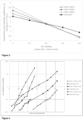
- K G values as a function of CO 2 loading are presented in 1, Figure 3 and Figure 4 . From the curves in the figures CO 2 mass transfer is faster in 4-AMPy solutions at low CO 2 loadings compared to MEA at similar concentrations. The absorption rate declines with increasing CO 2 loading and is 50% lower than MEA towards higher loadings of 0.4. In practice this does not present an issue due to the faster absorption at low CO 2 loading which offsets the lower rate at high loading.
- the larger cyclic capacity also means the AMPy's tend to more easily be stripped to low loadings where the mass transfer is shown in Table 4.
- blending with DMEA and AMP results in similar viscosities to standalone AMPy absorbents at similar concentrations and low (or zero) CO 2 loading.
- Viscosity of the 4-AMPy/AMP blend increases with CO 2 loading similarly to the standalone 6.0M 4-AMPy absorbent while the viscosity of the blend with DMEA increases at a slower rate ( ⁇ 40% lower viscosity at 0.4 loading).
- Viscosity of the 4-AMPy/MEA blend is substantially lower at all CO 2 loadings ( ⁇ 75% lower viscosity at 0.4 CO 2 loading).
- a number of the AMPy/MEA blends exhibited similar or larger CO 2 mass transfer rates than the standalone absorbents indicating that blended absorbents are useful.
- the table shows the larger enthalpy of reaction for the AMPy's which leads to more CO2 release with increasing temperature. This contributes to the good cyclic capacity of the substituted heteroaromatic compounds.
- the larger cyclic capacity of the (aminomethyl)pyridines produces lower operating energy requirements of the process. As a result less absorbent is required to capture the same amount of CO 2 thereby lowering circulation rates and reboiler duties.
- BZA Benzylamine
- Example 3 VLE measurements for AMPy derivatives and blends
- VLE liquid equilibrium
- the vapour liquid equilibrium apparatus used here incorporates a sealed stainless steel reactor (4 independent vessels) and high pressure CO 2 gas delivery system.
- Absorbent liquid (5.0 mls) is placed into vessels and evacuated several times to remove any residual CO 2 gas that may be present.
- the vessels are charged with high pressure nitrogen ( ⁇ 2.0 BAR absolute pressure) before the mass is recorded using a milligram balance.
- the vessel pressure sensor is attached and the entire vessel placed into an oven at the desired temperature (40, 60, 80 ⁇ C).
- the initial pressure of the vessel (now incorporating contributions from N 2 and H 2 O) is recorded and the vessel charged with CO 2 ( ⁇ 5.0 BAR absolute pressure).
- the vessel is weighed and the mass of CO 2 dosed into the vessel recorded.
- the vessel is returned the oven and equilibrated for 24 hours or until steady state is reached (indicated by no further changes in pressure). Samples from the vessel headspace are then analysed by gas chromatography to determine the gas phase CO 2 partial pressure. The liquid phase CO 2 loading is then determined by mass balance calculation.
- a concentrated 3-AMPy absorbent operating at 6.0M was selected as the base case given its simplicity.
- Alternative blends incorporating equimolar concentrations of monoethanolamine (MEA) and 2-amino-2-methyl-1-propanol (AMP) with 3-AMPy i.e. 3.0M 3-AMPY + 3.0M MEA or 3.0M AMP respectively) were selected to provide rapid kinetic or improved thermodynamics while minimising the cost of the absorbent inventory for large scale evaluation in a pilot plant.
- Figure 7 of the drawings shows the model estimated reboiler duties as a function of the ratio of liquid and gas flow rates (L/G) for an isobaric stripping column with a range of aqueous absorber solutions including 6M 3-AMPy and various ratios of 3-AMPy and AMP (with 30 wt% MEA included for comparison).
- L/G liquid and gas flow rates
- Example 5 Pilot plant trials using 3-(aminomethyl)pyridine (3-AMPy) based absorbents
- Extended pilot plant trials have been undertaken using a 0.4 tonne/day CO 2 capture plant located at a brown coal power station.
- the capture plant was operated with a flue gas slip-stream of flow rate 80 m 3 /hr directly taken from the power station.
- Example 5a Pilot plant trials using absorbent containing 6 mol/L Aqueous 3-AMPy (61 wt% 3-AMPy and 39 wt% water)
- the campaign with 6 mol/L Aqueous 3-AMPy was operated for a duration of approximately 1500 hours. During operation the performance of the plant was assessed in terms of reboiler energy requirement and the degradation of the amine was monitored. The single dominant degradation product formed was also identified and characterised. Minimum reboiler duties of 2.9 and 2.6 GJ/tonne CO 2 without and with use of the rich split process configuration respectively were achieved. This is compared to 3.3 GJ/tonne CO 2 for 5 mol/L monoethanolamine (MEA) in both configurations.
- MEA monoethanolamine
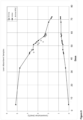
- Figure 9 is a plot of the trend in amine and imine concentration during the pilot plant campaign.
- Example 5b 3 mol/L 3-AMPy and 3 mol/L 2-amino-2-methyl-1-proponal (AMP) (32wt% 3-AMPy, 26 wt% AMP and 42 wt% water)
- Example 5b A pilot plant campaign was conducted with the aqueous absorbent of Example 5b for 5000 hours. It was possible to conduct a much longer campaign as the degradation of the absorbent was much slower than the absorbent of Example 5a. The same reboiler energy requirements were achieved as in Example 5a.
- Figure 10 shows the concentrations of 3-AMPy, AMP and imine over the duration of the campaign. The rate of imine formation was orders of magnitude lower than seen in the trial of Example 5a. In addition, the overall rate of degradation of was found to be 10 times slower than 5 mol/L MEA.
- the formation of the imine dimer and inhibition of degradation is a unique property of aminomethylaromatic systems and in particular enhances the performance on aminomethyl substituted heteroaromatics.
- Aminoalkylpyridine with longer bridging chains such as ethyl and propyl between the amino and pyridine group do not form the imine and degrade via chain loss and more traditional mechanism that form products that cannot be easily regenerated.
- Figure 10 3-AMPy, AMP and imine concentrations measured during the pilot plant campaign by IR spectroscopy over 5000 hours of operation.
- Example 5b In contrast with the reduction in the concentration of 3-AMPy shown in Figure 9 the composition of Example 5b, consisting of aqueous 3 mol/L 3-AMPy and 3 mol/L 2-amino-2-methyl-1-proponal (AMP) (32wt% 3-AMPy, 26 wt% AMP and 42 wt% water), showed little reduction in the concentration of the amines over the period of 5000 hours operation of the pilot plant under the same conditions.
- AMP 2-amino-2-methyl-1-proponal
- Example 6 Comparison of the absorbent of Example 5 with MEA
- the pilot plant was also operated with 5 mol/L (30wt%) aqueous monoethanolamine (MEA) for approximately 500 hours. This allowed optimum reboiler duties to be identified for each absorbent via parametric study. These optimum reboiler duties and rates of amine degradation are shown in Table 6 below and are for the standard plant configuration (no rich split). Note that the MEA degradation information is taken from literature as it was only run for a short duration in the pilot plant. Table 6 5 mol/L MEA Example 5a Example 5b Reboiler duty (GJ / tonne CO 2 ) 3.4 2.9 2.9 Amine degradation rate (kg / tonne CO 2 ) 1.5* 23 0.16 *Degradation rate taken from book P. Feron, Absorption-Based Post-Combustion Capture of Carbon Dioxide, Elsevier (2016 ).
- MEA aqueous monoethanolamine
- Aniline and aminopyridine compounds lack the basicity required to effectively act as CO 2 absorbents.
- the pK a of their conjugate acids is smaller than or similar to that of CO 2 in aqueous solution (6.3 at 25°C, T J Edwards,G Maurer,J Newman,J M Prausnitz; AlChE J.,24,966 (1978)).
- the pKa of the conjugate bases is shown in Table 7 below. Thus they are unable to accept protons from CO 2 ionisation. In addition they will only directly react with CO 2 to form a carbamate in the presence of a strong base ( P V Kortunov,L S Baugh,M Siskin,D C Calabro; Energy & Fuels,29,5967 (2017 )).
- the enthalpy of protonation is an important parameter in aqueous amine absorbents.
- the more structurally rigid a molecule the more negative the enthalpy of protonation and smaller and/or more negative the entropy of protonation.
- Example 5b the presence of AMP in the absorber composition inhibited the formation of the imine produced by dimerization of the AMPy derivative formed on absorption of CO 2 .
- Other bases including amines of higher pKa than the (aminomethyl)pyridine may also be used in this role.
- Preferred bases are tertiary and sterically hindered amines which are stable and provide a proton accepting role on CO 2 absorption.
- the average pK a of 2-(aminomethyl)pyridine, 3-(aminomethyl)pyridine and 4-(aminomethyl)pyridine at 25°C is 8.6
- Suitable bases typically have a pK a at least 0.25 units higher than the pKa of the (aminomethyl)pyridines, that is about 0.25 units higher than 8.6 (this represents a 2.5x increased selectivity for protons).
- suitable tertiary and sterically hindered amines include those specified in Table 8 together with the pKa at 25°C.
Landscapes
- Chemical & Material Sciences (AREA)
- Engineering & Computer Science (AREA)
- Chemical Kinetics & Catalysis (AREA)
- Oil, Petroleum & Natural Gas (AREA)
- Analytical Chemistry (AREA)
- General Chemical & Material Sciences (AREA)
- Environmental & Geological Engineering (AREA)
- Biomedical Technology (AREA)
- Health & Medical Sciences (AREA)
- Organic Chemistry (AREA)
- Inorganic Chemistry (AREA)
- Gas Separation By Absorption (AREA)
- Treating Waste Gases (AREA)
- Carbon And Carbon Compounds (AREA)
- Organic Low-Molecular-Weight Compounds And Preparation Thereof (AREA)
Claims (15)
- Procédé d'absorption du dioxyde de carbone à partir d'un flux gazeux contenant du dioxyde de carbone, comprenant la mise en contact du flux gazeux avec un absorbant comprenant une composition aqueuse comprenant au moins 10 % en poids d'eau et un composé hétéroaromatique substitué choisi parmi les formules Ia, Ib, Ic, Id et des mélanges de deux, ou plus, de celles-ci :

 R1 est un méthylène ;R4 est un substituant carboné facultatif choisi dans le groupe constitué par un alkyle en C1 à C4, un hydroxy, un hydroxy-alkyle en C1 à C4, un alcoxy en C1 à C4, un alcoxy en C1 à C4-(alkyle en C1 à C4) ; etn est 0, 1 ou 2.
 - Procédé selon la revendication 1, dans lequel la formule I est de formule Ia : dans lequelR1 est un méthylène ;R4 est un substituant carboné facultatif choisi dans le groupe constitué par un alkyle en C1 à C4, un hydroxy, un hydroxy-alkyle en C1 à C4, un alcoxy en C1 à C4, un alcoxy en C1 à C4-(alkyle en C1 à C4) ; etn est 0, 1 ou 2.
- Procédé selon l'une quelconque des revendications précédentes, dans lequel le composé hétéroaromatique substitué est choisi dans le groupe constitué par :la 2-(aminométhyl)pyridine,la 3-(aminométhyl)pyridine etla 4-(aminométhyl)pyridine et, de préférence, est la 3-(aminométhyl)pyridine.
- Procédé selon l'une quelconque des revendications précédentes, dans lequel la concentration du composé hétéroaromatique substitué est 1 % en poids à 80 % en poids de la composition aqueuse, de préférence 10 % en poids à 80 % en poids de la composition aqueuse.
- Procédé selon l'une quelconque des revendications précédentes, dans lequel la composition aqueuse comprend une amine supplémentaire choisie parmi les amines tertiaires, les amines stériquement encombrées contenant au moins un groupe amino primaire ou secondaire attaché à un atome de carbone soit secondaire, soit tertiaire et des mélanges de celles-ci présentant un pKa supérieur à celui du composé hétéroaromatique substitué.
- Procédé selon la revendication 5, dans lequel l'amine tertiaire, l'amine stériquement encombrée ou un mélange de celles-ci présente un pKa d'au moins 8,85 à 25 °C.
- Procédé selon l'une quelconque des revendications précédentes, dans lequel la composition aqueuse comprend en outre un absorbant de dioxyde de carbone qui est choisi dans le groupe constitué par l'imidazole et l'imidazole N-fonctionnalisé.
- Procédé selon l'une quelconque des revendications précédentes, dans lequel la composition aqueuse comprend le composé hétéroaromatique substitué en une quantité de 10 % en poids à 80 % en poids de la composition aqueuse et un absorbant supplémentaire, dans lequel le rapport pondéral du composé hétéroaromatique substitué à l'absorbant supplémentaire est de 1:10 à 10:1.
- Procédé selon l'une quelconque des revendications précédentes, dans lequel la teneur en eau de la composition aqueuse est d'au moins 15 % en poids.
- Procédé selon l'une quelconque des revendications précédentes, dans lequel l'absorbant comprend10 % en poids à 60 % en poids de (aminométhyl)pyridine comprenant une ou plusieurs parmi la 2-(aminométhyl)pyridine, la 3-(aminométhyl)pyridine et la 4-(aminométhyl)pyridine ;10 % en poids à 60 % en poids d'amine choisie parmi les amines tertiaires, les amines stériquement encombrées contenant au moins un groupe amino primaire ou secondaire lié à un atome de carbone soit secondaire, soit tertiaire et des mélanges de celles-ci de pKa d'au moins 8,85 ; et20 % en poids à 80 % en poids d'eau.
- Procédé selon la revendication 10, dans lequel l'amine choisie parmi les amines tertiaires et les amines stériquement encombrées est choisie dans le groupe constitué par le 2-amino-1-propanol, le 2-amino-2-méthyl-1-propanol, la pipéridine, le 2-pipéridinylméthanol, le 3-pipéridinylméthanol, le 4-pipéridinylméthanol, le 2-pipéridinyléthanol, le 4-pipéridinyléthanol, le 2-(diméthylamino)éthanol et des mélanges de deux, ou plus, de ceux-ci.
- Composition de dioxyde de carbone absorbé comprenant :A. un solvant aqueux contenant de l'eau en une quantité d'au moins 10 % en poids de la composition ;B. au moins un composé absorbant pour le dioxyde de carbone comprenant un composé hétéroaromatique substitué choisi parmi les formules Ia, Ib, Ic, Id et des mélanges de deux, ou plus, de celles-ci :

 R1 est un méthylène ;R4 est un substituant carboné facultatif choisi dans le groupe constitué par un alkyle en C1 à C4, un hydroxy, un hydroxy-alkyle en C1 à C4, un alcoxy en C1 à C4, un alcoxy en C1 à C4-(alkyle en C1 à C4) ; et n est 0, 1 ou 2 ; etC. un dioxyde de carbone absorbé, de préférence en une quantité d'au moins 1 % en poids, dans laquelle le dioxyde de carbone absorbé est à une concentration supérieure à la concentration d'équilibre lorsque la solution est exposée à l'air à une température inférieure au point d'ébullition du solvant.
 - Composition selon la revendication 12, dans laquelle le composé hétéroaromatique substitué est choisi dans le groupe constitué par :la 2-(aminométhyl)pyridine ;la 3-(aminométhyl)pyridine ; oula 4-(aminométhyl)pyridine.
- Composition selon la revendication 12 ou la revendication 13, dans laquelle la composition comprend10 % en poids à 60 % en poids de (aminométhyl)pyridine comprenant une ou plusieurs parmi la 2-(aminométhyl)pyridine, la 3-(aminométhyl)pyridine et la 4-(aminométhyl)pyridine ;10 % en poids à 60 % en poids d'amine choisie parmi les amines tertiaires et les amines stériquement encombrées contenant au moins un groupe amino primaire ou secondaire lié à un atome de carbone soit secondaire, soit tertiaire et des mélanges de celles-ci de pKa d'au moins 8,85 ; et20 % en poids à 80 % en poids d'eau.
- Composition selon la revendication 14, dans laquelle l'amine choisie parmi les amines tertiaires et les amines stériquement encombrées est choisie dans le groupe constitué par le 2-amino-1-propanol, le 2-amino-2-méthyl-1-propanol, la pipéridine, le 2-pipéridinylméthanol, le 3-pipéridinylméthanol, le 4-pipéridinylméthanol, le 2-pipéridinyléthanol, le 4-pipéridinyléthanol, le 2-(diméthylamino)éthanol et des mélanges de deux, ou plus, de ceux-ci.
Priority Applications (2)
| Application Number | Priority Date | Filing Date | Title |
|---|---|---|---|
| HRP20250457TT HRP20250457T1 (hr) | 2017-05-22 | 2018-05-22 | Postupak i sustav za hvatanje ugljičnog dioksida |
| EP25161128.1A EP4549384A3 (fr) | 2017-05-22 | 2018-05-22 | Procédé et système de capture de dioxyde de carbone |
Applications Claiming Priority (2)
| Application Number | Priority Date | Filing Date | Title |
|---|---|---|---|
| AU2017901937A AU2017901937A0 (en) | 2017-05-22 | Process and system for capture of carbon dioxide | |
| PCT/AU2018/050488 WO2018213873A1 (fr) | 2017-05-22 | 2018-05-22 | Procédé et système de capture de dioxyde de carbone |
Related Child Applications (1)
| Application Number | Title | Priority Date | Filing Date |
|---|---|---|---|
| EP25161128.1A Division EP4549384A3 (fr) | 2017-05-22 | 2018-05-22 | Procédé et système de capture de dioxyde de carbone |
Publications (4)
| Publication Number | Publication Date |
|---|---|
| EP3634607A1 EP3634607A1 (fr) | 2020-04-15 |
| EP3634607A4 EP3634607A4 (fr) | 2021-03-03 |
| EP3634607C0 EP3634607C0 (fr) | 2025-03-05 |
| EP3634607B1 true EP3634607B1 (fr) | 2025-03-05 |
Family
ID=64395067
Family Applications (2)
| Application Number | Title | Priority Date | Filing Date |
|---|---|---|---|
| EP25161128.1A Pending EP4549384A3 (fr) | 2017-05-22 | 2018-05-22 | Procédé et système de capture de dioxyde de carbone |
| EP18805114.8A Active EP3634607B1 (fr) | 2017-05-22 | 2018-05-22 | Procédé et système de capture de dioxyde de carbone |
Family Applications Before (1)
| Application Number | Title | Priority Date | Filing Date |
|---|---|---|---|
| EP25161128.1A Pending EP4549384A3 (fr) | 2017-05-22 | 2018-05-22 | Procédé et système de capture de dioxyde de carbone |
Country Status (10)
| Country | Link |
|---|---|
| US (4) | US11123684B2 (fr) |
| EP (2) | EP4549384A3 (fr) |
| JP (1) | JP7221880B2 (fr) |
| CN (1) | CN110997107B (fr) |
| AU (3) | AU2018273827B2 (fr) |
| ES (1) | ES3024685T3 (fr) |
| HR (1) | HRP20250457T1 (fr) |
| HU (1) | HUE071528T2 (fr) |
| PL (1) | PL3634607T3 (fr) |
| WO (1) | WO2018213873A1 (fr) |
Families Citing this family (5)
| Publication number | Priority date | Publication date | Assignee | Title |
|---|---|---|---|---|
| KR102895674B1 (ko) | 2019-05-02 | 2025-12-04 | 커먼웰쓰 사이언티픽 앤드 인더스트리얼 리서치 오가니제이션 | 액체 흡수제의 재생 방법 |
| EP4431174A1 (fr) * | 2021-11-12 | 2024-09-18 | Sanyo Chemical Industries, Ltd. | Composition pour absorption de dioxyde de carbone |
| US20240091703A1 (en) | 2022-09-20 | 2024-03-21 | Saudi Arabian Oil Company | Method and apparatus for low temperature regeneration of acid gas using a catalyst |
| CN116236882B (zh) * | 2023-02-09 | 2024-11-01 | 山东东尊华泰环保科技有限公司 | 一种co2复合胺吸收剂及其应用 |
| US12385818B2 (en) | 2023-02-14 | 2025-08-12 | Saudi Arabian Oil Company | Modeling gas desorption in a subsurface reservoir |
Family Cites Families (16)
| Publication number | Priority date | Publication date | Assignee | Title |
|---|---|---|---|---|
| US4863705A (en) * | 1987-09-23 | 1989-09-05 | Fuel Tech, Inc. | Process for the reduction of nitrogen oxides in an effluent |
| US6652627B1 (en) * | 2002-10-30 | 2003-11-25 | Velocys, Inc. | Process for separating a fluid component from a fluid mixture using microchannel process technology |
| JP2011025100A (ja) * | 2007-11-22 | 2011-02-10 | Research Institute Of Innovative Technology For The Earth | 高圧ガスから二酸化炭素を回収する方法及び水性組成物 |
| EP2288424A2 (fr) | 2008-05-21 | 2011-03-02 | The Regents of the University of Colorado | Liquides ioniques et procédés pour les utiliser |
| US20110014100A1 (en) * | 2008-05-21 | 2011-01-20 | Bara Jason E | Carbon Sequestration Using Ionic Liquids |
| US20100154639A1 (en) | 2008-12-24 | 2010-06-24 | General Electric Company | Liquid carbon dioxide absorbent and methods of using the same |
| FR2953145B1 (fr) * | 2009-11-30 | 2013-07-19 | Inst Francais Du Petrole | Solution absorbante contenant un inhibiteur de degradation derive de la pyrimidine ou de la triazine et procede d'absorption de composes acides contenus dans un effluent gazeux |
| DE102010004070A1 (de) * | 2010-01-05 | 2011-07-07 | Uhde GmbH, 44141 | CO2-Entfernung aus Gasen mittels wässriger Amin-Lösung unter Zusatz eines sterisch gehinderten Amins |
| RU2562262C2 (ru) * | 2010-03-17 | 2015-09-10 | Шелл Интернэшнл Рисерч Маатсхаппий Б.В. | Способ удаления термически стабильных солей из поглотителей кислотных газов |
| JP5713997B2 (ja) * | 2010-03-29 | 2015-05-07 | 株式会社東芝 | 酸性ガス吸収剤、酸性ガス除去装置および酸性ガス除去方法 |
| CN105903316A (zh) | 2011-03-28 | 2016-08-31 | 阿拉巴马大学理事会 | 含n-官能化咪唑的系统及使用方法 |
| US20150125372A1 (en) * | 2011-05-13 | 2015-05-07 | Ion Engineering | Compositions and methods for gas capture processes |
| CA2895228C (fr) * | 2012-12-21 | 2019-03-12 | Exxonmobil Research And Engineering Company | Promoteurs amines pour la capture de co2 |
| KR101485953B1 (ko) * | 2013-03-20 | 2015-02-11 | 한국에너지기술연구원 | 양성자 주게 혼합물을 이용한 아민 흡수제의 재생방법 |
| US20150367281A1 (en) * | 2013-08-29 | 2015-12-24 | Commonwealth Scientific And Industrial Research Organisation | Absorbent solution for absorption of acid gas and process for absorption of acid gas |
| US10130907B2 (en) | 2016-01-20 | 2018-11-20 | Battelle Memorial Institute | Capture and release of acid gasses using tunable organic solvents with aminopyridine |
-
2018
- 2018-05-22 AU AU2018273827A patent/AU2018273827B2/en active Active
- 2018-05-22 CN CN201880049637.6A patent/CN110997107B/zh active Active
- 2018-05-22 PL PL18805114.8T patent/PL3634607T3/pl unknown
- 2018-05-22 ES ES18805114T patent/ES3024685T3/es active Active
- 2018-05-22 WO PCT/AU2018/050488 patent/WO2018213873A1/fr not_active Ceased
- 2018-05-22 HU HUE18805114A patent/HUE071528T2/hu unknown
- 2018-05-22 US US16/317,134 patent/US11123684B2/en active Active
- 2018-05-22 HR HRP20250457TT patent/HRP20250457T1/hr unknown
- 2018-05-22 EP EP25161128.1A patent/EP4549384A3/fr active Pending
- 2018-05-22 JP JP2019564436A patent/JP7221880B2/ja active Active
- 2018-05-22 EP EP18805114.8A patent/EP3634607B1/fr active Active
-
2021
- 2021-08-03 US US17/392,867 patent/US11602714B2/en active Active
-
2023
- 2023-02-21 US US18/171,780 patent/US12023624B2/en active Active
-
2024
- 2024-05-22 US US18/670,880 patent/US12343676B2/en active Active
- 2024-06-20 AU AU2024204217A patent/AU2024204217B2/en active Active
-
2026
- 2026-01-15 AU AU2026200284A patent/AU2026200284A1/en active Pending
Also Published As
| Publication number | Publication date |
|---|---|
| AU2024204217A1 (en) | 2024-07-11 |
| AU2018273827B2 (en) | 2024-03-21 |
| US20210362090A1 (en) | 2021-11-25 |
| AU2018273827A1 (en) | 2019-12-05 |
| US11123684B2 (en) | 2021-09-21 |
| EP3634607A1 (fr) | 2020-04-15 |
| US20190291044A1 (en) | 2019-09-26 |
| HRP20250457T1 (hr) | 2025-06-06 |
| EP4549384A3 (fr) | 2025-10-08 |
| AU2024204217B2 (en) | 2026-02-12 |
| US12343676B2 (en) | 2025-07-01 |
| CN110997107B (zh) | 2022-05-27 |
| AU2026200284A1 (en) | 2026-02-05 |
| WO2018213873A1 (fr) | 2018-11-29 |
| EP3634607C0 (fr) | 2025-03-05 |
| CN110997107A (zh) | 2020-04-10 |
| JP2020521625A (ja) | 2020-07-27 |
| HUE071528T2 (hu) | 2025-09-28 |
| US11602714B2 (en) | 2023-03-14 |
| PL3634607T3 (pl) | 2025-08-11 |
| EP4549384A2 (fr) | 2025-05-07 |
| EP3634607A4 (fr) | 2021-03-03 |
| US20230256381A1 (en) | 2023-08-17 |
| ES3024685T3 (en) | 2025-06-05 |
| US12023624B2 (en) | 2024-07-02 |
| JP7221880B2 (ja) | 2023-02-14 |
| US20240382898A1 (en) | 2024-11-21 |
Similar Documents
| Publication | Publication Date | Title |
|---|---|---|
| US12023624B2 (en) | Process and system for capture of carbon dioxide | |
| US9630140B2 (en) | Method for absorbing CO2 from a gas mixture | |
| AU2012266660B2 (en) | Absorption medium and method for absorption of an acid gas from a gas mixture | |
| US9878285B2 (en) | Method and absorption medium for absorbing CO2 from a gas mixture | |
| JP6018174B2 (ja) | ガス捕捉方法 | |
| AU2009248910A1 (en) | Ionic liquids and methods for using the same | |
| AU2010211074A1 (en) | CO2 absorption from gas mixtures using an aqueous solution of 4-amino- 2,2,6,6-tetramethylpiperidine | |
| US20150367281A1 (en) | Absorbent solution for absorption of acid gas and process for absorption of acid gas | |
| WO2015000637A1 (fr) | Milieu d'absorption et procédé d'absorption de co2 à partir d'un mélange gazeux, dans lequel le milieu comprend de l'eau, une amine et un sel organique | |
| CA2838927A1 (fr) | Procede pour l'absorption de co2 a partir d'un melange gazeux | |
| ES2984233T3 (es) | Proceso de regeneración de un absorbente líquido | |
| AU2015218491A1 (en) | Absorbent solution for absorption of acid gas and process for absorption of acid gas | |
| HK40115825A (en) | Process for regenerating a liquid absorbent |
Legal Events
| Date | Code | Title | Description |
|---|---|---|---|
| REG | Reference to a national code |
Ref country code: HR Ref legal event code: TUEP Ref document number: P20250457T Country of ref document: HR |
|
| STAA | Information on the status of an ep patent application or granted ep patent |
Free format text: STATUS: THE INTERNATIONAL PUBLICATION HAS BEEN MADE |
|
| PUAI | Public reference made under article 153(3) epc to a published international application that has entered the european phase |
Free format text: ORIGINAL CODE: 0009012 |
|
| STAA | Information on the status of an ep patent application or granted ep patent |
Free format text: STATUS: REQUEST FOR EXAMINATION WAS MADE |
|
| 17P | Request for examination filed |
Effective date: 20191206 |
|
| AK | Designated contracting states |
Kind code of ref document: A1 Designated state(s): AL AT BE BG CH CY CZ DE DK EE ES FI FR GB GR HR HU IE IS IT LI LT LU LV MC MK MT NL NO PL PT RO RS SE SI SK SM TR |
|
| AX | Request for extension of the european patent |
Extension state: BA ME |
|
| DAV | Request for validation of the european patent (deleted) | ||
| DAX | Request for extension of the european patent (deleted) | ||
| A4 | Supplementary search report drawn up and despatched |
Effective date: 20210202 |
|
| RIC1 | Information provided on ipc code assigned before grant |
Ipc: B01D 53/78 20060101ALI20210126BHEP Ipc: C01B 32/50 20170101ALI20210126BHEP Ipc: B01D 53/62 20060101ALI20210126BHEP Ipc: B01D 53/14 20060101AFI20210126BHEP |
|
| STAA | Information on the status of an ep patent application or granted ep patent |
Free format text: STATUS: EXAMINATION IS IN PROGRESS |
|
| 17Q | First examination report despatched |
Effective date: 20211012 |
|
| P01 | Opt-out of the competence of the unified patent court (upc) registered |
Effective date: 20230525 |
|
| GRAP | Despatch of communication of intention to grant a patent |
Free format text: ORIGINAL CODE: EPIDOSNIGR1 |
|
| STAA | Information on the status of an ep patent application or granted ep patent |
Free format text: STATUS: GRANT OF PATENT IS INTENDED |
|
| INTG | Intention to grant announced |
Effective date: 20240923 |
|
| GRAS | Grant fee paid |
Free format text: ORIGINAL CODE: EPIDOSNIGR3 |
|
| GRAA | (expected) grant |
Free format text: ORIGINAL CODE: 0009210 |
|
| STAA | Information on the status of an ep patent application or granted ep patent |
Free format text: STATUS: THE PATENT HAS BEEN GRANTED |
|
| AK | Designated contracting states |
Kind code of ref document: B1 Designated state(s): AL AT BE BG CH CY CZ DE DK EE ES FI FR GB GR HR HU IE IS IT LI LT LU LV MC MK MT NL NO PL PT RO RS SE SI SK SM TR |
|
| REG | Reference to a national code |
Ref country code: GB Ref legal event code: FG4D |
|
| REG | Reference to a national code |
Ref country code: CH Ref legal event code: EP |
|
| REG | Reference to a national code |
Ref country code: IE Ref legal event code: FG4D |
|
| REG | Reference to a national code |
Ref country code: DE Ref legal event code: R096 Ref document number: 602018079857 Country of ref document: DE |
|
| U01 | Request for unitary effect filed |
Effective date: 20250317 |
|
| U07 | Unitary effect registered |
Designated state(s): AT BE BG DE DK EE FI FR IT LT LU LV MT NL PT RO SE SI Effective date: 20250324 |
|
| P04 | Withdrawal of opt-out of the competence of the unified patent court (upc) registered |
Free format text: CASE NUMBER: APP_13732/2025 Effective date: 20250319 |
|
| REG | Reference to a national code |
Ref country code: HR Ref legal event code: ODRP Ref document number: P20250457T Country of ref document: HR Payment date: 20250417 Year of fee payment: 8 |
|
| REG | Reference to a national code |
Ref country code: ES Ref legal event code: FG2A Ref document number: 3024685 Country of ref document: ES Kind code of ref document: T3 Effective date: 20250605 |
|
| REG | Reference to a national code |
Ref country code: HR Ref legal event code: T1PR Ref document number: P20250457 Country of ref document: HR |
|
| U20 | Renewal fee for the european patent with unitary effect paid |
Year of fee payment: 8 Effective date: 20250507 |
|
| PG25 | Lapsed in a contracting state [announced via postgrant information from national office to epo] |
Ref country code: RS Free format text: LAPSE BECAUSE OF FAILURE TO SUBMIT A TRANSLATION OF THE DESCRIPTION OR TO PAY THE FEE WITHIN THE PRESCRIBED TIME-LIMIT Effective date: 20250605 |
|
| PGFP | Annual fee paid to national office [announced via postgrant information from national office to epo] |
Ref country code: GB Payment date: 20250529 Year of fee payment: 8 Ref country code: ES Payment date: 20250602 Year of fee payment: 8 |
|
| PGFP | Annual fee paid to national office [announced via postgrant information from national office to epo] |
Ref country code: NO Payment date: 20250422 Year of fee payment: 8 |
|
| PGFP | Annual fee paid to national office [announced via postgrant information from national office to epo] |
Ref country code: HR Payment date: 20250417 Year of fee payment: 8 |
|
| PGFP | Annual fee paid to national office [announced via postgrant information from national office to epo] |
Ref country code: HU Payment date: 20250430 Year of fee payment: 8 |
|
| PGFP | Annual fee paid to national office [announced via postgrant information from national office to epo] |
Ref country code: GR Payment date: 20250528 Year of fee payment: 8 |
|
| PGFP | Annual fee paid to national office [announced via postgrant information from national office to epo] |
Ref country code: CH Payment date: 20250601 Year of fee payment: 8 |
|
| PGFP | Annual fee paid to national office [announced via postgrant information from national office to epo] |
Ref country code: TR Payment date: 20250417 Year of fee payment: 8 |
|
| PGFP | Annual fee paid to national office [announced via postgrant information from national office to epo] |
Ref country code: IE Payment date: 20250520 Year of fee payment: 8 |
|
| REG | Reference to a national code |
Ref country code: SK Ref legal event code: T3 Ref document number: E 46592 Country of ref document: SK |
|
| REG | Reference to a national code |
Ref country code: GR Ref legal event code: EP Ref document number: 20250401069 Country of ref document: GR Effective date: 20250613 |
|
| REG | Reference to a national code |
Ref country code: HU Ref legal event code: AG4A Ref document number: E071528 Country of ref document: HU |
|
| REG | Reference to a national code |
Ref country code: CH Ref legal event code: R17 Free format text: ST27 STATUS EVENT CODE: U-0-0-R10-R17 (AS PROVIDED BY THE NATIONAL OFFICE) Effective date: 20251003 |
|
| PG25 | Lapsed in a contracting state [announced via postgrant information from national office to epo] |
Ref country code: SM Free format text: LAPSE BECAUSE OF FAILURE TO SUBMIT A TRANSLATION OF THE DESCRIPTION OR TO PAY THE FEE WITHIN THE PRESCRIBED TIME-LIMIT Effective date: 20250305 |
|
| PGFP | Annual fee paid to national office [announced via postgrant information from national office to epo] |
Ref country code: PL Payment date: 20250416 Year of fee payment: 8 |
|
| PG25 | Lapsed in a contracting state [announced via postgrant information from national office to epo] |
Ref country code: CZ Free format text: LAPSE BECAUSE OF FAILURE TO SUBMIT A TRANSLATION OF THE DESCRIPTION OR TO PAY THE FEE WITHIN THE PRESCRIBED TIME-LIMIT Effective date: 20250305 |
|
| PGFP | Annual fee paid to national office [announced via postgrant information from national office to epo] |
Ref country code: SK Payment date: 20250430 Year of fee payment: 8 |
|
| PG25 | Lapsed in a contracting state [announced via postgrant information from national office to epo] |
Ref country code: IS Free format text: LAPSE BECAUSE OF FAILURE TO SUBMIT A TRANSLATION OF THE DESCRIPTION OR TO PAY THE FEE WITHIN THE PRESCRIBED TIME-LIMIT Effective date: 20250705 |
|
| PLBE | No opposition filed within time limit |
Free format text: ORIGINAL CODE: 0009261 |
|
| STAA | Information on the status of an ep patent application or granted ep patent |
Free format text: STATUS: NO OPPOSITION FILED WITHIN TIME LIMIT |
|
| REG | Reference to a national code |
Ref country code: CH Ref legal event code: L10 Free format text: ST27 STATUS EVENT CODE: U-0-0-L10-L00 (AS PROVIDED BY THE NATIONAL OFFICE) Effective date: 20260114 |
|
| PGFP | Annual fee paid to national office [announced via postgrant information from national office to epo] |
Ref country code: CY Payment date: 20250512 Year of fee payment: 8 |
|
| PG25 | Lapsed in a contracting state [announced via postgrant information from national office to epo] |
Ref country code: MC Free format text: LAPSE BECAUSE OF FAILURE TO SUBMIT A TRANSLATION OF THE DESCRIPTION OR TO PAY THE FEE WITHIN THE PRESCRIBED TIME-LIMIT Effective date: 20250305 |
|
| 26N | No opposition filed |
Effective date: 20251208 |