EP3635896B1 - Bestimmung von für übertragung verfügbaren daten - Google Patents
Bestimmung von für übertragung verfügbaren daten Download PDFInfo
- Publication number
- EP3635896B1 EP3635896B1 EP18733022.0A EP18733022A EP3635896B1 EP 3635896 B1 EP3635896 B1 EP 3635896B1 EP 18733022 A EP18733022 A EP 18733022A EP 3635896 B1 EP3635896 B1 EP 3635896B1
- Authority
- EP
- European Patent Office
- Prior art keywords
- radio link
- data
- link control
- transmission
- control entity
- Prior art date
- Legal status (The legal status is an assumption and is not a legal conclusion. Google has not performed a legal analysis and makes no representation as to the accuracy of the status listed.)
- Active
Links
Images



Classifications
-
- H—ELECTRICITY
- H04—ELECTRIC COMMUNICATION TECHNIQUE
- H04W—WIRELESS COMMUNICATION NETWORKS
- H04W28/00—Network traffic management; Network resource management
- H04W28/02—Traffic management, e.g. flow control or congestion control
- H04W28/0205—Traffic management, e.g. flow control or congestion control at the air interface
-
- H—ELECTRICITY
- H04—ELECTRIC COMMUNICATION TECHNIQUE
- H04W—WIRELESS COMMUNICATION NETWORKS
- H04W28/00—Network traffic management; Network resource management
- H04W28/02—Traffic management, e.g. flow control or congestion control
- H04W28/08—Load balancing or load distribution
- H04W28/09—Management thereof
- H04W28/0925—Management thereof using policies
-
- H—ELECTRICITY
- H04—ELECTRIC COMMUNICATION TECHNIQUE
- H04L—TRANSMISSION OF DIGITAL INFORMATION, e.g. TELEGRAPHIC COMMUNICATION
- H04L1/00—Arrangements for detecting or preventing errors in the information received
- H04L1/12—Arrangements for detecting or preventing errors in the information received by using return channel
- H04L1/16—Arrangements for detecting or preventing errors in the information received by using return channel in which the return channel carries supervisory signals, e.g. repetition request signals
- H04L1/18—Automatic repetition systems, e.g. Van Duuren systems
- H04L1/1829—Arrangements specially adapted for the receiver end
- H04L1/1835—Buffer management
-
- H—ELECTRICITY
- H04—ELECTRIC COMMUNICATION TECHNIQUE
- H04L—TRANSMISSION OF DIGITAL INFORMATION, e.g. TELEGRAPHIC COMMUNICATION
- H04L1/00—Arrangements for detecting or preventing errors in the information received
- H04L1/12—Arrangements for detecting or preventing errors in the information received by using return channel
- H04L1/16—Arrangements for detecting or preventing errors in the information received by using return channel in which the return channel carries supervisory signals, e.g. repetition request signals
- H04L1/18—Automatic repetition systems, e.g. Van Duuren systems
- H04L1/1867—Arrangements specially adapted for the transmitter end
- H04L1/1874—Buffer management
-
- H—ELECTRICITY
- H04—ELECTRIC COMMUNICATION TECHNIQUE
- H04L—TRANSMISSION OF DIGITAL INFORMATION, e.g. TELEGRAPHIC COMMUNICATION
- H04L43/00—Arrangements for monitoring or testing data switching networks
- H04L43/16—Threshold monitoring
-
- H—ELECTRICITY
- H04—ELECTRIC COMMUNICATION TECHNIQUE
- H04L—TRANSMISSION OF DIGITAL INFORMATION, e.g. TELEGRAPHIC COMMUNICATION
- H04L47/00—Traffic control in data switching networks
- H04L47/10—Flow control; Congestion control
- H04L47/29—Flow control; Congestion control using a combination of thresholds
-
- H—ELECTRICITY
- H04—ELECTRIC COMMUNICATION TECHNIQUE
- H04L—TRANSMISSION OF DIGITAL INFORMATION, e.g. TELEGRAPHIC COMMUNICATION
- H04L47/00—Traffic control in data switching networks
- H04L47/10—Flow control; Congestion control
- H04L47/30—Flow control; Congestion control in combination with information about buffer occupancy at either end or at transit nodes
-
- H—ELECTRICITY
- H04—ELECTRIC COMMUNICATION TECHNIQUE
- H04L—TRANSMISSION OF DIGITAL INFORMATION, e.g. TELEGRAPHIC COMMUNICATION
- H04L47/00—Traffic control in data switching networks
- H04L47/70—Admission control; Resource allocation
- H04L47/74—Admission control; Resource allocation measures in reaction to resource unavailability
-
- H—ELECTRICITY
- H04—ELECTRIC COMMUNICATION TECHNIQUE
- H04L—TRANSMISSION OF DIGITAL INFORMATION, e.g. TELEGRAPHIC COMMUNICATION
- H04L47/00—Traffic control in data switching networks
- H04L47/70—Admission control; Resource allocation
- H04L47/82—Miscellaneous aspects
- H04L47/822—Collecting or measuring resource availability data
-
- H—ELECTRICITY
- H04—ELECTRIC COMMUNICATION TECHNIQUE
- H04W—WIRELESS COMMUNICATION NETWORKS
- H04W28/00—Network traffic management; Network resource management
- H04W28/02—Traffic management, e.g. flow control or congestion control
- H04W28/0278—Traffic management, e.g. flow control or congestion control using buffer status reports
-
- H—ELECTRICITY
- H04—ELECTRIC COMMUNICATION TECHNIQUE
- H04W—WIRELESS COMMUNICATION NETWORKS
- H04W28/00—Network traffic management; Network resource management
- H04W28/02—Traffic management, e.g. flow control or congestion control
- H04W28/06—Optimizing the usage of the radio link, e.g. header compression, information sizing, discarding information
-
- H—ELECTRICITY
- H04—ELECTRIC COMMUNICATION TECHNIQUE
- H04W—WIRELESS COMMUNICATION NETWORKS
- H04W28/00—Network traffic management; Network resource management
- H04W28/02—Traffic management, e.g. flow control or congestion control
- H04W28/08—Load balancing or load distribution
- H04W28/082—Load balancing or load distribution among bearers or channels
-
- H—ELECTRICITY
- H04—ELECTRIC COMMUNICATION TECHNIQUE
- H04W—WIRELESS COMMUNICATION NETWORKS
- H04W28/00—Network traffic management; Network resource management
- H04W28/02—Traffic management, e.g. flow control or congestion control
- H04W28/08—Load balancing or load distribution
- H04W28/09—Management thereof
- H04W28/0925—Management thereof using policies
- H04W28/0942—Management thereof using policies based on measured or predicted load of entities- or links
-
- H—ELECTRICITY
- H04—ELECTRIC COMMUNICATION TECHNIQUE
- H04W—WIRELESS COMMUNICATION NETWORKS
- H04W36/00—Hand-off or reselection arrangements
- H04W36/0005—Control or signalling for completing the hand-off
- H04W36/0055—Transmission or use of information for re-establishing the radio link
- H04W36/0069—Transmission or use of information for re-establishing the radio link in case of dual connectivity, e.g. decoupled uplink/downlink
- H04W36/00695—Transmission or use of information for re-establishing the radio link in case of dual connectivity, e.g. decoupled uplink/downlink using split of the control plane or user plane
-
- H—ELECTRICITY
- H04—ELECTRIC COMMUNICATION TECHNIQUE
- H04W—WIRELESS COMMUNICATION NETWORKS
- H04W36/00—Hand-off or reselection arrangements
- H04W36/02—Buffering or recovering information during reselection ; Modification of the traffic flow during hand-off
-
- H—ELECTRICITY
- H04—ELECTRIC COMMUNICATION TECHNIQUE
- H04W—WIRELESS COMMUNICATION NETWORKS
- H04W72/00—Local resource management
- H04W72/20—Control channels or signalling for resource management
- H04W72/23—Control channels or signalling for resource management in the downlink direction of a wireless link, i.e. towards a terminal
-
- H—ELECTRICITY
- H04—ELECTRIC COMMUNICATION TECHNIQUE
- H04W—WIRELESS COMMUNICATION NETWORKS
- H04W72/00—Local resource management
- H04W72/50—Allocation or scheduling criteria for wireless resources
- H04W72/54—Allocation or scheduling criteria for wireless resources based on quality criteria
- H04W72/542—Allocation or scheduling criteria for wireless resources based on quality criteria using measured or perceived quality
-
- H—ELECTRICITY
- H04—ELECTRIC COMMUNICATION TECHNIQUE
- H04W—WIRELESS COMMUNICATION NETWORKS
- H04W72/00—Local resource management
- H04W72/50—Allocation or scheduling criteria for wireless resources
- H04W72/56—Allocation or scheduling criteria for wireless resources based on priority criteria
-
- H—ELECTRICITY
- H04—ELECTRIC COMMUNICATION TECHNIQUE
- H04W—WIRELESS COMMUNICATION NETWORKS
- H04W72/00—Local resource management
- H04W72/50—Allocation or scheduling criteria for wireless resources
- H04W72/56—Allocation or scheduling criteria for wireless resources based on priority criteria
- H04W72/566—Allocation or scheduling criteria for wireless resources based on priority criteria of the information or information source or recipient
- H04W72/569—Allocation or scheduling criteria for wireless resources based on priority criteria of the information or information source or recipient of the traffic information
-
- H—ELECTRICITY
- H04—ELECTRIC COMMUNICATION TECHNIQUE
- H04W—WIRELESS COMMUNICATION NETWORKS
- H04W76/00—Connection management
- H04W76/10—Connection setup
- H04W76/15—Setup of multiple wireless link connections
-
- H—ELECTRICITY
- H04—ELECTRIC COMMUNICATION TECHNIQUE
- H04W—WIRELESS COMMUNICATION NETWORKS
- H04W76/00—Connection management
- H04W76/20—Manipulation of established connections
- H04W76/27—Transitions between radio resource control [RRC] states
-
- H—ELECTRICITY
- H04—ELECTRIC COMMUNICATION TECHNIQUE
- H04W—WIRELESS COMMUNICATION NETWORKS
- H04W8/00—Network data management
- H04W8/02—Processing of mobility data, e.g. registration information at HLR [Home Location Register] or VLR [Visitor Location Register]; Transfer of mobility data, e.g. between HLR, VLR or external networks
- H04W8/04—Registration at HLR or HSS [Home Subscriber Server]
-
- H—ELECTRICITY
- H04—ELECTRIC COMMUNICATION TECHNIQUE
- H04W—WIRELESS COMMUNICATION NETWORKS
- H04W80/00—Wireless network protocols or protocol adaptations to wireless operation
- H04W80/02—Data link layer protocols
-
- H—ELECTRICITY
- H04—ELECTRIC COMMUNICATION TECHNIQUE
- H04W—WIRELESS COMMUNICATION NETWORKS
- H04W88/00—Devices specially adapted for wireless communication networks, e.g. terminals, base stations or access point devices
- H04W88/02—Terminal devices
- H04W88/06—Terminal devices adapted for operation in multiple networks or having at least two operational modes, e.g. multi-mode terminals
-
- H—ELECTRICITY
- H04—ELECTRIC COMMUNICATION TECHNIQUE
- H04W—WIRELESS COMMUNICATION NETWORKS
- H04W88/00—Devices specially adapted for wireless communication networks, e.g. terminals, base stations or access point devices
- H04W88/08—Access point devices
-
- H—ELECTRICITY
- H04—ELECTRIC COMMUNICATION TECHNIQUE
- H04W—WIRELESS COMMUNICATION NETWORKS
- H04W92/00—Interfaces specially adapted for wireless communication networks
- H04W92/02—Inter-networking arrangements
-
- H—ELECTRICITY
- H04—ELECTRIC COMMUNICATION TECHNIQUE
- H04W—WIRELESS COMMUNICATION NETWORKS
- H04W92/00—Interfaces specially adapted for wireless communication networks
- H04W92/04—Interfaces between hierarchically different network devices
- H04W92/10—Interfaces between hierarchically different network devices between terminal device and access point, i.e. wireless air interface
Definitions
- the subject matter disclosed herein relates generally to wireless communications and more particularly relates to determining data available for transmission.
- embodiments may be embodied as a system, apparatus, method, or program product. Accordingly, embodiments may take the form of an entirely hardware embodiment, an entirely software embodiment (including firmware, resident software, micro-code, etc.) or an embodiment combining software and hardware aspects that may all generally be referred to herein as a "circuit," "module” or “system.” Furthermore, embodiments may take the form of a program product embodied in one or more computer readable storage devices storing machine readable code, computer readable code, and/or program code, referred hereafter as code. The storage devices may be tangible, non-transitory, and/or non-transmission. The storage devices may not embody signals. In a certain embodiment, the storage devices only employ signals for accessing code.
- modules may be implemented as a hardware circuit comprising custom very-large-scale integration ("VLSI") circuits or gate arrays, off-the-shelf semiconductors such as logic chips, transistors, or other discrete components.
- VLSI very-large-scale integration
- a module may also be implemented in programmable hardware devices such as field programmable gate arrays, programmable array logic, programmable logic devices or the like.
- Modules may also be implemented in code and/or software for execution by various types of processors.
- An identified module of code may, for instance, include one or more physical or logical blocks of executable code which may, for instance, be organized as an object, procedure, or function. Nevertheless, the executables of an identified module need not be physically located together, but may include disparate instructions stored in different locations which, when joined logically together, include the module and achieve the stated purpose for the module.
- a module of code may be a single instruction, or many instructions, and may even be distributed over several different code segments, among different programs, and across several memory devices.
- operational data may be identified and illustrated herein within modules, and may be embodied in any suitable form and organized within any suitable type of data structure. The operational data may be collected as a single data set, or may be distributed over different locations including over different computer readable storage devices.
- the software portions are stored on one or more computer readable storage devices.
- the computer readable medium may be a computer readable storage medium.
- the computer readable storage medium may be a storage device storing the code.
- the storage device may be, for example, but not limited to, an electronic, magnetic, optical, electromagnetic, infrared, holographic, micromechanical, or semiconductor system, apparatus, or device, or any suitable combination of the foregoing.
- a storage device More specific examples (a non-exhaustive list) of the storage device would include the following: an electrical connection having one or more wires, a portable computer diskette, a hard disk, a random access memory (“RAM”), a read-only memory (“ROM”), an erasable programmable read-only memory (“EPROM” or Flash memory), a portable compact disc read-only memory (“CD-ROM”), an optical storage device, a magnetic storage device, or any suitable combination of the foregoing.
- a computer readable storage medium may be any tangible medium that can contain, or store a program for use by or in connection with an instruction execution system, apparatus, or device.
- Code for carrying out operations for embodiments may be any number of lines and may be written in any combination of one or more programming languages including an object oriented programming language such as Python, Ruby, Java, Smalltalk, C++, or the like, and conventional procedural programming languages, such as the "C" programming language, or the like, and/or machine languages such as assembly languages.
- the code may execute entirely on the user's computer, partly on the user's computer, as a stand-alone software package, partly on the user's computer and partly on a remote computer or entirely on the remote computer or server.
- the remote computer may be connected to the user's computer through any type of network, including a local area network (“LAN”) or a wide area network (“WAN”), or the connection may be made to an external computer (for example, through the Internet using an Internet Service Provider).
- LAN local area network
- WAN wide area network
- Internet Service Provider an Internet Service Provider
- the code may also be stored in a storage device that can direct a computer, other programmable data processing apparatus, or other devices to function in a particular manner, such that the instructions stored in the storage device produce an article of manufacture including instructions which implement the function/act specified in the schematic flowchart diagrams and/or schematic block diagrams block or blocks.
- the code may also be loaded onto a computer, other programmable data processing apparatus, or other devices to cause a series of operational steps to be performed on the computer, other programmable apparatus or other devices to produce a computer implemented process such that the code which execute on the computer or other programmable apparatus provide processes for implementing the functions/acts specified in the flowchart and/or block diagram block or blocks.
- each block in the schematic flowchart diagrams and/or schematic block diagrams may represent a module, segment, or portion of code, which includes one or more executable instructions of the code for implementing the specified logical function(s).
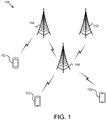
- Figure 1 depicts an embodiment of a wireless communication system 100 for determining data available for transmission.
- the wireless communication system 100 includes remote units 102 and network units 104. Even though a specific number of remote units 102 and network units 104 are depicted in Figure 1 , one of skill in the art will recognize that any number of remote units 102 and network units 104 may be included in the wireless communication system 100.
- the remote units 102 may include computing devices, such as desktop computers, laptop computers, personal digital assistants ("PDAs"), tablet computers, smart phones, smart televisions (e.g., televisions connected to the Internet), set-top boxes, game consoles, security systems (including security cameras), vehicle on-board computers, network devices (e.g., routers, switches, modems), IoT devices, or the like.
- the remote units 102 include wearable devices, such as smart watches, fitness bands, optical head-mounted displays, or the like.
- the remote units 102 may be referred to as subscriber units, mobiles, mobile stations, users, terminals, mobile terminals, fixed terminals, subscriber stations, UE, user terminals, a device, or by other terminology used in the art.
- the remote units 102 may communicate directly with one or more of the network units 104 via UL communication signals.
- the network units 104 may be distributed over a geographic region.
- a network unit 104 may also be referred to as an access point, an access terminal, a base, a base unit, a base station, a Node-B, an eNB, a gNB, a Home Node-B, a relay node, a device, a network device, an infrastructure device, or by any other terminology used in the art.
- the network units 104 are generally part of a radio access network that includes one or more controllers communicably coupled to one or more corresponding network units 104.
- the radio access network is generally communicably coupled to one or more core networks, which may be coupled to other networks, like the Internet and public switched telephone networks, among other networks.
- a network unit 104 may include one or more of the following network components an eNB, a gNB, an AMF, a DB, an MME, a PCF, a UDR, a UPF, a serving gateway, and/or a UDM.
- the wireless communication system 100 is compliant with the NR/5G protocols or LTE protocols specified by 3GPP, wherein the network unit 104 transmits using an OFDM modulation scheme on the DL and the remote units 102 transmit on the UL using a SC-FDMA scheme or an OFDM scheme. More generally, however, the wireless communication system 100 may implement some other open or proprietary communication protocol, for example, WiMAX, among other protocols.
- WiMAX wireless access control protocol
- the network units 104 may serve a number of remote units 102 within a serving area, for example, a cell or a cell sector via a wireless communication link.
- the network units 104 transmit DL communication signals to serve the remote units 102 in the time, frequency, and/or spatial domain.
- a remote unit 102 may be used to associate a packet data convergence protocol entity with a first radio link control entity and a second radio link control entity belonging to two different cell groups. In various embodiments, the remote unit 102 may be used to determine an amount of data available for transmission. In such embodiments, the amount of data available for transmission may include packet data convergence protocol data and radio link control data pending for initial transmission in the first radio link control entity and the second radio link control entity. In various embodiments, the remote unit 102 may be used to compare the amount of data available for transmission with a threshold. In some embodiments, the remote unit 102 may be used to submit the packet data convergence protocol data to a first radio link control entity in response to the amount of data available for transmission being below the threshold. Accordingly, a remote unit 102 may be used for determining data available for transmission. In certain embodiments, a network unit 104 may perform substantially the same functions performed by the remote unit 102.
- Figure 2 depicts one embodiment of an apparatus 200 that may be used for determining data available for transmission.
- the apparatus 200 includes one embodiment of the remote unit 102.
- the remote unit 102 may include a processor 202, a memory 204, an input device 206, a display 208, a transmitter 210, and a receiver 212.
- the input device 206 and the display 208 are combined into a single device, such as a touchscreen.
- the remote unit 102 may not include any input device 206 and/or display 208.
- the remote unit 102 may include one or more of the processor 202, the memory 204, the transmitter 210, and the receiver 212, and may not include the input device 206 and/or the display 208.
- the processor 202 may include any known controller capable of executing computer-readable instructions and/or capable of performing logical operations.
- the processor 202 may be a microcontroller, a microprocessor, a central processing unit (“CPU”), a graphics processing unit (“GPU”), an auxiliary processing unit, a field programmable gate array (“FPGA”), or similar programmable controller.
- the processor 202 executes instructions stored in the memory 204 to perform the methods and routines described herein.
- the processor 202 may: associates a packet data convergence protocol entity with a first radio link control entity and a second radio link control entity belonging to two different cell groups; determine an amount of data available for transmission, the amount of data available for transmission including packet data convergence protocol data and radio link control data pending for initial transmission in the first radio link control entity and the second radio link control entity; compare the amount of data available for transmission with a threshold; and submit the packet data convergence protocol data to a first radio link control entity in response to the amount of data available for transmission being below the threshold.
- the processor 202 is communicatively coupled to the memory 204, the input device 206, the display 208, the transmitter 210, and the receiver 212.
- the memory 204 in one embodiment, is a computer readable storage medium.
- the memory 204 includes volatile computer storage media.
- the memory 204 may include a RAM, including dynamic RAM (“DRAM”), synchronous dynamic RAM (“SDRAM”), and/or static RAM (“SRAM”).
- the memory 204 includes non-volatile computer storage media.
- the memory 204 may include a hard disk drive, a flash memory, or any other suitable non-volatile computer storage device.
- the memory 204 includes both volatile and non-volatile computer storage media.
- the memory 204 also stores program code and related data, such as an operating system or other controller algorithms operating on the remote unit 102.
- the input device 206 may include any known computer input device including a touch panel, a button, a keyboard, a stylus, a microphone, or the like.
- the input device 206 may be integrated with the display 208, for example, as a touchscreen or similar touch-sensitive display.
- the input device 206 includes a touchscreen such that text may be input using a virtual keyboard displayed on the touchscreen and/or by handwriting on the touchscreen.
- the input device 206 includes two or more different devices, such as a keyboard and a touch panel.
- the display 208 may include any known electronically controllable display or display device.
- the display 208 may be designed to output visual, audible, and/or haptic signals.
- the display 208 includes an electronic display capable of outputting visual data to a user.
- the display 208 may include, but is not limited to, an LCD display, an LED display, an OLED display, a projector, or similar display device capable of outputting images, text, or the like to a user.
- the display 208 may include a wearable display such as a smart watch, smart glasses, a heads-up display, or the like.
- the display 208 may be a component of a smart phone, a personal digital assistant, a television, a table computer, a notebook (laptop) computer, a personal computer, a vehicle dashboard, or the like.
- the display 208 includes one or more speakers for producing sound.
- the display 208 may produce an audible alert or notification (e.g., a beep or chime).
- the display 208 includes one or more haptic devices for producing vibrations, motion, or other haptic feedback.
- all or portions of the display 208 may be integrated with the input device 206.
- the input device 206 and display 208 may form a touchscreen or similar touch-sensitive display.
- the display 208 may be located near the input device 206.
- the transmitter 210 is used to provide UL communication signals to the network unit 104 and the receiver 212 is used to receive DL communication signals from the network unit 104.
- the remote unit 102 may have any suitable number of transmitters 210 and receivers 212.
- the transmitter 210 and the receiver 212 may be any suitable type of transmitters and receivers.
- the transmitter 210 and the receiver 212 may be part of a transceiver.
- Figure 3 depicts one embodiment of an apparatus 300 that may be used for determining data available for transmission.
- the apparatus 300 includes one embodiment of the network unit 104.
- the network unit 104 may include a processor 302, a memory 304, an input device 306, a display 308, a transmitter 310, and a receiver 312.
- the processor 302, the memory 304, the input device 306, the display 308, the transmitter 310, and the receiver 312 may be substantially similar to the processor 202, the memory 204, the input device 206, the display 208, the transmitter 210, and the receiver 212 of the remote unit 102, respectively.
- the network unit 104 may have any suitable number of transmitters 310 and receivers 312.
- the transmitter 310 and the receiver 312 may be any suitable type of transmitters and receivers.
- the transmitter 310 and the receiver 312 may be part of a transceiver.
- concatenation may be supported in an RLC layer (e.g., one RLC PDU may include one or more RLC SDUs and/or one or more segments of RLC SDUs).
- RLC concatenation is performed based on input from a MAC layer (e.g., upon reception of an UL grant and performing the LCP procedure, MAC indicates the size of an RLC PDU to the corresponding RLC layer, which in turn performs the concatenation i.e., RLC PDU construction). Therefore, in LTE neither the RLC layer, nor the MAC layer can do any preprocessing before an UL grant is received.
- RLC layer and/or MAC layer processing is subject to real-time processing (e.g., by the remote unit 102).
- a processing time available for a transmitter and/or a receiver may be limited in comparison to an amount of data available for transmission.
- L2 protocol functions may be simplified and designed in a processing power friendly way in order to achieve such high target data rates and low latencies.
- no concatenation is supported in an RLC layer to enable the preprocessing of the RLC layer and/or the MAC layer before receiving an UL grant (e.g., PDCP SDU can be pre-constructed to a MAC SDU with its own MAC sub-header).
- an UL grant e.g., PDCP SDU can be pre-constructed to a MAC SDU with its own MAC sub-header.
- a remote unit 102 may forward PDCP SDUs to lower layers and further process them, i.e., generate RLC PDUs/MAC SDUs, directly in response to PDCP SDUs being received by an upper layer.
- UL split bearer e.g., a radio bearer in a dual connectivity scenario whose radio protocols belong to both Master Cell Group and Secondary Cell Group - the PDCP entity of the split bearer is associated with two RLC entities belonging to two different cell groups
- forwarding PDCP SDUs directly to lower layers for the purpose of preprocessing may require a PDCP entity to know to which cell group (MCG or SCG) the PDCP SDUs are to be transmitted before the UL grant is received, which is not possible. Therefore, preprocessing may not be straightforward for dual connectivity configurations (e.g., NR-NR Dual connectivity and LTE-NR Dual connectivity conditions) in which UL split bearer operation is applied.
- the reason why the PDCP entity in the remote unit 102 may not know to which network unit 104 data will be transmitted before an UL grant reception is that in response to a PDCP Buffer occupancy (e.g., the data available for transmission in PDCP) being above or equal to a configured threshold (e.g., if ul-DataSplitThreshold is configured and the data available for transmission in PDCP is larger than or equal to ul-DataSplitThreshold ), the remote unit 102 may report to all associated network units 104 the same PDCP data amount for the purpose of buffer status reporting (e.g., the remote unit 102 indicates the data available for transmission in PDCP to both a MAC entity configured for SCG and a MAC entity configured for MCG).
- a PDCP Buffer occupancy e.g., the data available for transmission in PDCP
- a configured threshold e.g., if ul-DataSplitThreshold is configured and the data available for transmission in PDCP
- transmission may take place according to received uplink grants (e.g., the remote unit 102 submits the PDCP PDUs to either an associated AM RLC entity configured for SCG or an associated AM RLC entity configured for MCG, whichever the PDUs were requested by). Since the remote unit 102 may not know from which network unit 104 an UL grant will be received preprocessing of PDCP, RLC, and/or MAC headers may not be possible in the same way as for the non-split bearer case. Further details of the UE behavior for UL split bearer operation standardized in Rel.13 can be found in TS36.323, i.e.
- the PDCP entity of the remote unit submits the PDCP data only to one of the associated RLC entities - it is configured by Radio Resource Configuration ("RRC") signaling to which of the two RLC entities PDCP data is submitted - and also PDCP entity indicates the data available for transmission in PDCP only to the MAC entity associated with the configured RLC entity for the purpose of buffer status reporting.
- RRC Radio Resource Configuration
- a remote unit 102 may route PDCP PDUs to an associated RLC layer for preprocessing (e.g., RLC PDU may be constructed without notification from a lower layer i.e., a MAC) of a transmission opportunity, thereby reducing an amount of PDCP data.
- RLC PDU may be constructed without notification from a lower layer i.e., a MAC
- a remote unit 102 may route PDCP PDUs to an associated RLC layer for preprocessing (e.g., RLC PDU may be constructed without notification from a lower layer i.e., a MAC) of a transmission opportunity, thereby reducing an amount of PDCP data.
- RLC PDU may be constructed without notification from a lower layer i.e., a MAC
- a threshold i.e. ul-DataSplitThreshold
- an RLC layer may send a request to a PDCP layer to request that the PDCP layer provide PDCP PDUs for the purpose of preprocessing.
- the remote unit 102 may consider preprocessed data in the RLC entities associated with the PDCP entity (e.g., RLC PDUs which are pending for initial transmission). In some embodiments, the remote unit 102 may consider the following as data available for transmission in the PDCP layer: for SDUs for which no PDU has been submitted to lower layers: the SDU itself, if the SDU has not yet been processed by PDCP; and/or the PDU if the SDU has been processed by PDCP.
- preprocessed data in the RLC entities associated with the PDCP entity e.g., RLC PDUs which are pending for initial transmission.
- the remote unit 102 may consider the following as data available for transmission in the PDCP layer: for SDUs for which no PDU has been submitted to lower layers: the SDU itself, if the SDU has not yet been processed by PDCP; and/or the PDU if the SDU has been processed by PDCP.
- the remote unit 102 may compare a buffer occupancy against a threshold (e.g., ul-DataSplitThreshold ) for UL split bearer operation.
- a threshold e.g., ul-DataSplitThreshold
- the PDCP PDUs which have been submitted to lower layers e.g., the associated RLC entities
- PDCP PDUs which have been submitted to lower layers for preprocessing may be defined as RLC PDUs which are pending for initial transmission.
- the remote unit 102 submits the PDCP PDUs to either the associated RLC entity configured for SCG or the associated RLC entity configured for MCG, in response to the combined PDCP buffer occupancy and the RLC data in the associated RLC entities pending for initial transmission being above or equal to a configured threshold.
- the remote unit 102 indicates the data available for transmission in PDCP to both the MAC entities configured for SCG and the MAC entity configured for MCG when the combined PDCP buffer occupancy and the RLC data in the associated RLC entities pending for initial transmission is above or equal to a configured threshold.
- the PDCP entity of the remote unit 102 submits the PDCP data only to one of the associated RLC entities - it is configured by Radio Resource Configuration (RRC) signaling to which of the two RLC entities PDCP data is submitted - and also PDCP entity indicates the data available for transmission in PDCP only to the MAC entity associated with the configured RLC entity for the purpose of buffer status reporting.
- RRC Radio Resource Configuration
- an amount of RLC data PDUs (or segments of RLC data PDUs) pending for retransmission for an RLC AM mode may be considered for comparison against the threshold.
- RLC retransmissions may be prioritized over newly generated RLC PDUs, RLC PDUs (or portions of RLC PDUs) which are waiting for a retransmission may be transmitted in a next uplink transmission.
- RLC retransmission PDUs may be already generated, there may not be an issue with processing timing for the RLC retransmission PDUs.
- the remote unit 102 may, for the purpose of comparison against a threshold in PDCP for UL split bearer operation and in addition to the amount of PDCP data which is in the PDCP entity, also consider PDCP PDUs which have been submitted to lower layers for the purpose of preprocessing (e.g., RLC PDUs pending for initial transmission and/or RLC PDUs which are pending for retransmission).
- PDCP PDUs which have been submitted to lower layers for the purpose of preprocessing (e.g., RLC PDUs pending for initial transmission and/or RLC PDUs which are pending for retransmission).
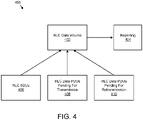
- the remote unit 102 may calculate an RLC data volume 402 (e.g., data volume in an RLC layer) for the purpose of MAC buffer status reporting 404.
- the RLC data volume 402 may include preprocessed RLC data (e.g., RLC data PDUs pending for initial transmission).
- the remote unit 102 may calculate the RLC data volume 402 available for transmission in an RLC layer to include: RLC SDUs 406 (or segments thereof) that have not yet been included in an RLC data PDU; RLC data PDUs that are pending for transmission 408; and/or RLC data PDUs (or portions thereof) that are retransmission 410 (e.g., RLC AM).
- RLC SDUs 406 or segments thereof
- RLC data PDUs that are pending for transmission 408
- RLC data PDUs that are pending for transmission 408
- RLC data PDUs or portions thereof
- a part of an RLC SDU and/or a part of an RLC PDU may be referred to as a part, a portion, a segment, etc.
- the remote unit 102 may be configured for dual connectivity (e.g., the remote unit 102 is connected to two network entities like base stations in which both of the base stations are NR based, i.e., both network entities are gNBs). In such embodiments, the remote unit 102 may be configured with an uplink split bearer.
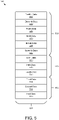
- FIG. 5 is a schematic block diagram illustrating one embodiment of data splitting 500.
- two thresholds may be defined for data 502 in a PDCP layer for an UL split bearer operation (e.g., one for each cell group).
- the amount of PDCP data e.g., PDCP data stored in a PDCP layer and/or buffer
- the amount of preprocessed data of the prioritized RLC entity may be compared against a first threshold in PDCP.
- PDCP starts routing PDCP PDUs first to a prioritized cell group respectively to a RLC entity belonging to the prioritized cell group. In such embodiments, routing is done until the configured first threshold is reached.
- a first portion 504 of the data 502 is a quantity of the data 502 group that is up to the first threshold.
- the amount of preprocessed data in the prioritized RLC entity e.g., RLC data pending for initial transmission
- the PDCP routes PDCP PDUs to the other non-prioritized CG respectively to the RLC entity belonging to the non-prioritized cell group up to a second configured threshold such that the amount of preprocessed data in the non-prioritized RLC layer (e.g., RLC data pending initial transmission) does not exceed the second configured threshold.
- a second portion 506 of the data 502 is a quantity of the data 502 group that is greater than the first threshold and less than the second threshold. In certain embodiments, if there is any remaining data in the PDCP layer, the PDCP routes PDCP PDUs to either the associated RLC entity configured for SCG or the associated RLC entity configured for MCG, whichever the PDUs were requested by (e.g., remaining PDCP data is routed according to received uplink grants).
- a third portion 508 of the data 502 is a quantity of the data 502 group that is greater than the second threshold.
- the first portion 502 includes first data 510, second data 512, and third data 514.
- the second portion 504 includes fourth data 516, fifth data 518, and sixth data 520.
- the third portion 506 includes seventh data 522, eighth data 524, ninth data 526, tenth data 528, eleventh data 530, and twelfth data 532.
- RLC entities associated with a PDCP entity request from a PDCP layer PDCP PDUs for the purpose of preprocessing in conditions in which an amount of preprocessed RLC data/PDUs is below a configured threshold (e.g., upon having performed some UL transmission).
- the PDCP layer may first route PDCP PDUs to a prioritized RLC respectively prioritized cell group and then to a non-prioritized RLC respectively non-prioritized cell group as described herein.
- the PDCP may route PDCP data to corresponding RLC entities as described herein (e.g., starting with a prioritized CG/RLC up to a first threshold and then routing PDCP PDUs to a non-prioritized CG/RLC up to a second configured threshold).
- FIG. 6 is a schematic block diagram illustrating one embodiment of PDCP buffering 600.
- the buffering 600 illustrated in Figure 6 shows one embodiment of an UL split bearer operation.
- ul-DataSplitDRB-ViaSCG is set to False (e.g., MCG is the prioritized CG); Threshold1 (for RLC MCG ) is set to 100 units; and Threshold2 (for RLC SCG ) is set to 50 units.
- the PDCP buffer, RLC MCG , and RLC SCG are initialized. Then, 100 units of data arrive in the PDCP buffer from which the 100 units are routed to RLC MCG . Thereafter, 50 units of data arrive in the PDCP buffer from which the 50 units are routed to RLC SCG . An UL grant is then received at the remote unit 102 for the MCG for 80 units so 80 units are transmitted from RLC MCG . Then, an UL grant is then received at the remote unit 102 for the SCG for 50 units so 50 units are transmitted from RLC SCG . Next, 100 units of data arrive in the PDCP buffer from which 80 units are routed to RLC MCG and 20 units are routed to RLC SCG . Thereafter, 500 units of data arrive in the PDCP buffer from which 30 units are routed to RLC SCG .
- the PDCP buffer and/or layer may only hold data which is to be distributed and/or routed according to received UL grants.
- the threshold1 (e.g., threshold configured for the prioritized cell group respectively RLC) configured for an UL split bearer may be the same as the ul-DataSplitThreshold.
- the MAC buffer status of a split bearer for a CG includes PDCP data not delivered to lower layers (e.g., PDCP data in the PDCP layer and/or buffer) plus preprocessed RLC data, RLC data pending for retransmission, RLC SDUs stored in an RLC layer, and/or RLC control PDUs (e.g., RLC status report).
- a remote unit 102 is configured for dual connectivity (e.g., the remote unit 102 is connected to two network entities such as base stations in which one of the cell groups and/or network entities is LTE based and the other cell group and/or network entity is NR based). In such embodiments, the remote unit 102 may be configured with an uplink split bearer. In some embodiments, a remote unit 102 is configured with at least one threshold for the cell group and/or link which is based on NR to facilitate preprocessing. In various embodiments, an amount of PDCP data plus an amount of preprocessed data of an NR RLC entity is compared to a threshold configured in PDCP for the purpose of PDCP data routing and buffer status reporting as described herein.
- the PDCP may start routing PDCP PDUs to the NR CG/RLC entity.
- routing may be performed up to a configured threshold (e.g., maximum amount of data).
- a configured threshold e.g., maximum amount of data
- an amount of preprocessed data in RLC e.g., RLC data pending for initial transmission
- a remote unit 102 may be configured with a threshold for non-prioritized CG.
- a remote unit 102 behavior in a PDCP layer may be described as follows: "For split bearers, routing is performed in the transmitting PDCP entity, and reordering is performed in the receiving PDCP entity; if ul-DataSplitDRB-ViaSCG is set to TRUE by upper layers: Submit PDCP PDUs to RLC entity configured for SCG until the amount of RLC PDUs pending for initial transmission is equal to threshold1; Submit PDCP PDUs to RLC entity configured for MCG until the amount of RLC PDUs pending for initial transmission is equal to threshold2; else Submit PDCP PDUs to RLC entity configured for MCG until the amount of RLC PDUs pending for initial transmission is equal to threshold1; Submit PDCP PDUs to RLC entity configured for SCG until the amount of RLC PDUs pending for initial transmission is equal to threshold2.
- the transmitting PDCP entity When requested by lower layers to submit PDCP PDUs, the transmitting PDCP entity shall: submit the PDCP PDUs to either the associated RLC entity configured for SCG or the associated RLC entity configured for MCG, whichever the PDUs were requested by. "
- a remote unit 102 may be configured for dual connectivity (e.g., the remote unit 102 may be connected to two network entities like base stations in which both of the cell groups and/or base stations are NR based, i.e., both network entities are gNBs). In such an embodiment, the remote unit 102 may be configured with an uplink split bearer.
- a remote unit 102 compares an amount of preprocessed data in RLC entities against preconfigured thresholds.
- each RLC entity has a configured maximum amount of preprocessed RLC data.
- preprocessed data in RLC may include RLC data PDUs pending for transmission.
- one RLC entity may be configured as a prioritized RLC entity, or respectively one cell group may be configured as a prioritized cell group.
- a remote unit 102 may compare an amount of preprocessed data in a prioritized RLC entity with a configured threshold.
- the RLC entity may request PDCP PDUs for preprocessing up to the configured threshold (assuming there is sufficient PDCP data in the PDCP layer).
- the remote unit 102 may compare the amount of preprocessed data in the other (e.g., non-prioritized) RLC entity against a corresponding configured threshold. In configurations in which the amount of preprocessed data in the RLC entity is below the configured threshold the RLC entity may request PDCP PDUs up to the configured threshold.
- a remote unit 102 may be configured with a split bearer for UL transmission.
- the split bearer is reconfigured to a non-split bearer (e.g., MCG bearer or SCG bearer)
- the MAC layer may trigger a MAC buffer status report (e.g., in conditions in which a split bearer is reconfigured to MCG bearer the MAC entity for MCG may trigger a buffer status report, in conditions in which a split bearer is reconfigured to SCG bearer the MAC entity for SCG may trigger a buffer status report).
- a remote unit 102 may perform retransmission of all the PDCP PDUs previously submitted to an RLC entity which is re-established and/or removed due to a bearer reconfiguration from a first PDCP PDU for which successful delivery has not been confirmed by lower layers, a buffer status of a PDCP layer may change.
- a network unit 104 in response to a remote unit 102 triggering a buffer status report, may be made aware of an amount of data subject to retransmission due to bearer reconfiguration.
- Various embodiments may use fast switching of cell groups and/or transmission legs.
- as an alternative to an UL split bearer operation is to use one CG and/or link at a time for UL data transmission and dynamically switch the link depending on factors such as channel status, traffic load, etc.
- a remote unit 102 may be configured with a split bearer.
- a network entity e.g., gNB
- the configuration is done using a PDCP control PDU.
- the PDCP control PDU includes a Boolean variable that indicates whether a secondary cell group/secondary link and/or SCG RLC is used for UL transmission of PDCP PDUs.
- a Boolean variable indicates whether a master cell group/master link and/or MCG RLC is used for transmission of PDCP PDUs in an UL transmission.
- MAC control elements may be used to indicate which of two cell groups/links is used for UL transmission of one or more PDCP PDUs.
- a MAC CE includes an LCID of a logical channel that a remote unit 102 uses for UL transmission of PDCP PDUs.
- a MAC CE may indicate a cell group used for uplink PDCP PDU transmission (e.g., MCG or SCG).
- a remote unit 102 may route all PDCP PDUs to an RLC entity and/or logical channel of an indicated link.
- an RLC entity of a leg and/or link used before a signaled link switch may indicate to a PDCP entity RLC SDUs not yet acknowledged (e.g., by an RLC status report).
- a remote unit 102 retransmits not yet acknowledged RLC SDUs via a new link used for UL data transmission (e.g., link indicated in PDCP control PDU or MAC CE).
- a remote unit 102 flushes an RLC transmission buffer and resets the RLC transmission state variables.
- an RLC entity of a deactivated link e.g., link previously used for uplink data transmission
- a network entity sends a PDCP status report for a split bearer together with an indication to configure and/or switch a link for UL PDCP PDU transmission.
- a remote unit 102 upon reception of a PDCP status report, retransmits PDCP SDUs not yet acknowledged by a network entity via a link and/or leg indicated to be used for uplink data transmission.
- a remote unit 102 flushes an RLC transmission buffer and resets the RLC transmission state variables of a leg which is not used for UL data transmission.
- an RLC entity of a deactivated link is reestablished.
- a default leg and/or link is used for UL data (e.g., PDCP PDU) transmission upon configuration of a split bearer.
- a remote unit 102 uses a default leg for UL data transmissions until a network entity signals a "link switch" by means of some control signaling.
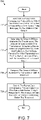
- Figure 7 is a schematic flow chart diagram illustrating one embodiment of a method 700 for determining data available for transmission.
- the method 700 is performed by an apparatus, such as the remote unit 102 or the network unit 104.
- the method 700 may be performed by a processor executing program code, for example, a microcontroller, a microprocessor, a CPU, a GPU, an auxiliary processing unit, a FPGA, or the like.
- the method 700 may include associating 702 a packet data convergence protocol entity with a first radio link control entity and a second radio link control entity belonging to two different cell groups.
- the method 700 may include determining 704 an amount of data available for transmission.
- the amount of data available for transmission may include packet data convergence protocol data and radio link control data pending for initial transmission in the first radio link control entity and the second radio link control entity.
- the method 700 includes comparing 706 the amount of data available for transmission with a threshold.
- the method 700 includes submitting 708 the packet data convergence protocol data to a first radio link control entity in response to the amount of data available for transmission being below the threshold.
- the first radio link control entity is configured by radio resource control signaling.
- the method 700 includes indicating an amount of packet data convergence protocol data to a medium access control entity associated with the first radio link control entity for buffer status reporting in response to the amount of data available for transmission being below the threshold.
- the packet data convergence protocol data includes data stored in a packet data convergence protocol layer.
- the method 700 includes indicating zero to a medium access control entity associated with a second radio link control entity as the amount of packet data convergence protocol data for buffer status reporting in response to the amount of data available for transmission being below the threshold.
- the method 700 includes submitting the packet data convergence protocol data to either the first radio link control entity or a second radio link control entity in response to the amount of data available for transmission being greater than or equal to the threshold. In certain embodiments, the method 700 includes indicating the packet data convergence protocol data to a medium access control entity associated with the first radio link control entity and to a medium access control entity associated with a second radio link control entity for buffer status reporting in response to the amount of data available for transmission being greater than or equal to the threshold.
- the method 700 includes receiving at least one uplink grant. In some embodiments, the method 700 includes, in response to receiving the at least one uplink grant, transmitting data to at least one base unit that transmitted the at least one uplink grant. In certain embodiments, the at least one uplink grant includes one uplink grant and the at least one base unit includes one base unit. In various embodiments, the at least one uplink grant includes two uplink grants and the at least one base unit includes two base units. In certain embodiments, the threshold includes a first threshold and a second threshold. In various embodiments, the first threshold corresponds to prioritized data. In some embodiments, the second threshold corresponds to non-prioritized data.
- the method 700 includes receiving a configuration message indicating the first radio link control entity associated with a first base unit of multiple radio link control entities associated with multiple base units to use for uplink transmissions. In various embodiments, the method 700 includes receiving a reconfiguration message indicating to switch from using the first radio link control entity for uplink transmissions corresponding to the first base unit to use a second radio link control entity of the multiple radio link control entities for uplink transmissions corresponding to a second base unit. In various embodiments, the method 700 includes, in response to receiving the reconfiguration message, performing a reestablishment of the first radio link control entity.
- the method 700 includes, in response to receiving the reconfiguration message, flushing a transmission buffer corresponding to the first radio link control entity and resetting transmission state variables corresponding to the first base unit.
- the method 700 includes using a first base unit of multiple base units as a default base unit for uplink transmissions.
- the method 700 includes receiving a switch message indicating to switch from using the first base unit for uplink transmissions to use a second base unit of the multiple base units for uplink transmissions.
Landscapes
- Engineering & Computer Science (AREA)
- Computer Networks & Wireless Communication (AREA)
- Signal Processing (AREA)
- Quality & Reliability (AREA)
- Databases & Information Systems (AREA)
- Mobile Radio Communication Systems (AREA)
Claims (14)
- Verfahren, umfassend:Verknüpfen einer Paketdatenkonvergenzprotokollentität mit einer ersten Funkverbindungssteuerungsentität und einer zweiten Funkverbindungssteuerungsentität, die zu zwei verschiedenen Zellengruppen gehört;Bestimmen, eine Paketdatenkonvergenzprotokolldateneinheit von der Paketdatenkonvergenzprotokollentität an eine der ersten Funkverbindungssteuerungsentität und der zweiten Funkverbindungssteuerungsentität abzugeben;Berechnen eines Werts, der eine Datenmenge angibt, die für eine Übertragung verfügbar ist, wobei der Wert, der die Datenmenge angibt, die für die Übertragung verfügbar ist, eine Summe eines Datenvolumens in der Paketdatenkonvergenzprotokollentität und eines Funkverbindungssteuerungsdatenvolumens umfasst, das für die anfängliche Übertragung in der ersten Funkverbindungssteuerungsentität und der zweiten Funkverbindungssteuerungsentität ausbleibt;Vergleichen des Wertes, der die Datenmenge angibt, die für die Übertragung verfügbar ist, mit einem Schwellenwert; undAbgeben der Paketdatenkonvergenzprotokolldateneinheit an die erste Funkverbindungssteuerungsentität als Reaktion darauf, dass der Wert, der die Datenmenge angibt, die für die Übertragung verfügbar ist, unter dem Schwellenwert liegt.
- Verfahren nach Anspruch 1, ferner umfassend das Bestimmen, einen Pufferstatus zu melden und eine Menge an Paketdatenkonvergenzprotokolldatenvolumen an eine Medienzugangssteuerungsentität anzugeben, die mit der ersten Funkverbindungssteuerungsentität für die Pufferstatusmeldung verknüpft ist, als Reaktion darauf, dass der Wert, der die Datenmenge angibt, die für die Übertragung verfügbar ist, unter dem Schwellenwert liegt.
- Verfahren nach Anspruch 2, wobei das Paketdatenkonvergenzprotokolldatenvolumen eine Gesamtmenge an Daten in einer Paketdatenkonvergenzprotokollschicht umfasst.
- Verfahren nach Anspruch 2, ferner umfassend das Bestimmen, einen Pufferstatus zu melden und Null an eine Medienzugangssteuerungsentität, die mit einer zweiten Funkverbindungssteuerungsentität verknüpft ist, als die Menge des Paketdatenkonvergenzprotokolldatenvolumens für die Pufferstatusmeldung anzugeben, als Reaktion darauf, dass der Wert, der die Datenmenge angibt, die für die Übertragung verfügbar ist, unter dem Schwellenwert liegt.
- Verfahren nach Anspruch 1, ferner umfassend das Abgeben der Paketdatenkonvergenzprotokolldateneinheit entweder an die erste Funkverbindungssteuerungsentität oder eine zweite Funkverbindungssteuerungsentität als Reaktion darauf, dass der Wert, der die Datenmenge angibt, die für die Übertragung verfügbar ist, größer als oder gleich dem Schwellenwert ist.
- Verfahren nach Anspruch 1, ferner umfassend das Angeben der Paketdatenkonvergenzprotokolldaten an eine Medienzugangssteuerungsentität, die mit der ersten Funkverbindungssteuerungsentität verknüpft ist, und an eine Medienzugangssteuerungsentität, die mit einer zweiten Funkverbindungssteuerungsentität verknüpft ist, für die Pufferstatusmeldung als Reaktion darauf, dass der Wert, der die Datenmenge angibt, die für die Übertragung verfügbar ist, größer als oder gleich dem Schwellenwert ist.
- Verfahren nach Anspruch 1, ferner umfassend ein Empfangen mindestens einer Uplink-Gewährung.
- Verfahren nach Anspruch 7, ferner umfassend, als Reaktion auf das Empfangen der mindestens einen Uplink-Gewährung, Übertragen von Daten an mindestens eine Basiseinheit, die die mindestens eine Uplink-Gewährung überträgt.
- Verfahren nach Anspruch 8, wobei die mindestens eine Uplink-Gewährung nur eine Uplink-Gewährung umfasst und die mindestens eine Basiseinheit nur eine Basiseinheit umfasst.
- Verfahren nach Anspruch 8, wobei die mindestens eine Uplink-Gewährung zwei Uplink-Gewährungen umfasst und die mindestens eine Basiseinheit zwei Basiseinheiten umfasst.
- Verfahren nach Anspruch 1, ferner umfassend das Empfangen einer Konfigurationsnachricht, die die erste Funkverbindungssteuerungsentität angibt, die mit einer ersten Basiseinheit einer Vielzahl von Funkverbindungssteuerungsentitäten verknüpft ist, die mit einer Vielzahl von Basiseinheiten verknüpft sind, die für Uplink-Übertragungen verwendet werden sollen.
- Verfahren nach Anspruch 11, ferner umfassend das Empfangen einer Rekonfigurationsnachricht, die angibt, von einem Verwenden der ersten Funkverbindungssteuerungsentität für Uplink-Übertragungen, die der ersten Basiseinheit entsprechen, zu einem Verwenden einer zweiten Funkverbindungssteuerungsentität der Vielzahl von Funkverbindungssteuerungsentitäten für Uplink-Übertragungen umzuschalten, die einer zweiten Basiseinheit entsprechen.
- Verfahren nach Anspruch 12, ferner umfassend, als Reaktion auf das Empfangen der Rekonfigurationsnachricht, Spülen eines Übertragungspuffers, der der ersten Funkverbindungssteuerungsentität entspricht, und Zurücksetzen von Übertragungszustandsvariablen, die der ersten Basiseinheit entsprechen.
- Einrichtung, umfassend:
einen Prozessor, der konfiguriert ist zum:Verknüpfen einer Paketdatenkonvergenzprotokollentität mit einer ersten Funkverbindungssteuerungsentität und einer zweiten Funkverbindungssteuerungsentität, die zu zwei verschiedenen Zellengruppen gehört;Bestimmen, eine Paketdatenkonvergenzprotokolldateneinheit von der Paketdatenkonvergenzprotokollentität an eine der ersten Funkverbindungssteuerentität und der zweiten Funkverbindungssteuerungsentität abzugeben;Berechnen eines Werts, der eine Datenmenge angibt, die für die Übertragung verfügbar ist, wobei der Wert, der die Datenmenge angibt, die für die Übertragung verfügbar ist, eine Summe eines Datenvolumens in der Paketdatenkonvergenzprotokollentität und eines Funkverbindungssteuerungsdatenvolumens umfasst, das für die anfängliche Übertragung in der ersten Funkverbindungssteuerungsentität und der zweiten Funkverbindungssteuerungsentität ausbleibt;Vergleichen des Wertes, der die Datenmenge angibt, die für die Übertragung verfügbar ist, mit einem Schwellenwert; undAbgeben der Paketdatenkonvergenzprotokolldateneinheit an die erste Funkverbindungssteuerungsentität als Reaktion darauf, dass der Wert, der die Datenmenge angibt, die für die Übertragung verfügbar ist, unter dem Schwellenwert liegt.
Priority Applications (1)
| Application Number | Priority Date | Filing Date | Title |
|---|---|---|---|
| EP22202615.5A EP4142195A1 (de) | 2017-06-02 | 2018-05-18 | Bestimmung verfügbarer daten zur übertragung |
Applications Claiming Priority (2)
| Application Number | Priority Date | Filing Date | Title |
|---|---|---|---|
| US201762514719P | 2017-06-02 | 2017-06-02 | |
| PCT/US2018/033527 WO2018222418A1 (en) | 2017-06-02 | 2018-05-18 | Determining data available for transmission |
Related Child Applications (2)
| Application Number | Title | Priority Date | Filing Date |
|---|---|---|---|
| EP22202615.5A Division EP4142195A1 (de) | 2017-06-02 | 2018-05-18 | Bestimmung verfügbarer daten zur übertragung |
| EP22202615.5A Division-Into EP4142195A1 (de) | 2017-06-02 | 2018-05-18 | Bestimmung verfügbarer daten zur übertragung |
Publications (2)
| Publication Number | Publication Date |
|---|---|
| EP3635896A1 EP3635896A1 (de) | 2020-04-15 |
| EP3635896B1 true EP3635896B1 (de) | 2022-11-30 |
Family
ID=62685135
Family Applications (2)
| Application Number | Title | Priority Date | Filing Date |
|---|---|---|---|
| EP22202615.5A Pending EP4142195A1 (de) | 2017-06-02 | 2018-05-18 | Bestimmung verfügbarer daten zur übertragung |
| EP18733022.0A Active EP3635896B1 (de) | 2017-06-02 | 2018-05-18 | Bestimmung von für übertragung verfügbaren daten |
Family Applications Before (1)
| Application Number | Title | Priority Date | Filing Date |
|---|---|---|---|
| EP22202615.5A Pending EP4142195A1 (de) | 2017-06-02 | 2018-05-18 | Bestimmung verfügbarer daten zur übertragung |
Country Status (5)
| Country | Link |
|---|---|
| US (3) | US10609589B2 (de) |
| EP (2) | EP4142195A1 (de) |
| KR (3) | KR20240074003A (de) |
| CN (2) | CN110612686B (de) |
| WO (1) | WO2018222418A1 (de) |
Families Citing this family (34)
| Publication number | Priority date | Publication date | Assignee | Title |
|---|---|---|---|---|
| US10237784B2 (en) * | 2017-03-24 | 2019-03-19 | Motorola Mobility Llc | Split bearer packet data converge protocol protocol data unit routing |
| US10609589B2 (en) * | 2017-06-02 | 2020-03-31 | Motorola Mobility Llc | Determining data available for transmission |
| US10721650B2 (en) * | 2017-06-09 | 2020-07-21 | Samsung Electronics Co., Ltd. | Method and apparatus for accelerating data processing in wireless communication system |
| US11483891B2 (en) | 2017-08-11 | 2022-10-25 | Samsung Electronics Co., Ltd. | Method for performing bearer type change of a plurality of bearers configured for user equipment |
| WO2019035670A1 (en) * | 2017-08-16 | 2019-02-21 | Samsung Electronics Co., Ltd. | METHOD AND APPARATUS FOR TRANSMITTING AND RECEIVING DOUBLE PACKETS IN A NEXT GENERATION MOBILE COMMUNICATION SYSTEM |
| MX2020003738A (es) | 2017-09-26 | 2020-08-03 | Guangdong Oppo Mobile Telecommunications Corp Ltd | Metodo de procesamiento de datos y dispositivo terminal. |
| KR102089358B1 (ko) * | 2017-09-28 | 2020-03-16 | 텔레폰악티에볼라겟엘엠에릭슨(펍) | Pdcp ul 스플릿 및 사전-처리 |
| US11825537B2 (en) * | 2017-09-28 | 2023-11-21 | Telefonaktiebolaget Lm Ericsson (Publ) | PDCP UL split and pre-processing |
| WO2019066558A1 (en) * | 2017-09-29 | 2019-04-04 | Lg Electronics Inc. | METHOD AND APPARATUS FOR EMPTYING HARQ BUFFER MEMORY IN WIRELESS COMMUNICATION SYSTEM |
| CN117979466A (zh) | 2017-09-29 | 2024-05-03 | 三星电子株式会社 | 在无线通信系统中以双连接处理用户平面的方法和用户设备 |
| MX2020007412A (es) * | 2018-01-12 | 2020-09-14 | Ericsson Telefon Ab L M | Administracion de la privacidad de identificadores. |
| US11616602B2 (en) * | 2018-02-15 | 2023-03-28 | Telefonaktiebolagget LM Ericsson (Publ) | Segment concatenation in radio link control status reports |
| US20200145881A1 (en) * | 2018-11-06 | 2020-05-07 | Qualcomm Incorporated | System and method for flow control and buffer status report |
| KR102879413B1 (ko) * | 2018-11-21 | 2025-10-31 | 삼성전자 주식회사 | 무선 통신 시스템에서 신호를 송수신하는 방법 및 장치 |
| US11057811B2 (en) * | 2018-12-14 | 2021-07-06 | T-Mobile Usa, Inc. | Bearer selection for dual connectivity cellular systems |
| KR102332627B1 (ko) * | 2018-12-20 | 2021-12-06 | 아서스테크 컴퓨터 인코포레이션 | 무선 통신 시스템에서 사이드링크 피드백 및 사이드링크 데이터 간의 충돌을 핸들링하는 방법 및 장치 |
| CN111436152B (zh) * | 2019-01-11 | 2024-08-02 | 华为技术有限公司 | 一种数据传输方法及对应的终端 |
| EP3915286A1 (de) * | 2019-01-21 | 2021-12-01 | Telefonaktiebolaget Lm Ericsson (Publ) | Verfahren zur bereitstellung von regulierungskonformem datenschutz und zugehörige vorrichtungen |
| KR102789533B1 (ko) * | 2019-07-17 | 2025-04-03 | 삼성전자 주식회사 | 스플릿 베어러를 이용하여 데이터를 전송하는 전자 장치 및 전자 장치의 동작 방법 |
| KR102808951B1 (ko) * | 2019-07-17 | 2025-05-16 | 삼성전자 주식회사 | 스플릿 베어러를 이용하여 데이터를 전송하는 전자 장치 및 전자 장치의 동작 방법 |
| CN111800832B (zh) * | 2019-08-01 | 2021-09-17 | 维沃移动通信有限公司 | 数据发送方法、用户设备ue及介质 |
| US11323983B2 (en) * | 2019-10-01 | 2022-05-03 | Qualcomm Incorporated | Efficient usage of resources in an uplink split bearer configuration |
| CN114642045B (zh) | 2019-11-25 | 2025-05-27 | 高通股份有限公司 | 用于在上行链路拆分承载上切换上行链路传输的方法和装置 |
| CN113366913A (zh) * | 2019-12-23 | 2021-09-07 | Oppo广东移动通信有限公司 | 无线通信方法和终端设备 |
| WO2021154132A1 (en) * | 2020-01-31 | 2021-08-05 | Telefonaktiebolaget Lm Ericsson (Publ) | Methods and apparatuses for windowing-based adjacent channel filtering in an ofdm-based communication network |
| WO2021163997A1 (en) * | 2020-02-21 | 2021-08-26 | Qualcomm Incorporated | Techniques for activating a secondary cell |
| CN111510953B (zh) * | 2020-04-26 | 2023-10-03 | Oppo广东移动通信有限公司 | 一种数据处理方法及终端、存储介质 |
| CN114070475A (zh) * | 2020-07-31 | 2022-02-18 | 华为技术有限公司 | 比特块的发送方法及装置 |
| CN115669155A (zh) * | 2020-08-06 | 2023-01-31 | Oppo广东移动通信有限公司 | 数据通信的方法、终端设备及网络设备 |
| WO2022040651A1 (en) * | 2020-08-18 | 2022-02-24 | Qualcomm Incorporated | Adjusting data split between new radio channels and legacy channels |
| US20220322388A1 (en) * | 2021-04-02 | 2022-10-06 | Qualcomm Incorporated | Uplink (ul) transmit (tx) switch operations |
| WO2022262969A1 (en) * | 2021-06-16 | 2022-12-22 | Nokia Technologies Oy | Enhancing split bearer data transfer |
| WO2024162768A1 (en) * | 2023-01-31 | 2024-08-08 | Samsung Electronics Co., Ltd. | Method and apparatus for handling protocol stack in wireless communication system |
| CN119031407A (zh) * | 2023-05-25 | 2024-11-26 | 中兴通讯股份有限公司 | 流量控制方法、电子设备、计算机可读介质 |
Family Cites Families (27)
| Publication number | Priority date | Publication date | Assignee | Title |
|---|---|---|---|---|
| EP2028890B1 (de) * | 2007-08-12 | 2019-01-02 | LG Electronics Inc. | Übergabeverfahren mit Verbindungswiederherstellung, drahtlose Vorrichtung und Basisstation zur Umsetzung dieses Verfahrens |
| US8325608B2 (en) * | 2008-08-07 | 2012-12-04 | Qualcomm Incorporated | Efficient packet handling for timer-based discard in a wireless communication system |
| US8254333B2 (en) * | 2008-09-22 | 2012-08-28 | Htc Corporation | Method for improving buffer status triggering mechanism in wireless communications system and related communication device |
| KR101563008B1 (ko) * | 2008-12-26 | 2015-11-02 | 엘지전자 주식회사 | 무선통신 시스템에서 무선 베어러 해제 방법 및 수신기 |
| JP2011041159A (ja) * | 2009-08-17 | 2011-02-24 | Ntt Docomo Inc | 移動通信方法及び移動局 |
| CN101697630B (zh) * | 2009-10-23 | 2015-04-01 | 中兴通讯股份有限公司 | 一种无线链路扩充缓冲区状态报告的方法及装置 |
| US8902833B2 (en) * | 2010-12-23 | 2014-12-02 | Qualcomm Incorporated | System and method for performing a radio link control (RLC) reset in a downlink multipoint system |
| CN102395156B (zh) * | 2011-09-28 | 2015-05-20 | 电信科学技术研究院 | 应用于pdcp实体和rlc实体间的数据传输方法及装置 |
| WO2014040236A1 (en) * | 2012-09-12 | 2014-03-20 | Intel Corporation | Passive radio link control entity with unified interface |
| KR102235177B1 (ko) * | 2013-07-26 | 2021-04-02 | 엘지전자 주식회사 | 송신 이용가능 데이터의 양을 계산하는 방법 및 이를 위한 장치 |
| WO2015018451A1 (en) * | 2013-08-09 | 2015-02-12 | Nokia Solutions And Networks Oy | Use of packet status report from secondary base station to master base station in wireless network |
| JP6604955B2 (ja) * | 2013-10-21 | 2019-11-13 | エルジー エレクトロニクス インコーポレイティド | 二重接続性における上りリンクデータ送信方法及びそのための装置 |
| WO2015109534A1 (zh) * | 2014-01-24 | 2015-07-30 | 华为技术有限公司 | 上报/获取缓冲区状态的方法、用户设备及网络设备 |
| WO2015119411A1 (en) * | 2014-02-09 | 2015-08-13 | Lg Electronics Inc. | Method for calculating and submittung an amount of data available for transmission and a device therefor |
| US9635655B2 (en) * | 2014-02-24 | 2017-04-25 | Intel Corporation | Enhancement to the buffer status report for coordinated uplink grant allocation in dual connectivity in an LTE network |
| WO2015137644A2 (en) * | 2014-03-12 | 2015-09-17 | Lg Electronics Inc. | Method for calculating and reporting an amount of data available for transmission and a device therefor |
| CN108306708B (zh) * | 2014-03-21 | 2020-07-10 | 电信科学技术研究院 | 一种数据包处理方法及装置 |
| WO2016021662A1 (ja) * | 2014-08-06 | 2016-02-11 | 株式会社Nttドコモ | ユーザ装置及び基地局 |
| WO2016119845A1 (en) * | 2015-01-29 | 2016-08-04 | Nokia Solutions And Networks Oy | Split processing |
| WO2017007171A1 (en) * | 2015-07-06 | 2017-01-12 | Lg Electronics Inc. | Method for triggering a buffer status reporting in dual connectivity and a device therefor |
| US20180199365A1 (en) * | 2015-07-06 | 2018-07-12 | Lg Electronics Inc. | Method for triggering buffer status report in dual connectivity and a device therefor |
| WO2017018538A1 (ja) * | 2015-07-30 | 2017-02-02 | 京セラ株式会社 | 無線端末 |
| US10251052B2 (en) * | 2015-08-27 | 2019-04-02 | Mediatek Inc. | Method of dynamic PDCP status report polling for LTE-WLAN aggregation |
| US10405231B2 (en) * | 2017-04-24 | 2019-09-03 | Motorola Mobility Llc | Switching between packet duplication operating modes |
| US10785670B2 (en) * | 2017-04-26 | 2020-09-22 | Motorola Mobility Llc | Packet data converge protocol protocol data unit pre-processing |
| US10609589B2 (en) * | 2017-06-02 | 2020-03-31 | Motorola Mobility Llc | Determining data available for transmission |
| KR102089358B1 (ko) * | 2017-09-28 | 2020-03-16 | 텔레폰악티에볼라겟엘엠에릭슨(펍) | Pdcp ul 스플릿 및 사전-처리 |
-
2018
- 2018-05-18 US US15/984,192 patent/US10609589B2/en active Active
- 2018-05-18 WO PCT/US2018/033527 patent/WO2018222418A1/en not_active Ceased
- 2018-05-18 KR KR1020247015942A patent/KR20240074003A/ko not_active Ceased
- 2018-05-18 EP EP22202615.5A patent/EP4142195A1/de active Pending
- 2018-05-18 EP EP18733022.0A patent/EP3635896B1/de active Active
- 2018-05-18 CN CN201880030576.9A patent/CN110612686B/zh active Active
- 2018-05-18 KR KR1020247015941A patent/KR102792427B1/ko active Active
- 2018-05-18 CN CN202211232237.3A patent/CN115765932B/zh active Active
- 2018-05-18 KR KR1020197035084A patent/KR102667001B1/ko active Active
-
2020
- 2020-01-30 US US16/777,669 patent/US11172395B2/en active Active
-
2021
- 2021-10-07 US US17/496,079 patent/US11877176B2/en active Active
Also Published As
| Publication number | Publication date |
|---|---|
| EP3635896A1 (de) | 2020-04-15 |
| KR102667001B1 (ko) | 2024-05-21 |
| CN115765932B (zh) | 2024-07-09 |
| KR20240074003A (ko) | 2024-05-27 |
| CN110612686B (zh) | 2022-10-28 |
| US11172395B2 (en) | 2021-11-09 |
| EP4142195A1 (de) | 2023-03-01 |
| KR102792427B1 (ko) | 2025-04-08 |
| US20200169909A1 (en) | 2020-05-28 |
| US10609589B2 (en) | 2020-03-31 |
| CN110612686A (zh) | 2019-12-24 |
| CN115765932A (zh) | 2023-03-07 |
| US20180352556A1 (en) | 2018-12-06 |
| KR20200014761A (ko) | 2020-02-11 |
| US20220030458A1 (en) | 2022-01-27 |
| WO2018222418A1 (en) | 2018-12-06 |
| KR20240093567A (ko) | 2024-06-24 |
| US11877176B2 (en) | 2024-01-16 |
Similar Documents
| Publication | Publication Date | Title |
|---|---|---|
| US11877176B2 (en) | Determining data available for transmission | |
| CN114080766B (zh) | 传送块传输 | |
| US10574564B2 (en) | Duplicating PDCP PDUS for a radio bearer | |
| CN112655268B (zh) | 消息3缓冲区中的媒体访问控制协议数据单元 | |
| WO2021033022A1 (en) | Security capabilities in an encryption key request | |
| US12250700B2 (en) | Device information in a context setup request | |
| US11522623B2 (en) | Determining an encoding scheme for differential RSRP reporting | |
| US11758449B2 (en) | Handover requests with network information | |
| US11382117B2 (en) | Determining uplink grants for multiple modes | |
| WO2019136637A1 (en) | Selecting a base unit in response to a handover condition being triggered | |
| EP3750356B1 (de) | Vorhersage von funkrufausfallsinformation | |
| EP3744123B1 (de) | Priorisierte nutzung von logischen kanälen entsprechend logischen identifikatoren |
Legal Events
| Date | Code | Title | Description |
|---|---|---|---|
| STAA | Information on the status of an ep patent application or granted ep patent |
Free format text: STATUS: UNKNOWN |
|
| STAA | Information on the status of an ep patent application or granted ep patent |
Free format text: STATUS: THE INTERNATIONAL PUBLICATION HAS BEEN MADE |
|
| PUAI | Public reference made under article 153(3) epc to a published international application that has entered the european phase |
Free format text: ORIGINAL CODE: 0009012 |
|
| STAA | Information on the status of an ep patent application or granted ep patent |
Free format text: STATUS: REQUEST FOR EXAMINATION WAS MADE |
|
| 17P | Request for examination filed |
Effective date: 20200102 |
|
| AK | Designated contracting states |
Kind code of ref document: A1 Designated state(s): AL AT BE BG CH CY CZ DE DK EE ES FI FR GB GR HR HU IE IS IT LI LT LU LV MC MK MT NL NO PL PT RO RS SE SI SK SM TR |
|
| AX | Request for extension of the european patent |
Extension state: BA ME |
|
| DAV | Request for validation of the european patent (deleted) | ||
| DAX | Request for extension of the european patent (deleted) | ||
| GRAP | Despatch of communication of intention to grant a patent |
Free format text: ORIGINAL CODE: EPIDOSNIGR1 |
|
| STAA | Information on the status of an ep patent application or granted ep patent |
Free format text: STATUS: GRANT OF PATENT IS INTENDED |
|
| INTG | Intention to grant announced |
Effective date: 20220623 |
|
| GRAS | Grant fee paid |
Free format text: ORIGINAL CODE: EPIDOSNIGR3 |
|
| GRAA | (expected) grant |
Free format text: ORIGINAL CODE: 0009210 |
|
| STAA | Information on the status of an ep patent application or granted ep patent |
Free format text: STATUS: THE PATENT HAS BEEN GRANTED |
|
| AK | Designated contracting states |
Kind code of ref document: B1 Designated state(s): AL AT BE BG CH CY CZ DE DK EE ES FI FR GB GR HR HU IE IS IT LI LT LU LV MC MK MT NL NO PL PT RO RS SE SI SK SM TR |
|
| REG | Reference to a national code |
Ref country code: CH Ref legal event code: EP Ref country code: GB Ref legal event code: FG4D |
|
| REG | Reference to a national code |
Ref country code: AT Ref legal event code: REF Ref document number: 1535518 Country of ref document: AT Kind code of ref document: T Effective date: 20221215 Ref country code: DE Ref legal event code: R096 Ref document number: 602018043647 Country of ref document: DE |
|
| REG | Reference to a national code |
Ref country code: IE Ref legal event code: FG4D |
|
| REG | Reference to a national code |
Ref country code: NL Ref legal event code: FP |
|
| REG | Reference to a national code |
Ref country code: LT Ref legal event code: MG9D |
|
| PG25 | Lapsed in a contracting state [announced via postgrant information from national office to epo] |
Ref country code: SE Free format text: LAPSE BECAUSE OF FAILURE TO SUBMIT A TRANSLATION OF THE DESCRIPTION OR TO PAY THE FEE WITHIN THE PRESCRIBED TIME-LIMIT Effective date: 20221130 Ref country code: PT Free format text: LAPSE BECAUSE OF FAILURE TO SUBMIT A TRANSLATION OF THE DESCRIPTION OR TO PAY THE FEE WITHIN THE PRESCRIBED TIME-LIMIT Effective date: 20230331 Ref country code: NO Free format text: LAPSE BECAUSE OF FAILURE TO SUBMIT A TRANSLATION OF THE DESCRIPTION OR TO PAY THE FEE WITHIN THE PRESCRIBED TIME-LIMIT Effective date: 20230228 Ref country code: LT Free format text: LAPSE BECAUSE OF FAILURE TO SUBMIT A TRANSLATION OF THE DESCRIPTION OR TO PAY THE FEE WITHIN THE PRESCRIBED TIME-LIMIT Effective date: 20221130 Ref country code: FI Free format text: LAPSE BECAUSE OF FAILURE TO SUBMIT A TRANSLATION OF THE DESCRIPTION OR TO PAY THE FEE WITHIN THE PRESCRIBED TIME-LIMIT Effective date: 20221130 Ref country code: ES Free format text: LAPSE BECAUSE OF FAILURE TO SUBMIT A TRANSLATION OF THE DESCRIPTION OR TO PAY THE FEE WITHIN THE PRESCRIBED TIME-LIMIT Effective date: 20221130 |
|
| REG | Reference to a national code |
Ref country code: AT Ref legal event code: MK05 Ref document number: 1535518 Country of ref document: AT Kind code of ref document: T Effective date: 20221130 |
|
| PG25 | Lapsed in a contracting state [announced via postgrant information from national office to epo] |
Ref country code: RS Free format text: LAPSE BECAUSE OF FAILURE TO SUBMIT A TRANSLATION OF THE DESCRIPTION OR TO PAY THE FEE WITHIN THE PRESCRIBED TIME-LIMIT Effective date: 20221130 Ref country code: PL Free format text: LAPSE BECAUSE OF FAILURE TO SUBMIT A TRANSLATION OF THE DESCRIPTION OR TO PAY THE FEE WITHIN THE PRESCRIBED TIME-LIMIT Effective date: 20221130 Ref country code: LV Free format text: LAPSE BECAUSE OF FAILURE TO SUBMIT A TRANSLATION OF THE DESCRIPTION OR TO PAY THE FEE WITHIN THE PRESCRIBED TIME-LIMIT Effective date: 20221130 Ref country code: IS Free format text: LAPSE BECAUSE OF FAILURE TO SUBMIT A TRANSLATION OF THE DESCRIPTION OR TO PAY THE FEE WITHIN THE PRESCRIBED TIME-LIMIT Effective date: 20230330 Ref country code: HR Free format text: LAPSE BECAUSE OF FAILURE TO SUBMIT A TRANSLATION OF THE DESCRIPTION OR TO PAY THE FEE WITHIN THE PRESCRIBED TIME-LIMIT Effective date: 20221130 Ref country code: GR Free format text: LAPSE BECAUSE OF FAILURE TO SUBMIT A TRANSLATION OF THE DESCRIPTION OR TO PAY THE FEE WITHIN THE PRESCRIBED TIME-LIMIT Effective date: 20230301 |
|
| PG25 | Lapsed in a contracting state [announced via postgrant information from national office to epo] |
Ref country code: SM Free format text: LAPSE BECAUSE OF FAILURE TO SUBMIT A TRANSLATION OF THE DESCRIPTION OR TO PAY THE FEE WITHIN THE PRESCRIBED TIME-LIMIT Effective date: 20221130 Ref country code: RO Free format text: LAPSE BECAUSE OF FAILURE TO SUBMIT A TRANSLATION OF THE DESCRIPTION OR TO PAY THE FEE WITHIN THE PRESCRIBED TIME-LIMIT Effective date: 20221130 Ref country code: EE Free format text: LAPSE BECAUSE OF FAILURE TO SUBMIT A TRANSLATION OF THE DESCRIPTION OR TO PAY THE FEE WITHIN THE PRESCRIBED TIME-LIMIT Effective date: 20221130 Ref country code: DK Free format text: LAPSE BECAUSE OF FAILURE TO SUBMIT A TRANSLATION OF THE DESCRIPTION OR TO PAY THE FEE WITHIN THE PRESCRIBED TIME-LIMIT Effective date: 20221130 Ref country code: CZ Free format text: LAPSE BECAUSE OF FAILURE TO SUBMIT A TRANSLATION OF THE DESCRIPTION OR TO PAY THE FEE WITHIN THE PRESCRIBED TIME-LIMIT Effective date: 20221130 Ref country code: AT Free format text: LAPSE BECAUSE OF FAILURE TO SUBMIT A TRANSLATION OF THE DESCRIPTION OR TO PAY THE FEE WITHIN THE PRESCRIBED TIME-LIMIT Effective date: 20221130 |
|
| P01 | Opt-out of the competence of the unified patent court (upc) registered |
Effective date: 20230627 |
|
| PG25 | Lapsed in a contracting state [announced via postgrant information from national office to epo] |
Ref country code: SK Free format text: LAPSE BECAUSE OF FAILURE TO SUBMIT A TRANSLATION OF THE DESCRIPTION OR TO PAY THE FEE WITHIN THE PRESCRIBED TIME-LIMIT Effective date: 20221130 Ref country code: AL Free format text: LAPSE BECAUSE OF FAILURE TO SUBMIT A TRANSLATION OF THE DESCRIPTION OR TO PAY THE FEE WITHIN THE PRESCRIBED TIME-LIMIT Effective date: 20221130 |
|
| REG | Reference to a national code |
Ref country code: DE Ref legal event code: R097 Ref document number: 602018043647 Country of ref document: DE |
|
| PLBE | No opposition filed within time limit |
Free format text: ORIGINAL CODE: 0009261 |
|
| STAA | Information on the status of an ep patent application or granted ep patent |
Free format text: STATUS: NO OPPOSITION FILED WITHIN TIME LIMIT |
|
| 26N | No opposition filed |
Effective date: 20230831 |
|
| PG25 | Lapsed in a contracting state [announced via postgrant information from national office to epo] |
Ref country code: SI Free format text: LAPSE BECAUSE OF FAILURE TO SUBMIT A TRANSLATION OF THE DESCRIPTION OR TO PAY THE FEE WITHIN THE PRESCRIBED TIME-LIMIT Effective date: 20221130 |
|
| REG | Reference to a national code |
Ref country code: CH Ref legal event code: PL |
|
| PG25 | Lapsed in a contracting state [announced via postgrant information from national office to epo] |
Ref country code: MC Free format text: LAPSE BECAUSE OF FAILURE TO SUBMIT A TRANSLATION OF THE DESCRIPTION OR TO PAY THE FEE WITHIN THE PRESCRIBED TIME-LIMIT Effective date: 20221130 |
|
| PG25 | Lapsed in a contracting state [announced via postgrant information from national office to epo] |
Ref country code: MC Free format text: LAPSE BECAUSE OF FAILURE TO SUBMIT A TRANSLATION OF THE DESCRIPTION OR TO PAY THE FEE WITHIN THE PRESCRIBED TIME-LIMIT Effective date: 20221130 Ref country code: LU Free format text: LAPSE BECAUSE OF NON-PAYMENT OF DUE FEES Effective date: 20230518 Ref country code: LI Free format text: LAPSE BECAUSE OF NON-PAYMENT OF DUE FEES Effective date: 20230531 Ref country code: CH Free format text: LAPSE BECAUSE OF NON-PAYMENT OF DUE FEES Effective date: 20230531 |
|
| REG | Reference to a national code |
Ref country code: IE Ref legal event code: MM4A |
|
| PG25 | Lapsed in a contracting state [announced via postgrant information from national office to epo] |
Ref country code: IE Free format text: LAPSE BECAUSE OF NON-PAYMENT OF DUE FEES Effective date: 20230518 |
|
| PG25 | Lapsed in a contracting state [announced via postgrant information from national office to epo] |
Ref country code: IE Free format text: LAPSE BECAUSE OF NON-PAYMENT OF DUE FEES Effective date: 20230518 |
|
| PG25 | Lapsed in a contracting state [announced via postgrant information from national office to epo] |
Ref country code: IT Free format text: LAPSE BECAUSE OF FAILURE TO SUBMIT A TRANSLATION OF THE DESCRIPTION OR TO PAY THE FEE WITHIN THE PRESCRIBED TIME-LIMIT Effective date: 20221130 Ref country code: FR Free format text: LAPSE BECAUSE OF NON-PAYMENT OF DUE FEES Effective date: 20230531 |
|
| PG25 | Lapsed in a contracting state [announced via postgrant information from national office to epo] |
Ref country code: BG Free format text: LAPSE BECAUSE OF FAILURE TO SUBMIT A TRANSLATION OF THE DESCRIPTION OR TO PAY THE FEE WITHIN THE PRESCRIBED TIME-LIMIT Effective date: 20221130 |
|
| PG25 | Lapsed in a contracting state [announced via postgrant information from national office to epo] |
Ref country code: BG Free format text: LAPSE BECAUSE OF FAILURE TO SUBMIT A TRANSLATION OF THE DESCRIPTION OR TO PAY THE FEE WITHIN THE PRESCRIBED TIME-LIMIT Effective date: 20221130 |
|
| PGFP | Annual fee paid to national office [announced via postgrant information from national office to epo] |
Ref country code: NL Payment date: 20250526 Year of fee payment: 8 |
|
| PGFP | Annual fee paid to national office [announced via postgrant information from national office to epo] |
Ref country code: DE Payment date: 20250528 Year of fee payment: 8 |
|
| PGFP | Annual fee paid to national office [announced via postgrant information from national office to epo] |
Ref country code: GB Payment date: 20250520 Year of fee payment: 8 |
|
| PGFP | Annual fee paid to national office [announced via postgrant information from national office to epo] |
Ref country code: BE Payment date: 20250526 Year of fee payment: 8 |
|
| PG25 | Lapsed in a contracting state [announced via postgrant information from national office to epo] |
Ref country code: CY Free format text: LAPSE BECAUSE OF FAILURE TO SUBMIT A TRANSLATION OF THE DESCRIPTION OR TO PAY THE FEE WITHIN THE PRESCRIBED TIME-LIMIT; INVALID AB INITIO Effective date: 20180518 |
|
| PG25 | Lapsed in a contracting state [announced via postgrant information from national office to epo] |
Ref country code: HU Free format text: LAPSE BECAUSE OF FAILURE TO SUBMIT A TRANSLATION OF THE DESCRIPTION OR TO PAY THE FEE WITHIN THE PRESCRIBED TIME-LIMIT; INVALID AB INITIO Effective date: 20180518 |
|
| PG25 | Lapsed in a contracting state [announced via postgrant information from national office to epo] |
Ref country code: TR Free format text: LAPSE BECAUSE OF FAILURE TO SUBMIT A TRANSLATION OF THE DESCRIPTION OR TO PAY THE FEE WITHIN THE PRESCRIBED TIME-LIMIT Effective date: 20221130 |