EP3636779A1 - Präoperative risikostratifizierung auf basis von pde4d7- und dhx9-expression - Google Patents
Präoperative risikostratifizierung auf basis von pde4d7- und dhx9-expression Download PDFInfo
- Publication number
- EP3636779A1 EP3636779A1 EP18199784.2A EP18199784A EP3636779A1 EP 3636779 A1 EP3636779 A1 EP 3636779A1 EP 18199784 A EP18199784 A EP 18199784A EP 3636779 A1 EP3636779 A1 EP 3636779A1
- Authority
- EP
- European Patent Office
- Prior art keywords
- gene expression
- expression profile
- pde4d7
- dhx9
- subject
- Prior art date
- Legal status (The legal status is an assumption and is not a legal conclusion. Google has not performed a legal analysis and makes no representation as to the accuracy of the status listed.)
- Withdrawn
Links
Images



Classifications
-
- C—CHEMISTRY; METALLURGY
- C12—BIOCHEMISTRY; BEER; SPIRITS; WINE; VINEGAR; MICROBIOLOGY; ENZYMOLOGY; MUTATION OR GENETIC ENGINEERING
- C12Q—MEASURING OR TESTING PROCESSES INVOLVING ENZYMES, NUCLEIC ACIDS OR MICROORGANISMS; COMPOSITIONS OR TEST PAPERS THEREFOR; PROCESSES OF PREPARING SUCH COMPOSITIONS; CONDITION-RESPONSIVE CONTROL IN MICROBIOLOGICAL OR ENZYMOLOGICAL PROCESSES
- C12Q1/00—Measuring or testing processes involving enzymes, nucleic acids or microorganisms; Compositions therefor; Processes of preparing such compositions
- C12Q1/68—Measuring or testing processes involving enzymes, nucleic acids or microorganisms; Compositions therefor; Processes of preparing such compositions involving nucleic acids
- C12Q1/6876—Nucleic acid products used in the analysis of nucleic acids, e.g. primers or probes
- C12Q1/6883—Nucleic acid products used in the analysis of nucleic acids, e.g. primers or probes for diseases caused by alterations of genetic material
- C12Q1/6886—Nucleic acid products used in the analysis of nucleic acids, e.g. primers or probes for diseases caused by alterations of genetic material for cancer
-
- C—CHEMISTRY; METALLURGY
- C12—BIOCHEMISTRY; BEER; SPIRITS; WINE; VINEGAR; MICROBIOLOGY; ENZYMOLOGY; MUTATION OR GENETIC ENGINEERING
- C12Q—MEASURING OR TESTING PROCESSES INVOLVING ENZYMES, NUCLEIC ACIDS OR MICROORGANISMS; COMPOSITIONS OR TEST PAPERS THEREFOR; PROCESSES OF PREPARING SUCH COMPOSITIONS; CONDITION-RESPONSIVE CONTROL IN MICROBIOLOGICAL OR ENZYMOLOGICAL PROCESSES
- C12Q2600/00—Oligonucleotides characterized by their use
- C12Q2600/112—Disease subtyping, staging or classification
-
- C—CHEMISTRY; METALLURGY
- C12—BIOCHEMISTRY; BEER; SPIRITS; WINE; VINEGAR; MICROBIOLOGY; ENZYMOLOGY; MUTATION OR GENETIC ENGINEERING
- C12Q—MEASURING OR TESTING PROCESSES INVOLVING ENZYMES, NUCLEIC ACIDS OR MICROORGANISMS; COMPOSITIONS OR TEST PAPERS THEREFOR; PROCESSES OF PREPARING SUCH COMPOSITIONS; CONDITION-RESPONSIVE CONTROL IN MICROBIOLOGICAL OR ENZYMOLOGICAL PROCESSES
- C12Q2600/00—Oligonucleotides characterized by their use
- C12Q2600/118—Prognosis of disease development
-
- C—CHEMISTRY; METALLURGY
- C12—BIOCHEMISTRY; BEER; SPIRITS; WINE; VINEGAR; MICROBIOLOGY; ENZYMOLOGY; MUTATION OR GENETIC ENGINEERING
- C12Q—MEASURING OR TESTING PROCESSES INVOLVING ENZYMES, NUCLEIC ACIDS OR MICROORGANISMS; COMPOSITIONS OR TEST PAPERS THEREFOR; PROCESSES OF PREPARING SUCH COMPOSITIONS; CONDITION-RESPONSIVE CONTROL IN MICROBIOLOGICAL OR ENZYMOLOGICAL PROCESSES
- C12Q2600/00—Oligonucleotides characterized by their use
- C12Q2600/158—Expression markers
Definitions
- the invention relates to a method of pre-surgical risk stratification of a prostate cancer subject. Moreover, the invention relates to a diagnostic kit, to a use of the diagnostic kit in a method of pre-surgical risk stratification of a prostate cancer subject, to a use of a gene expression profile for phosphodiesterase 4D variant 7 (PDE4D7) and a gene expression profile for DExH-box helicase 9 (DHX9) in pre-surgical risk stratification of a prostate cancer subject, and to a corresponding computer program product.
- PDE4D7 phosphodiesterase 4D variant 7
- DHX9 DExH-box helicase 9
- PCa Prostate Cancer
- PDE4D7 phosphodiesterase 4D variant 7
- DHX9 DExH-box helicase 9
- a method of pre-surgical risk stratification of a prostate cancer subject comprising:
- the cAMP signaling pathway is known to play an important role in both the development and progression of prostate cancer (see Merkle D. and Hoffmann R., "Roles of cAMP and cAMP-dependent protein kinase in the progression of prostate cancer: Cross-talk with the androgen receptor", Cellular Signalling, Vol. 23, No. 3, pages 507-515, 2011 ). While a family of adenylate cyclases is responsible for the synthesis of cAMP, cyclic nucleotide phosphodiesterases (PDEs) appear to represent the only cellular mechanism for its destruction. PDEs provide both signal termination and, importantly, the compartmentalization of cAMP signaling within the 3D matrix of cells.
- PDE4D7 PDE4 isoform
- PDE4D7 isoform is a so-called long isoform as it contains both the UCR1 and UCR2 regulatory domains.
- UCR1 is found in long, but not short, PDE4 iso forms and allows for regulation by various protein kinases, including PKA and MK2 and also determines the functional outcome of catalytic unit phosphorylation by ERK. Functionally, it provides part of the cellular desensitization system to cAMP and enables cross-talk between signaling pathways that lead to the activation of ERK and AMPK, for example.
- PKA cAMP-dependent protein kinase A
- a pre-surgical prognostic risk score for a prostate cancer subject By determining a pre-surgical prognostic risk score for a prostate cancer subject based on the gene expression profiles for both PDE4D7 and DHX9, additional molecular information representing the biology of the disease is obtained.
- the prognostic power of PDE4D7 and DHX9 is utilized in pre-surgical patient risk assessment by determining a pre-surgical prognostic risk score that is based on the gene expression profiles for both PDE4D7 and DHX9. This may allow for an improved stratification of the subject in a pre-surgical setting that may result in better primary treatment decisions. For instance, the pre-surgical prognostic risk score may allow to make better recommendations on whether to select active surveillance vs. active intervention, e.g., radical prostatectomy, for certain sub-populations of prostate cancer patients.
- phosphodiesterase 4D7 or “PDE4D7” refers to the splice variant 7 of the human phosphodiesterase PDE4D, i.e., the human phosphodiesterase PDE4D7 gene, for example, to the sequence as defined in NCBI Reference Sequence: NM -001165899.1, specifically, to the nucleotide sequence as set forth in SEQ ID NO: 19, which corresponds to the sequence of the above indicated NCBI Reference Sequence of the PDE4D7 transcript, and also relates to the corresponding amino acid sequence for example as set forth in SEQ ID NO:20, which corresponds to the protein sequence defined in NCBI Protein Accession Reference Sequence NP-001159371.1 encoding the PDE4D7 polypeptide.
- phosphodiesterase 4D7 or "PDE4D7” also relates to the amplicon that can be generated by the primer pair PDE4D7-forward (SEQ ID NO:21) and the PDE4D7-reverse (SEQ ID NO:22) and can be detected by probe SEQ ID NO:23.
- the PDE4D7 polypeptide can also be detected with primer pair PDE4D7-2_forward (SEQ ID NO:24) and the PDE4D7 -reverse (SEQ ID NO:25) and can be detected by probe SEQ ID NO:26.
- PDE4D7 also comprises nucleotide sequences showing a high degree of homology to PDE4D7, e.g., nucleic acid sequences being at least 75%, 80%, 85%, 90%, 91%, 92%, 93%, 94%, 95%, 96%, 97%, 98% or 99% identical to the sequence as set forth in SEQ ID NO:19 or amino acid sequences being at least 75%, 80%, 85%, 90%, 91%, 92%, 93%, 94%, 95%, 96%, 97%, 98% or 99% identical to the sequence as set forth in SEQ ID NO:20 or nucleic acid sequences encoding amino acid sequences being at least 75%, 80%, 85%, 90%, 91%, 92%, 93%, 94%, 95%, 96%, 97%, 98% or 99% identical to the sequence as set forth in SEQ ID NO:20 or amino acid sequences being encoded by nucleic acid sequences being at least 75%, 80%, 85%, 90%, 91%,
- DExH-box helicase 9 or “DHX9” refers to refers to the human DExH-box helicase 9 gene, for example, to the sequence as defined in NCBI Reference Sequence: NM -001357.4 (Ensembl: ENSG00000135829), specifically, to the nucleotide sequence as set forth in SEQ ID NO:74, which corresponds to the sequence of the above indicated NCBI Reference Sequence of the DHX9 transcript, and also relates to the corresponding amino acid sequence for example as set forth in SEQ ID NO:75, which corresponds to the protein sequence defined in NCBI Protein Accession Reference Sequence NP-001348.2 encoding the DHX9 polypeptide.
- DHX9 also comprises nucleotide sequences showing a high degree of homology to DHX9, e.g., nucleic acid sequences being at least 75%, 80%, 85%, 90%, 91%, 92%, 93%, 94%, 95%, 96%, 97%, 98% or 99% identical to the sequence as set forth in SEQ ID NO:74 or amino acid sequences being at least 75%, 80%, 85%, 90%, 91%, 92%, 93%, 94%, 95%, 96%, 97%, 98% or 99% identical to the sequence as set forth in SEQ ID NO:75 or nucleic acid sequences encoding amino acid sequences being at least 75%, 80%, 85%, 90%, 91%, 92%, 93%, 94%, 95%, 96%, 97%, 98% or 99% identical to the sequence as set forth in SEQ ID NO:75 or amino acid sequences being encoded by nucleic acid sequences being at least 75%, 80%, 85%, 90%, 91%, 91%
- biological sample or “sample obtained from a subject” refers to any biological material obtained via suitable methods known to the person skilled in the art from a subject, e.g., a prostate cancer patient.
- the biological sample used may be collected in a clinically acceptable manner, e.g., in a way that nucleic acids (in particular RNA) or proteins are preserved.
- the biological sample(s) may include body tissue and/or a fluid, such as, but not limited to, blood, sweat, and urine.
- the biological sample may contain a cell extract derived from or a cell population including an epithelial cell, such as a cancerous epithelial cell or an epithelial cell derived from tissue suspected to be cancerous.
- the biological sample may contain a cell population derived from a glandular tissue, e.g., the sample may be derived from the prostate of a male subject. Additionally, cells may be purified from obtained body tissues and fluids if necessary, and then used as the biological sample.
- the sample may be a tissue sample, a urine sample, a urine sediment sample, a blood sample, a saliva sample, a semen sample, a sample including circulating tumor cells, extracellular vesicles, a sample containing prostate secreted exosomes, or cell lines or cancer cell line.
- biopsy or resections samples may be obtained and/or used.
- samples may include cells or cell lysates.
- a sample may be contacted with ligands specific for the cell membrane or organelles of certain cell types, e.g., prostate cells, functionalized for example with magnetic particles.
- the material concentrated by the magnetic particles may subsequently be used for detection and analysis steps as described herein above or below.
- cells e.g., tumor cells
- cells may be enriched via filtration processes of fluid or liquid samples, e.g., blood, urine, etc.
- filtration processes may also be combined with enrichment steps based on ligand specific interactions as described herein above.
- prostate cancer refers to a cancer of the prostate gland in the male reproductive system, which occurs when cells of the prostate mutate and begin to multiply out of control.
- prostate cancer is linked to an elevated level of prostate-specific antigen (PSA).
- PSA prostate-specific antigen
- the term “prostate cancer” relates to a cancer showing PSA levels above 4.0.
- the term relates to cancer showing PSA levels above 2.0.
- PSA level refers to the concentration of PSA in the blood in ng/ml.
- non-progressive prostate cancer state means that a sample of an individual does not show parameter values indicating "biochemical recurrence” and/or "clinical recurrence”.
- progressive prostate cancer state means that a sample of an individual shows parameter values indicating "biochemical recurrence” and/or “clinical recurrence”.
- biochemical recurrence generally refers to recurrent biological values of increased PSA indicating the presence of prostate cancer cells in a sample. However, it is also possible to use other markers that can be used in the detection of the presence or that rise suspicion of such presence.
- clinical recurrence refers to the presence of clinical signs indicating the presence of tumor cells as measured, for example using in vivo imaging.
- prognosticating prostate cancer refers to the prediction of the course or outcome of a diagnosed or detected prostate cancer, e.g., during a certain period of time, during a treatment or after a treatment.
- the term also refers to a determination of chance of survival or recovery from the disease, as well as to a prediction of the expected survival time of a subject.
- a prognosis may, specifically, involve establishing the likelihood for survival of a subject during a period of time into the future, such as 6 months, 1 year, 2 years, 3 years, 5 years, 10 years or any other period of time.
- the gene expression profile for PDE4D7 and the gene expression profile for DHX9 are combined with a regression function that had been derived from a population of prostate cancer subjects.
- the dependent variable can be, for example, a binary variable, such as biochemical recurrence within 5 years after surgery.
- the regression is a logistic regression that is based on a logit function of the independent variables, which, here, comprise or consist of the gene expression profile for PDE4D7 and the gene expression profile for DHX9. By means of the regression function, an improved prediction of e.g. the 5-year risk of biochemical recurrence after surgery may be possible.
- the method further comprises:
- the method comprises:
- the gene expression profile(s) may be determined by detecting mRNA expression using one or more primers and/or probes and/or one or more sets thereof. Moreover, the gene expression profile(s) may be determined by an amplification based method and/or microarray analysis and/or RNA sequencing. The determining of the gene expression profile(s) may include performing Real-Time Quantitative Polymerase Chain Reaction (RT-qPCR) on RNA extracted from the biological sample. In other embodiments, the gene expression profile(S) are determined by RNA sequencing, conventional PCR (using, e.g., end point analysis by gel electrophoresis), or multiplex-PCR.
- RT-qPCR Real-Time Quantitative Polymerase Chain Reaction
- the determining of the gene expression profile(s) may include determining a threshold cycle (Ct) value for PDE4D7 and/or DHX9 and each of the one or more reference genes.
- the PCR may be performed with at least one primer and/or probe for measuring a reference gene selected from HPRT1, TUBA1B, PUM1, and TBP.
- the one or more reference genes comprise at least two, or at least three, or all of HPRT1, TUBA1B, PUM1, and TBP.
- RNA DNA Directed Polypeptide A, 220kDa (POLR2A); Beta-2-Microglobulin (B2M); and Aminolevulinate-Delta-Synthase (ALAS-1).
- the normalized gene expression profile(s) for PDE4D7 and/or DHX9 are transformed to a predefined range of values, for example, a range of 1 to 5, using (a) suitable transform function(s).
- the transform function(s) has/have preferably been derived from the correspondingly normalized gene expression profile(s) e.g., the gene expression profile(s) normalized with respect to all of HPRT1, TUBA1B, PUM1, and TBP, for PDE4D7 and/or for DHX9, for biological samples derived from a population of prostate cancer subjects (which advantageously may be the same population as employed for deriving the regression function).
- a transform function can be a linear transformation that transform the normalized gene expression profile into the predefined range of values.
- Such a transformation can be determined by considering the frequency distribution of the normalized gene expression profile values for e.g. PDE4D7 (or for DHX9) for the biological samples of the population of prostate cancer subjects and by determining the transformation that transforms the frequency distribution into the desired range.
- the gene expression profile can be expressed in a way that is intuitive to a user, such as in a small positive value range. This is similar to other categories used in the clinical routine, e.g., in histo-pathology grading (Gleason) or multi-parametric MRI radiology scoring (PIRADS).
- the determining of the gene expression profile for PDE4D7 and/or the gene expression profile for DHX9 comprises performing RT-qPCR on RNA extracted from the biological sample(s), wherein a Cq value is determined for PDE4D7 and/or DHX9 and for each of the one or more reference genes, and wherein the determining of the pre-surgical risk score includes normalizing the Cq value for PDE4D7 and/or DHX9 using the Cq value for each of the one or more reference genes and computing the pre-surgical risk score based on the normalized Cq value(s).
- a diagnostic kit comprising:
- a use of the diagnostic kit as defined in claim 7 or 8 in a method of pre-surgical risk stratification of a prostate cancer subject is presented.
- a use of a gene expression profile for phosphodiesterase 4D variant 7 (PDE4D7) and a gene expression profile for DExH-box helicase 9 (DHX9) in pre-surgical risk stratification of a prostate cancer subject comprising:
- the gene expression profile for PDE4D7 and the gene expression profile for DHX9 are combined with a regression function that had been derived from a population of prostate cancer subjects.
- a computer program product comprising instructions which, when the program is executed by a computer, cause the computer to carry out a method comprising:
- the gene expression profile for PDE4D7 and the gene expression profile for DHX9 are combined with a regression function that had been derived from a population of prostate cancer subjects.
- Fig. 1 shows schematically and exemplarily a flowchart of an embodiment of a method of pre-surgical risk stratification of a prostate cancer subject.
- the method begins at step S100.
- one or more biological sample(s) is/are obtained from each of a first set of patients (subjects) diagnosed with prostate cancer.
- monitoring prostate cancer has been performed for these prostate cancer patients over a period of time, such as at least one year, or at least two years, or about five years, after obtaining the biological sample.
- gene expression profiles for PDE4D7 and for DHX9 are obtained for a same or different biological sample(s) obtained from each of the first set of patients, e.g., by performing RT-qPCR (real-time quantitative PCR) on RNA extracted from each biological sample.
- the exemplary gene expression profiles include an expression level (e.g., value) for PDE4D7 and for DHX9 which can be normalized using value(s) for each of a set of reference genes, such as HPRT1, TUBA1B, PUM1, and/or TBP.
- the gene expression profile value of PDE4D7 and of DHX9 is normalized to with respect to one or more reference genes selected from the group consisting of HPRT1, TUBA1B, PUM1, and TBP, e.g., at least one, or at least two, or at least three, or, preferably, all of these reference genes.
- a regression function for assigning a pre-surgical prognostic risk score is determined, based on the gene expression profiles for PDE4D7 and for DHX9 obtained for at least some of the biological samples obtained for the first set of patients and respective results obtained from the monitoring.
- the normalized gene expression profile(s) for PDE4D7 and/or DHX9 are first transformed into a predefined range of values, such as the above-mentioned range of 1 to 5, using (a) suitable transform function(s).
- a transformation can be determined by considering the frequency distribution of the normalized gene expression profile values for e.g.
- PDE4D7 (or for DHX9) for biological samples of a population of prostate cancer subjects (here, the first set of patients) and by determining the transformation that transforms the frequency distribution into the desired range.
- the normalized transformed gene expression profile value(s) is/are determined as specified in Eq. (1) above.
- one or more biological sample(s) is/are obtained from a patient (subject or individual).
- the patient can be a new patient or one of the first set.
- gene expression profiles are obtained for PDE4D7 and DHX9, e.g., by performing PCR on the biological sample.
- the gene expression profile values of PDE4D7 and of DHX9 are normalized to with respect to one or more reference genes selected from the group consisting of HPRT1, TUBA1B, PUM1, and TBP, e.g., at least one, or at least two, or at least three, or, preferably, all of these reference genes. This is substantially the same as in step S104.
- the normalized gene expression profile(s) for PDE4D7 and/or DHX9 can be pretransformed as described with respect to step S106.
- RNA DNA Directed Polypeptide A, 220kDa
- POLR2A protein A, 220kDa
- B2M Beta-2-Microglobulin
- ALAS-1 Aminolevulinate-Delta-Synthase
- a pre-surgical prognostic risk score is determined for the patient with the regression function based on the gene expression profiles for PDE4D7 and DHX9. This will be described in more detail later in the description.
- it may also be determined such that its values fall into a predefined value range, such as the range from 1 to 5. This can either be achieved already with the regression function itself or by means of a suitable subsequent transformation that transforms the output values of the regression function into the desired value range. Again, this is similar to other categories used in the clinical routine, e.g., in histo-pathology grading (Gleason) or multi-parametric MRI radiology scoring (PIRADS).
- Gleason histo-pathology grading
- PIRADS multi-parametric MRI radiology scoring
- a therapy recommendation may be provided, e.g., to the patient or his or her guardian, to a doctor, or to another healthcare worker, based on the pre-surgical prognostic risk score.
- the pre-surgical prognostic risk score may be categorized into one of a predefined set of risk groups, based on the value of the pre-surgical prognostic risk score.
- Providing a therapy recommendation may include one or more of: a) proposing a therapy for the patient based on the assigned risk group, with at least two of the risk groups being associated with different therapies, b) computing a disease progression risk prediction of the patient before or after prostate surgery; and c) computing a therapy response prediction for the patient before or after prostate surgery.
- Example therapies include at least a partial prostatectomy, an active therapy selected from radiation treatment, chemotherapy, and a combination thereof, and observation alone, i.e., without performing prostatectomy or active therapy (i.e., active surveillance).
- the method ends at S116.
- Each of the risk groups may be associated with a respective proposed therapy, which differs in its aggressiveness.
- Each proposed therapy may be based on the results of the patients from the first set that were assigned to that risk group and is one which is predicted to provide the least aggressive therapy which does not exceed a threshold clinical risk for development of prostate cancer. In some cases, this enables a new patient to be assigned to a risk group associated with a less aggressive proposed therapy than would be the case for other risk profiling methods, such as that using the Gleason score, the NCCN risk categories, or the pre-surgical CAPRA score.
- the gene expression profiles at steps S104 and S110 are determined by detecting mRNA expression using one or more primers and/or probes and/or one or more sets thereof.
- the gene expression profiles for PDE4D7 and/or DHX9 at steps S104 and S110 may be determined in other embodiments by other means, for example, by performing RNA next-generation sequencing (NGS RNAseq) according to standard methods (Illumina, Inc.).
- NGS RNAseq RNA next-generation sequencing
- the described transformations to a predefined value range may also be performed on the gene expression profile(s) provided by NGS RNAseq.
- a combination model based on the gene expression profiles of PDE4D7 and DHX9 was developed in a surgery cohort and the model was validated for different longitudinal clinical outcomes. The results show that the combination of the gene expression profiles for both PDE4D7 and DHX9 in an improved pre-surgical prognostic risk score may allow for better patient stratification in order to optimize primary treatment decisions.
- RP patient cohort A radical prostatectomy (RP) patient cohort, with the demographics shown in TABLE 2, was employed.
- RP patient cohort a small biopsy punch (approximately 1 millimeter by 2 millimeters) of tissue was collected of a representative tumor area from the resected prostate from 575 patients who had been consecutively operated on between 2000 and 2004 at a single high-volume clinical center in Germany.
- post-surgical pathology is represented by the pathology Gleason scores and Gleason grade groups, the pathology stages, the surgical margin status after prostatectomy, the tumor invasion status of the seminal vesicles and pelvic lymph nodes (by number and percentage of patients).
- pathology stage pT3a the pathology stage pT3a.
- the follow-up demonstrates the mean and median follow-up periods in months after surgery for all patients.
- the outcome category illustrates the cumulative 5- and 10-year biochemical recurrence (BCR) and clinical recurrence to metastases (CR) post-surgical primary treatment.
- the treatment category lists the cumulative 5- and 10-year start to salvage radiation therapy (SRT) or salvage androgen deprivation therapy (SADT) after surgery. Mortality is shown as prostate cancer specific survival (PCSS) as well as overall survival (OS). For all outcomes, the number of men experiencing the outcome per total number of men with the respective 5- or 10-year follow are shown, wherein the percentage of events is given in parentheses.
- RNA next-generation sequencing (NGS RNAseq) according to standard methods (Illumina, Inc.).
- NGS RNAseq RNA next-generation sequencing
- the expression values for PDE4D7 and DHX9 were used in logistic regression modeling to create a combination model.
- the dependent variable was taken as the 5-year biochemical recurrence (BCR) after prostate cancer surgery in a sub-cohort of 481 patients (169 events; 35.14%) of the RP patient cohort with complete 5-year outcome histories.
- TABLES 2 to 6 show the results of the logistic regression modeling to combine the expression values of PDE4D7 and DHX9.
- TABLE 1 describes the inputs for the logistic regression modeling in terms of cohort size (#481) and the number of positive cases with 5-year biochemical recurrence (BCR) and negative cases without 5-year BCR.
- TABLE 2 provides information about the model fit and TABLE 3 outlines the coefficients (or weights) of the regression model with the respective statistics.
- TABLE 4 gives ab overview on the odds ratios for PDE4D7 and DHX9 while TABLES 5 and 6 outline the data of a classification table and a ROC curve analysis for the "PDE4D7 & DHX9" regression model.
- TABLE 1 Input of the logistic regression modeling.
- the combination model was tested to predict various clinically relevant endpoints after surgery, like biochemical recurrence (BCR), clinical recurrence (progression to local and/or distant metastases) (CR), and prostate cancer specific death.
- BCR biochemical recurrence
- CR clinical recurrence
- prostate cancer specific death The prognostic power of the combination model was compared to the prognostic power of just PDE4D7 or DHX9 for the same various clinically relevant endpoints.
- Fig. 2 shows results of a ROC curve analysis of 5-year biochemical recurrence (BCR) after prostate cancer surgery for a sub-cohort (#481) of patients of the RP patient cohort with complete 5-year follow-up (see also TABLE 7).
- the 5-year AUCs (area under the curve) were calculated as 0.659 for PDE4D7 alone, as 0.624 for DHX9 alone, and as 0.713 for the combination model (indicated as "PDE4D7 & DHX9" in Fig. 2 and TABLE 8).
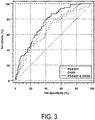
- Fig. 3 shows results of a ROC curve analysis of 10-year clinical recurrence (CR) after prostate cancer surgery for a sub-cohort (#335) of patients of the RP patient cohort with complete 10-year follow-up (see also TABLE 10).
- the 10-year AUCs (area under the curve) were calculated as 0.666 for PDE4D7 alone, as 0.691 for DHX9 alone, and as 0.748 for the combination model (indicated as "PDE4D7 & DHX9" in Fig. 3 and TABLE 11).
- Fig. 4 shows results of a ROC curve analysis of 10-year prostate cancer specific death after prostate cancer surgery for a sub-cohort (#302) of patients of the RP patient cohort with complete 10-year follow-up (see also TABLE 13).
- the 10-year AUCs (area under the curve) were calculated as 0.729 for PDE4D7 alone, as 0.622 for DHX9 alone, and as 0.754 for the combination model (indicated as "PDE4D7 & DHX9" in Fig. 4 and TABLE 14).
- DHX9 may be adding prognostic value to PDE4D7 in clinical prediction models for disease specific outcomes like post-surgical progression to biochemical relapse or clinical recurrence to metastases as well as to the prediction of cancer specific survival to support treatment decision making.
- the computer program product may comprise a non-transitory computer-readable recording medium on which a control program is recorded (stored), such as a disk, hard drive, or the like.
- a control program is recorded (stored)
- Common forms of non-transitory computer-readable media include, for example, floppy disks, flexible disks, hard disks, magnetic tape, or any other magnetic storage medium, CD-ROM, DVD, or any other optical medium, a RAM, a PROM, an EPROM, a FLASH-EPROM, or other memory chip or cartridge, or any other non-transitory medium from which a computer can read and use.
- the one or more steps of the method may be implemented in transitory media, such as a transmittable carrier wave in which the control program is embodied as a data signal using transmission media, such as acoustic or light waves, such as those generated during radio wave and infrared data communications, and the like.
- transitory media such as a transmittable carrier wave in which the control program is embodied as a data signal using transmission media, such as acoustic or light waves, such as those generated during radio wave and infrared data communications, and the like.
- the exemplary method may be implemented on one or more general purpose computers, special purpose computer(s), a programmed microprocessor or microcontroller and peripheral integrated circuit elements, an ASIC or other integrated circuit, a digital signal processor, a hardwired electronic or logic circuit such as a discrete element circuit, a programmable logic device such as a PLD, PLA, FPGA, Graphical card CPU (GPU), or PAL, or the like.
- any device capable of implementing a finite state machine that is in turn capable of implementing the flowchart shown in Fig. 1 , can be used to implement one or more steps of the method of risk stratification for therapy selection in a patient with prostate cancer is illustrated.
- the steps of the method may all be computer implemented, in some embodiments one or more of the steps may be at least partially performed manually.
- the computer program instructions may also be loaded onto a computer, other programmable data processing apparatus, or other devices to cause a series of operational steps to be performed on the computer, other programmable apparatus or other devices to produce a computer implemented process such that the instructions which execute on the computer or other programmable apparatus provide processes for implementing the functions/acts specified herein.
- the gene expression profile for PDE4D7 which can include an expression level (e.g., value) for PDE4D7 which can be normalized using value(s) for each of a set of reference genes
- the gene expression profile may further include expression information from other PDE4D variants.
- the other PDE4D variant(s) may include one or more of PDE4D1, PDE4D2, PDE4D3, PDE4D4, PDE4D5, PDE4D6, PDE4D8 and PDE4D9.
- the diagnostic kit may then additionally comprise at least one primer and/or probe for determining the gene expression profile for each of the other PDE4D variant(s) in the biological sample obtained from the prostate cancer subject.
- an expression level (e.g., value) for PDE4D7 which can be normalized using value(s) for each of a set of reference genes is employed.
- phosphodiesterase 4D1 or "PDE4D1” relates to the splice variant 1 of the human phosphodiesterase PDE4D, i.e., the human phosphodiesterase PDE4D1 gene, for example, to the sequence as defined in NCBI Reference Sequence: NM-001197222.1, specifically, to the nucleotide sequence as set forth in SEQ ID NO:1, which corresponds to the sequence of the above indicated NCBI Reference Sequence of the PDE4D1 transcript, and also relates to the corresponding amino acid sequence for example as set forth in SEQ ID NO:2, which corresponds to the protein sequence defined in NCBI Protein Accession Reference Sequence NP-001184151.1 encoding the PDE4D1 polypeptide.
- phosphodiesterase 4D1 or "PDE4D1” also relates to the amplicon that can be generated by the primer pair PDE1D1D2-forward (SEQ ID NO:3) and the PDE1D1D2 reverse (SEQ ID NO:4) and can be detected by probe SEQ ID NO:5.
- phosphodiesterase 4D2 or “PDE4D2” refers to the splice variant 2 of the human phosphodiesterase PDE4D, i.e., the human phosphodiesterase PDE4D2 gene, for example, to the sequence as defined in NCBI Reference Sequence: NM-001197221.1, specifically, to the nucleotide sequence as set forth in SEQ ID NO:6, which corresponds to the sequence of the above indicated NCBI Reference Sequence of the PDE4D2 transcript, and also relates to the corresponding amino acid sequence for example as set forth in SEQ ID NO:7, which corresponds to the protein sequence defined in NCBI Protein Accession Reference Sequence NP-001184150.1 encoding the PDE4D2 polypeptide.
- phosphodiesterase 4D3 or “PDE4D3” refers to the splice variant 3 of the human phosphodiesterase PDE4D, i.e., the human phosphodiesterase PDE4D3 gene, for example, to the sequence as defined in NCBI Reference Sequence: NM - 006203.4, specifically, to the nucleotide sequence as set forth in SEQ ID NO:8, which corresponds to the sequence of the above indicated NCBI Reference Sequence of the PDE4D3 transcript, and also relates to the corresponding amino acid sequence for example as set forth in SEQ ID NO:9, which corresponds to the protein sequence defined in NCBI Protein Accession Reference Sequence NP-006194.2 encoding the PDE4D3 polypeptide.
- phosphodiesterase 4D4 or PDE4D4 refers to the splice variant 4 of the human phosphodiesterase PDE4D, i.e., the human phosphodiesterase PDE4D4 gene, for example, to the sequence as defined in NCBI Reference Sequence: NM-001104631.1, specifically, to the nucleotide sequence as set forth in SEQ ID NO: 10, which corresponds to the sequence of the above indicated NCBI Reference Sequence of the PDE4D4 transcript, and also relates to the corresponding amino acid sequence for example as set forth in SEQ ID NO: 11, which corresponds to the protein sequence defined in NCBI Protein Accession Reference Sequence NP-001098101.1 encoding the PDE4D4 polypeptide.
- phosphodiesterase 4D5" or "PDE4D5" refers to the splice variant 5 of the human phosphodiesterase PDE4D, i.e., the human phosphodiesterase PDE4D5 gene, for example, to the sequence as defined in NCBI Reference Sequence: NM -001197218.1, specifically, to the nucleotide sequence as set forth in SEQ ID NO:12, which corresponds to the sequence of the above indicated NCBI Reference Sequence of the PDE4D5 transcript, and also relates to the corresponding amino acid sequence for example as set forth in SEQ ID NO: 13, which corresponds to the protein sequence defined in NCBI Protein Accession Reference Sequence NP001184147.1 encoding the PDE4D5 polypeptide.
- PDE4D5 also relates to the amplicon that can be generated by the primer pair PDE4D5-forward (SEQ ID NO: 14) and the PDE4D5-reverse (SEQ ID NO: 15) and can be detected by probe SEQ ID NO: 16.
- phosphodiesterase 4D6 or “PDE4D6” refers to the splice variant 6 of the human phosphodiesterase PDE4D, i.e., the human phosphodiesterase PDE4D6 gene, for example, to the sequence as defined in NCBI Reference Sequence: NM-001197223.1, specifically, to the nucleotide sequence as set forth in SEQ ID NO: 17, which corresponds to the sequence of the above indicated NCBI Reference Sequence of the PDE4D6 transcript, and also relates to the corresponding amino acid sequence for example as set forth in SEQ ID NO: 18, which corresponds to the protein sequence defined in NCBI Protein Accession Reference Sequence NP-001184152.1 encoding the PDE4D6 polypeptide.
- phosphodiesterase 4D8 or "PDE4D8” relates to the splice variant 8 of the human phosphodiesterase PDE4D, i.e., the human phosphodiesterase PDE4D8 gene, for example, to the sequence as defined in NCBI Reference Sequence: NM-001197219.1, specifically, to the nucleotide sequence as set forth in SEQ ID NO:27, which corresponds to the sequence of the above indicated NCBI Reference Sequence of the PDE4D8 transcript, and also relates to the corresponding amino acid sequence for example as set forth in SEQ ID NO:28, which corresponds to the protein sequence defined in NCBI Protein Accession Reference Sequence NP-001184148.1 encoding the PDE4D8 polypeptide.
- phosphodiesterase 4D9 or "PDE4D9” relates to the splice variant 9 of the human phosphodiesterase PDE4D, i.e., the human phosphodiesterase PDE4D9 gene, for example, to the sequence as defined in NCBI Reference Sequence: NM-001197220.1, specifically, to the nucleotide sequence as set forth in SEQ ID NO:29, which corresponds to the sequence of the above indicated NCBI Reference Sequence of the PDE4D9 transcript, and also relates to the corresponding amino acid sequence for example as set forth in SEQ ID NO:30 which corresponds to the protein sequence defined in NCBI Protein Accession Reference Sequence NP-001184149.1 encoding the PDE4D9 polypeptide.
- PDE4D9 also relates to the amplicon that can be generated by the primer pair PDE4D9-forward (SEQ ID NO:31) and the PDE4D9_reverse (SEQ ID NO:32) and can be detected by probe SEQ ID NO:33.
- PDE4D1, PDE4D2
- PDE4D3 PDE4D4
- PDE4D5 PDE4D6
- PDE4D8 PDE4D9
- nucleic acid sequences being at least 75%, 80%, 85%, 90%, 91%, 92%, 93%, 94%, 95%, 96%, 97%, 98% or 99% identical to the sequence as set forth in SEQ ID NOs: 1, 6, 8, 10, 12, 17, 27 or 29 respectively or amino acid sequences being at least 75%, 80%, 85%, 90%, 91%, 92%, 93%, 94%, 95%, 96%, 97%, 98% or 99% identical to the sequence as set forth in SEQ ID NO:2,
- the invention relates to a method of pre-surgical risk stratification of a prostate cancer subject, comprising determining a gene expression profile for phosphodiesterase 4D variant 7 (PDE4D7) in a biological sample obtained from the subject, determining a gene expression profile for DExH-box helicase 9 (DHX9) in the same or another biological sample obtained from the subject, and determining a pre-surgical prognostic risk score for the subject based on the gene expression profile for PDE4D7 and the gene expression profile for DHX9.
- PDE4D7 phosphodiesterase 4D variant 7
- DHX9 DExH-box helicase 9
- This may allow for an improved stratification of the subject in a pre-surgical setting that may result in better primary treatment decisions.
- the pre-surgical prognostic risk score may allow to make better recommendations on whether to select active surveillance vs. active intervention, e.g., radical prostatectomy, for certain sub-populations of prostate cancer patients.
Landscapes
- Chemical & Material Sciences (AREA)
- Life Sciences & Earth Sciences (AREA)
- Health & Medical Sciences (AREA)
- Organic Chemistry (AREA)
- Proteomics, Peptides & Aminoacids (AREA)
- Engineering & Computer Science (AREA)
- Immunology (AREA)
- Pathology (AREA)
- Analytical Chemistry (AREA)
- Zoology (AREA)
- Genetics & Genomics (AREA)
- Wood Science & Technology (AREA)
- Physics & Mathematics (AREA)
- Biotechnology (AREA)
- Microbiology (AREA)
- Molecular Biology (AREA)
- Hospice & Palliative Care (AREA)
- Biophysics (AREA)
- Oncology (AREA)
- Biochemistry (AREA)
- Bioinformatics & Cheminformatics (AREA)
- General Engineering & Computer Science (AREA)
- General Health & Medical Sciences (AREA)
- Measuring Or Testing Involving Enzymes Or Micro-Organisms (AREA)
- Enzymes And Modification Thereof (AREA)
Priority Applications (7)
| Application Number | Priority Date | Filing Date | Title |
|---|---|---|---|
| EP18199784.2A EP3636779A1 (de) | 2018-10-11 | 2018-10-11 | Präoperative risikostratifizierung auf basis von pde4d7- und dhx9-expression |
| US17/273,568 US12221655B2 (en) | 2018-10-11 | 2019-10-11 | Pre-surgical risk stratification based on PDE4D7 and DHX9 expression |
| BR112021006887-2A BR112021006887A2 (pt) | 2018-10-11 | 2019-10-11 | Método de estratificação de risco pré-cirúrgico de um indivíduo com câncer de próstata, kit de diagnóstico, uso de um kit de diagnóstico, uso de um perfil de expressão gênica, produto de programa de computador, e programa de computador |
| EP19783066.4A EP3864178B1 (de) | 2018-10-11 | 2019-10-11 | Präoperative risikostratifizierung auf basis von pde4d7- und dhx9-expression |
| PCT/EP2019/077549 WO2020074679A1 (en) | 2018-10-11 | 2019-10-11 | Pre-surgical risk stratification based on pde4d7 and dhx9 expression |
| JP2021519116A JP7463357B2 (ja) | 2018-10-11 | 2019-10-11 | Pde4d7及びdhx9発現に基づく術前のリスク層別化 |
| CN201980081454.7A CN113166812B (zh) | 2018-10-11 | 2019-10-11 | 基于pde4d7和dhx9表达的术前风险分层 |
Applications Claiming Priority (1)
| Application Number | Priority Date | Filing Date | Title |
|---|---|---|---|
| EP18199784.2A EP3636779A1 (de) | 2018-10-11 | 2018-10-11 | Präoperative risikostratifizierung auf basis von pde4d7- und dhx9-expression |
Publications (1)
| Publication Number | Publication Date |
|---|---|
| EP3636779A1 true EP3636779A1 (de) | 2020-04-15 |
Family
ID=63833874
Family Applications (2)
| Application Number | Title | Priority Date | Filing Date |
|---|---|---|---|
| EP18199784.2A Withdrawn EP3636779A1 (de) | 2018-10-11 | 2018-10-11 | Präoperative risikostratifizierung auf basis von pde4d7- und dhx9-expression |
| EP19783066.4A Active EP3864178B1 (de) | 2018-10-11 | 2019-10-11 | Präoperative risikostratifizierung auf basis von pde4d7- und dhx9-expression |
Family Applications After (1)
| Application Number | Title | Priority Date | Filing Date |
|---|---|---|---|
| EP19783066.4A Active EP3864178B1 (de) | 2018-10-11 | 2019-10-11 | Präoperative risikostratifizierung auf basis von pde4d7- und dhx9-expression |
Country Status (6)
| Country | Link |
|---|---|
| US (1) | US12221655B2 (de) |
| EP (2) | EP3636779A1 (de) |
| JP (1) | JP7463357B2 (de) |
| CN (1) | CN113166812B (de) |
| BR (1) | BR112021006887A2 (de) |
| WO (1) | WO2020074679A1 (de) |
Cited By (2)
| Publication number | Priority date | Publication date | Assignee | Title |
|---|---|---|---|---|
| EP3960875A1 (de) * | 2020-08-28 | 2022-03-02 | Koninklijke Philips N.V. | Pcr-verfahren und kit zur bestimmung der pfadaktivität |
| EP4026918A1 (de) * | 2021-01-12 | 2022-07-13 | Koninklijke Philips N.V. | Vorhersage eines ergebnisses eines patienten mit kolorektalkrebs |
Citations (2)
| Publication number | Priority date | Publication date | Assignee | Title |
|---|---|---|---|---|
| WO2010131194A1 (en) * | 2009-05-12 | 2010-11-18 | Koninklijke Philips Electronics N.V. | Phosphodiesterase 4d7 as marker for malignant, hormone-sensitive prostate cancer |
| WO2014028884A2 (en) * | 2012-08-16 | 2014-02-20 | Genomedx Biosciences, Inc. | Cancer diagnostics using biomarkers |
Family Cites Families (3)
| Publication number | Priority date | Publication date | Assignee | Title |
|---|---|---|---|---|
| CA2725978A1 (en) | 2008-05-28 | 2009-12-03 | Genomedx Biosciences, Inc. | Systems and methods for expression-based discrimination of distinct clinical disease states in prostate cancer |
| AU2015227398B2 (en) * | 2010-07-27 | 2017-08-31 | Mdxhealth Sa | Method for using gene expression to determine prognosis of prostate cancer |
| CN110062811A (zh) * | 2016-12-01 | 2019-07-26 | 皇家飞利浦有限公司 | 基于人磷酸二酯酶4d变体7表达的风险评分 |
-
2018
- 2018-10-11 EP EP18199784.2A patent/EP3636779A1/de not_active Withdrawn
-
2019
- 2019-10-11 EP EP19783066.4A patent/EP3864178B1/de active Active
- 2019-10-11 JP JP2021519116A patent/JP7463357B2/ja active Active
- 2019-10-11 CN CN201980081454.7A patent/CN113166812B/zh active Active
- 2019-10-11 US US17/273,568 patent/US12221655B2/en active Active
- 2019-10-11 BR BR112021006887-2A patent/BR112021006887A2/pt unknown
- 2019-10-11 WO PCT/EP2019/077549 patent/WO2020074679A1/en not_active Ceased
Patent Citations (2)
| Publication number | Priority date | Publication date | Assignee | Title |
|---|---|---|---|---|
| WO2010131194A1 (en) * | 2009-05-12 | 2010-11-18 | Koninklijke Philips Electronics N.V. | Phosphodiesterase 4d7 as marker for malignant, hormone-sensitive prostate cancer |
| WO2014028884A2 (en) * | 2012-08-16 | 2014-02-20 | Genomedx Biosciences, Inc. | Cancer diagnostics using biomarkers |
Non-Patent Citations (18)
| Title |
|---|
| BADER P. ET AL.: "Is a limited lymph node dissection and adequate staging procedure for prostate cancer?", JOURNAL OF UROLOGY, vol. 168, no. 2, 2002, pages 514 - 518, XP005540114, DOI: doi:10.1016/S0022-5347(05)64670-8 |
| BANGMA C.H. ET AL.: "Overdiagnosis and overtreatment of early detected prostate cancer", WORLD JOURNAL OF UROLOGY, vol. 25, no. 1, 2007, pages 3 - 9, XP019490607, DOI: doi:10.1007/s00345-007-0145-z |
| BANGMA C.H.; ROOBOL M.J.: "Defining and predicting indolent and low prostate cancer", CRITICAL REVIEWS IN ONCOLOGY/HEMATOLOGY, vol. 83, no. 2, 2012, pages 235 - 241, XP028930329, DOI: doi:10.1016/j.critrevonc.2011.10.003 |
| BOTTCHER R. ET AL.: "Human phosphodiesterase 4D7 (PDE4D7) expression is increased in TMPRSS2-ERG positive primary prostate cancer and independently adds to a reduced risk of post-surgical disease progression", BRITISH JOURNAL OF CANCER, vol. 113, no. 10, 2015, pages 1502 - 1511, XP055371923, DOI: doi:10.1038/bjc.2015.335 |
| CONTI M.; BEAVO J.: "Biochemistry and physiology of cyclic nucleotide phosphodiesterases: essential components in cyclic nucleotide signaling", ANNUAL REVIEW OF BIOCHEMISTRY, vol. 76, 2007, pages 481 - 511 |
| COOPERBERG M.R. ET AL.: "Contemporary trends in low risk prostate cancer: risk assessment and treatment", JOURNAL OF UROLOGY, vol. 173, no. 3, 2007, pages 14 - 19 |
| DIANNE VAN STRIJP ET AL: "The Prognostic PDE4D7 Score in a Diagnostic Biopsy Prostate Cancer Patient Cohort with Longitudinal Biological Outcomes", PROSTATE CANCER, vol. 2018, 26 July 2018 (2018-07-26), pages 1 - 11, XP055565132, ISSN: 2090-3111, DOI: 10.1155/2018/5821616 * |
| FERLAY J. ET AL.: "International Agency for Research on Cancer", 2013, article "GLOBOCAN 2012 v1.0, Cancer Incidence and Mortality Worldwide: IARC CancerBase" |
| HEIDENREICH A. ET AL.: "Extended pelvic lymphadenectomy in patients undergoing radical prostatectomy: high incidence of lymph node metastasis", JOURNAL OF UROLOGY, vol. 167, no. 4, 2002, pages 1681 - 1686, XP005543667, DOI: doi:10.1016/S0022-5347(05)65177-4 |
| HEIDENREICH A. ET AL.: "Guidelines on Prostate Cancer", EUROPEAN ASSOCIATION OF UROLOGY, 2012 |
| MERKLE D.; HOFFMANN R.: "Roles of cAMP and cAMP-dependent protein kinase in the progression of prostate cancer: Cross-talk with the androgen receptor", CELLULAR SIGNALLING, vol. 23, no. 3, 2011, pages 507 - 515, XP027573072 |
| NAM R.K. ET AL.: "Increasing hospital admission rates for urological complications after transrectal ultrasound guided biopsy", JOURNAL OF UROLOGY, vol. 183, no. 3, 2010, pages 963 - 968, XP026938371, DOI: doi:10.1016/j.juro.2009.11.043 |
| NICHOLAS ERHO ET AL: "Discovery and Validation of a Prostate Cancer Genomic Classifier that Predicts Early Metastasis Following Radical Prostatectomy", PLOS ONE, vol. 8, no. 6, 24 June 2013 (2013-06-24), pages e66855, XP055371391, DOI: 10.1371/journal.pone.0066855 * |
| QUON H. ET AL.: "Dramatic increase in prostate cancer cases by 2021", BJU INTERNATIONAL, vol. 108, no. 11, 2011, pages 1734 - 1738 |
| R B?TTCHER ET AL: "Human phosphodiesterase 4D7 (PDE4D7) expression is increased in TMPRSS2-ERG-positive primary prostate cancer and independently adds to a reduced risk of post-surgical disease progression", BRITISH JOURNAL OF CANCER, vol. 113, no. 10, 17 November 2015 (2015-11-17), GB, pages 1502 - 1511, XP055371923, ISSN: 0007-0920, DOI: 10.1038/bjc.2015.335 * |
| SCHRODER F.H. ET AL.: "Screening and Prostate-Cancer Mortality in a Randomized European Study", THE NEW ENGLAND JOURNAL OF MEDICINE, vol. 360, no. 13, 2009, pages 1320 - 1328 |
| SNYDER C.F. ET AL.: "How does initial treatment choice affect short-term and long-term costs for clinically localized prostate cancer?", CANCER, vol. 116, no. 23, 2010, pages 5391 - 5399 |
| TERESA LEE ET AL: "The biology of DHX9 and its potential as a therapeutic target INTRODUCTION TO DHX9 AND DEXD/ H-BOX HELICASES", ONCOTARGET 42716 ONCOTARGET, 28 March 2016 (2016-03-28), pages 27, XP055565659, Retrieved from the Internet <URL:https://www.ncbi.nlm.nih.gov/pmc/articles/PMC5173168/pdf/oncotarget-07-42716.pdf> [retrieved on 20190307] * |
Cited By (4)
| Publication number | Priority date | Publication date | Assignee | Title |
|---|---|---|---|---|
| EP3960875A1 (de) * | 2020-08-28 | 2022-03-02 | Koninklijke Philips N.V. | Pcr-verfahren und kit zur bestimmung der pfadaktivität |
| WO2022043366A1 (en) * | 2020-08-28 | 2022-03-03 | Koninklijke Philips N.V. | Pcr method and kit for determining pathway activity |
| EP4026918A1 (de) * | 2021-01-12 | 2022-07-13 | Koninklijke Philips N.V. | Vorhersage eines ergebnisses eines patienten mit kolorektalkrebs |
| WO2022152597A1 (en) * | 2021-01-12 | 2022-07-21 | Koninklijke Philips N.V. | Prediction of an outcome of a colorectal cancer subject |
Also Published As
| Publication number | Publication date |
|---|---|
| JP2022512634A (ja) | 2022-02-07 |
| BR112021006887A2 (pt) | 2021-08-31 |
| US20210355543A1 (en) | 2021-11-18 |
| JP7463357B2 (ja) | 2024-04-08 |
| WO2020074679A1 (en) | 2020-04-16 |
| US12221655B2 (en) | 2025-02-11 |
| CN113166812A (zh) | 2021-07-23 |
| EP3864178B1 (de) | 2022-07-27 |
| EP3864178A1 (de) | 2021-08-18 |
| CN113166812B (zh) | 2025-01-24 |
Similar Documents
| Publication | Publication Date | Title |
|---|---|---|
| US12000002B2 (en) | Pre-surgical risk stratification based on PDE4D7 expression and pre-surgical clinical variables | |
| US20070065859A1 (en) | Methods and materials for identifying the origin of a carcinoma of unknown primary origin | |
| EP3960876A1 (de) | Vorhersage einer reaktion eines prostatakrebspatienten auf eine strahlentherapie basierend auf pde4d7-korrelierten genen | |
| ES2893469T3 (es) | Puntuaciones de riesgo basadas en la expresión de la variante 7 de la fosfodiesterasa 4D humana | |
| JP2024113017A (ja) | 体細胞変異のための方法およびシステム、ならびにそれらの使用 | |
| KR20190143417A (ko) | 뇌 종양의 예후 예측 방법 | |
| EP3864178B1 (de) | Präoperative risikostratifizierung auf basis von pde4d7- und dhx9-expression | |
| CN112921083A (zh) | 肠道息肉和结直肠癌评价中的基因标志物 | |
| KR20190143058A (ko) | 뇌 종양의 예후 예측 방법 | |
| EP3775287B1 (de) | Postoperative risikostratifizierung auf basis der pde4d-varianten-expression, ausgewählt nach tmprss2-erg-fusionsstatus, und post-chirurgischen klinischen variablen | |
| KR102935486B1 (ko) | 혈중 무세포 dna 기반 유방암 치료 예후예측 방법 | |
| CN112980959A (zh) | 用于预测或诊断结直肠癌/结直肠癌风险的基因标志物 | |
| CN113862354B (zh) | 用于预测局限期小细胞肺癌患者预后的系统及其应用 | |
| Kim et al. | Quantitative measurement of circulating lymphoidspecific helicase (HELLS) gene transcript: a potential serum biomarker for melanoma metastasis | |
| CN117844924A (zh) | 肾细胞癌的生物标志物bub1 | |
| CN115466793A (zh) | Acot9基因的检测试剂在制备胃癌检测试剂盒中的应用及胃癌检测试剂盒 | |
| CN117795100A (zh) | 通过使用前列腺癌pde4d7敲低评分对前列腺癌进行个性化 | |
| Dennis | A four‐group urine risk classifier for predicting outcomes in patients with prostate cancer | |
| CN112980958A (zh) | 检测和定量基因标志物的试剂在诊断疾病中的用途 | |
| Heavey et al. | Prostate cancer biomarkers-PSA: is there still a role? | |
| KR20220112450A (ko) | 담즙 및 ddPCR 분석을 이용한 담도암 진단용 조성물 및 이의 용도 |
Legal Events
| Date | Code | Title | Description |
|---|---|---|---|
| PUAI | Public reference made under article 153(3) epc to a published international application that has entered the european phase |
Free format text: ORIGINAL CODE: 0009012 |
|
| STAA | Information on the status of an ep patent application or granted ep patent |
Free format text: STATUS: THE APPLICATION HAS BEEN PUBLISHED |
|
| AK | Designated contracting states |
Kind code of ref document: A1 Designated state(s): AL AT BE BG CH CY CZ DE DK EE ES FI FR GB GR HR HU IE IS IT LI LT LU LV MC MK MT NL NO PL PT RO RS SE SI SK SM TR |
|
| AX | Request for extension of the european patent |
Extension state: BA ME |
|
| STAA | Information on the status of an ep patent application or granted ep patent |
Free format text: STATUS: THE APPLICATION IS DEEMED TO BE WITHDRAWN |
|
| 18D | Application deemed to be withdrawn |
Effective date: 20201016 |