EP3636794A1 - Procédé pour augmenter la capacité de contrainte thermique d'un revêtement céramique poreux et système de couches - Google Patents
Procédé pour augmenter la capacité de contrainte thermique d'un revêtement céramique poreux et système de couches Download PDFInfo
- Publication number
- EP3636794A1 EP3636794A1 EP18200072.9A EP18200072A EP3636794A1 EP 3636794 A1 EP3636794 A1 EP 3636794A1 EP 18200072 A EP18200072 A EP 18200072A EP 3636794 A1 EP3636794 A1 EP 3636794A1
- Authority
- EP
- European Patent Office
- Prior art keywords
- ceramic coating
- coating
- bond coat
- cracks
- thermal stress
- Prior art date
- Legal status (The legal status is an assumption and is not a legal conclusion. Google has not performed a legal analysis and makes no representation as to the accuracy of the status listed.)
- Withdrawn
Links
- 238000005524 ceramic coating Methods 0.000 title claims abstract description 18
- 230000008646 thermal stress Effects 0.000 title claims abstract description 4
- 238000000034 method Methods 0.000 title claims description 15
- 238000000576 coating method Methods 0.000 claims abstract description 28
- 239000011248 coating agent Substances 0.000 claims abstract description 19
- 239000000758 substrate Substances 0.000 claims description 9
- MCMNRKCIXSYSNV-UHFFFAOYSA-N Zirconium dioxide Chemical compound O=[Zr]=O MCMNRKCIXSYSNV-UHFFFAOYSA-N 0.000 claims 4
- 229910002078 fully stabilized zirconia Inorganic materials 0.000 claims 1
- 239000000463 material Substances 0.000 claims 1
- 238000010438 heat treatment Methods 0.000 abstract description 5
- 230000008021 deposition Effects 0.000 description 4
- 238000000151 deposition Methods 0.000 description 4
- 239000007921 spray Substances 0.000 description 4
- 238000005507 spraying Methods 0.000 description 4
- 239000012720 thermal barrier coating Substances 0.000 description 4
- 230000035882 stress Effects 0.000 description 3
- PXHVJJICTQNCMI-UHFFFAOYSA-N Nickel Chemical compound [Ni] PXHVJJICTQNCMI-UHFFFAOYSA-N 0.000 description 2
- 229910052751 metal Inorganic materials 0.000 description 2
- 239000002184 metal Substances 0.000 description 2
- 238000005240 physical vapour deposition Methods 0.000 description 2
- 238000005245 sintering Methods 0.000 description 2
- XEEYBQQBJWHFJM-UHFFFAOYSA-N Iron Chemical compound [Fe] XEEYBQQBJWHFJM-UHFFFAOYSA-N 0.000 description 1
- XUIMIQQOPSSXEZ-UHFFFAOYSA-N Silicon Chemical compound [Si] XUIMIQQOPSSXEZ-UHFFFAOYSA-N 0.000 description 1
- 229910017052 cobalt Inorganic materials 0.000 description 1
- 239000010941 cobalt Substances 0.000 description 1
- GUTLYIVDDKVIGB-UHFFFAOYSA-N cobalt atom Chemical compound [Co] GUTLYIVDDKVIGB-UHFFFAOYSA-N 0.000 description 1
- 238000001816 cooling Methods 0.000 description 1
- 230000001419 dependent effect Effects 0.000 description 1
- 230000008034 disappearance Effects 0.000 description 1
- 238000002844 melting Methods 0.000 description 1
- 230000008018 melting Effects 0.000 description 1
- 229910001092 metal group alloy Inorganic materials 0.000 description 1
- 229910052759 nickel Inorganic materials 0.000 description 1
- 238000007750 plasma spraying Methods 0.000 description 1
- 239000011148 porous material Substances 0.000 description 1
- 239000000843 powder Substances 0.000 description 1
- 229910052702 rhenium Inorganic materials 0.000 description 1
- WUAPFZMCVAUBPE-UHFFFAOYSA-N rhenium atom Chemical compound [Re] WUAPFZMCVAUBPE-UHFFFAOYSA-N 0.000 description 1
- 229910052710 silicon Inorganic materials 0.000 description 1
- 239000010703 silicon Substances 0.000 description 1
- 229910000601 superalloy Inorganic materials 0.000 description 1
- 229910052715 tantalum Inorganic materials 0.000 description 1
- GUVRBAGPIYLISA-UHFFFAOYSA-N tantalum atom Chemical group [Ta] GUVRBAGPIYLISA-UHFFFAOYSA-N 0.000 description 1
- 229910052727 yttrium Inorganic materials 0.000 description 1
- VWQVUPCCIRVNHF-UHFFFAOYSA-N yttrium atom Chemical group [Y] VWQVUPCCIRVNHF-UHFFFAOYSA-N 0.000 description 1
Images
Classifications
-
- C—CHEMISTRY; METALLURGY
- C23—COATING METALLIC MATERIAL; COATING MATERIAL WITH METALLIC MATERIAL; CHEMICAL SURFACE TREATMENT; DIFFUSION TREATMENT OF METALLIC MATERIAL; COATING BY VACUUM EVAPORATION, BY SPUTTERING, BY ION IMPLANTATION OR BY CHEMICAL VAPOUR DEPOSITION, IN GENERAL; INHIBITING CORROSION OF METALLIC MATERIAL OR INCRUSTATION IN GENERAL
- C23C—COATING METALLIC MATERIAL; COATING MATERIAL WITH METALLIC MATERIAL; SURFACE TREATMENT OF METALLIC MATERIAL BY DIFFUSION INTO THE SURFACE, BY CHEMICAL CONVERSION OR SUBSTITUTION; COATING BY VACUUM EVAPORATION, BY SPUTTERING, BY ION IMPLANTATION OR BY CHEMICAL VAPOUR DEPOSITION, IN GENERAL
- C23C4/00—Coating by spraying the coating material in the molten state, e.g. by flame, plasma or electric discharge
- C23C4/04—Coating by spraying the coating material in the molten state, e.g. by flame, plasma or electric discharge characterised by the coating material
- C23C4/10—Oxides, borides, carbides, nitrides or silicides; Mixtures thereof
- C23C4/11—Oxides
-
- C—CHEMISTRY; METALLURGY
- C04—CEMENTS; CONCRETE; ARTIFICIAL STONE; CERAMICS; REFRACTORIES
- C04B—LIME, MAGNESIA; SLAG; CEMENTS; COMPOSITIONS THEREOF, e.g. MORTARS, CONCRETE OR LIKE BUILDING MATERIALS; ARTIFICIAL STONE; CERAMICS; REFRACTORIES; TREATMENT OF NATURAL STONE
- C04B38/00—Porous mortars, concrete, artificial stone or ceramic ware; Preparation thereof
- C04B38/007—Porous mortars, concrete, artificial stone or ceramic ware; Preparation thereof characterised by the pore distribution, e.g. inhomogeneous distribution of pores
- C04B38/0074—Porous mortars, concrete, artificial stone or ceramic ware; Preparation thereof characterised by the pore distribution, e.g. inhomogeneous distribution of pores expressed as porosity percentage
-
- C—CHEMISTRY; METALLURGY
- C04—CEMENTS; CONCRETE; ARTIFICIAL STONE; CERAMICS; REFRACTORIES
- C04B—LIME, MAGNESIA; SLAG; CEMENTS; COMPOSITIONS THEREOF, e.g. MORTARS, CONCRETE OR LIKE BUILDING MATERIALS; ARTIFICIAL STONE; CERAMICS; REFRACTORIES; TREATMENT OF NATURAL STONE
- C04B41/00—After-treatment of mortars, concrete, artificial stone or ceramics; Treatment of natural stone
- C04B41/0072—Heat treatment
- C04B41/0081—Heat treatment characterised by the subsequent cooling step
-
- C—CHEMISTRY; METALLURGY
- C23—COATING METALLIC MATERIAL; COATING MATERIAL WITH METALLIC MATERIAL; CHEMICAL SURFACE TREATMENT; DIFFUSION TREATMENT OF METALLIC MATERIAL; COATING BY VACUUM EVAPORATION, BY SPUTTERING, BY ION IMPLANTATION OR BY CHEMICAL VAPOUR DEPOSITION, IN GENERAL; INHIBITING CORROSION OF METALLIC MATERIAL OR INCRUSTATION IN GENERAL
- C23C—COATING METALLIC MATERIAL; COATING MATERIAL WITH METALLIC MATERIAL; SURFACE TREATMENT OF METALLIC MATERIAL BY DIFFUSION INTO THE SURFACE, BY CHEMICAL CONVERSION OR SUBSTITUTION; COATING BY VACUUM EVAPORATION, BY SPUTTERING, BY ION IMPLANTATION OR BY CHEMICAL VAPOUR DEPOSITION, IN GENERAL
- C23C4/00—Coating by spraying the coating material in the molten state, e.g. by flame, plasma or electric discharge
- C23C4/02—Pretreatment of the material to be coated, e.g. for coating on selected surface areas
-
- C—CHEMISTRY; METALLURGY
- C23—COATING METALLIC MATERIAL; COATING MATERIAL WITH METALLIC MATERIAL; CHEMICAL SURFACE TREATMENT; DIFFUSION TREATMENT OF METALLIC MATERIAL; COATING BY VACUUM EVAPORATION, BY SPUTTERING, BY ION IMPLANTATION OR BY CHEMICAL VAPOUR DEPOSITION, IN GENERAL; INHIBITING CORROSION OF METALLIC MATERIAL OR INCRUSTATION IN GENERAL
- C23C—COATING METALLIC MATERIAL; COATING MATERIAL WITH METALLIC MATERIAL; SURFACE TREATMENT OF METALLIC MATERIAL BY DIFFUSION INTO THE SURFACE, BY CHEMICAL CONVERSION OR SUBSTITUTION; COATING BY VACUUM EVAPORATION, BY SPUTTERING, BY ION IMPLANTATION OR BY CHEMICAL VAPOUR DEPOSITION, IN GENERAL
- C23C4/00—Coating by spraying the coating material in the molten state, e.g. by flame, plasma or electric discharge
- C23C4/12—Coating by spraying the coating material in the molten state, e.g. by flame, plasma or electric discharge characterised by the method of spraying
- C23C4/134—Plasma spraying
-
- C—CHEMISTRY; METALLURGY
- C23—COATING METALLIC MATERIAL; COATING MATERIAL WITH METALLIC MATERIAL; CHEMICAL SURFACE TREATMENT; DIFFUSION TREATMENT OF METALLIC MATERIAL; COATING BY VACUUM EVAPORATION, BY SPUTTERING, BY ION IMPLANTATION OR BY CHEMICAL VAPOUR DEPOSITION, IN GENERAL; INHIBITING CORROSION OF METALLIC MATERIAL OR INCRUSTATION IN GENERAL
- C23C—COATING METALLIC MATERIAL; COATING MATERIAL WITH METALLIC MATERIAL; SURFACE TREATMENT OF METALLIC MATERIAL BY DIFFUSION INTO THE SURFACE, BY CHEMICAL CONVERSION OR SUBSTITUTION; COATING BY VACUUM EVAPORATION, BY SPUTTERING, BY ION IMPLANTATION OR BY CHEMICAL VAPOUR DEPOSITION, IN GENERAL
- C23C4/00—Coating by spraying the coating material in the molten state, e.g. by flame, plasma or electric discharge
- C23C4/18—After-treatment
Definitions
- the invention relates to a method to increase the thermal stress capability of a porous TBC and layer system.
- TBCs Thermal Barrier Coatings
- LGTs Land-based Gas Turbines
- aero turbines aero turbines
- the most resilient TBCs present a columnar microstructure that allows the coating to expand relatively freely accommodating any stress generated either from the Coefficient of Thermal Expansion (CTE) mismatch between the ceramic coating and the underlying metallic part or from the thermal gradient along the coating's thickness.
- CTE Coefficient of Thermal Expansion
- the most well-known coatings deposited with this characteristic microstructure are the EB-PVD deposited partially stabilized YSZ, with an exceptional thermal strain capability and the Segmented partially stabilized YSZ deposited with Air Plasma Spraying (APS), with the former being a much more expensive option than the latter.
- the segmented coatings are typically used in the large land based gas turbines and the EB-PVDs in the aero or aeroderivative turbines.
- the segmented being a less costly option, they are still more expensive compared to the typical porous thermal sprayed ceramic coatings. The reason is the more expensive torches required or the more frequent replace rate of hardware as well as the need for a tight temperature control that is required to generate the columnar microstructure during the spraying.
- the columnar microstructure presents itself as vertical cracks when looking at the coating's cross section, which has given to this type of thermal spray coatings also the name Dense Vertical Cracked (DVCs).
- DVCs Dense Vertical Cracked
- the problem is solved by a method according to claim 1 and a layer system according to claim 5.
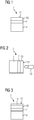
- Figure 1, 3 shows a component and figure 2 how to produce cracks in the coating.
- the principle that the heat treatment is based on is rather simple. After its deposition the coating is characterized by internal porosity. A heat source can be applied on the coating side bringing its surface temperature at over 1273K for enough time to allow the ceramic coating to start sinter from its surface towards the metal substrate. It is important that the heating rate is kept small in the order of less than 50K/s in order to prevent the creation of any horizontal cracks in the coating as a result of a much faster expanding ceramic coating compared to a still cooler metallic substrate.
- the residence time in the high temperature should be long enough to allow some initial sintering to take place in the coating. That will manifest itself with the disappearance of the finest pores and some fine splat boundaries close to the surface of the coating that is closer to the heat source.
- the residence time is related to the temperature achieved, with higher temperature meaning less time.
- the heat source can be the thermal spray burner itself which can be used post spraying, to scan the part to allow a relatively even temperature to be brought in the coating surface. Prerequisite is that the powder feed would be shut down, in order to avoid any additional coating deposition.
- the laser beam can be used as the heat source.
- the coating should be cooled rapidly with the use of forced cooled air coming to the coating side. In this manner, the coating will shrink faster than the still hotter metal substrate, setting it under tensile stress. As the coating will have gone through sintering, which will have increased its Young's modulus, inevitably it will reach rapidly its fracture point and vertical cracks will be generated alleviating in this manner the built-up stress.
- the depth or frequency of vertical cracks can be adjusted by manipulating the heat rate, residence time and cooling rate.
- Figure 1 shows a component 1 with a substrate 4, which is especially metallic and very especially a nickel or cobalt based superalloy on which a bond coat 7, especially a metallic bond coat 7, very especially a NiCoCrAlY bond coat, is applied on, which produces a TGO (Thermal Grown Oxid layer) at least during operation.
- Y Yttrium, Tantalum (Ta), Rhenium (Re), Iron (Fe) and/or Silicon (Si), especially only Y.
- the porosity of the ceramic coating 10 is 12% to 20% (vol.).
- Figure 2 shows a component 1 according to figure 1 , wherein external heater 13, which can be a spray gun, a laser or a larger heating device, which heats up the surface 11 of the component 1 which to produces the cracks as described above, because a sintered rim 12 is produced ( Fig. 3 ).
- external heater 13 which can be a spray gun, a laser or a larger heating device, which heats up the surface 11 of the component 1 which to produces the cracks as described above, because a sintered rim 12 is produced ( Fig. 3 ).
Landscapes
- Chemical & Material Sciences (AREA)
- Engineering & Computer Science (AREA)
- Physics & Mathematics (AREA)
- Organic Chemistry (AREA)
- Materials Engineering (AREA)
- Plasma & Fusion (AREA)
- Mechanical Engineering (AREA)
- Metallurgy (AREA)
- Chemical Kinetics & Catalysis (AREA)
- Ceramic Engineering (AREA)
- Structural Engineering (AREA)
- Thermal Sciences (AREA)
- Coating By Spraying Or Casting (AREA)
- Turbine Rotor Nozzle Sealing (AREA)
- Inorganic Chemistry (AREA)
Priority Applications (4)
| Application Number | Priority Date | Filing Date | Title |
|---|---|---|---|
| EP18200072.9A EP3636794A1 (fr) | 2018-10-12 | 2018-10-12 | Procédé pour augmenter la capacité de contrainte thermique d'un revêtement céramique poreux et système de couches |
| US17/282,295 US11725268B2 (en) | 2018-10-12 | 2019-06-14 | Method to increase the thermal stress capability of a porous ceramic coating and a layer system |
| PCT/EP2019/065656 WO2020074139A1 (fr) | 2018-10-12 | 2019-06-14 | Procédé permettant d'augmenter la capacité de contrainte thermique d'un revêtement en céramique poreux et système en couche |
| EP19735221.4A EP3833797A1 (fr) | 2018-10-12 | 2019-06-14 | Procédé permettant d'augmenter la capacité de contrainte thermique d'un revêtement en céramique poreux et système en couche |
Applications Claiming Priority (1)
| Application Number | Priority Date | Filing Date | Title |
|---|---|---|---|
| EP18200072.9A EP3636794A1 (fr) | 2018-10-12 | 2018-10-12 | Procédé pour augmenter la capacité de contrainte thermique d'un revêtement céramique poreux et système de couches |
Publications (1)
| Publication Number | Publication Date |
|---|---|
| EP3636794A1 true EP3636794A1 (fr) | 2020-04-15 |
Family
ID=63840677
Family Applications (2)
| Application Number | Title | Priority Date | Filing Date |
|---|---|---|---|
| EP18200072.9A Withdrawn EP3636794A1 (fr) | 2018-10-12 | 2018-10-12 | Procédé pour augmenter la capacité de contrainte thermique d'un revêtement céramique poreux et système de couches |
| EP19735221.4A Pending EP3833797A1 (fr) | 2018-10-12 | 2019-06-14 | Procédé permettant d'augmenter la capacité de contrainte thermique d'un revêtement en céramique poreux et système en couche |
Family Applications After (1)
| Application Number | Title | Priority Date | Filing Date |
|---|---|---|---|
| EP19735221.4A Pending EP3833797A1 (fr) | 2018-10-12 | 2019-06-14 | Procédé permettant d'augmenter la capacité de contrainte thermique d'un revêtement en céramique poreux et système en couche |
Country Status (3)
| Country | Link |
|---|---|
| US (1) | US11725268B2 (fr) |
| EP (2) | EP3636794A1 (fr) |
| WO (1) | WO2020074139A1 (fr) |
Citations (2)
| Publication number | Priority date | Publication date | Assignee | Title |
|---|---|---|---|---|
| FR3013360A1 (fr) * | 2013-11-19 | 2015-05-22 | Snecma | Procede integre de frittage pour microfissuration et tenue a l'erosion des barrieres thermiques |
| US20170159164A1 (en) * | 2015-12-07 | 2017-06-08 | Lam Research Corporation | Surface coating treatment |
-
2018
- 2018-10-12 EP EP18200072.9A patent/EP3636794A1/fr not_active Withdrawn
-
2019
- 2019-06-14 US US17/282,295 patent/US11725268B2/en active Active
- 2019-06-14 WO PCT/EP2019/065656 patent/WO2020074139A1/fr not_active Ceased
- 2019-06-14 EP EP19735221.4A patent/EP3833797A1/fr active Pending
Patent Citations (2)
| Publication number | Priority date | Publication date | Assignee | Title |
|---|---|---|---|---|
| FR3013360A1 (fr) * | 2013-11-19 | 2015-05-22 | Snecma | Procede integre de frittage pour microfissuration et tenue a l'erosion des barrieres thermiques |
| US20170159164A1 (en) * | 2015-12-07 | 2017-06-08 | Lam Research Corporation | Surface coating treatment |
Also Published As
| Publication number | Publication date |
|---|---|
| WO2020074139A1 (fr) | 2020-04-16 |
| EP3833797A1 (fr) | 2021-06-16 |
| US20210340677A1 (en) | 2021-11-04 |
| US11725268B2 (en) | 2023-08-15 |
Similar Documents
| Publication | Publication Date | Title |
|---|---|---|
| JP6239831B2 (ja) | 遮熱コーティングの施工方法 | |
| Yoo et al. | Hafnium carbide protective layer coatings on carbon/carbon composites deposited with a vacuum plasma spray coating method | |
| US6787195B2 (en) | Method of depositing a coating on Si-based ceramic composites | |
| Xie et al. | Formation of vertical cracks in solution-precursor plasma-sprayed thermal barrier coatings | |
| EP3156514B1 (fr) | Procédé de production de stratifié | |
| US20120231211A1 (en) | Method for the manufacture of a thermal barrier coating structure | |
| Zhang et al. | Al-modification for PS-PVD 7YSZ TBCs to improve particle erosion and thermal cycle performances | |
| JPH0251978B2 (fr) | ||
| US20200095666A1 (en) | Abradable coating | |
| US20140193760A1 (en) | Coated article, process of coating an article, and method of using a coated article | |
| JP6514444B2 (ja) | 成膜法及び被覆物品 | |
| EP2530063A2 (fr) | Article composite présentant une couche barrière de silicate et procédé associé | |
| CN109415795A (zh) | 自修复热障层及其制造方法 | |
| EP2236642B1 (fr) | Oxydation contrôlée d'une couche de liaison | |
| US6145470A (en) | Apparatus for electron beam physical vapor deposition | |
| Arhami et al. | Process parameters for enhanced microstructure and composition of as-sprayed Yb2Si2O7 environmental barrier coatings via atmospheric plasma spray | |
| EP3636794A1 (fr) | Procédé pour augmenter la capacité de contrainte thermique d'un revêtement céramique poreux et système de couches | |
| US10260141B2 (en) | Method of forming a thermal barrier coating with improved adhesion | |
| EP3333279A1 (fr) | Procédé et dispositif pour produire un revêtement ceramique poreux segmenté, et un composant de celui-ci | |
| US20210277510A1 (en) | Method for applying a thermal barrier | |
| US20160281206A1 (en) | Integrated sintering process for microcracking and erosion resistance of thermal barriers | |
| Wang et al. | Mullite coatings produced by APS and SPS: Effect of powder morphology and spray processing on the microstructure, crystallinity and mechanical properties | |
| Fa et al. | Microstructure and Properties of Peg-nail Structured YSZ TBCs by Selective Laser Modification after Plasma Spraying | |
| Tsantrizes et al. | TBCs on free-standing multilayer components | |
| CN119411059A (zh) | 基于ps-pvd的cmas防护热障涂层及其制备方法 |
Legal Events
| Date | Code | Title | Description |
|---|---|---|---|
| PUAI | Public reference made under article 153(3) epc to a published international application that has entered the european phase |
Free format text: ORIGINAL CODE: 0009012 |
|
| STAA | Information on the status of an ep patent application or granted ep patent |
Free format text: STATUS: THE APPLICATION HAS BEEN PUBLISHED |
|
| AK | Designated contracting states |
Kind code of ref document: A1 Designated state(s): AL AT BE BG CH CY CZ DE DK EE ES FI FR GB GR HR HU IE IS IT LI LT LU LV MC MK MT NL NO PL PT RO RS SE SI SK SM TR |
|
| AX | Request for extension of the european patent |
Extension state: BA ME |
|
| STAA | Information on the status of an ep patent application or granted ep patent |
Free format text: STATUS: THE APPLICATION IS DEEMED TO BE WITHDRAWN |
|
| 18D | Application deemed to be withdrawn |
Effective date: 20201016 |