EP3636804A1 - Silber-graphen-verbundbeschichtung für gleitkontakt und galvanisches verfahren dafür - Google Patents
Silber-graphen-verbundbeschichtung für gleitkontakt und galvanisches verfahren dafür Download PDFInfo
- Publication number
- EP3636804A1 EP3636804A1 EP18199860.0A EP18199860A EP3636804A1 EP 3636804 A1 EP3636804 A1 EP 3636804A1 EP 18199860 A EP18199860 A EP 18199860A EP 3636804 A1 EP3636804 A1 EP 3636804A1
- Authority
- EP
- European Patent Office
- Prior art keywords
- graphene
- silver
- range
- flakes
- plating bath
- Prior art date
- Legal status (The legal status is an assumption and is not a legal conclusion. Google has not performed a legal analysis and makes no representation as to the accuracy of the status listed.)
- Pending
Links
Images
Classifications
-
- C—CHEMISTRY; METALLURGY
- C25—ELECTROLYTIC OR ELECTROPHORETIC PROCESSES; APPARATUS THEREFOR
- C25D—PROCESSES FOR THE ELECTROLYTIC OR ELECTROPHORETIC PRODUCTION OF COATINGS; ELECTROFORMING; APPARATUS THEREFOR
- C25D15/00—Electrolytic or electrophoretic production of coatings containing embedded materials, e.g. particles, whiskers, wires
- C25D15/02—Combined electrolytic and electrophoretic processes with charged materials
-
- C—CHEMISTRY; METALLURGY
- C25—ELECTROLYTIC OR ELECTROPHORETIC PROCESSES; APPARATUS THEREFOR
- C25D—PROCESSES FOR THE ELECTROLYTIC OR ELECTROPHORETIC PRODUCTION OF COATINGS; ELECTROFORMING; APPARATUS THEREFOR
- C25D3/00—Electroplating: Baths therefor
- C25D3/02—Electroplating: Baths therefor from solutions
- C25D3/46—Electroplating: Baths therefor from solutions of silver
Definitions
- the present disclosure relates to a method of electroplating of a silver-graphene composite onto a substrate.
- Silver (Ag)-based contact materials are commonly used in various electrical power switching devices, where low losses and stable contact performance over life are of key importance. Ag is used as base material in both arcing and sliding contact systems, owing to its electrical properties. However, the mechanical and tribological properties of Ag are not impressive. It is soft and prone to cladding onto counter surfaces. For sliding contacts this usually means high wear rate and high friction.
- Ag is still used in many applications, e.g. in on-load tap changers (OLTC's) and various breakers and switches, owing to its electrical properties.
- OLTC's on-load tap changers
- various breakers and switches owing to its electrical properties.
- So called 'hard silver' e.g. Argalux®64
- Ag alloy containing Ag, Cu and a small amount of antimony (Sb) is used in some commercial applications.
- Sb increases hardness significantly for this alloy, conductivity is fairly good, but COF is still in the region of 0.3-0.4 vs. Cu.
- the coating may advantageously be used for reducing friction and wear in sliding electrical contacts.
- a method of electroplating of a silver-graphene composite onto a substrate comprises preparing a plating bath comprising: a dissolved water soluble silver salt, dispersed graphene flakes, and an aqueous electrolyte comprising a silver complexing agent, a cationic surfactant, and a pH adjusting compound.
- the zeta potential of the graphene-electrolyte interface in the plating bath is adjusted to be positive and within the range of 10-30 mV by means of the cationic surfactant and the pH adjusting compound.
- the method also comprises applying a negative electric potential on a surface of the substrate such that electrophoresis of the graphene flakes occurs and said flakes are co-deposited with the silver during electroplating thereof to form a silver-graphene composite coating on the substrate surface.
- a silver-graphene composite coating on a substrate surface comprises graphene in the form of graphene flakes having an average longest axis within the range of from 100 nm to 50 ⁇ m.
- the composite coating has a graphene content within the range of 0.05-1% by weight of the composite.
- a sliding contact of an electric power device comprising an embodiment of the composite coating of the present disclosure.
- an electric power device e.g. a high-voltage breaker or a generator circuit breaker, wherein the electric power device comprises an embodiment of the sliding contact of the present disclosure.
- the zeta potential can be set such that the graphene flakes are co-deposited in in a controlled manner aligned with the substrate surface to give a composite in which the graphene flakes are well dispersed in the silver matrix and substantially flat and aligned with the substrate surface.
- An electrical field across the electrolyte bath is obtained by applying negative potential on the substrate.
- the dispersion is preferably stable until the electrical field is applied, after which the graphene flakes are moving electrophoretically towards the substrate surface together with the silver ions.
- the Ag ions are deposited (nucleation + coating growth) onto the substrate and the graphene sheets are simultaneously adsorbed and incorporated in the coating.
- the graphene adsorption and incorporation is achieved by means of the suitable zeta potential between the sheets and electrolyte.
- the zeta potential is the potential difference between the electrolyte (dispersion medium) and the stationary layer of fluid attached to the graphene flakes (dispersed particle), and is thus a measure of the surface tension of the graphene-electrolyte interface.
- a too high zeta potential favours the dispersed graphene flakes in the electrolyte and, although the graphene sheets may diffuse towards the substrate surface under the influence of the electric field, the incorporation of the flakes within the coating will not be favoured, and they may remain in the bath.
- the graphene flakes may aggregate and thus not result in the flakes being well dispersed in the silver matrix of the composite or simply aggregate as particles on the beaker floor.
- the desired zeta potential is obtained by means of the cationic surfactant at a specific pH which is set with the pH adjusting compound.
- the zeta potential should be positive and within the range of 10-30 mV.
- ultrasonication may be used to hinder dissolved graphene to agglomerate.
- the silver complexing agent is used to stabilize the silver ions in the solution, hence to prevent the dissolved silver ions from transforming to metallic silver before the negative potential is applied to the substrate surface.
- Embodiments will now be described more fully hereinafter with reference to the accompanying drawings, in which certain embodiments are shown. However, other embodiments in many different forms are possible within the scope of the present disclosure. Rather, the following embodiments are provided by way of example so that this disclosure will be thorough and complete, and will fully convey the scope of the disclosure to those skilled in the art. Like numbers refer to like elements throughout the description.
- Embodiments of the present disclosure provides a self-lubricating electrical contact film, containing Ag and a small amount of graphene, that has low friction and high wear-resistance and enables grease-free operation in a sliding contact system, as well as a method of providing such a film which is herein called a silver-graphene composite coating.
- Embodiments of the invention relates to a self-lubricating contact coating to be used as replacement for greased-lubricated Ag plated sliding contacts in power switching and interruption devices.
- the lubricating effect is stemming from a small amount of graphene flakes embedded in the Ag matrix, where the graphene flakes are aligned parallel to the substrate surface and distributed in such a way that a thin layer (e.g. in the range a few monolayers of graphene sheets) is formed on the contact surface during sliding.
- the sliding against a counter surface e.g.
- Cu or Ag or same Ag-graphene coating promotes a continuous removal of graphene sheets, but the small amount of graphene incorporated within the composite layer is continuously supplied to the surface since the flakes are dispersed throughout the whole thickness of the coating, maintaining an efficient tribological film on the coating throughout the lifetime of the sliding contact.
- the graphene also promotes a dispersion hardening of the composite coating, which reduces the wear rate.
- Grease-lubricated electroplated Ag coatings (5-20 ⁇ m thick) in electrical sliding contacts exist in numerous devices today. Such contacts may beneficially be substituted for ones with the silver-graphene composite of the present disclosure.
- Examples of such contact-containing devices include: low voltage (LV) breakers and disconnectors, various plug-in sockets, rack-mounted cabinets, medium voltage (MV) breaking switches and disconnectors (e.g. gas/air), MV and high voltage (HV) gas-insulated switchgear (GIS), HV breakers and gas circuit breakers (GCB) etc.
- LV low voltage
- MV medium voltage
- HV high voltage
- GIS MV and high voltage
- GIS high voltage
- GCS gas-insulated switchgear
- GCB gas circuit breakers
- AgI is one example of a dry lubricant top coat used on Ag contacts.
- Silver iodide (AgI) is however prone to decomposition in sunlight and at elevated temperatures (e.g. above 100°C). Plated Ag-graphite films are also available but with other characteristics than the Ag-graphene composite proposed herein.
- a proposed solution is based on a thin coating of Ag mixed with aligned layers of graphene (i.e. single or few layers of hexagonal carbon) distributed throughout the coating.
- the microstructure and alignment which may be important to the functionality of the coating, may be accomplished via an electrochemical co-deposition process as proposed herein.
- G sheets slide against each other with low friction due to very weak Van der Waals interactions between the pi-orbitals perpendicular to the sheet plane.
- carbon and silver do not form strong bonds with each other. Therefore, adding G to an Ag matrix introduces a friction-reducing component that, when the surface rubs against another surface, G gathers on the surface and promotes low friction as the graphene sheets slide on top of each other and on top of the Ag metal.
- a beneficial microstructure to minimize friction and to enable easy supply of new G sheets to the coating surface as G (eventually) wears off, is when the G sheets are:
- This coating in the thickness range 1-20 ⁇ m, may be regarded as having self-lubricating properties, typically with friction coefficient values of at most 0.2 when sliding against a dry Cu or Ag counter contact surface. This can be compared a pure Ag contact sliding against another Ag or Cu surface, which gives a friction coefficient of >1.
- G flakes e.g. nanoflakes, induce hardening of the Ag which substantially increases wear resistance.
- the amount G needed for the improved properties is small (0.5 wt% graphene or less in the coating), and the graphene film formed on the coating surface is thin, which makes it possible to maintain the electrical properties of the Ag which is the main constituent of the coating. For these reasons, such a plating can readily be used as replacement for greased Ag plating as a sliding contact material in a wide range of power switching products, e.g. those mentioned above.
- embodiments of the invention relate to a self-lubricating contact coating to be used as replacement for grease-lubricated Ag plated sliding contacts in power switching and interruption devices.
- the improved lubricating effect is stemming from the small amount of graphene flakes embedded in the Ag matrix, where the graphene flakes may preferably be aligned parallel to the substrate surface and distributed in such a way that a thin layer (e.g. in the range a few monolayers of carbon sheets) may be formed on the composite surface during sliding.
- the graphene dispersion and alignment may be accomplished via an electroplating route, in which an electrolyte, preferably aqueous, may in some embodiments be designed in such a way that:
- the above may be achieved by selecting the electrolyte solvent and Ag-salt as well as attaching a suitable surfactant/metal (e.g. Ag+) ion onto the graphene flakes giving it a slight positive charge.
- a suitable surfactant/metal e.g. Ag+
- the graphene flux towards the surface can be adjusted by means of the pH (and hence the zeta-potential) of the solution.
- Ultrasonication may in some embodiments be used to maintain separation of the graphene flakes in the electrolyte. Nucleation of Ag around the flakes is promoted by the attached surfactant/metal ion on the graphene and by the use of sub-micron lateral size of the flakes.
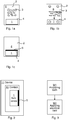
- Figure 1a is a schematic sectional illustration of a substrate 1, e.g. of copper, submerged in a plating bath 6 before an electrical field is applied.
- the graphene flakes 3 are dispersed substantially evenly, preferably forming a stable dispersion. It can be noted that the flakes are not aligned at this stage, but have random orientations.
- a cationic surfactant in combination with the pH set in bath 6 by means of a pH adjusting compound, provides a suitable zeta potential of the graphene-electrolyte interface to prevent the flakes from aggregating while at the same time facilitating electrophoresis when an electrical field is provided in the bath.
- the bath 6 also comprises dissolved silver ions (Ag+) which are prevented from spontaneously depositing on the substrate surface 4 before the electrical field is applied by means of a silver complexing agent.
- a solution of Ag ions without a silver complexing agent could potentially reduce spontaneously to Ag (electroless plating), but this is undesirable since then the graphene flakes will not move together with the Ag ions towards the substrate surface when the electrical field is applied.
- the electrolyte 2 is preferably water-based, since an electroplating process in ethanol is currently not industrially feasible.
- the zeta potential of the graphene-electrolyte interface in the plating bath is adjusted to be positive and within the range of 10 to 40 or 30 mV by means of the cationic surfactant and by setting the pH of the plating bath with the pH adjusting compound. In some embodiments, the zeta potential is adjusted to within the range of 15-25 mV, preferably 18-22 mV or 19-21 mV, such as to 20 mV.
- the pH adjusting compound is or comprises potassium hydroxide (KOH) and/or sodium hydroxide (NaOH).
- KOH potassium hydroxide
- NaOH sodium hydroxide
- KOH may be preferred, but it should be noted that any suitable pH adjusting compound may be used.
- the cationic surfactant is or comprises cetyltrimethylammonium bromide (CTAB), dodecyltrimethylammonium bromide (DTAB), tetrabutylammonium bromide (TBAB), octyltrimetylammonium bromide (OTAB) and/or polyethyleneimine (PEI).
- CTAB cetyltrimethylammonium bromide
- DTAB dodecyltrimethylammonium bromide
- TBAB tetrabutylammonium bromide
- OTAB octyltrimetylammonium bromide
- PEI polyethyleneimine
- CTAB may be preferred, but it should be noted that any suitable cationic surfactant may be used.
- the pH of the plating bath 6 may be set to within the range of 10-13, preferably 11-12, by means of the pH adjusting compound in order to obtain the desired zeta potential.
- the pH of the plating bath 6 may be set to within the range of 6-9, preferably 7-8, by means of the pH adjusting compound in order to obtain the desired zeta potential.
- the cationic surfactant may be present in the plating bath 6 in a concentration within the range of 0.5-2 mmol/L, e.g. within the range of 0.8-1.5 mmol/L or 0.8-1.2 mmol/L, such as 0.9-1.1 mmol/L, in order to obtain the desired zeta potential.
- the silver salt is or comprises silver nitrate (AgNO 3 ) and/or silver oxide (Ag 2 O).
- AgNO 3 may be preferred in some embodiments, but any suitable water-soluble silver salt may be used.
- the silver salt is present in the plating bath 6 in a concentration within the range of 0.1-0.5 mol/L, e.g. within the range of 0.2-0.4 mol/L, such as 0.3 mol/L, which are suitable concentrations for achieving the electroplating and obtaining the coat 5.
- the silver complexing agent is or comprises 5,5-dimethylhydantion, thiosulfate, ammonia, and/or thiourea.
- 5,5-dimethylhydantion may be preferred, but any suitable silver complexing agent may be used.
- the silver complexing agent is present in the plating bath 6 in a concentration within the range of 0.5-2 mol/L, e.g. within the range of 1-1.5 mol/L or 1.1-1.3 mol/L, such as 1.2 mol/L, which may be suitable concentrations for stabilizing the Ag ions in the bath before the electrical field is applied.
- the silver-graphene composite 5 has a graphene content within the range of 0.05-1% by weight of the composite, e.g. within the range of 0.2-0.5% or 0.2-0.4% by weight of the composite. These are regarded as suitable graphene concentrations for providing the improved tribological and wear properties while still not substantially altering the electrical properties compared with a pure silver coating.
- the coating 5 has a thickness within the range of 1-20 ⁇ m, e.g. within the range of 5-15 ⁇ m, such as 10 ⁇ m. These thicknesses may generally be suitable for a sliding contact, considering the number of sliding repetitions during a lifetime of a contact weighed against the material and production cost of the coating.
- the graphene flakes (3) have an average longest axis within the range of from 100 nm to 50 ⁇ m, e.g. within the range of 300 nm to 20 or 10 ⁇ m, preferably within the range of 500 nm to 1 ⁇ m.
- the graphene flakes 3 have up to 150 graphene layers, e.g. up to 100 layers or up to 50 layers, preferably at most 10 layers such as 1-5 layers.
- graphene nanoplatelets of 11-150 graphene sheets may be used.
- the flakes are preferably thin enough to not substantially alter the electrical properties of the coating compared to pure silver coatings, but preferably contains at least two graphene sheets (i.e. monolayers) which can slide relative to each other with low friction.
- Figure 1b is a schematic sectional illustration of the substrate 1 submerged in the plating bath 6 while an electrical field is applied, whereby graphene flakes 3 are aligned and travelling towards the substrate surface 4.
- a negative potential is applied to the surface 4 of the substrate 1 , as illustrated by the "-" signs in the figure.
- the flakes 3 aligns such that the planes of the respective flakes are substantially parallel with the plane of the surface 4, and the flakes move by electrophoresis towards the surface 4 with a speed which corresponds with the speed with which the Ag ions are transformed to silver on the surface by electroplating, thus co-depositing the graphene with the silver to form the composite coating 5 with graphene flakes dispersed throughout the thickness of the coating.
- Figure 1c is a schematic sectional illustration of the substrate 3 submerged in the plating bath after the electrical field has been applied, whereby the silver-graphene composite coating 5 has been formed on the substrate surface 4.
- FIG. 2 is a schematic block diagram of an electrical power device 11 comprising a sliding electrical contact 10 in which the substrate 1 with the composite coating 5 is comprised.
- the contact 10 may be any type of sliding contact used in electrical applications and which is desired to be operated grease-free, e.g. in circuit breakers or any other switch for LV, MV or HV applications, typically in applications where silver plated sliding contacts are already used.
- the device 11 may similarly be any device in such applications, e.g. LV breakers and disconnectors, various plug-in sockets, rack-mounted cabinets, MV breaking switches and disconnectors (e.g.
- the device may be an OLTC, since grease may not be used when the OLTC operates in an oil-filled environment.
- the electrical contact 10 is herein described as a sliding contact, which is often preferred, e.g. for an interrupter, but also other types of electrical contacts may benefit from comprising the composite coating 5.
- the electrical contact 10 may be a knife contact (also called a knife switch), e.g. an earthing knife contact, for instance comprised in a DCB.
- the contact 10 may be a sliding contact.
- FIG. 3 is a schematic flow chart of an embodiment of the method of the present invention.
- the plating bath 6 is prepared M1.
- the plating bath comprises a dissolved water soluble silver salt, dispersed graphene flakes 3, and an aqueous electrolyte 2.
- the electrolyte 2 comprises a silver complexing agent, a cationic surfactant, and a pH adjusting compound.
- the zeta potential of the graphene-electrolyte interface in the plating bath is adjusted to be positive and within the range of 10-30 mV by means of the cationic surfactant and the pH adjusting compound.
- a negative electric potential is applied M2 on a surface 4 of the substrate such that electrophoresis of the graphene flakes occurs and said flakes are co-deposited with the silver during electroplating thereof to form a silver-graphene composite coating 5 on the substrate surface.
- the negative electric potential may be applied by applying an electric field across the plating bath 6 such that the substrate surface 4 obtains a negative potential.
- the electric field may be obtained e.g. by applying a constant Direct Current (DC) or a constant DC potential or by using a periodic or pulsed source.
- DC Direct Current
- This coating in the thickness range of 1-20 ⁇ m, has self-lubricating properties with a friction coefficient values of 0.2 or less vs. a dry Ag surface.
- the nanoplatelets of G induce hardening of the Ag which substantially increases wear resistance.
- the graphene dispersion and alignment are accomplished via an electroplating route, in which an electrolyte of the plating bath, preferably aqueous, is designed in such a way that:
- Such a plating bath is the following: Component Range AgNO3 (soluble Ag salt) 0,3 mol/l (ca. 50 g/l) 5,5-Dimethylhydantion (Ag complexing agent) 1,2 mol/l (ca. 155 g/l) Graphene 0,1 g/l CTAB (cationic surfactant to create positive zeta potential of the graphene-surfactant complex) 1 mmol/l (ca. 0,35 g/l) KOH (pH adjust to 11-12 to set zeta potential to values around 20 mV) ca. 1 mmol/l (ca. 0,05 g/l)
Landscapes
- Chemical & Material Sciences (AREA)
- Engineering & Computer Science (AREA)
- Chemical Kinetics & Catalysis (AREA)
- Electrochemistry (AREA)
- Materials Engineering (AREA)
- Metallurgy (AREA)
- Organic Chemistry (AREA)
- Electroplating And Plating Baths Therefor (AREA)
- Electroplating Methods And Accessories (AREA)
Priority Applications (4)
| Application Number | Priority Date | Filing Date | Title |
|---|---|---|---|
| EP18199860.0A EP3636804A1 (de) | 2018-10-11 | 2018-10-11 | Silber-graphen-verbundbeschichtung für gleitkontakt und galvanisches verfahren dafür |
| CN201980066653.0A CN112805412B (zh) | 2018-10-11 | 2019-10-09 | 用于滑动接触器的银-石墨烯复合材料涂层及其电镀方法 |
| US17/281,388 US11542616B2 (en) | 2018-10-11 | 2019-10-09 | Silver-graphene composite coating for sliding contact and electroplating method thereof |
| PCT/EP2019/077292 WO2020074552A1 (en) | 2018-10-11 | 2019-10-09 | Silver-graphene composite coating for sliding contact and electroplating method thereof |
Applications Claiming Priority (1)
| Application Number | Priority Date | Filing Date | Title |
|---|---|---|---|
| EP18199860.0A EP3636804A1 (de) | 2018-10-11 | 2018-10-11 | Silber-graphen-verbundbeschichtung für gleitkontakt und galvanisches verfahren dafür |
Publications (1)
| Publication Number | Publication Date |
|---|---|
| EP3636804A1 true EP3636804A1 (de) | 2020-04-15 |
Family
ID=63833910
Family Applications (1)
| Application Number | Title | Priority Date | Filing Date |
|---|---|---|---|
| EP18199860.0A Pending EP3636804A1 (de) | 2018-10-11 | 2018-10-11 | Silber-graphen-verbundbeschichtung für gleitkontakt und galvanisches verfahren dafür |
Country Status (4)
| Country | Link |
|---|---|
| US (1) | US11542616B2 (de) |
| EP (1) | EP3636804A1 (de) |
| CN (1) | CN112805412B (de) |
| WO (1) | WO2020074552A1 (de) |
Cited By (1)
| Publication number | Priority date | Publication date | Assignee | Title |
|---|---|---|---|---|
| CN114477152A (zh) * | 2021-12-30 | 2022-05-13 | 杭州电子科技大学 | 一种银纳米颗粒/多层石墨烯复合材料及制备方法 |
Families Citing this family (6)
| Publication number | Priority date | Publication date | Assignee | Title |
|---|---|---|---|---|
| JP7723954B2 (ja) * | 2021-04-30 | 2025-08-15 | 国立大学法人 名古屋工業大学 | Ag-グラフェン複合めっき膜金属製部品とその製造方法 |
| EP4089697B1 (de) * | 2021-05-10 | 2024-03-06 | ABB Schweiz AG | Metallgraphen-beschichteter elektrischer kontakt |
| CN114130188B (zh) * | 2021-10-26 | 2024-01-16 | 甘肃旭康材料科技有限公司 | 空气净化复合材料的制备方法及空气净化复合材料 |
| CN117292873B (zh) * | 2022-06-16 | 2024-08-06 | 温州泰钰新材料科技有限公司 | 电接触导体 |
| CN118086991B (zh) * | 2022-11-18 | 2025-10-03 | 温州泰钰新材料科技有限公司 | 复合镀液、复合镀层的制备方法及电接触材料 |
| CN119877048A (zh) * | 2023-10-23 | 2025-04-25 | 浙江正泰电器股份有限公司 | 电镀添加剂溶液及制备方法、硬银石墨烯电镀混合液 |
Citations (6)
| Publication number | Priority date | Publication date | Assignee | Title |
|---|---|---|---|---|
| US6565983B1 (en) | 1998-11-30 | 2003-05-20 | Abb Ab | Electrical contact element and use of the contact element |
| EP1939331A1 (de) * | 2005-09-29 | 2008-07-02 | Dowa Mining Co., Ltd. | Verfahren zur herstellung eines verbundplattierten materials |
| US20140374267A1 (en) * | 2013-06-20 | 2014-12-25 | Baker Hughes Incorporated | Method to produce metal matrix nanocomposite |
| CN105821465A (zh) * | 2016-05-09 | 2016-08-03 | 南昌航空大学 | 一种无氰体系银和石墨烯复合镀层的制备方法 |
| CN107217292A (zh) * | 2017-06-23 | 2017-09-29 | 广东电网有限责任公司电力科学研究院 | 复合银镀溶液及其制备方法、电沉积工艺和应用 |
| CN107345307A (zh) * | 2017-06-23 | 2017-11-14 | 广东电网有限责任公司电力科学研究院 | 复合银镀溶液及其制备方法和电沉积工艺 |
Family Cites Families (18)
| Publication number | Priority date | Publication date | Assignee | Title |
|---|---|---|---|---|
| DE2543082C3 (de) | 1975-09-26 | 1979-06-28 | Siemens Ag, 1000 Berlin Und 8000 Muenchen | Cyanidischer Silberelektrolyt und Verfahren zur galvanischen Abscheidung von Silber-Graphit-Dispersionsüberzügen und seine Anwendung |
| CN1006240B (zh) | 1986-05-12 | 1989-12-27 | 中国人民解放军第六九○三工厂 | 氰化镀银溶液无氰转化方法 |
| DE10346206A1 (de) | 2003-10-06 | 2005-04-28 | Bosch Gmbh Robert | Kontaktoberflächen für elektrische Kontakte |
| JP4806808B2 (ja) | 2005-07-05 | 2011-11-02 | Dowaメタルテック株式会社 | 複合めっき材およびその製造方法 |
| JP5554718B2 (ja) | 2007-12-11 | 2014-07-23 | エンソン インコーポレイテッド | ナノ粒子を含む金属系複合コーティングの電解デポジット |
| CN102061504A (zh) * | 2009-11-13 | 2011-05-18 | 中国科学院兰州化学物理研究所 | 一种含有石墨烯复合薄膜材料的合成方法 |
| JP6076138B2 (ja) * | 2012-03-02 | 2017-02-08 | ローム アンド ハース エレクトロニック マテリアルズ エルエルシーRohm and Haas Electronic Materials LLC | カーボンブラックと金属との複合体 |
| DE102012109404A1 (de) * | 2012-10-02 | 2014-04-03 | Byk-Chemie Gmbh | Graphen-haltige Suspension, Verfahren zu deren Herstellung, Graphenplättchen und Verwendung |
| CN104342726A (zh) | 2013-07-23 | 2015-02-11 | 深圳中宇昭日科技有限公司 | 一种无氰镀银方法 |
| CN103469261B (zh) | 2013-09-16 | 2016-02-03 | 杭州和韵科技有限公司 | 一种无氰镀银溶液添加剂 |
| CN103590089B (zh) * | 2013-11-20 | 2016-06-01 | 上海应用技术学院 | 一种石墨烯/银复合材料的制备方法 |
| CN103882499B (zh) | 2014-03-19 | 2016-06-15 | 北京工业大学 | 作为催化剂载体用的碳纳米管膜电极CNT-Ti电极制备及其应用 |
| CN104472542A (zh) * | 2014-12-18 | 2015-04-01 | 中山大学 | 一种石墨烯/银/二氧化钛复合材料的制备方法 |
| CN105040047B (zh) | 2015-07-21 | 2018-05-15 | 江苏澳光电子有限公司 | 镀银电镀液及其制备方法 |
| CN106367785A (zh) * | 2016-09-21 | 2017-02-01 | 南昌航空大学 | 一种无氰银石墨烯复合镀层及制备方法 |
| CN106591898A (zh) | 2016-12-21 | 2017-04-26 | 贵州振华群英电器有限公司(国营第八九厂) | 一种接触器塑压件镀银工艺 |
| EP3388168B1 (de) | 2017-04-12 | 2022-02-16 | Hitachi Energy Switzerland AG | Graphenverbundstoff für gleitkontakt |
| CN107574470A (zh) | 2017-08-24 | 2018-01-12 | 南京理工大学 | 一种含镍过渡层的银‑石墨烯复合镀层的制备方法 |
-
2018
- 2018-10-11 EP EP18199860.0A patent/EP3636804A1/de active Pending
-
2019
- 2019-10-09 WO PCT/EP2019/077292 patent/WO2020074552A1/en not_active Ceased
- 2019-10-09 CN CN201980066653.0A patent/CN112805412B/zh active Active
- 2019-10-09 US US17/281,388 patent/US11542616B2/en active Active
Patent Citations (6)
| Publication number | Priority date | Publication date | Assignee | Title |
|---|---|---|---|---|
| US6565983B1 (en) | 1998-11-30 | 2003-05-20 | Abb Ab | Electrical contact element and use of the contact element |
| EP1939331A1 (de) * | 2005-09-29 | 2008-07-02 | Dowa Mining Co., Ltd. | Verfahren zur herstellung eines verbundplattierten materials |
| US20140374267A1 (en) * | 2013-06-20 | 2014-12-25 | Baker Hughes Incorporated | Method to produce metal matrix nanocomposite |
| CN105821465A (zh) * | 2016-05-09 | 2016-08-03 | 南昌航空大学 | 一种无氰体系银和石墨烯复合镀层的制备方法 |
| CN107217292A (zh) * | 2017-06-23 | 2017-09-29 | 广东电网有限责任公司电力科学研究院 | 复合银镀溶液及其制备方法、电沉积工艺和应用 |
| CN107345307A (zh) * | 2017-06-23 | 2017-11-14 | 广东电网有限责任公司电力科学研究院 | 复合银镀溶液及其制备方法和电沉积工艺 |
Non-Patent Citations (6)
| Title |
|---|
| D. BERMAN ET AL., MATERIALS TODAY, vol. 17, no. 1, 2014, pages 31 |
| F. MAO ET AL., J. MATER. SCI., vol. 50, 2015, pages 6518 |
| M. TABANDEH-KHORSHID ET AL., J. ENGINEERING SCI. AND TECHN., vol. 19, 2016, pages 463 |
| MAO FANG ET AL: "Graphene as a lubricant on Ag for electrical contact applications", JOURNAL OF MATERIALS SCIENCE, KLUWER ACADEMIC PUBLISHERS, DORDRECHT, vol. 50, no. 19, 3 July 2015 (2015-07-03), pages 6518 - 6525, XP035511489, ISSN: 0022-2461, [retrieved on 20150703], DOI: 10.1007/S10853-015-9212-9 * |
| MEHMET UYSAL ET AL: "Structural and sliding wear properties of Ag/Graphene/WC hybrid nanocomposites produced by electroless co-deposition", JOURNAL OF ALLOYS AND COMPOUNDS., vol. 654, 1 January 2016 (2016-01-01), CH, pages 185 - 195, XP055573923, ISSN: 0925-8388, DOI: 10.1016/j.jallcom.2015.08.264 * |
| UYSAL ET AL.: "Structural and sliding wear properties of Ag/Graphene/WC hybrid nanocomposites produced by electroless co-deposition", JOURNAL OF ALLOYS AND COMPOUNDS, vol. 654, 2016, pages 185 - 195 |
Cited By (2)
| Publication number | Priority date | Publication date | Assignee | Title |
|---|---|---|---|---|
| CN114477152A (zh) * | 2021-12-30 | 2022-05-13 | 杭州电子科技大学 | 一种银纳米颗粒/多层石墨烯复合材料及制备方法 |
| CN114477152B (zh) * | 2021-12-30 | 2023-08-15 | 杭州电子科技大学 | 一种银纳米颗粒/多层石墨烯复合材料及制备方法 |
Also Published As
| Publication number | Publication date |
|---|---|
| CN112805412A (zh) | 2021-05-14 |
| CN112805412B (zh) | 2022-02-11 |
| WO2020074552A1 (en) | 2020-04-16 |
| US11542616B2 (en) | 2023-01-03 |
| US20210310142A1 (en) | 2021-10-07 |
Similar Documents
| Publication | Publication Date | Title |
|---|---|---|
| US11542616B2 (en) | Silver-graphene composite coating for sliding contact and electroplating method thereof | |
| US12480220B2 (en) | Silver electrolyte for depositing dispersion silver layers and contact surfaces with dispersion silver layers | |
| EP3388168A1 (de) | Graphenverbundstoff für gleitkontakt | |
| US20210254230A1 (en) | Silver electrolyte for depositing dispersion silver layers and contact surfaces with dispersion silver layers | |
| US20120012558A1 (en) | Gas insulated breaking device | |
| JP4348288B2 (ja) | コネクタ接点材料 | |
| CN117337475A (zh) | 石墨烯-铜涂覆的电触头 | |
| JP2012057212A (ja) | 複合めっき材料、及びそのめっき材料を用いた電気・電子部品 | |
| CA2171585A1 (en) | Part having an electrodeposited coating and process for producing electrodeposited layers | |
| WO2022063757A1 (en) | Electric contact comprising a metal-graphene composite layer | |
| JP3054628B2 (ja) | 電気機器の摺動接触子 | |
| JPH044297A (ja) | 電気摺動接触器用潤滑剤 | |
| EP1234315B1 (de) | Kontaktelement und kontaktsystem | |
| KR101214421B1 (ko) | 리플로우 Sn 도금 부재 | |
| KR20210001358U (ko) | 층상 구조 서포트 | |
| JP7723954B2 (ja) | Ag-グラフェン複合めっき膜金属製部品とその製造方法 | |
| CN105648261B (zh) | 用于高压大电流的银基换向器材料及制备方法和用途 | |
| KR950013422B1 (ko) | 전기기기의 미끄럼접촉자 | |
| EP4089697B1 (de) | Metallgraphen-beschichteter elektrischer kontakt | |
| JP4083084B2 (ja) | コネクタ接点材料および多極端子 | |
| JPS5941429A (ja) | 電気接点材料 | |
| WO2018168129A1 (ja) | めっきの形成方法 | |
| EP4060093A1 (de) | Tribologisch verbesserte oberflächen für elektrische kontakte | |
| CN103757461B (zh) | 含有固态可分解化合物的银基滑动式电接触材料及应用 | |
| CN120584392A (zh) | 具有多层涂层的干式机构 |
Legal Events
| Date | Code | Title | Description |
|---|---|---|---|
| PUAI | Public reference made under article 153(3) epc to a published international application that has entered the european phase |
Free format text: ORIGINAL CODE: 0009012 |
|
| STAA | Information on the status of an ep patent application or granted ep patent |
Free format text: STATUS: THE APPLICATION HAS BEEN PUBLISHED |
|
| AK | Designated contracting states |
Kind code of ref document: A1 Designated state(s): AL AT BE BG CH CY CZ DE DK EE ES FI FR GB GR HR HU IE IS IT LI LT LU LV MC MK MT NL NO PL PT RO RS SE SI SK SM TR |
|
| AX | Request for extension of the european patent |
Extension state: BA ME |
|
| STAA | Information on the status of an ep patent application or granted ep patent |
Free format text: STATUS: REQUEST FOR EXAMINATION WAS MADE |
|
| 17P | Request for examination filed |
Effective date: 20200826 |
|
| RBV | Designated contracting states (corrected) |
Designated state(s): AL AT BE BG CH CY CZ DE DK EE ES FI FR GB GR HR HU IE IS IT LI LT LU LV MC MK MT NL NO PL PT RO RS SE SI SK SM TR |
|
| RAP1 | Party data changed (applicant data changed or rights of an application transferred) |
Owner name: ABB POWER GRIDS SWITZERLAND AG |
|
| STAA | Information on the status of an ep patent application or granted ep patent |
Free format text: STATUS: EXAMINATION IS IN PROGRESS |
|
| 17Q | First examination report despatched |
Effective date: 20210909 |
|
| RAP3 | Party data changed (applicant data changed or rights of an application transferred) |
Owner name: HITACHI ENERGY SWITZERLAND AG |
|
| P01 | Opt-out of the competence of the unified patent court (upc) registered |
Effective date: 20230527 |
|
| RAP1 | Party data changed (applicant data changed or rights of an application transferred) |
Owner name: HITACHI ENERGY LTD |
|
| GRAP | Despatch of communication of intention to grant a patent |
Free format text: ORIGINAL CODE: EPIDOSNIGR1 |
|
| STAA | Information on the status of an ep patent application or granted ep patent |
Free format text: STATUS: GRANT OF PATENT IS INTENDED |
|
| INTG | Intention to grant announced |
Effective date: 20251021 |
|
| GRAJ | Information related to disapproval of communication of intention to grant by the applicant or resumption of examination proceedings by the epo deleted |
Free format text: ORIGINAL CODE: EPIDOSDIGR1 |
|
| STAA | Information on the status of an ep patent application or granted ep patent |
Free format text: STATUS: EXAMINATION IS IN PROGRESS |
|
| GRAP | Despatch of communication of intention to grant a patent |
Free format text: ORIGINAL CODE: EPIDOSNIGR1 |
|
| STAA | Information on the status of an ep patent application or granted ep patent |
Free format text: STATUS: GRANT OF PATENT IS INTENDED |
|
| INTC | Intention to grant announced (deleted) | ||
| INTG | Intention to grant announced |
Effective date: 20260226 |