EP3637703A1 - Nachrichtenübertragungsverfahren, proxy-server und computerlesbares speichermedium - Google Patents
Nachrichtenübertragungsverfahren, proxy-server und computerlesbares speichermedium Download PDFInfo
- Publication number
- EP3637703A1 EP3637703A1 EP18820573.6A EP18820573A EP3637703A1 EP 3637703 A1 EP3637703 A1 EP 3637703A1 EP 18820573 A EP18820573 A EP 18820573A EP 3637703 A1 EP3637703 A1 EP 3637703A1
- Authority
- EP
- European Patent Office
- Prior art keywords
- packet
- proxy server
- mptcp
- encapsulated
- tcp
- Prior art date
- Legal status (The legal status is an assumption and is not a legal conclusion. Google has not performed a legal analysis and makes no representation as to the accuracy of the status listed.)
- Granted
Links
Images



Classifications
-
- H—ELECTRICITY
- H04—ELECTRIC COMMUNICATION TECHNIQUE
- H04L—TRANSMISSION OF DIGITAL INFORMATION, e.g. TELEGRAPHIC COMMUNICATION
- H04L67/00—Network arrangements or protocols for supporting network services or applications
- H04L67/50—Network services
- H04L67/56—Provisioning of proxy services
-
- H—ELECTRICITY
- H04—ELECTRIC COMMUNICATION TECHNIQUE
- H04L—TRANSMISSION OF DIGITAL INFORMATION, e.g. TELEGRAPHIC COMMUNICATION
- H04L47/00—Traffic control in data switching networks
- H04L47/10—Flow control; Congestion control
- H04L47/11—Identifying congestion
-
- H—ELECTRICITY
- H04—ELECTRIC COMMUNICATION TECHNIQUE
- H04L—TRANSMISSION OF DIGITAL INFORMATION, e.g. TELEGRAPHIC COMMUNICATION
- H04L47/00—Traffic control in data switching networks
- H04L47/10—Flow control; Congestion control
- H04L47/19—Flow control; Congestion control at layers above the network layer
- H04L47/196—Integration of transport layer protocols, e.g. TCP and UDP
-
- H—ELECTRICITY
- H04—ELECTRIC COMMUNICATION TECHNIQUE
- H04L—TRANSMISSION OF DIGITAL INFORMATION, e.g. TELEGRAPHIC COMMUNICATION
- H04L47/00—Traffic control in data switching networks
- H04L47/10—Flow control; Congestion control
- H04L47/27—Evaluation or update of window size, e.g. using information derived from acknowledged [ACK] packets
-
- H—ELECTRICITY
- H04—ELECTRIC COMMUNICATION TECHNIQUE
- H04L—TRANSMISSION OF DIGITAL INFORMATION, e.g. TELEGRAPHIC COMMUNICATION
- H04L47/00—Traffic control in data switching networks
- H04L47/10—Flow control; Congestion control
- H04L47/43—Assembling or disassembling of packets, e.g. segmentation and reassembly [SAR]
-
- H—ELECTRICITY
- H04—ELECTRIC COMMUNICATION TECHNIQUE
- H04L—TRANSMISSION OF DIGITAL INFORMATION, e.g. TELEGRAPHIC COMMUNICATION
- H04L47/00—Traffic control in data switching networks
- H04L47/70—Admission control; Resource allocation
- H04L47/82—Miscellaneous aspects
- H04L47/825—Involving tunnels, e.g. MPLS
-
- H—ELECTRICITY
- H04—ELECTRIC COMMUNICATION TECHNIQUE
- H04L—TRANSMISSION OF DIGITAL INFORMATION, e.g. TELEGRAPHIC COMMUNICATION
- H04L69/00—Network arrangements, protocols or services independent of the application payload and not provided for in the other groups of this subclass
- H04L69/14—Multichannel or multilink protocols
-
- H—ELECTRICITY
- H04—ELECTRIC COMMUNICATION TECHNIQUE
- H04L—TRANSMISSION OF DIGITAL INFORMATION, e.g. TELEGRAPHIC COMMUNICATION
- H04L69/00—Network arrangements, protocols or services independent of the application payload and not provided for in the other groups of this subclass
- H04L69/16—Implementation or adaptation of Internet protocol [IP], of transmission control protocol [TCP] or of user datagram protocol [UDP]
-
- H—ELECTRICITY
- H04—ELECTRIC COMMUNICATION TECHNIQUE
- H04L—TRANSMISSION OF DIGITAL INFORMATION, e.g. TELEGRAPHIC COMMUNICATION
- H04L69/00—Network arrangements, protocols or services independent of the application payload and not provided for in the other groups of this subclass
- H04L69/16—Implementation or adaptation of Internet protocol [IP], of transmission control protocol [TCP] or of user datagram protocol [UDP]
- H04L69/163—In-band adaptation of TCP data exchange; In-band control procedures
-
- H—ELECTRICITY
- H04—ELECTRIC COMMUNICATION TECHNIQUE
- H04L—TRANSMISSION OF DIGITAL INFORMATION, e.g. TELEGRAPHIC COMMUNICATION
- H04L69/00—Network arrangements, protocols or services independent of the application payload and not provided for in the other groups of this subclass
- H04L69/16—Implementation or adaptation of Internet protocol [IP], of transmission control protocol [TCP] or of user datagram protocol [UDP]
- H04L69/164—Adaptation or special uses of UDP protocol
-
- H—ELECTRICITY
- H04—ELECTRIC COMMUNICATION TECHNIQUE
- H04L—TRANSMISSION OF DIGITAL INFORMATION, e.g. TELEGRAPHIC COMMUNICATION
- H04L69/00—Network arrangements, protocols or services independent of the application payload and not provided for in the other groups of this subclass
- H04L69/16—Implementation or adaptation of Internet protocol [IP], of transmission control protocol [TCP] or of user datagram protocol [UDP]
- H04L69/165—Combined use of TCP and UDP protocols; selection criteria therefor
-
- H—ELECTRICITY
- H04—ELECTRIC COMMUNICATION TECHNIQUE
- H04L—TRANSMISSION OF DIGITAL INFORMATION, e.g. TELEGRAPHIC COMMUNICATION
- H04L69/00—Network arrangements, protocols or services independent of the application payload and not provided for in the other groups of this subclass
- H04L69/16—Implementation or adaptation of Internet protocol [IP], of transmission control protocol [TCP] or of user datagram protocol [UDP]
- H04L69/166—IP fragmentation; TCP segmentation
-
- H—ELECTRICITY
- H04—ELECTRIC COMMUNICATION TECHNIQUE
- H04L—TRANSMISSION OF DIGITAL INFORMATION, e.g. TELEGRAPHIC COMMUNICATION
- H04L69/00—Network arrangements, protocols or services independent of the application payload and not provided for in the other groups of this subclass
- H04L69/22—Parsing or analysis of headers
-
- H—ELECTRICITY
- H04—ELECTRIC COMMUNICATION TECHNIQUE
- H04L—TRANSMISSION OF DIGITAL INFORMATION, e.g. TELEGRAPHIC COMMUNICATION
- H04L2212/00—Encapsulation of packets
Definitions
- the present invention relates to the communications field, and in particular, to a packet transmission method, a proxy server, and a computer-readable storage medium.
- a multipath transmission control protocol (Multipath Transport Control Protocol, MPTCP) is a transport layer protocol in which a plurality of paths are used for concurrent transmission, and can improve an end-to-end throughput rate and increase network utilization and redundancy.
- MPTCP protocol refer to RFC6824.
- the MPTCP is fully compatible with a transmission control protocol (Transport Control Protocol, TCP), and a TCP options header is added based on the TCP, to implement functions such as MPTCP link establishment, link removal, and data transmission.
- TCP Transmission Control Protocol
- a typical application scenario of the MPTCP may be in an access network, or may be in an enterprise network.
- FIG 1 is a schematic diagram of a service scenario of hybrid access in the prior art.
- a computer is connected to a home gateway (Home Gateway, HG) by using wireless fidelity (Wireless Fidelity, WiFi) or a wired network, and a mobile terminal is connected to a hybrid access aggregation point (Hybrid Access Aggregation Point, HAAP) by using a long term evolution (Long Term Evolution, LTE) network or WiFi.
- Home Gateway Home Gateway
- WiFi Wireless Fidelity
- HAAP Hybrid Access Aggregation Point
- a hybrid access (Bonding Access, BA) scenario there are a plurality of link connections such as a digital subscriber line (Digital Subscriber Line, DSL), a mobile communications network (for example, LTE), and WiFi.
- DSL Digital Subscriber Line
- LTE mobile communications network
- WiFi Wireless Fidelity
- the HG and the HAAP may be connected by using the following manners: WiFi, a DSL, or LTE.
- the mobile terminal and the HAAP may be connected by using WiFi/LTE.
- FIG 2 is a schematic diagram of a signaling procedure of an MPTCP in a hybrid access scenario in the prior art.
- a mobile terminal is connected to a HAAP and a server by using an HG, and connection networks between the HG and the HAAP include LTE and a DSL.
- the mobile terminal sends three TCP packets to the server: a TCP 1, a TCP 2, and a TCP 3.
- a TCP is used between the server and the HAAP; an MPTCP is used between the HAAP and the HG; and the TCP is used between the HG and the mobile terminal.
- multi-link bonding improves a throughput rate, and further, traffic is dynamically adjusted as a link status changes.
- an IP packet into which a UDP packet is encapsulated needs to be transmitted.
- a UDP header needs to be replaced with an MPTCP header, and an MPTCP encapsulation structure (in other words, a structure of the MPTCO header) needs to be extended to add information used for routing in an IP packet to an MPTCP header with an extended structure.
- the UDP packet can pass through the MPTCP network by modifying a standard MPTCP encapsulation structure. Modifying the standard MPTCP encapsulation structure may cause a compatibility problem. For example, a receive end cannot recognize a modified MPTCP header, and consequently the UDP packet cannot be restored.
- Embodiments of the present invention provide a packet transmission method, to resolve a technical problem of poor compatibility in the prior art, so that a complete UDP packet can be restored.
- the embodiments of the present invention further provide a packet transmission method, to resolve the technical problem of poor compatibility in the prior art, so that a complete UDP packet can be restored.
- the embodiments of the present invention further provide a proxy server, to resolve the technical problem of poor compatibility in the prior art, so that a complete UDP packet can be restored.
- the embodiments of the present invention further provide a proxy server, to resolve the technical problem of poor compatibility in the prior art, so that a complete UDP packet can be restored.
- the embodiments of the present invention further provide a computer-readable storage medium, to resolve the technical problem of poor compatibility in the prior art, so that a complete UDP packet can be restored.
- an embodiment of the present invention provides a packet transmission method, where the method includes:
- the sending, by the first proxy server by using the TCP connection in the MPTCP tunnel, the IP packet encapsulated with the MPTCP header includes:
- the sending, by the first proxy server by using a TCP connection with an increased quantity of current congestion windows, the IP packet encapsulated with the MPTCP header includes:
- the plurality of TCP connections have available windows; and the sending, by the first proxy server by using the TCP connection in the MPTCP tunnel, the IP packet encapsulated with the MPTCP header includes:
- the encapsulating, by the first proxy server, the IP packet with an MPTCP header includes:
- the first proxy server is a hybrid access aggregation point HAAP
- the second proxy server is a home gateway.
- the first proxy server and the second proxy server are access routers of different enterprise networks.
- the method further includes: when a packet loss occurs on a TCP connection, decreasing, by the first proxy server, a quantity of current congestion windows of the TCP connection on which the packet loss occurs.
- an embodiment of the present invention provides a packet transmission method, where the method includes:
- the performing parsing based on an IP packet header of the IP packet to obtain a UDP packet includes:
- an embodiment of the present invention provides a proxy server, where the proxy server includes an establishment module, an encapsulation module, and a sending module; where the establishment module is configured to establish a multipath transmission control protocol MPTCP tunnel to a second proxy server, where the MPTCP tunnel includes a plurality of transmission control protocol TCP connections; the encapsulation module is configured to encapsulate, after receiving an internet protocol IP packet into which a user datagram protocol UDP packet is encapsulated, the IP packet with an MPTCP header; and the sending module is configured to send, by using the TCP connection in the MPTCP tunnel, the IP packet encapsulated with the MPTCP header.
- none of the plurality of TCP connections has an available window; and the sending module is specifically configured to: calculate a ratio of current congestion windows of the plurality of TCP connections based on a quantity of current congestion windows of each TCP connection; increase a quantity of the current congestion windows of the plurality of TCP connections based on the ratio of the current congestion windows; and send, by using a TCP connection with an increased quantity of current congestion windows, the IP packet encapsulated with the MPTCP header.
- the sending module is specifically configured to: determine, based on priorities of the plurality of TCP connections, a TCP connection for sending the IP packet; and send, by using the TCP connection for sending the IP packet, the IP packet encapsulated with the MPTCP header.
- the plurality of TCP connections have available windows; and the sending module is specifically configured to: determine, based on priorities of the TCP connections that have the available windows, a TCP connection for transmitting the IP packet; and send, by using the TCP connection for transmitting the IP packet, the IP packet encapsulated with the MPTCP header.
- the encapsulation module is specifically configured to: when a length of the IP packet into which the UDP packet is encapsulated is greater than a maximum segment size MSS of the MPTCP tunnel, fragment, based on the MSS, the IP packet into which the UDP packet is encapsulated, to obtain fragmented IP packets; and encapsulate the fragmented IP packets with MPTCP headers.
- the first proxy server is a hybrid access aggregation point HAAP
- the second proxy server is a home gateway.
- the first proxy server and the second proxy server are access routers of different enterprise networks.
- the proxy server further includes a control module, configured to: when a packet loss occurs on a TCP connection, decrease a quantity of current congestion windows of the TCP connection on which the packet loss occurs.
- a control module configured to: when a packet loss occurs on a TCP connection, decrease a quantity of current congestion windows of the TCP connection on which the packet loss occurs.
- an embodiment of the present invention provides a proxy server, where the proxy server includes an establishment module, a receiving module, and a parsing module; where the establishment module is configured to establish a multipath transmission control protocol MPTCP tunnel to a first proxy server, where the MPTCP tunnel includes a plurality of transmission control protocol TCP connections; the receiving module is configured to receive, by using the TCP connection in the MPTCP tunnel, internet protocol IP packets encapsulated with MPTCP headers; and the parsing module is configured to rank the IP packets based on the MPTCP headers, and perform parsing based on IP packet headers of the IP packets to obtain UDP packets.
- the parsing module is specifically configured to: remove the MPTCP headers of the ranked IP packets to obtain fragmented IP packets; and after reassembling the fragmented IP packets, perform parsing based on an IP packet header of a reassembled IP packet to obtain the UDP packet.
- a fifth aspect of this application provides a computer-readable storage medium, where the computer-readable storage medium stores an instruction, and when the instruction is run on a computer, the computer is enabled to perform the methods in the foregoing aspects.
- a sixth aspect of this application provides a computer program product that includes an instruction, where when the computer program product is run on a computer, the computer is enabled to perform the methods in the foregoing aspects.
- a seventh aspect of this application provides a computer program, where when the computer program is run on a computer, the computer is enabled to perform the methods in the foregoing aspects.
- the first proxy server establishes the MPTCP tunnel to the second proxy server, where the MPTCP tunnel includes the plurality of TCP connections; the first proxy server encapsulates, after receiving the IP packet into which the UDP packet is encapsulated, the IP packet with the MPTCP header; and the first proxy server sends, by using the TCP connection in the MPTCP tunnel, the IP packet encapsulated with the MPTCP header.
- a standard MPTCP encapsulation structure is used during transmission of the IP packet, so that the technical problem of poor compatibility is resolved, and therefore a complete UDP packet can be restored.
- an MPTCP tunnel is first established between a first proxy server and a second proxy server. Then, after receiving an IP packet into which a UDP packet is encapsulated, the first proxy server does not change an MPTCP encapsulation structure, but encapsulates the IP packet with an MPTCP header. Finally, the IP packet encapsulated with the MPTCP header is sent by using a TCP connection in the MPTCP tunnel. Because a receive end can identify a standard MPTCP encapsulation structure, a technical problem of poor compatibility is resolved, and therefore a complete UDP packet can be restored.
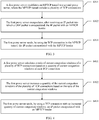
- FIG. 3 is a schematic flowchart of a packet transmission method according to an embodiment of the present invention. Steps in FIG. 3 may be applied to a transmit end, namely, a first proxy server, for sending an IP packet encapsulated with an MPTCP header.
- the method specifically includes the following steps.
- the first proxy server establishes an MPTCP tunnel to a second proxy server, where the MPTCP tunnel includes a plurality of TCP connections.
- An MPTCP may be applied to an access network, and may also be applied to an enterprise network.
- the access network is all devices between a backbone network and a mobile terminal.
- the enterprise network is a network that covers an enterprise scope. Data can be directly transmitted between enterprises by using the enterprise network.
- an MPTCP tunnel may be established between a mobile terminal and a server.
- the MPTCP tunnel is established to transmit an IP packet encapsulated with an MPTCP header.
- a TCP is used between the mobile terminal and a gateway; an MPTCP is used between an HG and a HAAP; and the TCP is used between the HAAP and the server.
- an MPTCP tunnel may be specifically established between the HAPP and the gateway.
- the gateway is an HG
- the MPTCP tunnel is established between the HAPP and the HG
- the first proxy server may be a HAAP
- the second proxy server may be an HG.
- the first proxy server may be a first access router corresponding to one enterprise
- the second proxy server may be a second access router corresponding to another enterprise.
- the first proxy server and the second proxy server are access routers of different enterprise networks.
- an MPTCP tunnel may be established between the network devices, to transmit the IP packet.
- the first proxy server encapsulates, after receiving an IP packet into which a UDP packet is encapsulated, the IP packet with an MPTCP header.
- the first proxy server needs to encapsulate the IP packet with the MPTCP header.
- a receive end may rank the received IP packet based on the MPTCP header, to obtain the UDP packet.
- the first proxy server sends, by using the TCP connection in the MPTCP tunnel, the IP packet encapsulated with the MPTCP header.
- the MPTCP tunnel includes the plurality of TCP connections.
- One or more TCP connections may be selected from the plurality of TCP connections, and the IP packet encapsulated with the MPTCP header is sent by using the selected TCP connection.
- the plurality of TCP connections are two or more TCP connections, including two TCP connections.
- a first server and a second server may transmit data by using the plurality of TCP connections, and the TCP connections may include network links such as a DSL, a mobile communications network, and/or WiFi. Therefore, the MPTCP tunnel is applicable to networks such as the DSL, the mobile communications network, and the WiFi.
- the MPTCP tunnel is first established between the first proxy server and the second proxy server, and the first proxy server encapsulates the IP packet with the MPTCP header. Then, the first proxy server sends, by using the TCP connection in the MPTCP tunnel, the IP packet encapsulated with the MPTCP header. Because the IP packet is encapsulated by using a standard MPTCP structure, a technical problem of poor compatibility is resolved, and therefore a complete UDP packet can be restored.
- the congestion window includes a window in transmission and an available window.
- the window in transmission is a window in which carried data is being transmitted
- the available window is a window in which carried data is not being transmitted currently.
- FIG. 4 is a schematic flowchart of sending an IP packet encapsulated with an MPTCP header according to an embodiment of the present invention. Specifically, the sending an IP packet encapsulated with an MPTCP header includes the following steps.
- a first proxy server calculates a ratio of current congestion windows of a plurality of TCP connections based on a quantity of current congestion windows of each TCP connection.
- the quantity of current congestion windows of each TCP connection is determined. For example, a quantity of current congestion windows of a first TCP connection is 10, and a quantity of current congestion windows of a second TCP connection is 6.
- the ratio of the current congestion windows of the plurality of TCP connections is calculated. For example, neither the first TCP connection nor the second TCP connection has an available window. A ratio of the current congestion windows of the first TCP connection to the current congestion windows of the second TCP connection is 10/6.
- the first proxy server increases a quantity of the current congestion windows of the plurality of TCP connections based on the ratio of the current congestion windows.
- the quantity of the current congestion windows of the TCP connections is increased based on the previously calculated ratio of the current congestion windows. For example, the ratio of the current congestion windows of the first TCP connection to the current congestion windows of the second TCP connection is 10/6. If the quantity of the current congestion windows of the first TCP connection is increased by five windows, the quantity of the current congestion windows of the second TCP connection is increased by three windows.
- a quantity of available windows of the first TCP connection is 5, and a quantity of available windows of the second TCP connection is 3. Consequently, after the quantity of the current congestion windows is increased, the ratio of the current congestion windows remains unchanged.
- the first proxy server sends, by using a TCP connection with an increased quantity of current congestion windows, an IP packet encapsulated with an MPTCP header.
- each TCP connection After the quantity of the current congestion windows is increased, each TCP connection has an available window, so that the IP packet encapsulated with the MPTCP header may be sent in the available window of the TCP connection.
- the quantity of the current congestion windows of the plurality of TCP connections is increased based on the ratio of the current congestion windows. In this way, when the TCP connection has no available window, the quantity of the current congestion windows of the TCP connection may be increased, to send the IP packet encapsulated with the MPTCP header.
- none of the plurality of TCP connections has an available window.
- the first proxy server may determine, based on preset priorities of the TCP connections, a TCP connection for sending the IP packet. Then, the IP packet encapsulated with the MPTCP header is sent by using the TCP connection for sending the IP packet.
- the first proxy server may first determine the first TCP connection as the TCP connection for sending the IP packet, and then send, through an increased current congestion window of the first TCP connection, the IP packet encapsulated with the MPTCP header.
- none of the plurality of TCP connections has an available window.
- the first proxy server may randomly determine a TCP connection as a TCP connection for sending the IP packet. Then, the IP packet encapsulated with the MPTCP header is sent by using the TCP connection for sending the IP packet.
- the first proxy server when a packet loss occurs on a TCP connection for transmitting an IP packet, it indicates that the current TCP connection is unstable, and the first proxy server may decrease a quantity of current congestion windows of the TCP connection on which the packet loss occurs, to reduce a packet loss possibility.
- the plurality of TCP connections included in the MPTCP tunnel have available windows, it indicates that there is a TCP connection that has an available resource.
- the first proxy server may determine, based on preset priorities of the TCP connections and from TCP connections that have available windows, the TCP connection for transmitting the IP packet. Then, the IP packet encapsulated with the MPTCP header is sent by using the TCP connection for transmitting the IP packet.
- FIG. 5 is a schematic diagram of scheduling a resource on a TCP connection to transmit an IP packet according to an embodiment of the present invention.
- TCP connections between a first proxy server and a second proxy server There are two TCP connections between a first proxy server and a second proxy server: a TCP 1 and a TCP 2.
- an IP flow After an MPTCP tunnel is established between the first proxy server and the second proxy server, an IP flow has a corresponding TCP sub-flow on each of the TCP 1 and the TCP 2.
- a priority of the TCP 1 is preset to be higher than a priority of the TCP 2.
- the TCP connections include congestion windows.
- a quantity of available windows in current congestion windows of the TCP 1 and a quantity of available windows in current congestion windows of the TCP 2 each are zero, in other words, neither the TCP 1 nor the TCP 2 has an available resource.
- a ratio, namely 15/10, of the current congestion windows of the TCP 1 to the current congestion windows of the TCP 2 is calculated based on a quantity of current congestion windows of each link.
- the quantity of current congestion windows of the TCP 1 and the quantity of current congestion windows of the TCP 2 are increased based on the ratio of 15/10. For example, the quantity of windows of the TCP 1 is increased by 3, and the quantity of windows of the TCP 2 is increased by 2. A quantity of increased congestion windows of the TCP 1 is equal to 18, and a quantity of increased congestion windows of the TCP 2 is equal to 12.
- Packets 6, 7, and 8 may be scheduled to the TCP 1
- packets 9 and 10 may be scheduled to the TCP 2.
- an IP packet is scheduled to the TCP connections based on priorities of the TCP connections.
- the TCP 1 has an available resource
- the TCP 2 also has an available resource.
- scheduling may be performed based on the priorities of the TCP connections. Because the priority of the TCP 1 is higher than the priority of the TCP 2, the IP packet is first scheduled to the available resource of the TCP 1, and then scheduled to the available resource of the TCP 2. A specific data volume of scheduling the IP packet is determined based on the available windows of the TCP connections.
- the first proxy server may fragment, based on a maximum segment size (Max Segment Size, MSS) of an MPTCP tunnel, the IP packet into which the UDP packet is encapsulated, to obtain fragmented IP packets. Finally, the fragmented IP packets are encapsulated with MPTCP headers.
- MSS Maximum Segment Size
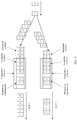
- FIG. 6 is a schematic diagram of fragmenting an IP packet based on an MSS according to an embodiment of the present invention.
- the IP packet into which the UDP packet is encapsulated is fragmented into two packets: 1000 and 520.
- One IP packet is fragmented into two IP packets. Because each IP packet has an IP header, a total length of the two packets expands by 20 bytes.
- the IP packet into which the UDP packet is encapsulated is fragmented into a UDP 1 carried by the IP and a UDP 2 carried by the IP.
- the two fragmented IP packets are scheduled to a TCP, for example, the UDP 1 carried by the IP is scheduled to a TCP 1, and the UDP 2 carried by the IP is scheduled to a TCP 2.
- a complete IP packet is restored from a TCP byte stream based on a length field of an IP header.
- the UDP 1 carried by the IP and the UDP 2 carried by the IP are obtained.
- the UDP 1 carried by the IP and the UDP 2 carried by the IP are reassembled to obtain the UDP packet.
- FIG. 7 is a schematic flowchart of a packet transmission method according to another embodiment of the present invention. Steps in FIG. 7 may be applied to a received end, for example, a second proxy server, for receiving an IP packet encapsulated with an MPTCP header.
- the method specifically includes the following steps.
- the second proxy server establishes an MPTCP tunnel to a first proxy server, where the MPTCP tunnel includes TCP connections.
- An MPTCP may be applied to an access network, and may also be applied to an enterprise network.
- the access network is all devices between a backbone network and a mobile terminal.
- the enterprise network is a network that covers an enterprise scope. Data can be directly transmitted between enterprises by using the enterprise network.
- an MPTCP tunnel may be established between a mobile terminal and a server.
- the MPTCP tunnel is established to transmit a UDP packet.
- the first proxy server may be a first access router corresponding to one enterprise
- the second proxy server may be a second access router corresponding to another enterprise.
- the first proxy server and the second proxy server are access routers of different enterprise networks.
- an MPTCP tunnel may be established between the network devices, to transmit an IP packet.
- the second proxy server receives, by using the TCP connection in the MPTCP tunnel, IP packets encapsulated with MPTCP headers.
- the IP packet that is sent by a transmit end and is encapsulated with the MPTCP header may be received by using the TCP connection in the MPTCP tunnel.
- the second proxy server ranks the IP packets based on the MPTCP headers, and performs parsing based on IP packet headers of the IP packets to obtain UDP packets.
- TCP connections for transmitting IP packets are different, and sequences of receiving the IP packets are different.
- a plurality of IP packets encapsulated with MPTCP headers are received.
- the received IP packets may be ranked based on the MPTCP headers, and then parsing is performed based on IP packet headers of the IP packets to obtain UDP packets.
- the second proxy server establishes the MPTCP tunnel to the first proxy server. After receiving IP packets through the MPTCP tunnel, the second proxy server ranks the IP packets based on MPTCP headers, to finally obtain UDP packets.
- a standard MPTCP encapsulation structure is used during transmission of the IP packet, so that a technical problem of poor compatibility is resolved, and therefore a complete UDP packet can be restored on a receive end.
- the IP packet into which the UDP packet is encapsulated is fragmented at a transmit end based on an MSS of the MPTCP tunnel. In this case, the IP packets received by the receive end needs to be reassembled.
- the second proxy server removes the MPTCP headers of the ranked IP packets to obtain fragmented IP packets.
- the fragmented IP packets are the IP packet before reassembly.
- the fragmented IP packets are reassembled, and then parsing is performed based on an IP packet header of a reassembled IP packet to obtain the UDP packet.
- FIG. 8 is a schematic diagram of transmitting a UDP packet by using an MPTCP tunnel according to an embodiment of the present invention.
- a first proxy server may be a HAAP, and a second proxy server may be an HG First, an MPTCP tunnel is established between the HAAP and the HG
- UDP packets that need to be transmitted by a server end include a UDP 1 and a UDP 2.
- an encapsulated IP packet is scheduled to a TCP connection and passes through the MPTCP tunnel.
- the encapsulated IP packet includes an MPTCP packet header, an IP packet header, and a UDP.
- the HG after the MPTCP header of the IP packet received from the MPTCP tunnel is removed, ranking is performed, and the packet UDP 1 is ranked before the packet UDP 2.
- the packet UDP 1 is parsed first, and then the packet UDP 2 is parsed, to finally obtain the UDP 1 and the UDP 2.
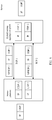
- FIG. 9 is a schematic structural diagram of a proxy server according to an embodiment of the present invention.
- the proxy server in FIG. 9 may be applied to a transmit end for transmitting an IP packet encapsulated with an MPTCP header.
- the proxy server includes an establishment module 901, an encapsulation module 902, and a sending module 903.
- the establishment module 901 is configured to establish an MPTCP tunnel to a second proxy server, and the MPTCP tunnel includes TCP connections.
- An MPTCP may be applied to an access network, and may also be applied to an enterprise network.
- the access network is all devices between a backbone network and a mobile terminal.
- the enterprise network is a network that covers an enterprise scope. Data can be directly transmitted between enterprises by using the enterprise network.
- an MPTCP tunnel may be established between a mobile terminal and a server.
- the MPTCP tunnel is established to transmit an IP packet encapsulated with an MPTCP header.
- a TCP is used between the mobile terminal and a gateway; an MPTCP is used between an HG and a HAAP; and the TCP is used between the HAAP and the server.
- an MPTCP tunnel may be specifically established between the HAPP and the gateway.
- the gateway is an HG
- the MPTCP tunnel is established between the HAPP and the HG
- a first proxy server may be a HAAP
- the second proxy server may be an HG
- the first proxy server may be a first access router corresponding to one enterprise
- the second proxy server may be a second access router corresponding to another enterprise.
- the first proxy server and the second proxy server are access routers of different enterprise networks.
- an MPTCP tunnel may be established between the network devices, to transmit the IP packet.
- the encapsulation module 902 is configured to encapsulate, after receiving an IP packet into which a UDP packet is encapsulated, the IP packet with an MPTCP header.
- the encapsulation module 902 needs to encapsulate the IP packet with the MPTCP header.
- a receive end may rank the received IP packet based on the MPTCP header, to obtain the UDP packet.
- the sending module 903 is configured to send, by using the TCP connection in the MPTCP tunnel, the IP packet encapsulated with the MPTCP header.
- the MPTCP tunnel includes a plurality of TCP connections.
- the sending module 903 may select one or more TCP connections from the plurality of TCP connections, and send, by using the selected TCP connection, the IP packet encapsulated with the MPTCP header.
- the plurality of TCP connections are two or more TCP connections, including two TCP connections.
- a first server and a second server may transmit data by using the plurality of TCP connections, and the TCP connections may include network links such as a DSL, a mobile communications network, and/or WiFi. Therefore, the MPTCP tunnel is applicable to networks such as the DSL, the mobile communications network, and the WiFi.
- the establishment module 901 first establishes the MPTCP tunnel between the first proxy server and the second proxy server, and the encapsulation module 902 encapsulates the IP packet with the MPTCP header. Then, the sending module 903 sends, by using the TCP connection in the MPTCP tunnel, the IP packet encapsulated with the MPTCP header. Because the IP packet is encapsulated by using a standard MPTCP structure, a technical problem of poor compatibility is resolved, and therefore a complete UDP packet can be restored.
- the congestion window includes a window in transmission and an available window.
- the window in transmission is a window in which carried data is being transmitted, and carried data is not being transmitted in the available window.
- the sending module 903 is specifically configured to: calculate a ratio of current congestion windows of the plurality of TCP connections based on a quantity of current congestion windows of each TCP connection; increase a quantity of the current congestion windows of the plurality of TCP connections based on the ratio of the current congestion windows; and send, by using a TCP connection with an increased quantity of current congestion windows, the IP packet encapsulated with the MPTCP header.
- the sending module 903 increases a quantity of the current congestion windows of the plurality of TCP connections based on the ratio of the current congestion windows. In this way, when the TCP connection has no available window, the quantity of current congestion windows of the TCP connection may be increased, to send the IP packet encapsulated with the MPTCP header.
- the sending module 903 is specifically configured to: determine, based on priorities of the plurality of TCP connections, a TCP connection for sending the IP packet, and then send, by using the determined TCP connection for sending the IP packet, the IP packet encapsulated with the MPTCP header.
- none of the plurality of TCP connections has an available window, and a TCP connection may be randomly determined.
- the sending module 903 is specifically configured to: randomly determine, from the plurality TCP connections, a TCP connection for sending the IP packet, and then send, by using the determined TCP connection for sending the IP packet, the IP packet encapsulated with the MPTCP header.
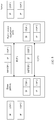
- FIG. 10 is a schematic structural diagram of a proxy server according to another embodiment of the present invention.
- a control module 904 is added based on the proxy server in FIG. 9 .
- the control module 904 is configured to: when a packet loss occurs on a TCP connection for transmitting an IP packet, decrease a quantity of current congestion windows of the TCP connection on which the packet loss occurs.
- the plurality of TCP connections included in the MPTCP tunnel have available windows, it indicates that there is a TCP connection that has an available resource.
- the sending module 903 is specifically configured to: determine, based on priorities of the TCP connections that have the available windows, a TCP connection for transmitting the IP packet, and finally send, by using the TCP connection for transmitting the IP packet, the IP packet encapsulated with the MPTCP header.
- the encapsulation module 902 is specifically configured to: when the length of the IP packet into which the UDP packet is encapsulated is greater than an MSS of the MPTCP tunnel, fragment, based on the MSS, the IP packet into which the UDP packet is encapsulated, to obtain fragmented IP packets; and encapsulate the fragmented IP packets with MPTCP headers.
- FIG. 11 is a schematic structural diagram of a proxy server according to still another embodiment of the present invention.
- the proxy server in FIG. 11 may be applied to a receive end for receiving an IP packet encapsulated with an MPTCP header.
- the proxy server includes an establishment module 1101, a receiving module 1102, and a parsing module 1103.
- the establishment module 1101 is configured to establish an MPTCP tunnel to a first proxy server, and the MPTCP tunnel includes a plurality of TCP connections.
- An MPTCP may be applied to an access network, and may also be applied to an enterprise network. Certainly, in another network, when the MPTCP is used between network devices, an MPTCP tunnel may be established between the network devices, to transmit an IP packet.
- the receiving module 1102 is configured to receive, by using the TCP connection in the MPTCP tunnel, the IP packets encapsulated with the MPTCP headers.
- the IP packet that is sent by a transmit end and is encapsulated with the MPTCP header may be received by using the TCP connection in the MPTCP tunnel.
- the parsing module 1103 is configured to rank the IP packets based on the MPTCP headers, and perform parsing based on IP packet headers of the IP packets to obtain UDP packets.
- TCP connections for transmitting IP packets are different, and sequences of receiving the IP packets are different.
- a plurality of IP packets encapsulated with MPTCP headers are received.
- the received IP packets may be ranked based on the MPTCP headers, and then parsing is performed based on IP packet headers of the IP packets to obtain UDP packets.
- the establishment module 1101 establishes the MPTCP tunnel between the first proxy server and a second proxy server, the receiving module 1102 receives IP packets through the MPTCP tunnel, and the parsing module 1103 ranks the IP packets based on MPTCP headers, to finally obtain UDP packets.
- a standard MPTCP encapsulation structure is used during transmission of the IP packet, so that a technical problem of poor compatibility is resolved, and therefore a complete UDP packet can be restored on a receive end.
- the IP packet into which the UDP packet is encapsulated is fragmented at a transmit end based on an MSS of the MPTCP tunnel. In this case, the IP packets received by the receive end needs to be reassembled.
- the parsing module 1102 is specifically configured to: remove the MPTCP headers of the ranked IP packets to obtain fragmented IP packets; and after reassembling the fragmented IP packets, perform parsing based on an IP packet header of a reassembled IP packet to obtain the UDP packet.
- All or some of the foregoing embodiments may be implemented by using software, hardware, firmware, or any combination thereof.
- software is used to implement the embodiments, all or some of the embodiments may be implemented in a form of a computer program product.
- the computer program product includes one or more computer instructions.
- the computer may be a general-purpose computer, a special-purpose computer, a computer network, or another programmable apparatus.
- the computer instructions may be stored in a computer-readable storage medium or may be transmitted from one computer-readable storage medium to another computer-readable storage medium.
- the computer instructions may be transmitted from a website, computer, server, or data center to another website, computer, server, or data center wiredly (for example, a coaxial cable, an optical fiber, or a digital subscriber line (DSL)) or wirelessly (for example, infrared, radio, or microwave).
- DSL digital subscriber line
- the computer-readable storage medium may be any usable medium accessible by a computer, or a data storage device, such as a server or a data center, integrating one or more usable media.
- the usable medium may be a magnetic medium (for example, a floppy disk, a hard disk, or a magnetic tape), an optical medium (for example, a DVD), a semiconductor medium (for example, a solid-state disk Solid State Disk (SSD)), or the like.
Landscapes
- Engineering & Computer Science (AREA)
- Computer Networks & Wireless Communication (AREA)
- Signal Processing (AREA)
- Computer Security & Cryptography (AREA)
- Data Exchanges In Wide-Area Networks (AREA)
Applications Claiming Priority (2)
| Application Number | Priority Date | Filing Date | Title |
|---|---|---|---|
| CN201710488680.XA CN109120540B (zh) | 2017-06-23 | 2017-06-23 | 传输报文的方法、代理服务器和计算机可读存储介质 |
| PCT/CN2018/084947 WO2018233376A1 (zh) | 2017-06-23 | 2018-04-27 | 传输报文的方法、代理服务器和计算机可读存储介质 |
Publications (3)
| Publication Number | Publication Date |
|---|---|
| EP3637703A1 true EP3637703A1 (de) | 2020-04-15 |
| EP3637703A4 EP3637703A4 (de) | 2020-04-29 |
| EP3637703B1 EP3637703B1 (de) | 2022-06-01 |
Family
ID=64732254
Family Applications (1)
| Application Number | Title | Priority Date | Filing Date |
|---|---|---|---|
| EP18820573.6A Active EP3637703B1 (de) | 2017-06-23 | 2018-04-27 | Nachrichtenübertragungsverfahren und proxy-server |
Country Status (6)
| Country | Link |
|---|---|
| US (1) | US20200128112A1 (de) |
| EP (1) | EP3637703B1 (de) |
| JP (1) | JP7050094B2 (de) |
| KR (1) | KR102267116B1 (de) |
| CN (1) | CN109120540B (de) |
| WO (1) | WO2018233376A1 (de) |
Families Citing this family (9)
| Publication number | Priority date | Publication date | Assignee | Title |
|---|---|---|---|---|
| US10819524B2 (en) * | 2016-10-19 | 2020-10-27 | Qualcomm Incorporated | Methods for header extension preservation, security, authentication, and protocol translation for RTP over MPRTP |
| CN111988212B (zh) * | 2019-05-23 | 2021-10-22 | 华为技术有限公司 | 一种报文传输方法以及相关装置 |
| CN111371800B (zh) * | 2020-03-12 | 2022-09-06 | 深圳市三旺通信股份有限公司 | 报文处理方法、设备及可读存储介质 |
| CN111447144A (zh) * | 2020-04-01 | 2020-07-24 | 中核武汉核电运行技术股份有限公司 | 一种基于透明代理的应用路由方法 |
| EP4381724B1 (de) * | 2021-08-02 | 2026-05-06 | Telefonaktiebolaget LM Ericsson (publ) | Sicherung von mehrweg-tcp (mptcp) mit wireschutz-protokoll |
| JP7577043B2 (ja) * | 2021-09-30 | 2024-11-01 | Kddi株式会社 | 複数のストリームを使用してデータを送受信する通信装置、通信方法、及びプログラム |
| US11683250B2 (en) * | 2021-10-22 | 2023-06-20 | Palo Alto Networks, Inc. | Managing proxy throughput between paired transport layer connections |
| US12531808B2 (en) * | 2022-06-29 | 2026-01-20 | Amazon Technologies, Inc. | Transport protocol selection based on connection state |
| CN115643212A (zh) * | 2022-10-17 | 2023-01-24 | 联想(北京)有限公司 | 用于用户空间进行数据处理的方法、装置及电子设备 |
Family Cites Families (16)
| Publication number | Priority date | Publication date | Assignee | Title |
|---|---|---|---|---|
| US7668098B2 (en) | 2003-06-19 | 2010-02-23 | Intel Corporation | Method and apparatus for improving the upstream data transfer rate for a cable modem |
| US7474619B2 (en) | 2004-07-22 | 2009-01-06 | International Business Machines Corporation | Method and apparatus for providing fragmentation at a transport level along a transmission path |
| US9455897B2 (en) * | 2010-04-06 | 2016-09-27 | Qualcomm Incorporated | Cooperative bandwidth aggregation using multipath transport |
| US8400923B2 (en) * | 2010-10-15 | 2013-03-19 | Telefonaktiebolaget L M Ericsson (Publ) | Multipath transmission control protocol proxy |
| US9264353B2 (en) | 2011-09-22 | 2016-02-16 | Qualcomm Incorporated | Dynamic subflow control for a multipath transport connection in a wireless communication network |
| CN103516694A (zh) * | 2012-06-28 | 2014-01-15 | 华为技术有限公司 | 通信方法、装置和系统 |
| EP2882148A1 (de) * | 2013-12-09 | 2015-06-10 | Université Catholique De Louvain | Herstellen einer Datenübertragungsverbindung |
| US9350672B2 (en) * | 2014-03-13 | 2016-05-24 | Cisco Technology, Inc. | Performance enhancement and congestion control of multipath protocol packets in a heterogeneous network environment with multipath transport protocols |
| FR3019421A1 (fr) * | 2014-03-31 | 2015-10-02 | Orange | Procede de communication par chemins multiples entre deux terminaux |
| US9843522B2 (en) * | 2014-04-09 | 2017-12-12 | Hcl Technologies Ltd. | Efficient mechanism to improve data speed between systems by MPTCP and MIMO combination |
| WO2015171023A1 (en) * | 2014-05-06 | 2015-11-12 | Telefonaktiebolaget L M Ericsson (Publ) | Establishing a multipath tcp (mptcp) connection |
| JP2016208193A (ja) | 2015-04-20 | 2016-12-08 | 富士通株式会社 | 基地局及び通信制御方法 |
| US20160360557A1 (en) * | 2015-06-08 | 2016-12-08 | GM Global Technology Operations LLC | Collaborative mptcp |
| CN105610820B (zh) * | 2015-12-28 | 2019-03-22 | 中国电子科技集团公司第五十四研究所 | 一种基于mptcp的拥塞控制方法及装置 |
| CN105490933B (zh) * | 2015-12-28 | 2019-06-11 | 中国电子科技集团公司第五十四研究所 | 基于多路径传输协议mptcp的路径管理方法及装置 |
| EP3459217B1 (de) | 2016-05-16 | 2020-07-08 | Telefonaktiebolaget LM Ericsson (PUBL) | Transport von udp-paketen über eine mptcp-verbindung |
-
2017
- 2017-06-23 CN CN201710488680.XA patent/CN109120540B/zh active Active
-
2018
- 2018-04-27 JP JP2019571317A patent/JP7050094B2/ja active Active
- 2018-04-27 WO PCT/CN2018/084947 patent/WO2018233376A1/zh not_active Ceased
- 2018-04-27 KR KR1020207001646A patent/KR102267116B1/ko active Active
- 2018-04-27 EP EP18820573.6A patent/EP3637703B1/de active Active
-
2019
- 2019-12-20 US US16/723,642 patent/US20200128112A1/en not_active Abandoned
Also Published As
| Publication number | Publication date |
|---|---|
| KR20200015777A (ko) | 2020-02-12 |
| WO2018233376A9 (zh) | 2019-01-24 |
| US20200128112A1 (en) | 2020-04-23 |
| KR102267116B1 (ko) | 2021-06-18 |
| EP3637703B1 (de) | 2022-06-01 |
| JP2020524964A (ja) | 2020-08-20 |
| CN109120540B (zh) | 2021-09-14 |
| WO2018233376A1 (zh) | 2018-12-27 |
| EP3637703A4 (de) | 2020-04-29 |
| JP7050094B2 (ja) | 2022-04-07 |
| CN109120540A (zh) | 2019-01-01 |
Similar Documents
| Publication | Publication Date | Title |
|---|---|---|
| EP3637703B1 (de) | Nachrichtenübertragungsverfahren und proxy-server | |
| US11522790B2 (en) | Multipath data transmission processing method and network device | |
| EP3780440B1 (de) | Übertragungssteuerungsverfahren und -vorrichtung | |
| US11159423B2 (en) | Techniques for efficient multipath transmission | |
| EP3278514B1 (de) | Datenübertragung | |
| RU2475989C2 (ru) | Способы и устройство для форматирования заголовков в коммуникационном фрейме | |
| US20200358886A1 (en) | Data Transmission Method, Apparatus, And System | |
| US20210266385A1 (en) | Wireless communication methods and devices | |
| US9019990B2 (en) | Using encapsulation headers to indicate internet protocol packet fragmentation in cellular networks | |
| CN110035018A (zh) | 确定网络服务质量流的方法、网元和系统 | |
| US9071984B1 (en) | Modifying a data flow mechanism variable in a communication network | |
| JP6968990B2 (ja) | サービス品質を決定するための方法および装置、ならびにプログラム | |
| JP2017028589A (ja) | 通信装置、無線通信装置、および通信方法 | |
| CN111131179B (zh) | 业务处理方法、装置、网络设备及存储介质 | |
| CN106464567A (zh) | 一种流量动态控制方法、设备及网关、融合接入汇聚点 | |
| CN113424578A (zh) | 一种传输控制协议加速方法和装置 | |
| CN106506434B (zh) | 业务数据传输方法及装置 | |
| US20260081872A1 (en) | Methods and systems for enhancing the performance of connection at an apparatus | |
| CN118138652A (zh) | 数据报文传输方法、装置及相关设备 |
Legal Events
| Date | Code | Title | Description |
|---|---|---|---|
| STAA | Information on the status of an ep patent application or granted ep patent |
Free format text: STATUS: THE INTERNATIONAL PUBLICATION HAS BEEN MADE |
|
| PUAI | Public reference made under article 153(3) epc to a published international application that has entered the european phase |
Free format text: ORIGINAL CODE: 0009012 |
|
| STAA | Information on the status of an ep patent application or granted ep patent |
Free format text: STATUS: REQUEST FOR EXAMINATION WAS MADE |
|
| 17P | Request for examination filed |
Effective date: 20200107 |
|
| AK | Designated contracting states |
Kind code of ref document: A1 Designated state(s): AL AT BE BG CH CY CZ DE DK EE ES FI FR GB GR HR HU IE IS IT LI LT LU LV MC MK MT NL NO PL PT RO RS SE SI SK SM TR |
|
| AX | Request for extension of the european patent |
Extension state: BA ME |
|
| A4 | Supplementary search report drawn up and despatched |
Effective date: 20200327 |
|
| RIC1 | Information provided on ipc code assigned before grant |
Ipc: H04L 12/801 20130101AFI20200324BHEP Ipc: H04L 29/06 20060101ALI20200324BHEP Ipc: H04L 12/807 20130101ALI20200324BHEP Ipc: H04L 12/911 20130101ALI20200324BHEP Ipc: H04L 29/08 20060101ALI20200324BHEP |
|
| DAV | Request for validation of the european patent (deleted) | ||
| DAX | Request for extension of the european patent (deleted) | ||
| GRAP | Despatch of communication of intention to grant a patent |
Free format text: ORIGINAL CODE: EPIDOSNIGR1 |
|
| STAA | Information on the status of an ep patent application or granted ep patent |
Free format text: STATUS: GRANT OF PATENT IS INTENDED |
|
| INTG | Intention to grant announced |
Effective date: 20220104 |
|
| GRAS | Grant fee paid |
Free format text: ORIGINAL CODE: EPIDOSNIGR3 |
|
| GRAA | (expected) grant |
Free format text: ORIGINAL CODE: 0009210 |
|
| STAA | Information on the status of an ep patent application or granted ep patent |
Free format text: STATUS: THE PATENT HAS BEEN GRANTED |
|
| AK | Designated contracting states |
Kind code of ref document: B1 Designated state(s): AL AT BE BG CH CY CZ DE DK EE ES FI FR GB GR HR HU IE IS IT LI LT LU LV MC MK MT NL NO PL PT RO RS SE SI SK SM TR |
|
| REG | Reference to a national code |
Ref country code: GB Ref legal event code: FG4D |
|
| REG | Reference to a national code |
Ref country code: AT Ref legal event code: REF Ref document number: 1496156 Country of ref document: AT Kind code of ref document: T Effective date: 20220615 Ref country code: CH Ref legal event code: EP |
|
| REG | Reference to a national code |
Ref country code: IE Ref legal event code: FG4D |
|
| REG | Reference to a national code |
Ref country code: DE Ref legal event code: R096 Ref document number: 602018036316 Country of ref document: DE |
|
| REG | Reference to a national code |
Ref country code: LT Ref legal event code: MG9D |
|
| REG | Reference to a national code |
Ref country code: NL Ref legal event code: MP Effective date: 20220601 |
|
| PG25 | Lapsed in a contracting state [announced via postgrant information from national office to epo] |
Ref country code: SE Free format text: LAPSE BECAUSE OF FAILURE TO SUBMIT A TRANSLATION OF THE DESCRIPTION OR TO PAY THE FEE WITHIN THE PRESCRIBED TIME-LIMIT Effective date: 20220601 Ref country code: NO Free format text: LAPSE BECAUSE OF FAILURE TO SUBMIT A TRANSLATION OF THE DESCRIPTION OR TO PAY THE FEE WITHIN THE PRESCRIBED TIME-LIMIT Effective date: 20220901 Ref country code: LT Free format text: LAPSE BECAUSE OF FAILURE TO SUBMIT A TRANSLATION OF THE DESCRIPTION OR TO PAY THE FEE WITHIN THE PRESCRIBED TIME-LIMIT Effective date: 20220601 Ref country code: HR Free format text: LAPSE BECAUSE OF FAILURE TO SUBMIT A TRANSLATION OF THE DESCRIPTION OR TO PAY THE FEE WITHIN THE PRESCRIBED TIME-LIMIT Effective date: 20220601 Ref country code: GR Free format text: LAPSE BECAUSE OF FAILURE TO SUBMIT A TRANSLATION OF THE DESCRIPTION OR TO PAY THE FEE WITHIN THE PRESCRIBED TIME-LIMIT Effective date: 20220902 Ref country code: FI Free format text: LAPSE BECAUSE OF FAILURE TO SUBMIT A TRANSLATION OF THE DESCRIPTION OR TO PAY THE FEE WITHIN THE PRESCRIBED TIME-LIMIT Effective date: 20220601 Ref country code: ES Free format text: LAPSE BECAUSE OF FAILURE TO SUBMIT A TRANSLATION OF THE DESCRIPTION OR TO PAY THE FEE WITHIN THE PRESCRIBED TIME-LIMIT Effective date: 20220601 Ref country code: BG Free format text: LAPSE BECAUSE OF FAILURE TO SUBMIT A TRANSLATION OF THE DESCRIPTION OR TO PAY THE FEE WITHIN THE PRESCRIBED TIME-LIMIT Effective date: 20220901 |
|
| REG | Reference to a national code |
Ref country code: AT Ref legal event code: MK05 Ref document number: 1496156 Country of ref document: AT Kind code of ref document: T Effective date: 20220601 |
|
| PG25 | Lapsed in a contracting state [announced via postgrant information from national office to epo] |
Ref country code: RS Free format text: LAPSE BECAUSE OF FAILURE TO SUBMIT A TRANSLATION OF THE DESCRIPTION OR TO PAY THE FEE WITHIN THE PRESCRIBED TIME-LIMIT Effective date: 20220601 Ref country code: PL Free format text: LAPSE BECAUSE OF FAILURE TO SUBMIT A TRANSLATION OF THE DESCRIPTION OR TO PAY THE FEE WITHIN THE PRESCRIBED TIME-LIMIT Effective date: 20220601 Ref country code: LV Free format text: LAPSE BECAUSE OF FAILURE TO SUBMIT A TRANSLATION OF THE DESCRIPTION OR TO PAY THE FEE WITHIN THE PRESCRIBED TIME-LIMIT Effective date: 20220601 |
|
| PG25 | Lapsed in a contracting state [announced via postgrant information from national office to epo] |
Ref country code: NL Free format text: LAPSE BECAUSE OF FAILURE TO SUBMIT A TRANSLATION OF THE DESCRIPTION OR TO PAY THE FEE WITHIN THE PRESCRIBED TIME-LIMIT Effective date: 20220601 |
|
| PG25 | Lapsed in a contracting state [announced via postgrant information from national office to epo] |
Ref country code: SM Free format text: LAPSE BECAUSE OF FAILURE TO SUBMIT A TRANSLATION OF THE DESCRIPTION OR TO PAY THE FEE WITHIN THE PRESCRIBED TIME-LIMIT Effective date: 20220601 Ref country code: SK Free format text: LAPSE BECAUSE OF FAILURE TO SUBMIT A TRANSLATION OF THE DESCRIPTION OR TO PAY THE FEE WITHIN THE PRESCRIBED TIME-LIMIT Effective date: 20220601 Ref country code: RO Free format text: LAPSE BECAUSE OF FAILURE TO SUBMIT A TRANSLATION OF THE DESCRIPTION OR TO PAY THE FEE WITHIN THE PRESCRIBED TIME-LIMIT Effective date: 20220601 Ref country code: PT Free format text: LAPSE BECAUSE OF FAILURE TO SUBMIT A TRANSLATION OF THE DESCRIPTION OR TO PAY THE FEE WITHIN THE PRESCRIBED TIME-LIMIT Effective date: 20221003 Ref country code: EE Free format text: LAPSE BECAUSE OF FAILURE TO SUBMIT A TRANSLATION OF THE DESCRIPTION OR TO PAY THE FEE WITHIN THE PRESCRIBED TIME-LIMIT Effective date: 20220601 Ref country code: CZ Free format text: LAPSE BECAUSE OF FAILURE TO SUBMIT A TRANSLATION OF THE DESCRIPTION OR TO PAY THE FEE WITHIN THE PRESCRIBED TIME-LIMIT Effective date: 20220601 Ref country code: AT Free format text: LAPSE BECAUSE OF FAILURE TO SUBMIT A TRANSLATION OF THE DESCRIPTION OR TO PAY THE FEE WITHIN THE PRESCRIBED TIME-LIMIT Effective date: 20220601 |
|
| PG25 | Lapsed in a contracting state [announced via postgrant information from national office to epo] |
Ref country code: IS Free format text: LAPSE BECAUSE OF FAILURE TO SUBMIT A TRANSLATION OF THE DESCRIPTION OR TO PAY THE FEE WITHIN THE PRESCRIBED TIME-LIMIT Effective date: 20221001 |
|
| REG | Reference to a national code |
Ref country code: DE Ref legal event code: R097 Ref document number: 602018036316 Country of ref document: DE |
|
| PG25 | Lapsed in a contracting state [announced via postgrant information from national office to epo] |
Ref country code: AL Free format text: LAPSE BECAUSE OF FAILURE TO SUBMIT A TRANSLATION OF THE DESCRIPTION OR TO PAY THE FEE WITHIN THE PRESCRIBED TIME-LIMIT Effective date: 20220601 |
|
| PLBE | No opposition filed within time limit |
Free format text: ORIGINAL CODE: 0009261 |
|
| STAA | Information on the status of an ep patent application or granted ep patent |
Free format text: STATUS: NO OPPOSITION FILED WITHIN TIME LIMIT |
|
| PG25 | Lapsed in a contracting state [announced via postgrant information from national office to epo] |
Ref country code: DK Free format text: LAPSE BECAUSE OF FAILURE TO SUBMIT A TRANSLATION OF THE DESCRIPTION OR TO PAY THE FEE WITHIN THE PRESCRIBED TIME-LIMIT Effective date: 20220601 |
|
| 26N | No opposition filed |
Effective date: 20230302 |
|
| PG25 | Lapsed in a contracting state [announced via postgrant information from national office to epo] |
Ref country code: SI Free format text: LAPSE BECAUSE OF FAILURE TO SUBMIT A TRANSLATION OF THE DESCRIPTION OR TO PAY THE FEE WITHIN THE PRESCRIBED TIME-LIMIT Effective date: 20220601 |
|
| REG | Reference to a national code |
Ref country code: CH Ref legal event code: PL |
|
| PG25 | Lapsed in a contracting state [announced via postgrant information from national office to epo] |
Ref country code: LU Free format text: LAPSE BECAUSE OF NON-PAYMENT OF DUE FEES Effective date: 20230427 |
|
| REG | Reference to a national code |
Ref country code: BE Ref legal event code: MM Effective date: 20230430 |
|
| PG25 | Lapsed in a contracting state [announced via postgrant information from national office to epo] |
Ref country code: MC Free format text: LAPSE BECAUSE OF FAILURE TO SUBMIT A TRANSLATION OF THE DESCRIPTION OR TO PAY THE FEE WITHIN THE PRESCRIBED TIME-LIMIT Effective date: 20220601 |
|
| PG25 | Lapsed in a contracting state [announced via postgrant information from national office to epo] |
Ref country code: MC Free format text: LAPSE BECAUSE OF FAILURE TO SUBMIT A TRANSLATION OF THE DESCRIPTION OR TO PAY THE FEE WITHIN THE PRESCRIBED TIME-LIMIT Effective date: 20220601 Ref country code: LI Free format text: LAPSE BECAUSE OF NON-PAYMENT OF DUE FEES Effective date: 20230430 Ref country code: IT Free format text: LAPSE BECAUSE OF FAILURE TO SUBMIT A TRANSLATION OF THE DESCRIPTION OR TO PAY THE FEE WITHIN THE PRESCRIBED TIME-LIMIT Effective date: 20220601 Ref country code: FR Free format text: LAPSE BECAUSE OF NON-PAYMENT OF DUE FEES Effective date: 20230430 Ref country code: CH Free format text: LAPSE BECAUSE OF NON-PAYMENT OF DUE FEES Effective date: 20230430 |
|
| REG | Reference to a national code |
Ref country code: IE Ref legal event code: MM4A |
|
| PG25 | Lapsed in a contracting state [announced via postgrant information from national office to epo] |
Ref country code: BE Free format text: LAPSE BECAUSE OF NON-PAYMENT OF DUE FEES Effective date: 20230430 |
|
| PG25 | Lapsed in a contracting state [announced via postgrant information from national office to epo] |
Ref country code: IE Free format text: LAPSE BECAUSE OF NON-PAYMENT OF DUE FEES Effective date: 20230427 |
|
| PG25 | Lapsed in a contracting state [announced via postgrant information from national office to epo] |
Ref country code: IE Free format text: LAPSE BECAUSE OF NON-PAYMENT OF DUE FEES Effective date: 20230427 |
|
| PG25 | Lapsed in a contracting state [announced via postgrant information from national office to epo] |
Ref country code: BG Free format text: LAPSE BECAUSE OF FAILURE TO SUBMIT A TRANSLATION OF THE DESCRIPTION OR TO PAY THE FEE WITHIN THE PRESCRIBED TIME-LIMIT Effective date: 20220601 |
|
| PG25 | Lapsed in a contracting state [announced via postgrant information from national office to epo] |
Ref country code: BG Free format text: LAPSE BECAUSE OF FAILURE TO SUBMIT A TRANSLATION OF THE DESCRIPTION OR TO PAY THE FEE WITHIN THE PRESCRIBED TIME-LIMIT Effective date: 20220601 |
|
| PGFP | Annual fee paid to national office [announced via postgrant information from national office to epo] |
Ref country code: DE Payment date: 20250305 Year of fee payment: 8 |
|
| PG25 | Lapsed in a contracting state [announced via postgrant information from national office to epo] |
Ref country code: CY Free format text: LAPSE BECAUSE OF FAILURE TO SUBMIT A TRANSLATION OF THE DESCRIPTION OR TO PAY THE FEE WITHIN THE PRESCRIBED TIME-LIMIT; INVALID AB INITIO Effective date: 20180427 |
|
| PG25 | Lapsed in a contracting state [announced via postgrant information from national office to epo] |
Ref country code: HU Free format text: LAPSE BECAUSE OF FAILURE TO SUBMIT A TRANSLATION OF THE DESCRIPTION OR TO PAY THE FEE WITHIN THE PRESCRIBED TIME-LIMIT; INVALID AB INITIO Effective date: 20180427 |
|
| PG25 | Lapsed in a contracting state [announced via postgrant information from national office to epo] |
Ref country code: TR Free format text: LAPSE BECAUSE OF FAILURE TO SUBMIT A TRANSLATION OF THE DESCRIPTION OR TO PAY THE FEE WITHIN THE PRESCRIBED TIME-LIMIT Effective date: 20220601 |
|
| PGFP | Annual fee paid to national office [announced via postgrant information from national office to epo] |
Ref country code: GB Payment date: 20260312 Year of fee payment: 9 |