EP3637708B1 - Procédé, dispositif et système de traitement d'encombrement de réseau - Google Patents
Procédé, dispositif et système de traitement d'encombrement de réseau Download PDFInfo
- Publication number
- EP3637708B1 EP3637708B1 EP18821643.6A EP18821643A EP3637708B1 EP 3637708 B1 EP3637708 B1 EP 3637708B1 EP 18821643 A EP18821643 A EP 18821643A EP 3637708 B1 EP3637708 B1 EP 3637708B1
- Authority
- EP
- European Patent Office
- Prior art keywords
- predictable
- flows
- flow
- host
- switch
- Prior art date
- Legal status (The legal status is an assumption and is not a legal conclusion. Google has not performed a legal analysis and makes no representation as to the accuracy of the status listed.)
- Active
Links
Images


Classifications
-
- H—ELECTRICITY
- H04—ELECTRIC COMMUNICATION TECHNIQUE
- H04L—TRANSMISSION OF DIGITAL INFORMATION, e.g. TELEGRAPHIC COMMUNICATION
- H04L47/00—Traffic control in data switching networks
- H04L47/10—Flow control; Congestion control
- H04L47/12—Avoiding congestion; Recovering from congestion
- H04L47/127—Avoiding congestion; Recovering from congestion by using congestion prediction
-
- H—ELECTRICITY
- H04—ELECTRIC COMMUNICATION TECHNIQUE
- H04L—TRANSMISSION OF DIGITAL INFORMATION, e.g. TELEGRAPHIC COMMUNICATION
- H04L12/00—Data switching networks
- H04L12/54—Store-and-forward switching systems
- H04L12/56—Packet switching systems
-
- H—ELECTRICITY
- H04—ELECTRIC COMMUNICATION TECHNIQUE
- H04L—TRANSMISSION OF DIGITAL INFORMATION, e.g. TELEGRAPHIC COMMUNICATION
- H04L47/00—Traffic control in data switching networks
- H04L47/10—Flow control; Congestion control
- H04L47/12—Avoiding congestion; Recovering from congestion
-
- H—ELECTRICITY
- H04—ELECTRIC COMMUNICATION TECHNIQUE
- H04L—TRANSMISSION OF DIGITAL INFORMATION, e.g. TELEGRAPHIC COMMUNICATION
- H04L47/00—Traffic control in data switching networks
- H04L47/50—Queue scheduling
- H04L47/52—Queue scheduling by attributing bandwidth to queues
-
- H—ELECTRICITY
- H04—ELECTRIC COMMUNICATION TECHNIQUE
- H04L—TRANSMISSION OF DIGITAL INFORMATION, e.g. TELEGRAPHIC COMMUNICATION
- H04L47/00—Traffic control in data switching networks
- H04L47/50—Queue scheduling
- H04L47/56—Queue scheduling implementing delay-aware scheduling
-
- H—ELECTRICITY
- H04—ELECTRIC COMMUNICATION TECHNIQUE
- H04L—TRANSMISSION OF DIGITAL INFORMATION, e.g. TELEGRAPHIC COMMUNICATION
- H04L47/00—Traffic control in data switching networks
- H04L47/50—Queue scheduling
- H04L47/62—Queue scheduling characterised by scheduling criteria
- H04L47/621—Individual queue per connection or flow, e.g. per VC
-
- H—ELECTRICITY
- H04—ELECTRIC COMMUNICATION TECHNIQUE
- H04L—TRANSMISSION OF DIGITAL INFORMATION, e.g. TELEGRAPHIC COMMUNICATION
- H04L47/00—Traffic control in data switching networks
- H04L47/70—Admission control; Resource allocation
- H04L47/78—Architectures of resource allocation
- H04L47/781—Centralised allocation of resources
-
- H—ELECTRICITY
- H04—ELECTRIC COMMUNICATION TECHNIQUE
- H04L—TRANSMISSION OF DIGITAL INFORMATION, e.g. TELEGRAPHIC COMMUNICATION
- H04L47/00—Traffic control in data switching networks
- H04L47/70—Admission control; Resource allocation
- H04L47/80—Actions related to the user profile or the type of traffic
Definitions
- the present invention relates to the field of communications technologies, and in particular, to a method and an apparatus for handling network congestion, and a system.
- a data center includes thousands of computing nodes connected by using a network, to support running of abundant distributed application programs. These distributed application programs usually need to exchange data information of a plurality of computing nodes to perform computing tasks or status maintenance.
- the throughput-intensive and scalable computing applications may be, for example, MapReduce (MapReduce) and Hadoop.
- MapReduce MapReduce
- Hadoop structures of some web (Web) applications of a partition/aggregation style typically consist of a set of components with a hierarchical structure.
- a series of parallel requests are transmitted to a plurality of server nodes, and then the server nodes return some results.
- a client node aggregates the returned content together to obtain a final result.
- Such a process is similar to an all-to-one communication mode.
- the web applications of the partition/aggregation style may be, for example, a web search engine and memcached. Therefore, the current data center network is increasingly becoming a tightly coupled communications network.
- the data center network has a problem of network congestion, and this problem is generally caused by throughput-intensive load. If a delay-sensitive application (such as PTPd, memcached, or Naiad) shares the same network with a throughput-intensive application, the delay-sensitive application is likely to suffer a high delay. This is because the throughput-intensive application easily generates a large quantity of data packets and occupies a large part of cache space of a switch in the network, and a real-time data packet is passively queued and waits in the cache, and is even discarded because of buffer overflow.
- a delay-sensitive application such as PTPd, memcached, or Naiad
- TCP Transmission Control Protocol
- the client sends a next request only after all connections complete data transmission. Once a packet loss occurs on a TCP connection, retransmission is required, and all other connections are in an idle state and wait for completion of the retransmission. In a time period of waiting for retransmission, utilization of the bottleneck link is far less than a bandwidth of the link, and a network throughput drastically decreases. An extremely low throughput not only makes network performance extremely low, but also makes an advantage of a distributed technology of an application layer unhighlighted, and data transmission efficiency is low.
- RTO min of the TCP can be reduced, where RTO min is a minimum retransmission timeout value in a retransmission timeout (Retransmission Timeout, RTO); and the TCP is modified and enhanced, and a TCP congestion control algorithm that relies on displaying of a congestion notification is optimized, for example, a data center transmission control protocol (Data Center TCP, DCTCP) or an incast congestion control for TCP (Incast Congestion Control for TCP, ICTCP).
- DCTCP Data Center TCP
- ICTCP Incast Congestion Control for TCP
- the foregoing solution makes a corresponding congestion avoidance measure. Therefore, the solution is passive, a function of preventing congestion in advance cannot be achieved, and a risk of invalid retransmission is increased.
- Document US 2016/0080225 A1 discloses a method for detecting at a device on a network an application having an anchor domain, marking the application with a traffic source having an entry point domain that accessed the application and a time of detection and designating network flows from the traffic source within a predetermined time from the time of detection as belonging to the application.
- Document US 2015/0319090 A1 discloses a method and an apparatus for notifying a network abnormality.
- An OpenFlow switch detects whether an abnormality occurs in an OpenFlow network.
- the OpenFlow switch sends a first asynchronous message for describing the abnormality occurring in the OpenFlow network to a controller when detecting an abnormality occurring in the OpenFlow network, so that the controller processes, according to the first asynchronous message, the abnormality occurring in the OpenFlow network.
- Embodiments of the present invention provide a method and an apparatus for handling network congestion, and a network system, having the features of the independent claims, so as to prevent congestion in advance and reduce a delay of a delay-sensitive flow, and the present invention is applicable to a large data center.
- a method for handling network congestion is provided, applied to a system including a host and a switch. This example may be executed by a network controller.
- the network controller may be arranged in the system as an independent network entity.
- the method includes:
- the flow may be an open flow, and the open flow is classified into two types in this embodiment: a predictable flow and a non-predictable flow.
- the predictable flow is defined as a flow with a predictable data transmission volume within a time period, and other flows are considered as non-predictable flows.
- the congestion transmission model may be obtained through dynamic calculation.
- the congestion transmission model may be constructed and solved by using a principle that a queue of a data packet in an entire network system is the shortest.
- a bandwidth may be equivalently considered as duration for transmitting a data packet in a time window.
- a chromosome is encoded by using a value
- a length of the chromosome is a quantity of data packets
- each gene in the chromosome is a moment at which each data packet starts to be sent from a host.
- a selection operator, a crossover operator, and a mutation operator are respectively roulette wheel selection, double point cross-over, and bit-inversion mutation.
- the embodiments of the present invention have the following advantages: Based on predictability of some flows, for example, predictability of a throughput-intensive flow, flows are classified into a predictable flow and a non-predictable flow, and the two types of flows are separately scheduled; and the technical solutions of the present invention are an active congestion handling mechanism, can prevent congestion in advance and reduce a delay of a delay-sensitive flow, and are applicable to a large data center.
- Hybrid genetic algorithm and simulated annealing (Hybrid Genetic Algorithm and Simulated Annealing, GASA) is used to solve a time for sending a data packet by each host.
- GASA Hybrid Genetic Algorithm and Simulated Annealing
- this mechanism also exploits short-term predictability of a throughput-intensive flow and periodically schedules transmission of a data packet of a predictable flow, so as to avoid network congestion fundamentally.
- different bandwidths may be periodically allocated to a predictable flow and another common flow, so as to meet different task requirements.
- Network devices through which a data packet passes during transmission include a host and a switch.
- An optimization objective of a model is to reduce a time of a data packet for queuing and waiting in a switch cache. Therefore, only the switch is considered in the model.
- the following definitions are given: A symbol ⁇ indicates a data packet, a indicates a moment at which ⁇ arrives at a switch, and s and f respectively indicate a moment at which ⁇ starts to be sent from the switch and a time of completing sending.
- a moment at which ⁇ arrives at the k th switch on a transmission path is represented as a ( ⁇ , k ), a moment at which ⁇ starts to be sent from the k th switch is s ( ⁇ , k ), and a moment of completing transmission is f ( ⁇ , k ).
- the first switch on the path is a switch directly connected to a sending host, and the last switch is a switch directly connected to a destination receiving host.
- a data packet ⁇ queues and waits in a cache of the k th switch, and a scheduler of the k th switch determines to send ⁇ to a next switch at a moment s ( ⁇ , k ).
- a particular transmission time is required for sending a data packet from a port of a switch, and the time is related to a length l ⁇ of the data packet and a bandwidth bw k of a link.
- ⁇ ⁇ T T is a set of all data packets that need to be transmitted
- c ( ⁇ ,k ) indicates a time required for sending ⁇ from a port of the k th switch.
- a data packet in the predictable flow needs to be sent by the host within a specified send window time: s 0 ⁇ ⁇ w l
- s 0 ( ⁇ ) indicates a moment at which ⁇ starts to be sent by the host
- w l indicates a time length of the send window
- a transmission complete time of ⁇ i is earlier than a transmission start time of ⁇ j
- Dynamic bandwidth allocation is performed on the two types of flows:
- flows are classified into a predictable flow and a common non-predictable flow, and bandwidths are allocated to the two types of flows by using a time division network access technology.
- Scheduling of data packet sending in the two types of flows respectively occupy two send time windows, and different windows have different widths (that is, time lengths).
- MTU Maximum Transmission Unit
- Queuing rule module in the host In the host, two interface queues (Interface Queue, IFQ) are configured to respectively queue data packets in the predictable flow and the non-predictable flow (that is, a common flow).
- IFQ Interface Queue
- Sending of a data packet in the predictable flow is based on a specific trigger time in the send window.
- the trigger time is a result obtained through calculation by using an optimal low-congestion transmission model. Therefore, in each round, only one data packet can be sent in the predictable flow. Different from the predictable flow, data packets of the non-predictable flow can all be sent by the host within a time range of the send window, so that data packets of a plurality of non-predictable flows may be sent within each round.
- different padding forms are used to distinguish between different data packets.
- a periodic (for example, 500 milliseconds is a period) operation procedure of a network congestion avoidance mechanism is shown in FIG. 6 .
- Specific steps are as follows: 601.
- a monitoring module in a network controller periodically (for example, every 0.1 seconds) queries the OpenFlow switch for a transmitted data volume of each flow, and collects statistics about the transmitted data volume of each flow.
- the monitoring module calculates a traffic matrix based on a statistical result, identifies a predictable flow and a non-predictable flow in the traffic matrix, and collects statistics about total transmitted data volumes of the two types of flows within a specific time period.
- a scheduling module constructs a congestion transmission model for the predictable flow, and solves the congestion transmission model by using a GASA algorithm, so as to obtain an optimal coordinated scheduling policy for the predictable flow.
- the scheduling module dynamically allocates bandwidths to the predictable flow and the non-predictable flow.
- the scheduling module sends the optimal scheduling policy and a bandwidth allocation result to a server module, and then the server module sends these results to a client module in each host kernel.
- a queuing rule module deploys the scheduling policy received by the client module into a kernel traffic control module, and strictly executes the new scheduling policy in a next period.
- the foregoing step is implemented at a host end.
- This embodiment of the present invention mainly includes at least the following parts:
- an SDN architecture and the OpenFlow protocol are used
- the network controller includes the monitoring module, the scheduling module, and the server module
- the host includes the client module and the queuing rule (traffic control) module.
- the monitoring module periodically queries a switch for a status of a data volume transmitted in each flow, generates a traffic matrix, then identifies a predictable flow in the traffic matrix based on the traffic matrix, then respectively collects statistics about total transmitted data volumes of the predictable flow and a non-predictable flow, and sends a result to the scheduling module.
- the scheduling module constructs a congestion transmission model for the predictable flow, solves the model by using hybrid genetic algorithm and simulated annealing, to obtain a globally optimal coordinated scheduling policy for the predictable flow, and formulates a bandwidth allocation scheme for the predictable flow and the non-predictable flow.
- Congestion transmission model An optimization objective is to minimize a transmission delay of a data packet in a network, where constraint factors include a byte length of the data packet, a bandwidth of a link, a time length of a send window, a moment of arrival of each data packet at each switch on a path, a moment of starting sending from an egress port, and a moment of completing transmission at the egress port.
- constraint factors include a byte length of the data packet, a bandwidth of a link, a time length of a send window, a moment of arrival of each data packet at each switch on a path, a moment of starting sending from an egress port, and a moment of completing transmission at the egress port.
- the constraint relationship includes: A same switch port can be occupied by only one data packet at a same time.
- Bandwidth allocation policy for the two types of flows Data packet sending of the two types of flows is corresponding to two send windows in each period; a length of a transmit time window of the predictable flow is a product of a time for sending a data packet with a size of an MTU to the network by using a fastest link connecting the host and the network and a maximum quantity of flows passing through a same switch; and a length of a send time window of the non-predictable flow is: A value obtained after ratio of total transmitted data volumes of the two types of flows in a previous scheduling period is multiplied by the time length of the send window of the predictable flow.
- the queuing rule module in the host periodically schedules data packet sending, and data packets in the two types of flows are sent in two send windows.
- Sending of a data packet in the predictable flow is based on a specific trigger time in the send window.
- the trigger time is a result obtained through calculation by using the congestion transmission model. Therefore, only one data packet can be sent in the predictable flow within one period.
- data packets of the non-predictable flow can all be sent by the host within a time range of the send window, so that data packets of a plurality of non-predictable flows may be sent within each period.
- This embodiment of this application has at least the following beneficial effects: Active mechanism: Because network congestion is mainly caused by a throughput-intensive flow, a scheduling arrangement for congestion avoidance can be made in advance based on predictability of a throughput-intensive flow, instead of passively responding according to a corresponding congestion signal.
- a scheduling arrangement is periodically formulated based on predictability of a throughput-intensive flow, and there is no need to make a new arrangement each time a data packet is sent; and this may be used in a large data center.
- Congestion transmission model By using a global field of view of a controller, a transmission delay of a data packet of a predictable throughput-intensive flow in a network is minimized, so as to coordinate transmission of data packets of throughput-intensive flows, thereby alleviating contention of these flows for network resources, and avoiding a packet loss caused by an excessively long cache queue or buffer overflow of a switch, thereby improving a throughput, reducing a transmission delay of a delay-sensitive flow.
- Dynamic bandwidth allocation for different types of flows In a manner similar to TDMA, different bandwidths are allocated based on volumes of data transmitted within a past period of time in a predictable flow and a non-predictable flow, so that the bandwidths are properly used.
- Another available method includes: A host collects statistics about traffic of each flow that is sent in a specific period of time, and sends a statistical result to a network controller; or to reduce a network bandwidth occupied by transmission results, all hosts send statistical results to a specific host (for example, one host is selected from each rack (rack)), and then the host sorts the results, and sends a result obtained after sorting to the network controller.
- a host collects statistics about traffic of each flow that is sent in a specific period of time, and sends a statistical result to a network controller; or to reduce a network bandwidth occupied by transmission results, all hosts send statistical results to a specific host (for example, one host is selected from each rack (rack)), and then the host sorts the results, and sends a result obtained after sorting to the network controller.
- GASA hybrid genetic algorithm and simulated annealing
- another heuristic algorithm for example, an artificial neural network, a tabu algorithm, or an ant colony optimization algorithm may be used; or another approximation algorithm may be used.
- GASA simulated annealing
- a specific used solving algorithm is not uniquely limited in this embodiment of the present invention.
- an embodiment of the present invention provides a method for handling network congestion, applied to a system including a host and a switch.
- the system may further include a switch.
- the switch may be the OpenFlow switch shown in FIG. 1 .
- This embodiment may be executed by a network controller, as shown in FIG. 7 . Refer to FIG. 1 to FIG. 6 and the corresponding description.
- the method includes:
- the flow may be an open flow, and the open flow is classified into two types in this embodiment: a predictable flow and a non-predictable flow.
- the predictable flow may be defined as a flow with a predictable data transmission volume within a time period, and other flows are considered as non-predictable flows.
- the congestion transmission model may be obtained through dynamic calculation, and a specific solution is provided in a subsequent embodiment.
- the congestion transmission model may be constructed and solved by using a principle that a queue of a data packet in an entire network system is the shortest. In this embodiment, a bandwidth may be equivalently considered as duration for transmitting a data packet in a time window.
- three manners of obtaining a transmitted data volume of a flow are further provided, and the obtaining a transmitted data volume of a flow includes:
- the host used as the serving host may be a host selected from a host rack, so as to reduce a data transmission volume.
- the identifying a predictable flow and a non-predictable flow in the flow includes: calculating a traffic matrix based on a statistical result of the transmitted data volume; and when determining that an error between a most recently transmitted data volume of a flow f in the traffic matrix and an average data volume of the flow f within a preset time period is less than a preset threshold, determining the flow f as a predictable flow; otherwise, determining the flow f as a non-predictable flow.
- the foregoing flow f may be any flow in the foregoing flows whose transmitted data volumes have been obtained, or may be equivalently considered as any flow in the traffic matrix.
- k and k last are respectively the first switch and the last switch that ⁇ passes through on the forwarding path; a ( ⁇ , k last ) indicates a moment at which ⁇ arrives at k last ; and f ( ⁇ , k first ) indicates a moment at which ⁇ completes transmission on k first .
- the solving the congestion transmission model to obtain a scheduling policy for the predictable flow includes: solving the congestion transmission model to obtain the scheduling policy for the predictable flow by using hybrid genetic algorithm and simulated annealing or a heuristic algorithm.
- a chromosome is encoded by using a value
- a length of the chromosome is a quantity of data packets
- each gene in the chromosome is a moment at which each data packet starts to be sent from a host.
- a selection operator, a crossover operator, and a mutation operator are respectively roulette wheel selection, double point cross-over, and bit-inversion mutation.
- the allocating bandwidths to the predictable flow and the non-predictable flow includes: allocating send time windows to the predictable flow and the non-predictable flow respectively, where different time windows use different time lengths.
- An embodiment of the present invention further provides a method for handling network congestion, applied to a host in a system including the host and a switch.
- the host may be a terminal host. Refer to FIG. 7 and the foregoing description of FIG. 1 to FIG. 6 .
- the foregoing method includes:
- the two queues store the data packets of the predictable flow and the non-predictable flow respectively, so that the data packets of the predictable flow and the non-predictable flow are conveniently sent in respective bandwidths.
- a data packet of the predictable flow needs to be sent at a relatively specific moment in a scheduling policy. Therefore, it may be set that a data packet of only one predictable flow is sent in one scheduling period.
- the information about the occupied bandwidth includes a time length of a send time window occupied in one scheduling period.
- the sending the data packets in the two queues includes: sending, in a scheduling period, a data packet in a queue in which one predictable flow is located, and sending, in a scheduling period, a data packet in a queue in which one or more non-predictable flows are located.
- the data obtaining unit 801 is configured to: send a query request to the switch to query a transmitted data volume of a flow forwarded by the switch within a period, and receive and collect statistics about a query result returned by the switch; or
- the identification unit 802 is configured to: calculate a traffic matrix based on a statistical result of the transmitted data volume; and when determining that an error between a most recently transmitted data volume of a flow f in the traffic matrix and an average data volume of the flow f within a preset time period is less than a preset threshold, determine the flow f as a predictable flow; otherwise, determine the flow f as a non-predictable flow.
- the policy solving unit 805 is configured to solve the congestion transmission model to obtain the scheduling policy for the predictable flow by using hybrid genetic algorithm and simulated annealing or a heuristic algorithm.
- the policy solving unit 805 is configured to: when hybrid genetic algorithm and simulated annealing is used, encode a chromosome by using a value, where a length of the chromosome is a quantity of data packets, each gene in the chromosome is a moment at which each data packet starts to be sent from a host, and a selection operator, a crossover operator, and a mutation operator are respectively roulette wheel selection, double point cross-over, and bit-inversion mutation.
- the bandwidth allocation unit 806 is configured to allocate send time windows to the predictable flow and the non-predictable flow respectively, where different time windows use different time lengths.
- An embodiment of the present invention further provides an apparatus for handling network congestion, applied to a host in a system including the host and a switch. As shown in FIG. 9 , the apparatus includes:
- the execution unit 902 is configured to send the data packets in the two queues includes: The execution unit 902 is configured to send, in a scheduling period, a data packet in a queue in which one predictable flow is located, and send, in a scheduling period, a data packet in a queue in which one or more non-predictable flows are located.
- An embodiment of the present invention further provides a network controller.
- the network controller includes a communications device 901, a processor 1002, and a memory 1003.
- the memory 1003 includes but is not limited to a random access memory (Random Access Memory, RAM), a read-only memory (Read-Only Memory, ROM), an erasable programmable read only memory (Erasable Programmable Read Only Memory, EPROM), or a compact disc read-only memory (Compact Disc Read-Only Memory, CD-ROM).
- RAM Random Access Memory
- ROM read-only memory
- EPROM erasable programmable Read Only Memory
- CD-ROM Compact disc read-only memory
- the memory 1003 is configured to store a related instruction and data.
- the communications device 1001 is configured to receive and transmit data.
- the processor 1002 may be one or more central processing units (Central Processing Unit, CPU).
- CPU Central Processing Unit
- the CPU may be a single-core CPU or a multi-core CPU.
- the communications device 1001 is configured to establish a communication connection to a host and a switch.
- the memory 1003 stores an executable instruction.
- the processor 1002 in the network controller is configured to read program code stored in the memory 1003, to perform any method performed by the network controller.
- Functions of the communications device 1001 centralize communication functions of the monitoring module and the server module shown in FIG. 1 .
- An embodiment of the present invention further provides a host.
- the host includes a communications device 1101, a processor 1102, and a memory 1103.
- the communications device 1101 is configured to establish a communication connection to a network controller and a switch.
- the memory 1103 stores an executable instruction.
- the processor 1102 executes the foregoing executable instruction, the host in this embodiment of the present invention performs any method.
- An embodiment of the present invention further provides a computer storage medium.
- the computer storage medium stores a computer program, and the computer program includes a program instruction.
- the processor is enabled to perform any method provided in the embodiments of the present invention.
- An embodiment of the present invention further provides a network system, including: a network controller, a host, and a switch.
- a network controller is a device that has a function of a network controller in the embodiments of the present invention.
- the foregoing host is a device that has a function of the host provided in the embodiments of the present invention.
- An embodiment of the present invention further provides another network system, including: a network controller, a host, and a switch.
- the network controller includes a monitoring module, a scheduling module, and a server module.
- the host includes a client, a queuing rule module, and a network interface card.
- the monitoring module and the switch establish a communication connection between the network controller and the switch, the server module and the client establish a communication connection between the network controller and the host, and the network interface card establishes a communication connection between the host and the switch.
- the monitoring module is configured to: obtain a transmitted data volume of a flow, identify a predictable flow and a non-predictable flow in the flow, and collect statistics about total data transmission volumes of the predictable flow and the non-predictable flow.
- the scheduling module is configured to: obtain a congestion transmission model of the predictable flow, solve the congestion transmission model to obtain a scheduling policy for the predictable flow, and allocate bandwidths to the predictable flow and the non-predictable flow, to obtain a bandwidth allocation result.
- the server module is configured to send the bandwidth allocation result and the scheduling policy to the client.
- the network interface card is configured to send the data packets in the two queues based on the scheduling policy and the allocation result.
- that the scheduling module is configured to allocate bandwidths to the predictable flow and the non-predictable flow includes: allocating send time windows to the predictable flow and the non-predictable flow respectively, where different time windows use different time lengths.
- a person of ordinary skill in the art may understand that all or some of the processes of the methods in the embodiments may be implemented by a computer program instructing relevant hardware.
- the program may be stored in a computer-readable storage medium. When the program run, the processes of the methods in the embodiments are performed.
- the foregoing storage medium includes any medium that can store program code, such as a ROM or a random access memory (RAM for short), a magnetic disk or an optical disc.
Landscapes
- Engineering & Computer Science (AREA)
- Computer Networks & Wireless Communication (AREA)
- Signal Processing (AREA)
- Data Exchanges In Wide-Area Networks (AREA)
Claims (5)
- Procédé de gestion d'encombrement de réseau, appliqué à un système comportant un hôte et un commutateur, le procédé comportant les étapes consistant à :obtenir (602) des volumes de données transmis de flux, et identifier chaque flux comme un flux prévisible ou un flux non prévisible ;recueillir (602) des statistiques concernant des volumes totaux de transmission de données des flux prévisibles et des flux non prévisibles ;obtenir (603) un modèle de transmission avec encombrement des flux prévisibles, et résoudre le modèle de transmission avec encombrement afin d'obtenir une politique de programmation pour les flux prévisibles ; etattribuer (604) des bandes passantes aux flux prévisibles et aux flux non prévisibles pour obtenir un résultat d'attribution de bandes passantes, et envoyer (605) le résultat d'attribution de bandes passantes et la politique de programmation à l'hôte, de telle sorte que l'hôte exécute la politique de programmation dans une période de programmation ;l'identification de chaque flux comme un flux prévisible ou un flux non prévisible comportant les étapes consistant à :
calculer (202) une matrice de trafic d'après un résultat statistique des volumes de données transmis :et lorsqu'il est déterminé (203) qu'une erreur entre un volume de données transmis le plus récemment d'un flux f dans la matrice de trafic et un volume moyen de données du flux f au cours d'une période prédéfinie est inférieure à un seuil prédéfini, déterminer le flux f en tant que flux prévisible ; oulorsque l'erreur est supérieure ou égale au seuil prédéfini, déterminer le flux f en tant que flux non prévisible ;caractérisé en ce quel'attribution de bandes passantes aux flux prévisibles et aux flux non prévisibles comporte :l'attribution (303) d'une première fenêtre temporelle d'émission aux flux prévisibles et d'une seconde fenêtre temporelle d'émission aux flux non prévisibles, la première fenêtre temporelle d'émission étant utilisée pour émettre des paquets de données des flux prévisibles et la seconde fenêtre temporelle d'émission étant utilisée pour émettre des paquets de données des flux non prévisibles, et la première fenêtre temporelle d'émission et la seconde fenêtre temporelle d'émission utilisant des longueurs temporelles différentes ;l'émission d'un seul paquet de données des flux prévisibles à un instant de déclenchement spécifique au cours d'un intervalle de temps de la première fenêtre temporelle d'émission, l'instant de déclenchement spécifique étant un résultat obtenu par le calcul en utilisant un modèle optimal de transmission à faible encombrement ; etl'émission d'une pluralité de paquets de données des flux non prévisibles par l'hôte au cours d'un intervalle de temps de la seconde fenêtre temporelle d'émission ;la première fenêtre temporelle d'émission attribuée aux flux prévisibles comportant : la seconde fenêtre temporelle d'émission attribuée aux flux non prévisibles comportant :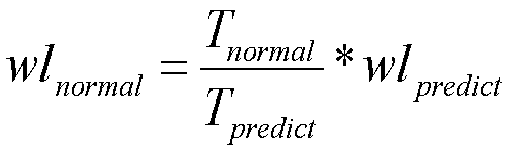
- Procédé selon la revendication 1, l'obtention de volumes de données transmis des flux comportant les étapes consistant à :envoyer une demande d'interrogation au commutateur pour consulter des volumes de données transmis des flux transférés par le commutateur au cours d'une période, et recevoir et recueillir des statistiques concernant un résultat d'interrogation renvoyé par le commutateur ; ourecevoir un volume de données transmis qui est envoyé par l'hôte et qui appartient aux flux émis par l'intermédiaire de l'hôte, ourecevoir un volume de données transmis qui appartient aux flux et qui est obtenu à travers une collecte de statistiques par un hôte utilisé comme hôte de desserte, les flux comportant des flux émis par l'intermédiaire d'au moins deux hôtes autres que l'hôte de desserte.
- Procédé selon la revendication 1, l'obtention d'un modèle de transmission avec encombrement des flux prévisibles comportant :
l'obtention de Dτ = f (τ, kfirst )-a(τ, klast ), où τ est un paquet de données dans les flux ; est une somme de temps de transmission de τ sur tous les commutateurs d'un trajet ; kfirst et klast sont respectivement le premier commutateur et le dernier commutateur par lesquels passe τ sur le trajet de transfert ; a(τ,klast ) indique un instant auquel τ arrive à klast ; et f (τ,kfirst ) indique un instant auquel τ achève la transmission sur kfirst. - Appareil de gestion d'encombrement de réseau, appliqué à un système comportant un hôte et un commutateur, comportant des moyens configurés pour réaliser les étapes d'un procédé selon l'une quelconque des revendications 1 à 3.
- Système de réseau, comportant un contrôleur de réseau, un hôte et un commutateur, le contrôleur de réseau étant l'appareil selon la revendication 4.
Applications Claiming Priority (2)
| Application Number | Priority Date | Filing Date | Title |
|---|---|---|---|
| CN201710477756.9A CN109104373B (zh) | 2017-06-20 | 2017-06-20 | 网络拥塞的处理方法、装置及系统 |
| PCT/CN2018/087672 WO2018233425A1 (fr) | 2017-06-20 | 2018-05-21 | Procédé, dispositif et système de traitement d'encombrement de réseau |
Publications (3)
| Publication Number | Publication Date |
|---|---|
| EP3637708A1 EP3637708A1 (fr) | 2020-04-15 |
| EP3637708A4 EP3637708A4 (fr) | 2020-04-29 |
| EP3637708B1 true EP3637708B1 (fr) | 2023-09-20 |
Family
ID=64735472
Family Applications (1)
| Application Number | Title | Priority Date | Filing Date |
|---|---|---|---|
| EP18821643.6A Active EP3637708B1 (fr) | 2017-06-20 | 2018-05-21 | Procédé, dispositif et système de traitement d'encombrement de réseau |
Country Status (4)
| Country | Link |
|---|---|
| US (1) | US11431645B2 (fr) |
| EP (1) | EP3637708B1 (fr) |
| CN (1) | CN109104373B (fr) |
| WO (1) | WO2018233425A1 (fr) |
Families Citing this family (22)
| Publication number | Priority date | Publication date | Assignee | Title |
|---|---|---|---|---|
| US11102129B2 (en) * | 2018-09-09 | 2021-08-24 | Mellanox Technologies, Ltd. | Adjusting rate of outgoing data requests for avoiding incast congestion |
| CN110519110B (zh) * | 2019-10-12 | 2023-06-23 | 驷途(上海)科技有限公司 | 一种云宽带配置装置 |
| CN112995683B (zh) * | 2019-12-12 | 2022-08-05 | 武汉斗鱼鱼乐网络科技有限公司 | 一种动态策略生成方法、装置、设备及存储介质 |
| CN115053188A (zh) * | 2020-02-06 | 2022-09-13 | 西门子加拿大有限公司 | 事件预测 |
| CN111585905B (zh) * | 2020-04-30 | 2022-07-08 | 南京汉德数字孪生技术研究院有限公司 | 适于双向coflow调度方法的最佳并发连接数预测方法 |
| EP4176575A1 (fr) | 2020-07-01 | 2023-05-10 | Telefonaktiebolaget LM Ericsson (publ) | Régulation de latence dans un réseau de communication |
| WO2022002394A1 (fr) * | 2020-07-01 | 2022-01-06 | Telefonaktiebolaget Lm Ericsson (Publ) | Adaptation de variations de latence d'un réseau de communication |
| CN114095443B (zh) * | 2020-08-24 | 2023-11-03 | 百度在线网络技术(北京)有限公司 | 用于管控流量的方法、装置、电子设备及可读存储介质 |
| US20220231933A1 (en) * | 2021-01-20 | 2022-07-21 | Nvidia Corporation | Performing network congestion control utilizing reinforcement learning |
| GB2604097B (en) * | 2021-02-10 | 2025-12-17 | British Telecomm | Resource capacity management |
| CN114979015B (zh) * | 2021-02-19 | 2024-04-12 | 腾讯科技(深圳)有限公司 | 一种数据包的处理方法及装置 |
| CN112838957B (zh) * | 2021-02-23 | 2022-09-09 | 成都卓源网络科技有限公司 | 一种具备智能调度的流量预测系统 |
| CN115987891B (zh) * | 2021-10-14 | 2025-04-22 | 南京航空航天大学 | 一种数据中心网络混合流量的在线路由和调度方法 |
| CN114827782B (zh) * | 2022-04-25 | 2025-02-07 | 南京航空航天大学 | 一种光电混合数据中心网络中的流组调度方法 |
| CN114844837B (zh) * | 2022-04-25 | 2023-09-26 | 西安交通大学 | 多服务队列环境中基于时延的拥塞控制方法和控制装置 |
| CN117597908A (zh) * | 2022-07-19 | 2024-02-23 | 新华三技术有限公司 | 确定性流传输方法、系统及电子设备 |
| CN115473855B (zh) * | 2022-08-22 | 2024-04-09 | 阿里巴巴(中国)有限公司 | 网络系统、数据传输方法 |
| US12388764B2 (en) * | 2023-03-21 | 2025-08-12 | Qualcomm Incorporated | Multiple batch scheduling in a network |
| US12321602B2 (en) | 2023-05-24 | 2025-06-03 | Western Digital Technologies, Inc. | Disaggregated memory management |
| US12568052B2 (en) | 2023-06-27 | 2026-03-03 | Western Digital Technologies, Inc. | Data transmission scheduling for disaggregated memory systems |
| US12238009B1 (en) * | 2023-10-05 | 2025-02-25 | Oracle International Corporation | Distributed rate limiting |
| CN119172318B (zh) * | 2024-11-21 | 2025-03-07 | 湘江实验室 | 基于可编程网络的全息媒体传输拥塞预测系统 |
Family Cites Families (9)
| Publication number | Priority date | Publication date | Assignee | Title |
|---|---|---|---|---|
| CN100388682C (zh) * | 2005-03-21 | 2008-05-14 | 北京北方烽火科技有限公司 | 一种在sgsn网络处理器中提高服务质量的方法 |
| CN102291835B (zh) * | 2010-06-21 | 2016-05-25 | 中兴通讯股份有限公司 | 一种无线资源调度方法、接入网网元及终端 |
| US9137201B2 (en) * | 2012-03-09 | 2015-09-15 | Ray W. Sanders | Apparatus and methods of routing with control vectors in a synchronized adaptive infrastructure (SAIN) network |
| US8804523B2 (en) * | 2012-06-21 | 2014-08-12 | Microsoft Corporation | Ensuring predictable and quantifiable networking performance |
| US9106363B2 (en) * | 2012-11-15 | 2015-08-11 | Futurewei Technologies, Inc. | Method and apparatus of managing bandwidth allocation for upstream transmission in a unified optical-coaxial network |
| CN103929334B (zh) * | 2013-01-11 | 2018-02-23 | 华为技术有限公司 | 网络异常通知方法和装置 |
| TW201728124A (zh) * | 2014-09-16 | 2017-08-01 | 科勞簡尼克斯股份有限公司 | 以彈性地定義之通信網路控制器為基礎之網路控制、操作及管理 |
| US11197195B2 (en) * | 2015-10-12 | 2021-12-07 | Telefonaktiebolaget Lm Ericsson (Publ) | Load balancing of data traffic in a communications network |
| CN106789660B (zh) * | 2017-03-31 | 2020-08-28 | 中国科学技术大学苏州研究院 | 软件定义网络中QoS可感知的流量管理方法 |
-
2017
- 2017-06-20 CN CN201710477756.9A patent/CN109104373B/zh active Active
-
2018
- 2018-05-21 EP EP18821643.6A patent/EP3637708B1/fr active Active
- 2018-05-21 WO PCT/CN2018/087672 patent/WO2018233425A1/fr not_active Ceased
-
2019
- 2019-12-10 US US16/709,566 patent/US11431645B2/en active Active
Also Published As
| Publication number | Publication date |
|---|---|
| US11431645B2 (en) | 2022-08-30 |
| CN109104373B (zh) | 2022-02-22 |
| WO2018233425A1 (fr) | 2018-12-27 |
| EP3637708A1 (fr) | 2020-04-15 |
| EP3637708A4 (fr) | 2020-04-29 |
| US20200120036A1 (en) | 2020-04-16 |
| CN109104373A (zh) | 2018-12-28 |
Similar Documents
| Publication | Publication Date | Title |
|---|---|---|
| EP3637708B1 (fr) | Procédé, dispositif et système de traitement d'encombrement de réseau | |
| CN113613339B (zh) | 基于深度强化学习的多优先级无线终端的信道接入方法 | |
| CN108768876B (zh) | 一种面向机器学习框架的流量调度方法 | |
| WO2021052162A1 (fr) | Procédé et appareil de configuration de paramètres de réseau, dispositif informatique, et support de stockage | |
| CN112737823A (zh) | 一种资源切片分配方法、装置及计算机设备 | |
| WO2019072162A1 (fr) | Procédé de mappage de réseau virtuel, dispositif et support de stockage | |
| US11502967B2 (en) | Methods and apparatuses for packet scheduling for software-defined networking in edge computing environment | |
| Fahad et al. | A multi‐queue priority‐based task scheduling algorithm in fog computing environment | |
| CN108684046A (zh) | 一种基于随机学习的接入网服务功能链部署方法 | |
| Li et al. | OPTAS: Decentralized flow monitoring and scheduling for tiny tasks | |
| CN113328953A (zh) | 网络拥塞调整的方法、装置和存储介质 | |
| CN116828538A (zh) | 算力资源分配方法、装置、存储介质及电子设备 | |
| CN107018018A (zh) | 一种基于sdn的服务器增量在线升级方法及系统 | |
| CN113657016A (zh) | 基于深度强化学习的优先级无人机编队动态信道分配方法及其系统 | |
| CN117042047B (zh) | 一种基于任务优先级的资源分配方法、装置、控制器及系统 | |
| CN115509644B (zh) | 算力卸载方法、装置、电子设备和存储介质 | |
| CN120335979A (zh) | 一种基于v2v的智算虚拟化算力分配方法、结构、装置 | |
| CN112714037A (zh) | 一种线上服务质量的保障性能评估方法、装置及设备 | |
| CN117615273A (zh) | 一种数据调度方法及装置 | |
| CN117424860A (zh) | 服务功能链sfc资源分配方法及装置 | |
| Liu et al. | A novel artificial intelligence based wireless local area network channel access control scheme for low latency e‐health applications | |
| Ayesta et al. | A unifying computations of Whittle's Index for Markovian bandits | |
| CN114679419A (zh) | 一种基于加权公平队列的需求响应业务调度方法及系统 | |
| Wang et al. | NCC: Neighbor-aware congestion control based on reinforcement learning for datacenter networks | |
| CN104660525A (zh) | 一种带宽分配方法、控制器及通信系统 |
Legal Events
| Date | Code | Title | Description |
|---|---|---|---|
| STAA | Information on the status of an ep patent application or granted ep patent |
Free format text: STATUS: THE INTERNATIONAL PUBLICATION HAS BEEN MADE |
|
| PUAI | Public reference made under article 153(3) epc to a published international application that has entered the european phase |
Free format text: ORIGINAL CODE: 0009012 |
|
| STAA | Information on the status of an ep patent application or granted ep patent |
Free format text: STATUS: REQUEST FOR EXAMINATION WAS MADE |
|
| 17P | Request for examination filed |
Effective date: 20191210 |
|
| AK | Designated contracting states |
Kind code of ref document: A1 Designated state(s): AL AT BE BG CH CY CZ DE DK EE ES FI FR GB GR HR HU IE IS IT LI LT LU LV MC MK MT NL NO PL PT RO RS SE SI SK SM TR |
|
| AX | Request for extension of the european patent |
Extension state: BA ME |
|
| A4 | Supplementary search report drawn up and despatched |
Effective date: 20200327 |
|
| RIC1 | Information provided on ipc code assigned before grant |
Ipc: H04L 12/801 20130101ALI20200324BHEP Ipc: H04L 12/863 20130101ALN20200324BHEP Ipc: H04L 12/54 20130101AFI20200324BHEP |
|
| DAV | Request for validation of the european patent (deleted) | ||
| DAX | Request for extension of the european patent (deleted) | ||
| STAA | Information on the status of an ep patent application or granted ep patent |
Free format text: STATUS: EXAMINATION IS IN PROGRESS |
|
| 17Q | First examination report despatched |
Effective date: 20201130 |
|
| REG | Reference to a national code |
Ref legal event code: R079 Ipc: H04L0047120000 Ref country code: DE Ref legal event code: R079 Ref document number: 602018058001 Country of ref document: DE Free format text: PREVIOUS MAIN CLASS: H04L0012911000 Ipc: H04L0047120000 |
|
| GRAP | Despatch of communication of intention to grant a patent |
Free format text: ORIGINAL CODE: EPIDOSNIGR1 |
|
| STAA | Information on the status of an ep patent application or granted ep patent |
Free format text: STATUS: GRANT OF PATENT IS INTENDED |
|
| RIC1 | Information provided on ipc code assigned before grant |
Ipc: H04L 47/62 20220101ALN20230307BHEP Ipc: H04L 47/127 20220101ALN20230307BHEP Ipc: H04L 12/54 20060101ALI20230307BHEP Ipc: H04L 47/12 20220101AFI20230307BHEP |
|
| RIC1 | Information provided on ipc code assigned before grant |
Ipc: H04L 47/62 20220101ALN20230327BHEP Ipc: H04L 47/127 20220101ALN20230327BHEP Ipc: H04L 12/54 20130101ALI20230327BHEP Ipc: H04L 47/12 20220101AFI20230327BHEP |
|
| INTG | Intention to grant announced |
Effective date: 20230412 |
|
| GRAS | Grant fee paid |
Free format text: ORIGINAL CODE: EPIDOSNIGR3 |
|
| GRAA | (expected) grant |
Free format text: ORIGINAL CODE: 0009210 |
|
| STAA | Information on the status of an ep patent application or granted ep patent |
Free format text: STATUS: THE PATENT HAS BEEN GRANTED |
|
| AK | Designated contracting states |
Kind code of ref document: B1 Designated state(s): AL AT BE BG CH CY CZ DE DK EE ES FI FR GB GR HR HU IE IS IT LI LT LU LV MC MK MT NL NO PL PT RO RS SE SI SK SM TR |
|
| REG | Reference to a national code |
Ref country code: GB Ref legal event code: FG4D |
|
| REG | Reference to a national code |
Ref country code: CH Ref legal event code: EP |
|
| REG | Reference to a national code |
Ref country code: DE Ref legal event code: R096 Ref document number: 602018058001 Country of ref document: DE |
|
| REG | Reference to a national code |
Ref country code: IE Ref legal event code: FG4D |
|
| REG | Reference to a national code |
Ref country code: LT Ref legal event code: MG9D |
|
| PG25 | Lapsed in a contracting state [announced via postgrant information from national office to epo] |
Ref country code: GR Free format text: LAPSE BECAUSE OF FAILURE TO SUBMIT A TRANSLATION OF THE DESCRIPTION OR TO PAY THE FEE WITHIN THE PRESCRIBED TIME-LIMIT Effective date: 20231221 |
|
| REG | Reference to a national code |
Ref country code: NL Ref legal event code: MP Effective date: 20230920 |
|
| PG25 | Lapsed in a contracting state [announced via postgrant information from national office to epo] |
Ref country code: SE Free format text: LAPSE BECAUSE OF FAILURE TO SUBMIT A TRANSLATION OF THE DESCRIPTION OR TO PAY THE FEE WITHIN THE PRESCRIBED TIME-LIMIT Effective date: 20230920 Ref country code: RS Free format text: LAPSE BECAUSE OF FAILURE TO SUBMIT A TRANSLATION OF THE DESCRIPTION OR TO PAY THE FEE WITHIN THE PRESCRIBED TIME-LIMIT Effective date: 20230920 Ref country code: NO Free format text: LAPSE BECAUSE OF FAILURE TO SUBMIT A TRANSLATION OF THE DESCRIPTION OR TO PAY THE FEE WITHIN THE PRESCRIBED TIME-LIMIT Effective date: 20231220 Ref country code: LV Free format text: LAPSE BECAUSE OF FAILURE TO SUBMIT A TRANSLATION OF THE DESCRIPTION OR TO PAY THE FEE WITHIN THE PRESCRIBED TIME-LIMIT Effective date: 20230920 Ref country code: LT Free format text: LAPSE BECAUSE OF FAILURE TO SUBMIT A TRANSLATION OF THE DESCRIPTION OR TO PAY THE FEE WITHIN THE PRESCRIBED TIME-LIMIT Effective date: 20230920 Ref country code: HR Free format text: LAPSE BECAUSE OF FAILURE TO SUBMIT A TRANSLATION OF THE DESCRIPTION OR TO PAY THE FEE WITHIN THE PRESCRIBED TIME-LIMIT Effective date: 20230920 Ref country code: GR Free format text: LAPSE BECAUSE OF FAILURE TO SUBMIT A TRANSLATION OF THE DESCRIPTION OR TO PAY THE FEE WITHIN THE PRESCRIBED TIME-LIMIT Effective date: 20231221 Ref country code: FI Free format text: LAPSE BECAUSE OF FAILURE TO SUBMIT A TRANSLATION OF THE DESCRIPTION OR TO PAY THE FEE WITHIN THE PRESCRIBED TIME-LIMIT Effective date: 20230920 |
|
| REG | Reference to a national code |
Ref country code: AT Ref legal event code: MK05 Ref document number: 1614293 Country of ref document: AT Kind code of ref document: T Effective date: 20230920 |
|
| PG25 | Lapsed in a contracting state [announced via postgrant information from national office to epo] |
Ref country code: NL Free format text: LAPSE BECAUSE OF FAILURE TO SUBMIT A TRANSLATION OF THE DESCRIPTION OR TO PAY THE FEE WITHIN THE PRESCRIBED TIME-LIMIT Effective date: 20230920 |
|
| PG25 | Lapsed in a contracting state [announced via postgrant information from national office to epo] |
Ref country code: IS Free format text: LAPSE BECAUSE OF FAILURE TO SUBMIT A TRANSLATION OF THE DESCRIPTION OR TO PAY THE FEE WITHIN THE PRESCRIBED TIME-LIMIT Effective date: 20240120 |
|
| PG25 | Lapsed in a contracting state [announced via postgrant information from national office to epo] |
Ref country code: AT Free format text: LAPSE BECAUSE OF FAILURE TO SUBMIT A TRANSLATION OF THE DESCRIPTION OR TO PAY THE FEE WITHIN THE PRESCRIBED TIME-LIMIT Effective date: 20230920 |
|
| PG25 | Lapsed in a contracting state [announced via postgrant information from national office to epo] |
Ref country code: ES Free format text: LAPSE BECAUSE OF FAILURE TO SUBMIT A TRANSLATION OF THE DESCRIPTION OR TO PAY THE FEE WITHIN THE PRESCRIBED TIME-LIMIT Effective date: 20230920 |
|
| PG25 | Lapsed in a contracting state [announced via postgrant information from national office to epo] |
Ref country code: SM Free format text: LAPSE BECAUSE OF FAILURE TO SUBMIT A TRANSLATION OF THE DESCRIPTION OR TO PAY THE FEE WITHIN THE PRESCRIBED TIME-LIMIT Effective date: 20230920 Ref country code: RO Free format text: LAPSE BECAUSE OF FAILURE TO SUBMIT A TRANSLATION OF THE DESCRIPTION OR TO PAY THE FEE WITHIN THE PRESCRIBED TIME-LIMIT Effective date: 20230920 Ref country code: IS Free format text: LAPSE BECAUSE OF FAILURE TO SUBMIT A TRANSLATION OF THE DESCRIPTION OR TO PAY THE FEE WITHIN THE PRESCRIBED TIME-LIMIT Effective date: 20240120 Ref country code: ES Free format text: LAPSE BECAUSE OF FAILURE TO SUBMIT A TRANSLATION OF THE DESCRIPTION OR TO PAY THE FEE WITHIN THE PRESCRIBED TIME-LIMIT Effective date: 20230920 Ref country code: EE Free format text: LAPSE BECAUSE OF FAILURE TO SUBMIT A TRANSLATION OF THE DESCRIPTION OR TO PAY THE FEE WITHIN THE PRESCRIBED TIME-LIMIT Effective date: 20230920 Ref country code: CZ Free format text: LAPSE BECAUSE OF FAILURE TO SUBMIT A TRANSLATION OF THE DESCRIPTION OR TO PAY THE FEE WITHIN THE PRESCRIBED TIME-LIMIT Effective date: 20230920 Ref country code: AT Free format text: LAPSE BECAUSE OF FAILURE TO SUBMIT A TRANSLATION OF THE DESCRIPTION OR TO PAY THE FEE WITHIN THE PRESCRIBED TIME-LIMIT Effective date: 20230920 Ref country code: PT Free format text: LAPSE BECAUSE OF FAILURE TO SUBMIT A TRANSLATION OF THE DESCRIPTION OR TO PAY THE FEE WITHIN THE PRESCRIBED TIME-LIMIT Effective date: 20240122 Ref country code: SK Free format text: LAPSE BECAUSE OF FAILURE TO SUBMIT A TRANSLATION OF THE DESCRIPTION OR TO PAY THE FEE WITHIN THE PRESCRIBED TIME-LIMIT Effective date: 20230920 |
|
| PG25 | Lapsed in a contracting state [announced via postgrant information from national office to epo] |
Ref country code: PL Free format text: LAPSE BECAUSE OF FAILURE TO SUBMIT A TRANSLATION OF THE DESCRIPTION OR TO PAY THE FEE WITHIN THE PRESCRIBED TIME-LIMIT Effective date: 20230920 Ref country code: IT Free format text: LAPSE BECAUSE OF FAILURE TO SUBMIT A TRANSLATION OF THE DESCRIPTION OR TO PAY THE FEE WITHIN THE PRESCRIBED TIME-LIMIT Effective date: 20230920 |
|
| REG | Reference to a national code |
Ref country code: DE Ref legal event code: R097 Ref document number: 602018058001 Country of ref document: DE |
|
| PG25 | Lapsed in a contracting state [announced via postgrant information from national office to epo] |
Ref country code: DK Free format text: LAPSE BECAUSE OF FAILURE TO SUBMIT A TRANSLATION OF THE DESCRIPTION OR TO PAY THE FEE WITHIN THE PRESCRIBED TIME-LIMIT Effective date: 20230920 |
|
| PLBE | No opposition filed within time limit |
Free format text: ORIGINAL CODE: 0009261 |
|
| STAA | Information on the status of an ep patent application or granted ep patent |
Free format text: STATUS: NO OPPOSITION FILED WITHIN TIME LIMIT |
|
| PG25 | Lapsed in a contracting state [announced via postgrant information from national office to epo] |
Ref country code: DK Free format text: LAPSE BECAUSE OF FAILURE TO SUBMIT A TRANSLATION OF THE DESCRIPTION OR TO PAY THE FEE WITHIN THE PRESCRIBED TIME-LIMIT Effective date: 20230920 |
|
| 26N | No opposition filed |
Effective date: 20240621 |
|
| PG25 | Lapsed in a contracting state [announced via postgrant information from national office to epo] |
Ref country code: SI Free format text: LAPSE BECAUSE OF FAILURE TO SUBMIT A TRANSLATION OF THE DESCRIPTION OR TO PAY THE FEE WITHIN THE PRESCRIBED TIME-LIMIT Effective date: 20230920 |
|
| PG25 | Lapsed in a contracting state [announced via postgrant information from national office to epo] |
Ref country code: SI Free format text: LAPSE BECAUSE OF FAILURE TO SUBMIT A TRANSLATION OF THE DESCRIPTION OR TO PAY THE FEE WITHIN THE PRESCRIBED TIME-LIMIT Effective date: 20230920 |
|
| PG25 | Lapsed in a contracting state [announced via postgrant information from national office to epo] |
Ref country code: BG Free format text: LAPSE BECAUSE OF FAILURE TO SUBMIT A TRANSLATION OF THE DESCRIPTION OR TO PAY THE FEE WITHIN THE PRESCRIBED TIME-LIMIT Effective date: 20230920 |
|
| PG25 | Lapsed in a contracting state [announced via postgrant information from national office to epo] |
Ref country code: BG Free format text: LAPSE BECAUSE OF FAILURE TO SUBMIT A TRANSLATION OF THE DESCRIPTION OR TO PAY THE FEE WITHIN THE PRESCRIBED TIME-LIMIT Effective date: 20230920 |
|
| REG | Reference to a national code |
Ref country code: DE Ref legal event code: R119 Ref document number: 602018058001 Country of ref document: DE |
|
| REG | Reference to a national code |
Ref country code: CH Ref legal event code: PL |
|
| PG25 | Lapsed in a contracting state [announced via postgrant information from national office to epo] |
Ref country code: MC Free format text: LAPSE BECAUSE OF FAILURE TO SUBMIT A TRANSLATION OF THE DESCRIPTION OR TO PAY THE FEE WITHIN THE PRESCRIBED TIME-LIMIT Effective date: 20230920 |
|
| PG25 | Lapsed in a contracting state [announced via postgrant information from national office to epo] |
Ref country code: LU Free format text: LAPSE BECAUSE OF NON-PAYMENT OF DUE FEES Effective date: 20240521 |
|
| PG25 | Lapsed in a contracting state [announced via postgrant information from national office to epo] |
Ref country code: MC Free format text: LAPSE BECAUSE OF FAILURE TO SUBMIT A TRANSLATION OF THE DESCRIPTION OR TO PAY THE FEE WITHIN THE PRESCRIBED TIME-LIMIT Effective date: 20230920 Ref country code: LU Free format text: LAPSE BECAUSE OF NON-PAYMENT OF DUE FEES Effective date: 20240521 Ref country code: CH Free format text: LAPSE BECAUSE OF NON-PAYMENT OF DUE FEES Effective date: 20240531 |
|
| REG | Reference to a national code |
Ref country code: BE Ref legal event code: MM Effective date: 20240531 |
|
| PG25 | Lapsed in a contracting state [announced via postgrant information from national office to epo] |
Ref country code: DE Free format text: LAPSE BECAUSE OF NON-PAYMENT OF DUE FEES Effective date: 20241203 |
|
| PG25 | Lapsed in a contracting state [announced via postgrant information from national office to epo] |
Ref country code: IE Free format text: LAPSE BECAUSE OF NON-PAYMENT OF DUE FEES Effective date: 20240521 |
|
| PG25 | Lapsed in a contracting state [announced via postgrant information from national office to epo] |
Ref country code: BE Free format text: LAPSE BECAUSE OF NON-PAYMENT OF DUE FEES Effective date: 20240531 |
|
| PG25 | Lapsed in a contracting state [announced via postgrant information from national office to epo] |
Ref country code: FR Free format text: LAPSE BECAUSE OF NON-PAYMENT OF DUE FEES Effective date: 20240531 |
|
| PGFP | Annual fee paid to national office [announced via postgrant information from national office to epo] |
Ref country code: GB Payment date: 20250401 Year of fee payment: 8 |
|
| PG25 | Lapsed in a contracting state [announced via postgrant information from national office to epo] |
Ref country code: CY Free format text: LAPSE BECAUSE OF FAILURE TO SUBMIT A TRANSLATION OF THE DESCRIPTION OR TO PAY THE FEE WITHIN THE PRESCRIBED TIME-LIMIT; INVALID AB INITIO Effective date: 20180521 |
|
| PG25 | Lapsed in a contracting state [announced via postgrant information from national office to epo] |
Ref country code: HU Free format text: LAPSE BECAUSE OF FAILURE TO SUBMIT A TRANSLATION OF THE DESCRIPTION OR TO PAY THE FEE WITHIN THE PRESCRIBED TIME-LIMIT; INVALID AB INITIO Effective date: 20180521 |