EP3637741B1 - Faltbares mobiles endgerät - Google Patents
Faltbares mobiles endgerät Download PDFInfo
- Publication number
- EP3637741B1 EP3637741B1 EP18801532.5A EP18801532A EP3637741B1 EP 3637741 B1 EP3637741 B1 EP 3637741B1 EP 18801532 A EP18801532 A EP 18801532A EP 3637741 B1 EP3637741 B1 EP 3637741B1
- Authority
- EP
- European Patent Office
- Prior art keywords
- shell
- sliding plate
- mobile terminal
- connection rod
- rotation shaft
- Prior art date
- Legal status (The legal status is an assumption and is not a legal conclusion. Google has not performed a legal analysis and makes no representation as to the accuracy of the status listed.)
- Active
Links
Images






Classifications
-
- G—PHYSICS
- G06—COMPUTING OR CALCULATING; COUNTING
- G06F—ELECTRIC DIGITAL DATA PROCESSING
- G06F1/00—Details not covered by groups G06F3/00 - G06F13/00 and G06F21/00
- G06F1/16—Constructional details or arrangements
- G06F1/1613—Constructional details or arrangements for portable computers
- G06F1/1633—Constructional details or arrangements of portable computers not specific to the type of enclosures covered by groups G06F1/1615 - G06F1/1626
- G06F1/1637—Details related to the display arrangement, including those related to the mounting of the display in the housing
- G06F1/1641—Details related to the display arrangement, including those related to the mounting of the display in the housing the display being formed by a plurality of foldable display components
-
- G—PHYSICS
- G06—COMPUTING OR CALCULATING; COUNTING
- G06F—ELECTRIC DIGITAL DATA PROCESSING
- G06F1/00—Details not covered by groups G06F3/00 - G06F13/00 and G06F21/00
- G06F1/16—Constructional details or arrangements
- G06F1/1613—Constructional details or arrangements for portable computers
- G06F1/1615—Constructional details or arrangements for portable computers with several enclosures having relative motions, each enclosure supporting at least one I/O or computing function
- G06F1/1616—Constructional details or arrangements for portable computers with several enclosures having relative motions, each enclosure supporting at least one I/O or computing function with folding flat displays, e.g. laptop computers or notebooks having a clamshell configuration, with body parts pivoting to an open position around an axis parallel to the plane they define in closed position
-
- G—PHYSICS
- G06—COMPUTING OR CALCULATING; COUNTING
- G06F—ELECTRIC DIGITAL DATA PROCESSING
- G06F1/00—Details not covered by groups G06F3/00 - G06F13/00 and G06F21/00
- G06F1/16—Constructional details or arrangements
- G06F1/1613—Constructional details or arrangements for portable computers
- G06F1/1633—Constructional details or arrangements of portable computers not specific to the type of enclosures covered by groups G06F1/1615 - G06F1/1626
- G06F1/1637—Details related to the display arrangement, including those related to the mounting of the display in the housing
- G06F1/1652—Details related to the display arrangement, including those related to the mounting of the display in the housing the display being flexible, e.g. mimicking a sheet of paper, or rollable
-
- G—PHYSICS
- G06—COMPUTING OR CALCULATING; COUNTING
- G06F—ELECTRIC DIGITAL DATA PROCESSING
- G06F1/00—Details not covered by groups G06F3/00 - G06F13/00 and G06F21/00
- G06F1/16—Constructional details or arrangements
- G06F1/1613—Constructional details or arrangements for portable computers
- G06F1/1633—Constructional details or arrangements of portable computers not specific to the type of enclosures covered by groups G06F1/1615 - G06F1/1626
- G06F1/1675—Miscellaneous details related to the relative movement between the different enclosures or enclosure parts
- G06F1/1681—Details related solely to hinges
-
- H—ELECTRICITY
- H04—ELECTRIC COMMUNICATION TECHNIQUE
- H04M—TELEPHONIC COMMUNICATION
- H04M1/00—Substation equipment, e.g. for use by subscribers
- H04M1/02—Constructional features of telephone sets
- H04M1/0202—Portable telephone sets, e.g. cordless phones, mobile phones or bar type handsets
- H04M1/0206—Portable telephones comprising a plurality of mechanically joined movable body parts, e.g. hinged housings
- H04M1/0208—Portable telephones comprising a plurality of mechanically joined movable body parts, e.g. hinged housings characterized by the relative motions of the body parts
- H04M1/0214—Foldable telephones, i.e. with body parts pivoting to an open position around an axis parallel to the plane they define in closed position
- H04M1/0216—Foldable in one direction, i.e. using a one degree of freedom hinge
-
- H—ELECTRICITY
- H04—ELECTRIC COMMUNICATION TECHNIQUE
- H04M—TELEPHONIC COMMUNICATION
- H04M1/00—Substation equipment, e.g. for use by subscribers
- H04M1/02—Constructional features of telephone sets
- H04M1/0202—Portable telephone sets, e.g. cordless phones, mobile phones or bar type handsets
- H04M1/0206—Portable telephones comprising a plurality of mechanically joined movable body parts, e.g. hinged housings
- H04M1/0208—Portable telephones comprising a plurality of mechanically joined movable body parts, e.g. hinged housings characterized by the relative motions of the body parts
- H04M1/0214—Foldable telephones, i.e. with body parts pivoting to an open position around an axis parallel to the plane they define in closed position
- H04M1/0216—Foldable in one direction, i.e. using a one degree of freedom hinge
- H04M1/022—The hinge comprising two parallel pivoting axes
-
- H—ELECTRICITY
- H04—ELECTRIC COMMUNICATION TECHNIQUE
- H04M—TELEPHONIC COMMUNICATION
- H04M1/00—Substation equipment, e.g. for use by subscribers
- H04M1/02—Constructional features of telephone sets
- H04M1/0202—Portable telephone sets, e.g. cordless phones, mobile phones or bar type handsets
- H04M1/026—Details of the structure or mounting of specific components
- H04M1/0266—Details of the structure or mounting of specific components for a display module assembly
- H04M1/0268—Details of the structure or mounting of specific components for a display module assembly including a flexible display panel
-
- H—ELECTRICITY
- H05—ELECTRIC TECHNIQUES NOT OTHERWISE PROVIDED FOR
- H05K—PRINTED CIRCUITS; CASINGS OR CONSTRUCTIONAL DETAILS OF ELECTRIC APPARATUS; MANUFACTURE OF ASSEMBLAGES OF ELECTRICAL COMPONENTS
- H05K5/00—Casings, cabinets or drawers for electric apparatus
- H05K5/0086—Casings, cabinets or drawers for electric apparatus portable, e.g. battery operated apparatus
-
- H—ELECTRICITY
- H05—ELECTRIC TECHNIQUES NOT OTHERWISE PROVIDED FOR
- H05K—PRINTED CIRCUITS; CASINGS OR CONSTRUCTIONAL DETAILS OF ELECTRIC APPARATUS; MANUFACTURE OF ASSEMBLAGES OF ELECTRICAL COMPONENTS
- H05K5/00—Casings, cabinets or drawers for electric apparatus
- H05K5/02—Details
- H05K5/0217—Mechanical details of casings
- H05K5/0226—Hinges
Definitions
- the present disclosure relates to the field of electronic devices, and in particular to a foldable mobile terminal, a foldable unit for a foldable mobile terminal, and a foldable mechanism for a foldable mobile terminal.
- a flexible display screen may have a property of being foldable. Therefore, a smart mobile terminal, such as a smart phone, which carries a flexible display screen may be transformed between a folded state and an unfolded state.
- a length of a side of the mobile terminal facing towards a user may be equal to a length of another side of the mobile terminal facing away from the user.
- the two sides of the mobile terminal which have an equal length while the mobile terminal is unfolded may have different lengths because of a thickness of the mobile terminal. Therefore, the mobile terminal may need to adapt to a change of the length of the two sides in different states. Besides, it may be unfavorable for the flexible display screen to be stably supported.
- the Chinese Patent Application No. 201620544672.3 discloses a hinge of mobile terminal having a flexible screen.
- An outer side of the hinge supports the flexible screen.
- the hinge includes a main support, a first and a second bracket rotatably connected to a rotational shaft of the hinge.
- the first and the second bracket are slidably connected to a first support, a second support, and a synchronous control mechanism.
- An auxiliary support is provided between the first support and the main support, and between the second support and the main support.
- the auxiliary support corresponds to a bent region of the hinge when the hinge is folded.
- the hinge further includes a first guiding structure and a second guiding structure.
- the first guiding structure and the first support rotate together around the hinge rotational shaft.
- the second guiding structure and the second support rotate together around the hinge rotational shaft.
- a technical problem addressed by the present disclosure may be how a foldable mobile terminal may provide a steady support to a flexible display screen in different states. This problem is solved by the subject matter of the independent claim.
- a foldable mobile terminal includes a first shell and a second shell engaged with each other, and a flexible display screen disposed on the first shell and the second shell.
- the foldable mechanism includes: a first rotation assembly, including a first sliding plate, a first rotation shaft, and a first connection rod, wherein the first sliding plate is capable of being at least partially received in the first shell and able to slidably extend and retract with respect to the first shell, the first rotation shaft is arranged on the first sliding plate, a first end of the first connection rod is slidably hinged to the first rotation shaft, a second end of the first connection rod may be capable of being rotatably connected to the first shell; and a second rotation assembly, including a second sliding plate, a second rotation shaft, and a second connection rod, wherein the second sliding plate may be capable of being at least partially received in the second shell and able to slidably extend and retract with respect to the second shell, the second rotation shaft is arranged on the second sliding plate, a second end of the
- the first shell has two or more first notches spaced apart from each other. Two or more first latches are arranged on the first sliding plate and correspond to the two or more first notches.
- the first sliding plate, the second sliding plate, the first shell, and the second shell are configured to support the flexible display screen.
- a gap between the rotation assembly and the shell may be fragmentized, avoiding generation of large sized gap and ensuring a steady support to a flexible display screen.
- a foldable mobile terminal may be provided.
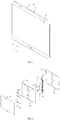
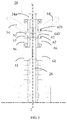
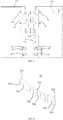
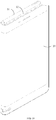
- the foldable mobile terminal includes a flexible display screen 10, a foldable mechanism 20, and a shell assembly 30.
- the shell assembly 30 may include a first shell 31 and a second shell 32.
- the foldable mechanism 20 may be connected between the first shell 31 and the second shell 32.
- the flexible display screen 10 may be arranged on the first shell 31 and the second shell 32.
- the foldable mobile terminal shown in FIG. 1 may be in an unfolded state, and the first shell 31 and the second shell 32 may be symmetric to each other with respect to the foldable mechanism 20. As shown in FIG.
- the flexible display screen 10 may be arranged at an outside of the mobile terminal 10.
- an extending length of a side of the shell assembly 30 facing towards the flexible display screen 10 (the length along a direction parallel to an X-axis shown in FIG. 1 ) may be equal to an extending length of a side of the shell assembly 30 facing away from the flexible display screen 10 (the length along the direction parallel to the X-axis shown in FIG. 1 ).
- the shell assembly 30 itself may have a thickness (the thickness is along a direction parallel to an Y-axis shown in FIG.
- the extending length of the side of the shell assembly 30 facing towards the flexible display screen 10 may be greater than the extending length of the side of the shell assembly 30 facing away from the flexible display screen 10.
- the first shell 31 and the second shell 32 may adapt to a length difference generated while switching between the folded state and the unfolded state.
- the first shell 31 may include a first front shell 311 and a first back shell 312 connected to each other.
- the second shell 32 may include a second front shell 321 and a second back shell 322 connected to each other.
- the connection may be achieved by screwing, adhesion, welding, and the like.
- the flexible display screen 10 may be disposed on the first front shell 311 and the second front shell 321.
- the flexible display screen 10 may have a display region, and the display region may be rectangular or rounded rectangular in the unfolded state.
- a space may be formed between the first front shell 311 and the first back shell 312 along the direction parallel to the Y-axis.
- a space may be formed between the second front shell 321 and the second back shell 322 along the direction parallel to the Y-axis.
- the spaces may allow arrangement of a power module, a communication module, and other components.
- the spaces may further allow the foldable mechanism 20 to slidably extend and retract with respect to the first shell 31 and the second shell 32; that is to say, the foldable mechanism 20 is slidable away from or towards the first shell 31 and the second shell 32.
- Another space may be formed between the first shell 31 and the second shell 32 along the direction parallel to the X-axis.
- the foldable mechanism may be arranged within the space between the first shell 31 and the second shell 32 along the direction parallel to the X-axis, and at least a partial structure of the foldable mechanism 20 may be received in the first shell 31 and the second shell 32.
- the space between the first shell 31 and the second shell 32 along the direction parallel to the X-axis may be changed during the rotation of the first shell 31 and the second shell around the foldable mechanism 20. Therefore, during the rotation of the first shell 31 and the second shell 32 around the foldable mechanism 20, the foldable mechanism 20 may be retracted into the first shell 31 and the second shell 32 at varying levels. As shown in FIG. 4 and FIG.
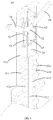
- the foldable mechanism 20 may include a first rotation assembly 50 and a second rotation assembly 60.
- the first rotation assembly 50 may be connected to the first shell 31.
- the rotation assembly 50 may be at least partially received inside the first shell 31, and may slidably extend and retract with respect to (i.e., slide away from or towards) the first shell 31.
- the second rotation assembly 60 may be connected to the second shell 32.
- the second rotation assembly 60 may be at least partially received inside second shell 32, and may slidably extend and retract with respect to (slide away from or towards) the second shell 32.
- the first shell 31 and the second shell 32 may adapt to a length difference generated while switching between the folded state and the unfolded state.
- the first rotation assembly 50 and the second rotation assembly 60 may have a same structure.
- the first rotation assembly 50 and the second rotation assembly 60 may be symmetrically distributed about a central axis I-I (shown in FIG. 5 ) between the first rotation assembly 50 and the second rotation assembly 60.
- I-I shown in FIG. 5
- the first shell 31 and the second shell 32 may be folded and unfolded symmetrically about the central axis I-I.
- the first rotation assembly 50 includes a first sliding plate 51, a first rotation shaft 53, and a first connection rod 54.
- the first rotation shaft 53 is arranged on the first sliding plate 51.
- a first end 541 of the first connection rod 54 is slidably hinged to the first rotation shaft 53, and a second end 542 of the first connection rod 54 is rotatably connected to the first shell 31.
- the first sliding plate 51 is capable of being at least partially received in the first shell 31, and slidably extend and retract with respect to (i.e., slide away from or towards) the first shell 31.
- the first sliding plate 51 together with the first rotation shaft 53 is capable to may- slidably extend and retract with respect to (i.e., slide away from or towards) the first shell 31.
- the second end 542 of the first connection rod 54 may rotate with respect to the first shell 31.
- the first end 541 of the first connection rod 54 may slide on the first rotation shaft 53 and rotate with respect to the first rotation shaft 53.
- two first rotation shafts 53 and two first connection rods 54 may be arranged on the first sliding plate 51.
- the two first rotation shafts 53 may be arranged symmetrically about a middle position of the first sliding plate 51 along a direction parallel to a Z-axis
- the two first connection rods 54 may be arranged symmetrically about a middle position of the first sliding plate 51 along the direction parallel to the Z-axis.
- the number of the first rotation shaft 53 may be one or more
- the number of the first connection rod 54 may be one or more. Slidable extension and retraction of the first sliding plate 51 with respect to the first shell 31 may be achieved with various numbers of the first rotation shafts 53 and the first connection rods 54.
- the second rotation assembly 60 includes a second sliding plate 61, a second rotation shaft 63, and a second connection rod 64.
- the second rotation shaft 63 may be arranged on the second sliding plate 61.
- a first end 641 of the second connection rod 64 is slidably hinged to the second rotation shaft 63, and a second end 642 of the second connection rod 64 is rotatably connected to the second shell 32.
- the second sliding plate 61 is capable of being at least partially received in the second shell 32, and slidably extend and retract with respect to (i.e., slide away from or towards) the second shell 32.
- the second sliding plate 61 together with the second rotation shaft 63 is capable to slidably extend and retract with respect to (i.e., slide away from or towards) the second shell 32.
- the second end 642 of the second connection rod 64 may rotate with respect to the second shell 32.
- the first end 641 of the second connection rod 64 may slide on the second rotation shaft 63 and rotate with respect to the second rotation shaft 63.
- two second rotation shafts 63 and two second connection rods 64 may be arranged on the second sliding plate 61.
- the two second rotation shafts 63 may be arranged symmetrically about a middle position of the second sliding plate 61 along the direction parallel to the Z-axis
- the two second connection rods 64 may be arranged symmetrically about a middle position of the second sliding plate 61 along the direction parallel to the Z-axis.
- the number of the second rotation shafts 63 may be one or more
- the number of the second connection rods 64 may be one or more. Slidable extension and retraction of the second sliding plate 61 with respect to the second shell 32 may be achieved with various numbers of the second rotation shafts 63 and the second connection rods 64.
- the foldable mechanism 20 may include a linkage element 22 connected to the first rotation shaft 53 and the second rotation shaft 63.
- the linkage element 22 may have a first through hole 221 and a second through hole 222. The first through hole 221 and the second through hole 222 may be spaced apart from each other.
- the first rotation shaft 53 may be arranged to extend through the first through hole 221, and the second rotation shaft 63 may be arranged to extend through the second through hole 222.
- the linkage element 22 may link the first end 541 of the first connection rod 54 and the first end 641 of the second connection rod 64 to move at the same time. That is, by virtue of the linkage element 22, sliding of the first end 541 of the first connection rod 54 along the first rotation shaft 53 may lead to sliding of the first end 641 of the second connection rod 64 along the second rotation shaft 63, and vice versa.
- the linkage element 22 may allow the first connection rod 54 which is slidably hinged to the first rotation shaft 53 and the second connection rod 64 which is slidably hinged to the second rotation shaft 63 to move synchronously. That is, the slidable extension and retraction of the first sliding plate 51 with respect to the first shell 31 is synchronous with the slidable extension and retraction of the second sliding plate 61 with respect to the second shell 32, such that a symmetric folding and unfolding of the first shell 31 and the second shell 32 may be further achieved.
- the linkage element 22 may be made of metals or plastics.
- functions of the linkage element 22 may be achieved by other components.
- a component configured to achieve a slidable hinge between the first connection rod 54 and the first rotation shaft 53 and a component configured to achieve a slidable hinge between the second connection rod 64 and the second rotation shaft 63 may be configured as an integral component.
- an integral component to achieve the slidable hinge, the first connection rod 54 which is slidably hinged to the first rotation shaft 53 and the second connection rod 64 which is slidably hinged to the second rotation shaft 63 may move synchronously.
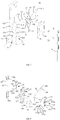
- the first rotation assembly 50 may further include a first sliding member 52 configured to achieve the slidable hinge between the first connection rod 54 and the first rotation shaft 53.
- the first sliding member 52 may be arranged to slidably sleeve on the first rotation shaft 53, and the first end 541 of the first connection rod 54 may be rotatably connected to the first sliding member 52.
- the first sliding member 52 may include two sleeve tubes 521 and a connection arm 522 connected between the two sleeve tubes 521.
- the first rotation shaft 53 may extend through the sleeve tubes 521 of the first sliding member 52.
- the first sliding member 52 may slide along the first rotation shaft 53 and rotate with respect to the first rotation shaft 53.
- the first end 541 of the first connection rod 54 may be rotatably connected to the connection arm 522 of the first sliding member 52. Further, the connection arm 522 of the first sliding member 52 may have a first positioning hole 523, and the first end 541 of the first connection rod 54 may have a first positioning protrusion 543. The first positioning protrusion 543 may be inserted into the first positioning hole 523.
- the second rotation assembly 60 may further include a second sliding member 62.
- the slidable hinge between the second connection rod 64 and the second rotation shaft 63 may be achieved by the second sliding member 62.
- the second sliding member 62 may be arranged to sleeve on the second rotation shaft 63 in a slidable manner, and the first end 641 of the second connection rod 64 may be rotatably connected to the second sliding member 62.
- the second sliding member 62 may include two sleeve tubes 621 and a connection arm 622 connected between the two sleeve tubes 621.
- the second rotation shaft 63 may extend through the sleeve tubes 621 of the second sliding member 62.
- the second sliding member 62 may slide along the second rotation shaft 63 and rotate with respect to the second rotation shaft 63.
- the first end 641 of the second connection rod 64 may be rotatably connected to the connection arm 622 of the second sliding member 62. Further, the connection arm 622 of the second sliding member 62 may have a second positioning hole 623, and a first end 641 of the second connection rod 64 may have a second positioning protrusion 643. The second positioning protrusion 643 may be inserted into the second positioning hole 623.
- the linkage element 22 may include a first arm portion 223 having the first through hole 221 and a second arm portion 224 having the second through hole 222.
- the first arm portion 223 may be arranged between the two sleeve tubes 521 of the first sliding member 52.
- the second arm portion 224 may be arranged between the two sleeve tubes 621 of the second sliding member 62.
- the first rotation shaft 53 may extend through the first through hole 221, and the second rotation shaft 63 may extend through the second through hole 222.
- the linkage element 22 may serve as a link between the first sliding member 52 and the second sliding member 62, such that the sliding of the first sliding member 52 along the first rotation shaft 53 may be synchronous with the sliding of the second sliding member 62 along the second rotation shaft 63.
- the first rotation assembly 50 may further include a first support 56, and the first rotation shaft 53 may be configured on the first sliding plate 51 through the first support 56. Further, the first support 56 may be fixed on the first sliding plate 51 by screw fastening. The first rotation shaft 53 may extend through the first support 56, and the second sliding member 52 may be arranged between the first support 56 and the first sliding plate 51.
- first support 56 By arranging the first support 56, relative movement of the first sliding member 52, the first end 541 of the first connection rod 54, and the first rotation shaft 53 may be restricted within a space between the first support 56 and the first sliding plate 51, such that the first end 541 of the first connection rod 54 may be prevented from detaching from the first sliding member 52.
- the rotatable connection between the second end 542 of the first connection rod 54 and the first shell 31 may be achieved by a rotatable connection between the second end 542 of the first connection rod 54 and the first front shell 311.
- the rotatable connection between the second end 542 of the first connection rod 54 and the first shell 31 may be achieved by a rotatable connection between the second end 542 of the first connection rod 54 and the first back shell 312.
- the rotatable connection between the second end 542 of the first connection rod 54 and the first shell 31 may be achieved by rotatably connecting the second end 542 of the first connection rod 54 to the first front shell 311 and the first back shell 312 at the same time.
- FIG. 8 FIG.
- the first front shell 311 may have a first connection hole 313, and a first connection protrusion 544 may be arranged at the second end 542 of the first connection rod 54.
- the first connection protrusion 544 may be inserted into the first connection hole 313.
- the first rotation assembly 50 may further include a first pressing sheet 55.
- the first pressing sheet 55 may be connected to the first front shell 311, and configured to limit a position of the first connection rod 54, such that the first connection rod 54 may be disposed between the first pressing sheet 55 and the first front shell 311.
- the second rotation assembly 60 may further include a second support 66, and the second rotation shaft 63 may be configured on the second sliding plate 61 through the second support 66. Further, the second support 66 may be fixed on the second sliding plate 61 by screw fastening. The second rotation shaft 63 may extend through the second support 66, and the second sliding member 62 may be arranged between the second support 66 and the second sliding plate 61.
- the rotatable connection between the second end 642 of the second connection rod 64 and the second shell 32 may be achieved by a rotatable connection between the second end 642 of the second connection rod 64 and the second front shell 321.
- the rotatable connection between the second end 642 of the second connection rod 64 and the second shell 32 may be achieved by a rotatable connection between the second end 642 of the second connection rod 64 and the second back shell 322.
- the rotatable connection between the second end 642 of the second connection rod 64 and the second shell 32 may be achieved by rotatably connecting the second end 642 of the second connection rod 64 to the second front shell 321 and the second back shell 322 at the same time.
- FIG. 8 FIG.
- the second front shell 321 may have a second connection hole 323, and a second connection protrusion 644 may be arranged at the second end 642 of the second connection rod 64.
- the second connection protrusion 644 may be inserted into the second connection hole 323.
- the second rotation assembly 60 may further include a second pressing sheet 65.
- the second pressing sheet 65 may be connected to the second front shell 321, and configured to limit a position of the second connection rod 64, such that the second connection rod 64 may be disposed between the second pressing sheet 65 and the second front shell 321.
- the foldable mechanism 20 may further include a first shaft sleeve 24a and a second shaft sleeve 24b.
- the first shaft sleeve 24a may be disposed at one end of the first rotation shaft 53 and one end of the second rotation shaft 63, and may be connected to both the first rotation shaft 53 and the second rotation shaft 63.
- the second shaft sleeve 24b may be disposed at the other end of the first rotation shaft 53 and the other end of the second rotation shaft 63, and may be connected to both the first rotation shaft 53 and the second rotation shaft 63.
- the first and the second shaft sleeves 24a and 24b may be configured to fix the first rotation shaft 53 on the first support 56, and fix the second rotation shaft 63 on the second support 66.
- the first support 56, the second support 66, the first rotation shaft 53, and the second rotation shaft 63 may be provided with equal number. In some embodiments, the number of the first supports 56 and the number of the second supports 66 may both be two.
- Each first support 56 may be arranged at a corresponding end of the first sliding plate 51 along the direction parallel to the Z-axis
- each second support 66 may be arranged at a corresponding end of the second sliding plate 61 along the direction parallel to the Z-axis.
- the foldable mechanism 20 may further include a supportive strip 26.
- the supportive strip 26 may be arranged between the first rotation assembly 50 and the second rotation assembly 60.
- the supportive strip 26 may be configured to support the flexible display screen 10.
- the supportive strip 26 may extend for a certain length along the direction parallel to the Z-axis in order to be arranged in a gap between the first sliding plate 51 and the second sliding plate 61.
- the supportive strip 26 may further extend into a gap between the first support 56 and the second support 66.
- the supportive strip 26, the first sliding plate 51, the second sliding plate 61, the first support 56, the second support 66, the first front shell 311, and the second front shell 321 may cooperatively support the flexible display screen 10.
- the linkage element 22 may have a receiving recess 226. At least a partial structure of the supportive strip may be received in the receiving recess 226.
- the linkage element 22 may include a connection portion 225 connecting with the first arm portion 223 and the second arm portion 224, and the receiving recess 226 may be formed on the connection portion 225.
- At least one of the first shaft sleeve 24a and the second shaft sleeve 24b may also have a receiving recess 241, and at least a partial structure of the supportive strip 26 may be received in the receiving recess 241.
- At least one of the connection between the supportive strip 26 and the first shaft sleeve 24a and the second shaft sleeve 24b and the connection between the supportive strip 26 and the linkage element 22 may be achieved by welding or other means.
- a top face 261 of the supportive strip 26 faces towards the flexible display screen 10, and the top face 261 of the supportive strip 26 may be a curved face.
- the foldable mobile terminal is in a semi-folded state as shown in FIG. 24 or in a folded state as shown in FIG. 25
- the supportive strip 26 has a curved face, a curvature of a contour of the mobile terminal may not be changed sharply during the folding of the first shell 31 and the second shell 32. Therefore, the flexible display screen 10 may be better supported.
- the first rotation assembly 50 may further include a first elastic sheet 57 arranged on the first sliding plate 51.
- the first end 541 of the first connection rod 54 may reach two extreme positions along a direction of sliding, the first elastic sheet 57 may include two first engaging portions 571. Each of the two first engaging portions 571 may correspond to each of the two extreme positions.
- the first elastic sheet 57 may be fixed on the first sliding plate 51 through the first support 56, and the first elastic sheet 57 may be disposed inside the first support 56.
- the two first engaging portions 571 of the first elastic sheet 57 may respectively correspond to two ends of a sliding path of the first end 541 of the first connection rod 54 while the first end 541 slides along the first rotation shaft 53. To some extent, interference may be generated between each first engaging portion 571 and the first end 541 of the first connection rod 54, such that the first engaging portion 571 may apply a clamping force to the first end 541 of the first connection rod 54, and the position of the first connection rod 54 may not be changed randomly. Therefore, the first sliding plate 51 may be arranged at a stable position with respect to the first shell 31, that is, the foldable mobile terminal may stably remain in the folded or unfolded state.
- the first positioning protrusion 543 at the first end 541 of the first connection rod 54 may extend through two opposing sides of the first end 541. An end of the first positioning protrusion 543 may be engaged in the first positioning hole 523 of the first sliding member 52, and an opposing end of the first positioning protrusion 543 may be inserted into the first engaging portion 571 of the first elastic sheet 57. The first engaging portion 571 may clamp the first positioning protrusion 543 to apply a certain clamping force to the first connection rod 54.
- the first elastic sheet 57 may further include a first damping portion 572 disposed between the two first engaging portions 571.
- a resistance may be increased. Increasing of the resistance may be achieved as a clamping force applied to the first positioning protrusion 543 by the first damping portion 572 is greater than the clamping force applied to the first positioning protrusion 543 by the first engaging portion 571.
- the first elastic sheet 57 may be stadium-shaped with an opening at an end and closed at an opposing end.
- the two first engaging portions 571 may be arranged at the two opposite ends of the first elastic sheet 57, and the first damping portion 572 may be arranged at a middle portion of the first elastic sheet 57.
- a first gap 572a formed in the first damping portion 572 for the first positioning protrusion 543 to extend through may be smaller than a second gap 571a formed in the first engaging portion 571 for the first positioning protrusion 543 to extend through. Therefore, during the sliding from the first engaging portion 571 to the first damping portion 572, the first connection rod 54 may receive an increased resistance.
- the first elastic sheet 57 may be in shape of a closed loop. Further, in yet other embodiments, the first elastic sheet 57 may include two separated strips. Two ends of each of the two separated strips may be fixed on the first sliding plate 51 through the first support 56 or other components (or by other means), such that the first connection rod 54 may be applied with different resistances when the first connection rod 54 is at various positions of the sliding path along the first rotation shaft 53.
- the first support 56 may have a first receiving cavity 560, and the first elastic sheet 57 may be received in the first receiving cavity 560.
- the first sliding plate 51 may close the first receiving cavity 560, such that the first elastic sheet 57 may be fixed inside the first receiving cavity 560.
- the first receiving cavity 560 may include two first positioning cavities 561 and a first releasing cavity 562. Each of the two first positioning cavities 561 may correspond to each of the first engaging portion 571 of the first elastic sheet 57.
- the first releasing cavity 562 may be formed between the two first positioning cavities 561. A size of the first releasing cavity 562 may be greater than a size of each first positioning cavity 561.
- the first engaging portion 571 may be fixed to be unmovable.
- the first damping portion 572 arranged between the two first engaging portions 571 may be correspondingly arranged in the first releasing cavity 562.
- the first releasing cavity 562 may offer a space allowing the first damping portion 572 to be elastically deformed.
- the second rotation assembly 60 may further include a second elastic sheet 67 arranged on the second sliding plate 61.
- the first end 641 of the second connection rod 64 may reach two extreme positions along a direction of sliding, and the second elastic sheet 67 may include two second engaging portions 671. Each of the two second engaging portions 671 may correspond to each of the two extreme positions.
- the second elastic sheet 67 may be fixed on the second sliding plate 61 through the second support 66, and the second elastic sheet 67 may be disposed inside the second support 66.
- the two second engaging portions 671 of the second elastic sheet 67 may respectively correspond to two ends of a sliding path of the first end 641 of the second connection rod 64 while the first end 641 slides along the second rotation shaft 63.
- interference may be generated between each second engaging portion 671 and the first end 641 of the second connection rod 64, such that the second engaging portion 671 may apply a clamping force to the first end 641 of the second connection rod 64, and the position of the second connection rod 64 may not be changed randomly. Therefore, the second sliding plate 61 may be arranged at a stable position with respect to the second shell 32, that is the foldable mobile terminal may stably remain in the folded or unfolded state.
- the second positioning protrusion 643 at the first end 641 of the second connection rod 64 may extend through two opposing sides of the first end 641. An end of the second positioning protrusion 643 may be engaged in the second positioning hole 623 of the second sliding member 62, and an opposing end of the second positioning protrusion 643 may be inserted into the second engaging portion 671 of the second elastic sheet 67. The second engaging portion 671 may clamp the second positioning protrusion 643 to apply a certain clamping force to the second connection rod 64.
- FIG. 5 illustrates the sliding mechanism 20 in the unfolded state, and the second positioning protrusion 643 arrange at the first end 641 of the second connection rod 64 may be inserted into one of the second engaging portions 671, as shown in FIG. 5 .
- FIG. 22 illustrates the sliding mechanism 20 in the folded state, and the second positioning protrusion 643 arrange at the first end 641 of the second connection rod 64 may be inserted into the other one of second engaging portions 671, as shown in FIG. 22 .
- the second elastic sheet 67 may further include a second damping portion 672 disposed between the two second engaging portions 671.
- a resistance may be increased.
- Increasing of the resistance may be achieved as a clamping force applied to the second positioning protrusion 643 by the second damping portion 672 is greater than the clamping force applied to the second positioning protrusion 643 by the second engaging portion 671.
- the second elastic sheet 67 may be stadium-shaped with an opening at an end and closed at an opposing end.
- the two second engaging portions 671 may be arranged at two ends of the second elastic sheet 67, and the second damping portion 672 may be arranged at a middle portion of the second elastic sheet 67.
- a third gap 672a formed in the second damping portion 672 for the second positioning protrusion 643 to extend through may be smaller than a fourth gap 671a formed in the second engaging portion 671 for the second positioning protrusion 643 to extend through. Therefore, during the sliding from the second engaging portion 671 to the second damping portion 672, the second connection rod 64 may receive an increased resistance.
- the second elastic sheet 67 may be in shape of a closed loop. Further, in yet other embodiments, the second elastic sheet 67 may include two separated strips. Two ends of each of the two separated strips may be fixed on the second sliding plate 61 through the second support 66 or other components (or by other means), such that the second connection rod 64 may be applied with different resistances when the second connection rod 64 is at various positions of the sliding path along the second rotation shaft 63.
- the second support 66 may have a second receiving cavity 660, and the second elastic sheet 67 may be received in the second receiving cavity 660.
- the second sliding plate 61 may close the second receiving cavity 660, such that the second elastic sheet 67 may be fixed inside the second receiving cavity 660.
- the second receiving cavity 660 may include two second positioning cavities 661 and a second releasing cavity 662.
- Each of the two second positioning cavities 661 may correspond to each second engaging portion 671 of the second elastic sheet 67.
- the second releasing cavity 662 may be formed between the two second positioning cavities 661.
- a size of the second releasing cavity 662 may be greater than a size of each second positioning cavity 661.
- the second damping portion 672 arranged between the two second engaging portions 671 may be arranged in the second releasing cavity 662.
- the second releasing cavity 662 may offer a space allowing the second damping portion 672 to be elastically deformed.
- the foldable mobile terminal may further include a joining sheet 70 and two pressing elements 71.
- the joining sheet 70 may cross over the first rotation assembly 50 and the second rotation assembly 60, and each end of the joining sheet 70 may be rotatably connected to the first shell 31 and the second shell 32 through each of the two pressing elements 71 respectively.
- a change of the length generated during the rotation of the first shell 31 and the second shell 32 may adapt by the extension and retraction of the first rotation assembly 50 and the second rotation assembly 60 of the sliding mechanism 20 with respect to the first shell 31 and the second shell 32, respectively.
- a contour of the foldable mobile terminal may be uniform and complete during folding and unfolding.
- a first end 701 of the joining sheet 70 may have a first elongated hole 703, and a second end 702 of the joining sheet 70 may have a second elongated hole 704.
- One of the pressing elements 71 may extend through the first elongated hole 703, and be further fixedly connected to the first shell 31, and the other of the pressing elements 71 may extend through the second elongated hole 704, and be further fixedly connected to the second shell 32.
- the joining sheet 70 may move with respect to the pressing elements 71 along a direction to which the first elongated hole 703 and the second elongated hole 704 elongate, that is, the joining sheet 70 may move with respect to the first shell 31 and the second shell 32. As shown in FIG.
- an outer end of the first elongated hole 703 and an outer end of the second elongated hole 704 of the joining sheet 70 may abut against the corresponding pressing element 71.
- the first shell 31 and the second shell 32 may be prevented from departing from each other continually, and the first shell 31 and the second shell 32 may be protected from being overly stretched.
- the joining sheet 70 may slide with respect to the first shell 31 and the second shell 32 to adapt to the length change of the first and the second shells 31 and 32.
- the joining sheet 70 may include two joining portions 705 respectively located at the first end 701 and the second end 702, and a supportive portion 706 connected between the two joining portions 705.
- Each of the two joining portions 705 may be connected to each pressing element 71, and the supportive portion 706 may be configured to support the flexible display screen 10.
- the pressing element 71 may be a screw or other fastening elements.
- the screw or other fastening elements of one pressing element 71 may extend through the first elongated hole 703, and then connect the joining sheet 70 to the first shell 31.
- the screw or other fastening elements of the other pressing element 71 may extend through the second elongated hole 704, and then connect the joining sheet 70 to the second shell 32.
- each pressing element 71 may be cubic.
- One pressing element 71 may be configured to press on the first end 701 of the joining sheet 70, and the other pressing element 71 may be configured to press on the second end 702 of the joining sheet 70.
- An additional fastening element may be configured to extend through one pressing element 71 and the first elongated hole 703 to fasten with the first shell 31, and another additional fastening element may be configured to extend through the other pressing element 71 and the second elongated hole 704 to fasten with the second shell 32.
- the first front shell 311 may include a first mounting portion 314, the first end 701 of the joining sheet 70 may be slidably connected to the first mounting portion 314 through one of the pressing elements 71.
- the second front shell 321 may include a second mounting portion 324, and the second end 702 of the joining sheet 70 may be slidably connected to the second mounting portion 324 through the other of the pressing elements 71.
- a bending portion may be formed at an intersection between the supportive portion 706 and each of the two joining portions 705. As shown in FIG. 12 , each of the first mounting portion 314 and the second mounting portion 324 may be recessed to engage with the bending portion of the corresponding joining sheet 70 and configured to receive the corresponding pressing element 71.
- the joining sheet 70 may have a plurality of through holes 700 with distance apart from each other.
- the plurality of through holes 700 may be formed on the supportive portion 706.
- the through holes 700 enable the joining sheet 70 to be bent easily, such that the joining sheet 70 may better fit with the first rotation assembly 50 and the second assembly 60, and the joining sheet 70 may be prevented from generating crease to impact the effect of supporting the flexible display screen 10.
- a fixing structure 707 connected to the supportive strip 26 may be arranged on the supportive portion 706.
- the fixing structure 707 may be a hole for welding. As the joining sheet 70 crosses over the supportive strip 26, the joining sheet 70 may be fixedly connected to the supportive strip 26 by welding.
- the number of the joining sheets 70 may be two. It may be understood that, in other embodiments, the number of the joining sheets 70 may be increased or decreased as required.
- the foldable mobile terminal may further include a first decoration component 72a and a second decoration component 72b.
- the first decoration component 72a may be disposed at one end of the foldable mechanism 20 along the direction parallel to the Z-axis, further disposed in the gap formed between the first shell 31 and the second shell 32.
- the second decoration component 72b may be disposed at the other end of the foldable mechanism 20 along the direction parallel to the Z-axis, further disposed in the gap formed between the first shell 31 and the second shell 32.
- the first and the second decoration components 72a and 72b may be configured to cover structures at each end of the foldable mechanism 20, such that the structures may not be exposed to an outside to impact the appearance.
- the first front shell 311 may include a first mating portion 315
- the second front shell 321 may include a second mating portion 325.
- Each of the first decoration component 72a and the second decoration component 72b may be engaged with both the first mating portion 315 of the first front shell 311 and the second mating portion 325 of the second front shell 321.
- Each of the first decoration component 72a and the second decoration component 72b may be disposed at the corresponding end of the first sliding plate 51 and the second sliding plate 61 along the direction parallel to the Z-axis.
- a surface of each of the first decoration component 72a and the second decoration component 72b facing towards the flexible display screen 10 may be substantially flat to allow an easy configuration of the flexible display screen 10.
- a connective structure such as a protruding block 721
- a plurality of ridges 722 may be further arranged on the surface of each of the first decoration component 72a and the second decoration component 72b facing away from the flexible display screen 10.
- each of the first decoration component 72a and the second decoration component 72b may be unfolded naturally.
- a distance between two adjacent ridges 722 may be gradually increased in a direction away from the flexible display screen 10.
- the first shell 31 has two or more first notches 316 spaced apart from each other.
- each of the two or more first notches 316 may be formed at a side of the first front shell 311 close to the first rotation assembly 50.
- Two or more first latches 511 are configured on the first sliding plate 51 and correspond to the two or more first notches 316.
- the first sliding plate 51 may include a first substrate 510, and the first latch 511 may be arranged on the first substrate 510.
- the first substrate 510 may be disposed between the first front shell 311 and the first back shell 312 and may slidably extend and retract between the first front shell 311 and the first back shell 312 (that is, slide away from or towards the first front shell 311).
- the first latch 511 and the first front shell 311 may be in a same plane.
- the plane may be parallel to a plane defined by the XZ-axes.
- the first latch 511 and the first front shell 311 may be configured to cooperatively support the flexible display screen 10.
- first notch may further be formed in the first sliding plate 51 between two adjacent first latches 511, and another first latch may further be arranged on the first front shell 311 between two adjacent first notches 316.
- the first latch 511 on the first sliding plate 51 may correspond to the first notch 316 on the first front shell 311, and the first notch on the first sliding plate 51 may correspond to the first latch arranged on the first front shell 311.
- the second shell 32 may have two or more second notches 326 spaced apart from each other.
- each of the two or more second notches 326 may be formed at a side of the second front shell 321 close to the second rotation assembly 60.
- Two or more second latches 611 may be configured on the second sliding plate 61 and correspond to the two or more second notches 326.
- the second sliding plate 61 may include a second substrate 610, and the second latch 611 may be arranged on the second substrate 610.
- the second substrate 610 may be disposed between the second front shell 321 and the second back shell 322 and may slidably extend and retract (that is, slide away from or towards the second front shell 321) between the second front shell 321 and the second back shell 322.
- the second latch 611 and the second front shell 321 may be in a same plane parallel to a plane defined by the XZ-axes.
- the second latch 611 and the second front shell 321 may be configured to cooperatively support the flexible display screen 10.
- another second notch may further be formed in the second sliding plate 61 between two adjacent second latches 611, and another second latch may further be arranged on the second front shell 321 between two adjacent second notches 326.
- the second latch 611 on the second sliding plate 61 may correspond to the second notch 326 on the second front shell 321, and the second notch on the second sliding plate 61 may correspond to the second latch arranged on the second front shell 321.
- a gap 512 may be formed between the first latch 511 on the first sliding plate 51 and the second latch 611 of the second sliding plate 61. At least partial structure of the supportive strip 26 may be received in the gap 512.
- an end of each of the first latches 511 away from the first shell 31 may be connected to each other to form a first supportive beam 513.
- an end of each of the second latches 611 away from the second shell 32 may be connected to each other to form a second supportive beam 613.
- At least a partial structure of the supportive strip 26 may be disposed on the first supportive beam 513 and the second supportive beam 613.
- the foldable mobile terminal may further include a first roller 58 and a first spring 59.
- the first roller 58 and the first spring 59 may be disposed between the first rotation assembly 50 and the first shell 31.
- the first rotation assembly 50 may have a first groove 514. When the first rotation assembly 50 slidably extends and retracts with respect to (that is, slides away from or towards) the first shell 31, the first roller 58 may move into or out of the first groove 514, such that the user of the foldable mobile terminal may feel a standstill if the foldable mobile terminal is folded to an appropriate position.
- the first roller 58 and the first spring 59 may be disposed between the first sliding plate 51 and the first back shell 312. In some other embodiments, the first roller 58 and the first spring 59 may be disposed between the first sliding plate 51 and the first front shell 311. According to some embodiments shown in FIG. 4 and FIG. 13 , the first groove 514 may be formed in a side wall of the first latch 511 of the first sliding plate 51 and face towards an adjacent first latch 511 arranged on the first substrate 510.
- a side wall in the first notch 316 may be recessed inwardly away from a corresponding first latch 511 to form a first cavity 317.
- the first roller 58 and the first spring 59 may be received in the first cavity 317.
- the first spring 59 may abut against the first roller 58 to allow at least a part of the first roller 58 to be exposed to an outside of the first cavity 317, such that the first roller 58 may elastically abut against a side wall of the corresponding first latch 511.
- first latch 511 which has the first groove 514 may extend towards the first shell 31 for a distance longer than any other first latch 511 extends towards the first shell 31, that is, a length for which the first latch 511 having the first groove 514 may extend towards the first shell 31 is greater than a length for which any other first latch 511 may extend towards the first shell 31.
- At least two sets of the first rollers 58 and the first springs 59 may be provided.
- Each of two opposing side walls of the first latch 511 may have the first groove 514 matching with the first roller 58.
- two opposing side walls of the first notch 316 may be recessed away from the corresponding first latch 511 to form two first cavities 317.
- Each of the two first cavities 317 may be formed to receive one set of the first roller 58 and the first spring 59.
- the side wall of the first latch 511 may have two first grooves 514 at two terminating positions corresponding to the first sliding plate 51.
- one of the terminating positions may be located at an end of the first latch 511 close to the first shell 31, and the other one of the terminating positions may be located at an intersection between the first latch 511 and the first supportive beam 513.
- the first roller 58 may respectively enter the first groove 514 of the corresponding one of the two terminating positions. Therefore, the user of the foldable mobile terminal may feel a standstill if the foldable mobile terminal is folded or unfolded to an appropriate position.
- the foldable mobile terminal may further include a second roller 68 and a second spring 69.
- the second roller 68 and the second spring 69 may be disposed between the second rotation assembly 60 and the second shell 32.
- the second rotation assembly 60 may have a second groove 614. When the second rotation assembly 60 slidably extends and retracts with respect to (that is, slides away from or towards) the second shell 32, the second roller 68 may move into or out of the second groove 614, such that the user of the foldable mobile terminal may feel a standstill if the foldable mobile terminal is folded to an appropriate position.
- the second roller 68 and the second spring 69 may be disposed between the second sliding plate 61 and the second back shell 322. In some other embodiments, the second roller 68 and the second spring 69 may be disposed between the second sliding plate 61 and the second front shell 321. According to some embodiments shown in FIG. 4 and FIG. 13 , the second groove 614 may be formed in a side wall of the second latch 611 of the second sliding plate 61, and face towards an adjacent second latch 611 arranged on the second substrate 610.
- a side wall in the second notch 326 may be recessed inwardly away from a corresponding second latch 611 to form a second cavity 327.
- the second roller 68 and the second spring 69 may be received in the second cavity 327.
- the second spring 69 may abut against the second roller 68 to allow at least a part of the second roller 68 to be exposed to an outside of the second cavity 327, such that the second roller 68 may elastically abut against a side wall of the corresponding second latch 611.
- the second latch 611 which has the second groove 614 may extend towards the second shell 32 for a distance longer than any other second latch 611 extending towards the second shell 32, that is, a length for which the second latch 611 having the second groove 614 may extend towards the second shell 32 is greater than a length for which any other second latch 611 may extend towards the second shell 32.
- At least two sets of the second rollers 68 and the second springs 69 may be provided.
- Each of two opposing side walls of the second latch 611 may have the second groove 614 matching with the second roller 68.
- two opposing side walls of the second notch 326 may be recessed away from the corresponding second latch 611 to form two second cavities 327.
- Each of the two second cavities 327 may be formed to receive one set of the second roller 68 and the second spring 69.
- the side wall of the second latch 611 may have two second grooves 614 at two terminating positions corresponding to the second sliding plate 61.
- one of the two terminating positions may be located at an end of the second latch 611 close to the second shell 32, and the other one of the two terminating positions may be located at an intersection between the second latch 611 and the second supportive beam 613.
- the second roller 68 may respectively enter the second groove 614 of the corresponding one of the two terminating positions. Therefore, the user of the foldable mobile terminal may feel a standstill if the foldable mobile terminal is folded or unfolded to an appropriate position.
Landscapes
- Engineering & Computer Science (AREA)
- Computer Hardware Design (AREA)
- Theoretical Computer Science (AREA)
- Physics & Mathematics (AREA)
- General Engineering & Computer Science (AREA)
- General Physics & Mathematics (AREA)
- Human Computer Interaction (AREA)
- Signal Processing (AREA)
- Microelectronics & Electronic Packaging (AREA)
- Mathematical Physics (AREA)
- Telephone Set Structure (AREA)
- Devices For Indicating Variable Information By Combining Individual Elements (AREA)
- Pivots And Pivotal Connections (AREA)
Claims (13)
- Faltbares mobiles Endgerät mit einem Faltmechanismus (20), eine erste Schale (31) und eine zweite Schale (32) umfassend, die ineinander eingreifen, und wobei ein flexibler Anzeigebildschirm (10) auf der ersten Schale (31) und der zweiten Schale (32) angeordnet ist, wobei der Faltmechanismus (20) Folgendes umfasst:eine erste Drehanordnung (50), Folgendes umfassend:eine erste Gleitplatte (51), die dazu funktionsfähig ist, zumindest teilweise in der ersten Schale (31) aufgenommen zu werden und zur ersten Schale (31) hin oder davon weg verschiebbar ist;eine erste Drehwelle (53), die auf der ersten Gleitplatte (51) angeordnet ist; undeinen ersten Verbindungsstab (54), wobei ein erstes Ende (541) des ersten Verbindungsstabs (54) verschiebbar mit der ersten Drehwelle (53) gelenkig verbunden ist und ein zweites Ende (542) des ersten Verbindungsstabs (54) dazu funktionsfähig ist, drehbar mit der ersten Schale (31) verbunden zu sein; undeine zweite Drehanordnung (60), Folgendes umfassend:eine zweite Gleitplatte (61), die dazu funktionsfähig ist, zumindest teilweise in der zweiten Schale (32) aufgenommen zu werden und zur zweiten Schale (32) hin oder davon weg verschiebbar ist;eine zweite Drehwelle (63), die auf der zweiten Gleitplatte (61) angeordnet ist; undeinen zweiten Verbindungsstab (64), wobei ein erstes Ende (641) des zweiten Verbindungsstabs (64) verschiebbar mit der zweiten Drehwelle (63) gelenkig verbunden ist und ein zweites Ende (642) des zweiten Verbindungsstabs (64) dazu funktionsfähig ist, drehbar mit der zweiten Schale (32) verbunden zu sein,wobei das faltbare mobile Endgerät dadurch gekennzeichnet ist, dass die erste Schale (31) zwei oder mehrere erste Kerben (316) aufweist, die voneinander beabstandet sind,wobei zwei oder mehrere erste Klinken (511) an der ersten Gleitplatte (51) angeordnet sind und zu den zwei oder mehreren ersten Kerben (316) passen, und wobei die erste Gleitplatte (51), die zweite Gleitplatte (52), die erste Schale (31) und die zweite Schale (32) dazu ausgelegt sind, den flexiblen Anzeigebildschirm (10) zu tragen.
- Faltbares mobiles Endgerät nach Anspruch 1, wobei die zweite Schale (32) zwei oder mehrere zweite Kerben (326) aufweist, die voneinander beabstandet sind;
die zweite Gleitplatte (61) mit zwei oder mehreren zweiten Klinken (611) angeordnet ist; und
die zwei oder mehreren zweiten Klinken (611) dazu funktionsfähig sind, zu den zwei oder mehreren zweiten Kerben (326) zu passen. - Faltbares mobiles Endgerät nach Anspruch 2, wobei die erste Gleitplatte (51) einen ersten Untergrund (510) umfasst, wobei die zwei oder mehreren ersten Klinken (511) auf dem ersten Untergrund (510) angeordnet sind; und
die zweite Gleitplatte (61) einen zweiten Untergrund (610) umfasst und die zwei oder mehreren zweiten Klinken (611) auf dem zweiten Untergrund (610) angeordnet sind. - Faltbares mobiles Endgerät nach Anspruch 3, wobei die erste Schale (31) eine erste vordere Schale (311) und eine erste hintere Schale (312) umfasst, die ineinander eingreifen;
die zweite Schale (32) eine zweite vordere Schale (321) und eine zweite hintere Schale (322) umfasst, die ineinander eingreifen;
der flexible Anzeigebildschirm (10) dazu funktionsfähig ist, auf der ersten vorderen Schale (311) und der zweiten vorderen Schale (321) angeordnet zu sein;
die zwei oder mehreren ersten Kerben (316) dazu funktionsfähig sind, auf der ersten vorderen Schale (311) ausgebildet zu sein, die zwei oder mehreren zweiten Kerben (326) dazu funktionsfähig sind, auf der zweiten vorderen Schale (321) ausgebildet zu sein; und
der erste Untergrund (510) dazu funktionsfähig ist, zwischen der ersten vorderen Schale (311) und der ersten hinteren Schale (312) angeordnet zu sein, und der zweite Untergrund (610) dazu funktionsfähig ist, zwischen der zweiten vorderen Schale (321) und der zweiten hinteren Schale (322) angeordnet zu sein. - Faltbares mobiles Endgerät nach Anspruch 4, ferner eine erste Druckplatte (55) umfassend, wobei die erste Druckplatte (55) dazu funktionsfähig ist, mit der ersten vorderen Schale (311) verbunden zu sein, und wobei die erste Druckplatte (55) dazu ausgelegt ist, den ersten Verbindungsstab (54) einzuschränken, um dazu funktionsfähig zu sein, zwischen der ersten Druckplatte (55) und der ersten vorderen Schale (311) angeordnet zu sein.
- Faltbares mobiles Endgerät nach Anspruch 4 oder 5, ferner eine zweite Druckplatte (65) umfassend, wobei die zweite Druckplatte (65) dazu funktionsfähig ist, mit der zweiten vorderen Platte (321) verbunden zu sein, und wobei die zweite Druckplatte (65) dazu ausgelegt ist, den zweiten Verbindungsstab (64) einzuschränken, um dazu funktionsfähig zu sein, zwischen der zweiten Druckplatte (65) und der zweiten vorderen Schale (321) angeordnet zu sein.
- Faltbares mobiles Endgerät nach einem der Ansprüche 3 bis 6, ferner einen Trägerstreifen (26) umfassend, wobei ein Spalt zwischen den zwei oder mehreren ersten Klinken (511) und den zwei oder mehreren zweiten Klinken (611) ausgebildet ist und zumindest ein Teil des Trägerstreifens (26) in dem Spalt aufgenommen wird.
- Faltbares mobiles Endgerät nach Anspruch 7, wobei die von der ersten Schale (31) abgewandten Enden der zwei oder mehreren ersten Klinken (511) miteinander verbunden sind, um einen ersten Stützträger (513) auszubilden, wobei die von der zweiten Schale (32) abgewandten Enden der zwei oder mehreren zweiten Klinken (611) miteinander verbunden sind, um einen zweiten Stützträger (613) auszubilden, und wobei zumindest ein Teil des Trägerstreifens (26) auf dem ersten Stützträger (513) und dem zweiten Stützträger (613) angeordnet ist.
- Faltbares mobiles Endgerät nach einem der Ansprüche 2 bis 8, wobei
die erste Drehanordnung (50) ferner ein erstes Gleitelement (52) umfasst, wobei das erste Gleitelement (52) verschiebbar auf die erste Drehwelle (53) aufgleitet und das erste Ende (541) des ersten Verbindungsstabs (54) drehbar mit dem ersten Gleitelement (52) verbunden ist; und
die zweite Drehanordnung (60) ferner ein zweites Gleitelement (62) umfasst, wobei das zweite Gleitelement (62) verschiebbar auf die zweite Drehwelle (63) aufgleitet und das erste Ende (641) des zweiten Verbindungsstabs (64) drehbar mit dem zweiten Gleitelement (62) verbunden ist. - Faltbares mobiles Endgerät nach Anspruch 9, wobei die erste Drehanordnung (50) ferner einen ersten Träger (56) umfasst und die zweite Drehanordnung (60) ferner einen zweiten Träger (66) umfasst, wobei der erste Träger (56) fest mit der ersten Gleitplatte (51) verbunden ist, wobei die erste Drehwelle (53) dazu angeordnet ist, sich durch den ersten Träger (56) zu erstrecken, und wobei das erste Gleitelement (52) zwischen dem ersten Träger (56) und der ersten Gleitplatte (51) angeordnet ist; und
der zweite Träger (66) fest mit der zweiten Gleitplatte (61) verbunden ist, wobei die zweite Drehwelle (63) dazu angeordnet ist, sich durch den zweiten Träger (66) zu erstrecken, und wobei das zweite Gleitelement (62) zwischen dem zweiten Träger (66) und der zweiten Gleitplatte (61) angeordnet ist. - Faltbares mobiles Endgerät nach Anspruch 9 oder 10, ferner ein Verbindungselement (22) umfassend, das sich gemeinsam mit dem ersten und zweiten Gleitelement (62) bewegt, wobei das Verbindungselement (22) eine erste Durchgangsbohrung (221) und eine zweite Durchgangsbohrung (222) aufweist, wobei die erste Drehwelle (53) dazu angeordnet ist, sich durch die erste Durchgangsbohrung (221) zu erstrecken und die zweite Drehwelle (63) dazu angeordnet ist, sich durch die zweite Durchgangsbohrung (222) zu erstrecken.
- Faltbares mobiles Endgerät nach Anspruch 10, wobei die erste Drehanordnung (50) ferner eine erste elastische Platte (57) umfasst, die innerhalb des ersten Trägers (56) angeordnet ist, wobei die erste elastische Platte (57) zwei erste Eingriffsabschnitte (571) umfasst und jeder der zwei ersten Eingriffsabschnitte (571) zu jeder der zwei äußersten Stellungen des ersten Gleitelements (52) passt.
- Faltbares mobiles Endgerät nach Anspruch 10, wobei die zweite Drehanordnung (60) ferner eine zweite elastische Platte (67) umfasst, die innerhalb des zweiten Trägers (66) angeordnet ist, wobei die zweite elastische Platte (67) zwei zweite Eingriffsabschnitte (671) umfasst und jeder der zwei zweiten Eingriffsabschnitte (671) zu jeder der zwei äußersten Stellungen des zweiten Gleitelements (62) passt.
Applications Claiming Priority (3)
| Application Number | Priority Date | Filing Date | Title |
|---|---|---|---|
| CN201710351006.7A CN108965506B (zh) | 2017-05-17 | 2017-05-17 | 可折叠移动终端 |
| CN201720557002.XU CN207022053U (zh) | 2017-05-17 | 2017-05-17 | 可折叠移动终端 |
| PCT/CN2018/086534 WO2018210188A1 (zh) | 2017-05-17 | 2018-05-11 | 可折叠移动终端 |
Publications (3)
| Publication Number | Publication Date |
|---|---|
| EP3637741A1 EP3637741A1 (de) | 2020-04-15 |
| EP3637741A4 EP3637741A4 (de) | 2020-05-27 |
| EP3637741B1 true EP3637741B1 (de) | 2021-03-24 |
Family
ID=64273381
Family Applications (1)
| Application Number | Title | Priority Date | Filing Date |
|---|---|---|---|
| EP18801532.5A Active EP3637741B1 (de) | 2017-05-17 | 2018-05-11 | Faltbares mobiles endgerät |
Country Status (5)
| Country | Link |
|---|---|
| US (1) | US11175695B2 (de) |
| EP (1) | EP3637741B1 (de) |
| JP (1) | JP6776460B2 (de) |
| KR (1) | KR102227165B1 (de) |
| WO (1) | WO2018210188A1 (de) |
Families Citing this family (26)
| Publication number | Priority date | Publication date | Assignee | Title |
|---|---|---|---|---|
| CN113016022A (zh) * | 2018-12-21 | 2021-06-22 | 深圳市柔宇科技股份有限公司 | 一种铰链装置和柔性装置 |
| CN111629087B (zh) * | 2019-02-28 | 2025-02-11 | Oppo广东移动通信有限公司 | 折叠式移动终端 |
| CN111696437B (zh) * | 2019-03-13 | 2022-06-21 | 深圳市长盈精密技术股份有限公司 | 铰链组件及折叠显示装置 |
| CN111698355B (zh) * | 2019-03-15 | 2021-07-09 | 华为技术有限公司 | 一种转轴机构及移动终端 |
| WO2021007750A1 (zh) * | 2019-07-15 | 2021-01-21 | 深圳市柔宇科技有限公司 | 折叠装置及电子设备 |
| CN112087540B (zh) * | 2019-06-14 | 2021-10-22 | 北京小米移动软件有限公司 | 折叠装置、显示屏模块及移动终端 |
| EP3969982B1 (de) * | 2019-09-12 | 2024-12-11 | Google LLC | Mehrachsiger weicher scharniermechanismus und klappbare vorrichtung mit dem scharnier |
| CN110701176B (zh) * | 2019-10-29 | 2024-05-24 | 东莞华众鑫科技有限公司 | 柔性屏转动结构和柔性屏 |
| CN111147630B (zh) * | 2019-12-20 | 2021-04-09 | 华为技术有限公司 | 折叠屏设备 |
| CN111010829B (zh) * | 2019-12-26 | 2021-03-16 | 维沃移动通信有限公司 | 电子设备 |
| CN111140739B (zh) * | 2020-01-03 | 2021-10-22 | 云谷(固安)科技有限公司 | 显示装置 |
| KR102641514B1 (ko) * | 2020-02-10 | 2024-02-27 | 삼성전자주식회사 | 힌지 조립체를 포함하는 폴더블 전자 장치 |
| CN115451008B (zh) * | 2020-03-20 | 2025-05-06 | 华为技术有限公司 | 可折叠终端设备 |
| CN115769168A (zh) | 2020-03-25 | 2023-03-07 | 轻子计算有限责任公司 | 用于柔性显示设备的具有板止动件的铰链机构 |
| US11435785B2 (en) * | 2020-04-22 | 2022-09-06 | Eum, Inc. | Foldable display device |
| CN111653202B (zh) * | 2020-06-30 | 2022-03-11 | 武汉天马微电子有限公司 | 一种可折叠显示装置及其使用方法 |
| CN113948000A (zh) * | 2020-07-17 | 2022-01-18 | 深圳市柔宇科技股份有限公司 | 折叠装置及电子设备 |
| KR20230056736A (ko) * | 2020-12-07 | 2023-04-27 | 엘지전자 주식회사 | 이동 단말기 |
| KR20220159111A (ko) | 2021-05-25 | 2022-12-02 | 삼성전자주식회사 | 폴더블 전자 장치 |
| CN114446164B (zh) * | 2021-06-29 | 2022-11-29 | 荣耀终端有限公司 | 一种转动机构、支撑装置以及折叠屏终端 |
| KR102910192B1 (ko) * | 2021-09-15 | 2026-01-09 | 삼성전자 주식회사 | 전기물을 전기적으로 연결하는 연결 부재를 포함하는 폴더블 전자 장치 |
| CN113883158B (zh) * | 2021-09-26 | 2022-05-20 | 维沃移动通信有限公司 | 电子设备 |
| CN114135567B (zh) * | 2021-11-29 | 2022-09-06 | Oppo广东移动通信有限公司 | 折叠装置、折叠壳体及电子设备 |
| CN116838702B (zh) * | 2022-03-23 | 2025-10-03 | 荣耀终端股份有限公司 | 转动机构和可折叠电子设备 |
| CN115460309A (zh) * | 2022-09-23 | 2022-12-09 | 江苏精研动力系统有限公司 | 手机外折屏转轴 |
| CN119288974A (zh) * | 2022-09-29 | 2025-01-10 | 荣耀终端有限公司 | 转动机构和可折叠电子设备 |
Family Cites Families (75)
| Publication number | Priority date | Publication date | Assignee | Title |
|---|---|---|---|---|
| US5075926A (en) * | 1990-05-12 | 1991-12-31 | Samsung Electronics Co., Ltd. | Handle for electronic equipment |
| US20100043174A1 (en) | 2006-12-18 | 2010-02-25 | Nokia Corporation | Hinge construction |
| KR101400284B1 (ko) | 2007-04-16 | 2014-05-30 | 삼성전자주식회사 | 폴딩형 멀티 디스플레이 장치 |
| TWI347160B (en) | 2008-09-22 | 2011-08-11 | Htc Corp | Handheld electronic device |
| KR101292974B1 (ko) | 2010-06-30 | 2013-08-02 | 주식회사 팬택 | 플렉서블 디스플레이를 구비한 이동통신단말기 |
| KR101148397B1 (ko) | 2010-08-17 | 2012-05-23 | 주식회사 팬택 | 휴대 단말기 |
| US8982542B2 (en) | 2010-11-17 | 2015-03-17 | Microsoft Technology Licensing, Llc | Hinge mechanism for mobile electronic device |
| US8928552B2 (en) * | 2010-12-01 | 2015-01-06 | Sony Corporation | Personal digital assistant, and display control method and display control program thereof |
| US20120154999A1 (en) * | 2010-12-15 | 2012-06-21 | Samsung Electronics Co., Ltd. | Electronic apparatus |
| US8804324B2 (en) | 2011-06-03 | 2014-08-12 | Microsoft Corporation | Flexible display overcenter assembly |
| US8787016B2 (en) | 2011-07-06 | 2014-07-22 | Apple Inc. | Flexible display devices |
| EP4386725A3 (de) | 2011-07-11 | 2024-10-02 | Samsung Electronics Co., Ltd. | Flexible anzeige mit anzeigeträger |
| US8971032B2 (en) | 2012-11-02 | 2015-03-03 | Blackberry Limited | Support for a flexible display |
| TWM453753U (zh) | 2012-12-21 | 2013-05-21 | First Dome Corp | 多節式轉軸結構 |
| KR101452871B1 (ko) * | 2013-01-11 | 2014-10-22 | (주) 프렉코 | 접철 가능한 플렉시블 디스플레이 장치 |
| US9294597B2 (en) * | 2013-01-25 | 2016-03-22 | Futurewei Technologies, Inc. | Apparatuses and methods for a flexible display on a mobile device |
| JP6094237B2 (ja) | 2013-02-01 | 2017-03-15 | 富士通株式会社 | 情報機器のチルト機構 |
| TWI643056B (zh) * | 2013-07-22 | 2018-12-01 | 日商半導體能源研究所股份有限公司 | 發光裝置 |
| KR101663728B1 (ko) | 2013-08-26 | 2016-10-07 | 삼성전자주식회사 | 플렉서블 디스플레이 소자를 구비한 접철식 전자 기기 |
| KR101547640B1 (ko) | 2013-09-16 | 2015-08-27 | (주) 프렉코 | 가이드부재를 갖는 플렉시블 디스플레이장치 |
| KR101875855B1 (ko) | 2014-02-17 | 2018-07-06 | 삼성전자주식회사 | 힌지장치 및 이를 구비하는 폴더블 디스플레이 장치 |
| CN103914273B (zh) | 2014-03-25 | 2017-06-06 | 京东方科技集团股份有限公司 | 显示装置 |
| CN106233362B (zh) * | 2014-04-24 | 2019-04-05 | 夏普株式会社 | 显示装置 |
| KR102202228B1 (ko) | 2014-06-11 | 2021-01-13 | 삼성전자 주식회사 | 플렉서블 디스플레이를 포함하는 전자 장치 |
| TWI493517B (zh) | 2014-06-18 | 2015-07-21 | Au Optronics Corp | 摺疊式顯示裝置 |
| KR102226694B1 (ko) | 2014-09-01 | 2021-03-11 | 엘지디스플레이 주식회사 | 접이식 디스플레이 장치 |
| KR102209514B1 (ko) | 2014-09-05 | 2021-01-29 | 엘지전자 주식회사 | 이동 단말기 |
| KR102319835B1 (ko) * | 2014-09-22 | 2021-11-01 | 엘지디스플레이 주식회사 | 접이식 디스플레이 장치 |
| KR102233119B1 (ko) | 2014-09-23 | 2021-03-30 | 삼성디스플레이 주식회사 | 표시장치 |
| US9477269B2 (en) | 2014-09-23 | 2016-10-25 | Dell Products, Lp | Book-style sliding pivot hinge |
| US9910465B2 (en) | 2014-11-11 | 2018-03-06 | Microsoft Technology Licensing, Llc | Covered radius hinge |
| KR102322377B1 (ko) * | 2014-12-31 | 2021-11-05 | 엘지디스플레이 주식회사 | 접이식 디스플레이 장치 |
| KR102471237B1 (ko) * | 2015-01-21 | 2022-11-28 | 삼성디스플레이 주식회사 | 폴더블 표시장치 |
| CN104836865B (zh) * | 2015-04-01 | 2017-05-17 | 京东方科技集团股份有限公司 | 一种可折叠显示装置 |
| KR102353760B1 (ko) | 2015-04-01 | 2022-01-20 | 삼성디스플레이 주식회사 | 접이식 표시 장치 |
| KR102163739B1 (ko) | 2015-06-08 | 2020-10-12 | 삼성전자주식회사 | 접철식 기기 |
| US10310551B2 (en) * | 2015-04-09 | 2019-06-04 | Samsung Electronics Co., Ltd. | Foldable device |
| US10365691B2 (en) | 2015-04-09 | 2019-07-30 | Samsung Electronics Co., Ltd. | Foldable device |
| CN104851365B (zh) * | 2015-05-28 | 2017-07-04 | 京东方科技集团股份有限公司 | 折叠显示装置 |
| CN104898784B (zh) | 2015-06-16 | 2019-04-02 | 京东方科技集团股份有限公司 | 显示装置 |
| US9857832B2 (en) | 2015-06-23 | 2018-01-02 | Samsung Electronics Co., Ltd. | Foldable electronic apparatus having display panel with variable curvature |
| WO2017003415A1 (en) | 2015-06-27 | 2017-01-05 | Intel Corporation | Flexible display structure |
| KR102385232B1 (ko) | 2015-06-30 | 2022-04-12 | 삼성디스플레이 주식회사 | 폴딩 가능한 디스플레이 장치 |
| CN106371499A (zh) | 2015-07-21 | 2017-02-01 | 联想(北京)有限公司 | 连接装置和电子设备 |
| US10539978B2 (en) * | 2015-09-08 | 2020-01-21 | Lg Electronics Inc. | Mobile terminal and control method therof |
| CN205281987U (zh) | 2015-12-24 | 2016-06-01 | 联想(北京)有限公司 | 柔性装置和电子设备 |
| CN205451695U (zh) | 2015-12-25 | 2016-08-10 | 联想(北京)有限公司 | 柔性装置和电子设备 |
| CN105872136B (zh) | 2016-03-14 | 2018-03-27 | 广东欧珀移动通信有限公司 | 折叠机构及移动终端 |
| CN105812509B (zh) | 2016-03-31 | 2018-06-29 | 广东欧珀移动通信有限公司 | 折叠机构及移动终端 |
| CN206100081U (zh) | 2016-06-07 | 2017-04-12 | 杭州安费诺飞凤通信部品有限公司 | 柔性屏移动终端的铰链、铰链装置及柔性屏移动终端 |
| CN205847346U (zh) * | 2016-06-07 | 2016-12-28 | 杭州安费诺飞凤通信部品有限公司 | 一种柔性屏移动终端的铰链、铰链装置及柔性屏移动终端 |
| US10364598B2 (en) * | 2016-09-02 | 2019-07-30 | Microsoft Technology Licensing, Llc | Hinged device |
| KR102636648B1 (ko) | 2016-09-13 | 2024-02-15 | 삼성전자주식회사 | 플렉서블 디스플레이 전자 장치 |
| KR102595230B1 (ko) | 2016-10-13 | 2023-10-30 | 삼성전자주식회사 | 플렉서블 디스플레이를 포함하는 폴더블 전자 장치 |
| CN108071907B (zh) * | 2016-11-17 | 2021-02-09 | 中兴通讯股份有限公司 | 一种支撑机构及移动终端 |
| US10641318B2 (en) | 2016-12-09 | 2020-05-05 | Microsoft Technology Licensing, Llc | Hinged device |
| CN106601130B (zh) | 2016-12-12 | 2019-03-05 | 上海天马微电子有限公司 | 一种折叠式柔性显示装置 |
| US10452097B2 (en) | 2017-01-26 | 2019-10-22 | Guangdong Oppo Mobile Telecommunications Corp., Ltd. | Electronic device |
| US10268245B2 (en) | 2017-01-26 | 2019-04-23 | Guangdong Oppo Mobile Telecommunications Corp., Ltd. | Housing assembly and electronic device |
| CN207283607U (zh) | 2017-01-26 | 2018-04-27 | 广东欧珀移动通信有限公司 | 封装件、壳体组件、显示装置及移动终端 |
| CN106603773B (zh) | 2017-01-26 | 2023-04-11 | Oppo广东移动通信有限公司 | 显示装置及移动终端 |
| CN106559531B (zh) * | 2017-01-26 | 2023-06-16 | Oppo广东移动通信有限公司 | 壳体组件、显示装置及移动终端 |
| US9848502B1 (en) | 2017-03-24 | 2017-12-19 | Shin Zu Shing Co., Ltd. | Hinge assembly and foldable display device using the same |
| CN207010741U (zh) | 2017-05-17 | 2018-02-13 | 广东欧珀移动通信有限公司 | 可折叠移动终端 |
| CN207010740U (zh) | 2017-05-17 | 2018-02-13 | 广东欧珀移动通信有限公司 | 可折叠移动终端 |
| CN207010739U (zh) * | 2017-05-17 | 2018-02-13 | 广东欧珀移动通信有限公司 | 折叠机构、折叠机构组件及可折叠移动终端 |
| CN206993161U (zh) * | 2017-05-17 | 2018-02-09 | 广东欧珀移动通信有限公司 | 可折叠移动终端 |
| CN207022053U (zh) * | 2017-05-17 | 2018-02-16 | 广东欧珀移动通信有限公司 | 可折叠移动终端 |
| CN207010742U (zh) | 2017-05-17 | 2018-02-13 | 广东欧珀移动通信有限公司 | 可折叠移动终端 |
| US10296044B2 (en) | 2017-06-08 | 2019-05-21 | Microsoft Technology Licensing, Llc | Hinged device |
| US10344510B2 (en) | 2017-06-16 | 2019-07-09 | Microsoft Technology Licensing, Llc | Hinged device |
| CN207321314U (zh) * | 2017-08-08 | 2018-05-04 | 广东欧珀移动通信有限公司 | 可折叠移动终端 |
| CN207117712U (zh) | 2017-09-06 | 2018-03-16 | 广东欧珀移动通信有限公司 | 可折叠移动终端 |
| CN207117710U (zh) | 2017-09-06 | 2018-03-16 | 广东欧珀移动通信有限公司 | 可折叠移动终端 |
| KR102085236B1 (ko) | 2018-05-28 | 2020-03-05 | (주) 프렉코 | 절첩식 디스플레이 장치 |
-
2018
- 2018-05-11 JP JP2019563230A patent/JP6776460B2/ja not_active Expired - Fee Related
- 2018-05-11 EP EP18801532.5A patent/EP3637741B1/de active Active
- 2018-05-11 KR KR1020197035322A patent/KR102227165B1/ko not_active Expired - Fee Related
- 2018-05-11 WO PCT/CN2018/086534 patent/WO2018210188A1/zh not_active Ceased
-
2019
- 2019-11-15 US US16/685,371 patent/US11175695B2/en active Active
Non-Patent Citations (1)
| Title |
|---|
| None * |
Also Published As
| Publication number | Publication date |
|---|---|
| KR20190141001A (ko) | 2019-12-20 |
| US11175695B2 (en) | 2021-11-16 |
| EP3637741A4 (de) | 2020-05-27 |
| JP2020525816A (ja) | 2020-08-27 |
| KR102227165B1 (ko) | 2021-03-12 |
| WO2018210188A1 (zh) | 2018-11-22 |
| US20200081487A1 (en) | 2020-03-12 |
| EP3637741A1 (de) | 2020-04-15 |
| JP6776460B2 (ja) | 2020-10-28 |
Similar Documents
| Publication | Publication Date | Title |
|---|---|---|
| EP3637741B1 (de) | Faltbares mobiles endgerät | |
| EP3627805B1 (de) | Faltbares mobiles endgerät | |
| EP3624430B1 (de) | Faltbares mobiles endgerät | |
| EP3627803B1 (de) | Faltbares mobiles endgerät | |
| EP3627802B1 (de) | Faltbares mobiles endgerät | |
| EP3627804A1 (de) | Klappmechanismus, klappmechanismusanordnung und klappbares mobiles endgerät | |
| US11336759B2 (en) | Rotating shaft mechanism and mobile terminal | |
| EP3842647A1 (de) | Drehwellenmechanismus und mobiles endgerät | |
| CN108965500B (zh) | 折叠机构、折叠机构组件及可折叠移动终端 | |
| CN108965503B (zh) | 可折叠移动终端 | |
| CN207022053U (zh) | 可折叠移动终端 | |
| CN108965501B (zh) | 可折叠移动终端 | |
| CN108965502B (zh) | 可折叠移动终端 | |
| CN108965506B (zh) | 可折叠移动终端 | |
| CN206962889U (zh) | 折叠机构及可折叠移动终端 |
Legal Events
| Date | Code | Title | Description |
|---|---|---|---|
| STAA | Information on the status of an ep patent application or granted ep patent |
Free format text: STATUS: THE INTERNATIONAL PUBLICATION HAS BEEN MADE |
|
| PUAI | Public reference made under article 153(3) epc to a published international application that has entered the european phase |
Free format text: ORIGINAL CODE: 0009012 |
|
| STAA | Information on the status of an ep patent application or granted ep patent |
Free format text: STATUS: REQUEST FOR EXAMINATION WAS MADE |
|
| 17P | Request for examination filed |
Effective date: 20191206 |
|
| AK | Designated contracting states |
Kind code of ref document: A1 Designated state(s): AL AT BE BG CH CY CZ DE DK EE ES FI FR GB GR HR HU IE IS IT LI LT LU LV MC MK MT NL NO PL PT RO RS SE SI SK SM TR |
|
| AX | Request for extension of the european patent |
Extension state: BA ME |
|
| A4 | Supplementary search report drawn up and despatched |
Effective date: 20200424 |
|
| RIC1 | Information provided on ipc code assigned before grant |
Ipc: G06F 1/16 20060101ALI20200420BHEP Ipc: H04M 1/02 20060101AFI20200420BHEP |
|
| DAV | Request for validation of the european patent (deleted) | ||
| DAX | Request for extension of the european patent (deleted) | ||
| GRAP | Despatch of communication of intention to grant a patent |
Free format text: ORIGINAL CODE: EPIDOSNIGR1 |
|
| STAA | Information on the status of an ep patent application or granted ep patent |
Free format text: STATUS: GRANT OF PATENT IS INTENDED |
|
| INTG | Intention to grant announced |
Effective date: 20201218 |
|
| GRAS | Grant fee paid |
Free format text: ORIGINAL CODE: EPIDOSNIGR3 |
|
| GRAA | (expected) grant |
Free format text: ORIGINAL CODE: 0009210 |
|
| STAA | Information on the status of an ep patent application or granted ep patent |
Free format text: STATUS: THE PATENT HAS BEEN GRANTED |
|
| AK | Designated contracting states |
Kind code of ref document: B1 Designated state(s): AL AT BE BG CH CY CZ DE DK EE ES FI FR GB GR HR HU IE IS IT LI LT LU LV MC MK MT NL NO PL PT RO RS SE SI SK SM TR |
|
| REG | Reference to a national code |
Ref country code: GB Ref legal event code: FG4D |
|
| REG | Reference to a national code |
Ref country code: CH Ref legal event code: EP |
|
| REG | Reference to a national code |
Ref country code: IE Ref legal event code: FG4D |
|
| REG | Reference to a national code |
Ref country code: AT Ref legal event code: REF Ref document number: 1375671 Country of ref document: AT Kind code of ref document: T Effective date: 20210415 Ref country code: DE Ref legal event code: R096 Ref document number: 602018014495 Country of ref document: DE |
|
| REG | Reference to a national code |
Ref country code: LT Ref legal event code: MG9D |
|
| PG25 | Lapsed in a contracting state [announced via postgrant information from national office to epo] |
Ref country code: HR Free format text: LAPSE BECAUSE OF FAILURE TO SUBMIT A TRANSLATION OF THE DESCRIPTION OR TO PAY THE FEE WITHIN THE PRESCRIBED TIME-LIMIT Effective date: 20210324 Ref country code: FI Free format text: LAPSE BECAUSE OF FAILURE TO SUBMIT A TRANSLATION OF THE DESCRIPTION OR TO PAY THE FEE WITHIN THE PRESCRIBED TIME-LIMIT Effective date: 20210324 Ref country code: GR Free format text: LAPSE BECAUSE OF FAILURE TO SUBMIT A TRANSLATION OF THE DESCRIPTION OR TO PAY THE FEE WITHIN THE PRESCRIBED TIME-LIMIT Effective date: 20210625 Ref country code: BG Free format text: LAPSE BECAUSE OF FAILURE TO SUBMIT A TRANSLATION OF THE DESCRIPTION OR TO PAY THE FEE WITHIN THE PRESCRIBED TIME-LIMIT Effective date: 20210624 Ref country code: NO Free format text: LAPSE BECAUSE OF FAILURE TO SUBMIT A TRANSLATION OF THE DESCRIPTION OR TO PAY THE FEE WITHIN THE PRESCRIBED TIME-LIMIT Effective date: 20210624 |
|
| PG25 | Lapsed in a contracting state [announced via postgrant information from national office to epo] |
Ref country code: SE Free format text: LAPSE BECAUSE OF FAILURE TO SUBMIT A TRANSLATION OF THE DESCRIPTION OR TO PAY THE FEE WITHIN THE PRESCRIBED TIME-LIMIT Effective date: 20210324 Ref country code: LV Free format text: LAPSE BECAUSE OF FAILURE TO SUBMIT A TRANSLATION OF THE DESCRIPTION OR TO PAY THE FEE WITHIN THE PRESCRIBED TIME-LIMIT Effective date: 20210324 Ref country code: RS Free format text: LAPSE BECAUSE OF FAILURE TO SUBMIT A TRANSLATION OF THE DESCRIPTION OR TO PAY THE FEE WITHIN THE PRESCRIBED TIME-LIMIT Effective date: 20210324 |
|
| REG | Reference to a national code |
Ref country code: NL Ref legal event code: MP Effective date: 20210324 |
|
| REG | Reference to a national code |
Ref country code: AT Ref legal event code: MK05 Ref document number: 1375671 Country of ref document: AT Kind code of ref document: T Effective date: 20210324 |
|
| PG25 | Lapsed in a contracting state [announced via postgrant information from national office to epo] |
Ref country code: NL Free format text: LAPSE BECAUSE OF FAILURE TO SUBMIT A TRANSLATION OF THE DESCRIPTION OR TO PAY THE FEE WITHIN THE PRESCRIBED TIME-LIMIT Effective date: 20210324 |
|
| PG25 | Lapsed in a contracting state [announced via postgrant information from national office to epo] |
Ref country code: CZ Free format text: LAPSE BECAUSE OF FAILURE TO SUBMIT A TRANSLATION OF THE DESCRIPTION OR TO PAY THE FEE WITHIN THE PRESCRIBED TIME-LIMIT Effective date: 20210324 Ref country code: EE Free format text: LAPSE BECAUSE OF FAILURE TO SUBMIT A TRANSLATION OF THE DESCRIPTION OR TO PAY THE FEE WITHIN THE PRESCRIBED TIME-LIMIT Effective date: 20210324 Ref country code: LT Free format text: LAPSE BECAUSE OF FAILURE TO SUBMIT A TRANSLATION OF THE DESCRIPTION OR TO PAY THE FEE WITHIN THE PRESCRIBED TIME-LIMIT Effective date: 20210324 Ref country code: SM Free format text: LAPSE BECAUSE OF FAILURE TO SUBMIT A TRANSLATION OF THE DESCRIPTION OR TO PAY THE FEE WITHIN THE PRESCRIBED TIME-LIMIT Effective date: 20210324 Ref country code: AT Free format text: LAPSE BECAUSE OF FAILURE TO SUBMIT A TRANSLATION OF THE DESCRIPTION OR TO PAY THE FEE WITHIN THE PRESCRIBED TIME-LIMIT Effective date: 20210324 |
|
| PG25 | Lapsed in a contracting state [announced via postgrant information from national office to epo] |
Ref country code: SK Free format text: LAPSE BECAUSE OF FAILURE TO SUBMIT A TRANSLATION OF THE DESCRIPTION OR TO PAY THE FEE WITHIN THE PRESCRIBED TIME-LIMIT Effective date: 20210324 Ref country code: RO Free format text: LAPSE BECAUSE OF FAILURE TO SUBMIT A TRANSLATION OF THE DESCRIPTION OR TO PAY THE FEE WITHIN THE PRESCRIBED TIME-LIMIT Effective date: 20210324 Ref country code: PT Free format text: LAPSE BECAUSE OF FAILURE TO SUBMIT A TRANSLATION OF THE DESCRIPTION OR TO PAY THE FEE WITHIN THE PRESCRIBED TIME-LIMIT Effective date: 20210726 Ref country code: PL Free format text: LAPSE BECAUSE OF FAILURE TO SUBMIT A TRANSLATION OF THE DESCRIPTION OR TO PAY THE FEE WITHIN THE PRESCRIBED TIME-LIMIT Effective date: 20210324 Ref country code: IS Free format text: LAPSE BECAUSE OF FAILURE TO SUBMIT A TRANSLATION OF THE DESCRIPTION OR TO PAY THE FEE WITHIN THE PRESCRIBED TIME-LIMIT Effective date: 20210724 |
|
| REG | Reference to a national code |
Ref country code: CH Ref legal event code: PL |
|
| REG | Reference to a national code |
Ref country code: DE Ref legal event code: R097 Ref document number: 602018014495 Country of ref document: DE |
|
| PG25 | Lapsed in a contracting state [announced via postgrant information from national office to epo] |
Ref country code: DK Free format text: LAPSE BECAUSE OF FAILURE TO SUBMIT A TRANSLATION OF THE DESCRIPTION OR TO PAY THE FEE WITHIN THE PRESCRIBED TIME-LIMIT Effective date: 20210324 Ref country code: CH Free format text: LAPSE BECAUSE OF NON-PAYMENT OF DUE FEES Effective date: 20210531 Ref country code: AL Free format text: LAPSE BECAUSE OF FAILURE TO SUBMIT A TRANSLATION OF THE DESCRIPTION OR TO PAY THE FEE WITHIN THE PRESCRIBED TIME-LIMIT Effective date: 20210324 Ref country code: LI Free format text: LAPSE BECAUSE OF NON-PAYMENT OF DUE FEES Effective date: 20210531 Ref country code: MC Free format text: LAPSE BECAUSE OF FAILURE TO SUBMIT A TRANSLATION OF THE DESCRIPTION OR TO PAY THE FEE WITHIN THE PRESCRIBED TIME-LIMIT Effective date: 20210324 Ref country code: LU Free format text: LAPSE BECAUSE OF NON-PAYMENT OF DUE FEES Effective date: 20210511 Ref country code: ES Free format text: LAPSE BECAUSE OF FAILURE TO SUBMIT A TRANSLATION OF THE DESCRIPTION OR TO PAY THE FEE WITHIN THE PRESCRIBED TIME-LIMIT Effective date: 20210324 |
|
| PLBE | No opposition filed within time limit |
Free format text: ORIGINAL CODE: 0009261 |
|
| STAA | Information on the status of an ep patent application or granted ep patent |
Free format text: STATUS: NO OPPOSITION FILED WITHIN TIME LIMIT |
|
| REG | Reference to a national code |
Ref country code: BE Ref legal event code: MM Effective date: 20210531 |
|
| PG25 | Lapsed in a contracting state [announced via postgrant information from national office to epo] |
Ref country code: SI Free format text: LAPSE BECAUSE OF FAILURE TO SUBMIT A TRANSLATION OF THE DESCRIPTION OR TO PAY THE FEE WITHIN THE PRESCRIBED TIME-LIMIT Effective date: 20210324 |
|
| 26N | No opposition filed |
Effective date: 20220104 |
|
| PG25 | Lapsed in a contracting state [announced via postgrant information from national office to epo] |
Ref country code: IE Free format text: LAPSE BECAUSE OF NON-PAYMENT OF DUE FEES Effective date: 20210511 |
|
| PG25 | Lapsed in a contracting state [announced via postgrant information from national office to epo] |
Ref country code: IS Free format text: LAPSE BECAUSE OF FAILURE TO SUBMIT A TRANSLATION OF THE DESCRIPTION OR TO PAY THE FEE WITHIN THE PRESCRIBED TIME-LIMIT Effective date: 20210724 |
|
| PG25 | Lapsed in a contracting state [announced via postgrant information from national office to epo] |
Ref country code: BE Free format text: LAPSE BECAUSE OF NON-PAYMENT OF DUE FEES Effective date: 20210531 |
|
| PG25 | Lapsed in a contracting state [announced via postgrant information from national office to epo] |
Ref country code: IT Free format text: LAPSE BECAUSE OF FAILURE TO SUBMIT A TRANSLATION OF THE DESCRIPTION OR TO PAY THE FEE WITHIN THE PRESCRIBED TIME-LIMIT Effective date: 20210324 |
|
| P01 | Opt-out of the competence of the unified patent court (upc) registered |
Effective date: 20230412 |
|
| PG25 | Lapsed in a contracting state [announced via postgrant information from national office to epo] |
Ref country code: CY Free format text: LAPSE BECAUSE OF FAILURE TO SUBMIT A TRANSLATION OF THE DESCRIPTION OR TO PAY THE FEE WITHIN THE PRESCRIBED TIME-LIMIT Effective date: 20210324 |
|
| PG25 | Lapsed in a contracting state [announced via postgrant information from national office to epo] |
Ref country code: HU Free format text: LAPSE BECAUSE OF FAILURE TO SUBMIT A TRANSLATION OF THE DESCRIPTION OR TO PAY THE FEE WITHIN THE PRESCRIBED TIME-LIMIT; INVALID AB INITIO Effective date: 20180511 |
|
| PG25 | Lapsed in a contracting state [announced via postgrant information from national office to epo] |
Ref country code: MK Free format text: LAPSE BECAUSE OF FAILURE TO SUBMIT A TRANSLATION OF THE DESCRIPTION OR TO PAY THE FEE WITHIN THE PRESCRIBED TIME-LIMIT Effective date: 20210324 |
|
| PG25 | Lapsed in a contracting state [announced via postgrant information from national office to epo] |
Ref country code: MT Free format text: LAPSE BECAUSE OF FAILURE TO SUBMIT A TRANSLATION OF THE DESCRIPTION OR TO PAY THE FEE WITHIN THE PRESCRIBED TIME-LIMIT Effective date: 20210324 |
|
| PGFP | Annual fee paid to national office [announced via postgrant information from national office to epo] |
Ref country code: DE Payment date: 20250516 Year of fee payment: 8 |
|
| PGFP | Annual fee paid to national office [announced via postgrant information from national office to epo] |
Ref country code: GB Payment date: 20250519 Year of fee payment: 8 |
|
| PGFP | Annual fee paid to national office [announced via postgrant information from national office to epo] |
Ref country code: FR Payment date: 20250519 Year of fee payment: 8 |
|
| PG25 | Lapsed in a contracting state [announced via postgrant information from national office to epo] |
Ref country code: TR Free format text: LAPSE BECAUSE OF FAILURE TO SUBMIT A TRANSLATION OF THE DESCRIPTION OR TO PAY THE FEE WITHIN THE PRESCRIBED TIME-LIMIT Effective date: 20210324 |