EP3637890B1 - Verfahren zur durchführung von v2x-kommunikation in einem drahtloskommunikationssystem und vorrichtung dafür - Google Patents
Verfahren zur durchführung von v2x-kommunikation in einem drahtloskommunikationssystem und vorrichtung dafür Download PDFInfo
- Publication number
- EP3637890B1 EP3637890B1 EP18799018.9A EP18799018A EP3637890B1 EP 3637890 B1 EP3637890 B1 EP 3637890B1 EP 18799018 A EP18799018 A EP 18799018A EP 3637890 B1 EP3637890 B1 EP 3637890B1
- Authority
- EP
- European Patent Office
- Prior art keywords
- communication
- utran
- cell
- served
- communication over
- Prior art date
- Legal status (The legal status is an assumption and is not a legal conclusion. Google has not performed a legal analysis and makes no representation as to the accuracy of the status listed.)
- Active
Links
Images




Classifications
-
- H—ELECTRICITY
- H04—ELECTRIC COMMUNICATION TECHNIQUE
- H04W—WIRELESS COMMUNICATION NETWORKS
- H04W4/00—Services specially adapted for wireless communication networks; Facilities therefor
- H04W4/30—Services specially adapted for particular environments, situations or purposes
- H04W4/40—Services specially adapted for particular environments, situations or purposes for vehicles, e.g. vehicle-to-pedestrians [V2P]
-
- H—ELECTRICITY
- H04—ELECTRIC COMMUNICATION TECHNIQUE
- H04W—WIRELESS COMMUNICATION NETWORKS
- H04W72/00—Local resource management
- H04W72/02—Selection of wireless resources by user or terminal
-
- H—ELECTRICITY
- H04—ELECTRIC COMMUNICATION TECHNIQUE
- H04W—WIRELESS COMMUNICATION NETWORKS
- H04W48/00—Access restriction; Network selection; Access point selection
- H04W48/16—Discovering, processing access restriction or access information
-
- H—ELECTRICITY
- H04—ELECTRIC COMMUNICATION TECHNIQUE
- H04L—TRANSMISSION OF DIGITAL INFORMATION, e.g. TELEGRAPHIC COMMUNICATION
- H04L5/00—Arrangements affording multiple use of the transmission path
- H04L5/0001—Arrangements for dividing the transmission path
- H04L5/0003—Two-dimensional division
- H04L5/0005—Time-frequency
- H04L5/0007—Time-frequency the frequencies being orthogonal, e.g. OFDM(A) or DMT
- H04L5/001—Time-frequency the frequencies being orthogonal, e.g. OFDM(A) or DMT the frequencies being arranged in component carriers
-
- H—ELECTRICITY
- H04—ELECTRIC COMMUNICATION TECHNIQUE
- H04L—TRANSMISSION OF DIGITAL INFORMATION, e.g. TELEGRAPHIC COMMUNICATION
- H04L5/00—Arrangements affording multiple use of the transmission path
- H04L5/003—Arrangements for allocating sub-channels of the transmission path
- H04L5/0044—Allocation of payload; Allocation of data channels, e.g. PDSCH or PUSCH
-
- H—ELECTRICITY
- H04—ELECTRIC COMMUNICATION TECHNIQUE
- H04L—TRANSMISSION OF DIGITAL INFORMATION, e.g. TELEGRAPHIC COMMUNICATION
- H04L5/00—Arrangements affording multiple use of the transmission path
- H04L5/0091—Signalling for the administration of the divided path, e.g. signalling of configuration information
-
- H—ELECTRICITY
- H04—ELECTRIC COMMUNICATION TECHNIQUE
- H04W—WIRELESS COMMUNICATION NETWORKS
- H04W72/00—Local resource management
- H04W72/20—Control channels or signalling for resource management
- H04W72/25—Control channels or signalling for resource management between terminals via a wireless link, e.g. sidelink
-
- H—ELECTRICITY
- H04—ELECTRIC COMMUNICATION TECHNIQUE
- H04W—WIRELESS COMMUNICATION NETWORKS
- H04W76/00—Connection management
- H04W76/10—Connection setup
- H04W76/14—Direct-mode setup
-
- H—ELECTRICITY
- H04—ELECTRIC COMMUNICATION TECHNIQUE
- H04W—WIRELESS COMMUNICATION NETWORKS
- H04W4/00—Services specially adapted for wireless communication networks; Facilities therefor
- H04W4/30—Services specially adapted for particular environments, situations or purposes
- H04W4/40—Services specially adapted for particular environments, situations or purposes for vehicles, e.g. vehicle-to-pedestrians [V2P]
- H04W4/44—Services specially adapted for particular environments, situations or purposes for vehicles, e.g. vehicle-to-pedestrians [V2P] for communication between vehicles and infrastructures, e.g. vehicle-to-cloud [V2C] or vehicle-to-home [V2H]
-
- H—ELECTRICITY
- H04—ELECTRIC COMMUNICATION TECHNIQUE
- H04W—WIRELESS COMMUNICATION NETWORKS
- H04W4/00—Services specially adapted for wireless communication networks; Facilities therefor
- H04W4/30—Services specially adapted for particular environments, situations or purposes
- H04W4/40—Services specially adapted for particular environments, situations or purposes for vehicles, e.g. vehicle-to-pedestrians [V2P]
- H04W4/46—Services specially adapted for particular environments, situations or purposes for vehicles, e.g. vehicle-to-pedestrians [V2P] for vehicle-to-vehicle communication [V2V]
-
- H—ELECTRICITY
- H04—ELECTRIC COMMUNICATION TECHNIQUE
- H04W—WIRELESS COMMUNICATION NETWORKS
- H04W4/00—Services specially adapted for wireless communication networks; Facilities therefor
- H04W4/70—Services for machine-to-machine communication [M2M] or machine type communication [MTC]
-
- H—ELECTRICITY
- H04—ELECTRIC COMMUNICATION TECHNIQUE
- H04W—WIRELESS COMMUNICATION NETWORKS
- H04W4/00—Services specially adapted for wireless communication networks; Facilities therefor
- H04W4/90—Services for handling of emergency or hazardous situations, e.g. earthquake and tsunami warning systems [ETWS]
-
- H—ELECTRICITY
- H04—ELECTRIC COMMUNICATION TECHNIQUE
- H04W—WIRELESS COMMUNICATION NETWORKS
- H04W48/00—Access restriction; Network selection; Access point selection
- H04W48/08—Access restriction or access information delivery, e.g. discovery data delivery
- H04W48/12—Access restriction or access information delivery, e.g. discovery data delivery using downlink control channel
-
- H—ELECTRICITY
- H04—ELECTRIC COMMUNICATION TECHNIQUE
- H04W—WIRELESS COMMUNICATION NETWORKS
- H04W92/00—Interfaces specially adapted for wireless communication networks
- H04W92/16—Interfaces between hierarchically similar devices
- H04W92/18—Interfaces between hierarchically similar devices between terminal devices
Definitions
- the present disclosure relates to a wireless communication system, and more particularly to a method for performing/supporting a vehicle-to-everything (V2X) communication and a device supporting the same.
- V2X vehicle-to-everything
- Mobile communication systems have been developed to provide voice services, while guaranteeing user activity.
- Service coverage of mobile communication systems has extended even to data services, as well as voice services, and currently, an explosive increase in traffic has resulted in shortage of resource and user demand for a high speed services, requiring advanced mobile communication systems.
- the requirements of the next-generation mobile communication system may include supporting huge data traffic, a remarkable increase in the transfer rate of each user, the accommodation of a significantly increased number of connection devices, very low end-to-end latency, and high energy efficiency.
- various techniques such as small cell enhancement, dual connectivity, massive Multiple Input Multiple Output (MIMO), in-band full duplex, non-orthogonal multiple access (NOMA), supporting super-wide band, and device networking, have been researched.
- An object of the present disclosure is to provide a method for performing, by a UE, a V2X communication over PC5 (i.e., radio interface/reference point between UEs (or vehicles)).
- Another object of the present disclosure is to provide a method for performing, by a UE, a V2X communication by selecting an appropriate cell (or carrier frequency) when supporting a cross-carrier scheduling operation for the V2X communication over PC5.
- a LTE can efficiently perform a V2X communication.
- OFDMA may be implemented by such radio technology as the IEEE 802.11 (Wi-Fi), the IEEE 802.16 (WiMAX), the IEEE 802-20, or Evolved UTRA (E-UTRA).
- UTRA is part of the Universal Mobile Telecommunications System (UMTS).
- the 3rd Generation Partnership Project (3GPP) Long Term Evolution (LTE) is part of the Evolved UMTS (E-UMTS) which uses the E-UTRA, employing OFDMA for downlink and SC-FDMA for uplink transmission.
- LTE-A Advanced
- FIG. 1 illustrates an Evolved Packet System (EPS) to which the present disclosure may be applied.
- EPS Evolved Packet System
- the EPC is a main component of the System Architecture Evolution (SAE) intended for improving performance of the 3GPP technologies.
- SAE is a research project for determining a network structure supporting mobility between multiple heterogeneous networks.
- SAE is intended to provide an optimized packet-based system which supports various IP-based wireless access technologies, provides much more improved data transmission capability, and so on.
- connection between UEs having IP capabilities may be established through an IP-based base station (for example, eNodeB), EPC, and application domain (for example, IMS).
- eNodeB IP-based base station
- EPC EPC
- application domain for example, IMS
- the EPC provides the architecture essential for implementing end-to-end IP services.
- the EPC includes various components, where FIG. 1 illustrates part of the EPC components, including a Serving Gateway (SGW or S-GW), Packet Data Network Gateway (PDN GW or PGW or P-GW), Mobility Management Entity (MME), Serving GPRS Supporting Node (SGSN), and enhanced Packet Data Gateway (ePDG).
- SGW Serving Gateway
- PDN GW Packet Data Network Gateway
- MME Mobility Management Entity
- SGSN Serving GPRS Supporting Node
- ePDG enhanced Packet Data Gateway
- the SGW operates as a boundary point between the Radio Access Network (RAN) and the core network and maintains a data path between the eNodeB and the PDN GW. Also, if UE moves across serving areas by the eNodeB, the SGW acts as an anchor point for local mobility. In other words, packets may be routed through the SGW to ensure mobility within the E-UTRAN (Evolved-UMTS (Universal Mobile Telecommunications System) Terrestrial Radio Access Network defined for the subsequent versions of the 3GPP release 8).
- E-UTRAN Evolved-UMTS (Universal Mobile Telecommunications System) Terrestrial Radio Access Network defined for the subsequent versions of the 3GPP release 8).
- the SGW may act as an anchor point for mobility between the E-UTRAN and other 3GPP networks (the RAN defined before the 3GPP release 8, for example, UTRAN or GERAN (GSM (Global System for Mobile Communication)/EDGE (Enhanced Data rates for Global Evolution) Radio Access Network).
- GSM Global System for Mobile Communication
- EDGE Enhanced Data rates for Global Evolution
- the PDN GW corresponds to a termination point of a data interface to a packet data network.
- the PDN GW may support policy enforcement features, packet filtering, charging support, and so on.
- the PDN GW may act as an anchor point for mobility management between the 3GPP network and non-3GPP networks (for example, an unreliable network such as the Interworking Wireless Local Area Network (I-WLAN) or reliable networks such as the Code Division Multiple Access (CDMA) network and WiMax).
- I-WLAN Interworking Wireless Local Area Network
- CDMA Code Division Multiple Access
- the SGW and the PDN GW are treated as separate gateways; however, the two gateways may be implemented according to single gateway configuration option.
- the SGSN deals with all kinds of packet data including the packet data for mobility management and authentication of the user with respect to other 3GPP networks (for example, the GPRS network).
- 3GPP networks for example, the GPRS network.
- the ePDG acts as a security node with respect to an unreliable, non-3GPP network (for example, I-WLAN, WiFi hotspot, and so on).
- an unreliable, non-3GPP network for example, I-WLAN, WiFi hotspot, and so on.
- a UE with the IP capability may access the IP service network (for example, the IMS) that a service provider (namely, an operator) provides, via various components within the EPC based not only on the 3GPP access but also on the non-3GPP access.
- the IP service network for example, the IMS
- a service provider namely, an operator
- FIG. 1 illustrates various reference points (for example, S 1-U, S 1-MME, and so on).
- the 3GPP system defines a reference point as a conceptual link which connects two functions defined in disparate functional entities of the E-UTAN and the EPC.
- Table 1 below summarizes reference points shown in FIG. 1 .
- various other reference points may be defined according to network structures.
- Reference Point Description S1-MME Reference point for the control plane protocol between E-UTRAN and MME S1-U Reference point between E-UTRAN and Serving GW for the per bearer user plane tunneling and inter eNodeB path switching during handover S3 It enables user and bearer information exchange for inter 3GPP access network mobility in idle and/or active state.
- S2a and S2b corresponds to non-3GPP interfaces.
- S2a is a reference point which provides reliable, non-3GPP access, related control between PDN GWs, and mobility resources to the user plane.
- S2b is a reference point which provides related control and mobility resources to the user plane between ePDG and PDN GW.
- FIG. 2 illustrates one example of an Evolved Universal Terrestrial Radio Access Network (E-UTRAN) to which the present disclosure may be applied.
- E-UTRAN Evolved Universal Terrestrial Radio Access Network
- the E-UTRAN system is an evolved version of the existing UTRAN system, for example, and is also referred to as 3GPP LTE/LTE-A system.
- Communication network is widely deployed in order to provide various communication services such as voice (e.g., Voice over Internet Protocol (VoIP)) through IMS and packet data.
- voice e.g., Voice over Internet Protocol (VoIP)
- VoIP Voice over Internet Protocol
- the X2 user plane interface (X2-U) is defined among the eNBs.
- the X2-U interface provides non-guaranteed delivery of the user plane Packet Data Unit (PDU).
- the X2 control plane interface (X2-CP) is defined between two neighboring eNBs.
- the X2-CP performs the functions of context delivery between eNBs, control of user plane tunnel between a source eNB and a target eNB, delivery of handover-related messages, uplink load management, and so on.
- the eNB is connected to the UE through a radio interface and is connected to the Evolved Packet Core (EPC) through the S1 interface.
- EPC Evolved Packet Core
- the MME may perform various functions such as NAS signaling security, Access Stratum (AS) security control, Core Network (CN) inter-node signaling for supporting mobility between 3GPP access network, IDLE mode UE reachability (including performing paging retransmission and control), Tracking Area Identity (TAI) management (for UEs in idle and active mode), selecting PDN GW and SGW, selecting MME for handover of which the MME is changed, selecting SGSN for handover to 2G or 3G 3GPP access network, roaming, authentication, bearer management function including dedicated bearer establishment, Public Warning System (PWS) (including Earthquake and Tsunami Warning System (ETWS) and Commercial Mobile Alert System (CMAS), supporting message transmission and so on.
- PWS Public Warning System
- ETWS Earthquake and Tsunami Warning System
- CMAS Commercial Mobile Alert System
- FIG. 3 exemplifies a structure of E-UTRAN and EPC in a wireless communication system to which the present disclosure may be applied.
- an eNB may perform functions of selecting gateway (e.g., MME), routing to gateway during radio resource control (RRC) is activated, scheduling and transmitting broadcast channel (BCH), dynamic resource allocation to UE in uplink and downlink, mobility control connection in LTE_ACTIVE state.
- gateway e.g., MME
- RRC radio resource control
- BCH broadcast channel
- the gateway in EPC may perform functions of paging origination, LTE_IDLE state management, ciphering of user plane, bearer control of System Architecture Evolution (SAE), ciphering of NAS signaling and integrity protection.
- SAE System Architecture Evolution
- FIG. 4 illustrates a radio interface protocol structure between a UE and an E-UTRAN in a wireless communication system to which the present disclosure may be applied.
- FIG. 4(a) illustrates a radio protocol structure for the control plane
- FIG. 4(b) illustrates a radio protocol structure for the user plane.
- layers of the radio interface protocol between the UE and the E-UTRAN may be divided into a first layer (L1), a second layer (L2), and a third layer (L3) based on the lower three layers of the Open System Interconnection (OSI) model, widely known in the technical field of communication systems.
- the radio interface protocol between the UE and the E-UTRAN consists of the physical layer, data link layer, and network layer in the horizontal direction, while in the vertical direction, the radio interface protocol consists of the user plane, which is a protocol stack for delivery of data information, and the control plane, which is a protocol stack for delivery of control signals.
- the control plane acts as a path through which control messages used for the UE and the network to manage calls are transmitted.
- the user plane refers to the path through which the data generated in the application layer, for example, voice data, Internet packet data, and so on are transmitted. In what follows, described will be each layer of the control and the user plane of the radio protocol.
- the physical layer which is the first layer (L1), provides information transfer service to upper layers by using a physical channel.
- the physical layer is connected to the Medium Access Control (MAC) layer located at the upper level through a transport channel through which data are transmitted between the MAC layer and the physical layer. Transport channels are classified according to how and with which features data are transmitted through the radio interface. And data are transmitted through the physical channel between different physical layers and between the physical layer of a transmitter and the physical layer of a receiver.
- the physical layer is modulated according to the Orthogonal Frequency Division Multiplexing (OFDM) scheme and employs time and frequency as radio resources.
- OFDM Orthogonal Frequency Division Multiplexing
- the Physical Downlink Control Channel informs the UE of resource allocation of the Paging Channel (PCH) and the Downlink Shared Channel (DL-SCH); and Hybrid Automatic Repeat reQuest (HARQ) information related to the Uplink Shared Channel (UL-SCH).
- the PDCCH may carry a UL grant used for informing the UE of resource allocation of uplink transmission.
- the Physical Control Format Indicator Channel (PCFICH) informs the UE of the number of OFDM symbols used by PDCCHs and is transmitted at each subframe.
- the Physical HARQ Indicator Channel carries a HARQ ACK (ACKnowledge)/NACK (Non-ACKnowledge) signal in response to uplink transmission.
- the Physical Uplink Control Channel (PUCCH) carries uplink control information such as HARQ ACK/NACK with respect to downlink transmission, scheduling request, Channel Quality Indicator (CQI), and so on.
- the Physical Uplink Shared Channel (PUSCH) carries the UL-SCH.
- the MAC layer of the second layer provides a service to the Radio Link Control (RLC) layer, which is an upper layer thereof, through a logical channel. Also, the MAC layer provides a function of mapping between a logical channel and a transport channel; and multiplexing/demultiplexing a MAC Service Data Unit (SDU) belonging to the logical channel to the transport block, which is provided to a physical channel on the transport channel.
- RLC Radio Link Control
- the RLC layer of the second layer supports reliable data transmission.
- the function of the RLC layer includes concatenation, segmentation, reassembly of the RLC SDU, and so on.
- QoS Quality of Service
- RB Radio Bearer
- the RLC layer provides three operation modes: Transparent Mode (TM), Unacknowledged Mode (UM), and Acknowledge Mode (AM).
- TM Transparent Mode
- UM Unacknowledged Mode
- AM Acknowledge Mode
- the AM RLC provides error correction through Automatic Repeat reQuest (ARQ).
- ARQ Automatic Repeat reQuest
- the RLC layer may be incorporated into the MAC layer as a functional block.
- the Packet Data Convergence Protocol (PDCP) layer of the second layer (L2) performs the function of delivering, header compression, ciphering of user data in the user plane, and so on.
- Header compression refers to the function of reducing the size of the Internet Protocol (IP) packet header which is relatively large and contains unnecessary control to efficiently transmit IP packets such as the IPv4 (Internet Protocol version 4) or IPv6 (Internet Protocol version 6) packets through a radio interface with narrow bandwidth.
- IP Internet Protocol
- the function of the PDCP layer in the control plane includes delivering control plane data and ciphering/integrity protection.
- the Radio Resource Control (RRC) layer in the lowest part of the third layer (L3) is defined only in the control plane.
- the RRC layer performs the role of controlling radio resources between the UE and the network. To this purpose, the UE and the network exchange RRC messages through the RRC layer.
- the RRC layer controls a logical channel, transport channel, and physical channel with respect to configuration, re-configuration, and release of radio bearers.
- a radio bearer refers to a logical path that the second layer (L2) provides for data transmission between the UE and the network. Configuring a radio bearer indicates that characteristics of a radio protocol layer and channel are defined to provide specific services; and each individual parameter and operating methods thereof are determined.
- Radio bearers may be divided into Signaling Radio Bearers (SRBs) and Data RBs (DRBs).
- SRBs Signaling Radio Bearers
- DRBs Data RBs
- the Non-Access Stratum (NAS) layer in the upper of the RRC layer performs the function of session management, mobility management, and so on.
- NAS Non-Access Stratum
- a cell constituting the base station is set to one of 1.25, 2.5, 5, 10, and 20 MHz bandwidth, providing downlink or uplink transmission services to a plurality of UEs. Different cells may be set to different bandwidths.
- Downlink transport channels transmitting data from a network to a UE include a Broadcast Channel (BCH) transmitting system information, PCH transmitting paging messages, DL-SCH transmitting user traffic or control messages, and so on. Traffic or a control message of a downlink multi-cast or broadcast service may be transmitted through the DL-SCH or through a separate downlink Multicast Channel (MCH).
- uplink transport channels transmitting data from a UE to a network include a Random Access Channel (RACH) transmitting the initial control message and a Uplink Shared Channel (UL-SCH) transmitting user traffic or control messages.
- RACH Random Access Channel
- UL-SCH Uplink Shared Channel
- Logical channels which are located above the transport channels and are mapped to the transport channels.
- the logical channels may be distinguished by control channels for delivering control area information and traffic channels for delivering user area information.
- the control channels include a Broadcast Control Channel (BCCH), a Paging Control Channel (PCCH), a Common Control Channel (CCCH), a dedicated control channel (DCCH), a Multicast Control Channel (MCCH), and etc.
- the traffic channels include a dedicated traffic channel (DTCH), and a Multicast Traffic Channel (MTCH), etc.
- the PCCH is a downlink channel that delivers paging information, and is used when network does not know the cell where a UE belongs.
- the CCCH is used by a UE that does not have RRC connection with network.
- the MCCH is a point-to-multipoint downlink channel which is used for delivering Multimedia Broadcast and Multicast Service (MBMS) control information from network to UE.
- the DCCH is a point-to-point bi-directional channel which is used by a UE that has RRC connection delivering dedicated control information between UE and network.
- the DTCH is a point-to-point channel which is dedicated to a UE for delivering user information that may be existed in uplink and downlink.
- the MTCH is a point-to-multipoint downlink channel for delivering traffic data from network to UE.
- FIG. 5 is a diagram schematically exemplifying a structure of physical channel in a wireless communication system to which the present disclosure may be applied.
- One subframe that has a length of 1.0 ms includes a plurality of symbols.
- a specific symbol (s) of subframe (e.g., the first symbol of subframe) may be used for PDCCH.
- the PDCCH carries information for resources which are dynamically allocated (e.g., resource block, modulation and coding scheme (MCS), etc.).
- FIG. 6 is a diagram for describing the contention-based random access procedure in the wireless communication system to which the present disclosure may be applied.
- the UE randomly selects one random access preamble (RACH preamble) from the set of the random access preamble that is instructed through system information or handover command, selects and transmits physical RACH (PRACH) resource which is able to transmit the random access preamble.
- RACH preamble random access preamble
- PRACH physical RACH
- the eNB that receives the random access preamble from the UE decodes the preamble and acquires RA-RNTI.
- the RA-RNTI associated with the PRACH to which the random access preamble is transmitted is determined according to the time-frequency resource of the random access preamble that is transmitted by the corresponding UE.
- the eNB transmits the random access response that is addressed to RA-RNTI that is acquired through the preamble on the Msg 1 to the UE.
- the random access response may include RA preamble index/identifier, UL grant that informs the UL radio resource, temporary cell RNTI (TC-RNTI), and time alignment command (TAC).
- TAC is the information indicating a time synchronization value that is transmitted by the eNB in order to keep the UL time alignment.
- the UE renews the UL transmission timing using the time synchronization value. On the renewal of the time synchronization value, the UE renews or restarts the time alignment timer.
- the UL grant includes the UL resource allocation that is used for transmission of the scheduling message to be described later (Message 3) and the transmit power command (TPC).
- TCP is used for determination of the transmission power for the scheduled PUSCH.
- the UE terminates monitoring of the random access response if successfully receiving the random access response having the random access preamble index/identifier same as the random access preamble that is transmitted to the eNB. Meanwhile, if the random access response message has not been received until the random access response window is terminated, or if not received a valid random access response having the random access preamble index same as the random access preamble that is transmitted to the eNB, it is considered that the receipt of random access response is failed, and after that, the UE may perform the retransmission of preamble.
- the UE receives the random access response that is effective with the UE itself, the UE processes the information included in the random access response respectively. That is, the UE applies TAC and stores TC-RNTI. Also, by using UL grant, the UE transmits the data stored in the buffer of UE or the data newly generated to the eNB.
- the RRC connection request that is delivered through CCCH after generating in RRC layer may be transmitted with being included in the message 3.
- the RRC connection reestablishment request that is delivered through CCCH after generating in RRC layer may be transmitted with being included in the message 3.
- NAS access request message may be included.
- the UE If transmitting the data corresponding to the UL grant, the UE initiates a contention resolution timer.
- the UE waits for the instruction of eNB for collision resolution after transmitting the data including the identifier of its own through the UL grant included the random access response. That is, the UE attempts the receipt of PDCCH in order to receive a specific message.
- the message 3 transmitted in response to the UL grant includes C-RNTI as an identifier of its own
- the UE attempts the receipt of PDCCH using the C-RNTI of itself
- the above identifier is the unique identifier (that is, S-TMSI or random number)
- the UE tries to receive PDCCH using the TC-RNTI that is included in the random access response.
- the operation of the non-contention-based random access procedure is terminated with the transmission of message 1 and message 2 only.
- the UE is going to be allocated a random access preamble from the eNB before transmitting the random access preamble to the eNB as the message 1.
- the UE transmits the allocated random access preamble to the eNB as the message 1, and terminates the random access procedure by receiving the random access response from the eNB.
- a UE behavior specified in 3GPP TS 24.334 is as follows.
- a procedure at a UE and a procedure between UEs for ProSe direct communication over PC5 interface are described below.
- the UE When served by E-UTRAN, the UE shall be authorized for ProSe direct communication in a registered PLMN based on a service authorization procedure before initiating ProSe direct communication.
- the UE When not served by E-UTRAN, the UE shall be authorized for ProSe direct communication for "not served by E-UTRAN" based on the service authorization procedure before initiating ProSe direct communication.
- the UE Upon receiving a request from upper layers to send or receive data for ProSe direct communication in a given group, the UE initiates a procedure for ProSe direct communication. For the case a), the UE performs ProSe direct communication procedures specified in subclause 10.2.2 below. For the cases b) and c), the UE performs ProSe direct communication procedures specified in subclause 10.2.3 below.
- the UE can perform either ProSe direct communication procedures specified in subclause 10.2.2 below or ProSe direct communication procedures specified in subclause 10.2.3 below.
- the UE obtains ProSe direct communication policy parameters for a group, except for the evolved Multimedia Broadcast Multicast Service (eMBMS) content to be relayed by one-to-many ProSe direct communication.
- eMBMS evolved Multimedia Broadcast Multicast Service
- IPv6 Internet protocol version 6
- IPv4 Internet protocol version 4
- the UE When the UE is served by E-UTRAN and intends to use the ProSe radio resources (i.e. carrier frequency) provided by an E-UTRAN cell, the UE requests parameters for transmitting or receiving ProSe direct communication from the lower layers. The UE performs direct communication only if the lower layers indicate that ProSe direct communication is supported by the network. If the UE in the EMM-IDLE mode has to request resources for ProSe direct communication, the UE performs a service request procedure or a tracking area update procedure as specified in 3GPP TS 24.301. Once the radio resources for transmitting or receiving ProSe direct communication are provided by eNB as specified in 3GPP TS 36.331, the UE starts ProSe direct communication.
- the radio resources for transmitting or receiving ProSe direct communication are provided by eNB as specified in 3GPP TS 36.331, the UE starts ProSe direct communication.
- the UE selects the radio parameters to be used for ProSe direct communication as follows:
- V2X communication operation over PC5 as specified in 3GPP TS 24.386 is as follows.
- a procedure at a UE or a procedure between UEs for V2X communication over PC5 is described below.
- IP Internet protocol
- IPv6 IP based V2X communication
- IPv4 IP based V2X communication
- the upper layers can request the UE to send a V2X message of a V2X service identified by a V2X service identifier using V2X communication over PC5.
- the UE Upon receiving a request from the upper layers to send a V2X message of a V2X service identified by a V2X service identifier using V2X communication over PCS, the UE proceeds as follows:
- the UE includes the V2X message in a protocol data unit (PDU) and passes the corresponding PDU to the lower layers for transmission along with the following parameters:
- PDU protocol data unit
- the UE checks with the lower layers whether the selected radio parameters can be used in a current location without causing interference to other cells.
- timer T5000 Upon initiating transmission of V2X communication over PCS, if timer T5000 is not running, the UE starts the timer T5000.
- 3GPP RAN2 working group has identified an issue on the definition of "Not served by E-UTRAN". More specifically, in order to support V2X sidelink cross-carrier configuration, the eNB supports cross-carrier configuration for out-of-coverage carrier. In this instance, carriers capable of providing V2X cross-carrier configuration may be preconfigured. That is, in case of cross-carrier operation, a UE may be instructed by its serving cell to perform V2X communication over a different carrier (e.g., out-of-coverage carrier).
- a different carrier e.g., out-of-coverage carrier
- the UE should be considered as "served by E-UTRAN" since radio resources can be still provided by the serving cell.
- the present disclosure proposes a method for performing V2X communication for solving the problems mentioned above.
- the MME-EMM is mapped to the AMF
- the MME-ESM is mapped to the SMF
- an interface between the MME-EMM and MME-AMF is mapped to N11
- an interface between the MME-EMM and the eNB is mapped to N2.
- Mode 3 means a mode in which the eNB (base station) providing V2X service (e.g., V2X communication) dynamically allocates specific resources the UE will use, and the UE confirms resources, that the UE will use, through the physical channel and then performs transmission using the corresponding resources.
- Mode 4 refers to a mode in which after the UE receives one or multiple transmission pools from the network, the UE selects resources for the transmission in the pool by itself and sends a message.
- the Mode 4 is referred to as a UE autonomous resource selection mode
- the Mode 3 is referred to as a scheduled resource allocation mode.
- a serving cell can instruct the UE to perform V2X communication on a different carrier frequency.
- This last case may correspond to a potential part impacted by cross-carrier scheduling.
- the UE can perform either ProSe direct communication procedures (i.e., procedures in which the UE uses provisioned radio resources) specified in subclause 10.2.3 or ProSe direct communication procedures (i.e., ProSe direct communication procedures not performed by the serving E-UTRAN) specified in subclause 10.2.2.
- ProSe direct communication procedures i.e., procedures in which the UE uses provisioned radio resources
- ProSe direct communication procedures i.e., ProSe direct communication procedures not performed by the serving E-UTRAN
- the UE is camped on an E-UTRAN cell not operating on the carrier freuquency provisioned for ProSe direct communication which provides empty system information block (SIB) 18 which does not inculde ProSe resource in SIB 21.
- SIB system information block
- the UE can perform either:
- the UE can be considered as either ⁇ Served by E-UTRAN' or ⁇ Not Served by E-UTRAN', if the UE is camped on an E-UTRAN cell not operating on the carrier frequency provisioned for ProSe direct communication which indicates that ProSe direct communication is supported by the network.
- the present disclosure proposes the following operations.
- V2X communication over PC5 direct communication interface between UEs/vehicles, here PC may be understood as an abbreviation of ProSe (proximity service) communication, but PC5 itself may be understood as an interface name
- PC5 directly communication interface between UEs/vehicles
- ProSe proximity service
- multiple carrier frequencies can be provisioned per one geographic area while only one carrier frequency is provisioned per one geographic area in ProSe direct communication.
- the UE can perform V2X communication over PC5 on one or more carrier frequencies per geographic area.
- cross-carrier scheduling the following two cases with respect to a cell operation can be considered:
- Proposal 1 it does not change the existing definition of ⁇ Not served by E-UTRAN' and provides a UE operation for supporting the exceptional cases.
- Case 1-A is the same as a case of supporting inter-frequency handover in ProSe.
- the present disclosure proposes a UE operation that is aligned with the case of supporting the inter-frequency handover in ProSe. This means that the UE performs an operation of ⁇ Served by E-UTRAN' or ⁇ Not served by E-UTRAN'.
- Proposal 2 If the UE is camped on an E-UTRAN cell that does not operate on the carrier frequency provisioned for V2X communication over PC5 and does not provide any resource for V2X communication over PC5, the UE can perform either the 'Served by E-UTRAN' operation (requesting radio resources for V2X communication over PC5 as specified in subclause 10.2.2 and performing transmission of V2X communication over PC5 as specified in subclause 6.1.2.2) or the ⁇ Not served by E-UTRAN' operation (selecting radio resources for V2X communication over PC5 as specified in subclause 6.1.2.3 and performing transmission of V2X communication over PC5 as specified in subclause 6.1.2.2).
- Case 1-B is a new scenario generated by cross-carrier scheduling in V2X communication over PC5 which does not exist in ProSe.
- Proposal 3 If the UE is camped on an E-UTRAN cell providing carrier frequencies for V2X communication over PCS but none of the carrier frequencies are provisioned for V2X communication over PCS, the UE shall perform the ⁇ Not served by E-UTRAN' operation (selecting radio resources for V2X communication over PCS as specified in subclause 6.1.2.3 and performing transmission of V2X communication over PCS as specified in subclause 6.1.2.2).
- the UE has performed the operation of 1, but the UE can perform the operation of 2 if the UE fails to find the cell on the corresponding carrier frequency.
- the UE can repeat the operation of 1 until the UE finds the cell operating on the selected carrier frequency. If there is no more carrier provisioned for V2X communication over PCS in a list of carrier frequencies provided from the cell, or there is only the carrier frequency that the UE fails to search, the UE can perform the operation of 2.
- the requirement that the UE shall perform V2X communication on a specific carrier frequency was prescribed. However, it is possible by the UE implementation. Thus, it may not be prescribed in the standard.
- Proposal 4 If the UE is camping on an E-UTRAN cell providing carrier frequencies for V2X communication over PCS, one or more carrier frequencies have been provisioned for V2X communication over PCS, and the UE intends to use the carrier frequencies provisioned for V2X communication over PCS provided by the cell, the UE performs the ⁇ Served by E-UTRAN' operation (requesting radio resources for V2X communication over PCS as specified in subclause 10.2.2 and performing transmission of V2X communication over PCS as specified in subclause 6.1.2.2).
- the UE If the UE is camping on an E-UTRAN cell providing carrier frequencies for V2X communication over PCS, one or more carrier frequencies have been provisioned for V2X communication over PCS, and the UE does not intend to use the carrier frequencies provisioned for V2X communication over PCS provided by the cell, the UE performs the ⁇ Not served by E-UTRAN' operation' (selecting radio resources for V2X communication over PC5 as specified in subclause 6.1.2.3 and performing transmission of V2X communication over PCS as specified in subclause 6.1.2.2).
- the upper layers can request the UE to send a V2X message of a V2X service identified by a V2X service identifier using V2X communication over PC5.
- the request from the upper layers includes:
- the UE Upon receiving a request from the upper layers to send a V2X message of a V2X service identified by a V2X service identifier using V2X communication over PCS, the UE proceeds as follows:
- the UE does not perform V2X communication over PC5.
- the UE can be considered as 'Served by E-UTRAN' (i.e., request of radio resources for V2X communication over PC5 as specified in subclause 10.2.2) or ⁇ Not served by E-UTRAN' (i.e., selection of radio resources for V2X communication over PC5 as specified in subclause 6.1.2.3). Additionally, the UE performs transmission of V2X communication over PC5 as specified in subclause 6.1.2.2.
- the UE is camped on an E-UTRAN cell providing carrier frequencies for V2X communication over PCS but none of the carrier frequencies (i.e., among the carrier frequencies provided by the cell) are provisioned for V2X communication over PCS, the UE is considered as ⁇ Not served by E-UTRAN' (i.e., selection of radio resources for V2X communication over PCS as specified in subclause 6.1.2.3). Additionally, the UE performs transmission of V2X communication over PCS as specified in subclause 6.1.2.2.
- the UE If the UE is camped on an E-UTRAN cell providing carrier frequencies for V2X communication over PCS but one or more carrier frequencies (i.e., among the carrier frequencies provided by the cell) are provisioned for V2X communication over PCS, the UE performs one of the followings:
- the UE performs transmission of V2X communication over PCS as specified in subclause 6.1.2.2.
- whether the UE performs the a) or b) may be left up to UE implementation.
- the UE may need to (re-)select the cell operating on the selected carrier frequency.
- the UE performs one of the followings:
- the UE can reselect the cell operating on the selected carrier frequency. Further, the UE requests radio resources for V2X communication over PCS on the selected carrier frequency from the cell.
- the UE is camped on an E-UTRAN cell providing a carrier frequency for V2X communication over PCS different from a provisioned carrier frequency for V2X communication over PCS the UE intends to use, the UE is considered as ⁇ Not served by E-UTRAN' (i.e., the UE selects radio resources for V2X communication over PCS as specified in subclause 6.1.2.3 and performs transmission of V2X communication over PCS as specified in subclause 6.1.2.2).
- the 'E-UTRAN cell providing a carrier frequency for V2X communication over PCS' may be in Mode 3 or Mode 4 and means a cell performing a cross carrier scheduling operation.
- the cell performing the cross carrier scheduling operation corresponds to the following two cases:
- the new condition described above means to include both the 1) and the 2).
- the UE may read the carrier frequency list information (e.g., ⁇ v2x-InterFreqInfoList') included in SIB 21 broadcasted by a cell and decide whether it satisfies the above new condition.
- the carrier frequency list information e.g., ⁇ v2x-InterFreqInfoList'
- the UE requests, from a camped cell, carrier frequency information and radio resources the UE intends to use (i.e., the UE sends a Sidelink_UE_Information message involving carrier frequency information the UE intends to use). Further, the UE may decide whether it satisfies the above new condition by receiving a response of the cell.
- the UE can request radio resources for V2X communication over PCS or select radio resources for V2X communication over PCS as specified in subclause 6.1.2.3.
- the cell not providing any radio resource and carrier frequency for V2X communication over PCS may mean a cell operating in the Mode 3.
- the UE operation specified in the 1-B may cause interference in a f2 operation of the cell A.
- the UE cannot perform V2X communication.
- the UE cannot know what case will occur before each of 'Served by E-UTRAN' and ⁇ Not Served by E-UTRAN' starts.
- the UE can operate in the following order.
- Method 2 The UE operates in the following order.
- the Method 1 for first checking whether or not the UE provides 'the provisioned carrier frequency for V2X communication over PCS the UE intends to use' in a current serving cell may be more effective than the Method 2.
- 'an E-UTRAN cell providing the carrier frequency for V2X communication over PCS' may be Mode 3 or Mode 4 and may be a cell performing a cross carrier operation.
- the new condition above means to include both the 1) and the 2).
- the UE may read the carrier frequency list information (e.g., ⁇ v2x-InterFreqInfoList') included in SIB 21 broadcasted by a cell and decide whether it satisfies the above new condition.
- the carrier frequency list information e.g., ⁇ v2x-InterFreqInfoList'
- the UE requests, from a camping cell, carrier frequency information and radio resources the UE intends to use (i.e., the UE sends a Sidelink_UE_Information message involving carrier frequency information the UE intends to use). Further, the UE may decide whether it satisfies the new condition above by receiving a response of the cell.
- the UE camped on a cell operating in the Mode 3 cannot decide whether or not the corresponding cell meets the new condition before the UE performs ⁇ Served by E-UTRAN' (i.e., the UE requests, from the cell, the provisioned carrier frequency for V2X communication over PCS the UE intends to use). Then, in this case, the present disclosure proposes to apply a concept of the Method 1.
- a difference from the Method 1 is that the Method 1 is limited to applying to only if the UE is camped on an E-UTRAN cell not operating on the provisioned carrier frequency for V2X communication over PCS.
- the following Method 3 can be applied as long as the UE is camped on a cell operating in the Mode 3, regardless of the above condition.
- the present disclosure proposes to apply a concept of the Method 2.
- a difference from the Method 2 is that the Method 1 is limited to only if the UE is camped on an E-UTRAN cell not operating on the provisioned carrier frequency for V2X communication over PCS.
- the following Method 4 can be applied as long as the UE is camped on a cell operating in the Mode 3, regardless of the above condition.
- the Method 3 for first checking whether or not the UE provides the provisioned carrier frequency for V2X communication over PCS the UE intends to use in a current serving cell may be more effective than the Method 4.
- the UE If the UE is camped on an E-UTRAN cell not providing any radio resource and carrier frequency for V2X communication over PCS, the UE performs ⁇ Served by E-UTRAN' (i.e., the UE requests radio resources for V2X communication over PCS).
- the Method 3 can be implemented through the above-described implementation method.
- the UE requests radio resources from a cell (i.e., sends a Sidelink_UE_Information message involving carrier frequency information the UE intends to use), and can decide the steps 2 and 3 by receiving a response of the cell.
- an E-UTRAN cell does not provide the provisioned carrier frequency for V2X communication over PCS the UE intends to use, the UE considers this case as ⁇ Not served by E-UTRAN' by a new condition of ⁇ Not served by E-UTRAN' and performs ⁇ Not served by E-UTRAN'.
- the UE may perform a subsequent operation by 'Served by E-UTRAN' of the step 1.
- the subsequent operation is described in detail in 3GPP TS 36.331, and the detailed description may be combined with the present disclosure for reference.
- the upper layers can request the UE to send a V2X message of a V2X service identified by a V2X service identifier using V2X communication over PC5.
- the request from the upper layers includes:
- the UE Upon receiving a request from the upper layers to send a V2X message of a V2X service identified by a V2X service identifier using V2X communication over PCS, the UE proceeds as follows:
- the UE does not perform V2X communication over PC5.
- the UE If the UE is camped on an E-UTRAN cell not providing any radio resource and carrier frequency for V2X communication over PCS, the UE requests radio resources for V2X communication over PC5.
- the fact that the UE performs ⁇ served by E-UTRAN' may be interpreted as that the UE is considered as ⁇ served by E-UTRAN'. That is, it may be interpreted as when the UE is 'served by E-UTRAN' as specified in subclause 6.1.2.1.
- the fact that the UE performs ⁇ Not served by E-UTRAN' may be interpreted as that the UE is considered as ⁇ Not served by E-UTRAN'. That is, it may be interpreted as when the UE is ⁇ Not served by E-UTRAN' as specified in subclause 6.1.2.1.
- the UE can additionally perform the following operation.
- radio resources for V2X communication over PCS on the selected carrier frequency as specified in 3GPP TS 24.334 i.e., for selecting, by the UE, the radio resources upon the operation of 'Served by E-UTRAN'.
- the UE can perform transmission of V2X communication over PCS as specified in subclause 6.1.2.2 as a subsequent operation.
- the fact that the UE requests radio resources for V2X communication over PCS may be interpreted as that the UE performs 'Served by E-UTRAN', and also that the UE consider itself as 'Served by E-UTRAN'.
- the fact that the UE selects radio resources for V2X communication over PCS may be interpreted as that the UE performs ⁇ Not served by E-UTRAN' as specified in subclause 6.1.2.3, and also that the UE consider itself as ⁇ Not served by E-UTRAN'.
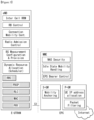
- FIG. 7 illustrates a method for performing V2X communication according to an embodiment of the disclosure.
- a UE receives a transmission request of a V2X message from an upper layer in S701.
- the UE When the UE receives the transmission request of the V2X message as in S701, the UE checks its mode in S702.
- the UE checks whether the UE is ⁇ Served by E-UTRAN for V2X communication' or ⁇ Not Served by E-UTRAN for V2X communication'.
- carrier frequency and/or radio resource for V2X communication may be indicated in a system information block (SIB) 21 (e.g., in a parameter ⁇ v2x-InterFreqInfoList-r14') broadcasted by a cell on which the UE is camped.
- SIB system information block
- the cell on which the UE is camped may operate in Mode 3 in which a specific resource to be used by the UE for the V2X communication is allocated by a base station, or Mode 4 in which a resource to be used by the UE for the V2X communication is selected in a resource pool configured by the base station.
- the UE When the UE receives the transmission request of the V2X message, the UE requests a resource for the V2X communication over a PCS interface from the base station or selects a resource for the V2X communication over the PCS interface in a resource pool pre-configured by the base station, if the UE is ⁇ Served by E-UTRAN for V2X communication', in S703.
- the UE may be considered as 'Served by E-UTRAN for V2X communication'.
- the meaning of 'providing' may be interpreted as that a cell on which the UE is camped allocates radio resources, or that a cell on which the UE is camped indicates radio resources of another cell (or cell operating on another carrier frequency).
- the UE when the UE receives the transmission request of the V2X message, the UE selects a resource for the V2X communication over the PCS interface if the UE is 'Not served by E-UTRAN for V2X communication', in S704 (i.e., as specified in subclause 6.1.2.3).
- the UE may be considered as ⁇ Not served by E-UTRAN for V2X communication'.
- a carrier frequency provided by the cell on which the UE is camped does not belong to a pre-configured carrier frequency the UE intends to use, the UE may be considered as ⁇ Not served by E-UTRAN for V2X communication'.
- the meaning of 'providing' may be interpreted as that a cell on which the UE is camped is operating on the carrier frequency, or that a cell on which the UE is camped indicates another carrier frequency.
- the UE may be considered as ⁇ Not served by E-UTRAN for V2X communication' or 'Served by E-UTRAN for V2X communication'.
- the meaning of 'providing' may be interpreted as that a cell on which the UE is camped operates on the carrier frequency, or that a cell on which the UE is camped indicates another carrier frequency.
- the UE when the UE wants to perform the V2X communication on the pre-configured carrier frequency among one or more carrier frequencies provided by the cell on which the UE is camped, the UE may be considered as 'Served by E-UTRAN for V2X communication'. In this case, the UE can search a cell operating on a carrier frequency on which the UE wants to perform the V2X communication among the carrier frequency provided by the cell on which the UE is camped. Further, the UE can perform the V2X communication in the searched cell.
- the UE may be considered as ⁇ Not served by E-UTRAN for V2X communication'.
- the UE when the UE does not want to perform the V2X communication on the pre-configured carrier frequency, the UE may be considered as ⁇ Not served by E-UTRAN for V2X communication'.
- the UE performs transmission for the V2X communication over the PCS interface in S705 (i.e., as specified in subclause 6.1.2.2).
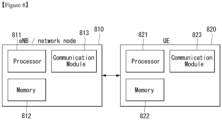
- FIG. 8 illustrates a block configuration diagram of a communication device according to an embodiment of the disclosure.
- a wireless communication system includes a network node 810 and a plurality of UEs 820.
- the network node 810 includes a processor 811, a memory 812, and a communication module 813.
- the processor 811 implements functions, processes, and/or methods proposed in FIGS. 1 to 7 . Layers of wired/wireless interface protocol may be implemented by the processor 811.
- the memory 812 is connected to the processor 811 and stores various types of information for driving the processor 811.
- the communication module 813 is connected to the processor 811 and transmits and/or receives wired/wireless signals.
- An example of the network node 810 may correspond to a base station, MME, HSS, SGW, PGW, SCEF, SCS/AS, or the like.
- the communication module 813 may include a radio frequency (RF) unit for transmitting/receiving a radio signal.
- RF radio frequency
- the UE 820 includes a processor 821, a memory 822, and a communication module (or RF unit) 823.
- the processor 821 implements functions, processes, and/or methods proposed in FIGS. 1 to 7 . Layers of a radio interface protocol may be implemented by the processor 821. In particular, the processor may include a NAS layer and an AS layer.
- the memory 822 is connected to the processor 821 and stores various types of information for driving the processor 821.
- the communication module 823 is connected to the processor 821 and transmits and/or receives a radio signal.
- the memories 812 and 822 may be inside or outside the processors 811 and 821 and may be connected to the processors 811 and 821 through various well-known means. Further, the network node 810 (in case of the base station) and/or the UE 820 may have a single antenna or multiple antennas.
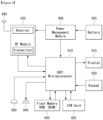
- FIG. 9 illustrates a block configuration diagram of a communication device according to an embodiment of the disclosure.
- FIG. 9 illustrates in more detail the UE illustrated in FIG. 8 .
- the UE may include a processor (or digital signal processor (DSP)) 910, an RF module (or RF unit) 935, a power management module 905, an antenna 940, a battery 955, a display 915, a keypad 920, a memory 930, a subscriber identification module (SIM) card 925 (which is optional), a speaker 945, and a microphone 950.
- the UE may also include a single antenna or multiple antennas.
- the processor 910 implements functions, processes, and/or methods proposed in FIGS. 1 to 7 . Layers of a radio interface protocol may be implemented by the processor 910.
- the memory 930 is connected to the processor 910 and stores information related to operations of the processor 910.
- the memory 930 may be inside or outside the processor 910 and may be connected to the processors 910 through various well-known means.
- a user inputs instructional information, such as a telephone number, for example, by pushing (or touching) buttons of the keypad 920 or by voice activation using the microphone 950.
- the processor 910 receives and processes the instructional information to perform an appropriate function, such as to dial the telephone number. Operational data may be extracted from the SIM card 925 or the memory 930. Further, the processor 910 may display instructional information or operational information on the display 915 for the user's reference and convenience.
- the RF module 935 is connected to the processor 910 and transmits and/or receives an RF signal.
- the processor 910 forwards instructional information to the RF module 935 in order to initiate communication, for example, transmit a radio signal configuring voice communication data.
- the RF module 935 includes a receiver and a transmitter to receive and transmit the radio signal.
- the antenna 940 functions to transmit and receive the radio signal.
- the RF module 935 may transfer a signal to be processed by the processor 910 and convert the signal into a baseband.
- the processed signal may be converted into audible or readable information output via the speaker 945.
- Embodiments of the present disclosure can be implemented by various means, for example, hardware, firmware, software, or combinations thereof.
- one embodiment of the present disclosure can be implemented by one or more application specific integrated circuits (ASICs), digital signal processors (DSPs), digital signal processing devices (DSPDs), programmable logic devices (PLDs), field programmable gate arrays (FPGAs), processors, controllers, microcontrollers, microprocessors, and the like.
- ASICs application specific integrated circuits
- DSPs digital signal processors
- DSPDs digital signal processing devices
- PLDs programmable logic devices
- FPGAs field programmable gate arrays
- processors controllers, microcontrollers, microprocessors, and the like.
- one embodiment of the present disclosure can be implemented by modules, procedures, functions, etc. performing functions or operations described above.
- Software code can be stored in a memory and can be driven by a processor.
- the memory is provided inside or outside the processor and can exchange data with the processor by various well-known means.
- the present disclosure has been described focusing on examples applying to the 3GPP LTE/LTE-A system, it can be applied to various wireless communication systems, for example, the fifth generation (5G) system other than the 3GPP LTE/LTE-A system.
- 5G fifth generation
Landscapes
- Engineering & Computer Science (AREA)
- Signal Processing (AREA)
- Computer Networks & Wireless Communication (AREA)
- Computer Security & Cryptography (AREA)
- Mobile Radio Communication Systems (AREA)
Claims (8)
- Verfahren zur Durchführung, durch ein Benutzergerät, UE, einer Kommunikation der Fahrzeug-zu-Infrastruktur, V2X, in einem drahtlosen Kommunikationssystem, wobei das Verfahren durch das UE durchgeführt wird und umfasst:Empfangen (S701), von einer oberen Schicht, einer Anforderung zum Senden einer V2X-Nachricht;Identifizieren (S702), ob das UE "nicht vom weiterentwickelten universellen terrestrischen Funkzugriffsnetzwerk, E-UTRAN, für die V2X-Kommunikation bedient wird" oder "vom E-UTRAN für die V2X-Kommunikation bedient wird";Bestimmen (S703) von Funkressourcen für die V2X-Kommunikation über PC5, basierend auf einer ersten Prozedur, für den Fall, in dem das UE "vom E-UTRAN für die V2X-Kommunikation bedient wird";Auswählen (S704) von Funkressourcen für die V2X-Kommunikation über PC5, basierend auf einer zweiten Prozedur, für den Fall, in dem das UE "nicht vom E-UTRAN für die V2X-Kommunikation bedient wird"; undSenden (S705) der V2X-Nachricht über PC5,wobei das UE als "nicht vom E-UTRAN für die V2X-Kommunikation bedient" betrachtet wird, basierend darauf, dass das UE auf einer Zelle lagert, die angibt, dass die V2X-Kommunikation über PC5 unterstützt wird, und eine Trägerfrequenz, die von der Zelle bereitgestellt wird, auf der das UE lagert, sich von einer gelieferten Trägerfrequenz für die V2X-Kommunikation über PC5 unterscheidet, die das UE zu verwenden beabsichtigt,wobei die erste Prozedur das Anfordern der Funkressourcen bei einer Basisstation umfasst, undwobei die zweite Prozedur umfasst, wenn das UE bestimmt, dass es sich in einem geografischen Bereich befindet und mit Funkparametern für den geografische Bereich beliefert wird, Auswählen von Funkparametern, die dem geografischen Bereich zugeordnet sind.
- Verfahren nach Anspruch 1, wobei die Zelle, auf der das UE lagert, auf einer Trägerfrequenz arbeitet, die in einem Systeminformationsblock, SIB, 21 angegeben ist, der von der Zelle, auf der das UE lagert, ausgestrahlt wird.
- Verfahren nach Anspruch 1, ferner umfassend:
Empfangen eines Systeminformationsblocks, SIB, 21, der eine Ressource anderer Trägerfrequenzen für die V2X-Kommunikation angibt. - Verfahren nach Anspruch 1, wobei die Zelle, auf der das UE lagert, in einem Modus 4 arbeitet, in dem eine Ressource, die vom UE für die V2X-Kommunikation verwendet werden soll, in einem Ressourcenpool ausgewählt wird, der von der Basisstation konfiguriert ist.
- Benutzergerät, UE, das eine Kommunikation der Fahrzeug-zu-Infrastruktur, V2X, in einem drahtlosen Kommunikationssystem durchführt, wobei das UE umfasst:einen Transceiver (823), der konfiguriert ist, um ein Funksignal zu übertragen und zu empfangen; undeinen Prozessor (821), der konfiguriert ist, um den Transceiver (823) zu steuern, und konfiguriert ist zum:Empfangen, über den Transceiver von einer oberen Schicht, einer Anforderung zum Senden einer V2X-Nachricht;Identifizieren, ob das UE "nicht vom weiterentwickelten universellen terrestrischen Funkzugriffsnetzwerk, E-UTRAN, für die V2X-Kommunikation bedient wird" oder "vom E-UTRAN für die V2X-Kommunikation bedient wird";Bestimmen von Funkressourcen für die V2X-Kommunikation über PC5, basierend auf einer ersten Prozedur, für den Fall, in dem das UE "vom E-UTRAN für die V2X-Kommunikation bedient wird";Auswählen von Funkressourcen für die V2X-Kommunikation über PC5, basierend auf einer zweiten Prozedur, für den Fall, in dem das UE "nicht vom E-UTRAN für die V2X-Kommunikation bedient wird"; undSenden der V2X-Nachricht über PC5,wobei das UE als "nicht vom E-UTRAN für die V2X-Kommunikation bedient" betrachtet wird, basierend darauf, dass das UE auf einer Zelle lagert, die angibt, dass die V2X-Kommunikation über PC5 unterstützt wird, und eine Trägerfrequenz, die von der Zelle bereitgestellt wird, auf der das UE lagert, sich von einer gelieferten Trägerfrequenz für die V2X-Kommunikation über PC5 unterscheidet, die das UE zu verwenden beabsichtigt,wobei die erste Prozedur das Anfordern der Funkressourcen bei einer Basisstation umfasst, undwobei die zweite Prozedur umfasst, wenn das UE bestimmt, dass es sich in einem geografischen Bereich befindet und mit Funkparametern für den geografische Bereich beliefert wird, Auswählen von Funkparametern, die dem geografischen Bereich zugeordnet sind.
- UE nach Anspruch 5, wobei die Zelle, auf der das UE lagert, auf einer Trägerfrequenz arbeitet, die in einem Systeminformationsblock, SIB, 21 angegeben ist, der von der Zelle, auf der das UE lagert, ausgestrahlt wird.
- UE nach Anspruch 5, wobei der Prozessor (821) ferner konfiguriert ist zum:
Empfangen eines Systeminformationsblocks, SIB, 21, der eine Ressource anderer Trägerfrequenzen für die V2X-Kommunikation angibt. - UE nach Anspruch 5, wobei die Zelle, auf der das UE lagert, in einem Modus 4 arbeitet, in dem eine Ressource, die vom UE für die V2X-Kommunikation verwendet werden soll, in einem Ressourcenpool ausgewählt wird, der von der Basisstation konfiguriert ist.
Applications Claiming Priority (5)
| Application Number | Priority Date | Filing Date | Title |
|---|---|---|---|
| US201762502799P | 2017-05-08 | 2017-05-08 | |
| US201762503865P | 2017-05-09 | 2017-05-09 | |
| US201762503950P | 2017-05-10 | 2017-05-10 | |
| US201762508291P | 2017-05-18 | 2017-05-18 | |
| PCT/KR2018/005274 WO2018208061A1 (ko) | 2017-05-08 | 2018-05-08 | 무선 통신 시스템에서 v2x 통신을 수행하기 방법 및 이를 위한 장치 |
Publications (3)
| Publication Number | Publication Date |
|---|---|
| EP3637890A1 EP3637890A1 (de) | 2020-04-15 |
| EP3637890A4 EP3637890A4 (de) | 2021-01-20 |
| EP3637890B1 true EP3637890B1 (de) | 2023-12-27 |
Family
ID=64105449
Family Applications (1)
| Application Number | Title | Priority Date | Filing Date |
|---|---|---|---|
| EP18799018.9A Active EP3637890B1 (de) | 2017-05-08 | 2018-05-08 | Verfahren zur durchführung von v2x-kommunikation in einem drahtloskommunikationssystem und vorrichtung dafür |
Country Status (6)
| Country | Link |
|---|---|
| US (1) | US11115790B2 (de) |
| EP (1) | EP3637890B1 (de) |
| JP (1) | JP6776459B2 (de) |
| KR (1) | KR102164034B1 (de) |
| CN (1) | CN110870360B (de) |
| WO (1) | WO2018208061A1 (de) |
Families Citing this family (12)
| Publication number | Priority date | Publication date | Assignee | Title |
|---|---|---|---|---|
| US11019668B2 (en) | 2018-04-09 | 2021-05-25 | Ofinno, Llc | PDU session establishment for cellular IoT |
| CN118632212A (zh) | 2018-06-22 | 2024-09-10 | 交互数字专利控股公司 | 使用pc5通信为wtru保护隐私的方法 |
| CN111866799B (zh) * | 2019-04-30 | 2021-10-01 | 华为技术有限公司 | 资源请求方法、资源分配方法、装置及介质 |
| US11246115B2 (en) * | 2019-05-03 | 2022-02-08 | Qualcomm Incorporated | Resource allocation with packet delay budget constraint |
| KR20210088323A (ko) * | 2020-01-06 | 2021-07-14 | 삼성전자주식회사 | 무선 통신 시스템에서 직접 통신 서비스를 지원하기 위한 장치 및 방법 |
| US12177812B2 (en) * | 2020-02-28 | 2024-12-24 | Qualcomm Incorporated | Techniques for selecting resources from resource maps obtained from nearby devices |
| WO2021207219A1 (en) | 2020-04-08 | 2021-10-14 | Idac Holdings, Inc. | Methods, apparatuses and systems directed to a change of wtru to wtru relay |
| CN113727368B (zh) * | 2020-05-25 | 2025-04-29 | 华为技术有限公司 | 一种通信方法及装置 |
| CN114126093B (zh) * | 2020-08-27 | 2024-11-15 | 维沃移动通信有限公司 | 副链路非连续接收的控制方法、装置、设备及可读存储介质 |
| KR20230152452A (ko) * | 2022-04-27 | 2023-11-03 | 삼성전자주식회사 | 차량에 탑재된 통신 장치 및 그 동작 방법 |
| EP4483602B1 (de) | 2023-04-04 | 2025-10-01 | InterDigital Patent Holdings, Inc. | Datenschutz unter verwendung von verknüpfungsmodifikationsoperationen während einer relaisneuauswahl |
| CN120018114A (zh) | 2023-04-04 | 2025-05-16 | 交互数字专利控股公司 | 用于在中继重选期间使用初始连接释放的协调的隐私保护的方法 |
Family Cites Families (13)
| Publication number | Priority date | Publication date | Assignee | Title |
|---|---|---|---|---|
| EP2983425B1 (de) * | 2014-08-08 | 2019-03-06 | Panasonic Intellectual Property Corporation of America | D2D-Datenübertragung - Zeitvorlauf für Ruhemodus-Benutzergerät |
| WO2016048083A1 (en) * | 2014-09-25 | 2016-03-31 | Lg Electronics Inc. | Method and apparatus for prioritizing device-to-device reception over mbms reception in wireless communication system |
| KR101592788B1 (ko) * | 2014-11-19 | 2016-02-18 | 현대자동차주식회사 | 이상 차량 처리 방법 및 이를 수행하는 v2x 통신 시스템 |
| US10485013B2 (en) * | 2015-06-19 | 2019-11-19 | Lg Electronics Inc. | V2X message transmission method performed by terminal in wireless communication system, and terminal using same |
| US10834751B2 (en) * | 2015-08-14 | 2020-11-10 | Lg Electronics Inc. | Method and apparatus for delivering time-critical message between devices belonging to different cells in wireless communication system |
| EP3223575B1 (de) * | 2015-11-19 | 2019-06-12 | ASUSTek Computer Inc. | Verfahren und vorrichtung zur schaltung einer kommunikationsschnittstelle in einem drahtloskommunikationssystem |
| CN107040557B (zh) * | 2016-02-03 | 2020-10-09 | 中兴通讯股份有限公司 | 资源申请、分配方法,ue及网络控制单元 |
| WO2017173072A1 (en) * | 2016-03-30 | 2017-10-05 | Interdigital Patent Holdings, Inc. | Method and wireless unit for v2x communication |
| JP6669041B2 (ja) * | 2016-05-12 | 2020-03-18 | ソニー株式会社 | 通信装置、通信方法及びコンピュータプログラム |
| EP3244677B1 (de) * | 2016-05-13 | 2020-04-29 | Panasonic Intellectual Property Corporation of America | Verbesserter mechanismus zur qos-implementierung in der fahrzeugkommunikation |
| US10687242B2 (en) * | 2016-06-30 | 2020-06-16 | Apple Inc. | Dynamic offloading of V2X services to DSRC |
| US11671907B2 (en) * | 2016-07-26 | 2023-06-06 | Apple Inc. | Device for and method of radio access technology selection among multiple radio access technologies |
| US10356758B2 (en) * | 2016-08-11 | 2019-07-16 | Asustek Computer Inc. | Method and apparatus for requesting and modifying resource configuration in a wireless communication system |
-
2018
- 2018-05-08 JP JP2019561209A patent/JP6776459B2/ja active Active
- 2018-05-08 US US16/611,408 patent/US11115790B2/en active Active
- 2018-05-08 KR KR1020197031522A patent/KR102164034B1/ko active Active
- 2018-05-08 CN CN201880045732.9A patent/CN110870360B/zh active Active
- 2018-05-08 WO PCT/KR2018/005274 patent/WO2018208061A1/ko not_active Ceased
- 2018-05-08 EP EP18799018.9A patent/EP3637890B1/de active Active
Also Published As
| Publication number | Publication date |
|---|---|
| US20200145798A1 (en) | 2020-05-07 |
| CN110870360A (zh) | 2020-03-06 |
| CN110870360B (zh) | 2023-10-10 |
| JP2020520160A (ja) | 2020-07-02 |
| US11115790B2 (en) | 2021-09-07 |
| EP3637890A4 (de) | 2021-01-20 |
| WO2018208061A1 (ko) | 2018-11-15 |
| KR102164034B1 (ko) | 2020-10-12 |
| JP6776459B2 (ja) | 2020-10-28 |
| EP3637890A1 (de) | 2020-04-15 |
| KR20190131549A (ko) | 2019-11-26 |
Similar Documents
| Publication | Publication Date | Title |
|---|---|---|
| US12096211B2 (en) | Method for performing V2X communication in wireless communication system and device for same | |
| US11026070B2 (en) | Method for performing V2X communication in wireless communication system and apparatus for same | |
| EP3637890B1 (de) | Verfahren zur durchführung von v2x-kommunikation in einem drahtloskommunikationssystem und vorrichtung dafür | |
| US10231089B2 (en) | Method for managing area of terminal in wireless communication system and apparatus therefor | |
| US10499452B2 (en) | Method for direct communication between terminals in wireless communication system and device therefor | |
| US11259208B2 (en) | Overload control method in wireless communication system and device for same | |
| US20200077253A1 (en) | Method for transmitting and receiving data using relay in wireless communication system, and apparatus therefor | |
| US20190028887A1 (en) | Method for controlling congestion in wireless communication system and device for same | |
| US20170374644A1 (en) | Method for transmitting paging in wireless communication system, and apparatus therefor | |
| US20200213819A1 (en) | Method for supporting sms transmission for user equipment that can receive service from 3gpp 5g system and from eps in wireless communication system, and apparatus therefor | |
| US10327130B2 (en) | Method for receiving and transmitting TAU-less PSM related signal in wireless communication system, and apparatus therefor | |
| US10182468B2 (en) | Method for performing D2D communication in wireless communication system and device therefor | |
| US11272562B2 (en) | Method for eNB to transmit downlink data to remote UE in wireless communication system and device therefor | |
| US20170303195A1 (en) | Method for processing data for terminal, in psm, in wireless communication system and device therefor |
Legal Events
| Date | Code | Title | Description |
|---|---|---|---|
| STAA | Information on the status of an ep patent application or granted ep patent |
Free format text: STATUS: THE INTERNATIONAL PUBLICATION HAS BEEN MADE |
|
| PUAI | Public reference made under article 153(3) epc to a published international application that has entered the european phase |
Free format text: ORIGINAL CODE: 0009012 |
|
| STAA | Information on the status of an ep patent application or granted ep patent |
Free format text: STATUS: REQUEST FOR EXAMINATION WAS MADE |
|
| 17P | Request for examination filed |
Effective date: 20191205 |
|
| AK | Designated contracting states |
Kind code of ref document: A1 Designated state(s): AL AT BE BG CH CY CZ DE DK EE ES FI FR GB GR HR HU IE IS IT LI LT LU LV MC MK MT NL NO PL PT RO RS SE SI SK SM TR |
|
| AX | Request for extension of the european patent |
Extension state: BA ME |
|
| DAV | Request for validation of the european patent (deleted) | ||
| DAX | Request for extension of the european patent (deleted) | ||
| A4 | Supplementary search report drawn up and despatched |
Effective date: 20201218 |
|
| RIC1 | Information provided on ipc code assigned before grant |
Ipc: H04W 92/18 20090101ALI20201214BHEP Ipc: H04W 4/40 20180101ALI20201214BHEP Ipc: H04W 48/16 20090101ALI20201214BHEP Ipc: H04W 72/02 20090101AFI20201214BHEP Ipc: H04L 5/00 20060101ALI20201214BHEP Ipc: H04W 48/12 20090101ALN20201214BHEP |
|
| STAA | Information on the status of an ep patent application or granted ep patent |
Free format text: STATUS: EXAMINATION IS IN PROGRESS |
|
| 17Q | First examination report despatched |
Effective date: 20220404 |
|
| GRAP | Despatch of communication of intention to grant a patent |
Free format text: ORIGINAL CODE: EPIDOSNIGR1 |
|
| STAA | Information on the status of an ep patent application or granted ep patent |
Free format text: STATUS: GRANT OF PATENT IS INTENDED |
|
| RIC1 | Information provided on ipc code assigned before grant |
Ipc: H04W 48/12 20090101ALN20230705BHEP Ipc: H04L 5/00 20060101ALI20230705BHEP Ipc: H04W 92/18 20090101ALI20230705BHEP Ipc: H04W 4/40 20180101ALI20230705BHEP Ipc: H04W 48/16 20090101ALI20230705BHEP Ipc: H04W 72/02 20090101AFI20230705BHEP |
|
| INTG | Intention to grant announced |
Effective date: 20230721 |
|
| GRAS | Grant fee paid |
Free format text: ORIGINAL CODE: EPIDOSNIGR3 |
|
| GRAA | (expected) grant |
Free format text: ORIGINAL CODE: 0009210 |
|
| STAA | Information on the status of an ep patent application or granted ep patent |
Free format text: STATUS: THE PATENT HAS BEEN GRANTED |
|
| AK | Designated contracting states |
Kind code of ref document: B1 Designated state(s): AL AT BE BG CH CY CZ DE DK EE ES FI FR GB GR HR HU IE IS IT LI LT LU LV MC MK MT NL NO PL PT RO RS SE SI SK SM TR |
|
| REG | Reference to a national code |
Ref country code: GB Ref legal event code: FG4D |
|
| REG | Reference to a national code |
Ref country code: CH Ref legal event code: EP |
|
| REG | Reference to a national code |
Ref country code: DE Ref legal event code: R096 Ref document number: 602018063287 Country of ref document: DE |
|
| REG | Reference to a national code |
Ref country code: IE Ref legal event code: FG4D |
|
| PG25 | Lapsed in a contracting state [announced via postgrant information from national office to epo] |
Ref country code: GR Free format text: LAPSE BECAUSE OF FAILURE TO SUBMIT A TRANSLATION OF THE DESCRIPTION OR TO PAY THE FEE WITHIN THE PRESCRIBED TIME-LIMIT Effective date: 20240328 |
|
| REG | Reference to a national code |
Ref country code: LT Ref legal event code: MG9D |
|
| PG25 | Lapsed in a contracting state [announced via postgrant information from national office to epo] |
Ref country code: LT Free format text: LAPSE BECAUSE OF FAILURE TO SUBMIT A TRANSLATION OF THE DESCRIPTION OR TO PAY THE FEE WITHIN THE PRESCRIBED TIME-LIMIT Effective date: 20231227 |
|
| PG25 | Lapsed in a contracting state [announced via postgrant information from national office to epo] |
Ref country code: ES Free format text: LAPSE BECAUSE OF FAILURE TO SUBMIT A TRANSLATION OF THE DESCRIPTION OR TO PAY THE FEE WITHIN THE PRESCRIBED TIME-LIMIT Effective date: 20231227 |
|
| PG25 | Lapsed in a contracting state [announced via postgrant information from national office to epo] |
Ref country code: LT Free format text: LAPSE BECAUSE OF FAILURE TO SUBMIT A TRANSLATION OF THE DESCRIPTION OR TO PAY THE FEE WITHIN THE PRESCRIBED TIME-LIMIT Effective date: 20231227 Ref country code: GR Free format text: LAPSE BECAUSE OF FAILURE TO SUBMIT A TRANSLATION OF THE DESCRIPTION OR TO PAY THE FEE WITHIN THE PRESCRIBED TIME-LIMIT Effective date: 20240328 Ref country code: FI Free format text: LAPSE BECAUSE OF FAILURE TO SUBMIT A TRANSLATION OF THE DESCRIPTION OR TO PAY THE FEE WITHIN THE PRESCRIBED TIME-LIMIT Effective date: 20231227 Ref country code: ES Free format text: LAPSE BECAUSE OF FAILURE TO SUBMIT A TRANSLATION OF THE DESCRIPTION OR TO PAY THE FEE WITHIN THE PRESCRIBED TIME-LIMIT Effective date: 20231227 Ref country code: BG Free format text: LAPSE BECAUSE OF FAILURE TO SUBMIT A TRANSLATION OF THE DESCRIPTION OR TO PAY THE FEE WITHIN THE PRESCRIBED TIME-LIMIT Effective date: 20240327 |
|
| REG | Reference to a national code |
Ref country code: NL Ref legal event code: MP Effective date: 20231227 |
|
| REG | Reference to a national code |
Ref country code: AT Ref legal event code: MK05 Ref document number: 1645720 Country of ref document: AT Kind code of ref document: T Effective date: 20231227 |
|
| PG25 | Lapsed in a contracting state [announced via postgrant information from national office to epo] |
Ref country code: NL Free format text: LAPSE BECAUSE OF FAILURE TO SUBMIT A TRANSLATION OF THE DESCRIPTION OR TO PAY THE FEE WITHIN THE PRESCRIBED TIME-LIMIT Effective date: 20231227 |
|
| PG25 | Lapsed in a contracting state [announced via postgrant information from national office to epo] |
Ref country code: SE Free format text: LAPSE BECAUSE OF FAILURE TO SUBMIT A TRANSLATION OF THE DESCRIPTION OR TO PAY THE FEE WITHIN THE PRESCRIBED TIME-LIMIT Effective date: 20231227 Ref country code: RS Free format text: LAPSE BECAUSE OF FAILURE TO SUBMIT A TRANSLATION OF THE DESCRIPTION OR TO PAY THE FEE WITHIN THE PRESCRIBED TIME-LIMIT Effective date: 20231227 Ref country code: NO Free format text: LAPSE BECAUSE OF FAILURE TO SUBMIT A TRANSLATION OF THE DESCRIPTION OR TO PAY THE FEE WITHIN THE PRESCRIBED TIME-LIMIT Effective date: 20240327 Ref country code: NL Free format text: LAPSE BECAUSE OF FAILURE TO SUBMIT A TRANSLATION OF THE DESCRIPTION OR TO PAY THE FEE WITHIN THE PRESCRIBED TIME-LIMIT Effective date: 20231227 Ref country code: LV Free format text: LAPSE BECAUSE OF FAILURE TO SUBMIT A TRANSLATION OF THE DESCRIPTION OR TO PAY THE FEE WITHIN THE PRESCRIBED TIME-LIMIT Effective date: 20231227 Ref country code: HR Free format text: LAPSE BECAUSE OF FAILURE TO SUBMIT A TRANSLATION OF THE DESCRIPTION OR TO PAY THE FEE WITHIN THE PRESCRIBED TIME-LIMIT Effective date: 20231227 |
|
| PG25 | Lapsed in a contracting state [announced via postgrant information from national office to epo] |
Ref country code: IS Free format text: LAPSE BECAUSE OF FAILURE TO SUBMIT A TRANSLATION OF THE DESCRIPTION OR TO PAY THE FEE WITHIN THE PRESCRIBED TIME-LIMIT Effective date: 20240427 |
|
| PG25 | Lapsed in a contracting state [announced via postgrant information from national office to epo] |
Ref country code: AT Free format text: LAPSE BECAUSE OF FAILURE TO SUBMIT A TRANSLATION OF THE DESCRIPTION OR TO PAY THE FEE WITHIN THE PRESCRIBED TIME-LIMIT Effective date: 20231227 Ref country code: CZ Free format text: LAPSE BECAUSE OF FAILURE TO SUBMIT A TRANSLATION OF THE DESCRIPTION OR TO PAY THE FEE WITHIN THE PRESCRIBED TIME-LIMIT Effective date: 20231227 |
|
| PG25 | Lapsed in a contracting state [announced via postgrant information from national office to epo] |
Ref country code: SK Free format text: LAPSE BECAUSE OF FAILURE TO SUBMIT A TRANSLATION OF THE DESCRIPTION OR TO PAY THE FEE WITHIN THE PRESCRIBED TIME-LIMIT Effective date: 20231227 |
|
| PG25 | Lapsed in a contracting state [announced via postgrant information from national office to epo] |
Ref country code: SM Free format text: LAPSE BECAUSE OF FAILURE TO SUBMIT A TRANSLATION OF THE DESCRIPTION OR TO PAY THE FEE WITHIN THE PRESCRIBED TIME-LIMIT Effective date: 20231227 Ref country code: SK Free format text: LAPSE BECAUSE OF FAILURE TO SUBMIT A TRANSLATION OF THE DESCRIPTION OR TO PAY THE FEE WITHIN THE PRESCRIBED TIME-LIMIT Effective date: 20231227 Ref country code: RO Free format text: LAPSE BECAUSE OF FAILURE TO SUBMIT A TRANSLATION OF THE DESCRIPTION OR TO PAY THE FEE WITHIN THE PRESCRIBED TIME-LIMIT Effective date: 20231227 Ref country code: IT Free format text: LAPSE BECAUSE OF FAILURE TO SUBMIT A TRANSLATION OF THE DESCRIPTION OR TO PAY THE FEE WITHIN THE PRESCRIBED TIME-LIMIT Effective date: 20231227 Ref country code: IS Free format text: LAPSE BECAUSE OF FAILURE TO SUBMIT A TRANSLATION OF THE DESCRIPTION OR TO PAY THE FEE WITHIN THE PRESCRIBED TIME-LIMIT Effective date: 20240427 Ref country code: EE Free format text: LAPSE BECAUSE OF FAILURE TO SUBMIT A TRANSLATION OF THE DESCRIPTION OR TO PAY THE FEE WITHIN THE PRESCRIBED TIME-LIMIT Effective date: 20231227 Ref country code: CZ Free format text: LAPSE BECAUSE OF FAILURE TO SUBMIT A TRANSLATION OF THE DESCRIPTION OR TO PAY THE FEE WITHIN THE PRESCRIBED TIME-LIMIT Effective date: 20231227 Ref country code: AT Free format text: LAPSE BECAUSE OF FAILURE TO SUBMIT A TRANSLATION OF THE DESCRIPTION OR TO PAY THE FEE WITHIN THE PRESCRIBED TIME-LIMIT Effective date: 20231227 |
|
| PG25 | Lapsed in a contracting state [announced via postgrant information from national office to epo] |
Ref country code: PL Free format text: LAPSE BECAUSE OF FAILURE TO SUBMIT A TRANSLATION OF THE DESCRIPTION OR TO PAY THE FEE WITHIN THE PRESCRIBED TIME-LIMIT Effective date: 20231227 Ref country code: PT Free format text: LAPSE BECAUSE OF FAILURE TO SUBMIT A TRANSLATION OF THE DESCRIPTION OR TO PAY THE FEE WITHIN THE PRESCRIBED TIME-LIMIT Effective date: 20240429 |
|
| PG25 | Lapsed in a contracting state [announced via postgrant information from national office to epo] |
Ref country code: PT Free format text: LAPSE BECAUSE OF FAILURE TO SUBMIT A TRANSLATION OF THE DESCRIPTION OR TO PAY THE FEE WITHIN THE PRESCRIBED TIME-LIMIT Effective date: 20240429 Ref country code: PL Free format text: LAPSE BECAUSE OF FAILURE TO SUBMIT A TRANSLATION OF THE DESCRIPTION OR TO PAY THE FEE WITHIN THE PRESCRIBED TIME-LIMIT Effective date: 20231227 |
|
| REG | Reference to a national code |
Ref country code: DE Ref legal event code: R097 Ref document number: 602018063287 Country of ref document: DE |
|
| PG25 | Lapsed in a contracting state [announced via postgrant information from national office to epo] |
Ref country code: DK Free format text: LAPSE BECAUSE OF FAILURE TO SUBMIT A TRANSLATION OF THE DESCRIPTION OR TO PAY THE FEE WITHIN THE PRESCRIBED TIME-LIMIT Effective date: 20231227 |
|
| PG25 | Lapsed in a contracting state [announced via postgrant information from national office to epo] |
Ref country code: DK Free format text: LAPSE BECAUSE OF FAILURE TO SUBMIT A TRANSLATION OF THE DESCRIPTION OR TO PAY THE FEE WITHIN THE PRESCRIBED TIME-LIMIT Effective date: 20231227 |
|
| PLBE | No opposition filed within time limit |
Free format text: ORIGINAL CODE: 0009261 |
|
| STAA | Information on the status of an ep patent application or granted ep patent |
Free format text: STATUS: NO OPPOSITION FILED WITHIN TIME LIMIT |
|
| 26N | No opposition filed |
Effective date: 20240930 |
|
| REG | Reference to a national code |
Ref country code: CH Ref legal event code: PL |
|
| PG25 | Lapsed in a contracting state [announced via postgrant information from national office to epo] |
Ref country code: MC Free format text: LAPSE BECAUSE OF FAILURE TO SUBMIT A TRANSLATION OF THE DESCRIPTION OR TO PAY THE FEE WITHIN THE PRESCRIBED TIME-LIMIT Effective date: 20231227 |
|
| PG25 | Lapsed in a contracting state [announced via postgrant information from national office to epo] |
Ref country code: LU Free format text: LAPSE BECAUSE OF NON-PAYMENT OF DUE FEES Effective date: 20240508 |
|
| PG25 | Lapsed in a contracting state [announced via postgrant information from national office to epo] |
Ref country code: MC Free format text: LAPSE BECAUSE OF FAILURE TO SUBMIT A TRANSLATION OF THE DESCRIPTION OR TO PAY THE FEE WITHIN THE PRESCRIBED TIME-LIMIT Effective date: 20231227 Ref country code: LU Free format text: LAPSE BECAUSE OF NON-PAYMENT OF DUE FEES Effective date: 20240508 Ref country code: CH Free format text: LAPSE BECAUSE OF NON-PAYMENT OF DUE FEES Effective date: 20240531 |
|
| REG | Reference to a national code |
Ref country code: BE Ref legal event code: MM Effective date: 20240531 |
|
| PG25 | Lapsed in a contracting state [announced via postgrant information from national office to epo] |
Ref country code: IE Free format text: LAPSE BECAUSE OF NON-PAYMENT OF DUE FEES Effective date: 20240508 |
|
| PG25 | Lapsed in a contracting state [announced via postgrant information from national office to epo] |
Ref country code: BE Free format text: LAPSE BECAUSE OF NON-PAYMENT OF DUE FEES Effective date: 20240531 Ref country code: SI Free format text: LAPSE BECAUSE OF FAILURE TO SUBMIT A TRANSLATION OF THE DESCRIPTION OR TO PAY THE FEE WITHIN THE PRESCRIBED TIME-LIMIT Effective date: 20231227 |
|
| PGFP | Annual fee paid to national office [announced via postgrant information from national office to epo] |
Ref country code: DE Payment date: 20250407 Year of fee payment: 8 |
|
| PGFP | Annual fee paid to national office [announced via postgrant information from national office to epo] |
Ref country code: FR Payment date: 20250408 Year of fee payment: 8 |
|
| PG25 | Lapsed in a contracting state [announced via postgrant information from national office to epo] |
Ref country code: CY Free format text: LAPSE BECAUSE OF FAILURE TO SUBMIT A TRANSLATION OF THE DESCRIPTION OR TO PAY THE FEE WITHIN THE PRESCRIBED TIME-LIMIT; INVALID AB INITIO Effective date: 20180508 |
|
| PG25 | Lapsed in a contracting state [announced via postgrant information from national office to epo] |
Ref country code: HU Free format text: LAPSE BECAUSE OF FAILURE TO SUBMIT A TRANSLATION OF THE DESCRIPTION OR TO PAY THE FEE WITHIN THE PRESCRIBED TIME-LIMIT; INVALID AB INITIO Effective date: 20180508 |
|
| PGFP | Annual fee paid to national office [announced via postgrant information from national office to epo] |
Ref country code: GB Payment date: 20260309 Year of fee payment: 9 |