EP3639193B1 - Rétroaction humaine dans l'ajustement de modèles 3d - Google Patents
Rétroaction humaine dans l'ajustement de modèles 3d Download PDFInfo
- Publication number
- EP3639193B1 EP3639193B1 EP18733052.7A EP18733052A EP3639193B1 EP 3639193 B1 EP3639193 B1 EP 3639193B1 EP 18733052 A EP18733052 A EP 18733052A EP 3639193 B1 EP3639193 B1 EP 3639193B1
- Authority
- EP
- European Patent Office
- Prior art keywords
- model
- ground truth
- optimizer
- function
- parameters
- Prior art date
- Legal status (The legal status is an assumption and is not a legal conclusion. Google has not performed a legal analysis and makes no representation as to the accuracy of the status listed.)
- Active
Links
Images



Classifications
-
- G—PHYSICS
- G06—COMPUTING OR CALCULATING; COUNTING
- G06V—IMAGE OR VIDEO RECOGNITION OR UNDERSTANDING
- G06V20/00—Scenes; Scene-specific elements
- G06V20/60—Type of objects
- G06V20/64—Three-dimensional [3D] objects
-
- G—PHYSICS
- G06—COMPUTING OR CALCULATING; COUNTING
- G06N—COMPUTING ARRANGEMENTS BASED ON SPECIFIC COMPUTATIONAL MODELS
- G06N20/00—Machine learning
-
- G—PHYSICS
- G06—COMPUTING OR CALCULATING; COUNTING
- G06T—IMAGE DATA PROCESSING OR GENERATION, IN GENERAL
- G06T19/00—Manipulating three-dimensional [3D] models or images for computer graphics
- G06T19/20—Editing of three-dimensional [3D] images, e.g. changing shapes or colours, aligning objects or positioning parts
-
- G—PHYSICS
- G06—COMPUTING OR CALCULATING; COUNTING
- G06V—IMAGE OR VIDEO RECOGNITION OR UNDERSTANDING
- G06V10/00—Arrangements for image or video recognition or understanding
- G06V10/98—Detection or correction of errors, e.g. by rescanning the pattern or by human intervention; Evaluation of the quality of the acquired patterns
- G06V10/987—Detection or correction of errors, e.g. by rescanning the pattern or by human intervention; Evaluation of the quality of the acquired patterns with the intervention of an operator
-
- G—PHYSICS
- G06—COMPUTING OR CALCULATING; COUNTING
- G06T—IMAGE DATA PROCESSING OR GENERATION, IN GENERAL
- G06T2219/00—Indexing scheme for manipulating 3D models or images for computer graphics
- G06T2219/004—Annotating, labelling
Definitions
- 3D model fitting is a field of engineering in which captured sensor data such as depth images, stereo images, color images and other captured sensor data is observed from a scene depicting one or more objects, and the observed data is fitted to 3D models of the objects.
- captured sensor data such as depth images, stereo images, color images and other captured sensor data
- the observed data is fitted to 3D models of the objects.
- a computer is able to compute a representation of the objects and/or scene which is succinct and yet extremely powerful since it enables the computer to navigate in the scene (robotic control), reason about objects in the scene, overlay virtual objects onto the scene in a way which takes the objects into account, and control user interfaces in dependence on objects in the scene such as human hands and bodies.
- values of parameters of the model are computed such as one or more of: orientation, translation, shape and pose.
- the parameters of the model typically include a plurality of joint angles and positions of joints and/or end effectors such as finger tips.
- Ground truth data in the context of 3D model fitting, comprises observed sensor data and corresponding values of the 3D model parameters which are known to be highly accurate. Obtaining such ground truth data is extremely difficult and expensive and is useful for a variety of applications, including evaluation of 3D model fitters, machine learning and applications in the film industry, such as avatar animation, 3D motion capture for green screening and others.
- a ground truth engine which has a memory holding a plurality of captured images depicting an articulated item.
- a processor of the engine is configured to access a parameterized, three dimensional (3D) model of the item.
- An optimizer of the ground truth engine is configured to compute ground truth values of the parameters of the 3D model for individual ones of the captured images by computing an optimization comprising an iterative process, such that the articulated item depicted in the captured image fits the 3D model, the optimizer configured to take into account feedback data from one or more humans, about accuracy of a plurality of the computed values of the parameters.
- the optimizer is configured to take into account the feedback data by aggregating at least one penalty function with an energy function which is optimized by the ground truth engine, the energy function expressing how the 3D model is expected to fit the captured images.
- FIG. 1 shows a ground truth engine 106 which is computer implemented and which is configured to compute a corpus 122 of ground truth data comprising images of an articulated item and, for individual ones of the images, highly accurate values of parameters of a 3D model of the articulated item fitting the depiction of the item in the image.
- the ground truth engine 106 receives captured images 104 such as stereo images, depth images from depth cameras, color images or other images depicting the articulated item.
- the articulated item is a complete articulated object such as a human body, a laptop computer, an animal, or is part of an articulated object, such as a human hand, a human head and shoulders, a human foot.
- FIG. 1 shows a plurality of capture devices 102 which are fixed to the ground and which are located at different positions around a scene.
- the scene comprises a person 100 although other scenes can be used such as where there are multiple people, or where the scene comprises other objects and surfaces.
- four capture devices 102 are shown for clarity although there may be tens of capture devices in practice.
- the examples described herein are workable for one or more capture devices. By increasing the number of capture devices used the ability to capture images of the scene from a variety of different view points is increased so as to deal with occlusion.
- the captured images are anonymized to remove sensitive data.
- the ground truth engine 106 comprises an optimizer 108, a human optimization input component 110, one or more processors 112 and a memory 114.
- the memory holds a plurality of the captured images 104 depicting an articulated item such as the person 100.
- the processor 112 is configured to access a parameterized, three dimensional, 3D, model of the item.
- 3D model is: a mesh model, a smooth-surface version of a mesh model, a sub-division surface model, a skinned mesh model.
- the 3D model is parameterized such as by having parameters which represent orientation, shape and pose of the 3D model. Typically there are six or more parameters and there may be tens of parameters such as thirty or more.
- ground truth corpus 122 Once the ground truth corpus 122 has been computed by the ground truth engine 106 it is made available to one or more downstream systems 124.
- a non-exhaustive list of examples of such downstream system 124 is: pose estimation 126, motion capture system 128, robotic system 130, object tracker 132, computer animation 134.
- the downstream system 124 is able to use the ground truth corpus 122 for a variety of tasks such as to evaluate the downstream system, for machine learning, for improvement of the downstream system using the results of evaluation.
- the functionality of the optimizer 108 described herein is performed, at least in part, by one or more hardware logic components.
- illustrative types of hardware logic components include Field-programmable Gate Arrays (FPGAs), Application-specific Integrated Circuits (ASICs), Application-specific Standard Products (ASSPs), System-on-a-chip systems (SOCs), Complex Programmable Logic Devices (CPLDs), Graphics Processing Units (GPUs).
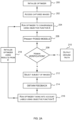
- FIG. 2A is a flow diagram of a method at the optimizer and human optimization input component of FIG. 1 .
- the optimizer is initialized 200 with one or more of: human annotation data received from the human optimization input component 110, random initial values of the parameters of the 3D model, values computed from a previous execution of the optimizer.
- the optimizer 108 accesses the captured images 104 and runs 204 to convergence using an objective function E.
- the optimizer uses an iterative process and convergence is detected when there is little or no change in the values of the parameters of the 3D model between iterations, or after a specified number of iterations.
- the objective function E is also known as an energy function and it expresses how the parameterized 3D model is expected to fit the data, such as by expressing a difference between the model and the observed data, or between an image rendered from the model and the observed data.
- the optimizer 108 To achieve high accuracy as compared with real-time model fitters, large amounts of computing resources are used by the optimizer 108, such as from the cloud. For example, the optimization is carried out over a plurality of time instances of the captured images 202 in some cases. Since the optimization may be carried out offline, that is, independently of any frame rate of the capture devices 102, it is possible for the optimization to be over batches of captured images. The optimization may use significant amounts of computational resources such as those available in a cloud computing environment such as a cloud data center.
- the optimizer 108 is able to achieve highly accurate results by considering large sets of candidate poses, repeating many iterative pose adjustment steps, using extra calibration steps to account for item-specific details in shape, and by avoiding many shortcuts which are typically used in real-time model fitting systems such as considering only a subset of the data points in each image.
- the results of the model fitting at this point in the process of FIG. 2A comprises a plurality of sets of values of the model parameters, one set per individual time instance of the captured images.
- the human optimization input component 110 generates and presents 3D views of the 3D model with different ones of the sets of values applied.
- the human 120 views the presented posed 3D models 206 and carries out human verification 208 by indicating whether the posed 3D model is correct or not. If all or a specified proportion of the posed 3D models are correct the computed values of the model parameters and the associated captured images are output 210 to the ground truth corpus 122. Otherwise the human optimization input component 110 selects a subset of the captured images 212.
- the corresponding posed 3D model for each of the selected images is presented to the human 120 to obtain feedback 214.
- the feedback comprises annotations indicating positions of one or more joints or other locations on the articulated item.
- the feedback is converted into a form suitable for aggregation with an objective function E of the optimizer.
- the feedback comprises one or more penalty functions which are formed from the feedback values and which are added to the objective function E to form another objective function denoted by the symbol ⁇ .
- the optimizer 108 is then run taking into account the feedback by using the objective function ⁇ . Once convergence is reached the optimizer is initialized using the results obtained by optimizing ⁇ (see step 218 of FIG. 2A ) and the optimizer 108 is run again using the original objective function E which does not take into account the feedback. This relaxes the constraints which were imposed on the objective function by adding the penalty function(s).
- the operations 204 to 218 are repeated a plurality of times until the human verification 208 is successful and the method ends. In this way, highly accurate ground truth parameter values of the 3D model are obtained for captured images depicting an instance of the articulated item being modeled. The ground truth parameter values are obtained in a systematic, automated manner for a huge number of captured images. In this way ground truth data can be collected for large numbers of instances of the articulated item and large numbers of poses of individual articulated items.
- FIG. 2A Whilst the method of FIG. 2A is fully workable, in some cases it may use many passes of "human in the loop optimization", as there is no guarantee that the constraints added by the feedback from the human are respected after relaxation.
- the method of FIG. 2A there is use of the objective function with the aggregated penalty function followed by relaxation using the original objective function.
- the method of FIG 2B is an example where the relaxation process is omitted and highly accurate results are obtained with relatively few passes of "human in the loop optimization" as compared with the process of FIG. 2A . In this case, an accuracy range is empirically determined for one or more types of the human feedback.
- the optimizer 108 is initialized in the same way as for the method of FIG. 2A .
- the optimizer 108 accesses the captured images 104 and executes.
- the results of the optimization are presented to the human 120 as described above with reference to FIG 2A and the human 120 verifies whether the results are accurate or not. If the verification is successful the results are output as ground truth data 210. If the verification is unsuccessful the human optimization input component 110 selects a subset of the captured images 104 and triggers a process where human feedback is obtained 214.
- An estimate of an accuracy range of the feedback is obtained 220 from empirical results, and one or more penalty functions are computed 222 which have no influence on the objective function E in a range corresponding to the accuracy range.
- the penalty functions are aggregated 224 with the objective function by addition or in other ways to produce an updated objective function.
- the updated objective function is then optimized 226 and the process repeats from operation 206 as indicated in FIG. 2B until the verification process is successful.
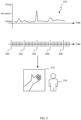
- FIG 3 shows a graph 310 of the accuracy of parameter values computed by the optimizer 108 over time, where different captured images are captured at different times, and without the use of the human feedback described herein. This illustrates how the accuracy of the results of the optimizer are highly variable and this demonstrates the need for the addition of the human feedback into the optimization loop as described herein.
- FIG. 3 also shows a schematic representation of captured images (represented as vertical lines) from capture devices 102 over time and illustrates a subset of these 300, 302, 304, 306, 308 selected for annotation by a human 314.
- the human For each of the individual selected captured images 302, 304, 306, 308 the human is able to view at display 312 the 3D posed model which is the 3D model with values of the parameters computed by the optimizer from the associated captured images, applied to it.
- the human 314 is able to rotate the view at display 312 and is able to annotate the view with positions of one or more joints or other locations of the articulated item.
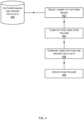
- FIG. 4 is a schematic diagram of a method of using the ground truth corpus 122 for evaluation and update of a pose tracker.
- the ground truth corpus comprises captured images and associated ground truth values of the parameters of the 3D model.
- a sub-set of the captured images are selected 402 and used to compute 404 pose of the 3D model with the pose tracker.
- the computed pose is compared with the ground truth data at comparison operation 406 and in this way the pose tracker is evaluated.
- the pose tracker is then updated 408 to make it more accurate, if required.
- the update is done by modifying the algorithms used by the pose tracker and/or by retraining modules of the pose tracker using the ground truth data.
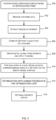
- FIG. 5 is a schematic diagram of a method of operation of a 3D model fitter which may be used together with the technology described herein. Note that this is one example of a 3D model fitter and many other types of 3D model fitter may be used, such as those which render an image from the 3D model and compare the rendered image with the observed images. In this example, the 3D model is a sub division surface model but other types of 3D model may be used.
- the 3D model fitter accesses 500 a subdivision surface model of the articulated object.
- the model fitter accesses 500 a subdivision surface model of a generic laptop.
- the 3D model fitter receives captured data 502 depicting the object to be tracked.
- the captured data 502 is a 3D point cloud, a depth map, a stereo image pair, one or more frames of raw time of flight data, color image data or other captured data depicting the object to be tracked.
- the 3D model fitter extracts 504 a region of interest from the captured data where the region of interest depicts the object to be tracked rather than other parts of the scene or environment in which the object is present.
- the 3D model fitter uses machine learning technology or image analysis to extract a region of interest of the captured data depicting the object to be tracked.
- the region of interest may or may not be contiguous.
- the 3D model fitter computes 506 a 3D point cloud by back projecting the region of interest. In some cases a 3D point cloud is already available. In some cases no 3D point cloud is used.
- the 3D model fitter obtains 508 an initial pose estimate and applies it to the model. For example, by using a value of the pose computed for a previous instance of the captured data. For example, by recording a series of values of the parameters computed by the 3D model fitter and extrapolating the series to compute a predicted future value of the parameters. For example, by selecting a value of the parameters at random. For example, by selecting a value of the parameters using output of a machine learning algorithm.
- a correspondence estimate is an indication of a 3D point on the surface of the subdivision surface model corresponding to a captured data point.
- a correspondence is a tuple of values denoted by the symbol u in this document, which specifies a point on the smooth-surface model.
- the smooth surface itself is 2D and so point u acts in a similar way to a 2D coordinate on that surface.
- a defining function S is stored at the 3D model fitter in some examples and is a function which takes as its input a correspondence u and the pose parameters. The defining function S computes a 3D position in the world that point u on the smooth-surface model corresponds to.
- the 3D model fitter obtains 510 a plurality of initial correspondence estimates, for example, one for each point in the point cloud, or one for each of a plurality of captured data points.
- the 3D model fitter obtains 510 the initial correspondence estimates by selecting them at random or by using machine learning, or by choosing a closest point on the model given the initial estimate of the global pose, using combinations of one or more of these approaches, or in other ways.
- machine learning a machine learning system has been trained using a large amount of training data to derive a direct transformation from image data to 3D model points.
- the 3D model fitter computes an optimization 512 to fit the model to the captured data.
- the optimization is computed as described earlier in this document by introducing a human into the optimization loop.
- the 3D model fitter computes a minimization of the following objective function beginning from the initial values of the correspondence estimates and the parameters where these are available (or beginning from randomly selected values). Note that this is one objective function given for example and that it is not intended to limit the scope of the technology since many other objective functions may be used.
- Feedback data from the human in the optimization loop is aggregated with the objective function as described earlier in this document.
- a penalty function which is a quartic function clamped at zero during the accuracy range is used to describe the feedback from the human.
- the penalty function is aggregated with the above objective function by addition
- the penalty function is designed such that minimizing the modified objective function ⁇ will result in model parameters that agree with the human annotations, to the extent of the estimated accuracy of those annotations. In other words, any solution that disagrees with the annotations will be found to have a higher value of the energy ⁇ .
- the optimization enables correspondence estimation and model fitting to be unified since the minimization searches over possible values of the correspondences u and over possible values of pose parameters ⁇ . This is found to give better results than an alternative approach of using alternating stages of model fitting and correspondence estimation.
- the optimization is non-linear in some examples.
- the result of the optimization is, for each frame, a set of values of the pose parameters ⁇ including the global pose parameters and the joint positions, as well as a set of values of the shape parameters.
- the model has a smooth surface it is possible to compute the optimization using a non-linear optimization process. For example, a gradient-based process which exploits the fact that rate of change of both surface position and surface orientation does not change substantially across edges in a smooth surface.
- a discrete update operation is optionally used together with the optimization. This involves using the continuous optimization as mentioned above to update both the pose and the correspondences together, and then using a discrete update to re-set the values of the correspondences using the captured sensor data.
- the discrete update allows the correspondences to jump efficiently from one part of the object surface to another, for example, from one finger-tip to the next.
- FIG. 6 illustrates various components of an exemplary computing-based device 600 which are implemented as any form of a computing and/or electronic device, and in which embodiments of a ground truth engine is implemented in some examples.
- Computing-based device 600 comprises one or more processors 602 which are microprocessors, controllers or any other suitable type of processors for processing computer executable instructions to control the operation of the device in order to train a compressor and/or to use a trained compressor at test time.
- the processors 602 include one or more fixed function blocks (also referred to as accelerators) which implement a part of the method of FIGs 2A , 2B , 4 and 5 in hardware (rather than software or firmware).
- Platform software comprising an operating system 604 or any other suitable platform software is provided at the computing-based device to enable application software to be executed on the device, such as a pose tracker.
- the computing-based device 600 comprises a ground truth engine 608 and a stored 3D model of an articulated item.
- the computing-based device 800 is optionally in communication with cloud computing resources such as via communication interface 618.
- Computer-readable media includes, for example, computer storage media such as memory 616 and communications media.
- Computer storage media, such as memory 616 includes volatile and non-volatile, removable and non-removable media implemented in any method or technology for storage of information such as computer readable instructions, data structures, program modules or the like.
- Computer storage media includes, but is not limited to, random access memory (RAM), read only memory (ROM), erasable programmable read only memory (EPROM), electronic erasable programmable read only memory (EEPROM), flash memory or other memory technology, compact disc read only memory (CD-ROM), digital versatile disks (DVD) or other optical storage, magnetic cassettes, magnetic tape, magnetic disk storage or other magnetic storage devices, or any other non-transmission medium that is used to store information for access by a computing device.
- communication media embody computer readable instructions, data structures, program modules, or the like in a modulated data signal, such as a carrier wave, or other transport mechanism. As defined herein, computer storage media does not include communication media.
- a computer storage medium should not be interpreted to be a propagating signal per se.
- the computer storage media (memory 616) is shown within the computing-based device 600 it will be appreciated that the storage is, in some examples, distributed or located remotely and accessed via a network or other communication link (e.g. using communication interface 618).
- Memory 616 at the computing-based device holds objective functions, accuracy ranges, captured images, human verification results, human annotation results or other data.
- the computing-based device 600 also comprises an input/output controller 620 arranged to output display information to a display device 622 which may be separate from or integral to the computing-based device 600.
- the display information may provide a graphical user interface.
- the input/output controller 620 is also arranged to receive and process input from one or more devices, such as a user input device 624 (e.g. a touch panel sensor, stylus, mouse, keyboard, camera, microphone or other sensor).
- a user input device 624 detects voice input, user gestures or other user actions and provides a natural user interface (NUI). This user input may be used in the human verification process, in the human annotation process, to view results and for other purposes.
- the display device 622 also acts as the user input device 624 if it is a touch sensitive display device.
- the input/output controller 620 outputs data to devices other than the display device in some examples, e.g. a locally connected printing device.
- NUI natural user interface
- Any of the input/output controller 620, display device 622 and the user input device 624 may comprise natural user interface (NUI) technology which enables a user to interact with the computing-based device in a natural manner, free from artificial constraints imposed by input devices such as mice, keyboards, remote controls and the like.
- NUI technology that are provided in some examples include but are not limited to those relying on voice and/or speech recognition, touch and/or stylus recognition (touch sensitive displays), gesture recognition both on screen and adjacent to the screen, air gestures, head and eye tracking, voice and speech, vision, touch, gestures, and machine intelligence.
- NUI technology examples include intention and goal understanding systems, motion gesture detection systems using depth cameras (such as stereoscopic camera systems, infrared camera systems, red green blue (rgb) camera systems and combinations of these), motion gesture detection using accelerometers/gyroscopes, facial recognition, three dimensional (3D) displays, head, eye and gaze tracking, immersive augmented reality and virtual reality systems and technologies for sensing brain activity using electric field sensing electrodes (electro encephalogram (EEG) and related methods).
- depth cameras such as stereoscopic camera systems, infrared camera systems, red green blue (rgb) camera systems and combinations of these
- motion gesture detection using accelerometers/gyroscopes motion gesture detection using accelerometers/gyroscopes
- facial recognition three dimensional (3D) displays
- head, eye and gaze tracking immersive augmented reality and virtual reality systems and technologies for sensing brain activity using electric field sensing electrodes (electro encephalogram (EEG) and related methods).
- EEG electric field sensing electrodes
- examples include any combination of the following:
- a ground truth engine comprising:
- the optimizer is configured to trigger a process to obtain the feedback data with respect to selected ones of the captured images, wherein the process comprises presentation of a 3D view of the 3D model having the computed values of the parameters applied to it.
- the ground truth engine described above wherein the optimizer is configured to receive the feedback data in form of annotations on a 3D view of the 3D model, the annotations comprising labels of one or more joints and/or parts of the articulated item.
- ground truth engine comprising:
- a computer-implemented method comprising:
- the method described above comprising deciding when to stop receiving feedback data and when to stop the iterations of the optimization, in dependence on human verification of the computed values.
- the method described above comprising triggering a process to obtain the feedback data with respect to selected ones of the captured images, in dependence on human verification of the computed values.
- the method described above comprising to taking into account the feedback data by aggregating at least one penalty function with an energy function which is optimized by the ground truth engine.
- the penalty function comprises a feedback accuracy range within which the penalty function has no influence on the energy function.
- the method described above comprising receiving the feedback data in the form of annotations on a 3D view of the 3D model having the computed values of the parameters applied to it.
- a computer-implemented method comprising:
- a computer-implemented apparatus comprising:
- the means for accessing, means for computing, means for receiving feedback data, and means for using the computed values is the processor 112 when encoded to perform the operations illustrated in FIG. 2A or 2B .
- 'computer' or 'computing-based device' is used herein to refer to any device with processing capability such that it executes instructions.
- processing capabilities are incorporated into many different devices and therefore the terms 'computer' and 'computing-based device' each include personal computers (PCs), servers, mobile telephones (including smart phones), tablet computers, set-top boxes, media players, games consoles, personal digital assistants, wearable computers, and many other devices.
- the methods described herein are performed, in some examples, by software in machine readable form on a tangible storage medium e.g. in the form of a computer program comprising computer program code means adapted to perform all the operations of one or more of the methods described herein when the program is run on a computer and where the computer program may be embodied on a computer readable medium.
- the software is suitable for execution on a parallel processor or a serial processor such that the method operations may be carried out in any suitable order, or simultaneously.
- a remote computer is able to store an example of the process described as software.
- a local or terminal computer is able to access the remote computer and download a part or all of the software to run the program.
- the local computer may download pieces of the software as needed, or execute some software instructions at the local terminal and some at the remote computer (or computer network).
- a dedicated circuit such as a digital signal processor (DSP), programmable logic array, or the like.
- DSP digital signal processor
- 'subset' is used herein to refer to a proper subset such that a subset of a set does not comprise all the elements of the set (i.e. at least one of the elements of the set is missing from the subset).
Landscapes
- Engineering & Computer Science (AREA)
- Theoretical Computer Science (AREA)
- Physics & Mathematics (AREA)
- General Physics & Mathematics (AREA)
- Multimedia (AREA)
- Software Systems (AREA)
- General Engineering & Computer Science (AREA)
- Quality & Reliability (AREA)
- Computer Hardware Design (AREA)
- Computer Graphics (AREA)
- Architecture (AREA)
- Evolutionary Computation (AREA)
- Mathematical Physics (AREA)
- Computing Systems (AREA)
- Medical Informatics (AREA)
- Data Mining & Analysis (AREA)
- Computer Vision & Pattern Recognition (AREA)
- Artificial Intelligence (AREA)
- Image Analysis (AREA)
Claims (11)
- Moteur de vérité terrain (106), comprenant :une mémoire (114) contenant une pluralité d'images capturées représentant un objet articulé ;un processeur (112) configuré pour accéder à un modèle tridimensionnel (3D) paramétré de l'objet ;un optimiseur (108) configuré pour calculer des valeurs de vérité terrain des paramètres du modèle 3D pour des images individuelles parmi les images capturées, en calculant, à l'aide d'une fonction d'énergie exprimant comment le modèle 3D est censé s'adapter à l'énergie capturée, une optimisation comprenant un processus itératif, de telle sorte que l'objet articulé représenté dans l'image capturée s'adapte au modèle 3D, l'optimiseur (108) étant configuré pour prendre en compte des données de rétroaction d'un ou plusieurs humains, au sujet de l'exactitude d'une pluralité des valeurs calculées des paramètres, etcaractérisé en ce que :
l'optimiseur (108) est configuré pour prendre en compte les données de rétroaction en :convertissant les données de rétroaction en une forme appropriée pour l'agrégation, dans lequel l'optimiseur (108) est configuré pour recevoir les données de rétroaction sous forme d'annotations sur une vue 3D du modèle 3D, les annotations comprenant des étiquettes de l'un ou de plusieurs des joints ou des parties de l'objet articulé et au moins une fonction de pénalité, dans lequel la fonction de pénalité comprend une plage de précision de rétroaction à l'intérieur de laquelle la fonction de pénalité n'a aucune influence sur la fonction d'énergie, et dans lequel la fonction de pénalité est une fonction quartique fixée à zéro pendant la plage de précision ; etformant une fonction d'énergie optimisée en agrégeant ladite au moins une fonction de pénalité avec la fonction d'énergie, et dans lequel :
l'optimiseur (108) est configuré de telle sorte qu'après l'utilisation de la fonction d'énergie optimisée, l'optimiseur se relance en utilisant la fonction d'énergie sans la fonction de pénalité. - Moteur de vérité terrain (106) selon la revendication 1, dans lequel l'optimiseur (108) est configuré pour répéter le calcul des valeurs des paramètres jusqu'à ce que les paramètres soient vérifiés comme étant des valeurs de vérité terrain par un ou plusieurs humains.
- Moteur de vérité terrain (106) selon la revendication 1 ou 2, dans lequel l'optimiseur (108) est configuré pour déclencher un processus afin d'obtenir les données de rétroaction par rapport à des images sélectionnées parmi les images capturées, et dans lequel le moteur de vérité terrain est configuré pour sélectionner les images sélectionnées parmi les images capturées en utilisant des règles et/ou des jugements humains.
- Moteur de vérité terrain (106) selon la revendication 4, dans lequel l'optimiseur (108) est configuré pour ajouter une pluralité de fonctions de pénalité à la fonction d'énergie, et dans lequel différentes fonctions parmi les fonctions de pénalité ont différentes plages de précision de rétroaction.
- Moteur de vérité terrain (106) selon l'une quelconque des revendications précédentes, dans lequel l'optimiseur (108) est configuré pour déclencher un processus afin d'obtenir les données de rétroaction par rapport à des images sélectionnées parmi les images capturées, dans lequel le processus comprend la présentation d'une vue 3D du modèle 3D ayant les valeurs calculées des paramètres appliquées à celui-ci.
- Moteur de vérité terrain (106) selon la revendication 6, dans lequel l'optimiseur (108) est configuré pour recevoir les données de rétroaction sous forme d'annotations sur une vue 3D du modèle 3D ayant les valeurs calculées des paramètres appliquées à celui-ci.
- Moteur de vérité terrain (106) selon l'une quelconque des revendications précédentes, dans lequel les paramètres du modèle 3D comprennent des paramètres de forme et de pose, et dans lequel les valeurs de vérité terrain sont calculées pour des images capturées représentant différentes instances de l'objet articulé.
- Moteur de vérité terrain (106) selon la revendication 1, comprenant :une mémoire configurée pour stocker les valeurs de vérité terrain en association avec les images capturées ; etun processeur configuré pour utiliser les valeurs de vérité terrain et les images capturées associées afin d'évaluer un autre processus qui calcule la pose d'entités articulées à partir de données de capteur capturées.
- Procédé mis en œuvre par ordinateur, consistant à :accéder à une pluralité d'images capturées représentant un objet articulé ;au niveau d'un processeur (112), accéder à un modèle tridimensionnel (3D) paramétré de l'objet ;calculer des valeurs des paramètres du modèle 3D pour des images individuelles parmi les images capturées, en calculant, à l'aide d'une fonction d'énergie exprimant comment le modèle 3D est censé s'adapter aux images capturées, une optimisation comprenant un processus itératif ;recevoir des données de rétroaction de la part d'un humain, au sujet de l'exactitude d'une pluralité des valeurs calculées des paramètres, et prendre en compte les données de rétroaction pendant une ou plusieurs itérations de l'optimisation, dans lequel les données de rétroaction sont reçues sous forme d'annotations sur une vue 3D du modèle 3D, etcaractérisé en ce que le procédé consiste à :prendre en compte les données de rétroaction en :convertissant les données de rétroaction en une forme appropriée pour l'agrégation, dans lequel les données de rétroaction comprennent des annotations comprenant des étiquettes de l'un ou plusieurs des joints ou des parties de l'objet articulé et au moins une fonction de pénalité, dans lequel la fonction de pénalité comprend une plage de précision de rétroaction à l'intérieur de laquelle la fonction de pénalité n'a aucune influence sur la fonction d'énergie, et dans lequel la fonction de pénalité est une fonction quartique fixée à zéro pendant la plage de précision ; etformant une fonction d'énergie optimisée en agrégeant ladite au moins une fonction de pénalité avec la fonction d'énergie, dans lequel la fonction d'énergie optimisée est utilisée par l'optimiseur ; etaprès l'utilisation de la fonction d'énergie optimisée, relancer l'optimisation en utilisant la fonction d'énergie sans la fonction de pénalité.
- Procédé selon la revendication 9, consistant à décider quand arrêter de recevoir des données de rétroaction et quand arrêter les itérations de l'optimisation, en fonction d'une vérification humaine des valeurs calculées.
- Procédé selon la revendication 9 ou 10, consistant à déclencher un processus afin d'obtenir les données de rétroaction par rapport à des images sélectionnées parmi les images capturées, en fonction d'une vérification humaine des valeurs calculées.
Applications Claiming Priority (2)
| Application Number | Priority Date | Filing Date | Title |
|---|---|---|---|
| US15/658,380 US10304258B2 (en) | 2017-07-24 | 2017-07-24 | Human feedback in 3D model fitting |
| PCT/US2018/034815 WO2019022829A1 (fr) | 2017-07-24 | 2018-05-29 | Rétroaction humaine dans un ajustement de modèle 3d |
Publications (2)
| Publication Number | Publication Date |
|---|---|
| EP3639193A1 EP3639193A1 (fr) | 2020-04-22 |
| EP3639193B1 true EP3639193B1 (fr) | 2025-06-25 |
Family
ID=62685162
Family Applications (1)
| Application Number | Title | Priority Date | Filing Date |
|---|---|---|---|
| EP18733052.7A Active EP3639193B1 (fr) | 2017-07-24 | 2018-05-29 | Rétroaction humaine dans l'ajustement de modèles 3d |
Country Status (3)
| Country | Link |
|---|---|
| US (1) | US10304258B2 (fr) |
| EP (1) | EP3639193B1 (fr) |
| WO (1) | WO2019022829A1 (fr) |
Families Citing this family (5)
| Publication number | Priority date | Publication date | Assignee | Title |
|---|---|---|---|---|
| KR102619004B1 (ko) * | 2018-12-14 | 2023-12-29 | 삼성전자 주식회사 | 로봇 장치 및 로봇의 작업 기술을 학습하는 방법 |
| CN110176079B (zh) * | 2019-05-26 | 2023-03-24 | 中北大学 | 一种基于准共形映射的三维模型变形算法 |
| US12118297B2 (en) * | 2020-06-15 | 2024-10-15 | Canon Kabushiki Kaisha | Information processing apparatus |
| CN115205818B (zh) * | 2022-06-29 | 2026-01-09 | 安徽蔚来智驾科技有限公司 | 可行驶区域确定方法、计算机可读存储介质及驾驶设备 |
| US12530847B2 (en) * | 2023-01-23 | 2026-01-20 | Snap Inc. | Image generation from text and 3D object |
Family Cites Families (6)
| Publication number | Priority date | Publication date | Assignee | Title |
|---|---|---|---|---|
| US6959109B2 (en) | 2002-06-20 | 2005-10-25 | Identix Incorporated | System and method for pose-angle estimation |
| US20050187643A1 (en) | 2004-02-19 | 2005-08-25 | Pavilion Technologies, Inc. | Parametric universal nonlinear dynamics approximator and use |
| US8351646B2 (en) | 2006-12-21 | 2013-01-08 | Honda Motor Co., Ltd. | Human pose estimation and tracking using label assignment |
| WO2010019925A1 (fr) | 2008-08-15 | 2010-02-18 | Brown Technology Partnerships | Procédé et appareil pour estimer la forme du corps |
| US8037043B2 (en) | 2008-09-09 | 2011-10-11 | Microsoft Corporation | Information retrieval system |
| EP2383696A1 (fr) * | 2010-04-30 | 2011-11-02 | LiberoVision AG | Procédé pour l'estimation d'une pose d'un modèle d'objet articulé |
-
2017
- 2017-07-24 US US15/658,380 patent/US10304258B2/en active Active
-
2018
- 2018-05-29 WO PCT/US2018/034815 patent/WO2019022829A1/fr not_active Ceased
- 2018-05-29 EP EP18733052.7A patent/EP3639193B1/fr active Active
Non-Patent Citations (1)
| Title |
|---|
| VOLKER BLANZ ET AL: "A morphable model for the synthesis of 3D faces", COMPUTER GRAPHICS PROCEEDINGS. SIGGRAPH 99; [COMPUTER GRAPHICS PROCEEDINGS. SIGGRAPH], ACM ? - NEW YORK, NY, USA, 1515 BROADWAY, 17TH FLOOR NEW YORK, NY 10036 USA, 1 July 1999 (1999-07-01), pages 187 - 194, XP058128792, ISBN: 978-0-201-48560-8, DOI: 10.1145/311535.311556 * |
Also Published As
| Publication number | Publication date |
|---|---|
| US10304258B2 (en) | 2019-05-28 |
| US20190026952A1 (en) | 2019-01-24 |
| WO2019022829A1 (fr) | 2019-01-31 |
| EP3639193A1 (fr) | 2020-04-22 |
Similar Documents
| Publication | Publication Date | Title |
|---|---|---|
| US12147505B1 (en) | Hand pose estimation for machine learning based gesture recognition | |
| EP2880633B1 (fr) | Animation d'objets utilisant le corps humain | |
| US12229217B1 (en) | Machine learning based gesture recognition | |
| EP3639193B1 (fr) | Rétroaction humaine dans l'ajustement de modèles 3d | |
| EP3198373B1 (fr) | Suivi de la posture de la main / du corps | |
| US11854308B1 (en) | Hand initialization for machine learning based gesture recognition | |
| US12106554B2 (en) | Image sequence processing using neural networks | |
| CN115151944B (zh) | 用于三维姿态估计的方法、装置和系统 | |
| US10186081B2 (en) | Tracking rigged smooth-surface models of articulated objects | |
| Madadi et al. | End-to-end global to local cnn learning for hand pose recovery in depth data | |
| US20190392587A1 (en) | System for predicting articulated object feature location | |
| US10037624B2 (en) | Calibrating object shape | |
| CN116917949A (zh) | 根据单目相机输出来对对象进行建模 | |
| US10565791B2 (en) | Tracking rigged polygon-mesh models of articulated objects | |
| EP3540574A1 (fr) | Procédé de suivi oculaire, dispositif électronique et support d'informations lisible par ordinateur non transitoire | |
| KR20230128284A (ko) | 변형가능 모델들에 의한 3차원 스캔 등록 | |
| US20220392099A1 (en) | Stable pose estimation with analysis by synthesis | |
| WO2025152951A1 (fr) | Procédé et appareil de génération d'image, procédé et appareil d'entraînement de modèle de génération d'image, dispositif, support et produit-programme | |
| Ribeiro de Oliveira et al. | Systematic review of virtual reality solutions employing artificial intelligence methods | |
| US11954943B2 (en) | Method for generating synthetic data | |
| US20250037375A1 (en) | Shape reconstruction and editing using anatomically constrained implicit shape models | |
| US20250037366A1 (en) | Anatomically constrained implicit shape models | |
| US20250118102A1 (en) | Query deformation for landmark annotation correction | |
| US10671881B2 (en) | Image processing system with discriminative control | |
| Yin | A stereo vision-based real-time 3D hand pose estimation system combining nonlinear optimization |
Legal Events
| Date | Code | Title | Description |
|---|---|---|---|
| STAA | Information on the status of an ep patent application or granted ep patent |
Free format text: STATUS: UNKNOWN |
|
| STAA | Information on the status of an ep patent application or granted ep patent |
Free format text: STATUS: THE INTERNATIONAL PUBLICATION HAS BEEN MADE |
|
| PUAI | Public reference made under article 153(3) epc to a published international application that has entered the european phase |
Free format text: ORIGINAL CODE: 0009012 |
|
| STAA | Information on the status of an ep patent application or granted ep patent |
Free format text: STATUS: REQUEST FOR EXAMINATION WAS MADE |
|
| 17P | Request for examination filed |
Effective date: 20200115 |
|
| AK | Designated contracting states |
Kind code of ref document: A1 Designated state(s): AL AT BE BG CH CY CZ DE DK EE ES FI FR GB GR HR HU IE IS IT LI LT LU LV MC MK MT NL NO PL PT RO RS SE SI SK SM TR |
|
| AX | Request for extension of the european patent |
Extension state: BA ME |
|
| RIN1 | Information on inventor provided before grant (corrected) |
Inventor name: FITZGIBBON, ANDREW WILLIAM Inventor name: BORDEAUX, LUCAS Inventor name: SHOTTON, JAMIE DANIEL JOSEPH Inventor name: BOGO, FEDERICA Inventor name: CASHMAN, THOMAS JOSEPH |
|
| DAV | Request for validation of the european patent (deleted) | ||
| DAX | Request for extension of the european patent (deleted) | ||
| STAA | Information on the status of an ep patent application or granted ep patent |
Free format text: STATUS: EXAMINATION IS IN PROGRESS |
|
| 17Q | First examination report despatched |
Effective date: 20210616 |
|
| RAP3 | Party data changed (applicant data changed or rights of an application transferred) |
Owner name: MICROSOFT TECHNOLOGY LICENSING, LLC |
|
| REG | Reference to a national code |
Ref country code: DE Ref legal event code: R079 Free format text: PREVIOUS MAIN CLASS: G06K0009000000 Ipc: G06V0020640000 Ref document number: 602018082900 Country of ref document: DE |
|
| REG | Reference to a national code |
Ipc: G06V0010980000 Ref country code: DE Ref legal event code: R079 Ref document number: 602018082900 Country of ref document: DE Free format text: PREVIOUS MAIN CLASS: G06V0020640000 Ipc: G06V0010980000 |
|
| GRAP | Despatch of communication of intention to grant a patent |
Free format text: ORIGINAL CODE: EPIDOSNIGR1 |
|
| STAA | Information on the status of an ep patent application or granted ep patent |
Free format text: STATUS: GRANT OF PATENT IS INTENDED |
|
| RIC1 | Information provided on ipc code assigned before grant |
Ipc: G06V 20/64 20220101AFI20250113BHEP |
|
| RIC1 | Information provided on ipc code assigned before grant |
Ipc: G06V 20/64 20220101ALI20250122BHEP Ipc: G06V 10/98 20220101AFI20250122BHEP |
|
| INTG | Intention to grant announced |
Effective date: 20250203 |
|
| P01 | Opt-out of the competence of the unified patent court (upc) registered |
Free format text: CASE NUMBER: APP_16998/2025 Effective date: 20250408 |
|
| GRAS | Grant fee paid |
Free format text: ORIGINAL CODE: EPIDOSNIGR3 |
|
| GRAA | (expected) grant |
Free format text: ORIGINAL CODE: 0009210 |
|
| STAA | Information on the status of an ep patent application or granted ep patent |
Free format text: STATUS: THE PATENT HAS BEEN GRANTED |
|
| AK | Designated contracting states |
Kind code of ref document: B1 Designated state(s): AL AT BE BG CH CY CZ DE DK EE ES FI FR GB GR HR HU IE IS IT LI LT LU LV MC MK MT NL NO PL PT RO RS SE SI SK SM TR |
|
| REG | Reference to a national code |
Ref country code: GB Ref legal event code: FG4D |
|
| REG | Reference to a national code |
Ref country code: CH Ref legal event code: EP |
|
| REG | Reference to a national code |
Ref country code: DE Ref legal event code: R096 Ref document number: 602018082900 Country of ref document: DE |
|
| REG | Reference to a national code |
Ref country code: CH Ref legal event code: EP |
|
| REG | Reference to a national code |
Ref country code: IE Ref legal event code: FG4D |
|
| PG25 | Lapsed in a contracting state [announced via postgrant information from national office to epo] |
Ref country code: FI Free format text: LAPSE BECAUSE OF FAILURE TO SUBMIT A TRANSLATION OF THE DESCRIPTION OR TO PAY THE FEE WITHIN THE PRESCRIBED TIME-LIMIT Effective date: 20250625 |
|
| REG | Reference to a national code |
Ref country code: LT Ref legal event code: MG9D |
|
| PG25 | Lapsed in a contracting state [announced via postgrant information from national office to epo] |
Ref country code: NO Free format text: LAPSE BECAUSE OF FAILURE TO SUBMIT A TRANSLATION OF THE DESCRIPTION OR TO PAY THE FEE WITHIN THE PRESCRIBED TIME-LIMIT Effective date: 20250925 Ref country code: GR Free format text: LAPSE BECAUSE OF FAILURE TO SUBMIT A TRANSLATION OF THE DESCRIPTION OR TO PAY THE FEE WITHIN THE PRESCRIBED TIME-LIMIT Effective date: 20250926 |
|
| PG25 | Lapsed in a contracting state [announced via postgrant information from national office to epo] |
Ref country code: BG Free format text: LAPSE BECAUSE OF FAILURE TO SUBMIT A TRANSLATION OF THE DESCRIPTION OR TO PAY THE FEE WITHIN THE PRESCRIBED TIME-LIMIT Effective date: 20250625 |
|
| PG25 | Lapsed in a contracting state [announced via postgrant information from national office to epo] |
Ref country code: HR Free format text: LAPSE BECAUSE OF FAILURE TO SUBMIT A TRANSLATION OF THE DESCRIPTION OR TO PAY THE FEE WITHIN THE PRESCRIBED TIME-LIMIT Effective date: 20250625 |
|
| PG25 | Lapsed in a contracting state [announced via postgrant information from national office to epo] |
Ref country code: RS Free format text: LAPSE BECAUSE OF FAILURE TO SUBMIT A TRANSLATION OF THE DESCRIPTION OR TO PAY THE FEE WITHIN THE PRESCRIBED TIME-LIMIT Effective date: 20250925 |
|
| PG25 | Lapsed in a contracting state [announced via postgrant information from national office to epo] |
Ref country code: LV Free format text: LAPSE BECAUSE OF FAILURE TO SUBMIT A TRANSLATION OF THE DESCRIPTION OR TO PAY THE FEE WITHIN THE PRESCRIBED TIME-LIMIT Effective date: 20250625 |
|
| REG | Reference to a national code |
Ref country code: NL Ref legal event code: MP Effective date: 20250625 |
|
| PG25 | Lapsed in a contracting state [announced via postgrant information from national office to epo] |
Ref country code: NL Free format text: LAPSE BECAUSE OF FAILURE TO SUBMIT A TRANSLATION OF THE DESCRIPTION OR TO PAY THE FEE WITHIN THE PRESCRIBED TIME-LIMIT Effective date: 20250625 |
|
| PG25 | Lapsed in a contracting state [announced via postgrant information from national office to epo] |
Ref country code: PT Free format text: LAPSE BECAUSE OF FAILURE TO SUBMIT A TRANSLATION OF THE DESCRIPTION OR TO PAY THE FEE WITHIN THE PRESCRIBED TIME-LIMIT Effective date: 20251027 |
|
| REG | Reference to a national code |
Ref country code: AT Ref legal event code: MK05 Ref document number: 1807342 Country of ref document: AT Kind code of ref document: T Effective date: 20250625 |
|
| PG25 | Lapsed in a contracting state [announced via postgrant information from national office to epo] |
Ref country code: IS Free format text: LAPSE BECAUSE OF FAILURE TO SUBMIT A TRANSLATION OF THE DESCRIPTION OR TO PAY THE FEE WITHIN THE PRESCRIBED TIME-LIMIT Effective date: 20251025 |
|
| PG25 | Lapsed in a contracting state [announced via postgrant information from national office to epo] |
Ref country code: AT Free format text: LAPSE BECAUSE OF FAILURE TO SUBMIT A TRANSLATION OF THE DESCRIPTION OR TO PAY THE FEE WITHIN THE PRESCRIBED TIME-LIMIT Effective date: 20250625 Ref country code: SM Free format text: LAPSE BECAUSE OF FAILURE TO SUBMIT A TRANSLATION OF THE DESCRIPTION OR TO PAY THE FEE WITHIN THE PRESCRIBED TIME-LIMIT Effective date: 20250625 |
|
| PG25 | Lapsed in a contracting state [announced via postgrant information from national office to epo] |
Ref country code: CZ Free format text: LAPSE BECAUSE OF FAILURE TO SUBMIT A TRANSLATION OF THE DESCRIPTION OR TO PAY THE FEE WITHIN THE PRESCRIBED TIME-LIMIT Effective date: 20250625 |
|
| PG25 | Lapsed in a contracting state [announced via postgrant information from national office to epo] |
Ref country code: PL Free format text: LAPSE BECAUSE OF FAILURE TO SUBMIT A TRANSLATION OF THE DESCRIPTION OR TO PAY THE FEE WITHIN THE PRESCRIBED TIME-LIMIT Effective date: 20250625 |
|
| PG25 | Lapsed in a contracting state [announced via postgrant information from national office to epo] |
Ref country code: EE Free format text: LAPSE BECAUSE OF FAILURE TO SUBMIT A TRANSLATION OF THE DESCRIPTION OR TO PAY THE FEE WITHIN THE PRESCRIBED TIME-LIMIT Effective date: 20250625 |
|
| PG25 | Lapsed in a contracting state [announced via postgrant information from national office to epo] |
Ref country code: SK Free format text: LAPSE BECAUSE OF FAILURE TO SUBMIT A TRANSLATION OF THE DESCRIPTION OR TO PAY THE FEE WITHIN THE PRESCRIBED TIME-LIMIT Effective date: 20250625 |
|
| PG25 | Lapsed in a contracting state [announced via postgrant information from national office to epo] |
Ref country code: ES Free format text: LAPSE BECAUSE OF FAILURE TO SUBMIT A TRANSLATION OF THE DESCRIPTION OR TO PAY THE FEE WITHIN THE PRESCRIBED TIME-LIMIT Effective date: 20250625 |
|
| PG25 | Lapsed in a contracting state [announced via postgrant information from national office to epo] |
Ref country code: DK Free format text: LAPSE BECAUSE OF FAILURE TO SUBMIT A TRANSLATION OF THE DESCRIPTION OR TO PAY THE FEE WITHIN THE PRESCRIBED TIME-LIMIT Effective date: 20250625 |
|
| PG25 | Lapsed in a contracting state [announced via postgrant information from national office to epo] |
Ref country code: IT Free format text: LAPSE BECAUSE OF FAILURE TO SUBMIT A TRANSLATION OF THE DESCRIPTION OR TO PAY THE FEE WITHIN THE PRESCRIBED TIME-LIMIT Effective date: 20250625 |
|
| PLBE | No opposition filed within time limit |
Free format text: ORIGINAL CODE: 0009261 |
|
| STAA | Information on the status of an ep patent application or granted ep patent |
Free format text: STATUS: NO OPPOSITION FILED WITHIN TIME LIMIT |