EP3639205B1 - Verfahren zur herstellung eines gewebes mit einem funktionellen codemuster - Google Patents
Verfahren zur herstellung eines gewebes mit einem funktionellen codemuster Download PDFInfo
- Publication number
- EP3639205B1 EP3639205B1 EP18742858.6A EP18742858A EP3639205B1 EP 3639205 B1 EP3639205 B1 EP 3639205B1 EP 18742858 A EP18742858 A EP 18742858A EP 3639205 B1 EP3639205 B1 EP 3639205B1
- Authority
- EP
- European Patent Office
- Prior art keywords
- textile
- code pattern
- functional code
- fabric
- functional
- Prior art date
- Legal status (The legal status is an assumption and is not a legal conclusion. Google has not performed a legal analysis and makes no representation as to the accuracy of the status listed.)
- Active
Links
Images


Classifications
-
- G—PHYSICS
- G06—COMPUTING OR CALCULATING; COUNTING
- G06K—GRAPHICAL DATA READING; PRESENTATION OF DATA; RECORD CARRIERS; HANDLING RECORD CARRIERS
- G06K19/00—Record carriers for use with machines and with at least a part designed to carry digital markings
- G06K19/06—Record carriers for use with machines and with at least a part designed to carry digital markings characterised by the kind of the digital marking, e.g. shape, nature, code
- G06K19/06009—Record carriers for use with machines and with at least a part designed to carry digital markings characterised by the kind of the digital marking, e.g. shape, nature, code with optically detectable marking
- G06K19/06018—Record carriers for use with machines and with at least a part designed to carry digital markings characterised by the kind of the digital marking, e.g. shape, nature, code with optically detectable marking one-dimensional coding
- G06K19/06028—Record carriers for use with machines and with at least a part designed to carry digital markings characterised by the kind of the digital marking, e.g. shape, nature, code with optically detectable marking one-dimensional coding using bar codes
-
- G—PHYSICS
- G06—COMPUTING OR CALCULATING; COUNTING
- G06K—GRAPHICAL DATA READING; PRESENTATION OF DATA; RECORD CARRIERS; HANDLING RECORD CARRIERS
- G06K19/00—Record carriers for use with machines and with at least a part designed to carry digital markings
- G06K19/06—Record carriers for use with machines and with at least a part designed to carry digital markings characterised by the kind of the digital marking, e.g. shape, nature, code
- G06K19/08—Record carriers for use with machines and with at least a part designed to carry digital markings characterised by the kind of the digital marking, e.g. shape, nature, code using markings of different kinds or more than one marking of the same kind in the same record carrier, e.g. one marking being sensed by optical and the other by magnetic means
- G06K19/10—Record carriers for use with machines and with at least a part designed to carry digital markings characterised by the kind of the digital marking, e.g. shape, nature, code using markings of different kinds or more than one marking of the same kind in the same record carrier, e.g. one marking being sensed by optical and the other by magnetic means at least one kind of marking being used for authentication, e.g. of credit or identity cards
- G06K19/14—Record carriers for use with machines and with at least a part designed to carry digital markings characterised by the kind of the digital marking, e.g. shape, nature, code using markings of different kinds or more than one marking of the same kind in the same record carrier, e.g. one marking being sensed by optical and the other by magnetic means at least one kind of marking being used for authentication, e.g. of credit or identity cards the marking being sensed by radiation
-
- D—TEXTILES; PAPER
- D03—WEAVING
- D03D—WOVEN FABRICS; METHODS OF WEAVING; LOOMS
- D03D1/00—Woven fabrics designed to make specified articles
- D03D1/0011—Woven fabrics for labels
-
- D—TEXTILES; PAPER
- D03—WEAVING
- D03D—WOVEN FABRICS; METHODS OF WEAVING; LOOMS
- D03D15/00—Woven fabrics characterised by the material, structure or properties of the fibres, filaments, yarns, threads or other warp or weft elements used
- D03D15/40—Woven fabrics characterised by the material, structure or properties of the fibres, filaments, yarns, threads or other warp or weft elements used characterised by the structure of the yarns or threads
- D03D15/43—Woven fabrics characterised by the material, structure or properties of the fibres, filaments, yarns, threads or other warp or weft elements used characterised by the structure of the yarns or threads with differing diameters
-
- D—TEXTILES; PAPER
- D03—WEAVING
- D03D—WOVEN FABRICS; METHODS OF WEAVING; LOOMS
- D03D15/00—Woven fabrics characterised by the material, structure or properties of the fibres, filaments, yarns, threads or other warp or weft elements used
- D03D15/50—Woven fabrics characterised by the material, structure or properties of the fibres, filaments, yarns, threads or other warp or weft elements used characterised by the properties of the yarns or threads
- D03D15/54—Woven fabrics characterised by the material, structure or properties of the fibres, filaments, yarns, threads or other warp or weft elements used characterised by the properties of the yarns or threads coloured
-
- D—TEXTILES; PAPER
- D04—BRAIDING; LACE-MAKING; KNITTING; TRIMMINGS; NON-WOVEN FABRICS
- D04B—KNITTING
- D04B1/00—Weft knitting processes for the production of fabrics or articles not dependent on the use of particular machines; Fabrics or articles defined by such processes
- D04B1/10—Patterned fabrics or articles
- D04B1/12—Patterned fabrics or articles characterised by thread material
- D04B1/126—Patterned fabrics or articles characterised by thread material with colour pattern, e.g. intarsia fabrics
-
- D—TEXTILES; PAPER
- D04—BRAIDING; LACE-MAKING; KNITTING; TRIMMINGS; NON-WOVEN FABRICS
- D04B—KNITTING
- D04B21/00—Warp knitting processes for the production of fabrics or articles not dependent on the use of particular machines; Fabrics or articles defined by such processes
- D04B21/06—Patterned fabrics or articles
- D04B21/08—Patterned fabrics or articles characterised by thread material
-
- G—PHYSICS
- G05—CONTROLLING; REGULATING
- G05B—CONTROL OR REGULATING SYSTEMS IN GENERAL; FUNCTIONAL ELEMENTS OF SUCH SYSTEMS; MONITORING OR TESTING ARRANGEMENTS FOR SUCH SYSTEMS OR ELEMENTS
- G05B19/00—Program-control systems
- G05B19/02—Program-control systems electric
- G05B19/18—Numerical control [NC], i.e. automatically operating machines, in particular machine tools, e.g. in a manufacturing environment, so as to execute positioning, movement or co-ordinated operations by means of program data in numerical form
- G05B19/4097—Numerical control [NC], i.e. automatically operating machines, in particular machine tools, e.g. in a manufacturing environment, so as to execute positioning, movement or co-ordinated operations by means of program data in numerical form characterised by using design data to control NC machines, e.g. CAD/CAM
-
- G—PHYSICS
- G06—COMPUTING OR CALCULATING; COUNTING
- G06K—GRAPHICAL DATA READING; PRESENTATION OF DATA; RECORD CARRIERS; HANDLING RECORD CARRIERS
- G06K19/00—Record carriers for use with machines and with at least a part designed to carry digital markings
- G06K19/02—Record carriers for use with machines and with at least a part designed to carry digital markings characterised by the selection of materials, e.g. to avoid wear during transport through the machine
- G06K19/027—Record carriers for use with machines and with at least a part designed to carry digital markings characterised by the selection of materials, e.g. to avoid wear during transport through the machine the material being suitable for use as a textile, e.g. woven-based RFID-like labels designed for attachment to laundry items
-
- G—PHYSICS
- G06—COMPUTING OR CALCULATING; COUNTING
- G06K—GRAPHICAL DATA READING; PRESENTATION OF DATA; RECORD CARRIERS; HANDLING RECORD CARRIERS
- G06K19/00—Record carriers for use with machines and with at least a part designed to carry digital markings
- G06K19/06—Record carriers for use with machines and with at least a part designed to carry digital markings characterised by the kind of the digital marking, e.g. shape, nature, code
- G06K19/06009—Record carriers for use with machines and with at least a part designed to carry digital markings characterised by the kind of the digital marking, e.g. shape, nature, code with optically detectable marking
- G06K19/06046—Constructional details
-
- D—TEXTILES; PAPER
- D06—TREATMENT OF TEXTILES OR THE LIKE; LAUNDERING; FLEXIBLE MATERIALS NOT OTHERWISE PROVIDED FOR
- D06P—DYEING OR PRINTING TEXTILES; DYEING LEATHER, FURS OR SOLID MACROMOLECULAR SUBSTANCES IN ANY FORM
- D06P5/00—Other features in dyeing or printing textiles, or dyeing leather, furs, or solid macromolecular substances in any form
- D06P5/30—Ink jet printing
Definitions
- a barcode is an automatic identification technology that is used for product identification. Barcodes were originally designed for use in labels that were attached to a product. Barcodes are typically a graphic representation of data that is readable by an electronic machine or barcode reading device. Traditional barcodes are expressed in various formats such as Code 39 and Code 128, which reside in the public sector. Regardless of the code format used, barcode systems employ a series of bars that are printed or formed in very precise widths. A barcode reading device can measure the width of the bars, and then convert those signals into the intended numerals, letters, or characters.
- the barcodes are small and attached in hidden areas of the textile product.
- the barcode material is manufactured in a process that is separate and independent of the final textile product to which it will be attached.
- the general objective is to make the textile barcode hidden from public view.
- a standard barcode is produced on the scale of inches and is void of colors other than black and white such that it provides no aesthetic value to the end product.
- the barcode is solely used as a functional means of product identification and data collection.
- a method of making a textile product that includes a unique fabric in the form of a barcode, where the barcode does not look like a traditional bar code, and where the barcode is integral to the fabric and becomes a part of a garment or other product formed from the fabric would be useful.
- the present invention relates to a method of producing a textile product in which a decorative and distinctive code pattern is visibly or invisibly embedded within or printed on the textile product. Further, the present application is directed to a method of mass producing textile products incorporated with such code patterns, wherein a functional and/or aesthetic code pattern can be automatically assigned to a section of the textile product as desired.
- the present disclosure is directed to a textile product as well as a method of producing the textile product where a code pattern is structurally embedded within the textile product at the instant the textile yarns are interlaced to become a textile product resulting in a visible (or invisible) and aesthetically pleasing code pattern on the exterior of a textile product that is functional through the use of a code reader or electronic device.
- the code pattern can be digitally printed on a textile fabric after the fabric has been manufactured or on a textile product after the product has been manufactured.
- barcodes were originally designed for use in labels that were attached to a product.
- the present invention contemplates textile garments or products that include barcodes not as an attached label or attached component, but rather as an integral part of the textile garment or product. In other words, the barcode becomes part of the garment or product as part of the manufacturing process.
- Coded fabrics described herein may contain readable bars in the width direction only, the length direction only, or a combination of both (as a plaid type pattern). Various colors may be employed in the bars of such readable coded fabrics, for aesthetic enhancement.
- the textile product with a uniform or continuous pattern in which the pattern embedded within the textile product can be readable by an electronic code reading device.
- the code pattern can contain any desired information, including information about the owner, product brand, maker, or the like.
- an electronic code reading device can be used to easily read the information incorporated into the textile product, potentially providing an efficient and cost-effective method of product identification or providing any desired information about the product's owner or user.
- a textile product produced with a uniform or continuous pattern in which the pattern is digitally printed onto the textile product is also contemplated by the present invention.
- a barcode's role by creating a method of producing a decorative pattern that continues to perform barcode functions.
- a textile product embedded or printed with a decorative and functional code pattern that is not perceived as a barcode can be used in a recreational manner, as the code pattern can initiate a personalized response from an electronic code reading device or create a direct link to and reaction from various forms of social media.
- the present invention contemplates a method in which multiple yarns of varying diameters can be used to produce a textile fabric embedded with a functional code pattern.
- Traditionally only yarns of uniform diameters could be used to produce a woven barcode, as multiple yarns of differing diameters would cause the bar width and bar spacing of the code pattern to be disrupted, and thus unreadable by an electronic device.
- the opportunities for variety in the produced textile products expands, as yarns of different colors and sizes can be used to create a textile product with a code pattern that is aesthetically pleasing as well as functional.
- textile yarns are available that are reactive to electronic reading devices but that are not visible to the human eye. Therefore, it can be accomplished that the aforementioned code patterns can be incorporated into the textile product and can be invisible to the human eye, yet can remain detectable and readable by an electronic device.
- Coding technology based on the binary structure of a woven material can produce a code pattern that is structurally part of a textile product or that can be digitally printed onto a textile product and can be both functional and fashionable.
- This technology can be viewed as a blend of textile and coding technology in which fabrics and garments are incorporated or printed with a coding function.
- a barcode-like code pattern can be embedded within a generic textile product or printed directly thereon, producing a textile product that continues to be aesthetically pleasing to consumers but also functional through the use of an electronic code reading device.
- An electronic device that is capable of reading the textile code pattern is critical to the functionality of the produced textile product.
- These commercially available electronic devices consist of an illumination system, sensor, and decoder.
- the identification of a textile code pattern is generally based on image analysis and pattern recognition.
- multiple electronic devices exist to perform the function of reading a code pattern and initiating the programmed response, including smartphone devices.
- the present application relates to a method of producing a textile product in which a functional and decorative code pattern is visibly or invisibly embedded within or alternatively digitally printed on a textile product.
- a functional and decorative code pattern is visibly or invisibly embedded within or alternatively digitally printed on a textile product.
- the code pattern on the textile product can trigger a unique and desired response from the electronic device.
- the method of creating a textile product that incorporates a functional code pattern at the time period in which the textile product is manufactured requires programming a textile process machine to effectively control bar width, bar spacing, and bar color of the code pattern produced.
- This method requires calculating the conversion factors that allow a textile material to adhere to barcode protocol rules from the public domain and the mathematical ratio between the standard dimensions of a barcode label and the desired dimensions of an enlarged code pattern that will appear on the textile product.
- the appropriate conversion factors and mathematical ratios can be programmed into a textile process machine, resulting in an enlarged code pattern embedded within a textile product. While typical barcodes are produced using an inches scale, the present application relates to code patterns produced using a feet or yard scale.
- the enlarged functional code pattern produced using this method continues to follow the customary rules of bar width and bar spacing of a standard sized barcode; thus, the enlarged code pattern structurally embedded within the textile product continues to be functional by an electronic code reading device.
- a knitting machine can produce a textile product embedded with a functional code pattern through programming comprising a computer controlled mechanism.
- FIG. 1 shows diagrammatically a knitting machine 8 associated with a computer 2 through an interface 1.
- For pattern recognition there is also a digitizing table 4, a keyboard 5, and a visual display unit 6.
- a composite cable 3 is housed within a conduit tube 12.
- the conduit tube 12 is used to connect the coupler unit 11 to the computer interface 1 as shown in FIG. 1 .
- the composite cable 3 is used to transmit pattern data from the computer to the coupling unit 11.
- the composite cable 3 also transmits timing signals from the computer 2 to the coupler unit 11.
- the pattern data signals and timing signals can work together to produce patterning impulses to the patterning units 9 via the coupler unit 11, resulting in the ability to knit a textile product that incorporates a functional code pattern made of textile yarn 10.
- This code pattern can be altered on demand through programming the computer 2 as desired, such that each final textile product contains the desired functional code pattern.
- the programming results in identical code patterns produced on the textile products.
- the programming results in a plurality of unique code patterns produced on the textile products.
- a weaving machine can produce a textile product embedded with a functional code pattern through programming comprising a computer controlled mechanism.
- FIG. 2 diagrammatically shows the same disclosed method when associated with a weaving machine.
- a computer board 1 is used to electronically configure the desired parameter values, including warp-let off and fabric density. These parameter values are then able to be transmitted to the weaving machine 2, resulting in a textile product embedded with a functional code pattern.
- This code pattern can be altered on demand through programming the computer board 1 as desired, such that each final textile product contains the desired functional code pattern.
- the programming results in identical code patterns produced on the textile products.
- the programming results in a plurality of unique code patterns produced on the textile products, such that each individual final textile product contains its own unique built in functional code.
- the present application discloses functional code patterns created using standard public domain formats for bar spacing, width, and color, including Code 39 and Code 128.
- proprietary barcode formats distinct from the public domain formats, can be used to produce functional and readable code patterns embedded within or digitally printed on a textile fabric or a textile product.
- a functional code pattern in both the horizontal and vertical direction, resulting in a plaid effect can be incorporated into or printed on textile fabrics or textile products using the method disclosed.
- the proprietary formats retain complete functionality when incorporated into a textile product and can be read via an electronic code reading device.
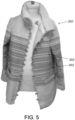
- FIG. 5 a fabric depicting a proprietary code format through an aesthetic plaid pattern is illustrated.
- each textile product has an embedded code pattern.
- each textile product is created using a unique code pattern, resulting in each textile product being capable of producing a different response by an electronic code reading device.
- the individual owner of the textile article has the ability to program his or her own desired personalized response when the code pattern is read by an electronic code reading device.
- the same code pattern can be incorporated into the textile product through the method disclosed, including mass production of many textile products via the method disclosed.
- an electronic reading device for barcode-like patterns involves a device that analyzes a code pattern's image data and subsequently sends the code pattern's content to an output port.
- the present application discloses that any electronic code reading device can be used to read the code patterns incorporated within the textile product.
- a smartphone device can act as the electronic code reading device. Through the smartphone itself or through smartphone applications, an owner of a textile product embedded with a code pattern or printed with a code pattern can use his or her smartphone device as a barcode reader and initiate the programed response from the code pattern embedded within the textile product or printed on the textile product.
- the present application additionally discloses the method of forming code patterns incorporated into textile products through mass production of such textile products.
- This method comprises programming a textile process machine to effectively control bar width, bar spacing, and bar color of the code pattern produced.
- this method requires calculating the conversion factors that allow a textile material to adhere to barcode protocol rules from the public domain and the mathematical ratio between the standard dimensions of a barcode label and the desired dimensions of an enlarged code pattern that will appear on the textile product. Subsequently, the appropriate conversion factors and mathematical ratios can be programmed into a textile process machine, resulting in an enlarged code pattern embedded within a textile product.
- a functional and/or aesthetic code pattern can be assigned to a desired section of a textile fabric automatically and continuously through programming the textile process machine.
- the functioning code pattern can be incorporated into textile products much like an individual serial number.
- the textile process machine can be programmed to produce a textile product that comprises a plurality of functional code patterns, where the process is continuous and does not require stopping the machine to adjust for different functional code patterns.
- the plurality of functional code patterns produced in the single textile fabric are identical.
- a textile fabric 400 comprises three segments 402, 404, and 406.
- Each of the three segments 402, 404, and 406 comprises an identical code pattern as shown as code patterns 408, 410, and 412 and as indicated by the vertical stripes visible on each of the three segments 402, 404, and 406.
- the plurality of functional code patterns produced on a single textile fabric are different, such that a single textile fabric could be mass produced to comprise a functional code pattern comprising horizontal stripes in one segment of the textile material and a functional code pattern comprising a plaid design on a separate segment of the textile fabric.
- a textile fabric 500 comprises three segments 502, 504, and 506.
- Each of the three segments 502, 504, and 506 comprises a unique code pattern 508, 510, and 512, as indicated by the vertical stripes in segment 502 corresponding to a unique code pattern 508, the horizontal stripes in segment 504 corresponding to a unique code pattern 510, and a plaid design in segment 506 corresponding to a unique code pattern 512.
- the textile products produced contain functional code patterns that are readable by an appropriate electronic device.
- the method of producing such textile product can be accomplished using textile yarn materials that are not of equal diameter.
- the present application discloses a method used to calculate correction factors needed to compensate for the differences in textile yarn diameters, such that the established rules of barcode widths and spacing are respected. These correction factors can additionally be programmed in to the textile process machine, allowing for the compensation to be made at the instant the textile yarns are interlaced to create fabric.
- the present application relates to functional code patterns produced in any pattern.
- Certain embodiments of the present invention include but are not limited to, a code pattern created using horizontal stripes and a code pattern created in both the horizontal and vertical directions on a textile material, resulting in a plaid design that is visually appealing yet functional.
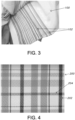
- FIG. 3 a fabric 100 embedded or digitally printed with a functional code pattern comprising visible horizontal stripes 102 with alternating colors is illustrated.
- the triggered response includes an exclamatory statement (e.g., Go team!).
- a fabric 200 embedded with a visible plaid design including vertical stripes 202 and horizontal stripes 204 covering the entire fabric is illustrated.
- the present application can be used to form functional code patterns on a variety of textile products, including but not limited to clothing garments, backpacks, blankets, and fabric sheets.
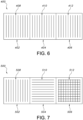
- a coat garment 300 embedded or digitally printed with a functional code pattern is illustrated.
- the functional code pattern consists of a multitude of horizontal stripes 302 that occupy a large portion of the visible exterior of the coat.
- the following steps characterize the creation of a fabric that includes a readable barcode (e.g., functional code pattern) as contemplated by the present invention.
- a readable barcode e.g., functional code pattern
- each textile fabric in the form of a product or garment that includes a functional code pattern to be unique or customized, containing a code sequence that does not appear in any other garment or product.
- a garment or product to be electronically assigned to a specific owner.
- the textile fabric or material that goes into a single product must be changed or re-coded, per unit of product.
- the functional code pattern or barcode (which is part of the textile fabric itself) must be viewed as a unique serial number. For example, if a final textile product was made from 3 linear yards of woven fabric, barcode uniqueness would mean that the code used would need to change on a 3 yard basis.
- the present invention contemplates a continuous process for incorporating a plurality of functional code patterns onto a textile fabric without having to stop the fabric formation process each time a new functional code pattern is incorporated into the fabric.
- Modern textile manufacturing equipment generally includes a high degree of computerization, and memory storage. Therefore, a fabric formation machine can be programmed to make a specific code pattern over a given length of material, then automatically index to a new code pattern. Typically, it would also be normal to separate each coded fabric section with a single strand of brightly colored textile yarn that serves as an obvious marker to delineate or indicate that a code change has been made.
- the coded bars will be in the width direction, but could be placed in width direction, length direction, or a combination of the width and length directions depending on the desired functional code pattern to be incorporated into the textile fabric.
- the functional code pattern is embedded within a textile during the fabric formation process
- the use of high speed digital printing on fabric is an important alternative manufacturing method, particularly in terms of efficiency in mass-producing a plurality of functional code patterns on a sheet of textile.
- fabric can be printed upon to produce a fabric containing a functional code pattern.
- the manufacturing method is different, the functional or aesthetic code pattern is still able to initiate a reaction when read by an electronic reading device.
- digital printing provides the capability to incorporate functional code patterns into products that have already been manufactured in addition to sheets of fabrics or textiles. Further, digital printing is an efficient manner to incorporate patterns onto textile products.
- a computer programs a textile process machine to effectively control bar width, bar spacing, and bar color of the code pattern produced such that the printing is readable by an electronic reading device.
- a digital printer 600 can produce a textile product having a functional code pattern printed thereon through programming comprising a computer controlled mechanism.
- a computer 602 can be used to electronically configure the desired parameter values, similar to the process of embedding the functional code pattern 606 in a textile product.
- the parameter values are then transmitted to the textile process machine 604, where the pattern is digitally printed directly onto a textile product.
- the code pattern 606 can be altered on demand through programming the computer 602 as desired, such that each final textile product 608 contains the desired functional code pattern 606.
- the computer 602 calculates conversion factors to allow a digitally printed fabric to adhere to standard barcode formatting rules to transfer to the functional code pattern printed on the textile product and calculates mathematical ratios between dimensions of a standard barcode label and desired dimensions for the functional code pattern printed on the textile product, wherein the functional code pattern is enlarged compared to the standard barcode label.
- the computer 602 programs a textile process machine 604 with the calculated conversion factors and mathematical ratios, wherein the programming controls bar width, bar spacing, bar color, or a combination thereof of the functional code pattern 606. Thereafter, the functional code pattern 606 is digitally printed onto the textile fabric 608.
- the printing results in a plurality of unique code patterns produced on the textile products, such that each individual final textile product contains its own unique functional code.
- the programming results in identical code patterns produced on the textile products.
- the programming results in a plurality of unique code patterns produced on the textile products.
- the fabric can be digitally printed using processes known by one of skill in the art.
- an ink jet printer a laser jet printer or any other suitable printer can be used.
- An inkjet printer emits ink from nozzles while they pass over the fabric or textile product.
- Inkjet printers can use thermal technology, whereby heat is used to fire ink onto the fabric.
- a squirt of ink is initiated by heating the ink to create a bubble until pressure forces it to burst and hit the fabric. The bubble then collapses as the element cools, and the resulting vacuum draws ink from the reservoir to replace the ink that was ejected.
- a high pressure pump can direct liquid ink through a nozzle, creating a continuous stream of ink droplets.
- a desired pattern is sent from a computer to a laser printer where a negative charge is applied to a cylindrical drum by a primary charge roller. Then a laser etches the image onto the drum surface. The area struck by the laser has a more positive charge so that when negatively charged printer toner is transferred to the surface of the drum, it sticks to the areas marked by the laser and falls off the areas that remain negatively charged. Toner is then transferred from the surface of the drum to the fabric by a transfer roller that applies a positive charge to the fabric that attracts the negatively charged toner from the drum. Then the toner is fused to the fabric by a combination of heat and pressure.
Landscapes
- Engineering & Computer Science (AREA)
- Textile Engineering (AREA)
- Physics & Mathematics (AREA)
- General Physics & Mathematics (AREA)
- Theoretical Computer Science (AREA)
- Human Computer Interaction (AREA)
- Manufacturing & Machinery (AREA)
- Automation & Control Theory (AREA)
- Treatment Of Fiber Materials (AREA)
- Coloring (AREA)
Claims (15)
- Verfahren zur Herstellung eines textilen Gewebes (500), das ein darin eingebettetes funktionales Codemuster (508, 510, 512) umfasst, wobei das Verfahren Folgendes umfasst:Berechnen von Umrechnungsfaktoren für einen Strichcode, der Striche umfasst, um die Striche in Anzahlen von Fäden oder Garnen für das innerhalb des Textilerzeugnisses eingebettete funktionale Codemuster (508, 510, 512) umzurechnen;Programmieren einer Textilverarbeitungsmaschine (8), wobei das Programmieren die Strichbreite, den Strichabstand oder eine Kombination davon des funktionalen Codemusters (508, 510, 512) steuert; undgleichzeitiges Einarbeiten des funktionalen Codemusters (508, 510, 512) in das textile Gewebe (500) und Verflechten einer Vielzahl von textilen Garnen (10), um das textile Gewebe (500) zu bilden, wobei das funktionale Codemuster für das menschliche Auge sichtbar ist;wobei das Verfahren dadurch gekennzeichnet ist, dass es Folgendes umfasst:Berechnen von mathematischen Verhältnissen zwischen den Abmessungen des Strichcodes und den Abmessungen für das innerhalb des Textilprodukts (500) eingebettete funktionale Codemuster (508, 510, 512), wobei das funktionale Codemuster (508, 510, 512) im Vergleich zum Strichcode vergrößert ist; undAnpassen einer Anzahl von Fäden oder Garnen für jeden Strich des vergrößerten funktionalen Codemusters für das Textilprodukt;wobei das funktionale Codemuster (508, 510, 512) eine Gesamtbreite des textilen Gewebes über eine vorbestimmte Länge des textilen Gewebes überspannt; undwobei das funktionale Codemuster (508, 510, 512) programmierbar ist, um einem Benutzer des textilen Gewebes nach der Herstellung des Gewebes zu ermöglichen, dem Strichcode eine personalisierte Antwort zuzuordnen, wenn das funktionale Codemuster von einer elektronischen Code-Lesevorrichtung gelesen wird.
- Verfahren nach Anspruch 1, wobei das Verfahren die Massenherstellung des textilen Gewebes (500) durch gleichzeitiges Einarbeiten einer Vielzahl von funktionalen Codemustern (508, 510, 512) in das textile Gewebe umfasst, wobei das Verfahren der Massenherstellung des textilen Gewebes (500) ein kontinuierlicher Prozess ist.
- Verfahren nach einem der vorstehenden Ansprüche, wobei die Textilverarbeitungsmaschine (8) eine Webmaschine oder eine Strickmaschine umfasst.
- Verfahren nach einem der vorstehenden Ansprüche, wobei das funktionale Codemuster (508, 510, 512) in das textile Gewebe (500) eingewebt oder eingewirkt wird.
- Verfahren nach einem der vorstehenden Ansprüche, wobei die Vielzahl von textilen Garnen (10) unterschiedliche Durchmesser aufweisen.
- Verfahren nach Anspruch 5, wobei die Textilverarbeitungsmaschine (8) vor der Herstellung mit bestimmten Korrekturfaktoren programmiert wird, um Unterschiede in den unterschiedlichen Durchmessern der Vielzahl von textilen Garnen (10) zu kompensieren.
- Verfahren nach einem der Ansprüche 1 bis 4, wobei die Vielzahl von textilen Garnen (10) einen einheitlichen Durchmesser aufweist.
- Verfahren nach einem der vorstehenden Ansprüche, wobei das textile Gewebe (500) eine Vielzahl von Segmenten (502, 504, 506) umfasst, wobei die Textilverarbeitungsmaschine (8) programmiert ist, um ein eindeutiges funktionales Codemuster (508, 510, 512) für jedes der Vielzahl von Segmenten (502, 504, 506) herzustellen.
- Verfahren nach einem der Ansprüche 1 bis 7, wobei das textile Gewebe (400) eine Vielzahl von Segmenten (402, 404, 406) umfasst, wobei die Textilverarbeitungsmaschine programmiert ist, um identische funktionale Codemuster (408, 410, 412) für jedes der Vielzahl von Segmenten (402, 404, 406) herzustellen.
- Verfahren nach Anspruch 2, wobei das textile Gewebe (500) ein einziges textiles Basismaterial umfasst, das eine Vielzahl von eindeutigen funktionalen Codemustern (508, 510, 512) umfasst; oder
wobei das textile Gewebe (400) ein einzelnes textiles Basismaterial umfasst, das eine Vielzahl von identischen funktionalen Codemustern (408, 410, 412) umfasst. - Verfahren nach einem der vorstehenden Ansprüche, wobei das funktionale Codemuster (508, 510, 512) zum Lesen durch eine elektronische Code-Lesevorrichtung konfiguriert ist.
- Verfahren nach einem der vorstehenden Ansprüche, wobei sich das funktionale Codemuster (508, 510, 512) in einer vertikalen Richtung und einer horizontalen Richtung erstreckt.
- Verfahren nach Anspruch 12, wobei das funktionale Codemuster (508, 510, 512) horizontale Streifen (510), vertikale Streifen (508) oder ein kariertes Muster (512) umfasst.
- Verfahren nach einem der vorstehenden Ansprüche, wobei das funktionale Codemuster einen Code 39-Strichcode oder einen Code 128-Strichcode umfasst; und/oder
wobei sich das funktionale Codemuster in einer vertikalen und einer horizontalen Richtung erstreckt und eine horizontale Strichcode-Komponente und eine vertikale Strichcode-Komponente (512) einschließt. - Verfahren nach einem der vorstehenden Ansprüche, wobei das Textilprodukt ein Kleidungsstück (300), einen Rucksack, ein Gewebe (100, 200) oder eine Decke umfasst.
Applications Claiming Priority (2)
| Application Number | Priority Date | Filing Date | Title |
|---|---|---|---|
| US201762520654P | 2017-06-16 | 2017-06-16 | |
| PCT/US2018/037050 WO2018231789A1 (en) | 2017-06-16 | 2018-06-12 | Method of forming a fabric containing a functional code pattern |
Publications (2)
| Publication Number | Publication Date |
|---|---|
| EP3639205A1 EP3639205A1 (de) | 2020-04-22 |
| EP3639205B1 true EP3639205B1 (de) | 2023-05-10 |
Family
ID=62952379
Family Applications (1)
| Application Number | Title | Priority Date | Filing Date |
|---|---|---|---|
| EP18742858.6A Active EP3639205B1 (de) | 2017-06-16 | 2018-06-12 | Verfahren zur herstellung eines gewebes mit einem funktionellen codemuster |
Country Status (3)
| Country | Link |
|---|---|
| US (2) | US11423272B2 (de) |
| EP (1) | EP3639205B1 (de) |
| WO (1) | WO2018231789A1 (de) |
Families Citing this family (8)
| Publication number | Priority date | Publication date | Assignee | Title |
|---|---|---|---|---|
| WO2020055680A1 (en) * | 2018-09-12 | 2020-03-19 | Inman Mills | Woven fabric with hollow channel for prevention of structural damage to functional yarn, monofilament yarn, or wire contained therein |
| US11170278B2 (en) * | 2019-09-13 | 2021-11-09 | Knorr Ventures, LLC | Tartan encoding and decoding system |
| CN111144530B (zh) * | 2020-01-17 | 2024-10-11 | 白复华 | 彩色防伪码布标的制备方法 |
| US11590687B2 (en) | 2020-06-30 | 2023-02-28 | Canon Kabushiki Kaisha | Systems and methods for reducing pressure while shaping a film |
| GB2610172A (en) * | 2021-08-23 | 2023-03-01 | Prevayl Innovations Ltd | Method of generating knitting instructions |
| EP4272117B1 (de) * | 2021-11-22 | 2025-08-13 | Politecnico di Milano | Verfahren zur implementierung eines qr-codes in einem schussgewirk |
| US20240247415A1 (en) * | 2023-01-20 | 2024-07-25 | Joseph Baxter | Method for configuring and applying an optical illusion pattern to an article of manufacture |
| CN116732712A (zh) * | 2023-07-11 | 2023-09-12 | 吴江瑞丽蕾丝刺绣有限公司 | 一种印花与绣花组合的刺绣工艺 |
Family Cites Families (6)
| Publication number | Priority date | Publication date | Assignee | Title |
|---|---|---|---|---|
| NL8502290A (nl) * | 1985-08-20 | 1987-03-16 | Robert Allard Van Der Laan | Weefsel met ingeweven streepjescode. |
| AU2001230359A1 (en) * | 2000-01-29 | 2001-08-07 | Christopher Reed | Authenticating textile based items |
| RU2288308C2 (ru) * | 2001-06-22 | 2006-11-27 | Бревитекс Этаблиссман Пур Л`Эксплутасьон Де-Бревет Текстиль | Способ и установка для изготовления текстильных этикеток с рисунком |
| EP3132075A4 (de) * | 2014-04-17 | 2017-06-21 | Sinowide Trading Limited | Verwobene informationsträgervorrichtungen |
| US20150326892A1 (en) * | 2014-05-09 | 2015-11-12 | Sony Corporation | System and method for identifying target areas in a real-time video stream |
| US11613830B2 (en) * | 2016-01-12 | 2023-03-28 | Nike, Inc. | Multi-layered woven element |
-
2018
- 2018-06-12 EP EP18742858.6A patent/EP3639205B1/de active Active
- 2018-06-12 US US16/620,635 patent/US11423272B2/en active Active
- 2018-06-12 WO PCT/US2018/037050 patent/WO2018231789A1/en not_active Ceased
-
2022
- 2022-08-15 US US17/887,759 patent/US11755866B2/en active Active
Also Published As
| Publication number | Publication date |
|---|---|
| US20220391652A1 (en) | 2022-12-08 |
| WO2018231789A1 (en) | 2018-12-20 |
| US20200193251A1 (en) | 2020-06-18 |
| US11423272B2 (en) | 2022-08-23 |
| EP3639205A1 (de) | 2020-04-22 |
| US11755866B2 (en) | 2023-09-12 |
Similar Documents
| Publication | Publication Date | Title |
|---|---|---|
| US11755866B2 (en) | Method of forming a fabric containing a functional code pattern | |
| US5983952A (en) | System and method for forming a fabric having a synchronized woven design and printed design | |
| US7674747B1 (en) | Appearance changing decorations on fabric using disappearing ink | |
| US20180057975A1 (en) | Process for making a fabric label containing one unique information and respective authentication process | |
| US10272695B2 (en) | Process for manufacturing a woven label, containing a unique information, electronically readable | |
| CN102656619A (zh) | 标签和从回收材料制造标签的方法 | |
| EP3378674B1 (de) | Wärmetransfer und verfahren zur verwendung auf spezifischen werbeartikeln für eine spezifische event | |
| CN201946221U (zh) | 一种防伪织唛 | |
| US6328078B1 (en) | System and process for forming a fabric having digitally printed warp yarns | |
| US20200332446A1 (en) | Authentication for digital dyeing | |
| US6877916B2 (en) | Method for generating non-repeating patterns for printing | |
| WO2018015874A1 (en) | Fabric label containing a unique piece of information and process for making and storing it | |
| EP2078677B1 (de) | Verfahren zur kontinuierlichen Produktion von Netzbeuteln | |
| JP2020523497A (ja) | グラフィック及びテキスト情報を伝達する変色織物 | |
| JP2020523497A5 (de) | ||
| CN207397594U (zh) | 一种服装织唛 | |
| KR101483880B1 (ko) | 외부상황에 따라 다른 형상이 보이도록 하는 의류용 태그 | |
| KR20110110412A (ko) | 점자돌기가 구비된 의류 | |
| CN107204149A (zh) | 防伪标识与防伪标识识别终端 | |
| US20150052664A1 (en) | Ornamental Sequin System and Method | |
| CN106696255A (zh) | 一种在3d打印机线材中隐含信息的方法以及用于该方法中的线材、打印头 | |
| CN107475853A (zh) | 一种防伪纤维及其制备方法 | |
| CN107527549A (zh) | 一种防伪纤维及其制备方法 | |
| CN203692638U (zh) | 时装 | |
| KR101955972B1 (ko) | 친환경 펄프로 제조된 점자라벨 및 그 제조방법 |
Legal Events
| Date | Code | Title | Description |
|---|---|---|---|
| STAA | Information on the status of an ep patent application or granted ep patent |
Free format text: STATUS: UNKNOWN |
|
| STAA | Information on the status of an ep patent application or granted ep patent |
Free format text: STATUS: THE INTERNATIONAL PUBLICATION HAS BEEN MADE |
|
| PUAI | Public reference made under article 153(3) epc to a published international application that has entered the european phase |
Free format text: ORIGINAL CODE: 0009012 |
|
| STAA | Information on the status of an ep patent application or granted ep patent |
Free format text: STATUS: REQUEST FOR EXAMINATION WAS MADE |
|
| 17P | Request for examination filed |
Effective date: 20191209 |
|
| AK | Designated contracting states |
Kind code of ref document: A1 Designated state(s): AL AT BE BG CH CY CZ DE DK EE ES FI FR GB GR HR HU IE IS IT LI LT LU LV MC MK MT NL NO PL PT RO RS SE SI SK SM TR |
|
| AX | Request for extension of the european patent |
Extension state: BA ME |
|
| DAV | Request for validation of the european patent (deleted) | ||
| DAX | Request for extension of the european patent (deleted) | ||
| STAA | Information on the status of an ep patent application or granted ep patent |
Free format text: STATUS: EXAMINATION IS IN PROGRESS |
|
| 17Q | First examination report despatched |
Effective date: 20201026 |
|
| GRAP | Despatch of communication of intention to grant a patent |
Free format text: ORIGINAL CODE: EPIDOSNIGR1 |
|
| STAA | Information on the status of an ep patent application or granted ep patent |
Free format text: STATUS: GRANT OF PATENT IS INTENDED |
|
| INTG | Intention to grant announced |
Effective date: 20221116 |
|
| GRAS | Grant fee paid |
Free format text: ORIGINAL CODE: EPIDOSNIGR3 |
|
| GRAA | (expected) grant |
Free format text: ORIGINAL CODE: 0009210 |
|
| STAA | Information on the status of an ep patent application or granted ep patent |
Free format text: STATUS: THE PATENT HAS BEEN GRANTED |
|
| AK | Designated contracting states |
Kind code of ref document: B1 Designated state(s): AL AT BE BG CH CY CZ DE DK EE ES FI FR GB GR HR HU IE IS IT LI LT LU LV MC MK MT NL NO PL PT RO RS SE SI SK SM TR |
|
| REG | Reference to a national code |
Ref country code: GB Ref legal event code: FG4D |
|
| REG | Reference to a national code |
Ref country code: AT Ref legal event code: REF Ref document number: 1567437 Country of ref document: AT Kind code of ref document: T Effective date: 20230515 Ref country code: CH Ref legal event code: EP |
|
| REG | Reference to a national code |
Ref country code: DE Ref legal event code: R096 Ref document number: 602018049613 Country of ref document: DE |
|
| REG | Reference to a national code |
Ref country code: IE Ref legal event code: FG4D |
|
| REG | Reference to a national code |
Ref country code: LT Ref legal event code: MG9D |
|
| REG | Reference to a national code |
Ref country code: NL Ref legal event code: MP Effective date: 20230510 |
|
| REG | Reference to a national code |
Ref country code: AT Ref legal event code: MK05 Ref document number: 1567437 Country of ref document: AT Kind code of ref document: T Effective date: 20230510 |
|
| PG25 | Lapsed in a contracting state [announced via postgrant information from national office to epo] |
Ref country code: SE Free format text: LAPSE BECAUSE OF FAILURE TO SUBMIT A TRANSLATION OF THE DESCRIPTION OR TO PAY THE FEE WITHIN THE PRESCRIBED TIME-LIMIT Effective date: 20230510 Ref country code: PT Free format text: LAPSE BECAUSE OF FAILURE TO SUBMIT A TRANSLATION OF THE DESCRIPTION OR TO PAY THE FEE WITHIN THE PRESCRIBED TIME-LIMIT Effective date: 20230911 Ref country code: NO Free format text: LAPSE BECAUSE OF FAILURE TO SUBMIT A TRANSLATION OF THE DESCRIPTION OR TO PAY THE FEE WITHIN THE PRESCRIBED TIME-LIMIT Effective date: 20230810 Ref country code: NL Free format text: LAPSE BECAUSE OF FAILURE TO SUBMIT A TRANSLATION OF THE DESCRIPTION OR TO PAY THE FEE WITHIN THE PRESCRIBED TIME-LIMIT Effective date: 20230510 Ref country code: ES Free format text: LAPSE BECAUSE OF FAILURE TO SUBMIT A TRANSLATION OF THE DESCRIPTION OR TO PAY THE FEE WITHIN THE PRESCRIBED TIME-LIMIT Effective date: 20230510 Ref country code: AT Free format text: LAPSE BECAUSE OF FAILURE TO SUBMIT A TRANSLATION OF THE DESCRIPTION OR TO PAY THE FEE WITHIN THE PRESCRIBED TIME-LIMIT Effective date: 20230510 |
|
| PG25 | Lapsed in a contracting state [announced via postgrant information from national office to epo] |
Ref country code: RS Free format text: LAPSE BECAUSE OF FAILURE TO SUBMIT A TRANSLATION OF THE DESCRIPTION OR TO PAY THE FEE WITHIN THE PRESCRIBED TIME-LIMIT Effective date: 20230510 Ref country code: PL Free format text: LAPSE BECAUSE OF FAILURE TO SUBMIT A TRANSLATION OF THE DESCRIPTION OR TO PAY THE FEE WITHIN THE PRESCRIBED TIME-LIMIT Effective date: 20230510 Ref country code: LV Free format text: LAPSE BECAUSE OF FAILURE TO SUBMIT A TRANSLATION OF THE DESCRIPTION OR TO PAY THE FEE WITHIN THE PRESCRIBED TIME-LIMIT Effective date: 20230510 Ref country code: LT Free format text: LAPSE BECAUSE OF FAILURE TO SUBMIT A TRANSLATION OF THE DESCRIPTION OR TO PAY THE FEE WITHIN THE PRESCRIBED TIME-LIMIT Effective date: 20230510 Ref country code: IS Free format text: LAPSE BECAUSE OF FAILURE TO SUBMIT A TRANSLATION OF THE DESCRIPTION OR TO PAY THE FEE WITHIN THE PRESCRIBED TIME-LIMIT Effective date: 20230910 Ref country code: HR Free format text: LAPSE BECAUSE OF FAILURE TO SUBMIT A TRANSLATION OF THE DESCRIPTION OR TO PAY THE FEE WITHIN THE PRESCRIBED TIME-LIMIT Effective date: 20230510 Ref country code: GR Free format text: LAPSE BECAUSE OF FAILURE TO SUBMIT A TRANSLATION OF THE DESCRIPTION OR TO PAY THE FEE WITHIN THE PRESCRIBED TIME-LIMIT Effective date: 20230811 |
|
| PG25 | Lapsed in a contracting state [announced via postgrant information from national office to epo] |
Ref country code: FI Free format text: LAPSE BECAUSE OF FAILURE TO SUBMIT A TRANSLATION OF THE DESCRIPTION OR TO PAY THE FEE WITHIN THE PRESCRIBED TIME-LIMIT Effective date: 20230510 |
|
| PG25 | Lapsed in a contracting state [announced via postgrant information from national office to epo] |
Ref country code: SK Free format text: LAPSE BECAUSE OF FAILURE TO SUBMIT A TRANSLATION OF THE DESCRIPTION OR TO PAY THE FEE WITHIN THE PRESCRIBED TIME-LIMIT Effective date: 20230510 |
|
| PG25 | Lapsed in a contracting state [announced via postgrant information from national office to epo] |
Ref country code: SM Free format text: LAPSE BECAUSE OF FAILURE TO SUBMIT A TRANSLATION OF THE DESCRIPTION OR TO PAY THE FEE WITHIN THE PRESCRIBED TIME-LIMIT Effective date: 20230510 Ref country code: SK Free format text: LAPSE BECAUSE OF FAILURE TO SUBMIT A TRANSLATION OF THE DESCRIPTION OR TO PAY THE FEE WITHIN THE PRESCRIBED TIME-LIMIT Effective date: 20230510 Ref country code: RO Free format text: LAPSE BECAUSE OF FAILURE TO SUBMIT A TRANSLATION OF THE DESCRIPTION OR TO PAY THE FEE WITHIN THE PRESCRIBED TIME-LIMIT Effective date: 20230510 Ref country code: EE Free format text: LAPSE BECAUSE OF FAILURE TO SUBMIT A TRANSLATION OF THE DESCRIPTION OR TO PAY THE FEE WITHIN THE PRESCRIBED TIME-LIMIT Effective date: 20230510 Ref country code: DK Free format text: LAPSE BECAUSE OF FAILURE TO SUBMIT A TRANSLATION OF THE DESCRIPTION OR TO PAY THE FEE WITHIN THE PRESCRIBED TIME-LIMIT Effective date: 20230510 Ref country code: CZ Free format text: LAPSE BECAUSE OF FAILURE TO SUBMIT A TRANSLATION OF THE DESCRIPTION OR TO PAY THE FEE WITHIN THE PRESCRIBED TIME-LIMIT Effective date: 20230510 |
|
| REG | Reference to a national code |
Ref country code: CH Ref legal event code: PL |
|
| REG | Reference to a national code |
Ref country code: DE Ref legal event code: R097 Ref document number: 602018049613 Country of ref document: DE |
|
| REG | Reference to a national code |
Ref country code: BE Ref legal event code: MM Effective date: 20230630 |
|
| PG25 | Lapsed in a contracting state [announced via postgrant information from national office to epo] |
Ref country code: MC Free format text: LAPSE BECAUSE OF FAILURE TO SUBMIT A TRANSLATION OF THE DESCRIPTION OR TO PAY THE FEE WITHIN THE PRESCRIBED TIME-LIMIT Effective date: 20230510 |
|
| PG25 | Lapsed in a contracting state [announced via postgrant information from national office to epo] |
Ref country code: MC Free format text: LAPSE BECAUSE OF FAILURE TO SUBMIT A TRANSLATION OF THE DESCRIPTION OR TO PAY THE FEE WITHIN THE PRESCRIBED TIME-LIMIT Effective date: 20230510 |
|
| PG25 | Lapsed in a contracting state [announced via postgrant information from national office to epo] |
Ref country code: LU Free format text: LAPSE BECAUSE OF NON-PAYMENT OF DUE FEES Effective date: 20230612 |
|
| PLBE | No opposition filed within time limit |
Free format text: ORIGINAL CODE: 0009261 |
|
| STAA | Information on the status of an ep patent application or granted ep patent |
Free format text: STATUS: NO OPPOSITION FILED WITHIN TIME LIMIT |
|
| REG | Reference to a national code |
Ref country code: IE Ref legal event code: MM4A |
|
| PG25 | Lapsed in a contracting state [announced via postgrant information from national office to epo] |
Ref country code: LU Free format text: LAPSE BECAUSE OF NON-PAYMENT OF DUE FEES Effective date: 20230612 |
|
| PG25 | Lapsed in a contracting state [announced via postgrant information from national office to epo] |
Ref country code: IE Free format text: LAPSE BECAUSE OF NON-PAYMENT OF DUE FEES Effective date: 20230612 |
|
| 26N | No opposition filed |
Effective date: 20240213 |
|
| PG25 | Lapsed in a contracting state [announced via postgrant information from national office to epo] |
Ref country code: IE Free format text: LAPSE BECAUSE OF NON-PAYMENT OF DUE FEES Effective date: 20230612 Ref country code: CH Free format text: LAPSE BECAUSE OF NON-PAYMENT OF DUE FEES Effective date: 20230630 |
|
| PG25 | Lapsed in a contracting state [announced via postgrant information from national office to epo] |
Ref country code: SI Free format text: LAPSE BECAUSE OF FAILURE TO SUBMIT A TRANSLATION OF THE DESCRIPTION OR TO PAY THE FEE WITHIN THE PRESCRIBED TIME-LIMIT Effective date: 20230510 |
|
| PG25 | Lapsed in a contracting state [announced via postgrant information from national office to epo] |
Ref country code: SI Free format text: LAPSE BECAUSE OF FAILURE TO SUBMIT A TRANSLATION OF THE DESCRIPTION OR TO PAY THE FEE WITHIN THE PRESCRIBED TIME-LIMIT Effective date: 20230510 Ref country code: IT Free format text: LAPSE BECAUSE OF FAILURE TO SUBMIT A TRANSLATION OF THE DESCRIPTION OR TO PAY THE FEE WITHIN THE PRESCRIBED TIME-LIMIT Effective date: 20230510 Ref country code: BE Free format text: LAPSE BECAUSE OF NON-PAYMENT OF DUE FEES Effective date: 20230630 |
|
| PG25 | Lapsed in a contracting state [announced via postgrant information from national office to epo] |
Ref country code: BG Free format text: LAPSE BECAUSE OF FAILURE TO SUBMIT A TRANSLATION OF THE DESCRIPTION OR TO PAY THE FEE WITHIN THE PRESCRIBED TIME-LIMIT Effective date: 20230510 |
|
| PG25 | Lapsed in a contracting state [announced via postgrant information from national office to epo] |
Ref country code: BG Free format text: LAPSE BECAUSE OF FAILURE TO SUBMIT A TRANSLATION OF THE DESCRIPTION OR TO PAY THE FEE WITHIN THE PRESCRIBED TIME-LIMIT Effective date: 20230510 |
|
| PGFP | Annual fee paid to national office [announced via postgrant information from national office to epo] |
Ref country code: DE Payment date: 20250512 Year of fee payment: 8 |
|
| PGFP | Annual fee paid to national office [announced via postgrant information from national office to epo] |
Ref country code: GB Payment date: 20250513 Year of fee payment: 8 |
|
| PGFP | Annual fee paid to national office [announced via postgrant information from national office to epo] |
Ref country code: FR Payment date: 20250509 Year of fee payment: 8 |
|
| PG25 | Lapsed in a contracting state [announced via postgrant information from national office to epo] |
Ref country code: CY Free format text: LAPSE BECAUSE OF FAILURE TO SUBMIT A TRANSLATION OF THE DESCRIPTION OR TO PAY THE FEE WITHIN THE PRESCRIBED TIME-LIMIT; INVALID AB INITIO Effective date: 20180612 |
|
| PG25 | Lapsed in a contracting state [announced via postgrant information from national office to epo] |
Ref country code: HU Free format text: LAPSE BECAUSE OF FAILURE TO SUBMIT A TRANSLATION OF THE DESCRIPTION OR TO PAY THE FEE WITHIN THE PRESCRIBED TIME-LIMIT; INVALID AB INITIO Effective date: 20180612 |
|
| PG25 | Lapsed in a contracting state [announced via postgrant information from national office to epo] |
Ref country code: TR Free format text: LAPSE BECAUSE OF FAILURE TO SUBMIT A TRANSLATION OF THE DESCRIPTION OR TO PAY THE FEE WITHIN THE PRESCRIBED TIME-LIMIT Effective date: 20230510 |