EP3639859A1 - Composition pour l'administration d'un médicament par voie orale contenant de l'oxaliplatine et son procédé de préparation - Google Patents
Composition pour l'administration d'un médicament par voie orale contenant de l'oxaliplatine et son procédé de préparation Download PDFInfo
- Publication number
- EP3639859A1 EP3639859A1 EP17913783.1A EP17913783A EP3639859A1 EP 3639859 A1 EP3639859 A1 EP 3639859A1 EP 17913783 A EP17913783 A EP 17913783A EP 3639859 A1 EP3639859 A1 EP 3639859A1
- Authority
- EP
- European Patent Office
- Prior art keywords
- primary
- oxa
- nanoemulsion
- surfactant
- dck
- Prior art date
- Legal status (The legal status is an assumption and is not a legal conclusion. Google has not performed a legal analysis and makes no representation as to the accuracy of the status listed.)
- Withdrawn
Links
Images






Classifications
-
- A—HUMAN NECESSITIES
- A61—MEDICAL OR VETERINARY SCIENCE; HYGIENE
- A61K—PREPARATIONS FOR MEDICAL, DENTAL OR TOILETRY PURPOSES
- A61K47/00—Medicinal preparations characterised by the non-active ingredients used, e.g. carriers or inert additives; Targeting or modifying agents chemically bound to the active ingredient
- A61K47/50—Medicinal preparations characterised by the non-active ingredients used, e.g. carriers or inert additives; Targeting or modifying agents chemically bound to the active ingredient the non-active ingredient being chemically bound to the active ingredient, e.g. polymer-drug conjugates
- A61K47/51—Medicinal preparations characterised by the non-active ingredients used, e.g. carriers or inert additives; Targeting or modifying agents chemically bound to the active ingredient the non-active ingredient being chemically bound to the active ingredient, e.g. polymer-drug conjugates the non-active ingredient being a modifying agent
- A61K47/54—Medicinal preparations characterised by the non-active ingredients used, e.g. carriers or inert additives; Targeting or modifying agents chemically bound to the active ingredient the non-active ingredient being chemically bound to the active ingredient, e.g. polymer-drug conjugates the non-active ingredient being a modifying agent the modifying agent being an organic compound
- A61K47/541—Organic ions forming an ion pair complex with the pharmacologically or therapeutically active agent
-
- A—HUMAN NECESSITIES
- A61—MEDICAL OR VETERINARY SCIENCE; HYGIENE
- A61K—PREPARATIONS FOR MEDICAL, DENTAL OR TOILETRY PURPOSES
- A61K47/00—Medicinal preparations characterised by the non-active ingredients used, e.g. carriers or inert additives; Targeting or modifying agents chemically bound to the active ingredient
- A61K47/50—Medicinal preparations characterised by the non-active ingredients used, e.g. carriers or inert additives; Targeting or modifying agents chemically bound to the active ingredient the non-active ingredient being chemically bound to the active ingredient, e.g. polymer-drug conjugates
- A61K47/69—Medicinal preparations characterised by the non-active ingredients used, e.g. carriers or inert additives; Targeting or modifying agents chemically bound to the active ingredient the non-active ingredient being chemically bound to the active ingredient, e.g. polymer-drug conjugates the conjugate being characterised by physical or galenical forms, e.g. emulsion, particle, inclusion complex, stent or kit
- A61K47/6905—Medicinal preparations characterised by the non-active ingredients used, e.g. carriers or inert additives; Targeting or modifying agents chemically bound to the active ingredient the non-active ingredient being chemically bound to the active ingredient, e.g. polymer-drug conjugates the conjugate being characterised by physical or galenical forms, e.g. emulsion, particle, inclusion complex, stent or kit the form being a colloid or an emulsion
- A61K47/6907—Medicinal preparations characterised by the non-active ingredients used, e.g. carriers or inert additives; Targeting or modifying agents chemically bound to the active ingredient the non-active ingredient being chemically bound to the active ingredient, e.g. polymer-drug conjugates the conjugate being characterised by physical or galenical forms, e.g. emulsion, particle, inclusion complex, stent or kit the form being a colloid or an emulsion the form being a microemulsion, nanoemulsion or micelle
-
- A—HUMAN NECESSITIES
- A61—MEDICAL OR VETERINARY SCIENCE; HYGIENE
- A61K—PREPARATIONS FOR MEDICAL, DENTAL OR TOILETRY PURPOSES
- A61K31/00—Medicinal preparations containing organic active ingredients
- A61K31/12—Ketones
-
- A—HUMAN NECESSITIES
- A61—MEDICAL OR VETERINARY SCIENCE; HYGIENE
- A61K—PREPARATIONS FOR MEDICAL, DENTAL OR TOILETRY PURPOSES
- A61K31/00—Medicinal preparations containing organic active ingredients
- A61K31/28—Compounds containing heavy metals
- A61K31/282—Platinum compounds
-
- A—HUMAN NECESSITIES
- A61—MEDICAL OR VETERINARY SCIENCE; HYGIENE
- A61K—PREPARATIONS FOR MEDICAL, DENTAL OR TOILETRY PURPOSES
- A61K31/00—Medicinal preparations containing organic active ingredients
- A61K31/33—Heterocyclic compounds
- A61K31/335—Heterocyclic compounds having oxygen as the only ring hetero atom, e.g. fungichromin
- A61K31/35—Heterocyclic compounds having oxygen as the only ring hetero atom, e.g. fungichromin having six-membered rings with one oxygen as the only ring hetero atom
- A61K31/352—Heterocyclic compounds having oxygen as the only ring hetero atom, e.g. fungichromin having six-membered rings with one oxygen as the only ring hetero atom condensed with carbocyclic rings, e.g. methantheline
- A61K31/353—3,4-Dihydrobenzopyrans, e.g. chroman, catechin
-
- A—HUMAN NECESSITIES
- A61—MEDICAL OR VETERINARY SCIENCE; HYGIENE
- A61K—PREPARATIONS FOR MEDICAL, DENTAL OR TOILETRY PURPOSES
- A61K31/00—Medicinal preparations containing organic active ingredients
- A61K31/33—Heterocyclic compounds
- A61K31/395—Heterocyclic compounds having nitrogen as a ring hetero atom, e.g. guanethidine or rifamycins
- A61K31/495—Heterocyclic compounds having nitrogen as a ring hetero atom, e.g. guanethidine or rifamycins having six-membered rings with two or more nitrogen atoms as the only ring heteroatoms, e.g. piperazine or tetrazines
- A61K31/505—Pyrimidines; Hydrogenated pyrimidines, e.g. trimethoprim
- A61K31/513—Pyrimidines; Hydrogenated pyrimidines, e.g. trimethoprim having oxo groups directly attached to the heterocyclic ring, e.g. cytosine
-
- A—HUMAN NECESSITIES
- A61—MEDICAL OR VETERINARY SCIENCE; HYGIENE
- A61K—PREPARATIONS FOR MEDICAL, DENTAL OR TOILETRY PURPOSES
- A61K31/00—Medicinal preparations containing organic active ingredients
- A61K31/33—Heterocyclic compounds
- A61K31/395—Heterocyclic compounds having nitrogen as a ring hetero atom, e.g. guanethidine or rifamycins
- A61K31/495—Heterocyclic compounds having nitrogen as a ring hetero atom, e.g. guanethidine or rifamycins having six-membered rings with two or more nitrogen atoms as the only ring heteroatoms, e.g. piperazine or tetrazines
- A61K31/505—Pyrimidines; Hydrogenated pyrimidines, e.g. trimethoprim
- A61K31/519—Pyrimidines; Hydrogenated pyrimidines, e.g. trimethoprim ortho- or peri-condensed with heterocyclic rings
-
- A—HUMAN NECESSITIES
- A61—MEDICAL OR VETERINARY SCIENCE; HYGIENE
- A61K—PREPARATIONS FOR MEDICAL, DENTAL OR TOILETRY PURPOSES
- A61K31/00—Medicinal preparations containing organic active ingredients
- A61K31/33—Heterocyclic compounds
- A61K31/555—Heterocyclic compounds containing heavy metals, e.g. hemin, hematin, melarsoprol
-
- A—HUMAN NECESSITIES
- A61—MEDICAL OR VETERINARY SCIENCE; HYGIENE
- A61K—PREPARATIONS FOR MEDICAL, DENTAL OR TOILETRY PURPOSES
- A61K47/00—Medicinal preparations characterised by the non-active ingredients used, e.g. carriers or inert additives; Targeting or modifying agents chemically bound to the active ingredient
- A61K47/06—Organic compounds, e.g. natural or synthetic hydrocarbons, polyolefins, mineral oil, petrolatum or ozokerite
- A61K47/16—Organic compounds, e.g. natural or synthetic hydrocarbons, polyolefins, mineral oil, petrolatum or ozokerite containing nitrogen, e.g. nitro-, nitroso-, azo-compounds, nitriles, cyanates
- A61K47/18—Amines; Amides; Ureas; Quaternary ammonium compounds; Amino acids; Oligopeptides having up to five amino acids
- A61K47/183—Amino acids, e.g. glycine, EDTA or aspartame
-
- A—HUMAN NECESSITIES
- A61—MEDICAL OR VETERINARY SCIENCE; HYGIENE
- A61K—PREPARATIONS FOR MEDICAL, DENTAL OR TOILETRY PURPOSES
- A61K47/00—Medicinal preparations characterised by the non-active ingredients used, e.g. carriers or inert additives; Targeting or modifying agents chemically bound to the active ingredient
- A61K47/06—Organic compounds, e.g. natural or synthetic hydrocarbons, polyolefins, mineral oil, petrolatum or ozokerite
- A61K47/28—Steroids, e.g. cholesterol, bile acids or glycyrrhetinic acid
-
- A—HUMAN NECESSITIES
- A61—MEDICAL OR VETERINARY SCIENCE; HYGIENE
- A61K—PREPARATIONS FOR MEDICAL, DENTAL OR TOILETRY PURPOSES
- A61K47/00—Medicinal preparations characterised by the non-active ingredients used, e.g. carriers or inert additives; Targeting or modifying agents chemically bound to the active ingredient
- A61K47/50—Medicinal preparations characterised by the non-active ingredients used, e.g. carriers or inert additives; Targeting or modifying agents chemically bound to the active ingredient the non-active ingredient being chemically bound to the active ingredient, e.g. polymer-drug conjugates
- A61K47/51—Medicinal preparations characterised by the non-active ingredients used, e.g. carriers or inert additives; Targeting or modifying agents chemically bound to the active ingredient the non-active ingredient being chemically bound to the active ingredient, e.g. polymer-drug conjugates the non-active ingredient being a modifying agent
- A61K47/54—Medicinal preparations characterised by the non-active ingredients used, e.g. carriers or inert additives; Targeting or modifying agents chemically bound to the active ingredient the non-active ingredient being chemically bound to the active ingredient, e.g. polymer-drug conjugates the non-active ingredient being a modifying agent the modifying agent being an organic compound
- A61K47/554—Medicinal preparations characterised by the non-active ingredients used, e.g. carriers or inert additives; Targeting or modifying agents chemically bound to the active ingredient the non-active ingredient being chemically bound to the active ingredient, e.g. polymer-drug conjugates the non-active ingredient being a modifying agent the modifying agent being an organic compound the modifying agent being a steroid plant sterol, glycyrrhetic acid, enoxolone or bile acid
-
- A—HUMAN NECESSITIES
- A61—MEDICAL OR VETERINARY SCIENCE; HYGIENE
- A61K—PREPARATIONS FOR MEDICAL, DENTAL OR TOILETRY PURPOSES
- A61K9/00—Medicinal preparations characterised by special physical form
- A61K9/0012—Galenical forms characterised by the site of application
- A61K9/0053—Mouth and digestive tract, i.e. intraoral and peroral administration
-
- A—HUMAN NECESSITIES
- A61—MEDICAL OR VETERINARY SCIENCE; HYGIENE
- A61K—PREPARATIONS FOR MEDICAL, DENTAL OR TOILETRY PURPOSES
- A61K9/00—Medicinal preparations characterised by special physical form
- A61K9/0012—Galenical forms characterised by the site of application
- A61K9/0053—Mouth and digestive tract, i.e. intraoral and peroral administration
- A61K9/0056—Mouth soluble or dispersible forms; Suckable, eatable, chewable coherent forms; Forms rapidly disintegrating in the mouth; Lozenges; Lollipops; Bite capsules; Baked products; Baits or other oral forms for animals
-
- A—HUMAN NECESSITIES
- A61—MEDICAL OR VETERINARY SCIENCE; HYGIENE
- A61K—PREPARATIONS FOR MEDICAL, DENTAL OR TOILETRY PURPOSES
- A61K9/00—Medicinal preparations characterised by special physical form
- A61K9/10—Dispersions; Emulsions
- A61K9/107—Emulsions ; Emulsion preconcentrates; Micelles
- A61K9/1075—Microemulsions or submicron emulsions; Preconcentrates or solids thereof; Micelles, e.g. made of phospholipids or block copolymers
-
- A—HUMAN NECESSITIES
- A61—MEDICAL OR VETERINARY SCIENCE; HYGIENE
- A61K—PREPARATIONS FOR MEDICAL, DENTAL OR TOILETRY PURPOSES
- A61K9/00—Medicinal preparations characterised by special physical form
- A61K9/10—Dispersions; Emulsions
- A61K9/107—Emulsions ; Emulsion preconcentrates; Micelles
- A61K9/113—Multiple emulsions, e.g. oil-in-water-in-oil
Definitions
- the present invention relates to an oral delivery composition
- an oral delivery composition comprising a complex by ion-pairing of an oxaliplatin as a water-soluble active substance and a bile acid derivative as an oral absorption enhancer in an internal aqueous phase of a multiple water-in-oil-in-water (w/o/w) nanoemulsion, and a method for preparing the same.
- Oxaliplatin (cis-[(1R,2R)-1,2-cyclohexanediamine-N,N'][oxalato(2-)- O , O ']platinum, OXA) is composed of platinum (Pt) and 1,2-diaminocyclohexane, and is a compound having an oxalate ligand as a leaving group, and is a third generation platinum antitumor compound which exerts its effects by interfering with DNA replication and transcription machinery through nuclear DNA adduct formation. These Pt-DNA adducts typically take the form of Pt-guanine-guanine bonds. At the nucleotide level, Pt-DNA complexes will either activate DNA repair mechanisms or apoptotic pathways.
- Oxaliplatin is also marketed for the treatment of advanced colorectal cancer and metastatic gastric cancer under the trade name Eloxatin®, and may also be administered in combination with 5-fluorouracil (5-FU) and leucovorin.
- metastatic colorectal cancer uses chemotherapy, such as Eloxatin® (oxaliplatin) or FOLFOX (in combination with fluorouracil / leucovorin / oxaliplatin), FOLFIRI (in combination with fluorouracil / leucovorin / irinotecan), and Avastin (Avastin®, bevacizumab) from Genentech / Roche was approved by the US FDA in 2004.
- Oxaliplatin is currently administered to patients only as an injection and should be diluted with water for injection, glucose solution or 0.9% sodium chloride solution immediately prior to administration to the patient in the form of a lyophilized formulation.
- the lyophilization process is complex and expensive to manufacture and also, reconstitution is necessary to use lyophilized products.
- problems such as loss of oxaliplatin, generation of precipitate, generation of undesirable particles during reconstitution, and risk of exposure to contamination may occur, and in particular pollution is very serious because of the toxicity of antitumor substances.
- oral chemotherapy is attracting increasing attention because it avoids the discomfort of injections after hospitalization and can be conducted at home, which can improve patient cooperation and quality of life.
- a prolonged exposure of anti-cancer drugs to cancerous cells can be implemented by maintaining an appropriate plasma drug concentration, which can increase drug efficacy and decrease adverse effects, as well as facilitate the use of anti-cancer drugs for chronic treatment regimens as prophylactics against recurrence and metastasis.
- Such barriers include pre-systemic metabolism, gastrointestinal (GI) instability, low aqueous solubility, poor intestinal membrane permeability, and high levels of P-glycoprotein (P-gp) efflux.
- GI gastrointestinal
- P-gp P-glycoprotein
- oxaliplatin exhibits poor oral bioavailability due to low intestinal membrane permeability, thus limiting the use of oral preparations.
- attempts to make oxaliplatin into oral preparations are not well known, but oral formulations for effective local delivery of OXA to treat colorectal cancer tissue have been developed by encapsulation of OXA in pH-sensitive, mucoadhesive chitosan-based alginate microspheres and hyaluronic acid-coupled chitosan nanoparticles, followed by coating with Eudragit S100, and 5-fluorouracil for local delivery of large intestine has been suggested by preparation in the form of pellets coated with pectin and ethyl cellulose and an oral preparation in the form of PLGA(poly(lactic-co-glycolic acid) nanoparticles.
- the present inventors have studied to prepare a water-soluble active substance such as oxaliplatin in the formulation for oral administration, and have formed a complex of oxaliplatin by ion-pairing with a bile acid derivative which is an oral absorption enhancer, and have completed the present invention by discovering that including it in the inner aqueous phase of multiple w/o/w (water-in-oil-water) nanoemulsions can increase the intestinal membrane permeability of the drug to make it into a formulation for oral administration.
- w/o/w water-in-oil-water
- An object of the present invention is to prepare as a formulation for oral administration by increasing the intestinal membrane permeability of the drug by incorporating the oxaliplatin, a water-soluble anticancer agent, into the inner aqueous phase of the multiple w/o/w(water-in-oil-in-water) nanoemulsion, and to provide an oral delivery composition containing oxaliplatin and a method for preparing the same, which may improve the inconvenience and problems of the injection and contribute to improving patient compliance and reducing medical costs.
- the present invention provides a method for preparing an oral drug delivery composition comprising an oxaliplatin, including
- the bile acid derivative is N ⁇ -deoxycholyl-L-lysyl-methylester (DCK), and comprises 0.5 to 5 moles per mole of oxaliplatin.
- DCK N ⁇ -deoxycholyl-L-lysyl-methylester
- the oil phase in the w/o primary nanoemulsion is any one or more selected from the group consisting of silicone oil, ester oil, hydrocarbon oil, propylene glycol monocaprylate (Capryol 90), propylene glycol dicaprylocaprate/dicaprate (Labrafac PG), oleoyl polyoxyl-6 glycerides (Labrafil M1944 CS), lauroyl polyoxyl-6 glycerides (Labrafil M2130 CS), linoleoyl polyoxyl-6 glycerides (Labrafil M2125 CS), medium chain triglycerides (Labrafac), oleic acid, stearic acid, glyceryl dibehenate (Compritol 888), glycerol monostearate, and castor oil.
- the oil phase in the w/o/w secondary nanoemulsion is comprises 1 to 40% by weight based on the total weight of the composition.
- the primary and secondary surfactants are each independently one or more selected from the group consisting of poloxamer, caprylocapryl polyoxyl-8 glycerides (Labrasol), Cremophor, caprylic/capric mono- and diglycerides (Capmul MCM), lauroyl macrogol-32 glycerides (Gelucire 44/14), Solutrol, polysorbate (Tween), and sorbitan monolaurate (Span).
- the primary and secondary surfactants are each independently one or more selected from the group consisting of diethylene glycol monoethyl ether(Transcutol HP), polysorbate, polyethylene glycol, butylene glycol, propylene glycol, ethanol, and isopropanol.
- the mixture of the primary surfactant and the primary co-surfactant and the mixture of the secondary surfactant and the secondary co-surfactant are 5 to 90% by weight, based on the total weight of the composition.
- the primary and secondary co-surfactants are mixed each independently in a weight ratio of 1:0.1 to 1:10 with respect to the primary and secondary surfactants.
- step (a) may further comprise an anti-aggregation agent selected from monosaccharides, polysaccharides, dietary fibers, gums, surfactants or proteins, wherein the anti-aggregation agent is comprised 0.1 to 100 parts by weight, based on 1 part by weight of oxaliplatin.
- an anti-aggregation agent selected from monosaccharides, polysaccharides, dietary fibers, gums, surfactants or proteins, wherein the anti-aggregation agent is comprised 0.1 to 100 parts by weight, based on 1 part by weight of oxaliplatin.
- the w/o primary nanoemulsion further comprises a hydrophilic active ingredient selected from 5-fluorouracil (5-FU) or leucovorin in the inner aqueous phase.
- a hydrophilic active ingredient selected from 5-fluorouracil (5-FU) or leucovorin in the inner aqueous phase.
- the w/o/w secondary nanoemulsion further comprises an oil-soluble active ingredient in oil phase selected from an insoluble anticancer agent, curcumin, quercetin, natural extract containing curcumin or quercetin as an active ingredient and a mixture thereof.
- the present invention also provides an oral delivery composition comprising oxaliplatin prepared according to the above method.
- Oral delivery composition comprising oxaliplatin according to the present invention forms an ionic complex by combining oxaliplatin, a water-soluble anticancer agent with a bile acid derivative, an oral absorption enhancer, wherein the ionic complex is loaded in multiple w/o/w nanoemulsion to improve oral bioavailability, and can be prepared in a dosage form that can be orally administered.
- This improves the inconvenience and problems of using conventional injections, improves patient compliance, and contributes to the reduction of medical costs.
- an oral delivery composition comprising an oxaliplatin according to the present invention and a preparation method thereof will be described in detail.
- Method for preparing an oral delivery composition comprising an oxaliplatin comprises (a) a step of forming an ionic complex by adding a positively charged bile acid derivative to oxaliplatin; (b) a step of adding a mixture of primary surfactant and primary co-surfactant to the primary oil phase; (c) a step of mixing the ionic complex with the mixture of step (b) to prepare a water-in-oil(w/o) primary nanoemulsion; (d) a step of preparing a water-in-oil-in-water(w/o/w) secondary nanoemulsion by adding a mixture of a secondary surfactant and a secondary co-surfactant to the w/o primary nanoemulsion;
- the oxaliplatin is a hydrophilic and negatively charged active material, and a bile acid derivative, which is a positively charged oral absorption enhancer, is added to an aqueous solution of oxaliplatin to form a complex by
- the bile acid derivative is an amphiphilic material having a positive charge in an aqueous solution, and is preferably N ⁇ -deoxycholyl-L-lysyl-methylester (DCK) chemically bonded to L-lysine and deoxycholic acid. Also, it is preferably included in 0.5 to 5 moles, more preferably 1 to 2 moles per mole of oxaliplatin.
- DCK N ⁇ -deoxycholyl-L-lysyl-methylester
- the DCK acts as an oral absorption enhancer, and is positively charged in an aqueous solution, thereby forming a complex by ion-pairing with a negatively charged hydrophilic active ingredient, and therefore can improve the lipophilic of the hydrophilic drug molecule to improve the distribution to the oil phase.
- Deoxycholic acid is an amphiphilic molecule consisting of a hydrophobic ⁇ portion and a hydrophilic ⁇ portion, which binds perpendicularly to the membrane surface of the cellular lipid bilayer and disturbs the acyl chains of the lipid matrix, so that it can improve the membrane permeability of the drug by increasing the flexibility of the intestinal cell membrane and the solubility of the fat-soluble drug in the membrane.
- Deoxycholic acid a bile acid derivative combined with drugs
- the bile acid reuptake transporter present on the surface of the intestinal membrane, which leads to a high concentration gradient of the drug on the intestinal mucosa surface, increasing the passive diffusion of the drug into the intestinal mucosa. Therefore, the effect of enhancing absorption by the selective interaction of the ionic complex of the drug and the absorption enhancer with the bile acid resorption carrier, unlike conventional absorption enhancers, which are simply added by physical mixing, can increase the gastrointestinal absorption rate of hydrophilic drugs with minimal use because the absorption enhancer in the gastrointestinal tract after administration can be minimized by dilution by the fluid present in the gastrointestinal tract.
- the ion-pairing (or ionic) complex formed in the aqueous state in the form of a solid powder may be subjected to additional drying process, such as hot air drying, freeze drying, spray drying, and also an anti-aggregating agent may be added during the preparation of the ion-pairing complex for rapid redispersion in an aqueous solution of the ion-pairing complex in the form of a dry powder.
- additional drying process such as hot air drying, freeze drying, spray drying, and also an anti-aggregating agent may be added during the preparation of the ion-pairing complex for rapid redispersion in an aqueous solution of the ion-pairing complex in the form of a dry powder.
- the anti-aggregating agent may be selected from monosaccharides, polysaccharides, dietary fibers, gums, surfactants or proteins, preferably mannitol, sucrose, lactose, glucose, trehalose, glycerol, fructose, maltose, dextran, cyclodextrin, glycine, poloxamer, polyvinylpyrrolidone, alanine or lysine, more preferably, it may be selected from poloxamer, polyvinylpyrrolidone, cyclodextrin, lactose or mannitol.
- the anti-aggregating agent may be included in an amount of 0.1 to 100 parts by weight, and more preferably 0.1 to 10 parts by weight, based on 1 part by weight of oxaliplatin.
- the w/o primary nanoemulsion may further include a hydrophilic active ingredient that can exhibit an anticancer synergistic effect by co-administration with an ionic complex in the inner aqueous phase, wherein the hydrophilic active ingredient may be selected from 5-fluorouracil (5-FU) or leucovorin.
- a hydrophilic active ingredient that can exhibit an anticancer synergistic effect by co-administration with an ionic complex in the inner aqueous phase
- the hydrophilic active ingredient may be selected from 5-fluorouracil (5-FU) or leucovorin.
- the primary oil phase used in the preparation of the w/o primary nanoemulsion is preferably any one or at least one selected from the group consisting of silicone oil, ester oils, hydrocarbon oils, propylene glycol monocaprylate (Capryol 90), propylene glycol dicaprolate/dicaprate (Labrafac PG), oleoyl polyoxyl-6 glycerides (Labrafil M1944 CS), lauroyl polyoxyl-6 glycerides (Labrafil M2130 CS), linoleoyl polyoxyl-6 glycerides (Labrafil M2125 CS), medium chain triglycerides (Labrafac), oleic acid, stearic acid, glyceryl dibehenate (Compritol 888), glycerol monostearate and castor oil.
- silicone oil preferably any one or at least one selected from the group consisting of silicone oil, ester oils, hydrocarbon oils, propylene glycol monocap
- the w/o primary nanoemulsion (oil phase) in the w/o/w secondary nanoemulsion is preferably included in an amount of 1 to 40% by weight, based on the total weight of the composition, more preferably in 10 to 30% by weight.
- the content of the w/o primary nanoemulsion (oil phase) is less than 1% by weight, the drug may not be dissolved in the internal aqueous phase. If it exceeds 30% by weight, the particles of the nanoemulsion may become large, resulting in poor emulsion stability.
- the content of the w/o primary nanoemulsion (oil phase) does not include an emulsion stabilizer and means the total amount of w/o primary nanoemulsion (oil phase) in the total weight of the w/o/w secondary nanoemulsion including the secondary external aqueous phase.
- the w/o/w secondary nanoemulsion may further include a fat-soluble active ingredient capable of improving the pharmacological therapeutic efficacy of the ionic complex in the oil phase, wherein the fat-soluble active ingredient may be a poorly soluble anticancer agent such as paclitaxel, docetaxel, doxorubicin, and curcumin, quercetin, or natural extracts containing these active ingredients, and mixtures thereof.
- the fat-soluble active ingredient is included in the oil phase of the nanoemulsion formulation, solubilizing the active ingredient to enhance gastrointestinal absorption, thereby improving oral bioavailability and pharmacological activity.
- the primary and secondary surfactants allow the inner aqueous phase in which the ion-pairing complex is dispersed to be dispersed in the oil phase, and allow the w/o primary nanoemulsion to be well dispersed in the external aqueous phase of the w/o/w secondary nanoemulsion.
- the primary and secondary surfactants are any one or more each independently selected from the group consisting of poloxamer, caprylocaproyl polyoxyl-8 glycerides (Labrasol), Cremophor, caprylic/capric mono- and diglycerides (Capmul MCM), lauroyl polyoxyl-32 glycerides (Gelucire 44/14), Solutrol, polysorbate (Tween), and sorbitan monolaurate (Span).
- the primary and secondary co-surfactants serve to reduce the surface energy so that the inner aqueous phase in which the ion-pairing complex is dispersed can be dispersed in the oil phase by the surfactant, and allow the w/o primary nanoemulsion to be well dispersed in the external aqueous phase of the w/o/w secondary nanoemulsion by the surfactant.
- the primary and secondary surfactants are any one or more each independently selected from the group consisting of diethylene glycol monoethyl ether (Transcutol HP), polysorbate, polyethylene glycol, butylene glycol, propylene glycol, ethanol, and isopropanol.
- the mixture of the primary surfactant and the primary co-surfactant and the mixture of the secondary surfactant and the secondary co-surfactant are preferably included in an amount of 5 to 90% by weight, based on the total weight of the composition, more preferably 20 to 80% by weight.
- the content of the mixture of the primary surfactant and the primary co-surfactant and the mixture of the secondary surfactant and the secondary co-surfactant means the total amount of the primary and secondary surfactants and the primary and secondary co-surfactants in the total weight of the w/o/w secondary nanoemulsion including the secondary external aqueous phase.
- the primary and secondary co-surfactants are used in combination with the primary and secondary surfactants respectively, and the primary and secondary surfactants are preferably mixed in a weight ratio of 1:0.1 to 1:10 each independently, and more preferably in a ratio of 1:0.5 to 1:2.
- the present invention includes an oral delivery composition comprising oxaliplatin prepared according to the above method.
- a multiple w/o/w nanoemulsion form may be used as the drug carrier of the ion-pairing complex of the oxaliplatin and bile acid derivatives according to the present invention.
- the oil phase in this system protects the ion-pairing complexes in the gastrointestinal tract, minimizes the dilution effect of the absorption enhancer and enables high dispersibility of amphiphilic ion-pairing complexes in the gastrointestinal tract after taking.
- Multiple emulsified nanoemulsions are also known to enhance the absorption of drugs by modifying the structure and fluidity of the intestinal membrane in the gastrointestinal tract.
- the surfactants used in multiple emulsified nanoemulsions respectively disperse the primary internal aqueous phase in oil phase or can be used to disperse w/o primary nanoemulsion in the external aqueous phase of the w/o/w secondary nanoemulsion.
- Labrasol is known to interact with F-actin (filamentous actin) and ZO-1 (zonula occludens-1) to release tight junctions between small intestinal epithelial cells, and Cremophor EL was confirmed that not only increase the fluidity of the cell membrane but also promote the absorption by loosening the tight junction.
- the membrane permeability of the hydrophilic active ingredient 5-FU through the intercellular pathway can be increased by the application of a surfactant that induces a decrease in the binding between the small intestinal epithelial cells.
- Cremophor EL can bind to the hydrophobic region of P-gp, which results in morphological changes of P-gp, reducing the release of the drug into the intestinal tract, thereby limited gastrointestinal absorption rate of drugs released in P-gp medium, such as 5-FU, may be improved.
- Bile acid derivatives were prepared by chemically bonding positively charged lysine with a to deoxycholic acid (DOCA).
- DOCA deoxycholic acid
- the Lys(Boc)DOCA was further dissolved in a mixture of acetyl chloride and methanol in an ice bath. After the complete removal of the solvent, the residue was dissolved in water and washed with chloroform. Finally, the aqueous layer was gathered and freeze-dried to obtain DCK in powder form.
- Oxaliplatin and DCK prepared in Example 1 were dissolved respectively in deionized water with a pH 7.0 adjusted with sodium bicarbonate. While stirring the oxaliplatin aqueous solution, a DCK aqueous solution was slowly added to form an ion-pairing complex such that the molar ratio of oxaliplatin: DCK was 1:2. The mixed solution was centrifuged and freeze-dried at -70°C to prepare a powdered OXA/DCK ion-pairing complex.
- Example 3 Preparation of w/o primary nanoemulsions Comprising OXA/DCK Ion-Pairing Complex and 5-FU
- a two-step spontaneous emulsification method was employed to prepare w/o/w multiple emulsified nanoemulsions, and the first step was as follows.
- the w/o primary nanoemulsion was constructed by an oil titration method using primary oil phase Capryol 90, a mixture of primary surfactant Labrasol and primary co-surfactant Transcutol HP (S mix,1 ) and deionized water as aqueous phase.
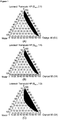
- a pseudo-ternary diagram of the w/o primary nanoemulsion shown in FIG. 1 shows a w/o system comprising oil Capryol 90, primary surfactant Labrasol and the primary co-surfactant Transcutol HP in condition that the ratio of S mix,1 is 2:1, 1:1 and 1:2.
- the amount of the primary co-surfactant is added relatively less than the amount of the primary surfactant, for example when S mix,1 is 2:1, the area of the w/o primary nanoemulsion is smaller than when S mix,1 is 1:1, this means that the solubility of the oil phase by S mix,1 is relatively low.
- the optimal w/o primary nanoemulsion composition was determined from the results of measuring the diameter and dispersion of aqueous phase droplets in emulsion (PDI), the content of aqueous phase in emulsion and permeable membrane permeability of drug: 21.4% aqueous phase (23.36% OXA or 67.52% OXA/DCK ion-pairing complex with 23.36% 5-FU), 50% mixture of Labrasol:Transcutol HP (1:2, w/w), and 28.6% Capryol 90.
- PDI diameter and dispersion of aqueous phase droplets in emulsion
- the content of aqueous phase in emulsion and permeable membrane permeability of drug 21.4% aqueous phase (23.36% OXA or 67.52% OXA/DCK ion-pairing complex with 23.36% 5-FU)
- 28.6% Capryol 90 50% mixture of
- Example 4 Preparation of w/o/w Secondary Nanoemulsions Comprising OXA/DCK Ion-pairing Complex and 5-FU
- the w/o/w secondary nanoemulsion is composed of w/o primary nanoemulsion in the oil phase and a mixture of Cremophor EL and Transcutol HP was prepared as a mixture of a secondary surfactant and a secondary co-surfactant (S mix,2 ) by titrating an oil phase in an aqueous phase.
- the area for w/o/w secondary nanoemulsion increased relatively with an increase in the total concentration of the secondary surfactant.
- S mix,2 1:1 increased the nanoemulsion region than S mix,2 2:1.
- the maximum amount of w/o primary nanoemulsion that was found to be dispersed in the external aqueous phase was 35% with a concentration of S mix,2 1:1 (29%).
- concentration of the co-surfactant was increased with respect to the surfactant (S mix,2 1:2)
- the nanoemulsion region decreased compared to S mix,2 1:1.
- the maximum amount of the w/o primary nanoemulsions dispersed 23% by 47% of S mix,2 1:2.
- the ratio of the secondary co-surfactant increased compared to the secondary surfactant, it was confirmed that the nanoemulsion region was reduced.
- Example 6 Evaluation of Physicochemical Properties of w/o/w Secondary Nanoemulsions Containing OXA/DCK Ion-pairing Complex and 5-FU
- each sample was diluted with deionized water (1:20), dispersed for 1 minute, and measured at 25°C. using a dynamic laser light scattering analyzer.
- the droplets sizes of the w/o primary nanoemulsion in the w/o/w secondary nanoemulsion at all compositions showed a uniform distribution with a PDIlower than 0.59, and the droplet size ranged from 13.5 nm to 232 nm.
- composition A where the composition of the w/o primary nanoemulsion dispersed in the w/o/w secondary nanoemulsion was maximum, and at each S mix,2 , it was observed that the dispersed droplet size increased rapidly as the concentration of the oil phase was increased from 10% to 30%. That is, the droplet sizes in Composition A and Composition C: 61.4 ⁇ 4.06 nm vs. 18.1 ⁇ 0.31 nm at S mix,2 2:1; 146 ⁇ 1.17 nm vs. 17.5 ⁇ 0.15 nm at S mix,2 1:1; 232 ⁇ 5.06 nm vs. 19.0 ⁇ 1.06 nm at S mix,2 1:2.
- the droplets size of the w/o primary nanoemulsion in the w/o/w secondary nanoemulsion is proportional to the concentration of the w/o primary nanoemulsion (oil phase) in the formulations.
- the composition of the w/o primary nanoemulsion (oil phase) was constant at 20% or 30%, the droplet size decreased as the concentration of the secondary surfactant was increased. Therefore, it can be seen that the droplets size is maximized in the composition A including S mix,2 1:2 and 30% of w/o primary nanoemulsion (oil phase).
- the droplet size containing less than 10% w/o primary nanoemulsion (oil phase) was evaluated to be smaller than 20 nm regardless of the S mix,2 ratio or its content.
- composition E were estimated to be 20.3 ⁇ 0.22 nm and 0.18 ⁇ 0.01 droplets and PDI respectively, and composition was found to produce the lowest mean droplet size compared to other formulations (13.5 ⁇ 0.14 nm).
- the surface charge (zeta potential) values of all w/o/w secondary nanoemulsions were observed in the range of -4.65 mV to 0.14 mV (neutral), which means that the fatty acids and esters of the oil layer in the w/o primary nanoemulsions are covered and dispersed with the secondary surfactant and secondary co-surfactants in the w/o/w secondary nanoemulsions.
- Example 7 Determination of the Intestinal Membrane Permeability of w/o/w Secondary Nanoemulsions Containing OXA/DCK Ion-pairing Complex and 5-FU
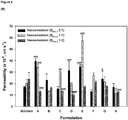
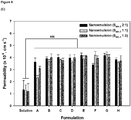
- Membrane permeability of w/o/w secondary nanoemulsions containing OXA, OXA/DCK ion-pairing complex or 5-FU, respectively, prepared in the composition of Table 1 above was evaluated using an artificial intestinal membrane (PAMPA; BD Biosciences, San Jose, CA, USA), and as a control, OXA, OXA/DCK ion-pairing complex and 5-FU aqueous solution were used, and the results are shown in FIG. 5 .
- PAMPA artificial intestinal membrane
- Each sample was diluted with phosphate-buffer (PBS, pH 6.8) at the concentration of 125.8 ⁇ M OXA, 125.8 ⁇ M OXA/DCK ion-pairing complex, and 384.4 ⁇ M 5-FU. Then, 200 ⁇ L was added to the donor of each well of the PAMPA plate, and 300 ⁇ L of buffer (PBS, pH 6.8) was added to each well of the receptor plate. The plate plate assembly was set by coupling the donor plate with the receiver plate. After 5 hours at room temperature, samples were withdrawn from donors and receptors in each well of the PAMPA plate, and the concentration was measured as follows.
- PBS phosphate-buffer
- OXA or OXA/DCK ion-pairing complexes were analyzed by HPLC using a C18 column (4.6 ⁇ 250 mm, 5 ⁇ m, 100 ⁇ ; 20 ⁇ L injection) at 40°C.
- the mobile phase consisted of water (pH 3.0 adjusted with phosphoric acid)-acetonitrile (99:1, v/v) and was run at a flow rate of 0.8 mL/min.
- OXA or OXA/DCK was measured using a UV detector at 210 nm.
- Effective permeability ( P e ) of each drug was calculated using the following formula.
- P e ⁇ ln 1 ⁇ C A t / C equilibrium / A ⁇ 1 / V D + 1 / V A ⁇ t
- A Effective filter area ( f ⁇ 0.3 cm 2 ;
- V D volume of the donor well (0.2 mL);
- V A volume of Receptor well (0.3 mL);
- t the total time of incubation in seconds (s);
- C A (t) concentration of drug in the receptor well at time t;
- C equilibrium [C D (t) ⁇ V D +C A (t) ⁇ V A ]/(V D +V A );
- the artificial intestinal membrane permeability of OXA, OXA/DCK ion-pairing complex and 5-FU was significantly increased after inclusion in the inner phase of the w/o/w multiple nanoemulsion as a whole.
- the membrane permeability was influenced by the secondary surfactant to secondary co-surfactant ratio (S mix,2 ) and S mix,2 to oil phase (w/o primary nanoemulsion) ratio. Except for composition H, the permeability value of OXA w/o/w multiple nanoemulsion prepared by S mix,2 1:1 was relatively higher than those from the compositions with S mix,2 2:1 and 1:2 at the same composition.
- Intestinal membrane permeability of the OXA/DCK ion-pairing complex from w/o/w multiple nanoemulsion E (S mix,2 1:1) showed the maximum, and the permeability value was 2.85 and 1.46 times greater than those from the solution and w/o/w multiple nanoemulsion A (S mix,2 2:1), respectively.
- OXA/DCK ion-pairing complex membrane permeability (57.2 ⁇ 5.23 ( ⁇ 10 -6 ), cm/s) from composition E (S mix,2 1:1) was 107- and 11.5-fold greater than the permeability of OXA from OXA aqueous solution (0.54 ⁇ 0.12 ( ⁇ 10 -6 ), cm/s) and composition E (4.99 ⁇ 0.59( ⁇ 10 -6 ), cm/s) respectively.
- Example 8 In Vitro Intestinal Cell Membrane Permeability Measurement of w/o/w Secondary Nanoemulsions Comprising OXA/DCK Ion-pairing Complex and 5-FU
- Caco-2 cells were seeded onto each well of 12-well Transwell® filter insert (pore size: 0.4 ⁇ m, surface area: 1.12 cm 2 ; Corning, NY, USA) at a density of 3 ⁇ 10 5 cells/well.
- Dulbecco's modified Eagle's medium (DMEM; Lonza, Basel, Switzerland) medium containing 10% fetal bovine serum (FBS; Gibco, Thermo Fisher Scientific) and 1% penicillin/streptomycin (Gibco) was changed every 48 hours for 21 to 29 days, and Caco-2 cell monolayers with a transepithelial electrical resistance (TEER) of >350 ⁇ cm 2 were used for in vitro intestinal membrane permeability experiments.
- DMEM Dulbecco's modified Eagle's medium
- FBS fetal bovine serum
- Gibco penicillin/streptomycin
- the culture medium was removed and the monolayer was pre-incubated with 0.5 mL of Hanks' balanced salt solution (HBSS) for 20 min at 37°C.
- HBSS Hanks' balanced salt solution
- the HBSS was removed; and 0.5 mL of 125.8 ⁇ M OXA, 125.8 ⁇ M OXA/DCK, and 384.4 ⁇ M 5-FU in HBSS or nanoemulsion diluted with HBSS, and 1.5 mL of HBSS were added to each apical and basolateral compartment, respectively and incubated at 37°C.
- 100- ⁇ L samples were taken from the basolateral compartment at 0.5, 1, 2, 3, 4, and 5 h. The samples were filtered through a membrane filter.
- the concentration of OXA, OXA/DCK complex, or 5-FU permeated though the monolayer was determined using the HPLC system with a UV detector, as in Example 7.
- the permeability of OXA was significantly improved compared to the aqueous OXA solution by ionic complex formation with DCK.
- OXA/DCK ion-pairing complexes are included in nanoemulsion E (12.0 ⁇ 1.91 ( ⁇ 10 -6 ), cm/s)
- the apical-to-basal P app s of OXA/DCK ionic complexes were further enhanced 2.13- and 4.80-fold compared to OXA alone (5.63 ⁇ 3.03 ( ⁇ 10 -6 ), cm/s) and OXA/DCK ionic complexes (2.50 ⁇ 1.96 ( ⁇ 10 -6 ), cm/s).
- the membrane permeability of 5-FU was also significantly increased by incorporation of 5-FU into the nanoemulsion, and the permeability of 5-FU (14.9 ⁇ 3.08( ⁇ 10 -6 ), cm/s) in Composition E (S mix,2 1:1) is increased 4.30 -fold compared to 5-FU aqueous solution (3.46 ⁇ 1.22( ⁇ 10 -6 ), cm/s).
- the permeability of OXA, OXA/DCK ion-pairing complex or 5-FU nanoemulsion across Caco-2 cell monolayer displayed a tendency to increase as the weight ratio of S mix,2 to oil phase increased from 1:1 to 1:3, and then significantly decreased at the ratio of 1:6.
- Example 9 Drug Release Test of w/o/w Secondary Nanoemulsions Containing OXA/DCK Ion-pairing Complex and 5-FU
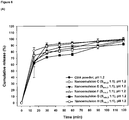
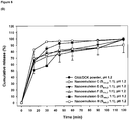
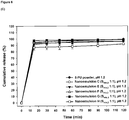
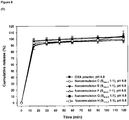
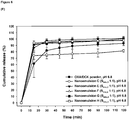
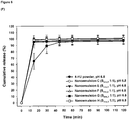
- Dissolution tests were performed in 500 mL of medium containing 0.1 N HCl solution (pH 1.2) or phosphate buffer (pH 6.8) at 37 ⁇ 0.2°C, using the USP type 1 apparatus (basket) rotating at 100 rpm.
- OXA or 38.8 mg of OXA/DCK complex (equivalent to 10 mg of OXA) with 10 mg of 5-FU powder or in 800 mg of w/o nanoemulsions with S mix,2 (formulations C, E, F, G, and H without secondary aqueous phase) were encased in a hard gelatin capsule size 00.
- Each capsule was subjected to a dissolution test, and 1-mL samples were withdrawn at 15, 30, 45, 60, 90, and 120 min. After filtration, the amount of drug released was quantified by the HPLC using a UV detector, as in Example 7, and the results are shown in FIG. 6 .
- OXA/DCK ion-pairing complex capsules filled in powder form represented a delayed release compared with release from the nanoemulsion (except composition C). More than 90% of OXA/DCK ionic complex released from the nanoemulsion within 15 min except composition C. This may have resulted from aggregation of the conjugated DCK molecules in the complex, as well as a lower S mix,2 to oil (the primary w/o emulsion) ratio.
- Example 10 In vivo Oral Absorption Evaluation of w/o/w Secondary Nanoemulsions Containing OXA/DCK Ion-pairing Complex and 5-FU
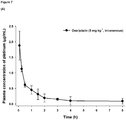
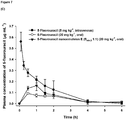
- an aqueous solution comprising OXA or OXA/DCK ion-pairing complex incorporated with 5-FU in the nanoemulsion comprising the same (composition E in Table 1, S mix,2 1:1) were orally administered to rats.
- FIG. 7 , Table 3 and Table 4 below show the drug concentration in blood-time profiles of rats and the pharmacokinetic parameters of OXA and 5-FU.
- Each rat was orally administered 400 ⁇ L of aqueous solution consisting of OXA (10 mg/kg), OXA/DCK ionic complex (equivalent to 10 mg/kg of OXA), or 5-FU (20 mg/kg), as well as a 400- ⁇ L nanoemulsion diluted with water to comprise OXA (10 mg/kg) or OXA/DCK ionic complex (equivalent to 10 mg/kg of OXA) with and 5-FU (20 mg/kg).
- OXA 10 mg/kg
- OXA/DCK ionic complex equivalent to 10 mg/kg of OXA
- 5-FU 20 mg/kg
- the plasma concentration of OXA was estimated by the Pt concentration using atomic absorption spectroscopy (AAS) after the plasma collected for analysis was diluted with 5 mL of nitric acid and heated for 6 h in a 100°C. Before analysis, the sample was diluted with 10 mL of 3% nitric acid solution and then injected into the furnace for AAS analysis. All measurements were carried out using a Thermo Scientific iCE 3500 AAS (Thermo Fisher Scientific) equipped with a GFS35 graphite furnace and a GFS35Z autosampler. Argon was used as the purging gas at 200 mL/min, and the injection volume of the sample was 20 ⁇ L. The spectrometer was provided with a Zeeman-based background corrector, and the platinum concentration was 266 nm.
- AAS atomic absorption spectroscopy
- the dried residues were reconstituted with 100 ⁇ L of mobile phase for HPLC analysis (ammonium phosphate buffer with pH 6.8/methanol, 98:2, v/v), followed by vortexing, and then determined by HPLC with a C8 column (4.6 ⁇ 250 mm, 5 ⁇ m) at a flow rate of 1 mL/min mobile phase. A 50- ⁇ L sample was injected and 5-FU was measured at 260 nm.
- HPLC analysis ammonium phosphate buffer with pH 6.8/methanol, 98:2, v/v
- the oral absorption rate of OXA also increased significantly after inclusion in the nanoemulsion, resulting in a 1.66- and 2.67-fold increase in the C max and AUC last respectively.
- the oral absorption rate of OXA was more enhanced by ionic complex formation with DCK, and the C max and AUC last values for OXA/DCK ion-pairing complex were 306% and 540% improved, respectively, compared to the OXA aqueous solution.
- the C max and AUC last values for nanoemulsions containing OXA/DCK ion-pairing complexes were 1.77- and 1.70-fold greater than the OXA/DCK ion-pairing complex aqueous solutions, respectively, as well as 5.41- and 9.17-fold greater compared to OXA aqueous solution.
- the oral bioavailability of the nanoemulsion comprising the OXA/DCK ion-pairing complex was 9.19-fold higher than the oral bioavailability of the simple OXA aqueous solution due to the ionic complexed DCK molecules and nanoemulsification.
- the C max value of 5-FU nanoemulsion 0.164 ⁇ 0.044 ⁇ g/mL, was 1.78-fold higher than that of 5-FU solution (0.092 ⁇ 0.008 ⁇ g/mL).
- the AUC last value for the 5-FU nanoemulsion also increased by 1.39-fold compared to that of the 5-FU solution (0.242 ⁇ 0.058 ⁇ g ⁇ h/mL), Thus, the resulting oral bioavailability of the 5-FU nanoemulsion was evaluated as a 139% increase compared with that of free 5-FU.
- Example 11 In vivo tumor Growth Inhibition Efficacy Evaluation of w/o/w Secondary Nanoemulsions Containing OXA/DCK Ion-pairing Complex and 5-FU
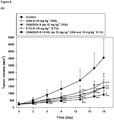
- mice were randomly divided into five groups of 10 animals each: Control(not treated); OXA-S (once daily oral administration of 10 mg/kg OXAin water); OXA/DCK-S (once daily oral administration OXA/DCK complex as 10 mg/kg OXA in water); 5-FU-S (once daily oral administration of 10 mg/kg 5-FU in water); OXA/DCK-5FU-NE (once daily oral administration nanoemulsion [formulation E] containing OXA/DCK complex as 10 mg/kg OXA and 10 mg/kg 5-FU); groups.
- 5-FU-S solution group also delayed the growth of tumor tissue by 57.9% compared to the control group. Also, tumor growth in the group administered orally with the 5-FU aqueous solution did not show a significant difference in the effect of inhibiting tumor growth compared with the group administered orally with the OXA/DCK aqueous solution. In contrast, OXA/DCK-5FU-NE group maximally inhibited the increase in tumor volume compared to the control (73.9%), OXA-S (48.5%), OXA/DCK-S (34.4%), and 5-FU-S (38.1%) groups.
- tumor weights from the OXA/DCK-5FU-NE group also decreased by 43.0%, 26.0%, 11.6%, and 32.0% compared to the control, OXA-S, OXA/DCK-S, and 5-FU-S, respectively, but mice had no significant effect on body weight ( FIGs. 8(B) and (C) ).
- the sustained OXA/DCK-5-FU-NE group not only significantly reduced the proliferating cell density but also increased tumor apoptosis compared to the control group, OXA-S, OXA/DCK-S and 5-FU-S. These results may be due to the improvement of oral bioavailability of nanoemulsion comprising OXA/DCK ion-pairing complex and 5-FU and the synergistic effects of these drugs on tumor growth inhibition.
Landscapes
- Health & Medical Sciences (AREA)
- Chemical & Material Sciences (AREA)
- Life Sciences & Earth Sciences (AREA)
- Veterinary Medicine (AREA)
- Medicinal Chemistry (AREA)
- Pharmacology & Pharmacy (AREA)
- Epidemiology (AREA)
- Animal Behavior & Ethology (AREA)
- General Health & Medical Sciences (AREA)
- Public Health (AREA)
- Engineering & Computer Science (AREA)
- Dispersion Chemistry (AREA)
- Bioinformatics & Cheminformatics (AREA)
- Oil, Petroleum & Natural Gas (AREA)
- Botany (AREA)
- Nutrition Science (AREA)
- Physiology (AREA)
- Molecular Biology (AREA)
- Biophysics (AREA)
- Chemical Kinetics & Catalysis (AREA)
- General Chemical & Material Sciences (AREA)
- Zoology (AREA)
- Nanotechnology (AREA)
- Proteomics, Peptides & Aminoacids (AREA)
- Medicinal Preparation (AREA)
- Acyclic And Carbocyclic Compounds In Medicinal Compositions (AREA)
- Pharmaceuticals Containing Other Organic And Inorganic Compounds (AREA)
- Medicines That Contain Protein Lipid Enzymes And Other Medicines (AREA)
Applications Claiming Priority (2)
| Application Number | Priority Date | Filing Date | Title |
|---|---|---|---|
| KR1020170073215A KR101895237B1 (ko) | 2017-06-12 | 2017-06-12 | 옥살리플라틴을 포함하는 경구용 약물전달 조성물 및 이의 제조방법 |
| PCT/KR2017/013958 WO2018230788A1 (fr) | 2017-06-12 | 2017-11-30 | Composition pour l'administration d'un médicament par voie orale contenant de l'oxaliplatine et son procédé de préparation |
Publications (2)
| Publication Number | Publication Date |
|---|---|
| EP3639859A1 true EP3639859A1 (fr) | 2020-04-22 |
| EP3639859A4 EP3639859A4 (fr) | 2021-03-31 |
Family
ID=63595139
Family Applications (1)
| Application Number | Title | Priority Date | Filing Date |
|---|---|---|---|
| EP17913783.1A Withdrawn EP3639859A4 (fr) | 2017-06-12 | 2017-11-30 | Composition pour l'administration d'un médicament par voie orale contenant de l'oxaliplatine et son procédé de préparation |
Country Status (6)
| Country | Link |
|---|---|
| US (1) | US11452705B2 (fr) |
| EP (1) | EP3639859A4 (fr) |
| JP (2) | JP2020522580A (fr) |
| KR (1) | KR101895237B1 (fr) |
| CN (1) | CN110740755A (fr) |
| WO (1) | WO2018230788A1 (fr) |
Cited By (1)
| Publication number | Priority date | Publication date | Assignee | Title |
|---|---|---|---|---|
| WO2022012030A1 (fr) * | 2020-07-13 | 2022-01-20 | 深圳大学 | Crème nanométrique d'acide guluronique insaturé de type w/o/w et son procédé de préparation |
Families Citing this family (3)
| Publication number | Priority date | Publication date | Assignee | Title |
|---|---|---|---|---|
| KR102216578B1 (ko) * | 2019-09-05 | 2021-02-17 | 주식회사 아이큐어비앤피 | 테리파라타이드를 포함하는 경구용 약학 조성물 및 이의 제조방법 |
| KR20210092883A (ko) | 2020-01-17 | 2021-07-27 | 문창상 | 라이신-데옥시콜산 염의 제조 방법 |
| US20240358651A1 (en) * | 2021-04-01 | 2024-10-31 | Snj Pharma Inc | Oral nanoparticles for bioactive compound, and method of preparing same |
Family Cites Families (10)
| Publication number | Priority date | Publication date | Assignee | Title |
|---|---|---|---|---|
| US20030180352A1 (en) * | 1999-11-23 | 2003-09-25 | Patel Mahesh V. | Solid carriers for improved delivery of active ingredients in pharmaceutical compositions |
| KR20010100194A (ko) * | 2000-03-13 | 2001-11-14 | 박호군 | 여러 가지 물질의 가용화용 조성물과 제형 및 그들의제조방법 |
| KR20030021706A (ko) * | 2001-09-07 | 2003-03-15 | 주식회사 엘지생활건강 | 미녹시딜을 함유한 w/o/w 다중 에멀젼 및 이의 제조방법 |
| KR101102935B1 (ko) * | 2009-05-14 | 2012-01-10 | 한불화장품주식회사 | 다중 지질 마이크로캡슐 및 이를 함유하는 화장료 조성물 |
| IN2012DN02576A (fr) * | 2009-09-21 | 2015-08-28 | Jw Pharmaceutical Corportion | |
| GB201019434D0 (en) | 2010-11-17 | 2010-12-29 | Isis Innovation | Sonosensitive nanoparticles |
| KR101440425B1 (ko) * | 2012-01-27 | 2014-09-17 | 한국콜마주식회사 | 음이온성 계면활성제를 포함하는 수중유중수형 다중에멀젼 상 화장료 조성물 및 그 제조방법 |
| KR20150010472A (ko) | 2013-07-19 | 2015-01-28 | 한국전자통신연구원 | 전력 정류 소자 |
| WO2015058111A1 (fr) * | 2013-10-17 | 2015-04-23 | The Brigham And Women's Hospital, Inc. | Nanoparticules cationiques pour co-administration d'acides nucléiques et d'agents thérapeutiques |
| KR101593531B1 (ko) * | 2014-03-06 | 2016-02-15 | 한국식품연구원 | W/o/w형 다중 에멀젼의 제조방법 |
-
2017
- 2017-06-12 KR KR1020170073215A patent/KR101895237B1/ko active Active
- 2017-11-30 WO PCT/KR2017/013958 patent/WO2018230788A1/fr not_active Ceased
- 2017-11-30 US US16/621,942 patent/US11452705B2/en active Active
- 2017-11-30 EP EP17913783.1A patent/EP3639859A4/fr not_active Withdrawn
- 2017-11-30 JP JP2020518374A patent/JP2020522580A/ja active Pending
- 2017-11-30 CN CN201780091976.6A patent/CN110740755A/zh active Pending
-
2022
- 2022-08-05 JP JP2022125209A patent/JP2022160584A/ja active Pending
Cited By (1)
| Publication number | Priority date | Publication date | Assignee | Title |
|---|---|---|---|---|
| WO2022012030A1 (fr) * | 2020-07-13 | 2022-01-20 | 深圳大学 | Crème nanométrique d'acide guluronique insaturé de type w/o/w et son procédé de préparation |
Also Published As
| Publication number | Publication date |
|---|---|
| EP3639859A4 (fr) | 2021-03-31 |
| JP2020522580A (ja) | 2020-07-30 |
| CN110740755A (zh) | 2020-01-31 |
| JP2022160584A (ja) | 2022-10-19 |
| US20210290586A1 (en) | 2021-09-23 |
| KR101895237B1 (ko) | 2018-09-07 |
| US11452705B2 (en) | 2022-09-27 |
| WO2018230788A1 (fr) | 2018-12-20 |
Similar Documents
| Publication | Publication Date | Title |
|---|---|---|
| Ren et al. | Enhanced oral absorption and anticancer efficacy of cabazitaxel by overcoming intestinal mucus and epithelium barriers using surface polyethylene oxide (PEO) decorated positively charged polymer-lipid hybrid nanoparticles | |
| Bernabeu et al. | Paclitaxel-loaded PCL–TPGS nanoparticles: In vitro and in vivo performance compared with Abraxane® | |
| Pangeni et al. | Multiple nanoemulsion system for an oral combinational delivery of oxaliplatin and 5-fluorouracil: preparation and in vivo evaluation | |
| Wang et al. | Cancer nanomedicines stabilized by π-π stacking between heterodimeric prodrugs enable exceptionally high drug loading capacity and safer delivery of drug combinations | |
| KR101505419B1 (ko) | 나노분산액 | |
| JP2022160584A (ja) | オキサリプラチンを含む経口用薬物送達組成物及びその製造方法 | |
| CN105853403B (zh) | 一种紫杉醇棕榈酸酯脂质体及其制备方法 | |
| Tsakiris et al. | Combinational drug-loaded lipid nanocapsules for the treatment of cancer | |
| Rampaka et al. | Role of solid lipid nanoparticles as drug delivery vehicles on the pharmacokinetic variability of Erlotinib HCl | |
| Ahmed et al. | Development and characterization of Brigatinib loaded solid lipid nanoparticles: In-vitro cytotoxicity against human carcinoma A549 lung cell lines | |
| Ma et al. | A highly stable norcantharidin loaded lipid microspheres: preparation, biodistribution and targeting evaluation | |
| Xia et al. | Regorafenib loaded self-assembled lipid-based nanocarrier for colorectal cancer treatment via lymphatic absorption | |
| EP3725297A1 (fr) | Composition pharmaceutique orale contenant du pémétrexed et procédé de production associé | |
| Wang et al. | Pharmacokinetics, biodistribution, and bioavailability of gossypol-loaded Pluronic® F127 nanoparticles | |
| CN102232933A (zh) | 具有肿瘤靶向性的白蛋白纳米冻干粉针制剂及其制备方法 | |
| Zhang et al. | Micellar emulsions composed of mPEG-PCL/MCT as novel nanocarriers for systemic delivery of genistein: a comparative study with micelles | |
| CA2774669C (fr) | Nanoparticules d'oxaliplatine et leur procede de preparation | |
| Li et al. | Preparation and in vivo evaluation of an intravenous emulsion loaded with an aprepitant-phospholipid complex | |
| US12427127B2 (en) | Carmustine formulation | |
| Cheng et al. | Carfilzomib and paclitaxel co-loaded protein nanoparticles an effective therapy against pancreatic adenocarcinomas | |
| Eskandari et al. | Targeting breast cancer using pirarubicin-loaded vasoactive intestinal peptide grafted sterically stabilized micelles | |
| CN104208030A (zh) | 一种白蛋白结合型紫杉醇长循环纳米粒冻干制剂 | |
| CN101352418A (zh) | 吡柔比星或盐酸吡柔比星脂质纳米粒及其制备方法 | |
| EP3395370B1 (fr) | Liposomes et composition de liposomes | |
| US20160151498A1 (en) | Nanoparticle Compositions |
Legal Events
| Date | Code | Title | Description |
|---|---|---|---|
| STAA | Information on the status of an ep patent application or granted ep patent |
Free format text: STATUS: THE INTERNATIONAL PUBLICATION HAS BEEN MADE |
|
| PUAI | Public reference made under article 153(3) epc to a published international application that has entered the european phase |
Free format text: ORIGINAL CODE: 0009012 |
|
| STAA | Information on the status of an ep patent application or granted ep patent |
Free format text: STATUS: REQUEST FOR EXAMINATION WAS MADE |
|
| 17P | Request for examination filed |
Effective date: 20191206 |
|
| AK | Designated contracting states |
Kind code of ref document: A1 Designated state(s): AL AT BE BG CH CY CZ DE DK EE ES FI FR GB GR HR HU IE IS IT LI LT LU LV MC MK MT NL NO PL PT RO RS SE SI SK SM TR |
|
| AX | Request for extension of the european patent |
Extension state: BA ME |
|
| DAV | Request for validation of the european patent (deleted) | ||
| DAX | Request for extension of the european patent (deleted) | ||
| REG | Reference to a national code |
Ref country code: DE Ref legal event code: R079 Free format text: PREVIOUS MAIN CLASS: A61K0047690000 Ipc: A61K0047540000 |
|
| A4 | Supplementary search report drawn up and despatched |
Effective date: 20210302 |
|
| RIC1 | Information provided on ipc code assigned before grant |
Ipc: A61K 31/12 20060101ALI20210224BHEP Ipc: A61K 47/55 20170101ALI20210224BHEP Ipc: A61K 31/555 20060101ALI20210224BHEP Ipc: A61K 47/54 20170101AFI20210224BHEP Ipc: A61K 31/282 20060101ALI20210224BHEP Ipc: A61K 9/00 20060101ALI20210224BHEP Ipc: A61K 31/513 20060101ALI20210224BHEP |
|
| STAA | Information on the status of an ep patent application or granted ep patent |
Free format text: STATUS: THE APPLICATION IS DEEMED TO BE WITHDRAWN |
|
| 18D | Application deemed to be withdrawn |
Effective date: 20250603 |