EP3640641A1 - Procédé d'examen d'un effet thérapeutique sur le cancer et composition permettant d'induire une réponse immunitaire - Google Patents
Procédé d'examen d'un effet thérapeutique sur le cancer et composition permettant d'induire une réponse immunitaire Download PDFInfo
- Publication number
- EP3640641A1 EP3640641A1 EP18797663.4A EP18797663A EP3640641A1 EP 3640641 A1 EP3640641 A1 EP 3640641A1 EP 18797663 A EP18797663 A EP 18797663A EP 3640641 A1 EP3640641 A1 EP 3640641A1
- Authority
- EP
- European Patent Office
- Prior art keywords
- cancer
- antibody
- xage1
- peptide
- positive
- Prior art date
- Legal status (The legal status is an assumption and is not a legal conclusion. Google has not performed a legal analysis and makes no representation as to the accuracy of the status listed.)
- Granted
Links
Images













Classifications
-
- G—PHYSICS
- G01—MEASURING; TESTING
- G01N—INVESTIGATING OR ANALYSING MATERIALS BY DETERMINING THEIR CHEMICAL OR PHYSICAL PROPERTIES
- G01N33/00—Investigating or analysing materials by specific methods not covered by groups G01N1/00 - G01N31/00
- G01N33/48—Biological material, e.g. blood, urine; Haemocytometers
- G01N33/50—Chemical analysis of biological material, e.g. blood, urine; Testing involving biospecific ligand binding methods; Immunological testing
- G01N33/68—Chemical analysis of biological material, e.g. blood, urine; Testing involving biospecific ligand binding methods; Immunological testing involving proteins, peptides or amino acids
- G01N33/6854—Immunoglobulins
-
- A—HUMAN NECESSITIES
- A61—MEDICAL OR VETERINARY SCIENCE; HYGIENE
- A61K—PREPARATIONS FOR MEDICAL, DENTAL OR TOILETRY PURPOSES
- A61K38/00—Medicinal preparations containing peptides
- A61K38/03—Peptides having up to 20 amino acids in an undefined or only partially defined sequence; Derivatives thereof
-
- A—HUMAN NECESSITIES
- A61—MEDICAL OR VETERINARY SCIENCE; HYGIENE
- A61K—PREPARATIONS FOR MEDICAL, DENTAL OR TOILETRY PURPOSES
- A61K38/00—Medicinal preparations containing peptides
- A61K38/16—Peptides having more than 20 amino acids; Gastrins; Somatostatins; Melanotropins; Derivatives thereof
-
- A—HUMAN NECESSITIES
- A61—MEDICAL OR VETERINARY SCIENCE; HYGIENE
- A61K—PREPARATIONS FOR MEDICAL, DENTAL OR TOILETRY PURPOSES
- A61K39/00—Medicinal preparations containing antigens or antibodies
-
- A—HUMAN NECESSITIES
- A61—MEDICAL OR VETERINARY SCIENCE; HYGIENE
- A61K—PREPARATIONS FOR MEDICAL, DENTAL OR TOILETRY PURPOSES
- A61K39/00—Medicinal preparations containing antigens or antibodies
- A61K39/0005—Vertebrate antigens
- A61K39/0011—Cancer antigens
- A61K39/001184—Cancer testis antigens, e.g. SSX, BAGE, GAGE or SAGE
-
- A—HUMAN NECESSITIES
- A61—MEDICAL OR VETERINARY SCIENCE; HYGIENE
- A61P—SPECIFIC THERAPEUTIC ACTIVITY OF CHEMICAL COMPOUNDS OR MEDICINAL PREPARATIONS
- A61P35/00—Antineoplastic agents
-
- C—CHEMISTRY; METALLURGY
- C07—ORGANIC CHEMISTRY
- C07K—PEPTIDES
- C07K14/00—Peptides having more than 20 amino acids; Gastrins; Somatostatins; Melanotropins; Derivatives thereof
- C07K14/82—Translation products from oncogenes
-
- C—CHEMISTRY; METALLURGY
- C12—BIOCHEMISTRY; BEER; SPIRITS; WINE; VINEGAR; MICROBIOLOGY; ENZYMOLOGY; MUTATION OR GENETIC ENGINEERING
- C12N—MICROORGANISMS OR ENZYMES; COMPOSITIONS THEREOF; PROPAGATING, PRESERVING, OR MAINTAINING MICROORGANISMS; MUTATION OR GENETIC ENGINEERING; CULTURE MEDIA
- C12N5/00—Undifferentiated human, animal or plant cells, e.g. cell lines; Tissues; Cultivation or maintenance thereof; Culture media therefor
- C12N5/06—Animal cells or tissues; Human cells or tissues
- C12N5/0602—Vertebrate cells
- C12N5/0634—Cells from the blood or the immune system
- C12N5/0636—T lymphocytes
-
- G—PHYSICS
- G01—MEASURING; TESTING
- G01N—INVESTIGATING OR ANALYSING MATERIALS BY DETERMINING THEIR CHEMICAL OR PHYSICAL PROPERTIES
- G01N33/00—Investigating or analysing materials by specific methods not covered by groups G01N1/00 - G01N31/00
- G01N33/15—Medicinal preparations ; Physical properties thereof, e.g. dissolubility
-
- G—PHYSICS
- G01—MEASURING; TESTING
- G01N—INVESTIGATING OR ANALYSING MATERIALS BY DETERMINING THEIR CHEMICAL OR PHYSICAL PROPERTIES
- G01N33/00—Investigating or analysing materials by specific methods not covered by groups G01N1/00 - G01N31/00
- G01N33/48—Biological material, e.g. blood, urine; Haemocytometers
- G01N33/50—Chemical analysis of biological material, e.g. blood, urine; Testing involving biospecific ligand binding methods; Immunological testing
- G01N33/53—Immunoassay; Biospecific binding assay; Materials therefor
-
- G—PHYSICS
- G01—MEASURING; TESTING
- G01N—INVESTIGATING OR ANALYSING MATERIALS BY DETERMINING THEIR CHEMICAL OR PHYSICAL PROPERTIES
- G01N33/00—Investigating or analysing materials by specific methods not covered by groups G01N1/00 - G01N31/00
- G01N33/48—Biological material, e.g. blood, urine; Haemocytometers
- G01N33/50—Chemical analysis of biological material, e.g. blood, urine; Testing involving biospecific ligand binding methods; Immunological testing
- G01N33/53—Immunoassay; Biospecific binding assay; Materials therefor
- G01N33/575—Immunoassay; Biospecific binding assay; Materials therefor for cancer
- G01N33/57557—Immunoassay; Biospecific binding assay; Materials therefor for cancer of other specific parts of the body, e.g. brain
-
- A—HUMAN NECESSITIES
- A61—MEDICAL OR VETERINARY SCIENCE; HYGIENE
- A61K—PREPARATIONS FOR MEDICAL, DENTAL OR TOILETRY PURPOSES
- A61K39/00—Medicinal preparations containing antigens or antibodies
- A61K2039/80—Vaccine for a specifically defined cancer
- A61K2039/892—Reproductive system [uterus, ovaries, cervix, testes]
-
- A—HUMAN NECESSITIES
- A61—MEDICAL OR VETERINARY SCIENCE; HYGIENE
- A61K—PREPARATIONS FOR MEDICAL, DENTAL OR TOILETRY PURPOSES
- A61K38/00—Medicinal preparations containing peptides
-
- C—CHEMISTRY; METALLURGY
- C12—BIOCHEMISTRY; BEER; SPIRITS; WINE; VINEGAR; MICROBIOLOGY; ENZYMOLOGY; MUTATION OR GENETIC ENGINEERING
- C12N—MICROORGANISMS OR ENZYMES; COMPOSITIONS THEREOF; PROPAGATING, PRESERVING, OR MAINTAINING MICROORGANISMS; MUTATION OR GENETIC ENGINEERING; CULTURE MEDIA
- C12N2501/00—Active agents used in cell culture processes, e.g. differentation
- C12N2501/50—Cell markers; Cell surface determinants
- C12N2501/505—CD4; CD8
-
- G—PHYSICS
- G01—MEASURING; TESTING
- G01N—INVESTIGATING OR ANALYSING MATERIALS BY DETERMINING THEIR CHEMICAL OR PHYSICAL PROPERTIES
- G01N2800/00—Detection or diagnosis of diseases
- G01N2800/34—Genitourinary disorders
- G01N2800/344—Disorders of the penis and the scrotum and erectile dysfuncrion
-
- G—PHYSICS
- G01—MEASURING; TESTING
- G01N—INVESTIGATING OR ANALYSING MATERIALS BY DETERMINING THEIR CHEMICAL OR PHYSICAL PROPERTIES
- G01N2800/00—Detection or diagnosis of diseases
- G01N2800/52—Predicting or monitoring the response to treatment, e.g. for selection of therapy based on assay results in personalised medicine; Prognosis
Definitions
- the present invention relates to examination for prediction of an effect of cancer treatment or prognosis prediction, and to utilization of an immune response-inducing peptide.
- an anti-PD-1 antibody (nivolumab or pembrolizumab) serving as an immune checkpoint molecule inhibitor drug
- an anti-PD-1 antibody nivolumab or pembrolizumab
- the anti-PD-1 antibody therapy is performed in Japan, the United States, and the European Union.
- a useful biomarker for a responder case to the immune checkpoint molecule inhibitor drug is a PD-L1 molecule expressed in tumors and immunocompetent cells in tumors.
- a response rate of even a PD-L1 high expression group is from about 30% to about 40%.
- the immune checkpoint molecule inhibitor drug is extremely expensive. Accordingly, it is desired that a novel biomarker be identified.
- XAGE1 antigen expressed in lung adenocarcinoma which is the most common lung cancer.
- the XAGE1 antigen is expressed in 40% to 50% of advanced lung adenocarcinomas; an antibody (IgG) reaction against XAGE1 is observed in about a half of patients expressing the XAGE1 antigen; and individuals positive for an antibody (IgG) against XAGE1 have a prolonged prognosis (Non Patent Literatures 1 and 2) .
- the XAGE1 antigen is a cancer/testis antigen.
- the cancer/testis antigen (CT antigen) is a collective term for antigens each of which is expressed in many cancers but is expressed only in testes among normal tissues, and a large number of CT antigens are known (Non Patent Literatures 3 and 4).
- response rates in the similar CheckMate-057 trial comparing nivolumab and docetaxel targeting previously treated non-squamous non-small cell lung cancer were 19% and 12% in a nivolumab group and a docetaxel group, respectively.
- OSs serving as primary outcome measures were 12.2 months and 9.4 months in the nivolumab group and the docetaxel group, respectively, showing significant prolongation.
- single-agent treatment with nivolumab proved effectiveness of nivolumab, as compared to docetaxel, in unresectable or metastatic non-small cell lung cancer having a previous treatment history.
- the disease progression rates in the CheckMate-017 trial were 33% and 30% in the nivolumab group and the docetaxel group, respectively, and the disease progression rates in the CheckMate-057 trial were 44% and 29% in the nivolumab group and the docetaxel group, respectively.
- pembrolizumab serving as another anti-PD-1 antibody was investigated in the KEYNOTE-001 and KEYNOTE-010 trials targeting previously treated non-small cell lung cancer.
- an overall response rate was from 18% to 20%, and responses were found in 19% to 23% of PD-L1-positive tumors and in 9% to 13% of even PD-L1-negative tumors.
- response rates were from 18.0% to 18.5%, and 9.3% in a pembrolizumab group and a docetaxel group, respectively.
- OSs were from 10.4 months to 12.7 months, and 8.5 months in the pembrolizumab group and the docetaxel group, respectively, and hence a significant OS prolongation was found in the pembrolizumab group as compared to the docetaxel group. No significant difference in progression-free survival (PFS) was found as compared to the docetaxel group.
- PFS progression-free survival
- a response rate in the pembrolizumab group was from 29.1% to 30.2%, whereas that in the docetaxel group was 7.9%.
- the OS was from 14.9 months to 17.3 months in the pembrolizumab group.
- the PFS was also significantly improved as compared to the docetaxel group.
- pembrolizumab provided a high antitumor effect and a prolonged prognosis.
- a response rate of an atezolizumab group highly expressing PD-L1 in the cancer immune microenvironment was 38%, and that of a docetaxel group expressing no PD-L1 in the cancer immune microenvironment was only about 15%.
- OAK trial which was a phase III trial comparing atezolizumab and docetaxel targeting previously treated non-small cell lung cancer, results similar to those of the POPLAR trial were observed.
- PD-L1 expression in a tumor or immunocompetent cells in the tumor is considered to be useful as a biomarker for responder cases to the immune checkpoint molecule inhibitor drugs at present.
- response rates of the immune checkpoint molecule inhibitor drugs are from 30% to 40%.
- about 10% of even PD-L1 low expressing or PD-L1-negative cases have been found to be responder cases.
- the inventors of the present invention have made extensive investigations in order to achieve the above-mentioned objects, and as a result, have found that a treatment effect on cancer can be predicted or confirmed by detecting an antibody against a cancer/testis antigen or an anti-p53 antibody.
- the inventors have found that an IgG-type XAGE1 antibody (hereinafter sometimes referred to as XAGE1-IgG) and an IgA-type XAGE1 antibody (hereinafter sometimes referred to as XAGE1-IgA), or an IgG-type anti-NY-ESO-1 antibody (hereinafter sometimes referred to as NY-ESO-1-IgG) suitably serves as an indicator for the prediction of the treatment effect of cancer treatment and prognosis prediction before the cancer treatment.
- the inventors have also found a novel peptide for a cancer vaccine and a composition thereof.
- the inventors have also found a screening method for a peptide for a cancer vaccine. That is, the present invention encompasses the following
- the examination method of the present invention can accurately predict the effect and prognosis of cancer treatment before the cancer treatment.
- the effect of cancer treatment can be confirmed after the cancer treatment.
- the effect of chemotherapy effect of an anticancer drug
- the effect of immunotherapy and the effect of an immune checkpoint molecule inhibitor drug can be accurately predicted.
- the immune checkpoint molecule inhibitor drug is extremely expensive, and besides, there is at present no effective biomarker indicating the end of treatment therewith. In addition, there is a concern that, unlike conventional chemotherapy, the immune checkpoint molecule inhibitor drug, though effective in some patients, may also cause a serious adverse event, specifically the development of a systemic autoimmune disease.
- the examination method of the present invention enables prediction even for a patient on which the treatment effect is low, and the treatment may be stopped in consideration of balance with side effects.
- the fact that the present invention allows the selection of a markedly responsive case to the immune checkpoint molecule inhibitor drug is innovative also in terms of medical economy including, for example, treatment cost and cost required for measures against side effects.
- novel peptide, and the composition for inducing an immune response containing the novel peptide, of the present invention can each serve as a cancer therapeutic drug (cancer vaccine) by actively inducing XAGE1 immunity to induce an immune response against cancer.
- cancer vaccine cancer vaccine
- the novel peptide and composition for inducing an immune response of the present invention can induce an XAGE1-specific antibody, in particular, an IgG-type anti-XAGE1 antibody, and can also induce antigen-specific T-cells.
- novel peptide of the present invention and the composition for inducing an immune response of the present invention enable such innovative treatment as to lead a non-responder case or poor prognosis group of each of chemotherapy, immunotherapy, and treatment with an immune checkpoint molecule inhibitor drug to a treatment-responsive and favorable prognosis group by actively inducing XAGE1 immunity. Further, the peptide and the composition enable potent cancer immunotherapy through combined use with an existing treatment method or a novel treatment method. Further, the composition for inducing an immune response of the present invention is also excellent in safety.
- the novel peptide of the present invention is a long-chain peptide unlike an epitope vaccine to be recognized by T-cells. Accordingly, the peptide contains various epitopes, and can induce a more potent immune response than a related-art epitope vaccine. Further, the combination of at least one peptide selected from the above-mentioned items a) to c) and at least one peptide selected from the above-mentioned items d) to f) can induce a still more potent immune response.
- the screening method of the present invention enables the selection of a peptide suitable for a cancer vaccine.
- the activated CD4-positive T-cells or activated CD8-positive T-cells obtained by the method of preparing activated CD4-positive T-cells or activated CD8-positive T-cells of the present invention can be used for cell therapy, such as adoptive immunity (T-cell) therapy.
- T-cell adoptive immunity
- An examination method of the present invention includes detecting an antibody against a cancer/testis antigen or an anti-p53 antibody in a sample.
- a screening method for a peptide for a cancer vaccine of the present invention also includes detecting an antibody against a cancer/testis antigen or an anti-p53 antibody in a sample.
- the cancer/testis antigen (hereinafter sometimes referred to as CT antigen) in each of the examination method and screening method of the present invention is not particularly limited, and is an antigen expressed in cancer cells and expressed only in testis among normal tissues.
- CT antigen includes detecting an antibody against a CT antigen, and preferred examples of the CT antigen include XAGE1, NY-ESO-1, MAEL, BAGE, BORIS, MAGE-B3, and SSX4. More preferred examples of the CT antigen include XAGE1 and NY-ESO-1.
- an IgG-type antibody against a CT antigen or anti-p53 antibody is preferably detected.
- Preferred examples of the antibody against a CT antigen include an anti-XAGE1 antibody, an anti-NY-ESO-1 antibody, an anti-MAEL antibody, an anti-BAGE antibody, an anti-BORIS antibody, an anti-MAGE-B3 antibody, and an anti-SSX4 antibody.
- Each of those antibodies is preferably of an IgG type. More preferred examples of the antibody include an IgG-type anti-XAGE1 antibody and an IgG-type anti-NY-ESO-1 antibody.
- an IgA-type antibody against a CT antigen be detected in addition to the IgG-type antibody against a CT antigen.
- a suitable example of the IgA-type antibody against a CT antigen is an IgA-type anti-XAGE1 antibody. It is preferred that the IgG-type anti-XAGE1 antibody and the IgA-type anti-XAGE1 antibody be detected.
- cancer vaccine means a pharmaceutical composition capable of inducing an immune response against cancer, and the immune response induction includes humoral immunity induction and/or cell-mediated immunity induction.
- an antibody against a CT antigen or an anti-p53 antibody in a sample collected from a test subject before cancer treatment is detected.
- an antibody against a CT antigen or an anti-p53 antibody in a sample collected from a test subject after cancer treatment is detected.
- the effect and prognosis of the cancer treatment can be predicted before the cancer treatment.
- the effect of the cancer treatment can be confirmed and the prognosis thereof can be predicted after the cancer treatment. Further, the effect and prognosis of subsequent treatment can be predicted.
- the examination method of the present invention is suited to the prediction and confirmation of the effects of various cancer treatments, and the prediction of the prognoses thereof, and is suited to the prediction and confirmation of the effect of chemotherapy or immunotherapy, and the prediction of the prognoses thereof.
- the examination method of the present invention is more suited to the prediction of the effect of immunotherapy, and is particularly suited to the prediction of the effect of treatment with an immune checkpoint molecule inhibitor drug.
- the chemotherapy encompasses treatment by the administration of any of various anticancer drugs, such as platinum agents.
- the immunotherapy encompasses immunosuppression-inhibiting therapy (treatment with an immune checkpoint molecule inhibitor drug), cytokine (e.g., IL-2) therapy, BRM therapy (e.g., an immunostimulator), cancer vaccine therapy, and the like.
- the treatment with an immune checkpoint inhibitor encompasses treatment by the administration of a PD-1 inhibitor (e.g., nivolumab), treatment with a CTLA-4 inhibitor (e.g., ipilimumab), and the like.
- a sample collected from a test subject before cancer treatment is used as an object to be examined.
- the phrase "before cancer treatment” means before the start of cancer treatment whose effect is to be predicted. That is, the "before cancer treatment” in the present invention includes : before cancer treatment is newly started; before the administration of a pharmaceutical agent for cancer treatment; before the administration of a pharmaceutical agent during ongoing cancer treatment; before changing pharmaceutical agents for cancer treatment; before changing cancer treatment plans; and during a period of investigation as to whether or not cancer treatment is stopped.
- a sample collected from a test subject after cancer treatment is used as an object to be examined.
- the phrase "after cancer treatment” means a stage of confirming, after a certain period from the start of cancer treatment for which a particular cancer therapeutic drug has been chosen, the effect of the cancer therapeutic drug. That is, the "after cancer treatment” in the present invention includes: before the administration of an additional pharmaceutical agent during ongoing cancer treatment; before changing pharmaceutical agents for cancer treatment; before changing cancer treatment plans; and a stage of investigation as to whether or not cancer treatment is stopped.
- sample in the screening method of the present invention is preferably a sample collected from a liquid containing B-cells subjected to stimulated culture with a candidate peptide for a cancer vaccine .
- a supernatant of a culture medium after stimulated culture of a mononuclear cell-containing fraction or a B-cell-containing fraction obtained from human blood with a candidate peptide for a cancer vaccine in the presence of CD4-positive T-cells and CD8-positive T-cells may be used.
- treatment effect encompasses the suppression of pathological progression of cancer, the regression of cancer, the disappearance of cancer, the suppression of recurrence, the suppression of metastasis, the prolongation of a survival time, and the like.
- the treatment effect is represented in terms of response rate, survival rate, survival time, or the like.
- the cancer in the "cancer treatment” in the examination method of the present invention is not particularly limited, and may be any cancer .
- a suitable example of the cancer is XAGE1-positive or NY-ESO-1-positive cancer.
- the cancer in the "peptide for a cancer vaccine" to be obtained by the screening method of the present invention is not particularly limited, and may be any cancer.
- a suitable example of the cancer is XAGE1-positive cancer.
- Examples of the cancer in each of the examination method of the present invention and the screening method of the present invention include lung cancer, liver cancer, prostate cancer, stomach cancer, malignant melanoma, breast cancer, esophageal cancer, kidney cancer, and bladder cancer.
- a suitable example of the cancer is lung cancer, and a particularly suitable example thereof is non-small cell lung cancer.
- the examination of the present invention is suited to the prediction of the effect of intractable advanced non-small cell lung cancer treatment or advanced lung adenocarcinoma treatment.
- XAGE1 (X Antigen Family, Member 1) is a known cancer/testis antigen encoded by an XAGE1 gene and also known as cancer/testis antigen 12.1 (CT12.1).
- Five kinds of genes, i.e., XAGEla to XAGEle have heretofore been identified. It is known that the associated protein is GAGED2, and there are two kinds of isoforms, i.e., GAGED2a and GAGED2d.
- four kinds of alternative splice variants i.e., XAGE1a, XAGE1b, XAGE1c, and XAGEld have heretofore been identified ( Sato et al., Cancer Immunity, vol. 7, page 5 (2007 )).
- XAGEla and XAGElb encode an XAGE1 (GAGED2a) protein formed of 81 amino acids
- XAGEld encodes an XAGE1 (GAGED2d) protein formed of 69 amino acids.
- the amino acid sequences of XAGE1 for various animal species are known.
- the sequence of human XAGE1 (GAGED2a) is available as NCBI Reference Sequence: NP_001091073.2 and NP_001091063.2
- the sequence of human XAGE1 (GAGED2d) is available as NCBI Reference Sequence: NP_001091074.1.
- the anti-XAGE1 antibody serving as an object to be measured in the examination method or screening method of the present invention is an antibody against XAGE1 (GAGED2a) (hereinafter referred to simply as XAGE1).
- a method of detecting the anti-XAGE1 antibody serving as an object to be detected in the examination method or screening method of the present invention is not particularly limited, but an example thereof is a method involving detecting binding to an antigen.
- the antigen for the binding may be full-length XAGE1, or may be a partial peptide formed of part of the amino acid sequence thereof. Full-length XAGE1 is preferably used.
- an IgG-type anti-XAGE1 antibody is detected. It is preferred that the IgG-type anti-XAGE1 antibody (XAGE1-IgG) and an IgA-type anti-XAGE1 antibody (XAGE1-IgA) be detected.
- a detection method for the IgG-type antibody is not particularly limited, but for example, a labeled anti-human IgG antibody may be used.
- a detection method for the IgA-type antibody is also not particularly limited, but for example, a labeled anti-human IgA antibody may be used.
- An examination method or screening method includes a step of detecting XAGE1-IgG and/or XAGE1-IgA.
- XAGE1-IgG is a biomarker indicating that an immune response against an autologous tumor is enhanced
- XAGE1-IgA is a biomarker indicating that the immune response against an autologous tumor is reduced (suppressed). It has been found for the first time that such markers are applicable to the prediction of the treatment effect of a cancer therapeutic drug.
- NY-ESO-1 is also a known cancer/testis antigen. NY-ESO-1 is expressed in various tumors, including malignant melanoma, at various levels ranging from 5% to 40%, but is expressed only in testes among normal tissues. NY-ESO-1 protein is formed of 180 amino acids, and its sequence is available as GenBank: CAA05908.1.
- a method of detecting the anti-NY-ESO-1 antibody serving as an object to be detected in the examination method or screening method of the present invention is not limited, but an example thereof is a method involving detecting binding to an antigen.
- the antigen for the binding may be full-length NY-ESO-1, or may be a partial peptide formed of part of the amino acid sequence thereof. Full-length NY-ESO-1 is preferably used.
- an IgG-type anti-NY-ESO-1 antibody is detected. Further, an IgA-type anti-NY-ESO-1 antibody may be detected.
- a detection method for the IgG-type antibody is not particularly limited. For example, a labeled anti-human IgG antibody may be used. In addition, a detection method for the IgA-type antibody is also not particularly limited, but for example, a labeled anti-human IgA antibody may be used.
- MAEL, BAGE, BORIS, MAGE-B3, and SSX4 are also known cancer/testis antigens. These antigens are expressed in various tumors at various levels, but are expressed only in testes among normal tissues.
- p53 is known as a cancer suppressor protein.
- a method of detecting the anti-MAEL antibody, the anti-BAGE antibody, the anti-BORIS antibody, the anti-MAGE-B3 antibody, the anti-SSX4 antibody, and the anti-p53 antibody each serving as an object to be detected in the examination method or screening method of the present invention is not limited, but an example thereof is a method involving detecting binding to an antigen .
- the antigen for the binding may be a full-length one, or may be a partial peptide formed of part of the amino acid sequence thereof.
- an IgG-type anti-MAEL antibody, an IgG-type anti-BAGE antibody, an IgG-type anti-BORIS antibody, an IgG-type anti-MAGE-B3 antibody, an IgG-type anti-SSX4 antibody, and an IgG-type anti-p53 antibody are detected.
- an IgA-type antibody may be detected.
- a detection method for the IgG-type antibody is not particularly limited, but for example, a labeled anti-human IgG antibody may be used.
- a detection method for the IgA-type antibody is also not particularly limited, but for example, a labeled anti-human IgA antibody may be used.
- a method of detecting the antibody against each CT antigen or the anti-p53 antibody is not particularly limited as long as the amount, concentration, or antibody titer of the antibody can be measured by the method, and measurement may be performed using a technique known in the art. For example, measurement may be performed by an ELISA method, radioimmunoassay, an immunoprecipitation method, an affinity column method, or the like.
- test subject in the examination method of the present invention is not particularly limited, and widely encompasses mammals in general (e.g., humans, mice, rats, monkeys, dogs, cats, cattle, horses, pigs, sheep, goats, rabbits, and hamsters). Of those, humans are preferred.
- test subject is a human, not only a cancer patient or a patient suspected of having cancer, but also a healthy individual may serve as the test subject.
- the sex, age, and the like of the test subject are not particularly limited.
- sample in the examination method of the present invention may include blood (e.g., serum, plasma, or blood cells), urine, feces, sputum, pleural/ascitic fluid, bronchoalveolar lavage fluid, peritoneal lavage fluid, a biopsy tissue, and a surgically resected specimen.
- blood e.g., serum, plasma, or blood cells
- urine e.g., urine, feces, sputum, pleural/ascitic fluid, bronchoalveolar lavage fluid, peritoneal lavage fluid, a biopsy tissue, and a surgically resected specimen.
- serum e.g., serum, plasma, or blood cells
- urine e.g., urine, feces, sputum, pleural/ascitic fluid, bronchoalveolar lavage fluid, peritoneal lavage fluid, a biopsy tissue, and a surgically resected specimen.
- feces
- cancer treatment has an effect in at least one case selected from the group consisting of the following cases 1) to 4):
- cancer treatment has an effect in the case where the antibody against a CT antigen or the anti-p53 antibody is positive .
- Preferred specific examples thereof include an anti-XAGE1 antibody, an anti-NY-ESO-1antibody, an anti-MAEL antibody, an anti-BAGE antibody, an anti-BORIS antibody, an anti-MAGE-B3 antibody, an anti-SSX4 antibody, and an anti-p53 antibody.
- the antibody against a CT antigen or the anti-p53 antibody is still more preferably an IgG-type antibody.
- a preferred specific example thereof is XAGE1-IgG or NY-ESO-1-IgG.
- cancer treatment has an effect in the case where an IgG-type antibody against a CT antigen or anti-p53 antibody is positive and an IgA-type antibody against a CT antigen or anti-p53 antibody is negative.
- a preferred specific example thereof is a case in which XAGE1-IgG or NY-ESO-1-IgG is positive and XAGE1-IgA is negative, and a particularly preferred specific example thereof is a case in which XAGE1-IgG is positive and XAGE1-IgA is negative.
- the case in which the antibody against a CT antigen or the anti-p53 antibody is positive is a case in which the amount, concentration, or antibody titer of the antibody against a CT antigen or the anti-p53 antibody is equal to or higher than a cutoff value.
- the case in which the antibody against a CT antigen or the anti-p53 antibody is negative is a case in which the amount, concentration, or antibody titer of the antibody against a CT antigen or the anti-p53 antibody is equal to or lower than the cutoff value.
- the cutoff value may be, for example, a 10- to 1,000-fold antibody titer, a 20- to 500-fold antibody titer, a 50- to 200-fold antibody titer, or a 100-fold antibody titer with respect to the antibody titer of a healthy individual.
- the cutoff value may be set to be a mean+3SD of 50 or more specimens of serum of healthy adults, or the like.
- it is judged that cancer treatment has an effect in the case where the amount, concentration, or antibody titer of XAGE1-IgG or NY-ESO-1-IgG is equal to or higher than the cutoff value.
- An examination method includes a step of detecting an antibody against a CT antigen or an anti-p53 antibody in a sample.
- the sample is preferably a sample collected from a test subject before cancer treatment.
- Specific examples of the antibody against a CT antigen include an anti-XAGE1 antibody and an anti-NY-ESO-1 antibody. More preferred specific examples thereof include: XAGE1-IgG; a combination of XAGE1-IgG and XAGE1-IgA; NY-ESO-1-IgG; and a combination of NY-ESO-1-IgG and XAGE1-IgA.
- An examination method includes the steps of: detecting an amount, concentration, or antibody titer of XAGE1-IgG in a sample collected from a test subject; and detecting an amount, concentration, or antibody titer of XAGE1-IgA in the same sample.
- the presence of XAGE1-IgA indicates that immunity is suppressed, and hence it can be judged that cancer treatment has an effect in the case where the amount, concentration, or antibody titer of XAGE1-IgG is equal to or higher than the cutoff value, and that of XAGE1-IgA is equal to or lower than the cutoff value.
- XAGE1-IgG is a biomarker indicating that an immune response against an autologous tumor is enhanced. Meanwhile, it has been found that IgA-positive regulatory B-cells are increased in cancer locally, and hence XAGE1-IgA serves as a biomarker indicating that the immune response against an autologous tumor is reduced. In about a half of patients having XAGE1-IgG, an XAGE1-IgA reaction is observed.
- the screening method of the present invention includes, for example, the steps of: subjecting B-cells separated from human blood to stimulated culture with a candidate peptide for a vaccine; and detecting an antibody against a CT antigen or an anti-p53 antibody in a culture supernatant.
- the screening method preferably further includes a step of judging that the candidate peptide has a cancer treatment effect in the case where the antibody against a CT antigen or the anti-p53 antibody is positive .
- the screening method suitably includes a step of judging that the candidate peptide has a cancer treatment effect in the case where XAGE1-IgA is negative and XAGE1-IgG or NY-ESO-1-IgG is positive.
- the examination method or the screening method includes the steps of: detecting an amount, concentration, or antibody titer of an antibody against a CT antigen in a sample collected from a test subject; and detecting an amount, concentration, or antibody titer of an antibody against another CT antigen different from the foregoing CT antigen in the same sample.
- the antibodies against CT antigens to be examined are not particularly limited, but preferably include the anti-XAGE1 antibody, the anti-NY-ESO-1 antibody, the anti-MAEL antibody, the anti-BAGE antibody, the anti-BORIS antibody, the anti-MAGE-B3 antibody, or the anti-SSX4 antibody.
- a patient in which antibodies against a plurality of CT antigens are detected has immune responses against multiple antigens and is in an immune-activated state, thereby being responsive to cancer treatment, such as immunotherapy.
- the plurality needs to be 2 or more, and is preferably 3 or more.
- the upper limit thereof is not limited, but is specifically, for example, 50 or less, 40 or less, 30 or less, 20 or less, or 10 or less from the viewpoint of the complexity of the examination.
- a method of increasing the antibody titer is, for example, the administration of a vaccine.
- the vaccine is preferably a vaccine containing a CT antigen, more preferably a vaccine containing at least one CT antigen selected from the group consisting of XAGE1, NY-ESO-1, MAEL, BAGE, BORIS, MAGE-B3, and SSX4, or a peptide formed of part of any such antigen.
- the present application also encompasses an invention directed to a reagent kit.
- the invention directed to a reagent kit is directed to a reagent kit for examining a cancer treatment effect including: a support having immobilized thereon at least one selected from the group consisting of a CT antigen, a peptide formed of part of a CT antigen, p53, and a peptide formed of part of p53; a reagent containing an anti-human IgG antibody; and a reagent containing an anti-human IgA antibody.
- a preferred embodiment is a reagent kit for examining a cancer treatment effect including: a support having immobilized thereon at least one peptide selected from the group consisting of XAGE1, a peptide formed of part of XAGE1, NY-ESO-1, and a peptide formed of part of NY-ESO-1; a reagent containing an anti-human IgG antibody; and a reagent containing an anti-human IgA antibody.
- This kit is a reagent kit for examining the effect of cancer treatment.
- the peptide formed of part of XAGE1 is a peptide having a sequence formed of part of the amino acid sequence set forth in SEQ ID NO: 3. It is preferred that the peptide contain 10 or more amino acids and contain one or more epitopes.
- the peptide formed of part of NY-ESO-1 is a peptide having an amino acid sequence formed of part of the amino acid sequence set forth in SEQ ID NO: 4. It is preferred that the peptide contain 10 or more amino acids and contain one or more epitopes.
- the support having a peptide immobilized thereon included in the reagent kit of the present invention has immobilized thereon at least one selected from the group consisting of a CT antigen, a peptide formed of part of a CT antigen, p53, and a peptide formed of part of p53. It is preferred that at least one selected from the group consisting of XAGE1, a peptide formed of part of XAGE1, NY-ESO-1, and part of NY-ESO-1 be immobilized.
- the support is not particularly limited, and examples thereof include a plate and a stick.
- the reagent kit of the present invention includes the reagent containing an anti-human IgG antibody and the reagent containing an anti-human IgA antibody in addition to the support having immobilized thereon a peptide. Those antibodies are preferably labeled.
- the kit of the present invention may contain a reagent for causing a reaction with a label, a diluent or the like, an additional reagent, and an instrument for examination.
- An invention directed to a peptide of the present application is directed to at least one peptide selected from the group consisting of the following items a) to f):
- the amino acid sequence of the peptide of the present invention is designed on the basis of the sequences of SEQ ID NO: 1, SEQ ID NO: 2, and SEQ ID NO: 3, and the peptide may be synthesized by a general method.
- the number of amino acids of the peptide preferably falls within the range of from 20 to 30.
- the peptide of the present invention is a peptide that may be selected by the above-mentioned screening method for a peptide for a cancer vaccine.
- one amino acid is substituted with an amino acid having a similar structure or similar characteristics like the substitution of a hydrophobic amino acid with another hydrophobic amino acid. Further, one amino acid is replaced with an amino acid identical or similar thereto in size and chemical properties like the substitution of leucine with isoleucine .
- amino acid substitutions are more acceptable than other amino acid substitutions in many cases.
- correlations of being similar in size, charge, polarity, and hydrophobicity are often exhibited between original amino acids and substitutes therefor. This is the basis for the definition of the "conservative substitution".
- the conservative substitution may be herein defined as replacement within one of the following five groups: Group 1 - aliphatic, nonpolar or slightly polar residues each having a small molecular weight (Ala, Ser, Thr, Pro, and Gly); Group 2 - polar, negatively charged residues and amides thereof (Asp, Asn, Glu, and Gln); Group 3 - polar, positively charged residues (His, Arg, and Lys); Group 4 - aliphatic nonpolar residues each having a large molecular weight (Met, Leu, Ile, Val, and Cys) ; and Group 5 - aromatic residues each having a large molecular weight (Phe, Tyr, and Trp) .
- the C-terminus of the peptide of the present invention may be an amide or an ester.
- an amino group at the N-terminus or, for example, OH, NH 2 , or SH on the side chain of an amino acid inside the molecule may be protected with an appropriate protecting group (e.g., a C 1-6 acyl group, such as a formyl group or an acetyl group).
- the peptide of the present invention also encompasses a so-called glycopeptide having a glycan linked thereto and the like.
- some of the amino acids may be D-amino acids.
- a physiologically acceptable acid addition salt there is given, for example, a physiologically acceptable acid addition salt, in particular.
- the peptide of the present invention may be in the form of a solvate.
- a solvent is not particularly limited as long as the solvent is pharmaceutically acceptable, and examples thereof include water, ethanol, glycerol, and acetic acid.
- the peptide of the present invention may be converted into a prodrug.
- the prodrug may be designed to be converted into the peptide of the present invention under a physiological condition in vivo.
- the peptide of the present invention may be produced in accordance with a known synthesis method for a peptide.
- the synthesis method for a peptide may be based on, for example, any of a solid-phase synthesis method and a liquid-phase synthesis method. That is, the target peptide may be produced by: condensing a partial peptide or amino acids that may constitute the peptide of the present invention with the remaining portion; and when the product has a protecting group, removing the protecting group as required.
- the number of amino acids in the extension and/or deletion is up to 5, preferably 4, more preferably 3, more preferably 2, still more preferably 1, most preferably 0.
- the number of amino acids to be conservatively substituted is 2 or 1, more preferably 1.
- the number of amino acids in the extension and/or deletion is up to 5, preferably 4, more preferably 3, more preferably 2, still more preferably 1, most preferably 0.
- the number of amino acids to be conservatively substituted is 2 or 1, more preferably 1.
- a preferred example of the peptide of the present invention is at least one peptide selected from the group consisting of the following items a1) to f1):
- SLP1 and SLP2 are each a long-chain peptide having 25 amino acid residues.
- SLP1 has the amino acid sequence set forth in SEQ ID NO: 1
- SLP2 has the amino acid sequence set forth in SEQ ID NO: 2.
- SLP1 has an amino acid sequence of amino acids 8 to 32 of XAGE1 (SEQ ID NO: 3), and SLP2 has an amino acid sequence of amino acids 44 to 68 of XAGE1.
- An invention directed to a composition for inducing an immune response against cancer of the present application contains at least one peptide selected from the above-mentioned items a) to c) and at least one peptide selected from the above-mentioned items d) to f).
- the composition more preferably contains at least one peptide selected from the above-mentioned items a1) to c1) and at least one peptide selected from the above-mentioned items d1) to f1).
- the composition still more preferably contains SLP1 and SLP2.
- An invention directed to an agent for enhancing an effect of immunotherapy or chemotherapy on cancer of the present application contains at least one peptide selected from the group consisting of the above-mentioned items a) to c) and at least one peptide selected from the group consisting of the above-mentioned items d) to f).
- the agent more preferably contains at least one peptide selected from the above-mentioned items a1) to c1) and at least one peptide selected from the above-mentioned items d1) to f1).
- the agent still more preferably contains SLP1 and SLP2.
- composition for inducing an immune response of the present invention and the effect-enhancing agent of the present invention may each also be called a cancer vaccine.
- composition for inducing an immune response of the present invention is used for inducing immune responses of mammals (e.g., mice, rats, hamsters, rabbits, cats, dogs, cattle, sheep, monkeys, and humans).
- mammals e.g., mice, rats, hamsters, rabbits, cats, dogs, cattle, sheep, monkeys, and humans.
- the composition for inducing an immune response of the present invention activates humoral immunity or cell-mediated immunity to enhance an immune response against cancer, and can be used for the treatment of cancer.
- the composition for inducing an immune response of the present invention can augment the effect of chemotherapy, immunotherapy, or cancer treatment with an immune checkpoint inhibitor.
- the composition for inducing an immune response of the present invention can lead a non-responder case or poor prognosis group of each of chemotherapy, immunotherapy, and treatment with an immune checkpoint molecule inhibitor drug to a treatment-responsive and favorable prognosis group by actively inducing XAGE1 immunity.
- the composition for inducing an immune response of the present invention is also excellent in safety.
- the composition of the present invention can induce an immune response against cancer expressing XAGE1, and can be used for the treatment of the cancer, and in addition, can enhance a treatment effect on the cancer.
- the composition can lead a non-responder case or poor prognosis group of the treatment of the cancer to a treatment-responsive and favorable prognosis group by actively inducing XAGE1 immunity.
- the cancer to be treated may include lung cancer, liver cancer, prostate cancer, stomach cancer, malignant melanoma, breast cancer, esophageal cancer, kidney cancer, and bladder cancer.
- Lung cancer is given as the cancer to which the composition is particularly suited, and among lung cancers, the composition is suited to the induction of an immune response to non-small cell lung cancer or lung adenocarcinoma, in particular, advanced non-small cell lung cancer or lung adenocarcinoma.
- the composition for inducing an immune response of the present invention can induce the production of an anti-XAGE1 antibody.
- the composition can induce the production of XAGE1-IgG.
- An XAGE1-IgG-positive patient or object to be treated has a favorable prognosis and is treatment-responsive, and hence the composition for inducing an immune response of the present invention can lead, for example, a patient expected to have a poor prognosis or be non-responsive to treatment even for each of chemotherapy, immunotherapy, and treatment with an immune checkpoint inhibitor to have a favorable prognosis or be treatment-responsive.
- the inventors of the present invention have previously prepared an epitope vaccine containing 16 or 17 amino acids that are part of XAGE1.
- the peptide of the present invention is a long-chain peptide unlike an epitope vaccine to be recognized by T-cells, and hence contains various epitopes.
- the combination of at least one peptide selected from the group consisting of the above-mentioned items a) to c) and at least one peptide selected from the group consisting of the above-mentioned items d) to f) can induce a more potent immune response than a related-art epitope vaccine.
- composition for inducing an immune response of the present invention may contain an adjuvant in order to enhance the immune response.
- the composition may contain a pharmacologically acceptable support or stabilizing agent.
- the composition for inducing an immune response of the present invention is produced in accordance with known means generally used in a production method for a pharmaceutical formulation, and may be safely administered, for example, as an injection by a parenteral route (e.g., intravenous injection or intramuscular injection).
- Examples of the pharmacologically acceptable support that may be used for the production of the composition for inducing an immune response of the present invention include various organic or inorganic support substances commonly used as formulation materials, and examples thereof include: an excipient, a lubricant, a binder, and a disintegrant in a solid formulation; and a solvent, a solubilizing agent, a suspending agent, a tonicity agent, a buffer, and a soothing agent in a liquid formulation.
- a general additive such as an antiseptic agent, an antioxidant, a colorant, a sweetening agent, an adsorbent, or a humectant, may also be appropriately used in an appropriate amount.
- the prepared injection may be a solution, or may be a solid formulation to be dissolved before use.
- the solid formulation may be dissolved in a commonly used aqueous diluent and used as a solution.
- the aqueous diluent encompasses an aqueous glucose solution, physiological saline, Ringer's solution, a nutritional supplement solution, and the like.
- the content of the peptide of the present invention varies depending on the form of the formulation, but is generally from about 0.1 wt% to about 100 wt%, preferably from about 10 wt% to about 99.9 wt%, more preferably from about 20 wt% to about 90 wt% with respect to the entirety of the formulation.
- a ratio between the contents of at least one peptide selected from the above-mentioned items a) to c) and at least one peptide selected from the above-mentioned items d) to f) is appropriately adjusted.
- the ratio is, for example, from 1:9 to 9:1, from 3:7 to 7:3, or 5:5.
- the dose of the composition for inducing an immune response of the present invention varies depending on, for example, an administration route, symptoms, and the age of apatient.
- the composition when the composition is parenterally administered by intravenous administration or the like, the composition may be administered at a daily dose in terms of the peptide of from about 0.005 mg to about 50 mg, preferably from about 0.05 mg to about 10 mg per kg body weight.
- the composition for inducing an immune response may be administered before other chemotherapy, immunotherapy, or administration of an immune checkpoint molecule inhibitor drug.
- the composition for inducing an immune response of the present invention is administered in advance, the effect of the chemotherapy, the immunotherapy, or the immune checkpoint molecule inhibitor drug can be enhanced.
- the composition may be administered from 1 day to a half year, preferably from 1 week to 3 months, more preferably from 2 weeks to 2 months before the administration of any such pharmaceutical agent.
- the composition may be administered from 28 days to 3 months before the administration of the immune checkpoint molecule inhibitor drug.
- the present invention is also directed to a method of preparing activated CD4-positive T-cells or activated CD8-positive T-cells, including a step of subjecting CD4-positive T-cells or CD8-positive T-cells obtained from peripheral blood of a patient to stimulated culture with SLP1 having an amino acid sequence set forth in SEQ ID NO: 1 and SLP2 having an amino acid sequence set forth in SEQ ID NO: 2.
- CD4-positive T-cells or CD8-positive T-cells are separated from peripheral blood mononuclear cells, and subjected to stimulated culture in the presence of SLP1 and SLP2 for from 3 days to 21 days, preferably from 7 days to 18 days. After that, the cells are restimulated with SLP1 and/or SLP2 in the presence of antigen-presenting cells for from 3 hours to 24 hours, preferably from 6 hours to 18 hours.
- activated CD4-positive T-cells or activated CD8-positive T-cells may be obtained.
- the concentration of each of SLP1 and SLP2 at the time of the stimulated culture is from 0.1 ⁇ M to 10 ⁇ M, preferably from 0.1 ⁇ M to 1 ⁇ M.
- the obtained activated CD4-positive T-cells and activated CD8-positive T-cells may be used for cell therapy.
- the activated CD4-positive T-cells and activated CD8-positive T-cells may be utilized for adoptive immunotherapy by being administered to the patient who donated the peripheral blood himself/herself.
- An XAGE1 protein (81 amino acids, SEQ ID NO: 3) used was synthesized by GL Biochem (Shanghai, China) .
- the synthesized XAGE1 protein was purified with an HPLC column, and the purity was confirmed to be 90% or more.
- XAGE1 at a concentration of 1 ⁇ g/ml was immobilized to a 96-well plate (manufactured by Nunc) at 4°C overnight. After that, the 96-well plate was washed with a washing solution (PBS/0.1% TWEEN), 5% FCS/PBS was added, and blocking was performed at 37°C for 1 hour. After the completion of the blocking, serum diluted 100-fold, 400-fold, 1,600-fold, or 6,400-fold was added, and a reaction was performed at 37°C for 2 hours.
- a washing solution PBS/0.1% TWEEN
- FCS/PBS 5% FCS/PBS
- a peroxidase-conjugated goat anti-human IgG antibody (5,000-fold diluted) (manufactured by Jackson ImmunoResearch) or a peroxidase-conjugated goat anti-human IgA antibody (8,000-fold diluted) (manufactured by Jackson ImmunoResearch) was added, and a reaction was performed at 37°C for 1 hour. After the completion of the reaction, the resultant was washed with a washing solution, and a substrate solution (solution obtained by dissolving o-phenylenediamine in 0.05 M citrate buffer (pH 5.0)) having added thereto hydrogen peroxide was added for color development.
- a substrate solution solution obtained by dissolving o-phenylenediamine in 0.05 M citrate buffer (pH 5.0) having added thereto hydrogen peroxide was added for color development.
- NY-ESO-1 (180 amino acids, SEQ ID NO: 4) was prepared by a general method using Escherichia coli. NY-ESO-1-IgG was detected by a method similar to the detection method for XAGE1-IgG described above.
- Each CT antigen or p53 was obtained from Okayama University in a state of being immobilized to beads ( Bioconjugate Chem. 2015, 26, 2076-2084 ). Each CT antigen or p53 was detected by a method similar to the detection method for the XAGE1 antibody described above.
- MAGE-A3 was obtained from ATgen (South Korea), SSX-2 was obtained from ATgen (South Korea), and TP53 was obtained from RayBiotech (US).
- NY-ESO-1 180 amino acids, SEQ ID NO: 4
- SEQ ID NO: 4 was prepared by a general method using Escherichia coli. Specific IgG and IgA against each antigen were detected by a method similar to the detection method for XAGE1-IgG and XAGE1-IgA described above.
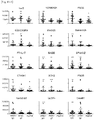
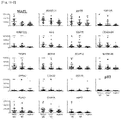
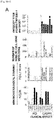
- FIGS. 1 There were 33 XAGE1-IgG-positive individuals (22.7%), and an XAGE1-IgA immune response was confirmed in about a half, 15, of the cases (10.3%) ( FIGS. 1 ). This was a much higher frequency than immune responses against the MAGE-A3, SSX-2, NY-ESO-1, and TP53 antigens said to have high immunogenicity in lung cancer (IgG reactions against respective antigens: 4.1%, 1.4%, 6.2%, and 8.3%, IgA reactions: 0.7%, 0.7%, 0.7%, and 4.1%) ( FIGS. 2 ). All the XAGE1-IgA-positive patients were XAGE1-IgG-positive.
- XAGE1-IgG-positive and XAGE1-IgA-negative individuals have immune reactions against a plurality of cancer antigens and are in a state of having a potentially high immune response against cancer (immune-activated state) as compared to XAGE1-IgG-positive and XAGE1-IgA-positive individuals.
- the XAGE1-IgG-positive and XAGE1-IgA-positive individuals are in a state of having higher immune activity than XAGE1-IgG-negative and XAGE1-IgA-negative individuals, but are in a state of having more suppressed immune activity than the XAGE1-IgG-positive and XAGE1-IgA-negative individuals.
- FIGS. 4 The results of measurement of immunosuppressive cytokine TGF- ⁇ was significantly low in XAGE1-IgG-positive and XAGE1-IgA-negative individuals as compared to patients having no XAGE1 immunity, and was comparable in XAGE1-IgG-positive and XAGE1-IgA-positive individuals.
- the value for IL-6 which is a poor prognostic factor and is a cytokine to be increased at the time of immune exhaustion, is significantly high in the XAGE1-IgG-positive and XAGE1-IgA-positive individuals as compared to the XAGE1-IgG-positive and XAGE1-IgA-negative individuals, suggesting that the XAGE1-IgG-positive and XAGE1-IgA-positive individuals are in an immune exhaustion state as compared to the XAGE1-IgG-positive and XAGE1-IgA-negative individuals.
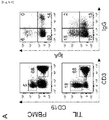
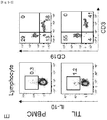
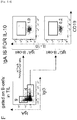
- FIGS. 5 the frequency of regulatory T-cells, which are cells that suppress immunity in cancer locally, was significantly high in patients with high local accumulation of IgA + B-cells ( FIG. 5D ), showing that such locally accumulated IgA + B-cells themselves produced the immunosuppressive cytokine IL-10 ( FIGS. 5F ).
- IgA + B-cells are involved in local immunosuppression and the accumulation of regulatory T-cells (local IL-10 is involved in the accumulation) .
- immune checkpoint molecules expressed in the IgA + B-cells were analyzed, and as a result, it was found that PD-L1 + GAL-9 + IgA + B-cells highly expressing the immune checkpoint molecules PD-L1 and Galectin-9 were significantly accumulated in cancer locally ( FIGS. 6 ) .
- immunosuppressive cytokines e.g., IL-6 and IL-10
- IgA + B-cells suppressing immunity in cancer locally are accumulated.
- the IgA + B-cells not only directly suppress the function of T-cells with IL-10 they themselves produce and the immune checkpoint molecules, but also indirectly suppress immunity by locally accumulating the regulatory T-cells.
- an XAGE1-IgG-positive and XAGE1-IgA-negative group had a significantly high response rate to initial chemotherapy as compared to an XAGE1-IgG-positive and XAGE1-IgA-positive group and a group without any immune response ( FIG. 8 ).
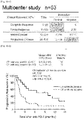
- the effect of therapy with an anti-PD-1 antibody serving as an immune checkpoint molecule inhibitor drug was investigated with 53 advanced non-small cell lung cancer patients using immune responses against highly immunogenic XAGE1 and NY-ESO-1 (presence of an immune response against XAGE1 or NY-ESO-1, and the absence of any immune response) as indicators. Sera of the patients were collected about 28 days before the start of the anti-PD-1 antibody therapy.
- Group with an immune response against XAGE1 (XAGE1-IgG-positive) or with an immune response against NY-ESO-1 (NY-ESO-1-IgG-positive): 16 patients
- Group without any immune response (group without antibodies against XAGE1 and NY-ESO-1): 37 patients
- FIG. 9 best change rates in target lesions are shown.
- a marked tumor regression effect in the target lesion was found in most cases, but in the group without any immune response, no marked tumor regression effect was found.
- Response rates are shown in FIGS. 10 .
- CR complete response
- PR partial response
- SD stable disease
- PD progressive disease
- progression-free survivals and overall survivals in the group with an immune response against XAGE1 or NY-ESO-1 and the group without any immune response are shown in FIGS. 10 . It was revealed that there were remarkable differences in progression-free survival and overall survival between the group with an immune response and the group without any immune response.
- FIGS. 11 the results of further analysis of the results shown in FIG. 3A for immune reactions against the cancer antigens in the XAGE1-IgG-positive and XAGE1-IgA-negative group, the XAGE1-IgG-positive and XAGE1-IgA-positive group, and the XAGE1-IgG-negative and XAGE1-IgA-negative group are shown.
- the immune reactions against the MAEL antigen and the p53 antigen are specifically found in XAGE1-IgG-positive and XAGE1-IgA-negative individuals. Therefore, anti-MAEL antibody-positive individuals and anti-p53 antibody-positive individuals are XAGE1-IgG-positive and XAGE1-IgA-negative, and are in an immune-activated state.
- the immune response against the anti-p53 antibody predicts the effect of chemotherapy and the effect of immunotherapy.
- an anti-NY-ESO-1 antibody, an anti-XAGE1 antibody, and the anti-p53 antibody were monitored in responder cases to anti-PD-1 antibody therapy.
- enhanced immune responses against the p53 antigen were found in responder cases, and hence the change of the anti-p53 antibody is useful for judging the treatment effect of anti-PD-1 antibody therapy.
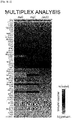
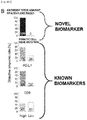
- Pre-treatment sera of patients subjected to anti-PD-1 antibody therapy were used to analyze immune responses against 50 kinds of cancer antigens including XAGE1 and NY-ESO-1 antibodies.
- XAGE1-IgG- and NY-ESO-1-IgG-positive individuals have immune responses against multiple antigens and are in an immune-activated state.
- FIG. 13B three out of eight responder cases to anti-PD-1 antibodies are significantly positive for an immune reaction against a BAGE antigen or a BORIS antigen (zero out of twelve non-responder cases), and hence the effect of anti-PD-1 therapy can be predicted by the detection of an anti-BAGE antibody or an anti-BORIS antibody.
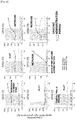
- FIG. 14A a relationship between a change rate in a target lesion through anti-PD-1 antibody therapy (a negative value means tumor regression) and the antibody titer of antibodies against CT antigens (XAGE1-IgG and NY-ESO-1-IgG) is shown.
- FIG. 14B a relationship between the change rate in the target lesion through anti-PD-1 antibody therapy and the number of enhanced immune reactions against multiple antigens after the treatment (antigen spreading) is shown. It was revealed that: as the antibody titer against the CT antigens increased, the tumor regression rate of the anti-PD-1 therapy became higher; and as the number of immune reactions against various CT antigens increased (antigen spreading increased), the tumor regression rate of the anti-PD-1 therapy became higher. Accordingly, the effect of anti-PD-1 therapy can be predicted by detecting antibodies against a plurality of CT antigens .
- FIG. 15A differences between immune responses against multiple antigens before and after anti-PD-1 antibody therapy are shown.
- FIG. 15B it is shown that the spreading of immune responses against a MAGE-B3 antigen and an SSX4 antigen was found at a high frequency in responder cases to anti-PD-1 antibody therapy, and was not found in non-responder cases. Accordingly, an anti-MAGE-B3 antibody and an anti-SSX4 antibody are factors actually having significant influences on the effect of anti-PD-1 antibody therapy, and are useful for the prediction of a treatment effect.
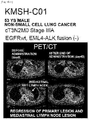
- FIGS. 16 and FIGS. 17 images and immune reactions of the same patient, who is a complete responder case in an investigator-initiated study with preoperative combined use of an anti-CCR4 antibody+an anti-PD-1 antibody, are shown.
- FIGS. 16 it is shown that an immune reaction against the SSX4 antigen was observed.
- the images of FIGS. 17 are chest CT images
- the "BASELINE” images are CT images before anti-CCR4 antibody+anti-PD-1 antibody administration
- "WEEK 3" and "WEEK 7" are CT images after investigational drug administration and preoperative.
- the anti-CCR4 antibody was administered four times preoperatively
- the anti-PD-1 antibody was administered three times preoperatively, and operation was performed in week 8.
- the CT images indicate that the tumor regressed through immunotherapy.
- This patient is anti-SSX4 antibody-positive, and is a case having a marked response to immunotherapy.
- the measurement of the anti-SSX4 antibody is useful as a method of predicting the effect of immunotherapy.
- SLP1 and SLP2 each having 25 amino acid residues, which were partial peptides of XAGE1, were synthesized by a general method at Peptide Institute, Inc. in GMP grade.
- SLP1 is a peptide formed of amino acids 8 to 32 of XAGE1 (protein formed of 81 amino acids)
- SLP2 is a peptide formed of amino acids 44 to 68 thereof. The purity of each of SLP1 and SLP2 was confirmed to be 99% or more.
- SLP1 and SLP2 obtained above were mixed to provide a composition (vaccine) for inducing an immune response.
- Mononuclear cells were obtained from peripheral blood of XAGE1 antibody-positive patients (XAGE1-IgG-positive and XAGE1-IgA-negative patients) by a density gradient centrifugation method. Then, with the use of anti-CD4 antibody-bound beads and anti-CD8 antibody-bound beads (manufactured by Miltenyi Biotec), CD8-positive cells, CD4-positive cells, and CD4-negative and CD8-negative cells were sequentially separated by a magnetic-activated cell sorting method (MACS, manufactured by Miltenyi Biotec).
- MCS magnetic-activated cell sorting method
- CD8 clones SLP1- or SLP2-specific CD8-positive T-cell clones (hereinafter sometimes referred to as CD8 clones) were prepared in the same manner as in the section "b".
- CD8 clones One of the obtained CD8 clones is 8C34TY.
- peptides each formed of part of the amino acid sequence of XAGE1 were synthesized. Their respective amino acid sequences are set forth in SEQ ID NOS: 5 to 24. In addition, the positions of the peptides on the amino acid sequence of XAGE1 are as shown in the sequence listing and FIGS. 19 .
- the peptides were synthesized by a general synthesis method at PH Japan (Japan) . The purity of each of the peptides is 95% or more.
- CD4 clone or CD8 clone T-cells were subjected to stimulated culture with 1 ⁇ M of each peptide in the presence of an equal number of T-APCs for 12 hours, and IFN ⁇ in the supernatant was detected by an ELISA method.
- FIGS. 19 The results are shown in FIGS. 19 .
- the CD4 clone 4C34-1 recognized amino acids 52 to 68 in SLP2 (44-68) .
- the CD8 clone 8C34TY recognized SLP1 (8-32) and amino acids 19 to 33, suggesting the presence of epitopes therein.
- SLP1 and SLP2 vaccine is a multi-antigenic cancer vaccine containing various epitopes unlike an epitope vaccine to be recognized by T-cells.
- CD4 clone (4C34-1) T-cells were subjected to stimulated culture with SLP1 alone (1 ⁇ M), SLP2 alone (1 ⁇ M), or the combination of the peptides (1 ⁇ M each) in the presence of an equal number of T-APCs for 12 hours, and IFN ⁇ in the supernatant was detected by an ELISA method ( FIGS. 20 ).
- the CD4 clone T-cells recognized SLP2.
- CD8 clone (8C34TY) T-cells were subjected to stimulated culture with SLP1 alone (1 ⁇ M), SLP2 alone (1 ⁇ M), or the combination of the peptides (1 ⁇ M each) in the presence of an equal number of T-APCs for 12 hours, and IFN ⁇ in the supernatant was detected by an ELISA method ( FIGS. 20 ).
- the CD8 clone T-cells recognized SLP1.
- 1 ⁇ 10 4 CD4 clone (4C34-1) T-cells and 1 ⁇ 10 4 CD8 clone (8C34TY) T-cells were subjected to stimulated culture with SLP1 alone (1 ⁇ M), SLP2 alone (1 ⁇ M), or the combination of the peptides (1 ⁇ M each) in the presence of an equal number of T-APCs for 12 hours, and IFN ⁇ in the supernatant was detected by an ELISA method. As a result, the combination of SLP1 and SLP2 increased the reaction.
- Human peripheral blood does not contain CD4-positive T-cells alone or CD8-positive T-cells alone, and hence the combination of SLP1 and SLP2 can induce a more potent immune response than SLP1 alone or SLP2 alone.
- peripheral blood mononuclear cells obtained in the section "a” were subjected to stimulated culture with SLP1 alone (1 ⁇ M), SLP2 alone (1 ⁇ M), or the combination of the peptides (1 ⁇ Meach) for 12 hours in the presence of 2 ⁇ 10 4 CD4 clone 4C34-1 T-cells, 2 ⁇ 10 4 CD8 clone C34TY T-cells, and Protein Transport Inhibitor Cocktail (eBioscienc, US) (500-fold diluted).
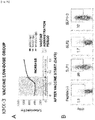
- FIGS. 21 The expression of IgG on B-cell surfaces was found to be increased by the combination of SLP1 and SLP2. Meanwhile, there was no change in expression amount of IgA.
- XAGE1-specific antibodies present in the culture supernatant were detected.
- the detection of XAGE1-IgG was found, and IgA was not found ( FIGS. 22 ).
- a composition containing SLP1 and SLP2 is a cancer vaccine capable of inducing the production of XAGE1-IgG, and capable of inducing an immune response against cancer .
- XAGE1-IgG positivity indicates a treatment-responsive group and a favorable prognosis group, and hence the composition containing SLP1 and SLP2 can lead a patient to be treatment-responsive and to have a favorable prognosis.
- a toxicity trial was performed in which a mixture of SLP1 and SLP2 was repeatedly administered for 10 weeks (intermittently administered five times every 14 days) with an adjuvant into the dorsal skin of Sprague-Dawley rats (Crl:CD(SD), 6-week-old at the start of administration, a group of 10 males and 10 females).
- SLP1 0.2 mg/kg+SLP2: 0.2 mg/kg
- SLP1 2 mg/kg+SLP2: 2 mg/kg
- SLP1 and SLP2 dissolved in water for injection and Picibanil were mixed with an equal amount of an oil adjuvant MONTANIDE ISA 51 VG (ISA51) to provide an emulsion, which was administered into the dorsal skin in an administration volume of 1 mL/kg.
- ISA51 oil adjuvant MONTANIDE ISA 51 VG
- SLP1 and SLP2 were emulsified together with an adjuvant OK432 Picibanil in Montanide (ISA51, manufactured by SEPPIC) to provide a composition for inducing an immune response (hereinafter sometimes referred to as XAGE1 vaccine) .
- an adjuvant OK432 Picibanil in Montanide ISA51, manufactured by SEPPIC
- XAGE1 vaccine a composition for inducing an immune response
- the XAGE1 vaccine was administered to advanced lung adenocarcinoma patients.
- This trial is a phase I clinical trial involving confirming safety as a primary purpose, and investigating a change in XAGE1 antibody titer caused by the administration of a trial drug as a secondary purpose.
- This clinical trial was performed in accordance with "the Declaration of Helsinki", "Ethical Guidelines for Medical and Health Research Involving Human Subjects", and an XAGE1 vaccine clinical trial implementation planning worksheet, and in conformity with ICH E6(R1)-Guideline for Good Clinical Practice (GCP) as much as possible.
- GCP Good Clinical Practice
- the trial was performed targeting advanced or postoperatively recurring lung adenocarcinoma using the XAGE1 vaccine in the three levels of doses described above.
- the XAGE1 vaccine was administered to two different limb sites every time.
- the administration was performed a total of four times at intervals of 2 weeks. Each dose was administered to three cases each.
- CTCAE Common Terminology Criteria for Adverse Events
- Evaluation for safety was finished in a total of 7 cases, i.e., 3 cases in the low-dose group, 3 cases in the middle-dose group, and 1 case in the high-dose group. As shown in Table 1, all adverse events due to the XAGE1 vaccine were mild, and no serious adverse event was observed.
- the administration of the XAGE1 vaccine was found to increase the XAGE1-IgG antibody titer in four out of seven cases, and did not induce XAGE1-IgA and NY-ESO-1-IgG ( FIGS. 23 ).
- CD4-positive T-cells were separated from peripheral blood of low-dose administered patients and middle-dose administered patients, and the induction of antigen-specific T-cells by XAGE1 vaccine administration was investigated.
- IFN- ⁇ was produced through the stimulation with the combination of SLP1 and SLP2, proving that T-cells reactive to the SLP1 antigen and the SLP2 antigen were induced ( FIGS. 25 and FIGS. 26 ).
- the XAGE1 vaccine containing SLP1 and SLP2 was a vaccine capable of inducing antigen-specific T-cells in cancer patients, and was also a multi-antigenic vaccine containing a plurality of epitopes, thus being a vaccine capable of inducing a more potent immune response by virtue of the mixing of SLP1 and SLP2.
- EBV-B-cells Epstein-Barr virus-infected B-cells: used as antigen-presenting cells
- SLP1, SLP2, or SLP1+SLP2 a peptide
- the cultured cells were suspended in 10 ml of an AIM-V medium and subjected to a reaction in a CO 2 incubator at 37°C for 45 minutes while being suspended using a rotator (MACSmix, manufactured by Miltenyi Biotec) .
- a rotator manufactured by Miltenyi Biotec
- the cells were stained by adding 2 ⁇ l of a PE-labeled human IFN- ⁇ antibody (manufactured by Miltenyi Biotec), 2 ⁇ l of 7AAD (manufactured by BD), and 1 ⁇ l of an FITC-labeled anti-human CD4 antibody or an FITC-labeled anti-human CD8 antibody (manufactured by Miltenyi Biotec).
- a PE-labeled human IFN- ⁇ antibody manufactured by Miltenyi Biotec
- 7AAD manufactured by BD
- FITC-labeled anti-human CD4 antibody manufactured by Miltenyi Biotec
- a FACS buffer (1% FCS/PBS, 0.02% sodium azide) was added to wash the cells, and flow cytometry was performed using FACS Calibur (manufactured by BD) to detect IFN- ⁇ -producing cells.
- FACS Calibur manufactured by BD
- the frequency of the IFN- ⁇ -producing cells was analyzed using data analysis software (FlowJo, manufactured by Tree Star). The results are shown in FIGS. 25 and FIGS. 26 .
- the detection method of the present invention can predict the effect of cancer treatment, thus expanding the possibilities of the cancer treatment.
- the detection method contributes to medical economy as well.
- the composition for inducing an immune response of the present invention can be directly used for the treatment of cancer, and besides, can enhance the effect of chemotherapy, immunotherapy, or treatment with an immune checkpoint inhibitor drug to lead a treatment non-responder to be treatment-responsive.
Landscapes
- Health & Medical Sciences (AREA)
- Life Sciences & Earth Sciences (AREA)
- Chemical & Material Sciences (AREA)
- Engineering & Computer Science (AREA)
- Immunology (AREA)
- General Health & Medical Sciences (AREA)
- Biomedical Technology (AREA)
- Medicinal Chemistry (AREA)
- Molecular Biology (AREA)
- Hematology (AREA)
- Microbiology (AREA)
- Organic Chemistry (AREA)
- Biochemistry (AREA)
- Urology & Nephrology (AREA)
- Biotechnology (AREA)
- Pharmacology & Pharmacy (AREA)
- Veterinary Medicine (AREA)
- Public Health (AREA)
- Animal Behavior & Ethology (AREA)
- Bioinformatics & Cheminformatics (AREA)
- Cell Biology (AREA)
- Genetics & Genomics (AREA)
- Proteomics, Peptides & Aminoacids (AREA)
- General Physics & Mathematics (AREA)
- Pathology (AREA)
- Analytical Chemistry (AREA)
- Physics & Mathematics (AREA)
- Food Science & Technology (AREA)
- Epidemiology (AREA)
- Oncology (AREA)
- Zoology (AREA)
- Wood Science & Technology (AREA)
- Mycology (AREA)
- Biophysics (AREA)
- Gastroenterology & Hepatology (AREA)
- Chemical Kinetics & Catalysis (AREA)
- Nuclear Medicine, Radiotherapy & Molecular Imaging (AREA)
- General Chemical & Material Sciences (AREA)
- General Engineering & Computer Science (AREA)
- Medicines Containing Antibodies Or Antigens For Use As Internal Diagnostic Agents (AREA)
Applications Claiming Priority (2)
| Application Number | Priority Date | Filing Date | Title |
|---|---|---|---|
| JP2017094986 | 2017-05-11 | ||
| PCT/JP2018/018083 WO2018207866A1 (fr) | 2017-05-11 | 2018-05-10 | Procédé d'examen d'un effet thérapeutique sur le cancer et composition permettant d'induire une réponse immunitaire |
Publications (3)
| Publication Number | Publication Date |
|---|---|
| EP3640641A1 true EP3640641A1 (fr) | 2020-04-22 |
| EP3640641A4 EP3640641A4 (fr) | 2021-04-07 |
| EP3640641B1 EP3640641B1 (fr) | 2025-07-09 |
Family
ID=64105321
Family Applications (1)
| Application Number | Title | Priority Date | Filing Date |
|---|---|---|---|
| EP18797663.4A Active EP3640641B1 (fr) | 2017-05-11 | 2018-05-10 | Procédé d'examen d'un effet thérapeutique sur le cancer et composition permettant d'induire une réponse immunitaire |
Country Status (5)
| Country | Link |
|---|---|
| US (1) | US11709165B2 (fr) |
| EP (1) | EP3640641B1 (fr) |
| JP (1) | JP7216420B2 (fr) |
| CN (1) | CN110582701A (fr) |
| WO (1) | WO2018207866A1 (fr) |
Families Citing this family (4)
| Publication number | Priority date | Publication date | Assignee | Title |
|---|---|---|---|---|
| CN110687281B (zh) * | 2019-08-26 | 2023-05-23 | 中国医学科学院肿瘤医院 | Pd-l1自身抗体在肿瘤预后评估中的应用 |
| CN110687282B (zh) * | 2019-08-26 | 2023-05-23 | 中国医学科学院肿瘤医院 | PD-1和/或p53自身抗体作为肿瘤疗效预测或预后评估的标志物 |
| EP4430213A1 (fr) * | 2021-11-11 | 2024-09-18 | Omniseq, Inc. | Procédés et systèmes d'analyse et d'utilisation de la charge d'un antigène testiculaire du cancer |
| WO2026060295A1 (fr) * | 2024-09-12 | 2026-03-19 | Omniseq, Inc. | Charge antigénique testiculaire cancéreuse (ctab) en tant que biomarqueur des antigènes associés aux tumeurs |
Family Cites Families (9)
| Publication number | Priority date | Publication date | Assignee | Title |
|---|---|---|---|---|
| JPS5442197A (en) | 1977-09-10 | 1979-04-03 | Japanese National Railways<Jnr> | Cassette coffer |
| JPS579108U (fr) | 1980-06-14 | 1982-01-18 | ||
| WO2005000870A2 (fr) * | 2003-05-30 | 2005-01-06 | Ludwig Institute Of Cancer Research | Peptides ny-eso-1 isoles se liant a des molecules hla de classe ii et leurs utilisations |
| WO2010134601A1 (fr) * | 2009-05-22 | 2010-11-25 | 国立大学法人岡山大学 | Peptide induisant une réponse immunitaire spécifique contre xage-1b et son utilisation |
| US10822384B2 (en) * | 2012-03-30 | 2020-11-03 | Junichiro Futami | Method for producing reagent for antibody detection and use thereof |
| WO2013169971A1 (fr) * | 2012-05-10 | 2013-11-14 | Bristol-Myers Squibb Company | Anticorps antitumoraux à titre de biomarqueurs prédictifs ou pronostiques de l'efficacité et de la survie chez les patients traités à l'ipilimumab |
| RU2522231C1 (ru) * | 2012-11-14 | 2014-07-10 | Евгений Иосифович Гоуфман | Способ диагностики онкологических заболеваний и иммуноферментный набор для его осуществления |
| WO2015172843A1 (fr) * | 2014-05-16 | 2015-11-19 | Biontech Diagnostics Gmbh | Méthodes et kits destinés au diagnostic du cancer |
| WO2016181912A1 (fr) * | 2015-05-08 | 2016-11-17 | 学校法人 川崎学園 | Procédé de création d'équation pour calculer le pronostic d'adénocarcinome du poumon en utilisant des facteurs immunitaires en tant qu'indices, et procédé de prédiction de pronostic associé |
-
2018
- 2018-05-10 CN CN201880028524.8A patent/CN110582701A/zh active Pending
- 2018-05-10 US US16/611,947 patent/US11709165B2/en active Active
- 2018-05-10 JP JP2019517688A patent/JP7216420B2/ja active Active
- 2018-05-10 EP EP18797663.4A patent/EP3640641B1/fr active Active
- 2018-05-10 WO PCT/JP2018/018083 patent/WO2018207866A1/fr not_active Ceased
Also Published As
| Publication number | Publication date |
|---|---|
| EP3640641A4 (fr) | 2021-04-07 |
| US20210148927A1 (en) | 2021-05-20 |
| US11709165B2 (en) | 2023-07-25 |
| CN110582701A (zh) | 2019-12-17 |
| JPWO2018207866A1 (ja) | 2020-05-28 |
| JP7216420B2 (ja) | 2023-02-01 |
| EP3640641B1 (fr) | 2025-07-09 |
| WO2018207866A1 (fr) | 2018-11-15 |
Similar Documents
| Publication | Publication Date | Title |
|---|---|---|
| US20220041655A1 (en) | Class i mhc phosphopeptides for cancer immunotherapy and diagnosis | |
| EP2189471B1 (fr) | Peptide foxm1 et agent médicinal le comprenant | |
| US11033613B2 (en) | Methods and compositions for treating cancer | |
| DK2186889T3 (en) | CDCA1 PEPTID AND PHARMACEUTICAL COMPOSITION, INCLUDING THIS | |
| KR101561175B1 (ko) | Cdh3 펩티드 및 이를 포함하는 의약제 | |
| KR20170003976A (ko) | 급성 골수성 백혈병(aml)과 같은 여러 혈액 종양에 대한 신규 면역요법 | |
| US11709165B2 (en) | Examination method for prediction of effect of treatment of cancer based on detection of cancer/testis antibodies | |
| US9279011B2 (en) | Phosphopeptides as melanoma vaccines | |
| TW201200525A (en) | MYBL2 peptides and vaccines containing the same | |
| US20240408197A1 (en) | Methods and compositions for treating cancer | |
| US20220313817A1 (en) | Methods and compositions for treating cancer | |
| US20220168408A1 (en) | Multi-valent immunotherapy composition and methods of use for treating wt1-positive cancers | |
| JP2003500072A (ja) | 癌関連薬剤およびその使用 | |
| HK1141312B (en) | Cdca1 peptide and pharmaceutical agent comprising the same | |
| HK1140774B (en) | Foxm1 peptide and medicinal agent comprising the same | |
| HK1244819B (en) | Foxm1 peptide and medicinal agent comprising the same | |
| HK1140774A (en) | Foxm1 peptide and medicinal agent comprising the same | |
| HK1261028A1 (en) | Cancer vaccine composition |
Legal Events
| Date | Code | Title | Description |
|---|---|---|---|
| STAA | Information on the status of an ep patent application or granted ep patent |
Free format text: STATUS: THE INTERNATIONAL PUBLICATION HAS BEEN MADE |
|
| PUAI | Public reference made under article 153(3) epc to a published international application that has entered the european phase |
Free format text: ORIGINAL CODE: 0009012 |
|
| STAA | Information on the status of an ep patent application or granted ep patent |
Free format text: STATUS: REQUEST FOR EXAMINATION WAS MADE |
|
| 17P | Request for examination filed |
Effective date: 20191107 |
|
| AK | Designated contracting states |
Kind code of ref document: A1 Designated state(s): AL AT BE BG CH CY CZ DE DK EE ES FI FR GB GR HR HU IE IS IT LI LT LU LV MC MK MT NL NO PL PT RO RS SE SI SK SM TR |
|
| AX | Request for extension of the european patent |
Extension state: BA ME |
|
| DAV | Request for validation of the european patent (deleted) | ||
| DAX | Request for extension of the european patent (deleted) | ||
| RIC1 | Information provided on ipc code assigned before grant |
Ipc: A61K 38/03 20060101ALI20201130BHEP Ipc: G01N 33/15 20060101ALI20201130BHEP Ipc: G01N 33/68 20060101ALI20201130BHEP Ipc: G01N 33/574 20060101ALI20201130BHEP Ipc: A61K 39/00 20060101ALI20201130BHEP Ipc: G01N 33/53 20060101AFI20201130BHEP Ipc: A61P 35/00 20060101ALI20201130BHEP Ipc: C07K 14/82 20060101ALI20201130BHEP Ipc: A61K 38/16 20060101ALI20201130BHEP |
|
| A4 | Supplementary search report drawn up and despatched |
Effective date: 20210309 |
|
| RIC1 | Information provided on ipc code assigned before grant |
Ipc: A61K 38/16 20060101ALI20210302BHEP Ipc: G01N 33/15 20060101ALI20210302BHEP Ipc: C07K 14/82 20060101ALI20210302BHEP Ipc: G01N 33/68 20060101ALI20210302BHEP Ipc: A61K 39/00 20060101ALI20210302BHEP Ipc: A61P 35/00 20060101ALI20210302BHEP Ipc: A61K 38/03 20060101ALI20210302BHEP Ipc: G01N 33/574 20060101ALI20210302BHEP Ipc: G01N 33/53 20060101AFI20210302BHEP |
|
| STAA | Information on the status of an ep patent application or granted ep patent |
Free format text: STATUS: EXAMINATION IS IN PROGRESS |
|
| 17Q | First examination report despatched |
Effective date: 20230406 |
|
| GRAP | Despatch of communication of intention to grant a patent |
Free format text: ORIGINAL CODE: EPIDOSNIGR1 |
|
| STAA | Information on the status of an ep patent application or granted ep patent |
Free format text: STATUS: GRANT OF PATENT IS INTENDED |
|
| INTG | Intention to grant announced |
Effective date: 20250310 |
|
| GRAS | Grant fee paid |
Free format text: ORIGINAL CODE: EPIDOSNIGR3 |
|
| GRAA | (expected) grant |
Free format text: ORIGINAL CODE: 0009210 |
|
| STAA | Information on the status of an ep patent application or granted ep patent |
Free format text: STATUS: THE PATENT HAS BEEN GRANTED |
|
| AK | Designated contracting states |
Kind code of ref document: B1 Designated state(s): AL AT BE BG CH CY CZ DE DK EE ES FI FR GB GR HR HU IE IS IT LI LT LU LV MC MK MT NL NO PL PT RO RS SE SI SK SM TR |
|
| REG | Reference to a national code |
Ref country code: GB Ref legal event code: FG4D |
|
| REG | Reference to a national code |
Ref country code: CH Ref legal event code: EP |
|
| REG | Reference to a national code |
Ref country code: IE Ref legal event code: FG4D |
|
| REG | Reference to a national code |
Ref country code: DE Ref legal event code: R096 Ref document number: 602018083443 Country of ref document: DE |
|
| REG | Reference to a national code |
Ref country code: NL Ref legal event code: MP Effective date: 20250709 |
|
| PG25 | Lapsed in a contracting state [announced via postgrant information from national office to epo] |
Ref country code: PT Free format text: LAPSE BECAUSE OF FAILURE TO SUBMIT A TRANSLATION OF THE DESCRIPTION OR TO PAY THE FEE WITHIN THE PRESCRIBED TIME-LIMIT Effective date: 20251110 |
|
| PG25 | Lapsed in a contracting state [announced via postgrant information from national office to epo] |
Ref country code: NL Free format text: LAPSE BECAUSE OF FAILURE TO SUBMIT A TRANSLATION OF THE DESCRIPTION OR TO PAY THE FEE WITHIN THE PRESCRIBED TIME-LIMIT Effective date: 20250709 |
|
| REG | Reference to a national code |
Ref country code: AT Ref legal event code: MK05 Ref document number: 1812248 Country of ref document: AT Kind code of ref document: T Effective date: 20250709 |
|
| PG25 | Lapsed in a contracting state [announced via postgrant information from national office to epo] |
Ref country code: IS Free format text: LAPSE BECAUSE OF FAILURE TO SUBMIT A TRANSLATION OF THE DESCRIPTION OR TO PAY THE FEE WITHIN THE PRESCRIBED TIME-LIMIT Effective date: 20251109 |
|
| PG25 | Lapsed in a contracting state [announced via postgrant information from national office to epo] |
Ref country code: NO Free format text: LAPSE BECAUSE OF FAILURE TO SUBMIT A TRANSLATION OF THE DESCRIPTION OR TO PAY THE FEE WITHIN THE PRESCRIBED TIME-LIMIT Effective date: 20251009 |
|
| REG | Reference to a national code |
Ref country code: LT Ref legal event code: MG9D |
|
| PG25 | Lapsed in a contracting state [announced via postgrant information from national office to epo] |
Ref country code: AT Free format text: LAPSE BECAUSE OF FAILURE TO SUBMIT A TRANSLATION OF THE DESCRIPTION OR TO PAY THE FEE WITHIN THE PRESCRIBED TIME-LIMIT Effective date: 20250709 |
|
| PG25 | Lapsed in a contracting state [announced via postgrant information from national office to epo] |
Ref country code: FI Free format text: LAPSE BECAUSE OF FAILURE TO SUBMIT A TRANSLATION OF THE DESCRIPTION OR TO PAY THE FEE WITHIN THE PRESCRIBED TIME-LIMIT Effective date: 20250709 |
|
| PG25 | Lapsed in a contracting state [announced via postgrant information from national office to epo] |
Ref country code: HR Free format text: LAPSE BECAUSE OF FAILURE TO SUBMIT A TRANSLATION OF THE DESCRIPTION OR TO PAY THE FEE WITHIN THE PRESCRIBED TIME-LIMIT Effective date: 20250709 |
|
| PG25 | Lapsed in a contracting state [announced via postgrant information from national office to epo] |
Ref country code: GR Free format text: LAPSE BECAUSE OF FAILURE TO SUBMIT A TRANSLATION OF THE DESCRIPTION OR TO PAY THE FEE WITHIN THE PRESCRIBED TIME-LIMIT Effective date: 20251010 |
|
| PG25 | Lapsed in a contracting state [announced via postgrant information from national office to epo] |
Ref country code: SE Free format text: LAPSE BECAUSE OF FAILURE TO SUBMIT A TRANSLATION OF THE DESCRIPTION OR TO PAY THE FEE WITHIN THE PRESCRIBED TIME-LIMIT Effective date: 20250709 |
|
| PG25 | Lapsed in a contracting state [announced via postgrant information from national office to epo] |
Ref country code: LV Free format text: LAPSE BECAUSE OF FAILURE TO SUBMIT A TRANSLATION OF THE DESCRIPTION OR TO PAY THE FEE WITHIN THE PRESCRIBED TIME-LIMIT Effective date: 20250709 |
|
| PG25 | Lapsed in a contracting state [announced via postgrant information from national office to epo] |
Ref country code: BG Free format text: LAPSE BECAUSE OF FAILURE TO SUBMIT A TRANSLATION OF THE DESCRIPTION OR TO PAY THE FEE WITHIN THE PRESCRIBED TIME-LIMIT Effective date: 20250709 Ref country code: PL Free format text: LAPSE BECAUSE OF FAILURE TO SUBMIT A TRANSLATION OF THE DESCRIPTION OR TO PAY THE FEE WITHIN THE PRESCRIBED TIME-LIMIT Effective date: 20250709 |
|
| PG25 | Lapsed in a contracting state [announced via postgrant information from national office to epo] |
Ref country code: RS Free format text: LAPSE BECAUSE OF FAILURE TO SUBMIT A TRANSLATION OF THE DESCRIPTION OR TO PAY THE FEE WITHIN THE PRESCRIBED TIME-LIMIT Effective date: 20251009 |
|
| PG25 | Lapsed in a contracting state [announced via postgrant information from national office to epo] |
Ref country code: ES Free format text: LAPSE BECAUSE OF FAILURE TO SUBMIT A TRANSLATION OF THE DESCRIPTION OR TO PAY THE FEE WITHIN THE PRESCRIBED TIME-LIMIT Effective date: 20250709 |
|
| PG25 | Lapsed in a contracting state [announced via postgrant information from national office to epo] |
Ref country code: SM Free format text: LAPSE BECAUSE OF FAILURE TO SUBMIT A TRANSLATION OF THE DESCRIPTION OR TO PAY THE FEE WITHIN THE PRESCRIBED TIME-LIMIT Effective date: 20250709 |
|
| PG25 | Lapsed in a contracting state [announced via postgrant information from national office to epo] |
Ref country code: DK Free format text: LAPSE BECAUSE OF FAILURE TO SUBMIT A TRANSLATION OF THE DESCRIPTION OR TO PAY THE FEE WITHIN THE PRESCRIBED TIME-LIMIT Effective date: 20250709 |
|
| PG25 | Lapsed in a contracting state [announced via postgrant information from national office to epo] |
Ref country code: IT Free format text: LAPSE BECAUSE OF FAILURE TO SUBMIT A TRANSLATION OF THE DESCRIPTION OR TO PAY THE FEE WITHIN THE PRESCRIBED TIME-LIMIT Effective date: 20250709 |
|
| PG25 | Lapsed in a contracting state [announced via postgrant information from national office to epo] |
Ref country code: CZ Free format text: LAPSE BECAUSE OF FAILURE TO SUBMIT A TRANSLATION OF THE DESCRIPTION OR TO PAY THE FEE WITHIN THE PRESCRIBED TIME-LIMIT Effective date: 20250709 |
|
| PG25 | Lapsed in a contracting state [announced via postgrant information from national office to epo] |
Ref country code: SK Free format text: LAPSE BECAUSE OF FAILURE TO SUBMIT A TRANSLATION OF THE DESCRIPTION OR TO PAY THE FEE WITHIN THE PRESCRIBED TIME-LIMIT Effective date: 20250709 Ref country code: EE Free format text: LAPSE BECAUSE OF FAILURE TO SUBMIT A TRANSLATION OF THE DESCRIPTION OR TO PAY THE FEE WITHIN THE PRESCRIBED TIME-LIMIT Effective date: 20250709 |