EP3641344B1 - Verfahren zum betrieb eines hörinstruments und hörsystem mit einem hörinstrument - Google Patents
Verfahren zum betrieb eines hörinstruments und hörsystem mit einem hörinstrument Download PDFInfo
- Publication number
- EP3641344B1 EP3641344B1 EP18200844.1A EP18200844A EP3641344B1 EP 3641344 B1 EP3641344 B1 EP 3641344B1 EP 18200844 A EP18200844 A EP 18200844A EP 3641344 B1 EP3641344 B1 EP 3641344B1
- Authority
- EP
- European Patent Office
- Prior art keywords
- user
- voice
- sound signal
- signal
- captured sound
- Prior art date
- Legal status (The legal status is an assumption and is not a legal conclusion. Google has not performed a legal analysis and makes no representation as to the accuracy of the status listed.)
- Active
Links
Images

Classifications
-
- H—ELECTRICITY
- H04—ELECTRIC COMMUNICATION TECHNIQUE
- H04R—LOUDSPEAKERS, MICROPHONES, GRAMOPHONE PICK-UPS OR LIKE ACOUSTIC ELECTROMECHANICAL TRANSDUCERS; ELECTRIC HEARING AIDS; PUBLIC ADDRESS SYSTEMS
- H04R25/00—Electric hearing aids
- H04R25/50—Customised settings for obtaining desired overall acoustical characteristics
-
- H—ELECTRICITY
- H04—ELECTRIC COMMUNICATION TECHNIQUE
- H04R—LOUDSPEAKERS, MICROPHONES, GRAMOPHONE PICK-UPS OR LIKE ACOUSTIC ELECTROMECHANICAL TRANSDUCERS; ELECTRIC HEARING AIDS; PUBLIC ADDRESS SYSTEMS
- H04R25/00—Electric hearing aids
- H04R25/50—Customised settings for obtaining desired overall acoustical characteristics
- H04R25/505—Customised settings for obtaining desired overall acoustical characteristics using digital signal processing
-
- A—HUMAN NECESSITIES
- A61—MEDICAL OR VETERINARY SCIENCE; HYGIENE
- A61B—DIAGNOSIS; SURGERY; IDENTIFICATION
- A61B5/00—Measuring for diagnostic purposes; Identification of persons
- A61B5/02—Detecting, measuring or recording for evaluating the cardiovascular system, e.g. pulse, heart rate, blood pressure or blood flow
- A61B5/0205—Simultaneously evaluating both cardiovascular conditions and different types of body conditions, e.g. heart and respiratory condition
- A61B5/02055—Simultaneously evaluating both cardiovascular condition and temperature
-
- A—HUMAN NECESSITIES
- A61—MEDICAL OR VETERINARY SCIENCE; HYGIENE
- A61B—DIAGNOSIS; SURGERY; IDENTIFICATION
- A61B5/00—Measuring for diagnostic purposes; Identification of persons
- A61B5/103—Measuring devices for testing the shape, pattern, colour, size or movement of the body or parts thereof, for diagnostic purposes
- A61B5/11—Measuring movement of the entire body or parts thereof, e.g. head or hand tremor or mobility of a limb
-
- A—HUMAN NECESSITIES
- A61—MEDICAL OR VETERINARY SCIENCE; HYGIENE
- A61B—DIAGNOSIS; SURGERY; IDENTIFICATION
- A61B5/00—Measuring for diagnostic purposes; Identification of persons
- A61B5/145—Measuring characteristics of blood in vivo, e.g. gas concentration or pH-value ; Measuring characteristics of body fluids or tissues, e.g. interstitial fluid or cerebral tissue
- A61B5/14542—Measuring characteristics of blood in vivo, e.g. gas concentration or pH-value ; Measuring characteristics of body fluids or tissues, e.g. interstitial fluid or cerebral tissue for measuring blood gases
-
- A—HUMAN NECESSITIES
- A61—MEDICAL OR VETERINARY SCIENCE; HYGIENE
- A61B—DIAGNOSIS; SURGERY; IDENTIFICATION
- A61B5/00—Measuring for diagnostic purposes; Identification of persons
- A61B5/16—Devices for psychotechnics; Testing reaction times ; Devices for evaluating the psychological state
- A61B5/165—Evaluating the state of mind, e.g. depression, anxiety
-
- A—HUMAN NECESSITIES
- A61—MEDICAL OR VETERINARY SCIENCE; HYGIENE
- A61B—DIAGNOSIS; SURGERY; IDENTIFICATION
- A61B5/00—Measuring for diagnostic purposes; Identification of persons
- A61B5/48—Other medical applications
- A61B5/4803—Speech analysis specially adapted for diagnostic purposes
-
- A—HUMAN NECESSITIES
- A61—MEDICAL OR VETERINARY SCIENCE; HYGIENE
- A61B—DIAGNOSIS; SURGERY; IDENTIFICATION
- A61B5/00—Measuring for diagnostic purposes; Identification of persons
- A61B5/68—Arrangements of detecting, measuring or recording means, e.g. sensors, in relation to patient
- A61B5/6801—Arrangements of detecting, measuring or recording means, e.g. sensors, in relation to patient specially adapted to be attached to or worn on the body surface
- A61B5/6813—Specially adapted to be attached to a specific body part
- A61B5/6814—Head
- A61B5/6815—Ear
-
- G—PHYSICS
- G10—MUSICAL INSTRUMENTS; ACOUSTICS
- G10L—SPEECH ANALYSIS TECHNIQUES OR SPEECH SYNTHESIS; SPEECH RECOGNITION; SPEECH OR VOICE PROCESSING TECHNIQUES; SPEECH OR AUDIO CODING OR DECODING
- G10L25/00—Speech or voice analysis techniques not restricted to a single one of groups G10L15/00 - G10L21/00
- G10L25/48—Speech or voice analysis techniques not restricted to a single one of groups G10L15/00 - G10L21/00 specially adapted for particular use
- G10L25/51—Speech or voice analysis techniques not restricted to a single one of groups G10L15/00 - G10L21/00 specially adapted for particular use for comparison or discrimination
- G10L25/63—Speech or voice analysis techniques not restricted to a single one of groups G10L15/00 - G10L21/00 specially adapted for particular use for comparison or discrimination for estimating an emotional state
-
- G—PHYSICS
- G10—MUSICAL INSTRUMENTS; ACOUSTICS
- G10L—SPEECH ANALYSIS TECHNIQUES OR SPEECH SYNTHESIS; SPEECH RECOGNITION; SPEECH OR VOICE PROCESSING TECHNIQUES; SPEECH OR AUDIO CODING OR DECODING
- G10L25/00—Speech or voice analysis techniques not restricted to a single one of groups G10L15/00 - G10L21/00
- G10L25/78—Detection of presence or absence of voice signals
-
- G—PHYSICS
- G10—MUSICAL INSTRUMENTS; ACOUSTICS
- G10L—SPEECH ANALYSIS TECHNIQUES OR SPEECH SYNTHESIS; SPEECH RECOGNITION; SPEECH OR VOICE PROCESSING TECHNIQUES; SPEECH OR AUDIO CODING OR DECODING
- G10L25/00—Speech or voice analysis techniques not restricted to a single one of groups G10L15/00 - G10L21/00
- G10L25/90—Pitch determination of speech signals
-
- H—ELECTRICITY
- H04—ELECTRIC COMMUNICATION TECHNIQUE
- H04R—LOUDSPEAKERS, MICROPHONES, GRAMOPHONE PICK-UPS OR LIKE ACOUSTIC ELECTROMECHANICAL TRANSDUCERS; ELECTRIC HEARING AIDS; PUBLIC ADDRESS SYSTEMS
- H04R25/00—Electric hearing aids
- H04R25/40—Arrangements for obtaining a desired directivity characteristic
- H04R25/407—Circuits for combining signals of a plurality of transducers
-
- A—HUMAN NECESSITIES
- A61—MEDICAL OR VETERINARY SCIENCE; HYGIENE
- A61B—DIAGNOSIS; SURGERY; IDENTIFICATION
- A61B5/00—Measuring for diagnostic purposes; Identification of persons
- A61B5/02—Detecting, measuring or recording for evaluating the cardiovascular system, e.g. pulse, heart rate, blood pressure or blood flow
- A61B5/021—Measuring pressure in heart or blood vessels
-
- A—HUMAN NECESSITIES
- A61—MEDICAL OR VETERINARY SCIENCE; HYGIENE
- A61B—DIAGNOSIS; SURGERY; IDENTIFICATION
- A61B5/00—Measuring for diagnostic purposes; Identification of persons
- A61B5/02—Detecting, measuring or recording for evaluating the cardiovascular system, e.g. pulse, heart rate, blood pressure or blood flow
- A61B5/024—Measuring pulse rate or heart rate
-
- H—ELECTRICITY
- H04—ELECTRIC COMMUNICATION TECHNIQUE
- H04R—LOUDSPEAKERS, MICROPHONES, GRAMOPHONE PICK-UPS OR LIKE ACOUSTIC ELECTROMECHANICAL TRANSDUCERS; ELECTRIC HEARING AIDS; PUBLIC ADDRESS SYSTEMS
- H04R2225/00—Details of deaf aids covered by H04R25/00, not provided for in any of its subgroups
- H04R2225/41—Detection or adaptation of hearing aid parameters or programs to listening situation, e.g. pub, forest
-
- H—ELECTRICITY
- H04—ELECTRIC COMMUNICATION TECHNIQUE
- H04R—LOUDSPEAKERS, MICROPHONES, GRAMOPHONE PICK-UPS OR LIKE ACOUSTIC ELECTROMECHANICAL TRANSDUCERS; ELECTRIC HEARING AIDS; PUBLIC ADDRESS SYSTEMS
- H04R2225/00—Details of deaf aids covered by H04R25/00, not provided for in any of its subgroups
- H04R2225/43—Signal processing in hearing aids to enhance the speech intelligibility
-
- H—ELECTRICITY
- H04—ELECTRIC COMMUNICATION TECHNIQUE
- H04R—LOUDSPEAKERS, MICROPHONES, GRAMOPHONE PICK-UPS OR LIKE ACOUSTIC ELECTROMECHANICAL TRANSDUCERS; ELECTRIC HEARING AIDS; PUBLIC ADDRESS SYSTEMS
- H04R25/00—Electric hearing aids
- H04R25/40—Arrangements for obtaining a desired directivity characteristic
- H04R25/405—Arrangements for obtaining a desired directivity characteristic by combining a plurality of transducers
-
- H—ELECTRICITY
- H04—ELECTRIC COMMUNICATION TECHNIQUE
- H04R—LOUDSPEAKERS, MICROPHONES, GRAMOPHONE PICK-UPS OR LIKE ACOUSTIC ELECTROMECHANICAL TRANSDUCERS; ELECTRIC HEARING AIDS; PUBLIC ADDRESS SYSTEMS
- H04R25/00—Electric hearing aids
- H04R25/50—Customised settings for obtaining desired overall acoustical characteristics
- H04R25/505—Customised settings for obtaining desired overall acoustical characteristics using digital signal processing
- H04R25/507—Customised settings for obtaining desired overall acoustical characteristics using digital signal processing implemented by neural network or fuzzy logic
-
- H—ELECTRICITY
- H04—ELECTRIC COMMUNICATION TECHNIQUE
- H04R—LOUDSPEAKERS, MICROPHONES, GRAMOPHONE PICK-UPS OR LIKE ACOUSTIC ELECTROMECHANICAL TRANSDUCERS; ELECTRIC HEARING AIDS; PUBLIC ADDRESS SYSTEMS
- H04R25/00—Electric hearing aids
- H04R25/70—Adaptation of deaf aid to hearing loss, e.g. initial electronic fitting
Definitions
- the invention relates to a method for operating a hearing instrument according to the first part of claim 1 or the first part of claim 3.
- the invention further relates to a hearing system according to the first part of claim 8 or the first part of claim 10, the hearing system comprising a hearing instrument.
- a corresponding method and a corresponding hearing system are disclosed in DE 10 2009 043 775 A1 .
- a hearing instrument is an electronic device being designed to support the hearing of person wearing it (which person is called the "user” or “wearer”).
- a hearing instrument may be specifically configured to compensate for a hearing loss of a hearing-impaired user.
- Such hearing instruments are also called “hearing aids”.
- Other hearing instruments are configured to fit the needs of normal hearing persons in special situations, e.g. sound-level-reducing hearing instruments for musicians, etc.
- Hearing instruments are typically designed to be worn in or at the ear of the user, e.g. as an In-The-Ear (ITE) device or a Behind-The-Ear (BTE) device.
- a hearing instrument normally comprises an (acous-to-electrical) input transducer, a signal processor and an output transducer.
- the input transducer captures a sound signal from an environment of the hearing instrument and converts it into an input audio signal (i.e. an electrical signal transporting a sound information).
- the signal processor the input audio signal is processed, in particular amplified dependent on frequency.
- the signal processor outputs the processed signal (also called output audio signal) to the output transducer.
- the output transducer is an electro-acoustic transducer (also called “receiver") that converts the output audio signal into a processed sound signal to be emitted into the ear canal of the user.
- hearing system denotes an assembly of devices and/or other structures providing functions required for the normal operation of a hearing instrument.
- a hearing system may consist of a single stand-alone hearing instrument.
- a hearing system may comprise a hearing instrument and at least one further electronic device which may be, e.g., one of another hearing instrument for the other ear of the user, a remote control and a programming tool for the hearing instrument.
- modern hearing systems often comprise a hearing instrument and a software application for controlling and/or programming the hearing instrument, which software application is or can be installed on a computer or a mobile communication device such as a mobile phone (smartphone).
- the computer or the mobile communication device are not a part of the hearing system. Instead, the computer or the mobile communication device is only used by the hearing system as a resource providing computing power and memory.
- the computer or the mobile communication device is a general purpose device that will be manufactured and sold independently of the hearing system.
- the signal processing in modern hearing instruments is controlled by a large number of signal processing parameters that must be adapted to the needs of the individual user to ensure a good benefit of the hearing instrument.
- This adaptation process also called “fitting” is a difficult task, due to the diversity of the objective and subjective factors that influence the subjective benefit of a hearing instrument, and thus, the user satisfaction.
- a specific problem is that the subjective (perceived) benefit of a hearing instrument significantly depends on the emotional state of the user.
- US 2014/321682 A1 teaches switching a hearing assistance device in a low-power mode when high power is not needed. To this end, properties of the user wearing the hearing assistance device that indicate a current state of the user are analyzed. The properties may indicate physical and/or mental state.
- EP 2 063 416 A1 teaches extracting an audio feature from audio signal data for each analysis frame and storing said audio feature in a storage part.
- the audio feature is read from the storage part, and the emotional state probability of the audio feature corresponding to an emotional state is calculated using one or more statistical models constructed based on previously input learning audio signal data. Based on the calculated emotional state probability, the emotional state of a section including the analysis frame is determined.
- JP 2005 345496 A discloses a speech processor and a speech processing method capable of detecting the emotion expressing section among contents, containing speech data.
- An object of the present invention is to provide a method for operating a hearing instrument being worn in or at the ear of a user which method allows for a particularly good benefit of the hearing instrument to the user.
- Another object of the present invention is to provide a hearing system comprising a hearing instrument to be worn in or at the ear of a user which system allows for a particularly good benefit of the hearing instrument to the user.
- the method further comprises the following steps: In an own voice recognition step, the captured sound signal is analyzed to recognize own-voice intervals, in which the user speaks.
- the captured sound signal is analyzed for at least one acoustic feature of the own voice of the user.
- a signal of at least one bio sensor is analyzed, said signal being representative of at least one non-acoustic vital function of the user measured by the bio sensor.
- the term "non-acoustic vital function" generally denotes a function of the body of the user that is not related to the own voice of the user; in particular, the at least one non-acoustic vital function may be selected from at least one of the pulse frequency, the oxygen content of the blood, the blood pressure, the brain activity, a motion of the user (in particular an amplitude and/or frequency of movements of user's head), the skin conductivity or the body temperature.
- the at least one bio sensor may be integrated in the hearing instrument or be located externally to the hearing instrument (or even externally to a hearing system comprising the hearing instrument), e.g. in an external device such as a smart watch or a mobile phone.
- the analysis step is performed during recognized own-voice intervals only.
- the at least one acoustic feature of the own voice can only be determined during own-voice intervals.
- the signal of the at least one bio sensor may also be analyzed outside said own-voice intervals.
- the information contained in the at least one acoustic feature of the own voice of the user and/or the signal of the at least one bio sensor is reduced to a measure of an emotional state of the user.
- said measure of the emotional state of the user is determined from said at least one acoustic feature of the own voice of the user and/or said at least one non-acoustic vital function of the user (i.e. the signal of the at least one bio sensor).
- the "measure” (or estimate) of the emotional state of the user is an information characterizing the emotional state of the person wearing the hearing instrument.
- the measure is designed to characterize the emotional state in a quantitative manner indicating a predefined valence of the emotional state (e.g. in the sense of better/more positive or worse/more negative).
- the measure may be provided as a numeric variable, the value of which may vary between a minimum (e.g. "0" corresponding to a very negative emotional state) and a maximum (e.g. "10" corresponding to a very positive emotional state).
- the measure is designed to characterize the emotional state of the user in a qualitative manner. E.g.
- the measure may be provided as a variable that may assume different values corresponding to "happiness”, “activity”, “stress”, “fatigue”, “sadness”, “passivity”, etc.
- the measure may be designed to characterize the emotional state of the user in a both qualitative and quantitative manner.
- the measure may be provided as a vector or array having a plurality of elements corresponding, e.g., to "activity/passivity", “happiness/sadness”, etc., where each of said elements may assume different values between a respective minimum and a respective maximum.
- the measure of the emotional state is only recorded for later use, e.g. as a part of a data logging function. Additionally or alternatively, the measure may be provided to the user. However, according to the invention, the measure is used to actively change (in particular improve) the emotional state of the user. To this end, in a testing step, said measure of the emotional state is tested with respect to a predefined criterion.
- said criterion is defined as to indicate a negative emotional state, i.e. an emotional state to be changed (which may also be an over-positive emotional state such as hyperactivity).
- Said testing step is followed by an adaptation step, in which a value of at least one of said signal processing parameters is adapted within said own-voice intervals, if said criterion is found to be fulfilled.
- Adaptation within said own-voice intervals means that the adapted parameter settings are applied to the signal processing during own-voice-intervals so that the adapted parameters selectively control the processing of temporal sections of the captured sound signal that contain the user's own voice.
- different parameter settings may (and, preferably, will) be applied to the signal processing.
- preferred embodiments of the method according to the invention do not influence the signal processing outside own-voice intervals.
- the hearing instrument Preferably, only a given subset of all signal processing parameters of the hearing instrument is selected for adaptation in the adaptation step. Preferred signal processing parameters to be included in said subset are detailed below.
- the values of said selected signal processing parameters are slowly adapted, e.g. using a fading mechanism, so that the adaptation is imperceptible to the user.
- the invention is based on the finding that, at the one hand, the own voice of a person is indicative of this person's emotional state, and that, on the other hand, the emotional state of a person is significantly influenced by how this person perceives the own voice.
- the perception of a person's own voice constitutes a feedback mechanism that may both stabilize and destabilize the emotional state.
- said criterion comprises a desired value of the measure of the emotional state.
- a deviation of the measure of the emotional state with respect to said desired value is determined.
- the criterion is fulfilled if the measure (significantly) deviates from the desired value, i.e. if said deviation is non-zero or exceeds a predetermined threshold.
- the value of said at least one of said signal processing parameters is adapted so that said deviation is reduced, in particular minimized.
- said reduction or minimization is performed in an iterative process, i.e.
- value of the at least one of said signal processing parameters is adapted repeatedly in a plurality of iterations to successively reduce said deviation.
- Adapted values of the least one of said signal processing parameters may be calculated using a conventional optimization method, e.g. a Gradient Descent method.
- the captured sound signal is further analyzed for at least one of the following environmental acoustic features:
- the measure of the emotional state is determined in further dependence of the at least one environmental acoustic feature and/or a temporal variation thereof.
- Considering the at least one environmental acoustic feature allows for a better evaluation of the emotional state.
- the probability of a wrong estimation of the emotional state of the user can be reduced.
- a method for operating a hearing instrument that is worn in or at the ear of a user comprises capturing a sound signal from an environment of the hearing instrument, processing the captured sound signal in dependence of a set of signal processing parameters, and outputting a processed sound signal to the user.
- the method according to the second aspect of the invention further comprises
- the method according to the second aspect of the invention comprises the own-voice-recognition step and the analysis step as described with respect to the first embodiment of the invention.
- the reduction step is missing (i.e. no measure or estimate of the emotional state of the user is explicitly determined).
- the value of the at least one of said signal processing parameters is adapted in direct dependence of the at least one acoustic feature of the own voice and/or the at least one non-acoustic vital function.
- the values of said selected signal processing parameters are slowly adapted, e.g. using a fading mechanism, so that the adaptation is imperceptible to the user.
- the method according to the second aspect is designed in the way of a closed-loop control circuit.
- said criterion comprises respective desired values of said at least one acoustic feature of the own voice of the user and/or said at least one vital function of the user.
- the testing comprises determination of a deviation of said at least one acoustic feature of the own voice of the user and/or said at least one vital function of the user with respect to said desired value.
- the value of said at least one of said signal processing parameters is adapted so that said deviation is reduced, in particular minimized.
- the method according to the second aspect of the invention comprises analyzing the captured sound signal for at least one environmental acoustic feature as disclosed above and testing said at least one environmental acoustic feature with respect to the predefined criterion.
- the at least one signal processing parameter (that is adapted in the adaptation step) includes a parameter of an algorithm adapting the pitch (i.e. the fundamental frequency) of the captured sound signal including the user's own voice; in particular, said algorithm may be operable to effect a shift or inflection of the pitch.
- the at least one signal processing parameter may further include at least one of
- said at least one acoustic feature of the own voice of the user is selected from at least one of
- said at least one of non-acoustic vital function of the user measured by the at least one bio sensor is selected from at least one of
- a hearing system with a hearing instrument to be worn in or at the ear of a user is provided.
- the hearing instrument comprises
- the input transducer converts the sound signal into an input audio signal that is fed to the signal processor, and the signal processor outputs an output audio signal to the output transducer which converts the output audio signal into the processed sound signal.
- the hearing system is configured to automatically perform the method according to the first aspect of the invention.
- the system comprises a voice recognition unit that is configured to analyze the captured sound signal to recognize said own-voice intervals.
- the system further comprises an analysis unit that is configured to analyze the captured sound signal for at least one acoustic feature of the own voice of the user and/or to analyze a signal of at least one bio sensor (which may or may not be a part the hearing system), wherein said bio sensor measures at least one non-acoustic vital function of the user.
- the system further comprises a control unit that is configured to determine, from said at least one acoustic feature of the own voice of the user and/or said at least one non-acoustic vital function of the user, a measure of an emotional state of the user as specified above.
- the control unit is further configured
- a hearing system with a hearing instrument to be worn in or at the ear of a user comprises an input transducer, a signal processor and an output transducer as specified above.
- the system is configured to automatically perform the method according to the second aspect of the invention.
- the system comprises a voice recognition unit that is configured to analyze the captured sound signal to recognize said own-voice intervals.
- the system further comprises an analysis unit that is configured to analyze the captured sound signal for at least one acoustic feature of the own voice of the user and/or to analyze a signal of at least one bio sensor (which may or may not be a part the hearing system), wherein said bio sensor measures at least one non-acoustic vital function of the user.
- the system further comprises a control unit that is configured to test said at least one acoustic feature of the own voice of the user and/or the at least one non-acoustic vital function of the user with respect to a predefined criterion as specified above, and to adapt a value of at least one of said signal processing parameters to change the emotional state if said criterion is fulfilled.
- the signal processor according to the third and fourth aspect of the invention is designed as a digital electronic device. It may be a single unit or consist of a plurality of sub-processors.
- the signal processor or at least one of said sub-processors may be a programmable device (e.g. a microcontroller).
- the functionality mentioned above or part of said functionality may be implemented as software (in particular firmware).
- the signal processor or at least one of said sub-processors may be a non-programmable device (e.g. an ASIC).
- the functionality mentioned above or part of said functionality may be implemented as hardware circuitry.
- the voice recognition unit is arranged in the hearing instrument.
- it may be a hardware or software component of the signal processor.
- it comprises an own voice detection (OVD) module for detection of the user's own voice and, optionally, a voice activity detection (VAD) module for general voice detection.
- ODD own voice detection
- VAD voice activity detection
- the voice recognition unit or at least a functional part thereof may be located in an external electronic device.
- the voice recognition unit may comprise a software component for recognizing a foreign voice (i.e. a voice of a speaker different from the user) that may be implemented as a part of a software application to be installed on an external communication device (e.g. a computer, a smartphone, etc.).
- the analysis unit according to the third and fourth aspect of the invention is arranged in the hearing instrument, e.g. as a hardware or software component of the signal processor.
- at least a functional part of the analysis unit may also be designed as a part of a software application to be installed on an external communication device (e.g. a computer, a smartphone, etc.).
- control unit may be arranged in the hearing instrument, e.g. as a hardware or software component of the signal processor.
- the control unit is arranged as a part of a software application to be installed on an external communication device (e.g. a computer, a smartphone, etc.).
- Fig. 1 shows a hearing system 1 comprising a hearing aid 2, i.e. a hearing instrument being configured to support the hearing of a hearing impaired user, and a software application (subsequently denoted “hearing app” 3), that is installed on a smartphone 4 of the user.
- the smartphone 4 is not a part of the system 1. Instead, it is only used by the system 1 as a resource providing computing power and memory.
- the hearing aid 2 is configured to be worn in or at one of the ears of the user. As shown in fig. 1 , the hearing aid 2 may be designed as a Behind-The-Ear (BTE) hearing aid.
- BTE Behind-The-Ear
- the system 1 comprises a second hearing aid (not shown) to be worn in or at the other ear of the user to provide binaural support to the user.
- both the hearing aid 2 and the other hearing aid are wirelessly connected for exchange of audio signals to perform binaural signal processing.
- the hearing aid 2 comprises two microphones 5 as input transducers and a receiver 7 as output transducer.
- the hearing aid 2 further comprises a battery 9 and a (digital) signal processor 11.
- the signal processor 11 comprises both a programmable sub-unit (such as a microprocessor) and a non-programmable sub-unit (such as an ASIC).
- the signal processor 11 includes a voice recognition unit 12, that comprises a voice activity detection (VAD) module 13 and an own voice detection (OVD) module 14.
- VAD voice activity detection
- OTD own voice detection
- both modules 13 and 14 are designed as software components being installed in the signal processor 11.
- the signal processor 11 also includes an analysis unit 15, which may be designed as a software module or a hardware circuit.
- the hearing aid 2 contains abio sensor 16 measuring a non-acoustic vital function of the user, e.g. a pulse sensor for measuring the user's pulse or an acceleration sensor for measuring the user's motion.
- a bio sensor 16 may be used to detect head movements the amplitude and/or frequency may be evaluated by the analysis unit 15.
- the microphones 5 capture a sound signal from an environment of the hearing aid 2. Each one of the microphones 5 converts the captured sound signal into a respective input audio signal that is fed to the signal processor 11.
- the signal processor 11 processes the input audio signals of the microphones 5, i.a., to provide a directed sound information, to perform noise reduction and to individually amplify different spectral portions of the audio signal based on audiogram data of the user to compensate for the user-specific hearing loss.
- the signal processing performed by the signal processor 11 depends on a plurality of (e.g. more than 200) signal processing parameters that are set to specific values during fitting, i.e. during adapting the hearing aid 2 to the needs of the individual user.
- the signal processor 11 emits an output audio signal to the receiver 7.
- the receiver 7 converts the output audio signal into a processed sound signal that is emitted into the ear canal of the user.
- the VAD module 13 generally detects the presence or absence of voice (independent of a specific speaker) in the captured audio signal, whereas the OVD module 14 specifically detects the presence or absence of the user's own voice.
- modules 13 and 14 apply technologies of VAD and OVD, that are as such known in the art, e.g. from US 2013/0148829 A1 or WO 2016/078786 A1 .
- the analysis unit 15 analyzes the input audio signal to determine certain acoustic features of the own voice of the user. E.g., the pitch F of the user's voice and the voice level V are determined. Moreover, the analysis unit 15 determines the noise level N (i.e. the sound level of the sound contained in the input audio signal that is not related to the user's own voice).
- the hearing aid 2 and the hearing app 3 exchange data via a wireless link 17, e.g. based on the Bluetooth standard.
- the hearing app 3 accesses a wireless transceiver (not shown) of the smartphone 4, in particular a Bluetooth transceiver, to send data to the hearing aid 2 and to receive data from the hearing aid 2.
- the VAD module 13 sends signals indicating the detection or non-detection of general voice activity to the hearing app 3.
- the OVD module 15 sends signals indicating the detection or non-detection of own voice activity to the hearing app 3.
- the analysis unit 15 sends the determined values of the pitch F, the voice level V and the noise level N to the hearing app 3.
- the hearing app 3 includes a control unit 18 that is configured to compare current values of the pitch F, the voice level V and the noise level N to predetermined reference values F 0 , V 0 and N 0 and to adapt, independence of the result of said comparison, a predefined subset of the signal processing parameters during own-voice intervals in order to alter the sound of the processed own-voice as is perceived by the user in order to change the emotional state of the user.
- said signal processing parameters to be adapted include
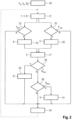
- system 1 automatically performs the method described hereafter with respect to Fig. 2 .
- the control unit 18 In a first step 20, preceding the real life use of the hearing aid 2, the control unit 18 starts a training period of, e.g., ca. 5 min, during which the control unit 18 determines the reference values F 0 , V 0 and N 0 .
- the reference values F 0 , V 0 and N 0 are determined by averaging over values of pitch F, the voice level V and the noise level N that have been recorded by the analysis unit 15 during the training period.
- the training period is selected so that, for its duration, the noise level N has normal (and, for the user, acceptable) values and the user is in a neutral emotional state (desired state).
- the reference values F 0 , V 0 and N 0 constitute desired values of pitch F, the voice level V and the noise level N.
- the averaging mentioned above may be performed by the analysis unit 15.
- the reference values F 0 , V 0 and N 0 are provided by the analysis unit 15.
- the step 20 is started on request of the user. After having determined the reference values F 0 , V 0 and N 0 , the control unit 18 persistently stores the reference values F 0 , V 0 and N 0 in the memory of the smartphone 4.
- the analysis unit 15 acquires current values of the pitch F of the user's voice, the voice level V and the noise level N and sends these values to the control unit 18.
- the control unit 18 determines the emotional state of the user by applying a three-step criterion on the current values of the pitch F, the voice level V and the noise level N.
- the control unit 18 compares the current values of the voice level V with the reference value V 0 . If, for a given time interval (of, e.g., 10 to 15 seconds), the current values of the voice level V exceed the reference value V 0 by more than a predetermined threshold V min (V - V 0 > V min ), then the control unit 18 decides that the emotional state of the user is characterized by a high level of arousal. In this case (Y), the control unit proceeds to a step 23 as subsequently defined. Otherwise (N), the control unit 18 proceeds to a step 24, in which this thread of the method is terminated.
- V min V - V 0 > V min
- a second comparison step 25 (being performed in parallel to step 22), the control unit 18 compares the current values of the pitch F with the reference value F 0 If, for the time interval specified above, the current values of the pitch F fall below the reference value F 0 by more than a threshold F min (F - F 0 ⁇ -F min ; with F min > 0), then the control unit 18 decides that the emotional state of the user is characterized by a low valence. In this case (Y), the control unit proceeds to step 26 as subsequently defined. Otherwise (N), the control unit 18 proceeds to the step 24, in which this thread of the method is terminated.
- step 23 i.e. if a high level of arousal was recognized, the control unit 18 slightly increases the compression ratio parameter R by a predetermined amount, resulting in lowering the knee point of the dynamic compression curve.
- step 26 i.e. if a low valence was recognized, the control unit 18 slightly increases the pitch shift parameter S by a predetermined step size.
- control unit 18 adapts the cut-off frequency C according to a predetermined function depending on the deviation V-V 0 of the voice level V and its reference value V 0 and the deviation F-F 0 of the pitch F and its reference value F 0 (step 27).
- a third comparison step 28 the control unit 18 tests whether the current noise level N overshoots the reference value N 0 . If, for the time interval specified above, the current values of the noise level N exceed the reference value N 0 by more than a threshold N min (N - N 0 > N min ), then (Y) the control unit 18 proceeds to a step 29, in which it alters the noise reduction parameter O so to intensify the noise reduction.
- the control unit 18 tests whether the current noise level N undershoots the reference value N 0 . If, for the time interval specified above, the current values of the noise level N fall below the reference value N 0 by more than a threshold N min (N - N 0 ⁇ -N min ), then (Y) the control unit 18 proceeds to a step 31, in which it alters the noise reduction parameter O so to reduce the noise reduction.
- step 30 returns a negative test result (N), i.e. if the current values of the noise level N are found not to undershoot the reference value N 0 , the control unit 18 proceeds to step 24.
- step 24 the control unit 18 sends the current values of the compression ratio parameter R, the pitch shift parameter S, cut-off frequency C and the noise reduction parameter O to the hearing aid 2 so that the signal processing performed by the signal processor 11 during own-voice intervals is controlled by these current parameter values. If at least one of the parameters R, S, C and O has been adapted by the control unit 18, the adaptation will manipulate the sound of the own voice as provided to the user and will, thus, influence the emotional state of the user.
- control unit 18 repeats the method according to steps 21 to 31 in regular intervals, wherein said intervals are selected so to provide sufficient time for a reaction of the user to the altered parameter settings in the hearing aid 2.
- the adaptation step size is sufficiently small so that the user will not become aware of the altered signal processing to evoke an unconscious reaction of the user.
- the hearing aid 2 may slowly fade between previous and new parameter settings.
- control unit 18 slowly approaches the values of the compression ratio parameter R, the pitch shift parameter S, cut-off frequency C and the noise reduction parameter O to predetermined default values, thus ensuring that the manipulations to the normal signal processing in the hearing aid 2 are reduced to a minimum needed (with respect to both their amount and duration).
- the control unit 18 compares the relation V/N of the voice level V and the noise level N with a corresponding reference value V 0 /N 0 .
- the method proceeds to step 23 if the current values of said relation V/N exceed the reference value V 0 /N 0 by more than a predetermined threshold V' min (V/N - V 0 /N 0 > V' min ).
- V' min V/N - V 0 /N 0 > V' min .
- the analysis unit 15 is designed to determine, by analysis of the input audio signal during own-voice-intervals, a temporal modulation (variation) of the voice level and/or the pitch F or a variable characterizing the rhythm of speech.
- the control unit 18 additionally considers these quantities in the decision whether or not and how to adapt the compression ratio parameter R, the pitch shift parameter S and the cut-off frequency C.
- the control unit 18 further adapts the directional character of the processed audio signal and/or an intensity of pitch inflection when processing the input audio signal during own-voice intervals.
- pitch inflection denotes a method in which the pitch of the user's own voice is rapidly modified at the beginning of each of the user's utterances, i.e. at the beginning of each of the own-voice-intervals in order to intensify or reduce intonation in the processed user's own voice.
- pitch inflection is used to make the user's voice sound more happy and to change the user's emotion accordingly.
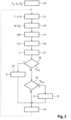
- control unit 18 is configured to conduct a method according to fig. 3 . Steps 20, 21, 24 and 27 to 31 of this method resemble the same steps of the method shown in fig. 2 .
- the method of fig. 3 deviates from the method of fig. 2 in that, in a step 40 (following step 21), the control unit 18 calculates a measure M of the emotional state the user.
- the deviation V-V 0 is chosen for being indicative of the level of arousal of the user
- the deviation F-F 0 is chosen for being indicative of the valence of the emotional state of the user.
- the control unit 18 persistently stores the values of the measure M in the memory of the smartphone 4 as part of a data logging function.
- the stored values of the measure M are stored for a later evaluation by an audio care professional.
- the deviation ⁇ M is defined as the vector length of the measure M.
- the control unit 18 alters the compression ratio parameter R and the pitch shift parameter S so to iteratively minimize the deviation ⁇ M, using a Gradient descent optimization algorithm, i.e. the parameters R and S are altered (e.g. by a given step size within a two-dimensional space of the parameters R and S) so that a maximum decrease of the deviation ⁇ M is achieved.
- a Gradient descent optimization algorithm i.e. the parameters R and S are altered (e.g. by a given step size within a two-dimensional space of the parameters R and S) so that a maximum decrease of the deviation ⁇ M is achieved.
- control unit 18 executes steps 27 to 31 and step 24 as described with respect to fig. 2 .
- the dependence of the measure M of voice level V and the pitch F is defined as a non-linear mathematic function.
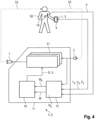
- Fig. 4 shows, in a schematic block diagram, another embodiment of the hearing system 1.
- the control unit 18 is implemented in the hearing aid 2, as a functional part of the signal processor 11.
- the bio sensor 16 is arranged external to the hearing aid 2, e.g. as a separate body-worn sensor.
- the bio sensor 16 is a pulse sensor that may be attached to the chest or wrist of the user 50.
- the signal processor 11 contains a plurality of signal processing modules 51, e.g. as software modules.
- the signal processing modules 51 provide signal processing functions such as noise reduction, frequency-dependent sound amplification, pitch shift, spectral filtering, dynamic compression, etc.
- the operation of the signal processing modules 51 is controlled by a plurality of signal processing parameters as mentioned before, e.g. including the pitch shift parameter S and the compression ratio parameter R.
- values of the pitch shift parameter S and the compression ratio parameter R are provided by the control module 18.
- the signal processor 11 applies voice activity detection and own voice detection to an input audio signal provided by the microphones 5 (of which, for sake of simplification, only one is shown in fig. 4 ). Also, for sake of simplification only, the corresponding modules 13 and 14 are not shown in fig. 4 .
- Fig. 4 shows a use case of the hearing system 1, in which the user 50 speaks.
- the sound signal captured by the microphones 5 contains the user's own voice, as is indicated in fig. 4 by a dashed line 52.
- the signal processor 11 the corresponding input audio signal (containing an electric representation of the user's own voice) is routed to the signal processing modules 51 to be processed in dependence of the signal processing parameters.
- the input audio signal is fed to the analysis module 15 which analyses the input audio signal, as described before, to determine current values of the pitch F, the voice level V and the noise level N of the user's 50 own voice.
- the analysis module 15 receives current values of the user's 50 pulse frequency P from the bio sensor 16.
- the analysis module 15 determines the measure M of the emotional state of the user 50.
- the reference values F 0 , V 0 and P 0 are provided by hearing app 3.
- these reference values F 0 , V 0 and P 0 can be altered by the user 50 via the smartphone 4.
- the reference value N 0 may be preset (e.g. by an audiologist during fitting) as constant in the analysis module 15.
- all reference values F 0 , V 0 , N 0 , P 0 may be predetermined as constants, e.g. by an audiologist during fitting (such that they cannot be altered by the user 50).
- control unit 18 calculates the deviation ⁇ M of the measure M from its desired value M 0 and alters the compression ratio parameter R and the pitch shift parameter S so to iteratively minimize the deviation ⁇ M.
- control unit 18 may use a Gradient descent optimization algorithm as described before.
- the signal processing modules 51 process the user's 50 own voice in a modified way.
- the processed signal (containing the thus modified own voice of the user 50) is fed back to user 50 via the receiver 7, as is indicated in fig. 4 by a dashed line 53.
- the modified perception of his own voice influences the emotional state of the user 50 which, in turn, influences the user's own voice.
- a closed control loop is formed by the hearing system 1 and the user 50 allowing to approach the user's emotional state towards a target emotional state represented by the reference value M 0 .
Landscapes
- Health & Medical Sciences (AREA)
- Engineering & Computer Science (AREA)
- Life Sciences & Earth Sciences (AREA)
- Physics & Mathematics (AREA)
- General Health & Medical Sciences (AREA)
- Signal Processing (AREA)
- Acoustics & Sound (AREA)
- Molecular Biology (AREA)
- Heart & Thoracic Surgery (AREA)
- Medical Informatics (AREA)
- Biomedical Technology (AREA)
- Surgery (AREA)
- Animal Behavior & Ethology (AREA)
- Pathology (AREA)
- Public Health (AREA)
- Veterinary Medicine (AREA)
- Biophysics (AREA)
- Otolaryngology (AREA)
- Audiology, Speech & Language Pathology (AREA)
- Neurosurgery (AREA)
- Psychiatry (AREA)
- Computational Linguistics (AREA)
- Human Computer Interaction (AREA)
- Multimedia (AREA)
- Cardiology (AREA)
- Physiology (AREA)
- Hospice & Palliative Care (AREA)
- Child & Adolescent Psychology (AREA)
- Psychology (AREA)
- Developmental Disabilities (AREA)
- Educational Technology (AREA)
- Pulmonology (AREA)
- Social Psychology (AREA)
- Optics & Photonics (AREA)
- Dentistry (AREA)
- Oral & Maxillofacial Surgery (AREA)
- Telephone Function (AREA)
- Measurement And Recording Of Electrical Phenomena And Electrical Characteristics Of The Living Body (AREA)
Claims (11)
- Verfahren zum Betrieb eines Hörsystems mit einem Hörinstrument (2), das im oder am Ohr eines Nutzers getragen wird, umfassend die folgenden Schritte:- Erfassen eines Schallsignals aus der Umgebung des Hörinstruments (2);- Verarbeiten des erfassten Schallsignals in Abhängigkeit von einer Reihe von Signalverarbeitungsparametern (R,S,C,O) und- Ausgeben eines verarbeiteten Schallsignals an den Nutzer;- Analysieren des erfassten Schallsignals zur Erkennung von Eigenstimm-Intervallen, in denen der Nutzer spricht;- Analysieren des erfassten Schallsignals auf mindestens ein akustisches Merkmal (F,V) der Eigenstimme des Nutzers und/oder Analyse eines Signals von mindestens einem Biosensor, wobei der mindestens eine Biosensor mindestens eine nicht-akustische Vitalfunktion des Nutzers misst,- Bestimmen eines Maßes (M) für einen emotionalen Zustand des Nutzers aus dem mindestens einen akustischen Merkmal (F,V) der Eigenstimme des Nutzers und/oder der mindestens einen nicht-akustischen Vitalfunktion des Nutzers,- Prüfen des Maßes (M) für den emotionalen Zustand in Bezug auf ein vordefiniertes Kriterium; und- Anpassen eines Wertes von mindestens einem der Signalverarbeitungsparameter (R,S,C,O) innerhalb der Eigenstimm-Intervalle, um den emotionalen Zustand zu ändern, wenn das Kriterium erfüllt ist,- wobei das Kriterium einen Sollwert (M0) des Maßes (M) für den emotionalen Zustand umfasst;- wobei die Prüfung die Bestimmung einer Abweichung (ΔM) des Maßes (M) für den emotionalen Zustand in Bezug auf den Sollwert (M0) umfasst; und- wobei der Wert des mindestens einen der Signalverarbeitungsparameter (R,S,C,O) derart angepasst wird, dass die Abweichung (ΔM) verringert wird;dadurch gekennzeichnet, dass- mindestens ein Signalverarbeitungsparameter, welcher angepasst wird, einen Parameter (S) eines Algorithmus umfasst, der die Tonhöhe des die Eigenstimme enthaltenden, erfassten Schallsignals Eigenstimme des Nutzers anpasst.
- Verfahren nach Anspruch 1,wobei das erfasste Schallsignal weiter auf mindestens eines der folgenden akustischen Umgebungsmerkmale analysiert wird:- den Schallpegel des erfassten Schallsignals;- den Rauschpegel (N) oder das Signal-Rausch-Verhältnis;- die Nachhallzeit; und- das Vorhandensein von anderen Sprechern als dem Nutzer;und wobei das Maß (M) für den emotionalen Zustand in weiterer Abhängigkeit von dem mindestens einen akustischen Umgebungsmerkmal und/oder einer zeitlichen Veränderung davon bestimmt wird.
- Verfahren zum Betrieb eines Hörinstruments (2), das im oder am Ohr eines Nutzers getragen wird, umfassend die folgenden Schritte:- Erfassen eines Schallsignals aus der Umgebung des Hörinstruments (2);- Verarbeiten des erfassten Schallsignals in Abhängigkeit von einer Reihe von Signalverarbeitungsparametern (R,S,C,O) und- Ausgeben eines verarbeiteten Schallsignals an den Nutzer;- Analysieren des aufgenommenen Schallsignals zur Erkennung von Eigenstimm-Intervallen, in denen der Nutzer spricht;- Analysieren des erfassten Schallsignals auf mindestens ein akustisches Merkmal (F,V) der Eigenstimme des Nutzers und/oder Analyse eines Signals von mindestens einem Biosensor, wobei der mindestens eine Biosensor mindestens eine nicht-akustische Vitalfunktion des Nutzers misst,- Prüfen des mindestens einen akustischen Merkmals (F,V) der Eigenstimme des Nutzers und/oder der mindestens einen nicht-akustischen Vitalfunktion des Nutzers in Bezug auf ein vordefiniertes Kriterium; und- Anpassen eines Wertes von mindestens einem der Signalverarbeitungsparameter (R,S,C,O) innerhalb der Eigenstimm-Intervalle, um den emotionalen Zustand zu ändern, wenn das Kriterium erfüllt ist,- wobei das Kriterium einen Sollwert (F0,V0) des mindestens einen akustischen Merkmals (F,V) der Eigenstimme des Nutzers und/oder der mindestens einen Vitalfunktion des Nutzers umfasst;- wobei die Prüfung die Bestimmung einer Abweichung des mindestens einen akustischen Merkmals (F,V) der Eigenstimme des Nutzers und/oder der mindestens einen Vitalfunktion des Nutzers in Bezug auf den Sollwert umfasst; und- wobei der Wert des mindestens einen der Signalverarbeitungsparameter (R,S,C,O) derart angepasst wird, dass die Abweichung verringert wird;dadurch gekennzeichnet, dass
dieser mindestens eine Signalverarbeitungsparameter, welcher angepasst wird, einen Parameter (S) eines Algorithmus umfasst, der die Tonhöhe des die Eigenstimme des Nutzers enthaltenden, erfassten Schallsignals anpasst. - Verfahren nach Anspruch 3, ferner umfassend:- Analysieren des erfassten Schallsignals auf mindestens ein akustisches Umgebungsmerkmal, ausgewählt aus- dem Schallpegel des erfassten Schallsignals;- dem Rauschpegel (N) oder das Signal-Rausch-Verhältnis;- der Nachhallzeit; und- der Anwesenheit von anderen Sprechern als dem Nutzer; und- Prüfen des mindestens einen akustischen Umweltmerkmals in Bezug auf das vordefinierte Kriterium.
- Verfahren nach einem der Ansprüche 1 bis 4,
wobei der mindestens eine angepasste Signalverarbeitungsparameter ferner mindestens einen der folgenden Parameter umfasst- einen Parameter (O) eines Algorithmus zur Rauschunterdrückung,- einen Parameter (R) eines Algorithmus zur Anpassung des Dynamikbereichs des erfassten Schallsignals,- einen Parameter zum Umschalten zwischen binauraler und monoauraler Schallverarbeitung,- einen Parameter eines Strahlformungsalgorithmus, und- einen Parameter (C) eines Algorithmus zur Anpassung der spektralen Energie des erfassten Schallsignals. - Verfahren nach einem der Ansprüche 1 bis 5,
wobei das mindestens eine akustische Merkmal der Eigenstimme des Nutzers, für das das erfasste Schallsignal analysiert wird, aus mindestens einem der folgenden Merkmale ausgewählt wird- der Sprachlautstärke (V),- den Formantfrequenzen,- der Tonhöhe (F),- der Frequenzverteilung, und- der Sprechgeschwindigkeit oder dem Sprechrhythmus. - Verfahren nach einem der Ansprüche 1 bis 6,
wobei die mindestens eine nicht-akustische Vitalfunktion des Nutzers, die von dem mindestens einen Biosensor gemessen wird, aus mindestens einer der folgenden Vitalfunktionen ausgewählt wird- Impulsfrequenz,- Sauerstoffgehalt des Blutes,- Blutdruck,- Gehirnaktivität,- Muskeltätigkeit,- einer Bewegung des Nutzers, insbesondere die Frequenz und/oder Amplitude einer Kopfbewegung des Nutzers,- Leitfähigkeit der Haut, und- Körpertemperatur. - Hörsystem (1) mit einem im oder am Ohr eines Nutzers zu tragendem Hörinstrument (2), wobei das Hörinstrument (2) umfasst:- einen Eingangswandler (5), der derart angeordnet ist, dass er ein Schallsignal aus der Umgebung des Hörinstruments (2) erfasst;- einen Signalprozessor (11), der derart angeordnet ist, dass er das erfasste Schallsignal in Abhängigkeit von einer Reihe von Signalverarbeitungsparametern (R,S,C,O) verarbeitet; und- einen Ausgangswandler (7), der derart angeordnet ist, dass er ein verarbeitetes Schallsignal an ein Ohr des Nutzers ausgibt,wobei das Hörsystem (1) weiterhin umfasst:- eine Spracherkennungseinheit (12), die derart konfiguriert ist, dass sie das erfasste Schallsignal zur Erkennung von Eigenstimm-Intervallen, in denen der Nutzer spricht, analysiert;- eine Analyseeinheit (15), die derart konfiguriert ist, dass sie das erfasste Schallsignal auf mindestens ein akustisches Merkmal (F,V) der Eigenstimme des Nutzers analysiert und/oder ein Signal mindestens eines Biosensors analysiert, wobei der mindestens eine Biosensor mindestens eine nicht-akustische Vitalfunktion des Nutzers misst,- eine Steuereinheit (18),wobei die Steuereinheit (18) derart konfiguriert ist- dass sie aus dem mindestens einen akustischen Merkmal (F,V) der Eigenstimme des Nutzers und/oder der mindestens einen nicht-akustischen Vitalfunktion des Nutzers ein Maß (M) für einen emotionalen Zustand des Nutzers bestimmt,- dass sie das Maß (M) für den emotionalen Zustand in Bezug auf ein vordefiniertes Kriterium prüft; und- dass sie einen Wert von mindestens einem der Signalverarbeitungsparameter (R,S,C,O) innerhalb der Eigenstimm-Intervalle anpasst, um den emotionalen Zustand zu ändern, wenn das Kriterium erfüllt ist, wobei das Kriterium einen Sollwert (M0) des Maßes (M) für den emotionalen Zustand umfasst;- dass sie eine Abweichung (ΔM) des Maßes (M) für den emotionalen Zustand in Bezug auf den Sollwert (M0) bestimmt; und- dass sie den Wert des mindestens einen der Signalverarbeitungsparameter (R,S,C,O) derart anpasst, dass die Abweichung (ΔM) verringert wird;dadurch gekennzeichnet, dass
der mindestens eine Signalverarbeitungsparameter, welcher angepasst wird, einen Parameter (S) eines Algorithmus umfasst, der die Tonhöhe des die Eigenstimme des Nutzers enthaltenden, erfassten Schallsignals anpasst. - Hörsystem (1) nach Anspruch 8,wobei die Analyseeinheit (15) derart konfiguriert ist- dass sie das aufgenommene Schallsignal auf mindestens eines der folgenden akustischen Umgebungsmerkmale weiter analysiert:- den Schallpegel des erfassten Schallsignals;- den Rauschpegel (N) oder das Signal-Rausch-Verhältnis;- die Nachhallzeit; und- das Vorhandensein von anderen Sprechern als dem Nutzer; undwobei die Steuereinheit (18) derart konfiguriert ist, dass sie das Maß (M) für den emotionalen Zustand in weiterer Abhängigkeit von dem mindestens einen akustischen Umgebungsmerkmal und/oder einer zeitlichen Veränderung davon bestimmt.
- Hörsystem (1) mit einem im oder am Ohr eines Nutzers zu tragendem Hörinstrument (2), wobei das Hörinstrument (2) umfasst:- einen Eingangswandler (5), der derart angeordnet ist, dass er ein Schallsignal aus der Umgebung des Hörinstruments (2) erfasst;- einen Signalprozessor (11), der derart angeordnet ist, dass er das erfasste Schallsignal in Abhängigkeit von einer Reihe von Signalverarbeitungsparametern (R,S,C,O) verarbeitet; und- einen Ausgangswandler (7), der derart angeordnet ist, dass er ein verarbeitetes Schallsignal an ein Ohr des Nutzers ausgibt,- wobei das Hörsystem (1) weiterhin umfasst:- eine Spracherkennungseinheit (12), die derart konfiguriert ist, dass sie das erfasste Schallsignal zur Erkennung von Eigenstimm-Intervallen, in denen der Nutzer spricht, analysiert,- eine Analyseeinheit (15), die derart konfiguriert ist, dass sie das erfasste Schallsignal auf mindestens ein akustisches Merkmal (F,V) der Eigenstimme des Nutzers analysiert und/oder ein Signal mindestens eines Biosensors analysiert, wobei der mindestens eine Biosensor mindestens eine nicht-akustische Vitalfunktion des Nutzers misst,- eine Steuereinheit (18),wobei die Steuereinheit (18) derart konfiguriert ist- dass sie das mindestens eine akustische Merkmal (F,V) der Eigenstimme des Nutzers und/oder die mindestens eine nicht-akustische Vitalfunktion des Nutzers in Bezug auf ein vordefiniertes Kriterium prüft; und- dass sie einen Wert mindestens eines der Signalverarbeitungsparameter (R,S,C,O) innerhalb der Eigenstimmenintervalle anpasst, um den emotionalen Zustand zu ändern, wenn das Kriterium erfüllt ist, wobei das Kriterium einen Sollwert (F0,V0) des mindestens einen akustischen Merkmals (F,V) der Eigenstimme des Nutzers und/oder der mindestens einen Vitalfunktion des Nutzers umfasst;- dass sie eine Abweichung des mindestens einen akustischen Merkmals der Eigenstimme des Nutzers und/oder der mindestens einen Vitalfunktion des Nutzers in Bezug auf den Sollwert bestimmt; und- das sie den Wert des mindestens einen der Signalverarbeitungsparameter (R,S,C,O) derart anpasst, dass die Abweichung verringert wird;dadurch gekennzeichnet, dass- der mindestens eine Signalverarbeitungsparameter, welcher angepasst wird, einen Parameter (S) eines Algorithmus umfasst, der die Tonhöhe des die Eigenstimme des Nutzers enthaltenden, erfassten Schallsignals anpasst.
- Hörsystem (1) nach Anspruch 10,wobei die Analyseeinheit (15) derart konfiguriert ist- dass sie das erfasste Schallsignal auf mindestens ein akustisches Umgebungsmerkmal analysiert, ausgewählt aus- dem Schallpegel des erfassten Schallsignals;- dem Signal-Rausch-Verhältnis;- der Nachhallzeit; und- der Anwesenheit von anderen Sprechern als dem Nutzer; undwobei die Steuereinheit (18) derart konfiguriert ist, dass sie das mindestens eine akustische Umweltmerkmal in Bezug auf das vordefinierte Kriterium prüft.
Priority Applications (3)
| Application Number | Priority Date | Filing Date | Title |
|---|---|---|---|
| EP18200844.1A EP3641344B1 (de) | 2018-10-16 | 2018-10-16 | Verfahren zum betrieb eines hörinstruments und hörsystem mit einem hörinstrument |
| CN201910976678.6A CN111065032A (zh) | 2018-10-16 | 2019-10-15 | 用于操作听力仪器的方法和包括听力仪器的听力系统 |
| US16/654,126 US11388528B2 (en) | 2018-10-16 | 2019-10-16 | Method for operating a hearing instrument and hearing system containing a hearing instrument |
Applications Claiming Priority (1)
| Application Number | Priority Date | Filing Date | Title |
|---|---|---|---|
| EP18200844.1A EP3641344B1 (de) | 2018-10-16 | 2018-10-16 | Verfahren zum betrieb eines hörinstruments und hörsystem mit einem hörinstrument |
Publications (3)
| Publication Number | Publication Date |
|---|---|
| EP3641344A1 EP3641344A1 (de) | 2020-04-22 |
| EP3641344C0 EP3641344C0 (de) | 2023-12-06 |
| EP3641344B1 true EP3641344B1 (de) | 2023-12-06 |
Family
ID=63878469
Family Applications (1)
| Application Number | Title | Priority Date | Filing Date |
|---|---|---|---|
| EP18200844.1A Active EP3641344B1 (de) | 2018-10-16 | 2018-10-16 | Verfahren zum betrieb eines hörinstruments und hörsystem mit einem hörinstrument |
Country Status (3)
| Country | Link |
|---|---|
| US (1) | US11388528B2 (de) |
| EP (1) | EP3641344B1 (de) |
| CN (1) | CN111065032A (de) |
Families Citing this family (9)
| Publication number | Priority date | Publication date | Assignee | Title |
|---|---|---|---|---|
| CN112653980B (zh) * | 2021-01-12 | 2022-02-18 | 东南大学 | 一种智能助听器交互式自验配方法 |
| EP4138416A1 (de) * | 2021-08-16 | 2023-02-22 | Sivantos Pte. Ltd. | Hörhilfsystem mit einem hörgerät und verfahren zum betreiben des hörgeräts |
| CN114040308B (zh) * | 2021-11-17 | 2023-06-30 | 郑州航空工业管理学院 | 一种基于情感增益的皮肤听声助听装置 |
| EP4184948B1 (de) | 2021-11-17 | 2025-10-15 | Sivantos Pte. Ltd. | Hörsystem mit einem hörgerät und verfahren zum betreiben des hörgeräts |
| DE102022200810B3 (de) * | 2022-01-25 | 2023-06-15 | Sivantos Pte. Ltd. | Verfahren für ein Hörsystem zur Anpassung einer Mehrzahl an Signalverarbeitungsparametern eines Hörinstrumentes des Hörsystems |
| EP4284022A1 (de) | 2022-05-25 | 2023-11-29 | Sonova AG | Hörhilfesystem |
| DK181531B1 (en) | 2022-09-15 | 2024-04-08 | Gn Hearing As | Determining an acoustic characteristic of a hearing instrument |
| DE102024205064B4 (de) * | 2024-05-31 | 2025-09-11 | Sivantos Pte. Ltd. | Verfahren zum Betreiben eines Hörgeräts |
| WO2026036339A1 (zh) * | 2024-08-15 | 2026-02-19 | 深圳市韶音科技有限公司 | 声学设备以及耳挂式助听设备 |
Citations (2)
| Publication number | Priority date | Publication date | Assignee | Title |
|---|---|---|---|---|
| JP2005345496A (ja) * | 2004-05-31 | 2005-12-15 | Nippon Telegr & Teleph Corp <Ntt> | 音声処理装置、音声処理方法およびそのプログラム |
| EP2063416A1 (de) * | 2006-09-13 | 2009-05-27 | Nippon Telegraph and Telephone Corporation | Gefühlsdetektionsverfahren, gefühlsdetektionseinrichtung, das verfahren enthaltendes gefühlsdetektionsprogramm und das programm enthaltendes aufzeichnungsmedium |
Family Cites Families (15)
| Publication number | Priority date | Publication date | Assignee | Title |
|---|---|---|---|---|
| US8364273B2 (en) * | 2007-04-24 | 2013-01-29 | Dirk De Ridder | Combination of tonic and burst stimulations to treat neurological disorders |
| DE102009043775A1 (de) * | 2009-09-30 | 2011-04-07 | Siemens Medical Instruments Pte. Ltd. | Verfahren zum Einstellen einer Hörvorrichtung anhand eines emotionalen Zustandes und entsprechende Hörvorrichtung |
| DE102011087984A1 (de) | 2011-12-08 | 2013-06-13 | Siemens Medical Instruments Pte. Ltd. | Hörvorrichtung mit Sprecheraktivitätserkennung und Verfahren zum Betreiben einer Hörvorrichtung |
| US9781521B2 (en) * | 2013-04-24 | 2017-10-03 | Oticon A/S | Hearing assistance device with a low-power mode |
| JP2014232905A (ja) * | 2013-05-28 | 2014-12-11 | リオン株式会社 | イヤホンとそれを用いた聴取装置 |
| WO2015024584A1 (en) * | 2013-08-20 | 2015-02-26 | Widex A/S | Hearing aid having a classifier |
| WO2015047032A1 (ko) * | 2013-09-30 | 2015-04-02 | 삼성전자 주식회사 | 생체 신호에 기초하여 컨텐츠를 처리하는 방법, 및 그에 따른 디바이스 |
| DE102013224417B3 (de) | 2013-11-28 | 2015-05-07 | Fraunhofer-Gesellschaft zur Förderung der angewandten Forschung e.V. | Hörhilfevorrichtung mit Grundfrequenzmodifizierung, Verfahren zur Verarbeitung eines Sprachsignals und Computerprogramm mit einem Programmcode zur Durchführung des Verfahrens |
| US9363614B2 (en) | 2014-02-27 | 2016-06-07 | Widex A/S | Method of fitting a hearing aid system and a hearing aid fitting system |
| CN107431867B (zh) | 2014-11-19 | 2020-01-14 | 西万拓私人有限公司 | 用于快速识别自身语音的方法和设备 |
| DE102015203855B3 (de) | 2015-03-04 | 2016-09-01 | Carl Von Ossietzky Universität Oldenburg | Vorrichtung und Verfahren zum Ansteuern des Dynamikkompressors und Verfahren zum Ermitteln von Verstärkungswerten für einen Dynamikkompressor |
| US20170027812A1 (en) * | 2015-03-27 | 2017-02-02 | Elwha Llc | Nerve stimulation system and related controller |
| DE102015221187A1 (de) * | 2015-10-29 | 2017-05-04 | Sivantos Pte. Ltd. | Hörgerätesystem mit Sensor zur Erfassung biologischer Daten |
| DE102016209329B4 (de) * | 2016-05-30 | 2017-12-21 | Sivantos Pte. Ltd. | Verfahren zur automatisierten Ermittlung von Parameterwerten für ein Hörhilfegerät |
| US10575106B1 (en) * | 2018-09-18 | 2020-02-25 | Oticon A/S | Modular hearing aid |
-
2018
- 2018-10-16 EP EP18200844.1A patent/EP3641344B1/de active Active
-
2019
- 2019-10-15 CN CN201910976678.6A patent/CN111065032A/zh active Pending
- 2019-10-16 US US16/654,126 patent/US11388528B2/en active Active
Patent Citations (2)
| Publication number | Priority date | Publication date | Assignee | Title |
|---|---|---|---|---|
| JP2005345496A (ja) * | 2004-05-31 | 2005-12-15 | Nippon Telegr & Teleph Corp <Ntt> | 音声処理装置、音声処理方法およびそのプログラム |
| EP2063416A1 (de) * | 2006-09-13 | 2009-05-27 | Nippon Telegraph and Telephone Corporation | Gefühlsdetektionsverfahren, gefühlsdetektionseinrichtung, das verfahren enthaltendes gefühlsdetektionsprogramm und das programm enthaltendes aufzeichnungsmedium |
Also Published As
| Publication number | Publication date |
|---|---|
| EP3641344C0 (de) | 2023-12-06 |
| EP3641344A1 (de) | 2020-04-22 |
| CN111065032A (zh) | 2020-04-24 |
| US20200120431A1 (en) | 2020-04-16 |
| US11388528B2 (en) | 2022-07-12 |
Similar Documents
| Publication | Publication Date | Title |
|---|---|---|
| EP3641344B1 (de) | Verfahren zum betrieb eines hörinstruments und hörsystem mit einem hörinstrument | |
| US8559645B2 (en) | Method and device for setting a hearing device by detecting listening effort | |
| CN106878900B (zh) | 基于用户当前认知负荷的估计运行听力仪器的方法及助听器系统 | |
| CN113891225A (zh) | 听力装置的算法参数的个人化 | |
| US11477583B2 (en) | Stress and hearing device performance | |
| JP6657337B2 (ja) | 補聴器の作動方法および補聴器 | |
| EP3641345B1 (de) | Verfahren zum betrieb eines hörinstruments und hörsystem mit einem hörinstrument | |
| CN113395647A (zh) | 具有至少一个听力设备的听力系统及运行听力系统的方法 | |
| CN114830691A (zh) | 包括压力评估器的听力设备 | |
| EP3879853A1 (de) | Anpassung eines hörgeräts auf basis eines stressniveaus eines benutzers | |
| CN114830692A (zh) | 包括计算机程序、听力设备和压力评估设备的系统 | |
| EP3884850B1 (de) | Systeme und verfahren zur biomarkeranalyse an einem hörgerät | |
| US11510018B2 (en) | Hearing system containing a hearing instrument and a method for operating the hearing instrument | |
| CN111432317B (zh) | 基于脑电图(eeg)信号的具有自我调节能力的助听器 | |
| CN116996823A (zh) | 包括以辅助参数为条件的信号处理网络的助听器 | |
| US12334100B2 (en) | Hearing system including a hearing instrument and method for operating the hearing instrument | |
| US20260059245A1 (en) | Hearing device adaptation based on inferences from user interaction and use context | |
| EP4212094B1 (de) | Gangstabilisierung mit einer hörvorrichtung | |
| EP4184948B1 (de) | Hörsystem mit einem hörgerät und verfahren zum betreiben des hörgeräts | |
| US20240361848A1 (en) | Providing optimal audiology based on users listening intent | |
| EP3982647A1 (de) | Gecoachte anpassung im feld | |
| CN114640935A (zh) | 计算助听器增益的方法 |
Legal Events
| Date | Code | Title | Description |
|---|---|---|---|
| PUAI | Public reference made under article 153(3) epc to a published international application that has entered the european phase |
Free format text: ORIGINAL CODE: 0009012 |
|
| STAA | Information on the status of an ep patent application or granted ep patent |
Free format text: STATUS: THE APPLICATION HAS BEEN PUBLISHED |
|
| AK | Designated contracting states |
Kind code of ref document: A1 Designated state(s): AL AT BE BG CH CY CZ DE DK EE ES FI FR GB GR HR HU IE IS IT LI LT LU LV MC MK MT NL NO PL PT RO RS SE SI SK SM TR |
|
| AX | Request for extension of the european patent |
Extension state: BA ME |
|
| STAA | Information on the status of an ep patent application or granted ep patent |
Free format text: STATUS: REQUEST FOR EXAMINATION WAS MADE |
|
| 17P | Request for examination filed |
Effective date: 20201022 |
|
| RBV | Designated contracting states (corrected) |
Designated state(s): AL AT BE BG CH CY CZ DE DK EE ES FI FR GB GR HR HU IE IS IT LI LT LU LV MC MK MT NL NO PL PT RO RS SE SI SK SM TR |
|
| STAA | Information on the status of an ep patent application or granted ep patent |
Free format text: STATUS: EXAMINATION IS IN PROGRESS |
|
| 17Q | First examination report despatched |
Effective date: 20210617 |
|
| GRAP | Despatch of communication of intention to grant a patent |
Free format text: ORIGINAL CODE: EPIDOSNIGR1 |
|
| STAA | Information on the status of an ep patent application or granted ep patent |
Free format text: STATUS: GRANT OF PATENT IS INTENDED |
|
| GRAJ | Information related to disapproval of communication of intention to grant by the applicant or resumption of examination proceedings by the epo deleted |
Free format text: ORIGINAL CODE: EPIDOSDIGR1 |
|
| STAA | Information on the status of an ep patent application or granted ep patent |
Free format text: STATUS: EXAMINATION IS IN PROGRESS |
|
| INTG | Intention to grant announced |
Effective date: 20230418 |
|
| INTC | Intention to grant announced (deleted) | ||
| GRAP | Despatch of communication of intention to grant a patent |
Free format text: ORIGINAL CODE: EPIDOSNIGR1 |
|
| STAA | Information on the status of an ep patent application or granted ep patent |
Free format text: STATUS: GRANT OF PATENT IS INTENDED |
|
| INTG | Intention to grant announced |
Effective date: 20230707 |
|
| GRAS | Grant fee paid |
Free format text: ORIGINAL CODE: EPIDOSNIGR3 |
|
| GRAA | (expected) grant |
Free format text: ORIGINAL CODE: 0009210 |
|
| STAA | Information on the status of an ep patent application or granted ep patent |
Free format text: STATUS: THE PATENT HAS BEEN GRANTED |
|
| AK | Designated contracting states |
Kind code of ref document: B1 Designated state(s): AL AT BE BG CH CY CZ DE DK EE ES FI FR GB GR HR HU IE IS IT LI LT LU LV MC MK MT NL NO PL PT RO RS SE SI SK SM TR |
|
| REG | Reference to a national code |
Ref country code: GB Ref legal event code: FG4D |
|
| REG | Reference to a national code |
Ref country code: DE Ref legal event code: R096 Ref document number: 602018062133 Country of ref document: DE |
|
| REG | Reference to a national code |
Ref country code: CH Ref legal event code: EP |
|
| REG | Reference to a national code |
Ref country code: IE Ref legal event code: FG4D |
|
| U01 | Request for unitary effect filed |
Effective date: 20231220 |
|
| U07 | Unitary effect registered |
Designated state(s): AT BE BG DE DK EE FI FR IT LT LU LV MT NL PT SE SI Effective date: 20240103 |
|
| PG25 | Lapsed in a contracting state [announced via postgrant information from national office to epo] |
Ref country code: GR Free format text: LAPSE BECAUSE OF FAILURE TO SUBMIT A TRANSLATION OF THE DESCRIPTION OR TO PAY THE FEE WITHIN THE PRESCRIBED TIME-LIMIT Effective date: 20240307 |
|
| PG25 | Lapsed in a contracting state [announced via postgrant information from national office to epo] |
Ref country code: ES Free format text: LAPSE BECAUSE OF FAILURE TO SUBMIT A TRANSLATION OF THE DESCRIPTION OR TO PAY THE FEE WITHIN THE PRESCRIBED TIME-LIMIT Effective date: 20231206 |
|
| PG25 | Lapsed in a contracting state [announced via postgrant information from national office to epo] |
Ref country code: GR Free format text: LAPSE BECAUSE OF FAILURE TO SUBMIT A TRANSLATION OF THE DESCRIPTION OR TO PAY THE FEE WITHIN THE PRESCRIBED TIME-LIMIT Effective date: 20240307 Ref country code: ES Free format text: LAPSE BECAUSE OF FAILURE TO SUBMIT A TRANSLATION OF THE DESCRIPTION OR TO PAY THE FEE WITHIN THE PRESCRIBED TIME-LIMIT Effective date: 20231206 |
|
| PG25 | Lapsed in a contracting state [announced via postgrant information from national office to epo] |
Ref country code: RS Free format text: LAPSE BECAUSE OF FAILURE TO SUBMIT A TRANSLATION OF THE DESCRIPTION OR TO PAY THE FEE WITHIN THE PRESCRIBED TIME-LIMIT Effective date: 20231206 Ref country code: NO Free format text: LAPSE BECAUSE OF FAILURE TO SUBMIT A TRANSLATION OF THE DESCRIPTION OR TO PAY THE FEE WITHIN THE PRESCRIBED TIME-LIMIT Effective date: 20240306 Ref country code: HR Free format text: LAPSE BECAUSE OF FAILURE TO SUBMIT A TRANSLATION OF THE DESCRIPTION OR TO PAY THE FEE WITHIN THE PRESCRIBED TIME-LIMIT Effective date: 20231206 |
|
| PG25 | Lapsed in a contracting state [announced via postgrant information from national office to epo] |
Ref country code: IS Free format text: LAPSE BECAUSE OF FAILURE TO SUBMIT A TRANSLATION OF THE DESCRIPTION OR TO PAY THE FEE WITHIN THE PRESCRIBED TIME-LIMIT Effective date: 20240406 |
|
| PG25 | Lapsed in a contracting state [announced via postgrant information from national office to epo] |
Ref country code: CZ Free format text: LAPSE BECAUSE OF FAILURE TO SUBMIT A TRANSLATION OF THE DESCRIPTION OR TO PAY THE FEE WITHIN THE PRESCRIBED TIME-LIMIT Effective date: 20231206 |
|
| PG25 | Lapsed in a contracting state [announced via postgrant information from national office to epo] |
Ref country code: SK Free format text: LAPSE BECAUSE OF FAILURE TO SUBMIT A TRANSLATION OF THE DESCRIPTION OR TO PAY THE FEE WITHIN THE PRESCRIBED TIME-LIMIT Effective date: 20231206 |
|
| PG25 | Lapsed in a contracting state [announced via postgrant information from national office to epo] |
Ref country code: SM Free format text: LAPSE BECAUSE OF FAILURE TO SUBMIT A TRANSLATION OF THE DESCRIPTION OR TO PAY THE FEE WITHIN THE PRESCRIBED TIME-LIMIT Effective date: 20231206 Ref country code: SK Free format text: LAPSE BECAUSE OF FAILURE TO SUBMIT A TRANSLATION OF THE DESCRIPTION OR TO PAY THE FEE WITHIN THE PRESCRIBED TIME-LIMIT Effective date: 20231206 Ref country code: RO Free format text: LAPSE BECAUSE OF FAILURE TO SUBMIT A TRANSLATION OF THE DESCRIPTION OR TO PAY THE FEE WITHIN THE PRESCRIBED TIME-LIMIT Effective date: 20231206 Ref country code: IS Free format text: LAPSE BECAUSE OF FAILURE TO SUBMIT A TRANSLATION OF THE DESCRIPTION OR TO PAY THE FEE WITHIN THE PRESCRIBED TIME-LIMIT Effective date: 20240406 Ref country code: CZ Free format text: LAPSE BECAUSE OF FAILURE TO SUBMIT A TRANSLATION OF THE DESCRIPTION OR TO PAY THE FEE WITHIN THE PRESCRIBED TIME-LIMIT Effective date: 20231206 |
|
| PG25 | Lapsed in a contracting state [announced via postgrant information from national office to epo] |
Ref country code: PL Free format text: LAPSE BECAUSE OF FAILURE TO SUBMIT A TRANSLATION OF THE DESCRIPTION OR TO PAY THE FEE WITHIN THE PRESCRIBED TIME-LIMIT Effective date: 20231206 |
|
| PG25 | Lapsed in a contracting state [announced via postgrant information from national office to epo] |
Ref country code: PL Free format text: LAPSE BECAUSE OF FAILURE TO SUBMIT A TRANSLATION OF THE DESCRIPTION OR TO PAY THE FEE WITHIN THE PRESCRIBED TIME-LIMIT Effective date: 20231206 |
|
| REG | Reference to a national code |
Ref country code: DE Ref legal event code: R097 Ref document number: 602018062133 Country of ref document: DE |
|
| PLBE | No opposition filed within time limit |
Free format text: ORIGINAL CODE: 0009261 |
|
| STAA | Information on the status of an ep patent application or granted ep patent |
Free format text: STATUS: NO OPPOSITION FILED WITHIN TIME LIMIT |
|
| U20 | Renewal fee for the european patent with unitary effect paid |
Year of fee payment: 7 Effective date: 20240919 |
|
| 26N | No opposition filed |
Effective date: 20240909 |
|
| PG25 | Lapsed in a contracting state [announced via postgrant information from national office to epo] |
Ref country code: MC Free format text: LAPSE BECAUSE OF FAILURE TO SUBMIT A TRANSLATION OF THE DESCRIPTION OR TO PAY THE FEE WITHIN THE PRESCRIBED TIME-LIMIT Effective date: 20231206 |
|
| PGFP | Annual fee paid to national office [announced via postgrant information from national office to epo] |
Ref country code: GB Payment date: 20250923 Year of fee payment: 8 |
|
| PG25 | Lapsed in a contracting state [announced via postgrant information from national office to epo] |
Ref country code: IE Free format text: LAPSE BECAUSE OF NON-PAYMENT OF DUE FEES Effective date: 20241016 |
|
| U20 | Renewal fee for the european patent with unitary effect paid |
Year of fee payment: 8 Effective date: 20250923 |
|
| REG | Reference to a national code |
Ref country code: CH Ref legal event code: U11 Free format text: ST27 STATUS EVENT CODE: U-0-0-U10-U11 (AS PROVIDED BY THE NATIONAL OFFICE) Effective date: 20251101 |
|
| PGFP | Annual fee paid to national office [announced via postgrant information from national office to epo] |
Ref country code: CH Payment date: 20251101 Year of fee payment: 8 |
|
| PG25 | Lapsed in a contracting state [announced via postgrant information from national office to epo] |
Ref country code: CY Free format text: LAPSE BECAUSE OF FAILURE TO SUBMIT A TRANSLATION OF THE DESCRIPTION OR TO PAY THE FEE WITHIN THE PRESCRIBED TIME-LIMIT; INVALID AB INITIO Effective date: 20181016 |
|
| PG25 | Lapsed in a contracting state [announced via postgrant information from national office to epo] |
Ref country code: HU Free format text: LAPSE BECAUSE OF FAILURE TO SUBMIT A TRANSLATION OF THE DESCRIPTION OR TO PAY THE FEE WITHIN THE PRESCRIBED TIME-LIMIT; INVALID AB INITIO Effective date: 20181016 |