EP3643068B1 - Prédiction intra planaire dans le codage vidéo - Google Patents
Prédiction intra planaire dans le codage vidéo Download PDFInfo
- Publication number
- EP3643068B1 EP3643068B1 EP17768531.0A EP17768531A EP3643068B1 EP 3643068 B1 EP3643068 B1 EP 3643068B1 EP 17768531 A EP17768531 A EP 17768531A EP 3643068 B1 EP3643068 B1 EP 3643068B1
- Authority
- EP
- European Patent Office
- Prior art keywords
- fitting plane
- fitting
- parameter
- video coding
- samples
- Prior art date
- Legal status (The legal status is an assumption and is not a legal conclusion. Google has not performed a legal analysis and makes no representation as to the accuracy of the status listed.)
- Active
Links
Images


Classifications
-
- H—ELECTRICITY
- H04—ELECTRIC COMMUNICATION TECHNIQUE
- H04N—PICTORIAL COMMUNICATION, e.g. TELEVISION
- H04N19/00—Methods or arrangements for coding, decoding, compressing or decompressing digital video signals
- H04N19/10—Methods or arrangements for coding, decoding, compressing or decompressing digital video signals using adaptive coding
- H04N19/134—Methods or arrangements for coding, decoding, compressing or decompressing digital video signals using adaptive coding characterised by the element, parameter or criterion affecting or controlling the adaptive coding
- H04N19/157—Assigned coding mode, i.e. the coding mode being predefined or preselected to be further used for selection of another element or parameter
- H04N19/159—Prediction type, e.g. intra-frame, inter-frame or bidirectional frame prediction
-
- H—ELECTRICITY
- H04—ELECTRIC COMMUNICATION TECHNIQUE
- H04N—PICTORIAL COMMUNICATION, e.g. TELEVISION
- H04N19/00—Methods or arrangements for coding, decoding, compressing or decompressing digital video signals
- H04N19/50—Methods or arrangements for coding, decoding, compressing or decompressing digital video signals using predictive coding
- H04N19/593—Methods or arrangements for coding, decoding, compressing or decompressing digital video signals using predictive coding involving spatial prediction techniques
-
- H—ELECTRICITY
- H04—ELECTRIC COMMUNICATION TECHNIQUE
- H04N—PICTORIAL COMMUNICATION, e.g. TELEVISION
- H04N19/00—Methods or arrangements for coding, decoding, compressing or decompressing digital video signals
- H04N19/10—Methods or arrangements for coding, decoding, compressing or decompressing digital video signals using adaptive coding
- H04N19/102—Methods or arrangements for coding, decoding, compressing or decompressing digital video signals using adaptive coding characterised by the element, parameter or selection affected or controlled by the adaptive coding
- H04N19/103—Selection of coding mode or of prediction mode
- H04N19/11—Selection of coding mode or of prediction mode among a plurality of spatial predictive coding modes
-
- H—ELECTRICITY
- H04—ELECTRIC COMMUNICATION TECHNIQUE
- H04N—PICTORIAL COMMUNICATION, e.g. TELEVISION
- H04N19/00—Methods or arrangements for coding, decoding, compressing or decompressing digital video signals
- H04N19/10—Methods or arrangements for coding, decoding, compressing or decompressing digital video signals using adaptive coding
- H04N19/134—Methods or arrangements for coding, decoding, compressing or decompressing digital video signals using adaptive coding characterised by the element, parameter or criterion affecting or controlling the adaptive coding
- H04N19/136—Incoming video signal characteristics or properties
- H04N19/137—Motion inside a coding unit, e.g. average field, frame or block difference
-
- H—ELECTRICITY
- H04—ELECTRIC COMMUNICATION TECHNIQUE
- H04N—PICTORIAL COMMUNICATION, e.g. TELEVISION
- H04N19/00—Methods or arrangements for coding, decoding, compressing or decompressing digital video signals
- H04N19/10—Methods or arrangements for coding, decoding, compressing or decompressing digital video signals using adaptive coding
- H04N19/169—Methods or arrangements for coding, decoding, compressing or decompressing digital video signals using adaptive coding characterised by the coding unit, i.e. the structural portion or semantic portion of the video signal being the object or the subject of the adaptive coding
- H04N19/17—Methods or arrangements for coding, decoding, compressing or decompressing digital video signals using adaptive coding characterised by the coding unit, i.e. the structural portion or semantic portion of the video signal being the object or the subject of the adaptive coding the unit being an image region, e.g. an object
- H04N19/172—Methods or arrangements for coding, decoding, compressing or decompressing digital video signals using adaptive coding characterised by the coding unit, i.e. the structural portion or semantic portion of the video signal being the object or the subject of the adaptive coding the unit being an image region, e.g. an object the region being a picture, frame or field
-
- H—ELECTRICITY
- H04—ELECTRIC COMMUNICATION TECHNIQUE
- H04N—PICTORIAL COMMUNICATION, e.g. TELEVISION
- H04N19/00—Methods or arrangements for coding, decoding, compressing or decompressing digital video signals
- H04N19/10—Methods or arrangements for coding, decoding, compressing or decompressing digital video signals using adaptive coding
- H04N19/169—Methods or arrangements for coding, decoding, compressing or decompressing digital video signals using adaptive coding characterised by the coding unit, i.e. the structural portion or semantic portion of the video signal being the object or the subject of the adaptive coding
- H04N19/17—Methods or arrangements for coding, decoding, compressing or decompressing digital video signals using adaptive coding characterised by the coding unit, i.e. the structural portion or semantic portion of the video signal being the object or the subject of the adaptive coding the unit being an image region, e.g. an object
- H04N19/176—Methods or arrangements for coding, decoding, compressing or decompressing digital video signals using adaptive coding characterised by the coding unit, i.e. the structural portion or semantic portion of the video signal being the object or the subject of the adaptive coding the unit being an image region, e.g. an object the region being a block, e.g. a macroblock
Definitions
- the invention relates to the field of video coding. More specifically, the invention relates to an apparatus and a method for intra prediction of a video coding block as well as an encoding apparatus and a decoding apparatus comprising such an intra-prediction apparatus.
- Video coding standards such as ITU-T H.264/AVC or ITU-T H.265/HEVC, provide a good tradeoff between these parameters. For that reason support of video coding standards is a mandatory requirement for almost any video compression application.
- the state-of-the-art video coding standards are based on partitioning of a source picture into video coding blocks. Processing of these blocks depend on their size, spatial position and a coding mode specified by an encoder. Coding modes can be classified into two groups according to the type of prediction: intra- and inter-prediction modes. Intra-prediction modes use pixels of the same picture (also referred to as frame or image) to generate reference samples to calculate the prediction values for the pixels of the block being reconstructed. Intra-prediction is also referred to as spatial prediction. Inter-prediction modes are designed for temporal prediction and uses reference samples of previous or next pictures to predict pixels of the block of the current picture. After a prediction stage, transform coding is performed for a prediction error that is the difference between an original signal and its prediction.
- the transform coefficients and side information are encoded using an entropy coder (e.g., CABAC for AVC/H.264 and HEVC/H.265).
- an entropy coder e.g., CABAC for AVC/H.264 and HEVC/H.265.
- the recently adopted ITU-T H.265/HEVC standard ISO/IEC 23008-2:2013, "Information technology - High efficiency coding and media delivery in heterogeneous environments - Part 2: High efficiency video coding", November 2013 ) declares a set of state-of-the-art video coding tools that provide a reasonable tradeoff between coding efficiency and computational complexity.
- An overview on the ITU-T H.265/HEVC standard has been given by Gary J. Sullivan, “Overview of the High Efficiency Video Coding (HEVC) Standard", in IEEE Transactions on Circuits and Systems for Video Technology, Vol. 22, No. 12, December 2012 .
- the HEVC/H.265 video coding standard provides for a division of the source picture into blocks, e.g., coding units (CUs). Each of the CUs can be further split into either smaller CUs or prediction units (PUs).
- a PU can be intra- or inter-predicted according to the type of processing applied for the pixels of PU. In case of inter-prediction, a PU represents an area of pixels that is processed by motion compensation using a motion vector specified for a PU. For intra prediction, the adjacent pixels of neighbor blocks are used as reference samples to predict a current block.
- a PU specifies a prediction mode that is selected from the set of intra-prediction modes for all the transform units (TUs) contained in this PU.
- a TU can have different sizes (e.g., 4x4, 8x8, 16x16 and 32x32 pixels) and can be processed in different ways.
- transform coding is performed, i.e. the prediction error is transformed with a discrete cosine transform or a discrete sine transform (in the HEVC/H.265 standard, it is applied to intra-coded blocks) and quantized.
- reconstructed pixels contain quantization noise (it can become apparent, for examples, as blockiness between units, ringing artifacts along with sharp edges, etc.) that in-loop filters such as Deblocking Filter (DBF), Sample Adaptive Offset (SAO) and Adaptive Loop Filter (ALF) try to suppress.
- DPF Deblocking Filter
- SAO Sample Adaptive Offset
- ALF Adaptive Loop Filter
- quadtree for CUs and PUs as well as residual quadtree for TUs in the HEVC/H.265 standard and quadtree plus binary tree for the JEM reference software from version JEM-3.0 onwards
- the fundamental difference between the quadtree (QT) and quadtree plus binary tree (QTBT) partitioning mechanisms is that the latter one enables not only square but also rectangular blocks by using partitioning based on both quad- and binary-tree.
- p pred [ x , y ] clip3( p min , p max , p ⁇ pred [ x,y ]), is used in the equation above.
- p ⁇ prcd [ x,y ] and p pred [ x,y ] are values of predictors at the position [ x , y ] before and after clipping respectively.
- the HEVC/H.265 standard 35 intra prediction modes are available and include a planar mode (the intra-prediction mode index is 0), a DC mode (the intra-prediction mode index is 1), and 33 directional modes (the intra-prediction mode index ranges from 2 to 34).
- the set of directional intra-prediction modes has been extended up to 65 modes (almost doubled) by decreasing a step angle between directional intra-prediction modes by a factor of 2.
- the plane-based mode was adopted neither for HEVC/H.265 nor for the JEM software. In fact, this mode was replaced by the planar one that does not always result in a plane-based predictor.
- Clipping bounds are defined as actual minimum p min ( C ) and maximum p max ( C ) sample values of coded pictures separately for every color component.
- This mechanism similar to the clip 3( ) function, is directly applied to pixel values, e.g., within a predictor.
- Prediction of a block may include steps of generating secondary reference samples that are located on the sides of the block that are not yet reconstructed and to be predicted, i.e. unknown pixels. Values of these secondary reference samples are derived from the primary reference samples which are obtained from the pixels of the previously reconstructed part of the picture, i.e., known pixels.
- the block that is decoded first within a picture cannot be predicted using previously reconstructed pixels.
- primary reference samples are generated using a pre-defined set of rules.
- H.265/HEVC standard In case of H.265/HEVC standard, they are assigned to a value equal to half of the possible maximal value of a pixel that is determined by a bit depth of the corresponding picture color plane.
- the planar intra-prediction mode of H.265/HEVC standard is an example of such a method.
- EP 3 013 049 A1 refers to that by either subsampling neighbor pixels and deriving an illumination variation parameter, or deriving one normalization shift value of two normalization shift values for normalizing parameters which are used when deriving the illumination variation parameter, with a dependency on the other normalization shift value, an amount of calculation for illumination compensation is reduced.
- the plane-based intra prediction mode has a major problem: the regression (plane) parameters are being determined without taking into account constraints caused by actual pixel values. Therefore, the current plane-based mode for intra-prediction suffers from low compression efficiency.
- the invention relates to hybrid video coding, in particular intra-prediction. More specifically, the invention provides an improvement of intra-prediction by combining a plane-based intra-prediction mode previously used in the H.264/AVC standard with a mechanism of clipping plane parameters, which provides better coding efficiency than conventional plane-based intra prediction modes. According to the invention, clipping of plane parameters is provided to avoid values of the plane parameters that are a priori impossible.
- embodiments of the invention allow applying the clipping operation to both plane (regression) parameters as well as pixel values in a predictor generated by a plane-based mode.
- embodiments of the invention provide in particular the following advantages: firstly, additional gain of coding can be reached by integrating embodiments of the invention into a codec. Secondly, embodiments of the invention can be used in many potential applications in hybrid video coding paradigms that are compatible with the HM software and the VPX video codec family as well as the JEM software and the VPX/AV1 video codec family, i.e., a state-of-the-art and next-generation video coding frameworks, respectively. Thirdly, hardware and computational complexities can be kept low at both encoder and decoder sides. Finally, embodiments of the invention can be easily implemented in codecs that use conventional intra-prediction mechanisms.
- Slice a spatially distinct region of a picture that is independently encoded/decoded.
- Slice header Data structure configured to signal information associated with a particular slice.
- Video coding block (or short block) an MxN (M-column by N-row) array of pixels or samples (each pixel/sample being associated with at least one pixel/sample value), or an MxN array of transform coefficients.
- Coding Tree Unit (CTU) grid - a grid structure employed to partition blocks of pixels into macro-blocks for video encoding.
- CU Coding Unit
- CU Coding Unit
- Picture Parameter Set (PPS) a syntax structure containing syntax elements that apply to zero or more entire coded pictures as determined by a syntax element found in each slice segment header.
- Sequence Parameter Set (SPS) a syntax structure containing syntax elements that apply to zero or more entire coded video sequences as determined by the content of a syntax element found in the PPS referred to by a syntax element found in each slice segment header.
- Video Parameter Set - a syntax structure containing syntax elements that apply to zero or more entire coded video sequences.
- Prediction Unit PU
- Prediction Unit PU
- Transform Unit TU
- Transform Unit TU
- transform block of luma samples two corresponding transform blocks of chroma samples of a picture that has three sample arrays, or a transform block of samples of a monochrome picture or a picture that is coded using three separate color planes and syntax used to predict the transform block samples.
- Supplemental enhancement information (SEI) - extra information that may be inserted into a video bit-stream to enhance the use of the video.
- Luma information indicating the brightness of an image sample.
- Chroma information indicating the color of an image sample, which may be described in terms of red difference chroma component (Cr) and blue difference chroma component (Cb).
- the invention relates to an apparatus for intra prediction of a current video coding block of a frame of a video signal on the basis of a plurality of reference samples from a set of neighboring video coding blocks of the current video coding block, the frame comprising a plurality of samples, each sample being associated with a sample value and a position within the frame.
- the apparatus comprises a processing unit configured to: determine a preliminary fitting plane on the basis of the plurality of reference samples, wherein the preliminary fitting plane is defined by a set of preliminary fitting plane parameters; clip those preliminary fitting plane parameters of the set of preliminary fitting plane parameters whose parameter value lies outside of a predefined range of allowable parameter values to an adjusted parameter value lying inside of the predefined range of allowable parameter values and maintain those preliminary fitting plane parameters of the set of preliminary fitting plane parameters whose parameter value lies inside of the predefined range of allowable parameter values; determine an adjusted fitting plane on the basis of the clipped fitting plane parameters and the undipped fitting plane parameters, wherein the adjusted fitting plane defines a plurality of fitting samples, each fitting sample being associated with a fitting sample value and a position within the frame; and predict the samples of the current video coding block on the basis of the plurality of fitting samples defined by the adjusted fitting plane.
- an improved apparatus for video coding which allows increasing the coding efficiency for intra prediction.
- the processing unit is configured to perform a multi-linear regression, in particular a least squares method, for determining the fitting plane parameters on the basis of the plurality of reference samples.
- K max C C L V max C C ⁇ V min C C L , wherein V max ( C C ) denotes a maximum sample value, V min ( C C ) denotes a minimum sample value and L denotes a width defined by the reference samples of one of the neighboring video coding blocks of the set of neighboring video coding blocks.
- the maximum sample value V max ( C C ) is the maximum of the reference samples in a first neighboring video coding block and the minimum sample value V min ( C C ) is the minimum reference sample value of the reference samples in the first neighboring video coding block.
- the maximum sample value V max ( C C ) is the maximum of the samples of the frame and the minimum reference sample value V min ( C C ) is the minimum of the samples of the frame.
- the processing unit is configured to automatically determine the respective predefined ranges of allowable parameter values.
- the processing unit is further configured to clip the samples, which have been predicted on the basis of the plurality of fitting samples defined by the adjusted fitting plane, in case the sample values lie outside of a predefined range of sample values.
- the processing unit is configured to clip the fitting plane parameters such that the adjusted fitting plane values fall within a range of bit depth values, a range defined by the minimum and maximum sample values of the samples of the frame, and/or a range defined by the maximum and minimum value of the reference samples.
- the set of neighboring video coding blocks of the current video coding block comprises a video coding block above the current video coding block and/or a video coding block to the left of the current video coding block.
- the invention relates to a method for intra prediction of a current video coding block of a frame of a video signal on the basis of a plurality of reference samples from a set of neighboring video coding blocks of the current video coding block, the frame comprising a plurality of samples, each sample being associated with a sample value and a position within the frame.
- the method comprises: determining a preliminary fitting plane on the basis of the plurality of reference samples, wherein the preliminary fitting plane is defined by a set of preliminary fitting plane parameters; clipping those preliminary fitting plane parameters of the set of preliminary fitting plane parameters whose parameter value lies outside of a predefined range of allowable parameter values to an adjusted parameter value lying inside of the predefined range of allowable parameter values and maintaining those preliminary fitting plane parameters of the set of preliminary fitting plane parameters whose parameter value lies inside of the predefined range of allowable parameter values; determining an adjusted fitting plane on the basis of the clipped fitting plane parameters and the undipped fitting plane parameters, wherein the adjusted fitting plane defines a plurality of fitting samples, each fitting sample being associated with a fitting sample value and a position within the frame; and predicting the samples of the current video coding block on the basis of the plurality of fitting samples defined by the adjusted fitting plane.
- the intra prediction method according to the fourth aspect of the invention can be performed by the intra prediction apparatus according to the first aspect of the invention. Further features of the intra prediction method according to the fourth aspect of the invention result directly from the functionality of the intra prediction apparatus according to the first aspect of the invention and its different implementation forms.
- the invention relates to a computer program comprising program code for performing the method according to the fourth aspect when executed on a computer.
- the invention can be implemented in hardware and/or software.
- a disclosure in connection with a described method may also hold true for a corresponding device or system configured to perform the method and vice versa.
- a corresponding device may include a unit to perform the described method step, even if such unit is not explicitly described or illustrated in the figures.
- the features of the various exemplary aspects described herein may be combined with each other, unless specifically noted otherwise.
- Figure 1 shows a schematic diagram illustrating an intra prediction apparatus 100 according to an embodiment.
- the intra prediction apparatus 100 is configured to intra predict a current video coding block 401 of a frame of a video signal on the basis of a plurality of reference samples 403 from a set of neighboring video coding blocks of the current video coding block 401, wherein the frame comprises a plurality of samples 405, each sample being associated with a sample value and a position within the frame.
- the intra prediction apparatus 100 comprises a processing unit 101 configured to determine a preliminary fitting plane 501 (shown in figure 4B ) on the basis of the plurality of reference samples 403, wherein the preliminary fitting plane 501 is defined by a set of preliminary fitting plane parameters and to clip those preliminary fitting plane parameters of the set of preliminary fitting plane parameters whose respective parameter value lies outside of a predefined range of allowable parameter values to an adjusted parameter value lying inside of the predefined range of allowable parameter values and to maintain those preliminary fitting plane parameters of the set of preliminary fitting plane parameters whose respective parameter value lies inside of the predefined range of allowable parameter values.
- the processing unit 101 is further configured to determine an adjusted fitting plane on the basis of the clipped fitting plane parameters and the undipped fitting plane parameters, i.e. the preliminary fitting plane parameters of the set of preliminary fitting plane parameters whose respective parameter value lies inside of the predefined range of allowable parameter values.
- the adjusted fitting plane defines a plurality of fitting samples, wherein each fitting sample is associated with a fitting sample value and a position within the frame.
- the processing unit 101 is configured to predict the samples, such as the sample 405 shown in figure 4a , of the current video coding block 401 on the basis of the plurality of fitting samples defined by the adjusted fitting plane.
- the set of neighboring video coding blocks of the current video coding block 401 comprises a video coding block above the current video coding block 401 and/or a video coding block to the left of the current video coding block 401.
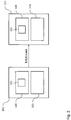
- Figure 2 shows a schematic diagram illustrating an encoding apparatus 201 according to an embodiment and a decoding apparatus 211 according to an embodiment.
- the encoding apparatus 201 is configured to encode a current video coding block 401 of a frame of a video signal, wherein the current video coding block 401 comprises a plurality of samples 405, each sample being associated with a sample value.
- the encoding apparatus 201 comprises the intra prediction apparatus 100 shown in figure 1 for providing a predicted video coding block and an encoding unit 203 configured to encode the current video coding block 401 on the basis of the predicted video coding block and providing the encoded current video coding block, for instance, in the form of a bitstream. Further embodiments of the encoding apparatus 201 will be described further below.
- the encoding apparatus 201 could be implemented as a hybrid encoder, as defined, for instance, in the HEVC standard, and could comprise further components, such as an entropy encoder.
- the decoding apparatus 211 is configured to decode the encoded video coding block of a frame of a video signal, which is contained in the bitstream provided by the encoding apparatus 201, wherein the encoded video coding block comprises a plurality of samples, each sample being associated with a sample value.
- the decoding apparatus 211 comprises the intra prediction apparatus 100 shown in figure 1 for providing a predicted video coding block and a restoration unit 213 configured to restore a video coding block on the basis of the encoded video coding block and the predicted video coding block. Further embodiments of the decoding apparatus 211 will be described further below.
- the decoding apparatus 211 could be implemented as a hybrid decoder, as defined, for instance, in the HEVC standard, and could comprise further components, such as a decoding unit for providing a residual video coding block on the basis of the encoded video coding block.
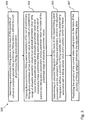
- Figure 3 shows a schematic diagram illustrating a method 300 for intra prediction of a current video coding block 401 of a frame of a video signal on the basis of a plurality of reference samples 403 from a set of neighboring video coding blocks of the current video coding block 401 according to an embodiment, wherein the frame comprises a plurality of samples 405 and each sample is associated with a sample value and a position within the frame.
- the intra prediction method 300 comprises a step 301 of determining a preliminary fitting plane 501 on the basis of the plurality of reference samples 405, wherein the preliminary fitting plane 501 is defined by a set of preliminary fitting plane parameters.
- the intra prediction method 300 comprises a step 303 of clipping those preliminary fitting plane parameters of the set of preliminary fitting plane parameters whose parameter value lies outside of a predefined range of allowable parameter values to an adjusted parameter value lying inside of the predefined range of allowable parameter values and maintaining those preliminary fitting plane parameters of the set of preliminary fitting plane parameters whose parameter value lies inside of the predefined range of allowable parameter values.
- the intra prediction method 300 comprises a step 305 of determining an adjusted fitting plane on the basis of the clipped fitting plane parameters and the undipped fitting plane parameters, wherein the adjusted fitting plane defines a plurality of fitting samples, each fitting sample being associated with a fitting sample value and a position within the frame and a step 307 of predicting the samples 405 of the current video coding block 401 on the basis of the plurality of fitting samples defined by the adjusted fitting plane. Further embodiments of the intra prediction method 300 will be described further below.
- the intra prediction method 300 can be performed by the processing unit 101 of the intra prediction apparatus 100 mentioned above in figure 1 .
- the detailed steps of the implementation form of the method 300 in the intra prediction apparatus 100 will be discussed further below.
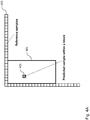
- Figure 4A shows a schematic diagram of an exemplary current video coding block 401 illustrating an aspect of the intra prediction apparatus 100 and the intra prediction method 300 according to an embodiment, in particular the relationship between reference samples (also referred to as pixels) 403 and intra predicted samples or pixels, wherein the pixel of the currently processed video coding block 401, i.e. the currently processed pixel 405, is identified by a square with a diamond pattern and the reference pixels 403 are identified by squares.
- reference samples also referred to as pixels
- the reference samples or pixels 403 are the pixels in the row of pixels above the current video coding block 401 and the pixels in the column of pixels to the left of the current video coding block 401.
- the reference pixels 403 belong to neighboring video coding blocks, which already have been intra predicted, i.e. processed by the intra prediction apparatus 100.
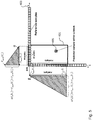
- Figure 4B shows a schematic diagram of a preliminary fitting plane 501 predicted by the processing unit 101 using, for instance, a MLR-based model, wherein the reference samples 403 as illustrated in figure 4A are used to estimate regression parameters of the MLR-based model for constructing the preliminary fitting plane 501.
- a fitting plane predicted by the DC mode in the HEVC/H.265 standard is also shown in figure 4B .
- the processing unit 101 is configured to estimate a set of preliminary parameters on the basis of a Multiple Linear Regression (MLR) and fit a preliminary plane 501 to the reference samples 403 (step 1).
- MLR Multiple Linear Regression
- step 1 different approaches can be used for the Multiple Linear Regression (MLR).
- the processing unit 101 is configured to perform a Multi-Linear Regression, in particular a least-squares method, for determining the fitting plane parameters on the basis of the plurality of reference samples 403.
- This well-known least-square method provides such values of regression parameters that minimize the sum of error squares between the data (i.e. reference samples 403) used for estimating regression parameters and the values calculated using the above equation at the positions corresponding to the reference samples 403.
- this step can be similar to the plane-based mode employed in the H.264/AVC standard.
- the processing unit 101 is configured to clip those preliminary fitting plane parameters of the set of preliminary fitting plane parameters whose respective parameter value lies outside of a predefined range of allowable parameter values to an adjusted parameter value lying inside of the predefined range of allowable parameter values and maintain those preliminary fitting plane parameters of the set of preliminary fitting plane parameters whose respective parameter value lies inside of the predefined range of allowable parameter values.
- the processing unit 101 is configured to clip the fitting plane parameters such that the adjusted fitting plane values fall within a range of bit depth values, a range defined by the minimum and maximum sample values of the samples of the frame, and/or a range defined by the maximum and minimum value of the reference samples.
- processing unit 101 can be further configured to automatically determine the respective predefined ranges of allowable parameter values according to an embodiment.
- step 2 The basic idea behind step 2 is to constrain the values of the regression parameters a and b that define the inclination of the fitting plane to the xy-plane as illustrated in figure 4B .
- the detailed embodiments for clipping the fitting plane (regression) parameters a and b will be explained with reference to figure 5 further below.
- Figure 5 illustrates as an example the case, where the intra prediction apparatus 100 clips those preliminary fitting plane parameters a and b of the set of preliminary fitting plane parameters whose respective parameter value lies outside of a predefined range of allowable parameter values to an adjusted parameter value lying inside of the predefined range of allowable parameter values.
- the pixel of the currently processed video coding block 401 with a height H and a width W i.e. the currently processed pixel 405 is identified by a square with a diamond pattern and the reference pixels or samples 403 are identified by squares.
- constraints that can be put on regression parameters a and b follow, for example, a gradient-based predictor model.
- the reference samples 403 in the row of samples above the current video coding block 401 or in the column of samples to the left of the current video coding block 401 change linearly, the drops, i.e.
- K maxW ( C c ,L ) and K maxH ( C c ,L ) are the same for an entire video sequence and can be calculated once per sequence.
- V maxW ( C c ) and V maxH ( C c ) can be defined as actual minimum and maximum sample values appearing in coded pictures (i.e. they are the same values as used for adaptive clipping). Therefore, K maxW ( C c ,L ) and K maxH ( C c , L ) are the same for an entire frame or slice and can be calculated once per frame or slice.
- V maxW ( C c ) and V maxH ( C c ) V maxH ( C ) can also be defined as minimum and maximum values within the reference samples 403 used for constructing the plane. Therefore, K maxW ( C c , L ) and K maxH (C c , L ) can be individually calculated for each block.
- K max C C L V max C C ⁇ V min C C L , wherein V max ( C C ) denotes a maximum sample value, V min ( C C ) denotes a minimum sample value and L denotes a width defined by the reference samples of one of the neighboring video coding blocks of the set of neighboring video coding blocks.
- the maximum sample value V m ⁇ x ( C C ) is the maximum of the reference samples in a first neighboring video coding block and the minimum sample value V min ( C C ) is the minimum reference sample value of the reference samples in the first neighboring video coding block.
- the maximum sample value V max ( C C ) is the maximum of the samples of the frame and the minimum reference sample value V min ( C C ) is the minimum of the samples of the frame.
- constraints on regression parameters a and b can be calculated by using more complex models.
- the change of gradient can be considered for the main diagonal within a block to be predicted.
- stricter constraints can be deduced, such as
- the processing unit 101 is configured to clip the first fitting plane parameter a and/or the second fitting plane parameter b and to adjust the third fitting plane parameter c on the basis of the following equation:
- CLIP ⁇ i 0 N ⁇ 1 x i ⁇ b
- CLIP ⁇ i 0 N ⁇ 1 y i N
- ⁇ denotes the adjusted third fitting plane parameter
- N denotes the number of reference samples
- p rs [ i ] denotes the reference sample value at the position x
- y
- a CLIP denotes the clipped first fitting plane parameter
- b CLIP denotes the clipped second fitting plane parameter.
- the processing unit 101 is configured to clip the samples, which have been predicted on the basis of the plurality of fitting samples defined by the adjusted fitting plane, in case the sample values lie outside of a predefined range of sample values, and to predict the samples of the current video coding block 401 on the basis of the plurality of fitting samples defined by the adjusted fitting plane.
- p pred x y clip 3 p min , p max , a CLIP x + b CLIP y + c ⁇ , where p min and p max are minimum and maximum values that pixels can take within the block 401 to be predicted.
Landscapes
- Engineering & Computer Science (AREA)
- Multimedia (AREA)
- Signal Processing (AREA)
- Compression Or Coding Systems Of Tv Signals (AREA)
Claims (11)
- Appareil (100) pour la prédiction intra d'un bloc de codage vidéo actuel (401) d'une trame d'un signal vidéo sur la base d'une pluralité d'échantillons de référence (403) à partir d'un ensemble de blocs de codage vidéo voisins du bloc de codage vidéo actuel (401), la trame comprenant une pluralité d'échantillons (405), chaque échantillon étant associé à une valeur d'échantillon et une position à l'intérieur de la trame, l'appareil (100) comprenant :une unité de traitement (101) configurée pour :déterminer un plan d'ajustement préliminaire (501) sur la base de la pluralité d'échantillons de référence (403), dans lequel le plan d'ajustement préliminaire (501) est défini par un ensemble de paramètres de plan d'ajustement préliminaire ;écrêter ces paramètres de plan d'ajustement préliminaire de l'ensemble de paramètres de plan d'ajustement préliminaire dont la valeur de paramètre se situe à l'extérieur d'une plage prédéfinie de valeurs de paramètre admissibles jusqu'à une valeur de paramètre ajustée située à l'intérieur de la plage prédéfinie de valeurs de paramètre admissibles et maintenir ces paramètres de plan d'ajustement préliminaire de l'ensemble de paramètres de plan d'ajustement préliminaire dont la valeur de paramètre se situe à l'intérieur de la plage prédéfinie de valeurs de paramètre admissibles ;déterminer un plan d'ajustement ajusté sur la base des paramètres de plan d'ajustement écrêtés et des paramètres de plan d'ajustement non écrêtés, dans lequel le plan d'ajustement ajusté définit une pluralité d'échantillons d'ajustement, chaque échantillon d'ajustement étant associé à une valeur d'échantillon d'ajustement et une position à l'intérieur de la trame ; etprédire les échantillons (405) du bloc de codage vidéo actuel (401) sur la base de la pluralité d'échantillons d'ajustement définis par le plan d'ajustement ajusté,dans lequeldéterminer le plan d'ajustement (501) sur la base de la pluralité d'échantillons de référence (403) inclutla détermination de l'ensemble de paramètres de plan d'ajustement, incluant un premier paramètre de plan d'ajustement a, un deuxième paramètre de plan d'ajustement b et un troisième paramètre de plan d'ajustement c sur la base de la pluralité d'échantillons de référence (405) de manière que la pluralité de valeurs d'échantillon d'ajustement p̂pred [x,y] soient définies par l'équation suivante :
 dans laquelle x, y désignent la position de l'échantillon d'ajustement à l'intérieur de la trame,caractérisé en ce queécrêter les paramètres de plan d'ajustement préliminaire inclut écrêter au moins un parmi le premier paramètre de plan d'ajustement a et le deuxième paramètre de plan d'ajustement b sur la base des équations suivantes :
 dans lesquelles aCLIP désigne le premier paramètre de plan d'ajustement écrêté, bCLIP désigne le second paramètre de plan d'ajustement écrêté, clip3() désigne une fonction d'écrêtage, kw désigne un facteur de pondération, Cc désigne une composante de couleur, L désigne la longueur d'un côté de bloc défini par les échantillons de référence d'un des blocs de codage vidéo voisins de l'ensemble de blocs de codage vidéo voisins, des indices W et H indiquent respectivement un côté de bloc horizontal/supérieur et vertical/gauche et dans lesquelles la valeur absolue maximale Kmax (Cc,L) est définie par l'équation suivante :
 dans laquelle Vmax (Cc) désigne une valeur d'échantillon maximale, Vmin (Cc) désigne une valeur d'échantillon minimale.
 - Appareil (100) selon la revendication 1, dans lequel l'unité de traitement (101) est configurée pour effectuer une régression multilinéaire, en particulier une méthode des moindres carrés, pour déterminer les paramètres de plan d'ajustement sur la base de la pluralité d'échantillons de référence (403).
- Appareil (100) selon la revendication 1 ou 2, dans lequel l'unité de traitement (101) est configurée pour écrêter le premier paramètre de plan d'ajustement a et/ou la deuxième paramètre de plan d'ajustement b et pour ajuster le troisième paramètre de plan d'ajustement c sur la base de l'équation suivante :

- Appareil (100) selon l'une quelconque des revendications 1 à 3, dans lequel la valeur d'échantillon maximale Vmax (Cc) est le maximum des échantillons de référence dans un premier bloc de codage vidéo voisin et la valeur d'échantillon minimale Vmin (Cc) est la valeur d'échantillon de référence minimale des échantillons de référence dans le premier bloc de codage vidéo voisin.
- Appareil (100) selon l'une quelconque des revendications 1 à 3, dans lequel la valeur d'échantillon maximale Vmax (Cc) est le maximum des échantillons de la trame et la valeur d'échantillon de référence minimale Vmin (Cc) est le minimum des échantillons de la trame.
- Appareil (100) selon l'une quelconque des revendications précédentes, dans lequel l'unité de traitement (101) est configurée pour déterminer automatiquement les plages prédéfinies respectives de valeurs de paramètre admissibles.
- Appareil (100) selon l'une quelconque des revendications précédentes, dans lequel l'unité de traitement (101) est configurée en outre pour écrêter les échantillons, qui ont été prédits sur la base de la pluralité d'échantillons d'ajustement définis par le plan d'ajustement ajusté, dans le cas où les valeurs d'échantillon se situent à l'extérieur d'une plage prédéfinie de valeurs d'échantillon.
- Appareil (100) selon l'une quelconque des revendications précédentes, dans lequel l'unité de traitement (101) est configurée en outre pour écrêter les paramètres de plan d'ajustement de manière que les valeurs de plan d'ajustement ajusté se situent à l'intérieur d'une plage de valeurs de profondeur de bits, d'une plage définie par les valeurs d'échantillon minimales et maximales des échantillons de la trame et/ou d'une plage définie par la valeur maximale et minimale des échantillons de référence.
- Appareil (100) selon l'une quelconque des revendications précédentes, dans lequel l'ensemble de blocs de codage vidéo voisins du bloc de codage vidéo actuel (401) comprend un bloc de codage vidéo au-dessus du bloc de codage vidéo actuel (401) et/ou un bloc de codage vidéo à gauche du bloc de codage vidéo actuel (401).
- Procédé (300) pour la prédiction intra d'un bloc de codage vidéo actuel (401) d'une trame d'un signal vidéo sur la base d'une pluralité d'échantillons de référence (403) à partir d'un ensemble de blocs de codage vidéo voisins du bloc de codage vidéo actuel (401), la trame comprenant une pluralité d'échantillons (405), chaque échantillon étant associé à une valeur d'échantillon et une position à l'intérieur de la trame, le procédé (300) comprenant :la détermination (301) d'un plan d'ajustement préliminaire sur la base de la pluralité d'échantillons de référence (403), dans lequel le plan d'ajustement préliminaire est défini par un ensemble de paramètres de plan d'ajustement préliminaire ;l'écrêtage (303) de ces paramètres de plan d'ajustement préliminaire de l'ensemble de paramètres de plan d'ajustement préliminaire dont la valeur de paramètre se situe à l'extérieur d'une plage prédéfinie de valeurs de paramètre admissibles jusqu'à une valeur de paramètre ajustée située à l'intérieur de la plage prédéfinie de valeurs de paramètre admissibles et maintenir ces paramètres de plan d'ajustement préliminaire de l'ensemble de paramètres de plan d'ajustement préliminaire dont la valeur de paramètre se situe à l'intérieur de la plage prédéfinie de valeurs de paramètre admissibles ;la détermination (305) d'un plan d'ajustement ajusté sur la base des paramètres de plan d'ajustement écrêtés et des paramètres de plan d'ajustement non écrêtés, dans lequel le plan d'ajustement ajusté définit une pluralité d'échantillons d'ajustement, chaque échantillon d'ajustement étant associé à une valeur d'échantillon d'ajustement et une position à l'intérieur de la trame ; etla prédiction (307) des échantillons (405) du bloc de codage vidéo actuel (401) sur la base de la pluralité d'échantillons d'ajustement définis par le plan d'ajustement ajusté,dans lequella détermination du plan d'ajustement (501) sur la base de la pluralité d'échantillons de référence (403) inclut la détermination de l'ensemble de paramètres de plan d'ajustement, incluant un premier paramètre de plan d'ajustement a, un deuxième paramètre de plan d'ajustement b et un troisième paramètre de plan d'ajustement c sur la base de la pluralité d'échantillons de référence (405) de manière que la pluralité de valeurs d'échantillon d'ajustement p̂pred [x,y] soient définies par l'équation suivante :
 dans laquelle x, y désignent la position de l'échantillon d'ajustement à l'intérieur de la trame,caractérisé en ce quel'écrêtage des paramètres de plan d'ajustement préliminaire inclut l'écrêtage d'au moins un parmi le premier paramètre de plan d'ajustement a et le deuxième paramètre de plan d'ajustement b sur la base des équations suivantes :
 dans lesquelles aCLIP désigne le premier paramètre de plan d'ajustement écrêté, bCLIP désigne le second paramètre de plan d'ajustement écrêté, clip3() désigne une fonction d'écrêtage,kw désigne un facteur de pondération, Cc désigne une composante de couleur, L désigne la longueur d'un côté de bloc défini par les échantillons de référence d'un des blocs de codage vidéo voisins de l'ensemble de blocs de codage vidéo voisins, des indices W et H indiquent respectivement un côté de bloc horizontal/supérieur et vertical/gauche et dans lesquelles la valeur absolue maximale Kmax (Cc,L) est définie par l'équation suivante :
- Programme informatique comprenant un code de programme pour effectuer le procédé selon la revendication 10, quand il est exécuté sur un ordinateur.
Applications Claiming Priority (1)
| Application Number | Priority Date | Filing Date | Title |
|---|---|---|---|
| PCT/RU2017/000490 WO2019009751A1 (fr) | 2017-07-05 | 2017-07-05 | Dispositifs et procédés de codage vidéo |
Publications (2)
| Publication Number | Publication Date |
|---|---|
| EP3643068A1 EP3643068A1 (fr) | 2020-04-29 |
| EP3643068B1 true EP3643068B1 (fr) | 2021-05-05 |
Family
ID=59895352
Family Applications (1)
| Application Number | Title | Priority Date | Filing Date |
|---|---|---|---|
| EP17768531.0A Active EP3643068B1 (fr) | 2017-07-05 | 2017-07-05 | Prédiction intra planaire dans le codage vidéo |
Country Status (4)
| Country | Link |
|---|---|
| US (1) | US11317100B2 (fr) |
| EP (1) | EP3643068B1 (fr) |
| CN (1) | CN110786014B (fr) |
| WO (1) | WO2019009751A1 (fr) |
Families Citing this family (3)
| Publication number | Priority date | Publication date | Assignee | Title |
|---|---|---|---|---|
| WO2019182468A1 (fr) | 2018-03-22 | 2019-09-26 | Huawei Technologies Co., Ltd. | Appareil et procédé de codage d'une image |
| JP7821298B2 (ja) * | 2022-01-10 | 2026-02-26 | ベイジン、ターチア、インターネット、インフォメーション、テクノロジー、カンパニー、リミテッド | ビデオ・コーディングのためのクロスコンポーネント予測のための方法および装置 |
| US20250119547A1 (en) * | 2023-10-05 | 2025-04-10 | Qualcomm Incorporated | Adaptive clipping with signaled lower and upper bounds in video coding |
Family Cites Families (8)
| Publication number | Priority date | Publication date | Assignee | Title |
|---|---|---|---|---|
| KR20050112445A (ko) * | 2004-05-25 | 2005-11-30 | 경희대학교 산학협력단 | 예측 부호화/복호화 장치, 예측 부호화/복호화 방법 및 그방법을 수행하는 프로그램이 기록된 컴퓨터 판독가능한기록매체 |
| JP2011166326A (ja) * | 2010-02-05 | 2011-08-25 | Sony Corp | 画像処理装置および方法 |
| FI3962081T3 (fi) | 2010-05-25 | 2024-03-25 | Lg Electronics Inc | Uusi planaarinen ennustustila |
| US9288500B2 (en) * | 2011-05-12 | 2016-03-15 | Texas Instruments Incorporated | Luma-based chroma intra-prediction for video coding |
| CN102209243B (zh) * | 2011-05-27 | 2012-10-24 | 山东大学 | 基于线性模型的深度图帧内预测方法 |
| US20140198855A1 (en) | 2013-01-14 | 2014-07-17 | Qualcomm Incorporated | Square block prediction |
| JP6360053B2 (ja) * | 2013-06-18 | 2018-07-18 | シャープ株式会社 | 照度補償装置、画像復号装置、画像符号化装置 |
| EP3198867A4 (fr) | 2014-10-31 | 2018-04-04 | MediaTek Inc. | Procédé de prédiction intra directionnelle améliorée pour le codage vidéo |
-
2017
- 2017-07-05 EP EP17768531.0A patent/EP3643068B1/fr active Active
- 2017-07-05 WO PCT/RU2017/000490 patent/WO2019009751A1/fr not_active Ceased
- 2017-07-05 CN CN201780092228.XA patent/CN110786014B/zh active Active
-
2020
- 2020-01-03 US US16/734,022 patent/US11317100B2/en active Active
Also Published As
| Publication number | Publication date |
|---|---|
| CN110786014B (zh) | 2022-06-28 |
| CN110786014A (zh) | 2020-02-11 |
| EP3643068A1 (fr) | 2020-04-29 |
| US20200145667A1 (en) | 2020-05-07 |
| WO2019009751A1 (fr) | 2019-01-10 |
| US11317100B2 (en) | 2022-04-26 |
Similar Documents
| Publication | Publication Date | Title |
|---|---|---|
| EP3806463B1 (fr) | Appareil d'intra-prédiction destiné à étendre un ensemble de modes d'intra-prédiction directionnelle prédéterminés | |
| EP3552393B1 (fr) | Appareil de codage permettant de signaler un mode de prédiction intra directionnel d'extension dans un ensemble de modes de prédiction intra directionnels | |
| US10887587B2 (en) | Distance weighted bi-directional intra prediction | |
| US11102474B2 (en) | Devices and methods for intra prediction video coding based on a plurality of reference pixel values | |
| US12075032B2 (en) | Intra-prediction apparatus for removing a directional intra-prediction mode from a set of predetermined directional intra-prediction modes | |
| US11317100B2 (en) | Devices and methods for video coding | |
| US11277621B2 (en) | Devices and methods for video coding | |
| US10958913B2 (en) | Apparatus and method for directional intra prediction using a fitting plane and a plurality of primary reference samples as well as a plurality of secondary reference samples | |
| US11233991B2 (en) | Devices and methods for intra prediction in video coding |
Legal Events
| Date | Code | Title | Description |
|---|---|---|---|
| STAA | Information on the status of an ep patent application or granted ep patent |
Free format text: STATUS: UNKNOWN |
|
| STAA | Information on the status of an ep patent application or granted ep patent |
Free format text: STATUS: THE INTERNATIONAL PUBLICATION HAS BEEN MADE |
|
| PUAI | Public reference made under article 153(3) epc to a published international application that has entered the european phase |
Free format text: ORIGINAL CODE: 0009012 |
|
| STAA | Information on the status of an ep patent application or granted ep patent |
Free format text: STATUS: REQUEST FOR EXAMINATION WAS MADE |
|
| 17P | Request for examination filed |
Effective date: 20200120 |
|
| AK | Designated contracting states |
Kind code of ref document: A1 Designated state(s): AL AT BE BG CH CY CZ DE DK EE ES FI FR GB GR HR HU IE IS IT LI LT LU LV MC MK MT NL NO PL PT RO RS SE SI SK SM TR |
|
| AX | Request for extension of the european patent |
Extension state: BA ME |
|
| DAV | Request for validation of the european patent (deleted) | ||
| DAX | Request for extension of the european patent (deleted) | ||
| GRAP | Despatch of communication of intention to grant a patent |
Free format text: ORIGINAL CODE: EPIDOSNIGR1 |
|
| STAA | Information on the status of an ep patent application or granted ep patent |
Free format text: STATUS: GRANT OF PATENT IS INTENDED |
|
| INTG | Intention to grant announced |
Effective date: 20201125 |
|
| GRAS | Grant fee paid |
Free format text: ORIGINAL CODE: EPIDOSNIGR3 |
|
| GRAA | (expected) grant |
Free format text: ORIGINAL CODE: 0009210 |
|
| STAA | Information on the status of an ep patent application or granted ep patent |
Free format text: STATUS: THE PATENT HAS BEEN GRANTED |
|
| AK | Designated contracting states |
Kind code of ref document: B1 Designated state(s): AL AT BE BG CH CY CZ DE DK EE ES FI FR GB GR HR HU IE IS IT LI LT LU LV MC MK MT NL NO PL PT RO RS SE SI SK SM TR |
|
| REG | Reference to a national code |
Ref country code: GB Ref legal event code: FG4D |
|
| REG | Reference to a national code |
Ref country code: CH Ref legal event code: EP |
|
| REG | Reference to a national code |
Ref country code: AT Ref legal event code: REF Ref document number: 1391328 Country of ref document: AT Kind code of ref document: T Effective date: 20210515 |
|
| REG | Reference to a national code |
Ref country code: IE Ref legal event code: FG4D |
|
| REG | Reference to a national code |
Ref country code: DE Ref legal event code: R096 Ref document number: 602017038176 Country of ref document: DE |
|
| REG | Reference to a national code |
Ref country code: LT Ref legal event code: MG9D |
|
| REG | Reference to a national code |
Ref country code: AT Ref legal event code: MK05 Ref document number: 1391328 Country of ref document: AT Kind code of ref document: T Effective date: 20210505 |
|
| PG25 | Lapsed in a contracting state [announced via postgrant information from national office to epo] |
Ref country code: HR Free format text: LAPSE BECAUSE OF FAILURE TO SUBMIT A TRANSLATION OF THE DESCRIPTION OR TO PAY THE FEE WITHIN THE PRESCRIBED TIME-LIMIT Effective date: 20210505 Ref country code: BG Free format text: LAPSE BECAUSE OF FAILURE TO SUBMIT A TRANSLATION OF THE DESCRIPTION OR TO PAY THE FEE WITHIN THE PRESCRIBED TIME-LIMIT Effective date: 20210805 Ref country code: AT Free format text: LAPSE BECAUSE OF FAILURE TO SUBMIT A TRANSLATION OF THE DESCRIPTION OR TO PAY THE FEE WITHIN THE PRESCRIBED TIME-LIMIT Effective date: 20210505 Ref country code: FI Free format text: LAPSE BECAUSE OF FAILURE TO SUBMIT A TRANSLATION OF THE DESCRIPTION OR TO PAY THE FEE WITHIN THE PRESCRIBED TIME-LIMIT Effective date: 20210505 Ref country code: LT Free format text: LAPSE BECAUSE OF FAILURE TO SUBMIT A TRANSLATION OF THE DESCRIPTION OR TO PAY THE FEE WITHIN THE PRESCRIBED TIME-LIMIT Effective date: 20210505 |
|
| PG25 | Lapsed in a contracting state [announced via postgrant information from national office to epo] |
Ref country code: RS Free format text: LAPSE BECAUSE OF FAILURE TO SUBMIT A TRANSLATION OF THE DESCRIPTION OR TO PAY THE FEE WITHIN THE PRESCRIBED TIME-LIMIT Effective date: 20210505 Ref country code: SE Free format text: LAPSE BECAUSE OF FAILURE TO SUBMIT A TRANSLATION OF THE DESCRIPTION OR TO PAY THE FEE WITHIN THE PRESCRIBED TIME-LIMIT Effective date: 20210505 Ref country code: PL Free format text: LAPSE BECAUSE OF FAILURE TO SUBMIT A TRANSLATION OF THE DESCRIPTION OR TO PAY THE FEE WITHIN THE PRESCRIBED TIME-LIMIT Effective date: 20210505 Ref country code: LV Free format text: LAPSE BECAUSE OF FAILURE TO SUBMIT A TRANSLATION OF THE DESCRIPTION OR TO PAY THE FEE WITHIN THE PRESCRIBED TIME-LIMIT Effective date: 20210505 Ref country code: PT Free format text: LAPSE BECAUSE OF FAILURE TO SUBMIT A TRANSLATION OF THE DESCRIPTION OR TO PAY THE FEE WITHIN THE PRESCRIBED TIME-LIMIT Effective date: 20210906 Ref country code: NO Free format text: LAPSE BECAUSE OF FAILURE TO SUBMIT A TRANSLATION OF THE DESCRIPTION OR TO PAY THE FEE WITHIN THE PRESCRIBED TIME-LIMIT Effective date: 20210805 Ref country code: IS Free format text: LAPSE BECAUSE OF FAILURE TO SUBMIT A TRANSLATION OF THE DESCRIPTION OR TO PAY THE FEE WITHIN THE PRESCRIBED TIME-LIMIT Effective date: 20210905 Ref country code: GR Free format text: LAPSE BECAUSE OF FAILURE TO SUBMIT A TRANSLATION OF THE DESCRIPTION OR TO PAY THE FEE WITHIN THE PRESCRIBED TIME-LIMIT Effective date: 20210806 |
|
| REG | Reference to a national code |
Ref country code: NL Ref legal event code: MP Effective date: 20210505 |
|
| PG25 | Lapsed in a contracting state [announced via postgrant information from national office to epo] |
Ref country code: NL Free format text: LAPSE BECAUSE OF FAILURE TO SUBMIT A TRANSLATION OF THE DESCRIPTION OR TO PAY THE FEE WITHIN THE PRESCRIBED TIME-LIMIT Effective date: 20210505 |
|
| PG25 | Lapsed in a contracting state [announced via postgrant information from national office to epo] |
Ref country code: SK Free format text: LAPSE BECAUSE OF FAILURE TO SUBMIT A TRANSLATION OF THE DESCRIPTION OR TO PAY THE FEE WITHIN THE PRESCRIBED TIME-LIMIT Effective date: 20210505 Ref country code: SM Free format text: LAPSE BECAUSE OF FAILURE TO SUBMIT A TRANSLATION OF THE DESCRIPTION OR TO PAY THE FEE WITHIN THE PRESCRIBED TIME-LIMIT Effective date: 20210505 Ref country code: CZ Free format text: LAPSE BECAUSE OF FAILURE TO SUBMIT A TRANSLATION OF THE DESCRIPTION OR TO PAY THE FEE WITHIN THE PRESCRIBED TIME-LIMIT Effective date: 20210505 Ref country code: EE Free format text: LAPSE BECAUSE OF FAILURE TO SUBMIT A TRANSLATION OF THE DESCRIPTION OR TO PAY THE FEE WITHIN THE PRESCRIBED TIME-LIMIT Effective date: 20210505 Ref country code: DK Free format text: LAPSE BECAUSE OF FAILURE TO SUBMIT A TRANSLATION OF THE DESCRIPTION OR TO PAY THE FEE WITHIN THE PRESCRIBED TIME-LIMIT Effective date: 20210505 Ref country code: RO Free format text: LAPSE BECAUSE OF FAILURE TO SUBMIT A TRANSLATION OF THE DESCRIPTION OR TO PAY THE FEE WITHIN THE PRESCRIBED TIME-LIMIT Effective date: 20210505 Ref country code: ES Free format text: LAPSE BECAUSE OF FAILURE TO SUBMIT A TRANSLATION OF THE DESCRIPTION OR TO PAY THE FEE WITHIN THE PRESCRIBED TIME-LIMIT Effective date: 20210505 |
|
| REG | Reference to a national code |
Ref country code: DE Ref legal event code: R097 Ref document number: 602017038176 Country of ref document: DE |
|
| REG | Reference to a national code |
Ref country code: CH Ref legal event code: PL |
|
| PLBE | No opposition filed within time limit |
Free format text: ORIGINAL CODE: 0009261 |
|
| STAA | Information on the status of an ep patent application or granted ep patent |
Free format text: STATUS: NO OPPOSITION FILED WITHIN TIME LIMIT |
|
| PG25 | Lapsed in a contracting state [announced via postgrant information from national office to epo] |
Ref country code: MC Free format text: LAPSE BECAUSE OF FAILURE TO SUBMIT A TRANSLATION OF THE DESCRIPTION OR TO PAY THE FEE WITHIN THE PRESCRIBED TIME-LIMIT Effective date: 20210505 |
|
| REG | Reference to a national code |
Ref country code: BE Ref legal event code: MM Effective date: 20210731 |
|
| 26N | No opposition filed |
Effective date: 20220208 |
|
| PG25 | Lapsed in a contracting state [announced via postgrant information from national office to epo] |
Ref country code: LI Free format text: LAPSE BECAUSE OF NON-PAYMENT OF DUE FEES Effective date: 20210731 Ref country code: CH Free format text: LAPSE BECAUSE OF NON-PAYMENT OF DUE FEES Effective date: 20210731 |
|
| PG25 | Lapsed in a contracting state [announced via postgrant information from national office to epo] |
Ref country code: IS Free format text: LAPSE BECAUSE OF FAILURE TO SUBMIT A TRANSLATION OF THE DESCRIPTION OR TO PAY THE FEE WITHIN THE PRESCRIBED TIME-LIMIT Effective date: 20210905 Ref country code: LU Free format text: LAPSE BECAUSE OF NON-PAYMENT OF DUE FEES Effective date: 20210705 Ref country code: FR Free format text: LAPSE BECAUSE OF NON-PAYMENT OF DUE FEES Effective date: 20210705 Ref country code: AL Free format text: LAPSE BECAUSE OF FAILURE TO SUBMIT A TRANSLATION OF THE DESCRIPTION OR TO PAY THE FEE WITHIN THE PRESCRIBED TIME-LIMIT Effective date: 20210505 |
|
| PG25 | Lapsed in a contracting state [announced via postgrant information from national office to epo] |
Ref country code: IT Free format text: LAPSE BECAUSE OF FAILURE TO SUBMIT A TRANSLATION OF THE DESCRIPTION OR TO PAY THE FEE WITHIN THE PRESCRIBED TIME-LIMIT Effective date: 20210505 Ref country code: IE Free format text: LAPSE BECAUSE OF NON-PAYMENT OF DUE FEES Effective date: 20210705 Ref country code: BE Free format text: LAPSE BECAUSE OF NON-PAYMENT OF DUE FEES Effective date: 20210731 |
|
| P01 | Opt-out of the competence of the unified patent court (upc) registered |
Effective date: 20230524 |
|
| PG25 | Lapsed in a contracting state [announced via postgrant information from national office to epo] |
Ref country code: CY Free format text: LAPSE BECAUSE OF FAILURE TO SUBMIT A TRANSLATION OF THE DESCRIPTION OR TO PAY THE FEE WITHIN THE PRESCRIBED TIME-LIMIT Effective date: 20210505 |
|
| PG25 | Lapsed in a contracting state [announced via postgrant information from national office to epo] |
Ref country code: HU Free format text: LAPSE BECAUSE OF FAILURE TO SUBMIT A TRANSLATION OF THE DESCRIPTION OR TO PAY THE FEE WITHIN THE PRESCRIBED TIME-LIMIT; INVALID AB INITIO Effective date: 20170705 |
|
| PG25 | Lapsed in a contracting state [announced via postgrant information from national office to epo] |
Ref country code: MK Free format text: LAPSE BECAUSE OF FAILURE TO SUBMIT A TRANSLATION OF THE DESCRIPTION OR TO PAY THE FEE WITHIN THE PRESCRIBED TIME-LIMIT Effective date: 20210505 |
|
| PG25 | Lapsed in a contracting state [announced via postgrant information from national office to epo] |
Ref country code: MT Free format text: LAPSE BECAUSE OF FAILURE TO SUBMIT A TRANSLATION OF THE DESCRIPTION OR TO PAY THE FEE WITHIN THE PRESCRIBED TIME-LIMIT Effective date: 20210505 |
|
| PGFP | Annual fee paid to national office [announced via postgrant information from national office to epo] |
Ref country code: GB Payment date: 20250529 Year of fee payment: 9 |
|
| PGFP | Annual fee paid to national office [announced via postgrant information from national office to epo] |
Ref country code: DE Payment date: 20250604 Year of fee payment: 9 |
|
| PG25 | Lapsed in a contracting state [announced via postgrant information from national office to epo] |
Ref country code: TR Free format text: LAPSE BECAUSE OF FAILURE TO SUBMIT A TRANSLATION OF THE DESCRIPTION OR TO PAY THE FEE WITHIN THE PRESCRIBED TIME-LIMIT Effective date: 20210505 |