EP3643101B1 - Drahtlose authentifizerungssysteme - Google Patents
Drahtlose authentifizerungssysteme Download PDFInfo
- Publication number
- EP3643101B1 EP3643101B1 EP18752843.5A EP18752843A EP3643101B1 EP 3643101 B1 EP3643101 B1 EP 3643101B1 EP 18752843 A EP18752843 A EP 18752843A EP 3643101 B1 EP3643101 B1 EP 3643101B1
- Authority
- EP
- European Patent Office
- Prior art keywords
- memory
- identifier
- request
- data
- key
- Prior art date
- Legal status (The legal status is an assumption and is not a legal conclusion. Google has not performed a legal analysis and makes no representation as to the accuracy of the status listed.)
- Active
Links
Images





Classifications
-
- H—ELECTRICITY
- H04—ELECTRIC COMMUNICATION TECHNIQUE
- H04W—WIRELESS COMMUNICATION NETWORKS
- H04W12/00—Security arrangements; Authentication; Protecting privacy or anonymity
- H04W12/06—Authentication
- H04W12/068—Authentication using credential vaults, e.g. password manager applications or one time password [OTP] applications
-
- H—ELECTRICITY
- H04—ELECTRIC COMMUNICATION TECHNIQUE
- H04W—WIRELESS COMMUNICATION NETWORKS
- H04W12/00—Security arrangements; Authentication; Protecting privacy or anonymity
- H04W12/08—Access security
-
- G—PHYSICS
- G06—COMPUTING OR CALCULATING; COUNTING
- G06F—ELECTRIC DIGITAL DATA PROCESSING
- G06F1/00—Details not covered by groups G06F3/00 - G06F13/00 and G06F21/00
- G06F1/16—Constructional details or arrangements
- G06F1/1613—Constructional details or arrangements for portable computers
- G06F1/163—Wearable computers, e.g. on a belt
-
- G—PHYSICS
- G06—COMPUTING OR CALCULATING; COUNTING
- G06F—ELECTRIC DIGITAL DATA PROCESSING
- G06F16/00—Information retrieval; Database structures therefor; File system structures therefor
- G06F16/20—Information retrieval; Database structures therefor; File system structures therefor of structured data, e.g. relational data
- G06F16/22—Indexing; Data structures therefor; Storage structures
- G06F16/2228—Indexing structures
- G06F16/2255—Hash tables
-
- G—PHYSICS
- G06—COMPUTING OR CALCULATING; COUNTING
- G06F—ELECTRIC DIGITAL DATA PROCESSING
- G06F21/00—Security arrangements for protecting computers, components thereof, programs or data against unauthorised activity
- G06F21/60—Protecting data
- G06F21/602—Providing cryptographic facilities or services
-
- H—ELECTRICITY
- H04—ELECTRIC COMMUNICATION TECHNIQUE
- H04W—WIRELESS COMMUNICATION NETWORKS
- H04W12/00—Security arrangements; Authentication; Protecting privacy or anonymity
- H04W12/04—Key management, e.g. using generic bootstrapping architecture [GBA]
-
- H—ELECTRICITY
- H04—ELECTRIC COMMUNICATION TECHNIQUE
- H04B—TRANSMISSION
- H04B1/00—Details of transmission systems, not covered by a single one of groups H04B3/00 - H04B13/00; Details of transmission systems not characterised by the medium used for transmission
- H04B1/38—Transceivers, i.e. devices in which transmitter and receiver form a structural unit and in which at least one part is used for functions of transmitting and receiving
- H04B1/3827—Portable transceivers
- H04B1/385—Transceivers carried on the body, e.g. in helmets
-
- H—ELECTRICITY
- H04—ELECTRIC COMMUNICATION TECHNIQUE
- H04W—WIRELESS COMMUNICATION NETWORKS
- H04W4/00—Services specially adapted for wireless communication networks; Facilities therefor
- H04W4/80—Services using short range communication, e.g. near-field communication [NFC], radio-frequency identification [RFID] or low energy communication
-
- Y—GENERAL TAGGING OF NEW TECHNOLOGICAL DEVELOPMENTS; GENERAL TAGGING OF CROSS-SECTIONAL TECHNOLOGIES SPANNING OVER SEVERAL SECTIONS OF THE IPC; TECHNICAL SUBJECTS COVERED BY FORMER USPC CROSS-REFERENCE ART COLLECTIONS [XRACs] AND DIGESTS
- Y04—INFORMATION OR COMMUNICATION TECHNOLOGIES HAVING AN IMPACT ON OTHER TECHNOLOGY AREAS
- Y04S—SYSTEMS INTEGRATING TECHNOLOGIES RELATED TO POWER NETWORK OPERATION, COMMUNICATION OR INFORMATION TECHNOLOGIES FOR IMPROVING THE ELECTRICAL POWER GENERATION, TRANSMISSION, DISTRIBUTION, MANAGEMENT OR USAGE, i.e. SMART GRIDS
- Y04S40/00—Systems for electrical power generation, transmission, distribution or end-user application management characterised by the use of communication or information technologies, or communication or information technology specific aspects supporting them
- Y04S40/20—Information technology specific aspects, e.g. CAD, simulation, modelling, system security
Definitions
- RFID radio frequency identification
- NFC Near Field Communication
- GPS global positioning system
- BLE Bluetooth low energy
- EP 2 663 110 A1 discloses techniques for enabling read/write operations between near field communication (NFC) devices at multiple levels of access authorization.
- WO 2009/097577 A1 discloses a method for mutual authentication in an RFID system comprising an RFID reader and an RFID tag. The method comprises requesting an identification from the tag, receiving the identification, using the received identification to select a password associated with the identification, generating a password key based on the selected password, encrypting the selected password using the password key, and transmitting the encrypted password to the tag.
- GB 2 545 514 A discloses a method of using a passive, one-time password.
- US 2015/0051730 A1 discloses a ill dispensing system includes an electronic mobile communication device with a wireless transmitter and receiver.
- the operations can be carried out in any order without departing from the principles of the embodiments, except when a temporal or operational sequence is explicitly recited. Specified acts can be carried out concurrently unless explicit claim language recites that they be carried out separately. For example, a claimed act of doing X and a claimed act of doing Y can be conducted simultaneously within a single operation, and the resulting process will fall within the literal scope of the claimed process.
- a reader e.g., an active wireless communication device
- a central database such as in systems previously presented.
- Such access issues can limit authentication capabilities of the reader and tag (e.g., a passive wireless communication device).
- Access can be limited to communications between the reader and tag, sometimes referred to as offline authentication.
- This type of offline authentication presents a significant security challenge due to the limitations of computation and memory resources of the reader and the tag.
- lightweight security and encryption protocols to address the resource-constrained systems.
- Embodiments include a wireless authentication system that includes an active wireless communication device (e.g., a reader) and a passive wireless communication device (e.g., a tag).
- the active wireless communication device AWCD
- the PWCD can request an identifier of the passive wireless communication device (PWCD).
- the PWCD can respond with the requested identifier.
- the AWCD can use the identifier of the PWCD, such as in combination with a secret key stored on a memory of AWCD, to determine a memory organization of the PWCD, an access password of the PWCD, and/or an encryption/decryption process and/or key.
- the AWCD can use the identifier of the PWCD, such as in combination with a secret key stored on a memory of AWCD, to determine a process of a plurality of processes to use in determining the memory organization of the PWCD, the access password of the PWCD, and/or in encrypting/decrypting data to/from the PWCD.
- the AWCD can provide a command to write data to or read data from a specific memory location of the PWCD, such as based on the determined memory organization.
- the PWCD can respond by writing data to and providing an acknowledge communication or reading data from the specific memory location and providing the data that was read from the specific memory location.
- Embodiments include secure AWCD and PWCD communications that do not require password protection or data encryption. Embodiments can provide simpler security techniques than prior solutions. Embodiment can require less computation than prior solutions while providing offline authentication, such as in an anti-counterfeiting application.
- the identifier and/or key can help obfuscate and/or "hide the data in plain sight”. Security by obfuscation can help provide a balance between computation constraints and level of security.
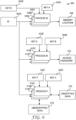
- FIG. 1 illustrates, by way of example, a schematic diagram of an embodiment of a wireless authentication system 100.
- the system 100 as illustrated includes an AWCD 101, an optional controller device 120, and a PWCD 150 communicatively coupled (as indicated by communication link 130 and communication link 140).
- the PWCD 150 as illustrated is situated on an optional patch 180 by an optional attachment mechanism 170.
- the AWCD 101 is illustrated as being situated on an optional electronic device 190 (e.g., a wearable or non-wearable device).
- the patch 180 may be worn, such as by making direct contact with a surface of a body.
- the patch may be worn indirectly, such as by attaching the patch 180 to the electronic device 190 (through the attachment mechanism(s) 175 and/or 185), and physically connecting the electronic device 190 to the body.
- the AWCD 101 can include an RFID, NFC, BLE, or other device reader.
- An active device reader transmits interrogator signals to the PWCD and receives responses to the interrogator signals from the PWCD.
- the AWCD 101 can be configured to operate in a frequency range for RFID, NFC, Bluetooth, or the like.
- the AWCD 101 as illustrated includes processing circuitry 102, antenna(s) 104, power circuitry 106, and a memory 108.
- the processing circuitry 102 can be configured to perform operations of an active reader.
- the operations performed by the processing circuitry 102 can include modulating data onto a carrier signal to be transmitted by the antenna(s) 104 (e.g., to the PWCD 150 or the controller device 120), demodulating an electromagnetic wave incident on the antenna(s) 104 (e.g., from the PWCD 150 and/or the controller device 120), altering a request for data from the PWCD 150 or controller device 120 into a format compatible with the PWCD 150 or controller device, respectively, interpreting a response from the PWCD 150 into a format compatible with the controller device 120, determining an organization of a memory 158 of the PWCD 150 (e.g., using the lookup table (LUT) 112, an identifier 160, and/or key(s) 110), formatting a request to write data or read data from the memory 158 based on the determined organization, and/or determine a process of a plurality of processes to be used to determine the memory organization, a
- the processing circuitry 102 can include one or more processing units (e.g., a central processing unit or other hardware processor, field programmable gate array (FPGA), system on a chip (SoC), or the like) and/or one or more electric or electronic components electrically coupled to perform operations of the AWCD 101.
- the electric or electronic components can include one or more transistors, resistors, capacitors, inductors, modulators, demodulators, oscillators, phase locked loops, rectifiers, voltage and/or current regulators, logic gates (e.g., AND, OR, inverter, NAND, NOR, XOR, or the like), diodes, analog to digital converters, digital to analog converters, multiplexers, buffers, amplifiers, or the like.
- the antenna(s) 104 convert electromagnetic waves to electrical signals or vice versa.
- the antenna(s) 104 can include a coil (e.g., a conductive element with one or more complete turns), a loop, a dipole, a slot, or the like.
- the antenna(s) 104 can receive electromagnetic waves from the PWCD 150 and convert the electromagnetic waves to electrical signals.
- the antenna(s) 104 can receive electrical signals from the processing circuitry 102 and produce electromagnetic waves.
- the electromagnetic waves can be of a frequency compatible with the antenna(s) 154.
- the power circuitry 106 can provide power to the processing circuitry 102 and the memory 108.
- the power circuitry 106 can include a battery, power supply, such as can be plugged into a power outlet, or the like.
- the power circuitry 106 makes the AWCD 101 active, rather than passive.
- the memory 108 as illustrated includes one or more key(s) 110, a LUT 112, and an access password stored thereon.
- the key(s) 110 represent alphanumeric values.
- the key(s) 110 can be used, by the processing circuitry 102, in determining an organization of the memory 158, a process to be used in determining the organization of the memory 158, a password of the PWCD 150, a process to be used in determining a password of the PWCD 150, an encryption/decryption technique or key(s), or the like.
- the key(s) 110 can be secure, such as to be accessible only by entities with proper credentials, such as an entity with a specified signature, password, location, or the like.
- the LUT 112 includes data detailing one or more of an identifier of the PWCD 150, a key of the key(s) 110, a combination of the identifier and the key(s) 110, and a corresponding memory location of data in the memory 158.
- the LUT 112 can be indexed by identifier, key(s) 110, or a combination of the identifier and the key(s) 110.
- the combination of the identifier and the key(s) 110 can include a mathematical or appended combination of at least a portion of the identifier and the key(s) 110.
- the mathematical combination can include a hash value produced based on the identifier and/or the key(s) 110. The hash value can be perfect, uniformly distributed, other distributions, or the like.
- the mathematical combination can include multiplication, addition, subtraction, division, projection, or other function on one or more of the identifier and/or key(s).
- the access password 114 can include alphanumeric characters or other binary string, which can be required by the memory 158 to access data 162 and or an identifier 160 thereon.
- the communication link 130 is a wired or wireless coupling between the AWCD 101 and the PWCD 150.
- the communication link 130 can include a radio frequency (RF), Bluetooth, NFC, or other frequency range.
- the controller device 120 is optional.
- the controller device 120 provides commands to the AWCD 101, such as to cause the AWCD 101 to perform operations desired by the controller device 120.
- the controller device 120 and the AWCD 101 can be incorporated into a same device, such as the electronic device 190.
- the controller device 120 as illustrated includes processing circuitry 122, antenna(s) 124, power circuitry 126, and a memory 128.
- the processing circuitry 122 can be configured to perform operations of the controller device 120.
- the operations of the controller device 120 can include one or more of: (a) generating a request to write data to the PWCD 150, (b) generating a request to read data from the PWCD 150, (c) generating random, pseudo-random, or other data to be written to the PWCD 150, (d) interpreting a response provided by the AWCD 101, (e) generating a wakeup signal to be provided to the AWCD 101, and/or (f) generating a sleep signal to be provided to the AWCD 101, among other operations.
- the antenna(s) 124 convert electromagnetic waves to electrical signals or vice versa.
- the antenna(s) 124 can include a configuration similar to those described regarding the antenna(s) 104.
- the power circuitry 126 can provide power to the processing circuitry 122 and the memory 128.
- the power circuitry 126 can include one or more components similar to those discussed with regard to the power circuitry 106.
- the memory 128 includes data stored thereon that can be accessible by the processing circuitry 122. In one or more embodiments, the memory 128 includes data stored thereon to be written to (after or before encryption) the memory 158 of the PWCD 150.
- the PWCD 150 can include an RFID, NFC, BLE, or other device tag.
- a passive tag harvests power from electromagnetic waves incident on an antenna 154 thereof and responds to requests for data from the AWCD 101.
- the PWCD 150 can be configured to operate in a frequency range for RFID, NFC, Bluetooth, or the like.
- the PWCD 150 as illustrated includes processing circuitry 152, antenna(s) 154, harvesting circuitry 156, and a memory 158.
- the processing circuitry 152 can be configured to perform operations of a passive tag.
- the operations performed by the processing circuitry 152 can include modulating data onto a carrier signal to be transmitted by the antenna(s) 154, demodulating an electromagnetic wave incident on the antenna(s) 154 (e.g., from the AWCD 101), determining a response to a request for data from the AWCD 101, and/or altering data to be provided to the AWCD 101 into a format compatible with the AWCD 101.
- the processing circuitry 152 can include components similar to those described about the processing circuitry 102.
- the antenna(s) 154 convert electromagnetic waves to electrical signals or vice versa.
- the antenna(s) 154 can include a configuration similar to those described about the antenna(s) 104.
- the harvesting circuitry 156 can convert electromagnetic waves incident on the antenna(s) 154 to electrical power.
- the electrical power can be used to power the processing circuitry 152 and the memory 158.
- the harvesting circuitry 156 can include non-radiative components (e.g., coils in an inductive coupling), such as in NFC or near-field wireless power transfer, resonant inductive components, such as in RF or Bluetooth or NFC, capacitive coupling, such as to charge a battery by wireless power transfer, or radiative components, such as in far-field applications.
- the harvesting circuitry 156 can include one or more capacitors or batteries to store electrical energy produced by the harvesting circuitry 156.
- the harvesting circuitry 156 makes the PWCD 150 active, rather than passive.
- the memory 158 as illustrated includes one or more identifier(s) 160 and other data 162 stored thereon.
- the identifier(s) 160 represent alphanumeric values.
- the identifier(s) 160 can be used, by the processing circuitry 102, in determining an organization of the memory 158, a process to be used in determining the organization of the memory 158, a password of the PWCD 150, a process to be used in determining a password of the PWCD 150, an encryption/decryption technique or encryption/decryption key(s), or the like.
- the identifier(s) 160 can be secure, such as to be accessible only by entities with proper credentials, such as an entity with a specified signature, password, location, or the like.
- the data 162 can include an indication of usage of an object to which the PWCD 150 is attached or associated with.
- the data 162 can include random data or other data provided by the AWCD 101.
- the tamper circuitry 164 can help provide protection from altering data of the memory 158 and/or help ensure that the PWCD 150 or patch 180 is used only a number of times (e.g., one, two, three, four, five, etc.).
- the tamper circuitry 164 can help avoid counterfeiting or malicious attack on the PWCD 150 and/or AWCD 101.
- the tamper circuitry 164 can protect one or more memory locations of the memory 158, such as by providing an "OR" function for data to be written to the memory location and data already written to the memory location.
- the tamper circuitry 164 can "OR" a word “10101010” to be written and a word "11001100” already written to cause a word "11101110” to be written the memory location. Such tamper circuitry can help the AWCD 101 detect when the memory has been altered, such as to help detect tampering or other malicious activity.
- the tamper circuitry 164 can include a conductive element (e.g., a wire, trace, or the like) that, when broken, alters data written to one or more memory locations of the memory 158.
- the tamper circuitry 164 can include a multiplexer, logic gate, or the like, that produces a first value while the conductive element remains unbroken and a different, second value while the conductive element is broken.
- the attachment mechanism 170 mechanically couples the PWCD 150 to the patch 180.
- the attachment mechanism 170 can include an adhesive, hook and loop fastener, button, snap, magnet, or the like.
- the attachment mechanism 170 can be coupled with a mating attachment mechanism of the patch 180 (not in view in FIG. 1 ), in one or more embodiments.
- the attachment mechanism 170 and mating attachment mechanism can be conductive, such that, when connected, provide a current path between components of the patch 180 and the PWCD 150.
- the patch 180 includes a flexible (e.g., rotatable about an axis) and/or stretchable (e.g., capable of elongation) layer (e.g., a fabric, woven cloth, film, foil, non-woven cloth, or the like).
- the patch 180 can conform to a surface to which the patch 180 is to be attached.
- the patch 180 can include circuitry 182.
- the circuitry 182 can include one or more sensors, electrodes, or other circuitry thereon or at least partially therein.
- the patch 180 can include a conformable electrode, a fluid detection or measurement device, one or more light emitting diodes, optical sensors, inertial sensors (e.g., an accelerometer), chemical sensors (e.g., to sense an electrolyte, lactic acid, or other chemical sensor), thermal sensors (e.g., a heater and temperature sensor), impedance sensors (e.g., a voltage or current source at some frequency with a current or voltage measurement), displacement sensors (e.g., a resistive strain gauge, an eddy current sensor), pressure sensors, or other circuitry.
- a conformable electrode is a flexible and/or stretchable conductive material to provide electrical current to an object to which the patch 180 is physically connected.
- a fluid detection device can determine whether fluid is present, absent, an amount of moisture, whether the amount of fluid is increasing or decreasing, or the like.
- the fluid detection device can determine a fluid content of an object with which the patch 180 is in physical contact.
- the patch 180 can include a moisture wicking material.
- the attachment mechanism 175 can be similar to the attachment mechanism 170, with the attachment mechanism 175 physically connecting the patch 180 to the electronic device 190 or to a body.
- the attachment mechanism 175 can be coupled with a mating attachment mechanism 185 of the electronic device 190, in one or more embodiments.
- the mating attachment mechanism 185 can include a male or female connection feature if the attachment mechanism 175 is a female or male attachment mechanism, respectively.
- the attachment mechanism 175 and mating attachment mechanism 185 can be conductive, such that, when connected, provide a current path between components of the AWCD 101 and the PWCD 150.
- the electronic device 190 can include a flexible and/or stretchable layer.
- the electronic device 190 can be configured to be placed at a specific place on a body, such as on a head (e.g., as a head band, bandana, ear muffs, glasses, headphones, or the like), a wrist (e.g., as a wristband, a watch, a bracelet, or the like), a hand (e.g., as a ring, glove, or the like), a neck (e.g., as a necklace or the like), an ankle (e.g., as an ankle bracelet or the like), chest (e.g., as a chest strap or the like), foot (e.g., as a foot band or the like), waist (e.g., as a belt, wrap, or the like).
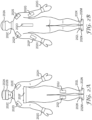
- FIGS. 2A and 2B illustrate some locations at which the patch 180 and/or electronic device 190 may be situated or cover.
- the attachment mechanism 195 can be similar to the attachment mechanism 170, with the attachment mechanism 195 physically connecting the AWCD 101 to the electronic device 190.
- the attachment mechanism 195 can be coupled with a mating attachment mechanism of the patch electronic device 190 (not in view in FIG. 1 ), in one or more embodiments.
- FIG. 2A illustrates, by way of example, a perspective view diagram of an embodiment of a patch and/or wearable electronic device physically connected to a front side of a body.
- the diagram includes a human body with a device 202A, 202B, 202C, 202D, 202E, 202F, 202G, 202H, 202I, 202J, 202K, 202L, 202M, and 202N situated at various locations on the front side of the human body.
- the device 202A-202N can include the patch 180 and/or the electronic device 190.
- the locations of the device 202A-202N include: (a) on or around the head (e.g., the device 202A on the forehead and the device 202B on the face, such as can include glasses), (b) on or around the neck (e.g., the device 202C, such as can include a necklace), (c) on or around the shoulder (e.g., the devices 202D-202E), (d) on or around the chest, such as over the heart, lungs, or other organ (e.g., the device 202F), (e) on or around a wrist or hand (e.g., the devices 202G-202H, such as a watch or bracelet or glove or ring), (f) on or around a knee (e.g., the devices 202I-202J, such as a knee brace), (g) on or around an ankle or foot (e.g., the devices 202K-202N, such as an ankle bracelet, socks, gaiters, or the like).
- the head e.
- FIG. 2B illustrates, by way of example, a perspective view diagram of an embodiment of a patch and/or wearable electronic device physically connected to a backside of a body.
- the diagram includes a human body with a device 202A, 202C, 202G, 202H, 202K, 202L, 202M, 202N, 202O, 202P, 202Q, 202R, and 202S situated at various locations on the backside of the human body.
- the device 202A-202S can include the patch 180 and/or the electronic device 190.
- the locations of the device 202O-202S include: (a) on or around the back (e.g., the device 2020 on the back, such as over the lungs or other organ), (b) on or around the elbow (e.g., the device 202P-202Q, such as can include an arm band, arm warmer, or the like), and (c) on or around the shoulder (e.g., the devices 202R-202S).
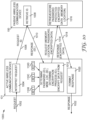
- FIG. 3 illustrates, by way of example, a diagram of an embodiment of a technique 300 for securely determining, by the AWCD 101, a memory location of a memory, such as the memory 158.
- the technique 300 includes retrieving or identifying a key at operation 302A, such as can be stored in the memory 108 as a key of the key(s) 110.
- the key can be a secret key, such that only the AWCD 101 knows the key exists, where the key is located, and/or which process(es) use the key as input.
- the technique 300 further includes retrieving an identifier at operation 304A, such as from the PWCD 150.
- the identifier can include an identifier of the identifier(s) 160.
- the identifier can be retrieved by issuing a request, from the AWCD 101, to the PWCD 150.
- the technique 300 as illustrated, further includes using the key and the identifier in a process at operation 306.
- the process can be performed by the AWCD 101, to determine an organization of the memory 158 of the PWCD 150.
- the operation 306 can include using a cryptographic or non-cryptographic process.
- the process can include using the key and/or identifier, alone or in combination (e.g., by determining a value based on the key and identifier, such as by appending key and identifier, hashing some mathematical combination of the key and/or identifier to another value, or the like), to determine a value that can be used to determine an organization of data stored on the memory 158.
- the value can be an index to a LUT that details addresses of the memory 158 and a description of the data stored at respective addresses.
- portions of single item of data in the memory 158 can be stored in non-sequential addresses (e.g., stored in multiple separated blocks in the memory 158).
- the technique 300 as illustrated further includes, identifying a memory location of the memory 158 based on the determined memory organization, at operation 308.
- the determined memory location, at operation 308, can be used by the AWCD 101 to retrieve desired data from the PWCD 150.
- the technique 300 allows for flexibility in organizing the memory 158 and/or design of the AWCD 101.
- the flexibility in organizing the memory 158 can help provide data obfuscation, as the memory 158 is not constrained to a specific organization.
- An AWCD reading data from the PWCD 150 will only understand the data being provided by the PWCD 150 if the AWCD knows the key and/or identifier and the memory organization.
- FIG. 4 illustrates, by way of example, a diagram of an embodiment of a technique 400 for securely determining an access password.
- the technique 400 is similar to the technique 300, with the key identified or retrieved at operation 302B being a same or different key as the key identified or retrieved at operation 302A, the identifier identified or retrieved at operation 304B being a same or different identifier as the identifier identified at operation 304A.
- the identified or retrieved key and/or identifier, from operations 302B and 304B, can be used in a process at operation 410.
- the process can be performed by the AWCD 101, to determine an access password of the memory 158 of the PWCD 150.
- the operation 410 can include using a cryptographic or non-cryptographic process.
- the process can include using the key and/or identifier, alone or in combination to determine a value that can be used to determine a location at which the access password is stored on the memory 108.
- the value can be an index to a LUT that details addresses of the memory 108 and a description of the data stored at respective addresses.
- the technique 400 as illustrated further includes, identifying or retrieving the access password at operation 412.
- the access password can be used in a request, from the AWCD 101, to the PWCD 150, such as to retrieve data from the memory 158 that requires the access password
- FIG. 5 illustrates, by way of example, a diagram of an embodiment of a technique for providing encrypted data to a device or providing decrypted data to a device.
- the technique 500 is similar to the techniques 300 and 400, with the key identified or retrieved at operation 302C being a same or different key as the key identified or retrieved at operations 302A-302B, the identifier identified or retrieved at operation 304C being a same or different identifier as the identifier identified at operations 304A-304B.
- the identified or retrieved key and/or identifier, from operations 302C and 304C can be used in a process at operation 514.
- the process can be performed by the AWCD 101, to determine an encryption/decryption key to be used in performing the encryption/decryption.
- the operation 514 can include using a cryptographic or non-cryptographic process.
- the process can include using the key and/or identifier, alone or in combination, to determine a value that can be used to determine the key.
- the value can be an index to a LUT that details encryption/decryption keys.
- the technique 500 as illustrated further includes, retrieving encrypted data from the PWCD 150 or encrypting unencrypted data and writing the data to the PWCD 150 at operation 516.
- the encrypted data may or may not be protected by an access password, such as can be determined using the technique 400.
- the encrypted data can be located at a memory location determined using the technique 300.
- the encryption/decryption key determined at operation 514 can be used to decrypt the data and produce unencrypted data at operation 518.
- FIG. 6 illustrates, by way of example, a diagram of an embodiment of techniques 600 for determining a technique for determining a memory location, access password, encrypted data, and decrypted data, respectively.
- the technique 600 is similar to a combination of the techniques 300, 400, and 500, with multiple processes available to determine a memory location at operations 306A, 306B, and 306C, multiple processes available to determine an access password at operations 410A, 410B, and 410C, and multiple processes available to encrypt/decrypt data to/from the PWCD 150 and/or determine a key for the encryption/decryption at operations 514A, 514B, and 514C.
- the technique 600 illustrates that the techniques 300, 400, and/or 500 can be used alone or in combination.
- the operations 302D, 302A, 304D, 306A-306C, and 308 can be similar to or the same as the operations discussed about the technique 300, with the operations of the technique 600 including a choice between the operations 306A-306C.
- Each of the operations 306A-306C include different processes for determining the memory location. For example, a first process can include using just the key to determine the memory location, a second process can include using just the identifier to determine the memory location, and a third process can include using a combination of the key and the identifier to determine the memory location.
- a first process can include using at least a portion of the key and/or at least a portion of the identifier to determine the memory location
- a second process can include using at least a different portion of a same or different key and/or at least a same or different portion of the identifier to determine the memory location
- a third process can include using at least a further different portion of a same or a different key and/or at least a further same or different portion of the identifier to determine the memory location.
- the operation of the operations 306A-306C to use to determine the memory location can be chosen by using one or more of the process selection key (e.g., the key identified or determined at operation 302D), the identifier (e.g., the identifier identified or determined at operation 304D), and a combination of the process selection key and identifier to determine the operation.
- One or more of the processes can include hashing, using a hash function, one or more of process input key(s) (e.g., the key identified or determined at operation 302A), the identifier, or a combination thereof and using a result of the hashing as an index to a LUT or the like.
- each of the operations 306A-306C can perform different hash functions, such as to produce different results for the same input.
- the operations 306A-306C represent any number of choices of operations. For example, there can be 10 different operations to choose from, 100 different operations to choose from, or 1 million different operations to choose from, fewer operations to choose from, more operations to choose from, or some number of operations therebetween.
- the operations 302E, 302B, 304D, 410A, 410B, and 410C, and 412 can be similar to or the same as the operations discussed regarding the technique 400, with the operations of the technique 600 including a choice between the operations 410A-410C.
- Each of the operations 410A-410C include different processes for determining the access password. For example, a first process can include using just the key to determine the access password, a second process can include using just the identifier to determine the access password, and a third process can include using a combination of the key and the identifier to determine the access password.
- a first process can include using at least a portion of the key and/or at least a portion of the identifier to determine the access password
- a second process can include using at least a same or different portion of the same or a different key and/or at least a same or different portion of the identifier to determine the access password
- a third process can include using at least a same or a further different portion of the same or a different key and/or at least a same or a further different portion of the identifier to determine the access password.
- the operation of the operations 410A-410C to use in determining the access password can be chosen by using a process selection key (e.g., the key identified or determined at operation 302E), the identifier (e.g., the identifier identified or determined at operation 304D), and a combination of the process selection key and identifier to determine the operation.
- One or more of the processes can include hashing, using a hash function, one or more process input key(s) (e.g., the key identified or determined at operation 302B), the identifier, or a combination thereof and using a result of the hashing as an index to a LUT or the like.
- each of the operations 410A-410C can perform different hash functions, such as to produce different results for the same input.
- the operations 410A-410C represent any number of choices of operations. For example, there can be 10 different operations to choose from, 100 different operations to choose from, or 1 million different operations to choose from, fewer operations to choose from, more operations to choose from, or some number of operations therebetween.
- the operations 302F, 302C, 304D, 514A, 514B, 514C, 516, and 518 can be similar to or the same as the operations discussed regarding the technique 500, with the operations of the technique 600 including a choice between the operations 514A-514C.
- Each of the operations 514A-514C include different processes and/or encryption key(s) for encryption/decryption.
- a first process can include using just the key to determine the encryption/decryption key(s) and/or encryption/decryption process
- a second process can include using just the identifier to determine encryption/decryption key(s) and/or encryption/decryption process
- a third process can include using a combination of the key and the identifier to determine encryption/decryption key(s) and/or encryption/decryption process.
- a first process can include using at least a portion of the key and/or at least a portion of the identifier to determine the encryption/decryption key(s) and/or encryption/decryption process
- a second process can include using at least a same or different portion of the same or a different key and/or at least a same or different portion of the identifier to determine the encryption/decryption key(s) and/or encryption/decryption process
- a third process can include using at least a same or a further different portion of the same or a different key and/or at least a same or a further different portion of the identifier to determine the encryption/decryption key(s) and/or encryption/decryption process.
- the operation of the operations 514A-514C to use in determining the encryption key(s) and/or encryption/decryption process can be chosen by using one or more of the process selection key (e.g., the key identified or determined at operation 302F), the identifier (e.g., the identifier identified or determined at operation 304D), and a combination of the process selection key and identifier.
- One or more of the processes can include hashing, using a hash function, one or more process input key(s) (e.g., the key identified or determined at operation 302C), the identifier, or a combination thereof and using a result of the hashing as an index to a LUT or the like.
- the LUT can be indexed by hash value and include entries detailing a process to be performed for a given hash value.
- each of the operations 514A-514C can include performing different hash functions, such as to produce different results for the same input.
- the operations 514A-514C represent any number of choices of operations. For example, there can be 10 different operations to choose from, 100 different operations to choose from, or 1 million different operations to choose from, fewer operations to choose from, more operations to choose from, or some number of operations therebetween.
- FIG. 7 illustrates, by way of example, a diagram of an embodiment of communications 700 to/from a wireless authentication system.
- the communications 700 can be issued in performing the technique 300 or a portion of the technique 600.
- the communications 700 as illustrated include a request 702 received at the AWCD 101 and from the controller device 120.
- the request 702 can include data specifying information to be read from or written to the PWCD 150.
- Request 702 can include a query for verifying authenticity or usage.
- the AWCD 101 can interpret the request at operation 704.
- the operation 704 can include determining a PWCD to interrogate and what information is required to fulfill the request 702.
- the AWCD 101 can issue an identifier request 706, such as in response to receiving the request 702.
- the identifier request 706 can include data identifying a PWCD 150 and/or data requested from the PWCD 150.
- the data requested can be the identifier(s) 160.
- the PWCD 150 can retrieve the requested identifier(s) 160.
- the PWCD 150 can provide the identifier in a response 710.
- the response 710 can identify the PWCD 150 and/or the identifier(s) 160 retrieved at operation 708.
- the AWCD 101 at operation 712, can determine a memory location of the memory 158 at which information requested in the request 702 is located based on the identifier provided in the response 710.
- the operation 712 includes using a key of the key(s) 110 along with the identifier to determine the memory location.
- the memory location can be determined by using the key, identifier, a combination thereof, or a number derived using one or more the key and identifier, as an index to a LUT detailing memory organization(s). Based on the memory organization, the AWCD 101 can issue a request 714 to read or write data to a specific memory location, such as to satisfy the request 702.
- the PWCD 150 can retrieve data from (or write data to) the memory location identified in the request 714.
- the operation 716 can be performed in response to receiving the request 714.
- the PWCD 150 can issue a response 718 with data from the memory location identified in the request 714 (in instances in which the request is a read request) or with an acknowledge or a negative acknowledge (in instances in which the request is a write request).
- An acknowledge (sometimes called an ACK) indicates that a write was successful while a negative acknowledge (sometimes called a NACK) indicates that a write was unsuccessful.
- the AWCD 101 can format a response to the request 702. The formatted response can be provided to the controller device 120 as a response 722.
- the response 722 can be to confirm that the request 702 was fulfilled or indicate that the request 702 is unfulfilled.
- the response 722 can include data indicating one or more reasons that the request is unfulfilled, such as in the form of one or more error codes.
- the response 722 can include information regarding authenticity or use of the PWCD 150.
- FIG. 8 illustrates, by way of example, a diagram of an embodiment of communications 800 to/from a wireless authentication system.
- the communications 800 can be issued in performing the technique 300, 400, 500, and/or at least a portion of the technique 600.
- the communications 800 as illustrated include a request 802 received at the AWCD 101.
- the request 802 can be from the controller device 120.
- the request 802 can include data specifying information to be read from or written to the PWCD 150.
- Request 802 can include a query for verifying authenticity or usage.
- the AWCD 101 can interpret the request at operation 804.
- the operation 804 can include determining a PWCD to interrogate and/or what information is required to fulfill the request 802.
- the AWCD 101 can issue an identifier request 806.
- the request 806 can be issued in response to receiving the request 802.
- the identifier request 806 can include data identifying a PWCD 150 and/or data requested from the PWCD 150.
- the data requested
- the PWCD 150 can retrieve the requested identifier(s).
- the PWCD 150 can provide the identifier(s) in a response 810.
- the response 810 can identify the PWCD 150 and/or the identifier(s) retrieved at operation 808.
- the AWCD 101 at operation 812, can determine a memory location of the memory 158 at which information requested in the request 802 is located based on the identifier provided in the response 810.
- the operation 812 includes using a key of the key(s) 110 along with the identifier to determine the memory location.
- the memory location can be determined by using the key, identifier, a combination thereof, or a number derived using one or more the key and identifier, as an index to a LUT detailing memory organization(s).
- the AWCD 101 can determine an access password of the PWCD 150.
- the access password can be stored on the memory 108, such as the access password 114.
- the access password may be password protected, and the key, identifier, a combination thereof, or a number derived from the key and/or identifier may be used to determine the password that provides access to the access password.
- the AWCD 101 can issue a request 814 to read or write data to a specific memory location, such as to satisfy the request 802.
- the PWCD 150 can retrieve data from (or write data to) the memory location identified in the request 814 (if the access password is correct). The operation 816 can be performed in response to receiving the request 814.
- the PWCD 150 can issue a response 818 with encrypted data from the memory location identified in the request 814 (in instances in which the request 814 is a read request) or with an acknowledge or a negative acknowledge (in instances in which the request 814 is a write request).
- the AWCD 101 can format a response to the request 802.
- the formatted response can be provided to the controller device 120 as a response 822. Formatting the response 822 can include decrypting data received in the response 818.
- a key and/or a process to be used in decrypting the data in the response 818 can be determined by using the key, identifier, a combination thereof, or a number derived from the key and/or identifier as an index to a LUT which details keys and/or encryption/decryption processes.
- the response 822 can include information indicating a decrypted version of data read, an encrypted version of the data read, an encryption key to be used to decrypt the data, and/or a process to be used in decrypting the data.
- the response 822 can be to confirm that the request 802 was fulfilled or indicate that the request 802 is unfulfilled.
- the response 822 can include data indicating one or more reasons that the request is unfulfilled, such as in the form of one or more error codes.
- the response 822 can include information regarding authenticity or use of the PWCD 150.
- FIG. 9 illustrates, by way of example, a diagram of yet another embodiment of communications 900 to/from a wireless authentication system.
- the communications 900 can be issued in performing the technique 300, 400, 500, and/or at least a portion of the technique 600.
- the communications 900 as illustrated include a request 902 received at the AWCD 101.
- the request 902 can be from the controller device 120.
- the request 902 can include data specifying information to be read written to the PWCD 150.
- Request 902 can include a query for verifying authenticity or usage.
- the request can include random or pseudo-random data to be written to the memory 158 of the PWCD 150 or can be a request for the AWCD 101 to generate random or pseudo-random data and write the generated data to the PWCD 150.
- Random or pseudo-random data is distinct from data produced in a cryptographic process in which the original data is recoverable. Random or pseudo-random data herein has no key to recover original data, as the random or pseudo-random data does not represent other data.
- the random or pseudo-random data is a decoy, such as to help obfuscate data on the memory 158.
- Processes for generating random data can include sampling noise or an electrical or electric component or the like.
- Processes for generating pseudo-random data can include using a computer program to generate data that does not conform to a distribution other than a random distribution.
- the AWCD 101 can interpret the request at operation 904.
- the operation 904 can include determining a PWCD to interrogate and/or what information is required to fulfill the request 902.
- the AWCD 101 can issue a request 906 to populate one or more memory locations of the memory 158 with the random or pseudo-random data.
- the request 906 can be issued in response to receiving the request 902.
- the request 906 can include data identifying a PWCD 150 and/or memory location(s) on the PWCD 150 to be populated by the random or pseudo-random data.
- the PWCD 150 can store the data in the request 906.
- the PWCD 150 can provide an ACK or NACK in a response 909.
- the response 909 can be to confirm that the request 906 was fulfilled or indicate that the request 906 is unfulfilled.
- the response 909 can include data indicating one or more reasons that the request 906 is unfulfilled, such as in the form of one or more error codes.
- the AWCD 101 can format a response to the request 902.
- the formatted response can be provided to the controller device 120 as a response 911.
- the response 911 can be to confirm that the request 902 was fulfilled or indicate that the request 902 is unfulfilled.
- the response 911 can include data indicating one or more reasons that the request is unfulfilled, such as in the form of one or more error codes.
- the communications 900 as illustrated include a request 912 received at the AWCD 101.
- the request 912 can be from the controller device 120.
- the request 912 can include data specifying information to be read from or written to the PWCD 150.
- Request 912 can include a query for verifying authenticity or usage.
- the AWCD 101 can interpret the request 912 at operation 913.
- the operation 913 can include determining a PWCD to interrogate and/or what information is required to fulfill the request 912.
- the AWCD 101 can issue an identifier request 914.
- the request 914 can be issued in response to receiving the request 912.
- the identifier request 914 can include data identifying a PWCD 150 and/or data requested from the PWCD 150.
- the data requested can be the identifier(s) 160.
- the PWCD 150 can retrieve the requested identifier(s).
- the PWCD 150 can provide the identifier(s) in a response 918.
- the response 918 can identify the PWCD 150 and/or the identifier(s) retrieved at operation 916.
- the AWCD 101 at operation 920, can determine a memory location of the memory 158 at which information requested in the request 912 is located based on the identifier provided in the response 918 and/or a key 110A, such as can be stored in the memory 108.
- the operation 920 includes using a key 110A of the key(s) 110 along with the identifier to determine the memory location.
- the memory location can be determined by using the key, identifier, a combination thereof, or a number derived using one or more the key and identifier, as an index to a LUT detailing memory organization(s). Based on the memory organization, the AWCD 101 can issue a request 922 to read or write data to a specific memory location, such as to satisfy the request 912.
- the PWCD 150 can retrieve data from (or write data to) the memory location identified in the request 922.
- the operation 924 can be performed in response to receiving the request 922.
- the PWCD 150 can issue a response 926 with data from the memory location identified in the request 922 (in instances in which the request is a read request) or with an acknowledge or a negative acknowledge (in instances in which the request is a write request).
- An acknowledge (sometimes called an ACK) indicates that a write was successful while a negative acknowledge (sometimes called a NACK) indicates that a write was unsuccessful.
- the AWCD 101 can format a response to the request 912. The formatted response can be provided to the controller device 120 as a response 930.
- the response 930 can be to confirm that the request 912 was fulfilled or indicate that the request 912 is unfulfilled.
- the response 930 can include data indicating one or more reasons that the request is unfulfilled, such as in the form of one or more error codes.
- the response 930 can include information regarding authenticity or use of the PWCD 150.
- FIG. 10 illustrates, by way of example, a diagram of an embodiment of communications 1000 to/from a wireless authentication system.
- the communications 1000 can be issued in performing the technique 300, 400, 500, or at least a portion of the technique 600.
- the communications 1000 as illustrated include a request 1002 received at the AWCD 101.
- the request 1002 can be from the controller device 120.
- the request 1002 is optional as the AWCD can issue a request 1006 without outside influence.
- the request 1002 can include data specifying information to be read from or written to the PWCD 150.
- Request 1002 can include a query for verifying authenticity or usage.
- the AWCD 101 can interpret the request at operation 1004.
- the operation 1004 can include determining a PWCD to interrogate and what information is required to fulfill the request 1002.
- the AWCD 101 can issue an identifier request 1006, such as in response to receiving the request 1002.
- the identifier request 1006 can include data identifying a PWCD 150 and/or data requested from the PWCD 150.
- the data requested can be the identifier(s) 160.
- the PWCD 150 can retrieve the requested identifier(s) 160.
- the PWCD 150 can provide the identifier in a response 1010.
- the response 1010 can identify the PWCD 150 and/or the identifier(s) 160 retrieved at operation 1008.
- the AWCD 101 at operation 1012, can determine one or more of: (a) a memory location of the memory 158 at which information requested in the request 1002 is located, (b) an access password required to write data to the PWCD 150 or read data from the PWCD 150, (c) an encryption/decryption process and/or encryption/decryption key to be used in writing data to or reading data from the PWCD 150.
- the operation 1012 can include using the determined encryption process and/or determined encryption key to encrypt data to be written to the PWCD 150.
- a first key 110B can be used with or without the identifier to determine the memory location.
- a second key 110C can be used with or without the identifier to determine the access password.
- a third key 110D can be used with or without the identifier to determine the encryption/decryption process and/or encryption/decryption key.
- the AWCD 101 can issue a request 1014 to read or write data to a specific memory location, such as to satisfy the request 1002.
- the request 1014 can include data identifying the determined memory location, access password, and/or encrypted data, as determined or generated at operation 1012.
- the PWCD 150 can retrieve data from (or write data to) the memory location identified in the request 1014.
- the operation 1016 can be performed in response to receiving the request 1014.
- the PWCD 150 can issue a response 1018 with data from the memory location identified in the request 1014 (in instances in which the request is a read request) or with an acknowledge or a negative acknowledge (in instances in which the request is a write request).
- the AWCD 101 can format a response to the request 1002.
- the formatted response can be provided to the controller device 120 as a response 1022.
- the response 1022 can be to confirm that the request 1002 was fulfilled or indicate that the request 1002 is unfulfilled.
- the response 1022 can include data indicating one or more reasons that the request is unfulfilled, such as in the form of one or more error codes.
- the response 1022 can include information regarding authenticity or use of the PWCD 150.
- FIG. 11 illustrates, by way of example, a diagram of an embodiment of a wireless authentication system 1100.
- the system 1100 as illustrated includes the electronic device 190, the AWCD 101, the controller 120, the power circuitry 106, the PWCD 150 physically connected to the patch 180, and an optional electronic device 1172.
- the electronic device 190 in the embodiment of FIG. 11 is a wearable electronic device, such as in the form of a wrap, ring, broach, bracelet, or the like.
- the AWCD 101, controller 120, and/or the power circuitry 106 can be integrated with the electronic device 190, such as to be on, or at least partially in, the electronic device 190 (as indicated by the dashed lines).
- the patch 180 can be physically connected to the electronic device 190 near the AWCD 101.
- the patch 180 can include a fluid detection device, conformable electrode, or other sensor or component thereon or at least partially therein.
- the PWCD 150 can include data 162 on the memory 158 that indicates usage of a component on the patch 180.
- the electronic device 1172 can be coupled wired or wirelessly to the controller 120 and/or the AWCD 101.
- the electronic device 1172 can include a speaker, conformable electrode, diode (e.g., light emitting diode), a sensor, or other component.
- the controller 120 and/or AWCD 101 can provide one or more signals to the electronic device 1172 that cause the electronic device 1172 to perform an operation, such as making a measurement using the sensor, providing electrical current using the electrode, make a noise using the speaker, and/or turn on/off the diode, among others.
- the electronic device 1172 can be physically connected to the electronic device 190.
- FIG. 12 illustrates, by way of example, a block diagram of an embodiment of a machine (e.g., a device or system) to implement at least a portion of a wireless authentication technique.
- a machine e.g., a device or system
- One example machine 1200 may include a processing unit 1202, memory 1203, removable storage 1210, and non-removable storage 1212.
- the example computing device is illustrated and described as machine 1200, the computing device may be in different forms in different embodiments.
- the computing device may instead be a smartphone, a tablet, smartwatch, wearable device, patch, wireless reader, wireless tag, or other computing device including the same or similar elements as illustrated and described regarding FIG. 12 .
- AWCD 101 the controller device 120, and/or the PWCD 150 can include one or more components of the machine 1200 or may be implemented using the machine 1200.
- Memory 1203 may include volatile memory 1214 and non-volatile memory 1208.
- the machine 1200 may include - or have access to a computing environment that includes - a variety of computer-readable media, such as volatile memory 1214 and non-volatile memory 1208, removable storage 1210 and non-removable storage 1212.
- Computer storage includes random access memory (RAM), read only memory (ROM), erasable programmable read-only memory (EPROM) & electrically erasable programmable read-only memory (EEPROM), flash memory or other memory technologies, compact disc read-only memory (CD ROM), Digital Versatile Disks (DVD) or other optical disk storage, magnetic cassettes, magnetic tape, magnetic disk storage or other magnetic storage devices capable of storing computer-readable instructions for execution to perform functions described herein.
- RAM random access memory
- ROM read only memory
- EPROM erasable programmable read-only memory
- EEPROM electrically erasable programmable read-only memory
- flash memory or other memory technologies
- the machine 1200 may include or have access to a computing environment that includes input 1206, output 1204, and a communication connection 1216.
- Output 1204 may include a display device, such as a touchscreen, that also may serve as an input device.
- the input 1206 may include one or more of a touchscreen, touchpad, mouse, keyboard, camera, one or more device-specific buttons, one or more sensors integrated within or coupled via wired or wireless data connections to the machine 1200, and other input devices.
- the computer may operate in a networked environment using a communication connection to connect to one or more remote computers, such as database servers, including cloud based servers and storage.
- the remote computer may include a personal computer (PC), server, router, network PC, a peer device or another common network node, or the like.
- the communication connection may include a Local Area Network (LAN), a Wide Area Network (WAN), cellular, Institute of Electrical and Electronics Engineers (IEEE) 802.11 (Wi-Fi), Bluetooth, RF, NFC, or other network connection or communication
- Computer-readable instructions stored on a computer-readable storage device are executable by the processing unit 1202 of the machine 1200.
- a hard drive, CD-ROM, and RAM are some examples of articles including a non-transitory computer-readable medium such as a storage device.
- a computer program 1218 may be used to cause processing unit 1202 to perform one or more methods or algorithms described herein.
Landscapes
- Engineering & Computer Science (AREA)
- Computer Security & Cryptography (AREA)
- Theoretical Computer Science (AREA)
- Computer Networks & Wireless Communication (AREA)
- Signal Processing (AREA)
- Physics & Mathematics (AREA)
- General Physics & Mathematics (AREA)
- General Engineering & Computer Science (AREA)
- Computer Hardware Design (AREA)
- Software Systems (AREA)
- General Health & Medical Sciences (AREA)
- Bioethics (AREA)
- Health & Medical Sciences (AREA)
- Data Mining & Analysis (AREA)
- Databases & Information Systems (AREA)
- Human Computer Interaction (AREA)
- Storage Device Security (AREA)
Claims (15)
- Ein drahtloses Authentifizierungssystem, aufweisend:
eine aktive drahtlose Kommunikationsvorrichtung (101), die einen ersten Speicher (108), eine erste Verarbeitungsschaltlogik (102) und eine erste Antenne (104) aufweist, wobei die erste Verarbeitungsschaltlogik (102) betriebsfähig ist zum:Erzeugen einer Identifiziereranforderung für einen Identifizierer, ID, und Veranlassen der ersten Antenne (104), die Identifiziereranforderung zu übertragen;Empfangen der ID in einer Antwort auf die Identifiziereranforderung;Identifizieren, basierend auf der ID und Daten in dem ersten Speicher (108), eines Ort eines zweiten Speichers (158), auf den zugegriffen werden soll;Erzeugen einer Zugriffsanforderung für den identifizierten Ort des zweiten Speichers (158) und Veranlassen der ersten Antenne (104), die Zugriffsanforderung zu übertragen; undEmpfangen einer Antwort auf die Zugriffsanforderung;eine passive drahtlose Kommunikationsvorrichtung (150), die einen zweiten Speicher (158), eine zweite Verarbeitungsschaltlogik (152), eine zweite Antenne (154) und eine Leistungsgewinnungsschaltlogik (156) aufweist, um elektromagnetische Leistung, die auf die zweite Antenne (154) trifft, in elektrische Leistung für den zweiten Speicher (158) und die zweite Verarbeitungsschaltlogik (152) umzuwandeln, wobei die zweite Verarbeitungsschaltlogik (152) betriebsfähig ist zum:Erzeugen der Antwort auf die Identifiziereranforderung, wobei die Antwort die ID einschließt, und Veranlassen der zweiten Antenne (154), die Antwort zu erzeugen;Empfangen der Zugriffsanforderung;Abrufen von Daten aus dem oder Schreiben von Daten in den identifizierten Ort des zweiten Speichers (158) basierend auf der Zugriffsanforderung; undVeranlassen der zweiten Antenne (154), die Antwort auf die Zugriffsanforderung zu übertragen. - Das System nach Anspruch 1, wobei die erste Verarbeitungsschaltlogik (102) ferner vorgesehen ist zum:Abrufen, aus dem ersten Speicher (108), eines ersten Schlüssels eines oder mehrerer Schlüssel, die in dem ersten Speicher (108) gespeichert sind; undwobei der Ort des zweiten Speichers (158), auf den zugegriffen werden soll, ferner basierend auf dem ersten Schlüssel identifiziert wird.
- Das System nach Anspruch 2, wobei der Ort des zweiten Speichers (158), auf den zugegriffen werden soll, durch Hashen eines oder mehrerer von dem ersten Schlüssel, des Identifizierers und einer Kombination davon und Verwenden des Hash-Werts als einen Index für eine Lookup-Tabelle (112) in dem ersten Speicher (108) bestimmt wird, wobei die Lookup-Tabelle (112) Inhalte von mindestens einem Abschnitt des zweiten Speichers (158) detailliert aufführt.
- Das System nach Anspruch 2 oder Anspruch 3, wobei die erste Verarbeitungsschaltlogik (102) ferner einen zweiten Schlüssel des einen oder der mehreren Schlüssel verwenden soll, um einen Prozess zu bestimmen, der verwendet werden soll, um den Ort in dem ersten Speicher (108) zu bestimmen.
- Das System nach einem der vorstehenden Ansprüche, ferner aufweisend:ein tragbares Patch (180); undwobei die passive drahtlose Kommunikationsvorrichtung (150) mit dem tragbaren Patch (180) physisch verbunden ist.
- Das System nach Anspruch 5, ferner aufweisend:eine tragbare elektronische Vorrichtung (202A-N); undwobei die tragbare elektronische Vorrichtung (202A-N) mit dem tragbaren Patch (180) physisch verbunden ist.
- Das System nach einem der vorstehenden Ansprüche, ferner aufweisend ein Feuchtigkeitsregulierungsmaterial, und wobei die passive drahtlose Kommunikationsvorrichtung (150) mit dem Feuchtigkeitsregulierungsmaterial physisch verbunden ist.
- Das System nach einem der vorstehenden Ansprüche, wenn abhängig von Anspruch 2, wobei die erste Verarbeitungsschaltlogik (102) ferner betriebsfähig ist zum:Bestimmen eines Verschlüsselungs-/Entschlüsselungsprozesses basierend auf einem oder mehreren von einem dritten Schlüssel des einen oder der mehreren Schlüssel und des Identifizierers; undVerschlüsseln/Entschlüsseln von Daten in/aus dem zweiten Speicher (158) unter Verwendung des bestimmten Verschlüsselungs-/Entschlüsselungsprozesses.
- Das System nach Anspruch 8, wobei die erste Verarbeitungsschaltlogik (102) ferner betriebsfähig ist zum:Bestimmen eines Verschlüsselungs-/Entschlüsselungsschlüssels basierend auf einem oder mehreren von einem vierten Schlüssel des einen oder der mehreren Schlüssel und des Identifizierers; undVerschlüsseln/Entschlüsseln von Daten in/aus dem zweiten Speicher (158) unter Verwendung des bestimmten Verschlüsselungs-/Entschlüsselungsschlüssels.
- Das System nach einem der vorstehenden Ansprüche, wobei die Zugriffsanforderung Daten in den zweiten Speicher (158) schreiben soll, die die Verwendung eines Objekts angeben, das mit der passiven drahtlosen Kommunikationsvorrichtung (150) physisch verbunden ist.
- Eine Vorrichtung (150), aufweisend:einen Speicher (158), der Daten einschließt, die einen darauf gespeicherten Identifizierer an einem ersten Speicherort und darauf gespeicherte Pseudozufallsdaten an einem zweiten Speicherort angeben;eine Antenne (154);Verarbeitungsschaltlogik (152); undeine Gewinnungsschaltlogik (156), um elektromagnetische Wellen von einer aktiven drahtlosen Kommunikationsvorrichtung, die darauf treffen, in elektrische Leistung umzuwandeln und die Leistung an die Verarbeitungsschaltlogik (152) und den Speicher (158) bereitzustellen;wobei die Verarbeitungsschaltlogik (152) betriebsfähig ist zum:Erzeugen einer Antwort auf eine Anforderung von der aktiven drahtlosen Kommunikationsvorrichtung (101) für die Inhalte des ersten Speicherorts, wobei die Antwort den Identifizierer einschließt; undVeranlassen der Antenne (154), die Antwort zu übertragen.
- Die Vorrichtung nach Anspruch 11, wobei die Verarbeitungsschaltlogik (152) ferner betriebsfähig ist zum:Empfangen einer Zugriffsanforderung für einen dritten Speicherort;Abrufen von Daten aus dem oder Schreiben von Daten in den dritten Speicherort des Speichers (158) basierend auf der Zugriffsanforderung; undVeranlassen der Antenne (154), eine Antwort auf die Zugriffsanforderung zu übertragen.
- Die Vorrichtung nach Anspruch 11 oder 12, ferner aufweisend:ein tragbares Patch (180); undwobei der Speicher (158), die Gewinnungsschaltlogik (156), die Antenne (154) und die Verarbeitungsschaltlogik (152) mit dem tragbaren Patch (180) physisch verbunden sind.
- Die Vorrichtung nach Anspruch 13, ferner aufweisend:eine tragbare elektronische Vorrichtung (202A-N); undwobei das tragbare Patch (180) mit der tragbaren elektronischen Vorrichtung (202A-N) physisch verbunden ist.
- Die Vorrichtung nach einem der Ansprüche 11 bis 14, wobei die Zugriffsanforderung darin besteht, Daten, die die Verwendung eines Objekts angeben, das mit der Vorrichtung physisch verbunden ist, in den Speicher (158) zu schreiben, und wobei die Vorrichtung ferner eine Manipulationsschaltlogik aufweist, die ein Ändern der Daten, die die Verwendung des Objekts angeben, verhindert.
Applications Claiming Priority (2)
| Application Number | Priority Date | Filing Date | Title |
|---|---|---|---|
| US201762523986P | 2017-06-23 | 2017-06-23 | |
| PCT/IB2018/054552 WO2018235018A1 (en) | 2017-06-23 | 2018-06-20 | Wireless authentication systems |
Publications (2)
| Publication Number | Publication Date |
|---|---|
| EP3643101A1 EP3643101A1 (de) | 2020-04-29 |
| EP3643101B1 true EP3643101B1 (de) | 2023-08-02 |
Family
ID=63165404
Family Applications (1)
| Application Number | Title | Priority Date | Filing Date |
|---|---|---|---|
| EP18752843.5A Active EP3643101B1 (de) | 2017-06-23 | 2018-06-20 | Drahtlose authentifizerungssysteme |
Country Status (4)
| Country | Link |
|---|---|
| US (1) | US11778465B2 (de) |
| EP (1) | EP3643101B1 (de) |
| CN (1) | CN110786033B (de) |
| WO (1) | WO2018235018A1 (de) |
Families Citing this family (3)
| Publication number | Priority date | Publication date | Assignee | Title |
|---|---|---|---|---|
| US11604740B2 (en) * | 2020-12-01 | 2023-03-14 | Capital One Services, Llc | Obfuscating cryptographic material in memory |
| US20220417022A1 (en) * | 2021-06-28 | 2022-12-29 | Medtronic, Inc. | Mutual authentication between a hardware token and non-networked device |
| JP7815161B2 (ja) * | 2023-02-09 | 2026-02-17 | 株式会社東芝 | 通信制御装置、通信装置、通信システム、方法及びプログラム |
Citations (6)
| Publication number | Priority date | Publication date | Assignee | Title |
|---|---|---|---|---|
| WO2009097577A1 (en) * | 2008-01-30 | 2009-08-06 | Neology, Inc. | Rfid authentication architecture and methods for rfid authentication |
| EP2663110A1 (de) * | 2012-05-11 | 2013-11-13 | BlackBerry Limited | Verwaltung von Nahfeldkommunikationsetikettdaten |
| US20140006797A1 (en) * | 2012-06-28 | 2014-01-02 | Honeywell International Inc. | Memory authentication with redundant encryption |
| US20150051730A1 (en) * | 2011-08-05 | 2015-02-19 | Nathaniel G. Portney | Cartridge-based medication dispensing |
| US20150339499A1 (en) * | 2014-05-20 | 2015-11-26 | Faranak Nekoogar | Secure optionally passive rfid tag or sensor with external power source and data logging |
| GB2545514A (en) * | 2015-12-17 | 2017-06-21 | Zwipe As | One-time password device |
Family Cites Families (20)
| Publication number | Priority date | Publication date | Assignee | Title |
|---|---|---|---|---|
| US8390456B2 (en) | 2008-12-03 | 2013-03-05 | Tego Inc. | RFID tag facility with access to external devices |
| US8242911B2 (en) | 2006-12-11 | 2012-08-14 | Tego Inc. | Composite multiple RFID tag facility |
| US20090315686A1 (en) | 2007-10-16 | 2009-12-24 | Rcd Technology, Inc. | Rfid tag using encrypted value |
| CN101488179A (zh) * | 2008-01-18 | 2009-07-22 | 华为技术有限公司 | 一种无线射频识别系统认证方法和设备 |
| CN100589113C (zh) | 2008-07-23 | 2010-02-10 | 云南昆船设计研究院 | 用于rfid系统的自适应二进制树的多标签冲突仲裁方法 |
| US9769300B2 (en) | 2009-09-24 | 2017-09-19 | Blackberry Limited | System and associated NFC tag using plurality of NFC tags associated with location or devices to communicate with communications device |
| US8923763B2 (en) * | 2012-02-28 | 2014-12-30 | Qualcomm Incorporated | Methods and apparatuses for reducing the nonvolatile memory used to support application identifier routing in an NFC controller |
| WO2013134306A1 (en) * | 2012-03-05 | 2013-09-12 | Michael Fiske | One-time passcodes with asymmetric keys |
| US11157436B2 (en) * | 2012-11-20 | 2021-10-26 | Samsung Electronics Company, Ltd. | Services associated with wearable electronic device |
| US9648014B2 (en) * | 2013-03-15 | 2017-05-09 | Christopher Tobin | Methods and apparatus for non-contact radio frequency detection and automatic establishment of corresponding communication channel |
| US9379894B1 (en) | 2013-06-13 | 2016-06-28 | Emc Corporation | Authentication using cryptographic value derived from a shared secret of a near field communication tag |
| CN103338110B (zh) * | 2013-06-19 | 2016-08-10 | 广东工业大学 | 基于动态id带搜索密钥的rfid安全认证方法 |
| US10534900B2 (en) * | 2014-02-21 | 2020-01-14 | Samsung Electronics Co., Ltd. | Electronic device |
| US10846257B2 (en) * | 2014-04-01 | 2020-11-24 | Endance Technology Limited | Intelligent load balancing and high speed intelligent network recorders |
| CN104166871B (zh) * | 2014-08-12 | 2017-02-01 | 上海坤锐电子科技有限公司 | 基于二维码与rfid芯片结合的防伪标签及其防伪方法 |
| KR102508647B1 (ko) | 2014-11-07 | 2023-03-13 | 쓰리엠 이노베이티브 프로퍼티즈 컴파니 | 여기 요소를 갖는 감지 디바이스를 사용하는 무선 감지 시스템 |
| US10509002B2 (en) | 2014-11-07 | 2019-12-17 | 3M Innovative Properties Company | Wireless sensing devices and method for detecting hydration |
| KR101819875B1 (ko) | 2014-11-07 | 2018-01-17 | 쓰리엠 이노베이티브 프로퍼티즈 컴파니 | 열원을 갖는 열 특성용 무선 센서 |
| US9922281B2 (en) | 2014-11-07 | 2018-03-20 | 3M Innovative Properties Company | Tag assembly with multiple antennas, ICs, and/or sensing elements |
| US9668217B1 (en) * | 2015-05-14 | 2017-05-30 | Snap Inc. | Systems and methods for wearable initiated handshaking |
-
2018
- 2018-06-20 US US16/614,548 patent/US11778465B2/en active Active
- 2018-06-20 CN CN201880042099.8A patent/CN110786033B/zh active Active
- 2018-06-20 WO PCT/IB2018/054552 patent/WO2018235018A1/en not_active Ceased
- 2018-06-20 EP EP18752843.5A patent/EP3643101B1/de active Active
Patent Citations (6)
| Publication number | Priority date | Publication date | Assignee | Title |
|---|---|---|---|---|
| WO2009097577A1 (en) * | 2008-01-30 | 2009-08-06 | Neology, Inc. | Rfid authentication architecture and methods for rfid authentication |
| US20150051730A1 (en) * | 2011-08-05 | 2015-02-19 | Nathaniel G. Portney | Cartridge-based medication dispensing |
| EP2663110A1 (de) * | 2012-05-11 | 2013-11-13 | BlackBerry Limited | Verwaltung von Nahfeldkommunikationsetikettdaten |
| US20140006797A1 (en) * | 2012-06-28 | 2014-01-02 | Honeywell International Inc. | Memory authentication with redundant encryption |
| US20150339499A1 (en) * | 2014-05-20 | 2015-11-26 | Faranak Nekoogar | Secure optionally passive rfid tag or sensor with external power source and data logging |
| GB2545514A (en) * | 2015-12-17 | 2017-06-21 | Zwipe As | One-time password device |
Also Published As
| Publication number | Publication date |
|---|---|
| CN110786033B (zh) | 2023-06-30 |
| EP3643101A1 (de) | 2020-04-29 |
| WO2018235018A1 (en) | 2018-12-27 |
| US11778465B2 (en) | 2023-10-03 |
| US20200187005A1 (en) | 2020-06-11 |
| CN110786033A (zh) | 2020-02-11 |
Similar Documents
| Publication | Publication Date | Title |
|---|---|---|
| US11327906B2 (en) | Storage device having a wireless communication function | |
| CA2898609C (en) | Cryptographic protocol for portable devices | |
| US9832020B2 (en) | Cryptographic protocol for portable devices | |
| CN101978649B (zh) | 数据加密装置 | |
| US12555423B2 (en) | Lock management system and reading and writing apparatus | |
| CN108876398A (zh) | 所有权证明装置及其使用方法 | |
| EP3643101B1 (de) | Drahtlose authentifizerungssysteme | |
| US11558739B2 (en) | Secure communication between a contact lens and an accessory device | |
| US10417626B1 (en) | Secure contactless payment method and device with active electronic circuitry | |
| TW201706896A (zh) | 密碼修改方法及系統、鎖具配對方法及系統 | |
| TW201433996A (zh) | 在近場通訊(nfc)交易中之資料保護技術 | |
| US20190340481A1 (en) | Secure contactless payment method and device with active electronic circuitry | |
| US20210312033A1 (en) | System and methods for authenticating tangible products | |
| CN104881648A (zh) | 内置于有效身份证件中的指纹验证系统 | |
| Qi et al. | Ants can carry cheese: Secure and private RFID-enabled third-party distribution | |
| CN102043973A (zh) | 一种基于半可信中心的电子标签拥有权转移方法 | |
| US20250287212A1 (en) | Wearable device synchronization system and methods | |
| US20180144347A1 (en) | Component for provisioning security data and product including the same | |
| CA2924926C (en) | Cryptographic protocol for portable devices | |
| Özcanhan et al. | Is NFC a better option instead of EPC Gen-2 in safe medication of inpatients | |
| Kavitha et al. | Authorized NFC Enabled Tag for Insane Person Identification | |
| CN116720537B (zh) | 一种公交卡数据的读取方法及读取系统 | |
| US20240187859A1 (en) | Selectively accessing information that is stored in a device responsive to an authority of a requesting device | |
| JP5710541B2 (ja) | Icカード発行システム及びicカード更新方法 | |
| JP2005100205A (ja) | 非接触icタグのデータ暗号化・復号化方法およびシステムおよび非接触icタグ |
Legal Events
| Date | Code | Title | Description |
|---|---|---|---|
| STAA | Information on the status of an ep patent application or granted ep patent |
Free format text: STATUS: UNKNOWN |
|
| STAA | Information on the status of an ep patent application or granted ep patent |
Free format text: STATUS: THE INTERNATIONAL PUBLICATION HAS BEEN MADE |
|
| PUAI | Public reference made under article 153(3) epc to a published international application that has entered the european phase |
Free format text: ORIGINAL CODE: 0009012 |
|
| STAA | Information on the status of an ep patent application or granted ep patent |
Free format text: STATUS: REQUEST FOR EXAMINATION WAS MADE |
|
| 17P | Request for examination filed |
Effective date: 20200107 |
|
| AK | Designated contracting states |
Kind code of ref document: A1 Designated state(s): AL AT BE BG CH CY CZ DE DK EE ES FI FR GB GR HR HU IE IS IT LI LT LU LV MC MK MT NL NO PL PT RO RS SE SI SK SM TR |
|
| AX | Request for extension of the european patent |
Extension state: BA ME |
|
| DAV | Request for validation of the european patent (deleted) | ||
| DAX | Request for extension of the european patent (deleted) | ||
| STAA | Information on the status of an ep patent application or granted ep patent |
Free format text: STATUS: EXAMINATION IS IN PROGRESS |
|
| 17Q | First examination report despatched |
Effective date: 20210823 |
|
| GRAP | Despatch of communication of intention to grant a patent |
Free format text: ORIGINAL CODE: EPIDOSNIGR1 |
|
| STAA | Information on the status of an ep patent application or granted ep patent |
Free format text: STATUS: GRANT OF PATENT IS INTENDED |
|
| INTG | Intention to grant announced |
Effective date: 20230223 |
|
| GRAS | Grant fee paid |
Free format text: ORIGINAL CODE: EPIDOSNIGR3 |
|
| GRAA | (expected) grant |
Free format text: ORIGINAL CODE: 0009210 |
|
| STAA | Information on the status of an ep patent application or granted ep patent |
Free format text: STATUS: THE PATENT HAS BEEN GRANTED |
|
| AK | Designated contracting states |
Kind code of ref document: B1 Designated state(s): AL AT BE BG CH CY CZ DE DK EE ES FI FR GB GR HR HU IE IS IT LI LT LU LV MC MK MT NL NO PL PT RO RS SE SI SK SM TR |
|
| REG | Reference to a national code |
Ref country code: GB Ref legal event code: FG4D |
|
| REG | Reference to a national code |
Ref country code: CH Ref legal event code: EP |
|
| REG | Reference to a national code |
Ref country code: DE Ref legal event code: R096 Ref document number: 602018054551 Country of ref document: DE |
|
| REG | Reference to a national code |
Ref country code: IE Ref legal event code: FG4D |
|
| P01 | Opt-out of the competence of the unified patent court (upc) registered |
Effective date: 20230817 |
|
| REG | Reference to a national code |
Ref country code: LT Ref legal event code: MG9D |
|
| REG | Reference to a national code |
Ref country code: NL Ref legal event code: MP Effective date: 20230802 |
|
| REG | Reference to a national code |
Ref country code: AT Ref legal event code: MK05 Ref document number: 1596219 Country of ref document: AT Kind code of ref document: T Effective date: 20230802 |
|
| PG25 | Lapsed in a contracting state [announced via postgrant information from national office to epo] |
Ref country code: GR Free format text: LAPSE BECAUSE OF FAILURE TO SUBMIT A TRANSLATION OF THE DESCRIPTION OR TO PAY THE FEE WITHIN THE PRESCRIBED TIME-LIMIT Effective date: 20231103 |
|
| PG25 | Lapsed in a contracting state [announced via postgrant information from national office to epo] |
Ref country code: IS Free format text: LAPSE BECAUSE OF FAILURE TO SUBMIT A TRANSLATION OF THE DESCRIPTION OR TO PAY THE FEE WITHIN THE PRESCRIBED TIME-LIMIT Effective date: 20231202 |
|
| PG25 | Lapsed in a contracting state [announced via postgrant information from national office to epo] |
Ref country code: SE Free format text: LAPSE BECAUSE OF FAILURE TO SUBMIT A TRANSLATION OF THE DESCRIPTION OR TO PAY THE FEE WITHIN THE PRESCRIBED TIME-LIMIT Effective date: 20230802 Ref country code: RS Free format text: LAPSE BECAUSE OF FAILURE TO SUBMIT A TRANSLATION OF THE DESCRIPTION OR TO PAY THE FEE WITHIN THE PRESCRIBED TIME-LIMIT Effective date: 20230802 Ref country code: PT Free format text: LAPSE BECAUSE OF FAILURE TO SUBMIT A TRANSLATION OF THE DESCRIPTION OR TO PAY THE FEE WITHIN THE PRESCRIBED TIME-LIMIT Effective date: 20231204 Ref country code: NO Free format text: LAPSE BECAUSE OF FAILURE TO SUBMIT A TRANSLATION OF THE DESCRIPTION OR TO PAY THE FEE WITHIN THE PRESCRIBED TIME-LIMIT Effective date: 20231102 Ref country code: NL Free format text: LAPSE BECAUSE OF FAILURE TO SUBMIT A TRANSLATION OF THE DESCRIPTION OR TO PAY THE FEE WITHIN THE PRESCRIBED TIME-LIMIT Effective date: 20230802 Ref country code: LV Free format text: LAPSE BECAUSE OF FAILURE TO SUBMIT A TRANSLATION OF THE DESCRIPTION OR TO PAY THE FEE WITHIN THE PRESCRIBED TIME-LIMIT Effective date: 20230802 Ref country code: LT Free format text: LAPSE BECAUSE OF FAILURE TO SUBMIT A TRANSLATION OF THE DESCRIPTION OR TO PAY THE FEE WITHIN THE PRESCRIBED TIME-LIMIT Effective date: 20230802 Ref country code: IS Free format text: LAPSE BECAUSE OF FAILURE TO SUBMIT A TRANSLATION OF THE DESCRIPTION OR TO PAY THE FEE WITHIN THE PRESCRIBED TIME-LIMIT Effective date: 20231202 Ref country code: HR Free format text: LAPSE BECAUSE OF FAILURE TO SUBMIT A TRANSLATION OF THE DESCRIPTION OR TO PAY THE FEE WITHIN THE PRESCRIBED TIME-LIMIT Effective date: 20230802 Ref country code: GR Free format text: LAPSE BECAUSE OF FAILURE TO SUBMIT A TRANSLATION OF THE DESCRIPTION OR TO PAY THE FEE WITHIN THE PRESCRIBED TIME-LIMIT Effective date: 20231103 Ref country code: FI Free format text: LAPSE BECAUSE OF FAILURE TO SUBMIT A TRANSLATION OF THE DESCRIPTION OR TO PAY THE FEE WITHIN THE PRESCRIBED TIME-LIMIT Effective date: 20230802 Ref country code: AT Free format text: LAPSE BECAUSE OF FAILURE TO SUBMIT A TRANSLATION OF THE DESCRIPTION OR TO PAY THE FEE WITHIN THE PRESCRIBED TIME-LIMIT Effective date: 20230802 |
|
| PG25 | Lapsed in a contracting state [announced via postgrant information from national office to epo] |
Ref country code: PL Free format text: LAPSE BECAUSE OF FAILURE TO SUBMIT A TRANSLATION OF THE DESCRIPTION OR TO PAY THE FEE WITHIN THE PRESCRIBED TIME-LIMIT Effective date: 20230802 |
|
| PG25 | Lapsed in a contracting state [announced via postgrant information from national office to epo] |
Ref country code: ES Free format text: LAPSE BECAUSE OF FAILURE TO SUBMIT A TRANSLATION OF THE DESCRIPTION OR TO PAY THE FEE WITHIN THE PRESCRIBED TIME-LIMIT Effective date: 20230802 |
|
| PG25 | Lapsed in a contracting state [announced via postgrant information from national office to epo] |
Ref country code: SM Free format text: LAPSE BECAUSE OF FAILURE TO SUBMIT A TRANSLATION OF THE DESCRIPTION OR TO PAY THE FEE WITHIN THE PRESCRIBED TIME-LIMIT Effective date: 20230802 Ref country code: RO Free format text: LAPSE BECAUSE OF FAILURE TO SUBMIT A TRANSLATION OF THE DESCRIPTION OR TO PAY THE FEE WITHIN THE PRESCRIBED TIME-LIMIT Effective date: 20230802 Ref country code: ES Free format text: LAPSE BECAUSE OF FAILURE TO SUBMIT A TRANSLATION OF THE DESCRIPTION OR TO PAY THE FEE WITHIN THE PRESCRIBED TIME-LIMIT Effective date: 20230802 Ref country code: EE Free format text: LAPSE BECAUSE OF FAILURE TO SUBMIT A TRANSLATION OF THE DESCRIPTION OR TO PAY THE FEE WITHIN THE PRESCRIBED TIME-LIMIT Effective date: 20230802 Ref country code: DK Free format text: LAPSE BECAUSE OF FAILURE TO SUBMIT A TRANSLATION OF THE DESCRIPTION OR TO PAY THE FEE WITHIN THE PRESCRIBED TIME-LIMIT Effective date: 20230802 Ref country code: CZ Free format text: LAPSE BECAUSE OF FAILURE TO SUBMIT A TRANSLATION OF THE DESCRIPTION OR TO PAY THE FEE WITHIN THE PRESCRIBED TIME-LIMIT Effective date: 20230802 Ref country code: SK Free format text: LAPSE BECAUSE OF FAILURE TO SUBMIT A TRANSLATION OF THE DESCRIPTION OR TO PAY THE FEE WITHIN THE PRESCRIBED TIME-LIMIT Effective date: 20230802 |
|
| REG | Reference to a national code |
Ref country code: DE Ref legal event code: R097 Ref document number: 602018054551 Country of ref document: DE |
|
| PG25 | Lapsed in a contracting state [announced via postgrant information from national office to epo] |
Ref country code: IT Free format text: LAPSE BECAUSE OF FAILURE TO SUBMIT A TRANSLATION OF THE DESCRIPTION OR TO PAY THE FEE WITHIN THE PRESCRIBED TIME-LIMIT Effective date: 20230802 |
|
| PLBE | No opposition filed within time limit |
Free format text: ORIGINAL CODE: 0009261 |
|
| STAA | Information on the status of an ep patent application or granted ep patent |
Free format text: STATUS: NO OPPOSITION FILED WITHIN TIME LIMIT |
|
| 26N | No opposition filed |
Effective date: 20240503 |
|
| PG25 | Lapsed in a contracting state [announced via postgrant information from national office to epo] |
Ref country code: SI Free format text: LAPSE BECAUSE OF FAILURE TO SUBMIT A TRANSLATION OF THE DESCRIPTION OR TO PAY THE FEE WITHIN THE PRESCRIBED TIME-LIMIT Effective date: 20230802 |
|
| PG25 | Lapsed in a contracting state [announced via postgrant information from national office to epo] |
Ref country code: BG Free format text: LAPSE BECAUSE OF FAILURE TO SUBMIT A TRANSLATION OF THE DESCRIPTION OR TO PAY THE FEE WITHIN THE PRESCRIBED TIME-LIMIT Effective date: 20230802 |
|
| PG25 | Lapsed in a contracting state [announced via postgrant information from national office to epo] |
Ref country code: BG Free format text: LAPSE BECAUSE OF FAILURE TO SUBMIT A TRANSLATION OF THE DESCRIPTION OR TO PAY THE FEE WITHIN THE PRESCRIBED TIME-LIMIT Effective date: 20230802 |
|
| PG25 | Lapsed in a contracting state [announced via postgrant information from national office to epo] |
Ref country code: MC Free format text: LAPSE BECAUSE OF FAILURE TO SUBMIT A TRANSLATION OF THE DESCRIPTION OR TO PAY THE FEE WITHIN THE PRESCRIBED TIME-LIMIT Effective date: 20230802 |
|
| REG | Reference to a national code |
Ref country code: CH Ref legal event code: PL |
|
| PG25 | Lapsed in a contracting state [announced via postgrant information from national office to epo] |
Ref country code: LU Free format text: LAPSE BECAUSE OF NON-PAYMENT OF DUE FEES Effective date: 20240620 |
|
| GBPC | Gb: european patent ceased through non-payment of renewal fee |
Effective date: 20240620 |
|
| PG25 | Lapsed in a contracting state [announced via postgrant information from national office to epo] |
Ref country code: IE Free format text: LAPSE BECAUSE OF NON-PAYMENT OF DUE FEES Effective date: 20240620 |
|
| PG25 | Lapsed in a contracting state [announced via postgrant information from national office to epo] |
Ref country code: BE Free format text: LAPSE BECAUSE OF NON-PAYMENT OF DUE FEES Effective date: 20240630 Ref country code: CH Free format text: LAPSE BECAUSE OF NON-PAYMENT OF DUE FEES Effective date: 20240630 |
|
| PG25 | Lapsed in a contracting state [announced via postgrant information from national office to epo] |
Ref country code: FR Free format text: LAPSE BECAUSE OF NON-PAYMENT OF DUE FEES Effective date: 20240630 |
|
| PG25 | Lapsed in a contracting state [announced via postgrant information from national office to epo] |
Ref country code: GB Free format text: LAPSE BECAUSE OF NON-PAYMENT OF DUE FEES Effective date: 20240620 |
|
| REG | Reference to a national code |
Ref country code: BE Ref legal event code: MM Effective date: 20240630 |
|
| PGFP | Annual fee paid to national office [announced via postgrant information from national office to epo] |
Ref country code: DE Payment date: 20250520 Year of fee payment: 8 |
|
| PG25 | Lapsed in a contracting state [announced via postgrant information from national office to epo] |
Ref country code: CY Free format text: LAPSE BECAUSE OF FAILURE TO SUBMIT A TRANSLATION OF THE DESCRIPTION OR TO PAY THE FEE WITHIN THE PRESCRIBED TIME-LIMIT; INVALID AB INITIO Effective date: 20180620 |
|
| PG25 | Lapsed in a contracting state [announced via postgrant information from national office to epo] |
Ref country code: HU Free format text: LAPSE BECAUSE OF FAILURE TO SUBMIT A TRANSLATION OF THE DESCRIPTION OR TO PAY THE FEE WITHIN THE PRESCRIBED TIME-LIMIT; INVALID AB INITIO Effective date: 20180620 |